Tiny chips hitch a ride on immune cells to sites of inflammation

Standard brain implants use electrodes that penetrate the gray matter to stimulate and record the activity of neurons. These typically need to be put in place via a surgical procedure. To go around that need, a team of researchers led by Deblina Sarkar, an electrical engineer and MIT assistant professor, developed microscopic electronic devices hybridized with living cells. Those cells can be injected into the circulatory system with a standard syringe and will travel the bloodstream before implanting themselves in target brain areas.

“In the first two years of working on this technology at MIT, we’ve got 35 grant proposals rejected in a row,” Sarkar says. “Comments we got from the reviewers were that our idea was very impactful, but it was impossible.” She acknowledges that the proposal sounded like something you can find in science fiction novels. But after more than six years of research, she and her colleagues have pulled it off.

Nanobot problems

In 2022, when Sarkar and her colleagues gathered initial data and got some promising results with their cell-electronics hybrids, the team proposed the project for the National Institutes of Health Director’s New Innovator Award. For the first time, after 35 rejections, it made it through peer review. “We got the highest impact score ever,” Sarkar says.

The reason for that score was that her technology solved three extremely difficult problems. The first, obviously, was making functional electronic devices smaller than cells that can circulate in our blood.

“Previous explorations, which had not seen a lot of success, relied on putting magnetic particles inside the bloodstream and then guiding them with magnetic fields,” Sarkar explains. “But there is a difference between electronics and particles.” Electronics made using CMOS technology (which we use for making computer processors) can generate electrical power from incoming light in the same way as photovoltaics, as well as perform computations necessary for more intelligent applications like sensing. Particles, on the other hand, can only be used to stimulate cells to an extent.

https://arstechnica.com/science/2025/11/tiny-chips-hitch-a-ride-on-immune-cells-to-sites-of-inflammation/
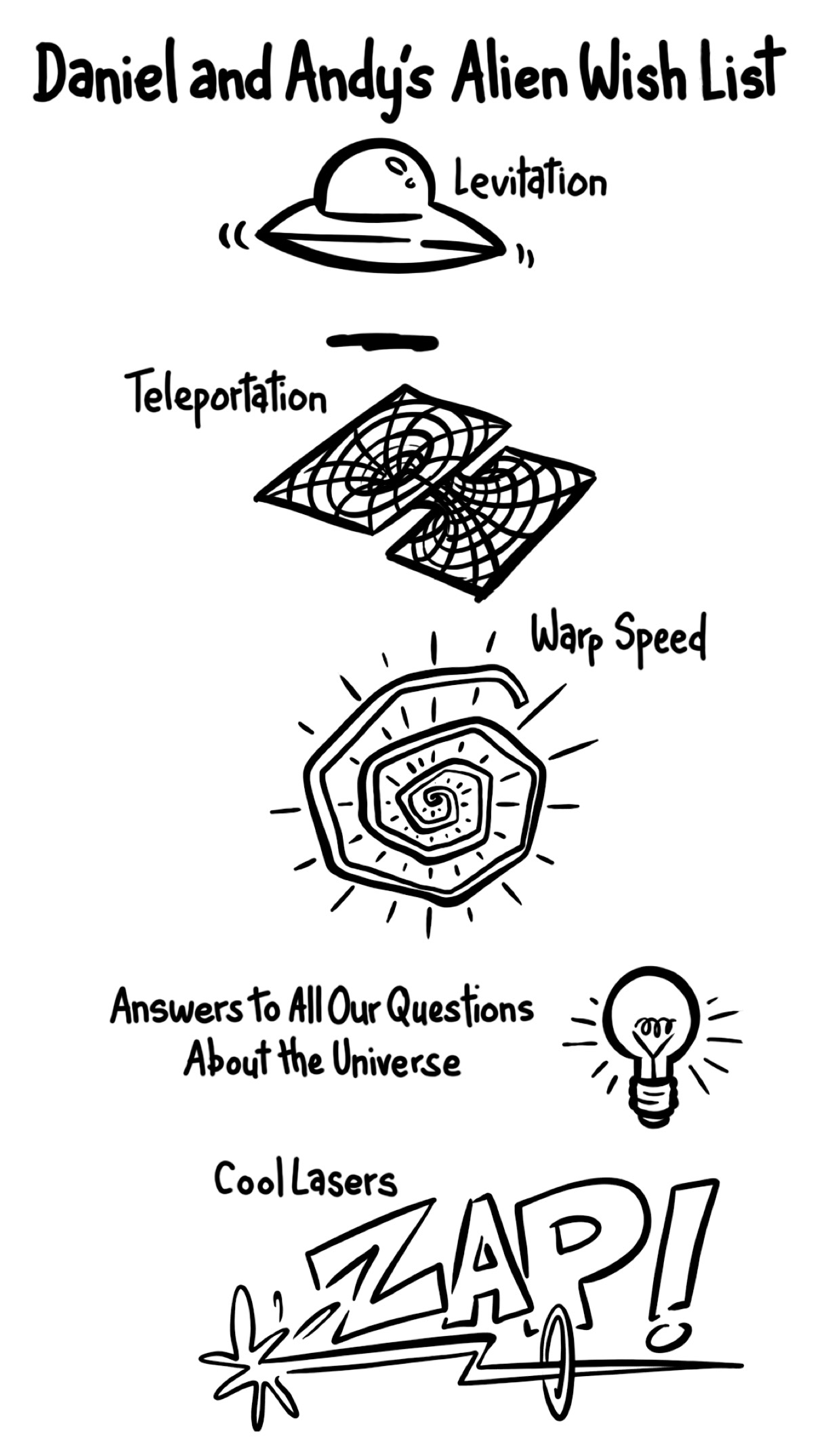

What if the aliens come and we just can’t communicate?

Ars Technica: The Voyager Golden Record is perhaps the best known example of humans attempting to communicate with an alien species, spearheaded by the late Carl Sagan, among others. But what are the odds that, despite our best efforts, any aliens will ever be able to decipher our “message in a bottle”?

Daniel Whiteson: I did an informal experiment where I printed out a picture of the Pioneer plaque and showed it to a bunch of grad students who were young enough to not have seen it before. This is Sagan’s audience: biological humans, same brain, same culture, physics grad students—none of them had any idea what any of that was supposed to refer to. NASA gave him two weeks to come up with that design. I don’t know that I would’ve done any better. It’s easy to criticize.

Those folks, they were doing their best. They were trying to step away from our culture. They didn’t use English, they didn’t even use mathematical symbols. They understood that those things are arbitrary, and they were reaching for something they hoped was going to be universal. But in the end, nothing can be universal because language is always symbols, and the choice of those symbols is arbitrary and cultural. It’s impossible to choose a symbol that can only be interpreted in one way.

Fundamentally, the book is trying to poke at our assumptions. It’s so inspiring to me that the history of physics is littered with times when we have had to abandon an assumption that we clung to desperately, until we were shown otherwise with enough data. So we’ve got to be really open-minded about whether these assumptions hold true, whether it’s required to do science, to be technological, or whether there is even a single explanation for reality. We could be very well surprised by what we discover.

Andy Warner

Andy Warner

Ars Technica: It’s often assumed that math and physics are the closest thing we have to a universal language. You challenge that assumption, probing such questions as “what does it even mean to ‘count’”? 

Daniel Whiteson: At an initial glance, you’re like, well, of course mathematics is required, and of course numbers are universal. But then you dig into it and you start to realize there are fuzzy issues here. So many of the assumptions that underlie our interpretation of what we learned about physics are that way. I had this experience that’s probably very common among physics undergrads in quantum mechanics, learning about those calculations where you see nine decimal places in the theory and nine decimal places in the experiment, and you go, “Whoa, this isn’t just some calculational tool. This is how the universe decides what happens to a particle.”

https://arstechnica.com/science/2025/11/what-if-the-aliens-come-and-we-just-cant-communicate/


Tracking the winds that have turned Mars into a planet of dust

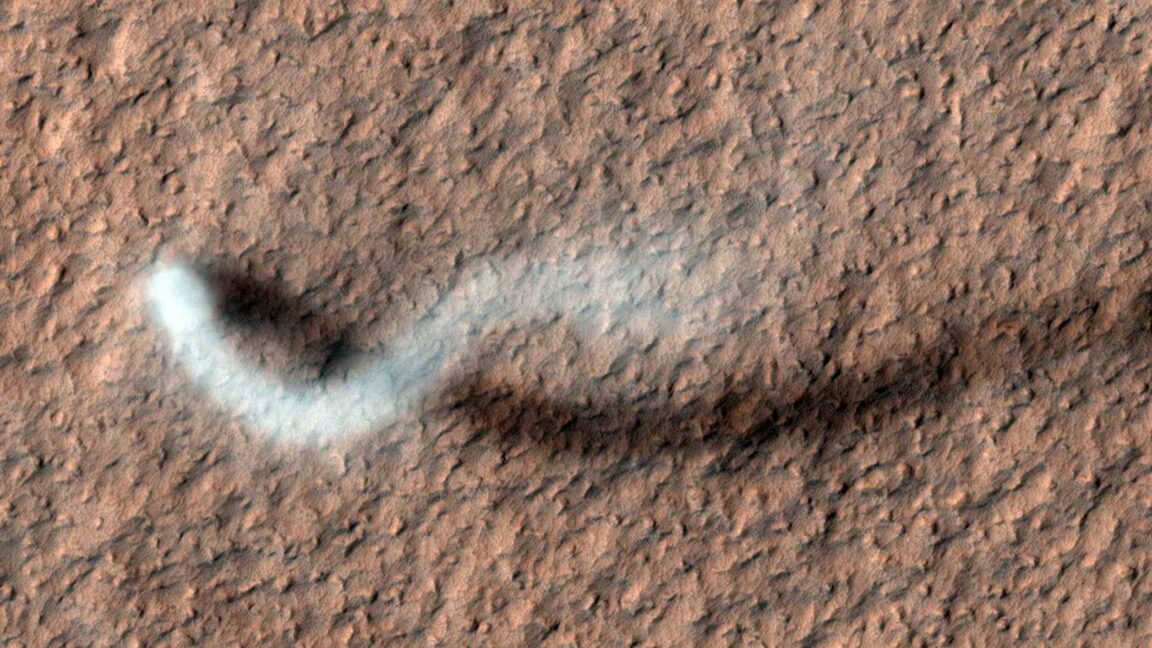
Where does all this dust come from? It’s thought to be the result of erosion caused by the winds. Because the Martian atmosphere is so thin, dust particles can be difficult to move, but larger particles can become more easily airborne if winds are turbulent enough, later taking smaller dust motes with them. Perseverance and previous Mars rovers have mostly witnessed wind vortices that were associated with either dust devils or convection, during which warm air rises.

CaSSIS and HRSC data showed that most dust devils occur in the northern hemisphere of Mars, mainly in the Amazonis and Elysium Planitiae, with Amazonis Planitia being a hotspot. They can be kicked up by winds on both rough and smooth terrain, but they tend to spread farther in the southern hemisphere, with some traveling across nearly that entire half of the planet. Seasonal occurrence of dust devils is highest during the southern summer, while they are almost nonexistent during the late northern fall.

Martian dust devils tend to peak between mid-morning and midafternoon, though they can occur from early morning through late afternoon. They also migrate toward the Martian north pole in the northern summer and toward the south pole during the southern summer. Southern dust devils tend to move faster than those in the northern hemisphere. Movement determined by winds can be as fast as 44 meters per second (about 98 mph), which is much faster than dust devils move on Earth.

Weathering the storm

Dust devils have also been found to accelerate extremely rapidly on the red planet. These fierce storms are associated with winds that travel along with them but do not form a vortex, known as nonvortical winds. It only takes a few seconds for these winds to accelerate to velocities high enough that they’re able to lift dust particles from the ground and transfer them to the atmosphere. It is not only dust devils that do this—the team found that even nonvortical winds lift large amounts of dust particles on their own, more than was previously thought, and create a dusty haze in the atmosphere.

https://arstechnica.com/science/2025/11/tracking-the-winds-that-have-turned-mars-into-a-planet-of-dust/


Runaway black hole mergers may have built supermassive black holes

The researchers used cosmological simulations to recreate the first 700 million years of cosmic history, focusing on the formation of a single dwarf galaxy. In their virtual galaxy, waves of stars were born in short, explosive bursts as cold gas clouds collapsed inside a dark matter halo. Instead of a single starburst episode followed by a steady drizzle of star formation as Garcia expected, there were two major rounds of stellar birth. Whole swarms of stars flared to life like Christmas tree lights.

“The early Universe was an incredibly crowded place,” Garcia said. “Gas clouds were denser, stars formed faster, and in those environments, it’s natural for gravity to gather stars into these tightly bound systems.”

Those clusters started out scattered around the galaxy but fell in toward the center like water swirling down a drain. Once there, they merged to create one megacluster, called a nuclear star cluster (so named because it lies at the nucleus of the galaxy). The young galactic heart shone with the light of a million suns and may have set the stage for a supermassive black hole to form.

[embedded content]

A simulation of the formation of the super-dense star clusters.

A seemingly simple tweak was needed to make the simulation more precise than previous ones. “Most simulations simplify things to make calculations more practical, but then you sacrifice realism,” Garcia said. “We used an improved model that allowed star formation to vary depending on local conditions rather than just go at a constant rate like with previous models.”

Using the University of Maryland’s supercomputing facility Zaratan, Garcia accomplished in six months what would have taken 12 years on a MacBook.

Some clouds converted as much as 80 percent of their gas into stars—a ferocious rate compared to the 2 percent typically seen in nearby galaxies today. The clouds sparkled to life, becoming clusters of newborn stars held together by their mutual gravity and lighting a new pathway for supermassive black holes to form extremely early in the Universe.

Chicken or egg?

Most galaxies, including our own, are anchored by a nuclear star cluster nestled around a supermassive black hole. But the connection between the two has been a bit murky—did the monster black hole form and then draw stars close, or did the cluster itself give rise to the black hole?

https://arstechnica.com/science/2025/11/runaway-black-hole-mergers-may-have-built-supermassive-black-holes/


Here’s how orbital dynamics wizardry helped save NASA’s next Mars mission

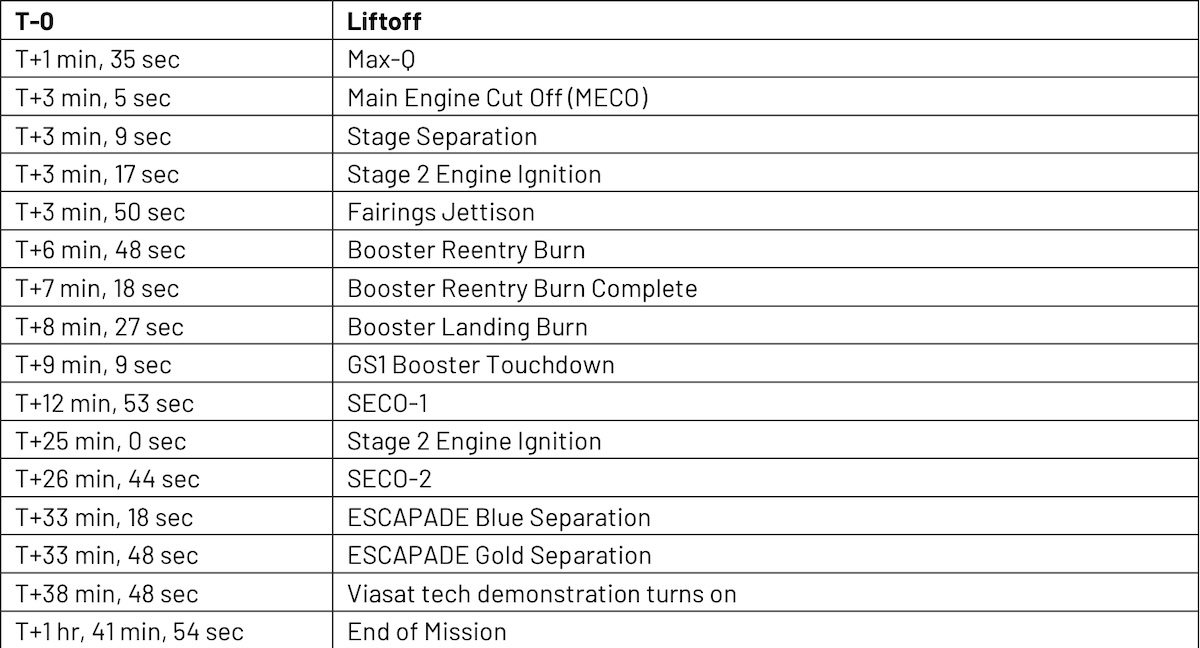
Heading east, the rocket will surpass the speed of sound in a little over a minute. After soaring through the stratosphere, New Glenn will shut down its seven booster engines and shed its first stage a little more than 3 minutes into the flight. Twin BE-3U engines, burning liquid hydrogen, will ignite to finish the job of sending the ESCAPADE satellites toward deep space. The rocket’s trajectory will send the satellites toward a gravitationally-stable location beyond the Moon, called the L2 Lagrange point, where it will swing into a loosely-bound loiter orbit to wait for the right time to head for Mars.

Meanwhile, the New Glenn booster, itself measuring nearly 20 stories tall, will begin maneuvers to head toward Blue Origin’s recovery ship floating a few hundred miles downrange in the Atlantic Ocean. The final part of the descent will include a landing burn using three of the BE-4 engines, then downshifting to a single engine to control the booster’s touchdown on the landing platform, dubbed “Jacklyn” in honor of Bezos’ late mother.

The launch timeline for New Glenn’s second mission. Credit: Blue Origin

New Glenn’s inaugural launch at the start of this year was a success, but the booster’s descent did not go well. The rocket was unable to restart its engines, and it crashed into the sea.

“We’ve incorporated a number of changes to our propellant management system, some minor hardware changes as well, to increase our likelihood of landing that booster on this mission,” said Laura Maginnis, Blue Origin’s vice president of New Glenn mission management. “That was the primary schedule driver that kind of took us from from January to where we are today.”

Blue Origin officials are hopeful they can land the booster this time. The company’s optimism is enough for officials to have penciled in a reflight of this particular booster on the very next New Glenn launch, slated for the early months of next year. That launch is due to send Blue Origin’s first Blue Moon cargo lander to the Moon.

“Our No. 1 objective is to deliver ESCAPADE safely and successfully on its way to L2, and then eventually on to Mars,” Maginnis said in a press conference Saturday. “We also are planning and wanting to land our booster. If we don’t land the booster, that’s OK. We have several more vehicles in production. We’re excited to see how the mission plays out tomorrow.”

Tracing a kidney bean

ESCAPADE’s path through space, relative to the Earth, has the peculiar shape of a kidney bean. In the world of astrodynamics, this is called a staging or libration orbit. It’s a way to keep the spacecraft on a stable trajectory to wait for the opportunity to go to Mars late next year.

https://arstechnica.com/space/2025/11/heres-how-orbital-dynamics-wizardry-helped-save-nasas-next-mars-mission/


James Watson, who helped unravel DNA’s double-helix, has died

James Dewey Watson, who helped reveal DNA’s double-helix structure, kicked off the Human Genome Project, and became infamous for his racist, sexist, and otherwise offensive statements, has died. He was 97.

His death was confirmed to The New York Times by his son Duncan, who said Watson died on Thursday in a hospice in East Northport, New York, on Long Island. He had previously been hospitalized with an infection. Cold Spring Harbor Laboratory also confirmed his passing.

Watson was born in Chicago in 1928 and attained scientific fame in 1953 at 25 years old for solving the molecular structure of DNA—the genetic blueprints for life—with his colleague Francis Crick at England’s Cavendish laboratory. Their discovery heavily relied on the work of chemist and crystallographer Rosalind Franklin at King’s College in London, whose X-ray images of DNA provided critical clues to the molecule’s twisted-ladderlike architecture. One image in particular from Franklin’s lab, Photo 51, made Watson and Crick’s discovery possible. But, she was not fully credited for her contribution. The image was given to Watson and Crick without Franklin’s knowledge or consent by Maurice Wilkins, a biophysicist and colleague of Franklin.

Watson, Crick, and Wilkins were awarded the Nobel Prize in Physiology or Medicine in 1962 for the discovery of DNA’s structure. By that time, Franklin had died (she died in 1958 at the age of 37 from ovarian cancer), and Nobels are not given posthumously. But Watson and Crick’s treatment of Franklin and her research has generated lasting scorn within the scientific community. Throughout his career and in his memoir, Watson disparaged Franklin’s intelligence and appearance.

https://arstechnica.com/health/2025/11/james-watson-who-helped-unravel-dnas-double-helix-has-died/


The government shutdown is starting to have cosmic consequences

The federal government shutdown, now in its 38th day, prompted the Federal Aviation Administration to issue a temporary emergency order Thursday prohibiting commercial rocket launches from occurring during “peak hours” of air traffic.

The FAA also directed commercial airlines to reduce domestic flights from 40 “high impact airports” across the country in a phased approach beginning Friday. The agency said the order from the FAA’s administrator, Bryan Bedford, is aimed at addressing “safety risks and delays presented by air traffic controller staffing constraints caused by the continued lapse in appropriations.”

The government considers air traffic controllers essential workers, so they remain on the job without pay until Congress passes a federal budget and President Donald Trump signs it into law. The shutdown’s effects, which affected federal workers most severely at first, are now rippling across the broader economy.

Sharing the airspace

Vehicles traveling to and from space share the skies with aircraft, requiring close coordination with air traffic controllers to clear airspace for rocket launches and reentries. The FAA said its order restricting commercial air traffic, launches, and reentries is intended to “ensure the safety of aircraft and the efficiency of the [National Airspace System].”

In a statement explaining the order, the FAA said the air traffic control system is “stressed” due to the shutdown.

“With continued delays and unpredictable staffing shortages, which are driving fatigue, risk is further increasing, and the FAA is concerned with the system’s ability to maintain the current volume of operations,” the regulator said. “Accordingly, the FAA has determined additional mitigation is necessary.”

Beginning Monday, the FAA said commercial space launches will only be permitted between 10 pm and 6 am local time, when the national airspace is most calm. The order restricts commercial reentries to the same overnight timeframe. The FAA licenses all commercial launches and reentries.

https://arstechnica.com/space/2025/11/faa-says-commercial-rockets-must-launch-at-night-citing-government-shutdown/


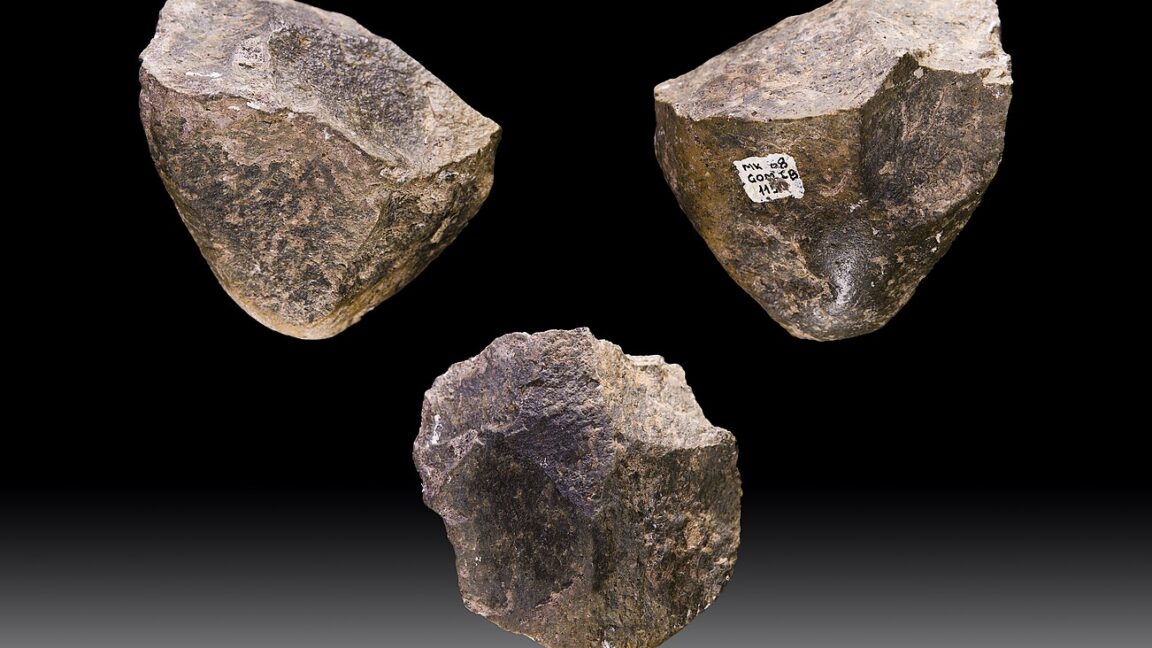
10,000 generations of hominins used the same stone tools to weather a changing world

“This site reveals an extraordinary story of cultural continuity,” said Braun in a recent press release.

When the going gets tough, the tough make tools

Nomorotukunan’s layers of stone tools span the transition from the Pliocene to the Pleistocene, during which Earth’s climate turned gradually cooler and drier after a 2 to 3 million-year warm spell. Pollen and other microscopic traces of plants in the sediment at Nomorotukunan tell the tale: the lakeshore marsh gradually dried up, giving way to arid grassland dotted with shrubs. On a shorter timescale, hominins at Nomorotukunan faced wildfires (based on microcharcoal in the sediments), droughts, and rivers drying up or changing course.

“As vegetation shifted, the toolmaking remained steady,” said National University of Kenya archaeologist Rahab N. Kinyanjui in a recent press release. “This is resilience.”

Making sharp stone tools may have helped generations of hominins survive their changing, drying world. In the warm, humid Pliocene, finding food would have been relatively easy, but as conditions got tougher, hominins probably had to scavenge or dig for their meals. At least one animal bone at Nomorotukunan bears cut marks where long-ago hominins carved up the carcass for meat—something our lineage isn’t really equipped to do with its bare hands and teeth. Tools also would have enabled early hominins to dig up and cut tubers or roots.

It’s fair to assume that sharpened wood sticks probably also played a role in that particular work, but wood doesn’t tend to last as long as stone in the archaeological record, so we can’t say for sure. What is certain are the stone tools and cut bones, which hint at what Utrecht University archaeologist Dan Rolier, a coauthor of the paper, calls “one of our oldest habits: using technology to steady ourselves against change.”

A tale as old as time

Nomorotukunan may hint that Oldowan technology is even older than the earliest tools archaeologists have unearthed so far. The oldest tools unearthed from the deepest layer at Nomorotukunan are the work of skilled flint-knappers who understood where to strike a stone, and at exactly which angle, to flake off the right shape. They also clearly knew how to select the right stones for the job (fine-grained chalcedony for the win, in this case). In other words, these tools weren’t the work of a bunch of hominins who were just figuring out, for the first time, how to bang the rocks together.

https://arstechnica.com/science/2025/11/10000-generations-of-hominins-used-the-same-stone-tools-to-weather-a-changing-world/


Rocket Report: Canada invests in sovereign launch; India flexes rocket muscles

Doubling cadence … This was the fourth flight of Europe’s new Ariane 6 rocket, and its third operational launch. Arianespace plans one more Ariane 62 launch to close out the year with a pair of Galileo navigation satellites. The company aims to double its Ariane 6 launch cadence in 2026, with between six and eight missions planned, according to David Cavaillès, Arianespace’s CEO. The European launch provider will open its 2026 manifest with the first flight of the more powerful four-booster variant of the rocket. If the company does manage eight Ariane 6 flights in 2026, it will already be close to reaching the stated maximum launch cadence of between nine and 10 flights per year.

India sets its own record for payload mass. The Indian Space Research Organization on Sunday successfully launched the Indian Navy’s advanced communication satellite GSAT-7R, or CMS-03, on an LVM3 rocket from the Satish Dhawan Space Center, The Hindu reports. The indigenously designed and developed satellite, weighing approximately 4.4 metric tons (9,700 pounds), is the heaviest satellite ever launched by an Indian rocket and marks a major milestone in strengthening the Navy’s space-based communications and maritime domain awareness.

Going heavy … The launch Sunday was India’s fourth of 2025, a decline from the country’s high-water mark of eight orbital launches in a year in 2023. The failure in May of India’s most-flown rocket, the PSLV, has contributed to this year’s slower launch cadence. India’s larger rockets, the GSLV and LVM3, have been more active while officials grounded the PSLV for an investigation into the launch failure. (submitted by EllPeaTea)

Blue Origin preps for second flight of New Glenn. The road to the second flight of Blue Origin’s heavy-lifting New Glenn rocket got a lot clearer this week. The company confirmed it is targeting Sunday, November 9, for the launch of New Glenn from Cape Canaveral Space Force Station, Florida. This follows a successful test-firing of the rocket’s seven BE-4 main engines last week, Ars reports. Blue Origin, the space company owned by billionaire Jeff Bezos, said the engines operated at full power for 22 seconds, generating nearly 3.9 million pounds of thrust on the launch pad.

https://arstechnica.com/space/2025/11/rocket-report-canada-invests-in-sovereign-launch-india-flexes-rocket-muscles/


Next-generation black hole imaging may help us understand gravity better

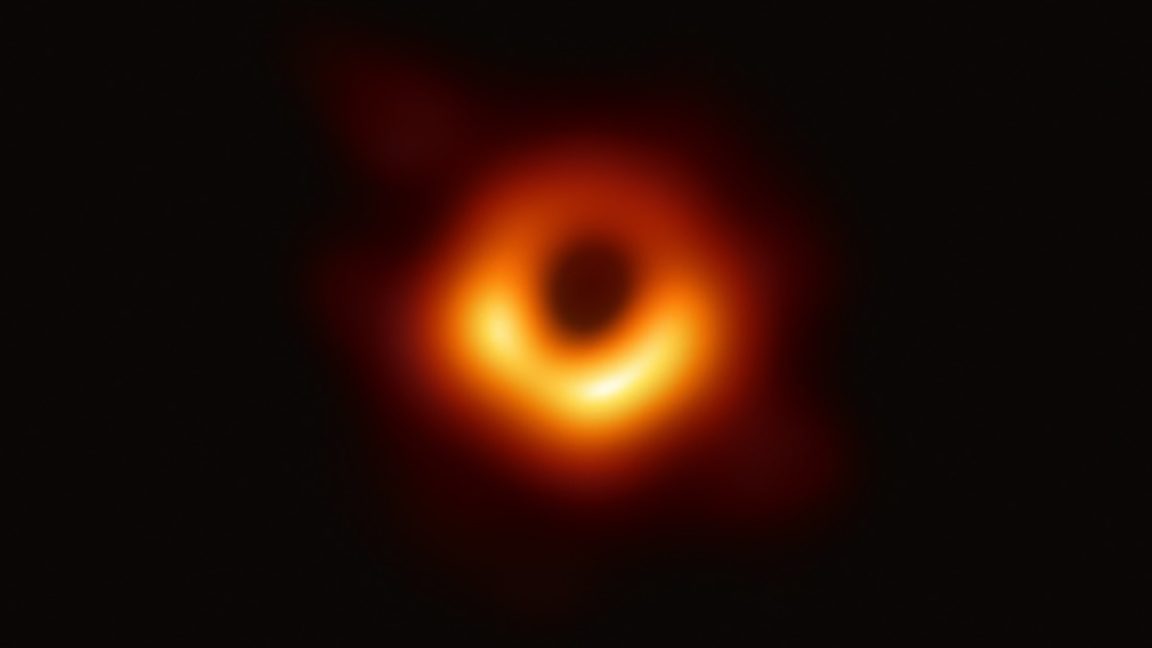
Right now, we probably don’t have the ability to detect these small changes in phenomena. However, that may change, as a next-generation version of the Event Horizon Telescope is being considered, along with a space-based telescope that would operate on similar principles. So the team (four researchers based in Shanghai and CERN) decided to repeat an analysis they did shortly before the Event Horizon Telescope went operational, and consider whether the next-gen hardware might be able to pick up features of the environment around the black hole that might discriminate among different theorized versions of gravity.

Theorists have been busy, and there are a lot of potential replacements for general relativity out there. So, rather than working their way through the list, they used a model of gravity (the parametric Konoplya–Rezzolla–Zhidenko metric) that allows that isn’t specific to any given hypothesis. Instead, it allows some of its parameters to be changed, thus allowing the team to vary the behavior of gravity within some limits. To get a sense of the sort of differences that might be present, the researchers swapped two different parameters between zero and one, giving them four different options. Those results were compared to the Kerr metric, which is the standard general relativity version of the event horizon.

Small but clear differences

Using those five versions of gravity, they model the three-dimensional environment near the event horizon using hydrodynamic simulations, including infalling matter, the magnetic fields it produces, and the jets of matter that those magnetic fields power.

The results resemble the sorts of images that the Event Horizon Telescope produced. These include a bright ring with substantial asymmetry, where one side is significantly brighter due to the rotation of the black hole. And, while the differences are subtle between all the variations of gravity, they’re there. One extreme version produced the smallest but brightest ring; another had a reduced contrast between the bright and dim side of the ring. There were also differences between the width of the jets produced in these models.

https://arstechnica.com/science/2025/11/imaging-black-holes-may-help-us-rule-out-some-models-of-gravity/