New quantum hardware puts the mechanics in quantum mechanics
Even in its simplified form, however, it’s still a model of a quantum system, with all the computational complexity that comes with that. So the Quantinuum team modeled a few systems that classical computers struggle with. One was simply looking at a larger grid of atoms than most classical simulations have done; another expanded the grid in an additional dimension, modeling layers of a material. Perhaps the most complicated simulation involved what happens when a laser pulse of the right wavelength hits a superconductor at room temperature, an event that briefly induces a superconducting state.

And the system produced results, even without error correction. “It’s maybe a technical point, but I think it’s very important technical point, which is [that] the circuits that we ran, they all had errors,” Dreyer told Ars. “Maybe on the average of three or so errors, and for some reason, that is not very fully understood for this application, it doesn’t matter. You still get almost the perfect result in some of these cases.”

That said, he also indicated that having higher-fidelity hardware would help the team do a better job of putting the system in a ground state or running the simulation for longer. But those will have to wait for future hardware.

What’s next

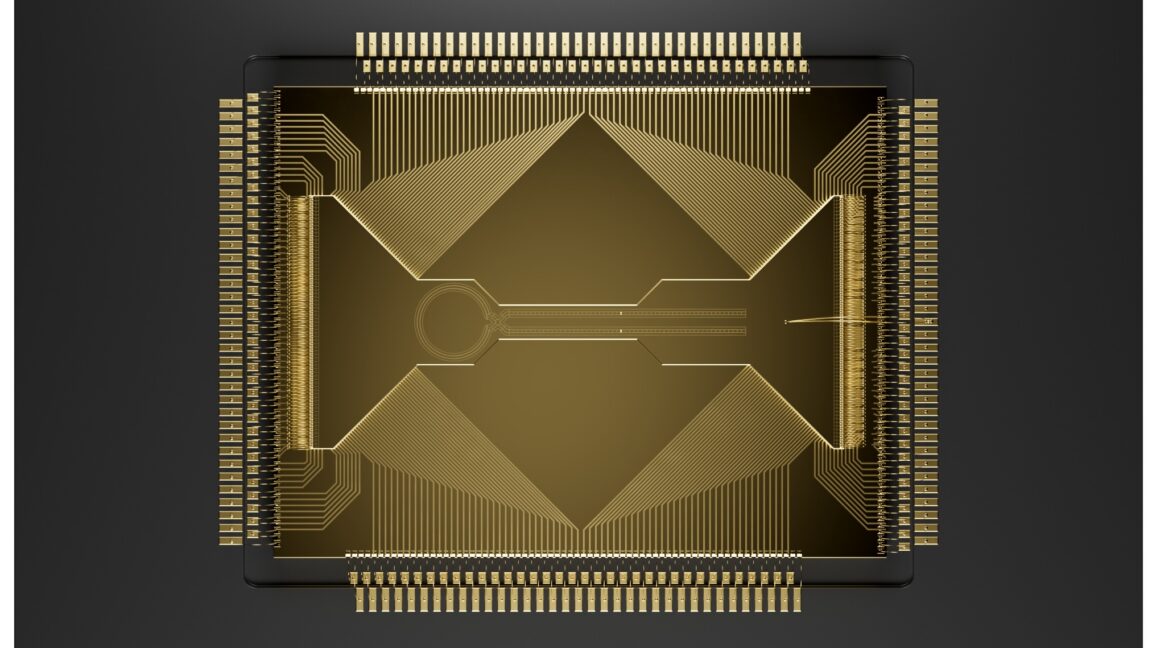
If you look at Quantinuum’s roadmap for that future hardware, Helios would appear to be the last of its kind. It and earlier versions of the processors have loops and large straight stretches; everything in the future features a grid of squares. But both Strabley and Hayes said that Helios has several key transitional features. “Those ions are moving through that junction many, many times over the course of a circuit,” Strabley told Ars. “And so it’s really enabled us to work on the reliability of the junction, and that will translate into the large-scale systems.”

https://arstechnica.com/science/2025/11/new-quantum-computing-hardware-sorts-ions-for-computation/


If you want to satiate AI’s hunger for power, Google suggests going to space

It was probably always when, not if, Google would add its name to the list of companies intrigued by the potential of orbiting data centers.

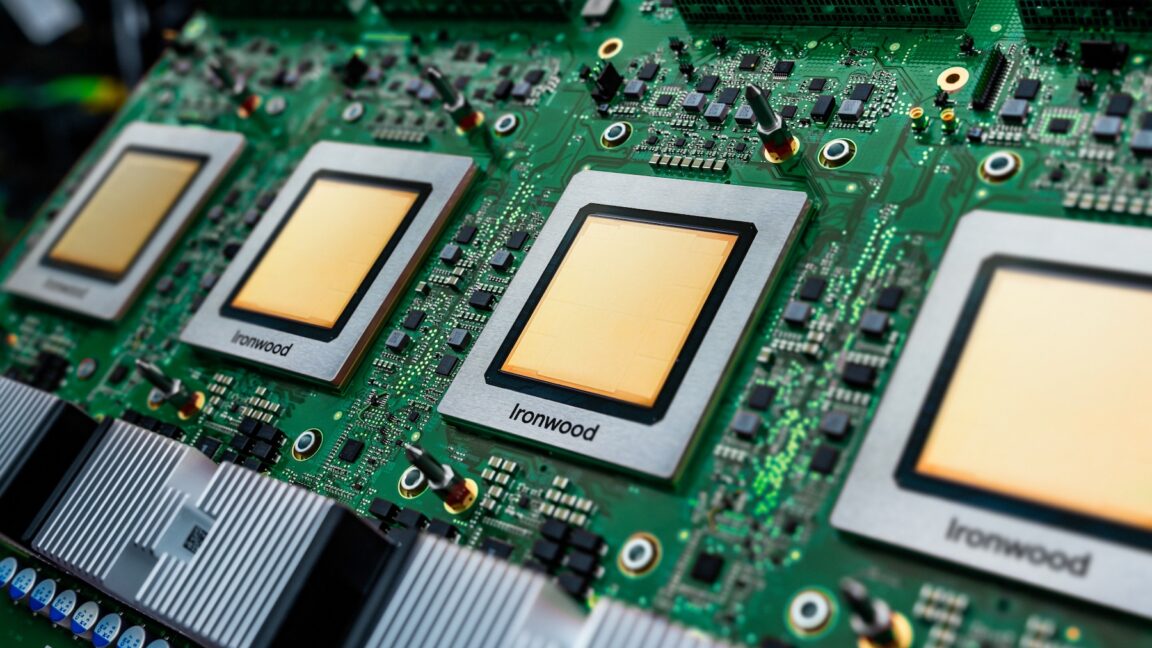
Google announced Tuesday a new initiative, named Project Suncatcher, to examine the feasibility of bringing artificial intelligence to space. The idea is to deploy swarms of satellites in low-Earth orbit, each carrying Google’s AI accelerator chips designed for training, content generation, synthetic speech and vision, and predictive modeling. Google calls these chips Tensor Processing Units, or TPUs.

“Project Suncatcher is a moonshot exploring a new frontier: equipping solar-powered satellite constellations with TPUs and free-space optical links to one day scale machine learning compute in space,” Google wrote in a blog post.

“Like any moonshot, it’s going to require us to solve a lot of complex engineering challenges,” Google’s CEO, Sundar Pichai, wrote on X. Pichai noted that Google’s early tests show the company’s TPUs can withstand the intense radiation they will encounter in space. “However, significant challenges still remain like thermal management and on-orbit system reliability.”

The why and how

Ars reported on Google’s announcement on Tuesday, and Google published a research paper outlining the motivation for such a moonshot project. One of the authors, Travis Beals, spoke with Ars about Project Suncatcher and offered his thoughts on why it just might work.

“We’re just seeing so much demand from people for AI,” said Beals, senior director of Paradigms of Intelligence, a research team within Google. “So, we wanted to figure out a solution for compute that could work no matter how large demand might grow.”

Higher demand will lead to bigger data centers consuming colossal amounts of electricity. According to the MIT Technology Review, AI alone could consume as much electricity annually as 22 percent of all US households by 2028. Cooling is also a problem, often requiring access to vast water resources, raising important questions about environmental sustainability.

https://arstechnica.com/space/2025/11/if-you-want-to-satiate-ais-hunger-for-power-google-suggests-going-to-space/


Some stinkbugs’ legs carry a mobile fungal garden

Many insect species hear using tympanal organs, membranes roughly resembling our eardrums but located on their legs. Grasshoppers, mantises, and moths all have them, and for decades, we thought that female stinkbugs of the Dinidoridae family have them, too, although located a bit unusually on their hind rather than front legs.

Suspecting that they use their hind leg tympanal organs to listen to male courtship songs, a team of Japanese researchers took a closer look at the organs in Megymenum gracilicorne, a Dinidoridae stinkbug species native to Japan. They discovered that these “tympanal organs” were not what they seemed. They’re actually mobile fungal nurseries of a kind we’ve never seen before.

Portable gardens

Dinidoridae is a small stinkbug family that lives exclusively in Asia. The bug did attract some scientific attention, but not nearly as much as its larger relatives like Pentatomidae. Prior work looking specifically into organs growing on the hind legs of Dinidoridae females was thus somewhat limited. “Most research relied on taxonomic and morphological approaches. Some taxonomists did describe that female Dinidoridae stinkbugs have an enlarged part on the hind legs that looks like the tympanal organ you can find, for example, in crickets,” said Takema Fukatsu, an evolutionary biologist at the National Institute of Advanced Industrial Science and Technology in Tokyo.

Based on that appearance, these parts were classified as tympanal organs—the case was closed, and it stayed closed until Fukatsu’s team started examining them more closely. Most insects have tympanal organs on their front legs, not hind legs, or on abdominal segments. The initial goal of Fukatsu’s study was to figure out what impact this unusual position has on Dinidoridae females’ ability to hear sounds.

Early on in the study, it turned out that whatever Dinidoridae females have on their hind legs, they are not tympanal organs. “We found no tympanal membrane and no sensory neurons, so the enlarged parts on the hind legs had nothing to do with hearing,” Fukatsu explained. Instead, the organ had thousands of small pores filled with benign filamentous fungi. The pores were connected to secretory cells that released substances that Fukatsu’s team hypothesized were nutrients enabling the fungi to grow.

https://arstechnica.com/science/2025/11/some-stinkbugs-legs-carry-a-mobile-fungal-garden/


Disruption to science will last longer than the US government shutdown

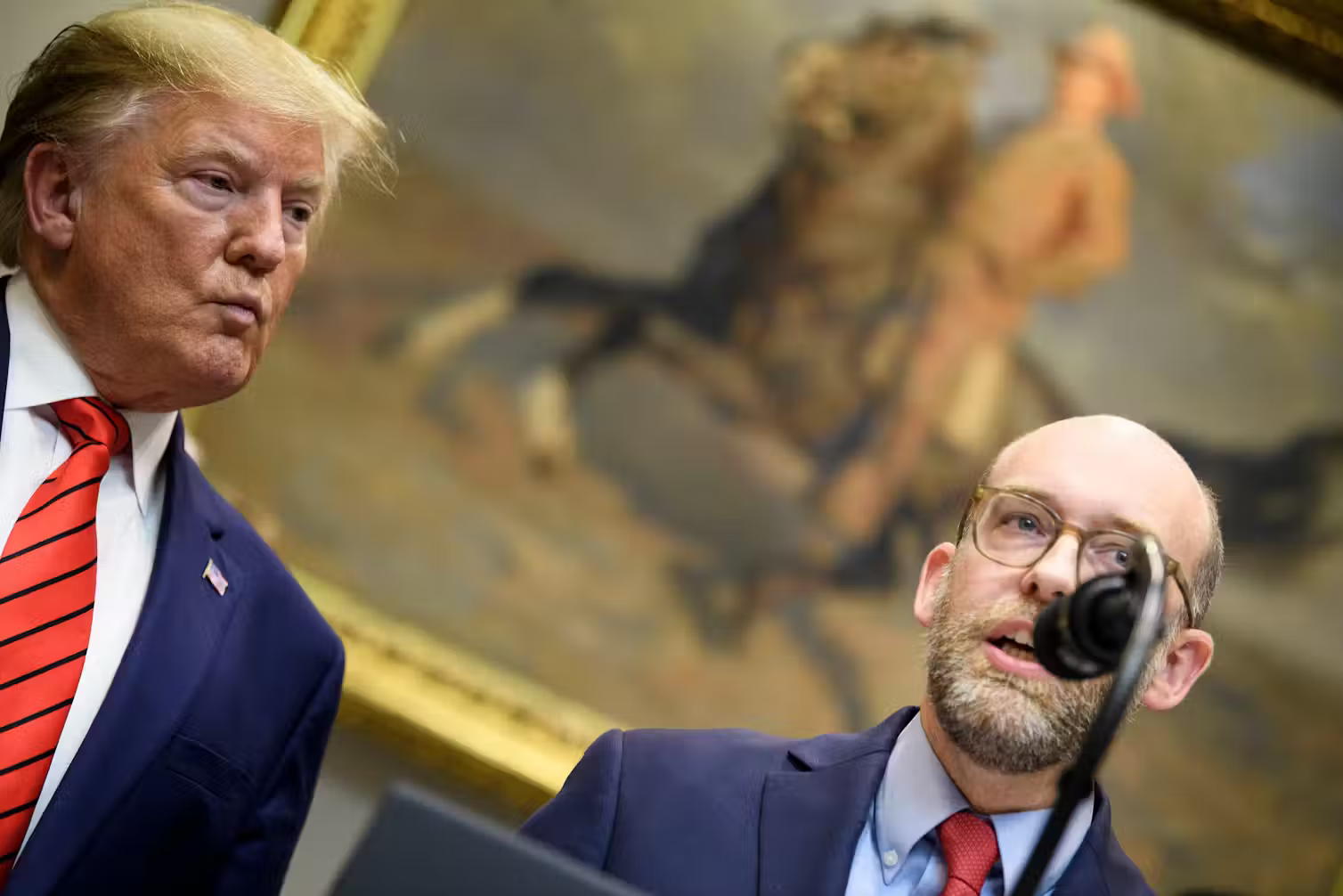
President Donald Trump alongside Office of Management and Budget Director Russell Vought.

Credit: Brendan Smialowski/AFP via Getty Images

President Donald Trump alongside Office of Management and Budget Director Russell Vought. Credit: Brendan Smialowski/AFP via Getty Images

However, the full impact of the shutdown and the Trump administration’s broader assaults on science to US international competitiveness, economic security, and electoral politics could take years to materialize.

In parallel, the dramatic drop in international student enrollment, the financial squeeze facing research institutions, and research security measures to curb foreign interference spell an uncertain future for American higher education.

With neither the White House nor Congress showing signs of reaching a budget deal, Trump continues to test the limits of executive authority, reinterpreting the law—or simply ignoring it.

Earlier in October, Trump redirected unspent research funding to pay furloughed service members before they missed their Oct. 15 paycheck. Changing appropriated funds directly challenges the power vested in Congress—not the president—to control federal spending.

The White House’s promise to fire an additional 10,000 civil servants during the shutdown, its threat to withhold back pay from furloughed workers, and its push to end any programs with lapsed funding “not consistent with the President’s priorities” similarly move to broaden presidential power.

Here, the damage to science could snowball. If Trump and Vought chip enough authority away from Congress by making funding decisions or shuttering statutory agencies, the next three years will see an untold amount of impounded, rescinded, or repurposed research funds.

photo of empty science lab

The government shutdown has emptied many laboratories staffed by federal scientists. Combined with other actions by the Trump administration, more scientists could continue to lose funding.

Credit: Monty Rakusen/DigitalVision via Getty Images

The government shutdown has emptied many laboratories staffed by federal scientists. Combined with other actions by the Trump administration, more scientists could continue to lose funding. Credit: Monty Rakusen/DigitalVision via Getty Images

Science, democracy, and global competition

While technology has long served as a core pillar of national and economic security, science has only recently reemerged as a key driver of greater geopolitical and cultural change.

China’s extraordinary rise in science over the past three decades and its arrival as the United States’ chief technological competitor has upended conventional wisdom that innovation can thrive only in liberal democracies.

The White House’s efforts to centralize federal grantmaking, restrict free speech, erase public data, and expand surveillance mirror China’s successful playbook for building scientific capacity while suppressing dissent.

As the shape of the Trump administration’s vision for American science has come into focus, what remains unclear is whether, after the shutdown, it can outcompete China by following its lead.

Kenneth M. Evans is a Fellow in Science, Technology, and Innovation Policy at the Baker Institute for Public Policy, Rice University.

This article is republished from The Conversation under a Creative Commons license. Read the original article.

https://arstechnica.com/science/2025/11/disruption-to-science-will-last-longer-than-the-us-government-shutdown/


Neural network finds an enzyme that can break down polyurethane

You’ll often hear plastic pollution referred to as a problem. But the reality is that it’s multiple problems. Depending on the properties we need, we form plastics out of different polymers, each of which is held together by a distinct type of chemical bond. So the method we use to break down one type of polymer may be incompatible with the chemistry of another.

That problem is why, even though we’ve had success finding enzymes that break down common plastics like polyesters and PET, they’re only partial solutions to plastic waste. However, researchers aren’t sitting back and basking in the triumph of partial solutions, and they’ve now got very sophisticated protein design tools to help them out.

That’s the story behind a completely new enzyme that researchers developed to break down polyurethane, the polymer commonly used to make foam cushioning, among other things. The new enzyme is compatible with an industrial-style recycling process that breaks the polymer down into its basic building blocks, which can be used to form fresh polyurethane.

Breaking down polyurethane

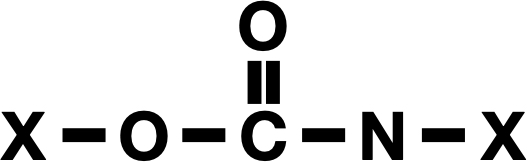
Image of a set of chemical bonds. From left to right there is an X, then a single bond to an oxygen, then a single bond to an oxygen that's double-bonded to carbon, then a single bond to a nitrogen, then a single bond to another X.

The basics of the chemical bonds that link polyurethanes. The rest of the polymer is represented by X’s here.

The new paper that describes the development of this enzyme lays out the scale of the problem: In 2024, we made 22 million metric tons of polyurethane. The urethane bond that defines these involves a nitrogen bonded to a carbon that in turn is bonded to two oxygens, one of which links into the rest of the polymer. The rest of the polymer, linked by these bonds, can be fairly complex and often contains ringed structures related to benzene.

Digesting polyurethanes is challenging. Individual polymer chains are often extensively cross-linked, and the bulky structures can make it difficult for enzymes to get at the bonds they can digest. A chemical called diethylene glycol can partially break these molecules down, but only at elevated temperatures. And it leaves behind a complicated mess of chemicals that can’t be fed back into any useful reactions. Instead, it’s typically incinerated as hazardous waste.

https://arstechnica.com/science/2025/10/polyurethane-is-the-latest-polymer-broken-down-by-designer-enzymes/


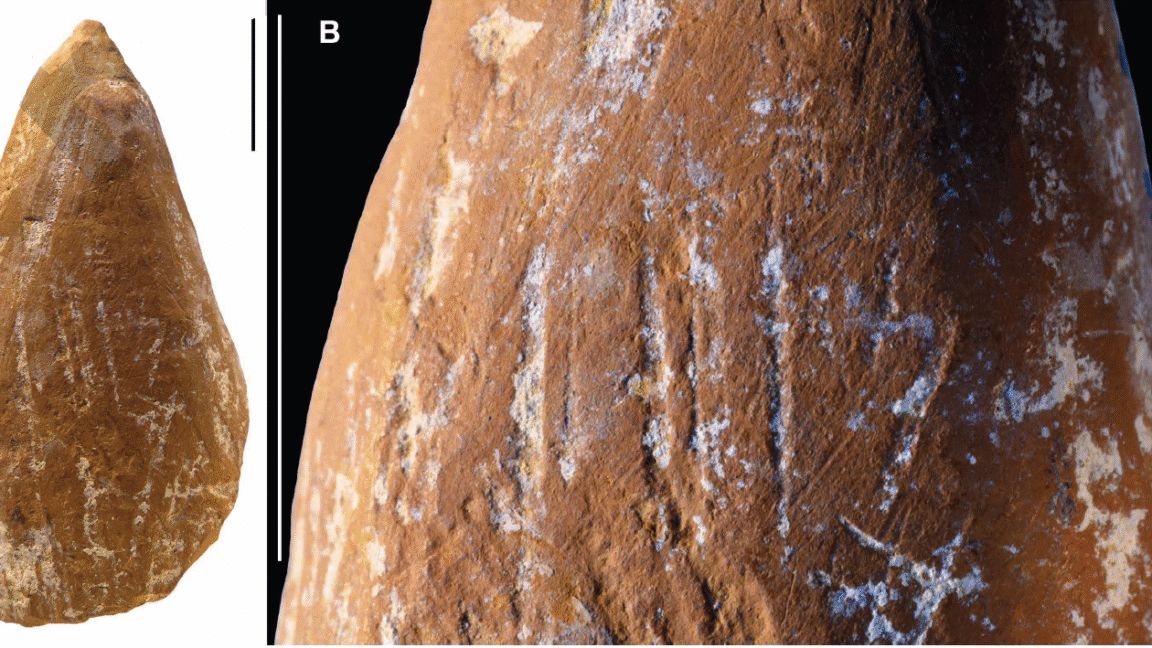
Wear marks suggest Neanderthals made ocher crayons

“Other authors point out that symbolic and utilitarian functions are intimately linked among traditional populations,” wrote D’Errico and his colleagues, “and that, as a result, it would have been difficult for a systematic use of ocher powders to exist over a long period of time without a symbolic dimension being rather quickly attached to it.”

Tens of thousands of years later, without direct evidence, all we can do is speculate. Which, to be fair, is tremendously interesting as long as it comes with the right caveats and understanding of its limitations. But there are a growing number of places and times where we do have direct evidence that Neanderthals were using color to signal something meaningful to each other, even if we don’t know whether the meaning was “Og is the deputy chief of all the people east of the river,” “Zogg belongs to the people who live in this valley, not that one,” or “Grogg really likes yellow.”

As D’Errico and his colleagues point out, that meaning probably varied from place to place, just as it does today. In most of Europe, white is the traditional color for a wedding, but in China, white is for funerals. Millennial gray is in its heyday in the US (send help), but elsewhere in the world, brighter colors are in vogue. And in some parts of Eurasia, Neanderthals seemed to prefer manganese-based black pigments, while elsewhere (like Crimea), reds and yellows were all the rage.

“This variability suggests different cultural trajectories, possibly involving community-level traditions, long-distance exchanges, or local innovation,” wrote D’Errico and his colleagues.

The real takeaway here is twofold: First, evidence continues to pile up that Neanderthals were just as smart, innovative, and creative as our species, and they’d developed their own nuanced culture and sophisticated tools long before the first Homo sapiens ventured into Eurasia. And second, the impulse to make art is rooted deep in our family tree.

Science Advances, 2025.  DOI: <a href="%22https://dx.doi.org/
10.1126/sciadv.adx4722  (About DOIs).

https://arstechnica.com/science/2025/10/crimean-neanderthals-made-stone-age-crayons-from-ocher-50000-years-ago/


New study settles 40-year debate: Nanotyrannus is a new species

For four decades, a frequently acrimonious debate has raged in paleontological circles about the correct taxonomy for a handful of rare fossil specimens. One faction insisted the fossils were juvenile Tyrannosaurus rex; the other argued that they represented a new species dubbed Nanotyrannus lancensis. Now, paleontologists believe they have settled the debate once and for all due to a new analysis of a well-preserved fossil.

The verdict: It is indeed a new species, according to a new paper published in the journal Nature. The authors also reclassified another specimen as a second new species, distinct from N. lancensis. In short, Nanotyrannus is a valid taxon and contains two species.

“This fossil doesn’t just settle the debate,” said Lindsay Zanno, a paleontologist at North Carolina State University and head of paleontology at North Carolina Museum of Natural Sciences. “It flips decades of T. rex research on its head.” That’s because paleontologists have relied on such fossils to model the growth and behavior of T. rex. The new findings suggest that there could have been multiple tyrannosaur species and that paleontologists have been underestimating the diversity of dinosaurs from this period.

Our story begins in 1942, when the fossilized skull of a Nanotyrannus, nicknamed Chomper, was excavated in Montana by a Cleveland Museum of Natural History expedition. Originally, paleontologists thought it belonged to a Gorgosaurus, but a 1965 paper challenged that identification and argued that the skull belonged to a juvenile T. rex. It wasn’t until 1988 that scientists proposed that the skull was actually that of a new species, Nanotyrannus. It’s been a constant back-and-forth ever since.

As recently as 2020, a highly influential paper claimed that Nanotyrannus was definitively a juvenile T. Rex. Yet a substantial number of paleontologists still believed it should be classified as a distinct species. A January 2024 paper, for instance, came down firmly on the Nanotyrannus side of the debate. Co-authors Nicholas Longrich of the University of Bath and Evan Saitta of the University of Chicago measured the growth rings in Nanotyrannus bones and concluded the animals were nearly fully grown.

Dueling dinosaurs

Lindsay Zanno, associate research professor at North Carolina State University and head of paleontology at the North Carolina Museum of Natural Sciences, with the Dueling Dinosaurs fossil.
Lindsay Zanno of North Carolina State University, who also heads paleontology at the North Carolina Museum of Natural Sciences, with the “dueling dinosaurs” fossil. Credit: N.C. State University/CC BY-NC-ND

Furthermore, there was no evidence of hybrid fossils combining features of both Nanotyrannus and T. rex, which one would expect if the former were a juvenile version of the latter. Longrich and Saitta had also discovered a skull bone, archived in a San Francisco museum, that did belong to a juvenile T. rex, and they were able to do an anatomical comparison. They argued that Nanotyrannus had a lighter build, longer limbs, and larger arms than a T. rex and likely was smaller, faster, and more agile.

https://arstechnica.com/science/2025/10/nanotyrannus-species-confirmed-its-not-just-a-baby-t-rex/


Melissa strikes Jamaica, tied as most powerful Atlantic storm to come ashore

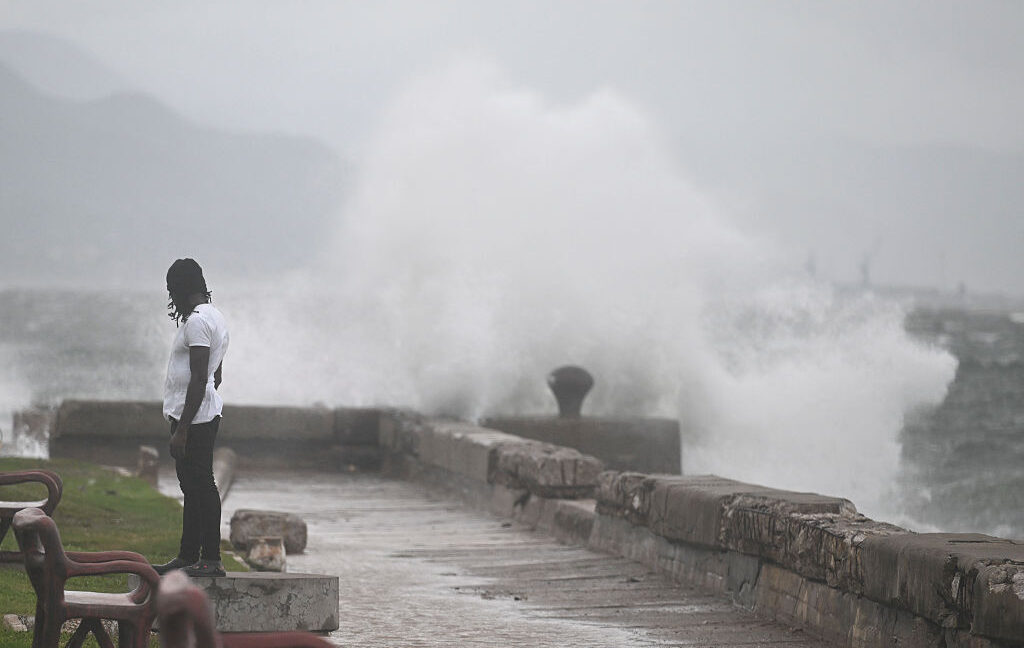
Hurricane Melissa made landfall in southwestern Jamaica, near New Hope, on Tuesday at 1 pm ET with staggeringly powerful sustained winds of 185 mph.

In the National Hurricane Center update noting the precise landfall time and location, specialist Larry Kelly characterized Melissa as an “extremely dangerous and life-threatening” hurricane. Melissa is bringing very heavy rainfall, damaging surge, and destructive winds to the small Caribbean island that is home to about 3 million people.

The effects on the island are sure to be catastrophic and prolonged.

A record-breaking hurricane by any measure

By any measure, Melissa is an extraordinary and catastrophic storm.

By strengthening overnight and then maintaining its incredible intensity of 185 mph, Melissa has tied the Labor Day Hurricane of 1935 as the most powerful hurricane to strike a landmass in the Atlantic Basin, which includes the United States, Mexico, Central America, and the Caribbean islands.

Melissa also tied the Labor Day storm, which struck the Florida Keys, as the most intense storm at landfall, measured by central pressure at 892 millibars.

Overall, Melissa is tied for the second strongest hurricane, measured by winds, ever observed in the Atlantic basin, behind only Hurricane Allen and its 190 mph winds in 1980. Only Hurricane Wilma (882 millibars) and Gilbert (888 millibars) have recorded lower pressures at sea.

https://arstechnica.com/science/2025/10/melissa-strikes-jamaica-tied-as-most-powerful-atlantic-storm-to-come-ashore/


Why imperfection could be key to Turing patterns in nature

In essence, it’s a type of symmetry breaking. Any two processes that act as activator and inhibitor will produce periodic patterns and can be modeled using Turing’s diffusion function. The challenge is moving from Turing’s admittedly simplified model to pinpointing the precise mechanisms serving in the activator and inhibitor roles.

This is especially challenging in biology. Per the authors of this latest paper, the classical approach to a Turing mechanism balances reaction and diffusion using a single length scale, but biological patterns often incorporate multiscale structures, grain-like textures, or certain inherent imperfections. And the resulting patterns are often much blurrier than those found in nature.

Can you say “diffusiopherosis”?

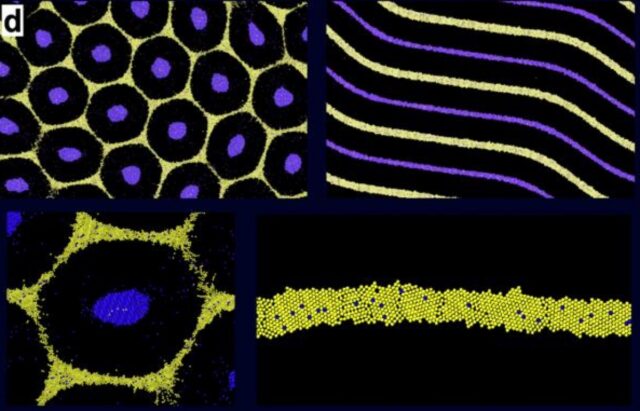
Simulated hexagon and stripe patterns obtained by diffusiophoretic assembly of two types of cells on top of the chemical patterns. Credit: Siamak Mirfendereski and Ankur Gupta/CU Boulder

In 2023, UCB biochemical engineers Ankur Gupta and Benjamin Alessio developed a new model that added diffusiopherosis into the mix. It’s a process by which colloids are transported via differences in solute concentration gradients—the same process by which soap diffuses out of laundry in water, dragging particles of dirt out of the fabric. Gupta and Alessio successfully used their new model to simulate the distinctive hexagon pattern (alternating purple and black) on the ornate boxfish, native to Australia, achieving much sharper outlines than the model originally proposed by Turing.

The problem was that the simulations produced patterns that were too perfect: hexagons that were all the same size and shape and an identical distance apart. Animal patterns in nature, by contrast, are never perfectly uniform. So Gupta and his UCB co-author on this latest paper, Siamak Mirfendereski, figured out how to tweak the model to get the pattern outputs they desired. All they had to do was define specific sizes for individual cells. For instance, larger cells create thicker outlines, and when they cluster, they produce broader patterns. And sometimes the cells jam up and break up a stripe. Their revised simulations produced patterns and textures very similar to those found in nature.

“Imperfections are everywhere in nature,” said Gupta. “We proposed a simple idea that can explain how cells assemble to create these variations. We are drawing inspiration from the imperfect beauty of [a] natural system and hope to harness these imperfections for new kinds of functionality in the future.” Possible future applications include “smart” camouflage fabrics that can change color to better blend with the surrounding environment, or more effective targeted drug delivery systems.

Matter, 2025. DOI: 10.1016/j.matt.2025.102513 (About DOIs).

https://arstechnica.com/science/2025/10/why-imperfection-could-be-key-to-turing-patterns-in-nature/


Melissa set to be the strongest hurricane to ever strike Jamaica

The sole bright spot is that, as of Monday, the core of the storm’s strongest winds remains fairly small. Based on recent data, its hurricane-force winds only extend about 25 miles from the center. Unfortunately, Melissa will make a direct hit on Jamaica, with the island’s capital city of Kingston to the right of the center, where winds and surge will be greatest.

Beyond Jamaica, Melissa will likely be one of the strongest hurricanes on record to hit Cuba. Melissa will impact the eastern half of the island on Tuesday night, bringing the trifecta of heavy rainfall, damaging winds, and storm surge. The storm also poses lesser threats to Hispaniola, the Bahamas, and potentially Bermuda down the line. There will be no impacts in the United States.

A sneakily strong season

Most US coastal residents will consider this Atlantic season, which officially ends in a little more than a month, to be fairly quiet. There have been relatively few direct impacts to the United States from named storms.

One can see the signatures of Erin, Humberto, and Melissa in this chart of Accumulated Cyclone Energy for 2025.

Credit: CyclonicWx.com

One can see the signatures of Erin, Humberto, and Melissa in this chart of Accumulated Cyclone Energy for 2025. Credit: CyclonicWx.com

But this season has been sneakily strong. Melissa is just the 45th storm since 1851 to reach Category 5 status, as defined as having sustained winds of 157 mph or greater. Already this year, Erin and Humberto reached Category 5 status, and now Melissa is the third such hurricane. Fortunately, the former two storms posed minimal threat to land.

Before this year, there had only ever been one season with three Category 5 hurricanes on record: 2005, which featured three storms that all impacted US Gulf states and had their names retired, Katrina, Rita, and Wilma.

https://arstechnica.com/science/2025/10/melissa-set-to-be-the-strongest-hurricane-to-ever-strike-jamaica/