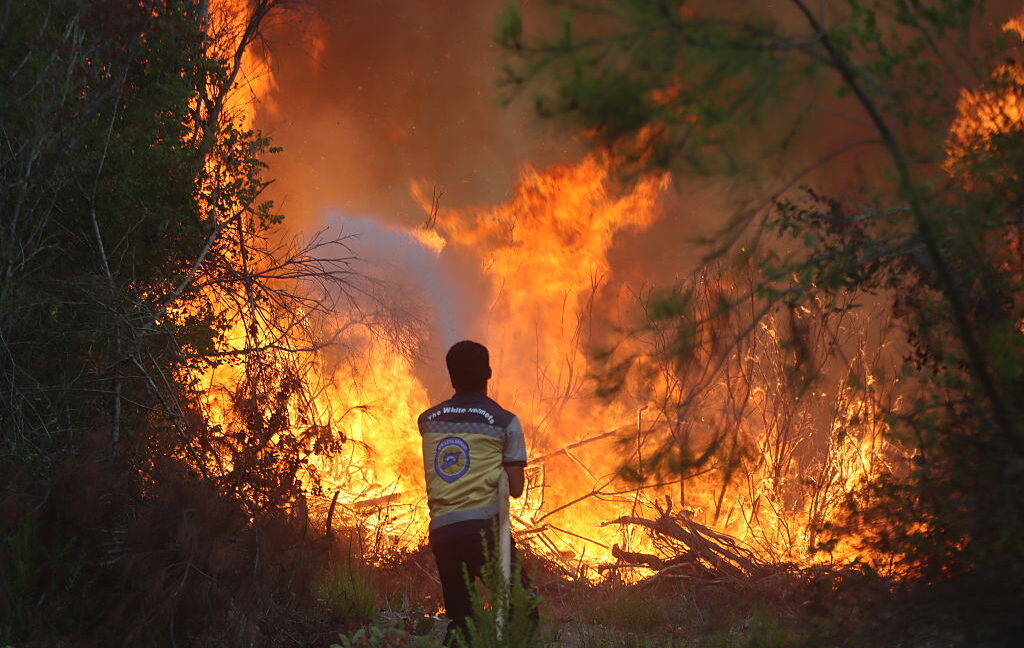
Natural disasters are a rising burden for the National Guard

“The effects of climate change are destroying the military’s infrastructure—Secretary Hegseth should take that threat seriously,” Warren told ICN in an email. “This data shows just how costly this threat already is for the National Guard to respond to natural disasters. Failing to act will only make these costs skyrocket.”

Neither the Department of Defense nor the White House immediately responded to a request for comment.

Last week, Hegseth doubled down on his vow to erase climate change from the military’s agenda. “No more climate change worship,” Hegseth exhorted, before an audience of senior officials he summoned to Marine Corps Base Quantico in Virginia on October 1. “No more division, distraction, or gender delusions. No more debris,” he said. Departing from the prepared text released by the Pentagon, he added, “As I’ve said before, and will say again, we are done with that shit.”

But the data released by the Pentagon suggest that the impacts of climate change are shaping the military’s duties, even if the department ceases acknowledging the science or planning for a warming future. In 2024, National Guard paid duty days on disaster response—445,306—had nearly tripled compared to nine years earlier, with significant fluctuations in between. (The Pentagon provided the figures in terms of “mandays,” or paid duty days over and above reservists’ required annual training days.)

Demand for reservist deployment on disaster assistance over those years peaked at 1.25 million duty days in 2017, when Hurricanes Harvey, Irma, and Maria unleashed havoc in Texas, Florida, and Puerto Rico.

The greatest deployment of National Guard members in response to wildfire over the past decade came in 2023, when wind-driven wildfires tore across Maui, leaving more than 100 people dead. Called into action by Gov. Josh Green, the Hawaii National Guard performed aerial water drops in CH-47 Chinook helicopters. On the ground, they helped escort fleeing residents, aided in search and recovery, distributed potable water, and performed other tasks.

https://arstechnica.com/science/2025/10/natural-disasters-are-a-rising-burden-for-the-national-guard/


Here’s the real reason Endurance sank

In 1915, intrepid British explorer Sir Ernest Shackleton and his crew were stranded for months in the Antarctic after their ship, Endurance, was trapped by pack ice, eventually sinking into the freezing depths of the Weddell Sea. Miraculously, the entire crew survived. The prevailing popular narrative surrounding the famous voyage features two key assumptions: that Endurance was the strongest polar ship of its time, and that the ship ultimately sank after ice tore away the rudder.

However, a fresh analysis reveals that Endurance would have sunk even with an intact rudder; it was crushed by the cumulative compressive forces of the Arctic ice with no single cause for the sinking. Furthermore, the ship wasn’t designed to withstand those forces and Shackleton was likely well aware of that fact, according to a new paper published in the journal Polar Record. Yet he chose to embark on the risky voyage anyway.

Author Jukka Tuhkuri of Aalto University is a polar explorer and one of the leading researchers on ice worldwide. He was among the scientists on the Endurance22 mission that discovered the Endurance shipwreck in 2022, documented in a 2024 National Geographic documentary. The ship was in pristine condition partly because of the lack of wood-eating microbes in those waters. In fact, the Endurance22 expedition’s exploration director, Mensun Bound, told The New York Times at the time that the shipwreck was the finest example he’s ever seen; Endurance was “in a brilliant state of preservation.”

As previously reported, Endurance set sail from Plymouth on August 6, 1914, with Shackleton joining his crew in Buenos Aires, Argentina. By the time they reached the Weddell Sea in January 1915, accumulating pack ice and strong gales slowed progress to a crawl. Endurance became completely icebound on January 24, and by mid-February, Shackleton ordered the boilers to be shut off so that the ship would drift with the ice until the weather warmed sufficiently for the pack to break up. It would be a long wait. For 10 months, the crew endured the freezing conditions. In August, ice floes pressed into the ship with such force that the ship’s decks buckled.

https://arstechnica.com/science/2025/10/heres-the-real-reason-endurance-sank/


Megafauna was the meat of choice for South American hunters

So, the evidence is mixed. Now, Prates and his colleagues are arguing we’re not off the hook. Humans and extinct megafauna only shared South America for less than 3,000 years, and it was over 10,000 years ago, so the odds of evidence being preserved are fairly low. At many of those sites, Pleistocene layers—which would include extinct megafauna—are mixed with bones left behind during the Holocene, which skews the numbers in favor of smaller prey and species that survived the end of the Ice Age.

The researchers focused on 20 sites where the timeline was clear, so they could determine what people were doing before 11,600 years ago, when megafauna was still potentially on the menu. And if some researchers were inclined to exonerate humanity because it looked like we didn’t actually kill that much megafauna, Prates and his colleagues’ results suggest otherwise.

“Our results,” write Prates and his colleagues, “put human foragers again at the heart of the debate.”

Pleistocene hunters shopped in bulk

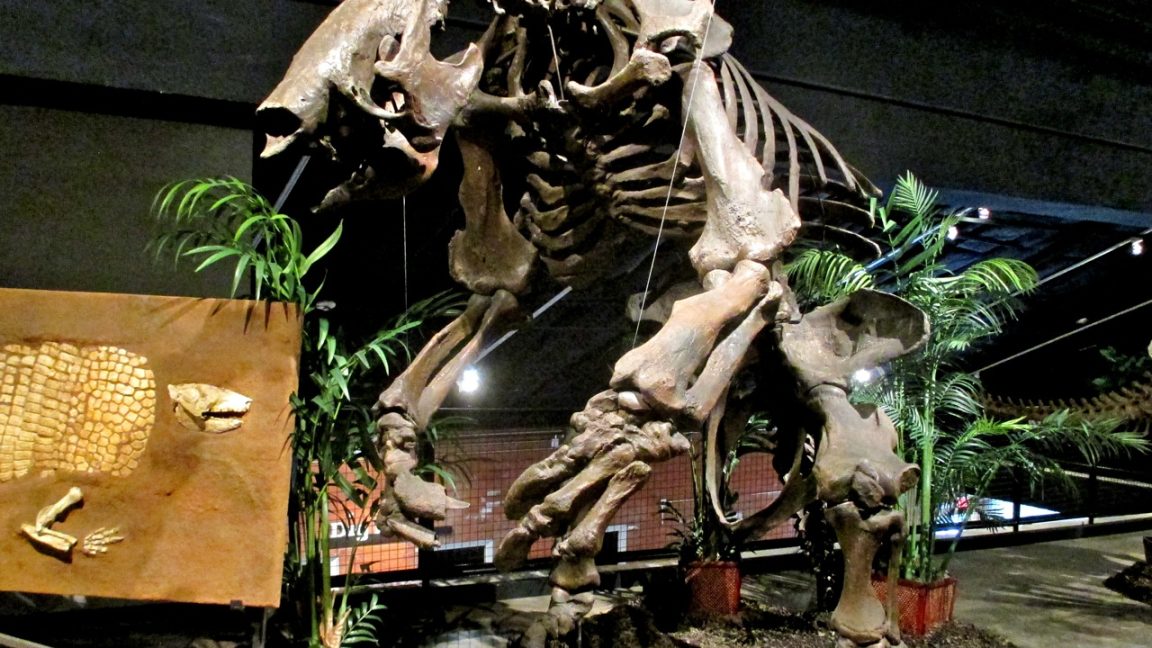
According to the “prey choice model,” a system that researchers use to explore how hunter-gatherers choose what to hunt, megafauna are prime prey. The prey choice model ranks animals based on how many calories they’re likely to provide versus the amount of energy expended in pursuing them (and in lugging the carcass home and carving it up into edible chunks). Giant sloths, giant armadillos, and extinct American horses all consistently rank near the top of that list.

Pleistocene hunters were every bit as intelligent as modern people, and extremely savvy about their own environments, so they were likely making their own versions of prey choice calculations and opting to shop in bulk, as it were.

Surprisingly, modern-day megafauna like guanaco, taruca, and vicuña don’t rank very high on the prey-choice list compared to the megafauna of yesteryear. You can feed a band of hunter-gatherers by hunting taruca, but not as efficiently or well as you can by going after giant sloths. It appears that more recent hunters shifted to these options only once their more statistically optimal choices got too scarce. And that—along with modern conservation efforts—probably helps explain why these species are still around today.

Science Advances, 2025. DOI: 10.1126/sciadv.adx2615 <a href="%22https://dx.doi.org/
10.1126/sciadv.adx2615; (About DOIs<a href="%22https://dx.doi.org/
).

https://arstechnica.com/science/2025/10/ice-age-hunters-in-south-america-preferred-now-extinct-megafauna/


Researchers find a carbon-rich moon-forming disk around giant exoplanet

Many of the most interesting bodies in our Solar System aren’t planets, but the moons that orbit them. They have active volcanoes, hydrocarbon oceans, geysers, and moon-wide oceans buried under icy crusts. And, as far as we can tell, the physics of the processes that produce large planets should make moon formation inevitable. Given how common planets are, our galaxy should be teeming with moons.

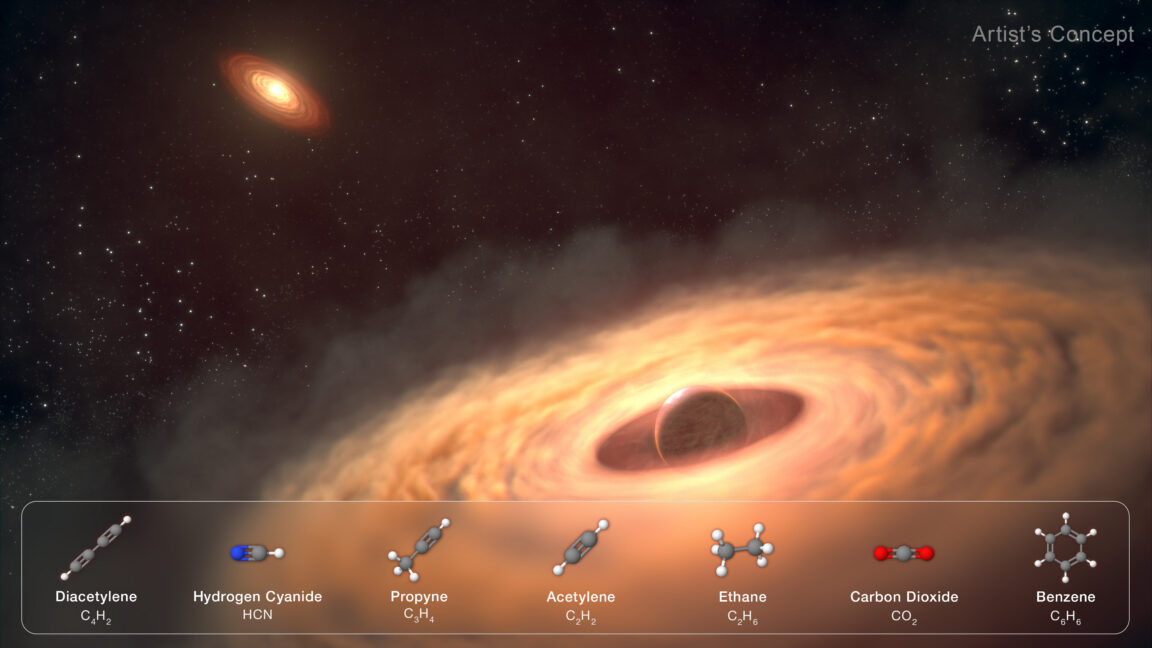
Yet, despite some tantalizing hints, we’ve not found a clear indication of a moon orbiting an exoplanet. What we have found are a few very young exoplanets that appear to have moon-forming disks around them. Now, the James Webb Space Telescope has obtained a spectrum of the ring-forming disk around a giant super-Jupiter, and found that it’s rich in small carbon-based molecules. That’s despite the fact that the star it’s orbiting seems to have a planet-forming disk that’s mostly water.

Finding disks

We search for exo-moons and moon-forming disks using completely different methods. To spot an actual moon, we rely on its gravitational influence. At some points in its orbit, it will be towing its planet forward to speed up its orbit; at others, it will be holding its planet back. This introduces subtle variations in the timing of when the planet arrives in front of the star from Earth’s perspective.

(The moon should also block out a bit more of the star’s light at different points in its orbit, but this can easily be masked by variability in the star itself.)

Moon-forming disks, however, are only present early in an exosolar system’s history. They are a bit like larger versions of the rings of Saturn, but with enough material to condense into moons. Over the first few million years of an exosolar system’s history, that material will end up as some combination of dispersed, condensed into moons, or fallen into the planet.

https://arstechnica.com/science/2025/09/researchers-find-a-carbon-rich-moon-forming-disk-around-giant-exoplanet/


How “prebunking” can restore public trust and other September highlights

The MIT team proposed that a BEC of radioactive atoms—say, rubidium-83—could radioactively decay in sync to produce a laser beam. Neutrinos are released naturally during radioactive decay, and in the quantum BEC state, that decay should accelerate, an effect that should produce an amplified beam of neutrinos akin to how stimulated emission amplifies photons to produce a conventional laser beam. The next step is to build a tabletop demonstration of the concept. If that works, the team envisions using neutrino lasers as a new tool for underground communication and as a source of radioisotopes for medical imaging and cancer diagnostics.

Physical Review Letters, 2025. DOI: 10.1103/l3c1-yg2l

Reviving the pinhole camera for IR imaging

Researchers use laser light to form a tiny “optical pinhole” inside a nonlinear crystal, which also turns the infrared image into a visible image that a traditional silicon-based camera sensor can detect.

Credit: Kun Huang, East China Normal University

The earliest forms of the pinhole camera have been around for millennia, dating as far back as the 4th century BCE in China. Light passes through a tiny hole punched into a light-proof box, projecting an inverted image of the scene outside onto the opposite interior wall. Lens-based imaging is prone to distortion and has limitations on depth of field and wavelength. So scientists have revived the pinhole technology to create a prototype pinhole camera for infrared imaging, according to a paper published in the journal Optica.

To make their IR pinhole imaging system, the authors used a laser to create an optical hole inside a nonlinear crystal with a “chirped-period” structure capable of gathering light rays from a wide range of directions, resulting in a wider field of view. The crystal’s unique optical properties essentially convert infrared images into visible light, making it possible for a standard silicon camera to record those images. The process also naturally suppresses noise, so it can work even in low-light conditions.

To test their prototype, the team used 3D time-of-flight IR imaging to image a matte ceramic rabbit and reconstruct its 3D shape by synchronizing ultrafast pulses. The IR pinhole camera can even be adapted to far-infrared or terahertz wavelengths. It’s still very much in the proof-of-concept stage, but once their innovation makes IR imaging systems more affordable, portable, and energy-efficient, the authors envision applications in night vision, industrial quality control, and environmental monitoring, among other uses.

https://arstechnica.com/science/2025/09/research-roundup-six-cool-stories-we-almost-missed/


150 million-year-old pterosaur cold case has finally been solved

Smyth thinks that so few adults show up on the fossil record in this region not only because they were more likely to survive, but also because those that couldn’t were not buried as quickly. Carcasses would float on the water anywhere from days to weeks. As they decomposed, parts would fall to the lagoon bottom. Juveniles were small enough to be swept under and buried quickly by sediments that would preserve them.

Cause of death

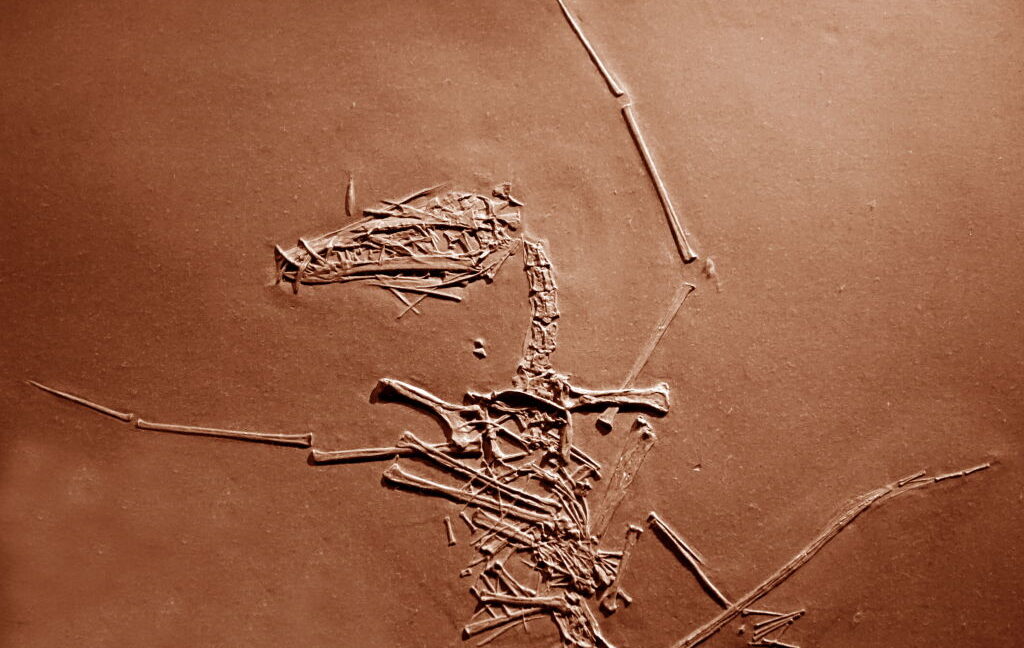
The humerus fractures found in Lucky I and Lucky II were especially significant because forelimb injuries are the most common among existing flying vertebrates. The humerus attaches the wing to the body and bears most flight stress, which makes it more prone to trauma. Most humerus fractures happen in flight as opposed to being the result of a sudden impact with a tree or cliff. And these fractures were the only skeletal trauma seen in any of the juvenile pterosaur specimens from Solnhofen.

Evidence suggesting the injuries to the two fledgling pterosaurs happened before death includes the displacement of bones while they were still in flight (something recognizable from storm deaths of extant birds and bats) and the smooth edges of the break, which happens in life, as opposed to the jagged edges of postmortem breaks. There were also no visible signs of healing.

Storms disproportionately affected flying creatures at Solnhofen, which were often taken down by intense winds. Many of Solnhofen’s fossilized vertebrates were pterosaurs and other winged species such as bird ancestor Arachaeopteryx. Flying invertebrates were also doomed.

Even marine invertebrates and fish were threatened by storm conditions, which churned the lagoons and brought deep waters with higher salt levels and low oxygen to the surface. Anything that sank to the bottom was exceptionally preserved because of these same conditions, which were too harsh for scavengers and paused decomposition. Mud kicked up by the storms also helped with the fossilization process by quickly covering these organisms and providing further protection from the elements.

“The same storm events responsible for the burial of these individuals also transported the pterosaurs into the lagoonal basins and were likely the primary cause of their injury and death,” Smyth concluded.

Although Lucky I and Lucky II were decidedly unlucky, the exquisite preservation of their skeletons that shows how they died has finally allowed researchers to solve a case that went cold for over a hundred thousand years.

Current Biology, 2025. DOI: 10.1016/j.cub.2025.08.006

https://arstechnica.com/science/2025/09/150-million-year-old-pterosaur-cold-case-has-finally-been-solved/


The current war on science, and who’s behind it

Mann and Hotez have more in common than being pilloried all over the internet. Although they trained in disparate disciplines, their fields are now converging (as if they weren’t each threatening enough on their own). Climate change is altering the habitats, migrations, and reproductive patterns of pathogen-bearing wildlife like bats, mosquitoes, and other insects. It is causing the migration of humans as well. Our increasing proximity to these species in both space and time can increase the opportunities for us to catch diseases from them.

Yet Mann and Hotez insist that a third scourge is even more dangerous than these two combined. In their words:

It is currently impossible for global leaders to take the urgent actions necessary to respond to the climate crisis and pandemic threats because they are thwarted by a common enemy—antiscience—that is politically and ideologically motivated opposition to any science that threatens powerful special interests and their political agendas. Unless we find a way to overcome antiscience, humankind will face its gravest threat yet—the collapse of civilization as we know it.

And they point to an obvious culprit: “There is, unquestionably, a coordinated, concerted attack on science by today’s Republican Party.”

They’ve helpfully characterized “the five principal forces of antiscience “ into alliterative groups: (1) plutocrats and their political action committees, (2) petrostates and their politicians and polluters, (3) fake and venal professionals—physicians and professors, (4) propagandists, especially those with podcasts, and (5) the press. The general tactic is that (1) and (2) hire (3) to generate deceitful and inflammatory talking points, which are then disseminated by all-too-willing members of (4) and (5).

There is obviously a lot of overlap among these categories; Elon Musk, Vladimir Putin, Rupert Murdoch, and Donald Trump can all jump between a number of these bins. As such, the ideas and arguments presented in the book are somewhat redundant, as are the words used. Far too many things are deemed “ironic” (i.e., the same people who deny and dismiss the notion of human-caused climate change claimed that Democrats generated hurricanes Helene and Milton to target red states in October 2024) or “risible” (see Robert F. Kennedy Jr.’s claim that Dr. Peter Hotez sought to make it a felony to criticize Anthony Fauci).

https://arstechnica.com/science/2025/09/who-should-we-blame-for-the-current-war-on-science/


50+ scientific societies sign letter objecting to Trump executive order

Last month, the Trump administration issued an executive order asserting political control over grant funding, including all federally supported research. In general, the executive order inserts a layer of political control over both the announcement of new funding opportunities and the approval of individual grants. Now, a coalition of more than 50 scientific and medical organizations is firing back, issuing a letter to the US Congress expressing grave concerns over the order’s provisions and urging Congress to protect the integrity of what has long been an independent, merit-based, peer-review system for awarding federal grants.

As we previously reported, the order requires that any announcement of funding opportunities be reviewed by the head of the agency or someone they designate, which means a political appointee will have the ultimate say over what areas of science the US funds. Individual grants will also require clearance from a political appointee and “must, where applicable, demonstrably advance the President’s policy priorities.”

The order also instructs agencies to formalize the ability to cancel previously awarded grants at any time if they’re considered “no longer advance agency priorities.” Until a system is in place to enforce the new rules, agencies are forbidden from starting new funding programs.

In short, the new rules would mean that all federal science research would need to be approved by a political appointee who may have no expertise in the relevant areas, and the research can be canceled at any time if the political winds change. It would mark the end of a system that has enabled US scientific leadership for roughly 70 years.

https://arstechnica.com/science/2025/09/50-scientific-societies-sign-letter-objecting-to-trump-executive-order/


Fiji’s ants might be the canary in the coal mine for the insect apocalypse

Overall, the team analyzed more than 4,000 specimens of ants collected over the past decade or so. And gradually, a turbulent history of Fijian ants started to emerge from the data.

The first colonists

The art of reconstructing the history of entire populations from individual genetic sequences relies on comparing them to each other thoroughly and running a whole lot of computer simulations. “We had multiple individuals per population,” Mikheyev explains. “Let’s say we look at this population and find it has essentially no diversity. It suggests that it very recently descended from a small number of individuals.” When the contrary was true and the diversity was high, the team assumed it indicated the population had been stable for a long time.

With the DNA data in hand, the team simulated how populations of ants would evolve over thousands of years under various conditions, and picked scenarios that best matched the genetic diversity results it obtained from real ants. “We identified multiple instances of colonization—broadscale evolutionary events that gave rise to the Fijian fauna that happened in different timeframes,” Mikheyev says. There was a total of at least 65 colonization events.

The first ants, according to Mikheyev, arrived at Fiji millions of years ago and gave rise to 88 endemic Fijian ant species we have today. These ants most likely evolved from a single ancestor and then diverged from their mainland relatives. Then, a further 23 colonization events introduced ants that were native to a broader Pacific region. These ants, the team found, were a mixture of species that colonized Fiji naturally and ones that were brought by the first human settlers, the Lapita people, who arrived around 3,000 years ago.

The arrival of humans also matched the first declines in endemic Fijian ant species.

Slash and burn

“In retrospect, these declines are not really surprising,” Mikheyev says. The first Fijian human colonists didn’t have the same population density as we have now, but they did practice things like slash-and-burn agriculture, where forests were cut down, left to dry, and burned to make space for farms and fertilize the soil. “And you know, not every ant likes to live in a field, especially the ones that evolved to live in a forest,” Mikheyev adds. But the declines in Fijian endemic ant species really accelerated after the first contact with the Europeans.

https://arstechnica.com/science/2025/09/fijis-ants-might-be-the-canary-in-the-coal-mine-for-the-insect-apocalypse/


Pentagon begins deploying new satellite network to link sensors with shooters

The relay satellites, which the SDA calls the transport layer, are also equipped with Ka-band and laser communication terminals for higher bandwidth connectivity.

“What the transport layer does is it extends beyond the line of sight,” Sandhoo said. “Now, you’re able to talk not only to within couple of miles with your Link 16 radios, (but) we can use space to, let’s say, go from Hawaii out to Guam using those tactical radios, using a space layer.”

The Space Development Agency’s “Tranche 1” architecture includes 154 operational satellites, 126 for data relay and 28 for missile tracking. With this illustration, the SDA does its best to show how the complex architecture is supposed to work. Credit: Space Development Agency

Another batch of SDA relay satellites will launch next month, and more will head to space in November. In all, it will take 10 launches to fully deploy the SDA’s Tranche 1 constellation. Six of those missions will carry data relay satellites, and four will carry satellites with sensors to detect and track missile launches. The Pentagon selected several contractors to build the satellites, so the military is not reliant on a single company. The builders of the SDA’s operational satellites include York, Lockheed Martin, Northrop Grumman, and L3Harris.

“We will increase coverage as we get the rest of those launches on orbit,” said Michael Eppolito, the SDA’s acting deputy director.

The satellites will connect with one another using inter-satellite laser links, creating a mesh network with sufficient range to provide regional communications, missile warning, and targeting coverage over the Western Pacific beginning in 2027. US Indo-Pacific Command, which oversees military operations in this region, is slated to become the first combatant command to take up use of the SDA’s satellite constellation.

This is not incidental. US officials see China as the nation’s primary strategic threat, and Indo-Pacific Command would be on the front lines of any future conflict between Chinese and US forces. The SDA has contracts in place for more than 270 second-generation, or Tranche 2 satellites, to further expand the network’s reach. There’s also a third generation in the works, but the Pentagon has paused part of the SDA’s Tranche 3 program to evaluate other architectures, including one offered by SpaceX.

Teaching tactical operators to use the new capabilities offered by the SDA’s satellite fleet could be just as challenging as building the network itself. To do this, the Pentagon plans to put soldiers, sailors, airmen, and marines through “warfighter immersion” training beginning next year. This training will allow US forces to “get used to using space from this construct,” Sandhoo said.

https://arstechnica.com/space/2025/09/pentagon-begins-deploying-new-satellite-network-to-link-sensors-with-shooters/