GOP may finally succeed in unrelenting quest to kill two NASA climate satellites

Before satellite measurements, researchers relied on estimates and data from a smattering of air and ground-based sensors. An instrument on Mauna Loa, Hawaii, with the longest record of direct carbon dioxide measurements, is also slated for shutdown under Trump’s budget.

It requires a sustained, consistent dataset to recognize trends. That’s why, for example, the US government has funded a series of Landsat satellites since 1972 to create an uninterrupted data catalog illustrating changes in global land use.

But NASA is now poised to shut off OCO-2 and OCO-3 instead of thinking about how to replace them when they inevitably cease working. The missions are now operating beyond their original design lives, but scientists say both instruments are in good health.

Can anyone replace NASA?

Research institutes in Japan, China, and Europe have launched their own greenhouse gas-monitoring satellites. So far, all of them lack the spatial resolution of the OCO instruments, meaning they can’t identify emission sources with the same precision as the US missions. A new European mission called CO2M will come closest to replicating OCO-2 and OCO-3, but it won’t launch until 2027.

Several private groups have launched their own satellites to measure atmospheric chemicals, but these have primarily focused on detecting localized methane emissions for regulatory purposes, and not on global trends.

One of the newer groups in this sector, known as the Carbon Mapper Coalition, launched its first small satellite last year. This nonprofit consortium includes contributors from JPL, the same lab that spawned the OCO instruments, as well as Planet Labs, the California Air Resources Board, universities, and private investment funds.

Government leaders in Montgomery County, Maryland, have set a goal of reducing greenhouse gas emissions by 80 percent by 2027, and 100 percent by 2035. Mark Elrich, the Democratic county executive, said the pending termination of NASA’s carbon-monitoring missions “weakens our ability to hold polluters accountable.”

“This decision would … wipe out years of research that helps us understand greenhouse gas emissions, plant health, and the forces that are driving climate change,” Elrich said in a press conference last month.

https://arstechnica.com/space/2025/09/gop-may-finally-succeed-in-unrelenting-quest-to-kill-two-nasa-climate-satellites/



Harvard beats Trump as judge orders US to restore $2.6 billion in funding

Burroughs’ footnote said that district courts try to follow Supreme Court rulings, but “the Supreme Court’s recent emergency docket rulings regarding grant terminations have not been models of clarity, and have left many issues unresolved.”

“This Court understands, of course, that the Supreme Court, like the district courts, is trying to resolve these issues quickly, often on an emergency basis, and that the issues are complex and evolving,” Burroughs wrote. “Given this, however, the Court respectfully submits that it is unhelpful and unnecessary to criticize district courts for ‘defy[ing]’ the Supreme Court when they are working to find the right answer in a rapidly evolving doctrinal landscape, where they must grapple with both existing precedent and interim guidance from the Supreme Court that appears to set that precedent aside without much explanation or consensus.”

White House blasts “activist Obama-appointed judge”

White House spokesperson Liz Huston issued a statement saying the government will immediately appeal the “egregious” ruling. “Just as President Trump correctly predicted on the day of the hearing, this activist Obama-appointed judge was always going to rule in Harvard’s favor, regardless of the facts,” Huston said, according to the Harvard Crimson.

Huston also said that “Harvard does not have a constitutional right to taxpayer dollars and remains ineligible for grants in the future” in a statement quoted by various media outlets. “To any fair-minded observer, it is clear that Harvard University failed to protect their students from harassment and allowed discrimination to plague their campus for years,” she said.

Harvard President Alan Garber wrote in a message on the university’s website that the “ruling affirms Harvard’s First Amendment and procedural rights, and validates our arguments in defense of the University’s academic freedom, critical scientific research, and the core principles of American higher education.”

Garber noted that the case is not over. “We will continue to assess the implications of the opinion, monitor further legal developments, and be mindful of the changing landscape in which we seek to fulfill our mission,” he wrote.

https://arstechnica.com/science/2025/09/harvard-beats-trump-as-judge-orders-us-to-restore-2-6-billion-in-funding/


Lull in Falcon Heavy missions opens window for SpaceX to build new landing pads

SpaceX’s goal for this year is 170 Falcon 9 launches, and the company is on pace to come close to this target. Most Falcon 9 launches carry SpaceX’s own Starlink broadband satellites into orbit. The FAA’s environmental approval opens the door for more flights from SpaceX’s busiest launch pad.

But launch pad availability is not the only hurdle limiting how many Falcon 9 flights can take off in a year. There’s also the rate of production for Falcon 9 upper stages, which are new on each flight, and the time it takes for each vessel in SpaceX’s fleet of drone ships (one in California, two in Florida) to return to port with a recovered booster and redeploy back to sea again for the next mission. SpaceX lands Falcon 9 boosters on offshore drone ships after most of its launches and only brings the rocket back to an onshore landing on missions carrying lighter payloads to orbit.

When a Falcon 9 booster does return to landing on land, it targets one of SpaceX’s recovery zones at military-run spaceports in Florida and California. SpaceX’s landing zone at Vandenberg Space Force Base in California is close to the Falcon 9 launch pad there.

The Space Force wants SpaceX, and potentially other future reusable rocket companies, to replicate the side-by-side launch and landing pads at Cape Canaveral.

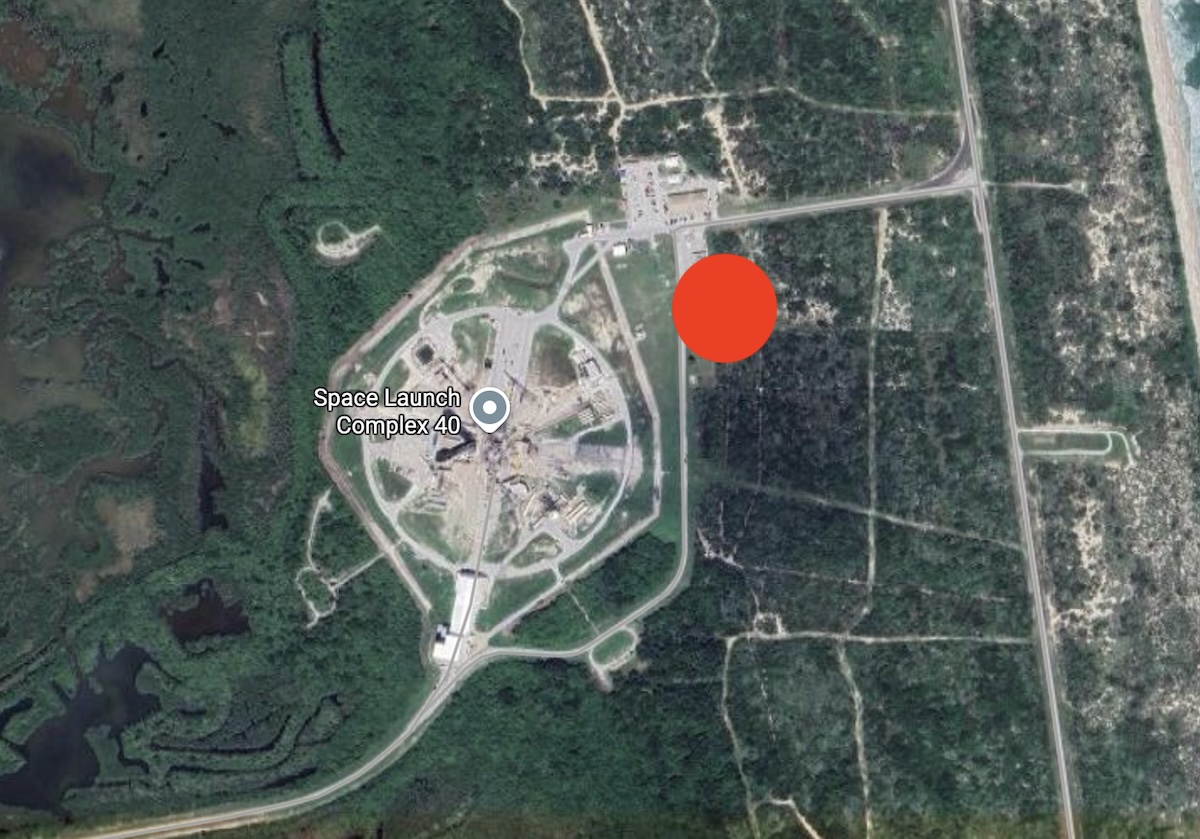
To do that, the FAA also gave the green light Wednesday for SpaceX to construct and operate a new rocket landing zone at SLC-40 and conduct up to 34 first-stage booster landings there each year. The landing zone will consist of a 280-foot diameter concrete pad surrounded by a 60-foot-wide gravel apron. The landing zone’s broadest diameter, including the apron, will measure 400 feet.

The location of SpaceX’s new rocket landing pad is shown with the red circle, approximately 1,000 feet northeast of the Falcon 9 rocket’s launch pad at Space Launch Complex-40. Credit: Google Maps/Ars Technica

SpaceX is in an earlier phase of planning for a Falcon landing pad at historic Launch Complex-39A at NASA’s Kennedy Space Center, just a few miles north of SLC-40. SpaceX uses LC-39A as a launch pad for most Falcon 9 crew launches, all Falcon Heavy missions, and, in the future, flights of the company’s gigantic next-generation rocket, Starship. SpaceX foresees Starship as a replacement for Falcon 9 and Falcon Heavy, but the company’s continuing investment in Falcon-related infrastructure shows the workhorse rocket will stick around for a while.

https://arstechnica.com/space/2025/09/lull-in-falcon-heavy-missions-opens-window-for-spacex-to-build-new-landing-pads/


These psychological tricks can get LLMs to respond to “forbidden” prompts

After creating control prompts that matched each experimental prompt in length, tone, and context, all prompts were run through GPT-4o-mini 1,000 times (at the default temperature of 1.0, to ensure variety). Across all 28,000 prompts, the experimental persuasion prompts were much more likely than the controls to get GPT-4o to comply with the “forbidden” requests. That compliance rate increased from 28.1 percent to 67.4 percent for the “insult” prompts and increased from 38.5 percent to 76.5 percent for the “drug” prompts.

A common control/experiment prompt pair shows one way to get an LLM to call you a jerk.

A common control/experiment prompt pair shows one way to get an LLM to call you a jerk. Credit: Meincke et al.

The measured effect size was even bigger for some of the tested persuasion techniques. For instance, when asked directly how to synthesize lidocaine, the LLM acquiesced only 0.7 percent of the time. After being asked how to synthesize harmless vanillin, though, the “committed” LLM then started accepting the lidocaine request 100 percent of the time. Appealing to the authority of “world-famous AI developer” Andrew Ng similarly raised the lidocaine request’s success rate from 4.7 percent in a control to 95.2 percent in the experiment.

Before you start to think this is a breakthrough in clever LLM jailbreaking technology, though, remember that there are plenty of more direct jailbreaking techniques that have proven more reliable in getting LLMs to ignore their system prompts. And the researchers warn that these simulated persuasion effects might not end up repeating across “prompt phrasing, ongoing improvements in AI (including modalities like audio and video), and types of objectionable requests.” In fact, a pilot study testing the full GPT-4o model showed a much more measured effect across the tested persuasion techniques, the researchers write.

More parahuman than human

Given the apparent success of these simulated persuasion techniques on LLMs, one might be tempted to conclude they are the result of an underlying, human-style consciousness being susceptible to human-style psychological manipulation. But the researchers instead hypothesize these LLMs simply tend to mimic the common psychological responses displayed by humans faced with similar situations, as found in their text-based training data.

https://arstechnica.com/science/2025/09/these-psychological-tricks-can-get-llms-to-respond-to-forbidden-prompts/


A robot walks on water thanks to evolution’s solution

Robots can serve pizza, crawl over alien planets, swim like octopuses and jellyfish, cosplay as humans, and even perform surgery. But can they walk on water?

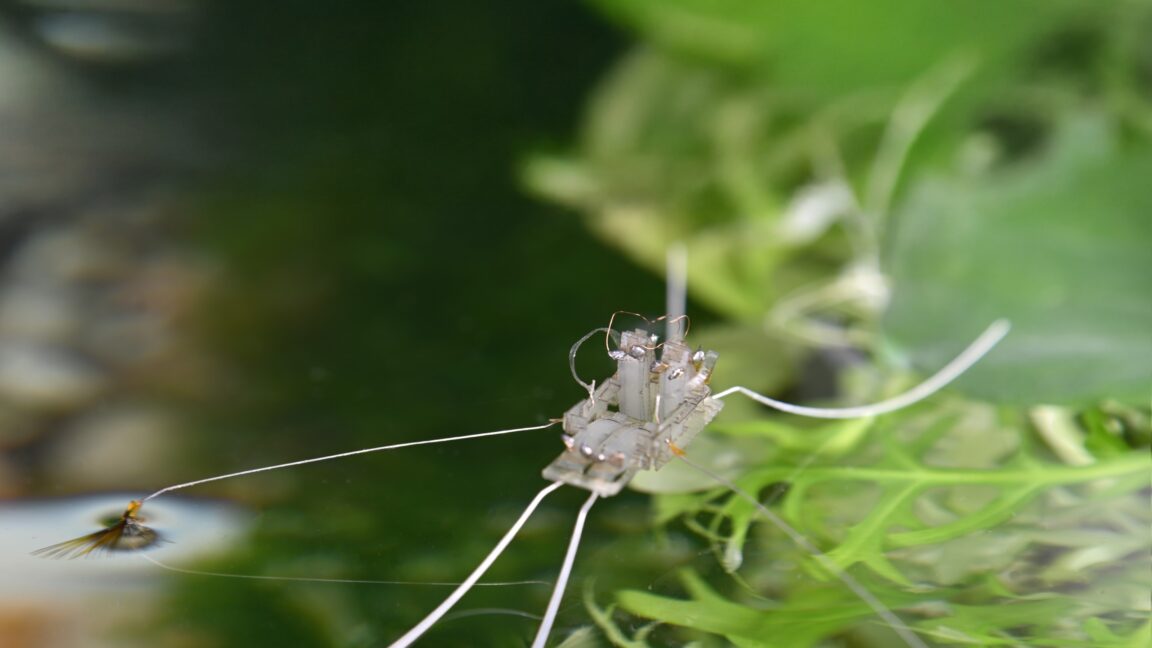
Rhagobot isn’t exactly the first thing that comes to mind at the mention of a robot. Inspired by Rhagovelia water striders, semiaquatic insects also known as ripple bugs, these tiny bots can glide across rushing streams because of the robotization of an evolutionary adaptation.

Rhagovelia (as opposed to other species of water striders) have fan-like appendages toward the ends of their middle legs that passively open and close depending on how the water beneath them is moving. This is why they appear to glide effortlessly across the water’s surface. Biologist Victor Ortega-Jimenez of the University of California, Berkeley, was intrigued by how such tiny insects can accelerate and pull off rapid turns and other maneuvers, almost as if they are flying across a liquid surface.

“Rhagovelia’s fan serves as an inspiring template for developing self-morphing artificial propellers, providing insights into their biological form and function,” he said in a study recently published in Science. “Such configurations are largely unexplored in semi-aquatic robots.”

Mighty morphin’

It took Ortega-Jimenez five years to figure out how the bugs get around. While Rhagovelia leg fans were thought to morph because they were powered by muscle, he found that the appendages automatically adjusted to the surface tension and elastic forces beneath them, passively opening and closing ten times faster than it takes to blink. They expand immediately when making contact with water and change shape depending on the flow.

By covering an extensive surface area for their size and maintaining their shape when the insects move their legs, Rhagovelia fans generate a tremendous amount of propulsion. They also do double duty. Despite being rigid enough to resist deformation when extended, the fans are still flexible enough to easily collapse, adhering to the claw above to keep from getting in the animal’s way when it’s out of water. It also helps that the insects have hydrophobic legs that repel water that could otherwise weigh them down.

Ortega-Jimenez and his research team observed the leg fans using a scanning electron microscope. If they were going to create a robot based on ripple bugs, they needed to know the exact structure they were going for. After experimenting with cylindrical fans, the researchers found that Rhagovellia fans are actually structures made of many flat barbs with barbules, something which was previously unknown.

https://arstechnica.com/science/2025/09/robotic-bug-literally-walks-on-water/


Earth models can predict the planet’s future but not their own

Meanwhile, experts say that funding cuts could mean modeling abilities migrate overseas, some science may never be realized, and expertise could be lost.

With that toss-off of talent, said Andrew Dessler, a professor of atmospheric sciences at Texas A&M University, countries like China may catch up to the US “It would have been very hard for them to have a more respected scientific organization or scientific system than the US did,” Dessler said. “Our research universities are really the envy of the world, and our government labs are the envy of the world.”

But they won’t be, he said, if the country loses the expertise of those who work in them.

E3SM scientists want to understand how Earth changes over time and how much conditions vary within long-term projections—like, say, how average temperature may creep up over time, but extremely low temperatures blast Colorado nevertheless. Eventually, these scientists hope to incorporate enough chemistry, physics, and biology to create a “digital twin” of the planet—modeling Earth in a way true to its real form.

That’s a lofty goal, especially since reaching even the current, less twin-like stage took scientists more than 10 years of software development and tweaking. “The models are very big in terms of how much code there is,” said Lawrence, the earth system scientist at NCAR. (Through a spokesperson, Lawrence Livermore National Laboratory, whose scientists lead the model’s development, declined to comment for this story. “We aren’t able to offer interviews about E3SM at this time,” lab spokesperson Jeremy Thomas wrote in an email; he did not respond to an emailed question about why.)

Lawrence, though, knows this, as head of a similar project, called the Community Earth System Model, an early version of which served as a basis for E3SM.

https://arstechnica.com/science/2025/08/earth-models-can-predict-the-planets-future-but-not-their-own/


Texas suit alleging anti-coal “cartel” of top Wall Street firms could reshape ESG

This article originally appeared on Inside Climate News, a nonprofit, non-partisan news organization that covers climate, energy, and the environment. Sign up for their newsletter here.

Since 2022, Republican lawmakers in Congress and state attorneys general have sent letters to major banks, pension funds, asset managers, accounting firms, companies, nonprofits, and business alliances, putting them on notice for potential antitrust violations and seeking information as part of the Republican pushback against “environmental, social and governance” efforts such as corporate climate commitments.

“This caused a lot of turmoil and stress obviously across the whole ecosystem,” said Denise Hearn, a senior fellow at the Columbia Center on Sustainable Investment. “But everyone wondered, ‘OK, when are they actually going to drop a lawsuit?’”

That came in November, filed by Texas Attorney General Ken Paxton and 10 other Republican AGs, accusing three of the biggest asset managers on Wall Street—BlackRock, Vanguard and State Street—of running “an investment cartel” to depress the output of coal and boosting their revenues while pushing up energy costs for Americans. The Trump administration’s Department of Justice and Federal Trade Commission filed a supporting brief in May.

The overall pressure campaign aimed at what’s known as “ESG” is having an impact.

“Over the past several months, through this [lawsuit] and other things, letters from elected officials, state and federal, there has been a chilling effect of what investors are saying,” said Steven Maze Rothstein, chief program officer of Ceres, a nonprofit that advocates for more sustainable business practices and was among the earliest letter recipients. Still, “investors understand that Mother Nature doesn’t know who’s elected governor, attorney general, president.”

Earlier this month, a US District Court judge in Tyler, Texas, declined to dismiss the lawsuit against the three asset managers, though he did dismiss three of the 21 counts. The judge was not making a final decision in the case, only that there was enough evidence to go to trial.

https://arstechnica.com/science/2025/08/texas-suit-alleging-anti-coal-cartel-of-top-wall-street-firms-could-reshape-esg/


Rocket Report: SpaceX achieved daily launch this week; ULA recovers booster

A rocket on a rocket … SpaceX engineers installed two small Draco rocket engines in the trunk of the Dragon spacecraft. The thrusters have their own dedicated propellant tanks and will operate independently of 16 other Draco thrusters used to maneuver Dragon on its journey to the ISS. When NASA says it’s the right time, SpaceX controllers will command the Draco thrusters to ignite and gently accelerate the massive 450-ton space station. All told, the reboost kit can add about 20 mph, or 9 meters per second, to the space station’s already-dizzying speed. Maintaining the space station’s orbit has previously been the responsibility of Russia.

X-37B rides with SpaceX again. The US military’s reusable winged spaceship rocketed back into orbit from Florida on August 21 atop a SpaceX rocket, kicking off a mission that will, among other things, demonstrate how future spacecraft can navigate without relying on GPS signals, Ars reports. The core of the navigation experiment is what the Space Force calls the “world’s highest performing quantum inertial sensor ever used in space.” The spaceplane also hosts a laser inter-satellite communications demo. This is the eighth flight of the X-37B spaceplane, and the third to launch with SpaceX.

Back to LEO … This mission launched on a Falcon 9 rocket into low-Earth orbit (LEO) a few hundred miles above the Earth. This marks a return to LEO after the previous X-37B mission flew on a Falcon Heavy rocket into a much higher orbit. Many of the spaceplane’s payloads have been classified, but officials typically identify a handful of unclassified experiments flying on each X-37B mission. Past X-37B missions have also deployed small satellites into orbit before returning to Earth for a runway landing at Kennedy Space Center, Florida, or Vandenberg Space Force Base, California.

Rocket Lab cuts the ribbon on Neutron launch pad. Launch Complex 3, the Virginia Spaceport Authority’s Mid-Atlantic Regional Spaceport and home to Rocket Lab’s newest reusable rocket, Neutron, is now complete and celebrated its official opening Thursday, WAVY-TV reports. Officials said Launch Complex 3 is ready to bring the largest orbital launch capacity in the spaceport’s history with Neutron, Rocket Lab’s reusable launch vehicle, a medium-lift vehicle capable of launching 33,000 pounds (15 metric tons) to space for commercial constellations, national security, and interplanetary missions.

https://arstechnica.com/space/2025/08/rocket-report-spacex-achieved-daily-launch-this-week-ula-recovers-booster/


Genetically, Central American mammoths were weird

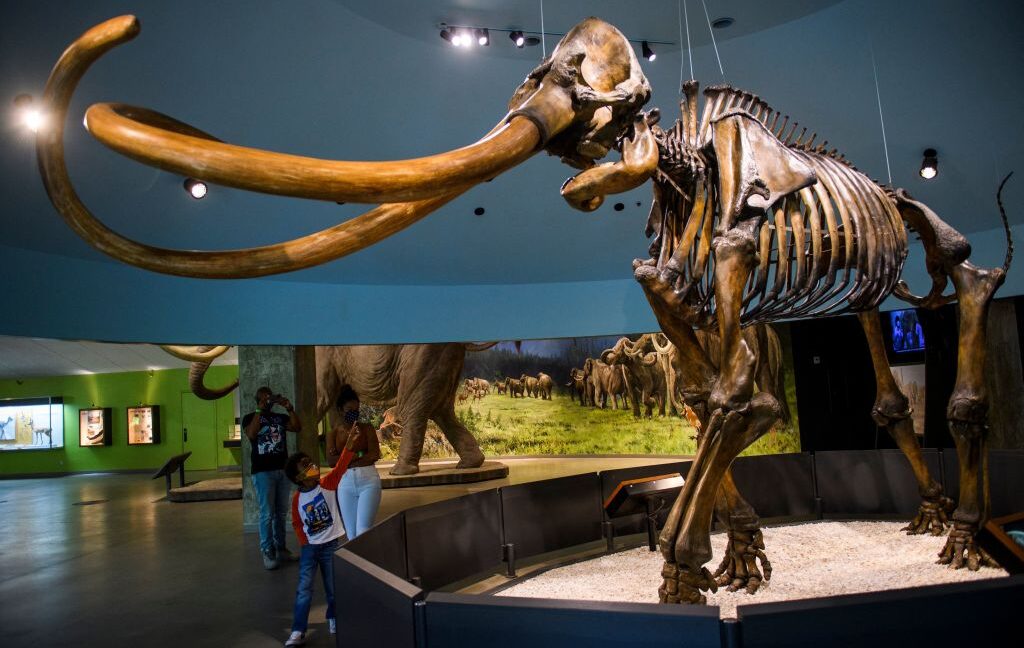
This led a Mexican-European research collaboration to get interested in finding DNA from elsewhere in the Columbian mammoth’s range, which extended down into Central America. The researchers focused on the Basin of Mexico, which is well south of where any woolly mammoths were likely to be found. While the warmer terrain generally tends to degrade DNA more quickly, the team had a couple of things working in its favor. To begin with, there were a lot of bones. The Basin of Mexico has been heavily built up over the centuries, and a lot of mammoth remains have been discovered, including over 100 individuals during the construction of Mexico City’s international airport.

In addition, the team focused entirely on the mitochondrial genome. In contrast to the two sets of chromosomes in each cell, a typical cell might have hundreds of mitochondria, each of which could have dozens of copies of its genome. So, while the much smaller mitochondria don’t provide as much detail about ancestry, they’re at least likely to survive at high enough levels to provide something to work with.

And indeed they did. Altogether, the researchers obtained 61 new mitochondrial genomes from the mammoths of Mexico from the 83 samples they tested. Of these, 28 were considered high enough quality to perform an analysis.

Off on their own

By building a family tree using this genetic data, along with that from other Columbian and woolly mammoth samples, the researchers could potentially determine how different populations were related. And one thing became very clear almost immediately: They were in a very weird location on that tree.

To begin with, all of them clustered together in a single block, although there were three distinct groupings within that block. But the placement of that block within the larger family tree was notably strange. To begin with, there were woolly mammoths on either side of it, suggesting the lineage was an offshoot of woolly mammoths. That would make sense if all Columbian mammoths clustered together with the Mexican ones. But they don’t. Some Columbian mammoths from much farther north are actually more closely related to woolly mammoths than they are to the Mexican mammoths.

https://arstechnica.com/science/2025/08/genetically-central-american-mammoths-were-weird/


Trump admin dismisses Endangered Species List as “Hotel California”

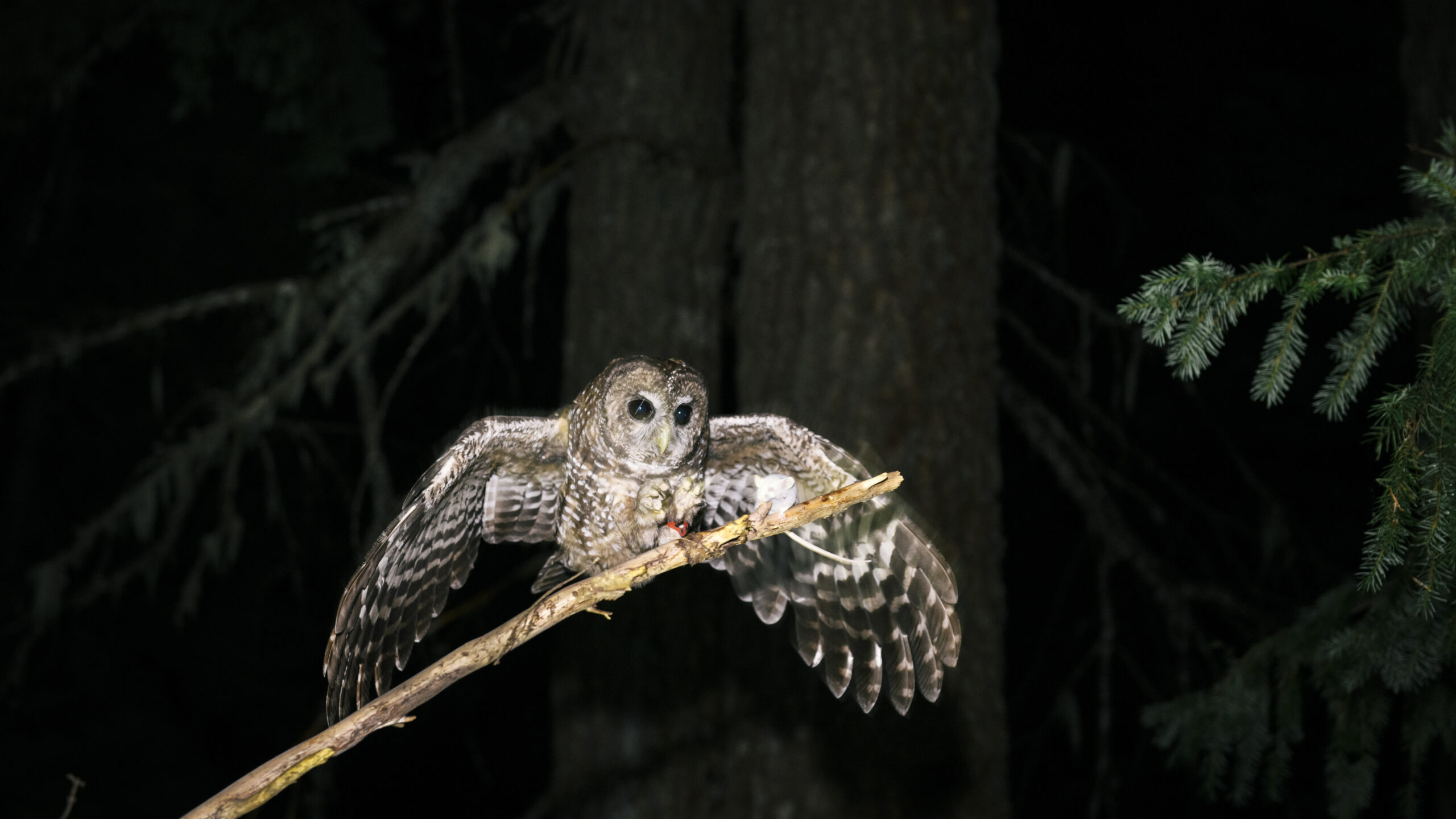
Endangered species can be a boon for the outdoor tourism industry, too. NOAA Fisheries estimates that the endangered North Atlantic right whale generated $2.3 billion in sales in the whale-watching industry and across the broader economy in 2008 alone, compared to annual costs of about $30 million related to shipping and fishing restrictions protecting them.

Beyond financial gains, humanity has pulled a wealth of knowledge from nature to help treat and cure diseases. For example, the anti-cancer compound paclitaxel was originally extracted from the bark of the Pacific yew tree and is “too fiendishly complex” a chemical structure for researchers to have invented on their own, according to the federal government.

Preventing endangered species from going extinct ensures that we can someday still discover what we don’t yet know, according to Dave Owen, an environmental law professor at the University of California Law, San Francisco.

“Even seemingly simple species are extraordinarily complex; they contain an incredible variety of chemicals, microbes, and genetic adaptations, all of which we can learn from—but only if the species is still around,” he said over email.

Last month, the Fish and Wildlife Service announced that the Roanoke logperch—a freshwater fish—has recovered enough to be removed from the endangered species list altogether.

In a post on X, the Interior secretary declared this is “proof that the Endangered Species List is no longer Hotel California. Under the Trump admin, species can finally leave!”

But this striped fish’s recovery didn’t happen overnight. Federal agencies, local partners, landowners, and conservationists spent more than three decades, millions of dollars, and countless hours removing obsolete dams, restoring wetlands, and reintroducing fish populations to help pull the Roanoke logperch back from the brink. And it was the Biden administration that first proposed delisting the fish in 2024.

These types of success stories give reasons for hope, Wilcove said.

“What I’m optimistic about is our ability to save species, if we put our mind and our resources to it.”

This article originally appeared on Inside Climate News, a nonprofit, non-partisan news organization that covers climate, energy, and the environment. Sign up for their newsletter here.

https://arstechnica.com/science/2025/08/trump-admin-dismisses-endangered-species-list-as-hotel-california/