Trump admin dismisses Endangered Species List as “Hotel California”

Endangered species can be a boon for the outdoor tourism industry, too. NOAA Fisheries estimates that the endangered North Atlantic right whale generated $2.3 billion in sales in the whale-watching industry and across the broader economy in 2008 alone, compared to annual costs of about $30 million related to shipping and fishing restrictions protecting them.

Beyond financial gains, humanity has pulled a wealth of knowledge from nature to help treat and cure diseases. For example, the anti-cancer compound paclitaxel was originally extracted from the bark of the Pacific yew tree and is “too fiendishly complex” a chemical structure for researchers to have invented on their own, according to the federal government.

Preventing endangered species from going extinct ensures that we can someday still discover what we don’t yet know, according to Dave Owen, an environmental law professor at the University of California Law, San Francisco.

“Even seemingly simple species are extraordinarily complex; they contain an incredible variety of chemicals, microbes, and genetic adaptations, all of which we can learn from—but only if the species is still around,” he said over email.

Last month, the Fish and Wildlife Service announced that the Roanoke logperch—a freshwater fish—has recovered enough to be removed from the endangered species list altogether.

In a post on X, the Interior secretary declared this is “proof that the Endangered Species List is no longer Hotel California. Under the Trump admin, species can finally leave!”

But this striped fish’s recovery didn’t happen overnight. Federal agencies, local partners, landowners, and conservationists spent more than three decades, millions of dollars, and countless hours removing obsolete dams, restoring wetlands, and reintroducing fish populations to help pull the Roanoke logperch back from the brink. And it was the Biden administration that first proposed delisting the fish in 2024.

These types of success stories give reasons for hope, Wilcove said.

“What I’m optimistic about is our ability to save species, if we put our mind and our resources to it.”

This article originally appeared on Inside Climate News, a nonprofit, non-partisan news organization that covers climate, energy, and the environment. Sign up for their newsletter here.

https://arstechnica.com/science/2025/08/trump-admin-dismisses-endangered-species-list-as-hotel-california/



New dinosaur species is the punk rock version of an ankylosaur

And we have known for sure that the armor was around back then, given that we’ve found the skin-derived osteoderms that comprise the armor in Jurassic deposits. But with little more than a rib and a handful of mouth parts to go on, it wasn’t really possible to say much more than that.

Until now, that is. Because the new Spicomellus remains show extremely clearly that the armor of ankylosaurs got less elaborate over time.

Image of a squat, long dinosaur with a tough plate studded with spikes covering its back.

There’s the typical armor of a Cretaceous ankylosaur…

Encyclopaedia Britannica

Image of a long, squat dinosaur with a back completely covered in sharp spikes, and extremely long spines at the neck and hips.

And then there’s whatever this thing is.

Matthew Dempsey.

The small, solid-looking spikes found along the edges of later ankylosaurs? Forget those. Spicomellus had a back that was probably bristling with sharper spines, along with far larger ones along its outer edges. Each rib appears to have generated as many as six individual spikes. At a handful of locations, these spikes extended out to nearly a meter, looking more like lances than anything needed to ward off a close-in attack.

And the largest of these were along its neck. On the upper surface of its neck, several osteoderms fused to form a massive half-collar of bone and then extended out five or more individual spikes, each among the longest on the animal’s body. And there were three of these structures along the neck. “No known ankylosaur possesses any condition close to the extremely long pairs of spines on the cervical half-ring of Spicomellus,” its discoverers note.

As if its hedgehog-on-acid appearance weren’t enough, handles present on the tail vertebrae suggest that it also had a weaponized tail. All told, the researchers sum things up by saying, “The new specimen reveals extreme dermal armour modifications unlike those of any other vertebrate, extinct or extant, which fall far outside of the range of morphologies shown by other armoured dinosaurs.”

Out go the hypotheses

Because it’s so unusual, the skeleton’s characteristics are difficult to place within a neat family tree of the ankylosaurs. The researchers conclude that some details of its skeleton do suggest Spicomellus groups among the ankylosaurs and conclude that it’s probably an early branch from the main lineage. But without any other significant examples from the lineage at that time, it’s an extremely tentative conclusion. Still, the alternative is that this thing is unrelated to the only other organisms that share at least a few of its bizarre features, which is a difficult idea to swallow.

https://arstechnica.com/science/2025/08/new-dinosaur-species-is-the-punk-rock-version-of-an-ankylosaur/


Under pressure after setbacks, SpaceX’s huge rocket finally goes the distance

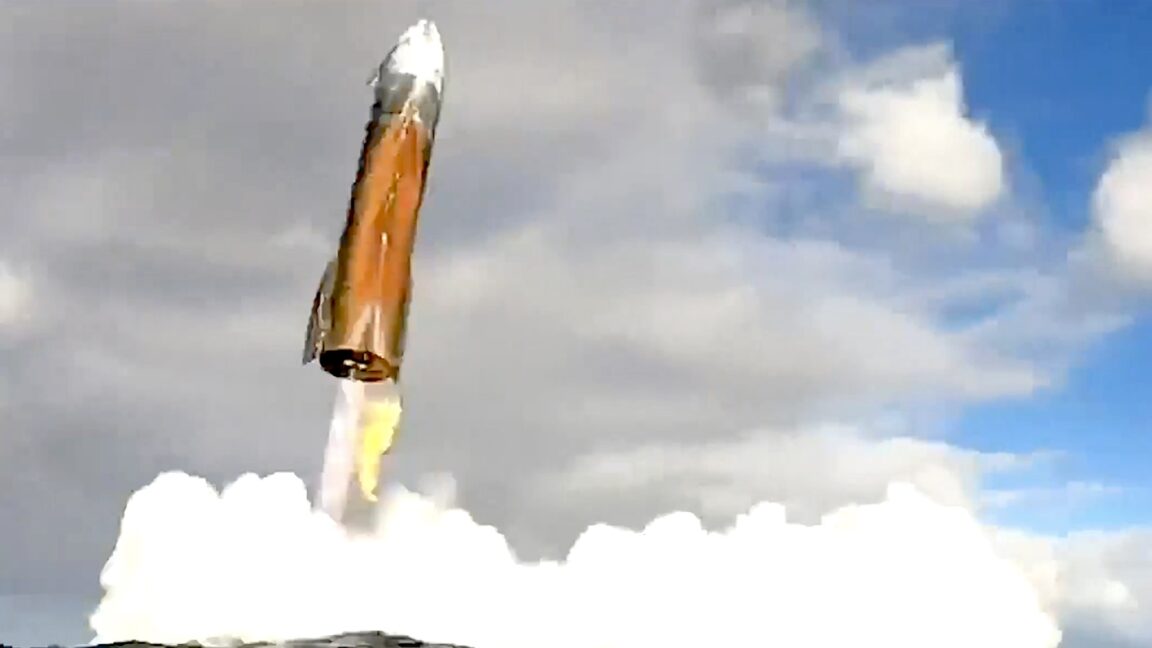
The ship made it all the way through reentry, turned to a horizontal position to descend through scattered clouds, then relit three of its engines to flip back to a vertical orientation for the final braking maneuver before splashdown.

Things to improve on

There are several takeaways from Tuesday’s flight that will require some improvements to Starship, but these are more akin to what officials might expect from a rocket test program and not the catastrophic failures of the ship that occurred earlier this year.

One of the Super Heavy booster’s 33 engines prematurely shut down during ascent. This has happened before, and while it didn’t affect the booster’s overall performance, engineers will investigate the failure to try to improve the reliability of SpaceX’s Raptor engines, each of which can generate more than a half-million pounds of thrust.

Later in the flight, cameras pointed at one of the ship’s rear flaps showed structural damage to the back of the wing. It wasn’t clear what caused the damage, but super-heated plasma burned through part of the flap as the ship fell deeper into the atmosphere. Still, the flap remained largely intact and was able to help control the vehicle through reentry and splashdown.

“We’re kind of being mean to this Starship a little bit,” Huot said on SpaceX’s live webcast. “We’re really trying to put it through the paces and kind of poke on what some of its weak points are.”

Small chunks of debris were also visible peeling off the ship during reentry. The origin of the glowing debris wasn’t immediately clear, but it may have been parts of the ship’s heat shield tiles. On this flight, SpaceX tested several different tile designs, including ceramic and metallic materials, and one tile design that uses “active cooling” to help dissipate heat during reentry.

A bright flash inside the ship’s engine bay during reentry also appeared to damage the vehicle’s aft skirt, the stainless steel structure that encircles the rocket’s six main engines.

“That’s not what we want to see,” Huot said. “We just saw some of the aft skirt just take a hit. So we’ve got some visible damage on the aft skirt. We’re continuing to reenter, though. We are intentionally stressing the ship as we go through this, so it is not guaranteed to be a smooth ride down to the Indian Ocean.

“We’ve removed a bunch of tiles in kind of critical places across the vehicle, so seeing stuff like that is still valuable to us,” he said. “We are trying to kind of push this vehicle to the limits to learn what its limits are as we design our next version of Starship.”

Shana Diez, a Starship engineer at SpaceX, perhaps summed up Tuesday’s results best on X: “It’s not been an easy year but we finally got the reentry data that’s so critical to Starship. It feels good to be back!”

https://arstechnica.com/space/2025/08/spacex-bounces-back-with-a-starship-test-flight-that-ended-on-a-buoyant-note/


Scientists unlock secret to thick, stable beer foams

For many beer lovers, a nice thick head of foam is one of life’s pure pleasures, and the longer that foam lasts, the better the beer-drinking experience. A team of Swiss researchers spent seven years studying why some beer foams last longer than others and found that the degree of fermentation—i.e., whether a given beer has been singly, doubly, or triply fermented—is crucial, according to a new paper published in the journal Physics of Fluids.

As previously reported, foams are ubiquitous in everyday life, found in foods (whipped cream), beverages (beer, cappuccino), shaving cream and hair-styling mousse, packing peanuts, building insulation, flame-retardant materials, and so forth. All foams are the result of air being beaten into a liquid formula that contains some kind of surfactant (active surface agent), usually fats or proteins in edible foams, or chemical additives in non-edible products. That surfactant strengthens the liquid film walls of the bubbles to keep them from collapsing.

Individual bubbles typically form a sphere because that’s the shape with the minimum surface area for any volume and hence is the most energy-efficient. One reason for the minimizing principle when it comes to a bubble’s shape is that many bubbles can then tightly pack together to form a foam. But bubbles “coarsen” over time, the result of gravity pulling down on the liquid and thinning out the walls. Eventually, they start to look more like soccer balls (polyhedrons). In a coarsening foam, smaller bubbles are gradually absorbed by larger ones. There is less and less liquid to separate the individual bubbles, so they press together to fill the space.

This “jamming” is why foams are typically far more rigid than their gas (95 percent) and liquid (5 percent) components. The more tightly the bubbles jam together, the less they can move around and the greater the pressure inside them becomes, giving them properties of a solid.

Various factors can affect foam stability. For instance, in 2019, Japanese researchers investigated a phenomenon known as “collective bubble collapse,” or CBC, in which breaking one bubble at the edge of a foam results in a cascading effect as the breakage spreads to other bubbles in the foam. They identified two distinct mechanisms for the resulting CBCs: a so-called “propagating mode,” in which a broken bubble is absorbed into the liquid film, and a “penetrating mode,” in which the breakage of a bubble causes droplets to shoot off and hit other bubbles, causing them to break in turn.

https://arstechnica.com/science/2025/08/physics-of-why-belgian-beer-foam-is-so-stable/


Google’s AI model just nailed the forecast for the strongest Atlantic storm this year

In early June, shortly after the beginning of the Atlantic hurricane season, Google unveiled a new model designed specifically to forecast the tracks and intensity of tropical cyclones.

Part of the Google DeepMind suite of AI-based weather research models, the “Weather Lab” model for cyclones was a bit of an unknown for meteorologists at its launch. In a blog post at the time, Google said its new model, trained on a vast dataset that reconstructed past weather and a specialized database containing key information about hurricanes tracks, intensity, and size, had performed well during pre-launch testing.

“Internal testing shows that our model’s predictions for cyclone track and intensity are as accurate as, and often more accurate than, current physics-based methods,” the company said.

Google said it would partner with the National Hurricane Center, an arm of the National Oceanic and Atmospheric Service that has provided credible forecasts for decades, to assess the performance of its Weather Lab model in the Atlantic and East Pacific basins.

All eyes on Erin

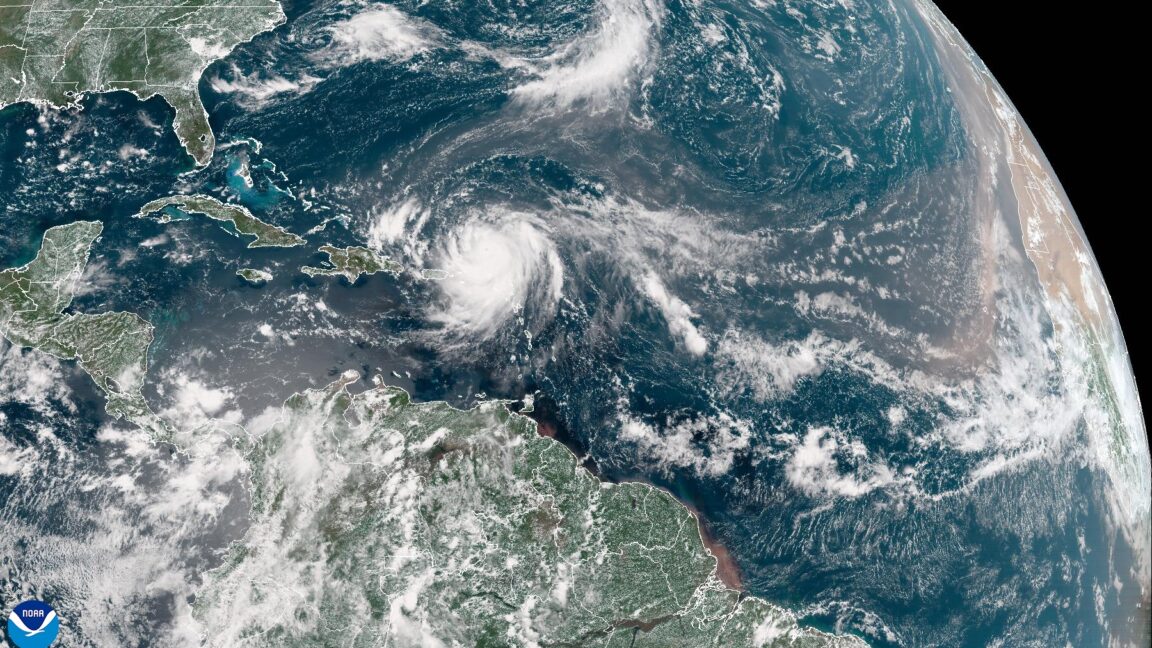
It had been a relatively quiet Atlantic hurricane season until a few weeks ago, with overall activity running below normal levels. So there were no high-profile tests of the new model. But about 10 days ago, Hurricane Erin rapidly intensified in the open Atlantic Ocean, becoming a Category 5 hurricane as it tracked westward.

From a forecast standpoint, it was pretty clear that Erin was not going to directly strike the United States, but meteorologists sweat the details. And because Erin was such a large storm, we had concerns about how close Erin would get to the East Coast of the United States (close enough, it turns out, to cause some serious beach erosion) and its impacts on the small island of Bermuda in the Atlantic.

https://arstechnica.com/science/2025/08/googles-ai-model-just-nailed-the-forecast-for-the-strongest-atlantic-storm-this-year/


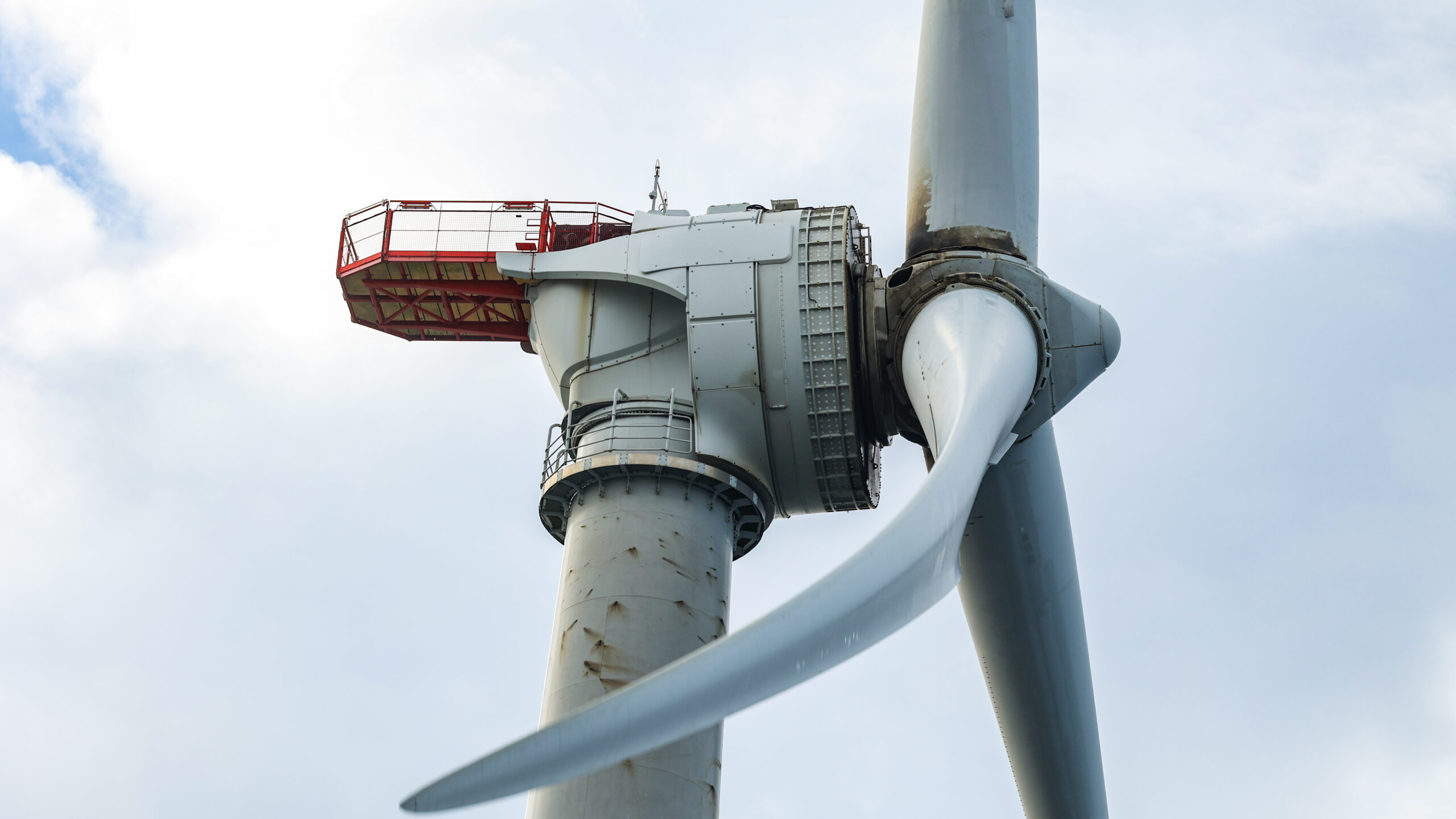
Trump admin issues stop-work order for offshore wind project

In a statement to Politico’s E&E News days after the order was lifted in May, the White House claimed that Hochul “caved” and struck an agreement to allow “two natural gas pipelines to advance” through New York.

Hochul denied that any such deal was made.

Trump has made no effort to conceal his disdain for wind power and other renewable energies, and his administration has actively sought to stymie growth in the industry while providing what critics have described as “giveaways” to fossil fuels.

In a Truth Social post on Wednesday, Trump called wind and solar energy the “SCAM OF THE CENTURY,” criticizing states that have built and rely on them for power.

“We will not approve wind or farmer destroying Solar,” Trump wrote. “The days of stupidity are over in the USA!!!”

On Trump’s first day in office, the president issued a memorandum halting approvals, permits, leases, and loans for both offshore and onshore wind projects.

The GOP also targeted wind energy in the One Big Beautiful Bill Act, accelerating the phaseout of tax credits for wind and solar projects while mandating lease sales for fossil fuels and making millions of acres of federal land available for mining.

The administration’s subsequent consideration of rules to further restrict access to tax credits for wind and solar projects alarmed even some Republicans, prompting Iowa Sen. Chuck Grassley and Utah Sen. John Curtis to place holds on Treasury nominees as they awaited the department’s formal guidance.

Those moves have rattled the wind industry and created uncertainty about the viability of ongoing and future projects.

“The unfortunate message to investors is clear: the US is no longer a reliable place for long-term energy investments,” said the American Clean Power Association, a trade association, in a statement on Friday.

To Kathleen Meil, local clean energy deployment director at the League of Conservation Voters, that represents a loss not only for the environment but also for the US economy.

“It’s really easy to think about the visible—the 4,200 jobs across all phases of development that you see… They’ve hit more than 2 million union work hours on Revolution Wind,” Meil said.

“But what’s also really transformational is that it’s already triggered $1.3 billion in investment through the supply chain. So it’s not just coastal communities that are benefiting from these jobs,” she said.

“This hurts so many people. And why? There’s just no justification.”

This article originally appeared on Inside Climate News, a nonprofit, non-partisan news organization that covers climate, energy, and the environment. Sign up for their newsletter here.

https://arstechnica.com/science/2025/08/trump-admin-issues-stop-work-order-for-offshore-wind-project/


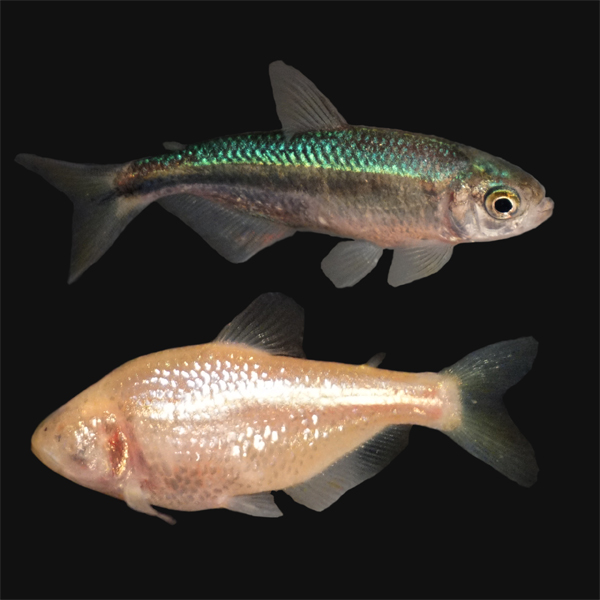
How the cavefish lost its eyes—again and again

Instead, Riddle thinks these carotenoids may be another adaptation to suppress inflammation, which might be important in the wild, as cavefish are likely overeating whenever food arrives.

Studies by Krishnan, Rohner, and colleagues published in 2020 and 2022 have found other adaptations that seem to help tamp down inflammation. Cavefish cells produce lower levels of certain molecules called cytokines that promote inflammation, as well as lower levels of reactive oxygen species — tissue-damaging byproducts of the body’s metabolism that are often elevated in people with obesity or diabetes.

Krishnan is investigating this further, hoping to understand how the well-fed cavefish remain healthy. Rohner, meanwhile, is increasingly interested in how cavefish survive not just overeating, but long periods of starvation, too.

No waste

On a more fundamental level, researchers still hope to figure out why the Mexican tetra evolved into cave forms while any number of other Mexican river fish that also regularly end up in caves did not. (Globally, there are more than 200 cave-adapted fish species, but species that also still have populations on the surface are quite rare.) “Presumably, there is something about the tetras’ genetic makeup that makes it easier for them to adapt,” says Riddle.

Though cavefish are now well-established lab animals used in research and are easy to purchase for that purpose, preserving them in the wild will be important to safeguard the lessons they still hold for us. “There are hundreds of millions of the surface fish,” says Rohner, but cavefish populations are smaller and more vulnerable to pressures like pollution and people drawing water from caves during droughts.

One of Riddle’s students, David Perez Guerra, is now involved in a committee to support cavefish conservation. And researchers themselves are increasingly careful, too. “The tissues of the fish collected during our lab’s last field trip benefited nine different labs,” Riddle says. “We wasted nothing.”

This article originally appeared in Knowable Magazine, a nonprofit publication dedicated to making scientific knowledge accessible to all. Sign up for Knowable Magazine’s newsletter.

https://arstechnica.com/science/2025/08/how-the-cavefish-lost-its-eyes-again-and-again/


SpaceX’s latest Dragon mission will breathe more fire at the space station

“Our capsule’s engines are not pointed in the right direction for optimum boost,” said Sarah Walker, SpaceX’s director of Dragon mission management. “So, this trunk module has engines pointed in the right direction to maximize efficiency of propellant usage.”

When NASA says it’s the right time, SpaceX controllers will command the Draco thrusters to ignite and gently accelerate the massive 450-ton complex. All told, the reboost kit can add about 20 mph, or 9 meters per second, to the space station’s already-dizzying speed, according to Walker.

Spetch said that’s roughly equivalent to the total reboost impulse provided by one-and-a-half Russian Progress cargo vehicles. That’s about one-third to one-fourth of the total orbit maintenance the ISS needs in a year.

“The boost kit will help sustain the orbiting lab’s altitude, starting in September, with a series of burns planned periodically throughout the fall of 2025,” Spetch said.

After a few months docked at the ISS, the Dragon cargo capsule will depart and head for a parachute-assisted splashdown in the Pacific Ocean off the coast of California. SpaceX will recover the pressurized capsule to fly again, while the trunk containing the reboost kit will jettison and burn up in the atmosphere.

SpaceX’s Dragon spacecraft approaches the International Space Station for docking at 7:05 am EDT (11:05 UTC) on Monday. Credit: NASA TV/Ars Technica

While this mission is SpaceX’s 33rd cargo flight to the ISS under the auspices of NASA’s multibillion-dollar Commercial Resupply Services contract, it’s also SpaceX’s 50th overall Dragon mission to the outpost. This tally includes 17 flights of the human-rated Crew Dragon.

“With CRS-33, we’ll mark our 50th voyage to ISS,” Walker said. “Just incredible. Together, these missions have (carried) well over 300,000 pounds of cargo and supplies to the orbiting lab and well over 1,000 science and research projects that are not only helping us to understand how to live and work effectively in space… but also directly contributing to critical research that serves our lives here on Earth.”

Future Dragon trunks will be able to accommodate a reboost kit or unpressurized science payloads, depending on NASA’s needs at the space station.

The design of the Dragon reboost kit is a smaller-scale version of what SpaceX will build for a much larger Dragon trunk under a $843 million contract signed with NASA last year for the US Deorbit Vehicle. This souped-up Dragon will dock with the ISS and steer it back into the atmosphere after the lab’s decommissioning in the early 2030s. The deorbit vehicle will have 46 Draco thrusters—16 to control the craft’s orientation and 30 in the trunk to provide the impulse needed to drop the station out of orbit.

https://arstechnica.com/space/2025/08/spacexs-latest-dragon-mission-will-breathe-more-fire-at-the-space-station/


Time is running out for SpaceX to make a splash with second-gen Starship

STARBASE, Texas—A beehive of aerospace technicians, construction workers, and spaceflight fans descended on South Texas this weekend in advance of the next test flight of SpaceX’s gigantic Starship rocket, the largest vehicle of its kind ever built.

Towering 404 feet (123.1 meters) tall, the rocket will lift off during a one-hour launch window beginning at 6:30 pm CDT (7:30 pm EDT; 23:30 UTC) Sunday. The main concern for Sunday’s launch attempt will be weather conditions at Starbase, located a few miles north of the US-Mexico border. There’s just a 45 percent chance of favorable weather for liftoff Sunday, according to SpaceX.

It will take about 66 minutes for the rocket to travel from the launch pad in Texas to a splashdown zone in the Indian Ocean northwest of Australia. You can watch the test flight live on SpaceX’s official website. We’ve also embedded a live stream from Spaceflight Now and LabPadre below.

[embedded content]

This will be the 10th full-scale test flight of Starship and its Super Heavy booster stage. It’s the fourth flight of an upgraded version of Starship conceived as a stepping stone to a more reliable, heavier-duty version of the rocket designed to carry up to 150 metric tons, or some 330,000 pounds, of cargo to pretty much anywhere in the inner part of our Solar System.

But this iteration of Starship, known as Block 2 or Version 2, has been anything but reliable. After reeling off a series of increasingly successful flights last year with the first-generation Starship and Super Heavy booster, SpaceX has encountered repeated setbacks since debuting Starship Version 2 in January.

Now, there are just two Starship Version 2s left to fly, including the vehicle poised for launch Sunday. Then, SpaceX will move on to Version 3, the design intended to go all the way to low-Earth orbit, where it can be refueled for longer expeditions into deep space.

https://arstechnica.com/space/2025/08/whats-the-goal-of-spacexs-10th-starship-test-flight-right-the-ship/


US military’s X-37B spaceplane stays relevant with launch of another mission

“Quantum inertial sensors are not only scientifically intriguing, but they also have direct defense applications,” said Lt. Col. Nicholas Estep, an Air Force engineer who manages the DIU’s emerging technology portfolio. “If we can field devices that provide a leap in sensitivity and precision for observing platform motion over what is available today, then there’s an opportunity for strategic gains across the DoD.”

Teaching an old dog new tricks

The Pentagon’s twin X-37Bs have logged more than 4,200 days in orbit, equivalent to about 11-and-a-half years. The spaceplanes have flown in secrecy for nearly all of that time.

The most recent flight, Mission 7, ended in March with a runway landing at Vandenberg after a mission of more than 14 months that carried the spaceplane higher than ever before, all the way to an altitude approaching 25,000 miles (40,000 kilometers). The high-altitude elliptical orbit required a boost on a Falcon Heavy rocket.

In the final phase of the mission, ground controllers commanded the X-37B to gently dip into the atmosphere to demonstrate the spacecraft could use “aerobraking” maneuvers to bring its orbit closer to Earth in preparation for reentry.

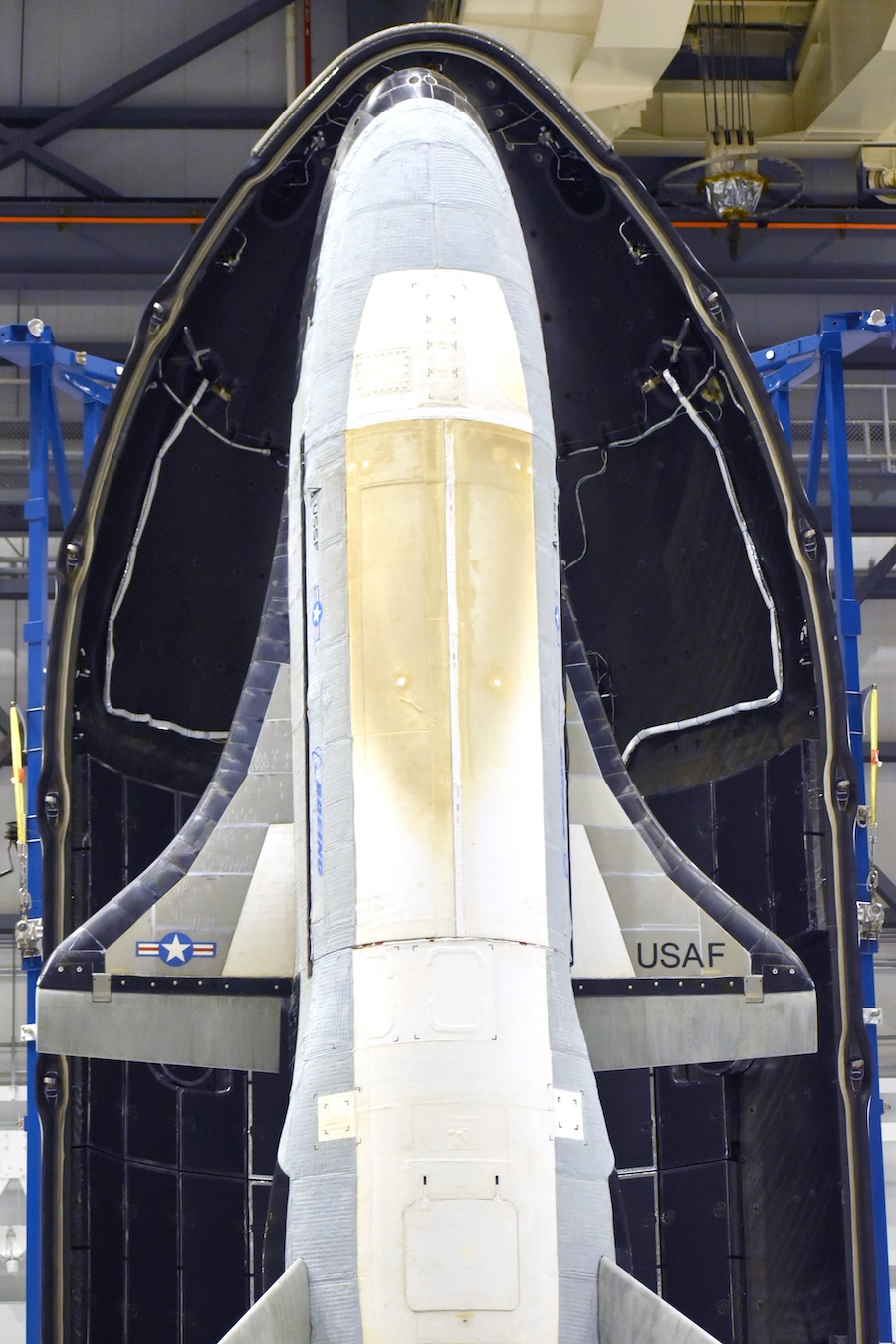
An X-37B spaceplane is ready for encapsulation inside the Falcon 9 rocket’s payload fairing. Credit: US Space Force

Now, on Mission 8, the spaceplane heads back to low-Earth orbit hosting quantum navigation and laser communications experiments. Few people, if any, envisioned these kinds of missions flying on the X-37B when it first soared to space 15 years ago. At that time, quantum sensing was confined to the lab, and the first laser communication demonstrations in space were barely underway. SpaceX hadn’t revealed its plans for the Falcon Heavy rocket, which the X-37B needed to get to its higher orbit on the last mission.

The laser communications experiments on this flight will involve optical inter-satellite links with “proliferated commercial satellite networks in low-Earth orbit,” the Space Force said. This is likely a reference to SpaceX’s Starlink or Starshield broadband satellites. Laser links enable faster transmission of data, while offering more security against eavesdropping or intercepts.

Gen. Chance Saltzman, the Space Force’s chief of space operations, said in a statement that the laser communications experiment “will mark an important step in the US Space Force’s ability to leverage proliferated space networks as part of a diversified and redundant space architectures. In so doing, it will strengthen the resilience, reliability, adaptability and data transport speeds of our satellite communications architecture.”

https://arstechnica.com/space/2025/08/spacex-boeing-team-up-for-another-flight-of-the-militarys-x-37b-spaceplane/