Rocket Report: Ariane 6 beats Vulcan to third launch; China’s first drone ship

The easiest way to keep up with Eric Berger’s and Stephen Clark’s reporting on all things space is to sign up for our newsletter. We’ll collect their stories and deliver them straight to your inbox.

Sign Me Up!

Portugal green-lights Azores spaceport. The Portuguese government has granted the Atlantic Spaceport Consortium a license to build and operate a rocket launch facility on the island of Santa Maria in the Azores, European Spaceflight reports. The Atlantic Spaceport Consortium (ASC) was founded in 2019 with the goal of developing a commercial spaceport on Santa Maria, 1,500 kilometers off the Portuguese mainland. In September 2024, the company showcased the island’s suitability as a launch site by launching two small solid-fuel amateur-class rockets that it developed in-house.

What’s on deck? … The spaceport license granted by Portugal’s regulatory authorities does not cover individual launches themselves. Those must be approved in a separate licensing process. It’s likely that the launch site on Santa Maria Island will initially host suborbital launches, including flights by the Polish rocket company SpaceForest. The European Space Agency has also selected Santa Maria as the landing site for the first flight of the Space Rider lifting body vehicle after it launches into orbit, perhaps in 2027. (submitted by claudiodcsilva)

Why is Jeff Bezos buying launches from Elon Musk? Early Monday morning, a Falcon 9 rocket lifted off from its original launch site in Florida. Remarkably, it was SpaceX’s 100th launch of the year. Perhaps even more notable was the rocket’s payload: two-dozen Project Kuiper satellites, which were dispensed into low-Earth orbit on target, Ars reports. This was SpaceX’s second launch of satellites for Amazon, which is developing a constellation to deliver low-latency broadband Internet around the world. SpaceX, then, just launched a direct competitor to its Starlink network into orbit. And it was for the founder of Amazon, Jeff Bezos, who owns a rocket company of his own in Blue Origin.

Several answers … So how did it come to this—Bezos and Elon Musk, competitors in so many ways, working together in space? There are several answers. Most obviously, launching payloads for customers is one of SpaceX’s two core business areas, alongside Starlink. SpaceX sells launch services to all comers and typically offers the lowest price per kilogram to orbit. There’s immediate revenue to be made if a company with deep pockets like Amazon is willing to pay SpaceX. Second, the other options to get Kuiper satellites into orbit just aren’t available at the volume Amazon needs. Amazon has reserved the lion’s share of its Kuiper launches with SpaceX’s competitors: United Launch Alliance, Arianespace, and Jeff Bezos’ own space company Blue Origin. Lastly, SpaceX could gain some leverage by providing launch services to Amazon. In return for a launch, SpaceX has asked other companies with telecom satellites, such as OneWeb and Kepler Communications, to share spectrum rights to enable Starlink to expand into new markets.

https://arstechnica.com/space/2025/08/rocket-report-big-success-for-big-rockets-artemis-crew-trains-for-night-launch/



Incan numerical recordkeeping system may have been widely used

Women in STEM: Inca Edition

In the late 1500s, a few decades after the khipu in this recent study was made, an Indigenous chronicler named Guaman Poma de Ayala described how older women used khipu to “keep track of everything” in aqllawasai: places that basically functioned as finishing schools for Inca girls. Teenage girls, chosen by local nobles, were sent away to live in seclusion at the aqllawasai to weave cloth, brew chicha, and prepare food for ritual feasts.

What happened to the girls after aqllawasai graduation was a mixed bag. Some of them were married (or given as concubines) to Inca nobles, others became priestesses, and some ended up as human sacrifices. But some of them actually got to go home again, and they probably took their knowledge of khipu with them.

“I think this is the likely way in which khipu literacy made it into the countryside and the villages,” said Hyland. “These women, who were not necessarily elite, taught it to their children, etc.” That may be where the maker of KH0631 learned their skills: either in an aqllawasai or from a graduate of one (we still don’t know this particular khipu-maker’s gender).

“Science confirming what they already knew”

The finely crafted khipu turning out to be the work of a commoner shows that numeracy was widespread and surprisingly egalitarian in the Inca empire, but it also reveals a centuries-long thread connecting the Inca and their descendants.

Modern people—the descendants of the Inca—still use khipu today in some parts of Peru and Chile. Some scholars (mostly non-Indigenous ones) have argued that these modern khipu weren’t really based on knowledge passed down for centuries but were instead just a clumsy attempt to copy the Inca technology. But if commoners were using khipu in the Inca empire, it makes sense for that knowledge to have been passed down to modern villagers.

“It points to a continuity between Inka and modern khipus,” said Hyland. “In the few modern villages with living khipu traditions, they already believe in this continuity, so it would be the case of science confirming what they already know.”

Science Advances, 2025. DOI: <a href="%22https://dx.doi.org/
10.1126/sciadv.adv1950  (About DOIs).

https://arstechnica.com/science/2025/08/recent-study-shows-even-commoners-used-elaborate-inca-recordkeeping-knots/


Ice discs slingshot across a metal surface all on their own

Scientists have figured out how to make frozen discs of ice self-propel across a patterned metal surface, according to a new paper published in the journal ACS Applied Materials and Interfaces. It’s the latest breakthrough to come out of the Virginia Tech lab of mechanical engineer Jonathan Boreyko.

A few years ago, Boreyko’s lab experimentally demonstrated a three-phase Leidenfrost effect in water vapor, liquid water, and ice. The Leidenfrost effect is what happens when you dash a few drops of water onto a very hot, sizzling skillet. The drops levitate, sliding around the pan with wild abandon. If the surface is at least 400° Fahrenheit (well above the boiling point of water), cushions of water vapor, or steam, form underneath them, keeping them levitated. The effect also works with other liquids, including oils and alcohol, but the temperature at which it manifests will be different.

Boreyko’s lab discovered that this effect can also be achieved in ice simply by placing a thin, flat disc of ice on a heated aluminum surface. When the plate was heated above 150° C (302° F), the ice did not levitate on a vapor the way liquid water does. Instead, there was a significantly higher threshold of 550° Celsius (1,022° F) for levitation of the ice to occur. Unless that critical threshold is reached, the meltwater below the ice just keeps boiling in direct contact with the surface. Cross that critical point and you will get a three-phase Leidenfrost effect.

The key is a temperature differential in the meltwater just beneath the ice disc. The bottom of the meltwater is boiling, but the top of the meltwater sticks to the ice. It takes a lot to maintain such an extreme difference in temperature, and doing so consumes most of the heat from the aluminum surface, which is why it’s harder to achieve levitation of an ice disc. Ice can suppress the Leidenfrost effect even at very high temperatures (up to 550° C), which means that using ice particles instead of liquid droplets would be better for many applications involving spray quenching: rapid cooling in nuclear power plants, for example, firefighting, or rapid heat quenching when shaping metals.

https://arstechnica.com/science/2025/08/ice-discs-slingshot-across-a-metal-surface-all-on-their-own/


Misunderstood “photophoresis” effect could loft metal sheets to exosphere

Light and lifting

The researchers then built a few sheets of nanocardboard to test the output of their model. The actual products, primarily made of chromium, aluminum, and aluminum oxide, were incredibly light, weighing only a gram for a square meter of material. When illuminated by a laser or white LED, they generated measurable force on a testing device, provided the atmosphere was kept sufficiently sparse. With an exposure equivalent to sunlight, the device generated more than it weighed.

It’s a really nice demonstration that we can take a relatively obscure and weak physical effect and design devices that can levitate in the upper atmosphere, powered by nothing more than sunlight—which is pretty cool.

But the researchers have a goal beyond that. The mesophere turns out to be a really difficult part of the atmosphere to study. It’s not dense enough to support balloons or aircraft, but it still has enough gas to make quick work of any satellites. So the researchers really want to turn one of these devices into an instrument-carrying aircraft. Unfortunately, that would mean adding the structural components needed to hold instruments, along with the instruments themselves. And even in the mesosphere, where lift is optimal, these things do not generate much in the way of lift.

Plus, there’s the issue of getting them there, given that they won’t generate enough lift in the lower atmosphere, so they’ll have to be carried into the upper stratosphere by something else and then be released gently enough to not damage their fragile structure. And then, unless you’re lofting them during the polar summer, they will likely come floating back down at night.

None of this is to say this is an impossible dream. But there are definitely a lot of very large hurdles between the work and practical applications on Earth—much less on Mars, where the authors suggest the system could also be used to explore the mesosphere. But even if that doesn’t end up being realistic, this is still a pretty neat bit of physics.

https://arstechnica.com/science/2025/08/misunderstood-photophoresis-effect-could-loft-metal-sheets-to-exosphere/


Trump orders cull of regulations governing commercial rocket launches

President Donald Trump signed an executive order Wednesday directing government agencies to “eliminate or expedite” environmental reviews for commercial launch and reentry licenses.

The Federal Aviation Administration (FAA), part of the Department of Transportation (DOT), grants licenses for commercial launch and reentry operations. The FAA is charged with ensuring launch and reentries comply with environmental laws, comport with US national interests, and don’t endanger the public.

The drive toward deregulation will be welcome news for companies like SpaceX, led by onetime Trump ally Elon Musk; SpaceX conducts nearly all of the commercial launches and reentries licensed by the FAA.

Deregulation time

Trump ordered Transportation Secretary Sean Duffy, who also serves as the acting administrator of NASA, to “use all available authorities to eliminate or expedite… environmental reviews for… launch and reentry licenses and permits.” In the order signed by Trump, White House officials wrote that Duffy should consult with the chair of the Council on Environmental Quality and follow “applicable law” in the regulatory cull.

The executive order also includes a clause directing Duffy to reevaluate, amend, or rescind a slate of launch-safety regulations written during the first Trump administration. The FAA published the new regulations, known as Part 450, in 2020, and they went into effect in 2021, but space companies have complained they are too cumbersome and have slowed down the license approval process.

And there’s more. Trump ordered NASA, the military, and DOT to eliminate duplicative reviews for spaceport development. This is particularly pertinent at federally owned launch ranges like those at Cape Canaveral, Florida; Vandenberg Space Force Base, California; and Wallops Island, Virginia.

The Trump administration also plans to make the head of the FAA’s Office of Commercial Space Transportation a political appointee. This office oversees commercial launch and reentry licensing and was previously led by a career civil servant. Duffy will also hire an advisor on deregulation in the commercial spaceflight industry to join DOT, and the Office of Space Commerce will be elevated to a more prominent position within the Commerce Department.

https://arstechnica.com/space/2025/08/trump-orders-cull-of-regulations-governing-commercial-rocket-launches/


Study: Social media probably can’t be fixed

Ars Technica: I’m skeptical of AI in general, particularly in a research context, but there are very specific instances where it can be extremely useful. This strikes me as one of them, largely because your basic model proved to be so robust. You got the same dynamics without introducing anything extra.

Petter Törnberg: Yes. It’s been a big conversation in social science over the last two years or so. There’s a ton of interest in using LLMs for social simulation, but no one has really figured out for what or how it’s going to be helpful, or how we’re going to get past these problems of validity and so on. The kind of approach that we take in this paper is building on a tradition of complex systems thinking. We imagine very simple models of the human world and try to capture very fundamental mechanisms. It’s not really aiming to be realistic or a precise, complete model of human behavior.

I’ve been one of the more critical people of this method, to be honest. At the same time, it’s hard to imagine any other way of studying these kinds of dynamics where we have cultural and structural aspects feeding back into each other. But I still have to take the findings with a grain of salt and realize that these are models, and they’re capturing a kind of hypothetical world—a spherical cow in a vacuum. We can’t predict what someone is going to have for lunch on Tuesday, but we can capture broader mechanisms, and we can see how robust those mechanisms are. We can see whether they’re stable, unstable, which conditions they emerge in, and the general boundaries. And in this case, we found a mechanism that seems to be very robust, unfortunately.

Ars Technica: The dream was that social media would help revitalize the public sphere and support the kind of constructive political dialogue that your paper deems “vital to democratic life.” That largely hasn’t happened. What are the primary negative unexpected consequences that have emerged from social media platforms?

Petter Törnberg: First, you have echo chambers or filter bubbles. The risk of broad agreement is that if you want to have a functioning political conversation, functioning deliberation, you do need to do that across the partisan divide. If you’re only having a conversation with people who already agree with each other, that’s not enough. There’s debate on how widespread echo chambers are online, but it is quite established that there are a lot of spaces online that aren’t very constructive because there’s only people from one political side. So that’s one ingredient that you need. You need to have a diversity of opinion, a diversity of perspective.

https://arstechnica.com/science/2025/08/study-social-media-probably-cant-be-fixed/


OpenAI, cofounder Sam Altman to take on Neuralink with new startup

The company aims to raise $250 million from OpenAI and other investors, although the talks are at an early stage. Altman will not personally invest.

The new venture would be in direct competition with Neuralink, founded by Musk in 2016, which seeks to wire brains directly to computers.

Musk and Altman cofounded OpenAI, but Musk left the board in 2018 after clashing with Altman, and the two have since become fierce rivals in their pursuit of AI.

Musk launched his own AI start-up, xAI, in 2023 and has been attempting to block OpenAI’s conversion from a nonprofit in the courts. Musk donated much of the initial capital to get OpenAI off the ground.

Neuralink is one of a pack of so-called brain-computer interface companies, while a number of start-ups, such as Precision Neuroscience and Synchron, have also emerged on the scene.

Neuralink earlier this year raised $650 million at a $9 billion valuation, and it is backed by investors including Sequoia Capital, Thrive Capital, and Vy Capital. Altman had previously invested in Neuralink.

Brain implants are a decades-old technology, but recent leaps forward in AI and in the electronic components used to collect brain signals have offered the prospect that they can become more practically useful.

Altman has backed a number of other companies in markets adjacent to ChatGPT-maker OpenAI, which is valued at $300 billion. In addition to cofounding World, he has also invested in the nuclear fission group Oklo and nuclear fusion project Helion.

OpenAI declined to comment.

© 2025 The Financial Times Ltd. All rights reserved. Not to be redistributed, copied, or modified in any way.

https://arstechnica.com/science/2025/08/openai-cofounder-sam-altman-to-take-on-neuralink-with-new-startup/


Space Force officials take secrecy to new heights ahead of key rocket launch

The Vulcan rocket checks off several important boxes for the Space Force. First, it relies entirely on US-made rocket engines. The Atlas V rocket it is replacing uses Russian-built main engines, and given the chilled relations between the two powers, US officials have long desired to stop using Russian engines to power the Pentagon’s satellites into orbit. Second, ULA says the Vulcan rocket will eventually provide a heavy-lift launch capability at a lower cost than the company’s now-retired Delta IV Heavy rocket.

Third, Vulcan provides the Space Force with an alternative to SpaceX’s Falcon 9 and Falcon Heavy, which have been the only rockets in their class available to the military since the last national security mission was launched on an Atlas V rocket one year ago.

Col. Jim Horne, mission director for the USSF-106 launch, said this flight marks a “pretty historic point in our program’s history. We officially end our reliance on Russian-made main engines with this launch, and we continue to maintain our assured access to space with at least two independent rocket service companies that we can leverage to get our capabilities on orbit.”

What’s onboard?

The Space Force has only acknowledged one of the satellites aboard the USSF-106 mission, but there are more payloads cocooned inside the Vulcan rocket’s fairing.

The $250 million mission that officials are willing to talk about is named Navigation Technology Satellite-3, or NTS-3. This experimental spacecraft will test new satellite navigation technologies that may eventually find their way on next-generation GPS satellites. A key focus for engineers who designed and will operate the NTS-3 satellite is to look at ways of overcoming GPS jamming and spoofing, which can degrade satellite navigation signals used by military forces, commercial airliners, and civilian drivers.

“We’re going to be doing, we anticipate, over 100 different experiments,” said Joanna Hinks, senior research aerospace engineer at the Air Force Research Laboratory’s space vehicles directorate, which manages the NTS-3 mission. “Some of the major areas we’re looking at—we have an electronically steerable phased array antenna so that we can deliver higher power to get through interference to the location that it’s needed.”

Arlen Biersgreen, then-program manager for the NTS-3 satellite mission at the Air Force Research Laboratory, presents a one-third scale model of the NTS-3 spacecraft to an audience in 2022. Credit: US Air Force/Andrea Rael

GPS jamming is especially a problem in and near war zones. Investigators probing the crash of Azerbaijan Airlines Flight 8243 last December determined GPS jamming, likely by Russian military forces attempting to counter a Ukrainian drone strike, interfered with the aircraft’s navigation as it approached its destination in the Russian republic of Chechnya. Azerbaijani government officials blamed a Russian surface-to-air missile for damaging the aircraft, ultimately leading to a crash in nearby Kazakhstan that killed 38 people.

“We have a number of different advanced signals that we’ve designed,” Hinks said. “One of those is the Chimera anti-spoofing signal… to protect civil users from spoofing that’s affecting so many aircraft worldwide today, as well as ships.”

The NTS-3 spacecraft, developed by L3Harris and Northrop Grumman, only takes up a fraction of the Vulcan rocket’s capacity. The satellite weighs less than 3,000 pounds (about 1,250 kilograms), about a quarter of what this version of the Vulcan rocket can deliver to geosynchronous orbit.

https://arstechnica.com/space/2025/08/space-force-officials-take-secrecy-to-new-heights-ahead-of-key-rocket-launch/


How old is the earliest trace of life on Earth?

But Whitehouse presented a third line of evidence to dispute the 3.95-billion-year date: isotopes of hafnium in the same zombie zircon crystals.

The technique relies on radioactive decay of lutetium-176 to hafnium-176. If the 2.8-billion-year age resulted from rejuvenation by later heating, it would have had to have formed from material with a hafnium isotope ratio incompatible with the isotope composition of the early Earth.

“They go to impossible numbers,” said Whitehouse.

The only way that the uranium-lead ratio can be compatible with the hafnium in the zircons, Whitehouse argued, is if the zircons that settled in the silt had crystallized around 2.8 billion years ago, constraining the organic carbon to being no older than that.

The new oldest remains of life on Earth, for now

If the Labrador carbon is no longer the oldest trace of life on Earth, then where are the oldest remains of life now?

For Whitehouse, it’s in the 3.77-billion-year-old Isua Greenstone Belt in Greenland: “I’m willing to believe that’s a well-documented age… that’s what I think is the best evidence for the oldest biogenicity that we have,” said Whitehouse.

O’Neil recently co-authored a paper on Earth’s oldest surviving crustal rocks, located next to Hudson Bay in Canada. He points there. “I would say it’s in the Nuvvuagittuq Greenstone belt,” said O’Neil, “because I would argue that these rocks are 4.3 billion years old. Again, not everybody agrees!” Intriguingly, the rocks he is referring to contain carbon with a possibly biological origin and are thought to be the remains of the kind of undersea vent where life could well have first emerged.

But the bigger picture is the fact that we have credible traces of life of this vintage—be it 3.8 or 3.9 or 4.3 billion years.

Any of those dates is remarkably early in the planet’s 4.6-billion-year life. It’s long before there was an oxygenated atmosphere, before continents emerged above sea level, and before plate tectonics got going. It’s also much older than the oldest microbial “stromatolite” fossils, which have been dated to about 3.48 billion years ago.

O’Neil thinks that once conditions on Earth were habitable, life would have emerged relatively fast: “To me, it’s not shocking, because the conditions were the same,” he said. “The Earth has the luxury of time… but biology is very quick. So if all the conditions were there by 4.3 billion years old, why would biology wait 500 million years to start?”

https://arstechnica.com/science/2025/08/how-old-is-the-earliest-trace-of-life-on-earth/


New adhesive surface modeled on a remora works underwater

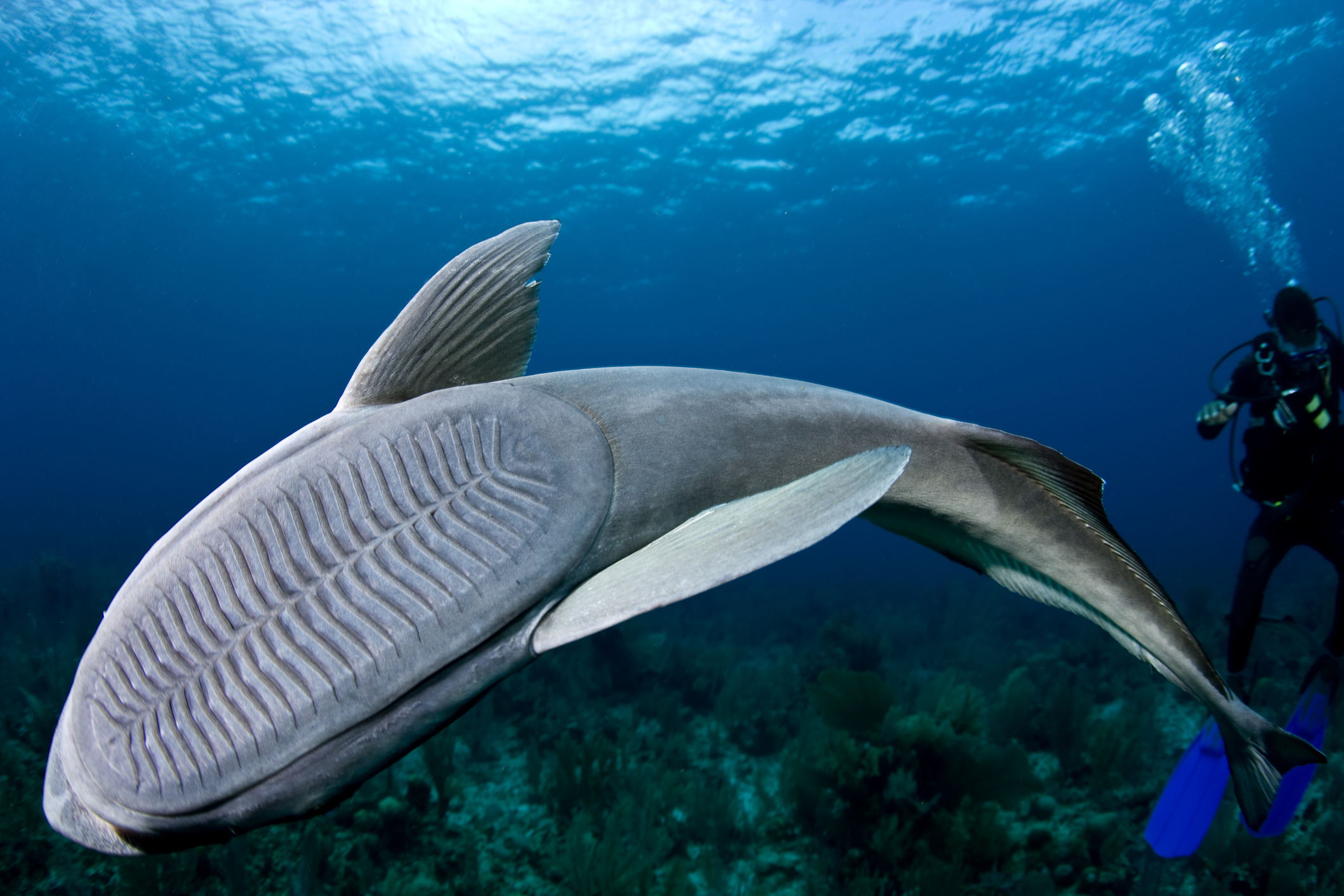
What impressed the scientists the most, though, was the versatility of those disks. Reef-associated species of remora like Phtheirichthys lineatus are generalists and stick to various hosts, including other fish, sharks, or turtles. Other species living in the open sea are more specialized and attach to cetaceans, swordfish, or marlins. While most remoras attach to the external tissue of their hosts, R. albescens sticks within the oral cavities and gill chamber of manta rays.

a close up of a fish, showing its head covered by an oval-shaped pad that has lots of transverse ridges.
A close-up of the adhesive pad of a remora. Credit: Stephen Frink

To learn what makes all these different disks so good at sticking underwater, the team first examined their anatomy in detail. It turned out that the difference between the disks was mostly in the positioning of lamellae. Generalist species have a mix of parallel and angled lamellae, while remoras sticking to fast-swimming hosts have them mostly parallel. R. albescens, on the other hand, doesn’t have a dominant lamellae orientation pattern but has them positioned at a very wide variety of angles.

The researchers wanted to make an adhesive device that would work for a wide range of applications, including maritime exploration or underwater manufacturing. Their initial goal, though, was designing a drug delivery platform that could reliably stick to the inside walls of the gastrointestinal tract. So, they chose R. albescens disks as their starting point, since that species already attaches internally to its host. They termed their device an Mechanical Underwater Soft Adhesion System (MUSAS).

However, they didn’t just opt for a biomimetic, copy-and-paste design. “There were things we did differently,” Traverso says.

Upgrading nature

The first key difference was deployment. MUSAS was supposed to travel down the GI tract to reach its destination, so the first challenge was making it fit into a pill. The team chose the size 000 capsule, which at 26 millimeters in length and 9.5 millimeters in diameter, is the largest Food and Drug Administration-approved ingestible form. MUSAS had a supporting structure—just like remora disks, but made with stainless steel. The angled lamellae with spinules fashioned after those on R. albescens were made of a shape memory nickel-titanium alloy. The role of remora’s soft tissues, which provide the suction by dividing the disk into compartments, was played by an elastomer.

https://arstechnica.com/science/2025/08/new-adhesive-surface-modeled-on-a-remora-works-underwater/