The first company to complete a fully successful lunar landing is going public

The financial services firm Charles Schwab reported last month that IPOs are on the comeback across multiple sectors of the market. “After a long dry spell, there are signs of life in the initial public offerings space,” Charles Schwab said in June. “An increase in offerings can sometimes suggest an improvement in overall market sentiment.”

Firefly Aerospace started as a propulsion company. This image released by Firefly earlier this year shows the company’s family of engines. From left to right: Miranda for the Eclipse rocket; Lightning and Reaver for the Alpha rocket; and Spectre for the Blue Ghost and Elytra spacecraft.

Firefly is eschewing a SPAC merger in favor of a traditional IPO. Another space company, Voyager Technologies, closed an Initial Public Offering on June 11, raising nearly $383 million with a valuation peaking at $3.8 billion despite reporting a loss of $66 million in 2024. Voyager’s stock price has been in a precipitous decline since then.

Financial information disclosed by Firefly in a regulatory filing with the Securities and Exchange Commission reveals the company registered $60.8 million in revenue in 2024, a 10 percent increase from the prior year. But Firefly’s net loss widened from $135 million to $231 million, largely due to higher spending on research and development for the Eclipse rocket and Elytra spacecraft.

Rocket Lab, too, reported a net loss of $190 million in 2024 and another $60.6 million in the first quarter of this year. Despite this, Rocket Lab’s stock price has soared for most of 2025, further confirming that near-term profits aren’t everything for investors.

Chad Anderson, the founder and managing partner of Space Capital, offered a “gut check” to investors listening to his quarterly podcast last week.

“90 percent of IPOs that double on day one deliver negative returns over three years,” Anderson said. “And a few breakout companies become long-term winners… Rocket Lab being chief among them. But many fall short of expectations, even with some collapsing into bankruptcy, again, as we’ve seen over the last few years.

“There’s a lot of excitement about the space economy, and rightly so,” Anderson said. “This is a once-in-a-generation opportunity for investors, but unfortunately, I think this is going to be another example of why specialist expertise is required and the ability to read financial statements and understand the underlying business fundamentals, because that’s what’s really going to take companies through in the long term.”

https://arstechnica.com/space/2025/07/the-first-company-to-complete-a-fully-successful-lunar-landing-is-going-public/




Trump admin. is muffling CDC’s flagship health journal, report finds

The flagship health journal published by the Centers for Disease Control and Prevention has grown quiet this year, and a report from MedPage Today indicates that a variety of actions by the Trump administration may be to blame for hamstringing the critical resource.

Most strikingly, sources told MedPage that the journal’s scientific articles must now obtain clearance for publication from health secretary and anti-vaccine activist Robert F. Kennedy Jr.—who has no health, science, or medical background. A spokesperson for the Department of Health and Human Services disputed this claim, calling it “false.”

Regardless, there’s no denying that the journal appears to have been muffled in some ways since the new administration took office. Publications have slowed and press are no longer getting early access to studies under the standard embargo system. And, for the first time in its more than 60-year history, the journal—the Morbidity and Mortality Weekly Report (MMWR)—was not published on schedule amid a blanket federal communication freeze in January.

MedPage crunched the numbers, looking at published study totals for May, June, and July in past years compared to this one. The outlet included five previous years: 2022 to 2024 as well as 2018 to 2019, leaving out the peak years of the COVID-19 pandemic when public health communications could have spiked. In 2025, there were only 35 total publications in the three-month window, but in the past years, the average was 76, with a range of 55 to 89.

https://arstechnica.com/health/2025/07/trump-admin-is-muffling-cdcs-flagship-health-journal-report-finds/


20 years after Katrina, New Orleans remembers

“They also ignored some of their own geotechnical science when designing the levees,” he continued. “Some were built in sand with very shallow footings, so the water just went underneath and blew out the levee. Some were built on piles of earth, again with very shallow footings, and they just fell over. The 17th Street Canal, the whole levee structure actually slid 200 feet.”

There had also been significant alterations to the local landscape since Hurricane Betsy. In the past, the wetlands, especially the cypress tree swamps, provided some protection from storm surges. In 1992, for example, the Category 5 Hurricane Andrew made landfall on Atchafalaya Delta, where healthy wetlands reduced its energy by 50 percent between the coast and Morgan City, per Van Heerden. But other wetlands in the region changed drastically with the dredging of a canal called the Mississippi Gulf Outlet, running from Baton Rouge to the Gulf of Mexico.

“It was an open conduit for surge to get into New Orleans,” said Van Heerden. “The saltwater got into the wetlands and destroyed it, especially the cypress trees. This canal had opened up, in some places, to five times its width, allowing waves to build on the surface. The earthen levees weren’t armored in any way, so they just collapsed. They blew apart. That’s why parts of St. Bernard saw a wave of water ten feet high.”

Just trying to survive

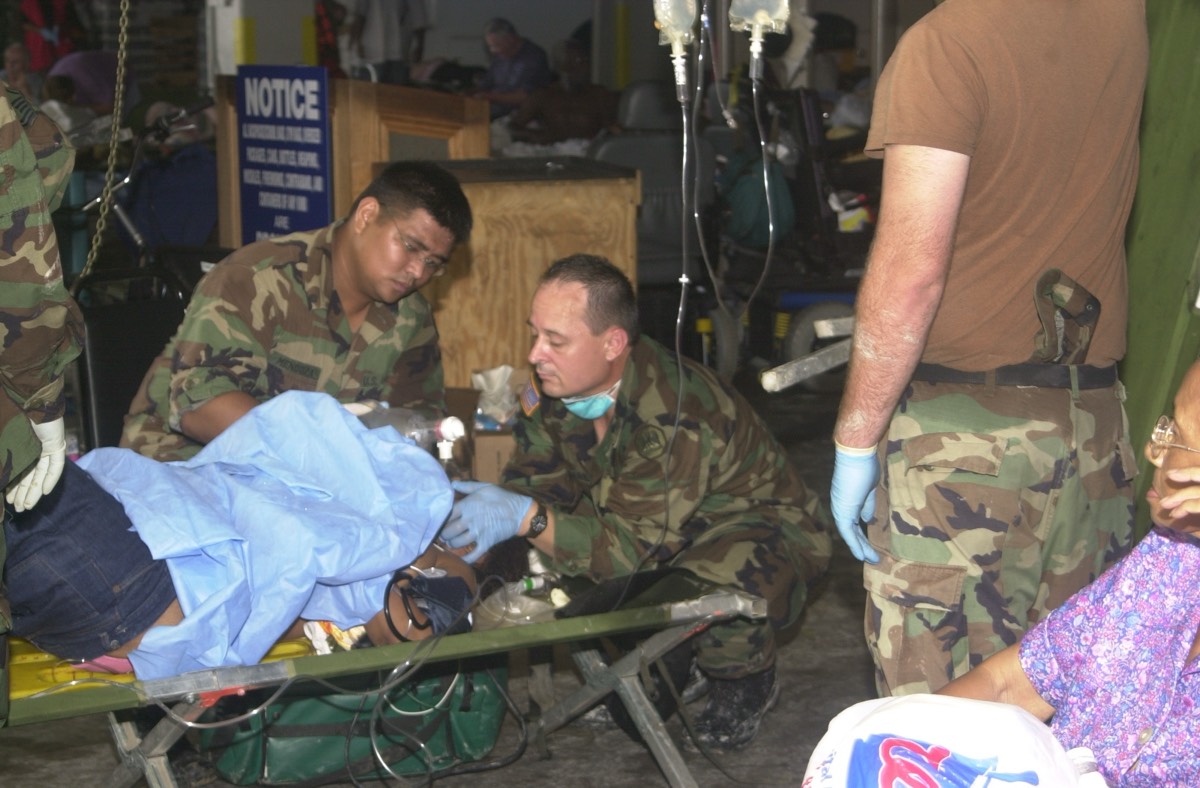
Two military personnel attend to an injured person on a cot in the Superdome.

Military personnel attend to an injured person on a cot in the Superdome.

Ed Bush

National Guard distributes water to New Orleans residents.

National Guard distributes water to New Orleans residents.

CNN

Add in drastic cuts to FEMA under then-President George W. Bush—who inherited “a very functional, very well-organized” version of the department from his predecessor, Bill Clinton, per Van Heerden—and the stage was set for just such a disaster like Katrina’s harrowing aftermath. It didn’t help that New Orleans Mayor Ray Nagin delayed issuing a mandatory evacuation order until some 24 hours before the storm hit, making it much more difficult for residents to follow those orders in a timely fashion.

https://arstechnica.com/science/2025/07/20-years-after-katrina-natgeo-and-new-orleans-remember/


Robots eating other robots: The benefits of machine metabolism

For decades we’ve been trying to make the robots smarter and more physically capable by mimicking biological intelligence and movement. “But in doing so, we’ve been just replicating the results of biological evolution—I say we need to replicate its methods,” argues Philippe Wyder, a developmental robotics researcher at Columbia University. Wyder led a team that demonstrated a machine with a rudimentary form of what they’re calling a metabolism.

He and his colleagues built a robot that could consume other robots to physically grow, become stronger, more capable, and continue functioning.

Nature’s methods

The idea of robotic metabolism combines various concepts in AI and robotics. The first is artificial life, which Wyder termed “a field where people study the evolution of organisms through computer simulations.” Then there is the idea of modular robots: reconfigurable machines that can change their architecture by rearranging collections of basic modules. That was pioneered in the US by Daniela Rus or Mark Yim at Carnegie Mellon University in the 1990s.

Finally, there is the idea that we need a shift from a goal-oriented design we’ve been traditionally implementing in our machines to a survivability-oriented design found in living organisms, which Magnus Egerstedt proposed in his book Robot Ecology.

Wyder’s team took all these ideas, merged them, and prototyped a robot that could “eat” other robots. “I kind of came at this from many different angles,” Wyder says.

The key source of inspiration, though, was the way nature builds its organisms. There are 20 standard amino acids universally used by life that can be combined into trillions of proteins, forming the building blocks of countless life forms. Wyder started his project by designing a basic robotic module that was intended to play a role roughly equivalent to a single amino acid. This module, called a Truss Link, looked like a rod, being 16 centimeters long and containing batteries, electronic controllers, and servomotors than enabled them to expand, contract, and crawl in a straight line. They had permanent magnets at each end, which let them connect to other rods and form lightweight lattices.

https://arstechnica.com/science/2025/07/robots-eating-other-robots-the-benefits-of-machine-metabolism/


This aerogel and some sun could make saltwater drinkable

Earth is about 71 percent water. An overwhelming 97 percent of that water is found in the oceans, leaving us with only 3 percent in the form of freshwater—and much of that is frozen in the form of glaciers. That leaves just 0.3 percent of that freshwater on the surface in lakes, swamps, springs, and our main sources of drinking water, rivers and streams.

Despite our planet’s famously blue appearance from space, thirsty aliens would be disappointed. Drinkable water is actually pretty scarce.

As if that doesn’t already sound unsettling, what little water we have is also threatened by climate change, urbanization, pollution, and a global population that continues to expand. Over 2 billion people live in regions where their only source of drinking water is contaminated. Pathogenic microbes in the water can cause cholera, diarrhea, dysentery, polio, and typhoid, which could be fatal in areas without access to vaccines or medical treatment.

Desalination of seawater is a possible solution, and one approach involves porous materials absorbing water that evaporates when heated by solar energy. The problem with most existing solar-powered evaporators is that they are difficult to scale up for larger populations. Performance decreases with size, because less water vapor can escape from materials with tiny pores and thick boundaries—but there is a way to overcome this.

Feeling salty

Researcher Xi Shen of the Hong Kong Polytechnic University wanted to figure out a way to improve these types of systems. He and his team have now created an aerogel that is far more efficient at turning over fresh water than previous methods of desalination.

“The key factors determining the evaporation performance of porous evaporators include heat localization, water transport, and vapor transport,” Shen said in a study recently published in ACS Energy Letters. “Significant advancements have been made in the structural design of evaporators to realize highly efficient thermal localization and water transport.”

Solar radiation is the only energy used to evaporate the water, which is why many attempts have been made to develop what are called photothermal materials. When sunlight hits these types of materials, they absorb light and convert it into heat energy, which can be used to speed up evaporation. Photothermal materials can be made of substances including polymers, metals, alloys, ceramics, or cements. Hydrogels have been used to successfully decontaminate and desalinate water before, but they are polymers designed to retain water, which negatively affects efficiency and stability, as opposed to aerogels, which are made of polymers that hold air. This is why Shen and his team decided to create a photothermal aerogel.

https://arstechnica.com/science/2025/07/this-aerogel-and-some-sun-could-make-saltwater-drinkable/


Widely panned arsenic life paper gets retracted—15 years after brouhaha

In all, the astronomic hype was met with earth-shaking backlash in 2010 and 2011. In 2012, Science published two studies refuting the claim that GFAJ-1 incorporates arsenic atoms into its DNA. Outside scientists concluded that it is an arsenic-tolerant extremophile, but not a profoundly different life form.

Retraction

But now, in 2025, it is once again spurring controversy; on Thursday, Science announced that it is retracting the study.

Some critics, such as Redfield, cheered the move. Others questioned the timing, noting that 15 years had passed, but only a few months had gone by since The New York Times published a profile of Wolfe-Simon, who is now returning to science after being perceived as a pariah. Wolfe-Simon and most of her co-authors, meanwhile, continue to defend the original paper and protest the retraction.

In a blog post on Thursday, Science’s executive editor, Valda Vinson, and Editor-in-Chief Holden Thorp explained the retraction by saying that Science’s criteria for issuing a retraction have evolved since 2010. At the time, it was reserved for claims of misconduct or fraud but now can include serious flaws. Specifically, Vinson and Thorp referenced the criticism that the bacterium’s genetic material was not properly purified of background arsenic before it was analyzed. While emphasizing that there has been no suggestion of fraud or misconduct on the part of the authors, they wrote that “Science believes that the key conclusion of the paper is based on flawed data,” and it should therefore be retracted.

Jonathan Eisen, an evolutionary biologist at the University of California, Davis, criticized the move. Speaking with Science’s news team, which is independent from the journal’s research-publishing arm, Eisen said that despite being a critic of the 2010 paper, he thought the discussion of controversial studies should play out in the scientific literature and not rely on subjective decisions by editors.

In an eLetter attached to the retraction notice, the authors dispute the retraction, too, saying, “While our work could have been written and discussed more carefully, we stand by the data as reported. These data were peer-reviewed, openly debated in the literature, and stimulated productive research.”

One of the co-authors, Ariel Anbar, a geochemist at Arizona State University, told Nature that the study had no mistakes but that the data could be interpreted in different ways. “You don’t retract because of a dispute about data interpretation,” he said. If that were the case, “you’d have to retract half the literature.”

https://arstechnica.com/science/2025/07/widely-panned-arsenic-life-paper-gets-retracted-15-years-after-brouhaha/


Rocket Report: Channeling the future at Wallops; SpaceX recovers rocket wreckage

The easiest way to keep up with Eric Berger’s and Stephen Clark’s reporting on all things space is to sign up for our newsletter. We’ll collect their stories and deliver them straight to your inbox.

Sign Me Up!

One big defense prime is posturing for Golden Dome. Northrop Grumman is conducting ground-based testing related to space-based interceptors as part of a competition for that segment of the Trump administration’s Golden Dome missile-defense initiative, The War Zone reports. Kathy Warden, Northrop Grumman’s CEO, highlighted the company’s work on space-based interceptors, as well as broader business opportunities stemming from Golden Dome, during a quarterly earnings call this week. Warden identified Northrop’s work in radars, drones, and command-and-control systems as potentially applicable to Golden Dome.

But here’s the real news … “It will also include new innovation, like space-based interceptors, which we’re testing now,” Warden continued. “These are ground-based tests today, and we are in competition, obviously, so not a lot of detail that I can provide here.” Warden declined to respond directly to a question about how the space-based interceptors Northrop Grumman is developing now will defeat their targets. (submitted by Biokleen)

Trump may slash environmental rules for rocket launches. The Trump administration is considering slashing rules meant to protect the environment and the public during commercial rocket launches, changes that companies like Elon Musk’s SpaceX have long sought, ProPublica reports. A draft executive order being circulated among federal agencies, and viewed by ProPublica, directs Secretary of Transportation Sean Duffy to “use all available authorities to eliminate or expedite” environmental reviews for launch licenses. It could also, in time, require states to allow more launches or even more launch sites along their coastlines.

Getting political at the FAA … The order is a step toward the rollback of federal oversight that Musk, who has fought bitterly with the Federal Aviation Administration over his space operations, and others have pushed for. Commercial rocket launches have grown exponentially more frequent in recent years. In addition to slashing environmental rules, the draft executive order would make the head of the FAA’s Office of Commercial Space Transportation a political appointee. This is currently a civil servant position, but the last head of the office took a voluntary separation offer earlier this year.

https://arstechnica.com/space/2025/07/rocket-report-channeling-the-future-at-wallops-spacex-recovers-rocket-wreckage/


Lawmakers writing NASA’s budget want a cheaper upper stage for the SLS rocket

Not surprisingly, Congress is pushing back against the Trump administration’s proposal to cancel the Space Launch System, the behemoth rocket NASA has developed to propel astronauts back to the Moon.

Spending bills making their way through both houses of Congress reject the White House’s plan to wind down the SLS rocket after two more launches, but the text of a draft budget recently released by the House Appropriations Committee suggests an openness to making some major changes to the program.

The next SLS flight, called Artemis II, is scheduled to lift off early next year to send a crew of four astronauts around the far side of the Moon. Artemis III will follow a few years later on a mission to attempt a crew lunar landing at the Moon’s south pole. These missions follow Artemis I, a successful unpiloted test flight in 2022.

After Artemis III, the official policy of the Trump administration is to terminate the SLS program, along with the Orion crew capsule designed to launch on top of the rocket. The White House also proposed canceling NASA’s Gateway, a mini-space station to be placed in orbit around the Moon. NASA would instead procure commercial launches and commercial spacecraft to ferry astronauts between the Earth and the Moon, while focusing the agency’s long-term gaze toward Mars.

CYA EUS?

House and Senate appropriations bills would preserve SLS, Orion, and the Gateway. However, the House version of NASA’s budget has an interesting paragraph directing NASA to explore cheaper, faster options for a new SLS upper stage.

NASA has tasked Boeing, which also builds SLS core stages, to develop an Exploration Upper Stage for debut on the Artemis IV mission, the fourth flight of the Space Launch System. This new upper stage would have large propellant tanks and carry four engines instead of the single engine used on the rocket’s interim upper stage, which NASA is using for the first three SLS flights.

https://arstechnica.com/space/2025/07/lawmakers-writing-nasas-budget-want-a-cheaper-upper-stage-for-the-sls-rocket/


Study sheds light on why some people keep self-sabotaging

What might be the underlying cause of this persistent bad decision-making? “We don’t know, but the fact most people have the same profile at retest suggests this is a kind of trait: a stable cognitive-behavioral tendency,” said Dit Bressel. “It could be related to genetics, but we don’t have the data for that. We know there are environmental factors that contribute to the Compulsive profile: It’s significantly more likely to emerge if the Action→Punisher relationship is infrequent, i.e., people will be poor avoiders and ignore helpful information if punishment probability is low, even if the punishment is severe. But this would be a case of trait-x-environment interactions. My neuroscientist side would love to explore what’s going on in the brain and map what contributes to adaptive vs maladaptive decision-making.”

This could help drive more effective public health messaging, which is typically focused on providing factual information about the risks of compulsive behaviors, whether we’re talking about smoking, drinking, eating disorders, or gambling, for instance. The results of this study clearly demonstrate that for Compulsives, information is not sufficient to change their self-sabotaging behavior. One of Dit Bressel’s lab members is now investigating better interventions for different profiles of decision-making, particularly for Compulsives.

“We definitely haven’t cracked the case yet,” said Dit Bressel. “There’s a body of work that says early over late information intervention might do the trick, but we’ve shown Compulsives in low probability punishment scenarios are impervious to early information. If the issue is they can’t infer the winning strategy with Action→Punisher, maybe explicitly outlining the winning strategy will make more of a difference. Or maybe some potent combination of prompts. We have ideas, but the proof will be in the pudding.”

Then again, “It could be the case that no amount/type of information will be enough to really sway ‘that friend,’ and that something far more involved would be needed,” he said. “But most people will have a least some response to helpful information, so my suggestion in the absence of a full answer is to just be a good friend and give that friend the info/advice they seem to need to hear (again). It won’t go the distance for everyone, but it’s cheap and you’d be surprised at how many people need what seems obvious pointed out to them.”

Nature Communications Psychology, 2025. DOI: 10.1038/s44271-025-00284-9 (About DOIs).

https://arstechnica.com/science/2025/07/study-sheds-light-on-why-some-people-keep-self-sabotaging/


Conspiracy theorists don’t realize they’re on the fringe

It’s not that believers in conspiracy theories are massively overconfident; there is no data on that, because the studies didn’t set out to quantify the degree of overconfidence, per Pennycook. Rather, “They’re overconfident, and they massively overestimate how much people agree with them,” he said.

Ars spoke with Pennycook to learn more.

Ars Technica: Why did you decide to investigate overconfidence as a contributing factor to believing conspiracies?

Gordon Pennycook: There’s a popular sense that people believe conspiracies because they’re dumb and don’t understand anything, they don’t care about the truth, and they’re motivated by believing things that make them feel good. Then there’s the academic side, where that idea molds into a set of theories about how needs and motivations drive belief in conspiracies. It’s not someone falling down the rabbit hole and getting exposed to misinformation or conspiratorial narratives. They’re strolling down: “I like it over here. This appeals to me and makes me feel good.”

Believing things that no one else agrees with makes you feel unique. Then there’s various things I think that are a little more legitimate: People join communities and there’s this sense of belongingness. How that drives core beliefs is different. Someone may stop believing but hang around in the community because they don’t want to lose their friends. Even with religion, people will go to church when they don’t really believe. So we distinguish beliefs from practice.

What we observed is that they do tend to strongly believe these conspiracies despite the fact that there’s counter evidence or a lot of people disagree. What would lead that to happen? It could be their needs and motivations, but it could also be that there’s something about the way that they think where it just doesn’t occur to them that they could be wrong about it. And that’s where overconfidence comes in.

Ars Technica: What makes this particular trait such a powerful driving force?

Gordon Pennycook: Overconfidence is one of the most important core underlying components, because if you’re overconfident, it stops you from really questioning whether the thing that you’re seeing is right or wrong, and whether you might be wrong about it. You have an almost moral purity of complete confidence that the thing you believe is true. You cannot even imagine what it’s like from somebody else’s perspective. You couldn’t imagine a world in which the things that you think are true could be false. Having overconfidence is that buffer that stops you from learning from other people. You end up not just going down the rabbit hole, you’re doing laps down there.

https://arstechnica.com/science/2025/07/conspiracy-theorists-think-their-views-are-mainstream/