Marine biologist for a day: Ars goes shark tagging
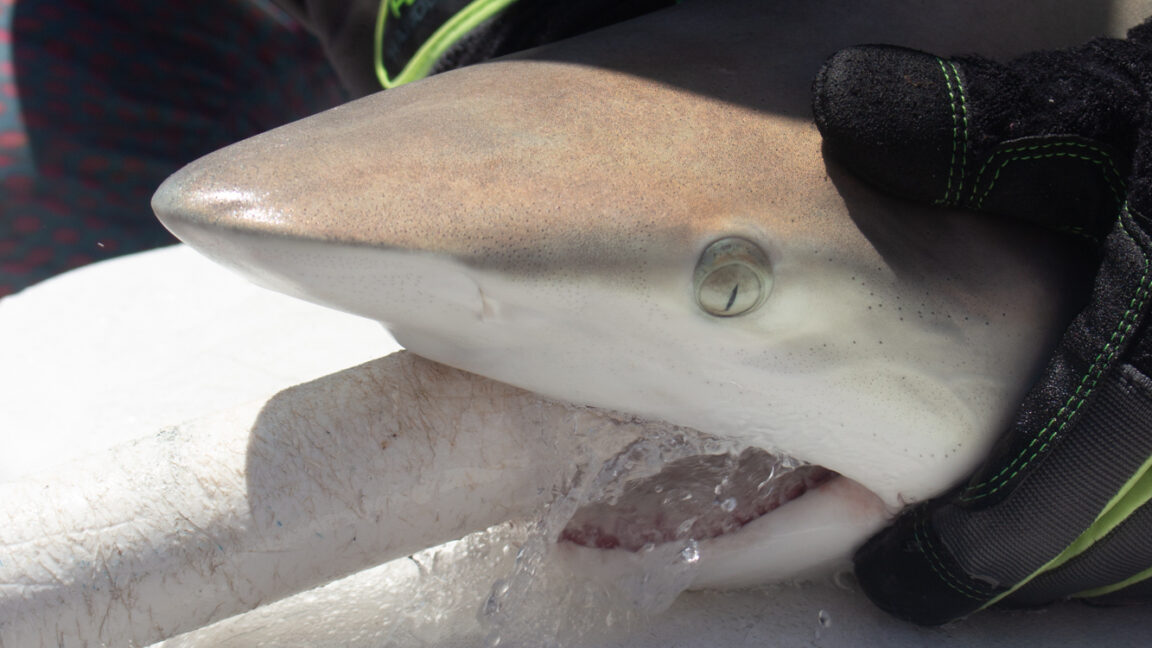
MIAMI—We were beginning to run out of bait, and the sharks weren’t cooperating.

Everybody aboard the Research Vessel Garvin had come to Miami for the sharks—to catch them, sample them, and tag them, all in the name of science. People who once wanted to be marine biologists, actual marine biologists, shark enthusiasts, the man who literally wrote the book Why Sharks Matter, and various friends and family had spent much of the day sending fish heads set with hooks over the side of the Garvin. But each time the line was hauled back in, it came in slack, with nothing but half-eaten bait or an empty hook at the end.

And everyone was getting nervous.

I: “No assholes”

The Garvin didn’t start out as a research vessel. Initially, it was a dive boat that took people to wrecks on the East Coast. Later, owner Hank Garvin used it to take low-income students from New York City and teach them how to dive, getting them scuba certified. But when Garvin died, his family put the boat, no longer in prime condition, on the market.

A thousand miles away in Florida, Catherine MacDonald was writing “no assholes” on a Post-it note.

At the time, MacDonald was the coordinator of a summer internship program at the University of Miami, where she was a PhD student. And even at that stage in her career, she and her colleagues had figured out that scientific field work had a problem.

“Science in general does not have a great reputation of being welcoming and supportive and inclusive and kind,” said David Shiffman, author of the aforementioned book and a grad school friend of MacDonald’s. “Field science is perhaps more of a problem than that. And field science involving what are called charismatic megafauna, the big animals that everyone loves, is perhaps worse than that. It’s probably because a lot of people want to do this, which means if we treat someone poorly and they quit, it’s not going to be long before someone else wants to fill the spot.”

https://arstechnica.com/science/2025/07/marine-biologist-for-a-day-ars-goes-shark-tagging/


Nearly 3,000 people are leaving NASA, and this director is one of them

You can add another name to the thousands of employees leaving NASA as the Trump administration primes the space agency for a 25 percent budget cut.

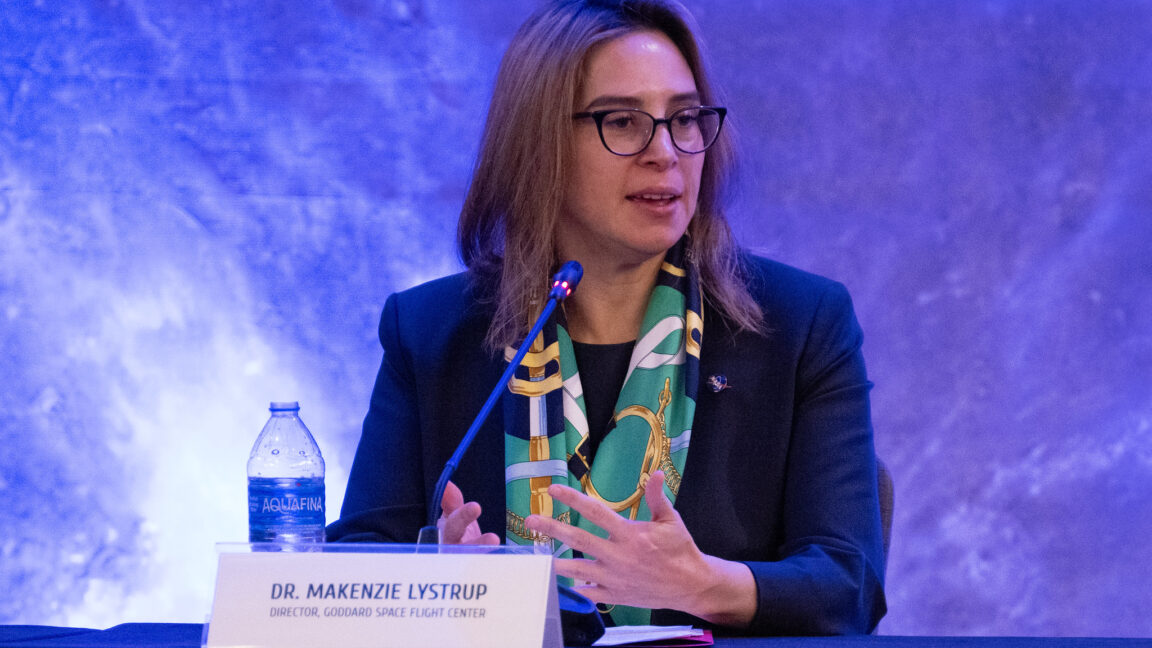
On Monday, NASA announced that Makenzie Lystrup will leave her post as director of the Goddard Space Flight Center on Friday, August 1. Lystrup has held the top job at Goddard since April 2023, overseeing a staff of more than 8,000 civil servants and contractor employees, and a budget last year of about $4.7 billion.

These figures make Goddard the largest of NASA’s 10 field centers primarily devoted to scientific research and development of robotic space missions, with a budget and workforce comparable to NASA’s human spaceflight centers in Texas, Florida, and Alabama. Officials at Goddard manage the James Webb and Hubble telescopes in space, and Goddard engineers are assembling the Nancy Grace Roman Space Telescope, another flagship observatory scheduled for launch late next year.

“We’re grateful to Makenzie for her leadership at NASA Goddard for more than two years, including her work to inspire a Golden Age of explorers, scientists, and engineers,” Vanessa Wyche, NASA’s acting associate administrator, said in a statement.

Cynthia Simmons, Goddard’s deputy director, will take over as acting chief at the space center. Simmons started work at Goddard as a contract engineer 25 years ago.

Lystrup came to NASA from Ball Aerospace, now part of BAE Systems, where she managed the company’s work on civilian space projects for NASA and other federal agencies. Before joining Ball Aerospace, Lystrup earned a doctorate in astrophysics from University College London and conducted research as a planetary astronomer.

Formal dissent

The announcement of Lystrup’s departure from Goddard came hours after the release of an open letter to NASA’s interim administrator, Transportation Secretary Sean Duffy, signed by hundreds of current and former agency employees. The letter, titled the “The Voyager Declaration,” identifies what the signatories call “recent policies that have or threaten to waste public resources, compromise human safety, weaken national security, and undermine the core NASA mission.”

https://arstechnica.com/space/2025/07/the-director-of-nasas-largest-science-center-is-leaving-government/


Experimental surgery performed by AI-driven surgical robot

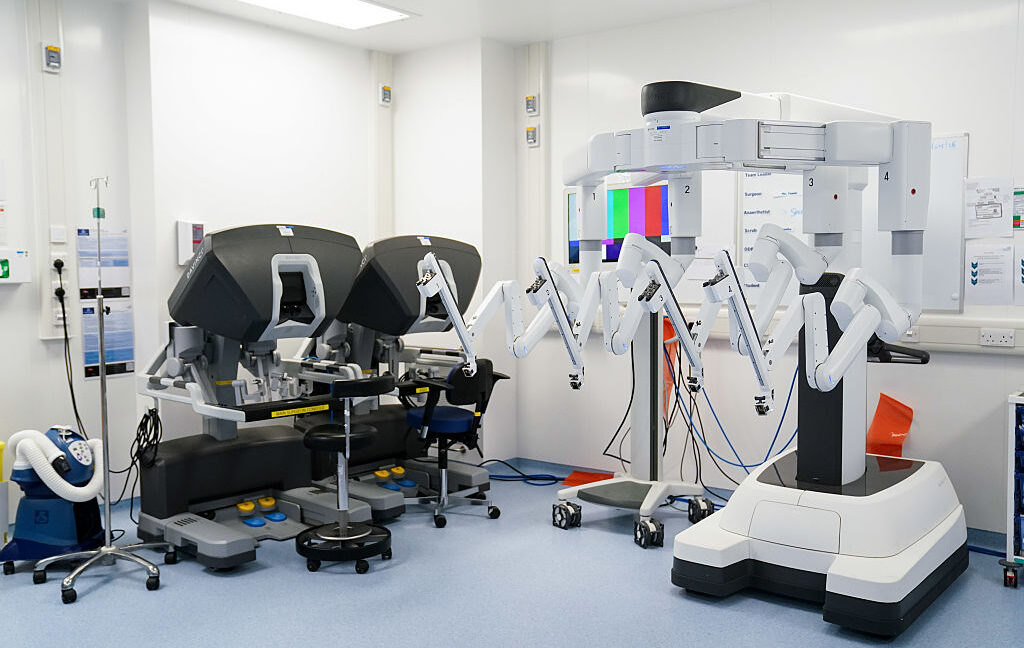
Intuitive Surgical, an American biotechnology company, introduced DaVinci surgical robots in the late 1990s, and they became groundbreaking teleoperation equipment. Expert surgeons could operate on patients remotely, manipulating the robotic arms and their surgical tools based on a video feed from DaVinci’s built-in cameras and endoscopes.

Now, John Hopkins University researchers put a ChatGPT-like AI in charge of a DaVinci robot and taught it to perform a gallbladder-removal surgery.

Kuka surgeries

The idea to put a computer behind the wheel of a surgical robot is not entirely new, but these had mostly relied on using pre-programmed actions. “The program told the robot exactly how to move and what to do. It worked like in these Kuka robotic arms, welding cars on factory floors,” says Ji Woong Kim, a robotics researcher who led the study on autonomous surgery. To improve on that, a team led by Axel Krieger, an assistant professor of mechanical engineering at John Hopkins University, built STAR: the Smart Tissue Autonomous Robot. In 2022, it successfully performed a surgery on a live pig.

But even STAR couldn’t do it without specially marked tissues and a predetermined plan. STAR’s key difference was that its AI could make adjustments to this plan based on the feed from cameras.

The new robot can do considerably more. “Our current work is much more flexible,” Kim says. “It is an AI that learns from demonstrations.” The new system is called SRT-H (Surgical Robot Transformer) and was developed by Kim and his colleagues, Krieger added.

The first change they made was to the hardware. Instead of using a custom robot like STAR, the new work relied on the DaVinci robot, which has become a de facto industry standard in teleoperation surgeries, with over 10,000 units already deployed in hospitals worldwide. The second change was the software driving the system. It relied on two transformer models, the same architecture that powers ChatGPT. One was a high-level policy module, which was responsible for task planning and ensuring the procedure went smoothly. The low-level module was responsible for executing the tasks issued by the high-level module, translating its instructions into specific trajectories for the robotic arms.

https://arstechnica.com/science/2025/07/experimental-surgery-performed-by-ai-driven-surgical-robot/


How Android phones became an earthquake warning system

Of course, the trick is that you only send out the warning if there’s an actual earthquake, and not when a truck is passing by. Here, the sheer volume of Android phones sold plays a key role. As a first pass, AEA can simply ignore events that aren’t picked up by a lot of phones in the same area. But we also know a lot about the patterns of shaking that earthquakes produce. Different waves travel at different speeds, cause different types of ground motion, and may be produced at different intensities as the earthquake progresses.

So, the people behind AEA also include a model of earthquakes and seismic wave propagation, and check whether the pattern seen in phones’ accelerometers is consistent with that model. It only triggers an alert when there’s widespread phone activity that matches the pattern expected for an earthquake.

Raising awareness

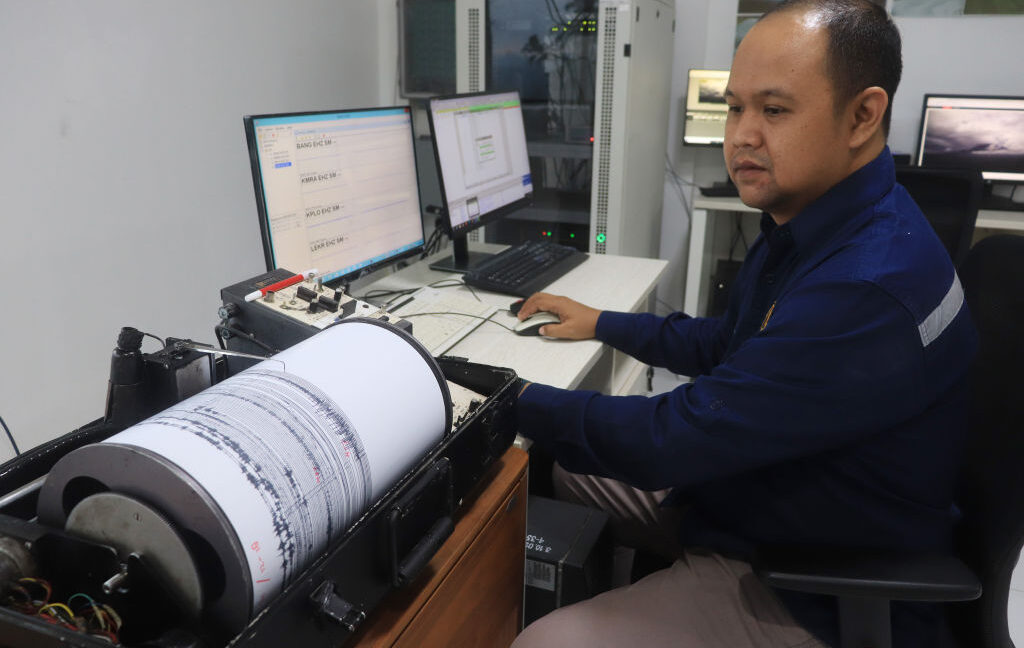
In practical terms, AEA is distributed as part of the core Android software, and is set to on by default, so it is active in most Android phones. It starts monitoring when the phone has been stationary for a little while, checking for acceleration data that’s consistent with the P or S waves produced by earthquakes. If it gets a match, it forwards the information along with some rough location data (to preserve privacy) to Google servers. Software running on those servers then performs the positional analysis to see if the waves are widespread enough to have been triggered by an earthquake.

If so, it estimates the size and location, and uses that information to estimate the ground motion that will be experienced in different locations. Based on that, AEA sends out one of two alerts, either “be aware” or “take action.” The “be aware” alert is similar to a standard Android notification, but it plays a distinctive sound and is sent to users further from the epicenter. In contrast, the “take action” warning that’s sent to those nearby will display one of two messages in the appropriate language, either “Protect yourself” or “Drop, cover, and hold on.” It ignores any do-not-disturb settings, takes over the entire screen, and also plays a distinct noise.

https://arstechnica.com/science/2025/07/how-android-phones-became-an-earthquake-warning-system/


Amazon’s ride on the rocket merry-go-round continues with SpaceX launch

SpaceX’s patch for the KF-01 mission illustrates a Falcon 9 rocket with a batch of Kuiper broadband satellites inside its payload fairing. Credit: SpaceX

Vulcan, Ariane 6, and New Glenn have all now launched successfully, but none of them have yet demonstrated the ability to launch more than twice a year. Vulcan and Ariane 6 appear to be on track to fly multiple times before the end of 2025, while Blue Origin’s ability to quickly ramp up New Glenn’s launch cadence is more questionable.

Amazon’s only path to space for Kuiper satellites until the fall will be SpaceX’s Falcon 9.

A Federal Communications Commission deadline requires Amazon to launch half of its constellation by next July. The company will likely have to ask the FCC to extend the deadline due to Kuiper delays. For a long time, issues starting up Amazon’s Kuiper satellite production line were responsible for the delays. Now, it’s a lack of available rockets, so SpaceX is stepping in.

The Kuiper satellite factory in Kirkland, Washington, is churning out several satellites per week and shipping them to Cape Canaveral for launch preparations. At this rate, another batch of Kuiper spacecraft should be ready to fly within a few weeks. Amazon eventually wants to increase its factory throughput to five satellites per day.

Amazon’s Kuiper production plant is already the second-busiest satellite factory in the Western world, ranking behind only SpaceX’s Starlink factory a few miles away in another Seattle-area suburb.

For point of comparison, SpaceX launched a set of 26 Starlink satellites on a Falcon 9 rocket from California just four hours prior to Wednesday morning’s Kuiper launch from Florida. These additions to the Starlink network bring SpaceX’s megaconstellation to nearly 8,000 satellites in orbit. SpaceX has now launched more than 9,100 Starlink satellites to date, including spacecraft that have left the constellation for disposal in Earth’s atmosphere.

https://arstechnica.com/space/2025/07/amazons-ride-on-the-rocket-merry-go-round-continues-with-spacex-launch/


Merger of two massive black holes is one for the record books

Physicists with the LIGO/Virgo/KAGRA collaboration have detected the gravitational wave signal (dubbed GW231123) of the most massive merger between two black holes yet observed, resulting in a new black hole that is 225 times more massive than our Sun. The results were presented at the Edoardo Amaldi Conference on Gravitational Waves in Glasgow, Scotland.

The LIGO/Virgo/KAGRA collaboration searches the universe for gravitational waves produced by the mergers of black holes and neutron stars. LIGO detects gravitational waves via laser interferometry, using high-powered lasers to measure tiny changes in the distance between two objects positioned kilometers apart. LIGO has detectors in Hanford, Washington, and in Livingston, Louisiana. A third detector in Italy, Advanced Virgo, came online in 2016. In Japan, KAGRA is the first gravitational-wave detector in Asia and the first to be built underground. Construction began on LIGO-India in 2021, and physicists expect it will turn on sometime after 2025.

To date, the collaboration has detected dozens of merger events since its first Nobel Prize-winning discovery. Early detected mergers involved either two black holes or two neutron stars.  In 2021, LIGO/Virgo/KAGRA confirmed the detection of two separate “mixed” mergers between black holes and neutron stars.

[embedded content]

A tour of Virgo. Credit: EGO-Virgo

LIGO/Virgo/KAGRA started its fourth observing run in 2023, and by the following year had announced the detection of a signal indicating a merger between two compact objects, one of which was most likely a neutron star. The other had an intermediate mass—heavier than a neutron star and lighter than a black hole. It was the first gravitational-wave detection of a mass-gap object paired with a neutron star and hinted that the mass gap might be less empty than astronomers previously thought.

https://arstechnica.com/science/2025/07/physicists-detected-the-most-massive-black-hole-merger-to-date/


A new Martian climate model suggest a mostly cold, harsh environment

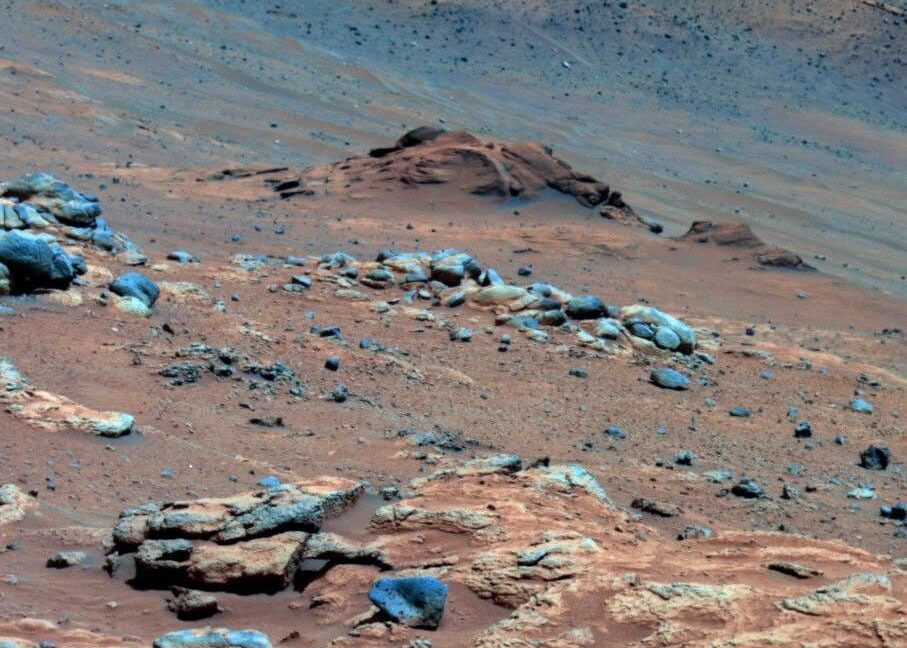
“Very early in Mars’ history, maybe 4 billion years ago, the planet was warm enough to support lakes and river networks,” Kite told Ars. “There were seas, and some of those seas were as big as the Caspian Sea, maybe bigger. It was a wet place.” This wet period, though, didn’t last long—it was too short to make the landscape deeply weathered and deeply eroded.

Kite’s team used their model to focus on what happened as the planet got colder, when the era of salts started. “Big areas of snowmelts created huge salt flats, which eventually built up over time, accumulating into a thick sedimentary deposit Curiosity rover is currently exploring,” Kite said. But the era of salts did not mark the end of liquid water on the Martian surface.

Flickering habitability

The landscape turned arid, judging by Earth’s standards, roughly 3.5 billion years ago. “There were long periods when the planet was entirely dry,” Kite said. During these dry periods, Mars was almost as cold as it is today. But once in a while, small areas with liquid water appeared on the Martian surface like oases amidst an otherwise unwelcoming desert. It was a sterile planet with flickering, transient habitable spots with water coming from melted snow.

This rather bleak picture of the Martian landscape’s evolution makes questions about our chances for finding traces of life in there tricky.

“You can do a thought experiment where you take a cup of water from the Earth’s ocean and pour it into one of those transient lakes on Mars,” Kite said. “Some microbes in this cup of water would do fine in such conditions.” The bigger question, he thinks, is whether life could originate (rather than just survive) on ancient Mars. And, perhaps more critically, whether hypothetical life that originated even before the salts era, when the planet was warm and wet, could persist in the oases popping up in the Kite’s model.

The answer, sadly, is probably not.

https://arstechnica.com/science/2025/07/a-new-martian-climate-model-suggest-a-mostly-cold-harsh-environment/


Rocket Report: SpaceX to make its own propellant; China’s largest launch pad

Trust the computer … It’s easy to be skeptical about this project, but it has attracted an interesting group of people. LEAP 71 has just two employees—its two German co-founders—but boasts lofty ambitions and calls itself a “pioneer in AI-driven engineering.” As part of the agreement with Aspire Space, LEAP 71 will use a proprietary software program called Noyron to design the entire propulsion stack for Aspire’s rockets. The company says its AI-enabled design approach for Aspire’s 450,000-pound-thrust engine will cut in half the time it took other rocket companies to begin test-firing a new engine of similar size. Rudenko forecasts Aspire’s entire project, including a launcher, reusable spacecraft, and ground infrastructure to support it all, will cost more than $1 billion. So far, the project is self-funded, Rudenko told Payload. (submitted by Lin Kayser)

Russia launches ISS resupply freighter. A Russian Progress supply ship launched July 3 from the Baikonur Cosmodrome in Kazakhstan atop a Soyuz-2.1a rocket, NASASpaceflight reports. Packed with 5,787 pounds (2,625 kilograms) of cargo and fuel, the Progress MS-31 spacecraft glided to an automated docking at the International Space Station two days later. The Russian cosmonauts living aboard the ISS will unpack the supplies carried inside the Progress craft’s pressurized compartment. This was the eighth orbital launch of the year by a Russian rocket, continuing a downward trend in launch activity for the Russian space program in recent years.

Celebrating a golden anniversary … The Soyuz rocket that launched Progress MS-31 was painted an unusual blue and white scheme, as it was originally intended for a commercial launch that was likely canceled after Russia’s invasion of Ukraine. It also sported a logo commemorating the 50th anniversary of the Apollo-Soyuz mission in July 1975.

Chinese rocket moves closer to first launch. Chinese commercial launch firm Orienspace is aiming for a late 2025 debut of its Gravity-2 rocket following a recent first-stage engine hot fire test, Space News reports. The “three-in-one” hot fire test verified the performance of the Gravity-2 rocket’s first stage engine, servo mechanisms, and valves that regulate the flow of propellants into the engine, according to a press release from Orienspace. The Gravity-2 rocket’s recoverable and reusable first stage will be powered by nine of these kerosene-fueled engines. The recent hot fire test “lays a solid foundation” for future tests leading up to the Gravity-2’s inaugural flight.

Extra medium … Orienspace’s first rocket, the solid-fueled Gravity-1, completed its first successful flight last year to place multiple small satellites into orbit. Gravity-2 is a much larger vehicle, standing 230 feet (70 meters) tall, the same height as SpaceX’s Falcon 9 rocket. Orienspace’s new rocket will fly in a core-only configuration or with the assistance of two solid rocket boosters. An infographic released by Orienspace in conjunction with the recent engine hot fire test indicates the Gravity-2 rocket will be capable of hauling up to 21.5 metric tons (47,400 pounds) of cargo into low-Earth orbit, placing its performance near the upper limit of medium-lift launchers.

https://arstechnica.com/space/2025/07/rocket-report-starbase-propellant-plant-wins-approval-vulcan-nears-key-launch/


In the Southwest, solar panels can help both photovoltaics and crops

This article originally appeared on Inside Climate News, a nonprofit, non-partisan news organization that covers climate, energy, and the environment. Sign up for their newsletter here.

“We were getting basil leaves the size of your palm,” University of Arizona researcher Greg Barron-Gafford said, describing some of the benefits he and his team have seen farming under solar panels in the Tucson desert.

For 12 years, Barron-Gafford has been investigating agrivoltaics, the integration of solar arrays into working farmland. This practice involves growing crops or other vegetation, such as pollinator-friendly plants, under solar panels, and sometimes grazing livestock in this greenery. Though a relatively new concept, at least 604 agrivoltaic sites have popped up across the United States, according to OpenEI.

Researchers like Barron-Gafford think that, in addition to generating carbon-free electricity, agrivoltaics could offer a ray of hope for agriculture in an increasingly hotter and drier Southwest, as the shade created by these systems has been found to decrease irrigation needs and eliminate heat stress on crops. Plus, the cooling effects of growing plants under solar arrays can actually make the panels work better.

But challenges remain, including some farmers’ attitudes about the practice and funding difficulties.

Overcoming a climate conundrum

While renewable electricity from sources like solar panels is one of the most frequently touted energy solutions to help reduce the carbon pollution that’s driving climate change, the warming climate itself is making it harder for solar arrays to do their job, Barron-Gafford said. An optimal functioning temperature for panels is around 75° Fahrenheit, he explained. Beyond that, any temperature increase reduces the photovoltaic cells’ efficiency.

“You can quickly see how this solution for our changing climate of switching to more renewable energy is itself sensitive to the changing climate,” he said.

This problem is especially pertinent in the Southwest, where historically hot temperatures are steadily increasing. Tucson, for instance, saw a record-breaking 112 days of triple-digit heat in 2024, according to National Weather Service Data, and the US Environmental Protection Agency reports that every part of the Southwest experienced higher average temperatures between 2000 and 2023 compared to the long-term average from 1895 to 2023.

https://arstechnica.com/science/2025/07/in-the-southwest-solar-panels-in-can-help-both-photovoltaics-and-crops/


It’s hunting season in orbit as Russia’s killer satellites mystify skywatchers

Jim Shell, a former NRO project manager and scientist at Air Force Space Command, suggested the two satellites seem positioned to cooperate with one another. “Many interesting scenarios here such as ‘spotter shooter’ among others. Certainly something to keep eyes on!” Shell posted Saturday on X.

COMSPOC, a commercial space situational awareness company, said the unusual orbit of Kosmos 2589 and its companion put the Russian satellites in a position to, at a minimum, spy on Western satellites in geosynchronous orbit.

“This unique orbit, which crosses two key satellite regions daily, may aid in monitoring objects in both GEO and graveyard orbits,” COMSPOC wrote on X. “Its slight 1° inclination could also reduce collision risks. While the satellite’s mission remains unclear, its orbit suggests interesting potential roles.”

Historically, Russia’s military has placed less emphasis on operating in geosynchronous orbit than in low-Earth orbit or other unique perches in space. Due to their positions near the equator, geosynchronous orbits are harder to reach from Russian spaceports because of the country’s high latitude. But Russia’s potential adversaries, like the United States and Europe, rely heavily on geosynchronous satellites.

Other Russian satellites have flown near Western communications satellites in geosynchronous orbit, likely in an attempt to eavesdrop on radio transmissions.

“So it is interesting that they may be doing a GEO inspector,” the retired US military space official told Ars. “I would be curious if that’s what it is. We’ve got to watch. We’ve got to wait and see.”

If you’re a fan of spy techno-thrillers, this all might remind you of the plot from The Hunt for Red October, where a new state-of-the-art Russian submarine leaves its frigid port in Murmansk with orders to test a fictional silent propulsion system that could shake up the balance of power between the Soviet and American navies.

Just replace the unforgiving waters of the North Atlantic Ocean with an environment even more inhospitable: the vacuum of space.

A few minutes into the film, the submarine’s commander, Marko Ramius, played by Sean Connery, announces his orders to the crew. “Once more, we play our dangerous game, a game of chess, against our old adversary—the American Navy.”

Today, nearly 40 years removed from the Cold War, the old adversaries are now scheming against one another in space.

https://arstechnica.com/space/2025/07/its-hunting-season-in-orbit-as-russias-killer-satellites-mystify-skywatchers/