“Things we’ll never know” science fair highlights US’s canceled research

In their rush to terminate grants, each agency settled on a single form letter that told researchers that their work was being defunded because it no longer reflected agency priorities. A number of said researchers surmised that they lost their support because, at the time the grant was initially funded, many federal agencies required attempts to, as the National Science Foundation termed it, “broaden participation.” This left them at risk of falling afoul of the new administration’s anti-DEI efforts.

A few of them planned to eliminate the language they suspect offended DOGE and send in a new grant request. But, given the lack of details in the termination letters, all of them would have to guess as to the problem. And at least one said that the entire program that had funded her grant had since been eliminated, so this wasn’t even an option.

Many of the grants were focused on STEM education, and it’s extremely difficult to imagine that people will be better off without the work happening. One involved figuring out how to better incorporate instruction in quantum mechanics into high school and college education, rather than limiting this increasingly important topic to a handful of physics specialists. Another was focused on trying to help engineers communicate better with the communities that would ultimately use the things they were designing (she cited Google Glass and the Segway as examples of the problems that result when this doesn’t happen).

A large multi-university collaboration had put together a program to help deaf students navigate careers in science, providing support at the undergraduate, graduate, and post-doctoral levels. The effort received multiple grants from different sources, but a number were part of a diversifying science effort, and all of those have been cut.

For a couple of the researchers present, the damage being done to the educational pipeline was personal: they had received prestigious grants that are intended to ease the transition between post-doctoral training and starting a faculty job. This funding helps them stay in a post-doctoral position long enough to develop a solid research program, then partially funds the process of starting up a lab to pursue that program. But for these researchers, the rug had been pulled out from under them partway through the process—funding that was cut even though (in one case) they were simply studying the regeneration of the retina in an experimental organism.

https://arstechnica.com/science/2025/07/things-well-never-know-science-fair-highlights-us-canceled-research/

Watch this cucumber squirt out its seeds at ballistic speeds

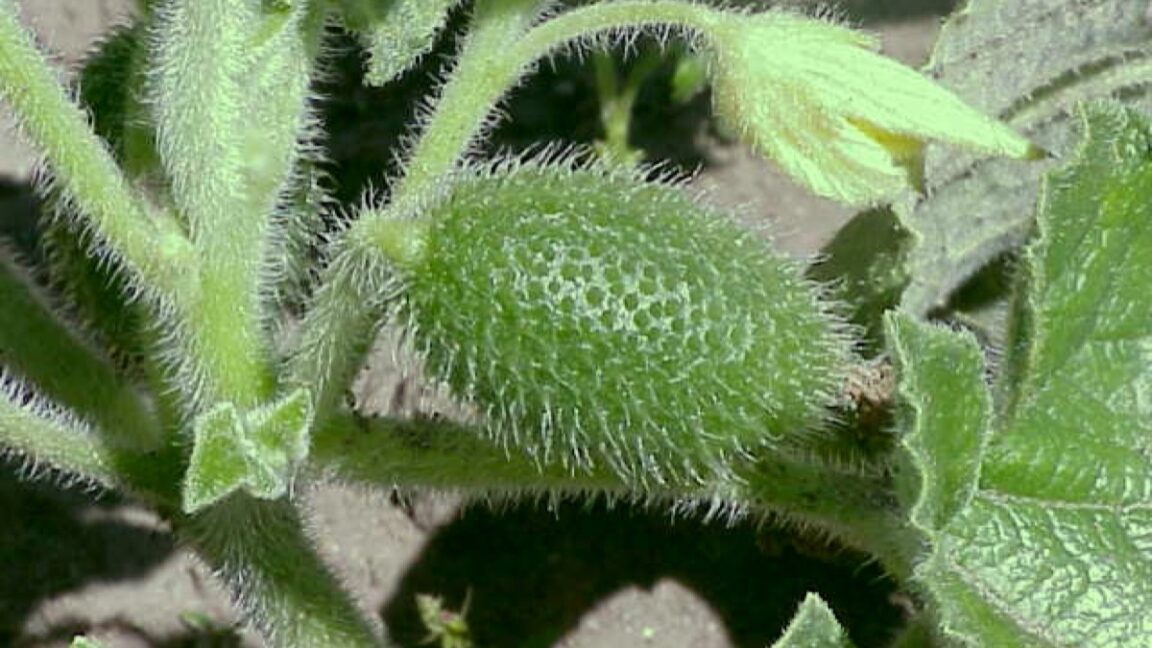
Take a look at squirting cucumber explosive seed dispersal in real time and slowed down. Credit: Helen Gorges/CC BY-NC-ND

One doesn’t normally associate ballistics with botany, but most of us don’t study “squirting” cucumbers—so called because they disperse their seeds by explosively propelling them out into the world. Scientists took a series of high-speed videos, both in the wild and in the lab, to learn more about the underlying biomechanics of this plant’s method of seed dispersal. Graduate student Helen Gorges of Kiel University’s Zoological Institute in Germany presented the findings at the Society for Experimental Biology Annual Conference in Antwerp, Belgium.

Also known as the “noli me tangere,” aka “touch me not,” the squirting cucumber (Ecballium elaterium) is often considered a weed or invasive species, although in some regions it’s viewed as ornamental. Fun fact: The fruit extract is a powerful laxative. If swallowed or inhaled through the nose, it can be poisonous, causing edemas and necrosis of the nasal mucosa, among other complications. That same fruit, once ripened, can squirt out a stream of mucus-like liquid containing seed pods at high speeds—an example of rapid plant movement.

As glucosides in the sap of the fruit’s tissue cells build up, so does the internal pressure, eventually causing the fruit to detach from the stalk. At that point, the pericarp contracts, and both the fruit and the seeds are violently expelled through the resulting hole. The squirting action is further aided by structural changes in the fruit as it dehydrates and its cells coil, bend, or twist in response (hygroscopic movement).

Squirting cucumber explosive seed dispersal (over 300x slowed down). Credit: Helen Gorges/CC BY-NC-ND

It’s actually not the most effective means of seed dispersal, per a 2019 study. That’s good news for almond orchards, for example, since farmers can target their weed-killing efforts to the most likely affected areas. And the plant tissue tends to fracture from the force of the ballistic seed dispersal. “Many factors have to interact perfectly to disperse the seeds in the most efficient way, while not destroying the whole plant too early,” said Gorges, who wanted to learn more about the biomechanics that control the fruit as it ripens and prepares for seed dispersion.

https://arstechnica.com/science/2025/07/watch-this-cucumber-squirt-out-its-seeds-at-ballistic-speeds/


Ancient skull may have been half human, half Neanderthal child

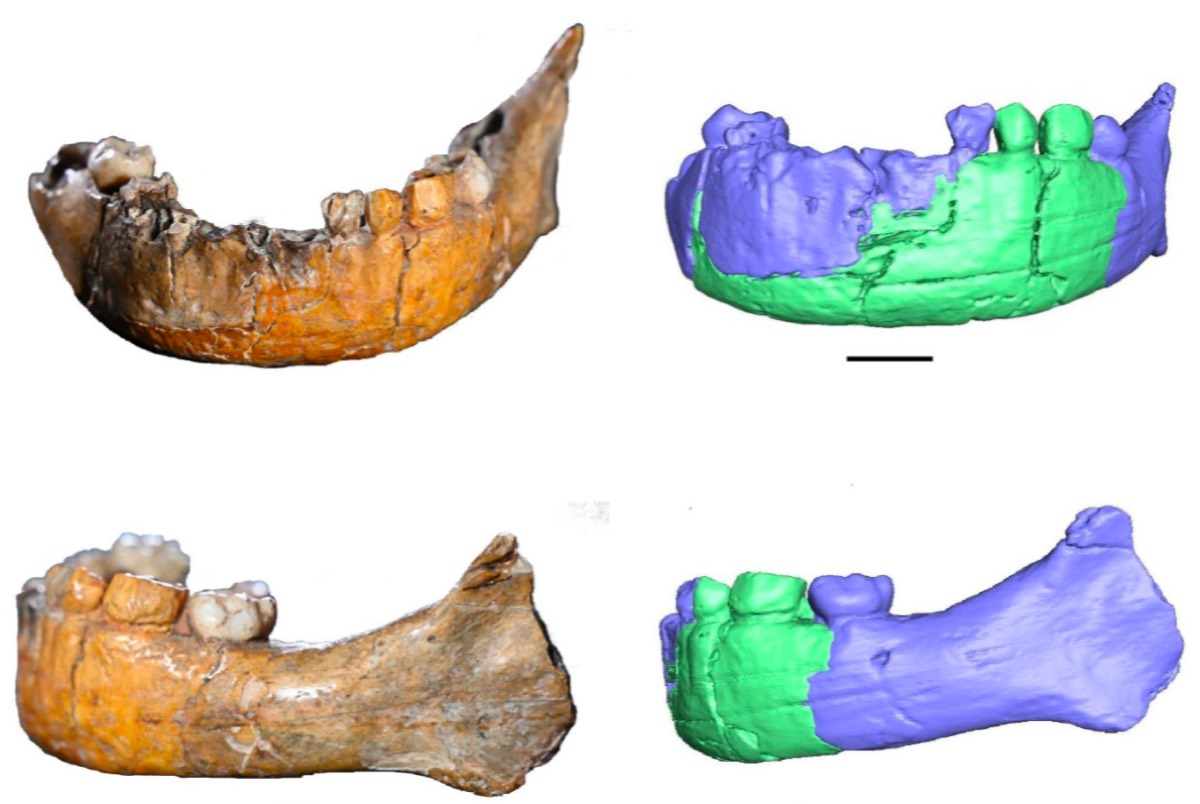
The mandible had been separated from the skeleton, and both it and the neurocranium are incomplete, so they were reconstructed and consolidated with plaster. CT scanning made it possible to check that older reconstructive work to ensure it had not masked any elements that may have influenced the taxonomic classification, per the authors. The team also scanned the skulls of three Homo neanderthalensis skulls in the collection of the Musee de l’Homme in Paris and compared those skull characteristics with the Skuhl Cave skull and mandible.

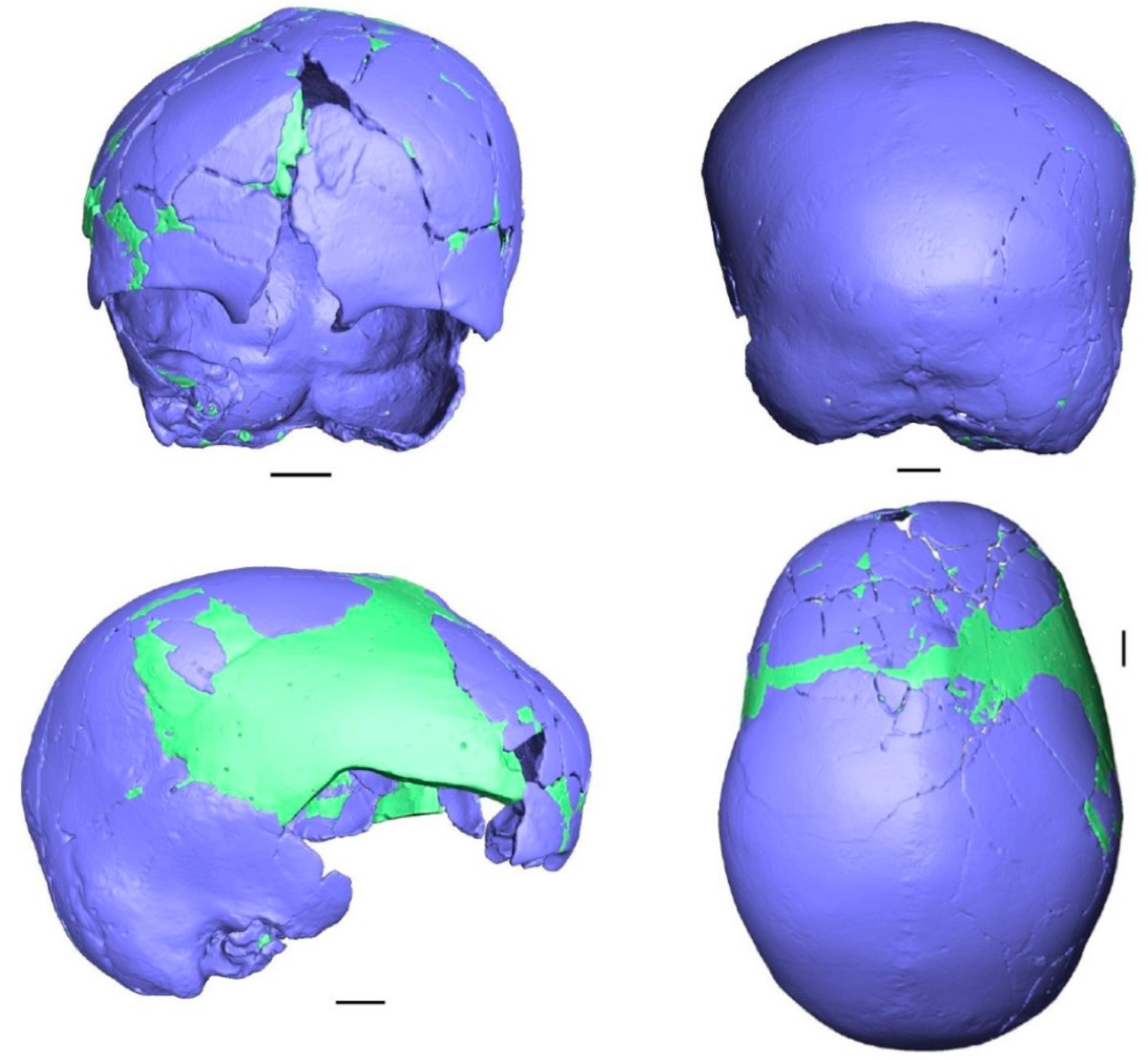
Images, based on CT scan, of Skhu ¯ l I neurocranium. blue denote bone, green denote filling

Images, based on CT scan, of Skhu ¯ l I neurocranium. blue denotes bone, green denotes filling.

Dan David Center of Human Evolution, Tel Aviv University

he original mandible of Skhu ¯ l I and the CT scan-based images in anterior and left lateral view. In blue, the bone; in green; reconstruction

The original mandible of Skhu ¯ l I and the CT scan-based images in anterior and left lateral view. In blue, the bone; in green, reconstruction.

Dan David Center of Human Evolution, Tel Aviv University

They concluded that the neurocranium’s parietal and temporal bones, and the shape of the bony labyrinth, were consistent with Homo sapiens. However, other features, like the receded and high location of the posterior rim of the foramen magnum, indicated a possible Neanderthal lineage. And the mandible showed distinct Neanderthal characteristics, leading to the determination that the child was a hybrid of the two species.

Co-author Anne Dambricourt Malassé of the Institute of Human Paleontology in Paris admitted that she once thought such a hybridization would not have been viable; the results of their analysis demonstrate that it is possible, although the child in question died very young. These findings may also prompt a revisiting of the longstanding assumption that Skuhl Cave was a Homo sapiens gravesite.

“This study is maybe the first that has put the Skhul child’s remains on a scientific basis,” John Hawks of the University of Wisconsin-Madison, who wasn’t involved with the study, told New Scientist. “The old reconstruction and associated work, literally set in plaster, did not really enable anyone to compare this child with a broader array of recent children to understand its biology.” That said, he cautioned that without extracting and analyzing a DNA sample, one can’t make a definitive determination: “Human populations are variable and there can be a lot of variability in their appearance and physical form even without mixing with ancient groups like Neanderthals.”

L’Anthropologie, 2025. DOI: 10.1016/j.anthro.2025.103385  (About DOIs).

https://arstechnica.com/science/2025/07/ancient-skull-may-have-been-half-human-half-neanderthal-child/


Oldest wooden tools in East Asia may have come from any of three species

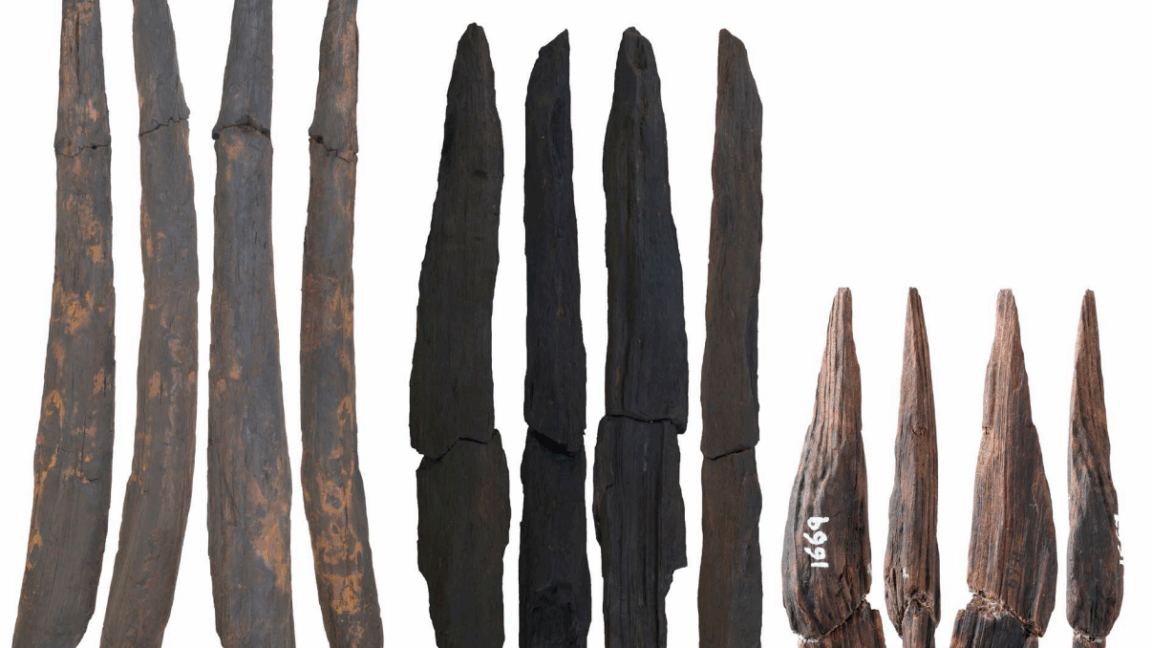
That leaves a few possibilities: Denisovans, Homo heidelbergensis (the common ancestor of Neanderthals, Denisovans, and our species), or Homo erectus. All three species could have lived in the area at the time. But nobody at Gantangqing left behind any convenient, readily identifiable bones along with their wooden tools, stone tools, and butchered animal bones (so inconsiderate of them), making it hard to pin down exactly which species these 300,000-year-old hunter-gatherers belonged to.

Homo erectus had been in Asia for more than a million years by the time Gantangqing’s lakeshore was occupied; the oldest Homo erectus fossils in Asia are from Indonesia and date back 1.8 million years. They also stuck around until quite recently. In caves at a site called Zhoukoudian, outside Beijing in eastern China, Homo erectus remains date to sometime between 700,000 and 200,000 years ago (there’s still a lot of debate on exactly how old the site is).

All of that means that Homo erectus’ presence in the region overlaps the age of the wood tools at Gantangqing. And the stone tools found nearby are fairly simple cores and flakes that don’t rule out Homo erectus as their makers. Archaeologists haven’t unearthed evidence of Homo erectus making or using sophisticated wooden tools like this, but for a species that managed to harness fire and cross miles of ocean, it’s not too wild a speculation.

On the other hand, we know that Denisovans were probably in the area, too, or at least not too far away. A recently identified Denisovan skull from Harbin, China, is 146,000 years old but bears a striking resemblance to other hominin skulls from sites all over China, which range from 300,000 to 200,000 years old. And making finely crafted wooden tools fits with everything we know about Denisovan capabilities.

Then there’s Homo heidelbergensis, the direct ancestor of Denisovans. In fact, it’s a little hard to tell where hominins stop being Homo heidelbergensis and start being Denisovans, or even whether the distinction matters. It’s a problem paleoanthropologists refer to as the “muddle in the Middle,” since both species date to the Middle Pleistocene. So if Homo erectus and Denisovans are in the running, so is Homo heidelbergensis, by default.

And unless someone finds a telltale skull nearby or another very similar toolkit at a site with telltale skulls to consult, we may not know for sure.

Science, 2023. DOI: 10.1126/science.adr8540  (About DOIs).

https://arstechnica.com/science/2025/07/did-denisovans-or-homo-erectus-make-the-oldest-wooden-tools-in-east-asia/


Figuring out why a nap might help people see things in new ways

Lacaux’s team also experimented with different objects the participants should hold while napping: spoons, steel spheres, stress balls, etc. It turned out Edison was right, and a cup was by far the best choice. It also turned out that most participants recognized there was a hidden rule after the falling cup woke them up. The nap was brief, only long enough to enter the light, non-REM N1 phase of sleep.

Initially, Schuck’s team wanted to replicate the results of Lacaux’s study. They even bought the exact same make of cups, but the cups failed this time. “For us, it just didn’t work. People who fell asleep often didn’t drop these cups—I don’t know why,” Schuck says.

The bigger surprise, however, was that the N1 phase sleep didn’t work either.

Tracking the dots

Schuck’s team set up an experiment that involved asking 90 participants to track dots on a screen in a series of trials, with a 20-minute-long nap in between. The dots were rather small, colored either purple or orange, placed in a circle, and they moved in one of two directions. The task for the participants was to determine the direction the dots were moving. That could range from easy to really hard, depending on the amount of jitter the team introduced.

The insight the participants could discover was hidden in the color coding. After a few trials where the dots’ direction was random, the team introduced a change that tied the movement to the color: orange dots always moved in one direction, and the purple dots moved in the other. It was up to the participants to figure this out, either while awake or through a nap-induced insight.

https://arstechnica.com/science/2025/07/figuring-out-why-a-nap-might-help-people-see-things-in-new-ways/


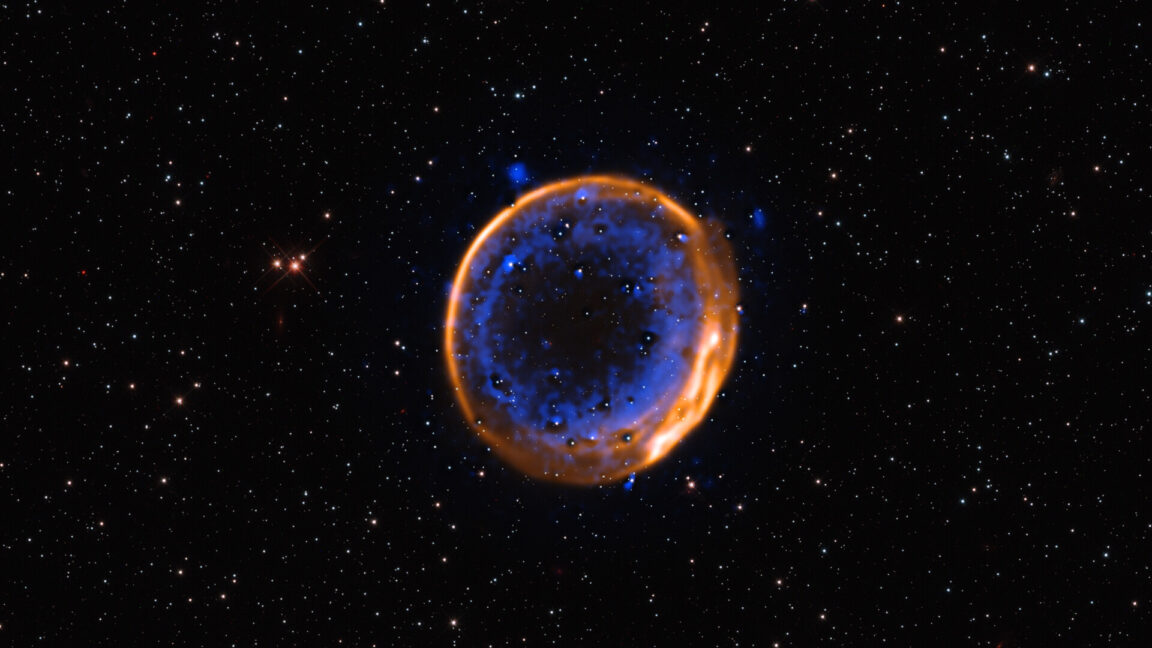
New evidence that some supernovae may be a “double detonation”

In other cases, another member of the system will go on to form a second white dwarf. If gravitational instabilities bring these two objects together, then their collision will create a single object with a much higher mass. This will also restart fusion, leading to an explosion.

We have found evidence for both of these events happening. However, there are some questions about whether they happen often enough to explain the frequency of type Ia supernovae that we see. Both mechanisms require stars of sufficient mass orbiting within a reasonably close distance for either mass transfer or a collision to occur. So, astronomers have been considering other ways of blowing up a white dwarf.

The most promising option appears to be a double detonation. This can also require the transfer of some helium-rich material from another companion, but it can also occur if the white dwarf ends up with some unfused helium left on its surface. Regardless of how it ends up there, the helium can start fusing if enough of it pools up, or simply if its movement causes a sufficiently high local density in one region. However it happens, once fusion starts, the entire surface of the white dwarf will quickly follow, creating detonation number one.

That in turn will create compression in the carbon-oxygen portion of the white dwarf, pushing it past the density needed for that to start fusing. Once again, the initiation of fusion heats and compresses nearby material, creating a chain reaction that triggers widespread fusion in the white dwarf, blowing it to pieces as part of detonation two.

A shell game

The key thing about this is that it allows the explosion of white dwarfs before they reach a mass sufficient enough to trigger the fusion of their carbon and oxygen. Instead, it can potentially happen any time enough helium gathers on their surface. A double-detonation event would also be very difficult to detect, as the explosions would happen in rapid succession, and the environment in the immediate surroundings of a type Ia supernova is going to be complex and difficult to resolve.

https://arstechnica.com/science/2025/07/new-evidence-that-some-supernovae-may-be-a-double-detonation/


Rice could be key to brewing better non-alcoholic beer

small glass of light colored beer with a nice foam head
Rice enhances flavor profiles for nonalcoholic beer, reduces fermentation time, and may contribute to flavor stability. Credit: Paden Johnson/CC BY-NC-SA

He and his team—including Christian Schubert, a visiting postdoc from the Research Institute for Raw Materials and Beverage Analysis in Berlin—brewed their own non-alcoholic beers, ranging from those made with 100 percent barley malt to ones made with 100 percent rice. They conducted a volatile chemical analysis to identify specific compounds present in the beers and assembled two sensory panels of tasters (one in the US, one in Europe) to assess aromas, flavors, and mouthfeel.

The panelists determined the rice-brewed beers had less worty flavors, and the chemical analysis revealed why: lower levels of aldehyde compounds. Instead, other sensory attributes emerged, most notably vanilla or buttery notes. “If a brewer wanted a more neutral character, they could use nonaromatic rice,” the authors wrote. Along with brewing beers with 50 percent barley/50 percent rice, this would produce non-alcoholic beers likely to appeal more broadly to consumers.

The panelists also noted that higher rice content resulted in beers with a fatty/creamy mouthfeel—likely because higher rice content was correlated with increased levels of larger alcohol molecules, which are known to contribute to a pleasant mouthfeel. But it didn’t raise the alcohol content above the legal threshold for a nonalcoholic beer.

There were cultural preferences, however. The US panelists didn’t mind worty flavors as much as the European tasters did, which might explain why the former chose beers brewed with 70 percent barley/30 percent rice as the optimal mix. Their European counterparts preferred the opposite ratio (30 percent barley/70 percent rice). The explanation “may lie in the sensory expectations shaped by each region’s brewing traditions,” the authors wrote. Fermentation also occurred more quickly as the rice content increased because of higher levels of glucose and fructose.

The second study focused on testing 74 different rice cultivars to determine their extract yields, an important variable when it comes to an efficient brewing process, since higher yields mean brewers can use less grain, thereby cutting costs. This revealed that cultivars with lower amylose content cracked more easily to release sugars during the mashing process, producing the highest yields. And certain varieties also had lower gelatinization temperatures for greater ease of processing.

International Journal of Food Science, 2025. DOI: 10.1080/10942912.2025.2520907  (About DOIs)

Journal of the American Society of Brewing Chemists, 2025. DOI: 10.1080/03610470.2025.2499768

https://arstechnica.com/science/2025/07/rice-could-be-key-to-brewing-better-non-alcoholic-beer/


Pentagon may put SpaceX at the center of a sensor-to-shooter targeting network

The possibilities include exploiting automation, artificial intelligence, and machine learning to sense, target, and strike an enemy vehicle—a truck, tank, airplane, ship, or missile—nearly instantaneously.

“If I’m on the edge doing 3D fusion, I’m less dependent on the ground and I can get around the globe with my mesh network,” Davis said. “There’s inherent resilience in the overall architecture—not just the space architecture, but the overall architecture—if the ground segment or link segment comes under attack.”

Questioning the plan

Military officials haven’t disclosed the cost of MILNET, either in its current form or in the future architecture envisioned by the Trump administration. For context, SDA has awarded fixed-price contracts worth more than $5.6 billion for approximately 340 data relay satellites in Tranches 1 and 2.

That comes out to roughly $16 million per spacecraft, at least an order of magnitude more expensive than a Starlink satellite coming off of SpaceX’s assembly line. Starshield satellites, with their secure communications capability, are presumably somewhat more expensive than an off-the-shelf Starlink.

Some former defense officials and lawmakers are uncomfortable with putting commercially operated satellites in the “kill chain,” the term military officials use for the process of identifying threats, making a targeting decision, and taking military action.

It isn’t clear yet whether SpaceX will operate the MILNET satellites in this new paradigm, but the company has a longstanding preference for doing so. SpaceX built a handful of tech demo satellites for the Space Development Agency a few years ago, but didn’t compete for subsequent SDA contracts. One reason for this, sources told Ars, is that the SDA operates its satellite constellation from government-run control centers.

Instead, the SDA chose L3Harris, Lockheed Martin, Northrop Grumman, Rocket Lab, Sierra Space, Terran Orbital, and York Space Systems to provide the next batches of missile tracking and data transport satellites. RTX, formerly known as Raytheon, withdrew from a contract after the company determined it couldn’t make money on the program.

https://arstechnica.com/space/2025/07/pentagon-may-put-spacex-at-the-center-of-a-sensor-to-shooter-targeting-network/


A mammoth tusk boomerang from Poland is 40,000 years old

A boomerang carved from a mammoth tusk is one of the oldest in the world, and it may be even older than archaeologists originally thought, according to a recent round of radiocarbon dating.

Archaeologists unearthed the mammoth-tusk boomerang in Poland’s Oblazowa Cave in the 1990s, and they originally dated it to around 18,000 years old, which made it one of the world’s oldest intact boomerangs. But according to recent analysis by University of Bologna researcher Sahra Talamo and her colleagues, the boomerang may have been made around 40,000 years ago. If they’re right, it offers tantalizing clues about how people lived on the harsh tundra of what’s now Poland during the last Ice Age.

A boomerang carved from mammoth tusk

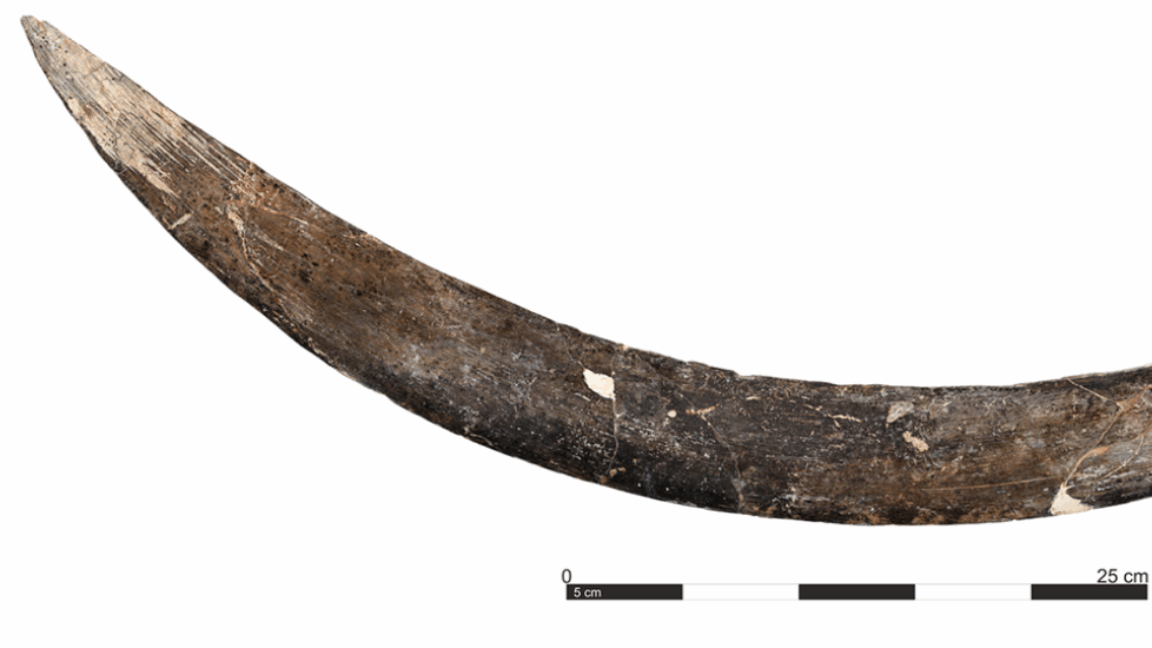
The mammoth-tusk boomerang is about 72 centimeters long, gently curved, and shaped so that one end is slightly more rounded than the other. It still bears scratches and scuffs from the mammoth’s life, along with fine, parallel grooves that mark where some ancient craftsperson shaped and smoothed the boomerang. On the rounded end, a series of diagonal marks would have made the weapon easier to grip. It’s smoothed and worn from frequent handling: the last traces of the life of some Paleolithic hunter.

Based on experiments with a replica, the Polish mammoth boomerang flies smoothly but doesn’t return, similar to certain types of Aboriginal Australian boomerangs. In fact, it looks a lot like a style used by Aboriginal people from Queensland, Australia, but that’s a case of people in different times and places coming up with very similar designs to fit similar needs.

But critically, according to Talamo and her colleagues, the boomerang is about 40,000 years old.

That’s a huge leap from the original radiocarbon date, made in 1996, which was based on a sample of material from the boomerang itself and estimated an age of 18,000 years. But Talamo and her colleagues claim that original date didn’t line up well with the ages of other nearby artifacts from the same layer of the cave floor. That made them suspect that the boomerang sample may have gotten contaminated by modern carbon somewhere along the way, making it look younger. To test the idea, the archaeologists radiocarbon dated samples from 13 animal bones—plus one from a human thumb—unearthed from the same layer of cave floor sediment as the boomerang.

https://arstechnica.com/science/2025/06/a-mammoth-tusk-boomerang-from-poland-is-40000-years-old/


Research roundup: 6 cool science stories we almost missed

To encode messages, the researchers assigned different bubble sizes, shapes, and orientations to Morse code and binary characters and used their freezing method to produce ice bubbles representing the desired characters. Next, they took a photograph of the ice layer and converted it to gray scale, training a computer to identify the position and the size of the bubbles and decode the message into English letters and Arabic numerals. The team found that binary coding could store messages 10 times longer than Morse code.

Someday, this freezing method could be used for short message storage in Antarctica and similar very cold regions where traditional information storage methods are difficult and/or too costly, per the authors. However, Qiang Tang of the University of Australia, who was not involved in the research, told New Scientist that he did not see much practical application for the breakthrough in cryptography or security, “unless a polar bear may want to tell someone something.”

Cell Physical Science, 2025. DOI: 10.1016/j.xcrp.2025.102622 (About DOIs).

Cats prefer to sleep on left side

sleepy tuxedo cat blissfully stretched out on a blue rug

Caliban marches to his own drum and prefers to nap on his right side. Credit: Sean Carroll

The Internet was made for cats, especially YouTube, which features millions of videos of varying quality, documenting the crazy antics of our furry feline friends. Those videos can also serve the interests of science, as evidenced by the international team of researchers who analyzed 408 publicly available videos of sleeping cats to study whether the kitties showed any preference for sleeping on their right or left sides. According to a paper published in the journal Current Biology, two-thirds of those videos showed cats sleeping on their left sides.

Why should this behavioral asymmetry be the case? There are likely various reasons, but the authors hypothesize that it has something to do with kitty perception and their vulnerability to predators while asleep (usually between 12 to 16 hours a day). The right hemisphere of the brain dominates in spatial attention, while the right amygdala is dominant for processing threats. That’s why most species react more quickly when a predator approaches from the left. Because a cat’s left visual field is processed in the dominant right hemisphere of their brains, “sleeping on the left side can therefore be a survival strategy,” the authors concluded.

https://arstechnica.com/science/2025/06/research-roundup-6-cool-science-stories-we-almost-missed/