Ars reflects on Apollo 13 turning 30
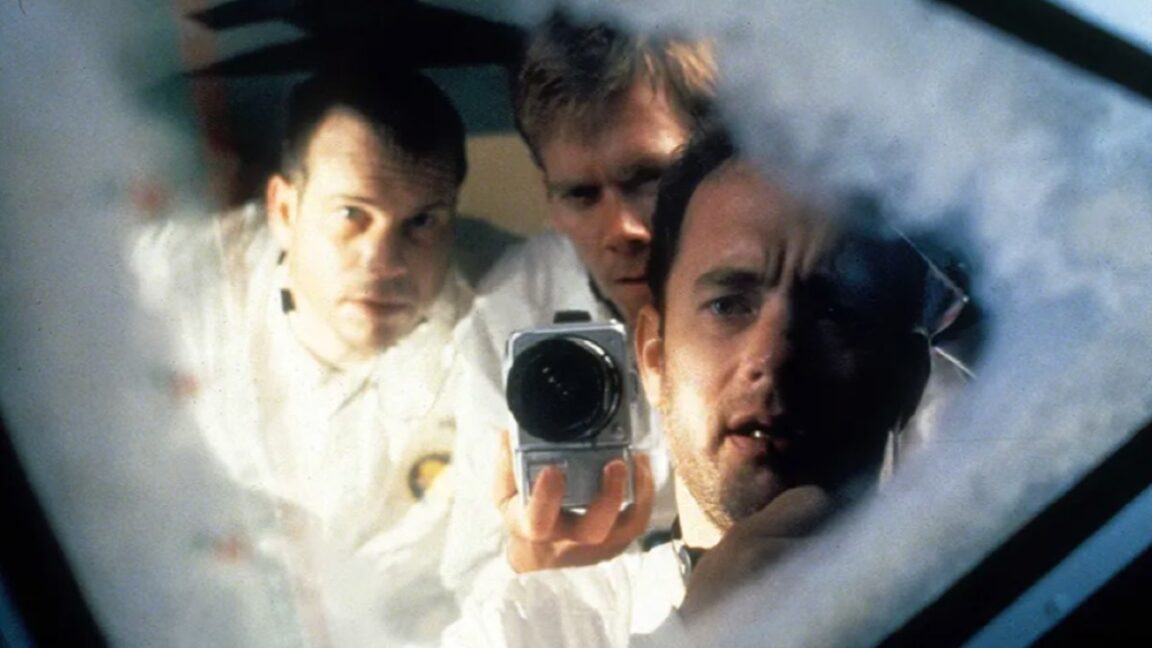
This year marks the 30th anniversary of the 1995 Oscar-winning film, Apollo 13, director Ron Howard’s masterful love letter to NASA’s Apollo program in general and the eponymous space mission in particular. So we’re taking the opportunity to revisit this riveting homage to American science, ingenuity, and daring.

(Spoilers below.)

Apollo 13 is a fictional retelling of the aborted 1970 lunar mission that became a “successful failure” for NASA because all three astronauts made it back to Earth alive against some pretty steep odds. The film opens with astronaut Jim Lovell (Tom Hanks) hosting a watch party in July 1969 for Neil Armstrong’s historic first walk on the Moon. He is slated to command the Apollo 14 mission, and is ecstatic when he and his crew—Ken Mattingly (Gary Sinise) and Fred Haise (Bill Paxton)—are bumped to Apollo 13 instead. His wife, Marilyn (Kathleen Quinlan) is more superstitious and hence less thrilled: “It had to be 13.” To which her pragmatic husband replies, “It comes after 12.”

A few days before launch, Mattingly is grounded because he was exposed to the measles and replaced with backup Jack Swigert (Kevin Bacon), who is the only one happy about the situation. But Lovell and Haise rebound from the disappointment and the launch goes off without a hitch. The public, alas, just isn’t interested in what they think has become routine. But the mission is about to become anything but that.

During a maintenance task to stir the oxygen tanks, an electrical short causes one of the tanks to explode, with the other rapidly venting its oxygen into space. The crew has less than an hour to evacuate the command module Odyssey into the lunar module Aquarius, using it as a lifeboat. There is no longer any chance of landing on the Moon; the new mission is to keep the astronauts alive long enough to figure out how to bring them safely home. That means overcoming interpersonal tensions, freezing conditions, dwindling rations, and unhealthy CO2 levels, among other challenges, as well as taking on a pulse-pounding manual course correction with no navigational computer. (Spoiler alert: they make it!)

https://arstechnica.com/science/2025/06/ars-reflects-on-apollo-13-turning-30/


A neural brain implant provides near instantaneous speech

Delays and dictionaries

One year after the Stanford work, in 2024, Stavisky’s team published its own research on a brain-to-text system that bumped the accuracy to 97.5 percent. “Almost every word was correct, but communicating over text can be limiting, right?” Stavisky said. “Sometimes you want to use your voice. It allows you to make interjections, it makes it less likely other people interrupt you—you can sing, you can use words that aren’t in the dictionary.” But the most common approach to generating speech relied on synthesizing it from text, which led straight into another problem with BCI systems: very high latency.

In nearly all BCI speech aids, sentences appeared on a screen after a significant delay, long after the patient finished stringing the words together in their mind. The speech synthesis part usually happened after the text was ready, which caused even more delay. Brain-to-text solutions also suffered from a limited vocabulary. The latest system of this kind supported a dictionary of roughly 1,300 words. When you tried to speak a different language, use more elaborate vocabulary, or even say the unusual name of a café just around the corner, the systems failed.

So, Wairagkar designed her prosthesis to translate brain signals into sounds, not words—and do it in real time.

Extracting sound

The patient who agreed to participate in Wairagkar’s study was codenamed T15 and was a 46-year-old man suffering from ALS. “He is severely paralyzed and when he tries to speak, he is very difficult to understand. I’ve known him for several years, and when he speaks, I understand maybe 5 percent of what he’s saying,” says David M. Brandman, a neurosurgeon and co-author of the study. Before working with the UC Davis team, T15 communicated using a gyroscopic head mouse to control a cursor on a computer screen.

https://arstechnica.com/science/2025/06/a-neural-brain-implant-provides-near-instantaneous-speech/


Rocket Report: SpaceX’s dustup on the border; Northrop has a nozzle problem

Sovereign launch … HyPrSpace’s Baguette One will stand roughly 10 meters (30 feet) tall and will be capable of carrying payloads of up to 300 kilograms (660 pounds) to suborbital space. It is scheduled to launch next year from a French missile testing site in the south of France. “Gaining access to this dual-use launch pad in mainland France is a major achievement after many years of work on our hybrid propulsion technology,” said Sylvain Bataillard, director general of HyPrSpace. “It’s a unique opportunity for HyPrSpace and marks a decisive turning point. We’re eager to launch Baguette One and to play a key role in building a more sovereign, more sustainable, and boldly innovative European dual-use space industry.” (submitted by EllPeaTea)

Firefly moves closer to launching from Sweden. An agreement between the United States and Sweden brings Firefly Aerospace one step closer to launching its Alpha rocket from a Swedish spaceport, Space News reports. The two countries signed a technology safeguards agreement (TSA) at a June 20 ceremony at the Swedish embassy in Washington, DC. The TSA allows the export of American rockets to Sweden for launches there, putting in place measures to protect launch vehicle technology.

A special relationship … The US government has signed launch-related safeguard agreements with only a handful of countries, such as Australia, the United Kingdom, and now Sweden. Rocket exports are subject to strict controls because of the potential military applications of that technology. Firefly currently launches its Alpha rocket from Vandenberg Space Force Base, California, and is building a launch site at Wallops Island, Virginia. Firefly also has a lease for a launch pad at Cape Canaveral, Florida, although the company is prioritizing other sites. Then, last year, Firefly announced an agreement with the Swedish Space Corporation to launch Alpha from Esrange Space Center as soon as 2026. (submitted by EllPeaTea)

Amazon is running strong out of the gate. For the second time in two months, United Launch Alliance sent a batch of 27 broadband Internet satellites into orbit for Amazon on Monday morning, Ars reports. This was the second launch of a full load of operational satellites for Amazon’s Project Kuiper, a network envisioned to become a competitor to SpaceX’s Starlink. Just like the last flight on April 28, an Atlas V rocket lifted off from Cape Canaveral, Florida, and delivered Amazon’s satellites into an on-target orbit roughly 280 miles (450 kilometers) above Earth.

https://arstechnica.com/science/2025/06/rocket-report-spacexs-dustup-on-the-border-northrop-has-a-nozzle-problem/


NASA tested a new SLS booster that may never fly, and the end of it blew off

Unlike the RS-25 firing at Stennis, NASA chose to broadcast the booster test. Everything appeared to go well until 1 minute and 40 seconds into the burn, when a fiery plume of super-hot exhaust appeared to burn through part of the booster’s structure just above the nozzle. Moments later, the nozzle disintegrated.

Solid rocket boosters can’t be turned off after ignition, and for better or worse, the motor continued firing until it ran out of propellant about 30 seconds later. The rocket sparked a fire in the hills overlooking the test stand.

This was the first test-firing of the Booster Obsolescence and Life Extension (BOLE) program, which aims to develop a higher-performance solid rocket booster for SLS missions. NASA awarded Northrop Grumman a $3.2 billion contract in 2021 to produce boosters with existing shuttle parts for five SLS missions (Artemis IV-VIII), and design, develop, and test a new booster design for Artemis IX.

The boosters produce more than 75 percent of the thrust required to propel the SLS rocket off the launch pad with NASA’s crewed Orion spacecraft on top. Four RS-25 engines power the core stage, collectively generating more than 2 million pounds of thrust.

Northrop Grumman calls the new booster “the largest and most powerful segmented solid rocket motor ever built for human spaceflight.”

One of the most significant changes with the BOLE booster design is that it replaces shuttle-era steel cases with carbon-fiber composite cases. Northrop says the new cases are lighter and stronger. It also replaces the booster’s hydraulic thrust vector control steering system with an electronic system. The propellant packed inside the booster is also different, using a mix that Northrop packs inside its commercial rocket motors instead of the recipe used for the space shuttle.

Northrop Grumman has had a tough time with rocket nozzles in recent years. In 2019, a test motor for the company’s now-canceled Omega rocket lost its nozzle during a test-firing in Utah. Then, last year, a smaller Northrop-made booster flying on United Launch Alliance’s Vulcan rocket lost its nozzle in flight. Vulcan’s guidance system and main engines corrected for the problem, and the rocket still achieved its planned orbit.

https://arstechnica.com/space/2025/06/nasa-tested-a-new-sls-booster-that-may-never-fly-and-the-end-of-it-blew-off/


Changing one gene can restore some tissue regeneration to mice

Regeneration is a trick many animals, including lizards, starfish, and octopuses, have mastered. Axolotls, a salamander species originating in Mexico, can regrow pretty much everything from severed limbs, through eyes and parts of brain, to the spinal cord. Mammals, though, have mostly lost this ability somewhere along their evolutionary path. Regeneration persisted, in a limited number of tissues, in just a few mammalian species like rabbits or goats.

“We were trying to learn how certain animals lost their regeneration capacity during evolution and then put back the responsible gene or pathway to reactivate the regeneration program,” says Wei Wang, a researcher at the National Institute of Biological Sciences in Beijing. Wang’s team has found one of those inactive regeneration genes, activated it, and brough back a limited regeneration ability to mice that did not have it before.

Of mice and bunnies

The idea Wang and his colleagues had was a comparative study to compare how the wound healing process works in regenerating and non-regenerating mammalian species. They chose rabbits as their regenerating mammals and mice as the non-regenerating species. As the reference organ, the team picked the ear pinna. “We wanted relatively simple structure that was easy to observe and yet composed of many different cell types,” Wang says. The test involved punching holes in the ear pinna of rabbits and mice and tracking the wound-repairing process.

The healing process began in the same way in rabbits and mice. Within the first few days after the injury, a blastema—a mass of heterogeneous cells—formed at the wound site. “Both rabbits and mice will heal the wounds after a few days,” Wang explains. “But between the 10th and 15th day, you will see the major difference.” In this timeframe, the earhole in rabbits started to become smaller. There were outgrowths above the blastema—the animals were producing more tissue. In mice, on the other hand, the healing process halted completely, leaving a hole in the ear.

https://arstechnica.com/science/2025/06/changing-one-gene-can-restore-some-tissue-regeneration-to-mice/


45-hour voyage in replica canoe tests Paleolithic migration theory

(Left) GPS tracking and modeling of ocean currents toward the end of the experimental voyage. (Right) The team on the water around the time of the left image.
(Left) GPS tracking and modeling of ocean currents toward the end of the experimental voyage. (Right) The team on the water around the time of the left image. Credit: Kaifu et al., 2025/CC-By-ND

At the 30-hour mark, the captain ordered the entire crew to rest, letting the dugout drift freely for a while, which fortunately brought them closer to Yonaguni Island. At hour 40, the island’s silhouette was visible, and over the next five hours, the crew was able to navigate the strong tidal flow along the coast until they reached their landing site: Nama Beach. So the experimental voyage was a success, augmented by the numerical simulations to demonstrate that the boat could make similar voyages from different departure points across both modern and late-Pleistocene oceans.

Granted, it was not possible to recreate Paleolithic conditions perfectly on a modern ocean. The crew first spotted the island because of its artificial lights, although by that time, they were on track navigationally. They were also accompanied by escort ships to ensure the crew’s safety, supplying fresh water twice during the voyage. But the escort ships did not aid with navigation or the dugout captain’s decision-making, and the authors believe that any effects were likely minimal. The biggest difference was the paddlers’ basic modern knowledge of local geography, which helped them develop a navigation plan—an unavoidable anachronism, although the crew did not rely on compasses, GPS, or watches during the voyage.

“Scientists try to reconstruct the processes of past human migrations, but it is often difficult to examine how challenging they really were,” said Kaifu. “One important message from the whole project was that our Paleolithic ancestors were real challengers. Like us today, they had to undertake strategic challenges to advance. For example, the ancient Polynesian people had no maps, but they could travel almost the entire Pacific. There are a variety of signs on the ocean to know the right direction, such as visible land masses, heavenly bodies, swells, and winds. We learned parts of such techniques ourselves along the way.”

“Traversing the Kuroshio: Paleolithic migration across one of the world’s strongest ocean currents,” Science Advances, 2025. DOI: 10.1126/sciadv.adv5508  (About DOIs).

“Palaeolithic seafaring in East Asia: an experimental test of the dugout canoe hypothesis,” Science Advances, 2025. DOI: 10.1126/sciadv.adv5507

https://arstechnica.com/science/2025/06/testing-ancient-paleolithic-migration-with-a-replica-canoe/


Psyche keeps its date with an asteroid, but now it’s running in backup mode

The spacecraft, built by Maxar Space Systems, will operate its electric thrusters for the equivalent of three months between now and November to keep the mission on track for arrival at asteroid Psyche in 2029.

“Through comprehensive testing and analysis, the team narrowed down the potential causes to a valve that may have malfunctioned in the primary line,” NASA said in a statement Friday. “The switch to the identical backup propellant line in late May restored full functionality to the propulsion system.”

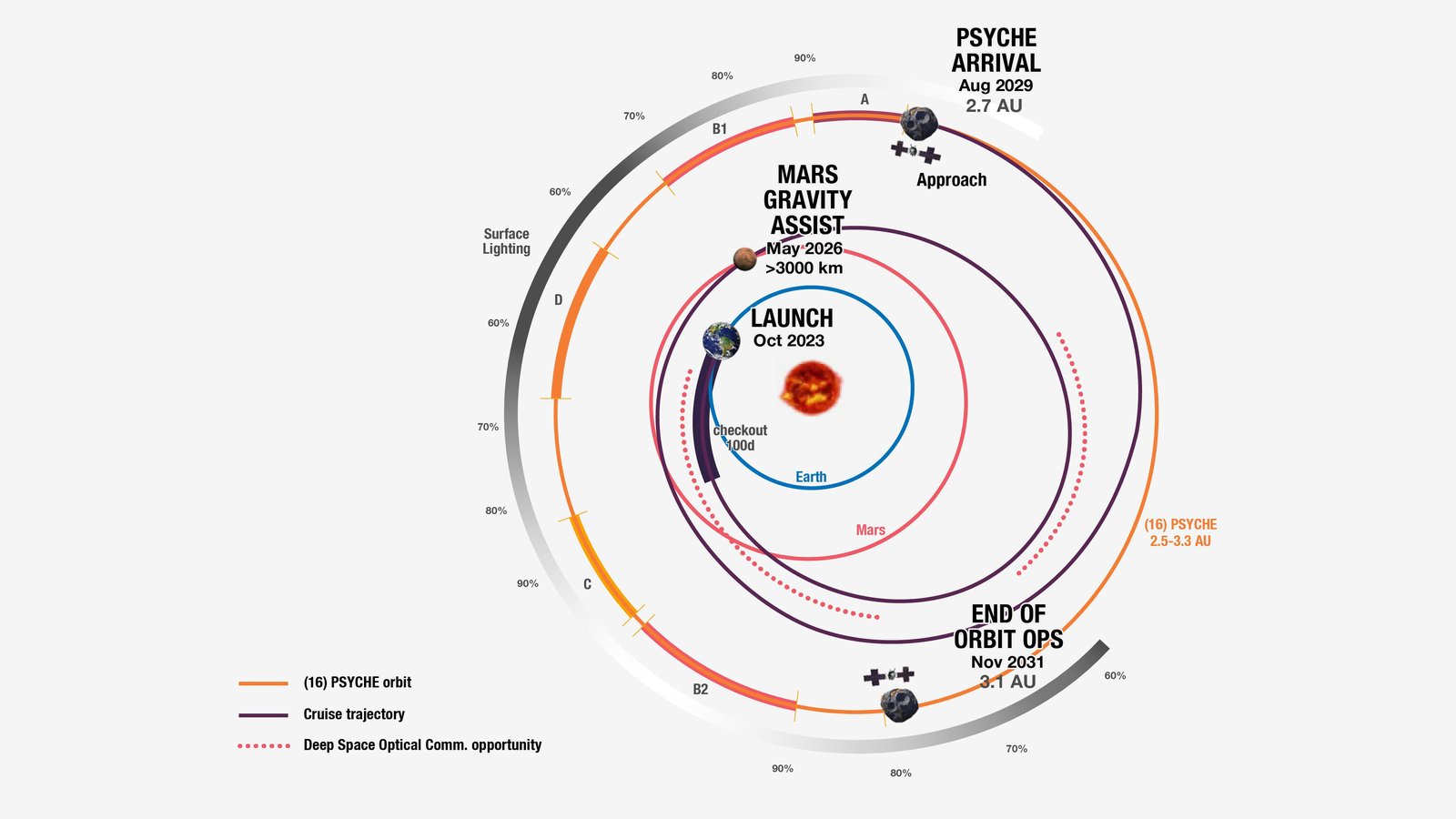
The next waypoint on Psyche’s voyage will be a flyby of Mars in May 2026. Officials expect Psyche to keep that date, which is critical for using Mars’ gravity to slingshot the spacecraft deeper into the Solar System, eventually reaching the asteroid belt about four years from now.

NASA’s Psyche spacecraft takes a spiral path to the asteroid Psyche, as depicted in this graphic that shows the path from above the plane of the planets, labeled with key milestones of the prime mission. Credit: NASA/JPL-Caltech

At Psyche, the spacecraft will enter orbit and progressively move closer to the asteroid, using a suite of sensors to map its surface, measure its shape, mass, and gravity field, and determine its elemental composition. Observations through telescopes suggest Psyche is roughly 140 miles (226 kilometers) in diameter, or about the width of Massachusetts. But it’s likely not spherical in shape. Scientists describe its shape as more akin to a potato.

Potatoes come in lots of shapes, and researchers won’t know exactly what Psyche looks like until NASA’s asteroid explorer arrives in 2029. Psyche will be the first metallic, or M-type, asteroid visited by any spacecraft, and scientists are eager to study an object that’s largely made of metals—probably iron, nickel, and perhaps some rarer elements— instead of rocky minerals.

With the Psyche spacecraft’s plasma thrusters back in action, these goals of NASA’s billion-dollar science mission remain achievable.

“The mission team’s dedication and systematic approach to this investigation exemplifies the best of NASA engineering,” said Bob Mase, Psyche project manager at  JPL, in a statement. “Their thorough diagnosis and recovery, using the backup system, demonstrates the value of robust spacecraft design and exceptional teamwork.”

But there’s still a lingering concern whatever problem caused the valve to malfunction in the primary fuel line might also eventually affect the same kind of valve in the backup line.

“We are doing a lot of good proactive work around that possible issue,” wrote Lindy Elkins-Tanton, Psyche’s principal investigator at Arizona State University, in a post on X.

https://arstechnica.com/space/2025/06/psyche-keeps-its-date-with-an-asteroid-but-now-its-running-in-backup-mode/


New body size database for marine animals is a “library of life”

The ocean runs on size

McClain officially launched MOBS as a passion project while on sabbatical in 2022 but he had been informally collecting data on body size for various marine groups for several years before that. So he had a small set of data already to kick off the project, incorporating it all into a single large database with a consistent set format and style.

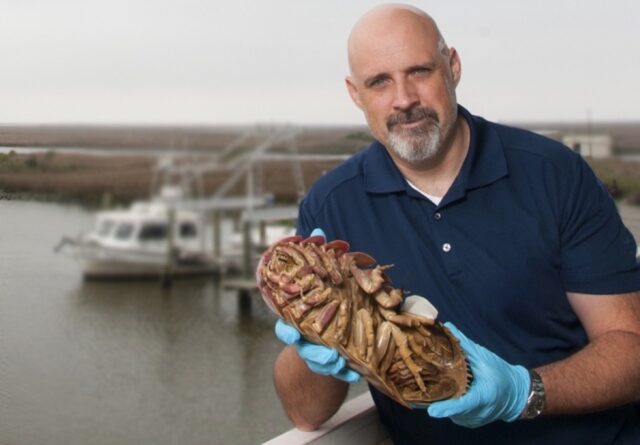
Craig McClain holding a giant isopod (Bathynomus giganteus), one of the deep sea’s most iconic crustaceans

Craig McClain holding a giant isopod (Bathynomus giganteus), one of the deep sea’s most iconic crustaceans Credit: Craig McClain

“One of the things that had prevented me from doing this before was the taxonomy issue,” said McClain. “Say you wanted to get the body size for all [species] of octopuses. That was not something that was very well known unless some taxonomist happened to publish [that data]. And that data was likely not up-to-date because new species are [constantly] being described.”

However, in the last five to ten years, the World Register of Marine Species (WoRMS) was established with the objective of cataloging all marine life, with taxonomy experts assigned to specific groups to determine valid new species, which are then added to the data set with a specific numerical code. McClain tied his own dataset to that same code, making it quite easy to update MOBS as new species are added to WoRMS. McClain and his team were also able to gather body size data from various museum collections.

The MOBS database focuses on body length (a linear measurement) as opposed to body mass. “Almost every taxonomic description of a new species has some sort of linear measurement,” said McClain. “For most organisms, it’s a length, maybe a width, and if you’re really lucky you might get a height. It’s very rare for anything to be weighed unless it’s an objective of the study. So that data simply doesn’t exist.”

While all mammals generally have similar density, “If you compare the density of a sea slug, a nudibranch, versus a jellyfish, even though they have the same masses, their carbon contents are much different,” he said. “And a one-meter worm that’s a cylinder and a one-meter sea urchin that’s a sphere are fundamentally different weights and different kinds of organisms.” One solution for the latter is to convert to volume to account for shape differences. Length-to-weight ratios can also differ substantially for different marine animal groups. That’s why McClain hopes to compile a separate database for length-to-weight conversions.

https://arstechnica.com/science/2025/06/new-body-size-database-for-marine-animals-is-a-library-of-life/


How a data center company uses stranded renewable energy

“Decisions around where data centers get built have shifted dramatically over the last six months, with access to power now playing the most significant role in location scouting,” Joshi said. “The grid can’t keep pace with AI demands, so the industry is taking control with onsite power generation.”

Soluna, like other data center developers looking to rely on renewable energy, buys the excess power from wind, hydro, and solar plants that they can’t sell to the grid. By the end of the year, Soluna will have three facilities totaling 123 megawatts of capacity in Kentucky and Texas and seven projects in the works with upwards of 800 total megawatts.

Belizaire and I talked about how in Texas, where I report from, there’s plenty of curtailed energy from wind and solar farms because of the region’s transmission capacity. In West Texas, other data center developers are also taking advantage of the unused wind energy, far from major load centers like Dallas and Houston, by co-locating their giant warehouses full of advanced computers and high-powered cooling systems with the excess energy.

One data center developer using curtailed renewable power in Texas is IREN. The firm owns and operates facilities optimized for Bitcoin mining and AI. It developed a 7.5-gigawatt facility in Childress and broke ground on a 1.4-gigawatt data center in Sweetwater.

IREN purchases power through the state grid’s wholesale market during periods of oversupply, said Kent Draper, the company’s chief commercial officer, and reduces its consumption when prices are high. It’s able to do that by turning off its computers and minimizing power demand from its data centers.

But curtailment is an issue all over the world, Belizaire said, from Oklahoma, North Dakota, South Dakota, California, and Arizona in the US, to Northern Ireland, Germany, Portugal, and Australia.

“Anywhere where you have large utility-scale renewable development that’s been built out, you’re going to find it,” Belizaire said.

In a March analysis, the US Energy Information Administration reported that solar and wind power curtailments are increasing in California. In 2024, the grid operator for most of California curtailed 3.4 million megawatt hours of utility-scale wind and solar output, a 29 percent increase from the amount of electricity curtailed in 2023.

https://arstechnica.com/science/2025/06/how-a-data-center-company-uses-stranded-renewable-energy/


A shark scientist reflects on Jaws at 50

A shark strikes

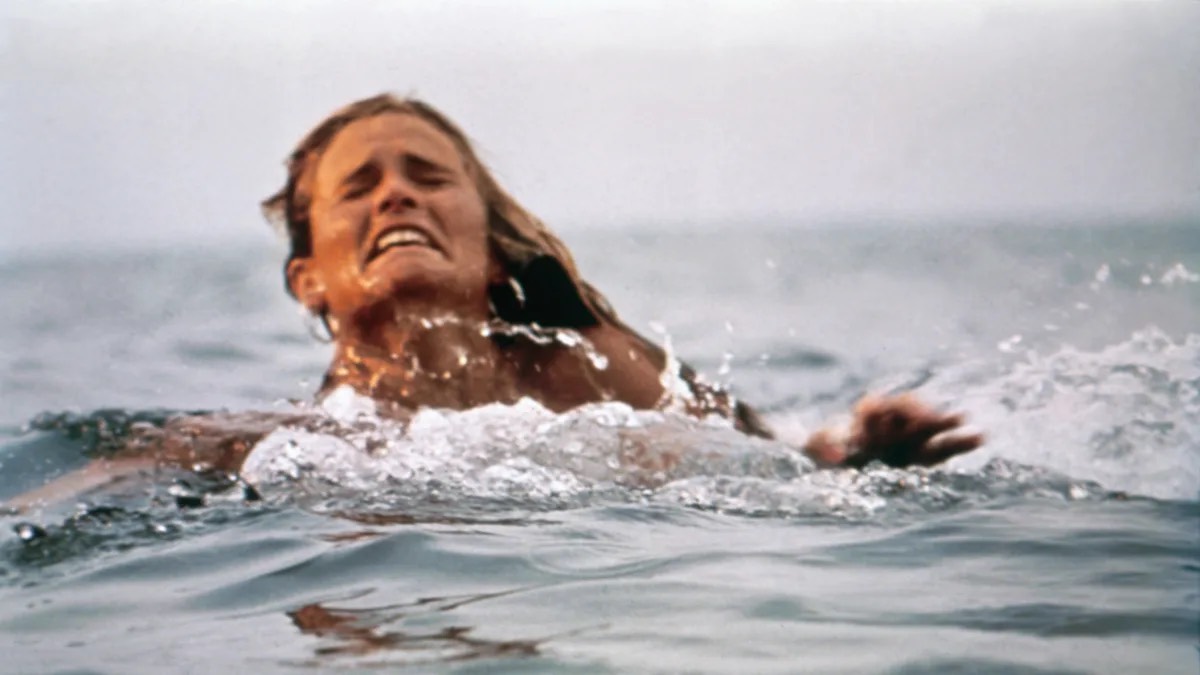
closeup of woman's face and head just above the water's surface, in agony as an unseen shark drags her back and forth

RIP Chrissie Watkins (Susan Backlinie), the shark’s first victim.

Universal Pictures

Bearded man standing in front of a vandalized billboard, showing a female surfer being pursued by a visible shark fin sticking out of the water

Local vandals have a bit of fun with the Amity billboard.

Universal Pictures

There were three pneumatically powered full-sized mechanical sharks built for the shoot, nicknamed “Bruce,” and they kept malfunctioning. The pneumatic hoses kept taking on seawater; the skin was made of neoprene foam, which soaked up water and became bloated; and one of the models kept getting tangled up in seaweed. In the end, Spielberg opted to shoot most of the early scenes without ever showing the actual shark, which actually heightened the tension and suspense, especially when combined with John Williams’ ominous theme music (“duh-duh-duh-duh-duh-duh…”).

In the end, shooting ran for 159 days, and the budget ballooned to $9 million. All the delays gave Spielberg and his writers (especially Gottlieb) extra time to refine the script, often just prior to filming the scenes. A lot of the dialogue was improvised by the actors. And it was all worth it in the end, because Jaws went on to become a major summer box office success. All told, it grossed $476 million globally across all its theatrical releases and won three Oscars, although it lost Best Picture to One Flew Over the Cuckoo’s Nest.

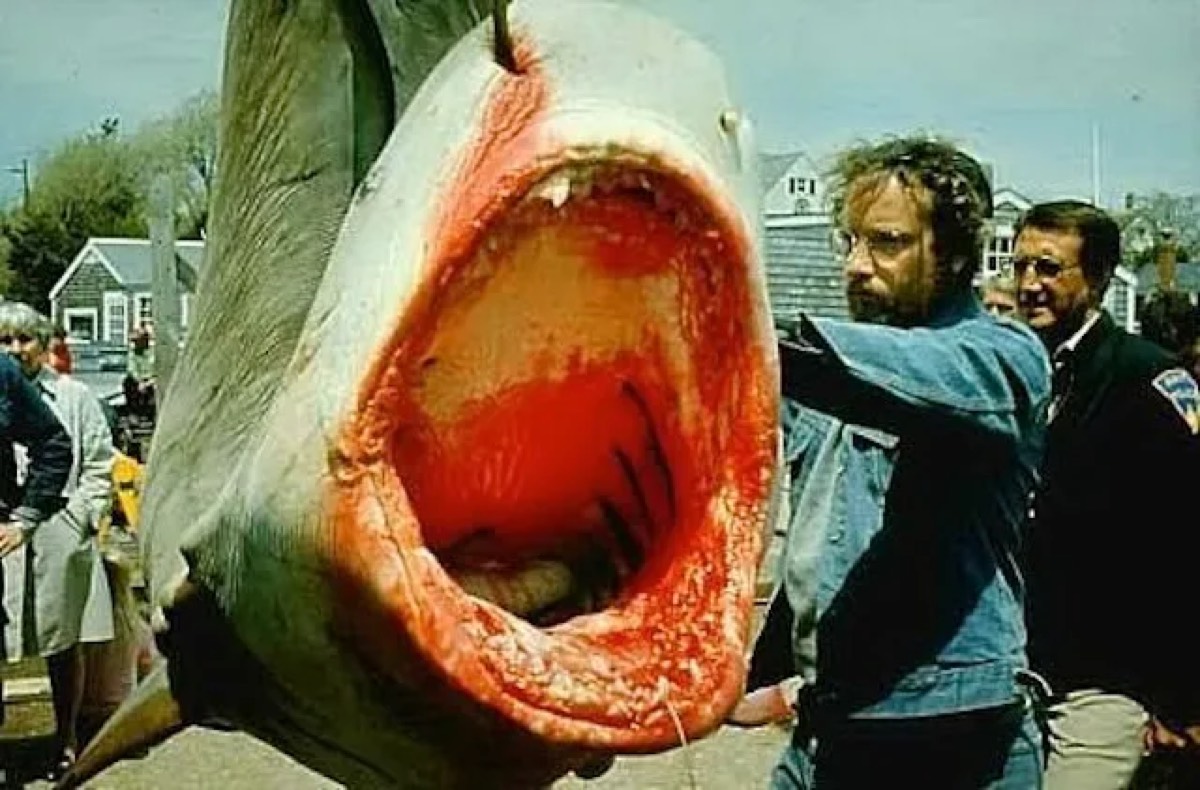
Jaws inspired many, many subsequent films, including Ridley Scott’s Alien in 1979, described in pitch meetings as “Jaws in space. Audience reactions were often extreme, with many people becoming fearful of swimming in the ocean for fear of sharks. And while the sequels were, shall we say, underwhelming, the original Jaws has stood the test of time. Ars spoke with marine biologist and shark conservationist David Shiffman, author of Why Sharks Matter, to discuss the film’s depiction of sharks and its enduring place in popular culture.

Ars Technica: Let’s start by talking about the enormous impact of the film, both good and bad, on the general public’s awareness of sharks.

David Shiffman: A lot of folks in both the marine science world and the ocean conservation communities have reported that Jaws in a lot of ways changed our world. It’s not that people used to think that sharks were cute, cuddly, adorable animals, and then after Jaws, they thought that they were bloodthirsty killing machines. They just weren’t on people’s minds. Fishermen knew about them, surfers thought about them, but that was about it. Most people who went to the beach didn’t pay much mind to what could be there. Jaws absolutely shattered that. My parents both reported that the summer that Jaws came out, they were afraid to go swimming in their community swimming pools.

https://arstechnica.com/science/2025/06/a-shark-scientist-reflects-on-jaws-at-50/