Microsoft lays out its path to useful quantum computing
So, the paper describes how some logical operations can be performed relatively easily, while a few others require manipulations of the error correction scheme in order to work. (These manipulations have names like lattice surgery and magic state distillation, which are good signs that the field doesn’t take itself that seriously.)

So, in sum, Microsoft feels that it has identified an error correction scheme that is fairly compact, can be implemented efficiently on hardware that stores qubits in photons, atoms, or trapped ions, and enables universal computation. What it hasn’t done, however, is show that it actually works. And that’s because it simply doesn’t have the hardware right now. Azure is offering trapped ion machines from IonQ and Qantinuum, but these top out at 56 qubits—well below the 96 needed for their favored version of these 4D codes. The largest it has access to is a 100-qubit machine from a company called PASQAL, which barely fits the 96 qubits needed, leaving no room for error.

While it should be possible to test smaller versions of codes in the same family, the Azure team has already demonstrated its ability to work with error correction codes based on hypercubes, so it’s unclear whether there’s anything to gain from that approach.

More atoms

Instead, it appears to be waiting for another partner, Atom Computing, to field its next-generation machine, one it’s designing in partnership with Microsoft. “This first generation that we are building together between Atom Computing and Microsoft will include state-of-the-art quantum capabilities, will have 1,200 physical qubits,” Svore said “And then the next upgrade of that machine will have upwards of 10,000. And so you’re looking at then being able to go to upwards of a hundred logical qubits with deeper and more reliable computation available. “

https://arstechnica.com/science/2025/06/microsoft-lays-out-its-path-to-useful-quantum-computing/




New dating for White Sands footprints confirms controversial theory

Some of the sediment layers contained the remains of ancient grass seeds mixed with the sediment. Bennett and his colleagues radiocarbon-dated seeds from the layer just below the oldest footprints and the layer just above the most recent ones. According to those 2021 results, the oldest footprints were made sometime after 23,000 years ago; the most recent ones were made sometime before 21,000 years ago.

At that time, the northern half of the continent was several kilometers below massive sheets of ice. The existence of 23,000-year-old footprints could only mean that people were already living in what’s now New Mexico before the ice sheets sealed off the southern half of the continent from the rest of the world for the next few thousand years.

Ancient human footprints found in situ at at White Sands National Park in New Mexico.

Ancient human footprints found in situ at White Sands National Park in New Mexico. Credit: Jeffrey S. Pigati et al., 2023

Other researchers were skeptical of those results, pointing out that the aquatic plants (Ruppia cirrhosa) analyzed were prone to absorbing the ancient carbon in groundwater, which could have skewed the findings and made the footprints seem older than they actually were. And the pollen samples weren’t taken from the same sediment layers as the footprints.

So the same team followed up by radiocarbon-dating pollen sampled from the same layers as some of the footprints—those that weren’t too thin for sampling. This pollen came from pine, spruce, and fir trees, i.e., terrestrial plants, thereby addressing the issue of groundwater carbon seeping into samples. They also analyzed quartz grains taken from clay just above the lowest layer of footprints using a different method, optically stimulated luminescence dating. They published those findings in 2023, which agreed with their earlier estimate.

https://arstechnica.com/science/2025/06/study-confirms-white-sands-footprints-are-23000-years-old/


Via the False Claims Act, NIH puts universities on edge

Earlier this year, a biomedical researcher at the University of Michigan received an update from the National Institutes of Health. The federal agency, which funds a large swath of the country’s medical science, had given the green light to begin releasing funding for the upcoming year on the researcher’s multi-year grant.

Not long after, the researcher learned that the university had placed the grant on hold. The school’s lawyers, it turned out, were wrestling with a difficult question: whether to accept new terms in the Notice of Award, a legal document that outlines the grant’s terms and conditions.

Other researchers at the university were having the same experience. Indeed, Undark’s reporting suggests that the University of Michigan—among the top three university recipients of NIH funding in 2024, with more than $750 million in grants—had quietly frozen some, perhaps all, of its incoming NIH funding dating back to at least the second half of April.

The university’s director of public affairs, Kay Jarvis, declined to comment for this article or answer a list of questions from Undark, instead pointing to the institution’s research website.

In conversations with Michigan scientists, and in internal communications obtained by Undark, administrators explained the reason for the delays: University officials were concerned about new language in NIH grant notices. That language said that universities will be subject to liability under a Civil War-era statute called the False Claims Act if they fail to abide by civil rights laws and a January 20 executive order related to gender.

For the most part, public attention to NIH funding has focused on what the new Trump administration is doing on its end, including freezing and terminating grants at elite institutions for alleged Title VI and IX violations, and slashing funding for newly disfavored areas of research. The events in Ann Arbor show how universities themselves are struggling to cope with a wave of recent directives from the federal government.

https://arstechnica.com/science/2025/06/via-the-false-claims-act-nih-puts-universities-on-edge/


Spanish blackout report: Power plants meant to stabilize voltage didn’t

The blackout that took down the Iberian grid serving Spain and Portugal in April was the result of a number of smaller interacting problems, according to an investigation by the Spanish government. The report concludes that several steps meant to address a small instability made matters worse, eventually leading to a self-reinforcing cascade where high voltages caused power plants to drop off the grid, thereby increasing the voltage further. Critically, the report suggests that the Spanish grid operator had an unusually low number of plants on call to stabilize matters, and some of the ones it did have responded poorly.

The full report will be available later today; however, the government released a summary ahead of its release. The document includes a timeline of the events that triggered the blackout, as well as an analysis of why grid management failed to keep it in check. It also notes that a parallel investigation checked for indications of a cyberattack and found none.

Oscillations and a cascade

The document notes that for several days prior to the blackout, the Iberian grid had been experiencing voltage fluctuations—products of a mismatch between supply and demand—that had been managed without incident. These continued through the morning of April 28 until shortly after noon, when an unusual frequency oscillation occurred. This oscillation has been traced back to a single facility on the grid, but the report doesn’t identify it or even indicate its type, simply referring to it as an “instalación.”

The grid operators responded in a way that suppressed the oscillations but increased the voltages on the grid. About 15 minutes later, a weakened version of this oscillation occurred again, followed shortly thereafter by oscillations at a different frequency, this one with properties that are commonly seen on European grids. That prompted the grid operators to take corrective steps again, which increased the voltages on the grid.

The Iberian grid is capable of handling this sort of thing. But the grid operator only scheduled 10 power plants to handle voltage regulation on the 28th, which the report notes is the lowest total it had committed to in all of 2025 up to that point. The report found that a number of those plants failed to respond properly to the grid operators, and a few even responded in a way that contributed to the surging voltages.

https://arstechnica.com/science/2025/06/spanish-blackout-report-power-plants-meant-to-stabilize-voltage-didnt/


Sally celebrates complicated legacy of first US woman in space

“I understood that this was her basic nature, and she had a lot to lose, but I didn’t like it,” said O’Shaughnessy, although love ultimately triumphed. “I wish we could have been more open. I loved her. It would have been fun to share her more, even with some of her friends that she wouldn’t let in. She only let in certain people. And once we started the science education company, there was no way. We knew we were dependent on corporate sponsorships. We just decided, ‘We’ve got to hide it.'”

A private life

Sally Ride as a teenager playing tennis in the 1960s.

Sally Ride as a teenager playing tennis in the 1960s.

Courtesy of Tam O’Shaughnessy

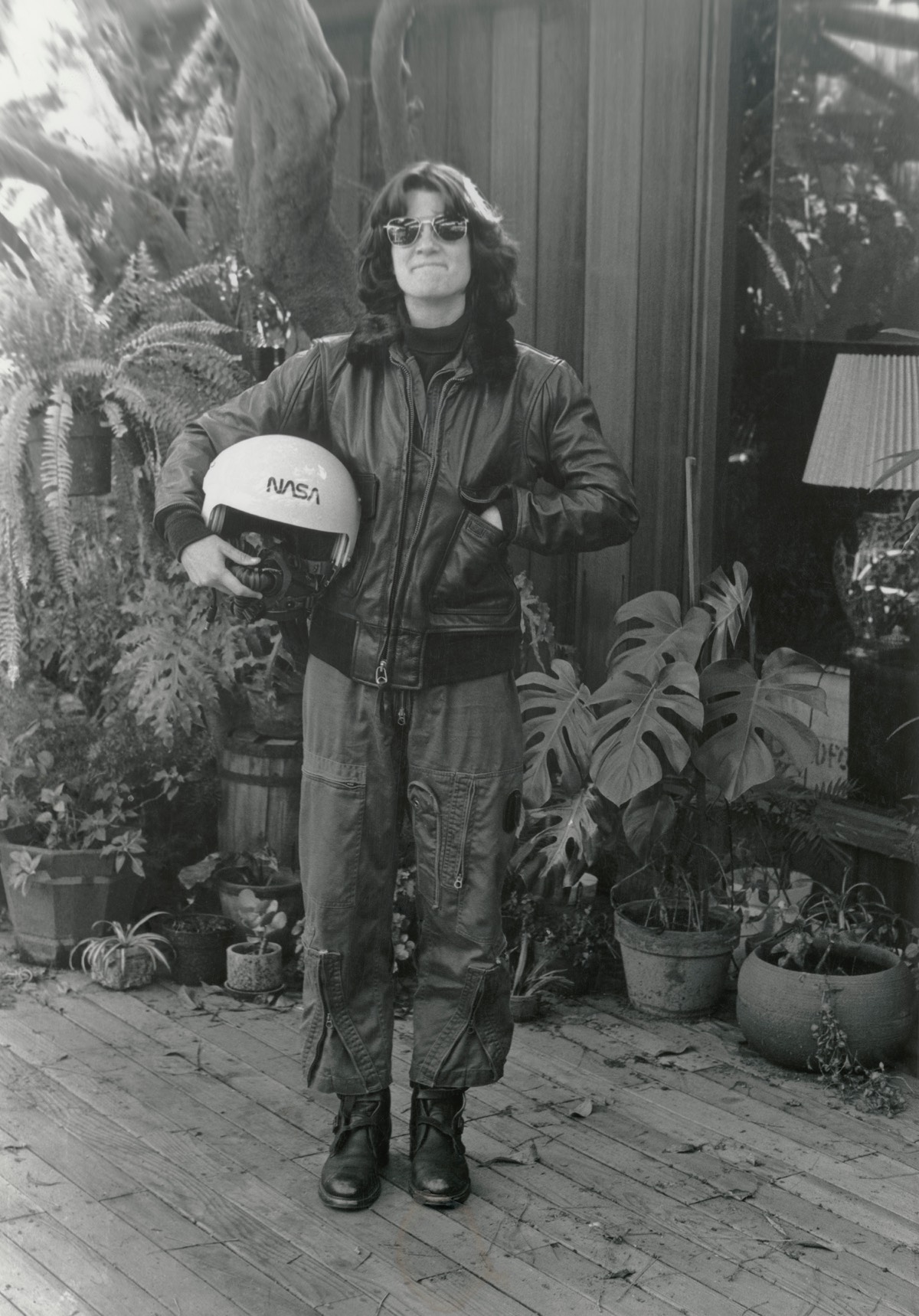
Astronaut Sally Ride poses in her classic leather bomber jacket in this undated photo.

Astronaut Sally Ride poses in her classic leather bomber jacket in this undated photo.

courtesy of Bear Ride

Juggling between these two very different aspects of Ride’s life posed a challenge for Sally‘s director. “I really think there are two different films here,” said Costantini. “One is that Sally that we all knew, who was almost too well documented. We had to bring in 5,000 reels from the NASA archives and sort through them to find some gems. It was a mountain of footage and a lot of it was labeled as just ‘shuttle era’ or something very nonspecific. We also had to sound sync it all, since it didn’t have sound.”

On the private side, she decided to rely on several re-enactments. “There were not very many pictures and not any footage of the two of them together,” said Costantini. “So we decided to create our own visual language around that love story that would help illustrate Tam’s storytelling in these private moments. It’s a careful weave of stepping away from the very public and going into the very private. I love that the story has these big, epic space moments and also these very quiet, intimate moments, the microscopic and the celestial.”

“We really made this film for anyone who’s ever had to hide part of themselves to get where they want to be, which is, in 2025, a more common experience than ever,” said Costantini. “I’m very inspired personally by Tam and Sally’s bravery: Sally’s bravery to launch on a rocket up into space, Tam’s bravery to live as a queer woman during a time when that was not celebrated by mainstream culture. I often think there’s a real lack of brave people nowadays. I open the newspaper and think, ‘Where did all the brave people go?’ Looking into Sally’s past, you can see echoes of some of the same struggles that we’re facing today.

https://arstechnica.com/science/2025/06/natgeos-sally-explores-public-and-private-faces-of-sally-ride/


Delightfully irreverent Underdogs isn’t your parents’ nature docuseries

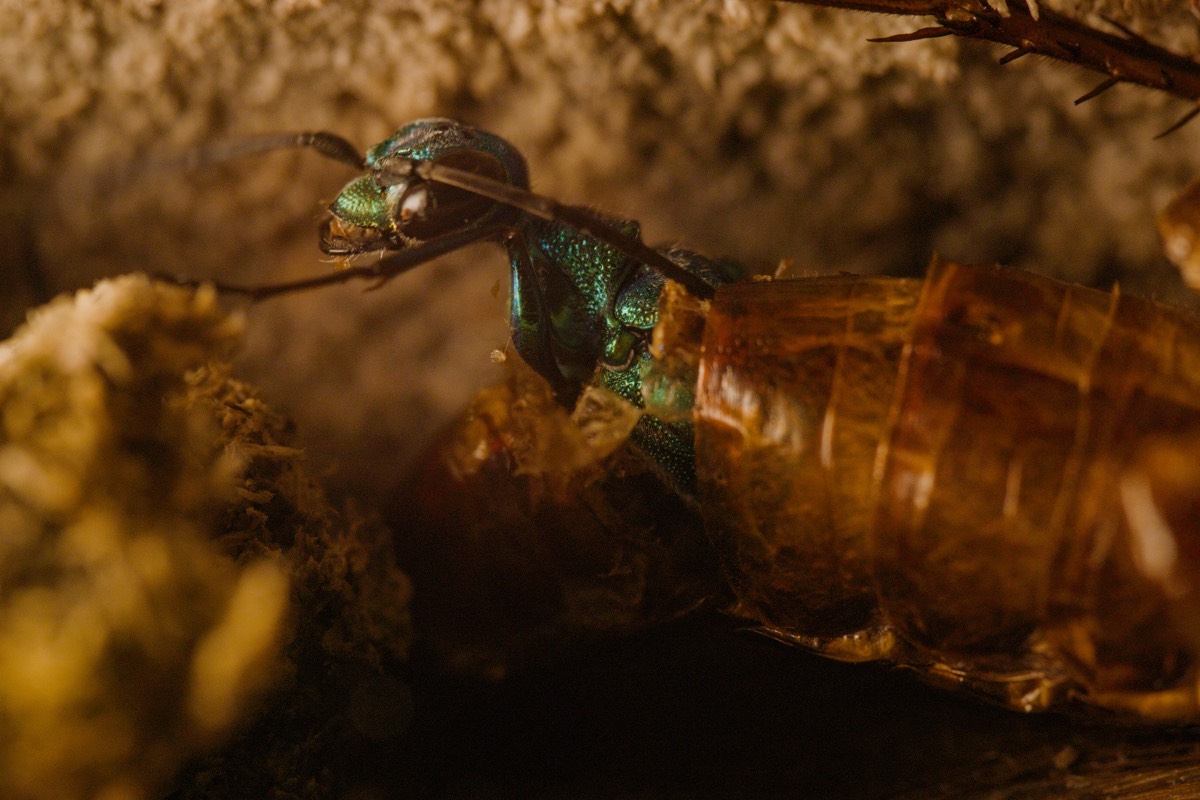
An emerald jewel wasp emerges from a cockroach.

An emerald jewel wasp emerges from a cockroach.

National Geographic/Simon De Glanville

A pack of African hunting dogs attacks a honey badger.

A pack of African hunting dogs is no match for the honey badger’s thick hide.

National Geographic/Tom Walker

“There is a sense after awhile that you’re playing the same animals to the same people, and the shows are starting to look the same and so is your audience,” Linfield told Ars. “We thought, okay, how can we do something absolutely the opposite? We’ve gone through our careers collecting stories of these weird and crazy creatures that don’t end up in the script because they’re not big or sexy and they live under a rock. But they often have the best life histories and the craziest superpowers.”

Case in point: the velvet worm featured in the “Superheroes” episode, which creeps up on unsuspecting prey before squirting disgusting slime all over their food. (It’s a handy defense mechanism, too, against predators like the wolf spider.)

Once Linfield and Berlowitz decided to focus on nature’s underdogs and to take a more humorous approach, Ryan Reynolds became their top choice for a narrator—the anti-Richard Attenborough. As luck would have it, the pair shared an agent with the mega-star. So even though they thought there was no way Reynolds would agree to the project, they put together a sizzle reel, complete with a “fake Canadian Ryan Reynolds sound-alike” doing the narration. Reynolds was on set when he received the reel, and loved it so much he recoded his own narration for the footage and sent it back.

“From that moment he was in,” said Linfield, and Wildstar Films worked closely with Reynolds and his company to develop the final series. “We’ve never worked that way on a series before, a joint collaboration from day one,” Berlowitz admitted. But it worked: the end result strikes the perfect balance between scientific revelation and accurate natural history, and an edgy comic tone.

That tone is quintessential Reynolds, and while he did mostly follow the script (which his team helped write), Linfield and Berlowitz admit there was also a fair amount of improvisation—not all of it PG-13.  “What we hadn’t appreciated is that he’s an incredible improv performer,” said Berlowitz. “He can’t help himself. He gets into character and starts riffing off [the footage]. There are some takes that we definitely couldn’t use, that potentially would fit a slightly more Hulu audience.”  Some of the ad-libs made it into the final episodes, however—like Reynolds describing an Aye-Aye as “if fear and panic had a baby and rolled it in dog hair”—even though it meant going back and doing a bit of recutting to get the new lines to fit.

https://arstechnica.com/science/2025/06/delightfully-irreverent-underdogs-isnt-your-parents-nature-docuseries/


Rocket Report: New delay for Europe’s reusable rocket; SpaceX moves in at SLC-37

SpaceX tries something new with Falcon 9. With nearly 500 launches under its belt, SpaceX’s Falcon 9 rocket isn’t often up to new tricks. But the company tried something new following a launch on June 7 with a radio broadcasting satellite for SiriusXM. The Falcon 9’s upper stage placed the SXM-10 satellite into an elongated, high-altitude transfer orbit, as is typical for payloads destined to operate in geosynchronous orbit more than 22,000 miles (nearly 36,000 kilometers) over the equator. When a rocket releases a satellite in this type of high-energy orbit, the upper stage has usually burned almost all of its propellant, leaving little fuel to steer itself back into Earth’s atmosphere for a destructive reentry. This means these upper stages often remain in space for decades, becoming a piece of space junk that transits across the orbits of many other satellites.

Now, a solution … SpaceX usually deorbits rockets after they deploy payloads like Starlink satellites into low-Earth orbit, but deorbiting a rocket from a much higher geosynchronous transfer orbit is a different matter. “Last week, SpaceX successfully completed a controlled deorbit of the SiriusXM-10 upper stage after GTO payload deployment,” wrote Jon Edwards, SpaceX’s vice president of Falcon and Dragon programs. “While we routinely do controlled deorbits for LEO stages (e.g., Starlink), deorbiting from GTO is extremely difficult due to the high energy needed to alter the orbit, making this a rare and remarkable first for us. This was only made possible due to the hard work and brilliance of the Falcon GNC (guidance, navigation, and control) team and exemplifies SpaceX’s commitment to leading in both space exploration and public safety.”

New Glenn gets a tentative launch date. Five months have passed since Blue Origin’s New Glenn rocket made its mostly successful debut in January. At one point, the company targeted “late spring” for the second launch of the rocket. However, on Monday, Blue Origin’s CEO, Dave Limp, acknowledged on social media that the rocket’s next flight will now no longer take place until at least August 15, Ars reports. Although he did not say so, this may well be the only other New Glenn launch this year. The mission, with an undesignated payload, will be named “Never Tell Me the Odds,” due to the attempt to land the booster. “One of our key mission objectives will be to land and recover the booster,” Limp wrote. “This will take a little bit of luck and a lot of excellent execution. We’re on track to produce eight GS2s [second stages] this year, and the one we’ll fly on this second mission was hot-fired in April.”

https://arstechnica.com/space/2025/06/rocket-report-new-delay-for-europes-reusable-rocket-spacex-moves-in-at-slc-37/


Scientists built a badminton-playing robot with AI-powered skills

Robots like Atlas, Spot, and Stretch have amazed people with natural, life-like agility and body balance. What they were lacking, though, was a way to quickly connect this natural movement to perception—the robotic equivalent of the reflexes that let you catch a ball or duck in an instant to avoid getting hit.

So, a team of scientists at ETH Zürich got busy fixing this problem. “I wanted to fuse perception and body movement,” said Yuntao Ma, a roboticist who led a team developing an AI-powered, badminton-playing robot.

Read full article

Comments

https://arstechnica.com/science/2025/06/scientists-built-a-badminton-playing-robot-with-ai-powered-skills/


5 things in Trump’s budget that won’t make NASA great again

If signed into law as written, the White House’s proposal to slash nearly 25 percent from NASA’s budget would have some dire consequences.

It would cut the agency’s budget from $24.8 billion to $18.8 billion. Adjusted for inflation, this would be the smallest NASA budget since 1961, when the first American launched into space.

The proposed funding plan would halve NASA’s funding for robotic science missions and technology development next year, scale back research on the International Space Station, turn off spacecraft already exploring the Solar System, and cancel NASA’s Space Launch System rocket and Orion spacecraft after two more missions in favor of procuring lower-cost commercial transportation to the Moon and Mars.

Read full article

Comments

https://arstechnica.com/science/2025/06/5-things-in-trumps-budget-that-wont-make-nasa-great-again/


Ocean acidification crosses “planetary boundaries”

A critical measure of the ocean’s health suggests that the world’s marine systems are in greater peril than scientists had previously realized and that parts of the ocean have already reached dangerous tipping points.

A study, published Monday in the journal Global Change Biology, found that ocean acidification—the process in which the world’s oceans absorb excess carbon dioxide from the atmosphere, becoming more acidic—crossed a “planetary boundary” five years ago.

“A lot of people think it’s not so bad,” said Nina Bednaršek, one of the study’s authors and a senior researcher at Oregon State University. “But what we’re showing is that all of the changes that were projected, and even more so, are already happening—in all corners of the world, from the most pristine to the little corner you care about. We have not changed just one bay, we have changed the whole ocean on a global level.”

The new study, also authored by researchers at the UK’s Plymouth Marine Laboratory and the National Oceanic and Atmospheric Administration (NOAA), finds that by 2020 the world’s oceans were already very close to the “danger zone” for ocean acidity, and in some regions had already crossed into it.

Scientists had determined that ocean acidification enters this danger zone or crosses this planetary boundary when the amount of calcium carbonate—which allows marine organisms to develop shells—is less than 20 percent compared to pre-industrial levels. The new report puts the figure at about 17 percent.

“Ocean acidification isn’t just an environmental crisis, it’s a ticking time bomb for marine ecosystems and coastal economies,” said Steve Widdicombe, director of science at the Plymouth lab, in a press release. “As our seas increase in acidity, we’re witnessing the loss of critical habitats that countless marine species depend on and this, in turn, has major societal and economic implications.”

Scientists have determined that there are nine planetary boundaries that, once breached, risk humans’ abilities to live and thrive. One of these is climate change itself, which scientists have said is already beyond humanity’s “safe operating space” because of the continued emissions of heat-trapping gases. Another is ocean acidification, also caused by burning fossil fuels.

https://arstechnica.com/science/2025/06/ocean-acidification-crosses-planetary-boundaries/