IBM now describing its first error-resistant quantum compute system

To address this, IBM has developed a message-passing decoder that can perform parallel evaluations of the syndrome data. The system explores more of the solution space by a combination of randomizing the weight given to the memory of past solutions and by handing any seemingly non-optimal solutions on to new instances for additional evaluation. The key thing is that IBM estimates that this can be run in real time using FPGAs, ensuring that the system works.

A quantum architecture

There are a lot more details beyond those, as well. Gambetta described the linkage between each computational unit—IBM is calling it a Universal Bridge—which requires one microwave cable for each code distance of the logical qubits being linked. (In other words, a distance 12 code would need 12 microwave-carrying cables to connect each chip.) He also said that IBM is developing control hardware that can operate inside the refrigeration hardware, based on what they’re calling “cold CMOS,” which is capable of functioning at 4 Kelvin.

The company is also releasing renderings of what it expects Starling to look like: a series of dilution refrigerators, all connected by a single pipe that contains the Universal Bridge. “It’s an architecture now,” Gambetta said. “I have never put details in the roadmap that I didn’t feel we could hit, and now we’re putting a lot more details.”

The striking thing to me about this is that it marks a shift away from a focus on individual qubits, their connectivity, and their error rates. The error hardware rates are now good enough (4 x 10⁻⁴) for this to work, although Gambetta felt that a few more improvements should be expected. And connectivity will now be directed exclusively toward creating a functional computational unit.

That said, there’s still a lot of space beyond Starling on IBM’s roadmap. The 200 logical qubits it promises will be enough to handle some problems, but not enough to perform the complex algorithms needed to do things like break encryption. That will need to wait for something closer to Blue Jay, a 2033 system that IBM expects will have 2,000 logical qubits. And, as of right now, it’s the only thing listed beyond Starling.

https://arstechnica.com/science/2025/06/ibm-is-now-detailing-what-its-first-quantum-compute-system-will-look-like/


US science is being wrecked, and its leadership is fighting the last war

All of which would seem to call for the leadership of US science organizations to press the case for the importance of science funding to the US and highlight the damage that these cuts would cause. But, if yesterday’s National Academies event is anything to judge by, the leadership is not especially interested.

Altered states

As the nation’s premier science organization, and one that performs lots of analyses for the government, the National Academies would seem to be in a position to have its concerns taken seriously by members of Congress. And, given that the present and future of science in the US is being set by policy choices, a meeting entitled the State of the Science would seem like the obvious place to address those concerns.

If so, it was not obvious to Marcia McNutt, the president of the NAS, who gave the presentation. She made some oblique references to current problems, saying, “We are embarking on a radical new experiment in what conditions promote science leadership, with the US being the treatment group, and China as the control,” and acknowledged that “uncertainties over the science budgets for next year, coupled with cancellations of billions of dollars of already hard-won research grants, is causing an exodus of researchers.”

But her primary focus was on the trends that have been operative in science funding and policy leading up to but excluding the second Trump administration. McNutt suggested this was needed to look beyond the next four years. However, that ignores the obvious fact that US science will be fundamentally different if the Trump administration can follow through on its plans and policies; the trends that have been present for the last two decades will be irrelevant.

She was also remarkably selective about her avoidance of discussing Trump administration priorities. After noting that faculty surveys have suggested they spend roughly 40 percent of their time handling regulatory requirements, she twice mentioned that the administration’s anti-regulatory stance could be a net positive here (once calling it “an opportunity to help”). Yet she neglected to note that many of the abandoned regulations represent a retreat from science-driven policy.

https://arstechnica.com/science/2025/06/us-science-is-being-wrecked-and-its-leadership-is-fighting-the-last-war/


Are Dead Sea Scrolls older than we thought?

Enter Enoch

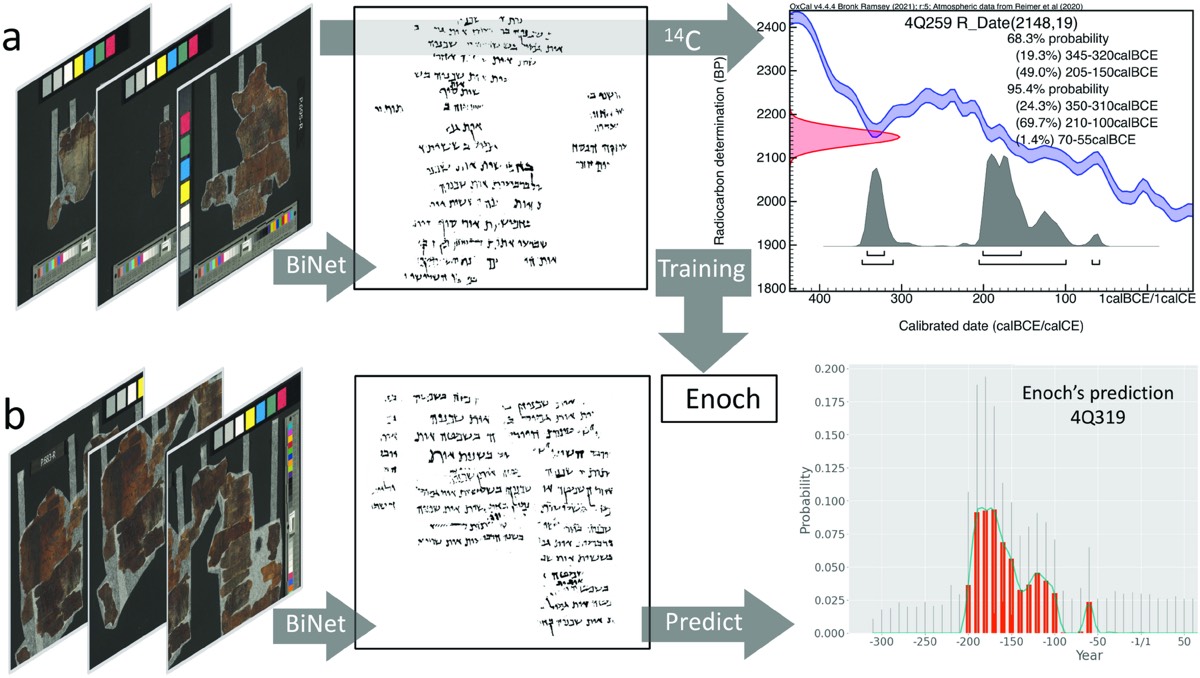
The authors of this latest paper wanted to find a better means than paleography alone for determining the chronology of the scrolls, with an eye toward reconstructing the evolution of ideas. They thought that given the small data set in the case of the scrolls, it was wisest not to rely on a pre-trained model and instead “let the available data speak.”

By combining writing styles with carbon-14 dates of manuscripts using artificial intelligence, the date-prediction model Enoch is able to produce an accurate date for the manuscript.

By combining writing styles with carbon-14 dates of manuscripts using artificial intelligence, the date-prediction model Enoch is able to produce an accurate date for the manuscript.

Mladen Popovic and Maruf Dhali working with Enoch to date a manuscript from the Dead Sea scrolls.

Mladen Popovic and Maruf Dhali working with Enoch to date a manuscript from the Dead Sea Scrolls.

The development of Enoch grew out of the team’s earlier deep neural network for ferreting out handwritten ink-trace patterns in digitized manuscripts, involving micro-level geometric shape analysis. “Enoch emphasizes shared characteristics and similarity matching between trained and test manuscripts, where traditional paleography focuses on subtle differences that are assumed to be indicative for style development,” the authors wrote. “Combining dissimilarity matching and adaptive reinforcement learning can uncover hidden patterns.”

They tested Enoch by having paleographic experts evaluate the AI program’s age estimate for several scrolls. The results: About 79 percent of Enoch’s estimates were deemed “realistic,” while its age estimates for the remaining 21 percent were either too young, too old, or just indecisive.

This new model revealed that many of the Dead Sea Scrolls are older than previous estimates based solely on paleography. That should be relevant for the question of when two ancient Jewish script styles—”Hasmonean” and “Herodian”—developed, for example. The former script was thought to have emerged between 150–50 BCE, but the authors believe Hasmonean could have emerged much earlier; ditto for the Herodian script. So both scripts may have coexisted since the late second century, challenging the prevailing view that they preexisted by the mid-first century BCE.

Enoch may even be able to shed light on biblical authorship. For instance, the authors concluded that two of the scrolls are the first known fragments of the Book of Daniel, believed to have been finished by an anonymous author around 160 BCE. And Ecclesiastes was likely completed by an anonymous author in the third century BCE, rather than by King Solomon in the 10th century BCE.

“With the Enoch tool we have opened a new door into the ancient world, like a time machine, that allows us to study the hands that wrote the Bible, especially now that we have established, for the first time, that two biblical scroll fragments come from the time of their presumed authors,” the authors wrote. “It is very exciting to set a significant step into solving the dating problem of the Dead Sea Scrolls and also creating a new tool that could be used to study other partially dated manuscript collections from history.”

PLoS ONE, 2025. DOI: 10.1371/journal.pone.0323185  (About DOIs).

https://arstechnica.com/science/2025/06/are-dead-sea-scrolls-older-than-we-thought/


Science PhDs face a challenging and uncertain future

However, in recent years, researchers who advise graduate students have begun to acknowledge careers beyond academia, including positions in industry, nonprofits, government, consulting, science communication, and policy. “We need, as academics, need to take a broader perspective on what and how we prepare our students,” said Ginther.

As opposed to faculty positions, some of these labor markets can be more robust and provide plenty of opportunities for those with a doctorate, said Daniel Larremore, a computer scientist at the University of Colorado Boulder who studies academic labor markets, among other topics. Whether there is a mismatch between the number of PhDs and employment opportunities will depend on the subject of study and which fields are growing or shrinking, he added. For example, he pointed out that there is currently a boom in machine learning and artificial intelligence, so there is a lot of demand from industry for computer science graduates. In fact, commitments to industry jobs after graduation seem to be at a 30-year high.

But not all newly minted PhDs immediately find work. According to the latest NSF data, students in biological and biomedical sciences experienced a decline in job offers in the past 20 years, with 68 percent having definite commitments after graduating in 2023, compared to 72 percent in 2003. “The dynamics in the labor market for PhDs depends very much on what subject the PhD is in,” said Larremore.

Still, employment rates reflect that postgraduates benefit from greater opportunities compared to the general population. In 2024, the unemployment rate for college graduates with a doctoral degree in the US was 1.2 percent, less than half the national average at the time, according to the Bureau of Labor Statistics. In NSF’s recent survey, 74 percent of science and engineering graduating doctorates had definite commitments for employment or postdoctoral study or training positions, three points higher than it was in 2003.

https://arstechnica.com/science/2025/06/science-phds-face-a-challenging-and-uncertain-future/


Some parts of Trump’s proposed budget for NASA are literally draconian

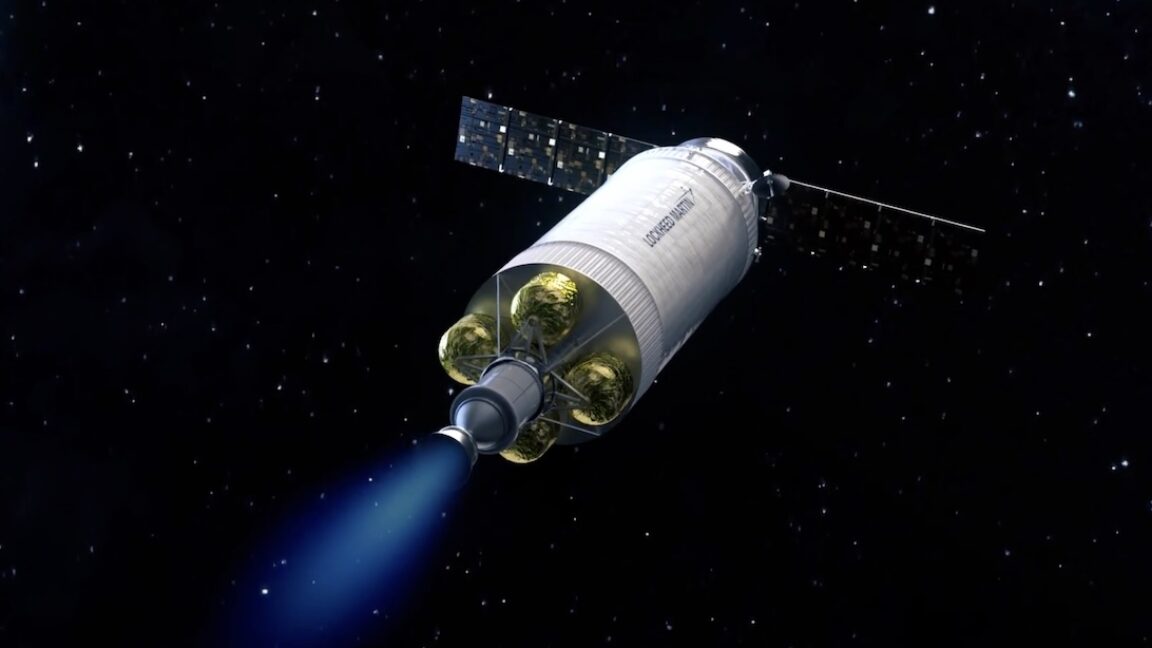
New details of the Trump administration’s plans for NASA, released Friday, revealed the White House’s desire to end the development of an experimental nuclear thermal rocket engine that could have shown a new way of exploring the Solar System.

Trump’s NASA budget request is rife with spending cuts. Overall, the White House proposes reducing NASA’s budget by about 24 percent, from $24.8 billion this year to $18.8 billion in fiscal year 2026. In previous stories, Ars has covered many of the programs impacted by the proposed cuts, which would cancel the Space Launch System rocket and Orion spacecraft and terminate numerous robotic science missions, including the Mars Sample Return, probes to Venus, and future space telescopes.

Instead, the leftover funding for NASA’s human exploration program would go toward supporting commercial projects to land on the Moon and Mars.

NASA’s initiatives to pioneer next-generation space technologies are also hit hard in the White House’s budget proposal. If the Trump administration gets its way, NASA’s Space Technology Mission Directorate, or STMD, will see its budget cut nearly in half, from $1.1 billion to $568 million.

Trump’s budget request isn’t final. Both Republican-controlled houses of Congress will write their own versions of the NASA budget, which must be reconciled before going to the White House for President Trump’s signature.

“The budget reduces Space Technology by approximately half, including eliminating failing space propulsion projects,” the White House wrote in an initial overview of the NASA budget request released May 2. “The reductions also scale back or eliminate technology projects that are not needed by NASA or are better suited to private sector research and development.”

Breathing fire

Last week, the White House and NASA put a finer point on these “failing space propulsion projects.”

“This budget provides no funding for Nuclear Thermal Propulsion and Nuclear Electric Propulsion projects,” officials wrote in a technical supplement released Friday detailing Trump’s NASA budget proposal. “These efforts are costly investments, would take many years to develop, and have not been identified as the propulsion mode for deep space missions. The nuclear propulsion projects are terminated to achieve cost savings and because there are other nearer-term propulsion alternatives for Mars transit.”

https://arstechnica.com/space/2025/06/some-parts-of-trumps-proposed-budget-for-nasa-are-literally-draconian/


Why incels take the “Blackpill”—and why we should care

Incels constitute a fairly small fraction of the manosphere, but the vast majority of incels appear to embrace the Blackpill ideology, per Beckett-Herbert. That nihilistic attitude can extend to any kind of participation in what incels term “Soyciety”—including educational attainment and employment. When that happens, such individuals are best described by the acronym NEET (Not in Education, Employment, or Training).

“It’s not that we have large swaths of young men that are falling into this rabbit hole,” said Beckett-Herbert. “Their ideology is pretty fringe, but we’re seeing the community grow, and we’re seeing the ideology spread. It used to be contained to romantic relationships and sex. Now we’re seeing this broader disengagement from society as a whole. We should all be concerned about that trend.”

The NEET trend is also tied to the broader cultural discourse on how boys and young men are struggling in contemporary society. While prior studies tended to focus on the misogynistic rhetoric and propensity for violence among incels, “I thought that the unemployment lens was interesting because it’s indicative of larger problems,” said Beckett-Herbert. “It’s important to remember that it’s not zero-sum. We can care about the well-being of women and girls and also acknowledge that young men are struggling, too. Those don’t have to be at odds.”

“Lie down and rot”

Beckett-Herbert and her advisor/co-author, McGill University sociologist Eran Shor, chose the incels.is platform as a data source for their study due to its ease of public access and relatively high traffic, with nearly 20,000 members. The pair used Python code to scrape 100 pages, amounting to around 10,000 discussion threads between October and December 2022. A pilot study revealed 10 keywords that appeared most frequently in those threads: “study,” “school,” “NEET,” “job,” “work,” “money,” “career,” “wage,” “employ,” and “rot.” (“They use the phrase ‘lie down and rot’ a lot,” said Beckett-Herbert.)

https://arstechnica.com/science/2025/05/why-incels-take-the-blackpill-and-why-we-should-care/


Testing a robot that could drill into Europa and Enceladus

Europa and Enceladus are two ocean moons that scientists have concluded have liquid water oceans underneath their outer icy shells. The Europa Clipper mission should reach Europa around April of 2030. If it collects data hinting at the moon’s potential habitability, robotic lander missions could be the only way to confirm if there’s really life in there or not.

To make these lander missions happen, NASA’s Jet Propulsion Laboratory team has been working on a robot that could handle the search for life and already tested it on the Matanuska Glacier in Alaska. “At this point this is a pretty mature concept,” says Kevin Hand, a planetary scientist at JPL who led this effort.

Into the unknown

There are only a few things we know for sure about conditions on the surface of Europa, and nearly all of them don’t bode well for lander missions. First, Europa is exposed to very harsh radiation, which is a problem for electronics. The window of visibility—when a potential robotic lander could contact Earth—lasts less than half of the 85 hours it takes for the moon to complete its day-night cycle due to the Europa-Jupiter orbit. So, for more than half the mission, the robot would need to fend for itself, with no human ground teams to get it out of trouble. The lander would also need to run on non-rechargeable batteries, because the vast distance to the Sun would make solar panels prohibitively massive.

And that’s just the beginning. Unlike on Mars, we don’t have any permanent orbiters around Europa that could provide a communication infrastructure, and we don’t have high-resolution imagery of the surface, which would make the landing particularly tricky. “We don’t know what Europa’s surface looks like at the centimeter to meter scale. Even with the Europa Clipper imagery, the highest resolution will be about half a meter per pixel across a few select regions,” Hand explains.

https://arstechnica.com/science/2025/05/nasa-robot-for-drilling-on-icy-moons-tested-on-alaskan-glacier/


The key to a successful egg drop experiment? Drop it on its side

There was a key difference, however, between how vertically and horizontally  squeezed eggs deformed in the compression experiments—namely, the former deformed less than the latter. The shell’s greater rigidity along its long axis was an advantage because the heavy load was distributed over the surface. (It’s why the one-handed egg-cracking technique targets the center of a horizontally held egg.)

But the authors found that this advantage when under static compression proved to be a disadvantage when dropping eggs from a height, with the horizontal position emerging as the optimal orientation.  It comes down to the difference between stiffness—how much force is needed to deform the egg—and toughness, i.e., how much energy the egg can absorb before it cracks.

Cohen et al.’s experiments showed that eggs are tougher when loaded horizontally along their equator, and stiffer when compressed vertically, suggesting that “an egg dropped on its equator can likely sustain greater drop heights without cracking,” they wrote. “Even if eggs could sustain a higher force when loaded in the vertical direction, it does not necessarily imply that they are less likely to break when dropped in that orientation. In contrast to static loading, to remain intact following a dynamic impact, a body must be able to absorb all of its kinetic energy by transferring it into reversible deformation.”

“Eggs need to be tough, not stiff, in order to survive a fall,” Cohen et al. concluded, pointing to our intuitive understanding that we should bend our knees rather than lock them into a straightened position when landing after a jump, for example. “Our results and analysis serve as a cautionary tale about how language can affect our understanding of a system, and improper framing of a problem can lead to misunderstanding and miseducation.”

DOI: Communications Physics, 2025. 10.1038/s42005-025-02087-0  (About DOIs).

https://arstechnica.com/science/2025/05/the-key-to-a-successful-egg-drop-experiment-drop-it-on-its-side/


How farmers can help rescue water-loving birds

Not every farmer is thrilled to host birds. Some worry about the spread of avian flu, others are concerned that the birds will eat too much of their valuable crops. But as an unstable climate delivers too little water, careening temperatures and chaotic storms, the fates of human food production and birds are ever more linked—with the same climate anomalies that harm birds hurting agriculture too.

In some places, farmer cooperation is critical to the continued existence of whooping cranes and other wetland-dependent waterbird species, close to one-third of which are experiencing declines. Numbers of waterfowl (think ducks and geese) have crashed by 20 percent since 2014, and long-legged wading shorebirds like sandpipers have suffered steep population losses. Conservation-minded biologists, nonprofits, government agencies, and farmers themselves are amping up efforts to ensure that each species survives and thrives. With federal support in the crosshairs of the Trump administration, their work is more important (and threatened) than ever.

Their collaborations, be they domestic or international, are highly specific, because different regions support different kinds of agriculture—grasslands, or deep or shallow wetlands, for example, favored by different kinds of birds. Key to the efforts is making it financially worthwhile for farmers to keep—or tweak—practices to meet bird forage and habitat needs.

Traditional crawfish-and-rice farms in Louisiana, as well as in Gentz’s corner of Texas, mimic natural freshwater wetlands that are being lost to saltwater intrusion from sea level rise. Rice grows in fields that are flooded to keep weeds down; fields are drained for harvest by fall. They are then re-flooded to cover crawfish burrowed in the mud; these are harvested in early spring—and the cycle begins again.

That second flooding coincides with fall migration—a genetic and learned behavior that determines where birds fly and when—and it lures massive numbers of egrets, herons, bitterns, and storks that dine on the crustaceans as well as on tadpoles, fish, and insects in the water.

On a biodiverse crawfish-and-rice farm, “you can see 30, 40, 50 species of birds, amphibians, reptiles, everything,” says Elijah Wojohn, a shorebird conservation biologist at nonprofit Manomet Conservation Sciences in Massachusetts. In contrast, if farmers switch to less water-intensive corn and soybean production in response to climate pressures, “you’ll see raccoons, deer, crows, that’s about it.” Wojohn often relies on word-of-mouth to hook farmers on conservation; one learned to spot whimbrel, with their large, curved bills, got “fired up” about them and told all his farmer friends. Such farmer-to-farmer dialogue is how you change things among this sometimes change-averse group, Wojohn says.

In the Mississippi Delta and in California, where rice is generally grown without crustaceans, conservation organizations like Ducks Unlimited have long boosted farmers’ income and staying power by helping them get paid to flood fields in winter for hunters. This attracts overwintering ducks and geese—considered an extra “crop”—that gobble leftover rice and pond plants; the birds also help to decompose rice stalks so farmers don’t have to remove them. Ducks Unlimited’s goal is simple, says director of conservation innovation Scott Manley: Keep rice farmers farming rice. This is especially important as a changing climate makes that harder. 2024 saw a huge push, with the organization conserving 1 million acres for waterfowl.

Some strategies can backfire. In Central New York, where dwindling winter ice has seen waterfowl lingering past their habitual migration times, wildlife managers and land trusts are buying less productive farmland to plant with native grasses; these give migratory fuel to ducks when not much else is growing. But there’s potential for this to produce too many birds for the land available back in their breeding areas, says Andrew Dixon, director of science and conservation at the Mohamed Bin Zayed Raptor Conservation Fund in Abu Dhabi, and coauthor of an article about the genetics of bird migration in the 2024 Annual Review of Animal Biosciences. This can damage ecosystems meant to serve them.

Recently, conservation efforts spanning continents and thousands of miles have sprung up. One seeks to protect buff-breasted sandpipers. As they migrate 18,000 miles to and from the High Arctic where they nest, the birds experience extreme hunger—hyperphagia—that compels them to voraciously devour insects in short grasses where the bugs proliferate. But many stops along the birds’ round-trip route are threatened. There are water shortages affecting agriculture in Texas, where the birds forage at turf grass farms; grassland loss and degradation in Paraguay; and in Colombia, conversion of forage lands to exotic grasses and rice paddies these birds cannot use.

Conservationists say it’s critical to protect habitat for “buffies” all along their route, and to ensure that the winters these small shorebirds spend around Uruguay’s coastal lagoons are a food fiesta. To that end, Manomet conservation specialist Joaquín Aldabe, in partnership with Uruguay’s agriculture ministry, has so far taught 40 local ranchers how to improve their cattle grazing practices. Rotationally moving the animals from pasture to pasture means grasses stay the right length for insects to flourish.

There are no easy fixes in the North American northwest, where bird conservation is in crisis. Extreme drought is causing breeding grounds, molting spots, and migration stopover sites to vanish. It is also endangering the livelihoods of farmers, who feel the push to sell land to developers. From Southern Oregon to Central California, conservation allies have provided monetary incentives for water-strapped grain farmers to leave behind harvest debris to improve survivability for the 1 billion birds that pass through every year, and for ranchers to flood-irrigate unused pastures.

One treacherous leg of the northwest migration route is the parched Klamath Basin of Oregon and California. For three recent years, “we saw no migrating birds. I mean, the peak count was zero,” says John Vradenburg, supervisory biologist of the Klamath Basin National Wildlife Refuge Complex. He and myriad private, public, and Indigenous partners are working to conjure more water for the basin’s human and avian denizens, as perennial wetlands become seasonal wetlands, seasonal wetlands transition to temporary wetlands, and temporary wetlands turn to arid lands.

Taking down four power dams and one levee has stretched the Klamath River’s water across the landscape, creating new streams and connecting farm fields to long-separated wetlands. But making the most of this requires expansive thinking. Wetland restoration—now endangered by loss of funding from the current administration—would help drought-afflicted farmers by keeping water tables high. But what if farmers could also receive extra money for their businesses via eco-credits, akin to carbon credits, for the work those wetlands do to filter-clean farm runoff? And what if wetlands could function as aquaculture incubators for juvenile fish, before stocking rivers? Klamath tribes are invested in restoring endangered c’waam and koptu sucker fish, and this could help them achieve that goal.

As birds’ traditional resting and nesting spots become inhospitable, a more sobering question is whether improvements can happen rapidly enough. The blistering pace of climate change gives little chance for species to genetically adapt, although some are changing their behaviors. That means that the work of conservationists to find and secure adequate, supportive farmland and rangeland as the birds seek out new routes has become a sprint against time.

This story originally appeared at Knowable Magazine.

https://arstechnica.com/science/2025/05/how-farmers-can-help-rescue-water-loving-birds/



Penguin poop may help preserve Antarctic climate

The ammonia from the guano does not form the particles but supercharges the process that does, Boyer said.

“It’s really the dimethyl sulfide from phytoplankton that gives off the sulfur,” he said. “The ammonia enhances the formation rate of particles. Without ammonia, sulfuric acid can form new particles, but with ammonia, it’s 1,000 times faster, and sometimes even more, so we’re talking up to four orders of magnitude faster because of the guano.”

This is important in Antarctica specifically because there are not many other sources of particles, such as pollution or emissions from trees, he added.

“So the strength of the source matters in terms of its climate effect over time,” he said. “And if the source changes, it’s going to change the climate effect.”

It will take more research to determine if penguin guano has a net cooling effect on the climate. But in general, he said, if the particles transport out to sea and contribute to cloud formation, they will have a cooling effect.

“What’s also interesting,” he said, “is if the clouds are over ice surfaces, it could actually lead to warming because the clouds are less reflective than the ice beneath.” In that case, the clouds could actually reduce the amount of heat that brighter ice would otherwise reflect away from the planet. The study did not try to measure that effect, but it could be an important subject for future research, he added.

The guano effect lingers even after the birds leave the breeding areas. A month after they were gone, Boyer said ammonia levels in the air were still 1,000 times higher than the baseline.

“The emission of ammonia is a temperature-dependent process, so it’s likely that once wintertime comes, the ammonia gets frozen in,” he said. “But even before the penguins come back, I would hypothesize that as the temperature warms, the guano starts to emit ammonia again. And the penguins move all around the coast, so it’s possible they’re just fertilizing an entire coast with ammonia.”

https://arstechnica.com/science/2025/05/penguin-poop-may-help-preserve-antarctic-climate/