Spain is about to face the challenge of a “black start”

Local conditions

While the grids in Spain and Portugal are connected to each other, they have limited connections to elsewhere. The only sources of external power to the grid come from France and Morocco, which are small connections, but they could be used to help black start some plants. Both blacked-out countries have significant hydropower, with Spain seeing it cover 10 percent of its demand and Portugal 25 percent. That’s useful because hydro plants need very little in the way of an external power supply to start operating.

Beyond that, both countries have invested heavily in renewables, with Portugal supplying about half of its power from wind and hydro, having closed its last coal plant in 2021. Spain receives about 40 percent of its power from renewables at present.

Solar is not an ideal power source for black-starting the grid, given that it’s unavailable for a significant chunk of the day. But solar panels produce direct current, with electronic systems matching it to the alternating current of the grid. With the right electronics, it can play a key role in keeping frequencies stable as grid segments are repowered. In productive areas, wind can provide black start power to other plants, and doesn’t need much external power to begin operations. It’s unclear, however, whether the local wind hardware is equipped for black starts, or if the local weather will cooperate (a quick check of the weather in various cities suggests it’s relatively calm there).

Batteries have the potential to be incredibly helpful, since they also provide direct current that can be converted to any frequency needed, and so used for both starting up power plants or for frequency stabilization as segments of the grid are brought back online. Unfortunately, neither country has installed much grid-scale battery hardware yet. That’s expected to change over the next few years in parallel with dramatically expanded solar power. But, at the moment, batteries will not be a huge help.

Regardless of how precisely the grid operators manage to handle this task in Spain and Portugal, they face a monumental challenge at the moment. If you’re seeing estimates of several days for the restoration of power, it’s because failing to meet this challenge will leave things back in the state they’re in now.

https://arstechnica.com/science/2025/04/why-restarting-a-power-grid-is-so-hard/


50 years later, Vietnam’s environment still bears the scars of war

Large amounts of Agent Orange had been stored at the Da Nang airport during the war and contaminated the soil with dioxin. The cleanup project, including heating contaminated soil to high temperatures, was completed in 2018. Credit: Richard Nyberg, USAID

Another major hot spot is the heavily contaminated Biên Hoà airbase, where local residents continue to ingest high levels of dioxin through fish, chicken and ducks.

Agent Orange barrels were stored at the base, which leaked large amounts of the toxin into soil and water, where it continues to accumulate in animal tissue as it moves up the food chain. Remediation began in 2019; however, further work is at risk with the Trump administration’s near elimination of USAID, leaving it unclear if there will be any American experts in Vietnam in charge of administering this complex project.

Laws to prevent future ‘ecocide’ are complicated

While Agent Orange’s health effects have understandably drawn scrutiny, its long-term ecological consequences have not been well studied.

Current-day scientists have far more options than those 50 years ago, including satellite imagery, which is being used in Ukraine to identify fires, flooding, and pollution. However, these tools cannot replace on-the-ground monitoring, which often is restricted or dangerous during wartime.

The legal situation is similarly complex.

In 1977, the Geneva Conventions governing conduct during wartime were revised to prohibit “widespread, long term, and severe damage to the natural environment.” A 1980 protocol restricted incendiary weapons. Yet oil fires set by Iraq during the Gulf War in 1991, and recent environmental damage in the Gaza Strip, Ukraine, and Syria indicate the limits of relying on treaties when there are no strong mechanisms to ensure compliance.

Remediation work to remove dioxin contamination was just getting started at the former Biên Hoà Air Base in Vietnam when USAID’s staff was dismantled in 2025. Credit: USAID Vietnam

An international campaign currently underway calls for an amendment to the Rome Statute of the International Criminal Court to add ecocide as a fifth prosecutable crime alongside genocide, crimes against humanity, war crimes, and aggression.

Some countries have adopted their own ecocide laws. Vietnam was the first to legally state in its penal code that “Ecocide, destroying the natural environment, whether committed in time of peace or war, constitutes a crime against humanity.” Yet the law has resulted in no prosecutions, despite several large pollution cases.

Both Russia and Ukraine also have ecocide laws, but these have not prevented harm or held anyone accountable for damage during the ongoing conflict.

Lessons for the future

The Vietnam War is a reminder that failure to address ecological consequences, both during war and after, will have long-term effects. What remains in short supply is the political will to ensure that these impacts are neither ignored nor repeated.The Conversation

Pamela McElwee, Professor of Human Ecology, Rutgers University. This article is republished from The Conversation under a Creative Commons license. Read the original article.

https://arstechnica.com/science/2025/04/50-years-later-vietnams-environment-still-bears-the-scars-of-war/


New study: There are lots of icy super-Earths

What does the “typical” exosolar system look like? We know it’s not likely to look like our own Solar System, given that our familiar planets don’t include entire classes of planets (Hot Jupiters! Mini-Neptunes!) that we’ve found elsewhere. And our discovery methods have been heavily biased toward planets that orbit close to their host star, so we don’t really have a strong sense of what might be lurking in more distant orbits.

A new study released on Thursday describes a search for what are called “microlensing” events, where a planet acts as a gravitational lens that magnifies the star it’s orbiting, causing it to brighten briefly. These events are difficult to capture, but can potentially indicate the presence of planets in more distant orbits. The researchers behind the new work find indications that there’s a significant population of rocky super-Earths that are traveling in orbits similar to that of Jupiter and Saturn.

Lenses go micro

The two primary methods we’ve used to discover exoplanets are called transit and radial velocity. In the transit method, we simply watch the star for dips in the light it sends to Earth, which can be an indication of a planet orbiting in a way that it eclipses a small fraction of the star. For radial velocity, we look for red- or blue-shifts in the light received from the star, caused by a planet tugging the star in different directions as it orbits.

Obviously, a planet’s gravitational influence is stronger when it’s closer to the host star. And stars can temporarily dim for all sorts of reasons, so we’ve generally set a standard for discovery that involves observing multiple transits. That, in turn, means a shorter orbital period, and so also biases us toward discovering planets that are close to their host star. As a result, most of what we know about exosolar systems comes from planets that are far closer to their host star than Earth is to the Sun. Even the most distant object discovered by the Kepler mission orbits is only about as distant as Mars.

https://arstechnica.com/science/2025/04/new-study-there-are-lots-of-icy-super-earths/


A grim signal: Atmospheric CO2 soared in 2024

The unprecedented increase of atmospheric CO2 is just one of several red lights flashing on the climate dashboard.

This graph shows the annual mean growth rates of carbon dioxide, with decadal averages shown as horizontal lines across the bars. The largest spike shown in 2024 represents an annual increase of 3.75 parts per million of carbon dioxide in the air. It is the largest yearly increase since measurements started in the 1950s. Credit: NOAA

Others include the 2023–2024 spike of the global average surface temperature, which has also not been fully explained, and the fact that Earth’s average temperature has stayed above a 2.7° Fahrenheit temperature target set by the Paris Agreement for 20 of the last 21 months. Additionally, the combined sea ice extent in both polar regions has dropped to record or near-record lows the last few years, which means Earth is losing some of its biggest heat shields.

In recent years, NOAA publicized the annual updates to the global greenhouse gas index with press releases and explanatory articles on its website, and the agency was set to do the same this year, said Tom Di Liberto, a former NOAA public affairs specialist who was fired by the Trump administration in late February along with hundreds of other NOAA staffers.

“That article was written, and then it was taken down by the current political communications leader of NOAA because it would not make the administration happy,” he said. “NOAA is likely to still be doing the work internally, but it’s very unlikely you will see stuff coming out of NOAA like you had in the past.”

NOAA did not provide answers to Inside Climate News’ questions about this year’s increase.

Climate scientist Michael Mann, director of the Center for Science, Sustainability & the Media at the University of Pennsylvania, said the CO2 spike may reflect the post-COVID emissions bounce as economies restarted after lockdowns, but he said the general expectation is that emissions will start to plateau this year, largely driven by decarbonization by China and other countries.

“I’ve seen the claim made that decreased uptake by natural sinks and wildfire emissions might have played a role,” he said. “But my view is that this may be a misinterpretation of the fleeting impacts of extended, major El Niño events like 2023–2024.”

James Hansen, an adjunct professor at Columbia University’s Earth Institute and director of the Program on Climate Science, Awareness and Solutions, said the 2024 CO2 increase is not surprising, given continued record-high emissions from fossil fuels, as well as the record-warm oceans.

“Similar increases have occurred with lesser emissions, but stronger El Niños,” he said. “It’s not all gloom and doom. The airborne fraction of emissions has actually trended downward over the past several decades, so once we begin to reduce emissions, we should be able to get the growth rate of CO2 to decline.”

https://arstechnica.com/science/2025/04/a-grim-signal-atmospheric-co2-soared-in-2024/


Rocket Report: The pitfalls of rideshare; China launches next Tiangong crew

Back from the brink… The Alameda, California-based company, which was delisted from Nasdaq in June 2024 after its shares collapsed, is now targeting the first test flight of Rocket 4 in 2026. Astra’s arrangement with the Defense Innovation Unit includes two milestones: one suborbital (point-to-point) and the other orbital, with the option to launch from a location outside the United States, as Astra is developing a mobile launcher. Chris Kemp, Astra’s co-founder and CEO, told Space News the orbital launch will likely originate from Australia. Astra’s first launches with the new-retired Rocket 3 vehicle were based in Alaska and Florida.

The easiest way to keep up with Eric Berger’s and Stephen Clark’s reporting on all things space is to sign up for our newsletter. We’ll collect their stories and deliver them straight to your inbox.

Sign Me Up!

The Army has a catchy name for its newest weapon. The Long Range Hypersonic Weapon has a new name: Dark Eagle. The US Army announced the popular name for the service’s quick strike missile this week. “Part of the name pays tribute to the eagle—a master hunter known for its speed, stealth, and agility—due to the LRHW’s combination of velocity, accuracy, maneuverability, survivability, and versatility,” the Army said in a press release. “In addition, the bald eagle—our national bird—represents independence, strength, and freedom.” The Dark Eagle is designed to strike targets with little or no warning via a hypersonic glide vehicle capable of maneuvering in the upper atmosphere after an initial launch with a conventional missile. The hypersonic weapon’s ability to overcome an adversary’s air and missile defenses is embodied in the word “dark” in Dark Eagle, the Army said.

Flying again soon… The Army tested the hypersonic weapon’s “all-up round” during a missile launch from Cape Canaveral, Florida, in December. The test was delayed more than a year due to unspecified issues. The Army appears to be preparing for another Dark Eagle test from Florida’s Space Coast as soon as Friday, according to airspace and maritime warning notices in the Atlantic Ocean. (submitted by EllPeaTea)

Northrop’s niche with Minotaur. Ars mentioned in last week’s Rocket Report that Northrop Grumman’s Minotaur IV rocket launched April 16 with a classified payload for the National Reconnaissance Office. This was the first Minotaur IV launch in nearly five years and the first orbital Minotaur launch from Vandenberg Space Force Base, California, in 14 years. The low-volume Minotaur IV uses solid rocket motors from the Air Force’s stockpile of retired Peacekeeper ballistic missiles, turning part of a weapon of mass destruction into, in this case, a tool to support the US government’s spy satellite agency. The Minotaur IV’s lift capability fits neatly between the capacity of smaller commercial rockets, like Firefly’s Alpha or Rocket Lab’s Electron, and larger rockets like SpaceX’s Falcon 9. The most recent Minotaur IV launch contract cost the Space Force roughly $30 million, more than a mission with Firefly but less than a dedicated ride on a Falcon 9.

https://arstechnica.com/space/2025/04/rocket-report-the-pitfalls-of-rideshare-china-launches-next-tiangong-crew/


A 2,000-year-old battle ended in fire, and a tree species never recovered

Then everything changed when the Fire Nation—sorry, the Han Empire—attacked.

Han rose to power in the wake of Qin’s collapse, after a short war with a rival dynasty called Chu, and spent the next century smugly referring to Nanyue as a vassal state and occasionally demanding tribute. At times, the rulers of Nanyue played along, but it all came to a head around 111 BCE, in the wake of an attempted coup and a series of assassinations. The Han Emperor sent an army of between 100,000 and 200,000 soldiers to invade Nanyue under a general named Lu Bode.

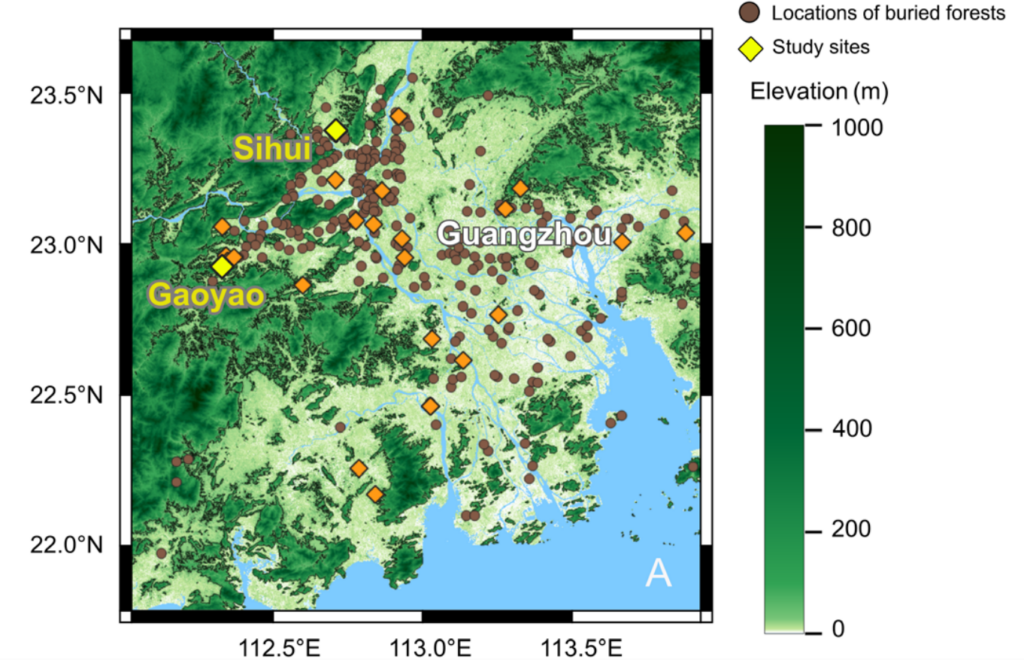
The troops marched across the countryside from five directions, converging outside Nanyue’s capital city of Panyou, which stood in the Pearl River Delta, near the modern city of Guangzhou. An enterprising company commander named Yang Pu got the bright idea to set the city on fire, and it ended badly.

“The fire not only destroyed the city but also ran out of control to the surrounding forests,” write Wang and colleagues. The cypress trees burned down to the waterline, leaving only their submerged stumps behind.

map of a coastal area showing elevation and the location of ancient forests

The brown dots mark the known sites of buried forests, and the orange diamonds mark those confirmed to be ancient. The two yellow diamonds are Wang and colleagues’ study sites. Credit: Wang et al. 2025

After war came fire and rice

At the time of the invasion, the land around Panyou was mostly swamp, forested with cypress trees. People had lived there for thousands of years, and had been growing rice for about 2,000 years. Bits of charcoal in the peat layers Wang and colleagues sampled reveal that they practiced slash-and-burn agriculture, but on a small scale, rotating their fields so the cypress forest could start to recover after a season or two.

The small burns are nothing like the forest fire Yang Pu unleashed, or the massive burning and reworking of the landscape that came after.

The stumps of the burned cypress trees slowly disappeared under several meters of peat, while above the buried ancient forest, life went on. Tigers, elephants, rhinos, and green peafowl no longer walked here. Instead, grains of pollen from the layers of clay above the peat reveal a sudden influx of plants from the grassy Poaceae family, which includes rice, wheat, and barley.

https://arstechnica.com/science/2025/04/an-ancient-battle-has-driven-a-wetland-species-almost-to-extinction/


NSF director resigns amid 55% budget cut, mass layoffs from Trump admin

Director of the National Science Foundation Sethuraman Panchanathan abruptly resigned Thursday, Science Magazine first reported.

Panchanathan, who goes by Panch, did not cite a reason for his departure, which comes as 16 months are left in his six-year term. However, like most other federal agencies, the scientific funding organization is awash in turmoil due to the Trump administration. Specifically, the NSF is facing a 55 percent cut to its $9 billion annual budget in the next fiscal year, as well as a mass layoff of half of its 1,700-person staff, according to Science.

A memo sent to staff on Thursday, April 24, and obtained by Ars Technica confirmed that the NSF is in for significant cuts. It offered staff a second chance at the deal offered in the earlier “fork in the road” email, allowing them to go on paid leave in return for departing the foundation before October. Anyone who stays will face “future restructuring, staffing reductions, and constrained budget environments.” The changes are expected to “constrain future opportunities” within the NSF.

Earlier this month, the NSF announced that it would be canceling active grants totaling up to $1 billion in scientific research funding. The reason given was that the research the grants funded was no longer a priority for the agency. They appear to include research focused on environmental justice, the spread of misinformation, and fostering diversity in the scientific community. The New York Times reported earlier this week that it had tallied more than 400 active NSF grants that have been terminated so far.

https://arstechnica.com/science/2025/04/nsf-director-resigns-amid-55-budget-cut-mass-layoffs-from-trump-admin/


Bone collector caterpillar adorns itself in insect body parts

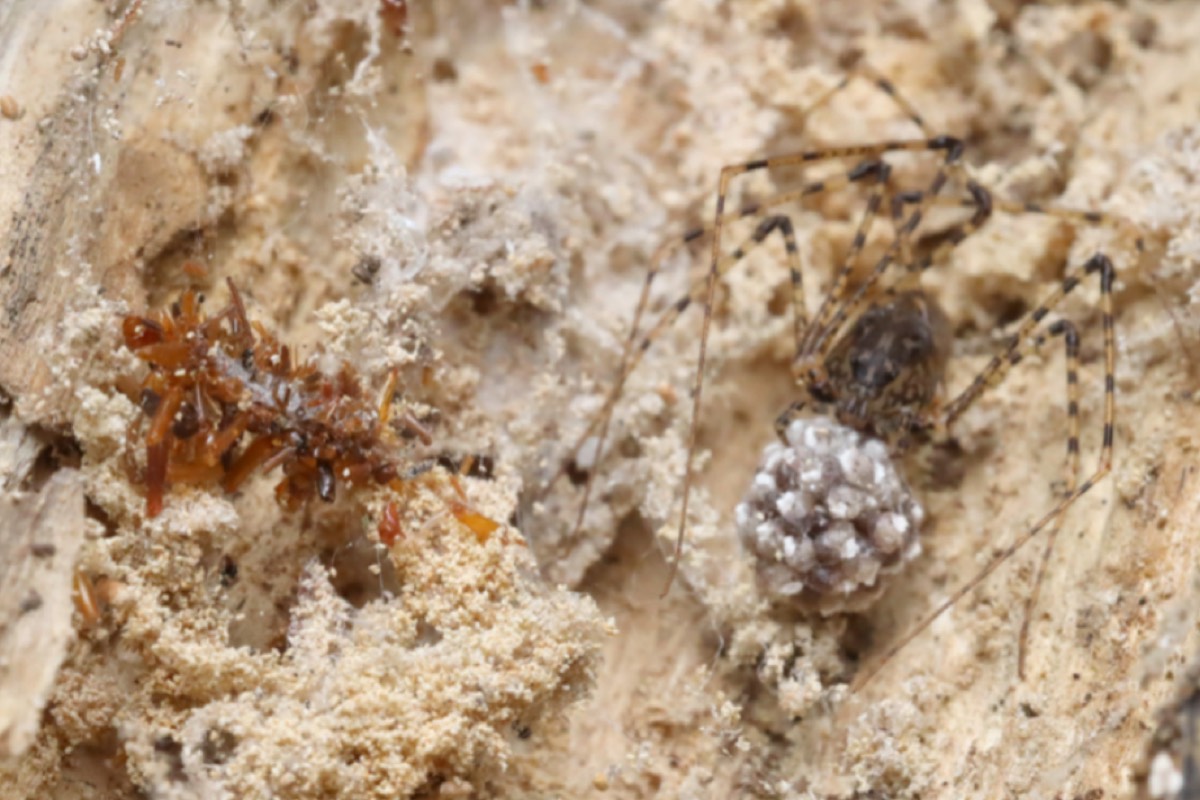
But then the team started finding more of these caterpillars, all covered in the body parts of other insects and shed spider skins, and all in the vicinity of spider webs. “We started realizing these things are only hanging out where there are spiders,” said Rubinoff, who spent several years verifying that this was, indeed, a rare new species. “It’s the sort of thing you really want to be sure of because it’s not just incredible, it’s unimaginable.”

A genomic analysis confirmed the researchers’ suspicions and shed some light on the bone collector’s possible evolutionary pathway. The bone caterpillar may have only just been discovered by humans, but it’s at least 5 million years old and possibly as old as 12 million years, predating the island of O’ahu on which it now exclusively resides in an area of about 15 square kilometers in the Wai’anae Mountains. No other known member of the same lineage has yet been found, suggesting that the species originated on an early island in a chain that has since subsided.

Dressed for success

Why do the caterpillars do this? “It’s a decorate or die situation,” said Rubinoff. “In evolutionary history, the ones that didn’t decorate their cases were probably removed from the gene pool pretty quickly. But a few of them started incorporating bug and spider bits in their cases and survived. Selection would drive them toward having the sensory capacity to detect those bits and use them as camouflage. If you’re going to live in Smaug’s lair, you’d better look like treasure.”

Pinned adult female (left) of the bone collector caterpillar and portable case (right) in which the larva resides decorated with body parts from ants, bark beetles, weevils, and flies.

Pinned adult female (left) of the bone collector caterpillar and portable case (right) in which
the larva resides decorated with body parts from ants, bark beetles, weevils, and flies.

D. Rubinoff et al., 2025

Bone collector cases

Bone collector cases.

Rubinoff lab/University of Hawaii, Manoa

It’s a jumbled-up, messy kind of treasure, since arranging the body parts in too orderly a fashion would defeat the purpose of camouflage as they crawl around the three-dimensional cobwebs they favor. “They’re not going to do a tightrope walk between two trees; they’re hiding in a little hole in a log where there are cobwebs,” said Rubinoff. “A spider detects vibrations in the web, rushes out to grab its prey, smells itself and prey it’s already eaten, and assumes there is nothing new to eat.”

https://arstechnica.com/science/2025/04/bone-collector-caterpillar-adorns-itself-in-insect-body-parts/


Universities (finally) band together, fight “unprecedented government overreach”

We speak with one voice against the unprecedented government overreach and political interference now endangering American higher education… We must reject the coercive use of public research funding…

American institutions of higher learning have in common the essential freedom to determine, on academic grounds, whom to admit and what is taught, how, and by whom… In their pursuit of truth, faculty, students, and staff are free to exchange ideas and opinions across a full range of viewpoints without fear of retribution, censorship, or deportation.

This is fine, as far as it goes. But what are all these institutions going to do about the funding cuts, attempts to revoke their nonprofit status, threats not to hire their graduates, and student speech-based deportations? They are going to ask the Trump administration for “constructive engagement that improves our institutions and serves our republic.”

This sounds lovely, if naive, and I hope it works out well for every one of them as they seek good-faith dialogue with a vice president who has called universities the “enemy” and an administration that demanded Harvard submit to the vetting of every department for unspecified “viewpoint diversity.”

As a first step to finding common ground and speaking with a common voice, the statement is a start. But statements, like all words, can be cheap. We’ll see what steps schools actually take—and how much they can speak and act in concert—as Trump’s pressure campaign continues to ratchet.

https://arstechnica.com/culture/2025/04/200-university-presidents-reject-the-coercive-use-of-public-research-funding/


Drunk man walks into climate change, burns the bottoms of his feet off

In the burn unit, doctors gave the man a pain reliever, cleaned the burns, treated them with a topical antibiotic, and gave them an antimicrobial foam dressing. At a follow-up appointment, the wounds appeared to be healing without complications.

While the man recovered from the injury, the author of the case study—Jeremy Hess, an expert in emergency medicine and global environmental health at the University of Washington—warned that the risk of such injuries will only grow as climate change continues.

“Extreme heat events increase the risk of contact burns from hot surfaces in the environment,” he wrote. “Young children, older adults, unhoused persons, and persons with substance use disorder are at elevated risk for these types of burns.”

Last year, The New York Times reported that burn centers in the southwest have already begun seeing larger numbers of burns from contact with sidewalks and asphalt during heat waves. In some cases, the burns can turn fatal if people lose consciousness on hot surfaces—for instance, from overdoses, heat stroke, intoxication, or other health conditions. “Your body just literally sits there and cooks,” Clifford Sheckter, surgeon and a burn prevention researcher at Stanford University, told the Times last year. “When somebody finally finds you, you’re already in multisystem organ failure.”

https://arstechnica.com/health/2025/04/drunk-man-walks-into-climate-change-burns-the-bottoms-of-his-feet-off/