The suit also claims that the funding hold, made in retaliation for Harvard’s letter announcing its refusal to accept these conditions, punishes Harvard for exercising free speech.
Separately, the lawsuit focuses on Title VI, part of the Civil Rights Act, which prohibits the government from funding organizations that engage in racial discrimination. It’s Harvard’s alleged tolerance for antisemitism that would enable the government to put a hold on these funds. But the suit spells out the requirements for cutting funding—hearings, a 30-day waiting period, notification of Congress—that the law requires before funding can be cut. And, quite obviously, the government has done none of them.
Harvard also alleges that the government’s decision to hold research funds is arbitrary and capricious: “The Government has not—and cannot—identify any rational connection between antisemitism concerns and the medical, scientific, technological, and other research it has frozen.”
Finally, the court is asked to consider an issue that’s central to a lot of the questions regarding Trump Administration actions: Can the executive branch stop the flow of money that was allocated by Congress? “Defendants do not have any inherent authority to terminate or freeze appropriated federal funding,” the suit claims.
Remedies
The suit seeks various remedies. It wants the government’s actions declared illegal, the freeze order vacated, and prohibitions put in place that will prevent the government from accomplishing the freeze through some other means. Harvard would also like any further reactions to allegations of antisemitism to follow the procedures mandated by Title VI and to have the government cover its attorney’s fees.
It also wants the ruling expedited, given the potential for damage to university-hosted research. The suit was filed in the District of Massachusetts, which is the same venue that has been used for other suits seeking to restrain the Trump administration’s attack on federally funded research. So far, those have resulted in rapid responses and injunctions that have put damaging funding cuts on hold. So, there’s a good chance we’ll see something similar here.
Are these chimps having a fruity booze-up in the wild?
Is there anything more human than gathering in groups to share food and partake in a fermented beverage or two (or three, or….)? Researchers have caught wild chimpanzees on camera engaging in what appears to be similar activity: sharing fermented African breadfruit with measurable alcoholic content. According to a new paper published in the journal Current Biology, the observational data is the first evidence of the sharing of alcoholic foods among nonhuman great apes in the wild.
The fruit in question is seasonal and comes from Treculia africana trees common across the home environment of the wild chimps in Cantanhez National Park in Guinea-Bissau. Once mature, the fruits drop from the tree to the ground and slowly ripen from a hard, deep green exterior to a yellow, spongier texture. Because the chimps are unhabituated, the authors deployed camera traps at three separate locations to record their feeding and sharing behavior.
They recorded 10 instances of selective fruit sharing among 17 chimps, with the animals exhibiting a marked preference for riper fruit. Between April and July 2022, the authors measured the alcohol content of the fruit with a handy portable breathalyzer and found almost all of the fallen fruit (90 percent) contained some ethanol, with the ripest containing the highest levels—the equivalent of 0.61 percent ABV (alcohol by volume).
That’s comparatively low to alcoholic drinks typically consumed by humans, but then again, fruit accounts for as much as 60 to 80 percent of the chimps’ diet, so the amount of ethanol consumed could add up quickly. It’s highly unlikely the chimps would get drunk, however. It wouldn’t confer any evolutionary advantage, and per the authors, there is evidence in the common ancestor of African apes of a molecular mechanism that increases the ability to metabolize alcohol.
Lichens can survive almost anything, and some might survive Mars
Whether anything ever lived on Mars is unknown. And the present environment, with harsh temperatures, intense radiation, and a sparse atmosphere, isn’t exactly propitious for life. Despite the red planet’s brutality, lichens that inhabit some of the harshest environments on Earth could possibly survive there.
Lichens are symbionts, or two organisms that are in a cooperative relationship. There is a fungal component (most are about 90 percent fungus) and a photosynthetic component (algae or cyanobacteria). To see if some species of lichen had what it takes to survive on Mars, a team of researchers led by botanist Kaja Skubała used the Space Research Center of the Polish Academy of Sciences to expose the lichen species Diploschistes muscorum and Cetrarea aculeata to simulate Mars conditions.
“Our study is the first to demonstrate that the metabolism of the fungal partner in lichen symbiosis was active while being in a Mars-like environment,” the researchers said in a study recently published in IMA Fungus. “X-rays associated with solar flares and SEPs reaching Mars should not affect the potential habitability of lichens on this planet.”
Martian ionizing radiation is threatening to most forms of life because it can cause damage at the cellular level. It can also get in the way of physical, genetic, morphological, and biochemical processes, depending on the organism and radiation level.
Going to extremes
Lichens have an edge when it comes to survival. They share characteristics with other organisms that can handle high levels of stress, including a low metabolism, not needing much in the way of nutrition, and longevity. Much like tardigrades, lichens can stay in a desiccated state for extended periods until they are rehydrated. Other lichen adaptations to extreme conditions include metabolites that screen out UV rays and melanin pigments that also defend against radiation.
To regenerate a head, you first have to know where your tail is
Before a critical point in development, the animals failed to close the wound made by the cut, causing the two embryo halves to simply spew cells out into the environment. Somewhat later, however, there was excellent survival, and the head portion of the embryo could regenerate a tail segment. This tells us that the normal signaling pathways present in the embryo are sufficient to drive the process forward.
But the tail of the embryo at this stage doesn’t appear to be capable of rebuilding its head. But the researchers found that they could inhibit wnt signaling in these posterior fragments, and that was enough to allow the head to develop.
Lacking muscle
One possibility here is that wnt signaling is widely active in the posterior of the embryo at this point, blocking formation of anterior structures. Alternatively, the researchers hypothesize that the problem is with the muscle cells that normally help organize the formation of a stem-cell-filled blastema, which is needed to kick off the regeneration process. Since the anterior end of the embryo develops earlier, they suggest there may simply not be enough muscle cells in the tail to kick off this process at early stages of development.
To test their hypothesis, they performed a somewhat unusual experiment. They started by cutting off the tails of embryos and saving them for 24 hours. At that point, they cut the front end off tails, creating a new wound to heal. At this point, regeneration proceeded as normal, and the tails grew a new head. This isn’t definitive evidence that muscle cells are what’s missing at early stages, but it does indicate that some key developmental step happens in the tail within the 24-hour window after the first cut.
The results reinforce the idea that regeneration of major body parts requires the re-establishment of the signals that lay out organization of the embryo in development—something that gets complicated if those signals are currently acting to organize the embryo. And it clearly shows that the cells needed to do this reorganization aren’t simply set aside early on in development but instead take some time to appear. All of that information will help clarify the bigger-picture question of how these animals manage such a complex regeneration process.
US Interior secretary orders offshore wind project shut down
It’s notable that this hold comes despite Trump’s executive order explicitly stating, “Nothing in this withdrawal [of future leasing] affects rights under existing leases in the withdrawn areas.”
GAO undercuts the message
The order alleged there were “various alleged legal deficiencies underlying the Federal Government’s leasing and permitting of onshore and offshore wind projects, the consequences of which may lead to grave harm.” In response to those allegations, the Government Accountability Office began an evaluation of the Department of the Interior’s activities in overseeing offshore wind development. The results of that were made public on Monday.
And the report only found minor issues. Its primary recommendations are that Interior improve its consultations with leaders of tribal communities that may be impacted by wind development and boost “incorporation of Indigenous knowledge.” The GAO also thinks that Interior should improve its methods of getting input from the fishing industry. The report also acknowledges that there are uncertainties about everything from invasive species to the turbines’ effect on navigational radar but says these will vary based on a wind farm’s site, size, and other features, and we’ll only have a clearer picture once we have built more of them.
Notably, it says that wind farm development has had no effect on the local whale population, a popular Republican criticism of offshore wind.
Trump’s animosity toward wind power has a long history, so it’s unlikely that this largely positive report will do much to get the hold on leasing lifted. In reality, however, the long-term uncertainty about offshore wind in the US will probably block new developments until the end of Trump’s time in office. Offshore wind companies have budgeted based on tax incentives in the Inflation Reduction Act, and the administration has suggested they may revoke those in future budgets. And the move by Burgum means that, even if a company clears all the leasing and improvement hurdles, the government may shut down a project for seemingly arbitrary reasons.
Skepticism greets claims of a possible biosignature on a distant world
The new paper follows up on a tantalizing hint raised by earlier work: the possible presence of a chemical called dimethyl sulfide. It uses an instrument on the James Webb Space Telescope (JWST) to image K2-18b as it passes in front of its host star. A small portion of the light that reaches Earth does so after having passed through the planet’s atmosphere, allowing the chemicals present there to leave a mark on the spectrum of that light.
The research team used two different methods of constructing a spectrum from the JWST data, and the results are in good agreement. They then searched for a combination of molecules that could produce a similar spectrum, starting with a list of 20. They found two: dimethyl sulfide and dimethyl disulfide (we can’t tell the difference between the two, given the existing data).
On Earth, the only processes that naturally produce this chemical take place inside cells, and it had previously been suggested to be a biosignature. So, the researchers propose it may be a biosignature here, although they acknowledge that the statistical significance of its signal, currently at three sigma, falls short of declaring a clear discovery. Still, that would qualify it as, in the words of a University of Cambridge press release, the “strongest hints yet of biological activity.”
Reasons for doubt
So why are many astronomers unconvinced? To be compelling, a biosignature from an exoplanet has to clear several hurdles that can be broken down into three key questions:
Is the planet what we think it is?
Is the signal real?
Are there other ways to produce that signal?
At present, none of those questions can be answered with a definitive yes.
The first question is whether we’re actually looking at a hycean world. As the researchers acknowledge in their paper, the presence of an ocean on K2-18b depends very strongly on its weather: “A cloud-/haze-free atmosphere would render the surface too hot to be habitable and/or have water in a supercritical state.” And, as they later acknowledge, the data obtained from the JWST shows no signs of clouds. That doesn’t mean they’re not there, but it certainly doesn’t help the case.
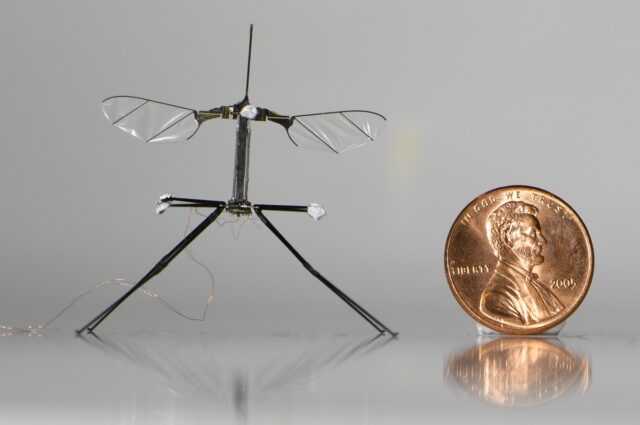
The RoboBee is only slightly larger than a penny. Credit: Harvard Microrobotics Laboratory
The first step was to perform experiments to determine the effects of oscillation on the newly designed robotic legs and leg joints. This involved manually disturbing the leg and then releasing it, capturing the resulting oscillations on high-speed video. This showed that the leg and joint essentially acted as an “underdamped spring-mass-damper model,” with a bit of “viscoelastic creep” for good measure. Next, the team performed a series of free-fall experiments with small fiberglass crash-test dummy vehicles with mass and inertia similar to RoboBee’s, capturing each free fall on high-speed video. This was followed by tests of different takeoff and landing approaches.
The final step was running experiments on consecutive takeoff and landing sequences using RoboBee, with the little robot taking off from one leaf, hovering, then moving laterally before hovering briefly and landing on another leaf nearby. The basic setup was the same as prior experiments, with the exception of placing a plant branch in the motion-capture arena. RoboBee was able to safely land on the second leaf (or similar uneven surfaces) over repeated trials with varying parameters.
Going forward, Wood’s team will seek to further improve the mechanical damping upon landing, drawing lessons from stingless bees and mosquitoes, as well as scaling up to larger vehicles. This would require an investigation into more complex leg geometries, per the authors. And RoboBee still needs to be tethered to off-board control systems. The team hopes one day to incorporate onboard electronics with built-in sensors.
“The longer-term goal is full autonomy, but in the interim we have been working through challenges for electrical and mechanical components using tethered devices,” said Wood. “The safety tethers were, unsurprisingly, getting in the way of our experiments, and so safe landing is one critical step to remove those tethers.” This would make RoboBee more viable for a range of practical applications, including environmental monitoring, disaster surveillance, or swarms of RoboBees engaged in artificial pollination.
Lunar Gateway’s skeleton is complete—its next stop may be Trump’s chopping block
Officials blame changing requirements for much of the delays and rising costs. NASA managers dramatically changed their plans for the Gateway program in 2020, when they decided to launch the PPE and HALO on the same rocket, prompting major changes to their designs.
Jared Isaacman, Trump’s nominee for NASA administrator, declined to commit to the Gateway program during a confirmation hearing before the Senate Commerce Committee on April 9. Sen. Ted Cruz (R-Texas), the committee’s chairman, pressed Isaacman on the Lunar Gateway. Cruz is one of the Gateway program’s biggest backers in Congress since it is managed by Johnson Space Center in Texas. If it goes ahead, Gateway would guarantee numerous jobs at NASA’s mission control in Houston throughout its 15-year lifetime.
“That’s an area that if I’m confirmed, I would love to roll up my sleeves and further understand what’s working right?” Isaacman replied to Cruz. “What are the opportunities the Gateway presents to us? And where are some of the challenges, because I think the Gateway is a component of many programs that are over budget and behind schedule.”
The pressure shell for the Habitation and Logistics Outpost (HALO) module arrived in Gilbert, Arizona, last week for internal outfitting. Credit: NASA/Josh Valcarcel
Checking in with Gateway
Nevertheless, the Gateway program achieved a milestone one week before Isaacman’s confirmation hearing. The metallic pressure shell for the HALO module was shipped from its factory in Italy to Arizona. The HALO module is only partially complete, and it lacks life support systems and other hardware it needs to operate in space.
Over the next couple of years, Northrop Grumman will outfit the habitat with those components and connect it with the Power and Propulsion Element under construction at Maxar Technologies in Silicon Valley. This stage of spacecraft assembly, along with prelaunch testing, often uncovers problems that can drive up costs and trigger more delays.
Ars recently spoke with Jon Olansen, a bio-mechanical engineer and veteran space shuttle flight controller who now manages the Gateway program at Johnson Space Center. A transcript of our conversation with Olansen is below. It is lightly edited for clarity and brevity.
Ars: The HALO module has arrived in Arizona from Italy. What’s next?
Olansen: This HALO module went through significant effort from the primary and secondary structure perspective out at Thales Alenia Space in Italy. That was most of their focus in getting the vehicle ready to ship to Arizona. Now that it’s in Arizona, Northrop is setting it up in their facility there in Gilbert to be able to do all of the outfitting of the systems we need to actually execute the missions we want to do, keep the crew safe, and enable the science that we’re looking to do. So, if you consider your standard spacecraft, you’re going to have all of your command-and-control capabilities, your avionics systems, your computers, your network management, all of the things you need to control the vehicle. You’re going to have your power distribution capabilities. HALO attaches to the Power and Propulsion Element, and it provides the primary power distribution capability for the entire station. So that’ll all be part of HALO. You’ll have your standard thermal systems for active cooling. You’ll have the vehicle environmental control systems that will need to be installed, [along with] some of the other crew systems that you can think of, from lighting, restraint, mobility aids, all the different types of crew systems. Then, of course, all of our science aspects. So we have payload lockers, both internally, as well as payload sites external that we’ll have available, so pretty much all the different systems that you would need for a human-rated spacecraft.
Ars: What’s the latest status of the Power and Propulsion Element?
Olansen: PPE is fairly well along in their assembly and integration activities. The central cylinder has been integrated with the propulsion tanks… Their propulsion module is in good shape. They’re working on the avionics shelves associated with that spacecraft. So, with both vehicles, we’re really trying to get the assembly done in the next year or so, so we can get into integrated spacecraft testing at that point in time.
Ars: What’s in the critical path in getting to the launch pad?
Olansen: The assembly and integration activity is really the key for us. It’s to get to the full vehicle level test. All the different activities that we’re working on across the vehicles are making substantive progress. So, it’s a matter of bringing them all in and doing the assembly and integration in the appropriate sequences, so that we get the vehicles put together the way we need them and get to the point where we can actually power up the vehicles and do all the testing we need to do. Obviously, software is a key part of that development activity, once we power on the vehicles, making sure we can do all the control work that we need to do for those vehicles.
[There are] a couple of key pieces I will mention along those lines. On the PPE side, we have the electrical propulsion system. The thrusters associated with that system are being delivered. Those will go through acceptance testing at the Glenn Research Center [in Ohio] and then be integrated on the spacecraft out at Maxar; so that work is ongoing as we speak. Out at ESA, ESA is providing the HALO lunar communication system. That’ll be delivered later this year. That’ll be installed on HALO as part of its integrated test and checkout and then launch on HALO. That provides the full communication capability down to the lunar surface for us, where PPE provides the communication capability back to Earth. So, those are key components that we’re looking to get delivered later this year.
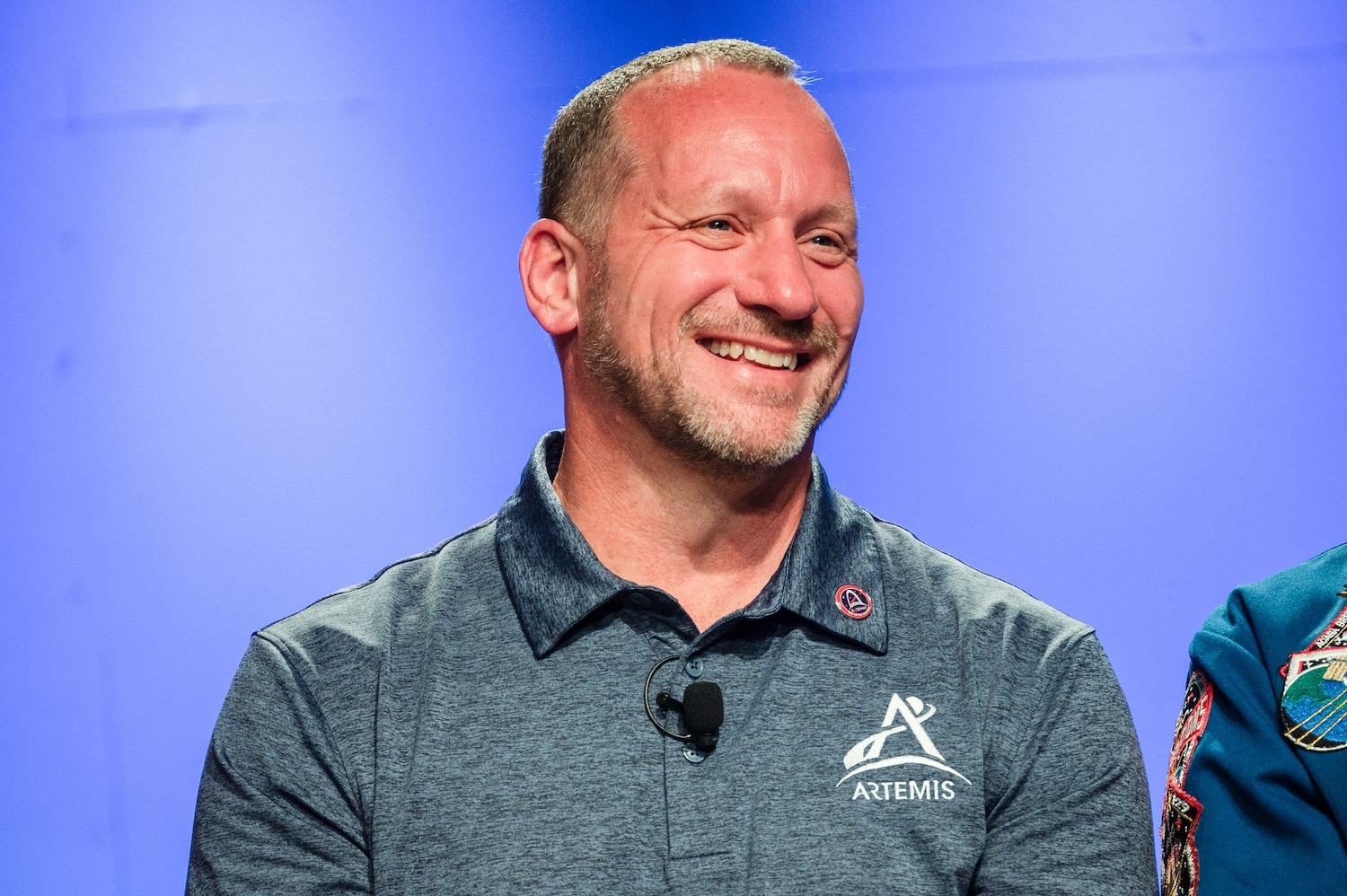
Jon Olansen, manager of NASA’s Gateway program at Johnson Space Center in Houston. Credit: NASA/Andrew Carlsen
Ars: What’s the status of the electric propulsion thrusters for the PPE?
Olansen: The first one has actually been delivered already, so we’ll have the opportunity to go through, like I said, the acceptance testing for those. The other flight units are right on the heels of the first one that was delivered. They’ll make it through their acceptance testing, then get delivered to Maxar, like I said, for integration into PPE. So, that work is already in progress. [The Power and Propulsion Element will have three xenon-fueled 12-kilowatt Hall thrusters produced by Aerojet Rocketdyne, and four smaller 6-kilowatt thrusters.]
Ars: The Government Accountability Office (GAO) outlined concerns last year about keeping the mass of Gateway within the capability of its rocket. Has there been any progress on that issue? Will you need to remove components from the HALO module and launch them on a future mission? Will you narrow your launch windows to only launch on the most fuel-efficient trajectories?
Olansen: We’re working the plan. Now that we’re launching the two vehicles together, we’re working mass management. Mass management is always an issue with spacecraft development, so it’s no different for us. All of the things you described are all knobs that are in the trade space as we proceed, but fundamentally, we’re working to design the optimal spacecraft that we can, first. So, that’s the key part. As we get all the components delivered, we can measure mass across all of those components, understand what our integrated mass looks like, and we have several different options to make sure that we’re able to execute the mission we need to execute. All of those will be balanced over time based on the impacts that are there. There’s not a need for a lot of those decisions to happen today. Those that are needed from a design perspective, we’ve already made. Those that are needed from enabling future decisions, we’ve already made all of those. So, really, what we’re working through is being able to, at the appropriate time, make decisions necessary to fly the vehicle the way we need to, to get out to NRHO [Near Rectilinear Halo Orbit, an elliptical orbit around the Moon], and then be able to execute the Artemis missions in the future.
Ars: The GAO also discussed a problem with Gateway’s controllability with something as massive as Starship docked to it. What’s the latest status of that problem?
Olansen: There are a number of different risks that we work through as a program, as you’d expect. We continue to look at all possibilities and work through them with due diligence. That’s our job, to be able to do that on a daily basis. With the stack controllability [issue], where that came from for GAO, we were early in the assessments of what the potential impacts could be from visiting vehicles, not just any one [vehicle] but any visiting vehicle. We’re a smaller space station than ISS, so making sure we understand the implications of thruster firings as vehicles approach the station, and the implications associated with those, is where that stack controllability conversation came from.
The bus that Maxar typically designs doesn’t have to generally deal with docking. Part of what we’ve been doing is working through ways that we can use the capabilities that are already built into that spacecraft differently to provide us the control authority we need when we have visiting vehicles, as well as working with the visiting vehicles and their design to make sure that they’re minimizing the impact on the station. So, the combination of those two has largely, over the past year since that report came out, improved where we are from a stack controllability perspective. We still have forward work to close out all of the different potential cases that are there. We’ll continue to work through those. That’s standard forward work, but we’ve been able to make some updates, some software updates, some management updates and logic updates, that really allow us to control the stack effectively and have the right amount of control authority for the dockings and undockings that we will need to execute for the missions.
Scientists made a stretchable lithium battery you can bend, cut, or stab
The Li-ion batteries that power everything from smartphones to electric cars are usually packed in rigid, sealed enclosures that prevent stresses from damaging their components and keep air from coming into contact with their flammable and toxic electrolytes. It’s hard to use batteries like this in soft robots or wearables, so a team of scientists at the University California, Berkeley built a flexible, non-toxic, jelly-like battery that could survive bending, twisting, and even cutting with a razor.
While flexible batteries using hydrogel electrolytes have been achieved before, they came with significant drawbacks. “All such batteries could [only] operate [for] a short time, sometimes a few hours, sometimes a few days,” says Liwei Lin, a mechanical engineering professor at UC Berkeley and senior author of the study. The battery built by his team endured 500 complete charge cycles—about as many as the batteries in most smartphones are designed for.
Power in water
“Current-day batteries require a rigid package because the electrolyte they use is explosive, and one of the things we wanted to make was a battery that would be safe to operate without this rigid package,” Lin told Ars. Unfortunately, flexible packaging made of polymers or other stretchable materials can be easily penetrated by air or water, which will react with standard electrolytes, generating lots of heat, potentially resulting in fires and explosions. This is why, in 2017, scientists started to experiment with quasi-solid-state hydrogel electrolytes.
These hydrogels were made of a polymer net that gave them their shape, crosslinkers like borax or hydrogen bonds that held this net together, a liquid phase made of water, and salt or other electrolyte additives providing ions that moved through the watery gel as the battery charged or discharged.
But hydrogels like that had their own fair share of issues. The first was a fairly narrow electrochemical stability window—a safe zone of voltage the battery can be exposed to. “This really limits how much voltage your battery can output,” says Peisheng He, a researcher at UC Berkeley Sensor and Actuator Center and lead author of the study. “Nowadays, batteries usually operate at 3.3 volts, so their stability window must be higher than that, probably four volts, something like that.” Water, which was the basis of these hydrogel electrolytes, typically broke down into hydrogen and oxygen when exposed to around 1.2 volts. That problem was solved by using highly concentrated salt water loaded with highly fluorinated lithium salts, which made it less likely to break down. But this led the researchers straight into safety issues, as fluorinated lithium salts are highly toxic to humans.
Live demos test effectiveness of Revolutionary War weapons
Ars Technica: What else can we learn from these kinds of experiments?
Joel Bohy: One of the things that’s great about the archeology end of it is when we’re finding fired ammunition. I mostly volunteer with archaeologists on the Revolutionary War. One of my colleagues has worked on the Little Bighorn battlefield doing firing pin impressions, which leave a fingerprint, so he could track troopers and Native Americans across the battlefields. With [the Revolutionary War], it’s harder to do because we’re using smooth-bore guns that don’t necessarily leave a signature. But what they do leave is a caliber, and they also leave a location. We GIS all this stuff and map it, and it’s told us things about the battles that we never knew before. We just did one last August that hasn’t been released yet that changes where people thought a battle took place.
A replica Revolutionary War era rifle being fired in the field.
GBH/NOVA
A replica Revolutionary War era rifle being fired in the field. GBH/NOVA
High-speed cameras capture the gunfire close-up.
GBH/NOVA
High-speed cameras capture the gunfire close-up. GBH/NOVA
A replica Revolutionary War era rifle being fired in the field. GBH/NOVA
High-speed cameras capture the gunfire close-up. GBH/NOVA
We like to combine that with our live fire studies. So when we [conduct the latter], we take a shot, then we metal detect each shot, bag it, tag it. We record all the data that we see on our musket balls that we fired so that when we’re on an archeology project, we can correlate that with what we see in the ground. We can see if it hits a tree, if it hits rocks, how close was a soldier when they fired—all based upon the deformation of the musket ball.
Ars Technica: What is the experience of shooting a replica of a musket compared to, say, a modern rifle?
Joel Bohy: It’s a lot different. When you’re firing a modern rifle, you pull the trigger and it’s very quick—a matter of milliseconds and the bullet’s downrange. With the musket, it’s similar, but it’s slower, and you can anticipate the shot. By the time the cock goes down, the flint strikes the hammer, it ignites the powder in the pan, which goes through the vent and sets off the charge—there’s a lot more time involved in that. So you can anticipate and flinch. You may not necessarily get the best shot as you would on a more modern rifle. There’s still a lot of kick, and there’s a lot more smoke because of the black powder that’s being used. With modern smokeless powder, you have very little smoke compared to the muskets.