A guide to the “platonic ideal” of a Negroni and other handy tips
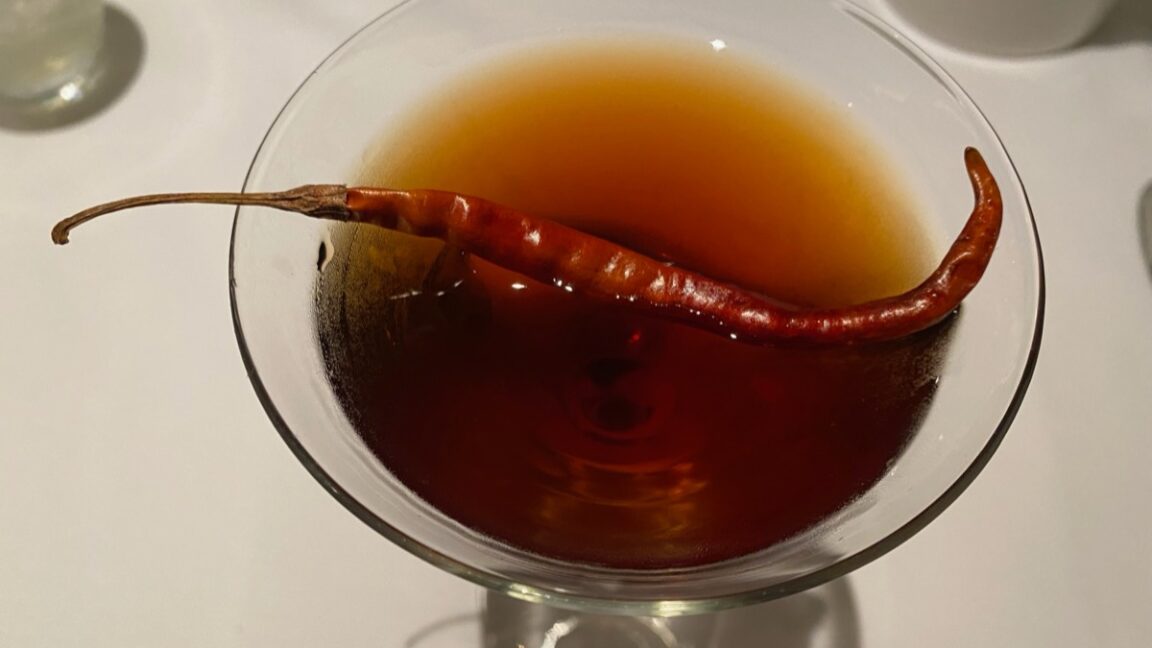
The most hand-wavy one to me is the impression matching. Rosemary smells cold, and Fernet-Branca tastes cold even when it’s room temperature. If the scent has rosemary, is Fernet now a good match for that? Some of the neuroscience stuff that I’ve read has indicated that these more abstract ideas are represented by the same sort of neural-firing patterns. Initially, I was hesitant; cold and cold, it doesn’t feel as fulfilling to me. But then I did some more reading and realized there’s some science behind it and have been more intrigued by that lately.

Ars Technica: You do come up with some surprising flavor combinations, like a drink that combined blueberry and horseradish, which frankly sounds horrifying. 

Kevin Peterson: It was a hit on the menu. I would often give people a little taste of the blueberry and then a little taste of the horseradish tincture, and they’d say, “Yeah, I don’t like this.” And then I’d serve them the cocktail, and they’d be like, “Oh my gosh, it actually worked. I can’t believe it.”  Part of the beauty is you take a bunch of things that are at least not good and maybe downright terrible on their own, and then you stir them all together and somehow it’s lovely. That’s basically alchemy right there.

Ars Technica: Harmony between scent and the cocktail is one thing, but you also talk about constructive interference to get a surprising, unexpected, and yet still pleasurable result.

Kevin Peterson: The opposite is destructive interference, where there’s just too much going on. When I’m coming up with a drink, sometimes that’ll happen, where I’m adding more, but the flavor impression is going down. It’s sort of a weird non-linearity of flavor, where sometimes two plus two equals four, sometimes it equals three, sometimes it equals 17. I now have intuition about that, having been in this world for a lot of years, but I still get surprised sometimes when I put a couple things together.

Often with my end-of-the-shift drink, I’ll think, “Oh, we got this new bottle in. I’m going to try that in a Negroni variation.” Then I lose track and finish mopping, and then I sip, and I’m like, “What? Oh my gosh, I did not see this coming at all.” That little spark, or whatever combo creates that, will then often be the first step on some new cocktail development journey.

https://arstechnica.com/science/2025/04/is-there-a-grand-unified-theory-of-cocktails-maybe/



Quantum hardware may be a good match for AI

Quantum computers don’t have that sort of separation. While they could include some quantum memory, the data is generally housed directly in the qubits, while computation involves performing operations, called gates, directly on the qubits themselves. In fact, there has been a demonstration that, for supervised machine learning, where a system can learn to classify items after training on pre-classified data, a quantum system can outperform classical ones, even when the data being processed is housed on classical hardware.

This form of machine learning relies on what are called variational quantum circuits. This is a two-qubit gate operation that takes an additional factor that can be held on the classical side of the hardware and imparted to the qubits via the control signals that trigger the gate operation. You can think of this as analogous to the communications involved in a neural network, with the two-qubit gate operation equivalent to the passing of information between two artificial neurons and the factor analogous to the weight given to the signal.

That’s exactly the system that a team from the Honda Research Institute worked on in collaboration with a quantum software company called Blue Qubit.

Pixels to qubits

The focus of the new work was mostly on how to get data from the classical world into the quantum system for characterization. But the researchers ended up testing the results on two different quantum processors.

The problem they were testing is one of image classification. The raw material was from the Honda Scenes dataset, which has images taken from roughly 80 hours of driving in Northern California; the images are tagged with information about what’s in the scene. And the question the researchers wanted the machine learning to handle was a simple one: Is it snowing in the scene?

https://arstechnica.com/science/2025/04/companies-take-a-step-toward-running-ai-on-quantum-hardware/


Trump White House budget proposal eviscerates science funding at NASA

This week, as part of the process to develop a budget for fiscal-year 2026, the Trump White House shared the draft version of its budget request for NASA with the space agency.

This initial version of the administration’s budget request calls for an approximately 20 percent overall cut to the agency’s budget across the board, effectively $5 billion from an overall topline of about $25 billion. However, the majority of the cuts are concentrated within the agency’s Science Mission Directorate, which oversees all planetary science, Earth science, astrophysics research, and more.

According to the “passback” documents given to NASA officials on Thursday, the space agency’s science programs would receive nearly a 50 percent cut in funding. After the agency received $7.5 billion for science in fiscal-year 2025, the Trump administration has proposed a science topline budget of just $3.9 billion for the coming fiscal year.

Detailing the cuts

Among the proposals were: A two-thirds cut to astrophysics, down to $487 million; a greater than two-thirds cut to heliophysics, down to $455 million; a greater than 50 percent cut to Earth science, down to $1.033 billion; and a 30 percent cut to Planetary science, down to $1.929 billion.

Although the budget would continue support for ongoing missions such as the Hubble Space Telescope and the James Webb Space Telescope, it would kill the much-anticipated Nancy Grace Roman Space Telescope, an observatory seen as on par with those two world-class instruments that is already fully assembled and on budget for a launch in two years.

“Passback supports continued operation of the Hubble and James Webb Space Telescopes and assumes no funding is provided for other telescopes,” the document states.

https://arstechnica.com/space/2025/04/trump-white-house-budget-proposal-eviscerates-science-funding-at-nasa/


New simulation of Titanic’s sinking confirms historical testimony

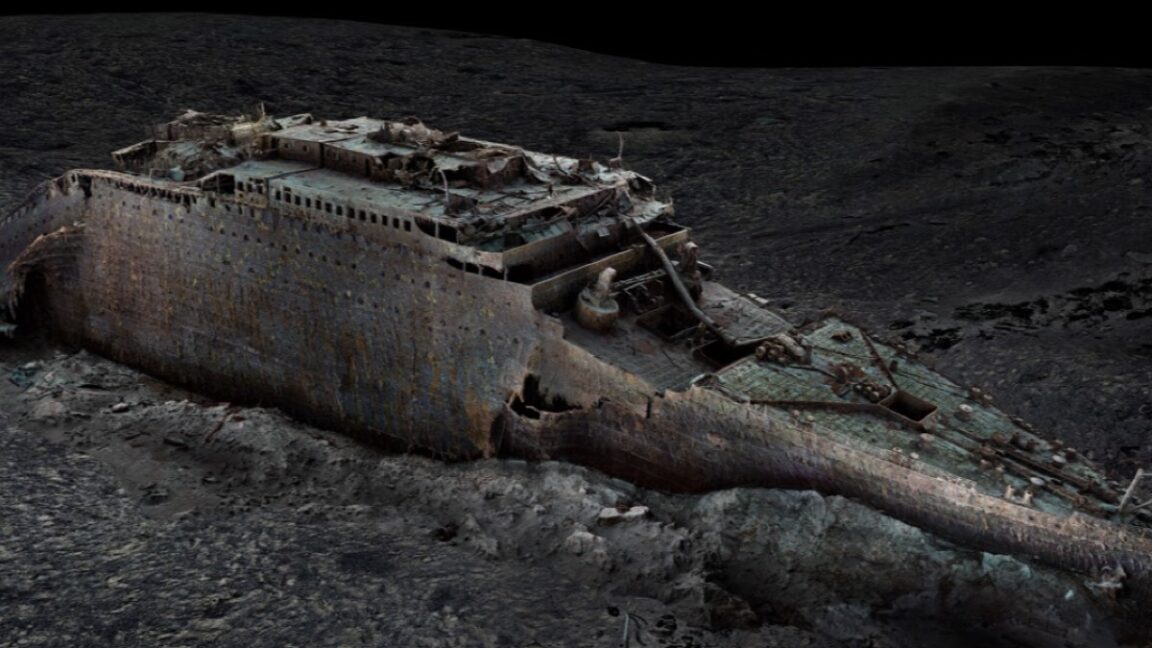
In 2023, we reported on the unveiling of the first full-size 3D digital scan of the remains of the RMS Titanic—a “digital twin” that captured the wreckage in unprecedented detail. Magellan Ltd, a deep-sea mapping company, and Atlantic Productions conducted the scans over a six-week expedition. That project is the subject of the new National Geographic documentary Titanic: The Digital Resurrection, detailing several fascinating initial findings from experts’ ongoing analysis of that full-size scan.

Titanic met its doom just four days into the Atlantic crossing, roughly 375 miles (600 kilometers) south of Newfoundland. At 11:40 pm ship’s time on April 14, 1912, Titanic hit that infamous iceberg and began taking on water, flooding five of its 16 watertight compartments, thereby sealing its fate. More than 1,500 passengers and crew perished; only around 710 of those on board survived.

Titanic remained undiscovered at the bottom of the Atlantic Ocean until an expedition led by Jean-Louis Michel and Robert Ballard reached the wreck on September 1, 1985. The ship split apart as it sank, with the bow and stern sections lying roughly one-third of a mile apart. The bow proved to be surprisingly intact, while the stern showed severe structural damage, likely flattened from the impact as it hit the ocean floor. There is a debris field spanning a 5×3-mile area, filled with furniture fragments, dinnerware, shoes and boots, and other personal items.

The joint mission by Magellan and Atlantic Productions deployed two submersibles nicknamed Romeo and Juliet to map every millimeter of the wreck, including the debris field spanning some three miles. The result was a whopping 16 terabytes of data, along with over 715,000 still images and 4K video footage. That raw data was then processed to create the 3D digital twin. The resolution is so good, one can make out part of the serial number on one of the propellers.

“I’ve seen the wreck in person from a submersible, and I’ve also studied the products of multiple expeditions—everything from the original black-and-white imagery from the 1985 expedition to the most modern, high-def 3D imagery,” deep ocean explorer Parks Stephenson told Ars. “This still managed to blow me away with its immense scale and detail.”

https://arstechnica.com/science/2025/04/3d-digital-twin-of-titanic-wreck-yields-fresh-insights/


How did eastern North America form?

For decades, geologists have understood the broad picture of how eastern North America came to be. It begins with plate tectonics, the process in which pieces of Earth’s crust shuffle around over time, driven by churning motions in the underlying mantle. Plate tectonics created and then broke apart an ancient supercontinent known as Rodinia. By around 550 million years ago, a fragment of Rodinia had shuffled south of the equator, where it lay quietly for tens of millions of years. That fragment is the heart of what we know today as eastern North America.

Then, around 500 million years ago, tectonic forces started bringing fragments of other landmasses toward the future eastern North America. Carried along like parts on an assembly line, these continental slivers crashed into it, one after another. The slivers glommed together and built up the continental margin.

During that process, as more and more continental collisions crumpled eastern North America and thrust its agglomerated slivers into the sky, the Appalachian Mountains were born. To the west, the eastern North American margin had merged with ancient rocks that today make up the heart of the continent, west of the Appalachians and through the Midwest and into the Great Plains.

When one tectonic plate slides beneath another, slivers of Earth’s crust, known as terranes, can build up and stick together, forming a larger landmass. Such a process was key to the formation of eastern North America. Credit: Knowable Magazine

By around 270 million years ago, that action was done, and all the world’s landmasses had merged into a second single supercontinent, Pangaea. Then, around 200 million years ago, Pangaea began splitting apart, a geological breakup that formed the Atlantic Ocean, and eastern North America shuffled toward its current position on the globe.

Since then, erosion has worn down the peaks of the once-mighty Appalachians, and eastern North America has settled into a mostly quiet existence. It is what geologists call a “passive margin,” because although it is the edge of a continent, it is not the edge of a tectonic plate anymore: That lies thousands of miles out to the east, in the middle of the Atlantic Ocean.

https://arstechnica.com/science/2025/04/how-did-eastern-north-america-form/


Editorial: Mammoth de-extinction is bad conservation

The evidence for how living elephants affect carbon sequestration is also quite mixed. On the one hand, one paper finds that African forest elephants knock down softwood trees, making way for hardwood trees that sequester more carbon. But on the other hand, many more researchers looking at African savannas have found that elephants knock down lots of trees, converting forests into savannas and reducing carbon sequestration.

Colossal’s website offers links to peer-reviewed research that support their suppositions on the ecological role of woolly mammoths. A key study offers intriguing evidence that keeping large herbivores—reindeer, Yakutian horses, moose, musk ox, European bison, yaks, and cold-adapted sheep—at artificially high levels in a tussock grassland helped achieve colder ground temperatures, ostensibly protecting permafrost. But the study raises lots of questions: is it possible to boost these herbivores’ populations across the whole northern latitudes? If so, why do we need mammoths at all—why not just use species that already exist, which would surely be cheaper?

Plus, as ecologist Michelle Mack noted, as the winters warm due to climate change, too much trampling or sweeping away of snow could have the opposite effect, helping warm the soils underneath more quickly—if so, mammoths could be worse for the climate, not better.

All this is to say that ecosystems are diverse and messy, and those of us working in functional ecology don’t always discover consistent patterns. Researchers in the field often struggle to find robust evidence for how a living species affects modern-day ecosystems—surely it is far harder to understand how a creature extinct for around 10,000 years shaped its environment? And harder still to predict how it would shape tomorrow’s ecosystems? In effect, Colossal’s ecological narrative relies on that difficulty. But just because claims about the distant past are harder to fact-check doesn’t mean they are more likely to be true.

https://arstechnica.com/science/2025/04/editorial-mammoth-de-extinction-is-bad-conservation/


With new contracts, SpaceX will become the US military’s top launch provider

  • SpaceX will get 28 missions worth approximately $5.9 billion
  • ULA will get 19 missions worth approximately $5.4 billion
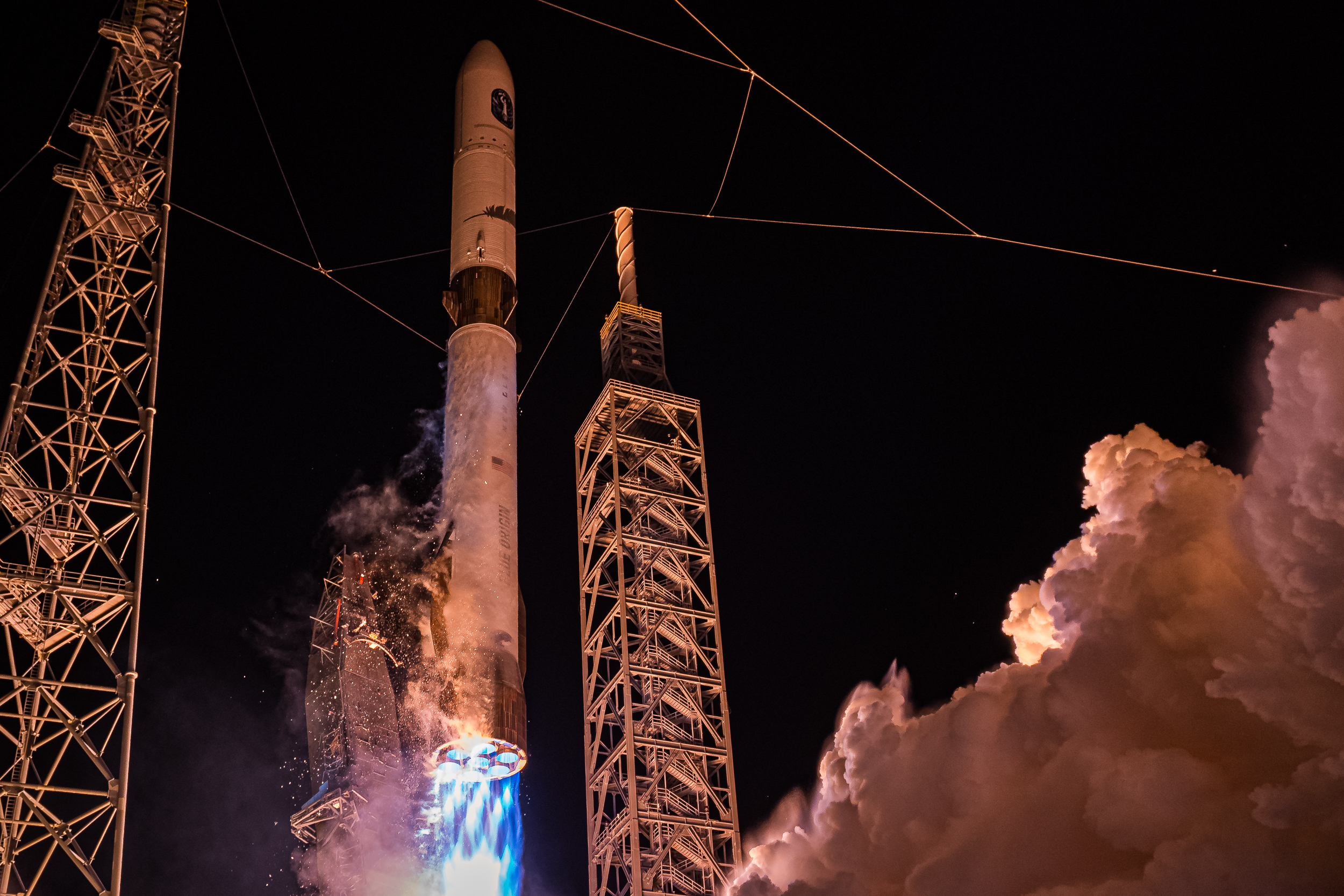
  • Blue Origin will get seven missions worth approximately

That equates to a 60-40 split between SpaceX and ULA for the bulk of the missions. Going into the competition, military officials set aside seven additional missions to launch with a third provider, allowing a new player to gain a foothold in the market. The Space Force reserves the right to reapportion missions between the three providers if one of them runs into trouble.

The Pentagon confirmed an unnamed fourth company also submitted a proposal, but wasn’t selected for Phase 3.

Rounded to the nearest million, the contract with SpaceX averages out to $212 million per launch. For ULA, it’s $282 million, and Blue Origin’s price is $341 million per launch. But take these numbers with caution. The contracts include a lot of bells and whistles, pricing them higher than what a commercial customer might pay.

According to the Pentagon, the contracts provide “launch services, mission unique services, mission acceleration, quick reaction/anomaly resolution, special studies, launch service support, fleet surveillance, and early integration studies/mission analysis.”

Essentially, the Space Force is paying a premium to all three launch providers for schedule priority, tailored solutions, and access to data from every flight of each company’s rocket, among other things.

New Glenn lifts off on its debut flight. Credit: Blue Origin

“Winning 60% percent of the missions may sound generous, but the reality is that all SpaceX competitors combined cannot currently deliver the other 40%!,” Elon Musk, SpaceX’s founder and CEO, posted on X. “I hope they succeed, but they aren’t there yet.”

This is true if you look at each company’s flight rate. SpaceX has launched Falcon 9 and Falcon Heavy rockets 140 times over the last 365 days. These are the flight-proven rockets SpaceX will use for its share of Space Force missions.

https://arstechnica.com/space/2025/04/with-new-contracts-spacex-will-become-the-us-militarys-top-launch-provider/


We have the first video of a plant cell wall being built

Plant cells are surrounded by an intricately structured protective coat called the cell wall. It’s built of cellulose microfibrils intertwined with polysaccharides like hemicellulose or pectin. We have known what plant cells look like without their walls, and we know what they look like when the walls are fully assembled, but we’ve never seen the wall-building process in action. “We knew the starting point and the finishing point, but had no idea what happens in between,” says Eric Lam, a plant biologist at Rutgers University. He’s a co-author of the study that caught wall-building plant cells in action for the first time. And once we saw how the cell wall building worked, it looked nothing like how we drew that in biology handbooks.

Camera-shy builders

Plant cells without walls, known as protoplasts, are very fragile, and it has been difficult to keep them alive under a microscope for the several hours needed for them to build walls. Plant cells are also very light-sensitive, and most microscopy techniques require pointing a strong light source at them to get good imagery.

Then there was the issue of tracking their progress. “Cellulose is not fluorescent, so you can’t see it with traditional microscopy,” says Shishir Chundawat, a biologist at Rutgers. “That was one of the biggest issues in the past.” The only way you can see it is if you attach a fluorescent marker to it. Unfortunately, the markers typically used to label cellulose were either bound to other compounds or were toxic to the plant cells. Given their fragility and light sensitivity, the cells simply couldn’t survive very long with toxic markers as well.

https://arstechnica.com/science/2025/04/how-to-watch-plant-cells-build-a-cell-wall-without-killing-them/


Newly hatched hummingbird looks, acts like a toxic caterpillar

Further observation of the nest revealed that the female hummingbird had added to its hatchling’s caterpillar camouflage by lining the nest with hairy-looking material from the seeds of balsa trees. The researchers also noticed that, whenever they approached the nest to film, the chick would move its head upward and start shaking it sideways while its feathers stood on end. It was trying to make itself look threatening.

When the research team backed off, the hummingbird chick went back to laying low in its nest. They wondered whether it behaved this way with actual predators, but eventually saw a wasp known to prey on young hummingbirds creep close to the nest. The chick displayed the same behavior it had with humans, which succeeded in scaring the wasp off.

Falk determined that the feathers, color, and head-shaking were eerily similar to the larvae of moths in the Megalopygidae and Saturniidae families, which are also endemic to the region. They might not be the mirror image of a particular species, but they appear close enough that predators would consider themselves warned.

“The behavior of the white-necked jacobin, when approached by humans and a predatory wasp, resembles the sudden ‘thrashing’ or ‘jerking’ behavior exhibited by many caterpillars in response to disturbance, including in the habitat where this bird was found,” he said regarding the same study.

…now you don’t

Could there be an alternate explanation for this hummingbird cosplaying as a caterpillar? Maybe. The researchers think it’s possible that the long feathers that appear to mimic spines may have evolved as a form of crypsis, or camouflage that helps an organism blend in with its background. The balsa tree material that’s similar to the feathers obviously helped with this.

https://arstechnica.com/science/2025/04/a-baby-hummingbird-cosplays-as-a-caterpillar/


USDA cuts could cause long-term damage, reverse hard-won progress

For decades, environmental and farm groups pushed Congress, the USDA and farmers to adopt new conservation programs, but progress came in incremental steps. With each Farm Bill, some lawmakers threaten to whittle down conservation programs, but they have essentially managed to survive and even expand.

The country’s largest farm lobby, the American Farm Bureau Federation, had long denied the realities of climate change, fighting against climate action and adopting official policy positions that question the scientific consensus that climate change is human-caused. Its members—the bulk of American farmers—largely adhered to the same mindset.

But as the realities of climate change have started to hit American farmers on the ground in the form of more extreme weather, and as funding opportunities have expanded through conservation and climate-focused programs, that mindset has started to shift.

“They were concerned about what climate policy meant for their operations,” Bonnie said. “They felt judged. But we said: Let’s partner up.”

The Trump administration’s rollbacks and freezes threaten to stall or undo that progress, advocacy groups and former USDA employees say.

“We created this enormous infrastructure. We’ve solved huge problems,” Bonnie added, “and they’re undermining all of it.”

“It took so long,” Stillerman said. “The idea that climate change was happening and that farmers could be part of the solution, and could build more resilient farming and food systems against that threat—the IRA really put dollars behind that. All of that is at risk now.”

Burk says he plans to continue with conservation and carbon-storing practices on his Michigan farm, even without conservation dollars from the USDA.

But, he says, many of his neighboring farmers likely will stop conservation measures without the certainty of government support.

“So many people are struggling, just trying to figure out how to pay their bills, to get the fuel to run their tractors, to plant,” he said. “The last thing they want to be doing is sitting down with someone from NRCS who says, ‘If I do these things, maybe I’ll get paid in a year.’ That’s not going to happen.”

This story originally appeared on Inside Climate News.

https://arstechnica.com/science/2025/04/federal-funding-freeze-endangers-climate-friendly-agriculture-progress/