Lawsuits targeting diversity efforts in science are multiplying

The Scholars Program has provided funding for around 3,500 students to support their studies in scientific fields. With these lawsuits, “there are students who are currently enrolled, students who will be enrolled, who see themselves being attacked,” said Matt Hartings, an associate professor of chemistry at American University.

The potential loss of these programs, Harpalani added, could have a detrimental effect on scientific research: If underrepresented scientists no longer have the resources to continue in their careers, the field might lose important role models and new ways of thinking. Mindiola shared a similar sentiment. “I think what makes science move forward is to have a different perspective, because you come from a different background,” he said.

Harpalani also pointed out that physicians of color are more likely to provide medical service in underserved areas. And some recent research has suggested that racial concordance, in which a patient and a physician are the same race and the driving force behind the Black Doctors Directory, helps patients get better care and have more trust in the health care system. Other research has found that the evidence for this is more mixed, however, and the lawsuit that Do No Harm filed against University of Pennsylvania describes the notion of racial concordance as “thoroughly debunked.”

The American Chemical Society, meanwhile, is already changing language related to diversity, editing a headline on its website from “Advancing ACS’ Core Value of Diversity, Equity, Inclusion and Respect” to “Advancing ACS’ Core Value of Inclusion and Belonging.” The recent round of applications for the Scholars Program just closed on March 1, though it remains unclear whether the program will continue. Mindiola said he normally gets asked to be on the selection committee for high school and college applicants, but did not receive an inquiry this year. The ACS did not respond to a request for comment because they do “not comment on active litigation.”

Morenoff, at the Manhattan Institute, thinks Do No Harm’s lawsuit has a good shot at success: “I would bet pretty strongly that if this gets fought out, Do No Harm is going to win.”

But Hartings suggested that even short of a court victory, the mere threat of lawsuits is likely to push many organizations to cancel or scale back their diversity programming, “Even that’s a win for them,” he said.

This article was originally published on Undark. Read the original article.

https://arstechnica.com/tech-policy/2025/03/anti-diversity-lawsuits-likely-to-hurt-the-scientific-community-say-scholars/




Does all intelligent life face a Great Filter?

“Where is everybody!?”

It was around 1950. UFO mania had recently ramped up across the world, with dozens of reported sightings of strange flying machines fueling rampant speculation regarding their origins.

The eminent physicist Enrico Fermi was visiting his colleagues at Los Alamos National Laboratory in New Mexico that summer, and the mealtime conversation turned to the subject of UFOs. Very quickly, the assembled physicists realized that if UFOs were alien machines, that meant it was possible to travel faster than the speed of light. Otherwise, those alien craft would have never made it here.

At first, Fermi boisterously participated in the conversation, offering his usual keen insights. But soon, he fell silent, withdrawing into his own ruminations. The conversation drifted to other subjects, but Fermi stayed quiet.

Sometime later, long after the group had largely forgotten about the issue of UFOs, Fermi sat up and blurted out: “But where is everybody!?”

Every scientist at that table immediately knew what he meant.

That central question—where is everybody?—is now known as the Fermi Paradox in his honor. And while he wasn’t the first person to wonder about the nature of other intelligent civilizations, he was the first to give the idea a modern spin.

The paradox arises from a seemingly innocent line of rational thinking that leads to an incorrect conclusion. It goes like this. We’re not special. We live on just another rocky planet around a ho-hum star in an unspectacular arm of an average spiral galaxy. There’s nothing incredibly unique or exotic about our physical circumstances.

And here we are. Alive. Intelligent. (Almost) spacefaring.

Nature tends not to do things just once. If we’re here and on the cusp of exploding into space, and there are hundreds of billions of stars in the galaxy, trillions of galaxies in the Universe, and billions of years to play around with, the Universe should be teeming with alien civilizations. We should see evidence for them everywhere we look, the same way we see any other common process played out again and again in the cosmos.

https://arstechnica.com/science/2025/03/all-by-ourselves-the-great-filter-and-our-attempts-to-find-life/


ESA finally has a commercial launch strategy, but will member states pay?

Open your checkbook, please

ESA’s governance structure isn’t favorable for taking quick action. On one hand, ESA member states approve the agency’s budget in multiyear increments, giving its projects a sense of stability over time. However, it takes time to get new projects approved, and ESA’s member states expect to receive benefits—jobs, investment, and infrastructure—commensurate with their spending on European space programs. This policy is known as geographical return, or geo-return.

For example, France has placed a high strategic importance on fielding an independent European launch capability for more than 60 years. The administration of French President Charles de Gaulle made this determination during the Cold War, around the same time he decided France should have a nuclear deterrent fully independent of the United States and NATO.

In order to match this policy, France has been more willing than other European nations to invest in launchers. This means the Ariane rocket family, developed and funded through ESA contracts, has been largely a French enterprise since the first Ariane launch in 1979.

This model is becoming antiquated in the era of commercial spaceflight. Startups across Europe, primarily in France, Germany, the United Kingdom, and Spain, are developing small launchers designed to carry up to 1.5 metric tons of payload to low-Earth orbit. This is too small to directly compete with the Ariane 6 rocket, but eventually, these companies would like to develop larger launchers.

Some European officials, including the former head of the French space agency, blamed geo-return as a reason the Ariane 6 rocket missed its price target.

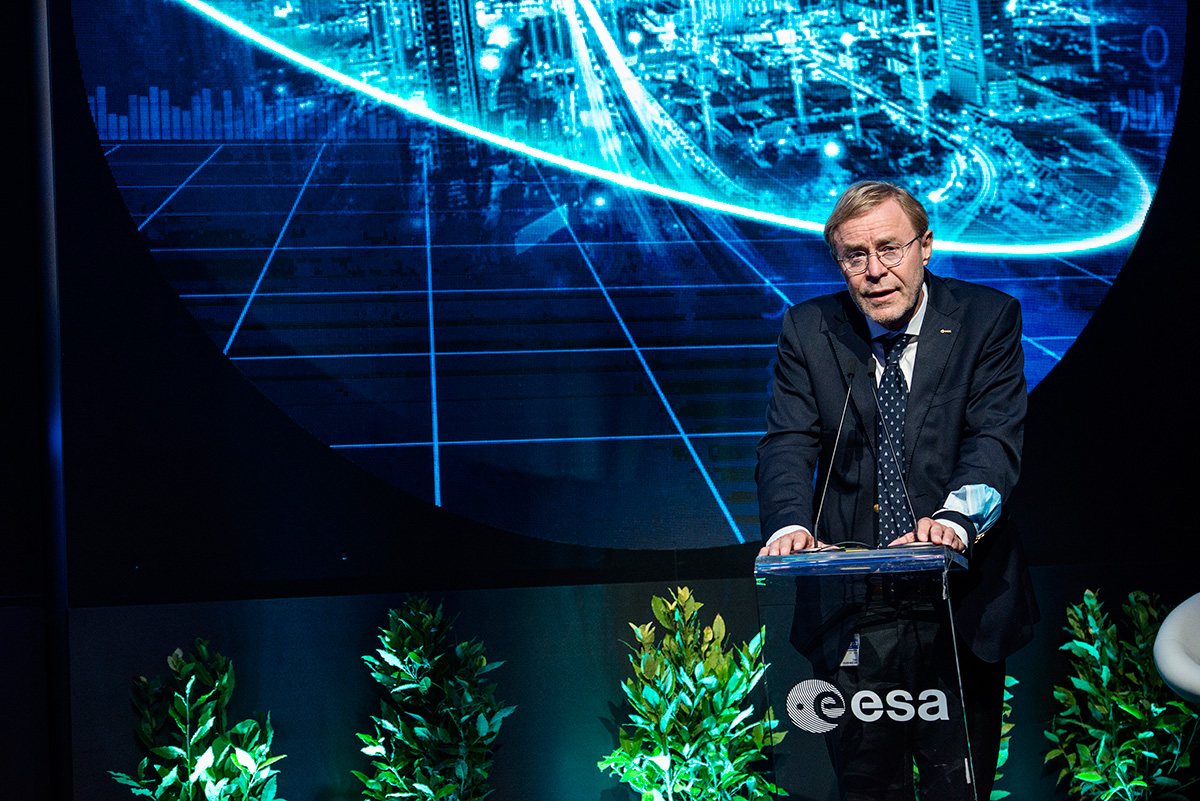
Toni Tolker-Nielsen, ESA’s acting director of space transportation, speaks at an event in 2021. Credit: ESA/V. Stefanelli

With the European Launcher Challenge, ESA will experiment with a new funding model for the first time. This new “fair contribution” approach will see ESA leadership put forward a plan to its member states at the next big ministerial conference in November. The space agency will ask the countries that benefit most from the winners of the launcher challenge to provide the bulk of the funding for the challengers’ contracts.

https://arstechnica.com/space/2025/03/esa-finally-has-a-commercial-launch-strategy-but-will-member-states-pay/


As preps continue, it’s looking more likely that NASA will fly the Artemis II mission

Late Saturday night, technicians at Kennedy Space Center in Florida moved the core stage for NASA’s second Space Launch System rocket into position between the vehicle’s two solid-fueled boosters.

Working inside the iconic 52-story-tall Vehicle Assembly Building, ground teams used heavy-duty cranes to first lift the butterscotch orange core stage from its cradle in the VAB’s cavernous transfer aisle, the central passageway between the building’s four rocket assembly bays. The cranes then rotated the structure vertically, allowing workers to disconnect one of the cranes from the bottom of the rocket.

That left the rocket hanging on a 325-ton overhead crane, which would lift it over the transom into the building’s northeast high bay. The Boeing-built core stage weighs about 94 tons (85 metric tons), measures about 212 feet (65 meters) tall, and will contain 730,000 gallons of cryogenic propellant at liftoff. It is the single largest element for NASA’s Artemis II mission, which is slated to ferry a crew of astronauts around the far side of the Moon as soon as next year.

Finally, ground crews lowered the rocket between the Space Launch System’s twin solid rocket boosters already stacked on a mobile launch platform inside High Bay 3, where NASA assembled Space Shuttles and Saturn V rockets for Apollo lunar missions.

On Sunday, teams inside the VAB connected the core stage to each booster at forward and aft load-bearing attach points. After completing electrical and data connections, engineers will stack a cone-shaped adapter on top of the core stage, followed by the rocket’s upper stage, another adapter ring, and finally the Orion spacecraft that will be home to the four-person Artemis II crew for their 10-day journey through deep space.

Four RS-25 engines left over from NASA’s Space Shuttle program will power the SLS core stage. Credit: NASA/Frank Michaux

Through the motions

This will be the first crewed flight of NASA’s Artemis program, which aims to land astronauts on the lunar south pole and eventually build a sustainable human presence on the Moon, with an eye toward future expeditions to Mars. The program’s first crewed lunar landing is penciled in for the Artemis III mission, again using SLS and Orion, but adding a new piece: SpaceX’s enormous Starship rocket will be used as a human-rated lunar lander. Artemis II won’t land, but it will carry people to the vicinity of the Moon for the first time since 1972.

https://arstechnica.com/space/2025/03/as-preps-continue-its-looking-more-likely-nasa-will-fly-the-artemis-ii-mission/


Should we be concerned about the loss of weather balloons?

Due to staff reductions, retirements, and a federal hiring freeze, the National Weather Service has announced a series of suspensions involving weather balloon launches in recent weeks. The question is, will this significantly degrade forecasts in the United States and around the world?

On February 27, it was announced that balloon launches would be suspended entirely at Kotzebue, Alaska, due to staffing shortages. In early March, Albany, N.Y., and Gray, Maine, announced periodic disruptions in launches. Since March 7, it appears that Gray has not missed any balloon launches through Saturday. Albany, however, has missed 14 of them, all during the morning launch cycle (12z).

The kicker came on Thursday afternoon when it was announced that all balloon launches would be suspended in Omaha, Neb., and Rapid City, S.D., due to staffing shortages. Additionally, the balloon launches in Aberdeen, S.D.; Grand Junction, Colo.; Green Bay, Wis.; Gaylord, Mich.; North Platte, Neb.; and Riverton, Wyo., would be reduced to once a day from twice a day.

What are weather balloons?

In a normal time, weather balloons would be launched across the country and world twice per day, right at about 8 am ET and 8 pm ET (one hour earlier in winter), or what we call 12z and 00z. That’s Zulu time, or noon and midnight in Greenwich, England. Rather than explain the whole reasoning behind why we use Zulu time in meteorology, here’s a primer on everything you need to know. Weather balloons are launched around the world at the same time. It’s a unique collaboration and example of global cooperation in the sciences, something that has endured for many years.

These weather balloons are loaded up with hydrogen or helium, soar into the sky, up to and beyond jet stream level, getting to a height of over 100,000 feet before they pop. Attached to the weather balloon is a tool known as a radiosonde, or “sonde” for short. This is basically a weather-sensing device that measures all sorts of weather variables like temperature, dewpoint, pressure, and more. Wind speed is usually derived from this based on GPS transmitting from the sonde.

https://arstechnica.com/science/2025/03/should-we-be-concerned-about-the-loss-of-weather-balloons/


A mathematician unpacks the science of “bracketology”

Obviously, each of those coin flips isn’t 50/50; they’re more like 1 out of 140 for the 16 versus 1s, for instance. If you’re looking at a 16 seed beating a 1 seed, I think that’s happened once out of 140 games. I’m more of a probabilist than anything else, a mathematician. But a statistician would say, “Oh, maximum likelihood, the parameter to fit for that coin flip would be P, the probability of a heads is 1 out of 140.”

A couple of things I’m interested in research-wise is looking at team formation. My background is in quantitative finance and mathematical finance specifically, so we’re interested in valuation. What’s this thing worth? What’s this call option worth? What’s this annuity worth? What are the risks underneath it? And so for valuation, it’s swapping random play for a fixed contract.

Ars Technica: So what should one look at in a basketball team?

Albert Cohen: I think it’s similar to soccer. In soccer, you see passing networks within, and you see that evolve over time. I think that you’re going to see that centrality in a basketball team. You’re going to see these leaders pop up, like Oakland last year, or St. Peter’s. These teams are the underdogs, but if you paid attention, you’d maybe see some of those seeds were already there. So those are the numbers I’m interested in. How many people have gotten a perfect first-round bracket? I think that folks focus on the extremes, but getting 32 coin flips right—it’s happened. I’m interested in these derivative events. I think sports is ripe for this kind of thinking.

If a team is undervalued, they might be more likely to take risks because they have nothing to lose in a one-and-done situation like the NCAA tournament. If you’ve got a team that’s bold, understands each other, is willing to take risks but also holds each other accountable, I think that’s a dangerous team.

https://arstechnica.com/science/2025/03/march-madness-a-few-statistical-tips-could-give-you-an-edge/


Hints grow stronger that dark energy changes over time

In its earliest days, the Universe was a hot, dense soup of subatomic particles, including hydrogen and helium nuclei, aka baryons. Tiny fluctuations created a rippling pattern through that early ionized plasma, which froze into a three-dimensional place as the Universe expanded and cooled. Those ripples, or bubbles, are known as baryon acoustic oscillations (BAO). It’s possible to use BAOs as a kind of cosmic ruler to investigate the effects of dark energy over the history of the Universe.

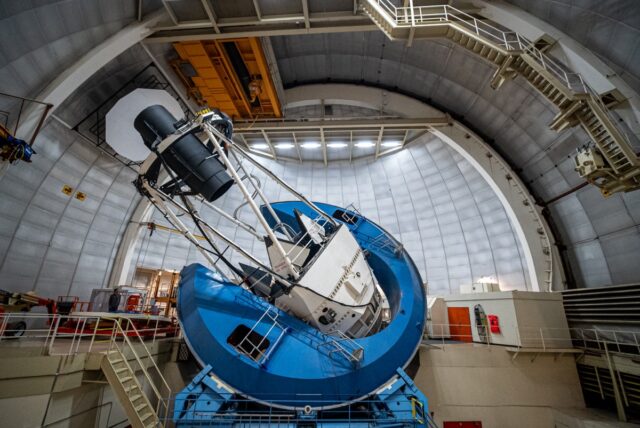
DESI is a state-of-the-art instrument and can capture light from up to 5,000 celestial objects simultaneously.

DESI is a state-of-the-art instrument that can capture light from up to 5,000 celestial objects simultaneously.

That’s what DESI was designed to do: take precise measurements of the apparent size of these bubbles (both near and far) by determining the distances to galaxies and quasars over 11 billion years. That data can then be sliced into chunks to determine how fast the Universe was expanding at each point of time in the past, the better to model how dark energy was affecting that expansion.

An upward trend

Last year’s results were based on analysis of a full year’s worth of data taken from seven different slices of cosmic time and include 450,000 quasars, the largest ever collected, with a record-setting precision of the most distant epoch (between 8 to 11 billion years back) of 0.82 percent. While there was basic agreement with the Lamba CDM model, when those first-year results were combined with data from other studies (involving the cosmic microwave background radiation and Type Ia supernovae), some subtle differences cropped up.

Essentially, those differences suggested that the dark energy might be getting weaker. In terms of confidence, the results amounted to a 2.6-sigma level for the DESI’s data combined with CMB datasets. When adding the supernovae data, those numbers grew to 2.5-sigma, 3.5-sigma, or 3.9-sigma levels, depending on which particular supernova dataset was used.

It’s important to combine the DESI data with other independent measurements because “we want consistency,” said DESI co-spokesperson Will Percival of the University of Waterloo. “All of the different experiments should give us the same answer to how much matter there is in the Universe at present day, how fast the Universe is expanding. It’s no good if all the experiments agree with the Lambda-CDM model, but then give you different parameters. That just doesn’t work. Just saying it’s consistent to the Lambda-CDM, that’s not enough in itself. It has to be consistent with Lambda-CDM and give you the same parameters for the basic properties of that model.”

https://arstechnica.com/science/2025/03/hints-grow-stronger-that-dark-energy-changes-over-time/


Brains of parrots, unlike songbirds, use human-like vocal control

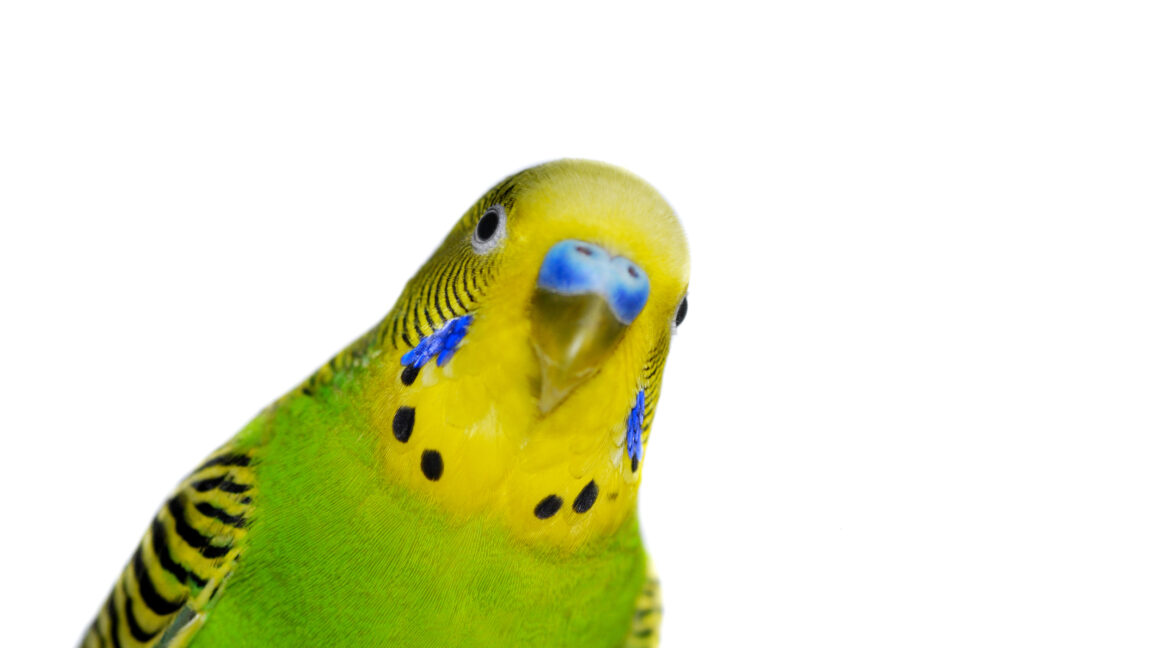
Due to past work, we’ve already identified the brain structure that controls the activity of the key vocal organ, the syrinx, located in the bird’s throat. The new study, done by Zetian Yang and Michael Long of New York University, managed to place fine electrodes into this area of the brain in both species and track the activity of neurons there while the birds were awake and going about normal activities. This allowed them to associate neural activity with any vocalizations made by the birds. For the budgerigars, they had an average of over 1,000 calls from each of the four birds carrying the implanted electrodes.

For the zebra finch, neural activity during song production showed a pattern that was based on timing; the same neurons tended to be most active at the same point in the song. You can think of this as a bit like a player piano central organizing principle, timing when different notes should be played. “Different configurations [of neurons] are active at different moments, representing an evolving population ‘barcode,’” as Yang and Long describe this pattern.

That is not at all what was seen with the budgerigars. Here, instead, they saw patterns where the same populations of neurons tended to be active when the bird was producing a similar sound. They broke the warbles down into parts that they characterized on a scale that ranged from harmonic to noisy. They found that the groups of neurons tended to be more active whenever the warble was harmonic, and different groups tended to spike when it got noisy. Those observations led them to identify a third population, which was active whenever the budgerigars produced a low-frequency sound.

In addition, Yang and Long analyzed the pitch of the vocalizations. Only about half of the neurons in the relevant region of the brain were linked to pitch. However, the half that was linked had small groups of neurons that fired during the production of a relatively narrow range of pitches. They could use the activity of as few as five individual neurons and accurately predict the pitch of the vocalizations at the time.

https://arstechnica.com/science/2025/03/brains-of-parrots-unlike-songbirds-use-human-like-vocal-control/


Even the worst mass extinction had its oases

Some earlier plants might not have made it through the extinction since rock layers from the onset of the End-Permian Mass Extinction showed a decrease in pollen and spores, as well as fewer plant species. Other species were scarce because they had not been as well-preserved as others; the team did not automatically assume the scarcity of a plant that did not fossilize meant it had gone extinct.

While there were plant species that ended up being victims of the Great Dying, analysis of species through spore and pollen told the team that only about 21 percent of them succumbed to extinction.

Life will not be contained

The fossils also revealed the presence of plant species known to grow near lakes, which meant an environment that most likely provided drinking water for land-dwelling animals. Fossilized spores farther from what were once the banks of an ancient lake or the edge of a lakeplain suggest it was surrounded by a forest of gymnospermous trees, such as conifers or ginkgo, and ferns.

Because the researchers found so many spores from plant species known to grow in humid climates, they think the regional climate before the extinction was either humid or sub-humid, with plenty of rain. It was a lush environment that would see dry periods during the mass extinction event, but not be completely devastated.

Despite some species of plants vanishing, those that were found to have survived during and after the extinction mostly belonged to conifers and pteridosperms (now-extinct plants similar to ferns), which showed “a remarkable ability to adapt to drought,” as Liu and his team said in the same study.

The drought turned out to be only temporary. Younger rock layers were found to contain a greater abundance of pollen and spores from species that grew during the extinction event. The types of plants represented suggest a climate that had returned to subhumid and was more habitable.

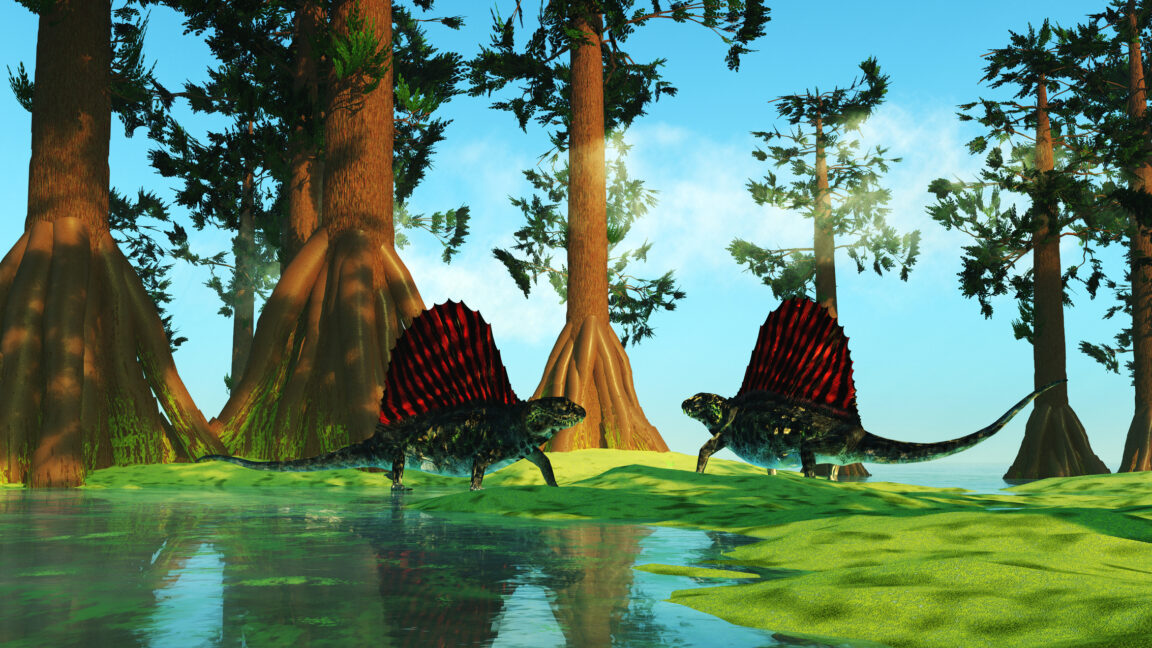
Fossils of animals found at the site support its role as a haven for life. From the herbivorous Lystrosaurus (not a dinosaur), which looked something like a walrus with legs and a shovel face, to the carnivorous chroniosuchians that resembled giant lizards and fed on insects and small amphibians, the refugium in what is now Xinjiang kept life going.

Both flora and fauna would soon spread across terrestrial environments once again. Life on land flourished only 75,000 years after the End-Permian Mass Extinction, so life really does find a way.

Science Advances, 2025. DOI: 10.1126/sciadv.ads5614

https://arstechnica.com/science/2025/03/even-the-worst-mass-extinction-had-its-oases/


A “biohybrid” robotic hand built using real human muscle cells

Biohybrid robots work by combining biological components like muscles, plant material, and even fungi with non-biological materials. While we are pretty good at making the non-biological parts work, we’ve always had a problem with keeping the organic components alive and well. This is why machines driven by biological muscles have always been rather small and simple—up to a couple centimeters long and typically with only a single actuating joint.

“Scaling up biohybrid robots has been difficult due to the weak contractile force of lab-grown muscles, the risk of necrosis in thick muscle tissues, and the challenge of integrating biological actuators with artificial structures,” says Shoji Takeuchi, a professor at the Tokyo University, Japan. Takeuchi led a research team that built a full-size, 18 centimeter-long biohybrid human-like hand with all five fingers driven by lab-grown human muscles.

Keeping the muscles alive

Out of all the roadblocks that keep us from building large-scale biohybrid robots, necrosis has probably been the most difficult to overcome. Growing muscles in a lab usually means a liquid medium to supply nutrients and oxygen to muscle cells seeded on petri dishes or applied to gel scaffoldings. Since these cultured muscles are small and ideally flat, nutrients and oxygen from the medium can easily reach every cell in the growing culture.

When we try to make the muscles thicker and therefore more powerful, cells buried deeper in those thicker structures are cut off from nutrients and oxygen, so they die, undergoing necrosis. In living organisms, this problem is solved by the vascular network. But building artificial vascular networks in lab-grown muscles is still something we can’t do very well. So, Takeuchi and his team had to find their way around the necrosis problem. Their solution was sushi rolling.

The team started by growing thin, flat muscle fibers arranged side by side on a petri dish. This gave all the cells access to nutrients and oxygen, so the muscles turned out robust and healthy. Once all the fibers were grown, Takeuchi and his colleagues rolled them into tubes called MuMuTAs (multiple muscle tissue actuators) like they were preparing sushi rolls. “MuMuTAs were created by culturing thin muscle sheets and rolling them into cylindrical bundles to optimize contractility while maintaining oxygen diffusion,” Takeuchi explains.

https://arstechnica.com/science/2025/03/a-biohybrid-robotic-hand-built-using-real-human-muscle-cells/