For climate and livelihoods, Africa bets big on solar mini-grids

At the same time, in many African countries, solar power now stands to offer much more than environmental benefits. About 600 million Africans lack reliable access to electricity; in Nigeria specifically, almost half of the 230 million people have no access to electricity grids. Today, solar has become cheap and versatile enough to help bring affordable, reliable power to millions—creating a win-win for lives and livelihoods as well as the climate.

That’s why Nigeria is placing its bets on solar mini-grids—small installations that produce up to 10 megawatts of electricity, enough to power over 1,700 American homes—that can be set up anywhere. Crucially, the country has pioneered mini-grid development through smart policies to attract investment, setting an example for other African nations.

Nearly 120 mini-grids are now installed, powering roughly 50,000 households and reaching about 250,000 people. “Nigeria is actually like a poster child for mini-grid development across Africa,” says energy expert Rolake Akinkugbe-Filani, managing director of EnergyInc Advisors, an energy infrastructure consulting firm.

Though it will take more work—and funding—to expand mini-grids across the continent, Nigeria’s experience demonstrates that they could play a key role in weaning African communities off fossil-fuel-based power. But the people who live there are more concerned with another, immediate benefit: improving livelihoods. Affordable, reliable power from Mbiabet’s mini-grid has already supercharged local businesses, as it has in many places where nonprofits like Clean Technology Hub have supported mini-grid development, says Ifeoma Malo, the organization’s founder. “We’ve seen how that has completely transformed those communities.”

The African energy transition takes shape

Together, Africa’s countries account for less than 5 percent of global carbon dioxide emissions, and many experts, like Malo, take issue with the idea that they need to rapidly phase out fossil fuels; that task should be more urgent for the United States, China, India, the European countries and Russia, which create the bulk of emissions. Nevertheless, many African countries have set ambitious phase-out goals. Some have already turned to locally abundant renewable energy sources, like geothermal power from the Earth’s crust, which supplies nearly half of the electricity produced in Kenya, and hydropower, which creates more than 80 percent of the electricity in the Democratic Republic of Congo, Ethiopia and Uganda.

https://arstechnica.com/science/2025/03/for-climate-and-livelihoods-africa-bets-big-on-solar-mini-grids/




Small charges in water spray can trigger the formation of key biochemicals

Once his team nailed how droplets become electrically charged and how the micro-lightning phenomenon works, they recreated the Miller-Urey experiment. Only without the spark plugs.

Ingredients of life

After micro-lightnings started jumping between droplets in a mixture of gases similar to that used by Miller and Urey, the team examined their chemical composition with a mass spectrometer. They confirmed glycine, uracil, urea, cyanoethylene, and lots of other chemical compounds were made. “Micro-lightnings made all organic molecules observed previously in the Miller-Urey experiment without any external voltage applied,” Zare claims.

But does it really bring us any closer to explaining the beginnings of life? After all, Miller and Urey already demonstrated those molecules could be produced by electrical discharges in a primordial Earth’s atmosphere—does it matter all that much where those discharges came from?  Zare argues that it does.

“Lightning is intermittent, so it would be hard for these molecules to concentrate. But if you look at waves crashing into rocks, you can think the spray would easily go into the crevices in these rocks,” Zare suggests. He suggests that the water in these crevices would evaporate, new spray would enter and evaporate again and again. The cyclic drying would allow the chemical precursors to build into more complex molecules. “When you go through such a dry cycle, it causes polymerization, which is how you make DNA,” Zare argues. Since sources of spray were likely common on the early Earth, Zare thinks this process could produce far more organic chemicals than potential alternatives like lightning strikes, hydrothermal vents, or impacting comets.

But even if micro-lightning really produced the basic building blocks of life on Earth, we’re still not sure how those combined into living organisms. “We did not make life. We just demonstrated a possible mechanism that gives us some chemical compounds you find in life,” Zare says. “It’s very important to have a lot of humility with this stuff.”

Science Advances, 2025.  DOI: 10.1126/sciadv.adt8979

https://arstechnica.com/science/2025/03/who-needs-lightning-key-biochemicals-form-from-static-sparks/


NCI employees can’t publish information on these topics without special approval

The list is “an unusual mix of words that are tied to activities that this administration has been at war with—like equity, but also words that they purport to be in favor of doing something about, like ultraprocessed food,” Tracey Woodruff, director of the Program on Reproductive Health and the Environment at the University of California, San Francisco, said in an email.

The guidance states that staffers “do not need to share content describing the routine conduct of science if it will not get major media attention, is not controversial or sensitive, and does not touch on an administration priority.”

A longtime senior employee at the institute said that the directive was circulated by the institute’s communications team, and the content was not discussed at the leadership level. It is not clear in which exact office the directive originated. The NCI, NIH and HHS did not respond to ProPublica’s emailed questions. (The existence of the list was first revealed in social media posts on Friday.)

Health and research experts told ProPublica they feared the chilling effect of the new guidance. Not only might it lead to a lengthier and more complex clearance process, it may also cause researchers to censor their work out of fear or deference to the administration’s priorities.

“This is real interference in the scientific process,” said Linda Birnbaum, a former director of the National Institute of Environmental Health Sciences who served as a federal scientist for four decades. The list, she said, “just seems like Big Brother intimidation.”

During the first two months of Donald Trump’s second presidency, his administration has slashed funding for research institutions and stalled the NIH’s grant application process.

Kennedy has suggested that hundreds of NIH staffers should be fired and said that the institute should deprioritize infectious diseases like COVID-19 and shift its focus to chronic diseases, such as diabetes and obesity.

Obesity is on the NCI’s new list, as are infectious diseases including COVID-19, bird flu and measles.

The “focus on bird flu and covid is concerning,” Woodruff wrote, because “not being transparent with the public about infectious diseases will not stop them or make them go away and could make them worse.”

ProPublica is a Pulitzer Prize-winning investigative newsroom. Sign up for The Big Story newsletter to receive stories like this one in your inbox.

https://arstechnica.com/science/2025/03/nci-employees-cant-publish-information-on-these-topics-without-special-approval/


What the EPA’s “endangerment finding” is and why it’s being challenged

There were a couple of notable aspects to that last case, West Virginia v. EPA, which hinged on the fact that Congress had never explicitly indicated that it wanted to see greenhouse gases regulated. Congress responded by ensuring that the Inflation Reduction Act’s energy-focused components specifically mentioned that these were intended to limit carbon emissions, eliminating one potential roadblock. The other thing is that, in this and other court cases, the Supreme Court could have simply overturned Massachusetts v. EPA, the case that put greenhouse gases within the regulatory framework of the Clean Air Act. Yet a court that has shown a great enthusiasm for overturning precedent didn’t do so.

Nothing dangerous?

So, in the 15 years since the EPA initially released its endangerment findings, they’ve resulted in no regulations whatsoever. But, as long as they existed, the EPA is required to at least attempt to regulate them. So, getting rid of the endangerment findings would seem like the obvious thing for an administration led by a president who repeatedly calls climate change a hoax. And there were figures within the first Trump administration who argued in favor of that.

So why didn’t it happen?

That was never clear, but I’d suggest at least some members of the first Trump administration were realistic about the likely results. The effort to contest the endangerment finding was pushed by people who largely reject the vast body of scientific evidence that indicates that greenhouse gases are warming the climate. And, if anything, the evidence had gotten more decisive in the years between the initial endangerment finding and Trump’s inauguration. I expect that their effort was blocked by people who knew that it would fail in the courts and likely leave behind precedents that made future regulatory efforts easier.

This interpretation is supported by the fact that the Trump-era EPA received a number of formal petitions to revisit the endangerment finding. Having read a few (something you should not do), they are uniformly awful. References to supposed peer-reviewed “papers” turn out to be little more than PDFs hosted on a WordPress site. Other arguments are based on information contained in the proceedings of a conference organized by an anti-science think tank. The Trump administration rejected them all with minimal comment the day before Biden’s inauguration.

https://arstechnica.com/science/2025/03/how-trumps-epa-hopes-to-avoid-greenhouse-gas-regulations/


Study: Megalodon’s body shape was closer to a lemon shark

The giant extinct shark species known as the megalodon has captured the interest of scientists and the general public alike, even inspiring the 2018 blockbuster film The Meg. The species lived some 3.6 million years ago, and no complete skeleton has yet been found. So there has been considerable debate among paleobiologists about megalodon’s size, body shape, and swimming speed, among other characteristics.

While some researchers have compared megalodon to a gigantic version of the stocky great white shark, others believe the species had a more slender body shape. A new paper published in the journal Palaeontologia Electronica bolsters the latter viewpoint, also drawing conclusions about the megalodon’s body mass, swimming speed (based on hydrodynamic principles), and growth patterns.

As previously reported, the largest shark alive today, reaching up to 20 meters long, is the whale shark, a sedate filter feeder. As recently as 4 million years ago, however, sharks of that scale likely included the fast-moving predator megalodon (formally Otodus megalodon). Due to incomplete fossil data, we’re not entirely sure how large megalodon were and can only make inferences based on some of their living relatives.

Thanks to research published in 2023 on its fossilized teeth, we’re now fairly confident that megalodon shared something else with these relatives: it wasn’t entirely cold-blooded and kept its body temperature above that of the surrounding ocean. Most sharks, like most fish, are ectothermic, meaning that their body temperatures match those of the surrounding water. But a handful of species, part of a group termed mackerel sharks, are endothermic: They have a specialized pattern of blood circulation that helps retain some of the heat their muscles produce. This enables them to keep some body parts at a higher temperature than their surroundings.

Of particular relevance to this latest paper is a 2022 study by Jack Cooper of Swansea University in the UK and his co-authors. In 2020, the team reconstructed a 2D model of the megalodon, basing the dimensions on similar existing shark species. The researchers followed up in 2022 with a reconstructed 3D model, extrapolating the dimensions from a megalodon specimen (a vertebral column) in Belgium. Cooper concluded that a megalodon would have been a stocky, powerful shark—measuring some 52 feet (16 meters) in length with a body mass of 67.86 tons—able to execute bursts of high speed to attack prey, much like the significantly smaller great white shark.

https://arstechnica.com/science/2025/03/study-megalodons-body-shape-was-closer-to-a-lemon-shark/


Huh? The valuable role of interjections

Wiltschko and her students have now examined more than 20 languages, and every one of them uses little words for negotiations like these. “I haven’t found a language that doesn’t do these three general things: what I know, what I think you know and turn-taking,” she says. They are key to regulating conversations, she adds: “We are building common ground, and we are taking turns.”

Details like these aren’t just arcana for linguists to obsess over. Using interjections properly is a key part of sounding fluent in speaking a second language, notes Wiltschko, but language teachers often ignore them. “When it comes to language teaching, you get points deducted for using ums and uhs, because you’re ‘not fluent,’” she says. “But native speakers use them, because it helps! They should be taught.” Artificial intelligence, too, can struggle to use interjections well, she notes, making them the best way to distinguish between a computer and a real human.

And interjections also provide a window into interpersonal relationships. “These little markers say so much about what you think,” she says—and they’re harder to control than the actual content. Maybe couples therapists, for example, would find that interjections afford useful insights into how their clients regard one another and how they negotiate power in a conversation. The interjection oh often signals confrontation, she says, as in the difference between “Do you want to go out for dinner?” and “Oh, so now you want to go out for dinner?”

Indeed, these little words go right to the heart of language and what it is for. “Language exists because we need to interact with one another,” says Börstell. “For me, that’s the main reason for language being so successful.”

Dingemanse goes one step further. Interjections, he says, don’t just facilitate our conversations. In negotiating points of view and grounding, they’re also how language talks about talking.

“With huh?  you say not just ‘I didn’t understand,’” says Dingemanse. “It’s ‘I understand you’re trying to tell me something, but I didn’t get it.’” That reflexivity enables more sophisticated speech and thought. Indeed, he says, “I don’t think we would have complex language if it were not for these simple words.”

https://arstechnica.com/science/2025/03/huh-the-valuable-role-of-interjections/


New research shows bigger animals get more cancer, defying decades-old belief

The answer lies in how quickly body size evolves. We found that birds and mammals that reached large sizes more rapidly have reduced cancer prevalence. For example, the common dolphin, Delphinus delphis evolved to reach its large body size—along with most other whales and dolphins (referred to as cetaceans) about three times faster than other mammals. However, cetaceans tend to have less cancer than expected.

Larger species face higher cancer risks but those that reached that size rapidly evolved mechanisms for mitigating it, such as lower mutation rates or enhanced DNA repair mechanisms. So rather than contradicting Cope’s rule, our findings refine it.

Larger bodies often evolve, but not as quickly in groups where the burden of cancer is higher. This means that the threat of cancer may have shaped the pace of evolution.

Humans evolved to our current body size relatively rapidly. Based on this, we would expect humans and bats to have similar cancer prevalence, because we evolved at a much, much faster rate. However, it is important to note that our results can’t explain the actual prevalence of cancer in humans. Nor is that an easy statistic to estimate.

Human cancer is a complicated story to unravel, with a plethora of types and many factors affecting its prevalence. For example, many humans not only have access to modern medicine but also varied lifestyles that affect cancer risk. For this reason, we did not include humans in our analysis.

Fighting cancer

Understanding how species naturally evolve cancer defences has important implications for human medicine. The naked mole rat, for example, is studied for its exceptionally low cancer prevalence in the hopes of uncovering new ways to prevent or treat cancer in humans. Only a few cancer cases have ever been observed in captive mole rats, so the exact mechanisms of their cancer resistance remain mostly a mystery.

At the same time, our findings raise new questions. Although birds and mammals that evolved quickly seem to have stronger anti-cancer mechanisms, amphibians and reptiles didn’t show the same pattern. Larger species had higher cancer prevalence regardless of how quickly they evolved. This could be due to differences in their regenerative abilities. Some amphibians, like salamanders, can regenerate entire limbs—a process that involves lots of cell division, which cancer could exploit.

Putting cancer into an evolutionary context allowed us to reveal that its prevalence does increase with body size. Studying this evolutionary arms race may unlock new insights into how nature fights cancer—and how we might do the same.The Conversation

Joanna Baker, Postdoctoral Researcher in Evolutionary Biology, University of Reading and George Butler, Career Development Fellow in Cancer Evolution, UCL. This article is republished from The Conversation under a Creative Commons license. Read the original article.

https://arstechnica.com/science/2025/03/new-research-shows-bigger-animals-get-more-cancer-defying-decades-old-belief/


“Wooly mice” a test run for mammoth gene editing

On Tuesday, the team behind the plan to bring mammoth-like animals back to the tundra announced the creation of what it is calling wooly mice, which have long fur reminiscent of the woolly mammoth. The long fur was created through the simultaneous editing of as many as seven genes, all with a known connection to hair growth, color, and/or texture.

But don’t think that this is a sort of mouse-mammoth hybrid. Most of the genetic changes were first identified in mice, not mammoths. So, the focus is on the fact that the team could do simultaneous editing of multiple genes—something that they’ll need to be able to do to get a considerable number of mammoth-like changes into the elephant genome.

Of mice and mammoths

The team at Colossal Biosciences has started a number of de-extinction projects, including the dodo and thylacine, but its flagship project is the mammoth. In all of these cases, the plan is to take stem cells from a closely related species that has not gone extinct, and edit a series of changes based on the corresponding genomes of the deceased species. In the case of the mammoth, that means the elephant.

But the elephant poses a large number of challenges, as the draft paper that describes the new mice acknowledges. “The 22-month gestation period of elephants and their extended reproductive timeline make rapid experimental assessment impractical,” the researchers acknowledge. “Further, ethical considerations regarding the experimental manipulation of elephants, an endangered species with complex social structures and high cognitive capabilities, necessitate alternative approaches for functional testing.”

So, they turned to a species that has been used for genetic experiments for over a century: the mouse. We can do all sorts of genetic manipulations in mice, and have ways of using embryonic stem cells to get those manipulations passed on to a new generation of mice.

For testing purposes, the mouse also has a very significant advantage: mutations that change its fur are easy to spot. Over the century-plus that we’ve been using mice for research, people have noticed and observed a huge variety of mutations that affect their fur, altering color, texture, and length. In many of these cases, the changes in the DNA that cause these changes have been identified.

https://arstechnica.com/science/2025/03/wooly-mice-a-test-run-for-mammoth-gene-editing/


Do these dual images say anything about your personality?

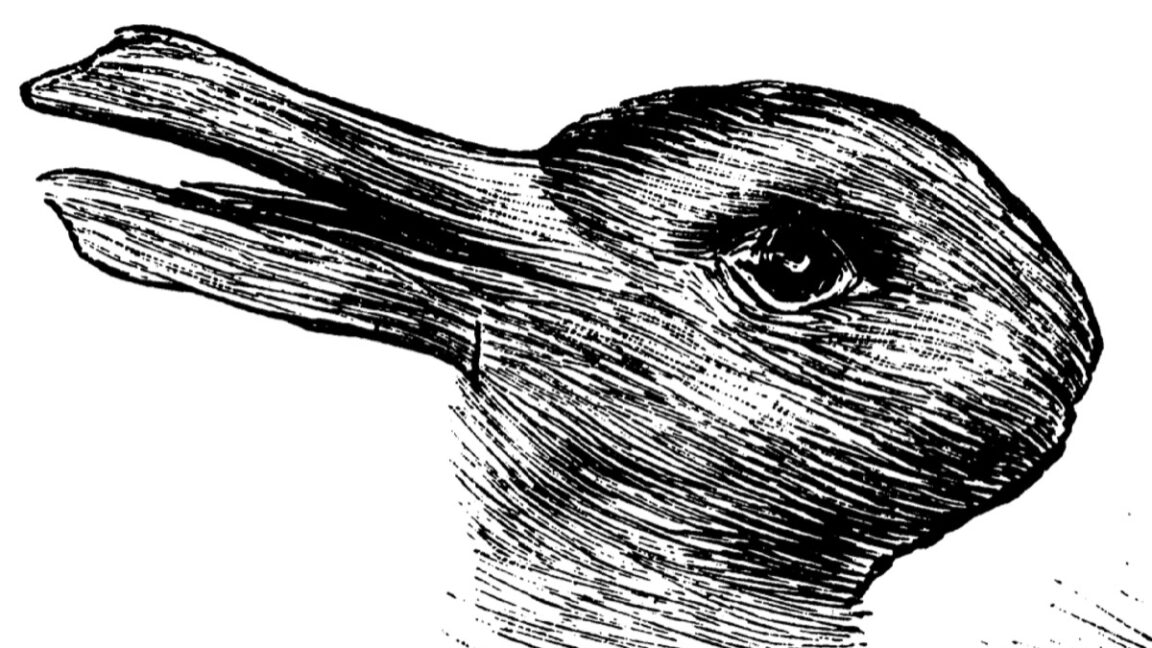
There’s little that Internet denizens love more than a snazzy personality test—cat videos, maybe, or perpetual outrage. One trend that has gained popularity over the last several years is personality quizzes based on so-called ambiguous images—in which one sees either a young girl or an old man, for instance, or a skull or a little girl. It’s possible to perceive both images by shifting one’s perspective, but it’s the image one sees first that is said to indicate specific personality traits. According to one such quiz, seeing the young girl first means you are optimistic and a bit impulsive, while seeing the old man first would mean one is honest, faithful, and goal-oriented.

But is there any actual science to back up the current fad? There is not, according to a paper published in the journal PeerJ, whose authors declare these kinds of personality quizzes to be a new kind of psychological myth. That said, they did find a couple of intriguing, statistically significant correlations they believe warrant further research.

In 1892, a German humor magazine published the earliest known version of the “rabbit-duck illusion,” in which one can see either a rabbit or a duck, depending on one’s perspective—i.e., multistable perception. There have been many more such images produced since then, all of which create ambiguity by exploiting certain peculiarities of the human visual system, such as playing with illusory contours and how we perceive edges.

Such images have long fascinated scientists and philosophers because they seem to represent different ways of seeing. So naturally there is a substantial body of research drawing parallels between such images and various sociological, biological, or psychological characteristics.

For instance, a 2010 study examined BBC archival data on the duck-rabbit illusion from the 1950s and found that men see the duck more often than women, while older people were more likely to see the rabbit. A 2018 study of the “younger-older woman” ambiguous image asked participants to estimate the age of the woman they saw in the image. Older participants over 30 gave higher estimates than younger ones. This was confirmed by a 2021 study, although that study also found no correlation between participants’ age and whether they were more likely to see the older or younger woman in the image.

https://arstechnica.com/science/2025/03/do-these-dual-images-say-anything-about-your-personality/


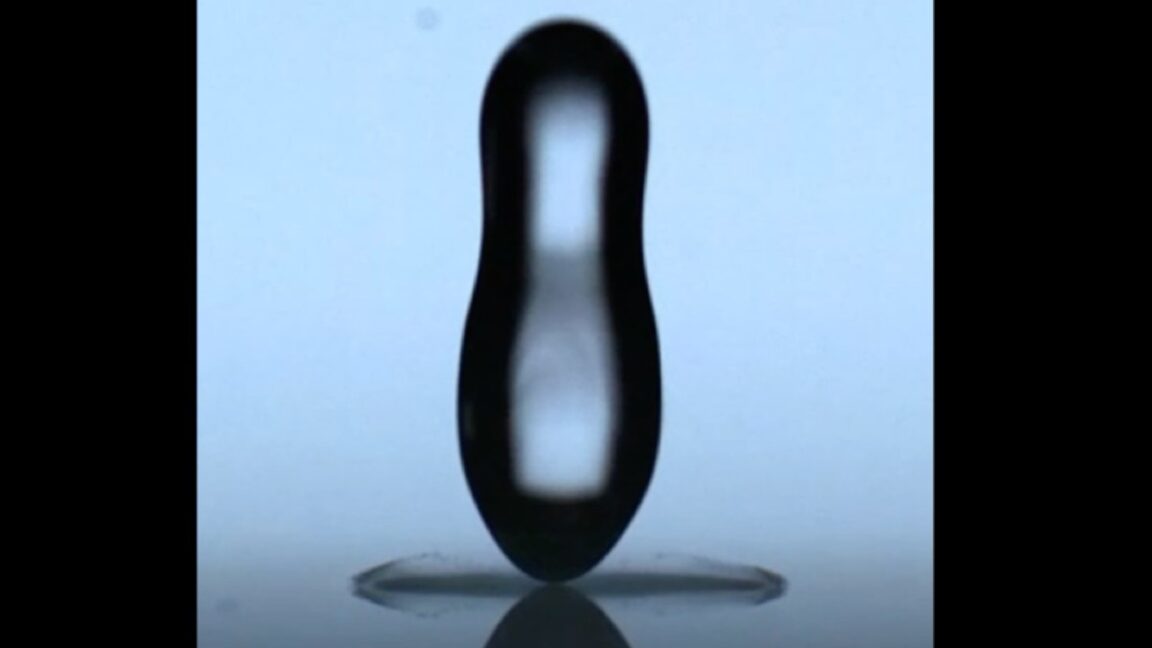
These hot oil droplets can bounce off any surface

Burning droplets bounce back. Credit: Zulu et al., 2025

Droplets bouncing off surfaces are an everyday phenomenon, like raindrops bouncing off lotus leaves or water drops sizzling in a hot pan, levitating and sliding around—aka the Leidenfrost effect. There is also an inverse Leidenfrost effect, first described in 1969, that involves a hot object such as a droplet levitating above a cold surface. Understanding the mechanisms behind these phenomena is crucial to a broad range of practical applications, such as self-cleaning, anti-icing, anti-fogging, surface charge printing, or droplet-based logic systems.

Droplets usually only bounce if the surface is superheated or engineered in some way to reduce stickiness. Physicists from the City University of Hong Kong have figured out how to achieve this bouncing behavior of hot oil droplets off almost any surface, according to a new paper published in the journal Newton.

As we’ve reported previously, in 1756, a German scientist named Johann Gottlob Leidenfrost reported his observation of the unusual phenomenon. Normally, he noted, water splashed onto a very hot pan sizzles and evaporates very quickly. But if the pan’s temperature is well above water’s boiling point, “gleaming drops resembling quicksilver” will form and skitter across the surface. It’s called the “Leidenfrost effect” in his honor.

In the ensuing 250 years, physicists came up with a viable explanation for why this occurs. If the surface is at least 400° Fahrenheit (well above the boiling point of water), cushions of water vapor, or steam, form underneath them, keeping them levitated. The Leidenfrost effect also works with other liquids, including oils and alcohol, but the temperature at which it manifests will be different.

The phenomenon continues to fascinate physicists. For instance, in 2018, French physicists discovered that the drops aren’t just riding along on a cushion of steam; as long as they are not too big, they also propel themselves. In 2019, an international team of scientists finally identified the source of the accompanying cracking sound Leidenfrost reported. The scientists found that it depends on the size of the droplet; it’s the larger drops that explode with that telltale crack. You can even achieve the Leidenfrost effect with ice, as physicists at Virginia Tech demonstrated in 2022.

https://arstechnica.com/science/2025/03/these-hot-oil-droplets-can-bounce-off-any-surface/