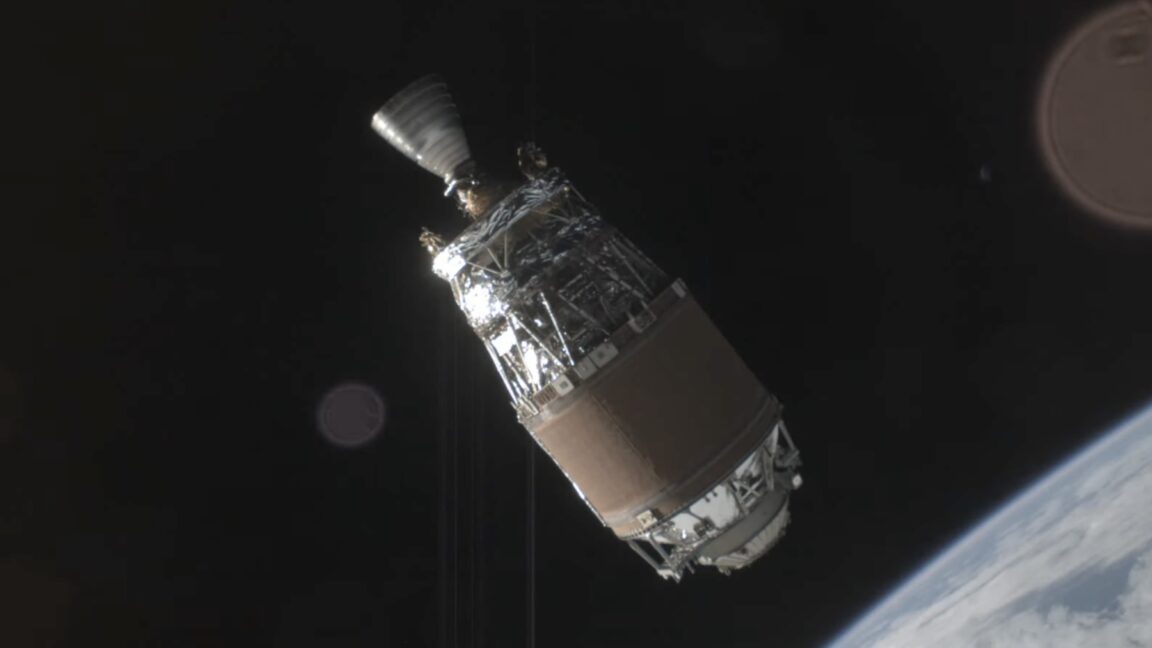
An small microbial ecosystem has formed on the International Space Station

“One of the more similar environments to the ISS was in the isolation dorms on the UCSD campus during the COVID-19 pandemic. All surfaces were continuously sterilized, so that microbial signatures would be erased by the time another person would show up,” Benitez said. So, one of the first solutions to the ISS microbial diversity problem he and his colleagues suggested was that they perhaps should ease up on sterilizing the station so much.

“The extensive use of disinfection chemicals might not be the best approach to maintaining a healthy microbial environment, although there is certainly plenty of research to be conducted,” Benitez said.

Space-faring gardens

He suggested that introducing microbes that are beneficial to human health might be better than constantly struggling to wipe out all microbial life on the station. And while some modules up there do need to be sterilized, keeping some beneficial microbes alive could be achieved by designing future spacecraft in a way that accounts for how the microbes spread.

“We found that microbes in modules with little human activity tend to stay in those modules without spreading. When human activity is high in a module, then the microbes spread to adjacent modules,”  Zhao said. She said spacecraft could be designed to put modules with high human activity at one end and the modules with little to no human activity at the opposite end, so the busy modules don’t contaminate the ones that need to remain sterile. “We are of course talking as microbiologists and chemists—perhaps spacecraft engineers have more pressing reasons to put certain modules at certain spots,” Zhao said. “These are just preliminary ideas.”

But what about crewed deep space missions to Mars and other destinations in the Solar System? Should we carefully design the microbial composition beforehand, plant the microbes on the spacecraft and hope this artificial, closed ecosystem will work for years without any interventions from Earth?

“I’d take a more holistic ecosystem approach,” Benitez said. He imagines in the future we could build spacecraft and space stations hosting entire gardens with microbes that would interact with plants, pollinators, and animals to create balanced, self-sustaining ecosystems. “We’d not only need to think about sending the astronauts and the machines they need to function, but also about all other lifeforms we will need to send along with them,” Benitez said

Cell, 2025. DOI: 10.1016/j.cell.2025.01.039

https://arstechnica.com/science/2025/03/the-space-station-is-nearly-as-microbe-free-as-an-isolation-ward/



We’ve figured out the basics of a shape-shifting, T-1000-style material

Campàs and his colleagues decided to design cell-like robots that could do all those things.

T-1000 building blocks

Each robot had motorized gears around its perimeter that could interlock with gears on other robots. The gears allowed the robots to move within the collective without breaking their bonds with each other, just like cells do in a living organism.

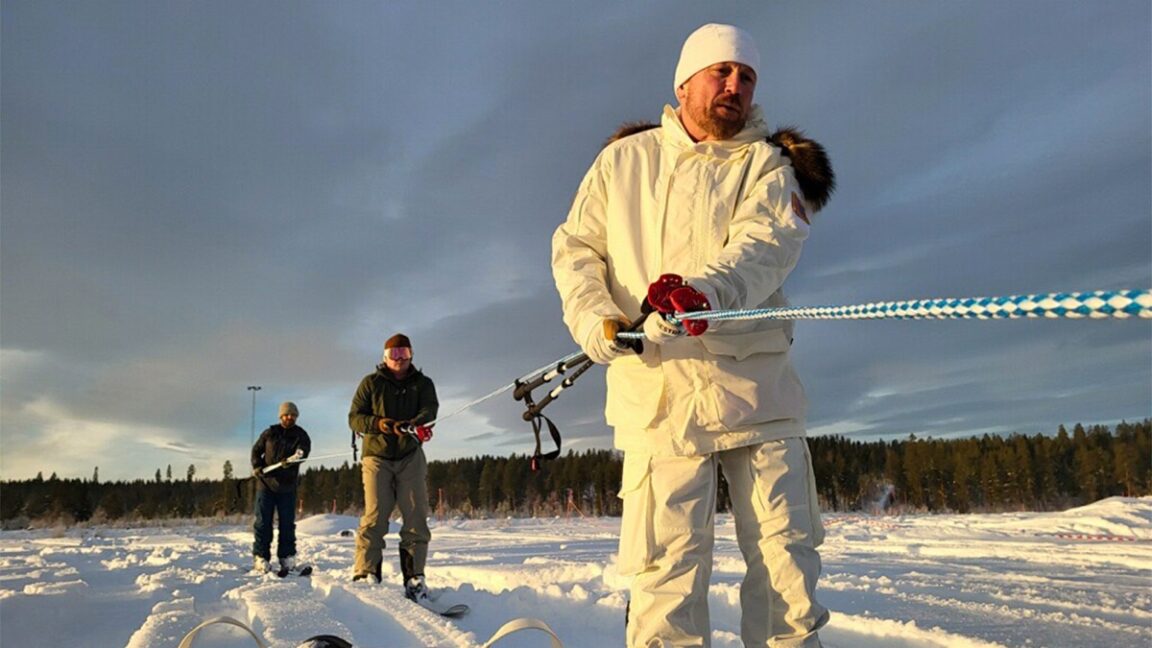
Linking the robots was a job of magnets that could rotate to maintain adhesion regardless of their orientation. Each robot also had a photodetector that could sense the polarity of light, allowing basic commands to be sent using a simple flashlight with a polarization filter. “The switch between solid and liquid states was driven by fluctuations of the force the motors applied, and we encoded the intensity of those fluctuations in the intensity of light,” says Matthew Devlin, a researcher at the Department of Mechanical Engineering at the University of California Santa Barbara and lead author of the study.

In response to light signals, two robotic collectives, 20 robots total, could elongate toward each other, touch in the middle, and form a bridge that could hold a load of just under 5 kilograms. After forming a cube, they could support an adult human weighing around 70 kilograms. They could also flow around an object, assume a complementary shape, and stiffen up to act as a wrench. “This was the Terminator idea of shapeshifting. This was exactly what we had in mind,” Campàs claims.

The only problem was, the robots were a bit above 5 centimeters in diameter. To get robotic collectives closer to Terminator’s mimetic polyalloy, the team wants to make the robots smaller. Much smaller.

Terminator nanobots?

“The good news is, you don’t have to go down with scale to what you see in living systems,” Campàs says. “Cells are roughly 10 microns. But anything around 100 microns—even up to 1 millimeter—robots would already be really impressive.” Unfortunately, we are rather far from making machines that small.

https://arstechnica.com/science/2025/03/weve-figured-out-the-basics-of-a-shape-shifting-t-1000-style-material/


Federal firings could wreak havoc on Great Lakes fishery

Her performance reviews for the last year had been glowing, so the letter made no sense. “It’s not a real explanation,” she said.

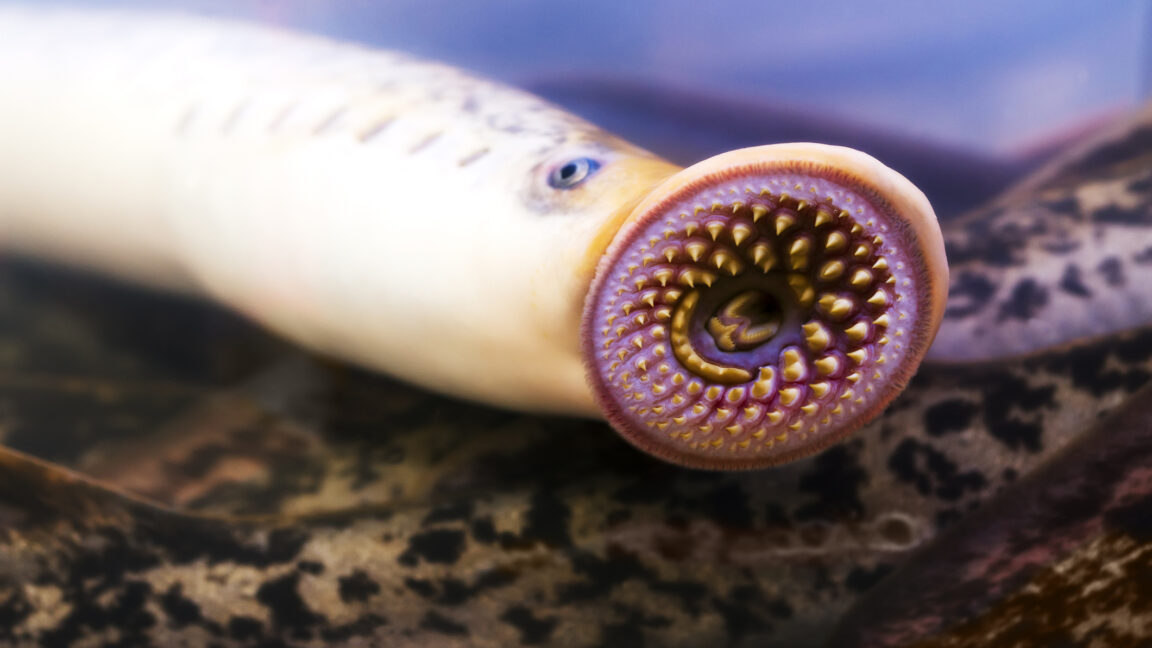
The USFWS layoffs will not affect the sea lamprey control program in Canada, McClinchey said. “The Canadian government has assured us that the money from Canada will continue to be there and we’re on track to deliver a full program in Canadian waters,” he said. “That’s great, but this program works because it’s border blind.”

In other words: Cuts to lamprey control in US waters are a threat to fish and fishermen everywhere on the Great Lakes.

Just a week ago, the Great Lakes Fishery Commission faced a more dire staffing situation, as the USFWS informed directors they’d also be unable to hire seasonal workers to spread lampricide come April. Within a few days, that hiring freeze was reversed, said McClinchey.

This reversal gives him a bit of hope. “That at least tells us no one is rooting for the lamprey,” he said.

McClinchey is currently in DC for appropriation season, presenting the commission’s work to members of Congress and defending the agency’s budget. It’s an annual trip, but this year he’s also advocating for the reinstatement of laid-off lamprey control employees.

He is optimistic. “It seems clear to me that it’s important we preserve this program, and so far everyone we’ve encountered thinks that way and are working to that end,” he said.

Cutting back the program isn’t really on the table for the commission. Even minor cuts to scope would be devastating for the fishery, he said.

Even the former USFWS employee from Marquette is remaining hopeful. “I still think that they’re going to scramble to make it happen,” she said. “Because it’s not really an option to just stop treating for a whole season.”

This story originally appeared on Inside Climate News.

https://arstechnica.com/science/2025/03/federal-firings-could-wreak-havoc-on-great-lakes-fishery/


SpaceX readies a redo of last month’s ill-fated Starship test flight

FAA’s green light

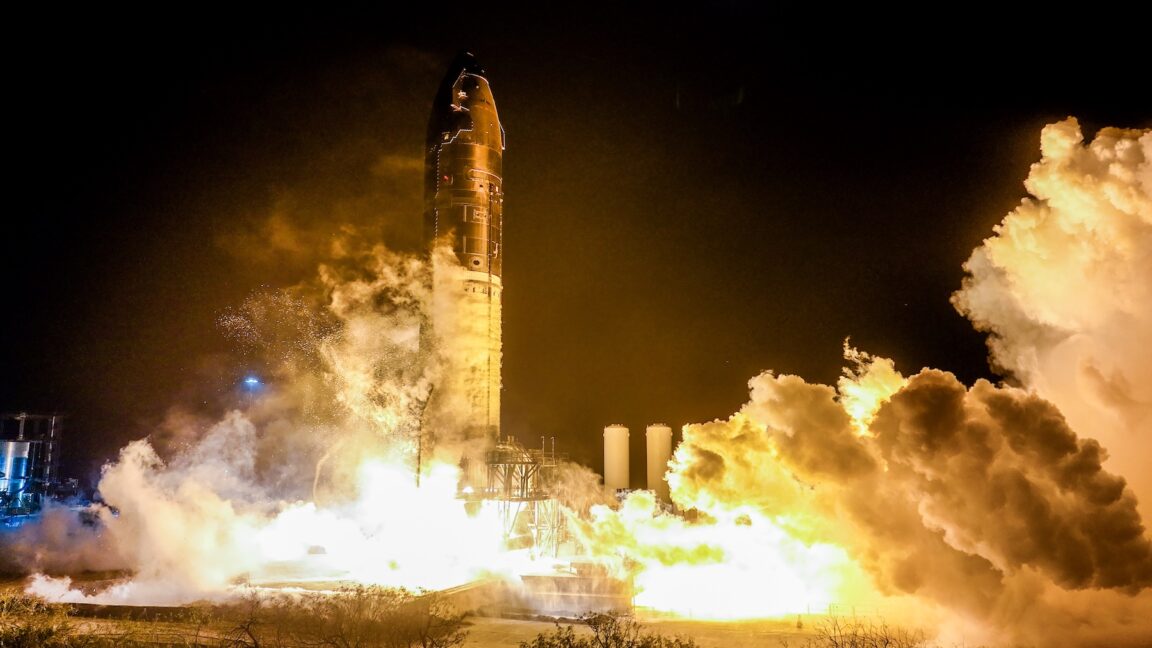
The FAA confirmed Friday it issued a launch license earlier this week for Starship Flight 8.

“The FAA determined SpaceX met all safety, environmental and other licensing requirements for the suborbital test flight,” an FAA spokesperson said in a statement.

The federal regulator oversaw a SpaceX-led investigation into the failure of Flight 7. SpaceX said NASA, the National Transportation Safety Board, and the US Space Force also participated in the investigation, which determined that propellant leaks and fires in an aft compartment, or attic, of Starship led to the shutdown of its engines and eventual breakup.

Engineers concluded the leaks were most likely caused by a harmonic response several times stronger than predicted, suggesting the vibrations during the ship’s climb into space were in resonance with the vehicle’s natural frequency. This would have intensified the vibrations beyond the levels engineers expected from ground testing.

Earlier this month, SpaceX completed an extended-duration static fire of the next Starship upper stage to test hardware modifications at multiple engine thrust levels. According to SpaceX, findings from the static fire informed changes to the fuel feed lines to Starship’s Raptor engines, adjustments to propellant temperatures, and a new operating thrust for the next test flight.

“To address flammability potential in the attic section on Starship, additional vents and a new purge system utilizing gaseous nitrogen are being added to the current generation of ships to make the area more robust to propellant leakage,” SpaceX said. “Future upgrades to Starship will introduce the Raptor 3 engine, reducing the attic volume and eliminating the majority of joints that can leak into this volume.”

FAA officials were apparently satisfied with all of this. The agency’s commercial spaceflight division completed a “comprehensive safety review” and determined Starship can return to flight operations while the investigation into the Flight 7 failure remains open. This isn’t new. The FAA also used this safety determination to expedite SpaceX launch license approvals last year as officials investigated mishaps on Starship and Falcon 9 rocket flights.

https://arstechnica.com/space/2025/02/spacex-readies-a-redo-of-last-months-ill-fated-starship-test-flight/


Mars’ polar ice cap is slowly pushing its north pole inward

The orbiters that carried the radar hardware, along with one or two others, have been orbiting long enough that any major changes in Mars’ gravity caused by ice accumulation or crustal displacement would have shown up in their orbital behavior. The orbital changes they do see, “indicates that the increase in the gravitational potential associated with long-term ice accumulation is higher than the decrease in gravitational potential from downward deflection.” They calculate that the deformation has to be less than 0.13 millimeters per year to be consistent with the gravitational signal.

Finally, the model had to have realistic conditions at the polar ice cap, with a density consistent with a mixture of ice and dust.

Out of those 84 models, only three were consistent with all of these constraints. All three had a very viscous Martian interior, consistent with a relatively cold interior. That’s not a surprise, given what we’ve already inferred about Mars’ history. But it also suggests that most of the radioactive elements that provide heat to the red planet are in the crust, rather than deeper in the interior. That’s something we might have been able to check, had InSight’s temperature measurement experiment deployed correctly. But as it is, we’ll have to wait until some unidentified future mission to get a picture of Mars’ heat dynamics.

In any case, the models also suggest that Mars’ polar ice cap is less than 10 million years old, consistent with the orbitally driven climate models.

In a lot of ways, the new information is an update of earlier attempts to model the Martian interior, given a few more years of orbital data and the information gained from the InSight lander, which also determined the thickness of Mars’ crust and size of its core. But it’s also a good way of understanding how scientists can take bits and pieces of information from seemingly unrelated sources and build them into a coherent picture.

Nature, 2025. DOI: 10.1038/s41586-024-08565-9  (About DOIs).

https://arstechnica.com/science/2025/02/mars-polar-ice-cap-is-slowly-pushing-its-north-pole-inward/


Research roundup: 7 cool science stories from February

It’s a regrettable reality that there is never time to cover all the interesting scientific stories we come across each month. In the past, we’ve featured year-end roundups of cool science stories we (almost) missed. This year, we’re experimenting with a monthly collection. February’s list includes dancing sea turtles, the secret to a perfectly boiled egg, the latest breakthrough in deciphering the Herculaneum scrolls, the discovery of an Egyptian pharaoh’s tomb, and more.

Dancing sea turtles

[embedded content]

There is growing evidence that certain migratory animal species (turtles, birds, some species of fish) are able to exploit the Earth’s magnetic field for navigation, using it both as a compass to determine direction and as a kind of “map” to track their geographical position while migrating. A paper published in the journal Nature offers evidence of a possible mechanism for this unusual ability, at least in loggerhead sea turtles, who perform an energetic “dance” when they follow magnetic fields to a tasty snack.

Sea turtles make impressive 8,000-mile migrations across oceans and tend to return to the same feeding and nesting sites. The authors believe they achieve this through their ability to remember the magnetic signature of those areas and store them in a mental map. To test that hypothesis, the scientists placed juvenile sea turtles into two large tanks of water outfitted with large coils to create magnetic signatures at specific locations within the tanks. One tank features such a location that had food; the other had a similar location without food.

They found that the sea turtles in the first tank performed distinctive “dancing” moves when they arrived at the area associated with food: tilting their bodies, dog-paddling, spinning in place, or raising their head near or above the surface of the water. When they ran a second experiment using different radio frequencies, they found that the change interfered with the turtles’ internal compass, and they could not orient themselves while swimming. The authors concluded that this is compelling evidence that the sea turtles can distinguish between magnetic fields, possibly relying on complex chemical reactions, i.e., “magnetoreception.” The map sense, however, likely relies on a different mechanism.

https://arstechnica.com/science/2025/02/research-roundup-7-cool-science-stories-from-february/


US Antarctic Program disrupted by DOGE-induced chaos

Sources are also bracing for at least a 50 percent reduction in the NSF’s budget due to DOGE cuts. These cuts are sending Antarctic scientists with assistants and graduate students scrambling. “We didn’t know if we could pay graduate students,” says one scientist. While research is conducted on the continent, scientists bring their findings back to the US to process and analyze. A lot of the funding also operates the science itself: For one project that requires electricity to run detectors, the scientist “was paranoid we would not be able to literally pay bills for an experiment starved for data.” That hasn’t come to fruition yet, but as funding cycles restart in the coming weeks and months, scientists are on tenterhooks.

Sources tell WIRED that Germany, Canada, Spain, and China have already started taking advantage of that uncertainty by recruiting US scientists focused on Antarctica.

“Foreign countries are actively recruiting my colleagues, and some have already left,” says one Antarctic scientist. “My students are looking at jobs overseas now … people have been coming [to the US] to do science my whole life. Now people are going the other way.”

“Now is a great time to see if anyone wants to jump ship,” another Antarctic scientist says. “I do worry about a brain drain of tenured academics, or students who are shunted out.”

“The damage caused by gutting the [Antarctic] science budget like this is going to last generations,” says another.

Throughout DOGE’s cuts to the federal government, representatives have said that if something needs to be brought back, it could be. In some cases, reversals have already happened: The US Department of Agriculture said it accidentally fired staffers working on preventing the spread of bird flu and is trying to rehire them.

But in Antarctica, a reversal won’t necessarily work. “One of the really scary things about this is that if the Antarctic program budget is cut, then they’ll very quickly get to the point where they can’t even keep the station open, much less science projects going,” an Antarctic scientist tells WIRED. “If the South Pole [station] is shut down, it’s basically nearly impossible to bring it back up. Everything will freeze and get buried in snow. And some other country will likely immediately take over.

https://arstechnica.com/science/2025/02/us-antarctic-program-disrupted-by-doge-induced-chaos/


Did the snowball Earth give complex life a boost?

Life is complex

But when new minerals made their way to the water, what did they actually do? Cycle throughout the bottom of the ocean, delivering new elements to previously barren locations and providing energy for microbial life. At the end of the Cryogenic, these early lifeforms appear to have gotten gradually more complex, paving the way for the first known multicellular life in the ensuing Ediacaran.

“Any time there’s a really radical environmental shift, we know that’s an interesting time for evolution,” says Chris Kempes, a theoretical biophysicist at the Sante Fe Institute who was not involved in the research. For example, when temperatures drop or less sunlight is available, organisms’ speed and metabolic rates generally slow down, creating new pressures on life, Kempes’ research has found. Halverson thinks the extreme habitats that life had to endure during the snowballs played more of a role in shaping evolution than the nutrient flushes from glaciers.

Even so, studies like Kirkland’s that try to understand how nutrients and energy availability changed throughout history are “the key to understanding when and why there are major evolutionary transitions,” Kempes says.

To determine what other minerals may have been key players in the ancient oceans, Kirkland hopes to look at rocks called apatites, which contain oxygen and other elements like strontium and phosphorus. However, these break down much easier than zircon-rich rocks, meaning they are less stable through long stretches of time.

Though the global changes of the Cryogenic happened eons ago, Kirkland sees parallels with the wide-scale climate changes of today. “The atmosphere, the land, and the oceans are all interconnected,” he says. “Understanding these [ancient] cycles gives us information about how more modern cycles on the planet may work.”

Geology, 2025.  DOI:  10.1130/G52887.1

Hannah Richter is a freelance science journalist and graduate of MIT’s Graduate Program in Science Writing. She primarily covers environmental science and astronomy. 

https://arstechnica.com/science/2025/02/bulldozing-glaciers-may-have-spurred-evolution-in-the-ocean/


Astroscale aced the world’s first rendezvous with a piece of space junk

Astroscale’s US subsidiary won a $25.5 million contract from the US Space Force in 2023 to build a satellite refueler that can hop around geostationary orbit. Like the ADRAS-J mission, this project is a public-private partnership, with Astroscale committing $12 million of its own money. In January, the Japanese government selected Astroscale for a contract worth up to $80 million to demonstrate chemical refueling in low-Earth orbit.

The latest win for Astroscale came Thursday, when the Japanese Ministry of Defense awarded the company a contract to develop a prototype satellite that could fly in geostationary orbit and collect information on other objects in the domain for Japan’s military and intelligence agencies.

“We are very bullish on the prospects for defense-related business,” said Nobu Matsuyama, Astroscale’s chief financial officer.

Astroscale’s other projects include a life extension mission for an unidentified customer in geostationary orbit, providing a similar service as Northrop Grumman’s Mission Extension Vehicle (MEV).

So, can Astroscale really do all of this? In an era of a militarized final frontier, it’s easy to see the usefulness of sidling up next to a “non-cooperative” satellite—whether it’s to refuel it, repair it, de-orbit it, inspect it, or (gasp!) disable it. Astroscale’s demonstration with ADRAS-J showed it can safely operate near another object in space without navigation aids, which is foundational to any of these applications.

So far, governments are driving demand for this kind of work.

Astroscale raised nearly $400 million in venture capital funding before going public on the Tokyo Stock Exchange last June. After quickly spiking to nearly $1 billion, the company’s market valuation has dropped to about $540 million as of Thursday. Astroscale has around 590 full-time employees across all its operating locations.

Matsuyama said Astroscale’s total backlog is valued at about 38.9 billion yen, or $260 million. The company is still in a ramp-up phase, reporting operating losses on its balance sheet and steep research and development spending that Matsuyama said should max out this year.

“We are the only company that has proved RPO technology for non-cooperative objects, like debris, in space,” Okada said last month.

“In simple terms, this means approach and capture of objects,” Okada continued. “This capability did not exist before us, but one’s mastering of this technology enables you to provide not only debris removal service, but also orbit correction, refueling, inspection, observation, and eventually repair and reuse services.”

https://arstechnica.com/space/2025/02/astroscale-aced-the-worlds-first-rendezvous-with-a-piece-of-space-junk/


Single-fiber computer could one day track your health

Imagine heading out for a run on a cold winter day clad in athletic gear with sensors and microelectronics woven into the very fiber to constantly monitor your vital signs, even running the occasional app. MIT scientists have manufactured a single fiber computer embedded with all the components to do just that, according to a new paper published in the journal Nature.

“Our bodies broadcast gigabytes of data through the skin every second in the form of heat, sound, biochemicals, electrical potentials, and light, all of which carry information about our activities, emotions, and health,” said co-author Yoel Fink, a materials scientist and engineer at MIT. “Unfortunately, most if not all of it gets absorbed and then lost in the clothes we wear. Wouldn’t it be great if we could teach clothes to capture, analyze, store, and communicate this important information in the form of valuable health and activity insights?”

As previously reported, consumers scooped up more than 100 million units of such wearable devices as smartwatches, fitness trackers, augmented reality glasses, and similar tech in the first quarter of 2021 alone. Sales in the category increased 34.4 percent in the second quarter from Q2 2020, making it one of the fastest-growing categories of personal electronics. But while these devices do produce useful data, there are drawbacks. They can be heavy, uncomfortable when worn for long periods, and inaccurate since they usually only measure bodily signals from one spot (e.g., the wrist, chest, or finger).

A fiber computer woven into apparel, by contrast, could monitor sensors and collect data from many points distributed across the body, according to the authors. In 2021, Fink’s group successfully created the first fiber, sewn into a shirt, with the ability to digitally sense, store, and analyze a person’s activity. Until then, electronic fibers had been analog. Hundreds of square silicone microchips were embedded in a polymer preform to create the fiber, and by controlling the polymer flow during manufacture, the team was able to ensure continuous electrical connection among the microchips in a fiber tens of meters long.

The resulting fiber was thin, flexible, easily sewn into fabrics, and washable and could incorporate optical diodes, memory units, sensors, and other components. As proof of principle, Fink’s team stored a 767-kilobit short movie file and a 0.48 megabyte music file in the fiber, envisioning a day when one could store one’s wedding playlist in the bride’s gown (or groom’s tuxedo).

https://arstechnica.com/science/2025/02/fiber-computer-woven-into-clothing-can-monitor-health/