Amazon uses quantum “cat states” with error correction

The characterization of the system indicated a couple of major limits, though. Cat qubits make bit flips extremely unlikely, but not impossible. By focusing error correction only on phase flips, any bit flips that do occur inescapably trigger the failure of the entire logical, error-corrected qubit. “Achieving long logical bit-flip times is challenging because any single cat qubit bit flip event in any part of the repetition code directly causes a logical bit flip error,” the authors note. The other issue is that the transmons used for error correction still suffer from both bit and phase flips, which can also mess up the entire error-corrected qubit.

Where does this leave us?

There are a number of companies like Amazon that are betting that using a somehow less error-prone hardware qubit will allow them to get effective error correction using fewer total hardware qubits. If they’re correct, they’ll be able to build error-corrected quantum computers using far fewer qubits, and so potentially perform useful computation sooner. For them, this paper is an important validation of the idea. You can do a sort of mixed-mode error correction, with a robust hardware qubit paired with a compact error-correction code.

But beyond that, the messages are pretty mixed. The hardware still had to rely on less robust hardware qubits (the transmons) to do error correction, and the very low error rate was still not low enough to avoid having occasional bit flips. And, ultimately, the error rate improvements gained by increasing the size of the logical qubit aren’t on a trajectory that would get you a useful level of error correction without needing an unrealistically large number of hardware qubits.

In short, the underlying hardware isn’t currently good enough to enable any sort of complex calculation, and it would need radical improvements before it can be. And there’s not an obvious alternate route to effective error correction. The potential of this approach is still there, but it’s not obvious how we’re going to build hardware that lives up to that potential.

As for Amazon, the picture is even less clear, given that this is the second qubit technology that it has talked about publicly. It’s unclear whether the company is going to go all-in on this approach, or is still looking for a technology that it’s willing to commit to.

Nature, 2025. DOI: 10.1038/s41586-025-08642-7  (About DOIs).

https://arstechnica.com/science/2025/02/amazon-details-its-take-on-quantum-computing-two-types-of-qubits-1-chip/


Brewing tea removes lead from water

Testing the teas

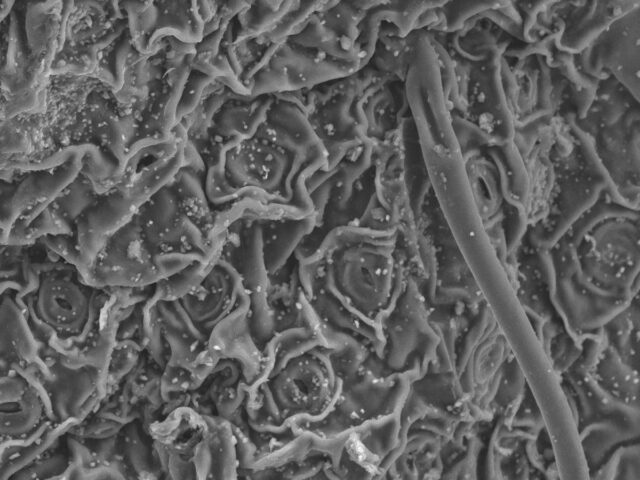
Scanning electron microscope image of black tea leaves, magnified by 500 times. Black tea, which is wilted and fully oxidized, exhibits a wrinkled surface, potentially increasing the available surface area for adsorption. Credit: Vinayak P. Dravid Group/Northwestern University

To test their hypothesis, the authors purchased Lipton and Infusions commercial tea bags, as well as a variety of loose-leaf teas and herbal alternatives: black tea, green tea, white peony tea, oolong tea, rooibos tea, and chamomile tea. The tea bags were of different types (cotton, cellulose, and nylon). They brewed the tea the same way daily tea drinkers do, steeping the tea for various time intervals (mere seconds to 24 hours) in water spiked with elevated known levels of lead, chromium, copper zinc, and cadmium. Tea leaves were removed after steeping by pouring the tea through a cellulose filter into a separate tube. The team then measured how much of the toxic metals remained in the water and how much the leaves had adsorbed.

It turns out that the type of tea bag matters. The team found that cellulose tea bags work the best at adsorbing toxic metals from the water while cotton and nylon tea bags barely adsorbed any contaminants at all—and nylon bags also release contaminating microplastics to boot. Tea type and the grind level also played a part in adsorbing toxic metals, with finely ground black tea leaves performing the best on that score. This is because when those leaves are processed, they get wrinkled, which opens the pores, thereby adding more surface area. Grinding the tea further increases that surface area, with even more capacity for binding toxic metals.

But the most significant factor was steeping time: the longer the steeping time, the more toxic metals were adsorbed. Based on their experiments, the authors estimate that brewing tea—using a tea bag that steeps for three to five minutes in a mug—can remove about 15 percent of lead from drinking water, even water with concentrations as high as 10 parts per million.

https://arstechnica.com/science/2025/02/brewing-tea-removes-lead-from-water/


COVID shots protect kids from long COVID—and don’t cause sudden death

Benefits and a non-existent risk

Using an adjusted odds ratio, the researchers found that vaccination reduced the likelihood of developing long COVID with one or more symptoms by 57 percent, and reduced the likelihood of developing long COVID with two or more symptoms by 73 percent. Vaccination prior to infection was also linked to a 75 percent reduction in risk of developing long COVID that impacted day-to-day functioning. The authors note that the estimates of protection are likely underestimates because the calculations do not account for the fact that vaccination prevented some children from getting infected in the first place.

“Our findings suggest that children should stay up to date with current COVID-19 vaccination recommendations as vaccination not only protects against severe COVID-19 illness but also protects against [long Covid],” the authors conclude.

In a second short report in JAMA Network Open, researchers helped dispel concern that the vaccines could cause sudden cardiac arrest or sudden cardiac death in young athletes. This is an unproven claim that was fueled by anti-vaccine advocates amid the pandemic, including the new US Health Secretary and long-time anti-vaccine advocate Robert F. Kennedy Jr.

While previous analyses have failed to find a link between COVID-19 vaccines and sudden cardiac deaths, the new study took a broader approach. The study, led by researchers at the University of Washington, looked at whether the number of sudden cardiac arrests (SCA) and sudden cardiac deaths (SCD) among young athletes changed at all during the pandemic (2020–2022) compared with prior years (2017–2019). The researchers drew records from the National Center for Catastrophic Sports Injury Research. They also collected medical records and autopsy reports on cases among competitive athletes from the youth, middle school, high school, club, college, or professional levels who experienced sudden cardiac arrest or death at any time.

In all, there were 387 cases, with no statistically significant difference in the number of cases in the years prior to the pandemic (203) compared with those during the pandemic (184).

“This cohort study found no increase in SCA/SCD in young competitive athletes in the US during the COVID-19 pandemic, suggesting that reports asserting otherwise were overestimating the cardiovascular risk of COVID-19 infection, vaccination, and myocarditis,” the authors conclude.

https://arstechnica.com/science/2025/02/covid-shots-protect-kids-from-long-covid-and-dont-cause-sudden-death/


In war against DEI in science, researchers see collateral damage

In the 1990s, Lane, as NSF director, ushered in the requirement that, in addition to intellectual merit, reviewers should consider a grant proposal’s “broader impacts.” In general, he said, the aim was to encourage science that would benefit society.

The broader impacts requirement remains today. Among other options, researchers can fulfill it by including a project component that increases the participation of women, underrepresented minorities in STEM, and people with disabilities. They can also meet the requirement by promoting science education or educator development, or by demonstrating that a project will build a more diverse workforce.

The Senate committee turned up thousands of “DEI” grants because the broad search not only snagged projects with a primary goal of increasing diversity—such as a $1.2 million grant to the Colorado School of Mines for a center to train engineering students to promote equity among their peers—but also research that referenced diversity in describing its broader impact or in describing study populations. Lipomi’s project, for example, was likely flagged because it mentions recruiting a diverse group of participants, analyzing results according to socioeconomic status, and posits that patients with disabilities might benefit from wearable devices for rehabilitation.

According to the committee report, concepts related to race, gender, societal status, as well as social and environmental justice undermine hard science. They singled out projects that identified groups of people as underrepresented, underserved, socioeconomically disadvantaged, or excluded; recognized inequities; or referenced climate research.

Red flags also included words like “gender,” “ethnicity,” and “sexuality,” along with scores of associated terms — “female,” “women,” “interracial,” “heterosexual,” “LGBTQ,” as well as “Black,” “White,” “Hispanic,” or “Indigenous” when referring to groups of people. “Status” also made the list along with words such as “biased,” “disability,” “minority,” and “socioeconomic.”

In addition, the committee flagged “environmental justice” and terms that they placed in that category such as “climate change,” “climate research,” and “clean energy.”

https://arstechnica.com/science/2025/02/in-war-against-dei-in-science-researchers-see-collateral-damage/


Flashy exotic birds can actually glow in the dark

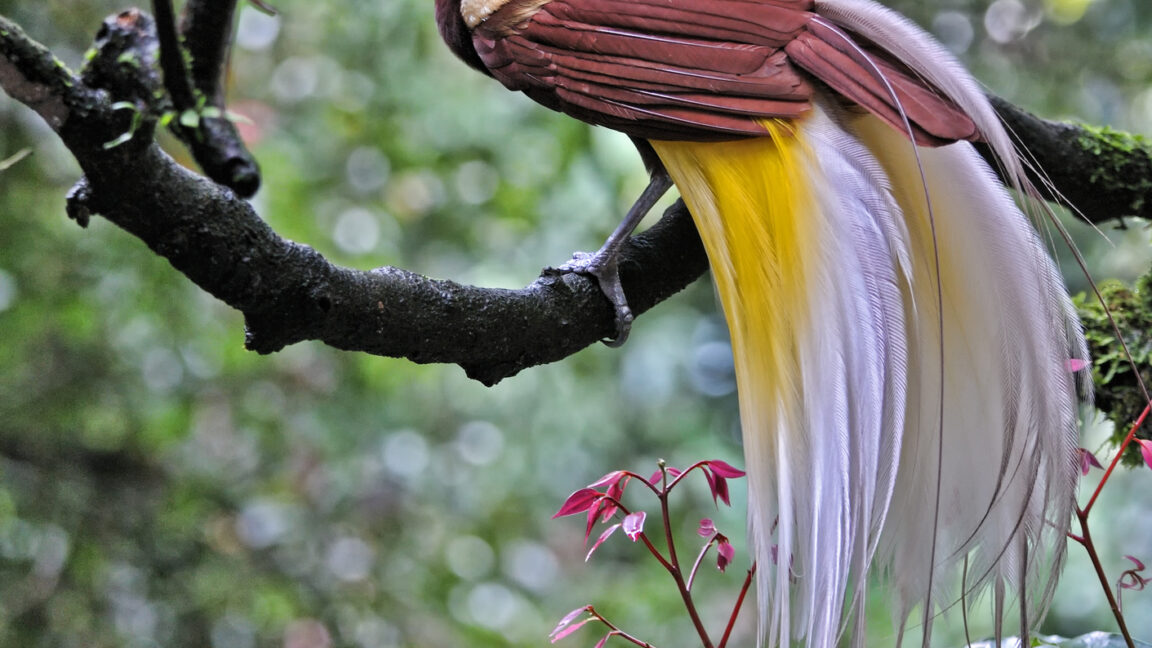
Found in the forests of Papua New Guinea, Indonesia, and Eastern Australia, birds of paradise are famous for flashy feathers and unusually shaped ornaments, which set the standard for haute couture among birds. Many use these feathers for flamboyant mating displays in which they shape-shift into otherworldly forms.

As if this didn’t attract enough attention, we’ve now learned that they also glow in the dark.

Biofluorescent organisms are everywhere, from mushrooms to fish to reptiles and amphibians, but few birds have been identified as having glowing feathers. This is why biologist Rene Martin of the University of Nebraska-Lincoln wanted to investigate. She and her team studied a treasure trove of specimens at the American Museum of Natural History, which have been collected since the 1800s, and found that 37 of the 45 known species of birds of paradise have feathers that fluoresce.

The glow factor of birds of paradise is apparently important for mating displays. Despite biofluorescence being especially prominent in males, attracting a mate might not be all it is useful for, as these birds might also use it to signal to each other in other ways and sometimes even for camouflage among the light and shadows.

“The current very limited number of studies reporting fluorescence in birds suggests this phenomenon has not been thoroughly investigated,” the researchers said in a study that was recently published in Royal Society Open Science.

Glow-up

How do they get that glow? Biofluorescence is a phenomenon that happens when shorter, high-energy wavelengths of light, meaning UV, violet, and blue, are absorbed by an organism. The energy then gets re-emitted at longer, lower-energy wavelengths—greens, yellows, oranges, and reds. The feathers of birds of paradise contain fluorophores, molecules that undergo biofluorescence. Specialized filters in the light-sensitive cells of their eyes make their visual system more sensitive to biofluorescence.

https://arstechnica.com/science/2025/02/flashy-exotic-birds-can-actually-glow-in-the-dark/


The seemingly indestructible fists of the mantis shrimp can take a punch

To find out how much force a mantis shrimp’s dactyl clubs can possibly withstand, the researchers tested live shrimp by having them strike a piezoelectric sensor like they would smash a shell. They also fired ultrasonic and hypersonic lasers at pieces of dactyl clubs from their specimens so they could see how the clubs defended against sound waves.

By tracking how sound waves propagated on the surface of the dactyl club, the researchers could determine which regions of the club diffused the most waves. It was the second layer, the impact surface, that handled the highest levels of stress. The periodic surface was almost as effective. Together, they made the dactyl clubs nearly immune to the stresses they generate.

There are few other examples that the protective structures of the mantis shrimp can be compared to. On the prey side, evidence has been found that the scales on some moths’ wings absorb sound waves from predatory bats to keep them from echolocation to find them.

Understanding how mantis shrimp defend themselves from extreme force could inspire new technology. The structures in their dactyl clubs could influence the designs of military and athletic protective gear in the future.

“Shrimp impacts contain frequencies in the ultrasonic range, which has led to shrimp-inspired solutions that point to ultrasonic filtering as a key [protective] mechanism,” the team said in the same study.

Maybe someday, a new bike helmet model might have been inspired by a creature that is no more than seven inches long but literally doesn’t crack under pressure.

Science, 2025.  DOI:  10.1126/science.adq7100

https://arstechnica.com/science/2025/02/the-seemingly-indestructible-fists-of-the-mantis-shrimp-can-take-a-punch/


German startup to attempt the first orbital launch from Western Europe

The nine-engine first stage for Isar Aerospace’s Spectrum rocket lights up on the launch pad on February 14. Credit: Isar Aerospace

Isar builds almost all of its rockets in-house, including Spectrum’s Aquila engines.

“The flight will be the first integrated test of tens of thousands of components,” said Josef Fleischmann, Isar’s co-founder and chief technical officer. “Regardless of how far we get, this first test flight will hopefully generate an enormous amount of data and experience which we can apply to future missions.”

Isar is the first European startup to reach this point in development. “Reaching this milestone is a huge success in itself,” Meltzer said in a statement. “And while Spectrum is ready for its first test flight, launch vehicles for flights two and three are already in production.”

Another Bavarian company, Rocket Factory Augsburg, destroyed its first booster during a test-firing on its launch pad in Scotland last year, ceding the frontrunner mantle to Isar. RFA received its launch license from the UK government last month and aims to deliver its second booster to the launch site for hot-fire testing and a launch attempt later this year.

There’s an appetite within the European launch industry for new companies to compete with Arianespace, the continent’s sole operational launch services provider backed by substantial government support. Delays in developing the Ariane 6 rocket and several failures of Europe’s smaller Vega launcher forced European satellite operators to look abroad, primarily to SpaceX, to launch their payloads.

The European Space Agency is organizing the European Launcher Challenge, a competition that will set aside some of the agency’s satellites for launch opportunities with a new crop of startups. Isar is one of the top contenders in the competition to win money from ESA. The agency expects to award funding to multiple European launch providers after releasing a final solicitation later this year.

The first flight of the Spectrum rocket will attempt to reach a polar orbit, flying north from Andøya Spaceport. Located at approximately 69 degrees north latitude, the spaceport is poised to become the world’s northernmost orbital launch site.

Because the inaugural launch of the Spectrum rocket is a test flight, it won’t carry any customer payloads, an Isar spokesperson told Ars.

https://arstechnica.com/space/2025/02/german-startup-to-attempt-the-first-orbital-launch-from-western-europe/


Researchers figure out how to get fresh lithium into batteries

In their testing, they use a couple of unusual electrode materials, such as a chromium oxide (Cr8O21) and an organic polymer (a sulfurized polyacrylonitrile). Both of these have significant weight advantages over the typical materials used in today’s batteries, although the resulting batteries typically lasted less than 500 cycles before dropping to 80 percent of their original capacity.

But the striking experiment came when they used LiSO2CF3 to rejuvenate a battery that had been manufactured as normal but had lost capacity due to heavy use. Treating a lithium-iron phosphate battery that had lost 15 percent of its original capacity restored almost all of what was lost, allowing it to hold over 99 percent of its original charge. They also ran a battery for repeated cycles with rejuvenation every few thousand cycles. At just short of 12,000 cycles, it still could be restored to 96 percent of its original capacity.

Before you get too excited, there are a couple of things worth noting about lithium-iron phosphate cells. The first is that, relative to their charge capacity, they’re a bit heavy, so they tend to be used in large, stationary batteries like the ones in grid-scale storage. They’re also long-lived on their own; with careful management, they can take over 8,000 cycles before they drop to 80 percent of their initial capacity. It’s not clear whether similar rejuvenation is possible in the battery chemistries typically used for the sorts of devices that most of us own.

The final caution is that the battery needs to be modified so that fresh electrolytes can be pumped in and the gases released by the breakdown of the LiSO2CF3 removed. It’s safest if this sort of access is built into the battery from the start, rather than provided by modifying it much later, as was done here. And the piping needed would put a small dent in the battery’s capacity per volume if so.

All that said, the treatment demonstrated here would replenish even a well-managed battery closer to its original capacity. And it would largely restore the capacity of something that hadn’t been carefully managed. And that would allow us to get far more out of the initial expense of battery manufacturing. Meaning it might make sense for batteries destined for a large storage facility, where lots of them could potentially be treated at the same time.

Nature, 2025. DOI: 10.1038/s41586-024-08465-y  (About DOIs).

https://arstechnica.com/science/2025/02/researchers-figure-out-how-to-get-fresh-lithium-into-batteries/


“Bouncing” winds damaged Houston skyscrapers in 2024

“Bouncing” winds

Damage sustained by the Chevron Building Auditorium during the derecho: a) damaged side of the building, b) global damage view, c) & d) localized glass damage.

Damage sustained by the Chevron Building Auditorium during the derecho: a) damaged side of the building, b) global damage view, c) & d) localized glass damage.

Damage sustained by the Chevron Building Auditorium during the derecho: a) damaged side of the building, b) global damage view, c) & d) localized glass damage. Credit: Padgett et al., 2024

Elawady decided to investigate why the Houston derecho’s structural damage was so much more extensive than one might expect. He and his colleagues analyzed the impact of the derecho on five of the city’s most notable buildings: The Chevron Building Auditorium, the CenterPoint Energy Plaza, the El Paso Energy Building, the RRI Energy Plaza, and the Wedge International Tower.

The Chevron Building Auditorium, for instance, suffered significant damage to its cladding and shattered glass windows, mostly on the side facing another skyscraper: the Chevron Corporation Tower. The CenterPoint Energy Plaza’s damage to its double-skin facade was concentrated on one corner that had two tall buildings facing it, as was the damage to two corners of the El Paso Energy building. This suggested a wind-channeling effect might have played a role in that damage.

Next Elawady et al. conducted wind tunnel experiments at the FIU Natural Hazards Engineering Research Infrastructure’s “Wall of Wind” facility to determine how the winds may have specifically caused the observed damage. They placed a revolving miniature tall building in the tunnel and blasted it with wind speeds of up to 70 meters per second while placing an identical mini-model at increasing distances from the first to mimic possible interference from nearby buildings.

The results confirmed the team’s working hypothesis. “When strong winds move through a city, they can bounce due to interference between tall buildings. This increases pressure on walls and windows, making damage more severe than if the buildings were isolated,” said co-author Omar Metwally, a graduate student at FIU. For example, in the case of the Chevron Building Auditorium, the channeling effects intensified the damage, particularly at higher elevations.

“On top of this, downbursts create intense, localized forces which can exceed typical design values for hurricanes, especially on the lower floors of tall buildings,” Metwally added. The problem is only likely to worsen because of accelerating climate change. Glass facades seem to be particularly vulnerable to this kind of wind damage, and the authors suggest current design and construction guidelines for such elements should be re-evaluated as a result of their findings.

Frontiers in Built Environment, 2025. DOI: 10.3389/fbuil.2024.1514523  (About DOIs).

https://arstechnica.com/science/2025/02/why-houstons-2024-derecho-did-more-damage-than-hurricane-beryl/


Study: Cuttlefish adapt camouflage displays when hunting prey

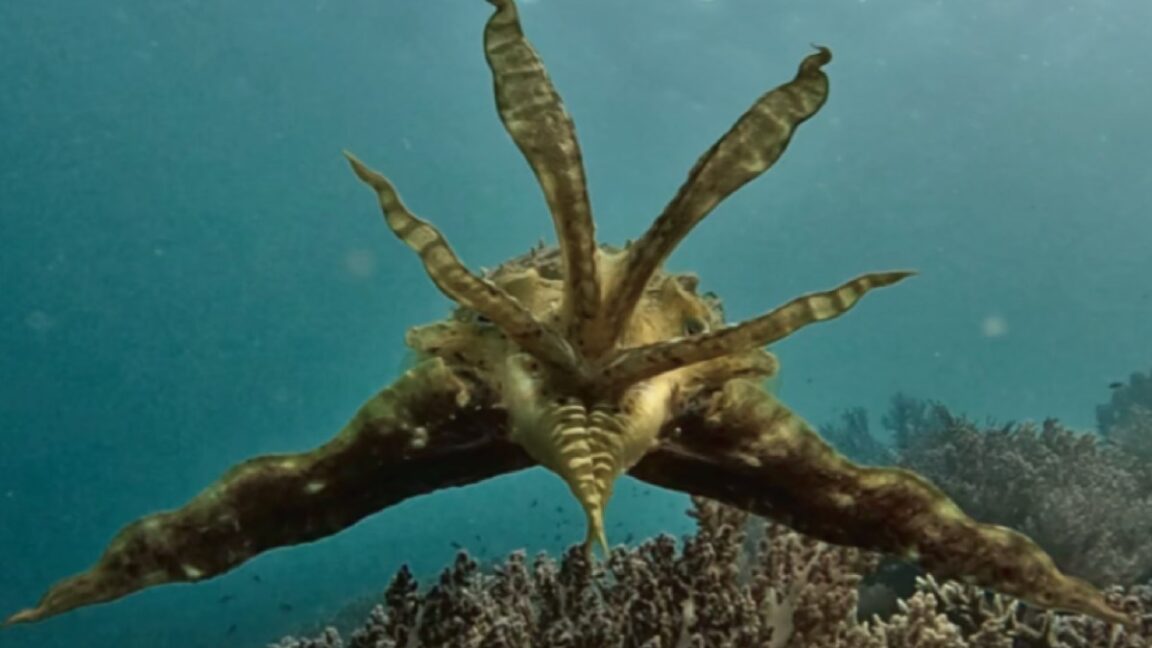
Crafty cuttlefish employ several different camouflaging displays while hunting their prey, according to a new paper published in the journal Ecology, including mimicking benign ocean objects like a leaf or coral, or flashing dark stripes down their bodies. And individual cuttlefish seem to choose different preferred hunting displays for different environments.

It’s well-known that cuttlefish and several other cephalopods can rapidly shift the colors in their skin thanks to that skin’s unique structure. As previously reported, squid skin is translucent and features an outer layer of pigment cells called chromatophores that control light absorption. Each chromatophore is attached to muscle fibers that line the skin’s surface, and those fibers, in turn, are connected to a nerve fiber. It’s a simple matter to stimulate those nerves with electrical pulses, causing the muscles to contract. And because the muscles are pulling in different directions, the cell expands, along with the pigmented areas, changing the color. When the cell shrinks, so do the pigmented areas.

Underneath the chromatophores, there is a separate layer of iridophores. Unlike the chromatophores, the iridophores aren’t pigment-based but are an example of structural color, similar to the crystals in the wings of a butterfly, except a squid’s iridophores are dynamic rather than static. They can be tuned to reflect different wavelengths of light. A 2012 paper suggested that this dynamically tunable structural color of the iridophores is linked to a neurotransmitter called acetylcholine. The two layers work together to generate the unique optical properties of squid skin.

And then there are leucophores, which are similar to the iridophores, except they scatter the full spectrum of light, so they appear white. They contain reflectin proteins that typically clump together into nanoparticles so that light scatters instead of being absorbed or directly transmitted. Leucophores are mostly found in cuttlefish and octopuses, but there are some female squid of the genus Sepioteuthis that have leucophores that they can “tune” to only scatter certain wavelengths of light. If the cells allow light through with little scattering, they’ll seem more transparent, while the cells become opaque and more apparent by scattering a lot more light.

Scientists learned in 2023 that the process by which cuttlefish generate their camouflage patterns is significantly more complex than scientists previously thought. Specifically, cuttlefish readily adapted their skin patterns to match different backgrounds, whether natural or artificial. And the creatures didn’t follow the same transitional pathway every time, often pausing in between. That means that contrary to prior assumptions, feedback seems to be critical to the process, and the cuttlefish were correcting their patterns to match the backgrounds better.

https://arstechnica.com/science/2025/02/crafty-cuttlefish-vary-their-camouflage/