3D map of exoplanet atmosphere shows wacky climate
Last year, astronomers discovered an unusual Earth-size exoplanet they believe has a hemisphere of molten lava, with its other hemisphere tidally locked in perpetual darkness. And at about the same time, a different group discovered a rare small, cold exoplanet with a massive outer companion 100 times the mass of Jupiter.
Meet Tylos
[embedded content]
The different layers of the atmosphere on WASP-121b.
This latest research relied on observational data collected by the European South Observatory’s (ESO) Very Large Telescope, specifically, a spectroscopic instrument called ESPRESSO that can process light collected from the four largest VLT telescope units into one signal. The target exoplanet, WASP-121b—aka Tylos—is located in the Puppis constellation about 900 light-years from Earth. One year on Tylos is equivalent to just 30 hours on Earth, thanks to the exoplanet’s close proximity to its host star. Since one side is always facing the star, it is always scorching, while the exoplanet’s other side is significantly colder.
Those extreme temperature contrasts make it challenging to figure out how energy is distributed in the atmospheric system, and mapping out the 3D structure can help, particularly with determining the vertical circulation patterns that are not easily replicated in our current crop of global circulation models, per the authors. For their analysis, they combined archival ESPRESSO data collected on November 30, 2018, with new data collected on September 23, 2023. They focused on three distinct chemical signatures to probe the deep atmosphere (iron), mid-atmosphere (sodium), and shallow atmosphere (hydrogen).
“What we found was surprising: A jet stream rotates material around the planet’s equator, while a separate flow at lower levels of the atmosphere moves gas from the hot side to the cooler side. This kind of climate has never been seen before on any planet,” said Julia Victoria Seidel of the European Southern Observatory (ESO) in Chile, as well as the Observatoire de la Côte d’Azur in France. “This planet’s atmosphere behaves in ways that challenge our understanding of how weather works—not just on Earth, but on all planets. It feels like something out of science fiction.”
Can public trust in science survive a second battering?
Public trust in science has been in the spotlight in recent years: After the US presidential election in November, one Wall Street Journal headline declared that “Science Lost America’s Trust.” Another publication called 2024 “the year of distrust in science.”
Some of that may be due to legitimate concerns: Public health officials have been criticized for their lack of transparency during critical moments, including the COVID-19 pandemic. And experts have noted the influence of political factors. For instance, the first Trump administration repeatedly undermined scientists—a trend repeating in his second term so far.
But what does the research say about where public trust in science, doctors, and health care institutions actually stands? In recent years, researchers have been increasingly looking into quantifying these sentiments. And indeed, multiplesurveys and studies have reported the COVID-19 pandemic correlated with a decline in trust in the years following the initial outbreak. This decrease, though, seems to be waning as new research shows a clearer picture of trust across time. One 2024 study suggests Trump’s attacks on science during his first term did not have the significant impact many experts feared—and may have even boosted confidence among certain segments of the population.
Overall confidence in scientific institutions has slightly rebounded since the pandemic, some research suggests, with that trust remaining strong across countries. Despite the uptick, there appears to be a still widening divide particularly between political factions, with Democrats showing higher levels of trust and Republicans showing lower levels, a polarization that became more pronounced during the COVID-19 pandemic.
“What we’re seeing now, several years later, is how deep those divisions really are,” said Cary Funk, who previously led science and society research at the Pew Research Center and has written reports on public trust in science. Funk is now a senior adviser for public engagement at the Aspen Institute Science and Society Program.
Political and economic entities have weaponized certain scientific topics, such as climate change, as well as the mistrust in science to advance their own interests, said Gabriele Contessa, a philosopher of science at Carleton University in Ottawa, Canada. In the future, that weaponization might engender mistrust related to other issues, he added. It remains to be seen what effect a second Trump term may have on confidence in science. Already, Trump issued a communications freeze on Department of Health and Human Services officials and paused federal grants, a move that was ultimately rescinded but still unleashed a flurry of chaos and confusion throughout academic circles.
That mission, and the 2020 Chang’e-5 robotic mission before it, are the first to return lunar rocks to Earth since the 1970s. Together they are building on what scientists learned from Apollo-era missions, helping to unravel mysteries about how the Moon was formed and why it looks the way it does today, and providing clues about our solar system’s history.
But big puzzles remain, such as why the far side of the Moon—the half that always faces away from Earth—is so radically different from the near side. And what is behind the surprising finding that lunar volcanoes may have been active much more recently than previously thought? “The more we look at the Moon, the more we’ve discovered—and the more we realize how little we know,” says Clive R. Neal, a geologist at the University of Notre Dame who specializes in lunar exploration.
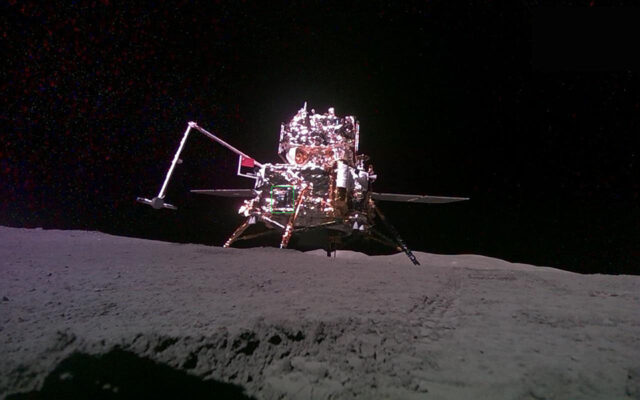
China’s 2024 Chang’e-6 robotic lander mission brought more than four pounds of rocks from the far side of the Moon back to Earth. Credit: CNSA / CAS
With NASA planning to send astronauts back to the Moon’s surface in 2027 for the first time since 1972, geologists are excited about what rocks they might find there and the scientific secrets those samples could reveal—along with what resources could be mined for a future Moon base, or for renewable energy back home on Earth.
Origin story
The samples brought home from the Moon in the 1970s by the Apollo missions and the Soviet Union’s Luna missions cleared up quite a lot about the Moon’s history. Because the lunar samples shared strong similarities with Earth rocks, this added weight to the idea that the Moon was formed when a Mars-sized object called Theia collided with the proto-Earth roughly 4.5 billion years ago.
Debris from the impact was thrown into orbit around Earth and eventually coalesced into the Moon. In its early days, the Moon was entirely molten. As the magma ocean cooled over hundreds of millions of years, the Moon formed a crust and a mantle below. Giant pools of lava filled impact craters and settled into the lunar lowlands, or maria (Latin for “seas”), while highlands and volcanic domes loomed above them. Eventually, the volcanism died out.
Without plate tectonics or weather, the only things left to alter the Moon’s cold, dead surface were meteorites. A lot of the Apollo-era samples were found to have formed from the heat and pressure of impacts around 3.9 billion years ago, suggesting that they were the result of a short period of intense pummeling by space rocks called the Late Heavy Bombardment.
But research since the 1970s has refined or changed this picture. Higher-resolution orbital images have revealed plenty of large impact craters that seem far older than 3.9 billion years, for example. And meteorites found on Earth, thought to have been ejected from various areas of the Moon during big impacts, have been found to span a huge range of ages.
All this work together suggests that the asteroid bombardment didn’t happen in one dramatic spike but rather over an extended period lasting from perhaps 4.2 billion to 3.4 billion years ago. In this scenario, the Apollo samples dated to 3.9 billion years likely all came from just one huge impact that spewed rock over a very wide area that happened to include the Apollo-era landing sites.
The Moon: Dead or alive
Greater mysteries surround volcanism on the Moon. “The canonical thing I learned in school was that the Moon had been geologically dead for billions of years,” says Samuel Lawrence, a planetary scientist at NASA’s Johnson Space Center in Houston.
The long-held theory was that a small body like the Moon should have lost its heat to space relatively quickly—and a frigid, extinguished Moon shouldn’t have widespread volcanic activity. Apollo-era samples suggested that most of this volcanism stopped 3 billion years ago or earlier, supporting the theory. But research over the past two decades has overturned that view.
In 2014, Lawrence and colleagues posited that some patches of irregular terrain in the middle of the dark plains, or mare, spotted by the NASA Lunar Reconnaissance Orbiter were the result of volcanism that kept going until less than 100 million years ago. “That is totally, totally surprising,” says cosmochemist Qing-Zhu Yin of the University of California, Davis.
The latest sample-return missions added more concrete evidence for recent volcanism. In 2020, the Chang’e-5 robotic mission landed in Oceanus Procellarum (the Ocean of Storms) — a spot picked in part because it looked geologically young given how few craters had accumulated there. Sure enough, the volcanic rocks brought home by that mission were found to be 2 billion years old, the youngest ever retrieved from the Moon. “That was big news,” says planetary geoscientist Jim Head of Brown University, who worked on NASA’s Apollo missions.
On top of this, when researchers trawled through thousands of glass beads found in the Chang’e-5 soil samples, most of which are thought to have been created by impacts, they identified three that were volcanic—and only 120 million years old. This finding was published just last year and still needs to be verified, but if such recent dates hold up, they suggest that the Moon might still be capable of producing deep magma even today, Yin says.
All this indicates that the Moon might not have cooled as fast as everyone thought it did. It’s also possible that some of the younger volcanism could have been powered by radioactive elements underground, which can generate enough heat to form magma and are known to be prevalent in certain patches of the Moon. This could explain the 120-million-year-old volcanic glass beads, for example. But not all the early volcanism can be explained this way: The Chang’e-5 volcanic rocks, along with some 2.8-billion-year-old volcanic rock brought back from the far side by Chang’e-6, came from source rocks not enriched with these elements.
“It throws up more questions than it answers,” Neal says. “It’s job security for people like me — we now have new questions to address.”
Lunar exploration ahead
Untangling these mysteries is challenging with so much of the Moon unexplored: While about 850 pounds of Moon rock and soil have now been brought back to Earth, it has all been from just a handful of sites.
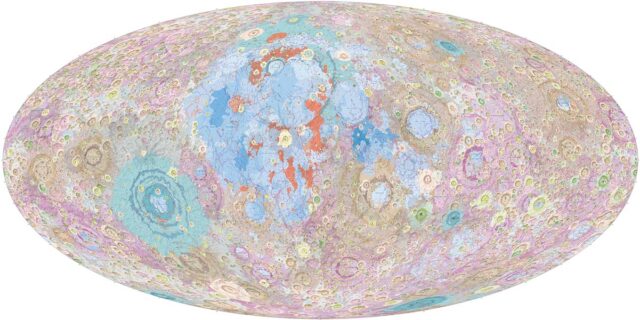
Chang’e-6 expanded this picture by bringing back the first samples from the Moon’s far side, taken from the South Pole-Aitken Basin, the satellite’s largest, deepest and oldest impact crater. Researchers are keen to use these samples to start determining why the far side is so dramatically different from the near side. The questions that remain unanswered are why the far side has a thicker crust and is nearly devoid of mare from ancient lava oceans when compared with the near side.
NASA’s Artemis III mission, planned for 2027 (though that could change), aims to break more new ground by landing astronauts near the Moon’s south pole—in a spot that is more representative of the Moon’s typical geology than the Apollo sites—and bring home a bonanza of 150 to 180 pounds of samples.
This site should provide fresh geological insights, along with more information about lunar water. In 2018, scientists analyzing orbital mapping data confirmed that there is water ice at the poles—but in what form no one yet knows. “Is it frost on the surface? Is it discrete patches underneath the surface? Is it absorbed onto mineral grains? Is it baked into the regolith like cement?” says NASA’s Juliane Gross, who is helping to develop the plans for lunar sample collection and curation for the Artemis science team. “We don’t know.”
What the Artemis astronauts find could inform ongoing projects spearheaded by China and the United States to establish permanent bases on the Moon, which could benefit from the south pole’s water. “That’s stuff you can breathe, that’s stuff you can drink, it’s rocket fuel,” Lawrence says.
Lunar quarry
In addition to water ice, other potentially mineable resources on the Moon have garnered attention, particularly helium-3. This stable isotope of helium is far more plentiful on the Moon than on Earth and could be an ideal fuel for nuclear fusion (if physicists can get that process to work). Commercial enterprises seeking to mine the Moon have popped up, including Seattle-based Interlune, which plans to bring helium-3 back to Earth in the 2030s, followed by other resources such as rare earth elements needed for technologies like batteries. But when lunar mining will be a reality—considering the logistics, the economics and the legal concerns—is an open question, Lawrence says.
While some people find the idea of mining the pristine Moon distasteful, there could be side benefits for mining on Earth, Neal says. With polar temperatures around -230° C (-380° F), lunar mining would have to be done without fluids. Developing the technologies needed for fluid-free mining could mitigate environmental concerns about wastewater and tailing fluids from mining on Earth. “Just think how you could revolutionize mining on this planet,” he says.
But first, researchers need to simply find out more about the Moon, its history, its geology and the possibility of extracting resources—and that requires up-close exploration, which is sure to bring more surprises. “Once you’re on the ground, you’re like, oh … what’s this?” Gross says. She’s hoping the astronauts can bring home a large haul. “The more they return, the more we can do.”
ULA’s Vulcan rocket still doesn’t have the Space Force’s seal of approval
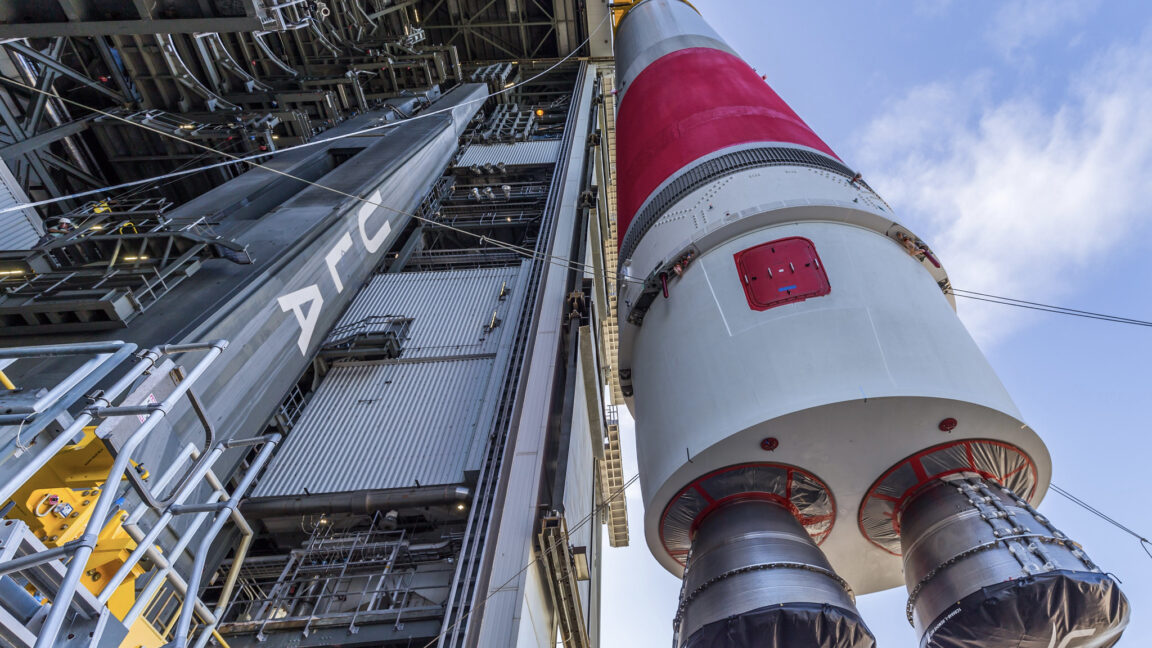
ULA crews at Cape Canaveral have already stacked the next Vulcan rocket on its mobile launch platform in anticipation of launching the USSF-106 mission. But with the Space Force’s Space Systems Command still withholding certification, there’s no confirmed launch date for USSF-106.
So ULA is pivoting to another customer on its launch manifest.
Amazon’s first group of production satellites for the company’s Kuiper Internet network is now first in line on ULA’s schedule. Amazon confirmed last month that it would ship Kuiper satellites to Cape Canaveral from its factory in Kirkland, Washington. Like ULA, Amazon has run into its own delays with manufacturing Kuiper satellites.
“These satellites, built to withstand the harsh conditions of space and the journey there, will be processed upon arrival to get them ready for launch,” Amazon posted on X. “These satellites will bring fast, reliable Internet to customers even in remote areas. Stay tuned for our first launch this year.”
Amazon and the Space Force take up nearly all of ULA’s launch backlog. Amazon has eight flights reserved on Atlas V rockets and 38 missions booked on the Vulcan launcher to deploy about half of its 3,232 satellites to compete with SpaceX’s Starlink network. Amazon also has launch contracts with Blue Origin, which is owned by Amazon founder Jeff Bezos, along with Arianespace and SpaceX.
The good news is that United Launch Alliance has an inventory of rockets awaiting an opportunity to fly. The company plans to finish manufacturing its remaining 15 Atlas V rockets within a few months, allowing the factory in Decatur, Alabama, to focus solely on producing Vulcan launch vehicles. ULA has all the major parts for two Vulcan rockets in storage at Cape Canaveral.
“We have a stockpile of rockets, which is kind of unusual,” Bruno said. “Normally, you build it, you fly it, you build another one… I would certainly want anyone who’s ready to go to space able to go to space.”
Space Force officials now aim to finish the certification of the Vulcan rocket in late February or early March. This would clear the path for launching the USSF-106 mission after the next Atlas V. Once the Kuiper launch gets off the ground, teams will bring the Vulcan rocket’s components back to the hangar to be stacked again.
The Space Force has not set a launch date for USSF-106, but the service says liftoff is targeted for sometime between the beginning of April and the end of June, nearly five years after ULA won its lucrative contract.
National Institutes of Health radically cuts support to universities
Grants paid by the federal government have two components. One covers the direct costs of performing the research, paying for salaries, equipment, and consumables like chemicals or enzymes. But the government also pays what are called indirect costs. These go to the universities and research institutes, covering the costs of providing and maintaining the lab space, heat and electricity, administrative and HR functions, and more.
These indirect costs are negotiated with each research institution and average close to 30 percent of the amount awarded for the research. Some institutions see indirect rates as high as half the value of the grant.
On Friday, the National Institutes of Health (NIH) announced that negotiated rates were ending. Every existing grant, and all those funded in the future, will see the indirect cost rate set to just 15 percent. With no warning and no time to adjust to the change in policy, this will prove catastrophic for the budget of nearly every biomedical research institution.
Cut in half or more
The new policy is described in a supplemental guidance document that modifies the 2024 grant policy statement. The document cites federal regulations that allow the NIH to use a different indirect cost rate from that negotiated with research institutions for “either a class of Federal awards or a single Federal award,” but it has to justify the decision. So, much of the document describes the indirect costs paid by charitable foundations, which tend to be much lower than the rate paid by the NIH.
The new rate of indirect cost reimbursement will be applied to any newly funded grants and retroactively to all existing grants starting with the issuance of this notice. The retroactive nature of this decision may end up being challenged due to the wording of the regulations cited earlier, which also state that “The Federal agency must include, in the notice of funding opportunity, the policies relating to indirect cost rate.” However, even going forward, this will likely severely curtail biomedical research in the US.
Quantum teleportation used to distribute a calculation
The researchers showed that this setup allowed them to teleport with a specific gate operation (controlled-Z), which can serve as the basis for any other two-qubit gate operation—any operation you might want to do can be done by using a specific combination of these gates. After performing multiple rounds of these gates, the team found that the typical fidelity was in the area of 70 percent. But they also found that errors typically had nothing to do with the teleportation process and were the product of local operations at one of the two ends of the network. They suspect that using commercial hardware, which has far lower error rates, would improve things dramatically.
Finally, they performed a version of Grover’s algorithm, which can, with a single query, identify a single item from an arbitrarily large unordered list. The “arbitrary” aspect is set by the number of available qubits; in this case, having only two qubits, the list maxed out at four items. Still, it worked, again with a fidelity of about 70 percent.
While the work was done with trapped ions, almost every type of qubit in development can be controlled with photons, so the general approach is hardware-agnostic. And, given the sophistication of our optical hardware, it should be possible to link multiple chips at various distances, all using hardware that doesn’t require the best vacuum or the lowest temperatures we can generate.
That said, the error rate of the teleportation steps may still be a problem, even if it was lower than the basic hardware rate in these experiments. The fidelity there was 97 percent, which is lower than the hardware error rates of most qubits and high enough that we couldn’t execute too many of these before the probability of errors gets unacceptably high.
Still, our current hardware error rates started out far worse than they are today; successive rounds of improvements between generations of hardware have been the rule. Given that this is the first demonstration of teleported gates, we may have to wait before we can see if the error rates there follow a similar path downward.
Gecko feet have inspired many intriguing applications, including a sticky tape, adhesives, a “stickybot” climbing robot, and even a strapless bra design. Now, scientists have developed a new kind of anti-slip polymer that sticks to ice, inspired by the humble gecko. Incorporating these polymers into shoe soles could reduce the number of human slip-and-fall injuries, according to a paper published in the journal ACS Applied Materials & Interfaces.
As previously reported, geckos are known for being expert climbers; they’re able to stick to any surface thanks to tiny hair-like structures on the bottoms of their feet. Those microscopic hairs are called setae, each of which splits off into hundreds of even smaller bristles called spatulae. It has long been known that at microscopic size scales, the so-called van der Waals forces—the attractive and repulsive forces between two dipole molecules—become significant.
Essentially, the tufts of tiny hairs on gecko feet get so close to the contours in walls and ceilings that electrons from the gecko hair molecules and electrons from the wall molecules interact with each other and create an electromagnetic attraction. That’s what enables geckos to climb smooth surfaces like glass effortlessly. Spiders, cockroaches, beetles, bats, tree frogs, and lizards all have varying-sized sticky footpads that use these same forces.
Geckos and their unusual feet have long been of great interest to scientists. In 2013, for instance, researchers designed a reusable dry adhesive inspired by the gecko’s feet that easily stuck to smooth surfaces, adhering strongly when pushed forward and sliding off when pulled backward. In 2020, Berkeley scientists investigated why soft, hairy gecko toes only “stick” in one direction. And in 2022, scientists found that gecko feet are coated with an ultra-thin layer of lipid molecules in an upright orientation. This might serve to push away any water beneath the spatulae, allowing the spatulae to make closer contact with the surface, thereby helping the geckos maintain their grip on wet surfaces.
Bonobos recognize when humans are ignorant, try to help
A lot of human society requires what’s called a “theory of mind”—the ability to infer the mental state of another person and adjust our actions based on what we expect they know and are thinking. We don’t always get this right—it’s easy to get confused about what someone else might be thinking—but we still rely on it to navigate through everything from complicated social situations to avoid bumping into people on the street.
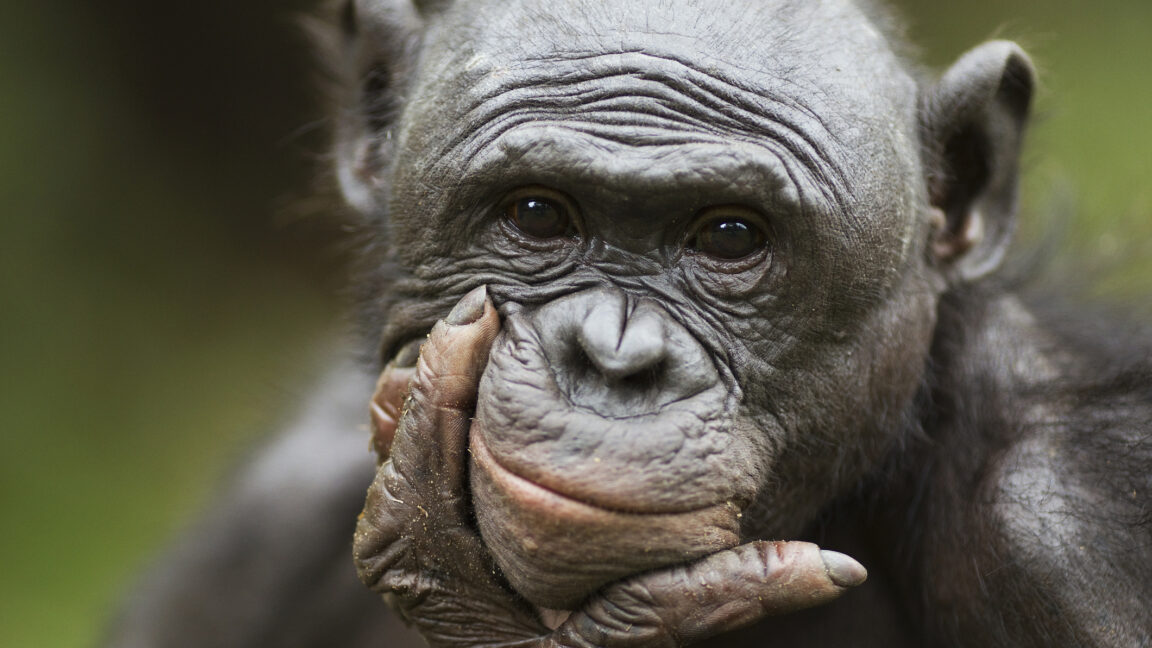
There’s some mixed evidence that other animals have a limited theory of mind, but there are alternate interpretations for most of it. So two researchers at Johns Hopkins, Luke Townrow and Christopher Krupenye, came up with a way of testing whether some of our closest living relatives, the bonobos, could infer the state of mind of a human they were cooperating with. The work clearly showed that the bonobos could tell when their human partner was ignorant.
Now you see it…
The experimental approach is quite simple, and involves a setup familiar to street hustlers: a set of three cups, with a treat placed under one of them. Except in this case, there’s no sleight-of-hand in that the chimp can watch as one experimenter places the treat under a cup, and all of the cups remain stationary throughout the experiment.
To get the treat, however, requires the cooperation of a second human experimenter. That person has to identify the right cup, then give the treat under it to the bonobo. In some experiments, this human can watch the treat being hidden through a transparent partition, and so knows exactly where it is. In others, however, the partition is solid, leaving the human with no idea of which cup might be hiding the food.
This setup means that the bonobo will always know where the food is and will also know whether the human could potentially have the same knowledge.
The bonobos were first familiarized with the setup and got to experience their human partner taking the treat out from under the cup and giving it to them. Once they were familiar with the process, they watched the food being hidden without any partner present, which demonstrated they rarely took any food-directed actions without a good reason to do so. In contrast, when their human partner was present, they were about eight times more likely to point to the cup with the food under it.
Let us spray: River dolphins launch pee streams into air
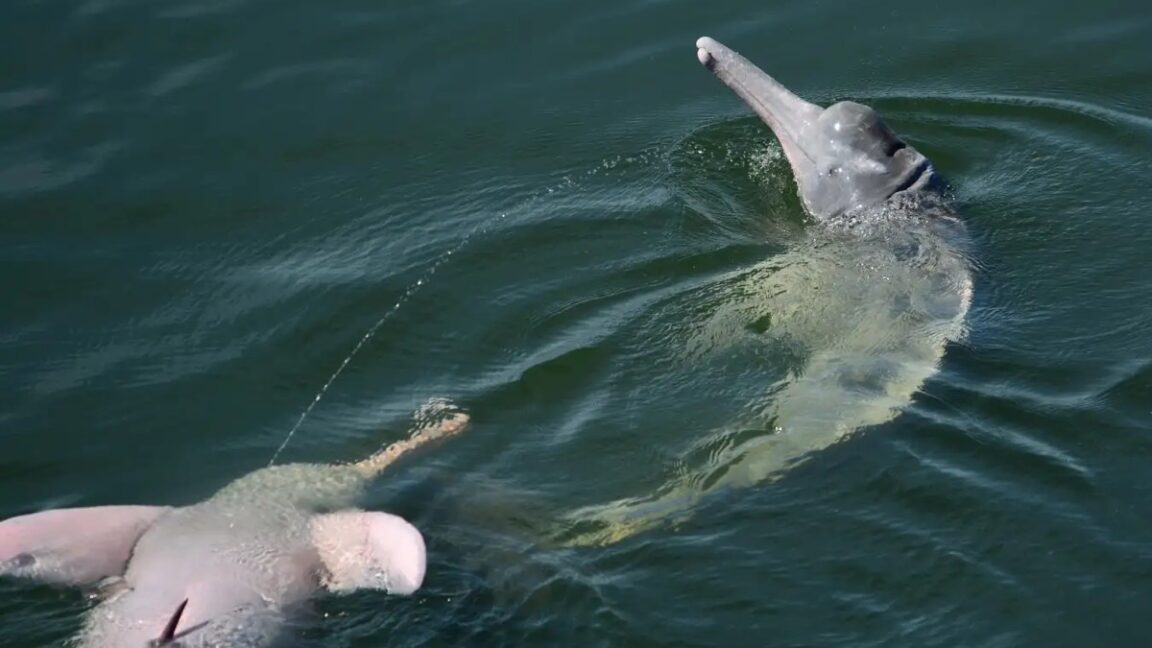
According to Amazonian folklore, the area’s male river dolphins are shapeshifters (encantade), transforming at night into handsome young men who seduce and impregnate human women. The legend’s origins may lie in the fact that dolphins have rather human-like genitalia. A group of Canadian biologists didn’t spot any suspicious shapeshifting behavior over the four years they spent monitoring a dolphin population in central Brazil, but they did document 36 cases of another human-like behavior: what appears to be some sort of cetacean pissing contest.
Specifically, the male dolphins rolled over onto their backs, displayed their male members, and launched a stream of urine as high as 3 feet into the air. This usually occurred when other males were around, who seemed fascinated in turn by the arching streams of pee, even chasing after them with their snouts. It’s possibly a form of chemical sensory communication and not merely a need to relieve themselves, according to the biologists, who described their findings in a paper published in the journal Behavioral Processes. As co-author Claryana Araújo-Wang of CetAsia Research Group in Ontario, Canada, told New Scientist, “We were really shocked, as it was something we had never seen before.”
Spraying urine is a common behavior in many animal species, used to mark territory, defend against predators, communicate with other members of one’s species, or as a means of mate selection since it has been suggested that the chemicals in the urine carry useful information about physical health or social dominance.
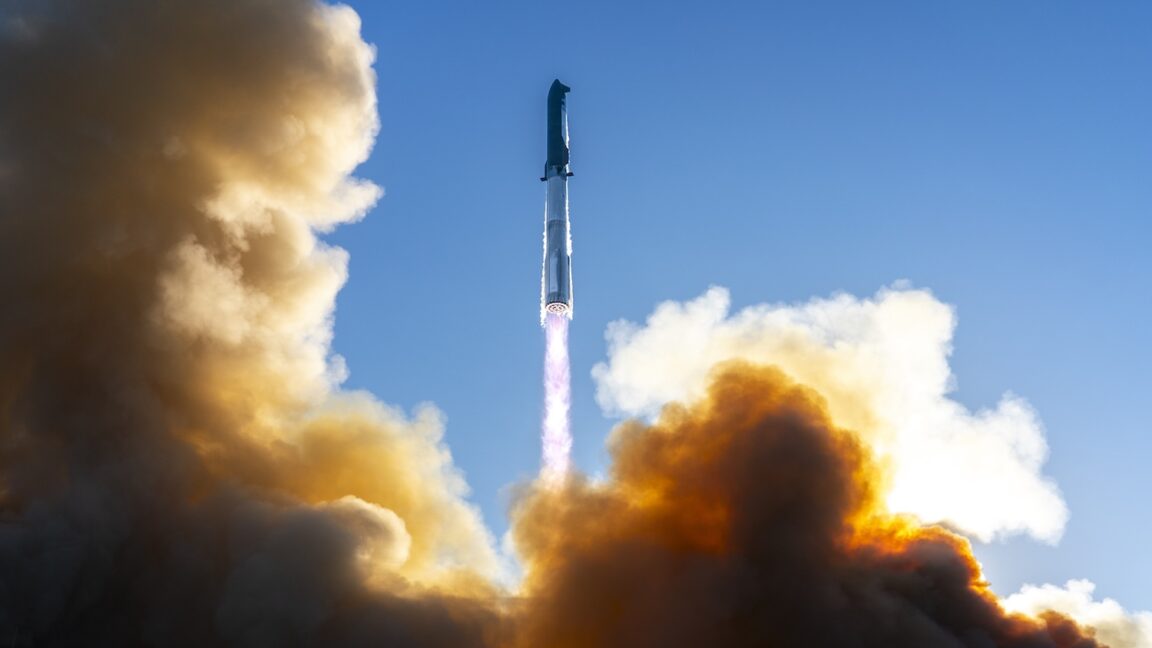
It seems the FAA office overseeing SpaceX’s Starship probe still has some bite
These actions followed pre-established protocols. However, it highlighted the small but non-zero risk of rocket debris falling to Earth after a launch failure. “The potential for a bad day downrange just got real,” Lori Garver, a former NASA deputy administrator, posted on X.
Public safety is not sole mandate of the FAA’s commercial space office. It is also chartered to “encourage, facilitate, and promote commercial space launches and reentries by the private sector,” according to an FAA website. There’s a balance to strike.
Lawmakers last year urged the FAA to speed up its launch approvals, primarily because Starship is central to strategic national objectives. NASA has contracts with SpaceX to develop a variant of Starship to land astronauts on the Moon, and Starship’s unmatched ability to deliver more than 100 tons of cargo to low-Earth orbit is attractive to the Pentagon.
While Musk criticized the FAA in 2024, SpaceX officials in 2023 took a different tone, calling for Congress to increase the budget for the FAA’s Office of Commercial Spaceflight and for the regulator to double the space division’s workforce. This change, SpaceX officials argued, would allow the FAA to more rapidly assess and approve a fast-growing number of commercial launch and reentry applications.
In September, SpaceX released a statement accusing the former administrator of the FAA, Michael Whitaker, of making inaccurate statements about SpaceX to a congressional subcommittee. In a different post on X, Musk directly called for Whitaker’s resignation.
That’s exactly what happened. Whitaker, who took over the FAA’s top job in 2023 under the Biden administration, announced in December he would resign on Inauguration Day. Since the agency’s establishment in 1958, three FAA administrators have similarly resigned when a new administration takes power, but the office has been largely immune from presidential politics in recent decades. Since 1993, FAA administrators have stayed in their post during all presidential transitions.