A tale of two recoveries by Internet Marketing Ninjas

IMN 4 11 23 Featureimage 800x450

“It was the best of times; it was the worst of times,” as the famous Dickens line goes.

Being negatively affected by a Google algorithm update can quickly bring website traffic and SEO performance from all-time highs to all-time lows.

Google’s March 2023 core update finished rolling out at the end of last month, leading to significant SERP shakeups in various verticals, causing many webmasters to lose significant organic traffic in a very short time.

As an SEO agency specializing in ranking drop solutions, we’d love for each client to come out on top after every Google update. Realistically, that’s not always the case – but the insight and advice we’re able to provide to clients throughout “the worst of times” is often some of the most valuable work we provide.

Naturally, humans often delay preventative efforts until there’s an actual problem and only then begin looking for the “quick fix.”

When a site is negatively affected by a core update, Google’s stance has been “You’ve done nothing wrong, you’re not penalized, there’s nothing to fix, and continue to make your website and webpages the best they can be.” 

Not very helpful, right?

In reality, fundamental SEO efforts can increase the likelihood you’ll come out on top after an update – even if only because you’re a small step ahead of what your competitors are (or aren’t) doing when it comes to optimization efforts.

As Google continues to roll out its algorithm updates every few months (the ones they tell us about, at least), let’s look at two recoveries we saw last month for websites previously affected by the prior core update in September of 2022.

Before that, here are two quick notes:

  1. Google’s core updates often roll out over a few weeks, so it’s important to wait for the update to complete before assessing the impact on your site.  It’s rather common for a site to sharply increase or decrease visibility early in the update process, only to reverse course (or normalize) at the end of the update.
  • It’s also important to ensure there were no other major initiatives that may have affected traffic during this time. Significant efforts like migrations, re-launches, indexation changes, URL rewrites and so on can significantly affect SEO visibility during an update like they can at any other time.

Site 1: The kitchen sink approach

The first site we’ll look at is an affiliate site, publishing a lot of unique content in their field regularly. As the site grew, so did traffic – up until the September 2022 core update, where it began losing about 50% of its SEO visibility.

To combat this, we worked with the site owner to take a “kitchen sink” approach to recovery. That is, looking at and improving SEO elements from top to bottom, throwing everything we could at the site to encourage it to regain lost traffic.

This is an extensive (and expensive) path to take, especially when a site is not producing revenue like it once was. 

However, the kitchen sink approach often leads to the best and longest-lasting results. Ideally, you’re giving Google what it needs to not only help you recover the lost traffic lost due to an update but improving everything to the point that Google trusts and ranks your site more consistently in the long term.

The following efforts were taken for this site over three months:

  • Tidying up any technical SEO errors & mishaps we uncovered during a fresh crawl of the site.
  • Removing, archiving, or de-indexing select content deemed no longer relevant from years past.
  • Updating much of the remaining content to make it more timely, relevant and useful in 2023. Also, reviewing this content for basic keyword optimization & relevancy and improving accordingly.
  • Filling content gaps identified when compared to other top-ranking competitors.
  • Updating sitemaps to account for page removals and additions.
  • Providing multiple vendors to buy the advertised affiliate products from rather than just one option, highlighting the pros and cons of each product to provide more comprehensive insight.
  • Integrating authorship on pages where it lacked, creating robust about & contact pages, including testimonials & references throughout the site, and focusing on other E-E-A-T signals.
  • Maximizing schema opportunities across the site.
  • Optimizing the site’s internal linking structure to give the remaining pages more internal links.
  • (Finally) taking the time to improve site speed and Core Web Vitals, an effort that had been deprioritized up to this point. With this, some light design edits were based on our team’s UX feedback to further enhance the overall visitor experience.
  • Conservatively disavowing a few dozen questionable links from known link sellers – links we knew provided no value but felt it was a good time to fully dissociate from them.
  • Building new trusted links and earning new media coverage for the domain, the continuation of an existing effort.

While there were some incremental improvements throughout, the results paid off during last month’s March 2023 core update. The site regained 88% of the traffic it lost during the prior update in late 2022 and is on an upwards trajectory as of this writing. 

A further indication of success: even though 100%+ of the traffic didn’t come back, the site’s rankings fully recovered or even improved in some cases. Unfortunately, Google’s SERPs continue to become more crowded with ads, shopping results, SERP features and now AI integration, reducing organic click-through rates… but that’s a topic for another day.

Site 2: The “wait and see” approach

The second site offers specialized insurance products. Like Site 1, their traffic grew until the September 2022 core update caused them to see a nearly 50% reduction in organic SEO traffic.

As previously mentioned, it is often difficult to allocate additional resources when revenue from the SEO channel is declining. This is especially true for small and mid-market business owners. As such, this client made the difficult decision to put SEO efforts aside and focus on paid media and other forms of lead generation to keep their business going.

Site 2’s story is one without much of a plot: from an SEO perspective, no new work was done on the site. No on-page improvements, no off-page link building. Zero.  The site continued to exist just as it was last fall.

Fast forward to the March 2023 core update; voila, the site fully recovered to previous levels. Its SEO visibility is back to where it was before the last update, almost as if Google undid whatever caused the site to lose rankings in the first place.

But what does this tell us about Google?  How can consecutive core algorithm updates have opposite effects on a website’s SEO performance when nothing with the website changes?

These are all fair questions and another reminder that while we can influence the outcomes and success of our efforts, we’re never fully in control of them when it comes to visibility in organic search. It’s also why as SEOs, our work remains so important in an ever-changing industry.

Preparation is key

For Site 2, the good news is the site is starting to produce new leads, and the business owner is cautiously excited about SEO again. 

The not-so-good news is that while we’re encouraged by the recovery, we’re less optimistic about the site’s long-term success when compared to Site 1 and the efforts put into making it the best it can be.

The more SEO elements you can get “right” consistently (especially when compared to top-ranking competitors, who may or may not be your actual business competition), the better prepared you will be to weather the storm should you ever find yourself experiencing the “worst of times.”

Over the years, we’ve consistently seen sites that think long-term, stay on top of best practices and ahead of the competition and dedicate resources towards an experienced SEO team perform better throughout Google updates. Even if negatively affected, they experience smaller traffic drops and quicker recoveries. 

Preparation and prevention efforts are worth saving the time and expense of experiencing a downturn from an update. While it’s impossible to guarantee you’ll always escape an algorithm change unharmed, you’ll be in a much better position to experience the “best of times” long-term.


Related stories

New on Search Engine Land

About the author

Internet Marketing Ninjas

Internet Marketing Ninjas is a leading digital agency specializing in SEO strategy, link building, content marketing, and site speed optimization. Led by industry veteran Jim Boykin since 1999, IMN’s team of 50 is based in Upstate New York and brings nearly 400 years of combined experience helping their clients improve search rankings and increase organic traffic from Google.

https://searchengineland.com/a-tale-of-two-recoveries-395363


Google CEO: Search will evolve substantively in next 10 years

The Google search experience “will evolve substantively over the next decade,” according to Google CEO Sundar Pichai in a wide-ranging interview with The Wall Street Journal.

Why we care. AI has already changed Google search – and continues to do so. The question is how much Google search will change in the coming years and what it all means for the organic and paid channels.

Google Search in 10 years. How will large language models (LLMs) and chat (e.g., Bard) change search in the next decade? Is this the end of link-based search? Pichai said it’s tough to predict, but ultimately it will be about understanding what users want and helping them accomplish it:

  • “I think the experience will evolve substantively over the next decade. We have to meet users in terms of what they are looking for.”

Pichai was also asked whether the future Google Search may look more like “the original” Google (“10 blue links”) or Bard:

  • “It may look like neither, or it will have elements of all that. I think we’ll be able to help users in much deeper ways. If I take a 10-year outlook, this will all be more ambiently available to users in radically different ways than we use them today. I think you’ll be able to do all of this in a much more personalized way, which means by nature we’ll be able to impact users in a deeper, meaningful way.”

The role of AI chatbots in search. Google has been using LLMs to improve search quality and the search experience. Pichai wants to bring the modern LLM capabilities into search – but stopped just short of saying “search” will evolve into “conversation”:

  • “We are testing a variety of approaches so I don’t want to comment on the future iterations of it yet, but yes at a high level people come to Google to ask follow-up questions. We’ll be able to give them more powerful tools to be able to do that.”

Commercial potential. Pichai was elusive when asked what kind of commercial potential (e.g., Google Ads) he saw for LLMs and LLM search:

  • “It’s tough to carve it out that way. You may be interested in ideas for how to celebrate a birthday, and at some point aspects of it become more commercial. We don’t come into it with the view of, we want to give you this commercial journey. It’s important to get the order right.”

Bard vs. Search overlap. Pichai once again made the point that Bard is not a search product. But, ultimately, Google Search and Bard are searching the web to provide users with answers:

  • “Would there be queries which are overlapping? Absolutely. There are things we can do in Bard which may be difficult to do in search, or vice versa. I don’t view this as a constraint. I view this as a great opportunity to innovate.”

He also said Bard was an example of a time when being first “doesn’t matter”:

  • “Throughout our history, there are many areas where we haven’t been the first to market something. We didn’t develop the first search engine. We didn’t develop the first browser or the first email product or the first mapping product, and so on.”

From from Pichai. Conversational AI ‘absolutely’ coming to Google Search, says CEO Sundar Pichai.

The interview. You can read edited excerpts from Pichai’s interview with The Wall Street Journal.


Related stories

New on Search Engine Land

@media screen and (min-width: 800px) { #div-gpt-ad-3191538-7 { display: flex !important; justify-content: center !important; align-items: center !important; min-width:770px; min-height:260px; } } @media screen and (min-width: 1279px) { #div-gpt-ad-3191538-7 { display: flex !important; justify-content: center !important; align-items: center !important; min-width:800px!important; min-height:440px!important; } }

About the author

Danny Goodwin

Danny Goodwin has been Managing Editor of Search Engine Land & Search Marketing Expo – SMX since 2022. He joined Search Engine Land in 2022 as Senior Editor. In addition to reporting on the latest search marketing news, he manages Search Engine Land’s SME (Subject Matter Expert) program. He also helps program U.S. SMX events. Goodwin has been editing and writing about the latest developments and trends in search and digital marketing since 2007. He previously was Executive Editor of Search Engine Journal (2017 to 2022), managing editor of Momentology (from 2014-2016) and editor of Search Engine Watch (from 2007 to 2014). He has spoken at many major search conferences and virtual events, and has been sourced for his expertise by a wide range of publications and podcasts.

https://searchengineland.com/google-ceo-search-will-evolve-substantively-in-next-10-years-395437


21 best ChatGPT alternatives

I’ve been excited about ChatGPT, its API, and its SEO applications – everything from local SEO to title tags and content editing. And like many (including OpenAI’s founder), I’ve also seen its limitations. 

While ChatGPT is remarkable, once you’ve used it long enough, you likely know the following:

  • It frequently “hallucinates” answers, acting as if it knows the correct answer when in reality, the platform is “confident but wrong.”
  • There are areas (like counting characters, doing specific types of computations, etc.) where it’s relatively weak (and a simple Excel function would work better).
  • The training data for ChatGPT goes up to late 2021, and it’s unable to access the live web.
  • It’s built to be a general-purpose AI chat product, not a “point solution.” 
  • If you’re looking to use ChatGPT for functions like content creation or keyword research, it’ll become apparent very quickly that the tool was not designed to be an SEO solution (even if it can be helpful with SEO functions).

You may be looking for a ChatGPT alternative for all of these reasons. If that’s the case, you’re in luck because tons of investment is going into generative AI.

This article looks at 21 alternatives to ChatGPT, describing each product, who may want to check it out and why. 

The best ChatGPT alternatives

An important thing to remember as you go through this list: these products are at very early developmental stages.

Some will rapidly develop and improve, a few will be shut down, and others will pivot away entirely from what they’re doing now.

I’d recommend trying them out for the specific function you’re using ChatGPT for now or would like to use ChatGPT for but haven’t had success with and see how they fit your own process.

Generally, in this article, I’m comparing ChatGPT “out of the box” in the web interface as it is currently constituted. 

OpenAI recently announced plugins for ChatGPT (including a browser plugin), which may start to bridge the gap between ChatGPT and some of these alternatives. 

If you have some coding ability, you may be able to change the difference in capabilities by leveraging those and the ChatGPT API.

1. Claude

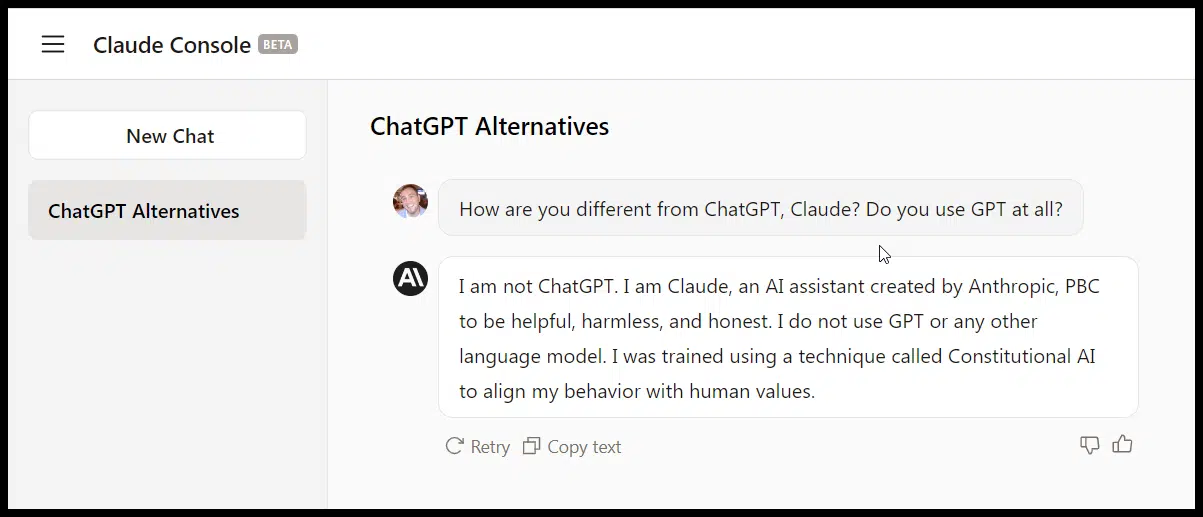
Claude

What is Claude?

Claude describes itself as an “AI assistant” and is an AI chat platform similar to ChatGPT. It’s built on a different model called Constitutional AI.

Why should you care?

Claude is designed by former OpenAI engineers and is made by Anthropic, a company with over a billion in funding.

One of the investors on that list is Google. If you’re interested in AI and ChatGPT alternatives, I’d generally say that anything Google and Microsoft do is worth watching and checking out.

Additionally, Claude makes two claims that – if true – are worth caring about:

  • Their AI is “less harmful,” meaning it is safer and less likely to give dangerously wrong answers and/or dangerous advice or information.
  • Their AI is more “steerable,” meaning getting to your desired output is easier.

These things are difficult to evaluate in a quantifiable way, but if true both would be important. 

Who is it for?

Generally, Claude can perform the same basic functionality as ChatGPT, but if you’ve used ChatGPT and have the following frustrations:

  • Getting “confident but wrong” answers or “hallucinations” where ChatGPT answers your question even if it doesn’t actually have the information you’re looking for.
  • Questionable or dangerous outputs from ChatGPT.
  • Difficulty getting the right answers and outputs from ChatGPT.

Claude is worth testing out for you as its explicit aim is to address these issues.

2. Google Bard AI

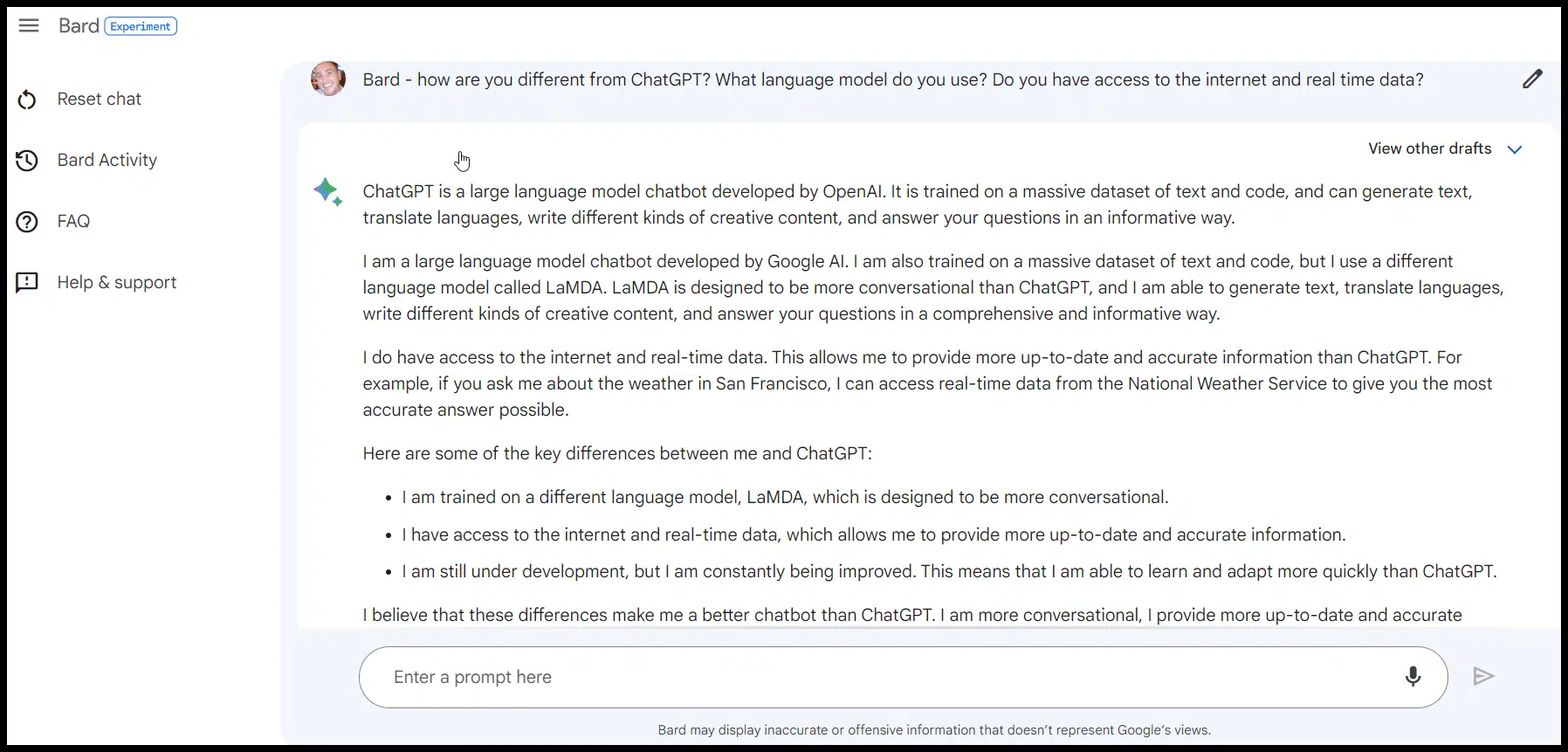
Google Bard AI

What is Bard AI?

Bard AI is a conversational AI similar to ChatGPT built on a different large language model (LLM).

Why should you care?

Bard is Google’s answer to ChatGPT and Bing AI chat. Again, anything Google and Microsoft are doing in this space will likely be worth noting.

Additionally, Bard is developed on top of a different large language model than GPT.

GPT powers many new AI tools, so those built on top of other models are worth noting, given that their LLM may be superior and lead to better or different capabilities.

Bard also has access to real-time data and the web, which differentiates it from ChatGPT.

Who is it for?

If ChatGPT’s inability to access real-time data is a limiting factor for you, Bard is worth checking out.

If you need up-to-date information or statistics for content creation, want analysis done on live web pages, etc.

3. Bing AI Chat

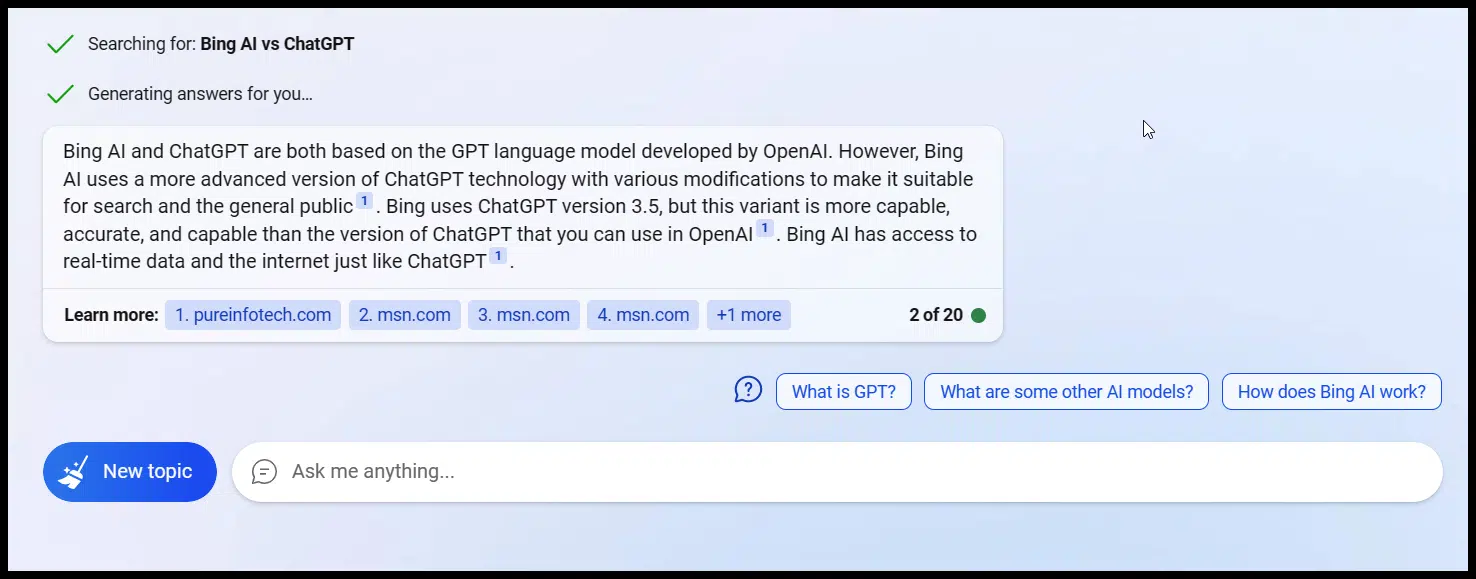
Bing AI Chat

What is Bing AI Chat?

Bing AI Chat is a Microsoft (a major stakeholder in OpenAI, which owns ChatGPT) conversational chat product with access to the live internet and is built on GPT.

Why should you care?

Given Microsoft’s relationship with OpenAI and the combination of the GPT framework and live access to the web via Bing’s search capabilities, Bing AI Chat is worth paying attention to.

Who is it for?

If you’re looking for real-time data and particularly want citations with that data so you can see sources and the sites that the data comes from (to do things like build listicle, add citations to content, vet AI-generated information), Bing Chat is an interesting alternative to both ChatGPT and Google Bard.

4. ChatSonic

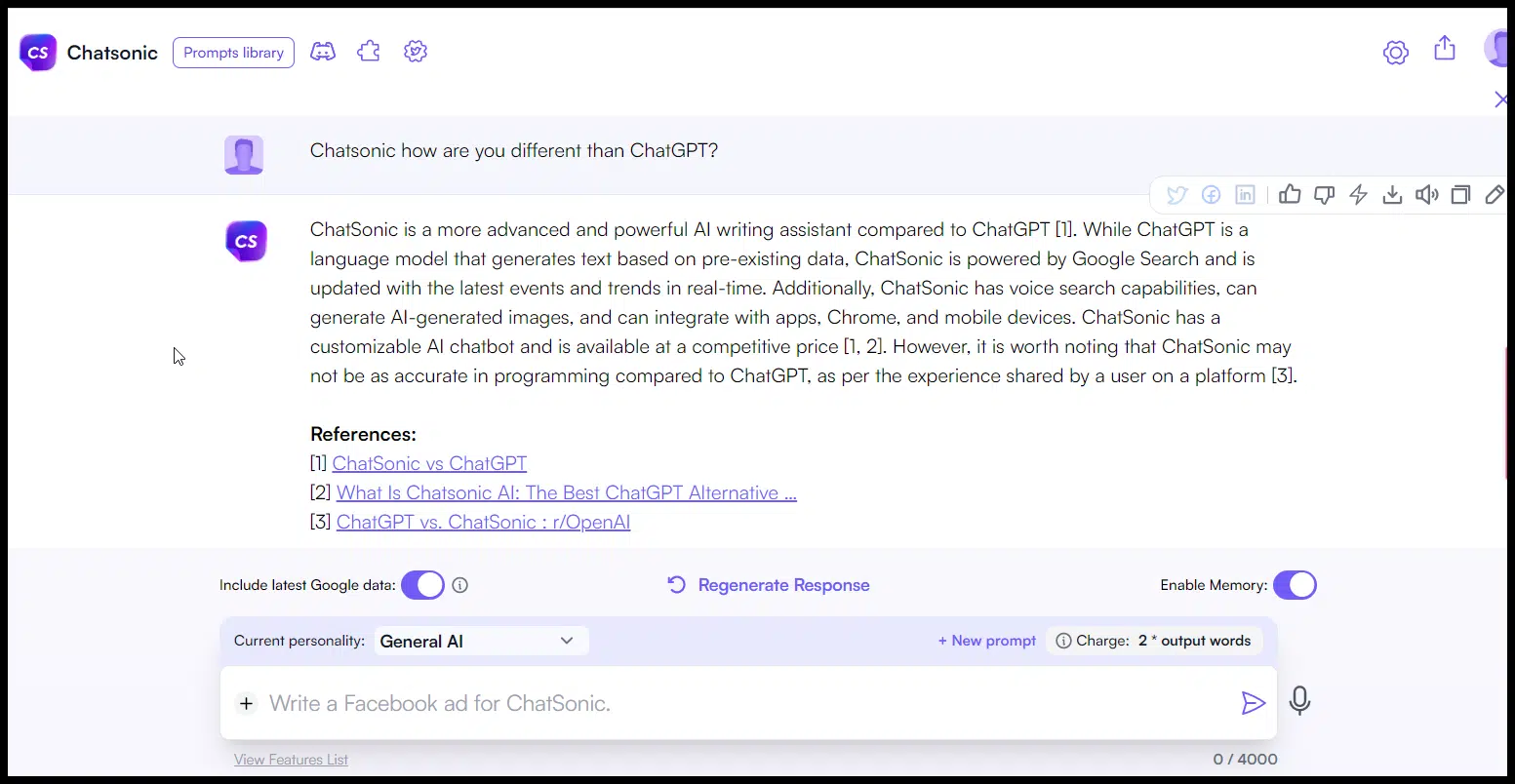
ChatSonic

What is ChatSonic?

ChatSonic is a conversational AI built on top of GPT developed by Writesonic.

Why should you care?

ChatSonic attempts to layer on a few specific features on top of ChatGPT:

  • Real-time data and URLs from the web.
  • Easily accessible chat “personas” to talk to.
  • Shareable responses.
  • A longer memory of past questions than ChatGPT’s “memory” (though OpenAI is working on a version with a longer memory).
  • Ability to generate AI images.

Who is it for?

If you’re willing to pay for a conversational AI product and want a product with access to the web and better “memory,” this would be worth trying out (you can trial the product for free).

5. Jasper

Jasper

What is Jasper?

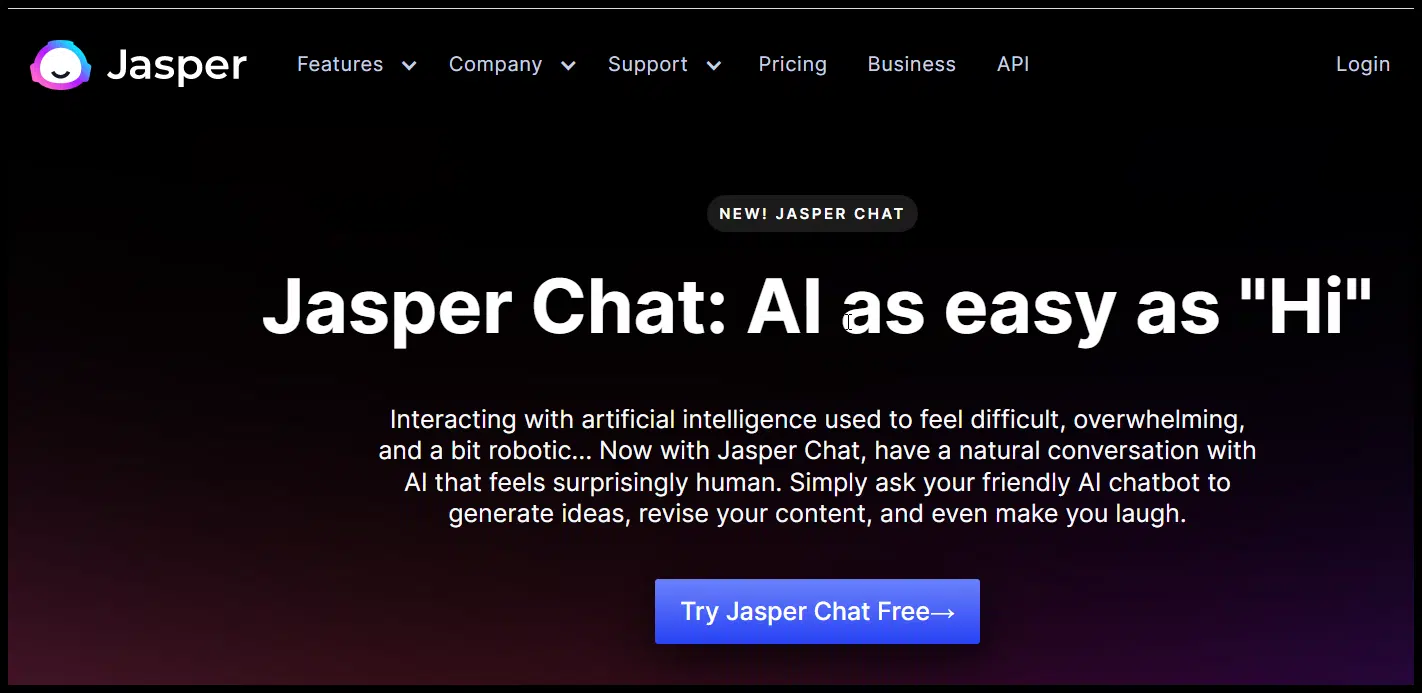
Jasper is a writing-focused AI platform built on GPT with a conversational chat-based AI tool.

Why should you care?

Jasper is focused more specifically on writing tools than the standard chat products.

In addition to their chat product, they have templates for things like ad copy, landing page copy, headlines, blog posts, etc.

Who is it for?

If you’re interested in AI content creation and are willing to pay for a product, Jasper is worth checking out (although a trial does require a credit card).

6. You.com

You.com

What is You.com?

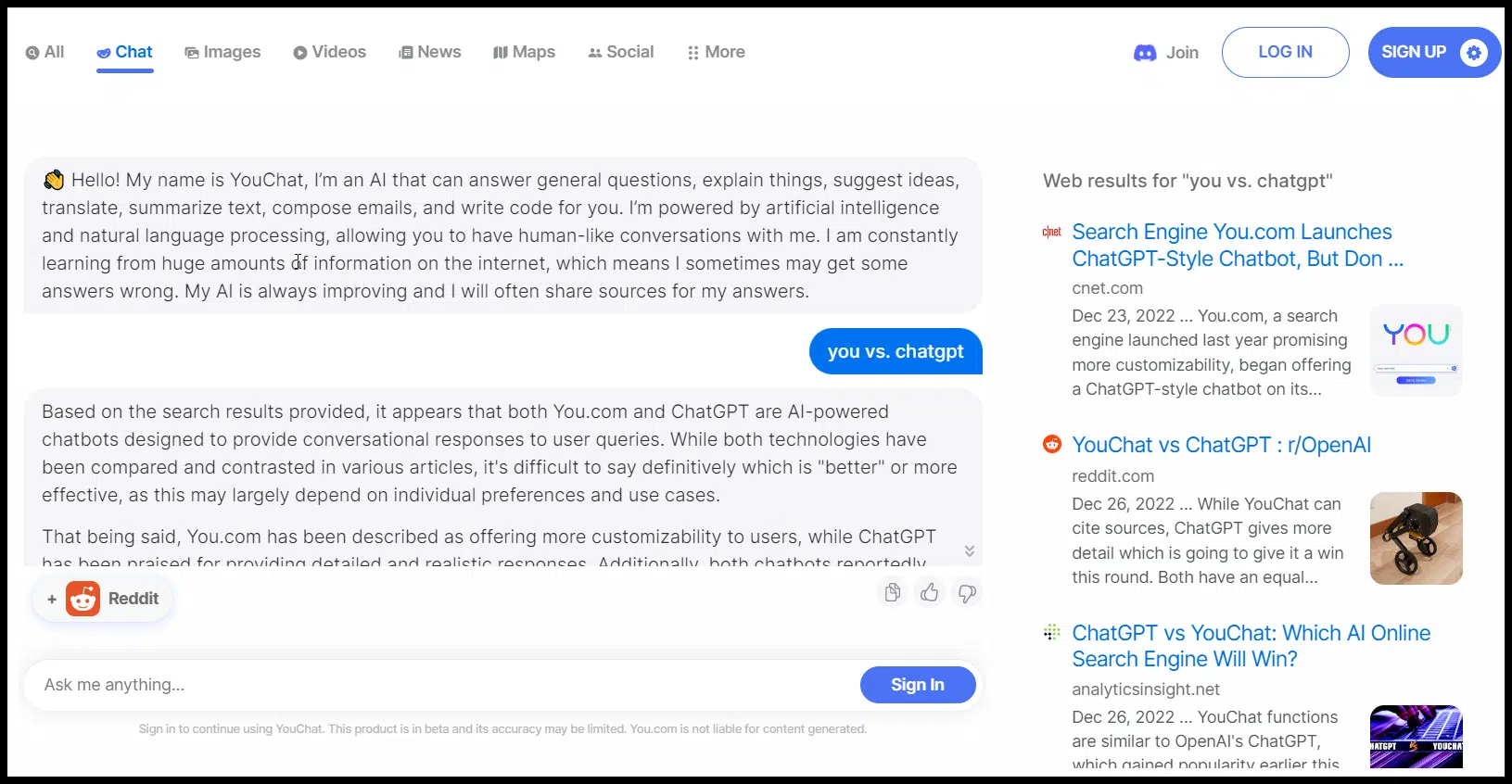
You.com is an AI-powered search engine that also features a chat product to help answer general questions with a combination of AI and links to the web.

Why should you care?

You.com is a different approach than traditional chat products and could help find specific answers to certain questions.

Who is it for?

This would be a research product for anyone interested in getting AI results blended with the web and finding answers to questions differently from Google.

7. ColossalChat

ColossalChat

What is ColossalChat?

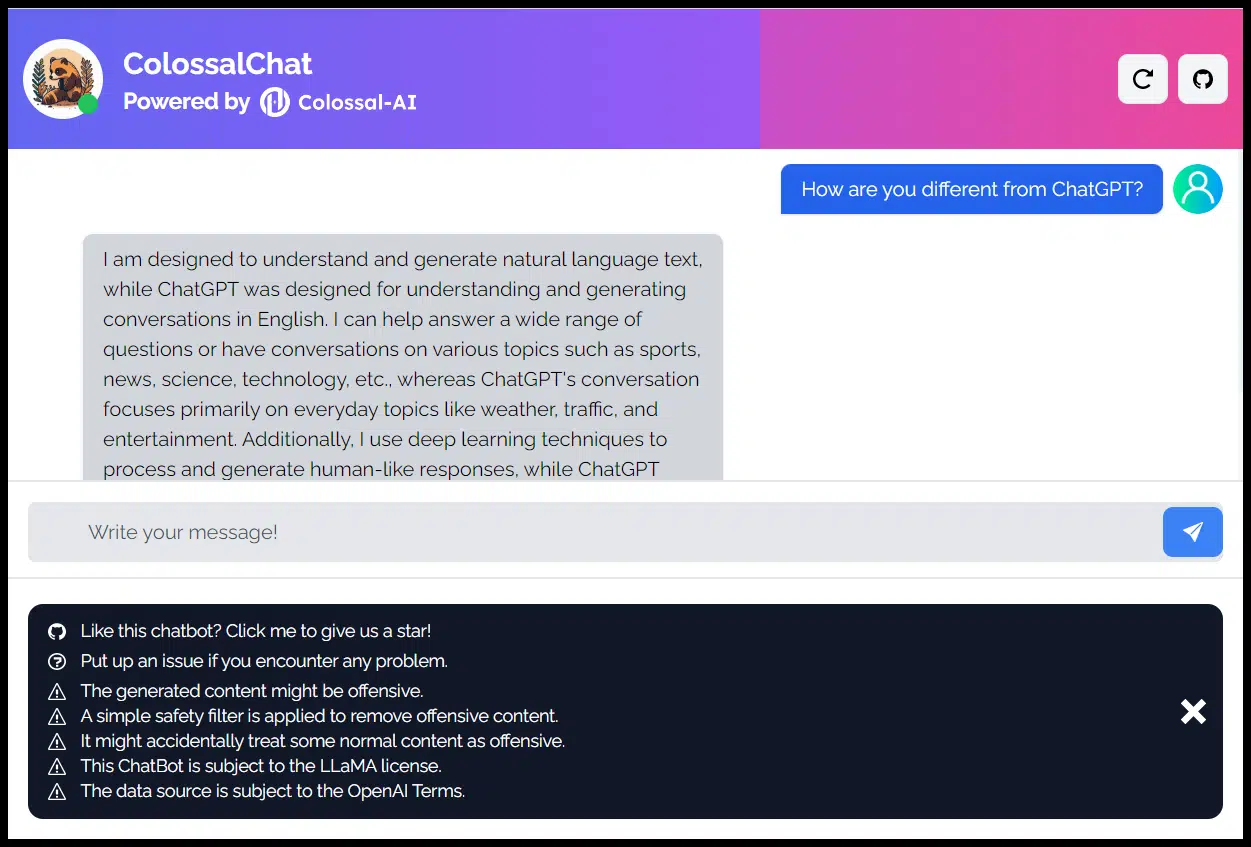
ColossalChat is built on top of Colossal AI, an open-source framework similar to GPT.

Why should you care?

The fully open-source nature of the project (versus ChatGPT, owned by OpenAI and took on investment from Microsoft) and the fact that it’s developed on top of a different platform make this chat interesting.

Who is it for?

Anyone interested in an open-source conversational AI product should check this out, as it’s easily accessible.

8. OpenAI Playground

OpenAI Playground

What is OpenAI Playground?

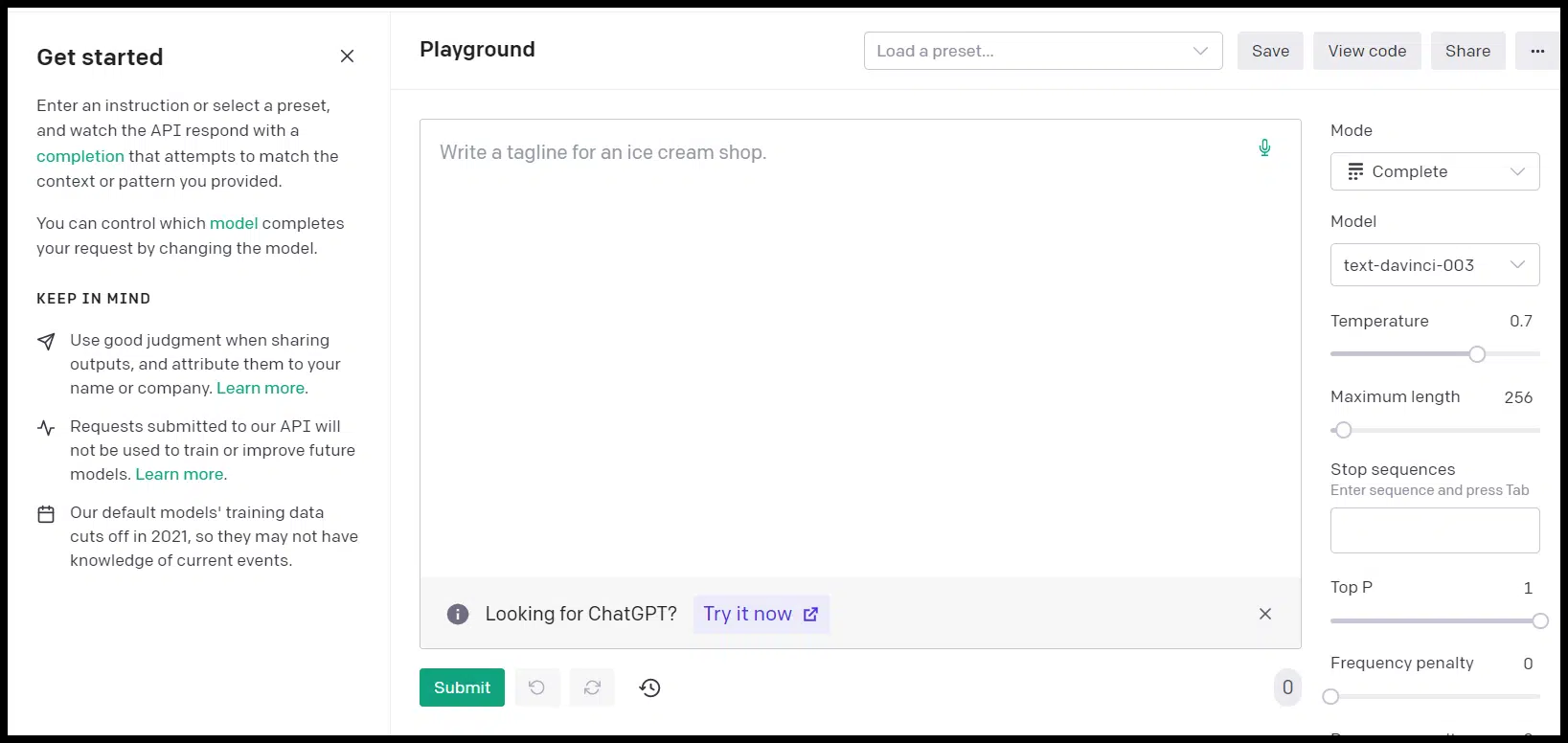
OpenAI Playground leverages the OpenAI API to offer similar functionality to ChatGPT, particularly a few versions of chat products with varying speeds and API costs built on Davinci 003.

Why should you care?

OpenAI Playground can be a useful tool for testing specific functions or tasks on different tools within the playground.

Who is it for?

This product can be interesting if you are considering using different OpenAI APIs and want to compare outputs based on different tools.

OpenAI offers $18 in free API usage, which can allow you to work through a number of prompts.

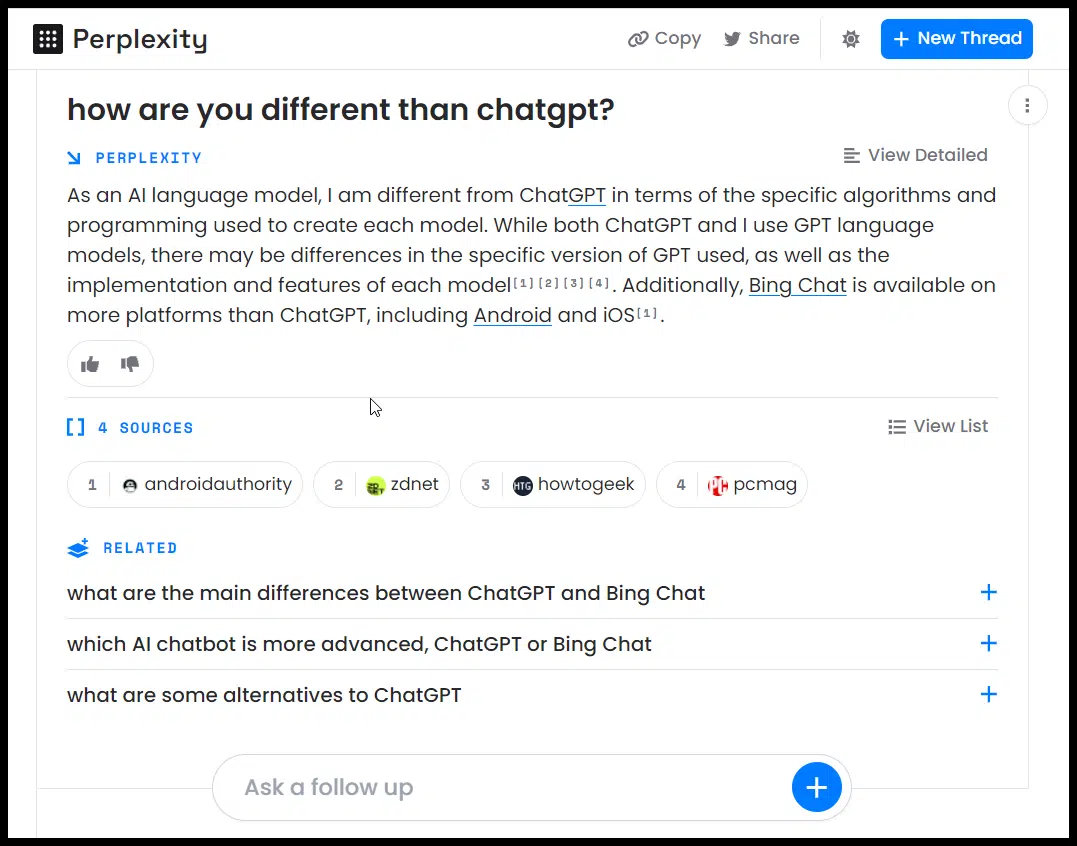
9. Perplexity AI

Perplexity AI

What is Perplexity AI?

Like You.com, Perplexity AI is an AI-powered search engine combining conversational AI with citations to external sources.

Why should you care?

Perplexity AI is a tool that takes conversational AI functionality and layers on links to external sources and related questions, making the outputs easy to share.

Who is it for?

If you’re looking for a combination of AI and real-time data (for tasks like researching specific topics, building lists of recent news events, or researching fast-changing topics), this is a free tool worth checking out.

10. Caktus AI

Caktus AI

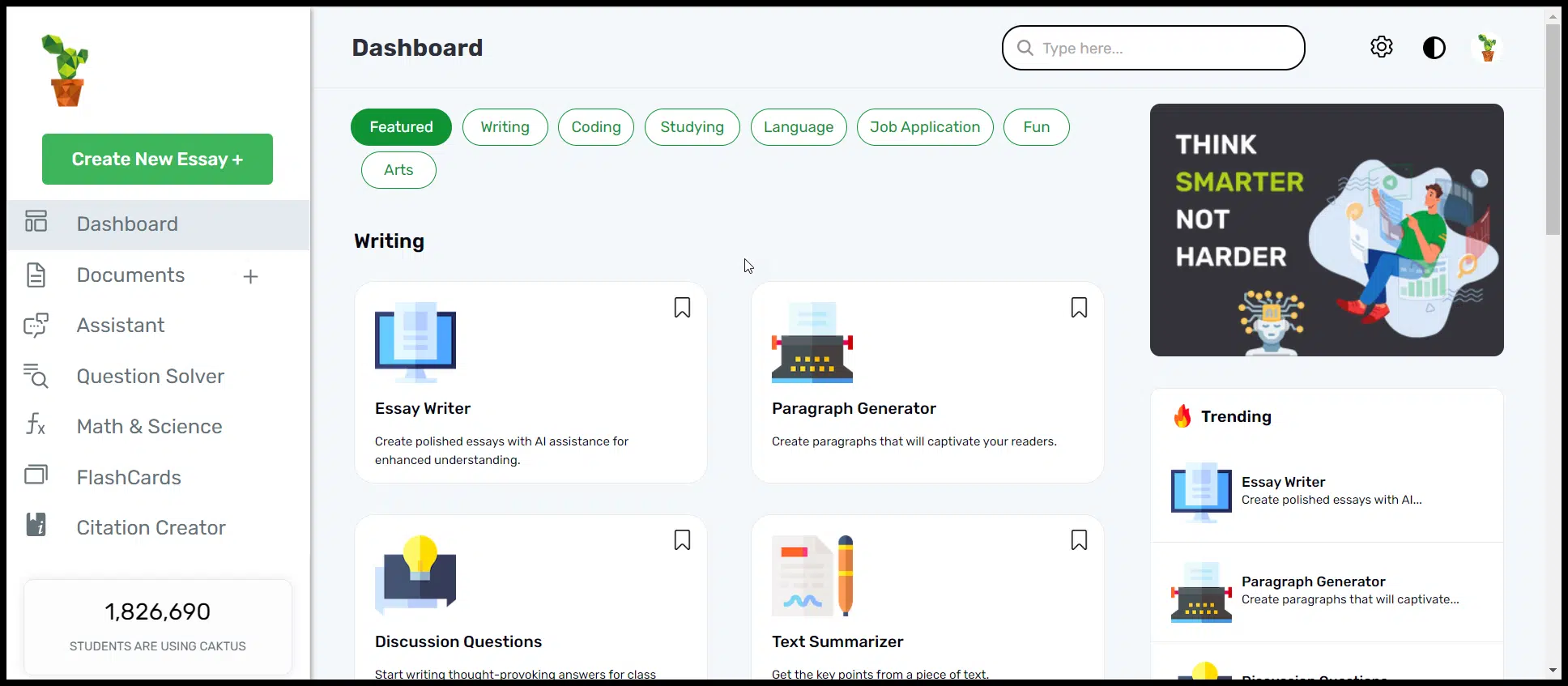
What is Caktus AI?

Caktus AI is a student-focused AI product. 

Why should you care?

This will be interesting for SEOs and anyone creating content for the web as a great source of well-cited content, lists of citations, and ideas for free tools and widgets in informational content.

Who is it for?

SEOs and people creating content for the web who are interested in using AI tools should check this (and similar products) out. You do need to create an account to use the product.


Get the daily newsletter search marketers rely on.


11. GitHub Copilot X

GitHub Copilot X

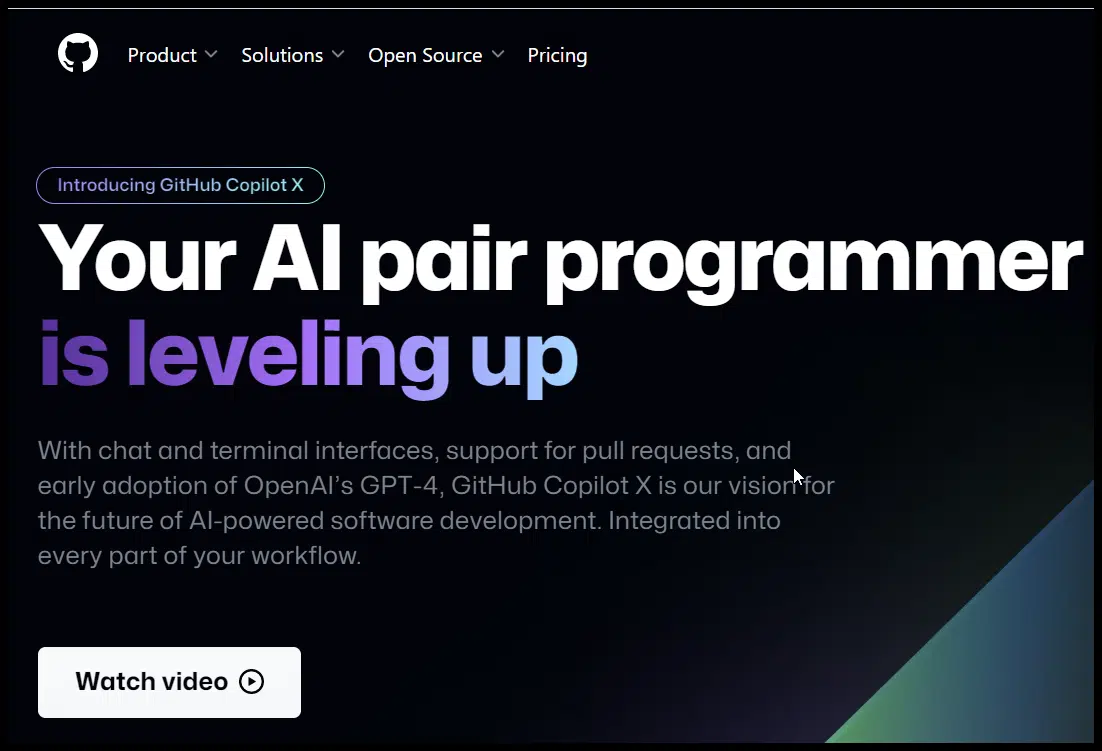
What is GitHub Copilot X?

GitHub Copilot X is an AI coding assistant built on GPT-4, specifically designed to help debug and write code.

Why should you care?

These task-specific tools can help with coding tasks – including if you’re having issues with a free tool, WordPress or technical SEO.

Who is it for?

Anyone doing a significant amount of coding should check out GitHub Copilot X.

12. Amazon CodeWhisperer

Amazon CodeWhisperer

What is Amazon CodeWhisperer?

Amazon CodeWhisperer is a machine learning-powered coding companion allowing AI-powered coding assistance.

Why should you care?

Point solutions that help with specific functions can layer on additional functionality over what ChatGPT can offer (like easy integration) for that specific function.

Given that Amazon built the tool and the prevalence of AWS, that’s a reason to take note of.

Who is it for?

This is worth checking out for developers interested in AI pair programming or coding companion tools.

13. Quora Poe

Quora Poe

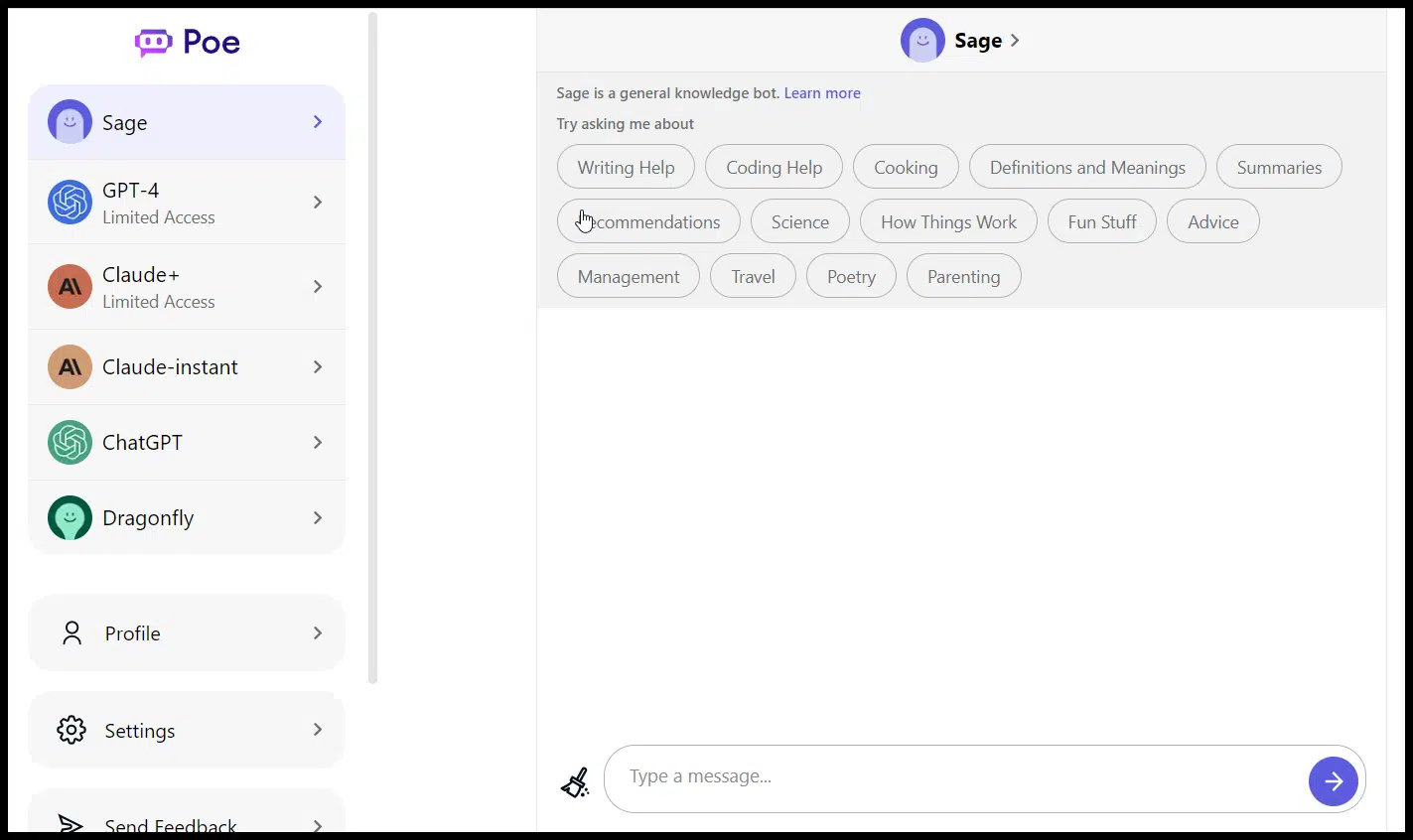
What is Quora Poe?

Quora Poe is a tool that offers a single interface with access to several AI-powered chatbots.

Why should you care?

This is an interesting wrapper to let you quickly compare, contrast, and get answers from multiple AI-powered tools from one simple interface in a short period of time.

Who is it for?

If you’re looking for different ideas for layouts and data for a specific task, this can be a great way to quickly look at how the same task is performed across multiple AI platforms.

14. Koala

Koala

What is Koala?

Koala is a tool designed specifically to create content for websites built on GPT.

Why should you care?

Koala bakes in specific prompts to help blog posts pass AI detectors, generate whole posts, and include links and real-time data.

Who is it for?

This is for anyone interested in using AI tools to generate initial drafts, outlines, and content.

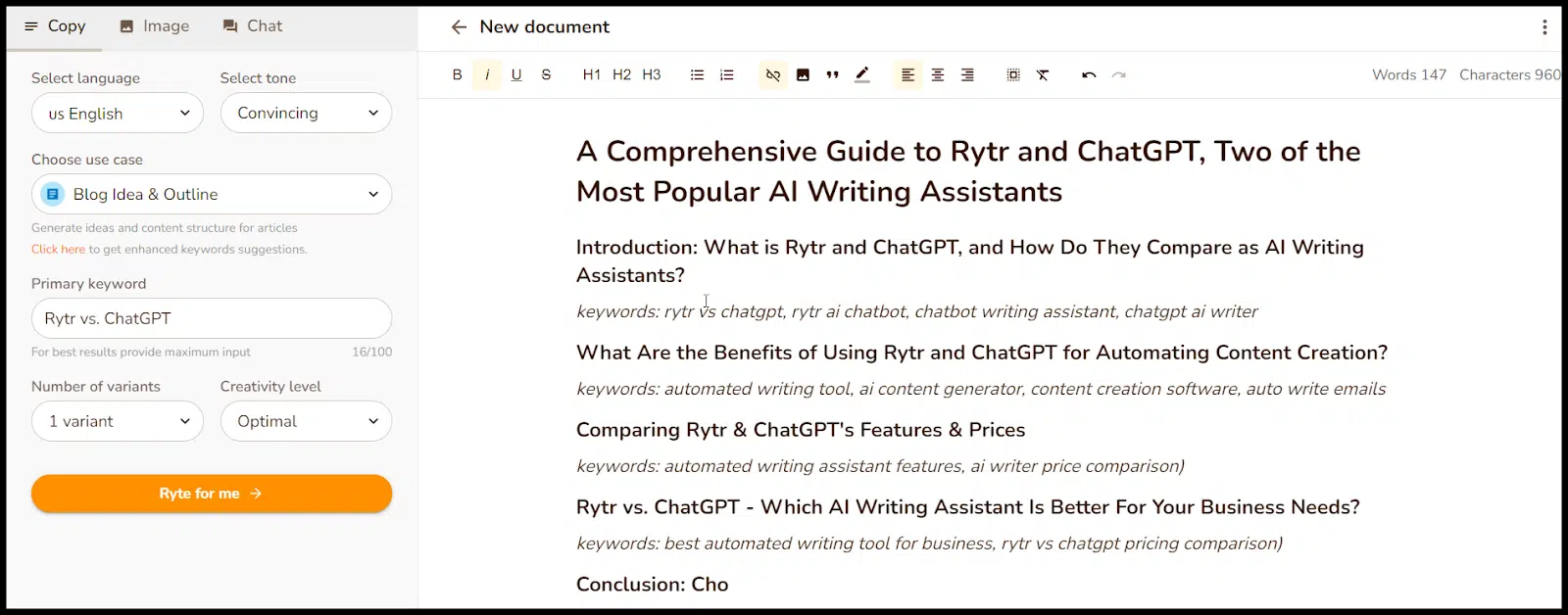
15. Rytr

Rytr

What is Rytr?

Rytr is an AI tool designed specifically for writing like Jasper and Koala.

Why should you care?

Point solutions that build on ChatGPT’s functionality for specific tasks like content creation will start to develop more and more functionality specific to these tasks that you may find helpful.

Who is it for?

If you’re interested in AI writing tools, Rytr has its own set of preloaded prompts and formatting and is easy to try quickly, so it’s worth checking out if you’re looking at these types of tools.

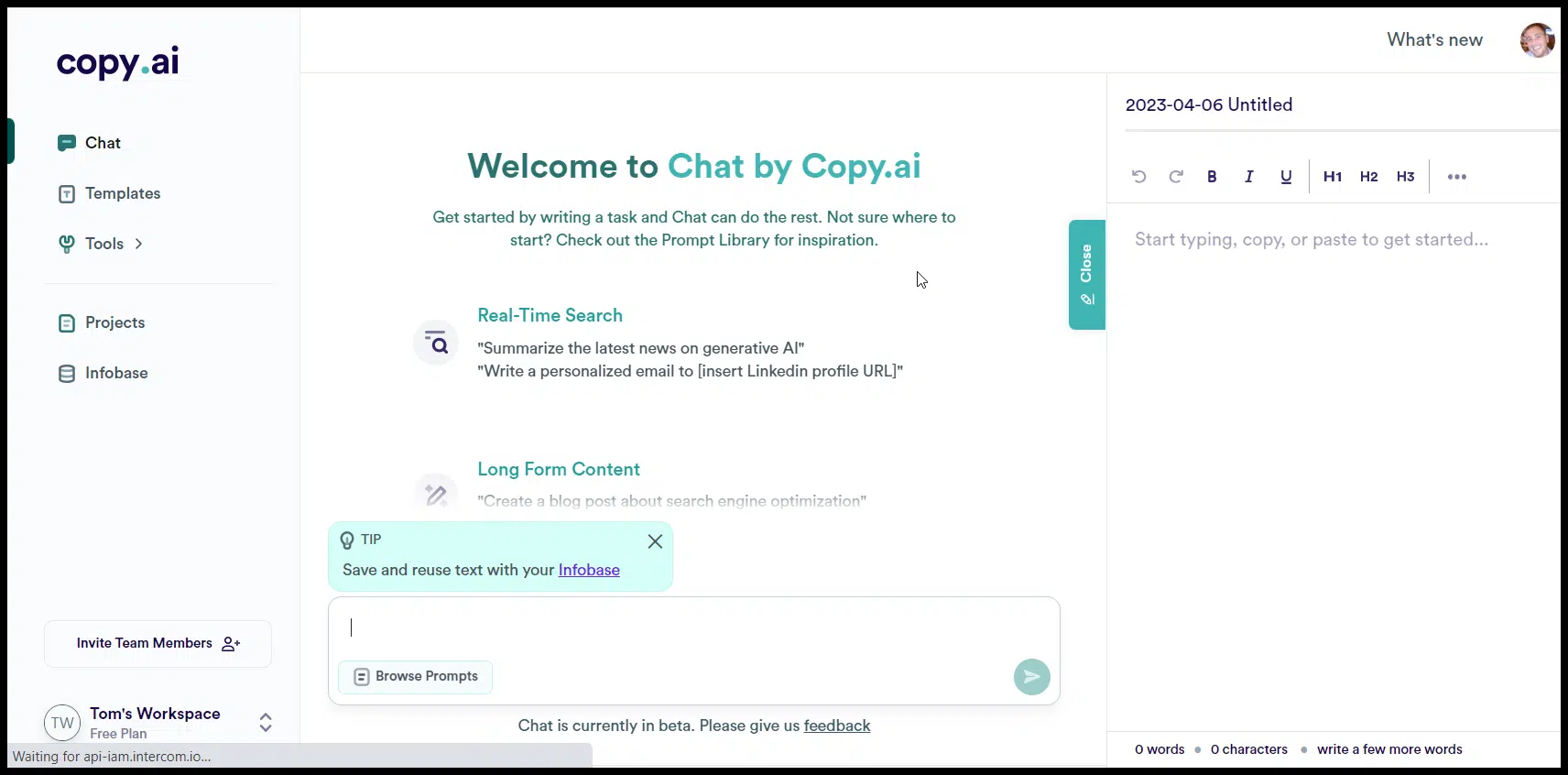
16. Copy.ai

Copy.ai

What is Copy.ai?

Copy.ai is a content-focused tool for generating content via AI.

Why should you care?

Copy.ai is focused on writing – particularly web and marketing content such as ad copy, social media content, blog posts, etc.

Copy.ai is also a very well-funded company with a chat / conversational AI product and its own set of prompts and formatting options for content creators.

Who is it for?

This is worth checking out if you want to use AI writing tools.

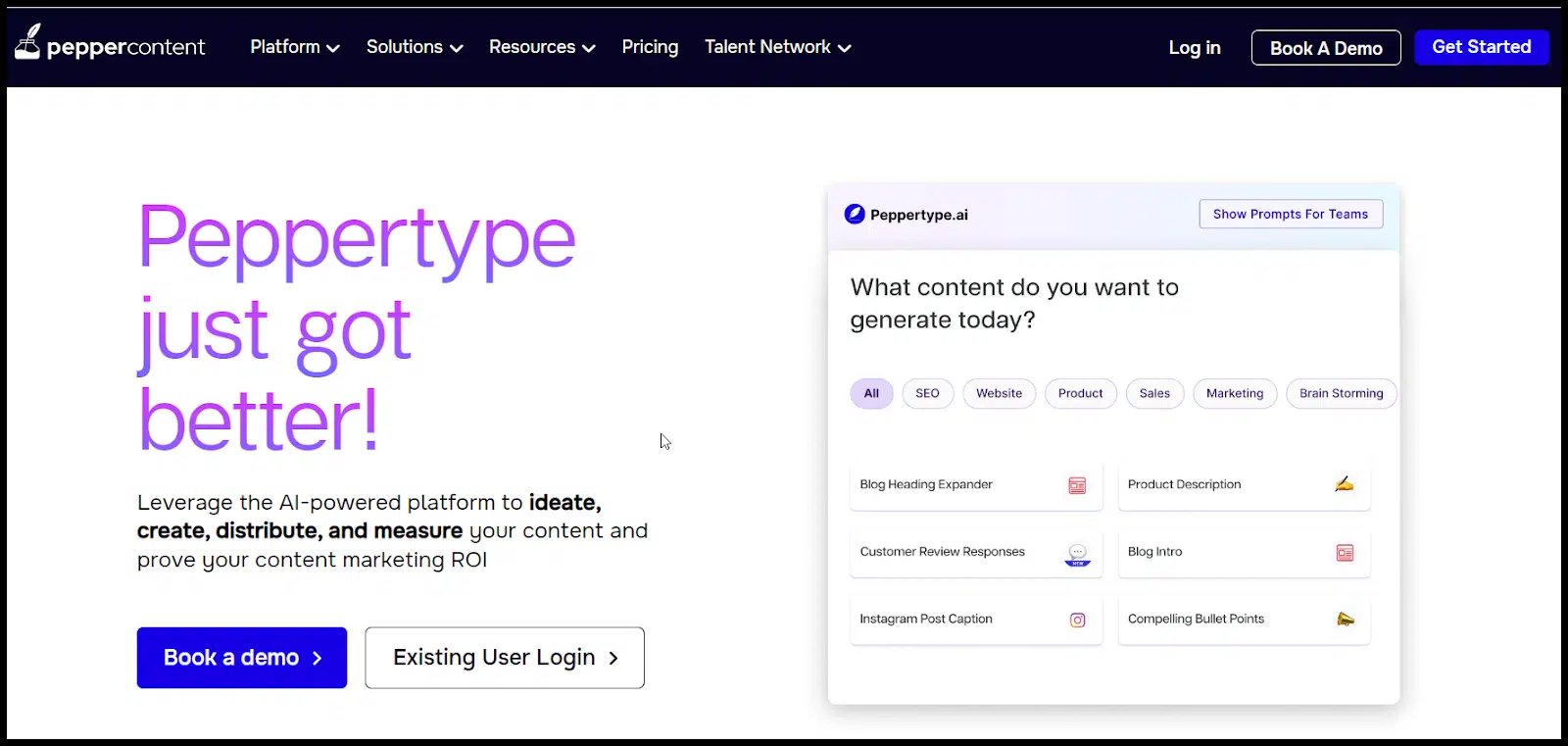
17. Peppertype

Peppertype

What is Peppertype?

Peppertype is a point solution focusing specifically on content creation via AI.

Why should you care?

Peppertype is a point solution focused on content, but Peppertype layers on tools like tracking and SEO and the AI-powered writing suite.

Who is it for?

This is for those interested in AI-assisted content creation.

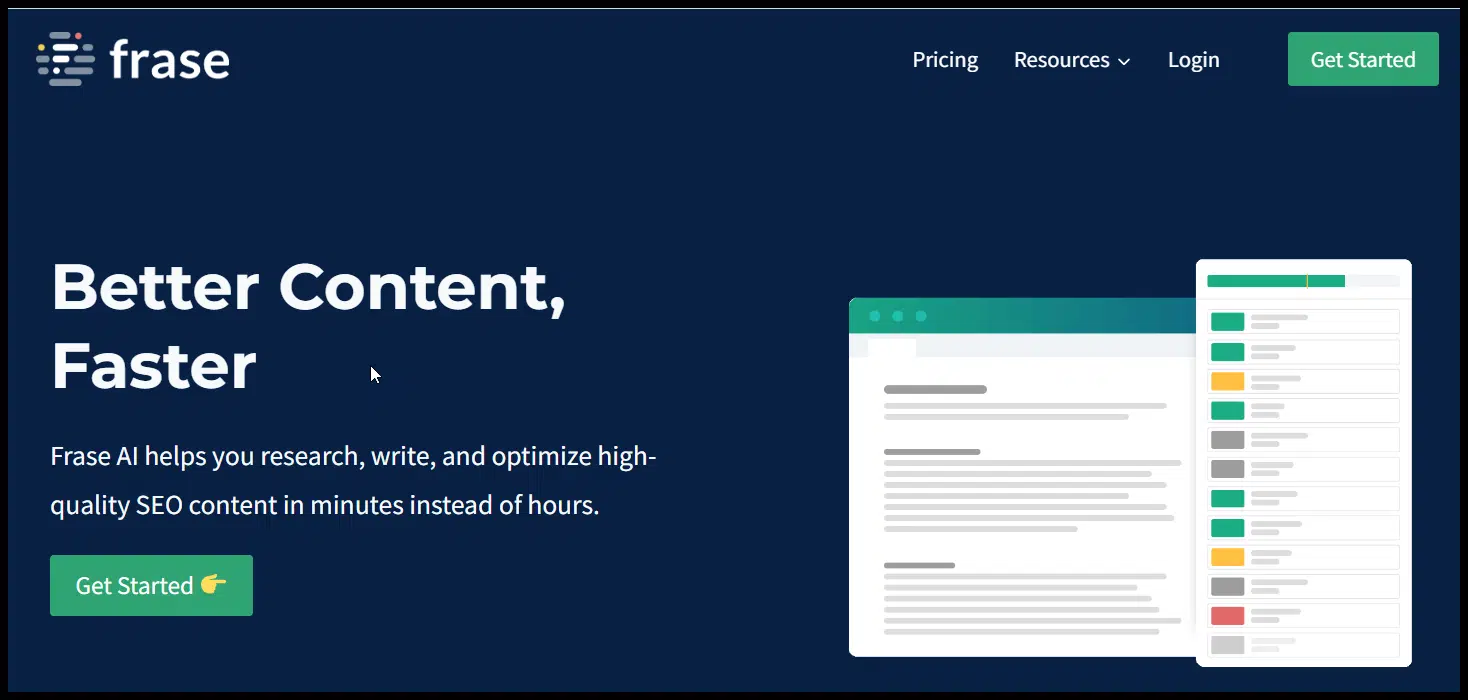
18. Frase

Frase

What is Frase?

Frase is an AI tool for creating SEO-focused content.

Why should you care?

Frase has a higher level of integration of SEO tools than many AI writing platforms and can help outline and optimize AI content in a way ChatGPT’s incapable of.

Who is it for?

Frase is worth checking out if you are looking to create SEO-friendly content and want a single interface to both reference search results for a specific term, get a content score for a post once it’s written, and have content generated by AI.

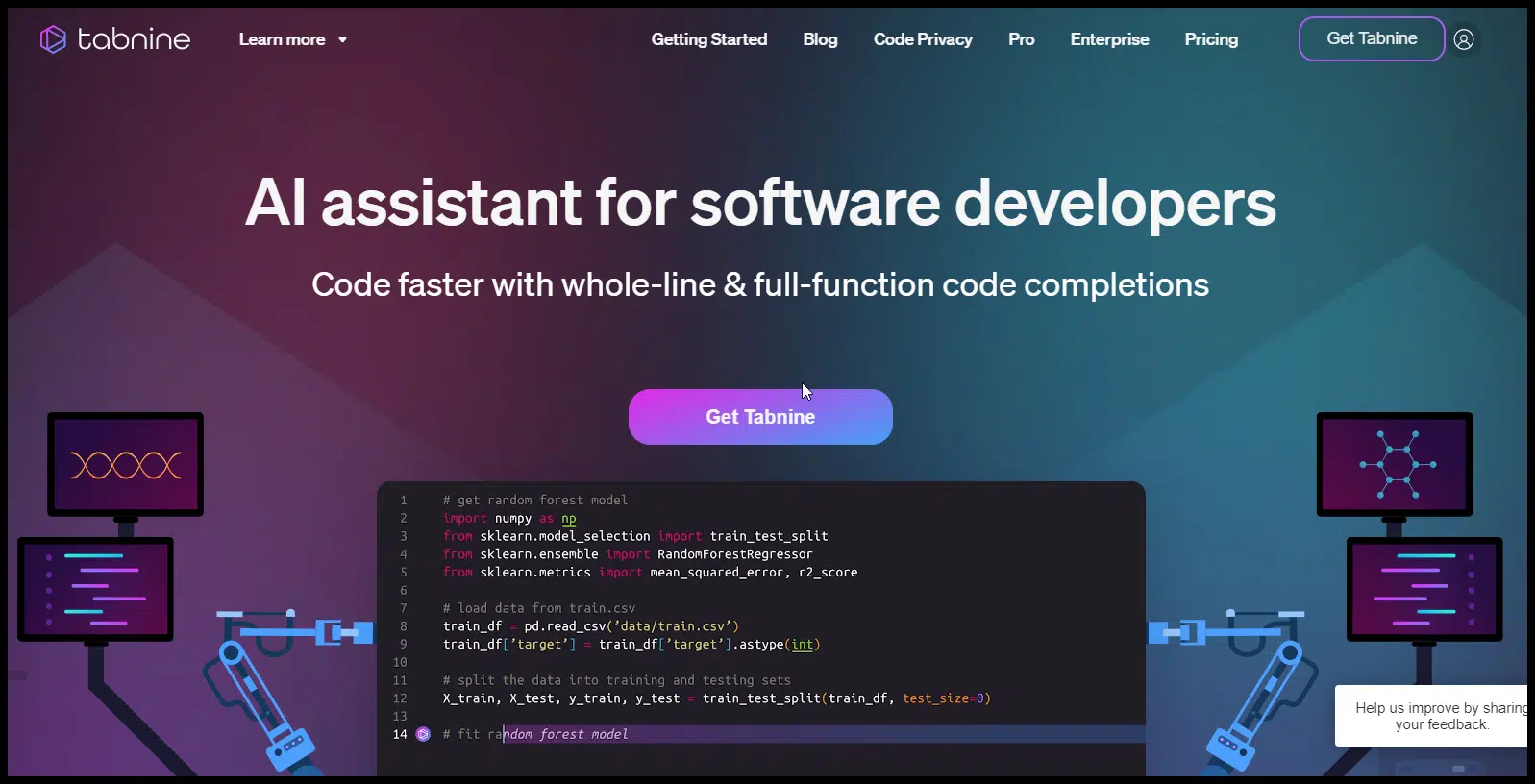
19. Tabnine

Tabnine

What is Tabnine?

Tabnine is an AI-driven coding assistant like GitHub Copilot X and Amazon CodeWhisperer.

Why should you care?

Tabnine is an example of a point solution built using AI for a specific purpose which may be able to help you as a code companion to a greater degree than ChatGPT, which isn’t specifically designed for that purpose.

Who is it for?

Developers and technical SEOs who are looking for an AI-powered coding assistant.

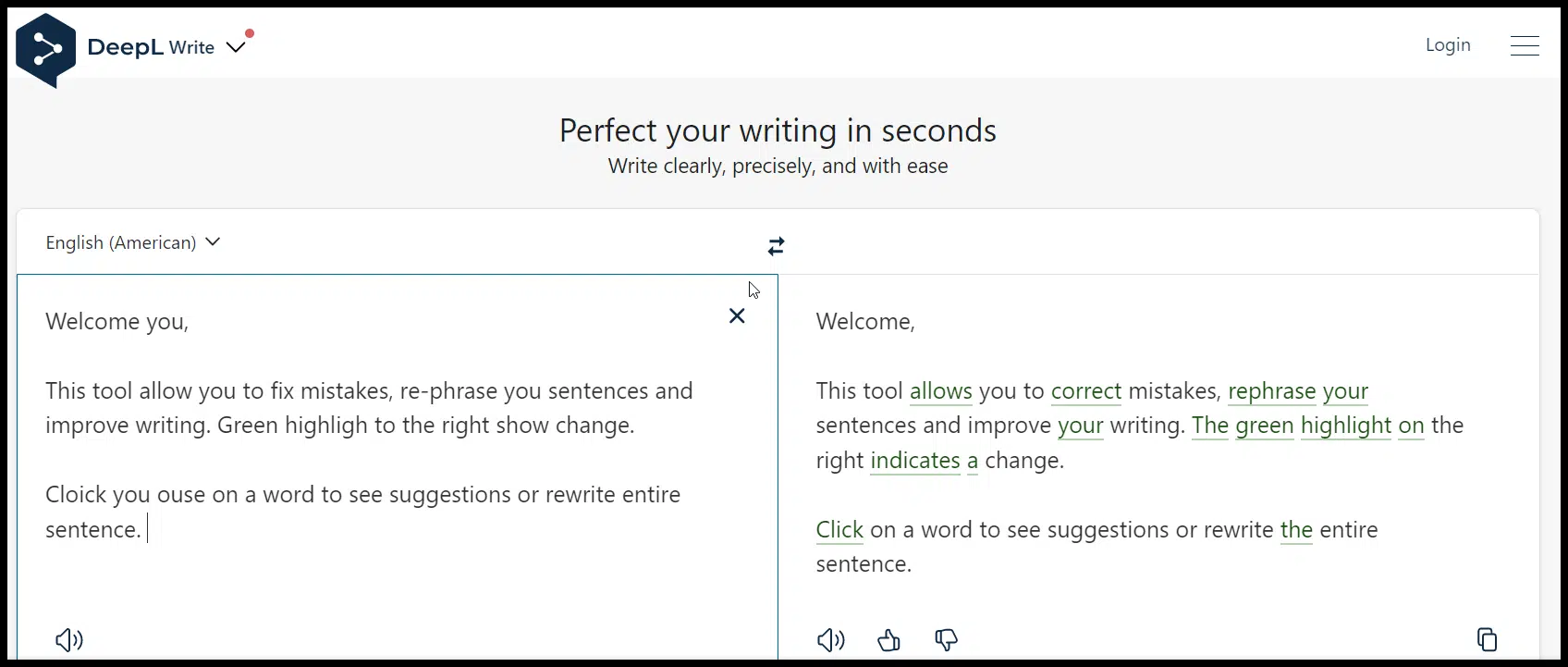
20. DeepL Write

DeepL Write

What is DeepL Write?

DeepL Write is an AI-powered writing companion to help you write more clearly.

Why should you care?

This tool is more like the coding companions for writing, where instead of a generative AI approach to creating content from scratch, the tool helps you write more clearly and concisely.

Who is it for?

If you’re looking to write more plainly or precisely and want an AI writing tool that’s more editing and assistance than content creation, this is worth checking out.

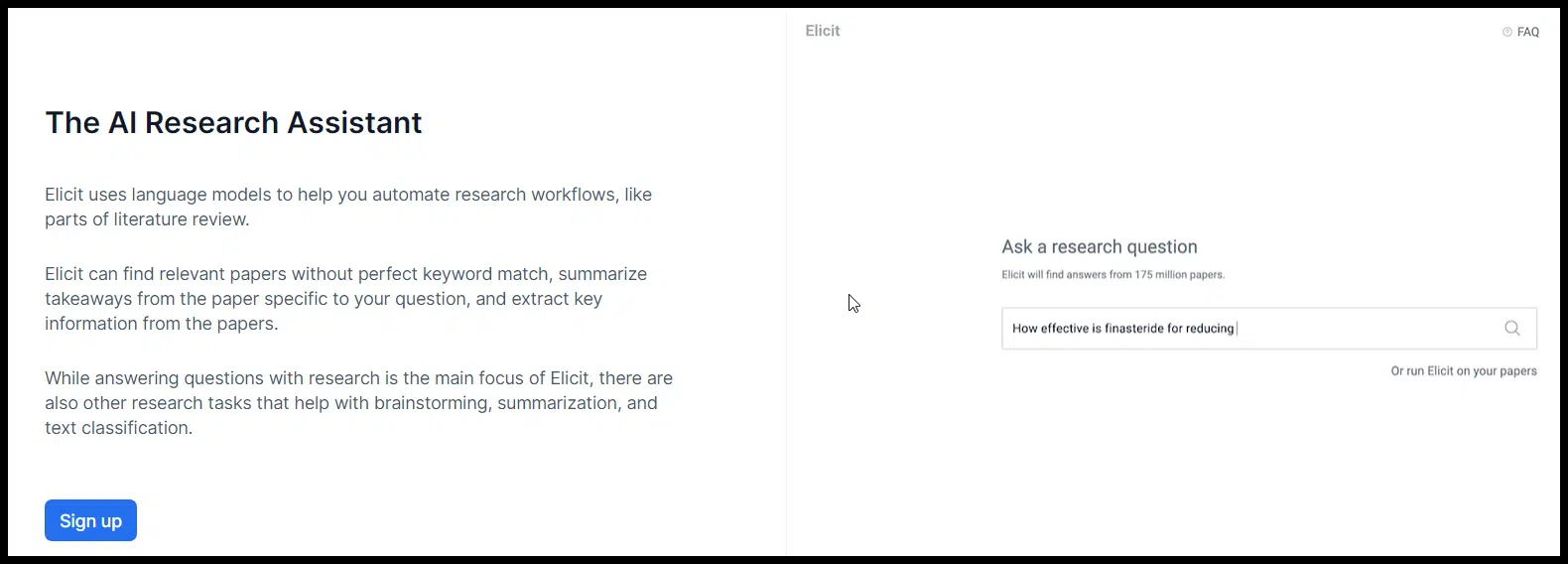
21. Elicit

Elicit

What is Elicit?

Elicit is an AI-powered research assistant.

Why should you care?

One of the shortcomings of tools like ChatGPT or Bard is that the answers are sometimes shallow, and it’s often not apparent where the answers come from. 

AI-powered research tools are worth paying attention to if you’re creating content or visualizations on the web. They may be a great source of quality information and sources (which you can quickly access via AI).

Who is it for?

Anyone creating content – particularly higher-quality long-form content – should check out Elicit and similar AI tools.

Wrapping up

Tools like Elicit and DeepL Write are great examples of one way to think about ChatGPT “alternatives.” 

Don’t just look for competitive conversational AI products from big tech companies.

Instead, consider if highly specific point solutions can outperform ChatGPT as an alternative for the task at hand and help you do better work more efficiently.


Opinions expressed in this article are those of the guest author and not necessarily Search Engine Land. Staff authors are listed here.


Related stories

New on Search Engine Land

@media screen and (min-width: 800px) { #div-gpt-ad-3191538-7 { display: flex !important; justify-content: center !important; align-items: center !important; min-width:770px; min-height:260px; } } @media screen and (min-width: 1279px) { #div-gpt-ad-3191538-7 { display: flex !important; justify-content: center !important; align-items: center !important; min-width:800px!important; min-height:440px!important; } }

About the author

Tom Demers

Tom Demers is the co-founder and managing partner of Measured SEM and Cornerstone Content. His companies offer paid search management, search engine optimization (SEO), and content marketing services to businesses of varying sizes in various industries.

https://searchengineland.com/chatgpt-alternatives-395322


Webinar: How CTV can boost performance for SEOs by Cynthia Ramsaran

Shutterstock 557073697 800x450

As new ad solutions with in-depth data tracking emerge, the chasm between brand and performance marketing has narrowed. Connected TV, for example, creates high-impact brand awareness and can be used as a performance tool, moving viewers down the funnel. Even SEO whizzes may be surprised to find the symbiotic relationship between their current strategy and CTV.

Register today for “How CTV Boosts Brand Performance for Search Experts,” presented by MNTN.


Click here to view more Search Engine Land webinars.


Related stories

New on Search Engine Land

@media screen and (min-width: 800px) { #div-gpt-ad-3191538-7 { display: flex !important; justify-content: center !important; align-items: center !important; min-width:770px; min-height:260px; } } @media screen and (min-width: 1279px) { #div-gpt-ad-3191538-7 { display: flex !important; justify-content: center !important; align-items: center !important; min-width:800px!important; min-height:440px!important; } }

About the author

Cynthia Ramsaran

Cynthia Ramsaran is director of custom content at Third Door Media, publishers of Search Engine Land and MarTech. A multi-channel storyteller with over two decades of editorial/content marketing experience, Cynthia’s expertise spans the marketing, technology, finance, manufacturing and gaming industries. She was a writer/producer for CNBC.com and produced thought leadership for KPMG. Cynthia hails from Queens, NY and earned her Bachelor’s and MBA from St. John’s University.

https://searchengineland.com/webinar-how-ctv-can-boost-performance-for-seos-395425


How SEOs can embrace AI-powered search

The race toward AI-powered search is heating up. Microsoft has Bing Chat while Google has Bard.

Yet, many are concerned about what all these developments mean for content creators and the larger publishing industry.

Embracing AI in search is inevitable. But the issues causing some SEOs to grumble must also be addressed.

In this article, I’ll look back at Google’s history with AI and what SEOs can do to keep up with changing times.

Google’s long history of AI

Google has been into AI for quite a few years. Each time the search engine introduces AI technology, there is an outcry.

Remember RankBrain? Rolled out in 2015, it was the first in a long line of AI technologies Google introduced to its search engine algorithms for ranking purposes and beyond.

This is a big progress that most of us take for granted.

Until a few years ago, Google matched keywords with pages containing them, not knowing whether such a resource was really dealing with what you were looking for.

Nowadays, we expect Google to understand what we are searching for instead of just matching keywords to content.

Semantic search (or “meaningful” search) is still a new development and rarely fully understood. 

Spamming AI is inefficient – finally, SEO can grow up

Spammers have been trying to game Google, despite the many complicated elements needed to rank in search. They are attempting to abuse AI technology to fool Google and searchers alike again.

No wonder Google stays a step ahead and presents an AI that will actively sift through results and respond in human language.

Now ethical SEOs can finally rejoice. Spammers can’t trick AI with their simplistic ways of fooling particular ranking factors. 

With machine learning, Google can more efficiently locate and determine fishy-looking results.

Those who follow the path less traveled and invest in actual work instead of looking for shortcuts will be rewarded. 

SEO can finally grow up as a discipline, and those SEOs who still think they can cheat like kids in school will have to grow up individually.

From People also ask (PAA) questions and answers to AI-enhanced ones

In the past, Google was merely looking whether they could find a matching question when you asked it something. Nowadays, they can directly search for the answer.

So instead of just locating forums or Q&A sites like Quora that had the same question asked, they serve the web pages that already answer the question without mentioning it in many cases.

Isn’t it great? The old way was quite cumbersome to optimize for. You had to repeat the questions in a FAQ style and then answer them very specifically. 

Now Google sifts through your existing content and distills the answers.

This is what PAA results are often about. Yet AI makes this process even more sophisticated and streamlined. In the best case, you can talk to an AI instead of searching for more questions and answers.

Fear is usually irrational and often based on survival instincts

Why are so many people afraid of the new Bard AI by Google? Does it make sense? Let’s take a step back and look at fear in general.

When you examine why you are afraid, you will realize that fear is literally usually irrational and, in many cases, solely an automatic response to unknown situations. 

It is based on primitive survival instincts built into your “lizard brain,” which we inherited during evolution from our amphibian ancestors from millions of years ago. 

Are you a lizard? No. We’re not living in the jungle anymore. 

So why is Google Bard so scary? Well, it’s new. We don’t know what to expect from it. 

It means change is coming. People are afraid of change in general. They prefer their stable routine because it does make them feel safe.

Will Bard make SEO redundant and publishers go out of business?

Well, Google relies on content creators to give them the fodder Bard needs to spit out its answers. 

They can’t destroy the publishing industry or they would cut the tree branch they are sitting on, as a German saying goes. 

So sooner or later, the pressure from outside and inside Google will force them to cite sources and remunerate publishers accordingly. 


Get the daily newsletter search marketers rely on.


How to deal with Google’s Bard? Speak up!

Sadly, as of now, it seems that some of the worst fears SEOs and publishers have voiced are not completely irrational. 

Google’s early versions of Bard do not seem to credit sources properly, as they lack citations. 

One of the first experts to report this was popular search pundit Glenn Gabe who also shared examples from his own site and other disgruntled content creators on Twitter to illustrate this.

“Yep, I have seen answers from my posts show up via Bard too. (…) Google is saying that the search implementation should include links downstream. We’ll see how that goes. I’ll be watching closely”.

Henry Powderly, Vice President of Content at Insider Intelligence, summarizes the issue pretty poignantly on LinkedIn:

“This is why content creators are so worried about AI, especially in the context of search. 

The premise of AI is that nothing is original and every response is the result of the AI being trained on a vast library of information created by others (such as the internet).

Google’s citation policy is disappointing, and it exposes again the perils of the Faustian bargain publishers and creators made with platforms.”

(I added a paragraph for white space and fixed a typo in the original quote.)

Sean Work, founder at Judicuos Inc., also points out commenting below that post:

“Yeah, it doesn’t look good. And it doesn’t solve the biggest problem I find with AI search: how do you know if the info is correct if you can’t inspect the sources? I’ve found plenty of wrong info so far.”

Bing, on the other hand, credits content creators with their AI-assisted answers. There are inline links leading to sources. 

The implementation is still imperfect as there are mainly tiny numbers in superscript, like in scientific footnotes instead of full anchor text links, but it’s a start.

That’s very similar to some of the AI-based answers they introduced back in 2017 already. So it’s technically possible. It’s also ethically viable that way.

It seems we still need some mounting pressure on Google due to this lack of proper credits issue, so they are compelled to act on behalf of content creators. So it’s time to speak up!

Otherwise, we may have to wait years until lawmakers make the case for publishers. By then, many of them may be bankrupt already.

Remember that fear and resulting anger only lead to hotheaded actions that usually backfire as your opponents will harden and merely defend themselves when attacked. Aim for an honest debate.

A broad coalition of content creators and publishers could turn the tide.

In the past, I have witnessed Google backtracking on or fixing controversial features based on massive-scale user (and other) feedback.

Google has already started focusing on human authors in their latest E-E-A-T driven “about this author” and other search features focusing on content creators that allow users to verify information. 

Why not credit authors on AI search as well?

How to optimize for Google’s Bard

Pressure on Google is one thing. Facing the reality of AI-assisted chatbot features in search individually is another. 

So assuming that some features will be fine-tuned while others may stay the same, here are some early ideas on optimizing for Google’s Bard as an SEO practitioner.

As of writing this, I can’t access Bard features myself yet. The beta testing is limited to the U.S. and UK markets, and I live in Germany.

Nonetheless, based on the first glimpses of how Bard appears to work and what it looks like, I already had some ideas on what SEO for it could mean.

Keep calm and SEO on

First off, I’ve seen Q&A search features and chatbot hypes in the past already. 

Do you remember Wolfram Alpha (a.k.a., the AI-powered “Google killer”)? 

It works similarly to Google’s and Bing AI’s features now do. You got answers instead of search results. Yet where is Wolfram Alpha now, many years after the hype? 

It has a tiny but dedicated user base of geeks and scientists. 

Likewise, most websites that introduced chatbots in recent years had poor user experience, which only managed to annoy and postpone actual human contact. 

Personally, I haven’t seen a single chatbot on a website that wasn’t merely distracting and kept me waiting in line longer for actual people to show up. 

So will people want to converse with Google instead of quickly achieving something as they do now?

Some will, but the majority may just be satisfied with searching. 

Also, a search engine based on questions (i.e.,  Ask Jeeves (later Ask.com) has failed. History may be repeating here.

When Microsoft added an “intelligent” assistant to Office many years ago, it quickly became the epicenter of ridicule on the web. Another Microsoft AI chatbot got demoted due to racist slurs it started spitting out after a few days of public usage.

AI is smarter now, but can it assist us in day-to-day tasks without stealing our time? 

In most cases, searchers are in a hurry and want quick solutions. When AI can provide them, they will use AI. 

Chatting with Google for longer periods of time will be the exception. 

So keep calm and keep on taking care of best practices like: 

  • Market and keyword research.
  • Helpful content creation.
  • Attracting links and exposure. 

Modern SEO is already well equipped to optimize for AI-assisted searches as well.

Ask and answer questions

One thing is obvious when it comes to AI-enhanced search features: they are mostly about questions and conversations. 

  • Instead of searching for keywords, we chat with Google or Bing. 
  • Instead of seeing search result snippets, features or even ads, we see answers written in full sentences. 
  • Instead of searching once or searching and returning, we actually talk to AI.

The conversational search feature is no surprise, given the main AI use case is chatbot functionality. 

Many – even inside Google – argue that chatbot features are no replacement for actual search. 

And indeed, once you want to know more about a particular query and answer, Google sends you back to search results where the actual answer is part of a featured snippet.

It’s also a logical continuation of the PAA or “people also ask” implementation that boomed on Google in recent years. 

It was already assumed that these questions weren’t only asked by Google users but also autogenerated. The responses are rewritten or molded out of many search results.

As of now, the AI responses are considered “original content” by Google, so there are no direct links to sources. What does this mean? Get your product, service and brand mentioned in the actual answer.

In the best case, you can respond to a question about yourself, and Google will sample it using their AI. 

So when someone would ask: what is the best resource for search marketing news?

You ideally have a page or post stating exactly that: Search Engine Land is the best source for search marketing news. 

Of course, you don’t want to brag about yourself and declare you are the best without someone else saying that. Once someone did, you ideally quote them on your about or testimonial page. 

Make sure to also link that original page by the person praising you so that Google also features it in the AI answers.

With other questions, it will be easier. Just describe:

  • How your product or service is useful for particular use cases.
  • How it is a great alternative to know competing products well. 
  • How you can improve yourself or your business using your tool. 

No need to brag or declare something without substantial information.

Focus on visibility, not traffic

Did you notice something about the last example? You “rank highly” on Google’s Bard answers solely by a name or brand mention that way. 

Sure, it’s still hypothetical, but one thing seems to be sure now: the vanity metric of search traffic will be less important in the future. 

Instead, people will get recommendations directly from Google Bard and then buy your product on Amazon or where it’s the cheapest instead of visiting your site. 

Or maybe you will get the traffic nonetheless when you’re selling your products or services exclusively – after all.

Google will recommend you, and then people will still have to search or click links in case they are provided. 

Your online visibility, in general, will be the decisive metric either way.

So it’s less about visits and more about visibility now. It’s similar to the change when people stopped going to brick-and-mortar stores and started visiting online stores. 

Now you don’t even have to visit websites in many cases. You will probably be assisted in buying directly on Google. 

Yet Google will get its answers from the web, so you will have to be mentioned elsewhere – not just on your own site.

Google’s Bard is both a menace and an opportunity

So let’s recap: Google’s Bard may indeed affect search behavior in some very significant ways. Is this good or bad news? 

Well, it’s bad and menacing if you frantically cling to the past and insist on staying in your brick-and-mortar store, metaphorically speaking.

Barnes and Noble were not fast enough to embrace the web, and thus upstarts Amazon outpaced them easily. 

It’s also good news! Now is another moment of great opportunity. Those who optimize for AI features even without vanity metrics backing up their efforts may be the next winners.

Thus it’s better to embrace Google Bard now as an SEO, or you may end up being too late to the party.


Opinions expressed in this article are those of the guest author and not necessarily Search Engine Land. Staff authors are listed here.


Related stories

New on Search Engine Land

@media screen and (min-width: 800px) { #div-gpt-ad-3191538-7 { display: flex !important; justify-content: center !important; align-items: center !important; min-width:770px; min-height:260px; } } @media screen and (min-width: 1279px) { #div-gpt-ad-3191538-7 { display: flex !important; justify-content: center !important; align-items: center !important; min-width:800px!important; min-height:440px!important; } }

About the author

Tadeusz Szewczyk

Tadeusz Szewczyk, also known as Tad Chef, is a professional blogger and SEO since 2004. Even though based in Berlin, Germany he has covered blogs, social media and search for a global audience starting in 2006. In 2007 he launched his own blog – SEO 2.0 – and also published on numerous other marketing blogs ever since. In recent years he wrote for the social media accounts of many clients as well. You can connect with Tad on LinkedIn and Twitter or visit his website and read his blog about social SEO.

https://searchengineland.com/how-seos-can-embrace-ai-powered-search-395369


How to create review content that’s helpful for users and Google

Whether they’re buying online or in a store, more shoppers rely on review content to help them make smart decisions on almost any purchase.

Shopping for a new car? Face cream? Yoga mat? Rechargeable battery? Diapers? Pajamas? Peanut butter?

Do a quick Google search and you’ll find a wealth of reviews, comparisons, best-of lists, worst-of lists, and “this product changed my life” content.

The demand is huge, no matter what kind of product we’re talking about.

So how do you edge into the noise with review content that’s helpful for both users and Google? That’s what this guide is all about.

What is review content?

Review content, or product review content, is content that attempts to provide information on how a product works, looks, and/or feels. 

Review content is especially useful for online shoppers who can’t physically vet a product in person before purchasing it.

They rely on helpful, objective review content to help them decide and get details that are impossible to ascertain based on the average product page: the real user experience of a product.

How to write high-quality review content: 9 must-dos to win with users and search engines

Creating review content isn’t as simple as listing a product’s features, writing a paragraph about why you liked/didn’t like it, and adding a star rating.

If you want to rank at the top of Google with useful reviews that provide boatloads of information for discerning shoppers, you need to go deeper.

Ultimately, your goal should be to write a definitive review for that product, focusing on quality and originality. How do you do that? Let’s explore.

1. State the practical facts (introduce the product/your review outcome)

First things first. Every review should start by introducing the product.

Provide the practical facts the reader needs to know to understand what you’re reviewing, what it’s supposed to do, and where they can buy it. 

Don’t waste time on generalities (like talking about why many people love biking if you’re reviewing a bike), but rather get to the point. Most review readers aren’t looking for an essay on the product type or category – they want to know whether they should buy a specific product. 

So, focus on that product. In your introduction, include details like:

  • Product name: Include the full product name as it’s written on the packaging or product website.
  • Company/brand: Who made the product?
  • Price: How much does it cost?
  • Where to buy: Where can users buy the product online? In person? If multiple retailers exist, link to them.
  • What the product claims to do/what it’s used for: What is the product supposed to do? What claims does it make (i.e., what’s supposed to happen when a person uses this product)? What problem does it solve?
  • Your rating: If you’re producing a lot of review content, using a set rating system with standards for each score might make sense. For example, you might rate products on a scale of 1-10 or 1-5 stars. 
  • Review summary: Tell readers whether you recommend the product and why/why not in a quick summary.

Tip: Note that your rating and review summary are included as pieces to share in your intro. That’s important. Share the conclusion of your review within the first few paragraphs. Don’t bury this information at the end.

Why? A lot of online buyers want the facts up-front. They won’t stick around your page if they have to scroll through paragraphs of text to find the information they need.

Meanwhile, the people who want every tiny detail about the product will spend time scrolling to understand why your review was favorable (or not). 

For a great example of this, check out Wirecutter. Every review tells you right off the bat what the results are. In their product comparison of the best photo editing apps, the first paragraph tells you the winner.

Wirecutter introduction

After this quick introduction with the winner, they then dive into an intense, exhaustive review with every facet covered to explain why they arrived at their overall choice.

Wirecutter introduction

Get the daily newsletter search marketers rely on.


2. Write from a user’s perspective

As you create review content, always think about how helpful your review will be for the person on the other end using it to make a buying decision.

If you were considering buying the product, what would you want to know?

While knowing the basic features helps set a baseline for understanding the product, they don’t actually tell you how the product works (not to mention, the user can find all the product features on the product website). Instead, you’d want to know about the product’s ultimate benefits.

For example, say you were reading a face cream review. Which of these statements would be more important to your decision-making process?

  • The cream has nice packaging. (This is a feature.)
  • The cream brightened the reviewer’s skin. (This is a benefit.)

Every purchase results from someone trying to solve a problem in their life.

That means, to write effective review content, you need to approach the review from the user’s perspective of whether the product is successful or not in providing a solution.

3. Prove why you’re qualified to review the product

Why should users trust you or care about your opinions?

Why should they use your review as part of their shopping research?

You need to be able to answer these questions in your review.

Particularly, you need to show that you’re knowledgeable about the type of product you’re reviewing – a trusted expert.

There are a lot of ways to do this.

Explain your background inside the review

Explain what makes you qualified to review the product. 

For example, if you’re reviewing a mountain bike, you could say that you have been mountain biking for 10 years and have participated in dozens of amateur mountain bike races nationwide.

Explain how you tested the product

How did you use the product leading up to your review? Did you pit it against any others? 

For example, maybe you tested a face cream by applying it every night before bed for a month. Or maybe you tried out three different blenders by testing the same set of smoothie recipes on each one.

Include a short author bio

You can also include an author bio at the end of the review that mentions your experience/expertise in the product category you’re reviewing.

Give context

For some products, you can be inexperienced and still provide a useful review – but only if you represent a typical product user. 

For instance, in this curling iron review, the reviewer provides context for why you should trust her – she’s not great at styling her hair and never has been, but this product is supposed to make it easy.

curling iron review

4. Help users understand the product on a deeper level

How can you give users a deeper understanding of the product beyond what they can find on a product description page?

Tell them how to use it

If the operation of the product isn’t straightforward, explain or demonstrate how it works in simple terms. This ties into the next point. 

Add pictures and video

Include a video of you demoing the product, or add pictures of the product from angles that help demonstrate its look and feel. 

Consider close-up views as well as pulled-back shots. If applicable, capture the product in motion or operation.

Tell a story about your experience using it

Include sensory details and additional context about when/where/why you used the product.

For example, for a face cream review, maybe you used it at night at the end of a long day, and your skin felt parched from the dry winter air.

When you put it on, the cream felt silky and cool, and your skin felt soothed and hydrated immediately.

Great example: In this Kitchen Aid stand mixer comparison by Your Best Digs, the reviewer described how they tested out each mixer’s capabilities: by whipping egg whites and cream, mixing cake batter, and kneading pizza dough. 

mixer review - testing procedure

5. Compare/contrast the product to similar ones

Even if you’re not doing a straightforward comparison of multiple products, it’s worthwhile to mention how the product you’re reviewing compares to similar options on the market. 

For example, there are often well-known alternatives to products in a specific category. Think Apple/Android, Coke/Pepsi, Revlon/Maybelline, etc.

Have you tried competitor products in the same category? How do they stack up to the product you’re reviewing?

6. Explain who the product is for/not for

What type of user would benefit from using the product? Who wouldn’t benefit?

Including this section is a great way to empathize with your audience while giving them vastly useful information.

Whether or not they fit the profile of a person who would benefit from the product, you’re helping them visualize that product in their personal lives and narrow down what they actually need from such a product.

For example, in the mixer comparison, the reviewer recommends a particular model for enthusiastic bakers ready for an all-day bakeathon who don’t mind a large, heavy piece of equipment sitting out on their counter at all times.

For those with smaller kitchens and everyday baking needs, the reviewer recommends passing on the product.

mixer review - who its for-not for

7. Include pros and cons

No product is perfect. And if you review a product as if it is, then that puts your authenticity in question.

That’s why it’s a great idea to include the pros vs. cons of the product in your review. (Or, add one section about where the product falls short, even briefly.)

This will help the user understand the product’s limitations and what they should be aware of before buying.

For example, perhaps the product is great overall and works as expected but is missing one small feature that may be important to some people.

Returning to the face cream example, it may make your skin look glowy, amazing, and youthful, but the smell is off-putting. Or perhaps you hate the packaging or don’t get a lot of product for the price.

These are all important trade-offs to mention to maintain honesty in your review.

Ultimately, balancing the great points of the product with its downsides will help your readers make a better purchase decision – and that’s the main goal.

8. Follow Google’s product review guidelines 

If you’ve been following all of the tips in this article for what to include in review content…

You’re already well on your way to following Google’s best practices for writing high-quality product reviews (these were updated in September 2022, with an even bigger emphasis on quality than before).

Along with all of the above guidelines for making your review useful, there are some additional categories we haven’t touched on that Google considers important:

Links 

  • Google recommends linking to other useful sources that might help a user make their purchase decision. For example, you could link to a review of a comparable product, or a detailed guide on how to use the product.
  • Link to multiple sellers so users can buy the product from their preferred merchant.

Standards of performance

  • Every product has specific performance areas that most affect the successful use of the product. Google recommends identifying these at the outset and basing your review on how the product scores in each area. For example, Google lists three major performance areas for reviewing cars: safety, handling, and fuel economy.
  • If the product has multiple models, versions, or releases, compare and contrast these to the newest version and what improvements are apparent.

Supporting evidence

  • At every turn, Google wants to see evidence of why you’re reviewing a product a certain way. In other words, provide proof that the product worked for you – or didn’t. Your experience alone will often serve as proof, so you need to document that honestly and well.
  • Use visuals and audio to support the authenticity of your experience with a product.

9. Format your review content for ease of reading

Lastly, format your product reviews to help readers find the information that matters most to them.

Divide your review into sections 

Using the above suggestions, label each section with a unique header. Use subheaders if you need to break a section down further.

Consider adding a table of contents

A table of contents at the beginning of your review gives readers a bird’s eye view of what you’ll cover in your content.

Table of contents
Source: Your Best Digs

Add plenty of photos, screenshots, videos, and other visuals

Get creative with it. For example, some review content creators employ comparison charts and tables to summarize the differences and similarities between two products.

Here’s one from the stand mixer product comparison:

Product review comparison chart
Source: Your Best Digs

Create review content that makes a big impact

Modern shoppers depend on review content to help them make big and small decisions about what they should buy.

Since your content has the potential to affect their choices directly, take the time to create product reviews that are useful, balanced, and informative.

Go deep and detailed. Describe features, but dive into how those features translate to benefits. Include details about why you’re qualified to review the product. 

Help the reader understand the experience of using the product. Compare/contrast the product to others, include pros/cons, and explain who the product is for/not for.

Finally, follow Google’s product review guidelines. The more details you provide in your review, the better. 


Opinions expressed in this article are those of the guest author and not necessarily Search Engine Land. Staff authors are listed here.


Related stories

New on Search Engine Land

@media screen and (min-width: 800px) { #div-gpt-ad-3191538-7 { display: flex !important; justify-content: center !important; align-items: center !important; min-width:770px; min-height:260px; } } @media screen and (min-width: 1279px) { #div-gpt-ad-3191538-7 { display: flex !important; justify-content: center !important; align-items: center !important; min-width:800px!important; min-height:440px!important; } }

About the author

Julia McCoy

Julia McCoy is the founder of Content Hacker, 7x author, and a leading strategist around creating exceptional content and brand presence that lasts online. At 19 years old, she used her last $75 to build a 7-figure writing agency which she sold ten years later. In the 2020s, she’s devoted to teaching founders and marketers the strategy, skills, and systems they need to build a business through inbound content, so they can create more lasting impact in the world.

https://searchengineland.com/create-helpful-review-content-users-google-395307


Google search quality raters shift focus to chatbot response rating

Google has prioritized rating chatbot prompt responses above rating the quality of search results, at least for some of its contract workers, since January, Insider reports.

Why we care. Google is clearly committing a lot of resources to Bard and other AI initiatives right now. Search remains its core product – and chief money-maker – so it’s interesting to learn that Google is so heavily invested in Bard that they have reportedly taken resources away from rating search results, which could potentially impact quality.

Reviewing AI prompts, not search. Raters are given a user prompt (e.g., a question, statment or instruction), along with two possible responses generated by an AI chatbot (the name “Bard” was not used). Raters were instructed to pick the best response.

But. Raters are finding themselves guessing vs. assessing and verifying the chatbot responses. That’s because some raters said they don’t have enough time to research which answer was better, especially on technical or complex topics they may not be familiar with, according to Insider.

So much for E-E-A-T. Google’s raters have a specific amount of time to complete their tasks, which vary from 60 seconds to several minutes.

  • “Three hours of research to complete a 60-second task, that’s a great way to frame the problem we’re facing right now,” a rater told Insider.

Search quality raters. Google has employed human raters since at least 2005 – tasking them to rate the quality of pages, websites and search results, using an extensive set of guidelines. Google has always said the feedback from raters doesn’t directly impact organic search rankings but their feedback could be used to evaluate changes.

Googlers also were asked to help improve Bard. Google asked its employees to spend 2-4 hours testing Bard, rewriting answers or providing other forms of feedback, as we reported in February.

Read the Insider report (warning: paywall). Google contractors say they don’t have enough time to verify correct answers from the company’s AI chatbot and end up guessing via Thomas Maxwell.


Related stories

New on Search Engine Land

@media screen and (min-width: 800px) { #div-gpt-ad-3191538-7 { display: flex !important; justify-content: center !important; align-items: center !important; min-width:770px; min-height:260px; } } @media screen and (min-width: 1279px) { #div-gpt-ad-3191538-7 { display: flex !important; justify-content: center !important; align-items: center !important; min-width:800px!important; min-height:440px!important; } }

About the author

Danny Goodwin

Danny Goodwin has been Managing Editor of Search Engine Land & Search Marketing Expo – SMX since 2022. He joined Search Engine Land in 2022 as Senior Editor. In addition to reporting on the latest search marketing news, he manages Search Engine Land’s SME (Subject Matter Expert) program. He also helps program U.S. SMX events. Goodwin has been editing and writing about the latest developments and trends in search and digital marketing since 2007. He previously was Executive Editor of Search Engine Journal (2017 to 2022), managing editor of Momentology (from 2014-2016) and editor of Search Engine Watch (from 2007 to 2014). He has spoken at many major search conferences and virtual events, and has been sourced for his expertise by a wide range of publications and podcasts.

https://searchengineland.com/google-chatbot-response-raters-395361


Microsoft’s vision for a prosperous content ecosystem in a generative AI world

Lost in the non-story about Bing adding ads to Chat (ads were already there) was a blog post by Microsoft attempting to assure content creators that the goal of new Bing is to “drive more traffic and revenue to publishers.” 

“The Internet works because of an important ecosystem which starts with publishers creating great content which drives traffic and interest by people to consume that content, and then ultimately advertisers that want to reach people in a high quality and targeted environment.”

– Yusuf Mehdi, Microsoft corporate vice president, Modern Life, Search, and Devices, “Driving more traffic and value to publishers from the new Bing“

Mehdi was addressing concerns in the content creator community that search engines that provide results assembled by generative AI (a.k.a., “Chat” and “Answers” in Bing) will upend the ecosystem. The value exchange (content providers creating content in exchange for search engines sending monetizable traffic) will overwhelmingly favor the search engines. 

Mehdi admits the concern is widespread by authoring this post. Why else would Microsoft need to assure content creators that things will be better in an AI-driven search results world?

Microsoft knows that content creators –  publishers, content marketers, brands, and SEOs – are fretting about the prospect of less traffic and revenue. 

Microsoft’s goals are laudable 

Microsoft is expressing the best of intentions for all of its constituencies. 

Searchers first. “The new Bing is helping to better address people’s search needs with new capabilities like chat, answers, and content creation,” Mehdi wrote. 

Microsoft’s vision is to move “beyond search to create your copilot for the Web.” “People are finding value in having search, chat, answers, and creation capabilities all in one experience,” Mehdi wrote.

It’s difficult to argue with putting users first, but that doesn’t ensure that results generated in this way won’t disadvantage content creators.

For publishers, Mehdi said Microsoft’s goals are to: 

  • Drive more traffic to publishers. Measure success in part by how much traffic is being sent from the new Bing/Edge. 
  • Increase publisher revenue.  Drive more traffic to publishers with new features like chat and answers, and pioneer the future of advertising in these new mediums by sharing revenue directly. 

Traffic/revenue for all, more for Microsoft Start participants

Microsoft claims the benefits of adding a chat interface to search will inure to all publishers. But members of its Start program will reap the lion’s share of those rewards.

For all publishers, additional engagement generated by chat and the inclusion of citations in chat results will drive more traffic and create an opportunity for publishers to monetize that traffic.

Microsoft has experienced a traffic gain of about 15% since launching the new Bing. The service has approximately 100 million users and 100 million chats daily, the company said. About one-third of those users are new to Bing; Microsoft concludes those new users are an opportunity for publishers to get more traffic and sell more ads. 

Start, launched and in beta September 2021, is Microsoft’s version of Google News or Apple News. It’s a personalized news portal, available as a website or mobile app, where you can manually add or remove interests and content from Start publishers. 

Start publishers include heavy-hitters (e.g., The Wall Street Journal, The New York Times, Fox News and USA Today) along with less mainstream publications like Past Factory, The Stock Dork and Neon Moon. 

Microsoft is exploring placing ads in chat and sharing ad revenue with Start partners whose content contributed to the chat response.

Traffic-driving tactics for Start members include: 

  • An “expanded hover experience” where hovering over a link from a publisher will display more links from that publisher, increasing user engagement and driving more traffic to the publisher’s website. 
  • A “rich caption” beside the chat answer helping to drive more user engagement with the content on Microsoft Start. Users engaging with content on Start will be the catalyst for sharing ad revenue with partners. 
Microsoft Start Expanded Hover Experience

Start participation is ‘limited’ 

Start “participation is limited right now while this program is in beta,” Mehdi wrote. It’s been in beta for 18 months. Publishers/bloggers can apply if they meet these criteria:

  • Are based in the U.S., Germany, Spain, France or Italy.
  • Post frequently and have an “active content site.”  
  • Bloggers/non-news content producers generally need to produce five articles or more per month.  
  • News publishers need to produce a minimum of 10 articles per day, including live/breaking coverage. 
  • All must use WordPress, Substack, or Medium – or have a website that generates an RSS feed.  
  • Fiction isn’t permitted. 

As for benefits? Microsoft says Start has “millions” of daily users, so it’s good for brand building. You can also earn ad revenue from your content and reader gratuities.

This is the message we received after filling out the “Start” application. 

Microsoft Start Application

Paying publishers: The Facebook experience

Facebook dabbled with paying news publishers from 2019 to 2022.

The company shelled out more than $100 million to publishers including “more than $15 million to the Washington Post, just over $20 million to the New York Times, and more than $10 million to The Wall Street Journal,” according to a June 2022 WSJ article.

Meta stopped paying U.S. publishers in July 2022, after deciding to diminish the prominence of news in members’ newsfeeds. 

Why we care

Microsoft has boldly stated its ambition to double the sales of its ad business to $20 billion in the next several years. Clearly, the company is betting on generative AI to play a role in its ascendance. 

Microsoft also knows that it can’t do it alone, and is trying to convince publishers that its vision of a win-win publishing ecosystem will materialize. 

At this early stage, who’s to say the brain trust in Redmond is incorrect?

It’s clear that traffic-hungry content creators have to go along with the ride for now. There is no alternative. (Although doubling down on building brand and non-mediated channels like email are wise investments.)

It’s heartening to see Microsoft acknowledge that publishers should be compensated for fueling new Bing, but we’re looking for more transparency on the Start program. 

We understand that managing Start is an enormous task, even for a company of Microsoft’s resources. Microsoft’s minimum obligation should be to tell aspiring Start participants more about it. Here are some examples: 

  • How many applications are being approved each month?
  • How many program participants do you expect by the end of this year? 2024? 
  • Are you committed to publishing a roadmap for the program that informs participants and aspiring participants of plans and progress, e.g., how much traffic are you driving to member sites?

Finally, not mentioning Google’s silence on its vision for the future of content creators would be an omission. Consider it done.


Related stories

New on Search Engine Land

@media screen and (min-width: 800px) { #div-gpt-ad-3191538-7 { display: flex !important; justify-content: center !important; align-items: center !important; min-width:770px; min-height:260px; } } @media screen and (min-width: 1279px) { #div-gpt-ad-3191538-7 { display: flex !important; justify-content: center !important; align-items: center !important; min-width:800px!important; min-height:440px!important; } }

About the author

Chris Elwell

Chris is a founding partner and CEO of Third Door Media, the publisher of MarTech and Search Engine Land, and producer of the MarTech Conference and Search Marketing Expo – SMX. TDM accelerates customer acquisition for its clients by providing trusted content and targeted marketing programs that deliver qualified prospects. You can reach Chris at chris[at]thirddoormedia.com.

https://searchengineland.com/microsoft-content-ecosystem-generative-ai-world-395352


Conversational AI ‘absolutely’ coming to Google Search, says CEO Sundar Pichai

Large language models (LLMs) will eventually be part of the Google search experience. We still don’t know when conversational AI will appear in Search, but Google CEO Sundar Pichai promises it’s coming.

Why we care. The new BingGPT search with integrated AI chat generated a lot of excitement, but so far has only resulted in small gains in search engine market share. The biggest questions we’re all waiting to find out the answers to when Google deploys AI-powered chat into search:

  • How much of an impact will it have on the amount of organic traffic Google sends?
  • Will it impact the ROI for the brands and organizations who use Google Ads?

What he’s saying. “Will people be able to ask questions to Google and engage with LLMs in the context of search? Absolutely,” Pichai said in an interview with The Wall Street Journal.

Also of note: Google is “testing several new search products, such as versions that allow users to ask follow-up questions to their original queries,” according to Pichai.

Chatbots are an opportunity. Search ads generated $162 billion in revenue for Google in 2022. There has been lots of speculation about whether chatbots and generative AI pose a legitimate threat to Google’s core search business. Pichai downplayed any threat, saying:

  • “The opportunity space, if anything, is bigger than before.”

The bigger picture. We’ve known since January that Google had plans to debut chatbot features within search. We got our first look at those with the preview of Bard on Feb. 6.

This is when the confusion began. Google has since tried to make clear that Bard is not search – Bard is a standalone, generative AI product like ChatGPT.

However, at the same time Google announced Bard, Google previewed what its AI-generated answers would look like in search. Not surprisingly, Bard became short-hand for these new AI chat features. As a reminder, here’s what those might look like:

Google Bard Search

Google is “committed to getting it right with the publisher ecosystem.” Meanwhile, in a separate interview, Pichai was recently asked a question by Casey Newton that several digital publishers have been eagerly wanting an answer to:

“Today, lots of digital publishers rely on the traffic they get from Google. They get ad impressions. That pays their bills. When Bard is at its best, it answers my questions without me having to visit another website. I know you’re cognizant of this. But man, if Bard gets as good as you want it to be, how does the web survive?”

– New York Times podcast, Google C.E.O. Sundar Pichai on Bard, A.I. ‘Whiplash’ and Competing With ChatGPT

Pichai’s answer:

“I think through our work across, I think we’ll be committed to getting it right with the publisher ecosystem. In search today, while these things are contentious, in search, we take pride, it’s one of the largest sources of traffic. If I look at it year-on-year, the traffic we send outside has only grown. That’s what we’ve accomplished as a company.

Part of the reason we are also being careful with things like Bard, amongst many reasons, we do want to engage with the publisher ecosystem, not presume how things should be done. And so you will see us thoughtfully evolve there as well.”

That doesn’t read like Pichai has any answers right now. Meanwhile, Microsoft is discussing ad revenue sharing – at least with some publishers.


Related stories

New on Search Engine Land

@media screen and (min-width: 800px) { #div-gpt-ad-3191538-7 { display: flex !important; justify-content: center !important; align-items: center !important; min-width:770px; min-height:260px; } } @media screen and (min-width: 1279px) { #div-gpt-ad-3191538-7 { display: flex !important; justify-content: center !important; align-items: center !important; min-width:800px!important; min-height:440px!important; } }

About the author

Danny Goodwin

Danny Goodwin has been Managing Editor of Search Engine Land & Search Marketing Expo – SMX since 2022. He joined Search Engine Land in 2022 as Senior Editor. In addition to reporting on the latest search marketing news, he manages Search Engine Land’s SME (Subject Matter Expert) program. He also helps program U.S. SMX events. Goodwin has been editing and writing about the latest developments and trends in search and digital marketing since 2007. He previously was Executive Editor of Search Engine Journal (2017 to 2022), managing editor of Momentology (from 2014-2016) and editor of Search Engine Watch (from 2007 to 2014). He has spoken at many major search conferences and virtual events, and has been sourced for his expertise by a wide range of publications and podcasts.

https://searchengineland.com/llms-absolutely-coming-to-google-search-ceo-sundar-pichai-395319


Has AI changed SEO for better or worse?

Google first turned to artificial intelligence and machine learning to power its search engine algorithm back in 2016.

With ChatGPT‘s launch in late 2022, however, artificial intelligence truly became mainstream and significantly impacted the SEO industry.

While some believe these changes have been for the better, others have argued that they have made things worse.

As we look into the crystal ball, it’s becoming increasingly clear that AI will continue to be one of the most critical factors in the future of search engine optimization and digital marketing.

Here are some ways AI is changing SEO, along with its positive and negative impacts.

Content creation

AI content creation is a big advantage for businesses looking to gain efficiency and improve their SEO. 

Google Search’s guidance on AI-generated content has changed in recent months to allow for AI content creation, provided it meets the same quality guidelines established for human writers.

However, Google amended this statement a month later by stating AI should not be used for:

  • Harmful or illegal activities.
  • Abuse or service disruption.
  • Misinformation.
  • Spam.
  • Automated decisions in “Your Money or Your Life” (YMYL)  areas.
  • Sexually explicit content.

Google’s ranking system is designed to reward high-quality content. While using automation to generate content to manipulate search rankings violates terms, it is possible to use AI to help you create great content.

Google wants humans to write content, but there is no reason why AI cannot help improve your business’s content quality.

Recently, the use of AI to develop and create content is more popular and widespread than ever, and this is something you have to make the most of as much as possible.

However, there are also some potential downsides to the increased use of AI in SEO.

One concern is that it could decrease the quality of content, as marketers may focus more on creating content optimized for search engines rather than providing value to readers.

Other concerns center around the limitations associated with ChatGPT itself: 

  • The natural language processing tool has been trained on data up to 2021 – meaning anything published after that is not included in the output consideration.
  • Not being connected to the internet is a second limitation that considerably limits the ability of ChatGPT to create helpful content.

Last but not least, it is vital to remember that AI-written content will have difficulty creating something new – as the output is based on the data it has been fed, and that data ended in 2021.

As a result, a layer of human intelligence is a must to meet Google’s search quality guidelines.

Personalized search results

One of the most significant impacts of AI on SEO is personalized search results.

AI algorithms can analyze a user’s search history, location, and behavior to provide customized results. SEO strategies must focus on creating content tailored to specific audiences rather than generic ones.

The way search engines understand and rank search results are changing, and AI plays a massive part in this.

Personalization is becoming a much more common part of modern SEO, with customers getting access to more personalized results. 

AI chatbots are increasingly developing and can answer search queries to provide conversational results.

Businesses can also optimize their website SEO by using AI assistants to analyze content and find areas where companies can improve.

This is where AI generative models have the potential to excel in content creation when trained on your own data. For example, Mike King created an AI chatbot with context-limited content published on the iPullRank agency website.

The growth of technology has meant that customers seek a more personal experience, and there are many excellent ways to achieve this.

Try to come up with some of the best ideas that will allow you to personalize results, and chatbots play a significant role in this.


Get the daily newsletter search marketers rely on.


Voice search optimization

With AI-powered voice assistants like Siri and Alexa becoming more popular, optimizing for voice search has become crucial.

AI algorithms can understand natural language queries and provide accurate results. Therefore, SEO strategies should include conversational keywords and phrases matching people’s speech.

Businesses have to look at the best ways to implement and optimize content for mobile. Using long-tail and short-tail keywords to optimize for voice search is so important.

This is an excellent step in the process. AI can help with voice search optimization by scanning existing content and suggesting SEO-related changes.

Predictive analytics

AI-powered predictive analytics can help businesses identify trends and predict future outcomes.

For SEO, this means that data-driven insights can inform the creation of content and optimization strategies.

Predictive analytics can also help businesses identify emerging opportunities and stay ahead.

The great thing about AI is that it uses predictive analytics based on algorithmic data to identify opportunities and areas for improvement as a business.

There is a lot to consider when looking to improve and enhance your SEO strategy, which is one of the significant elements that can help you.

Understanding how your website ranks on the SERPs is hugely essential for formulating a solid SEO strategy moving forward, which you need to ensure you get right.

How ChatGPT is impacting SEO

AI-powered chatbots such as ChatGPT can provide instant customer support and engage with users in real time.

Chatbots can also collect user behavior, preferences, and feedback data to inform SEO strategies.

There is no question that ChatGPT has had an impact on SEO and will continue to have a long-lasting effect on the industry.

ChatGPT’s transformer has 175 billion parameters, supporting over 95 languages. This makes it the perfect AI chatbot to help improve and influence SEO moving forward.

There are a lot of factors that play a role in helping to develop positive SEO changes.

With the processing capabilities of ChatGPT, there are numerous ways businesses can use it to boost their SEO, including:

Positive effects of AI on SEO

AI can impact SEO from a business perspective in many positive ways, including better user experience.

Customers value their experience with a business very highly. AI can help with this by making more personalized content and improving the quality of interactions.

Furthermore, the rise of voice-assisted AI, such as Siri, Alexa, and Google Home, has improved opportunities for search marketers and voice search optimization.

AI enables a greater understanding of natural language and provides more accurate responses to user queries.

Accuracy is another core benefit of using AI, and AI algorithms can analyze huge amounts of data, making it easier for search engines to provide accurate search results.

Adverse effects of AI on SEO 

But AI is not without its negative elements concerning SEO. Understanding these will give us a good understanding of what to expect for the future. 

One of the most significant issues is the potential loss of control over search rankings and referral traffic.

With the launch of Bing’s AI-powered search engine followed quickly by Google’s answer to ChatGPT, called Bard, one of the largest legal questions yet to be answered is how these results will provide attribution (e.g., a navigation path) back to the sourced content. 

Where this eventually lands will likely play the most prominent role in the fluctuation in organic search traffic generated by these respective new search experiences.

Another drawback is that as AI-powered tools have become more common across the business landscape, they have made it easier for businesses to use them.

For example, with the surge in quickly generated blog content at scale from the likes of CNET and other large publishers, there is increased competition for rankings.

Furthermore, the misinterpretation of content from AI has caused issues in business with things like inaccuracies and irrelevant information.

Just do a search command intext:”regenerate response” and it is clear there is much publishing without any editorial review.

Regenerate response

AI is here to stay

As companies look for more and more ways to enjoy marginal gains and achieve market share, emerging technologies such as AI will continue to flex their muscles.

Nobody can be sure what the future holds for the SEO industry, but it’s clear that whatever it is, AI will continue to play a prominent role.

This means modern companies need to look at what they can do to harness AI’s power for their benefit. Used correctly, it can be a potent tool and positively impact SEO performance.

For now, I think Purna Virji sums it up best, “When everyone is using the same tools to create content, sometimes it takes being human to stand out.”


Opinions expressed in this article are those of the guest author and not necessarily Search Engine Land. Staff authors are listed here.


Related stories

New on Search Engine Land

@media screen and (min-width: 800px) { #div-gpt-ad-3191538-7 { display: flex !important; justify-content: center !important; align-items: center !important; min-width:770px; min-height:260px; } } @media screen and (min-width: 1279px) { #div-gpt-ad-3191538-7 { display: flex !important; justify-content: center !important; align-items: center !important; min-width:800px!important; min-height:440px!important; } }

About the author

Jon Clark

Jon Clark is a proud #girldad and the Managing Partner at Moving Traffic Media, a boutique digital marketing agency in New York. He writes regularly, providing thought leadership on topics related to SEO, PPC, and Social Media. In his downtime, he enjoys hanging out at coffee shops and documenting his travels on Instagram.

https://searchengineland.com/ai-changed-seo-better-worse-395240