This day in search marketing history: February 10

Google refreshes Page Layout Algorithm

In 2014, Google’s Matt Cutts announced via Twitter that the company had refreshed its Page Layout Algorithm.

The Page Layout Algorithm downgraded the ranking of webpages with too many ads at the top or if the ads are deemed too distracting for users.

This was the third confirmed update to the algorithm, which launched Jan. 19, 2012 and was updated Oct. 9, 2012.

Read all about it in Google Updates Its Page Layout Algorithm To Go After Sites “Top Heavy” With Ads.


Also on this day


YouTube reveals 2022 roadmap for shopping features, Shorts and more

2022: Shoppable videos, Live Shopping and heavier shopping integration was coming to the YouTube app.


Google officially displays years in business in local pack

2021: After several months of testing, Google officially launched a label that showed how many years a business had been in operation.


In-SERP lead forms convert Google Ads users without a click-through

2021: Google Ads announced its updated lead form extension, which pops up a form directly from a click on an ad in search, Video, and Discovery. 


Google Search Console adds review snippets performance, enhancement and testing reports

2020: Google added an enhancements report, a performance report and added support for review snippets on the rich result testing tool.


How to use Google’s new price competitiveness report in Merchant Center

2020: You could see how your product pricing compared to your Google Shopping competitors.


Facebook buys AR startup building a 1:1 digital map of the physical world

2020: The acquisition appeared to be about augmented reality, but Scape Technologies’ capabilities went way beyond AR.


Video: Chris Elwell, CEO behind Search Engine Land and SMX, talks business — and that time Sergey Brin skated on stage

2020: In this installment of Barry Schwartz’s vlog series, he also chatted with Elwell about how everything got started, working with Danny Sullivan and how he manages everything in this company.


Searchmetrics e-commerce ranking factors study says easy e-commerce sites rank higher in Google

2017: In e-commerce, URLs on the first page of the Google search results had 70% more internal links than the overall benchmark.


Here’s how Google’s own ads impact bids & pricing in AdWords auctions

2017: Google took steps to minimize the impact of its ads on CPCs, but advertisers paid as if Google didn’t win its ad positions, not as if Google didn’t bid at all.


Google Data Studio beefs up AdWords MCC integration

2017: A new “Manager Accounts” option let MCC account holders select individual sub-accounts for reporting.


Florida court: Google permitted to delist sites regarded as spam under First Amendment

2017: Google was sued under various federal and Florida state statutes, basically for unfair competition.


Search in Pics: Google vintage office, embedded wall offices & hamburger bean bag

2017: The latest images showing what people eat at the search engine companies, how they play, who they meet, where they speak, what toys they have and more.


Google To Remove Right-To-Be-Forgotten Links Worldwide, For Searchers In European Countries

2016: Links would no longer show for those in the particular country where a RTBF request was made, regardless of the Google edition they use.


Google Introduces Rich Medical Content Into Knowledge Graph

2015: Users would soon see deeper health information for more than 400 conditions.


Jewelry Advertisers Spending More On PLAs (Both Mobile & Desktop) Than Text Ads

2015: With a few exceptions, the top jewelry advertisers on Google relied heavily on product listing ads (PLAs) in the weeks ahead of Valentine’s Day.


After Nine Years, Google’s Udi Manber Moves On

2015: Manber was VP of Engineering at YouTube. Previously, he had been in charge of search products at Google.


Bing Ads Auction Insights Now Available Globally

2015: Reports showed how your ads competed against other advertisers’ ads on the Yahoo Bing Network.


Google’s Matt Cutts: Don’t Worry About Poor Grammar In Comments

2014: Cutts answers the question: “Should I correct the grammar of comments on my blog?”


A Paid Search First? Olympic Sponsor Visa Opts To Advertise Its Tumblr On Google, Bing and Yahoo

2014: Visa appeared to be the only major Olympic sponsor to have made Tumblr its Olympic content hub.


Microsoft Testing “Bing Saves” Search Bookmarking Feature

2014: It was a way to click and bookmark a search result for later retrieval from a personal Microsoft account.


Bing Beats Google With Bitcoin Conversion Tool

2014: Bing announced that people can search for the current rates, such as [one dollar in bitcoin].


How One SEO Consultant’s Near Death Experience United The SEO Community

2014: Dana Lookadoo wrote: “Whatever the future holds, I’m ready for it, but I know without a doubt that I won’t be alone!”


Google AdWords Gets Shared Lists To Eliminate Duplicate Data Entry

2012: Google added placement exclusion lists and list suggestions.


Google Moves Away From Large Navigation Drop Down Menu

2012: Most of the main search options were back at the top, placing the less “important”’” search options in a more menu.


Now, Mitt Romney Has A Santorum-Like Bing & Google Problem

2012: The “Spreading Romney” site appeared in the top results on Google and Bing in a search for [romney].


Search In Pics: Google Sugar Cube, Yahoo Valentines & Chrome M&M’s

2012: The latest images showing what people eat at the search engine companies, how they play, who they meet, where they speak, what toys they have, and more.


Google Operators In Instant, Profiles In Navigation & AdWords URL On Description Line

2011: At least three new changes to search results Google had implemented or was testing.


Live Blogging Google’s ThinkMobile Event

2011: Google had seen a 400% increase in mobile searches over the past year.


How Much Will Google Pay for Twitter?

2011: Nothing nearly as close to what Elon paid for it…


Bing Results Get Localized & Personalized

2011: Bing started delivering personalized listings depending on a searcher’s location or past search history, just like Google had already been doing for several years.


Foursquare Sets Super Record During Big Game

2011: It saw 200,000 check-ins.


Mapquest Introduces Transit, Walking Directions

2011: Playing catch-up to Google and Bing.


Google Buzz: The Good, Bad, & Ugly Reactions

2010: “Google Buzz was announced to widespread derision.” (Accurate.)


Policy Change: Advertise Pharmaceuticals On Google AdWords

2010: Only VIPPS and CIPA certified pharmacies would be allowed to advertise and pharmacies could only target ads within their country.


Google May Be Sued By Russia’s Quintura Over Wonder Wheel

2010: Quintura held 8 patents on the technology.


They’re Back: AP Stories Reappear In Google

2010: Thus ending a nearly seven-week absence.


Google To Develop Superfast “Experimental Fiber Network”

2010: Google? Fiber? Ah, Google FIber!


ComScore Releases January Search Numbers (Bing Gains) & Year In Review

2010: Meanwhile, Hitwise Announces January Search Market Share Numbers.


Scoring Super Bowl 2010 Commercials: How’s the Search Visibility?

2010: Better in general. But there was less integration between the commercials and the web.


Google Launches AdSense For Mobile Search

2009: It gave carriers and publishers a quick way to embed a Google search box on their mobile sites.


Yahoo Tries To Be Google With Holiday Search Ad Bar For Valentine’s Day

2009: If you conduct a search at Yahoo on [valentine’s day] or other related search terms, you would see a horizontal search bar with hearts for the special day.


Google Wants To Save You Money On Electricity

2009: Google was testing software that would help people better manage their home electricity use and reduce energy loss and inefficiency.


Yahoo oneSearch Shortcut Adds Auto-Location, Search Assist & More Availability

2009: Enhanced Search Assist that incorporated the user’s recent search history was added.


From Search Marketing Expo (SMX)


Past contributions from Search Engine Land’s Subject Matter Experts (SMEs)

These columns are a snapshot in time and have not been updated since publishing, unless noted. Opinions expressed in these articles are those of the author and not necessarily Search Engine Land.


< February 9 | Search Marketing History | February 11 >


Related stories

New on Search Engine Land

@media screen and (min-width: 800px) { #div-gpt-ad-3191538-7 { display: flex !important; justify-content: center !important; align-items: center !important; min-width:770px; min-height:260px; } } @media screen and (min-width: 1279px) { #div-gpt-ad-3191538-7 { display: flex !important; justify-content: center !important; align-items: center !important; min-width:800px!important; min-height:440px!important; } }

About the author

Danny Goodwin

Danny Goodwin is Managing Editor of Search Engine Land & SMX. In addition to writing daily about SEO, PPC, and more for Search Engine Land, Goodwin also manages Search Engine Land’s roster of subject-matter experts. He also helps program our conference series, SMX – Search Marketing Expo. Prior to joining Search Engine Land, Goodwin was Executive Editor at Search Engine Journal, where he led editorial initiatives for the brand. He also was an editor at Search Engine Watch. He has spoken at many major search conferences and virtual events, and has been sourced for his expertise by a wide range of publications and podcasts.

https://searchengineland.com/search-marketing-history-february-10-392992


Microsoft: Bing saw the largest relevancy jump in search in two decades

Yusuf Mehdi, Corporate Vice President & Consumer Marketing Office at Microsoft, announced on Tuesday that Bing Search saw “the largest jump in relevance in two decades” after applying the AI model to the Bing core search ranking engine.

Much of the focus was on the new ChatGPT features in Bing Search, and while our coverage touched on the relevancy aspect, I wanted to pull it out a bit more.

What he said. “But a few weeks ago, something special happened. We applied the AI model to our core search ranking engine and we saw the largest jump in relevance in two decades. We believe we can continue to drive breakthroughs as we improve the models,” Yusuf Mehdi said. You can listen to what he said at the 19:43 mark in this video.

Chart. Yusuf showed this chart documenting the relevancy boost in Bing Search quality:

Bing Core Ranking Engine 800x433

Bing ranking update. There was indeed a Bing ranking update around January 18th, as Glenn Gabe posted on the Search Engine Roundtable. That was a few weeks prior to this presentation, so the relevancy bump and the previously unconfirmed reports of a Bing search ranking algorithm update prove it.

Yes, Bing did a massive update to how it ranks search results around January 18th. “I received several reports of serious volatility with Bing rankings and traffic starting on January 18th into January 19th, and I dug in a bit across sites. And yes, it does look like there was some type of algorithm update that heavily impacted some sites,” Glenn Gabe wrote.

Why we care. Bing, while it has a much smaller market share compared to Google, is still a player in search. It may be an even larger player in search in the coming months and years if it can continue to improve relevancy and innovate with new search concepts, such as chat and other AI integrations.

We are living during such exciting times ins search right now and expect a lot more from Bing and other search engines.


Related stories

New on Search Engine Land

@media screen and (min-width: 800px) { #div-gpt-ad-3191538-7 { display: flex !important; justify-content: center !important; align-items: center !important; min-width:770px; min-height:260px; } } @media screen and (min-width: 1279px) { #div-gpt-ad-3191538-7 { display: flex !important; justify-content: center !important; align-items: center !important; min-width:800px!important; min-height:440px!important; } }

About the author

Barry Schwartz

Barry Schwartz a Contributing Editor to Search Engine Land and a member of the programming team for SMX events. He owns RustyBrick, a NY based web consulting firm. He also runs Search Engine Roundtable, a popular search blog on very advanced SEM topics. Barry can be followed on Twitter here.

https://searchengineland.com/microsoft-bing-saw-the-largest-relevancy-jump-in-search-in-two-decades-392969


2 free tools for tracking your Google reviews

When a consumer chooses a business, one of the first things they look at is their Google reviews.

Consumers want to know what other people who have used a company previously think about that business before agreeing to give them their money.

This is why it is essential for business owners to keep track of their Google reviews as well as their competition.

Keeping track of your reviews

There are many tools on the market these days, but I have yet to find one that keeps track of reviews that get deleted. So, I think it is important to keep track of this yourself. 

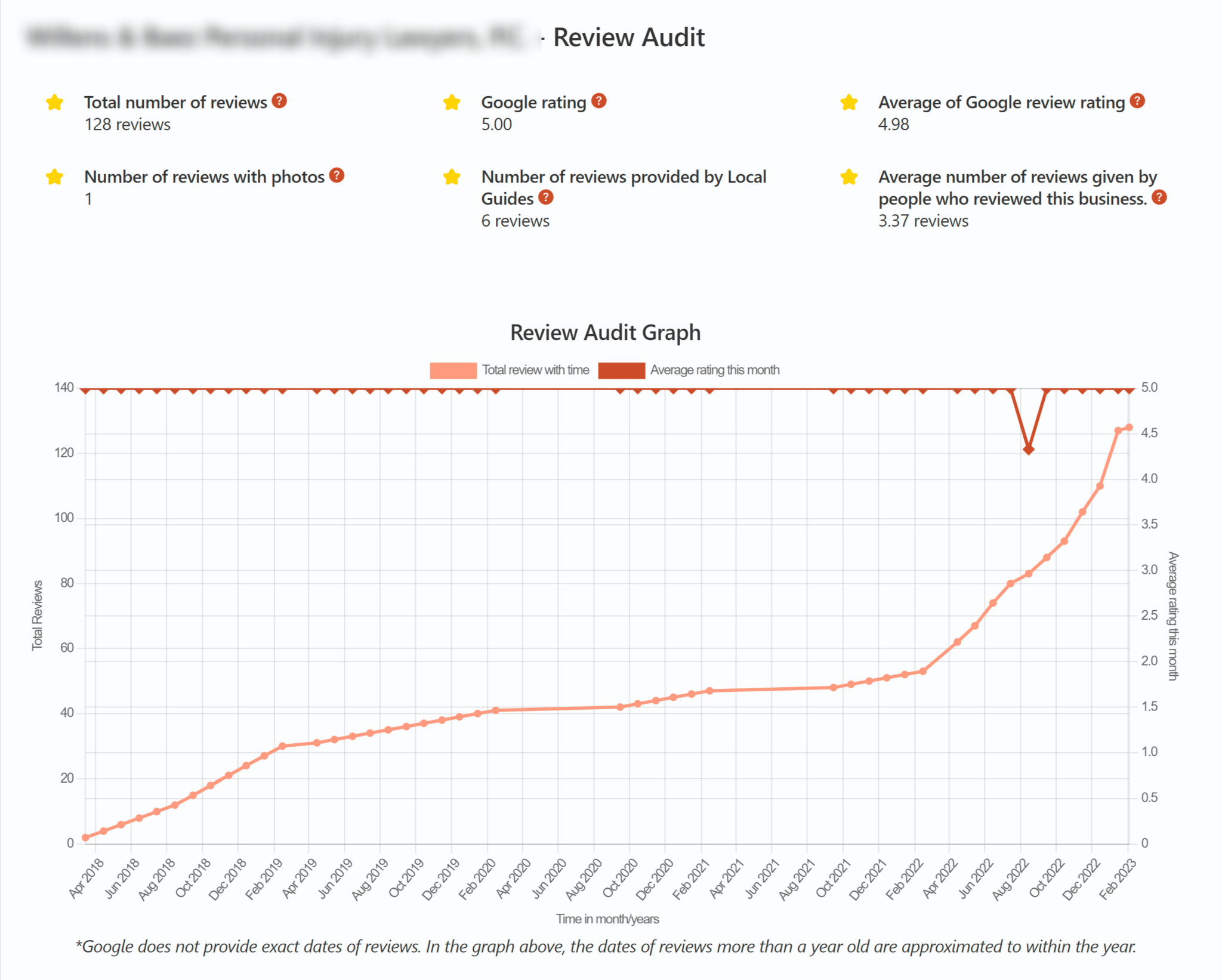
GMB Everywhere

GMB Everywhere is a great tool for keeping track of the number of reviews you have and your average rating.

If you keep track of the number of reviews you have in a spreadsheet you will be able to see if you are losing reviews when Google does “review sweeps.” 

In addition, you can see if your average rating is increasing or decreasing.

Of course, if you realize your average rating is decreasing, you need to audit your reviews to determine what you can change about your business.    

GMB Everywhere

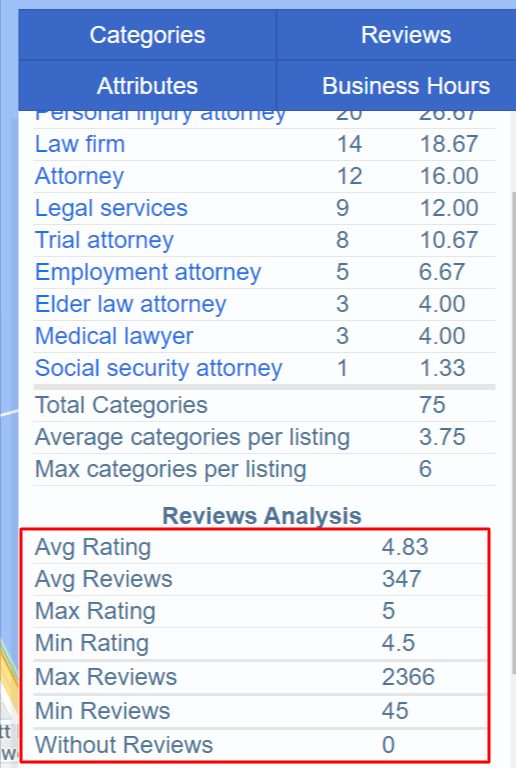
PlePer

PlePer is another great tool to help businesses know about their competition.

To use it, enter a keyword the tool will tell you the average number of reviews and the average rating based on the businesses listed.  

Since we know reviews are so important, keeping track of what your competition is doing matters.

If you keep track of this, you will know if you need more reviews (compared to your competitors) and what your average rating is (compared to your competitors).   

PlePer

All in all, we know that reviews are important for all businesses.

So, it is up to the business owner to ensure they are getting enough reviews and that their review rating stays consistent.  


Get the daily newsletter search marketers rely on.


Opinions expressed in this article are those of the guest author and not necessarily Search Engine Land. Staff authors are listed here.


Related stories

New on Search Engine Land

@media screen and (min-width: 800px) { #div-gpt-ad-3191538-7 { display: flex !important; justify-content: center !important; align-items: center !important; min-width:770px; min-height:260px; } } @media screen and (min-width: 1279px) { #div-gpt-ad-3191538-7 { display: flex !important; justify-content: center !important; align-items: center !important; min-width:800px!important; min-height:440px!important; } }

About the author

Joy Hawkins

Joy is the owner of the Local Search Forum, LocalU, and Sterling Sky, a Local SEO agency in Canada & the USA. She has been working in the industry since 2006 and enjoys speaking regularly at marketing conferences such as MozCon, LocalU, Pubcon, SearchLove, and State of Search. You can find her on Twitter or volunteering as a Product Expert on the Google My Business Forum.

https://searchengineland.com/free-tools-tracking-google-reviews-392897


7 emerging skills every SEO must master in 2023

It’s 2023, and no matter how many “SEO is dead” articles get published, SEO isn’t going anywhere.

Reports suggest that the global SEO market size is expected to reach $122.11 billion in 2028.

But, with that kind of growth, SEO will have to change along with it – as will the skill set of SEO practitioners.

In this article, I’ll cover seven emerging skills that SEOs will need to master to ensure their place at the table in the goliath SEO industry.

Let’s dive in.

1. Value articulation

If you work as a freelance SEO, you’ll have this one down already. But for many on the agency and even client side, it’s a skill too few understand.

We’re living through a potential recession and a cost of living crisis. As such, people and businesses will be careful where budgets go.

No matter what role you currently have, from executive to strategist, you’ll need to be clear about your role’s value and the tasks you undertake – and learn how to articulate that value.

Here’s a line that every SEO needs to master for every task.

  • “I’m doing (insert task) because it (explain the value it delivers).”

Because if you can be replaced by an AI tool, you will be.

This brings me to my next skill.

AI tools are exploding by the bucket load, and so are the sheer number of ways that SEOs are figuring out how to leverage machine learning – from keyword and cluster research to meta descriptions and page titles.

SEOs shouldn’t be worried about AI tools. They need to learn how to use them to their advantage.

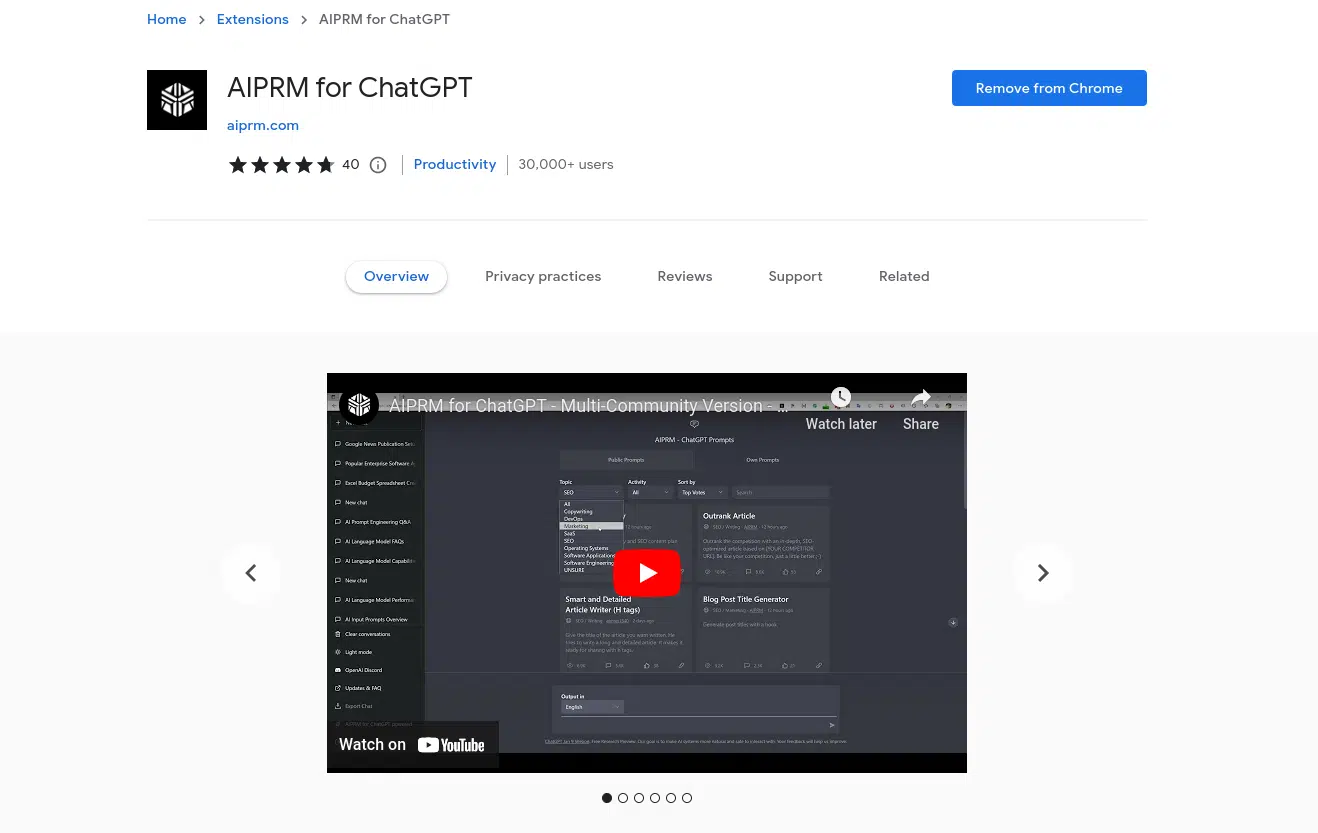
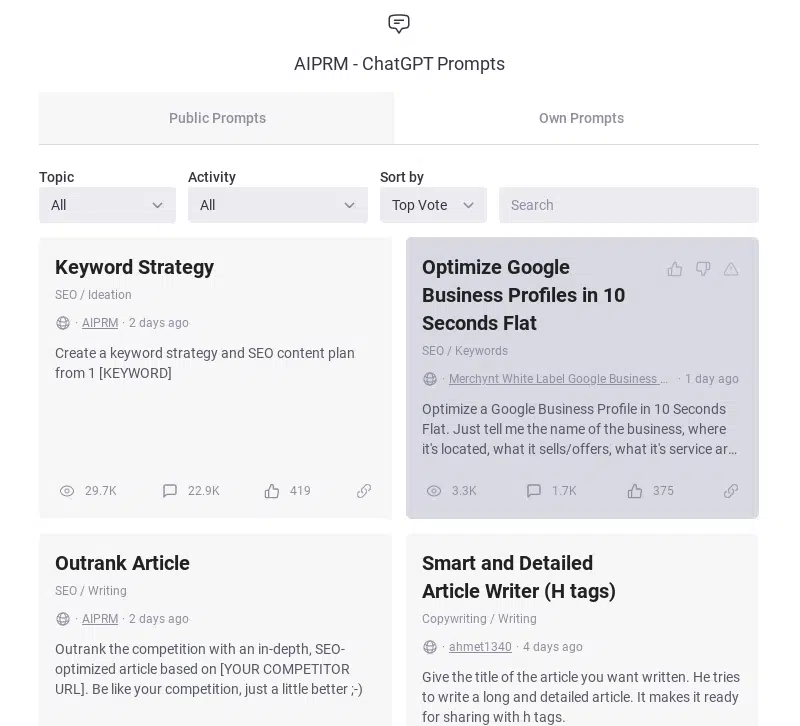
Check out the Chrome extension AIPRM for ChatGPT.

AIPRM for ChatGPT

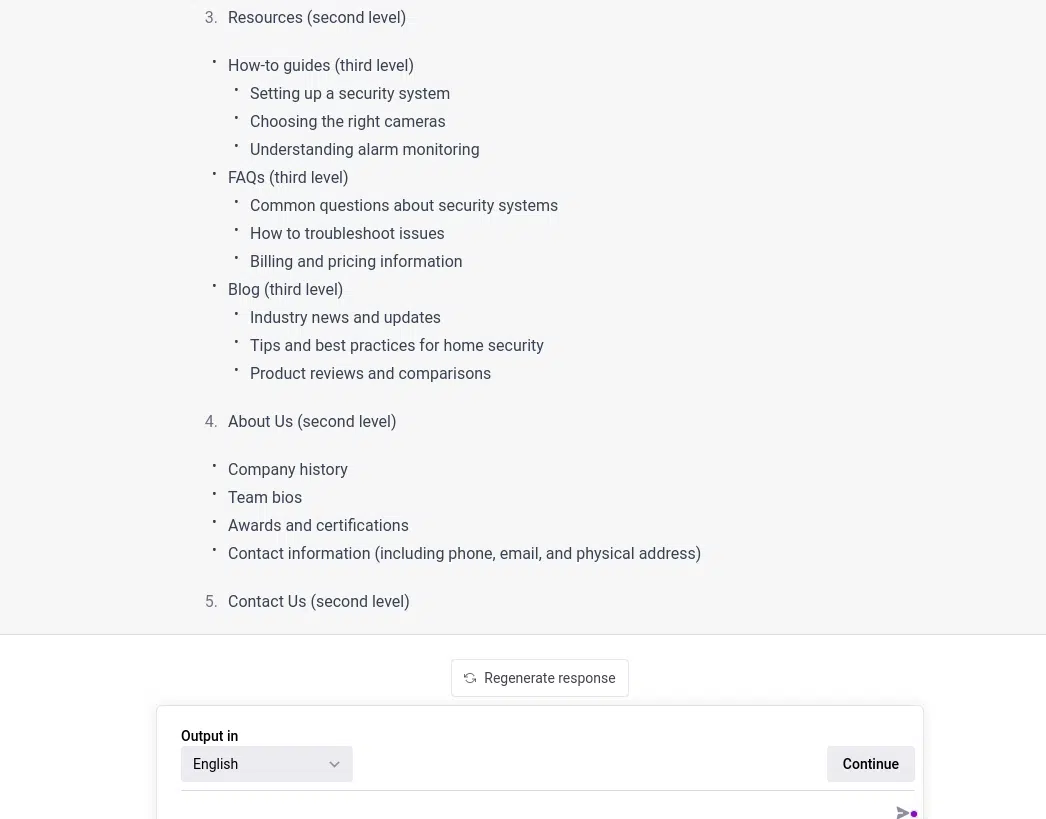
With its help, you can plan a silo structure for a website in any niche with a few clicks. 

Planning A Website Silo Structure

And that’s not all. You can conduct keyword research and optimize Google Business Profiles in seconds.

Google Business Profile keyword research and optimization

AI tools save you the cognitive load of doing certain SEO tasks, leaving you time to look at the outputs that AI provides and allowing you to tweak, improve and refine what it sends out.

AI tools will never replace SEOs. Rather, they’ll help make SEOs even better.

Reducing the time you spend on tasks that machines can handle gives you more time and mental energy to focus on the areas of SEO that AI can never help with.

But you’ll need to master how to use AI tools within your role.


Get the daily newsletter search marketers rely on.


3. Executive presence

If you don’t already, you need to follow Tom Critchlow online. In his SEO MBA course and content, Critchlow teaches SEOs to have a better executive presence

SEO MBA course

His newsletter is highly useful and where I first learned about the phrase “executive presence,” which he defines as:

“The ability to present ideas to the c-suite, create a compelling business case for multi-million dollar investments and work cross-functionally to gather buy-in from stakeholders.”

I’ll add that everyone in SEO needs to develop their executive presence to reach the decision-makers above them.

  • An SEO executive needs to learn to present their ideas to the account manager.
  • The account manager needs to get buy-in from client services.
  • And so on.

I like to refer to this skill as the ability to create change within your workplace, regardless of the scale of that change. 

Become comfortable with verbalizing and presenting your ideas to the powers that be.

4. Content design

I first learned about content design from the work and book of Sarah Winters.

AI writing tools have sadly removed some of the value of writing and SEO content writing. Design is how we stand out and add value that these tools can’t bring.

But I don’t mean that every SEO needs to go and grab a Canva subscription. 

Content design is all about the user/reader experience. 

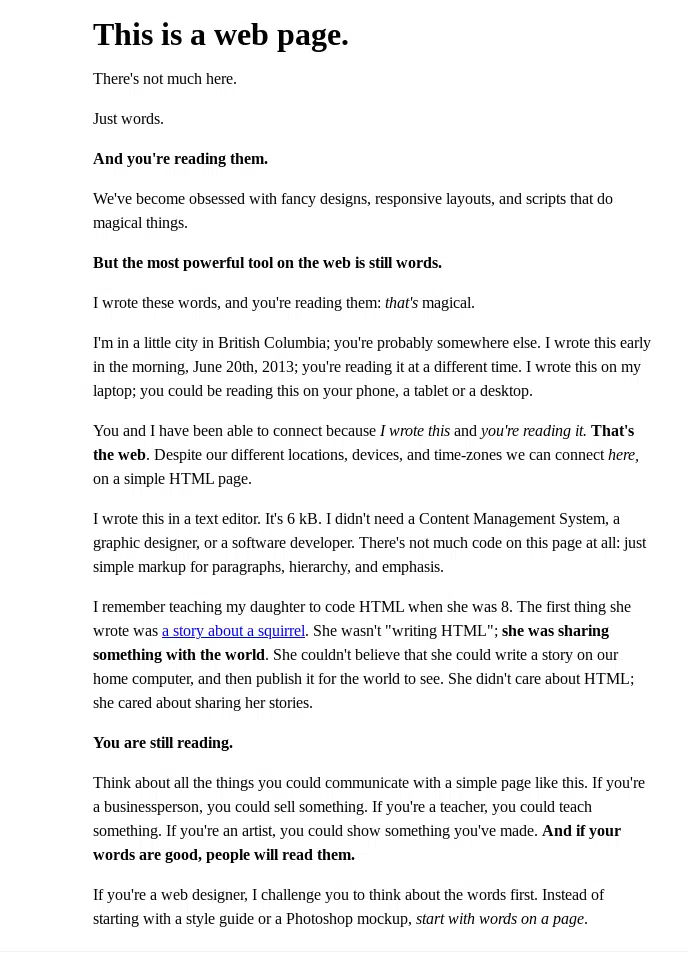
Black text on a white webpage can be hugely influential, and Justin Jackson’s “This is a web page” is a great example of this in action.

This is a web page.

We know that people are information foragers. Studies have shown that we scan content to asses its value before assigning cognitive resources to read the rest.

Therefore, SEOs should be looking to use content design to increase the perceived value of their content.

Especially in an AI writing tool era where a 2,000-plus-word article can be created in 30 seconds, winning the reader is going to be a key battle.

SEOs must embrace content design as a tool in their arsenal in 2023.

A good question to ask yourself with every piece of content is, “How can we make this better?”

5. Content editing

Most SEOs hate writing (so do some writers).

But one thing that SEOs tend to despise, even more, is reading content. 

I get it. There is no joy in reading a 3,000-word article on a subject you have zero interest in, especially when you paid someone else to write and edit.

It’s a hurdle you’ll have to get over.

For SEOs to succeed in 2023, they must dig into content editing.

There’s a good reason for this – our friend AI.

It doesn’t matter if you have your own team of writers or rely on freelancers (or an agency). You’ll have to get your editing head-on.

Be on the lookout for vague content, fluff, and a lack of research and expertise.

AI tools can help writers and expect them to leverage their use.

But also, be on guard for lazy content creation that has been done with a click of a button.

My top tip, read your content out loud. If it sounds bad, change it.

6. Marketing theory

Back in the old days, the only thing an SEO needed to know was how to generate rankings and traffic.

Today, people are a bit pickier.

Top of funnel, mid-funnel, buyer’s journey, product-led – the list of SEO tactics and terminology seems endless.

What matters in the future of SEO is where it sits at the marketing table.

Traditionally given the scraps of marketing budget, changing views on attribution modeling will mean that organic content will be given more significant credit.

It’s here that AI and machine learning helps us further. By filling in the gaps in the attribution window, we’ll see a more defined picture of how organic search matters in the marketing mix.

But there’s no use just looking at your GA4 report and saying, “Yeah, organic search worked wonders.”

Clients have access to all marketing channels.

TikTok is after your budget. 

PPC is after your budget. 

Radio ads are after your budget. 

TV is after your budget.

Podcasts are after your budget.

You’ll need to prove the value of SEO.

Peter Fields and Les Binet have paved the way to having mature marketing discussions with their work on “The Long and the Short of It.”

Short-term sales activation does indeed bring in sales. But long-term brand marketing makes a more considerable difference to sales over a more extended period.

But where does SEO come into this?

That’s under debate. And it’s why SEOs need to be able to hang out with the marketing world and have grown-up conversations about the importance of SEO.

And for this, you’ll need to learn the lingo.

Brand marketing, direct advertising, mental availability, physical availability, the 4 Ps, econometrics, sophisticated mass marketing, behavioral science, the messy middle, memory architecture, and so much more.

These are all terms that SEOs will need to wrap their heads around.

Most SEOs still need help articulating how SEO actually helps a business. 

In a world with vast advertising methods, we need to show clients just how SEO works and be able to explain the marketing science behind it.

7. Strategy

When I see a new client, I often ask them what the strategy behind the last SEO agency’s work was.

Most are unaware. Most were never told. Most have nothing to show.

Our SEO strategy documentation needs to improve.

Most SEO strategies consist of a set of activities that the SEO agency will do, such as:

  • Meta descriptions.
  • Internal linking.
  • 3 articles of 3,000 words.
  • And so on.

But a plan is not a strategy, nor is a list of deliverables.

In 2023, SEOs are going to be challenged by clients as marketing budgets are squeezed. And they’ll rightly ask, “Why are we doing this?”

Of course, strategy is challenging.

It’s a statement from the SEO specialist, “We’re going to do X because it’s going to achieve Y.”

You won’t be able to guarantee anything. 

You won’t be certain, and that’s why it’s hard.

But welcome to the world of strategy. 

Strategy should make you nervous. It’s a theory, a belief.

The clients will ask for some supporting evidence, and that’s fine too.

This is where your case studies and studies of others in the SEO industry come in. It’s why good SEOs are constantly investigating the websites of others.

“This worked for XYZ, which is why we believe it will work for you.”

Also, SEOs should be bold and tweak their strategy. Seeing where something isn’t working and making changes is essential.

What you shouldn’t do is stick to some self-defeating approach because of a fixed SEO ideology.

If it’s not getting the results, change things.

To advance your SEO career, always be learning

The SEO industry is growing – and the skill base of SEOs needs to grow with it.

In a world where every SEO skill and activity is taught for free on YouTube, we’ll need to up our game to ensure that SEO gains a bigger piece of the marketing budget.

Mastering the above seven skills is a start.


Opinions expressed in this article are those of the guest author and not necessarily Search Engine Land. Staff authors are listed here.


Related stories

New on Search Engine Land

@media screen and (min-width: 800px) { #div-gpt-ad-3191538-7 { display: flex !important; justify-content: center !important; align-items: center !important; min-width:770px; min-height:260px; } } @media screen and (min-width: 1279px) { #div-gpt-ad-3191538-7 { display: flex !important; justify-content: center !important; align-items: center !important; min-width:800px!important; min-height:440px!important; } }

About the author

Andrew Holland

Andrew Holland is Head of Organic at Embryo, one of the UK’s fastest-growing digital agencies.
His SEO background stems from a 17-year career in the police, where a number of years were spent within intelligence, utilizing SEO within internal systems to catch criminals. After developing chronic asthma, Andrew left the police and launched a freelance SEO and digital marketing career, and has worked with a wide range of clients, from SMEs to 8-figure businesses. Today, he manages a growing team of in-house content writers and SEO account managers.

https://searchengineland.com/7-emerging-skills-every-seo-must-master-in-2023-392745


This day in search marketing history: February 9

Google Buzz launches

In 2010, Google revealed its latest attempt to create a social network and compete with Facebook and Twitter. And they called it Google Buzz.

Buzz was tied to two main elements – Gmail and mobile. But would users want social networking to invade their inbox?

As we noted at the time, there were a couple of “risky” features. The launch was generally greeted with heavy criticism and Buzz would quickly become a privacy nightmare that would hang on for dear life until Google tried its luck again with Google+.

Dig deeper:


Also on this day


Expect more messages in Google Search Console

2022: Google finished the migration of all the messages into the new Search Console interface. 


Google gives more visibility to local news publishers

2022: Google announced an improvement to its ranking systems meant to help searchers discover stories from “authoritative, relevant local news sources.”


Google tests bulleted lists in ads

2022: Ads could contain up to three bullet points.


Google Ads API v10 is now available

2022: Additions included general availability for Smart Campaigns and support for Local Service Ads campaigns in open beta.


Microsoft Advertising launches Cruise Ads

2022: The vertical-specific ad format was only available to advertisers targeting customers in the U.S.


Microsoft Ads to replace Manual CPC with Enhanced CPC by end of April

2021: Microsoft said eCPC increases conversions while lowering CPA, but some advertisers worried about loss of control.


Google’s updated phrase match simplifies keywords and worries advertisers

2021: What advertisers were gaining and losing, and what they could do to prepare for the rollout.


Bing Webmaster Tools adds social sign-in feature

2018: You could now log into your Bing Webmaster Tools account using your Google or Facebook login.


Search in Pics: Google soda lab, escape ladder & cupcakes

2018: The latest images showing what people eat at the search engine companies, how they play, who they meet, where they speak, what toys they have and more.


AdWords Converted Clicks sunsets for good in March

2017: The old metric would vanish completely as Conversions measurement fully takes over.


Google is testing a new way to report offensive Autocomplete suggestions

2017: A feedback tool was in limited testing, with hopes to launch it worldwide.


Data: Google monthly search volume dwarfs rivals because of mobile advantage

2017: Google likely had more than 30 billion queries per month across platforms.


Update: Brands saw bigger search lifts from releasing ads early online than actual Super Bowl ads

2017: Game day ads drove incremental lifts in branded search for CPG, almost none for B2B brands, Quantcast data showed.


Survey: Alexa the most frequently used assistant, Cortana seen as most accurate

2017: Nearly 60% used voice because it was faster or easier than typing.


Bing updates iOS search app with new ways to create video lists & find homes for sale

2017: With the new 6.11 version of Bing’s iOS search app, results for a “homes for sale + ZIP code” query returned real estate listings for specified ZIP codes.


Bing refreshes weather search results with interactive slider to see forecasts throughout the day

2017: Snowbirds could also get quick results for snow conditions at U.S. ski resorts.


Google Letting Official Representatives Of Knowledge Graph Boxes Suggest Changes In Search Results

2016: You could quickly make edits to Knowledge Graph cards that you represent directly in the Google search results.


[Updated] Bing Ads Experiencing Nearly 2-Day Reporting Outage

2016: Engineers said they were working on a fix and that historical data was not lost.


Official: Google AdWords Rolls Out “Upgraded URLs” For Tracking Parameters

2015: Ads would (usually) no longer be re-set and sent back to editorial review when tracking criteria change.


The Debate Over Whether The “Right To Be Forgotten” Should Apply To Google.com

2015: Both Google and the EU had credible positions on whether RTBF should be applied globally.


Bug Turns Google “Anti-SafeSearch” On, Provides Porn Results

2013: Strange search queries that should have returned no matches turned Google into a porn search engine.


Google’s First Hired Employee, Craig Silverstein, Quits

2012: After about 14 years at the company.


Bing Now A Full Point Ahead Of Yahoo In Search Share — comScore

2012: And both remained very far behind Google.


Foursquare Brings More Search Refinements To Mobile Apps

2012: You could filter places results by four categories: “I haven’t been to yet”; “I have been to before”; “My friends have been to”; “Have Foursquare specials.”


Google: We’re Better Now Than 2000. Okay, Let Us Test It!

2011: He compared a “time capsule” of search results he saved from Google’s index in 2000 to the present day to show how Google had improved in terms of spam and search quality. 


Google Switches AdWords Color Back To Yellow From Purple

2011: The change lasted less than seven months.


Google Will Make $10 Per Android User In 2012: Report

2011: Google’s mobile ad business was worth roughly $1 billion on an annualized basis. But it was growing rapidly.


Facebook’s 2010 Metrics: Dominant & Still Growing, comScore Says

2010: Facebook was the fourth most-visited US web property overall, with Google and Yahoo still atop that list. 


Super Bowl Sparks Twitter Record For Sporting Event

2010: A new record for Tweets-per-second (TPS) for a sporting event was set: 4,064.


IAC Q4 Earnings: Search Growth 3% But Takes $1 Billion Loss On Ask.com

2010: Much of the search growth came from toolbar searches, which was up by 35% in terms of revenue.


Bing, Google & Yahoo Gear Up For The 2010 Winter Olympic Games

2010: The search engines unveiled their special coverage sections and search features


Will Google Succumb To “The Innovator’s Dilemma”?

2009: Could “real-time search” disrupt Google’s dominance?


Live Search Adds Fourth Search Ad To Top Of UK Results

2009: Microsoft said that the same change to US results had been “positive since the launch.”


Google Tests Tweaked Search Suggestions User Interface

2009: Google made Google Suggest the default behavior for the main search box.


Twitter Reveals Google Engineering Layoffs?

2009: Google was reportedly laying off qualified engineers as part of a mandate to reduce headcount across the board.


Google Tests New Maps In Search Results

2009: The map was embedded within specific listings.


“Retail Search Presence Study” Shows Online Product Sellers Far Outpace Traditional Retailers In Search Results

2009: Online retailers had a strong presence, representing well over 30% of the listings shown.


WSJ: Yahoo Plans To Reject Microsoft’s Offer

2008: Because massively undervalued Yahoo.


22 Links To Coverage About The SEO Is Bull Debate

2007: Just some of the coverage.


Powerset Licenses Xerox PARC Natural Language Tech

2007: Powerset won the rights to natural language search technology from Xerox PARC that it hoped would make it the new Google, when it finally launched.


dMarc Founders Tuneout Of Google AdSense For Audio Plans

2007: The founders left Google due to differences of opinion and remuneration.


From Search Marketing Expo (SMX)


Past contributions from Search Engine Land’s Subject Matter Experts (SMEs)

These columns are a snapshot in time and have not been updated since publishing, unless noted. Opinions expressed in these articles are those of the author and not necessarily Search Engine Land.


< February 6 | Search Marketing History | February 8 >


Related stories

New on Search Engine Land

@media screen and (min-width: 800px) { #div-gpt-ad-3191538-7 { display: flex !important; justify-content: center !important; align-items: center !important; min-width:770px; min-height:260px; } } @media screen and (min-width: 1279px) { #div-gpt-ad-3191538-7 { display: flex !important; justify-content: center !important; align-items: center !important; min-width:800px!important; min-height:440px!important; } }

About the author

Danny Goodwin

Danny Goodwin is Managing Editor of Search Engine Land & SMX. In addition to writing daily about SEO, PPC, and more for Search Engine Land, Goodwin also manages Search Engine Land’s roster of subject-matter experts. He also helps program our conference series, SMX – Search Marketing Expo. Prior to joining Search Engine Land, Goodwin was Executive Editor at Search Engine Journal, where he led editorial initiatives for the brand. He also was an editor at Search Engine Watch. He has spoken at many major search conferences and virtual events, and has been sourced for his expertise by a wide range of publications and podcasts.

https://searchengineland.com/search-marketing-history-february-9-2-392916


Twitter is down, globally

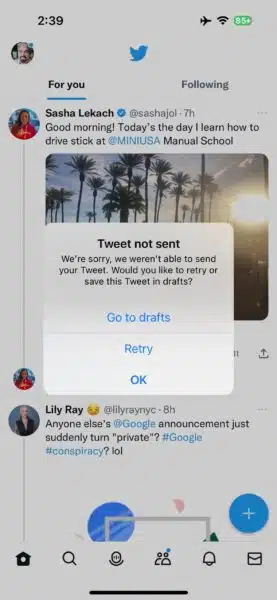
We’re seeing multiple sources and reports that Twitter is down for users across the globe.

If you’ve tried to Tweet any time in the last 2 hours like I did, you may have noticed.

File 277x600
File 1 277x600

Why we care. You might not be able to Tweet. There’s no word on when it’ll be back up and running, but we’ll keep you updated.


Related stories

New on Search Engine Land

@media screen and (min-width: 800px) { #div-gpt-ad-3191538-7 { display: flex !important; justify-content: center !important; align-items: center !important; min-width:770px; min-height:260px; } } @media screen and (min-width: 1279px) { #div-gpt-ad-3191538-7 { display: flex !important; justify-content: center !important; align-items: center !important; min-width:800px!important; min-height:440px!important; } }

About the author

Nicole Farley

Nicole Farley is an editor for Search Engine Land covering all things PPC. In addition to being a Marine Corps veteran, she has an extensive background in digital marketing, an MBA and a penchant for true crime, podcasts, travel, and snacks.

https://searchengineland.com/twitter-is-down-globally-392917


Twitter Blue subscribers can now Tweet 4,000 characters

Twitter announced the new feature in a long Tweet.

Twitter Blue only. In the announcement, Twitter says, “while only Blue subscribers can post longer Tweets, anyone and everyone can read them. you can reply to, retweet, and quote Tweet a longer Tweet, no matter if you’re a Twitter Blue subscriber or not. subscribers will be able to reply and QT with up to 4,000 characters.”

Why we care. If you’re a Twitter Blue subscriber, this is good news for you. But if you hate long Tweets and threads, you might want to reexamine your following list.


Related stories

New on Search Engine Land

@media screen and (min-width: 800px) { #div-gpt-ad-3191538-7 { display: flex !important; justify-content: center !important; align-items: center !important; min-width:770px; min-height:260px; } } @media screen and (min-width: 1279px) { #div-gpt-ad-3191538-7 { display: flex !important; justify-content: center !important; align-items: center !important; min-width:800px!important; min-height:440px!important; } }

About the author

Nicole Farley

Nicole Farley is an editor for Search Engine Land covering all things PPC. In addition to being a Marine Corps veteran, she has an extensive background in digital marketing, an MBA and a penchant for true crime, podcasts, travel, and snacks.

https://searchengineland.com/twitter-blue-subscribers-can-now-tweet-4000-characters-392909


Google reiterates guidance on AI-generated content – write content for people

With all the buzz around generative AI in search, Google today reiterated and clarified some of its advice about AI-generated content.

In short, Google does not care who – or what – writes your content, as long as that content is written to help people and not to manipulate the search results.

Google’s take. Google wrote:

“Our focus on the quality of content, rather than how content is produced, is a useful guide that has helped us deliver reliable, high quality results to users for years.”

– Danny Sullivan and Chris Nelson of the Google Search Quality team

Google went on to explain that you can use AI and automation to create helpful and useful content:

“Automation has long been used to generate helpful content, such as sports scores, weather forecasts, and transcripts.”

Google also said you can use AI to help you write better content:

“AI has the ability to power new levels of expression and creativity, and to serve as a critical tool to help people create great content for the web.”

Focus on people-first content. What you should focus on is not how the content is produced but whether the content is created to help people, not primarily to rank on search engines. Google previously provided its guidance around the helpful content update:

“The helpful content system was introduced last year to better ensure those searching get content created primarily for people, rather than for search ranking purposes. … As explained, however content is produced, those seeking success in Google Search should be looking to produce original, high-quality, people-first content demonstrating qualities E-E-A-T.”

Who, How and Why. Google added a new section to the people-first help documentation on “evaluating your content in terms of ‘Who, How, and Why’ as a way to stay on course with what our systems seek to reward.” Google then explained what they mean by who, how and why.

Just to be clear, the who, how and why are not a requirement but rather guidance provided by Google, as is E-E-A-T.

Here is how Google put it (quoting the revisions to the page below):

Who (created the content). Something that helps people intuitively understand the E-E-A-T of content is when it’s clear who created it. That’s the “Who” to consider. When creating content, here are some who-related questions to ask yourself:

  • Is it self-evident to your visitors who authored your content?
  • Do pages carry a byline, where one might be expected? 
  • Do bylines lead to further information about the author or authors involved, giving background about them and the areas they write about? 

If you’re clearly indicating who created the content, you’re likely aligned with the concepts of E-E-A-T and on a path to success. We strongly encourage adding accurate authorship information, such as bylines to content where readers might expect it.

How (the content was created). It’s helpful to readers to know how a piece of content was produced: this is the “How“ to consider including in your content. 

For example, with product reviews, it can build trust with readers when they understand the number of products that were tested, what the test results were, and how the tests were conducted, all accompanied by evidence of the work involved, such as photographs. It’s advice we share more about in our Write high quality product reviews help page.

Many types of content may have a “How” component to them. That can include automated, AI-generated, and AI-assisted content. Sharing details about the processes involved can help readers and visitors better understand any unique and useful role automation may have served. 

If automation is used to substantially generate content, here are some questions to ask yourself:

  • Is the use of automation, including AI-generation, self-evident to visitors through disclosures or in other ways?
  • Are you providing background about how automation or AI-generation was used to create content?
  • Are you explaining why automation or AI was seen as useful to produce content?

Overall, AI or automation disclosures are useful for content where someone might think “How was this created?” Consider adding these when it would be reasonably expected. For more, see our blog post and FAQ: Google Search’s guidance about AI-generated content.

Why (was the content created). “Why” is perhaps the most important question to answer about your content. Why is it being created in the first place? 

The “why” should be that you’re creating content primarily to help people, content that is useful to visitors if they come to your site directly. If you’re doing this, you’re aligning with E-E-A-T generally and what our core ranking systems seek to reward.

If the “why” is that you’re primarily making content to attract search engine visits, that’s not aligned with what our systems seek to reward. If you use automation, including AI-generation, to produce content for the primary purpose of manipulating search rankings, that’s a violation of our spam policies.

FAQs. Google also published this new list of FAQs on the topic of AI-generated content and search:

  • Is AI content against Google Search’s guidelines? Appropriate use of AI or automation is not against our guidelines. This means that it is not used to generate content primarily to manipulate search rankings, which is against our spam policies.
  • Why doesn’t Google Search ban AI content? Automation has long been used in publishing to create useful content. AI can assist with and generate useful content in exciting new ways. 
  • How will Google Search prevent poor quality AI content from taking over search results?  Poor quality content isn’t a new challenge for Google Search to deal with. We’ve been tackling poor quality content created both by humans and automation for years. We have existing systems to determine the helpfulness of content. Other systems work to elevate original news reporting. Our systems continue to be regularly improved.
  • How will Google address AI content that potentially propagates misinformation or contradicts consensus on important topics? These issues exist in both human-generated and AI-generated content. However content is produced, our systems look to surface high-quality information from reliable sources, and not information that contradicts well-established consensus on important topics. On topics where information quality is critically important — like health, civic, or financial information — our systems place an even greater emphasis on signals of reliability.
  • How can Search determine if AI is being used to spam search results? We have a variety of systems, including SpamBrain, that analyze patterns and signals to help us identify spam content, however it is produced.
  • Will AI content rank highly on Search? Using AI doesn’t give content any special gains. It’s just content. If it is useful, helpful, original and satisfies aspects of E-E-A-T, it might do well in Search. If it doesn’t, it might not.
  • Should I use AI to generate content? If you see AI as an essential way to help you produce content that is helpful and original, it might be useful to consider. If you see AI as an inexpensive, easy way to game search engine rankings, then no.
  • Should I add author bylines to all my content? You should consider having accurate author bylines when readers would reasonably expect it, such as to any content where someone might think, “Who wrote this?”  As a reminder, publishers that appear in Google News should use bylines and author information. Learn more on our Google News policies page.
  • Should I add AI or automation disclosures to my content? AI or automation disclosures are useful for content where someone might think “How was this created?” Consider adding these when it would be reasonably expected.
  • Can I list AI as the author of content? Giving AI an author byline is probably not the best way to follow our recommendation to make clear to readers when AI is part of the content creation process.

Can AI write content that has experience? I asked Google this and Danny Sullivan said not all pieces of content need to showcase experience, expertise, authority and trust. In fact, it is not always possible for every piece of content to hit all marks.

Google reiterated and clarified that trust is the most important part of E-E-A-T, as highlighted in our coverage of the new quality raters guidelines. Google updated this part of this page to add this section, in case you missed it in the revised PDF document.

Google added:

  • “Of these aspects, trust is most important. The others contribute to trust, but content doesn’t necessarily have to demonstrate all of them. For example, some content might be helpful based on the experience it demonstrates, while other content might be helpful because of the expertise it shares.”

Why we care. If your goal when using AI is to find creative ways to add further context and information to help your readers, that is great. If you are using AI to find ways to get more content indexed by Google, then that is not great.

How will Google know the difference? Well, they figured it out with content farms, as I described here.

As Google has been saying for longer than most SEOs have been calling themselves an SEO, write content for the people and you will be rewarded. Now, how that content is written does not really matter.


Related stories

New on Search Engine Land

@media screen and (min-width: 800px) { #div-gpt-ad-3191538-7 { display: flex !important; justify-content: center !important; align-items: center !important; min-width:770px; min-height:260px; } } @media screen and (min-width: 1279px) { #div-gpt-ad-3191538-7 { display: flex !important; justify-content: center !important; align-items: center !important; min-width:800px!important; min-height:440px!important; } }

About the author

Barry Schwartz

Barry Schwartz a Contributing Editor to Search Engine Land and a member of the programming team for SMX events. He owns RustyBrick, a NY based web consulting firm. He also runs Search Engine Roundtable, a popular search blog on very advanced SEM topics. Barry can be followed on Twitter here.

https://searchengineland.com/google-reiterates-guidance-on-ai-generated-content-write-content-for-people-392840


Search Engine Land’s updated What is SEO guide is now available

Looking for an accurate, up-to-date and helpful guide to the “big picture” elements of search engine optimization?

Good news: We’ve just updated and expanded our popular What is SEO resource.

Search Engine Land’s guide, which was originally published in 2010 (here’s what it looked like, via the Wayback Machine), has earned hundreds of thousands of links and been viewed by millions of people.

Search engine optimization remains critical for companies of all sizes and types. Our revised guide can help you whether you’re just beginning your SEO career journey or you need an authoritative and trustworthy resource to help explain the basics of SEO to clients.

Our revised guide explains:

  • How SEO is different from PPC and SEM.
  • Why SEO is important: Did you know SEO is forecast to be a $122.11 billion industry by 2028?
  • The main types of SEO: Technical, content and off-site optimization, as well as some specializations (e.g., enterprise SEO, local SEO).
  • How SEO works: The people, processes, technology and activities that, in combination, contribute to SEO success.
  • How to learn more: Additional resources and some tips to set you up for SEO success.

We hope you find our refreshed SEO guide to be a useful resource that offers the knowledge you need to start successfully optimizing your website in 2023.

Read our guide: What Is SEO – Search Engine Optimization?


Related stories

New on Search Engine Land

@media screen and (min-width: 800px) { #div-gpt-ad-3191538-7 { display: flex !important; justify-content: center !important; align-items: center !important; min-width:770px; min-height:260px; } } @media screen and (min-width: 1279px) { #div-gpt-ad-3191538-7 { display: flex !important; justify-content: center !important; align-items: center !important; min-width:800px!important; min-height:440px!important; } }

About the author

Danny Goodwin

Danny Goodwin is Managing Editor of Search Engine Land & SMX. In addition to writing daily about SEO, PPC, and more for Search Engine Land, Goodwin also manages Search Engine Land’s roster of subject-matter experts. He also helps program our conference series, SMX – Search Marketing Expo. Prior to joining Search Engine Land, Goodwin was Executive Editor at Search Engine Journal, where he led editorial initiatives for the brand. He also was an editor at Search Engine Watch. He has spoken at many major search conferences and virtual events, and has been sourced for his expertise by a wide range of publications and podcasts.

https://searchengineland.com/what-is-seo-guide-updated-392875


New with Google multisearch, Google Maps, and more previews of Bard

Google has announced many changes coming to Google Search, Google Lens, Google Maps and Google Translate today. This comes out of the live stream from Paris this morning, which we thought would be originally around Google’s AI efforts in Search but that was quickly announced on Monday as Google Bard.

So what is new? Google did spend some showcasing Bard again, we covered that in detail over here.

Multisearch / Lens updates

Google announced a few updates and new information across multisearch, Android and Google Lens specific to Google Search.

What is Google multisearch? Google multisearch lets you use your phone’s camera to search with an image, powered by Google Lens, and then add an additional text query on top of the image search. Google will then use both the image and the text query to show you visual search results.

What is near me multisearch? The near me aspect lets you zoom in on those image and text queries by looking for products or anything via your camera but also to find local results. So if you want to find a restaurant that has a specific dish, you can do so.

  • Multisearch is coming to the web soon. Google said in the next few months, we should see this option on mobile devices on the web.
  • Multisearch is available globally on mobile, in all languages and countries where Lens is available.
  • Multisearch near me is expanding to images on the web globally on mobile in the next few months.

Google Lens – 10 billion. Google Lens lets you snap a photo and Google can tell you more about that photo. Now, Google Lens is used more than 10 billion times per month, according to Google. I guess adding Google Lens to the Google homepage encourages usage.

Google Maps updates

Google is rolling out new features for Google Maps for EVs, glanceable directions, immersive views and indoor live views in the coming months.

  • Glanceable directions by viewing your route overview or lock screen, this includes information such as estimated arrival times and your next turn details without having to go into the Google app. Google said this is coming to Android and iOS devices in the coming months.
  • Immersive view launching in more cities, such as London, Los Angeles, New York, San Francisco, and Tokyo today and then Florence, Venice, Amsterdam, and Dublin in the coming months.
  • Search with live view is coming to Barcelona, Madrid and Dublin in the coming months.
  • Indoor live view is coming to over 1,000 new airports, train stations, and malls in cities over the next months, including in London, Paris, Berlin, Madrid, Barcelona, Prague, Frankfurt, Tokyo, Sydney, Melbourne, São Paulo, Singapore, and Taipei.
  • EV maps features are rolling out in the coming months, such as a new filter to find fast chargers that charge over 150 kilowatts, show you if locations have EV chargers, and, most importantly, Google will let you add stops along the way for charging your EV.

Google Translate updates

Google is rolling out new Google Translate features including a new design, AR improvements and contextual translation options.

  • New design for the Google Translate app for Android is coming soon, bringing a glanceable screen, more accessible features and new gestures for maneuvering your frequent and recent translations.
  • Translation and AR with more seamless translation, which we covered here, has now begun rolling out globally.
  • Contextual translation options are coming to Google Translate that will provide richer, more contextual translations for single words, short phrases, and phrases with multiple meanings, Google said. This should help searchers better understand and find the best translation based on the context. This will start rolling out in English, French, German, Japanese, and Spanish in the coming weeks and will expand to even more languages in the next few months

Watch it

You can watch the event in the embedded video below:

[embedded content]

Related stories

New on Search Engine Land

@media screen and (min-width: 800px) { #div-gpt-ad-3191538-7 { display: flex !important; justify-content: center !important; align-items: center !important; min-width:770px; min-height:260px; } } @media screen and (min-width: 1279px) { #div-gpt-ad-3191538-7 { display: flex !important; justify-content: center !important; align-items: center !important; min-width:800px!important; min-height:440px!important; } }

About the author

Barry Schwartz

Barry Schwartz a Contributing Editor to Search Engine Land and a member of the programming team for SMX events. He owns RustyBrick, a NY based web consulting firm. He also runs Search Engine Roundtable, a popular search blog on very advanced SEM topics. Barry can be followed on Twitter here.

https://searchengineland.com/new-with-google-multisearch-google-maps-and-more-392861