Ecommerce content: How to demonstrate beneficial purpose and expertise

Communicating your value proposition is the overarching goal of your website. But at a URL level, messaging needs to be more refined.

This typically means targeting specific keywords and topics on your pages and clearly communicating your expertise and beneficial purpose within your content.

Google’s recent addition of an extra E to E-A-T for “experience” in the updated search quality raters guidelines further enforces the need for ensuring your beneficial purpose is prominent in your main content. I also believe this is another contributing factor to the indexing quality threshold.

So how can you scalably introduce “experience” content into your pages without diluting your messaging or the page’s beneficial purpose?

In this article, I will share tips for incorporating ‘experience’ content for ecommerce sites and demonstrating expertise either at an author or site level.

Defining beneficial purpose and page quality

To recap, Google defines beneficial purpose as “the overall intention of the page, as determined by the creator of the page.” 

In other words:

  • What is the purpose of the page? 
  • Is it to sell a product or service? 
  • Is it to provide information? 
  • Or is it to generate leads?

On the other hand, Google’s definition of page quality is “a holistic evaluation of the elements that make up a page, including design, functionality, user experience, and content.” 

Here, it is vital to determine:

  • How well does the page meet its intended purpose? 
  • Is it easy to use? 
  • Is the content relevant and accurate?

Displaying product experience and expertise in ecommerce

Demonstrating product experience and expertise is vital in setting your ecommerce site apart from non-specialist retailers and generic quick-buck affiliate websites.

Historically, ecommerce websites interweave product and company reviews into their content and templates as a way of building trust and, to an extent, showing their experience in delivering a quality service.

As search engines are looking for more and more differentiation signals, investing in ‘experience’ content that doesn’t necessarily have target search phrases or an end goal of ranking in SERPs is a must.

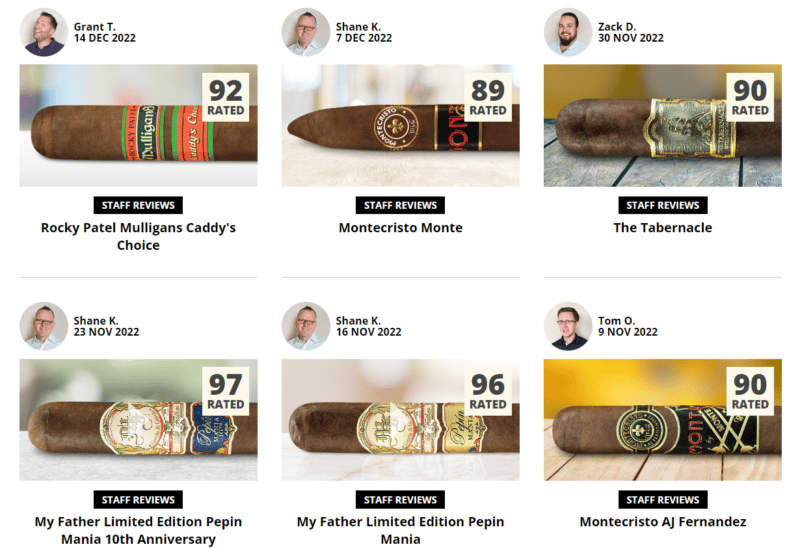
As an example, Holts does a good job of demonstrating experience and expertise at a company and author level through content.

Holts - Staff reviews

Holts’ staff and authors review the products they sell. Their profiles also have information about them as consumers, such as their favorite cigars and strength preferences.

These product experience articles contain good internal links to related products and product use cases (e.g., game nights). They are difficult to falsify without the product experience, as they will stand out among your target customer base.

Similarly, if your product or service is in the YMYL space, you want to build as many trust signals as possible that your service is safe and trustworthy, and will not adversely affect consumers.

A great example of this is Optical Express in the UK, which has a comprehensive portfolio of surgeons and ophthalmologists, with individual profiles listing:

  • The governing medical bodies they are registered with.
  • The number of procedures and surgeries they have completed.
  • Reviews from their patients (aggregated, video, and written).
  • Professional memberships.

This content is typically found on small or independent practice websites. For it to be done at scale for a national provider is impressive, and again, serves as a verifiable trust signal that can’t be easily faked.

Utilizing user- and staff-generated content at the product level

The two examples before are great at demonstrating experience at a brand or domain level, but it can also be important to demonstrate experience at a product level.

This can be done either as a direct effort by the website trying to sell the product or through a collection of user-generated content.

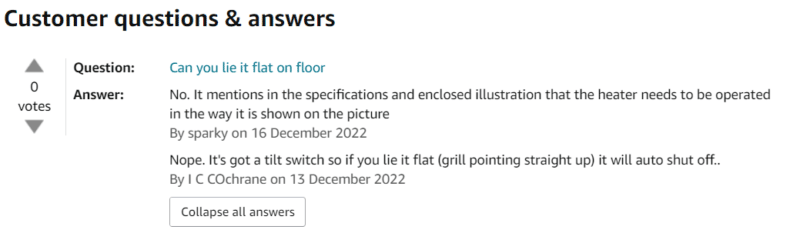
For example, Amazon has been doing this for years by putting customer experiences on individual product pages, regardless if they are positive or not. They’ve done this through their “Customers questions & answers” section.

Amazon - Customer questions & answers

The responses, which can include videos and pictures, create unique relevant content to help potential consumers better forecast their experience using the product.

In the search quality raters guidelines, sharing first-hand experiences is highlighted as a signal of high page quality.

A lot of ecommerce websites already do this by aggregating product-specific user reviews on pages to build trust. Complemented with schema markup, this also gives them a chance to get review stars in the SERPs.

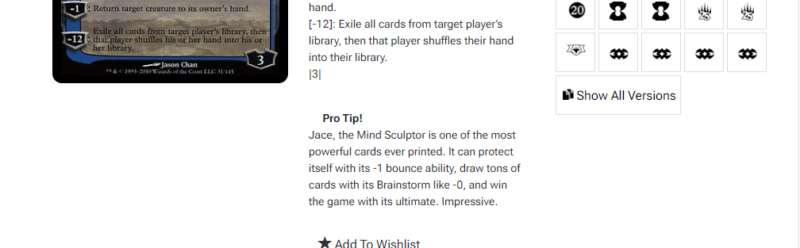
Another way of doing this is to create unique, experience content at a product detail page (PDP) level. Two websites doing this well are CardKingdom and TCG Player.

In this sector, most PDPs use the card flavor text and details. Thus, adding unique content that demonstrates product knowledge (and content useful for users) can be viewed as an additional, positive signal by Google.

CardKingdom - Pro Tip! content
An example of CardKingdom’s “Pro Tip!” content on product detail pages.

This unique differentiator can also be useful as a general page quality signal for the indexing threshold.

Developing ‘experience’ content

Many information and studies will likely be published in the coming weeks and months on how to create better experience signals in your content and improve page quality (for your source type).

However, it is important to remember that Google has been collecting data, setting benchmarks of ‘experience’ content currently “in the wild.” The search engine already has an idea of how content can:

  • Portray a value proposition.
  • Demonstrate a beneficial purpose.
  • Have a sufficient “page quality” for the source type.

So we’re not reinventing the wheel or deviating too far from what we’ve already been doing when targeting E-A-T.

If anything, we’re now adding more unique perspectives, opinions, and user experiences to make content more “genuine” – diluting the marketing prose and keyword research-led content pieces with more human notions.


Opinions expressed in this article are those of the guest author and not necessarily Search Engine Land. Staff authors are listed here.


Related stories

New on Search Engine Land

@media screen and (min-width: 800px) { #div-gpt-ad-3191538-7 { display: flex !important; justify-content: center !important; align-items: center !important; min-width:770px; min-height:260px; } } @media screen and (min-width: 1279px) { #div-gpt-ad-3191538-7 { display: flex !important; justify-content: center !important; align-items: center !important; min-width:800px!important; min-height:440px!important; } }

About the author

Dan Taylor

Dan Taylor is head of technical SEO at SALT.agency, a UK-based technical SEO specialist and winner of the 2022 Queens Award. Dan works with and oversees a team working with companies ranging from technology and SaaS companies to enterprise e-commerce.

https://searchengineland.com/ecommerce-content-demonstrate-beneficial-purpose-experience-391832


This day in search marketing history: January 18

Google blackens its logo, configures Googlebot to crawl at a much lower rate

In 2012, when you visited Google, you saw this:

That’s how Google voiced its opposition to two bills being discussed in Congress – the Protect IP Act (PIPA) and the Stop Online Piracy Act (SOPA). At the time, many feared the proposed legislation would censor the web and hurt U.S. businesses.

What about the SEO impact? Google had previously shared some SEO blackout advice.

Also on this day in 2012, Google’s Pierre Far revealed that GoogleBot would “crawl at a much lower rate for today only so that the Google results of websites participating in the blackout are less likely to be affected.”

Read all about it in:


Also on this day 


URL changes are not so simple for Google Search

2022: These changes, if done properly, can take several months for Google to fully process.


Yoast SEO launches on Shopify

2022: Shopify merchants could use the app to optimize their products and posts to show in organic, non-shopping results.


Danny Goodwin joins Search Engine Land

2022: I joined the team as Senior Editor. Now I’m Managing Editor of Search Engine Land & SMX.


Microsoft seeks more Cortana distribution, deeper integration on Android, iOS

2019: Amazon and Microsoft’s interests were aligned in that each wanted access to the other’s audience for distribution.


Leveraging Amazon search ads in a time of rapid change

2019: Amazon’s advertising offerings were getting more sophisticated, presenting marketers with new opportunities and complexities.


Google My Business videos not showing up on your local listing? It’s a Google bug

2018: A bug prevented the video uploads from showing up on the local listings in Google Maps or Google web search.


Study: 80% of Google Home results come from snippets

2018: In the majority of cases, the Google Home result mirrored the snippet/Answer Box. But in a number of cases, when there was a snippet, Home provided no answer or a different answer.


Google adds keyword functionality to the AdWords app

2018: Advertisers could make more on-the-go changes.


Google Android search app will keep trying your searches when your internet connection is poor

2017: The new version of the Google Android search app worked better when you were in a poor internet connection area.


Bing Ads rolls out scheduling for ad extensions

2017: The option to show extensions during store hours or schedule for time-sensitive promotions became available in all markets.


Google testing new look for local inventory ads in place of local pack

2017: Another effort to monetize local queries on mobile.


Google Core Algorithm Updates Continue As SEOs Notice Weekend Google Update

2016: Gary Illyes from Google said the weekend fluctuations were “core algorithm” and “not Penguin.”


Survey: Under 40 Percent Start A Local Search With A Search Engine

2016: Roughly half of searchers (48%) said that when they were seeking information on a “familiar topic,” they would start at a vertical or content-specific site (e.g., TripAdvisor for hotels). 


Google To Shut Several Search APIs In February

2016: Google said it would close the Google Patent Search API, Google News Search API, Google Blog Search API, Google Video Search API, Google Image Search APIs on Feb. 15.


Martin Luther King Jr. Day Google Doodle Celebrates Civil Rights Leader’s Moving Speeches

2016: The Doodle artfully highlighted the civil rights leader’s ability to deliver “poignant truths in beautiful and moving speeches.”


UPDATED: Bug Affecting Optimization by Acquisition In Some AdWords Accounts

2013: Google confirmed a bug that caused conversions from Google Analytics to not be imported into AdWords properly.


Sign of Hope? Banned Advertisers Rises Just 8 Percent in 2012

2013: Google axed 224 million bad ads in 2012. (Google blocked 3.4 billion ads in 2021. So much for that “hope”?)


Google Improves Handwrite Your Search Feature

2013: Google made three improvements: fast alternatives to letters, overlapping letters and Chinese character improvements.


Facebook’s Graph Search & YourTrove’s Social Search: 5 Questions With Jesse Emery

2013: The co-founder and chief identity officer shared his thoughts on Graph Search, how it was different from YourTrove, and how it might impact YourTrove’s plans.


Search In Pics: Google Chefs, Android Rubik’s Cubes & Google Docks View

2013: The latest images culled from the Web, showing what people eat at the search engine companies, how they play, who they meet, where they speak, what toys they have, and more.


AdWords Gets More Granular With New Mobile Targeting Options

2012: The new features allowed advertisers to target to specific versions of operating systems, to ensure the ads were going to the right users.


Google’s 5th “Doodle 4 Google” Contest Opens For K-12 Students

2012: The winning Google logo would appear on a box of Crayola crayons and on the Google home page on May 18. 


Research: Optimism Fueled SEM Growth in Q4, But ROI Lagged

2011: Spending on search engine marketing grew 23% year-over-year in the fourth quarter of 2010.


Google Says “Ciao” To Antitrust Claim In Italy

2011: The investigation was initiated in 2009 after complaints by Italian publishers that they couldn’t remove links from Google News, which they said wasn’t sending them traffic, without also removing them from Google.com search results, which would have hurt their general traffic and ad revenues.


European Google Antitrust Questionnaire Revealed

2011: The four main questions and areas of inquiry against Google.


Bing Terminates Relationship With Publisher Doing Tricky Home Page Switch

2011: Make-My-Baby.com was suggesting that people needed a plug-in to use it – one that would install a toolbar and change their search provider and home page to Bing.


Gazopa Adds Stock Photos To Image Search Engine

2011: The stock photos were all coming from Shutterstock.


Google Gets 75% Of Paid Search Clicks & Dollars: Report

2010: The stats cover Q4 of 2009, and show Google’s share of paid search clicks rising from 71% in Q3 to 74.4% in Q4.


Google Now Collecting Local Reviews From Non-Traditional Sources

2010: Reviews came from news sites, hyperlocal blogs and local portals.


Apple iPhone To Drop Google For Bing?

2010: Some analysts suspected Apple would drop Google as the default iPhone search provider, in favor of Bing.


Study Looks At Personalization’s Impact On Search Results

2010: The test looked at each searcher’s location, browser, most common Google app used, and use of search history features.


German Companies Piling On With Anti-Trust Complaints Against Google

2010: Publishers, a shopping site and a mapping site.


More Haiti Disaster Relief Resources

2010: Google, Yahoo and Bing were offering cash donations and resources to assist with disaster relief in Haiti.


Martin Luther King Day Logos From Google & Others

2010: Search engine logos and themes for the special day.


FeedBurner Numbers Spike — Blame FeedBlitz!

2008: Why FeedBurner stats went wonky.


Conjunction Junction, Google No Longer Displays Stop Words Malfunction

2008: In the past, searches involving for “stop words” — prepositions, pronouns, articles, and other small words like “be” or “to” — would return a warning saying that these words were “a very common word and were not included in your search.”


3rd Annual Yahoo Searchlight Awards

2008: The event was dedicated to the idea that search isn’t a silo and that online (or traditional) ad campaigns that don’t include search are not going to be as effective.


Jupiter: Local Online Advertising Will Be Worth $8.9 Billion In 2012

2008: Local search was $2.5 billion of that total.


Center For The Digital Future: Perceptions Of Search Reliability And Accuracy Declining

2008: 51% of Internet users said that most or all of the information produced by search engines was reliable and accurate, down from 62% in 2006.


Search in Pictures: Sheryl Crow At Yahoo, Google Cupcakes, Goooooooooooogle Amsterdam

2008: The latest images culled from the web, showing what people eat at the search engine companies, how they play, who they meet, where they speak, what toys they have, and more.


Singapore Offers Cash Incentives To Build New Search Engine

2008: Singapore’s Agency for Science, Technology, and Research was managing a contest to build out “a next-generation multi-media online search engine.”


Google Advertising Google Audio Ads

2007: Google was promoting their own Audio Ads product via AdWords.


Will Paid Search Conquer The Mobile Internet?

2007: Regarding text-based advertising: 7% indicated some degree of interest in promotional text messages (2% were “very” or “extremely” interested), while 92% indicated little or no interest (78% were “not at all interested”).


Google’s Carolina Moves: $100 Million Tax Breaks In North, Server Farm Coming To South?

2007: North and South Carolina were offering major tax breaks to Google in order to encourage Google to build a massive data center in their state. 


JP Morgan Report Shows PayPal Dominating Google Checkout

2007: PayPal’s 42% penetration rate in 2006 was 7x that of Google checkout.


Yahoo TagMaps: Photos + Maps + Tags

2007: TagMaps were something like the word “tag clouds” meeting maps and Flickr. 


First Google, Then Microsoft, Now Belgian Newspapers Take On Yahoo

2007: The group didn’t want Yahoo giving web users archived access to newspaper articles that the newspapers would otherwise charge for.


Past contributions from Search Engine Land’s Subject Matter Experts (SMEs)

These columns are a snapshot in time and have not been updated since publishing, unless noted. Opinions expressed in these articles are those of the author and not necessarily Search Engine Land.


< January 17 | Search Marketing History | January 19 >


Related stories

New on Search Engine Land

@media screen and (min-width: 800px) { #div-gpt-ad-3191538-7 { display: flex !important; justify-content: center !important; align-items: center !important; min-width:770px; min-height:260px; } } @media screen and (min-width: 1279px) { #div-gpt-ad-3191538-7 { display: flex !important; justify-content: center !important; align-items: center !important; min-width:800px!important; min-height:440px!important; } }

About the author

Danny Goodwin

Danny Goodwin is Managing Editor of Search Engine Land & SMX. In addition to writing daily about SEO, PPC, and more for Search Engine Land, Goodwin also manages Search Engine Land’s roster of subject-matter experts. He also helps program our conference series, SMX – Search Marketing Expo. Prior to joining Search Engine Land, Goodwin was Executive Editor at Search Engine Journal, where he led editorial initiatives for the brand. He also was an editor at Search Engine Watch. He has spoken at many major search conferences and virtual events, and has been sourced for his expertise by a wide range of publications and podcasts.

https://searchengineland.com/search-marketing-history-january-18-391848


Google ranking signals: A complete breakdown of all confirmed, rumored and false factors

Every article you can find online about Google ranking factors will tell you there are at least ~200 or so odd variables that contribute to how a site will perform in the SERPs. 

That being said, there’s an enormous difference between what might impact SEO, what’s actually confirmed as a ranking factor, and what is simply a good principle to rank well.

It might sound like semantics, but “best practices” don’t just automatically translate into confirmed ranking factors in and of themselves. 

So let’s separate these confirmed facts from fiction and all the other stuff you simply should be doing as a good marketer on a daily basis. 

In this article, we’ll analyze all of the known, confirmed, rumored, and absolute myth-level Google ranking factors in an easy-to-read, highly condensed way. 

Confirmed ranking factors 

These are all the ranking factors that have been confirmed as true. We know they definitely impact your results in Google’s search engine to varying degrees.

Core Web Vitals 

Your Core Web Vitals assess page experience signals to evaluate how engaging the user experience is. They confirmed in 2021 that they are a ranking signal, so make sure your site has a “good” ranking standing.  

Source: Timing for Bringing Page Experience to Google Search

Anchor text  

Google has confirmed that they use concise anchor text (read: “SEO strategies” as the anchor text and not “click here”) to better understand what’s on your pages, which can directly lead to them placing your page higher in the SERPs. 

This isn’t the strongest ranking factor on the list (especially after the Penguin update), but it can still help. 

Source: Search Engine Optimization Starter Guide

Domain history 

You may be running an up-and-up, fully legitimate business now, but what if a sketchy business was using the domain before to scam customers?

Domain history does matter, and it’s a confirmed ranking signal, though Google’s John Mueller has gone on to say that the issue will resolve itself over time. Still, we recommend playing it safe on this one.  

Source: English Google Webmaster Central office-hours hangout (Nov. 13, 2018)

E-A-T 

Google’s E-A-T framework assesses expertise, authoritativeness, and trustworthiness – and while it isn’t a ranking factor in and of itself, many of the factors that go into its calculation are ranking factors. So we’re putting this one in the confirmed column, but with a little “but only kind of” note. 

Source: How Google Fights Disinformation 

Headings  

Headings – including H1s and H2s – can absolutely be a ranking factor, as they help Google understand the content on the page. They aren’t the only ranking factor, but they matter, so have them clearly written and keyword-friendly.  

Source: English Google Webmaster Central office-hours (Aug. 7, 2020)

HTTPS 

Secure search, or HTTPS – compared to HTTP – is a known and confirmed ranking factor. It also is an important part of a safe user experience, so make sure you get on this one fast if you haven’t already. 

Source: HTTPS as a Ranking Signal 

Content 

It’s abundantly clear that content is used as a search ranking signal, and the quality of the content, including how directly it answers a question, can be vital to performance in the SERPs. The content on its own (and not just headings) is assessed by Google.

Source: English Google Webmaster Central office-hours (Aug. 7, 2020)

Links coming to your site from other sites have long been a general SEO best practice. That’s because PageRank established backlinks as “votes” from the very beginning, offering a new way to analyze quality that was originally modeled after citations to academic papers.

Source: Ranking Results – How Google Search Works

Keyword prominence 

Keyword density isn’t a ranking factor (we’ll get to that later), but keyword prominence is. This is the location of the keyword, and the closer to the title or beginning of the text, the more prominent it is.  

Source: English Google SEO office-hours (June 18, 2021)

Keyword stuffing

Keyword stuffing – which involves over-stuffing your content with keywords in an attempt to get it to rank well – is a negative ranking factor, as confirmed by Google. Doing this will hurt you, so avoid it. 

Source: Spam Policies for Google’s Web Search

If you’ve paid for backlinks and you get caught (which is admittedly very difficult) it is a negative ranking factor. It’s best to stay away from this. 

Source: Spam Policies for Google Web Search

Mobile-friendliness 

Mobile-friendliness is confirmed as a ranking factor, and it’s been strengthening as a ranking signal for years. It’s particularly important for mobile search results, which have eclipsed desktop searches for at least seven years now. So here’s where mobile responsive best practices and confirmed ranking signals overlap nicely.

Source: Continuing to Make the Web More Mobile Friendly

Page speed 

We know that page loading speed is a confirmed factor for Google’s SERPs (and has been since 2010) – and it’s an important one. It also directly impacts the user experience, so make sure that your site loading times are as quick as possible. 

Source: Speed is Now a Landing Page Factor for Google Search and Ads

Physical proximity to the searcher

Google absolutely takes the physical closeness of the searcher into account when determining what results to show them, especially in local search. While you can’t change the location of your business, make sure that all of your business information (including location citations) are up-to-date and accurate. 

Source: How to Improve Your Local Ranking on Google

RankBrain  

RankBrain is an AI system released in 2015 (and significantly updated in 2016) to integrate AI into search queries for improved results, which is particularly helpful for ambiguous queries or long-tail keywords. It’s a confirmed ranking factor, but there’s no clear or distinct way to intentionally optimize for it. 

Source: Google Q&A

Relevance, distance and prominence 

Confirmed by Google as ranking factors, these three signals determine the popularity and geographical closeness of a business along with how relevant it is to the specific search. They are each vital for local search results, so take that into account when optimizing your local business page and remember to generate reviews. 

Source: How to Improve Your Local Ranking on Google

Title tags  

There’s plenty of evidence that optimizing title tags can have a correlative increase with ranking, though we know they’re not nearly as critical of a ranking factor as the rest of the content itself. It’s a small detail in a bigger picture, but they also say that Google looks for keyword stuffing here as a negative factor. 

Source: English Google Webmaster Central office-hours hangout (Jan. 15, 2016)

URLs 

URLs are a minimal search ranking factor, which means that keywords in a URL are assessed when Google is crawling your site. Mueller has repeatedly stressed that this is not a ranking factor worth spending a lot of time on. 

Source: @JohnMu on Twitter


Get the daily newsletter search marketers rely on.


Unconfirmed but suspected ranking factors 

Google hasn’t confirmed every single ranking factor out there, but that doesn’t mean that these elements below don’t have some sort of impact on the ranking algorithms. This is the unconfirmed but suspected-by-expert ranking factors that could impact your SEO. 

Alt text 

Having alt text for your images is definitely considered an SEO best practice, having alt text in and of itself is not a confirmed ranking factor. That being said, using it correctly and with keywords can help your SEO strategy by giving Google more context about what you have on the page. 

Source: Google Image SEO Best Practices 

Breadcrumbs  

Breadcrumbs help Google to assess the hierarchy of how your pages are arranged. Right now, we know it can help Google categorize pages, and that Google treats breadcrumbs as normal links in PageRank. We think they can have an impact on ranking, even if they aren’t confirmed as a direct ranking factor. 

Source: @methode on Twitter

Click depth 

Click depth, or the number of clicks it takes to get from your home page to the destination page, is very likely to be a ranking factor based on remarks from Mueller. But not a significant one. Think about how easy it is for users to get to the end page. 

Source: English Google Webmaster Central office-hours hangout (June 1, 2018)

Local citations 

Location citations that mention your key business information like name, address, and phone number, and while having these appear online aren’t officially confirmed as a ranking factor, it’s close. Google has noted that local results favor the most relevant results and that businesses with complete information will be prioritized. 

Source: Improve your local ranking on Google

Co-citation 

Co-citation and co-occurrence help Google assess how closely two unrelated sites or pages may be related and may give them clues as to how the pages are related and in what context. A few high-quality, trusted links to your site can help Google put together some of the puzzle pieces, but still, this is unlikely to be a significant ranking factor. 

Source: Google patent on related entities and what it means for SEO

Language 

It only makes sense that someone searching for shoes in Mandarin is less than likely to come across a site written in Spanish. To reach users in different locations, you’ll want to create content in the languages they speak.  

Source: Ranking Results – How Google Search Works 

These are links to your own content on your site, but they need strong use of anchor text. At the very least, they definitely don’t hurt. That being said, they’re unlikely to be a strong ranking factor compared to others like site loading speeds. 

Source: Learn About What Sitelinks Are

Schema 

Schema markup is highly valuable when it comes to driving clicks, and it also provides microdata that Google is able to understand easily. 

It isn’t confirmed as a known ranking factor but we know it can help you rank for queries you may not have otherwise. So it may help as a ranking signal, but the worst-case scenario is it just helps your overall SEO. 

Source: Understanding How Structured Markup Data Works 

The user’s own search history 

Each user is different, and Google knows that. The algorithm do take the past search history into account when delivering search results as best as possible.

This, however, is not something that you can influence at all, and the impact is rarely significant (other than prominent locally personalized SERPs or frequently visited pages).

Source: @searchliaison on Twitter

Rumored but unlikely ranking factors 

These are ranking factors that have long been speculated about, and while they have not been outrightly denied so far, we have a good reason for thinking they’re unlikely to be official signals. 

301 redirects 

While former Googler Matt Cutts said in 2012 that Google would follow an unlimited number of redirects from one page to another, there may be a slight PageRank lost in the process. 

However, not much has been officially said, and, likely, they’re not a page ranking factor. In any case, you still want to manage redirects and linking closely to avoid issues in potential redirect chains. This is often more of a best practice for site performance.

Source: When migrating from HTTP to HTTPS Google says to use 301 redirects 

Canonical links do have a connection with search rankings, but we know that even when they’re used correctly, Google might ignore it and pick their own canonical URL to show in the search results instead. Think Captain Barbosa’s famous quote from Pirates of the Caribbean here, “The code is more what you’d call guidelines than actual rules.” 

Source: Google selects canonical URLs based on your site and user preference

Outbound links are way too easy for people to game to be a ranking factor, but it is important to note that the anchor text and the links you choose can help Google better understand your content so it can bring in value indirectly.

Source: English Google Webmaster Central office-hours hangout (Jan. 26, 2016)

Disproven ranking factors  

While some rumored ranking factors are hanging in limbo, some have been disproven. Let’s look at what you don’t have to worry about, at least as far as SEO is concerned. 

Worth pointing out – there’s a lot that isn’t on this list, but we wanted to cover the big ones. 

Bounce rate

We’re listing this one first because it’s a common misconception that bounce rate impacts ranking. Google has repeatedly confirmed that bounce rates are not a ranking signal. 

Source: @methode on Twitter

404 and soft 404 pages 

Google itself has confirmed 404 pages do not impact how your other URLs rank, easily dispelling that ranking factor myth. Broken links and pages, however, can provide a poor user experience (so they should be found and updated when possible).

Source: 404 (Page Not Found) errors

Google Display Ads 

This one has a bit of an asterisk. 

Having ads from Display Ads on your page can lower site loading speeds, especially if you have a large number of them. So the concern was that these ads could hurt your ranking. And they don’t directly hurt your ranking just by appearing on your page.  

They won’t directly impact your SEO ranking, though you will want to make sure that you aren’t overloading your pages with so many ads that performance (including site loading speed) isn’t impacted, because you don’t get a pass if they do. 

And for that matter, using Google Ads, Google Search Console, and Google Analytics won’t automatically impact your ranking, either. 

Source: The Top Heavy Update: Pages with too many ads above the fold now penalized by Google’s “Page Layout” algorithm 

AMP 

This one is simple: AMP is not a ranking factor, and we know that because Google has confirmed it multiple times, since 2016 at least. 

Source: This Week in Google Podcast 341

BBB 

While Better Business Bureau (BBB) reviews can impact consumer buying decisions, there is no evidence at this point in time that it can impact your SEO rankings, and one of Google’s team members confirmed it. 

Source: English Google Webmaster Central office-hours hangout (Nov. 13, 2018)

Click-through rate 

Your click-through rate (CTR) has long been rumored to be a ranking factor, but it’s confirmed this isn’t the case – especially since Google knew that people were trying to game this years ago. So sure, it’s great for your site to have a higher CTR, but don’t expect it to help your rankings.

Source: CTR in the Google Algo: Google’s Gary Illyes and Stone Temple’s Eric Enge Discuss 

Code to text signal 

This one is not a direct ranking factor, but it can still impact the performance of the page, including ranking factors like loading speeds, along with user experience. So not important for ranking, but still good to keep in check. 

Source: English Google Webmaster Central office-hours hangout (Mar. 27, 2018)

Meta descriptions

We know that having a strong meta description is a great SEO best practice to drive a higher CTR to your site, but Google hasn’t used it as a ranking signal since sometime between 1999 and the early 2000s. 

Source: @JohnMu on Twitter

Manual action 

Manual actions are those that manually adjust a website’s visibility in search results by demoting or removing a site or specific pages from Google Search. These are conducted by Google – and they’re a penalty, not a ranking factor. 

Source: Manual Actions Report

Content length

SEO writers will swear up and down that you need at least 1,000 words or 2,000 words or whatever that magic number is in order to be ranked by Google. That’s not true. 

Google doesn’t look at content length as a ranking factor, but you should have enough quality content to be competitive on any given keyword to rank well. 

Source: johnmu on /r/bigseo

Domain age 

The age of your domain can help with site authority overall (see below), but Google has confirmed that it is not currently a ranking factor.  

Source: @JohnMu on Twitter

Domain authority 

Google has repeatedly confirmed that domain authority is not a ranking factor, as any “site authority” score is created by a third-party tool.

Sites with higher domain authorities may correlate with improved SEO because some of the calculations may be close, but they’re correlative and nothing more. Really, this one is common sense. 

Source: johnmu on r/SEO/ 

Domain name

Your domain name is important (“www.coolshoes.com” can absolutely drive clicks), but it is not a ranking factor and hasn’t been for a while. 

Source: English Google Webmaster Central office-hours (Sept. 11, 2020)

Google doesn’t care which link comes first. This isn’t the magic hack some people insist that it is. They care about the quality of the links. And remember, anchor text matters more than where the link is placed. 

Source: English Google Webmaster Central office-hours hangout (Feb. 20, 2018)

Recency of content 

Is Google automatically prioritizing a brand-new article over one written last year? No. 

That being said, the thoroughness and quality of the article matter. If you need to refresh to stay competitive, that can help your ranking. 

Source: @JohnMu on Twitter

Think that having a .gov or .edu at the end of your domain will make a difference? Maybe to users, but unfortunately not to Google. Not a ranking factor. 

Source: @JohnMu on Twitter

Keyword density 

This may have influenced ranking at one time, and though it’s a general best practice, it is not a ranking factor. And remember: keyword stuffing doesn’t do you any favor. 

Source: What is The Ideal Keyword Density of a Page?

‘We have no idea’ if these are legitimate ranking factors (or not)

Looking for a potential ranking factor that we haven’t discussed so far? There are a few that are still currently up in the air, with evidence that they may be a ranking factor but nothing to confirm that they actually are.  

Authorship of your content 

Does a specific author’s byline impact how Google will rank your page? Honestly, we’re not sure, but it certainly doesn’t hurt to use reliable authors who your audience will trust. 

Google has recommended adding author information into article schema and we suspect that authorship expertise does play a part in E-A-T. But again, it’s inconclusive at this time. (Note that we’re speaking about “authorship” more broadly here than referring specifically to Google’s old Authorship.)

Source: 14 ways Google may evaluate E-A-T 

HTML lists

Orders or unordered HTML lists could be a ranking factor, but we really don’t know. If it is, it’s not a particularly strong signal, but it can help with SEO, especially if it can help you snag a featured snippet spot.  

Source: How to get Google featured snippets: 9 optimization guidelines 

MUM

The Multitask Unified Model (MUM) was rolled out in 2021 to help the algorithms better understand language so Google can more effectively answer complex search queries. It’s not a known ranking factor right now, but it could be in the future, especially since Google has discussed how it’s improved some search results in early tests.  

Source: Using AI to Keep Google Search Safe

Text formatting 

Using HTML elements to format text can help both readers and Google’s crawling tools quickly find important parts of your content. There’s evidence that bolded or italicized wording, for example, may receive extra weight in importance. Since it can help you tell Google what you want it to notice on the page, it may impact ranking, but the jury is still out here. 

Source: @JohnMu on Twitter

Conclusion

There you have it – an expansive list of all the known, confirmed and refuted Google ranking factors, along with everything in between to keep us guessing.

And that’s just the point. This list will change in the future. That’s probably the only thing we can guarantee at the end of the day.

Because while the SEO rumor mill has speculated on what exactly Google’s “200 ranking factors” for nearly two decades, the truth is probably a lot murkier than that.

As Google continues to employ AI, machine learning, and other advanced technologies to slice and dice data, the true “ranking factors” that will move the needle for marketers tomorrow aren’t likely to be the same old static ones we used to rely on yesterday.


Opinions expressed in this article are those of the guest author and not necessarily Search Engine Land. Staff authors are listed here.


Related stories

New on Search Engine Land

@media screen and (min-width: 800px) { #div-gpt-ad-3191538-7 { display: flex !important; justify-content: center !important; align-items: center !important; min-width:770px; min-height:260px; } } @media screen and (min-width: 1279px) { #div-gpt-ad-3191538-7 { display: flex !important; justify-content: center !important; align-items: center !important; min-width:800px!important; min-height:440px!important; } }

About the author

Brad Smith

Brad Smith owns three content marketing companies, and has been featured in publications like The New York Times, Forbes, Business Insider, and The Next Web. Each week, he shares first-hand experience and growth strategies behind some of the web’s fastest growing brands.

https://searchengineland.com/google-ranking-signals-complete-breakdown-391784


How to optimize Core Web Vitals in 2023 by DebugBear

Google’s Core Web Vitals first became a ranking factor back in 2021. In February 2022, the change was fully rolled out to all mobile and desktop searches.

Since then, Google has also worked on delivering new technologies to optimize web performance as well as experimenting with a potential new performance metric.

What are the Core Web Vitals, and what do they mean for rankings?

The Core Web Vitals are a set of three user experience metrics:

Google collects data for these metrics from real users as part of the Chrome User Experience Report. Pages that do well on these metrics rank higher in search results.

Use priority hints to speed up your website

Last April, Chrome released Priority Hints, a new HTML feature that gives website owners a way to mark the most important resources on a page. This is especially useful for images that cause the Largest Contentful Paint.

By default, all images on a page are loaded with low priority. That’s because before the initial render of the page, the browser can’t tell whether an image element will end up as the hero image or as a small icon in the website footer.

Therefore it’s common for LCP images to be loaded with low priority at first and then switch to high priority later on. That means the browser will wait longer before starting to download the image.

This request waterfall shows an example of that. Note the long gray line where the browser knows about the image but decides it doesn’t need to start loading it yet.

Adding the fetchpriority="high" attribute fixes this problem. The browser starts loading the LCP image as soon as it’s discovered, causing the Largest Contentful paint to happen much sooner.

Run high-quality site speed tests

There are many free site speed tools available across the web. However, many that are based on Google’s Lighthouse tool use something called simulated throttling, which can lead to inaccurate metrics being reported. This also applies to Google’s PageSpeed Insights tool.

You can use the free DebugBear website speed test to get accurate performance data for your website. The reports include both detailed lab test results and real user data from the Chrome User Experience Report (CrUX).

The new Interaction to Next Paint (INP) metric

Core Web Vitals will evolve, and in 2022 Google released an experimental new metric called Interaction to Next Paint. It measures how long it takes for the user to update after a user interacts with the page.

A user interaction often triggers JavaScript to run on the page, which updates the page’s HTML. Then those page changes need to be rendered by the browser to display the updated content to the user.

Interaction to next paint seeks to address two limitations of the First Input Delay metric:

  • FID does not include time spent processing user input
  • FID only looks at the first user interaction

More than 90% of sites currently do well on the First Input Delay metric, far more than is the case for the two other Core Web Vitals. INP may therefore replace First Input Delay in the future, as it provides a better assessment of how good the user experience of a website is.

Take advantage of better image support in Safari

Downloading images takes up a lot of bandwidth, so browser makers are constantly working on new image formats and platform features. Unfortunately, it takes a while for these features to be fully supported in all major browsers.

Luckily there has been some progress in Safari last year. Safari was the last major browser to start supporting the new, more compact AVIF image format. Safari now supports native image lazy loading using the loading="lazy" attribute.

Identify and eliminate render-blocking resources

Render-blocking resources can have a big impact on the speed of your website. Many CSS stylesheets and JavaScript requests block rendering, which means no content will show on your website until these files have been downloaded.

To help website owners optimize page load time Google has started on better tooling to report render-blocking resources. For example, the new Performance Insights tab in Chrome DevTools indicates which requests are render-blocking.

Monitor Core Web Vitals over time

Ready to put some of these tips into practice?

Using a tool to continuously monitor your website lets you verify that your performance optimizations are really working and ensures you get alerted when performance gets worse. You can also look back at past test results to understand what changed.

DebugBear can monitor the Core Web Vitals of your website and those of your competitors over time and provides the in-depth reports you need to optimize your website. The reports also let you demonstrate the impact you’ve had on clients and the rest of your team.

DebugBear also keeps track of the Lighthouse scores for performance, SEO and accessibility. You get a detailed breakdown of what audits you need to improve. Start your free 14-day trial today and meet the Core Web Vitals this year.


Related stories

New on Search Engine Land

About the author

DebugBear

DebugBear helps online businesses make their website fast and pass Google’s Core Web Vitals assessment. Test page speed, get tips to optimize performance, and keep track of metrics over time.

https://searchengineland.com/how-to-optimize-core-web-vitals-in-2023-391050


This day in search marketing history: January 17

Google Speed Update: New ranking algorithm designed for mobile search

In 2018, Google announced the “Speed Update” – a new ranking algorithm designed for mobile search – would go live later in the year.

The “Speed Update,” as we’re calling it, will only affect pages that deliver the slowest experience to users and will only affect a small percentage of queries. It applies the same standard to all pages, regardless of the technology used to build the page. The intent of the search query is still a very strong signal, so a slow page may still rank highly if it has great, relevant content.

Google’s Zhiheng Wang and Doantam Phan, Using page speed in mobile search ranking

In 2010, Google said page speed was a ranking factor only on desktop searches. Google promised to look at mobile page speed for years before this announcement.

Starting in July 2018, Google said it would be looking at how fast mobile pages are and use that as a ranking factor in mobile search.

Read all about it in: The Google Speed Update: Page speed will become a ranking factor in mobile search.

Google also answered several questions for Search Engine Land, which we published in: FAQs on new Google Speed Update: AMP pages, Search Console notifications & desktop only pages.


Also on this day 


Google Search Console launches desktop page experience report

2022: The report offered metrics, such as the percentage of URLs with good page experience and search impressions over time, to quickly evaluate performance and see what improvements were needed for specific pages.


OneSearch, Verizon Media’s new search engine, sounds awfully familiar

2020: DuckDuckGo, anyone? The new search engine would serve results powered by Bing and run contextual ads rather than behaviorally targeted ads that rely on cookies.


Updated study: Links are still incredibly important for ranking in Google

2019: The aggregate link data, using 27,000 queries, showed a strong correlation between links and ranking.


Bing Ads will serve all Yahoo search ads in new Microsoft-Verizon Media deal

2019: The extended partnership would make all Yahoo search inventory available through the Bing Ads platform. Bing Ads would continue to serve all AOL search inventory.


Google shares tips for success in Google News search results

2019: These 11 tips were largely established best practices – a good refresher, rather than new approaches.


Survey: Smart speaker ownership steals time from smartphones, TV, radio

2018: The study suggested there are about 40 million devices in US homes.


Survey: 60% of voice users want more answers and fewer search results

2017: Making calls, searching, texting and map lookups were the most common use cases for voice.


Google Issues Bad Ads Report: 59 Percent More Ads Pulled, But Fewer Bad Advertisers In 2013

2014: Google said it pulled more than 350 million bad ads from its systems.


AdWords Cross-Device Conversions: How 1-800-FLOWERS Is Using The Data To Be More Customer Centric

2014: 1-800-Flowers saw the overall conversion contribution from AdWords rise 7% when counting orders that started on one device and ended on another. 


Google Alerts Get A Shiny New Redesign

2014: The emails got a similarly clean look-and-feel to the card-style layout that had become prevalent in Google search results, Google Now, on Google’s mobile apps and elsewhere.


Search In Pics: Bing Hawks Towels, YouTube’s Emmy & Android Sugar Cubes

2014: The latest images culled from the web, showing what people eat at the search engine companies, how they play, who they meet, where they speak, what toys they have and more.


Bing Adds 5X More Facebook Content To Social Sidebar

2013: This included Facebook status updates, comments and shared links in addition to the Facebook content already present (Likes, photos, etc.).


Adobe: Paid Search Opportunities Lie In Tablet Targeting And PLAs

2013: Paid search as a whole had a good holiday season, Adobe found, with spend by online retailers up 16% year-over-year.


Ever Wanted To Be Siri? Apple Seeks A Writer

2013: The ideal candidate: someone who combined a love for language, wordplay, and conversation with demonstrated experience in bringing creative content to life within an intense technical environment.


“Who Sent Me Chocolates?” – Company Tries Sweet Twist To Tap Into Google Traffic

2013: They were not the first company to suggest you Google something to click on the first result. But they seemed to be the first to send out personalized messages in this fashion.


AdGroup-Level Impression Share Metrics Coming To AdWords

2012: Previously, impression share metrics were available only at the campaign level, which didn’t help when advertisers were trying to determine which particular ad group should be allocated more budget.


Google To Join Anti-SOPA “Blackout Day” With Home Page Protest

2012: While Google wouldn’t go dark, Google did link to anti-SOPA information on its homepage.


Yahoo’s Co-founder Jerry Yang Resigns

2012: Yang, who co-founded the company in March 1995, officially stepped down from its Board of Directors and all other positions with the company. 


Google Links To Competitors Next To YouTube Videos

2011: Google began showing links to different video sites and search engines in its search results. The links appeared next to YouTube videos, but only on music-related searches. 


Robbing Peter To Pay Paul: Report Says MSN Suffering For Focus On Bing

2011: Microsoft’s use of its popular portal MSN as a traffic driver for Bing was compromising some of MSN’s partner relationships, angering internal sales staff and even costing the company revenue.


Spanish Want Google To Police Libel On The Internet

2011: The Spanish data protection authority demanded that Google remove links to articles online (e.g., newspaper articles) that contain defamatory content.


Seznam.cz Disputes Google’s No. 1 Ranking In Czech Republic

2011: Seznam called the news “misleading” and said they were based on “a rather unobjective interpretation of Toplist statistics.”


Google’s Martin Luther King, Jr. Logo

2011: Google had a special Doodle on Google.com for Martin Luther King Jr. Day.


Yahoo & Microsoft Execs Meet Again

2009: Microsoft CEO Steve Ballmer met with Yahoo chairman Roy Bostock, restarting speculation about the on-again, off-again merger/deal talks.


Google’s Video Sites Gain Market Share

2008: Americans viewed nearly 9.5 billion online videos during the month and Google was the leading destination, with 3 billion videos viewed (31.3% share of all videos viewed), 2.9 billion of which were on YouTube (30.6%).


OpenID Gaining Critical Mass, Yahoo Announces Support

2008: Yahoo’s 248 million registered users became part of the Open ID system.


The Library of Congress Teams Up With Flickr

2008: The Flickr community was asked to tag photos to help users search for those pictures and give the Library of Congress a more complete and comprehensive method of organizing those photos.


Google.org To Announce Five Strategic Initiatives Today

2008: $25 million in new grants and investments to initial partners.


Truveo Creates New Election Videos Site

2008: It collected candidate videos as well as commentary and news footage.  


Q&A With Gabe Rivera, Creator Of Techmeme

2007: Gabe talked about the service, how it had grown, how it operates and future plans.


Linkbait Articles & Is It Linkbait Or Link Bait?

2007: A rundown on a few linkbait articles and the “to linkbait” or “to link bait” decision we had to make.


Google AdSense Updates Program Policies & Competitive Ads Policy

2007: Running anything in an ad unit that resembled the AdSense ad unit appearing anywhere on the same site became against the terms. 


Google Pushing Google Checkout More

2007: New Google Checkout customers got $10 from Google to spend at Google Checkout merchants.


Wired Looks At Yahoo Failures Over The Years

2007: From not buying Google, to Panama and more.


Are Lower Case Titles In Yahoo Coming From Anchor Text

2007: It was a bug. Yahoo fixed the issue about a week later.


Star Your Favorite Questions at Yahoo Answers

2007: Yahoo allowed users to vote for their favorite questions by adding a star next to interesting or high-quality questions.


Industry Moves: Peter Horan Goes To IAC

2007: Peter Horan was the About.com CEO until its acquisition by the New York Times. and then headed up small business portal AllBusiness.com


Mapshark: A Search Engine For Mashups

2007: It was built using Google’s Custom Search Engine to find interesting and useful mashups.


Boxxet Offers “Best Of” Collections On Popular Topics

2007: It combined aspects of computer automation with community and social commentary and ranking systems to create “box sets” of web-based content for specific topics.


Search Engine Land: Top Stories & Stats, Jan. 16, 2007

2007: A look at the top stories, along with tips, takeaways and suggestions.


From Search Marketing Expo (SMX)


Past contributions from Search Engine Land’s Subject Matter Experts (SMEs)

These columns are a snapshot in time and have not been updated since publishing, unless noted. Opinions expressed in these articles are those of the author and not necessarily Search Engine Land.


< January 16 | Search Marketing History | January 18 >


Related stories

New on Search Engine Land

@media screen and (min-width: 800px) { #div-gpt-ad-3191538-7 { display: flex !important; justify-content: center !important; align-items: center !important; min-width:770px; min-height:260px; } } @media screen and (min-width: 1279px) { #div-gpt-ad-3191538-7 { display: flex !important; justify-content: center !important; align-items: center !important; min-width:800px!important; min-height:440px!important; } }

About the author

Danny Goodwin

Danny Goodwin is Managing Editor of Search Engine Land & SMX. In addition to writing daily about SEO, PPC, and more for Search Engine Land, Goodwin also manages Search Engine Land’s roster of subject-matter experts. He also helps program our conference series, SMX – Search Marketing Expo. Prior to joining Search Engine Land, Goodwin was Executive Editor at Search Engine Journal, where he led editorial initiatives for the brand. He also was an editor at Search Engine Watch. He has spoken at many major search conferences and virtual events, and has been sourced for his expertise by a wide range of publications and podcasts.

https://searchengineland.com/search-marketing-history-january-17-391820


How to write a blog post that wins in 10 steps

Blog posts are quite possibly the most common content type that exists.

You read them, I read them, we all read them – but which ones actually made an impact on you?

Which blogs gave you useful information? Which ones made you think, or taught you something new?

Most importantly, which drew you closer to the brand that created them?

Ultimately, writing a blog post should accomplish that for your business (or your client’s business).

On top of that, a good blog post written for SEO should pull in ideal traffic from search engines and convert those visitors into leads.

Yep, blogs can and should be profitable. They must stand on their own and work hard behind the scenes.

A well-written blog can be effective and make your reader trust you enough to want to look into your services or products and buy. (It’s happened to me multiple times – one blog was enough to convert someone.)

However, effective blogs that work like this need to be packed with mega value for your particular readers.

How is it done? Let’s talk about how to write a blog post that wins.

Why write blog posts?

First, let’s start with why you should write blog content.

Even today, when content marketing is taking over advertising as a preferred marketing method for both businesses and consumers, some people still underestimate it.

“Do you really need to blog?” they ask. “Does content matter that much?” they wonder.

Yes, 1,000 times yes!

Maintaining a blog on your website with regularly published blog posts is possibly one of the single best things you can do to improve your SEO and search visibility.

Companies that blog see 55% more visitors than those that don’t blog, and they see 97% more inbound links and 434% more indexed pages across their websites.

Blogging is also how you establish trust between a brand and its audience. 82% of consumers feel more positive about a brand after reading that brand’s content. 70% read at least 3-5 pieces of content before talking to a salesperson.

Content is #1. It matters more than any other factor – not just for SEO, but also for connecting with customers.

What to do before writing a blog post

It’s a myth that you can just sit down and hammer out a blog post in one day.

It’s not possible – not if you want to meet your goals and create profitable content.

To give yourself the best chance at writing incredible, results-getting blog posts, make sure you have these preparatory steps handled.

Research your audience

Is your audience already defined for your brand? Good on you – skip to the next step. You already have research and insight into what they want to read and what questions and problems they need answered.

These things are vital. If you instead jump into writing a blog post without understanding who you’re writing for and what they need from your unique expertise, you’re asking for failure. It would be like walking into an auditorium to give a speech without knowing anything about why those people are there and what they expect you to talk about.

Don’t write a single word of your blog post until you have your audience knowledge down. This article by Ryan Robinson is a good place to start.

Brainstorm a blog topic your audience will want to read

You can’t write about any random topic you pull out of your head – it’s unlikely anyone will care.

For that reason, it’s important to do a little strategic brainstorming to find the right blog topic.

Like audience research, this step helps you figure out exactly what will draw in the people you want to read your blog. 

Specifically, look at the intersection of: 

  • The topics that will speak to their problems, questions, or pain points. (Use your audience research to find out what these are.)
  • The topics your brand (or your client’s brand) is an expert on.

This isn’t as hard as it sounds, by the way. Sometimes, a blog topic will spring up naturally through the everyday interactions you have on social media or the questions customers ask in emails or your live chat.

The key is ensuring you or your team are always listening to catch these opportunities.

Map your topic to a keyword

Let’s say you’ve come up with a great blog post topic that sprang from a customer question.

How will you optimize that post to ensure other people with the same question can find your blog with a Google search?

You need to map the post topic to a keyword your brand can win (“winning” means your post will rank in the top three results, ideally at #1. Among a myriad of benefits, ranking higher in search results is associated with more people clicking on your link).

How to do it:

  • Run your post topic through a keyword research tool like Semrush or Ahrefs.
    • Example: A dental practice comes up with the topic “tooth sensitivity after fillings” from a patient question, “Why is my tooth sensitive after getting a filling?” 
  • Check the search volume and the keyword difficulty (KD) of the exact match results.
  • If they’re too high (either too difficult or too popular to edge into the rankings), look at the variations and related terms.
    • Example: “Tooth sensitivity after fillings” has a KD of 41 (possible), but a variation, “tooth sensitivity months after filling” has a KD of 25 (easy) and a search volume of 260.
  • Build and optimize your blog post around the keyword you found that’s easiest to rank for – usually the one with the lowest KD and a relatively low search volume.

Here’s an example of a dental clinic that did this, currently ranking #2 for the keyword:

dental clinic blog example

If right now you’re thinking, “Wait, why would I want to rank for a keyword with low search volume?” consider this. It’s not about the volume of traffic to your blog. 

You want the right traffic – the people with the most potential to turn into customers. Longer, more specific keywords bring in fewer people, but those people have specific issues your brand can solve. 


Get the daily newsletter search marketers rely on.


Time to write: How to create a blog post in 10 steps

Finally, it’s time to write your blog post. Follow these steps to write valuable content that will bring in results.

1. Research your topic

If I’ve done my job, hopefully, it’s clear that you need to research during every stage of writing a blog post. From your audience to what to write about to keywords – and now the topic itself – you should validate what you’re doing at every turn.

In that vein, to get an idea of what searchers are looking for when they type your keyword into the search box, you should Google your topic/keyword. Analyzing the results tells you three things:

  • The type of blog content ranking for the term – long-form (over 1,500 words) or short-form?
  • The type of information included in ranking blog posts (what facets of the topic do they cover? What questions do they answer? How deep do they go?)
  • The search intent of people Googling the keyword – what are they looking for when they search for this term, really?

All of this can and should inform how you approach writing your blog post. Ultimately, you need to not just match what you find in Google search, but rather up the ante and create something better.

That means you should analyze the competition with a critical eye. What’s missing from the top posts? What value could you add that the others don’t have?

2. Write an outline and structure the post

Now you have enough information tucked in your back pocket to start writing your blog post. (Phew!)

I always start with outlining. An outline helps you figure out:

  • The key points you want to cover in the blog.
  • How to order those key points both logically and for engagement.
  • How to structure your post with headings so it’s easy to scan and read.
  • How to include your keyword in strategic spots, like inside H2s and H3s.

There’s no need to get complex, here. Simply jotting down your key points, finalizing the order, and applying headings can be enough to give you a good start.

For example, here’s the outline I created for this post you’re reading:

outline of how to write a blog post

3. Write the intro

It’s time to write the introduction, arguably one of the most important parts of your blog post.

Usually, you want to keep it short and sweet. I like to aim for 200 words or less for my intros. This gives you enough time to hook your reader and offer up some tempting nuggets to keep them on the page and reading.

However, one of the most effective ways to write an intro I’ve found is to be as empathetic to the reader’s main problem as possible.

  • State the problem at the heart of your topic that’s plaguing the reader.
  • Empathize. How does it feel to have that problem? What bad outcomes could result from not finding a solution? 
  • Present the light at the end of the tunnel. You have the solution! Tell them what it is, no holds barred.
  • Finish your intro by promising or previewing the details of the solution, which you’ll reveal in your blog post.

This intro formula loosely follows a tried-and-true copywriting formula, by the way: PAS (problem, agitation, solution).

Here’s an example of that in action via this Copyblogger intro:

blog intro example from copyblogger

4. Write the headline and tweak it as you go

Wait, why is writing the headline step 4 in this list? Shouldn’t it be step 1?

No, no, my crafty friends. Writing the headline appears 4th on this list for a very good reason.

You need time to let your ideas marinate before you write your blog post headline. After you’ve done your research, outlined the post, and drafted an introduction, you should have a really good idea of what your post is about and what information it will contain. It’s been simmering in your brain, and now it’s ready to be plated.

That’s why I don’t write the headline right away. I want it to be helpful, engaging, and contain my keyword, and it’s always better to stew on it for a bit before committing words to the H1.

Generally, you should write not just one headline but a bunch of versions of your headline. As you write the bulk of your post, go back and tweak it once or twice for good measure. 

Your best headline will never arrive fully formed from a zing of inspiration. Instead, your best will come from at least a handful of tries, if not a baker’s dozen.

If you hate writing headlines and need help, don’t forget you can use a tool to help you draft them. My favorite is AMI Institute’s Headline Analyzer.

5. Write the meat of the post, relying on (more) research

Ready to write the bulk of your blog post? 

This is the point where you start fleshing out your outline and filling in the blanks. With your points already laid out, all you have to do is explain them, guide the reader, and provide evidence and examples.

While you’re at it, you should still be researching as you go.

  • Find statistics or facts to back up your points. Look for original studies and surveys you can link to in your post to add credibility to what you’re saying.
  • Link to other blogs on your website that add depth to what you’re writing about.
  • Research what thought leaders have said about your topic and link to them in your post. (Just make sure they aren’t competitors.)

For a good look at a well-researched blog, check out this post from The Balance Small Business.

blog post example with research

All the research cited in the post is listed at the bottom in the footnotes:

example of research for a blog post

Showing you’ve done your homework like this is a huge trust-builder. Prove that you know what you’re talking about, and readers will listen.

6. Write for SEO

This step is just a friendly reminder. As you write your post, don’t forget to insert your keyword in key places:

  • In the title/H1.
  • In the first paragraph.
  • In at least one of the H2s.
  • In at least one of the H3s.
  • Sprinkled naturally in the body copy. Include a few related terms and variations.
  • In the meta description.

7. Add relevant and engaging images

Adding images to your blog post is a great idea. They add visual interest and can help keep your readers engaged. 

Most brands said they use visuals like images in content 91-100% of the time, according to a Venngage survey.

Visuals can add a lot to a text post, so don’t neglect them. However, don’t just add random images – try to find images that illustrate what you’re talking about in the post. Keep them relevant for added value, and your blog post will be much better.

This post from The Penny Hoarder (on saving money on spices) is a good example of how to use stock images in a blog. They’re relevant and help break up the text.

images used in a blog post

Also, consider that original graphics – like illustrations or infographics – are the most-used type of visual content. If you have the means, go the extra mile and enlist a designer to create custom images for your post to stand out.

8. Include CTAs

Do you have to include calls to action (CTAs) inside your blog post? No.

Should you? Yes.

CTAs are how you get readers moving from reading your blog to signing up for your email list, checking out your products, or downloading your freebies. 

Where do you want them to go from your blog post? Tell them, and give them direction.

Great example: In their post about men’s wedding attire, He Spoke Style has a CTA directing you to browse their collection of menswear accessories.

example of cta in blog post

9. Write your conclusion

At this point, you’ve written all the important pieces of your blog post. Now you need to finish it off in a satisfying way.

Generally, a good blog post conclusion wraps up the post by reviewing the most important points. No need to explain them all over again, though – a mention is enough just to remind the reader and get that info sticking in their brain.

After that, try to leave your audience with one key takeaway or thought to ponder. How will this new information they’ve just learned affect them moving forward? How will it ultimately help them?

Finally, keep your conclusion brief but satisfying. Tie up the loose ends. If your audience stuck around long enough to read the entire post, they’ll appreciate a gentle fade-out versus a sudden stop.

10. Edit, edit, edit

Finally, even if your team has a content editor, don’t forget to self-edit your blog post.

Comb through the post and re-read pieces out loud to check for flow and word usage. Edit anything awkward, and add transitions to help your reader move effortlessly along.

Employ your spell-checker judiciously, and make sure all your links point to the right places.

Great writing happens in the edits, so don’t write it off as unnecessary.

Repeat these steps to write blog posts that win

These steps are repeatable for most types of content, so you can reuse them like a well-loved tool to create great content across the board. 

If your blog posts are rough initially, don’t worry – you’ll get better with practice.

Research, outline, write, tweak, research some more, write some more, and edit, edit, edit to make your content the best it can be.


Opinions expressed in this article are those of the guest author and not necessarily Search Engine Land. Staff authors are listed here.


Related stories

New on Search Engine Land

@media screen and (min-width: 800px) { #div-gpt-ad-3191538-7 { display: flex !important; justify-content: center !important; align-items: center !important; min-width:770px; min-height:260px; } } @media screen and (min-width: 1279px) { #div-gpt-ad-3191538-7 { display: flex !important; justify-content: center !important; align-items: center !important; min-width:800px!important; min-height:440px!important; } }

About the author

Julia McCoy

Julia McCoy is the founder of Content Hacker, 7x author, and a leading strategist around creating exceptional content and brand presence that lasts online. At 19 years old, she used her last $75 to build a 7-figure writing agency which she sold ten years later. In the 2020s, she’s devoted to teaching founders and marketers the strategy, skills, and systems they need to build a business through inbound content, so they can create more lasting impact in the world.

https://searchengineland.com/how-to-write-a-blog-post-391760


Why is my WordPress site not ranking? by InMotion Hosting

Why is My WordPress Site Not Ranking - Hero Image

If you want your site to be at the top of search engines, you likely have started researching SEO best practices.

Perhaps you have mastered all that you need to know about technical SEO, but your WordPress site still doesn’t seem to be ranking well, and you want to get down to the root of the problem.

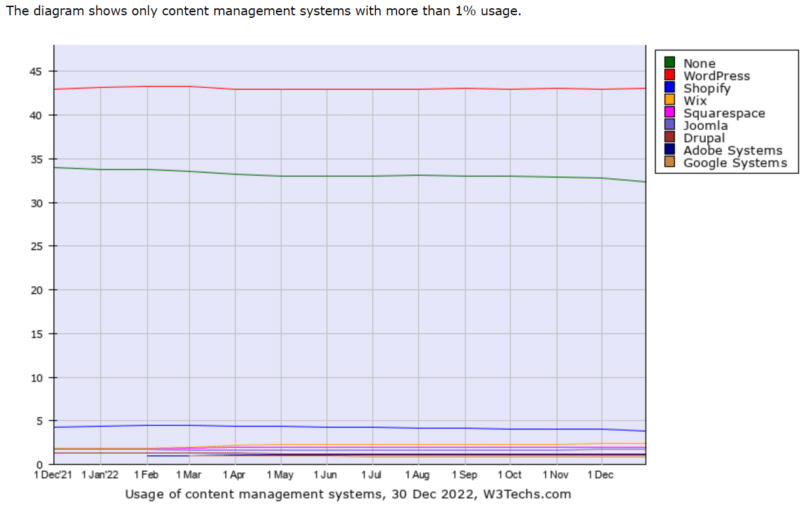
As the most popular CMS worldwide, there’s no doubt that many top results on search engines are WordPress websites.

Usage Chart from W3 Techs depicting the top Content Management Systems
Image Source: W3Techs.com

Read on to find some of the most common reasons your WordPress site is not ranking and how to resolve them.

Ensure your site is not hidden from search engines

Some users might find it surprising that all new WordPress installations block search engines by default.

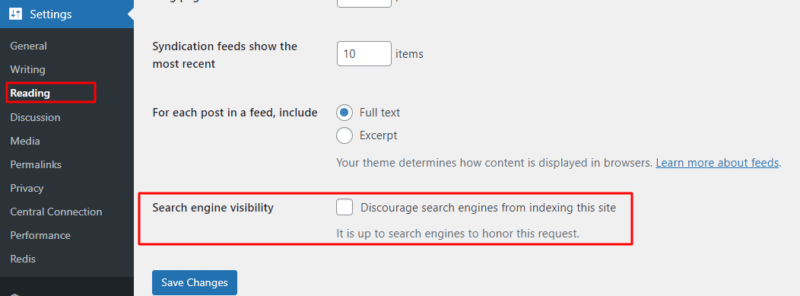
The Search Engine Visibility setting in WordPress exists to prevent search engines from discovering a site that is not fully built. This setting is easy to disable once your WordPress is ready to go public.

To turn this setting off, log into your WordPress dashboard. In the left menu, locate Settings, then navigate to Reading.

On the Reading page, scroll down to find the Search Engine Visibility setting.

Uncheck the Search Engine Visibility box and be sure to Save Changes.

Search Engine Visibility settings in WordPress

Choose the right keywords to target

Researching content that fits your industry should always be your first step to revisit if your site is not ranking as you hope it would.

Keywords are how engines find your content and know where to index it. Making sure you understand your company’s goal, and target keywords will help your keyword research phase.

It is possible that the keywords you choose to target are also used by other companies in your industry. Be sure to include competitor analysis in your research.

There are several free and paid tools available to conduct competitor analysis, which include Semrush, Moz and Ahrefs. With tools like these, you can conduct full content audits and see where your competitors might be excelling and lacking.

In a keyword gap analysis, you can see missing and sharing keywords used by you and your competitor. Shared keywords present opportunities to optimize your existing content and missing ones can help you identify topics for new content.

It is important to keep in mind that adding a single keyword will not improve your ranking. You will want to ensure your company follows SEO best practices for thorough and relevant content.

Understand how Google sees your site with search console

Create a Google Search Console account for free to understand how Google crawls your site and which keywords your site shows up for.

If your site is being indexed, but you’re not getting enough traffic, check the URL Inspector tool and Google Core Web vitals.

Page and URL inspector 

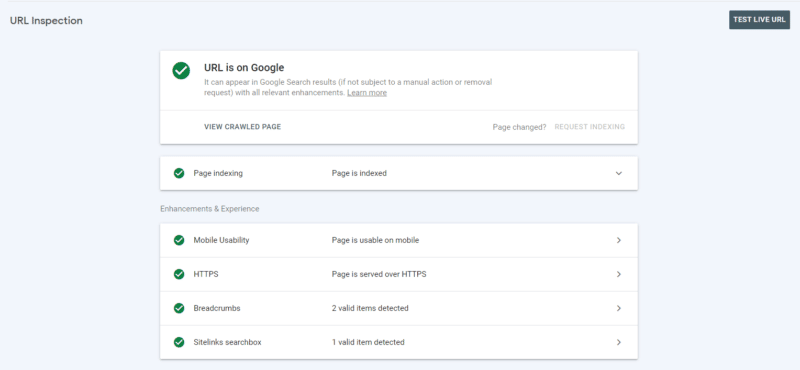
The URL inspector tool provides you with insights into your indexed pages.

Google Search Console URL Inspector Results

If there are any markup errors or warnings, the inspector will inform you. It will also specify why this error occurred.

Users can also check when their page was last indexed and crawled.  

Google Core Web Vitals

Optimizing your WordPress site is always a crucial part of your site’s SEO strategy.

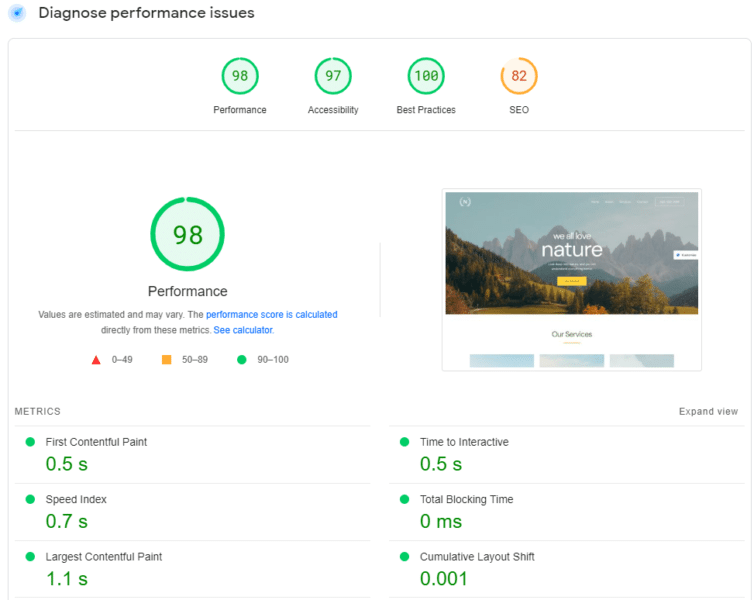
With the power of Google Core Web vitals, you can get detailed information on any issues slowing your site down.

Keep the results of your website tests in mind as you make changes to the theme and plugins on your website. Any modifications you make to your content will affect your site optimization.

For over 20 years, InMotion Hosting has given users premium web hosting and tools. Optimize your website’s speed with InMotion’s new high-performance managed WordPress plans.

Hosted on a fully-isolated VPS, users will experience 40x faster WordPress hosting speeds with dedicated resources, caching profiles, and the power of Redis. Improve Core Web Vital scores with a server that’s designed to make WordPress fast.

Plugins and themes

Plugins and themes are WordPress’s bread and butter, but they have a heavier impact on SEO ranking than some users may think.

Use a performance testing tool to understand how they affect your website’s performance.

Theme solutions

While thousands of themes are built for all types of websites, not all are ideal for search engines.

Testing the theme’s impact on your Google Core Web Vitals is good practice.

If the theme that interests you has a demo website, you can do a simple test to see if it is optimized.

Copy the URL of the demo site into Google’s PageSpeed Insights to review its performance and SEO readiness.

WordPress Theme Demo Content Page Insights Results

Something to note is that your website will likely have a lot more content than any demo site. However, it is good to determine if the theme raises any red flags before you even install it.

You may also want to look out for page builders when updating or designing your site. These plugins help you build your website using a visual drag-and-drop interface.

Because of their bulk, these editors can bring down your Web Core Vitals scores. Using WordPress’s native block editor, Gutenberg, can help you keep your speed up while maintaining the aesthetics of your theme.

WordPress plugins

SEO plugins are one of the first things many users install on their WordPress websites.

Here are some things you will want to make sure your preferred plugin does before installing it:

  • Customizes metadata and open graph tags.
  • Supports schema or structured data.
  • Scores your keyword density.
  • Grades your content quality, readability and internal linking.

Recommended plugins for SEO are Yoast SEO, All-In-One SEO and RankMath.

We also recommend the tools discussed in the keyword and competitive research section for more advanced tools to track your SEO.

Caching plugins

Caching plugins are some of the most popular to add after your WordPress installation.

Caching plugins help with performance by providing a recently saved version of the site’s content to users. This shortens the waiting time for connection to the server.

Some caching plugins are simple and only concentrate on the caching aspect. Others will have settings for CDNs, minification of files and more.

Recommended plugins for caching are W3 Total Cache, WP Super Cache and WP-Optimize.

We also recommend trying out a couple of plugins to find the best one that fits your needs. Make sure you are only testing one at a time, as multiples of the same plugins can result in slower speeds and compatibility issues.

Final thoughts

Often, the easiest way to resolve issues is to go back to basics. SEO is no different.

If you ensure your site is set up correctly and enriched with good content, your search engine rank will increase with time. Be sure your website is ready for anything. With a hyperfast VPS, dedicated resources, and premium design and maintenance tools, InMotion Central will change how you use WordPress.


Related stories

New on Search Engine Land

About the author

InMotion Hosting

As a certified Great Place to Work, with over 30,000 positive customer comments, we strive every day to make our customers happy. We are an employee-owned technology company, guided by a commitment to the open source community and fostering technical thought leadership in the hosting industry. With a blended approach of technology, expert customer support, and easy to use digital tools, our success and growth have stemmed from our honest desire to help businesses succeed and grow.

https://searchengineland.com/why-is-my-wordpress-site-not-ranking-391183


This day in search marketing history: January 16

Google explains crawl budget

In 2017, Google’s Gary Illyes explained what crawl budget is, how crawl rate limits work, what crawl demand is and what factors impact a site’s crawl budget.

As Illyes explained, most sites don’t need to worry about crawl budget.

“Prioritizing what to crawl, when, and how much resource the server hosting the site can allocate to crawling is more important for bigger sites, or those that auto-generate pages based on URL parameters,” Illyes said.

More from Illyes:

  • Crawl rate limit is designed to help Google not crawl your pages too much and too fast where it hurts your server.
  • Crawl demand is how much Google wants to crawl your pages. This is based on how popular your pages are and how stale the content is in the Google index.
  • Crawl budget is “taking crawl rate and crawl demand together.” Google defines crawl budget as “the number of URLs Googlebot can and wants to crawl.”

Read all about it in Google explains what “crawl budget” means for webmasters.


Also on this day 


Google Ads bug again for Gmail on desktop Safari browsers

2022: This impacted Google Ads that were served in Gmail for users accessing their email using the Safari desktop browser.


Google January 2020 core update almost done rolling out

2020: Google confirmed: “the update is mostly done…”


Google Search Console unparsable structured data report data issue

2020: Some users may have seen a spike in unparsable structured data errors due to an internal Google misconfiguration.


Google Search Console’s URL inspection tool adds HTTP response, page resources, JS logs and rendered screenshot

2019: The tool added the ability to see a specific URL’s HTTP response code, the page resources, the JavaScript logs and a rendered screenshot.


Bing Ads launches page feeds for easier Dynamic Search Ads management

2019: Page feeds eliminated the need to create targets for specific URLs or groups of URLs in DSA campaigns, making it easier to set up and manage.


Google ordered to submit search index to state sponsorship in Russia

2019: A law passed in 2018 mandated that search engine results be filtered through the federal state information system (FGIS).


Katy Jurado Google doodle marks 94th birthday of film star from the Golden Age of Mexican cinema

2018: Jurado was drawn in a powerful pose against a backdrop inspired by the film “High Noon.”


Google Image Search testing YouTube videos

2017: Google was embedding playable YouTube videos for certain queries.


Martin Luther King Jr. Day Google doodle promotes King’s message of unity

2017: The Doodle, by guest artist Keith Mallett, captured one of the major themes of King’s speeches and writing: “All life is interrelated.”


Google Still Doing At Least 1 Trillion Searches Per Year

2015: Google was sticking with the figure it gave in 2012 but stressed it’s “over” that amount. How much? Google wouldn’t say.


Google’s Knowledge Graph May Show For 25% Of All Search Queries

2015: The figure was important because it meant searchers often didn’t need to leave Google to visit a publisher’s site. 


2015 Oscar Nominations Now Showing In Google Knowledge Graph & Bing Carousel

2015: Searches for [Oscar nominee] and [Oscar nominations] on Google and Bing delivered results for the best picture candidates.


Local SEOs Sound Off On Google+ Local Hijackings

2014: Local SEOs and people familiar with Google+ Local theorized about on how this happened and shared suggestions o how to guard against future hijackings.


Bing: It’s A Myth That Keyword Rich Domain Names Improve Search Rankings

2014: The domain and keywords in that “domain send less and less” ranking signals to the overall Bing ranking algorithm.


RKG Report: PLAs Fuel AdWords Growth, Bing Ads Spend Rises Sharply In Q4

2014: Paid search spend among RKG’s retail-heavy client set rose 23 percent year-over-year. Overall click volume increased 19 percent, and CPCs ticked up just 3 percent.


Covario: Global PPC Click-Through Rates Hit New Highs, Spend Up 17 Percent YoY In Q4

2014: Based on results from their high tech, consumer electronics and retail clients, PPC spending increased 17% year-over-year and 13% over Q3 2013.


Google Now Cards Hit The Desktop For Mac, Windows and Chrome OS Users

2014: The Google Now cards ran through the latest Google Chrome build (Chrome Canary). Users had to be logged into Chrome.


Dian Fossey Commemorated With Google Logo To Mark The Famous Zoologist’s 82nd Birthday

2014: The logo included illustrations of the Silverback gorillas Fossey studied during her time in Rwanda, along with a picture of the Rwanda mountains where Fossey set camp for most of her 18 years with the gorillas.


Report: PLAs Drove 28% Of Google Non-Brand Ad Clicks In Q4

2013: The non-brand ROI for Google was 22% higher than that for Bing.


Play The Frank Zamboni Google Doodle

2013: The interactive Doodle allows searchers to play the Zamboni game by cleaning the ice after it is being used by children, hockey players and ice dancers.


How To Blackout Your Site (For SOPA/PIPA) Without Hurting SEO

2012: Google’s advice was to use a 503 HTTP status code to tell spiders that the website was temporarily unavilable.


Google Honors Martin Luther King Jr. Day With “I Have A Dream” Logo

2012: The Doodle included a couple lines from his famous speech.


Google Plans To Buy Its Way Into Real Estate

2010: Actually … Google’s goal was to acquire one to two companies a month. Not necessarily just small real estate companies.


Why Don’t Google & Yahoo Offer Twitter Search?

2009: if you want to find Twitter’s powerful, compelling material, you went to Twitter. Not to Yahoo. Not to Google, the king of search. 


Microsoft’s Early Mistakes & Missed Opportunities With Paid Search

2009: From bCentral Keywords, to not purchasing Overture, and its failed attempts to buy Yahoo.


Google Names Marchex First ‘Google AdWords Authorized Reseller Technology Platform’

2009: The purpose of this designation was to allow Google to recommend an approved technology partner to AdWords resellers if those partners didn’t have the requisite scalable technology.


Kogan ‘Indefinitely’ Delays Android Phone Launch

2009: Due to technology compatibility issues.


Search In Pictures: Googlers Dancing, Yahoo’s New CEO & Dinner Impossible At Yahoo

2009: The latest images culled from the web, showing what people eat at the search engine companies, how they play, who they meet, where they speak, what toys they have, and more.


December 2008: Search Engine Land’s Most Popular Stories

2009:  Search Engine Land’s 10 most popular stories from December 2008.


Google Writes Google Sitemaps FAQs

2008: Google responded to some of the most asked questions on the Sitemaps protocol and how Google supported it.


Google “Online Marketing Challenge” Has 724 College Teams Signed Up To Be Local SEMs

2008: When Google tried to turn college and business school students into search marketers.


Microsoft And EDGAR Online In Content, Ads Deal

2008: Microsoft became the exclusive third-party provider of display, contextual and video advertising for EDGAR Online and its global audience of more than 2 million unique visitors per month.


Yahoo’s Senior VP Of Entertainment Business Leaves

2008: Media executives at Yahoo were leaving one after another.


Hungry For Yahoo? Feed Yourself From Ya-Hoo! Baking Co.

2008: “not affiliated with Yahoo!, Inc. the search engine company.”


Google No Longer Linking To Yahoo, MapQuest Maps

2007: Previously, a search for an address would have yielded a choice among Google Maps, Yahoo and MapQuest.


comScore: Google Wins Again & IE7 Doesn’t Stop Microsoft’s Slide

2007: When Google had just a 47.3% search market share.


New Google Checkout Promo; New Google Trust Worries

2007: Google added the ability to filter product search results from merchants using Google Checkout – and promoted the new feature within its main search results.


Disclosing When Queries Are Autocorrected

2007: It seemed like Google had moved beyond suggesting spelling corrections to automatically doing them for you. 


MetaGlossary – Two Million Terms, Phrases And Acronyms

2007: It worked in a similar manner to the Google define: function, though it tended to be more comprehensive.


Wikiseek: Leveraging Wikipedia For Web Search, Poorly

2007: A look at the disappointing service along with a revisit to how it was different from Search Wikia.


Vizu Seeking To ‘Democratize’ Market Research

2007: It offered an interesting model, creating financial incentives for publishers to show polls on their sites and a relatively inexpensive way for marketers to get quick user data.


comScore: Email Top Reason For Mobile Internet Access

2007: “33% strongly agree they ‘feel lost’ without their cell phone.”


Past contributions from Search Engine Land’s Subject Matter Experts (SMEs)

These columns are a snapshot in time and have not been updated since publishing, unless noted. Opinions expressed in these articles are those of the author and not necessarily Search Engine Land.


< January 15 | Search Marketing History | January 17 >


Related stories

New on Search Engine Land

@media screen and (min-width: 800px) { #div-gpt-ad-3191538-7 { display: flex !important; justify-content: center !important; align-items: center !important; min-width:770px; min-height:260px; } } @media screen and (min-width: 1279px) { #div-gpt-ad-3191538-7 { display: flex !important; justify-content: center !important; align-items: center !important; min-width:800px!important; min-height:440px!important; } }

About the author

Danny Goodwin

Danny Goodwin is Managing Editor of Search Engine Land & SMX. In addition to writing daily about SEO, PPC, and more for Search Engine Land, Goodwin also manages Search Engine Land’s roster of subject-matter experts. He also helps program our conference series, SMX – Search Marketing Expo. Prior to joining Search Engine Land, Goodwin was Executive Editor at Search Engine Journal, where he led editorial initiatives for the brand. He also was an editor at Search Engine Watch. He has spoken at many major search conferences and virtual events, and has been sourced for his expertise by a wide range of publications and podcasts.

https://searchengineland.com/search-marketing-history-january-16-391814


This day in search marketing history: January 15

Facebook Graph Search arrives

In 2013, Facebook announced a new experience that it called Graph Search.

Facebook Graph Search relied heavily on Likes and other connections to determine what to show as the most relevant search results for each user.

At launch, Facebook Graph Search only included people, photos, places and interests.

Facebook Graph Search wasn’t a traditional web search engine like Google or Bing. It was a new type of search – a social search engine. Although Facebook was already using Bing for web search results at that time.

Dig deeper:

Less than two years later, Facebook quietly dropped Bing’s results and Facebook made Graph Search less visible. Graph Search would be all but dead by around June 7, 2019. According to a Facebook spokesperson:

“The vast majority of people on Facebook search using keywords, a factor which led us to pause some aspects of graph search and focus more on improving keyword search. We are working closely with researchers to make sure they have the tools they need to use our platform.”

– Joseph Cox, VICE, “Facebook Quietly Changes Search Tool Used by Investigators, Abused By Companies“


Also on this day 


LinkedIn launches LinkedIn Marketing Labs on-demand courses for advertisers

2021: The courses cover the basics including an introduction to LinkedIn Ads, how to use LinkedIn ad targeting, and reporting and analytics for LinkedIn ads.


Amazon Sponsored Products ads now support dynamic bidding, bid adjustments

2019: Advertisers could opt into automated bidding and tailor bids for the search ads by page placement.


EU copyright directive nearing final form as Google tests stripped-down news SERPs

2019: The directive sought to “harmonize” copyright law across Europe.


DuckDuckGo map and address searches now powered by Apple Maps

2019: The company had been using OpenStreetMap.


Google to fix reverse image search bug

2018: “Pages that include matching images” section was not showing image thumbnails as it should.


Martin Luther King Jr. Day 2018 Google doodle honors Dr. King & his dream for a better world

2018: The image was designed by guest artist Cannaday Chapman and created in collaboration with the Black Googlers Network.


Google Tests “What’s Hot” & “What’s Nearby” As Android Search Options

2016: In addition to recent searches, Google inserted a “What’s Hot” and “Nearby” option in the pull-down menu.


Search In Pics: Justin Trudeau At New Google Canadian Office, Google Expeditions Subaru & Fallout 4 Statue

2016: The latest images culled from the web, showing what people eat at the search engine companies, how they play, who they meet, where they speak, what toys they have and more. 


Google Knowledge Graph Now Showing Social Profiles For Brands

Google began showing the social profile links for Pixar, Apple, Starbucks, Google and many more brands.


Search Is Number One Content Discovery Tool For Mobile Users

2015: Fifty four percent of respondents said search was the top way they found mobile content/websites


Smartphones Account For 40% Of US Search Ad Spend In Q4 [Marin]

2015: Desktop’s influence, while still dominant, continued to wane


Google Updates Its Structured Data Testing Tool, Documentation & Syntax Support

2015: Google had a new and improved Structured Data Testing tool, updated its documentation and guidelines, while adding more markup support.


Ability To Share Ads Via AdWords Shared Library Is Going Away

2015: The feature would be eliminated on Feb. 11.


Google Wants Webmaster Feedback On Web Search & Webmaster Tools

2015: Google asked: “What would you like to see from Google Websearch & Webmaster Tools in 2015?”


Google Events Knowledge Graph Adds Ticket Links, Delegated Events, Comedian Events & Venue Events

2015: Google made four updates to the events knowledge graph, after launching the markup back in March 2014.


Google Updates Maps App Adding Restaurant Filters & More

2015: Google Maps App added cuisine type filters and more features for iOS and Android users.


Google’s Matt Cutts: We Don’t Have Different Algorithms For Different Web Position Slots

2014: Google’s Matt Cutts answered this question: “Are results in different positions ranked by different algorithms?” Spoiler alert: The answer was no.


Rand Fishkin Steps Down As The CEO Of Moz, Sarah Bird New CEO

2014: The end of an era – this was Fishkin’s final day as CEO of Moz.


Report: Search Engines Responsible For 40% Of Holiday Traffic To Retailer Websites

2014: While still representing the largest share, Experian reported search engines experienced a 13% drop in the amount of upstream traffic sent to retailers when comparing year-over-year traffic data.


Bing Ends 2013 With All-Time High In US Market Share, But Google Also Up [comScore]

2014: Google’s share of search queries was up 0.6 percent in December 2013, to 67.3 percent


EU Wants More Search Concessions, Google Defies French Authority

2014: EU Competition Commissioner Joaquin Almunia said Google needed to deliver additional, revised proposals within weeks to avoid a formal antitrust proceeding.


Is Lowe’s The First Brand To Adopt Jelly?

2014: What we do know: they answered at least one question about how to mount art on a brick wall.


Links From Press Releases Do Have Ranking Benefit Despite What Google Says

2013: That time when Matt Cutts blog started ranking for [sreppleasers] in Google.


Report: Global Paid Search Spending Up 18% In 2012

2013: That growth trend was down just slightly from the 21% annual increase reported for 2011.


77% Of Online Health Seekers Start At Search Engines [Pew Study]

2013: That was significantly more than the 13% who began at health portals like WebMD, general information sites like Wikipedia (only 2%) and social networks (1%).


Google’s 6th “Doodle 4 Google” Contest: “My Best Day Ever…”

2013: The winner would earn a $30,000 college scholarship, a $50,000 technology grant for their school, and have his or her logo displayed on the Google homepage.


Yext “Reinvents The Local Business Listing” With New Rich Content Options

2013: And they called it … PowerListings+.


89% Find Search Engines Do Good Job Finding Information, But “Noise” Is Issue

2011: 13% said they couldn’t find what they were looking for. The answers were there, the “signal” that people want to tune into. They were just surrounded by a lot of noise.


comScore: Bing Share Up – Will It Overtake Yahoo? Plus, Ask.com Sale Speculation Returns

2010: ComScore’s search share figures from December 2009: Yahoo, 17.3%, Bing, 10.7%. (Google? It was at 65.7%.)


Amazon Slaps UK Affiliates Using Search Marketing Techniques

2010: Amazon said it would no longer pay referral fees to Associates who sent users via keyword bidding or other paid search on any other search engine or their extended search networks


OneRiot Launches RiotWise Ad Network For Real-Time Search

2010: The launch followed a pilot phase that the company said allowed developers to monetize mobile apps, desktop clients, social search engines and similar applications.


Carol Bartz’s ‘Gut’ May Stop Yahoo Search Sale To Microsoft

2009: Bartz said her instinct or “gut” was not necessarily to sell, although she would need to immerse herself in the issues and economics to make a better determination.


Microsoft Job Cuts May Come Next Week

2009: The cuts were expected to be “far less than the 15,000 positions” first thought.


Yahoo Shows Wikipedia Some SearchMonkey Love

2009: The Wikipedia SearchMonkey App was turned on by default for all Yahoo search users, which made it the sixth app that all Yahoo searchers would see (with LinkedIn, Yelp, Yahoo Local, Citysearch and Zagat).


TweetNews: Yahoo Programmer Melds News Search & Twitter

2009: TweetNews was a new search engine that used hot Twitter topics to bring more relevance and freshness to news search.


Google Directory Update Showing “Real” PR Scores?

2008: Google Directory scores were much higher than those shown on the Google Toolbar.


Microsoft And MediaCart Bring Ad Targeting To Grocery Store Shopping Carts

2008: Microsoft teamed up with MediaCart to offer in-store behavioral ad targeting and took the concept of “location-based services” to the store aisles using RFID tags.


Google Maps Being Used To Engage Political Volunteers, Activists

2008: How candidates, campaign staffers and other third parties were using Google Maps and the Maps API to showcase their messages and organize political volunteers and activists in upcoming primaries.


Wireless Spectrum Bidders Approved, Auction Begins January 24

2008: Among the bidders: Google, AT&T, Verizon and MetroPCS. 


Study Says Get In Top 5 Not Top 10 & Search Engines May Need To Highlight Official Sites

2007: Among the findings: search marketers needed to be more concerned about getting into the top five rather than the top ten, if they wanted to be seen.


More Spotting Google’s Related Searches At Bottom Of Page

2007: More searchers were seeing a series of eight suggested searches as links, under the heading of “Searches related to:” followed by the original word you searched for.


Looking At Microsoft’s Continued Long Game In Search

2007: “It’s tiring to hear the Microsoft leadership just rip at Google rather than deliver successes that speak for themselves.”


Microsoft Live & Yahoo Push For Firefox Users, Plus Revisiting The IE7 Search Battle

2007: How the various search engines were trying to get users to make them their default choice.


SEO Blogs Under Hack Attack

2007: Graywolf’s blog was hacked, then Stuntdubl went down.


Hacking Google To Help It Improve Security

2007: “It’s your worst nightmare – someone reads parts of your Google emails, views your docs, modifies your spreadsheets, checks out your reading habits on the Google personalized homepage or Google Reader, and goes through your search history.”


Googlers Give Overwhelmingly To Democrats; Google’s PAC Gave More To Republicans

2007: While 98% of Google employee money went to Democrats in the last election, the company-controlled Google NetPAC gave 61% of its contributions to conservative candidates. 


From Search Marketing Expo (SMX)


Past contributions from Search Engine Land’s Subject Matter Experts (SMEs)

These columns are a snapshot in time and have not been updated since publishing, unless noted. Opinions expressed in these articles are those of the author and not necessarily Search Engine Land.


< January 14 | Search Marketing History | January 16 >


Related stories

New on Search Engine Land

@media screen and (min-width: 800px) { #div-gpt-ad-3191538-7 { display: flex !important; justify-content: center !important; align-items: center !important; min-width:770px; min-height:260px; } } @media screen and (min-width: 1279px) { #div-gpt-ad-3191538-7 { display: flex !important; justify-content: center !important; align-items: center !important; min-width:800px!important; min-height:440px!important; } }

About the author

Danny Goodwin

Danny Goodwin is Managing Editor of Search Engine Land & SMX. In addition to writing daily about SEO, PPC, and more for Search Engine Land, Goodwin also manages Search Engine Land’s roster of subject-matter experts. He also helps program our conference series, SMX – Search Marketing Expo. Prior to joining Search Engine Land, Goodwin was Executive Editor at Search Engine Journal, where he led editorial initiatives for the brand. He also was an editor at Search Engine Watch. He has spoken at many major search conferences and virtual events, and has been sourced for his expertise by a wide range of publications and podcasts.

https://searchengineland.com/search-marketing-history-january-15-391804


This day in search marketing history: January 14

R.I.P. AMP

In 2022, we revealed what happened when Search Engine Land shut off AMP.

TL;DR: “We have seen very little disruption to our traffic and have reaped the benefit of having a clearer picture of our audience analytics.”

We didn’t see any year-over-year declines in traffic that we could tie to AMP aside from the loss of pageviews to a handful of pieces that routinely spike for organic traffic.

Why did Search Engine Land shut off AMP? As we explained in We’re turning off AMP pages at Search Engine Land, it was due to competition in Top Stories (after AMP was no longer required for inclusion in Top Stories) and waning support by social media platforms.

Read all about it in What happened when we turned off AMP.


Also on this day


Shopify chat bug leads to titles with (1) in Google’s search results

2022: It was a widespread issue, not a Google bug, related to a chat feature in Shopify that had this unintended consequence in search.


Google Ads enables bid simulator for Target ROAS, budget simulator for Maximize clicks, conversions

2020: You could see the projected impact of making bid or budget changes in your campaigns that used these smart bidding strategies.


Google buys Pointy to bring SMB store inventory online

2020: Pointy had solved a problem that vexed startups for more than a decade: how to bring small, independent retailer inventory online.


Nofollow couldn’t save the Google webmaster blog from comment spam

2019: Google removed the ability to leave comments on Google Webmaster blog because “most of the time they were off-topic or even outright spammy.”


How Google’s Search Chief Has Been Living The “Mobile First” Life For Over A Year

2016: Amit Singhal, Google’s senior vice president of search, did almost all of his searches for more than a year on mobile devices.


Bing Ads Updates Keyword Planner With Impression Share Comparisons And More

2016: The new features: more competitive insights and benchmarking, customizable ad group and keyword bids, a new source for keyword suggestions and time range customization up to 24 months for keyword search volume.


Bing Updates Its Logo With Uppercase “B” & New Teal Blue Color

2016: “It felt like the right time to freshen things up,” said Microsoft spokesperson.


Google Street View Goes “Miniatur” To Capture Hamburg Model Train Exhibit

2016: Google documented the attraction with tiny Street View cars as though it were a real place.


Google News Now Will Crawl & Index Images Hosted Off Your Domain Name

2015: In the past, if your images were hosted off your website’s domain, it was very unlikely Google would crawl them for Google News.


Q4 Paid Search Ad Revenue Up 24 Percent YoY In The Americas [Kenshoo]

2015: Return on investment rose as revenue outpaced the rise in spending.


Google History Added A Section For Your Google Now Cards

2015: You could track, over time, what Google Now Cards Google showed you each day.


Google Translate App Gets Improved Picture & Conversational Translation

2015: The update brought both camera and conversation mode translation to the iOS app for the first time, as well as vast improvements to those features on the Android version of the app.


Google Opens A Visitor Center

2015: Historically, Google had never allowed for random people to come and visit or tour the offices.


Thousands Of Hotel Listings Were Hijacked In Google+ Local

2014: Thousands of hotels listed within Google+ Local appeared to have had links leading to their official sites “hijacked” and replaced with ones leading to third-party booking services.


Google Image Search Adds Usage Rights To Search Tools

2014: The feature wasn’t new. You just no longer had to dig into the “advanced image search” features to get them.


Two Videos Of What It Would Be Like If Google Was A Real Living Person

2014: Two video parodies make fun of what a Google would be if it was a real guy.


Yelp Turns Up The Heat: 285 Consumer Alerts Issued Over Fake Reviews

2014: A pop-up alert appeared on a Yelp business profile page and warned consumers that a Yelp sting operation had caught the company trying to acquire reviews by buying them, offering gifts or discounts, or some other way that Yelp doesn’t allow.


Wayback Machine Now Has 240 Billion URLs

2013: Prior to this update, The Wayback Machine provided access to about 150 billion URLs.


Welcome AJ Kohn & Ginny Marvin To Search Engine Land, Marketing Land

2013: Kohn joined us as our Special Projects Correspondent. Marvin joined as a Contributing Writer, focusing primarily on paid advertising topics (she would go on to become Editor-in-Chief from October 2018 to December 2020).


DuckDuckGo Relaunches With New Visual Design

2012: Founder Gabriel Weinberg has been taking feedback and tweaking the design for at least three-plus weeks in the site’s community forum, where he announced the new look and layout.


Google’s John Hanke Speaks About New Mobile Incubator

2011: After six years at the helm of Google Maps, Hanke said he was “restless” and was a bit tired of running a large organization.


Google, Bing Up While AOL Hits All-Time Low: comScore December Search Data

2011: Google hit 66.6% – a record high for Google in comScore’s numbers – while AOL hit a historic low of 1.9%.


More See Horizontal Look For Top Three Google Ads

2011: In the new format, the headline was combined with the first description line, or the two description lines were combined.


South Korean Police File Criminal Charges Over Google’s WiFi Data Gathering

2011: Police examined the data that Google collected between October 2009 and May 2010 and determined that it broke two South Korean laws.


Bing Set To Advertise During Golden Globe Awards

2011: Both ads played on the Bing “decision engine” idea by having aspiring actors explain why they decided to get into acting, followed by a message that “pre-congratulates the Golden Globe winners of tomorrow.”


Yahoo’s Irving: “Hell Yes” Yahoo Is Committed To Flickr

2011: “Q. Is Yahoo! committed to Flickr? A. Hell yes we are! We love this product and team; on strategy and profitable.”


Google Search Suggestions For Mobile Get Locally Relevant

2010: Query suggestions varied based on user location.


Experian Hitwise: Google Passes 72% U.S. Market Share

2010: Yahoo, Bing, and Ask.com all saw their search share drop from November to December.


100 Day Reminder: AdWords API v13 Sunsetting

2010: Another warning.


Google Integrates “Real-Time” Messages Into Place Pages, Makes BlackBerry Mobile App More Useful

2010: Businesses could use their Place Pages to promote time-sensitive (real-time) events – as long as they could find the feature.


Shashi Seth Now At Yahoo From AOL, Cooliris & Google

2010: As the new Senior Vice President of the Yahoo Search Products team, Seth would manage Yahoo’s Search team and all things related to Yahoo Search.


Chinese Gov’t Offers Bland Statement On Google, Google.cn Employees Given Indefinite Holiday

2010: China’s government suggested it likely wasn’t going to allow Google to operate unfiltered or negotiate with the search engine.


Yahoo Adds Network Distribution & Improved Importing To Search Ads

2010: Network Distribution allowed advertisers to select if they wanted to advertise on Yahoo’s entire network or just on either the Yahoo Search network or Yahoo Search Partner network.


Where Have All The Old Tweets Gone?

2010: The massive number of new tweets coming in was to blame. The search index behind Twitter Search couldn’t hold it all.


After The Hack, Should I Still Trust Google & The Cloud With My Data?

2010: Would the entire GoogleHack episode develop into a major reversal for the growth of cloud computing? (Spoiler alert: No.)


Google Pledges $1 Million To Haiti Relief Efforts, Bing & Yahoo Add Donation Info

2010: The major search engines responded by linking information about disaster relief efforts from their homepages.


Google Local Business Ads Score New Features

2009: New links appeared at the bottom of the ad’s info window: Get Directions, Street View, and/or Save to My Maps.


Google Creates Smart Sitemap Generator Tool

2009: It used web traffic, log files and other methods to find new or modified URLs. 


Google Ends Google Video Uploads, Shutters Notebook, Catalog Search, Dodgeball & Jaiku

2009: Google ceased developing a variety of products as part of a continuing move to keep efforts focused on products with greater usage


Google Apps Authorized Reseller Program

2009: The program was aimed at developers, hosting companies and others to take on the responsibility of billing, support and training, in exchange for a 20% discount on the services.


Adobe & Yahoo Discontinue PDF Contextual Ad Program

2009: Blame the failure on the economic conditions.


Consumer Groups Trying To Preempt Behavioral Targeting For Mobile Ads

2009: A complaint sought to preempt the development of behavioral targeting and profiling in mobile advertising.


Harvard Prof: Deceptive Ads ‘Widespread’ On Yahoo’s Right Media

2009: The ads were either are false or failed to make legally required disclosures.


Yahoo Shuts Down Content Match In UK

2009: Yahoo matched the advertiser’s ads by the contextual relevancy of the page’s content to the keywords the advertisers purchased.


Google Cuts 100 Recruiters; May Replace Up To 70 Engineers Due To Office Closures

2009: Google implied the cuts would be due to the engineers not being willing or able to relocate to Google’s Mountain View headquarters.


An Apology To Wired & The Search Marketing Community

2008: The article generated some serious spam issues for Wired, generated discord within the search marketing community, and injured the search marketing industry in general.


Google Loves The iPhone, But Google’s Eric Schmidt Won’t “Talk” About It

2008: Google CEO Eric Schmidt was a member of the Apple board and was on stage for the iPhone’s introduction.


Liberty Media Corporation Bought 14 Million Shares In IAC

2008: The 14 million shares came out to about $339.5 million, but gave Liberty Media Corporation about a 30 percent stake in the parent company of Ask.com.


IncrediMail Gets Crushed Financially By Google AdSense Ban

2008: The ban seemed to have caused their stock price to drop 45% in one day.


Professor Bans Google & Wikipedia In Class Room

2008: University of Brighton professor said using Google and Wikipedia doesn’t encourage students to use their “own brains” enough


From Search Marketing Expo (SMX)


Past contributions from Search Engine Land’s Subject Matter Experts (SMEs)

These columns are a snapshot in time and have not been updated since publishing, unless noted. Opinions expressed in these articles are those of the author and not necessarily Search Engine Land.


< January 13 | Search Marketing History | January 15 >


Related stories

New on Search Engine Land

@media screen and (min-width: 800px) { #div-gpt-ad-3191538-7 { display: flex !important; justify-content: center !important; align-items: center !important; min-width:770px; min-height:260px; } } @media screen and (min-width: 1279px) { #div-gpt-ad-3191538-7 { display: flex !important; justify-content: center !important; align-items: center !important; min-width:800px!important; min-height:440px!important; } }

About the author

Danny Goodwin

Danny Goodwin is Managing Editor of Search Engine Land & SMX. In addition to writing daily about SEO, PPC, and more for Search Engine Land, Goodwin also manages Search Engine Land’s roster of subject-matter experts. He also helps program our conference series, SMX – Search Marketing Expo. Prior to joining Search Engine Land, Goodwin was Executive Editor at Search Engine Journal, where he led editorial initiatives for the brand. He also was an editor at Search Engine Watch. He has spoken at many major search conferences and virtual events, and has been sourced for his expertise by a wide range of publications and podcasts.

https://searchengineland.com/search-marketing-history-january-14-391800