Google’s helpful content update officially finished rolling out Sept. 9. Now it’s important to reflect on the update, our initial assumptions and its impact on the SEO industry.
Fellow SEOs (e.g., Lily Ray, Glenn Gabe, Marie Haynes, Johannes Beus) have done a great job interpreting Google’s announcement and processing what happened on Twitter and their blogs.
Google’s announcement aroused great expectations within the SEO community. But the “big bang” never happened.
The update’s impact was only felt in a few website categories, such as ringtones, coding and lyrics pages. Its overall impact was relatively small compared to other algorithm updates.
Critical reflection and alignment between theory and practice
First, reviewing the interpretations and expectations derived from Google’s announcement and the eventual results makes sense.
Here are the core statements from Google regarding the helpful content update and my theories, which were largely derived from them.
Focus on people-first content.
The update was sitewide, which should affect not only individual content but entire websites’ content.
Observation: If you look at the strong loss of visibility for the few domains that are supposedly negatively affected by the update, you can assume a website-wide penalty.
The recurring reference to expertise suggests that there should also be an update with E-A-T. It was assumed.
Observation: Does expertise play a major role in ringtones and lyrics? I do not think so! According to the analysis of valued colleagues, the coding pages were more about copied content (i.e., duplicate content) and not about a lack of expertise.
Google also wanted to devalue automated content, which would be an answer to the expected flood of AI content.
Observation: Do you use AI tools to generate text for topics such as ring tones, coding or lyrics? That doesn’t really make sense either.
So many assumptions and information from Google have not been observed to this day.
According to Google’s Danny Sullivan, there may be more to come in connection with further updates.
Beyond that, as we said in our post, we’ll keep refining the classifier. I expect it’s likely if we do a big revision, we’d share about that, release about that and some new forms of unhelpful content would be identified. That’s why we’ve said this is a continuing effort.
Another scenario is, therefore, theoretically possible.
Like Hummingbird, the helpful content update is fundamental to the ranking algorithms that the effects can only be seen over a long time, possibly even years.
As of now, not much has really happened, which brings another assumption into play.
Immediately after the helpful content update, Google started rolling out a two-week core update. In contrast, there is only one tweet and short undetailed general info about it, which is typical for Google. I don’t think that’s a coincidence.
No big explanation. No outreach.
Sullivan also remains vague on Gabe’s question of whether there is a direct connection between the September Core Update and the helpful content update.
Two theories about this:
Google is not satisfied with the results of the helpful content update and would like to make further adjustments, which, as mentioned by Sullivan, only unfold the full effect of the helpful content update in combination.
Google would like to calm the emerging criticism of the communication and the low impact surrounding the helpful content update and steer the focus in a different direction.
Get the daily newsletter search marketers rely on.
The helpful content update was a well-executed PR campaign
Regardless of how the past and future influences from the helpful content update are to be evaluated, one thing has to be said – the communication surrounding the update was a prime example of a well-planned and executed PR campaign.
First, you’ll wonder: Why does Google need PR at all?
Like almost every company, Google has communication goals pursued through marketing and PR. Search is the most important product for Google; therefore, PR should be done for it.
The following aspects indicate that the helpful content update is also a professionally designed product PR campaign.
The update’s name is similar to the Page Experience or Mobile Friendliness updates but different from the core updates, Hummingbird, Panda or Penguin. It also describes explicitly what it is about which works better in terms of PR than a meaningless name. As a result, the implicit main message “Google search is becoming even more helpful” is conveyed in almost every message.
The update was announced by Google ahead of time. In most cases, updates are not communicated at all or only shared during or after the rollout. However, PR campaigns for product (re-)launches always require a lead time.
High-reach and influential SEOs were informed exclusively before the official announcement. In PR outreach, this is often a successful method to motivate influential media and influencers to report on something.
Google gave pretty specific recommendations for the update on what webmasters should do, which hasn’t been the case with most previous updates except for Penguin or Page Experience. This shows that this supposed PR campaign was also aimed at a second important target group besides the SEO industry – the website operators.
The helpful content update was the main focus of the SEO industry and media beyond for over two weeks. Hundreds of thousands of articles, reports and countless social media posts have spread the word that Google searches are becoming more helpful.
Media coverage shows that the update is a major PR success for Google. You can find over 180,000 pieces of content in Google searches that deal with the update, with 18,900 of them in Google News worldwide.
Google search for query “helpful content update” returns about 183,000 results.
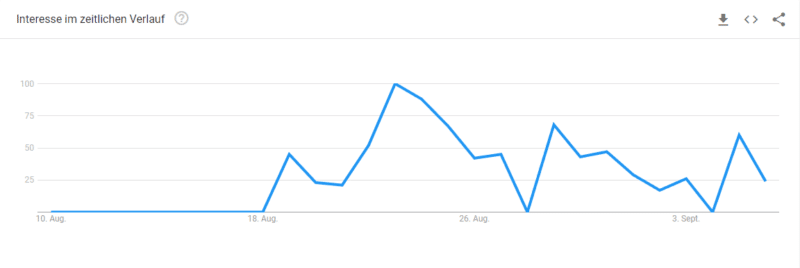
The effects of this can be understood in Google Trends:
Interest in “helpful content update” at Google worldwide in the last 90 days.
These patterns which speak for a professionally designed PR campaign, in combination with the manageable effects on Google searches, support this assumption.
Google pursued two goals with this PR campaign:
To convey the message “Google search is now even more helpful” to the world.
To get webmasters, publishers, and SEOs to produce less junk, Google has to crawl. Google faces the challenge of making its crawling and indexing resources as efficient as possible. On the other hand, if more and more garbage is flushed onto the Internet due to the AI revolution in content production, among other things, Google will find it difficult to keep up.
A reminder for the SEO industry
The Google helpful content update is a prime example of a professionally conducted product PR campaign from which you can learn a lot.
For us SEOs, the realization remains that we are important stakeholders for Google for the dissemination of their company messages.
Here, Google shows a shift in PR and communication strategies from recent years and seeks proximity to influential personalities from the SEO industry.
SEOs are invited by Google.
Google shoots videos with SEOs.
Google gives SEOs exclusive information upfront.
Relationships are built.
Back in the day, SEOs used to be rather unpopular with Google because many intended to game the search results. Now, Google seems to see the SEO industry as a multiplier for its own news and messages.
SEO colleague Brodie Clark sees it similarly:
I understand all of the latest communication around the Helpful Content Update. But I think SEOs will be more wary about inadvertently becoming an extension of Google’s PR team in future (myself included).
I’m not saying that Google publishes false information here, but of course, they have their own agenda to present their products in a good light. And the commitment to include us SEOs and the industry media in the communication is always an end.
I was enthusiastic about Google’s announcement of the helpful content update and published it immediately with great expectations. But more and more, my enthusiasm gave way to the sobering realization that a lot of PR was also involved.
The SEO industry should be aware of this and critically deal with the information from Google. The next time a “major” update is announced in advance, we should balance emotional enthusiasm with rational thinking and remain objective. There is a business relationship between Google and SEOs, not a friendship, so we should keep it that way.
Opinions expressed in this article are those of the guest author and not necessarily Search Engine Land. Staff authors are listed here.
New on Search Engine Land
About The Author
Olaf Kopp is an online marketing professional with over 15 years of experience in Google Ads, SEO and content marketing. He is the co-founder, chief business development officer and head of SEO at the German online marketing agency Aufgesang GmbH. Olaf Kopp is an author, podcaster and internationally recognized industry expert for semantic SEO, E-A-T, content marketing strategies, customer journey management and digital brand building. He is co-organizer of the PPC-Event SEAcamp and host of the podcasts OM Cafe and Content-Kompass (German language).
Google expands enhanced product experiences to more ecommerce sites, releases new Search Console reports
Google is expanding the eligibility for enhanced product experiences in Google Search to those who use Product structured data. Google also has added new Search Console reports to measure the performance and identify issues with your structured data.
“These enhanced product experiences were previously only open to Merchant Center users,” the search company said.
Expanded eligibility for enhanced product experiences. Google has expanded eligibility for websites that implement Product structured data. Google said now there are two broad categories of search experiences for products and ecommerce sites, they include:
Merchant listing experiences for web pages that allow shoppers to buy a product on the site.
Product snippets for a broader set of web pages with product information. This includes pages that sell products, publish product reviews, and/or aggregate information from other sites.
Previously you needed a Merchant Center account. Previously, product snippets in Google search results were primarily powered by schema.org Product structured data, and merchant listing experiences were primarily powered by product details supplied via a Google Merchant Center feed. That is no longer the case.
Now merchants can be eligible for merchant listing experiences by providing product data on web pages without a Google Merchant Center account.
New Search Console reports. Google also added two new Search Console reports:
A merchant listing report.
A product snippets report.
These reports show you the performance of your product listings and also help you identify areas to fix with your product structured data.
New Merchant listings report. The new merchant center report does three things:
Identifies structured data issues for free listing experiences in search results.
Relevant to pages that sell products.
Covers the wider range of schema.org structured data properties and types used by the Product type that are now supported for advanced cases, such as apparel sizing and energy efficiency ratings.
New product rich results report. The new product-rich results report does three things:
Identifies structured data issues for product snippets in search results.
Relevant to pages that share product review information or aggregate product data from multiple sites. Note that pages selling products may also include product reviews.
Replaces the previous Product structured data report with adjustments related to the separation of merchant listing validations into a dedicated report. The history of prior validation errors is retained in this report.
What are these product experiences. Google illustrated two examples of what these enhanced product experiences are:
Merchant listing experiences offer enhanced experiences including the Shopping Knowledge panel and Popular Products, as well as shopping experiences in Google Images and Google Lens. The structured data required for merchant listings and product snippets is described in our Product structured data documentation.
Product rich result snippets:
Why we care. If you sell products and do not use Google Merchant Center, you products may now show up in more places, in a more rich way, than before. Just make sure to use product structured data and/or Merchant Center to benefit from this.
New on Search Engine Land
About The Author
Barry Schwartz a Contributing Editor to Search Engine Land and a member of the programming team for SMX events. He owns RustyBrick, a NY based web consulting firm. He also runs Search Engine Roundtable, a popular search blog on very advanced SEM topics. Barry can be followed on Twitter here.
The origins of E-A-T: Page content, hyperlink analysis and usage data
Predicting the future based on knowledge of the past is fundamental. I always keep a keen eye on technological advances but never lose track of the past.
Past achievements and breakthroughs in the information retrieval (IR) field conjure the possibilities of “where to next” in search technology.
That then leads me to what impact it will have on search engine optimization (SEO) techniques and methodologies in the future.
In the previous installment of my SEO “Back to the Future” series, Indexing and keyword ranking techniques revisited: 20 years later, I concluded by showing a graphic that explains something known as the “abundance problem.” This frequently prevents pure keyword ranking techniques (on-page) from placing the more authoritative pages at the top of the results. Relevant – yes. But authoritative?
For Google quality raters, E-A-T may only have been around for a few years. But in the IR field, it has always been at the core of how and what search engines do.
In this article, I’ll explore how far back expertise, authoritativeness and trustworthiness (E-A-T) goes and what they’re actually based on.
‘E-A-T’ 20 years ago
There’s still quite a lot of ambiguity in the industry about what “authoritativeness” actually means in the SEO sense. How does a site/page become authoritative?
Perhaps looking at how “authority” – as well as the terms “expert” and “trust” – came into the IR and SEO lexicon can give you more insight.
Here’s a graphic I created back in 2002, but this version has a relevant enhancement to tie all this together.
I’ll use this classic web data mining graphic, now featuring the three letters E-A-T to help build a better understanding of its origins.
E-A-T in itself is not an algorithm, but:
Expertise connects directly to page content.
Authority connects directly to hyperlink analysis.
Trust comes from a combination of page content and hyperlink analysis, plus end-user access data.
All three data mining aspects must be combined in a meta-search (or federated search) manner to provide the most authoritative pages to satisfy the end user’s information needs. Effectively, it’s a mutually reinforcing series of converged algorithmic ranking mechanisms.
As a long-time professional member of the Association for Computing Machinery, the world’s largest computing society, I’m proud to belong to the special interest group for information retrieval (SIGIR). My main area of focus within that group is hyperlink analysis and the science of search engine rankings.
For me, this is the most fascinating area of IR and SEO. As I’ve been heard to say at many conferences over the years: “Not all links are equal. Some are infinitely more equal than others.”
And that’s a good starting point for this next epic read for fellow SEO Bravehearts.
The evolution from text-based ranking techniques to hyperlink-based ranking algorithms
Let’s quickly cover the fundamental reason that links are essential to all search engines, not just to Google.
First, social network analysis has a distinguished history. The past two decades have seen a hugely developing interest and fascination in the scientific community on the idea of networks and network theory. As a basic overview, this simply means a pattern of interconnections among a set of things.
Social networks are not a new phenomenon by companies like Meta. Social ties among friends have been widely studied for many years. Economic networks, manufacturing networks, media networks, and so many more networks exist.
One experiment in the field that became very famous outside the scientific community is known as “Six Degrees of Separation,” which you may well be aware of.
The web is a network of networks. And in 1998, the hyperlink structure of the web became of great interest to a young scientist called Jon Kleinberg (now recognized as one of the world’s leading computer scientists) and to a couple of students from Stanford University, including Google Larry Page and Sergey Brin. During that year, the three produced two of the most influential hyperlink analysis ranking algorithms – HITS (or “Hyperlink-Induced Topic Search”) and PageRank.
To be clear, the web has no preference over one link or another. A link is a link.
But for those in the nascent SEO industry in 1998, that perspective would change completely when Page and Brin, in a paper they presented at a conference in Australia, made this statement:
“Intuitively, pages that are well cited from many places around the web are worth looking at.”
And then they gave an early clue endorsing the fact I highlighted that “not all links are equal” by following up with this:
“Also, pages that have perhaps only one citation from something like the Yahoo home page are also generally worth looking at.”
That last statement struck a real chord with me and, as a practitioner, has kept me focused on developing a more elegant approach to link attraction techniques and practices over the years.
In conclusion to this installment, I’m going to explain something about my approach (which has been hugely successful) that I feel will change, conceptually, the way you think about what is referred to as “link building” and change that to “reputation building.”
The origins of ‘authority’ in search
In the SEO community, the word “authority” is often used when talking about Google. But that’s not where the term originated (more on that later).
In the paper that the Google founders presented at the conference in Australia, it’s notable that although they were talking about a hyperlink analysis algorithm, they didn’t use the word “link” they used the word “citation.” This is because PageRank is based on citation analysis.
Loosely explained, that’s the analysis of the frequency, patterns, and graphs of citations in documents (a.k.a., links from one document to another). A typical aim would be to identify the most important documents in a collection.
The earliest example of citation analysis was the examination of networks of scientific papers to discover the most authoritative sources. Its overarching science is known as “bibliometrics” – which fits into the social network analysis and network theory category as I’ve already touched on.
Here’s how I transposed that 20 years ago in the absolute simplest way to show how Google viewed web linkage data.
“Some links on web pages are simply navigational aids to ‘browse’ a site. Other links may provide access to other pages which augment the content of the page containing them. Andrei Broder [Chief Scientist Alta Vista] pointed out that, a web page author is likely to create a link from one page to another because of its relevance or importance: “You know, what’s very interesting about the web is the hyperlink environment which carries a lot of information. It tells you: ‘I think this page is good’ – because most people usually list good resources. Very few people would say: ‘Those are the worst pages I’ve ever seen’ and put links to them on their own pages!
High quality pages with good, clear and concise information are more likely to have many links pointing to them. Whereas low quality pages will have fewer links or none at all. Hyperlink analysis can significantly improve the relevance of search results. All of the major search engines now employ some type of link analysis algorithms.”
“Using the citation/co-citation principle as used in conventional bibliometrics, hyperlink analysis algorithms can make either one or both of these basic assumptions: • A hyperlink from page ‘a’ to page ‘b’ is a recommendation of page ‘b’ by the author of page ‘a.’ • If page ‘a’ and page ‘b’ are connected by a hyperlink, then they may be on the same topic.
Hyperlink based algorithms also use an undirected co-citation graph. A and B are connected by an undirected edge, if and only if there is a third page C which links both to A and B.”
That second part had a much longer explanation to it in the book. But as it is a little confusing, I’ll give a really simplistic one here.
It’s important to understand the strengths of both citation and co-citation.
In the first illustration, there are direct links – one page using a hyperlink to connect to another. But if page ‘c’ links to ‘a’ and ‘b’ and then page ‘d’ links to ‘a’ and ‘b’ and then page ‘e’ and so on and so on, what you can assume is that, although page ‘a’ and page ‘b’ do not directly hyperlink to each other, because they are co-cited so many times, there must be some connection between them.
What would a real-life example of that be?
Well, lists to begin with. Pages with the “top ten” best-selling laptops, the “top ten” sports personalities, or rock stars, you can see how co-citation is a big factor in those types of pages.
So where does this HITS algorithm that you may never have heard of come into play?
There’s a story that at the same time Page and Brin were working on their PageRank algorithm, Kleinberg was analyzing results at the top search engines of the day, including the fastest growing among them, Alta Vista. He thought that they were all pretty poor and produced very meager results in terms of how relevant they were to the query.
He searched for the term “Japanese automotive manufacturer” and was very unimpressed to note that none of the major names such as Toyota and Nissan appeared anywhere in the results, let alone where they should be at the top.
After visiting the websites of the major manufacturers, he noticed one thing they all had in common: None of them had the words “Japanese automotive manufacturer” in the text on any site pages.
In fact, he searched for the term “search engine,” and even Alta Vista didn’t turn up in its own results for the very same reason. This caused him to start and focus on the connectivity of web pages to give a clue as to how relevant (and important) they were to a given query.
So, he developed the HITS algorithm, which took the top thousand or more pages following a keyword search at Alta Vista and then ranked them according to their interconnectivity.
Effectively, he was using the link structure to form a network or “community” around the keyword topic and, within that network, identify what he named “Hubs and Authorities.”
That’s where the word “authority” came into the SEO lexicon. The title of Kleinberg’s thesis was “Authoritative Sources in a Hyperlinked Environment.”
“Hub” pages are those with many links connecting to “authorities” on a given topic. The more hubs that link to a given authority, the more authority it gets. This is also mutually reinforcing. A good hub can also be a good authority and vice versa.
As usual, no prizes for my graphic-creating skills all those years ago, but this is how I visualized it back in 2002. Hubs (red) are those that link out to many “authorities” (blue) inside web communities.
So, what’s a “web community” then?
A web page data community refers to a set of web pages that has its own logical and semantic structures.
The web page community considers each web page as a whole object rather than breaking down the web page into information pieces and reveals mutual relationships among the concerned web data.
It is flexible in reflecting the web data nature, such as dynamics and heterogeneity. In the following graphic, each color represents a different community on the web.
I’ve always maintained that links attracted from within your own web community carry more prestige than those from outside your community.
I explained more about the importance of identifying communities this way 20 years ago:
“And as for linkage data: pages pointing (linking) to other pages can provide a massive amount of information about structure, communities, and hierarchy (largely referred to as the web’s “topology”). By using this methodology search engines can attempt to identify the intellectual structure (topology) and social networks (communities) of the web. However, there are many problems with scaling using methods of citation and co-citation analysis to deal with hundreds and hundreds of millions of documents with billions of citations (hyperlinks). “Cyberspace” (as in the web) already has its communities and neighborhoods. OK – less real in the sense of where you live and who you hang out with. But there is a “sociology” to the web. Music lovers from diverse cultures and different backgrounds (and time zones) don’t live in the same geographical neighborhood – but when they are linked to each other on the web they’re very much community. Just the same as art lovers and people from every walk of life who post their information to the web and form these communities or “link neighborhoods” in “cyberspace.””
Get the daily newsletter search marketers rely on.
PageRank vs. HITS: What’s the difference?
There are many similarities in both the PageRank and HITS algorithms in the way they analyze the interconnectivity of web pages to create a ranking mechanism.
But there’s a significant difference as well.
PageRank is a keyword-independent ranking algorithm, while HITS is keyword-dependent.
With PageRank, you get your authority score regardless of the community as it was originally a static global score.
Whereas HITS is keyword-dependent, meaning the authority score is built around the keyword/phrase that pulls the community together. It takes too long and beyond the scope of this installment to go into detail, so I won’t go too deeply here.
The algorithm that introduced the term ‘expert’
This Hilltop algorithm is hugely important but gets the least attention. And that’s because, in professional circles, there’s a strong belief that it was merged into Google’s algorithmic processes in 2003 when the infamous Florida update occurred.
A real game-changer, the Hilltop algorithm is a much closer derivative of HITS and was developed in 1999 (yes, all around the same time) by Krishna Bharat.
At the time, he was working for DEC Systems Research Center, which was the owner of the AltaVista search engine. His research paper was titled, “When Experts Agree: Using Non-Affiliated Experts to Rank Popular Topics.” And this is how he described Hilltop.
“We propose a novel ranking scheme for popular topics that places the most authoritative pages on the query topic at the top of the ranking. Our algorithm operates on a special index of “expert documents.” These are a subset of the pages on the WWW identified as directories of links to non-affiliated sources on specific topics. Results are ranked based on the match between the query and relevant descriptive text for hyperlinks on expert pages pointing to a given result page.”
Yes, this is where the term “expert” came into the SEO lexicon. Notice both in the title of the paper and the description of the process your page is deemed to be an expert page when others link to it. So, the terms “expert” and “authority” can be used interchangeably.
One other thing that should be noted carefully – and that’s the use of the term “non-affiliated” in the description of the algorithm. That may give a clue as to why many affiliate marketers were hit so badly with the Florida update.
Another that’s important to note is that frequently in the SEO community, people refer to “authority sites” (or sometimes “domain authority” which is not even a thing). But the fact is, search engines return web pages in their results following a query, not websites.
The more links you attract from other “expert” pages, the more authority you gain, and the more “prestige” you can add to another expert page by linking to it. This is the beauty of building a “reputation” within the community – not simply being a link collector.
Whenever I explain the importance of being recognized as an expert within a web community, as I have for the last two decades, I know that sometimes people have difficulty visualizing what that would look like.
Fortunately, in my research work all those years ago, I came across another algorithm developed by two Japanese scientists, Masashi Toyoda and Kentarou Fukuchi. Their approach was the web community too, but they were able to output their results visually.
The example I took of theirs was one they used when they built a web community around computer manufacturers. Here’s a small part of the output I lifted to use at conference sessions to help everyone get a more tangible idea of the notion.
Notice how the web community includes not just computer manufacturers but also device makers, cable makers, software makers, etc. This indicates how broad and deep a web community can be (as well as narrow and shallow).
How ‘trust’ came to be
There’s a lot that goes into “expertise” and “authoritativeness,” and no less that goes into “trust.”
Even “trust” falls into the area of hyperlink analysis and the structure of the web. A lot of work has gone into using the content and connectivity of “expert pages” that are trusted to discover and weed out spam. With AI and ML techniques, those connectivity patterns are much easier to spot and eliminate.
Back in the day there was an algorithm developed known as “TrustRank” and that’s what it was based on. Of course, the acid test for “trust” really occurs with the end user.
Search engines endeavor to weed out spam and deliver results that truly satisfy users’ information needs. So, user access patterns to pages provide a huge amount of data on which pages pass the web community test (connectivity) and then those that pass the end user test (user access data).
As I’ve mentioned, links from other web pages to your pages can be seen as a “vote” for your content. But what about the millions and millions of end users who don’t have web pages to give you a link – how can they vote?
They do it with their “trust” by clicking on certain results – or not clicking on others.
It’s all about whether end users are consuming your content – because if they’re not – what’s the point of Google returning it in the results following a query?
What ‘expert’, ‘authority’ and ‘trust’ mean in search
To summarize, you do not get to declare yourself an expert on your own pages.
You can “claim” to be an expert or an authority in a certain field or the world’s leading this or that.
But philosophically, Google and other search engines are saying: “Who else thinks so?”
It’s not what you say about yourself. It’s what other people are saying about you (link anchor text). That’s how you build a “reputation” in your community.
Moreover, Google’s quality raters are not themselves determining whether your content is “expert” or you are an “authority” or not. Their job is to examine and determine whether Google’s algorithms are doing their job.
This is such a fascinating subject and there’s so much more to cover. But we’re out of time and space for now.
Next time, I’ll explain how important structured data is and being “semantically” connected within your web community is.
Until then, enjoy the golden colors of fall as we slide into another season with great anticipation for the next epic read on the inner workings of search engines.
Opinions expressed in this article are those of the guest author and not necessarily Search Engine Land. Staff authors are listed here.
New on Search Engine Land
About The Author
Mike Grehan is an SEO pioneer (online since 1995), author, world-traveler and keynote speaker, Champagne connoisseur and consummate drinking partner to the global digital marketing community. He is former publisher of Search Engine Watch and ClickZ, and producer of the industry’s largest search and social marketing event, SES Conference & Expo. Proud to have been chairman of SEMPO the largest global trade association for search marketers. And equally proud to be SVP of corporate communications, NP Digital. He also is the creator of Search Engine Stuff, a streaming TV show/podcast featuring news and views from industry experts.
Google has announced it will hold its annual search event named – Search On – on Wednesday, Sept. 28 at 1 p.m. ET / 10 a.m. PT.
Search Engine Land will be covering the news coming out of Search On, so make sure to check back here for any breaking news from that event.
Google said the search company will tell us “how Google is reimagining its core information products to help people make sense of the world in more natural and intuitive ways.”
Where to watch it live. You can watch the event live at searchon.withgoogle.com or on YouTube.
Past Search On eventannouncements. Google has held Search On events in the past and here are some of the headlines from those past events:
More to come. We will be covering the Search On event here, so make sure to come back on Sept. 28 for more details.
Why we care. Some of the news that comes out of these events may directly impact your work as a search marketer. We will unlock some of that news and report on what is most important for your day-to-day job in SEO and search marketing.
New on Search Engine Land
About The Author
Barry Schwartz a Contributing Editor to Search Engine Land and a member of the programming team for SMX events. He owns RustyBrick, a NY based web consulting firm. He also runs Search Engine Roundtable, a popular search blog on very advanced SEM topics. Barry can be followed on Twitter here.
Google is now rolling out the September 2022 broad core update, this is the second board core update of 2022, with the first one being the May 2022 broad core update.
The announcement. Google announced this on Twitter and updated its search updates page saying “Today we released the September 2022 core update. We’ll update our ranking release history page when the rollout is complete.” Google added, “The rollout could take 2 weeks to complete.”
The rollout started this morning. Google started this broad core update rollout at about 11:26 a.m. ET. And Google will update us when this update is done rolling out.
The one prior to that was the September 2019 core update. That update felt weaker to many SEOs and webmasters, as many said it didn’t have as big of an impact as previous core updates. You can read more about past Google updates here.
What to do if you are hit. Google has given advice on what to consider if you are negatively impacted by a core update in the past. There aren’t specific actions to take to recover, and in fact, a negative rankings impact may not signal anything is wrong with your pages.
Why we care. Whenever Google updates its search ranking algorithms, it means that your site can do better or worse in the search results. Knowing when Google makes these updates gives us something to point to in order to understand if it was something you changed on your website or something Google changed with its ranking algorithm. Today, we know Google will be releasing a core ranking update, so keep an eye on your analytics and rankings over the next couple of weeks.
New on Search Engine Land
About The Author
Barry Schwartz a Contributing Editor to Search Engine Land and a member of the programming team for SMX events. He owns RustyBrick, a NY based web consulting firm. He also runs Search Engine Roundtable, a popular search blog on very advanced SEM topics. Barry can be followed on Twitter here.
Google helpful content update is now done rolling out
Google has confirmed that the helpful content update is now finished rolling out. The update took 15 days to roll out, starting on August 25, 2022 and ending on September 9, 2022. Google has posted it completed today, September 9th.
As a reminder, Google’s helpful content update is a sitewide signal. It targets websites that have a relatively high amount of unsatisfying or unhelpful content, where the content is written for search engines first.
In short, did you write that piece of content to rank on Google or did you write it to help users?
What to do if you are hit. Google has provided a list of questions you can ask yourself about your content. Read through those questions as we posted over here, and in an unbiased manner, ask yourself if your content is in sync with this update.
Note, if you were hit by this update, it can take several months to recover, if you do everything right and make changes to your content over time.
More on the helpful content update. The new helpful content update specifically targets “content that seems to have been primarily created for ranking well in search engines rather than to help or inform people,” Google said. This update aims at helping searchers find “high-quality content.”
Google wants to reward better and more useful content that was written for humans and to help users.
Content written for the purpose of ranking in search engines, maybe called search engine first content, has been a topic coming up more and more across social media and other areas. In short, searchers are getting frustrated with landing on web pages that do not help them but rank well in search because they were designed to rank well.
This algorithm aims to downgrade those types of websites while promoting more helpful websites, designed for humans, above search engines.
Google said this is an “ongoing effort to reduce low-quality content and make it easier to find content that feels authentic and useful in Search.” This targets content written for search engines over human-first content.
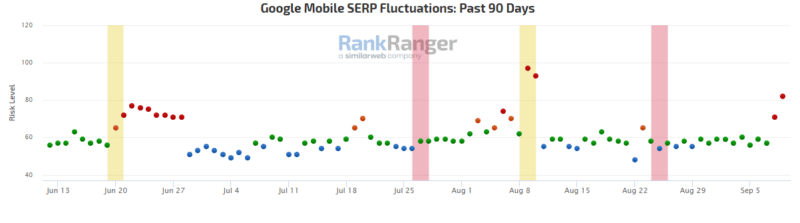
Impact. This update did not feel tremendously widespread but Google did say it was a big update but did not cause a huge shakeup. We did not see widespread volatility until this morning, and it is hard to say if those fluctuations were related to this update or not.
Why we care. If you notice any ranking and visibility changes in Google search over the past two weeks or so, especially if those were big changes, you can likely attribute it to this update. Read Google’s advice, make the necessary changes, and hope for a recovery in the upcoming months.
We hope you all benefited from this update and if not, we hope you recover quickly.
New on Search Engine Land
About The Author
Barry Schwartz a Contributing Editor to Search Engine Land and a member of the programming team for SMX events. He owns RustyBrick, a NY based web consulting firm. He also runs Search Engine Roundtable, a popular search blog on very advanced SEM topics. Barry can be followed on Twitter here.
Quality content is subjective. Some people will want a beginner-level summary while others want more depth and expert insights. Quality content will be better than the content that currently exists and readers will find it useful, memorable and are likely to share the content.
As SEOs, we typically write about things that people are searching for. This makes the content useful, but if you read many top-ranking sites, they often say the same things. Reading the first few results might feel like you’re reading the same content over and over again.
There are a lot of buzzwords like 10x content or skyscraper content, but all you really need to do is to make something better than what exists.
When writing new content, you have an advantage. You can see the content that ranks, and that’s the bar you need to exceed.
Let’s look at how to do that.
How to create quality content
Creating quality content is part science and part art. It also requires a lot of hard work and expertise.
Many people making a query intend to find basic information in a quick and easy format. Content that is organized, simplified, and easy to read and scan is useful.
Much of the content created by SEOs is intended to rank in search engines, but it’s also useful for users. We tend to cover what users are searching for and answer questions about the topic. For many users, that kind of content makes for a great introduction to a topic.
The problem is that, in many cases, we’re just faking expertise, or we have writers who are faking expertise.
To create quality content, you need real expertise.
You can differentiate your content from what currently exists by:
Sharing your experience, stories, and insights.
Including data only available to you.
Having an opinion, a unique take or a different viewpoint.
Many of the pages that are currently ranking have likely been ranking for years. They may have updated and refined their content in that time to make it better.
Existing content may also have a lot of powerful and relevant links. There’s a phenomenon where top-ranking content tends to get more links, making it difficult to beat.
You have to be extraordinary and put in the effort to overcome content like that. It won’t be easy.
If you want to beat them, you likely need a team of people.
An SEO to do the research.
A great writer and storyteller.
An expert for their unique insights.
An editor to correct any mistakes.
Each person adds valuable skills needed to create quality content.
Creating this kind of content takes more effort than most companies are willing to invest in. Without showing some sort of initial results, it can be hard to get buy-in. Once you have a couple of hits or some initial results, it can be much easier to argue for the resources needed to create this content.
A trap I find many companies fall into is creating content as a one-off task rather than an iterative process. You can always improve your current content when you have more resources and want to get better results.
For example, this is actually my second time writing this article for Search Engine Land. I originally wrote a piece about quality content for them back in 2016, and I have a lot more experience and expertise to share now than I did all those years ago.
How to measure quality
Measuring quality is hard because it is subjective. Many SEOs will look at things like word count and keyword density, but these are bad metrics. Some queries, like a person’s age, can be fully answered with one number. You don’t need their entire life story.
There’s no one right way to measure quality.
SEOs may want to look at:
Rankings.
Traffic.
Links.
Mentions.
Social shares.
Businesses will want to measure:
Conversions.
Qualified leads.
Revenue.
You may also want to consider things like user satisfaction.
Search engines have the difficult job of figuring out what are good results for many different users with many different wants and needs. In general, they tend to show a variety of content that meets different user intents so that each person will likely find something useful to them.
Let’s take a look at some of the guidance search engines have provided for creating content.
How search engines think about quality content
Google created many algorithms intended to determine what content is best for users. They also provide a lot of guidance on what they are looking for.
Some of the terms they use to describe the type of content they are looking for are:
Expert.
Authoritative.
Trustworthy.
Relevant.
Useful, helpful.
High-quality.
Original.
Comprehensive.
Interesting.
Insightful.
Factual.
Detailed.
Engaging.
Credible.
Informative.
Valuable.
User-centric.
Authentic.
Most of those are subjective adjectives and are hard to measure. Still, they provide a lot of guidance with the questions their engineers are asking themselves and even the guidance they give their quality raters.
Make pages primarily for users, not for search engines.
Don’t deceive your users.
Avoid tricks intended to improve search engine rankings. A good rule of thumb is whether you’d feel comfortable explaining what you’ve done to a website that competes with you, or to a Google employee. Another useful test is to ask, “Does this help my users? Would I do this if search engines didn’t exist?”
Think about what makes your website unique, valuable, or engaging. Make your website stand out from others in your field.
Specific guidelines
Avoid the following techniques:
Automatically generated content intended to manipulate search rankings
Participating in link schemes
Creating pages with little or no original content
Cloaking
Sneaky redirects
Hidden text or links
Doorway pages
Scraped content
Participating in affiliate programs without adding sufficient value
Loading pages with irrelevant keywords
Creating pages with malicious behavior, such as phishing or installing viruses, trojans, or other badware
Abusing structured data markup
Sending automated queries to Google
Follow good practices:
Monitoring your site for hacking and removing hacked content as soon as it appears
Preventing and removing user-generated spam on your site
Google on how to create valuable content
Then there’s this section (archived via the Wayback Machine) from Google’s Webmaster Academy course, which provided guidance on how to “create valuable content.”
As you begin creating content, make sure your website is:
Useful and informative: If you’re launching a site for a restaurant, you can include the location, hours of operation, contact information, menu and a blog to share upcoming events.
More valuable and useful than other sites: If you write about how to train a dog, make sure your article provides more value or a different perspective than the numerous articles on the web on dog training.
Credible: Show your site’s credibility by using original research, citations, links, reviews and testimonials. An author biography or testimonials from real customers can help boost your site’s trustworthiness and reputation.
High-quality: Your site’s content should be unique, specific and high-quality. It should not be mass-produced or outsourced on a large number of other sites. Keep in mind that your content should be created primarily to give visitors a good user experience, not to rank well in search engines.
Engaging: Bring color and life to your site by adding images of your products, your team or yourself. Make sure visitors are not distracted by spelling, stylistic and factual errors. An excessive number of ads can also be distracting for visitors. Engage visitors by interacting with them through regular updates, comment boxes or social media widgets.
High quality pages exist for almost any beneficial purpose, from giving information to making people laugh to expressing oneself artistically to purchasing products or services online.
What makes a High quality page? A High quality page should have a beneficial purpose and achieve that purpose well. In addition, High quality pages have the following characteristics:
• High level of Expertise, Authoritativeness, and Trustworthiness (E-A-T).
• A satisfying amount of high quality MC, including a descriptive or helpful title.
• Satisfying website information and/or information about who is responsible for the website. If the page is primarily for shopping or includes financial transactions, then it should have satisfying customer service information.
• Positive website reputation for a website that is responsible for the MC on the page. Positive reputation of the creator of the MC, if different from that of the website.
4.2 A Satisfying Amount of High Quality Main Content
The quality of the MC is one of the most important criteria in Page Quality rating, and informs the E-A-T of the page. For all types of webpages, creating high quality MC takes a significant amount of at least one of the following: time, effort, expertise, and talent/skill. For news articles and information pages, high quality MC must be factually accurate for the topic and must be supported by expert consensus where such consensus exists.
For each page you evaluate, spend a few minutes examining the MC before drawing a conclusion about it. Read the article, watch the video, examine the pictures, use the calculator, play the online game, etc. Remember that MC also includes page features and functionality, so test the page out. For example, if the page is a product page on a store website, put at least one product in the cart to make sure the shopping cart is functioning. If the page is an online game, spend a few minutes playing it.
The purpose of the page will help you determine what high quality content means for that page. For example, High quality information pages should be factually accurate, clearly written, and comprehensive. High quality shopping content should allow users to find the products they want and to purchase the products easily. High quality humor or satire should be entertaining, while factual accuracy is not a requirement as long as the page would be understood as satire by users.
The amount of content necessary for the page to be satisfying depends on the topic and purpose of the page. A High quality page on a broad topic with a lot of available information will have more content than a High quality page on a narrower topic. Here are some examples of pages with a satisfying amount of high quality MC.
How does Google define helpful content?
Google has also provided best practices and questions to ask yourself around some of its major algorithm updates – Panda, Core, Product Review and helpful content.
Microsoft Bing also provides some guidance that breaks down content quality into three “pillars”:
Authority: Can we trust this content?
Utility: Is the content useful and sufficiently detailed?
Presentation: Is the content well-presented and easy to find?
Final thoughts
Creating quality content takes time, effort, resources and expertise.
You have to put in more work, be more creative and have more knowledge than those who came before you to create something great.
If you can pull it off, you can create a moat that makes it difficult for others to cross. Even if they manage to surpass you, with a little more work you may be able to retake the top spot from them.
Keep at it and create something awesome!
New on Search Engine Land
About The Author
Patrick Stox is a Product Advisor, Technical SEO, & Brand Ambassador at Ahrefs. He was the lead author for the SEO chapter of the 2021 Web Almanac and is a reviewer for the 2022 SEO chapter. He’s an organizer for the Raleigh SEO Meetup, Raleigh SEO Conference, Beer & SEO Meetup. He also runs a Technical SEO Slack group and is a moderator for /r/TechSEO on Reddit.
4 Reasons Your Business Should Work With An SEO Agency
Opinions expressed by Entrepreneur contributors are their own.
It’s fair to say that most business owners know that Search Engine Optimisation (SEO) is the best way to grow a business online. Google provides us with a powerful tool that brings customers to your business.
Yet SEO is being under-utilized by millions of small businesses and startups. as 47% of small businesses do not invest in SEO. On a fundamental level, the goal of SEO is to improve your online visibility and drive organic traffic to your online store. And since 2018, inbound marketing professionals have said that search engines generate the highest quality leads.
Consumers have more trust in online businesses that have a higher rank. But breaking into the lucrative first page of Google is difficult to achieve if you don’t have a sound understanding of how search engine algorithms work.
This is only one reason why you should work with an SEO agency. However, selling products and services online requires more than ranking on the first page of Google. Once visitors find your website, you still have to work to convert browsers into buyers.
Today’s SEO professionals offer more than simply driving web traffic to your website. SEO analysis is a specialist area that dives into creating higher quality leads and increasing conversion rates. Dedicated SEO agencies typically offer “technical SEO” services that analyze the performance of your website. This includes load speed, missing links, 404 pages, toxic inbound links, spam, and more.
The purpose of this in-depth analysis is to ensure your website is fit for its purpose. A website should function properly and provide visitors with the information, products or services they are searching for.
SEO specialists use advanced tools and techniques to analyze SEO performance across the web. Expert knowledge enables them to perform in-depth research that determines what your ideal client is looking for. With this knowledge in hand, you are better positioned to curate highly relevant content. Subsequently, there is a higher volume of visitors arriving at your website with purchasing intent. A fully-functioning website improves your opportunity to increase conversions and build your brand.
2. Improve the user experience
Online shoppers have an abundance of options — and they know it! If they have a bad experience on one website, they will leave and look elsewhere. Consequently, user experience (UX) is crucial in how well your website performs and ranks in search engines. Approximately 88% of internet users are less likely to return to a website after a poor experience.
Sophisticated search engine algorithms have built-in metrics that can determine how much visitors interact with a website. If your bounce rate is high and the time spent on your page is low, search engines will assume you are not providing visitors with a good user experience.
The amendments you need to make to a page are not always obvious. In many cases, they will only be identified by sophisticated SEO tools or experienced professionals that have seen the same issue with other clients. SEO professionals with the right tools and analytical experience can evaluate your entire website and eradicate issues that impair UX. The information an SEO agency provides enables you to make an informed decision about the design of your website and the type of content you create.
3. Stay in touch with search engine algorithm updates
Search engines aim to deliver information to internet users that best answers their search queries. To do this, tech companies use a sophisticated algorithm that analyses approximately 200 metrics. The algorithm also gets tweaked regularly.
Google releases around nine algorithm updates every day. The company also performs three or four major updates each year. Any changes to the algorithm can have a significant impact on where a website ranks. This is important because search engines establish quality guidelines that forbid SEO practices that can manipulate search engines. This “dark side of SEO” is known as “black hat techniques” and is penalized by search engines.
With such a high volume of changes, businesses can’t keep track of search engine algorithms without hiring a full-time SEO expert. What’s more, experience is needed to understand how search engine algorithms work in the first place. An SEO agency is best placed to keep track of algorithm trends and make necessary changes. Because experienced professionals already have an in-depth understanding of the algorithm, it’s easier for them to determine whether you need to make any changes to your website or your content strategy.
4. Expand your online presence
The higher your website ranks in search engines, the more your brand gets noticed. You get noticed not only by search engine users looking for the products and services you sell, but your content also gets picked up by other industry professionals. An essential SEO strategy is to publish content with outbound links to other high-quality content. Content writers usually link to relevant content from the first page of Google — typically any of the websites in the top three positions.
External pages to your website inform Google that you’re publishing high-quality content and expanding your online presence across other platforms. Expanding your online presence strengthens your brand reputation. However, you will also receive links from low-quality websites that could damage your search engine rank. An SEO agency will perform link analysis and eliminate any bad links.
SEO professionals not only help you get to the top of search engines, but they also help you to stay there.
The new YMYL guidelines and what this means for marketers
30-second summary:
Your money or your life (YMYL) guidance has been updated to give more clarity on what Google is looking for within its quality rater guidelines
Focusing on reputation, both of the person creating the main content and the website hosting the main content, is key
YMYL trust isn’t just built on-site, off-site digital PR and link acquisition can also play a key role in building trust
Google also helped to clarify which websites/content might fall into the YMYL categories and how this is defined
E-A-T continues to play an important role across the board, alongside matching user intent and purpose and creating great, reputable content for users
In late July, Google updated its Page Quality Rater Guidelines. It does this from time to time to reinforce the key principles that it looks for when evaluating the quality of a page. While Google has held the concept of expertise, authority and trust close to the center of these guidelines for a long time, one of the major changes or updates was related to the definition of “Your Money or Your Life” websites. There was also more insight into how these pages are rated, which is ideal for anyone working in these sectors looking to better understand how Google rates their websites.
The concept of Google having very high Page Quality rating guidelines for ‘Your Money or Your Life’ (YMYL) websites isn’t new, but the definition of what falls into this category has changed. Previously the definition covered “pages (which) could potentially impact the future happiness, health, financial stability, or safety of users.” This has been updated to cover “pages (which) have a high risk of harm because content about these topics could significantly impact the health, financial stability, or safety of people, or the welfare or well-being of society.” This is a much broader scope of websites with potentially a much more significant impact.
As such, for many SEOs this means re-examining the guidance to ensure that our websites are ready for potentially enhanced scrutiny.
So what are the new guidelines and what does it mean?
The new guidelines for YMYL go much further than just the definition update above. They actually go into detail around how a particular topic could and couldn’t fall into the YMYL categorization, Google has even put it in a handy table for us so we can clearly understand:
It’s also not just YMYL categories that have seen the updates, but many elements that go into rating YMYL pages. Along with enhancements to key E-A-T definitions and what Google is looking for, we can also see key updates to sections that focus on “low-quality pages” or what we should try to avoid. As marketers, we’ve never had so much information available to us about what Google is looking for in a quality website. This means that Google is likely to be getting very serious about its Page Quality Rater Guidelines and as SEOs, we should be too.
Content is as important as ever
Content will already be at the forefront of many SEO minds given that Google’s “Helpful Content” update has already started rolling out. Additionally, the updates to the YMYL guidance have demonstrated that your on-site content is a key contributor to how the pages are evaluated for expertise, quality, and authority.
Google highlights in section 4.2 that the “quality of the MC is one of the most important criteria in Page Quality rating.” So we know that the main content on the website is something Google is looking at with close scrutiny, especially if your website falls into that YMYL category. Having a reasonable amount of good quality main content plays a key role in this, but so do the page’s functionality and features. Don’t just rest at making sure your content is great, ensure that any features on the website such as calculators, checkouts, and interactivity are also created to a high standard.
Content that falls into YMYL sectors is, of course, held here to a higher standard. Google gives the example that, “high E-A-T medical advice or information should be written or produced in a professional style and should be edited, reviewed and updated, on a regular basis.”
If you find yourself in a YMYL category, then regularly updating, reviewing, and editing your content to ensure that it’s up to date will play a role here.
Enhancing key E-A-T signals
For most businesses refreshing your ‘About Us’ page might seem like the most unimportant task, but when you are trying to tell users about who you are, showcase your expertise and give users that sense of trust and security, this can actually be one of the most important elements of your website. In section 2.5.3 of the guidelines, Google highlights that this can be one area of your website where raters go to find information about who owns the site, which can be a key element of establishing a good reputation.
Your reviews also fall into this category and that’s not just reviews on your own website, but also reviews on external sources. In fact – the word “reviews” is mentioned 66 times in the guidelines alone. While reviews on your own website are important and it’s definitely worth promoting these, one tip I picked up from the guidelines (section 2.6.4) is to do a quick reputation search. You can then evaluate if there are any other external website reviews or reputation signals that you need to be aware of. You can do this by using a negative site search i.e. for Google you would use [google -site:google.com] which would search for the term “Google” on all sites except google.com. Doing this for your business can help identify how others may view your reputation.
Reputation matters
Two of the five most important factors in Page Quality Rating relate to reputation and information; that is, information about who is responsible for the main content and the reputation of that person and the website itself..-We knew from the Medic Update that authoring and author profiles have grown in importance, and as the guidelines now turn to focus on the reputation of both the websites and the authors, this has become an even more important facet of showcasing your expertise and authority.
In sections 2.6 and 2.6.1 of the updated guidelines, Google talks about reputation research around both the user and the website which has provided the main content. It also talks about the type of reputation information that is available and how applicable it is within certain industries, for example, how applicable product reviews would be in the finance sector. It’s clear that building strong reputation information that is relevant to your brand/industry would add value here.
Finally, for websites that are smaller or perhaps don’t have a huge amount of visible reputation information, Google does state that “this is not indicative of positive or negative reputation… for these smaller businesses and organizations, lack of reputation should not be considered an indication of low page quality.”
Trust is built on-site and off-site
Trust and authority are two of the key elements which go into rating a page’s quality and these are key for great YMYL. However, this doesn’t just come down to content and updates on the site, it’s also very much about what is available off-site. Digital PR has seen unprecedented growth in recent years as a great way of growing a website’s reputation as well as building high-quality, authoritative backlinks back to a website.
Whether it’s looking for reputation information or key signals about your brand, one of the biggest places people are searching is on websites that aren’t yours. That’s where digital PR can have the biggest impact on improving your reputation, expertise, and overall authority. Digital PR can help to build your website and your author reputation by sharing thought leadership or data expertise. This is a great way to build up these core YMYL factors while also gaining great coverage for your brand.
Keeping the user in mind
Regardless of whether you are looking to devise a digital PR strategy, improve your on-site content or make changes to the structure of your website, with the new guideline updates and YMYL changes, it’s clear that Google wants to see and understand the reputation of your website and its content creators.
Keeping these elements and the user in mind will help to ensure that you’re creating a great user experience that naturally demonstrates expertise, authority, trust, and any other signals that Google is looking for. As Google continues to improve and update its guidelines, this will become more important than ever.
Amanda Walls is the founder and Director of Cedarwood Digital, an award-winning Digital Marketing agency specializing in SEO, PPC, and Digital PR.
With 12 years of Digital Marketing experience under her belt, Amanda founded the business six years ago which was recently named the UK Small Ecommerce Agency of the year in 2021.
An expert in all things digital, Amanda has worked as a trainer for Google’s Digital Garage in the North West and has delivered digital marketing training to thousands of marketers across the region.
Subscribe to the Search Engine Watch newsletter for insights on SEO, the search landscape, search marketing, digital marketing, leadership, podcasts, and more.
Google Search Console reports may be impacted by review-type changes made in Google Search
Google has made some changes to how review-types show in Google search and as a result, you may see some changes to the clicks and impressions reported within some of the reports within Search Console.
What changed. Google said, “Google began upgrading some review-type results to product-type results in Search, and has been able to generate some new product-type results.”
Google also added over here, “Google began upgrading some review-type results to product-type results in Search.”
“At some point we started showing/counting some product results in search slightly differently, and that ended up with some visible shifts in the numbers in Search Console.”
Search Console report impact. As a result of the review-type changes in Google Search, Google said that some of the Search Console reports may see changes in the reported impressions and clicks. This impacts the performance and rich result reports.
Google explained that with the performance report, “you might see a decrease in your Review snippet impressions (and clicks) and an increase in your Product results impressions (and clicks). This represents both a change in how these items looked in Search as well as where Search Console assigns these impressions and clicks.”
Google explained that with the rich results report:
“impressions (and clicks) on reclassified items will also migrate from the Review report to the Product report over time. Affected sites will see a decline in impressions in the Reviews report and a corresponding rise in impressions in the Products report. Total item counts of each type will not change, however, since Search Console did not reclassify correctly labeled structured data items. This represents both a change in how these items looked in Search as well as where Search Console assigns these impressions and clicks.”
Why we care. If you notice changes in your clicks and impressions related to reviews or other areas, it might be related to this review type change. There was an actual change in how your search results may have appeared in Google Search that results in more or fewer clicks or impressions.
New on Search Engine Land
About The Author
Barry Schwartz a Contributing Editor to Search Engine Land and a member of the programming team for SMX events. He owns RustyBrick, a NY based web consulting firm. He also runs Search Engine Roundtable, a popular search blog on very advanced SEM topics. Barry can be followed on Twitter here.