Page speed and experience in SEO: 9 ways to eliminate issues
Google’s Core Web Vitals show that website speed and user experience are intertwined.
Users will leave your site if a webpage takes too long to load. That’s nothing new.
Google stated years ago that going from a 1 to 5-second load time will result in 90% of users leaving your site without interacting with it.
So, even if your website ranks high on Google, a slow site will impact your performance.
Why? Because as user experience declines, people will exit your site without buying your products, reading your content or interacting with the site.
That said, speed goes far beyond just user experience impact. Core Web Vitals make it clear that speed is an essential factor.
What are Core Web Vitals?
Core Web Vitals (CWVs) are a set of metrics used to evaluate user experience. They measure the following for both desktop and mobile users:
Loading speed
Page responsiveness
Visual stability
CWVs were introduced in 2020 to provide user-centric, real-world metrics that SEOs and site owners can use to measure usability. The three main elements of CWVs include:
Largest Contentful Paint (LCP): Measures the loading performance of a page. LCP accounts for the first 2.5 seconds of a page’s loading.
First Input Delay (FID): Measures interactivity between an action on the page and a response.
Cumulative Layout Shift (CLS): Measures a page’s visual stability.
CWVs work to offer a technical SEO aspect with a focus on page experience and usability.
Understanding page experience
Page experience – which includes Core Web Vitals – is a ranking signal that Google uses to understand “how users perceive the experience of interacting with a web page.”
The search engine aims to offer the best results for search queries. If a site is slow, isn’t responsive or accessible, and doesn’t perform well on mobile, then it may not be the best result to deliver.
Multiple signals make up page experience, including:
“While page experience is important, Google still seeks to rank pages with the best information overall, even if the page experience is subpar. Great page experience doesn’t override having great page content. However, in cases where there are many pages that may be similar in relevance, page experience can be much more important for visibility in Search.”
Get the daily newsletter search marketers rely on.
Where page speed fits into page experience and SEO
Google’s statement on page experience shows that if everything else is created equal, page experience may improve visibility in the search results.
So, while page experience is certainly not the only thing you want to focus on, it’s one more element in your control to improve your site’s visibility on the SERPs.
Page speed is a significant element because it hits heavily on Core Web Vitals and will improve all three components. To find areas of improvement, make sure to run a PageSpeed Insights report.
Here are a few ways to eliminate page speed issues.
1. Minify coding
You can optimize CSS, JavaScript and HTML. Various tools can help with minifying your coding, such as HTMLMinifier, CSSNano and UglifyJS.
2. Remove unused coding
If you have unused JavaScript or CSS code, remove them. Every little bit helps to reduce file sizes and speed up your site.
3. Caching
Installing caching on the application level can help.
WordPress and most other CMS options have caching plugins that will reduce the load on your site’s database and can improve CWVs dramatically.
If your site hits a database often, this may be a bottleneck for your site, so something like Memcached may be needed.
4. Optimize videos and images
A major part of LCP is images and videos.
It’s best to compress all image and video files. In most cases, GIFs should be replaced by videos.
If your images or videos are large, consider a content delivery network or third-party hosting.
5. Use lazy loading
One way to improve the loading of an image-heavy site is to have asynchronous loading, also called lazy loading, to help speed up your site’s first render.
6. Use a content delivery network
It’s recommended to place images, videos, CSS, JavaScript or any static files on a content delivery network (CDN).
A CDN is an ultra-optimized network with servers worldwide that hosts your files, improves delivery speed and reduces the load on your site’s server.
7. Reduce redirects
Your site may have redirects, and they’re 100% natural in a site’s evolution.
However, you ought to remove any redirect chains, where one page redirects to another that redirects, because they will impact your site’s speed.
8. Audit your plugins
If you’re running a popular CMS, it’s not uncommon to have dozens of plugins installed.
You should review all of these plugins and replace those that are not used or can be replaced under one plugin.
9. Upgrade your hosting
Finally, if you’ve done everything else and page speed won’t improve, you may want to upgrade hosting.
Some hosts have slow older systems, but most will allow you to add more RAM and CPUs to help improve site speed if traffic is causing the server to hang.
If you’re running an Apache or Nginx server, you can install the PageSpeed Module on your server. The benefit of this module is that it works on the server level to improve speed, meaning your site’s application will not be altered.
Note: You may need to work with IT or server administrators to implement some of the changes above to improve site speed.
Tips to improve page speed further
On top of just focusing on speed, you want to improve page experience using the tips below.
Mobile-friendliness
In 2022, your site needs to be mobile-friendly. There’s no excuse for not using a responsive design on your site that will improve user experience.
Next, if you follow the speed tips above, you’ll improve mobile site speeds, too.
Finally, consider:
Eliminating or reducing pop-ups.
Create mobile-friendly content with short paragraphs.
Safe browsing
Safe and secure browsing are two elements of a site that you should already be offering. You’ll want to:
Run a secure site using HTTPS
Run security checks on your site
Scan all uploads to the site for malicious coding, malware, viruses and more
Routine monitoring is also essential. If your site is compromised, it will be quickly flagged by Google and cause many would-be visitors to the site to abandon it altogether.
Non-intrusive interstitials
Interruptions are never good for user experience, but they may be necessary to generate revenue or add subscribers to your newsletter. However, you’ll want to do your best to:
Reduce pop-ups
Reduce interstitials
Mobile devices have limited screen space, and if your site has a lot of pop-ups and interstitials, it can make it difficult or impossible to interact with the site, creating a poor page experience.
Review ad networks
If a site is displaying ads, there’s another element of page experience impact that needs to be considered.
Ad networks will require you to put coding on your site to serve the ads, but if the network is slow to load, it will cause a significant drop in page speed.
You should review:
Ad networks to see the impact they have on your site’s speed.
All plugins or third-party elements on your site that are out of your control.
If an ad network, script or service impacts site speed, it will hurt your page experience.
Wrapping up
While page speed’s impact on SEO shouldn’t be the only thing to focus on, it’s an integral part of optimization that is mostly in your control.
Using Core Web Vitals as a guide, your site speed and page experience should improve along with a potential boost in rankings.
Opinions expressed in this article are those of the guest author and not necessarily Search Engine Land. Staff authors are listed here.
New on Search Engine Land
About The Author
Ludwig Makhyan is a contributor for Search Engine Land, covering organic and technical SEO. His background is in web development and digital marketing. Ludwig has over 20 years of experience in website design, coding and promotion. He is the co-founder at MAZELESS, an enterprise SEO agency.
Your page must contain education related questions and answers. There must be at least one question and answer pairing on your page, and the answer must be related to and answer the user’s question.
You are responsible for the accuracy and quality of your education Q&A pages through this feature. If a certain amount of your content is found to be inaccurate based on quality and pedagogical review processes, then all or a subset of your Q&A pages may not be eligible for this feature until you resolve the issues.
Why Google added this. Google said these guidelines were created to “ensure that our users are connected with learning resources that are relevant.”
Failure to comply. If Google finds you are violating the guidelines, Google could either:
Take manual action on your site.
Not display your content as a rich result.
What is this page?Google released the Education Q&A structured data help document in May. This help document provides guidance on how to add Quiz structured data to flashcard and single Q&A pages so it appears in Google’s Education Q&A carousel, Google Assistant and Google Lens results.
Why we care. If you have site related to education, the Education Q&A structured data could help improve your visibility in Google results and also potentially increase click-throughs. Make sure to follow Google’s specific guidance here around relevancy, accuracy and quality so you maintain eligibility for this feature and avoid possible manual action.
New on Search Engine Land
About The Author
Danny Goodwin is Managing Editor of Search Engine Land & SMX. In addition to writing daily about SEO, PPC, and more for Search Engine Land, Goodwin also manages Search Engine Land’s roster of subject-matter experts. He also helps program our conference series, SMX – Search Marketing Expo. Prior to joining Search Engine Land, Goodwin was Executive Editor at Search Engine Journal, where he led editorial initiatives for the brand. He also was an editor at Search Engine Watch. He has spoken at many major search conferences and virtual events, and has been sourced for his expertise by a wide range of publications and podcasts.
Cynthia Ramsaran is director of custom content at Third Door Media, publishers of Search Engine Land and MarTech. A multi-channel storyteller with over two decades of editorial/content marketing experience, Cynthia’s expertise spans the marketing, technology, finance, manufacturing and gaming industries. She was a writer/producer for CNBC.com and produced thought leadership for KPMG. Cynthia hails from Queens, NY and earned her Bachelor’s and MBA from St. John’s University.
5 ecommerce SEO trends to know for the 2022 holidays
The all-important Q4 holiday shopping season is nearly here. SEO will once again be a critical channel for brands to increase their visibility and sales.
Ahead of the 2022 holidays, enterprise SEO platform BrightEdge has shared its latest research with Search Engine Land on what retailers, brands and publishers should know.
The insights are based on tracking 6,000 ecommerce keywords in 10 categories, which the company has been doing for the past three years.
Here’s what to know:
1. Brands and publishers are big competition for retailers. Retailers are no longer just competing for visibility with other retailers. Now they’re competing with brands that have adopted direct-to-consumer models. Plus, publishers that provide reviews and product overviews have made significant gains in Google’s search results.
For top ecommerce keywords:
Retailers own 57%, down from 70% in 2020.
Brands occupy 23%, up from 18% in 2020.
Publishers have 11%, up from 4% in 2020.
Ecommerce visibility: retailers, brands, publishers and more, 2020-2022, BrightEdge data
2. Content-driven ecommerce. While it remains to be seen how impactful Google’s helpful content update will be, one thing is clear, according to BrightEdge: the time is now for retailers to differentiate their content so it will rank in search results. In other words, offer more than a product description.
Retailers that ultimately will win are those that will provide better content experiences. How? By:
Focusing on content and context about the product.
Organizing categories in ways that make it easy for the user to shop across multiple related products.
3. Blue links matter. There’s been a lot of discussion in the past decade or so about how Google is much more than 10 blue links. For key ecommerce terms, however, 70% of all clicks are going to those classic blue links, according to BrightEdge’s data.
It’s still common to find the local three-pack for ecommerce search terms on Google. However, the prominence of local packs has declined from 25% to 19% in the past two years. Also in decline: videos and image carousels. Meanwhile, People Also Ask has grown slightly.
Ecommerce Organic Real Estate, 2020-2022, BrightEdge data
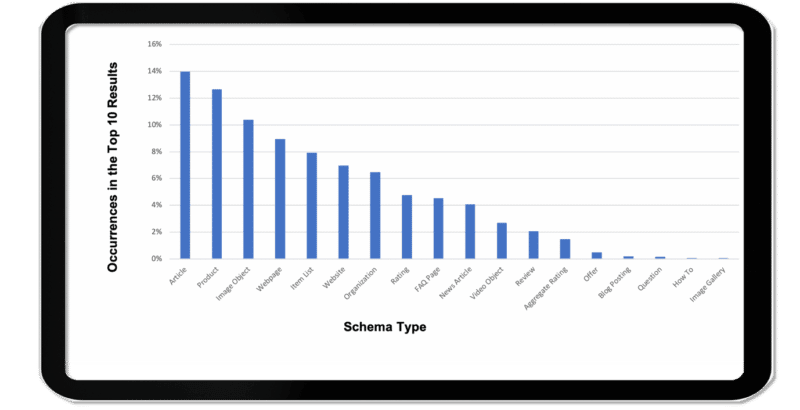
4. Schema usage is growing. Schema is more aligned with shopping than ever this year. Brands, retailers and publishers are increasingly adopting various schema types to markup their content around shopping experiences, such as.
Product
ImageObject
ItemList
Most common schema types for winning e-commerce rankings, 2022, BrightEdge data
5. Article and category pages dominate ecommerce. Category pages have the highest click-through rate 70% of the time. Also of note: articles about products have higher click-through rates than product pages themselves, according to BrightEdge.
Ecommerce click-through rate by keywords, BrightEdge data
Why we care. Google search – and the way people search – are always evolving. In ecommerce SEO, it’s critical to monitor what’s happening and understand what you can influence now for the upcoming holiday season, while always evolving your SEO strategy to provide the types of content and user experiences Google is likely to reward in the future.
New on Search Engine Land
About The Author
Danny Goodwin is Managing Editor of Search Engine Land & SMX. In addition to writing daily about SEO, PPC, and more for Search Engine Land, Goodwin also manages Search Engine Land’s roster of subject-matter experts. He also helps program our conference series, SMX – Search Marketing Expo. Prior to joining Search Engine Land, Goodwin was Executive Editor at Search Engine Journal, where he led editorial initiatives for the brand. He also was an editor at Search Engine Watch. He has spoken at many major search conferences and virtual events, and has been sourced for his expertise by a wide range of publications and podcasts.
Google has started to roll out the new helpful content update that it pre-announced last week.
As a reminder, Google’s helpful content update is a sitewide signal. It targets websites that have a relatively high amount of unsatisfying or unhelpful content, where the content is written for search engines first.
In short, did you write that piece of content to rank on Google or did you write it to help users?
The announcement. Google said on its update page on Aug. 25: “released the August 2022 helpful content update. The rollout could take up to two weeks to complete.”
Rollout started this morning. Google quietly started this helpful content update rollout early this morning at some point before 5 a.m. ET. Google will update us when this update is done rolling out.
The update should finish rolling out in a week or two. Google said we can also check the search updates page for updates on when this is finished rolling out.
What to do if you are hit. Google has provided a list of questions you can ask yourself about your content. Read through those questions as we posted over here, and in an unbiased manner, ask yourself if your content is in sync with this update.
Note, if you were hit by this update, it can take several months to recover, if you do everything right and make changes to your content over time.
More on the helpful content update. The new helpful content update specifically targets “content that seems to have been primarily created for ranking well in search engines rather than to help or inform people,” Google said. This update aims at helping searchers find “high-quality content.”
Google wants to reward better and more useful content that was written for humans and to help users.
Content written for the purpose of ranking in search engines, maybe called search engine first content, has been a topic coming up more and more across social media and other areas. In short, searchers are getting frustrated with landing on web pages that do not help them but rank well in search because they were designed to rank well.
This algorithm aims to downgrade those types of websites while promoting more helpful websites, designed for humans, above search engines.
Google said this is an “ongoing effort to reduce low-quality content and make it easier to find content that feels authentic and useful in Search.” This targets content written for search engines over human-first content.
Why we care. If you notice any ranking and visibility changes in Google search over the next few days, especially if those were big changes, you can likely attribute it to this update. Read Google’s advice, make the necessary changes, and hope for a recovery in the upcoming months.
We hope you all benefited from this update and if not, we hope you recover quickly.
Get the daily newsletter search marketers rely on.
Dig deeper:
New on Search Engine Land
About The Author
Barry Schwartz a Contributing Editor to Search Engine Land and a member of the programming team for SMX events. He owns RustyBrick, a NY based web consulting firm. He also runs Search Engine Roundtable, a popular search blog on very advanced SEM topics. Barry can be followed on Twitter here.
Investments in e-learning in 2022 are up, and there’s no sign of slowing. The global e-learning market will surpass $243 billion in 2022, Statista estimates.
E-learning was already a growing segment when the pandemic fueled record numbers in online learning for corporations, people and students. In fact, Coursera reported that registrants to their courses nearly doubled from 2019 to 2020 and has only accelerated from there.
2021 Impact Report, Coursera
Online SEO training is a great way for companies to train teams on SEO. KPMG reports employees prefer online training because they don’t have to travel and they can learn at their own pace.
It also works for people needing to upskill or reskill as they change careers or look for a new job – “digital marketer” is still among the top 10 most in-demand jobs, according to LinkedIn.
If you’re looking for SEO training, there is no shortage of courses out there. But what is a good SEO training course, and how do you evaluate it?
Here are five things to look for in SEO training.
1. Who created the SEO training?
One of the most important things when evaluating SEO training is to understand who is the person or people behind the training.
There is no “one way” to do SEO, so you also won’t find strict standards on how SEO should be taught. That’s why it’s important to get to the bottom of who is behind the information. Do they have the experience and knowledge to provide reliable guidance?
Remember, bad SEO advice can kill websites, their rankings and even entire businesses. So get to know the qualifications of the teachers you are going to learn from.
Pro tip:When evaluating the creators of the course, do some digging into their years of experience – are they authorities in their space? Can you trust their information? Reviews can help here, too. (More on that later.)
2. What material does the SEO training cover?
SEO curriculum can go over everything from broad lessons on SEO concepts to niche topics.
For example, some SEO courses give a general overview of SEO, while others may take a deep dive into just one area, like technical SEO or SEO copywriting.
Using my company’s online SEO training as an example, here is a sample SEO curriculum:
The Importance of SEO
SEO Concepts
Meet the Search Engines
Website Anatomy
Search Now and in the Future
Content for SEO
Mobile SEO
Local Search
Linking Strategies
Siloing Concepts
Technical SEO
Best Practices
There are many SEO training courses to choose from, and you can check out a list of independently reviewed SEO courses for 2022 to find out what they are teaching and how they compare.
Pro tip: Know ahead of time the concepts you want to learn, then evaluate your options. Also, some people really want to have something to show for their SEO training, like a certificate. So if that is important to you, you can find out which SEO courses offer some type of certificate at the end of the course.
Get the daily newsletter search marketers rely on.
3. How is the information presented?
Not everyone learns in the same way. Some people like in-person classes, while others prefer videos, podcasts or even reading. Keep in mind that even within the world of online training, the way courses are presented varies.
For example, many online SEO courses have a set of static videos that you can watch at your pace, and that’s it. Others might offer more resources as a complement to those videos, for instance, a hands-on project or downloadable content.
When we decided to take my company’s SEO training classroom online, we wanted to create an experience that was more than just passive learning.
We decided to create an SEO training membership site to help fill in the gap of what people were missing about in-person learning (like collaboration and Q&A) and to cater to different learning styles.
For example, our membership site gives students not only access to video lessons but also:
Course slides for those who like reference materials.
Live Q&A discussions for members only so that people can bring specific SEO problems to me directly (something people liked about our in-person training).
A student forum where people can connect with one another and discuss SEO challenges and solutions.
E-books and guides for those who like to read and for deep dives into hot SEO topics
SEO tools for students to use directly on their SEO projects.
Email support for the course and tools.
A growing library of ask-us-anything style videos that address specific questions about SEO.
Pro tip:Think about how you like to learn, and then evaluate how the information is presented. For example:
How many video lessons are in one course?
How long is each video lesson?
Are there accompanying materials?
Do you get to ask questions to live people?
How long do you have access to the materials?
4. How fresh is the information in SEO training?
SEO is constantly changing. Yes, we have best practices, but there is always some new algorithm update, some new discovery, and some breaking SEO news. So you don’t want to learn stale content.
That is why many of the SEO courses out there can quickly get out of date. And it is not likely that most instructors are going to update their course videos with every new change.
Here, you want to find out how dated the SEO curriculum is and how often the material is updated. This may matter less with certain SEO topics than others, but it is still worth exploring before you sign up.
Pro tip:Look for information on when the course was created and the last time it was updated. You can even ask the course creator if it’s not obvious.
5. What kind of reviews does the SEO training get?
There’s often no better way to evaluate a course than to read reviews and testimonials. Of course, not everyone will get the same results after taking a course. But if enough people are raving about the SEO course, then you can bet it’s probably a good one.
Here, you want to look for visible signs of praise on the course webpage or website. How many stars is the course getting? How many people have enrolled? What are the testimonials saying?
Then, take your research to Google. Type in “[course name] reviews” and see what comes up on third-party websites.
Pro tip: Remember, not every student is going to like any given course. Be sure to read what people didn’t like about it, but balance that with the good reviews as well.
SEO training has many benefits
Taking an online SEO training course offers a ton of benefits for people in many roles. So no matter where you’re at, SEO training could help with:
Getting new SEO hires up to speed.
Helping different internal teams working on a website to get on the same page.
Enabling continuing education for experienced SEOs.
Providing key skills for people who are looking to upskill or reskill.
Knowing how to evaluate a course can help you invest wisely in the future of your career or business.
Opinions expressed in this article are those of the guest author and not necessarily Search Engine Land. Staff authors are listed here.
New on Search Engine Land
About The Author
Bruce Clay is the founder and president of Bruce Clay Inc., a global digital marketing optimization firm providing search engine optimization, PPC management, paid social media marketing, SEO-friendly site architecture, content development, and SEO tools and education.
Clay authored the book “Search Engine Optimization All-In-One For Dummies,” now in its fourth edition, and “Content Marketing Strategies for Professionals.” He wrote the first webpage-analysis tool, created the Search Engine Relationship Chart® and is credited with being the first to use the term search engine optimization. Bruce Clay’s renowned SEO training course is available online at SEOtraining.com.
Implementing an internal linking module: Should you build it or buy it?
Have you ever wondered what kinds of scalable SEO solutions can drive positive ROI year after year?
It’s possible using a feature called a “link module.”
Now, internal link modules can be built internally by product and engineering teams or outsourced to a third-party vendor.
But, SEO implementation managers beware: there are pros and cons to both paths between using a vendor solution or architecting it internally. Even a hybrid approach has tradeoffs.
As an in-house SEO at enterprise brands, I’ve been involved with two approaches for optimizing internal linking using a link module. This article is my documentation of the process, retrospective and learnings with the outcomes of each.
TL;DR: There’s no single right approach to implementing internal link modules
To save you some reading time – there is no definitive answer either way. Primarily because there will be different conditions for each website, business and team.
From my perspective, it seems the best investment of resources is to build your own solution because this path offers the most control as the SEO architect. Still, I’ve also been in the opposite scenario where the vendor solution was the only option, and it was equally viable.
I can only offer my experience and observations, having gone through the process in both cases. Hopefully, these insights will help others determine the best path forward because internal link modules are a powerful SEO lever.
A link module is a widget inserted into the CSS code of a webpage. It is primarily designed to provide search engine bots easy access to other, prominent internal links as a pathway to finding and passing along link authority throughout the site.
Furthermore, the widget:
Allows search engine crawlers (like Googlebot and Bingbot) to easily discover semantically related pages from a single page on which the link module is published on.
Helps prospective customers discover related sections of the website or other similar products.
Can be used to pass on the earned authority and page strength from a single page to other pages – distributing link equity across the site. As a result, it can receive more organic traffic from search engines.
The value of internal link modules
When your goal is new customer acquisition, a link module is invaluable. To illustrate, have you ever heard of palazzo pants?
At the time, until I Googled it, I hadn’t either. They’re a style of women’s wide-legged pants that are typically only seasonally relevant to the search channel.
According to Semrush, at upwards of 40,000 searches per month, it’s also a pretty competitive search term.
A solution for most enterprise ecommerce brands is to have a small amount of content on the page to try to capture rankings and clicks for this term.
But, if you can bolster your page with an internal link module (“Popular Searches” below) that contains other useful internal site links, you’ll be ahead of the competition.
The one-two punch is that in addition to the optimized, on-page copy, a link module can contain seasonally relevant search terms as anchor text and related internal links. It’s dynamically designed to be as relevant as possible.
How to spot a link module
Internal link modules are typically located in the middle or bottom of a webpage. You’ll recognize the customer-facing solution (below) since it appears to be a grouping or overview of relevant topics on the site.
Once you know what to look for, you can spot a link module almost anywhere.
A word on customization
Most vendor solutions allow you to customize their link module product on your website to match your brand guidelines.
Alternatively, in-house designers and UX teams should be involved in building a proprietary internal link module.
These teams are more familiar with your customer and, therefore, able to reflect their needs and interests in the design and UX of the module itself. That is, if you can get on their design roadmap.
The different types of link modules
Now put on your 3D goggles because we’re going to look at the links themselves.
If we peel back the visual part of the internal link module that a user sees on the page, there is an invisible distinction between the types of link modules at play.
The differentiation is mainly visible to search engines since it pertains to the type of links involved. The two types I’m referring to in this article are:
Related internal links
Managing internal link equity
Related internal links are relevant to the page they are on and point to other pages that are relevant to that page in some way (like the palazzo pants example).
Management of internal link equity is about being intentional in directing the page authority through internal links. This means that the link on the page may or may not be directly relevant to that page, but it’s there because its goal is to pass that page’s authority on to other parts of the site.
The first type deals with relevance, the latter with managing page authority. Both have different impacts.
The first can impact conversions more since you’re ostensibly leading the user to a useful, related page. The latter can impact page indexation and long-tail rankings.
This segues into what type(s) of data are needed to feed different types of internal linking modules.
What data is needed
Much like the output of a good recipe is predicated on using the best ingredients, one of the critical components of a useful link module is the data input.
The types of in-house data that can power a link module is, to a degree, anything you can get your hands on. It can be anything from on-site search queries to an API intake of the company’s Google Ads account.
Based on what’s at your disposal to pull in, the ultimate goal is this:
The information should be useful to both humans and search engines.
Ideally, your in-house data will be better than what a third-party tool can provide. I say this because, hopefully, you have access to your proprietary data as an in-house SEO.
However, it’s not uncommon that the data is noisy, unreliable or the mapping is incomplete, which can constitute needing to leverage a vendor solution.
On the vendor side, enterprise tools typically either have their own database of keywords and therefore bring things like search volume data to the table (of course, they prefer to use search terms important to your business). Alternatively, they’ll want to tie into your Google Search Console data.
If you need to outsource the data inputs be prepared to pay for maintaining those inputs on an ongoing basis. This is why vendor solutions can often become more expensive over time but it depends upon the conditions in which you find yourself (more on this, too, later).
Implementation options: Build it or buy it
Now that you know what a link module is, where to find it on a page and what kind of data powers it, let’s dive into the high level of what’s involved with launching this feature: building vs. buying.
Scenario 1: Build it
For context, below is an overview of the project I worked on when building a link module.
Website type: Aggregator of branded products
Domain size: Enterprise, roughly 3 million URLs
Data sources used: On-site search terms, Google Ads, third-party enterprise software
Number of links displayed within the module: +/- 13
Level of effort: High
When I came on board, the solution for related internal linking had already been architected by the current SEO Product Lead. I want to underscore that it took him, mostly by himself, the better part of 2 years just to put into place a strategy, resources and data sources for facilitating this type of feature that operated (for the most part) autonomously.
My role was to help drive the project toward a fully automated, in-house solution. This took a lot of cross-functional coordination and planning.
The hard work is in setting up the intricate processes, product feature documentation and regression tests so that each job runs consistently and seamlessly. There’s a process for internal business teams and stakeholders to be able to adjust or override the link module as needed. Keep in mind, done well, this type of coordination can take a few years to accomplish.
If you have the right conditions and resources to support this approach, it’s worth it due to several factors.
In terms of ROI, there are no external vendor costs. The main (if not only) costs are the internal teams’ hourly wages for building the feature and then maintaining it in terms of initial performance and iterative optimizations.
Another positive factor in building internally is the ability to customize the design and directly manage the data inputs for optimal performance. Here, you can:
Refresh the data inputs at a custom frequency.
Switch out or add additional data sources to the operational logic, which isn’t always available in a vendor solution.
The drawbacks are:
A high level of effort.
Lengthy speed to market.
Scenario 2: Buy it
For context, below is an overview of the project I worked on when implementing a vendor solution.
Website type: Household appliances, hardware parts and tools
Domain size: Enterprise, Less than 1 million URLs
Data sources used: Enterprise tool for keywords and search volume data, client’s Adobe Analytics traffic data
Number of links displayed within the module: Varies
Level of effort: Medium
In this scenario, it was a 6-month scope of work to update the existing on-page feature. The vendor’s link module product had previously been implemented on the site, and there was finally alignment with the budget and contracts to invest in the project again.
My second week on the job was the kick-off call for this project. You can imagine my gratitude for leveraging a vendor that had previously provided this solution and our agency resources.
For context, this link module was designed to manage internal link equity. So the biggest benefit was speed to market since we were leveraging their proprietary algorithm that “boosted” or “dampened” internal pages based on our business feedback. The remaining ingredient was identifying the URLs we, as the business, wanted to give more link equity to/from.
However, I quickly learned that this was not a simple refresh but a complete revamp.
It had been several years since the widget was updated. During that period, the website migrated to a new platform, shed some product lines and acquired new ones. On top of that, it was right in the middle of the COVID-19 pandemic, so we won’t be able to compare pre/post-performance data accurately.
While I’m proud to say the engineering team was able to launch the first feature implementation on the site, I learned a lot from this process.
Observations
A few helpful tips if you’re considering installing a vendor solution:
Vendor link module solutions are a great quick way to get the benefit of a link module running on your site. But take it with a grain of salt when they say their solution is as easy as a WYSIWYG editor that works just by dropping the code on the page. Nothing is ever quite that easy or simple.
To that end, always get a sample set of the code and provide it to your engineers to test in a development environment. It’s an opportunity to test what code the vendor is sending over in a sandbox to make sure it works well with your existing site code and tech stack.
Build extra time to your sprints to allow for “transforming” the data. Any intake from a vendor needs to be transcribed to your tech stack for it to work. Building buffer time into your dev sprints for this work helps set expectations with leadership.
Start gathering your pre/post data early. Analytics teams usually have a million requests, so you’ll want to get on their radar early. You will need data before and after the feature is live for specific periods to help you evaluate the impact.
Get the daily newsletter search marketers rely on.
Results
Oscar Wilde said, “Success is a science; if you have the conditions, you get the result.”
By this point, I’m sure you can appreciate the caveats and complexities of implementing a link module, as the conditions are different for every business.
With that, it’s time for some pros and cons, which should be weighed against your own set of conditions, goals and resources.
Building it internally
A proprietary, automated link module that leverages related internal links can deliver ROI year after year. To an enterprise brand with ~3 million URLs and an average of 300,000 organic sessions per week for the linked pages, this correlated to sales and sessions on an annualized basis of tens of millions of dollars (based on an analysis in 2019).
It also has value to customers in terms of product discovery. The link module is helpful to shoppers who don’t immediately find exactly what they’re looking for on a particular page.
For example, on a broad category page like “dresses,” the widget might include links to variations like wedding gowns, summer dresses, or lace dresses. The customer can click these links to find more pages highly relevant to her search for that perfect dress.
The potential drawbacks are the necessary conditions of needing an in-house team with sufficient budget and time to bring a feature of this size and value to fruition.
Buying it from a vendor
Conversely, if your scenario is such that you have a small SEO team or don’t have sufficient in-house data to power a link module of any kind, a vendor solution might be best for you.
One drawback is the need to build into your budget and plan ahead a few years for timely upkeep and maintenance.
In terms of measuring the impact of the vendor solution for this internal link equity module, the overall results were positive yet not as impressive as we would have liked due to a few internal and external factors.
As previously mentioned, the migration, the removal of a significant number of pages, and the addition of new pages largely meant the internal link module update set a new baseline.
This was a core project, but it wasn’t enough to provide the impact we hoped for as a stand-alone initiative.
It underscores that to drive real and sustainable growth, other factors like creating unique content and improving the user experience should also be addressed. The link module was just a stepping stone without unique E-A-T content to capture non-brand searches.
Conceptually, it’s similar to changing out parts of a race car. The goal is to improve overall performance. But, if sequentially, you’re only able to replace just the engine and the hoses with new clean parts that will only address part of the entire system that powers the race car.
Other equally important parts of the car also need updating – tires, steering wheel, brakes, the data system and transponder, suspension – all parts functioning at their best keep the car performing at a high level.
Back to us tuning up our website, in addition to a platform migration, there were changes in the amount and type of URLs. There was also external volatility as Google publicly acknowledged various algorithm updates.
Deploying a link module is a point-in-time optimization. Subsequently, there was a noticeable +12% increase in sessions in the 30 days following the launch. The impact provides a continuous benefit given that it’s now better optimized overall.
As such, there were a few promising trends in the following 16 months, from April 2021–July 2022. All things being equal – where the module was live on the pages of the site and such pages were indexed – the observed positive correlations include:
Roughly 270 non-brand search terms containing the word “parts” (a search term indicating intent) drove:
262,000+ clicks.
5 million+ impressions.
2.1 million+ clicks on mobile and 1.4 million+ on desktop.
Just under 200 of those terms occupied positions 1-2 which means a decent amount of SERP visibility and subsequent traffic.
Furthermore, the pages where link equity was directed continue to show improved performance.
What’s also promising is that the new pages added (page type C) were the third highest group that improved in terms of clicks which illustrates that internal links can positively impact long-tail queries and their pages.
Page Types
Clicks
Impressions
Notes
A Pages
7.5M
37M
Transactional pages we wanted improved
B Pages
1.7M
41M
Informational pages
C Pages
1.2M
29M
New pages added to the link module
D Pages
1M
40M
Transactional pages
E Pages
610K
16M
Informational/ Overview pages
F Pages
559K
14M
Transactional pages
In retrospect, for this domain, revamping the internal linking architecture was needed. But in isolation, it could only do so much.
To drive real, sustainable growth, all aspects of SEO, from content to technical to user experience, needed to be firing on all cylinders to drive optimal performance.
Ask yourself: What are my current conditions?
Given all of this input, you’ve probably come to understand there are a fair amount of tradeoffs whether you build or buy this type of solution.
It’s worth evaluating your scenario to determine which approach is best. Ask yourself:
What are my in-house resources in terms of engineering and/or product support?
What kind of data do I have access to, and is it the necessary data to power a link module?
Is there a product manager who would help me implement this feature? Or, as the SEO PM, what features am I deprioritizing in order to prioritize this initiative?
What level of maintenance or support am I/my team able to provide on an ongoing basis?
What’s my budget? What does supporting a vendor solution over 5 years look like as opposed to in-house teams overseeing the upkeep?
Key takeaways
Both paths require ongoing investment. The question to ask is, “when and how much?” Then, “what resources and support do we have?”
The benefit of building a link module is that the initial investment costs are primarily upfront so that by Year 5, the ongoing cost to the business (outside of FTE headcount) pertains to maintenance and optimization.
The “buy” solution can deliver more immediate incremental revenue but without internal support, it will need a future investment to update the module to keep it running at its optimal level.
When evaluating which approach is best for your business, a visual matrix helps illustrate the level of effort and investment involved.
While writing and researching this article, I learned of a third option. If you have the means for a hybrid solution, it could be best to contract a vendor to guide and advise your internal engineering and product teams on building your in-house solution. #nextlevelSEO
Additionally, a cost-benefit analysis between the two offers a perspective of the tradeoffs involved and associated costs against your conditions and resources.
Below is a rough, back-of-the-napkin outline designed to get your wheels turning.
Build
Buy
Considerations
Year 1
Activity: Building Cost: ~$7M FTE~300K/year engineering
Ideally, the cost of building decreases as you transition into a “maintain and optimize” phase.
Year 4
Activity: Adjustments as needed. ROI continues. Cost: ~$3-5M FTE
Activity: Update the link module + improve customer-facing design, etc. Cost: ~$100K Vendor solution~$550K/yr FTE
Year 5
Activity: maintenance & optimization. ROI continues. Cost: ~$3-5M FTE
Activity: Update link module if not done in year 4. Cost: ~$100K Vendor solution~$550K/yr FTE
Within either year 4-5, the vendor solution should be updated.
Practical note: Over the course of four years, the costs of maintenance for a vendor approach over Years 2 and 3 should be compared to the estimated internal hours of a given SEO team maintaining this internally. In theory, this could tip the scale in favor of a “build it” solution when looking at the costs of both solutions over 3+ years.
Final thoughts
So, the CliffsNotes version is this: if you’re going to play with link flow or crafting equity, prepare for inherent complexities.
When I began writing this article I thought the best path was to build a proprietary link module, if time/resources/technology etc. allows because, ultimately, you as the SEO Product Manager will be at the helm dialing in the specifications of how the feature works and performs.
I still think that’s true but, it’s myopic to think that solution works for everyone. The same solution might not be right for another in-house team with a different set of conditions.
The fundamentals are still true here: SEO is a long game, it requires investment just like any acquisition channel does in order to grow, and it’s interconnected to the online experience as a whole. In addition to improving one aspect (like internal linking) compounding results are driven by an ongoing, collective set of improvements made to other aspects of the site like content, UX, page speed, etc.
That said, if you can leverage a vendor to guide your internal teams in the building process, that just might be the proverbial golden ticket.
Dedication
Sharing inconclusive results about our work is not always easy. I’d like to dedicate this article to the late Bill Slawski, the “Dean of SEO” as he was recently called by his fellow colleagues who I feel share the same respect for wanting to honor his memory.
Opinions expressed in this article are those of the guest author and not necessarily Search Engine Land. Staff authors are listed here.
New on Search Engine Land
About The Author
Holly Miller Anderson is an experienced SEO and marketing strategist. She has more than a decade of broad, digital marketing experience that includes marketing films, managing events, as well as experience growing SEO as an acquisition channel in various roles from consultant to agency and in-house Product Manager at enterprise-level brands. She has made a career advising marketers on their holistic SEO strategy by developing a strategic plan and tactical roadmap that delivers sustainable growth. Holly is currently a Lead SEO Product Manager at Under Armour.
Why organic SEO might be your best option during high inflation
30-second summary:
Content that provides genuine answers to people also ask (PAA) questions attracts consumers to a brand’s owned media
Be an early adopter that considers experimenting with the ever-changing social media features
Creating thought leadership content is key to your organic SEO initiatives
International content marketing requires an in-depth discussion of the brand’s business plan in each region
In today’s digital-first world, the connection between a consumer and a brand is continually changing, mostly due to the rise of search engines and, most recently, user-generated content (UGC) on social media. Search engines and social platforms make virtually all of the world’s information readily available to users.
Now, recovering from a global pandemic and being on the verge of another probable recession are hardly the ideal economic conditions imagined. Advertisers are still eager to expand their reach through paid media but the inflated prices are not delivering the same results as they did, say a year ago, even if they increase investment.
A more sustainable alternative to combat the situation brands currently find themselves in is to invest in organic assets, including organic social, and consider initiatives that generate long-term gains. This can help alleviate the need to spend high amounts of money on paid media. Brands may reap long-term benefits by capturing increased traffic online and will be in a far better position when things get back to normal. In a nutshell, consolidating your brand in overall organic assets is always a smart idea.
And while investing in organic means you can’t control every Google search or every time that your name is mentioned on social media, you can start building your brand and earning a positive reputation by sticking to some organic best practices.
Consider what ‘People also ask’ (PAA)
In order to get the most out of their content, brands should create copy that answers the most frequently asked questions online. The PAA in a Google search or frequently asked questions on other websites are excellent places to get ideas. Content that answers these questions in a real way not only attracts consumers to a brand’s owned media (website, blog, social media, ecommerce site), but also offers them valuable information, and that’s a great way to build brand loyalty.
As an example, consider how a brand selling summer dresses may approach this. They would be smart to explore the PAA questions that show when searching for “beautiful summer dresses,” such as “what makes a summer dress flattering?” or “what are the latest trends in summer dresses?” This brand should put time and money into creating content such as articles that answer these questions directly. That will make it easier for people to find you on the search engine results pages (SERPs).
Make the most of the latest social media features
Social media is always evolving, so being open to making adjustments before moving forward is critical for success in organic reach. Finding out what works best for you and your audience can be done in many ways, from varying the length of your posts to experimenting with different types of imagery.
And with every new update comes a tremendous opportunity to be an early adopter and establish yourself as the brand that embraced the changes first.
Organic social media may seem like shouting into space at times, so doing something unique to stand out is more important than ever. Consider testing and experimenting with the ever-changing social features, from Instagram Reels and Twitter’s new “Notes” option, this will allow your audience to interact with your brand in new ways and increase social reach.
Thought leadership can accomplish what paid cannot
Thought leadership pieces, Digital & SEO services, content writing, are key to these organic initiatives, The trustworthiness of the content impacts the SEO visibility of a business. As a result, companies should arm themselves with a diverse set of thought leaders and focus on increasing their online inventory of useful content.
This is particularly true when inflation is high, as it is right now. Provide your consumers and followers with helpful information that can help them make the best use of your goods or services in their everyday lives. Help your consumers spend their money wisely. This will strengthen your relationship with them in the long run.
Organic and international markets
A greater number of opportunities may be available to brands with a presence in multiple markets. For example, fashion retail brands find Italy and the Netherlands to be especially attractive markets with greater market revenue per capita but smaller total audience sizes. This means less competition but higher overall spending. Even though the market share in these regions is likely to be small, the potential for development using approaches that may be overused in more established markets is considerable. It’s possible to get an advantage over the competition by being the first to identify untapped markets with a high volume of generic traffic.
A brand’s content strategy must be comprehensive and adaptable if it wants to expand its reach throughout the globe. International content marketing requires a more in-depth discussion of the brand’s entire business plan in each international region in addition to the normal organic tactics. For example, it’s critical to create localized content since every region has its own unique set of idioms, dialects, and subtleties.
It is possible that these initiatives may not have returns that can be measured right away. But it’s wise to invest in long-term initiatives that will help brands emerge from this time of financial difficulties when consumer spend is ready to rebound.
Tom Mansell is Director of Organic Performance at the global, award-winning agency, Croud. Tom is responsible for the UK SEO team and overarching strategy, delivering bespoke, collaborative organic search campaigns for a range of clients. Tom has over 10 years of client and agency-side experience, working across verticals including automotive, finance, retail, and FMCG.
Subscribe to the Search Engine Watch newsletter for insights on SEO, the search landscape, search marketing, digital marketing, leadership, podcasts, and more.
White label link-building services: How to do it right
If you’re a marketing or digital agency, you’ll know that link building is the most important part of search engine optimization (SEO), but it’s also extremely time-consuming. That’s where white label link building comes in.
You’ll also know just how time-consuming and resource-intensive it is.
Just building a single half-decent link can take hours of phone calls, planning, writing and follow-ups.
Unfortunately, your client probably hasn’t asked for just one link. They need tens or even hundreds.
If this happens and you don’t have a dedicated in-house team, link building can quickly start to drain your resources.
White label link-building services are a great way to overcome this.
At LinkBuilder.io, we’ve developed a process to help some of the world’s best SEO agencies deliver powerful links to their clients to ultimately accelerate their results.
You’ll place high-quality links quicker, and you’ll be able to spend more time keeping your clients happy.
Key takeaways White label link building services help agencies to build high-quality links without a dedicated in-house team.Outsourcing link building puts it in the hands of specialists and allows agencies to provide clients with more and better quality links.Agencies should be wary when seeking a white label link builder. There are lots of link-building scams looking to make a quick buck off of inexperienced people.White label link building services use HARO, guest blogs, PR links and linkable assets to place high-quality links.
What is white label link building?
White label link building refers to the practice where a digital marketing agency subcontracts out link building to a specialist agency.
The customer agency presents the links to their client as if they had built them.
White label link building is a common practice because link building forms an essential part of most SEO campaigns. However, it requires specialized skills that many digital marketing or SEO agencies don’t have.
You should consider using white label link building services if:
✔️Your agency has been asked to build quality links by a client, but you don’t have the in-house skills to do so.
✔️You have an in-house link-building team but it cannot satisfy the high demand.
✔️You want a low-risk way to test offering link-building services.
✔️You want to offer link building but can’t afford to employ people to do so.
Why use a white label link-building service?
At LinkBuilder.io, we work with some of the world’s leading SEO and content marketing companies to provide incredible backlinks for their clients.
Some benefits of working with a white label link-building service include:
💪 Access to highly-experienced professionals
Specialist agencies are staffed by people who have been building links every day for years. They instinctively know how to place great links and they can do it fast.
💸 Less investment required
It takes many years to nurture an effective link-building team. Learning to do it yourself or teaching others takes a lot of time and hiring an in-house link-building team is expensive. Using a white label service takes away these issues.
🏗️ Ready-made infrastructure
Link building involves contacting other quality websites, finding the right person to speak to, negotiating prices, and pitching ideas. This is hard work that takes time. Specialist link-building companies are already set up to do these things. For example, they have relationships in place with major websites. And if they don’t, they have people dedicated to forming those relationships quickly and successfully.
👍 There when you need it.
Employing in-house link-building specialists isn’t worth it unless you have a constant stream of work to keep them busy. Using white label link-building experts allows you to access experts as and when you need them.
🚀 High-quality backlinks.
Good link-building agencies get business based on their reputation. Because of this, they only use techniques that adhere to Google’s guidelines. They strive to generate high-quality backlinks that will improve your rankings and last a long time.
🔍 You focus on what you do best.
Paying someone else to do link building for you gives you more time to focus on your core role. You’ll have more time to keep clients happy.
📈 Scalable
White label link building allows you to take on as many new link-building projects as you like. It also makes it easier to deal with surprise requests from clients.
🔥 Full-service
Subcontracting specialisms like link building allows you to provide clients with a broader range of services, making you more valuable to them.
Agency or freelancer?
Link building agencies aren’t the only option for providing a white label service. You could also hire a freelancer.
Hiring a freelancer has both advantages and disadvantages compared to working with an agency.
Here are the pros and cons of using a freelance link builder:
Pros:
✔️Cheaper.
✔️More flexible.
Cons:
⚠️Hard to gauge quality.
⚠️Limited expertise and resources.
A good freelancer can guide you through the link-building process in the same way that an agency would.
If you want to assess freelance link builders, websites like Fiverr and Upwork are great places to start.
How to choose a white label link-building agency
Here are three steps for finding a good quality white label link-building service.
Understand link building.
A good link-building agency will do everything for you. But it’s still important to understand the basic ideas and processes behind link building.
This way, you can communicate better with the agency and your client. You’ll also be able to tell if you are getting value for money.
You should understand how the following terms are relevant to link building:
✔️Domain Authority.
✔️Organic traffic.
✔️Site relevance.
✔️Search intent.
✔️Nofollow/dofollow.
✔️Quality/poor quality links.
Check that your client is ready.
Before you contact a link-building agency, you need to be clear about what you and your client want to achieve. You need to have a clear SEO strategy and know how your link-building efforts will contribute to it.
It’s also useful to understand why your client’s site isn’t ranking higher. Reasons for this could include:
Their content is good but needs to attract more links.
Their competitors have higher Domain Authority and they need an alternative way to rank.
The pages that rank above them have more links.
If most of your client’s content ranks outside the top 100 pages on search engines, this is a sign that it is too early for link building.
There are two things you could do to help them in this situation.
✍️ Improve their existing content: Do this by seeing what content currently ranks for the keywords they want to target. Try to work out why Google likes this content and then work out how your own website can improve on this.
🔑 Find better search terms through keyword research: Use an SEO tool and do keyword research to find high-traffic, low-competition search terms. Produce content that targets these keywords. It takes around six months for content to rank properly on search engines, so it’s important that your clients don’t expect instant results.
Find a good link-building agency.
Next, we’re going to look at some of the key criteria for finding a good link-building agency.
✔️Case studies
Does the agency have a proven track record of placing high-quality links?
It’s important to select a company not just based on cost, but someone who can deliver exceedingly high-quality links that you’re proud to show off to your clients.
If you’re trusting another agency to produce work for your clients, then you need a way of checking in on them. The best white label link-building agencies provide reporting systems that demonstrate the value of links built so far and provide progress updates.
✔️End-to-end service
A good white label link building service should be able to take all aspects of link building off your hands—from strategy and research to placing links and reporting their value.
✔️Good links pointing to their own website
Link-building agencies should practice what they preach. They should have many quality niche-relevant links pointing to their domain. You can check this by using an SEO tool like Ahrefs and looking at the number of referring domains they have.
✔️Realistic guarantees
A good white label link-building agency can rely on its process to build links. They should guarantee a minimum number of quality backlinks per month. But be wary of agencies that promise to place links on certain websites or whose guarantees seem too good to be true.
✔️Demonstrates best practices
Take a look at the agency’s blog and check that they are writing about the latest link building tactics and best practices.
Link building services are one of the most effective ways of improving a website’s search rankings.
Because of this, there are lots of link-building scams looking to make a quick buck off of inexperienced people.
Here are some common tactics from low-quality link builders:
Public Blog Networks (PBNs): These are networks of websites used to generate a large number of links to sites.
Link farms: These are websites that exist only to host links that people pay for. They are usually low-quality and full of irrelevant content.
Directory, comment or forum links: These kinds of links usually have no impact on your client’s rankings. They won’t harm it, but they’re certainly not worth paying for.
Fake guest post services: These services build links by placing guest posts on PBNs and link farms.
Conclusion
White label link building is a great way for agencies to outsource this key SEO component without having to manage it all in-house.
It can make your agency’s workload more manageable and allows you to focus on keeping clients happy.
New on Search Engine Land
About The Author
LinkBuilder.io is a specialist link building agency that helps ambitious online brands fulfill their SEO potential. Using custom and creative methods, their goal is to help clients develop a backlink profile which will stand the test of time and outrank the competition.
How to manage SEO campaigns during economic downturns
Economic downturns create uncertainty and changes in user behavior that impact markets and forecasts. They also affect the approach and resources allocated to marketing activities.
Because no two recessions are the same, marketers operate in uncharted waters every time it happens.
This article can help marketers manage SEO campaigns and show the value of their efforts despite a recession.
Doing business during a recession
Consumers will naturally reduce their spending during economic downtimes and establish more stringent priorities.
When sales decline, businesses begin to reduce expenses, lower prices and delay making new investments. Unfortunately, marketing expenditures are often the first to get cut. This approach to cost reduction is ineffective and should be avoided.
Clients often judge SEO and paid search as independent channels. SEO can be seen as “OK to turn off for a bit,” while a brand rests on its laurels on the assumption that the current performance won’t worsen during the downturn.
But SEO isn’t the only channel that may see issues here. In 2009, the entire U.S. ad market saw a decline of 13%. This was predominantly driven by radio and magazines, which saw declines of 22% and 18%, while “online” only declined by 2%.
Get the daily newsletter search marketers rely on.
The argument for not reducing spending
It might be a good idea to keep costs down when entering a recession. But if you fail to support brands or examine how your core customers’ needs evolve, you will likely jeopardize your medium to longer-term performance.
Organizations and trade bodies such as the Institute of Practitioners in Advertising (IPA) refer to this as losing the “share of mind.” In the United Kingdom, the IPA has publicly advertised warning brands not to reduce marketing spend in the months ahead.
Reading through research papers and thought leadership content from the International Journal of Business and Social Science, Harvard Business Review, and specialists from the Economist and Financial Times, five key marketing objectives for a recession begin to emerge.
These themes are:
Smarter spending and investment.
Retention of the existing customer base should be prioritized.
Leverage your competitor’s weaknesses.
Monitor the market and adjust spend targeting segments based on their behaviors.
Maintain your current spending at a minimum, just spend smarter.
How to keep your SEO efforts going during a downturn
The general message is “do not reduce spending.” That’s great.
But when defending our retainer or contract renewal, businesses want to know how their SEO spend will tangibly impact the bottom line.
To address this, we can look to the 2008 recession and the recent pandemic – when other businesses pivoted and changed messaging across their digital marketing.
Let’s apply the learnings to help our clients or employers power through an economic downturn without pausing their SEO efforts.
Review your TAM and messaging
A total addressable market, or TAM, can be defined in several ways.
The most common is to define it as the total number of people who could possibly use a product or service. For example, the TAM for a new smartphone might be the total number of people who own a cell phone.
Despite its limitations, TAM can be a helpful metric for investors to assess a company’s growth potential. Companies with large TAMs can be desirable to investors because they have the potential to generate a lot of revenue.
During a recession, businesses (in B2B) and consumers will react differently depending on their economic stability.
Depending on your TAM, you may need to pivot your messaging and value propositions. This then ties into your SEO strategy. Align activities to these messaging goals, depending on whether your product is deemed essential, luxury, postponable or expendable.
Essential products are often price-sensitive during a downturn. You may want to highlight the value proposition further for less economically stable consumers.
For those in your TAM who are better off, you should continue awareness campaigns (i.e., top and middle of the funnel activities).
By comparison, luxury products can be communicated as being precisely that – a luxury/treat to be consumed as a reward for austerity in other areas. They can also induce dopamine reactions and raise morale.
The other two categories, postponables and expendables are the most difficult to pivot for.
An example of a postponable is a TV streaming service or magazine subscription. Users ahead of postponing may research cheaper alternatives to avoid missing out. During this research phase, you must be visible and fight to retain your existing users.
For other goods that can be postponed (such as servicing a vehicle, replacing a tire, or updating home security systems), messaging should focus on the long-term financial and opportunity costs of not performing these actions now and providing support messaging.
Expendable products and services will likely impact local SEO more than other sectors. Rather than hire a gardener or decorator, consumers will choose to perform the maintenance and upgrades themselves.
This is both an opportunity and a threat to sell to consumers by enabling them or working to remain visible as a company and build trust.
Smarter opportunity analysis and competitor targeting
Most businesses are focused on maintaining and retaining market position during a recession. It’s an excellent time to identify consumers they currently hold and work to leverage them toward your products and services.
Competitive targeting should be a staple of an SEO campaign anyway.
But during a downturn, when sensitivity to price and value is heightened, your messaging and content can focus on pain points that consumers may have with competitor products and services.
Turn these into a competitive advantage to create a conversation with new prospects. You can produce competitor comparison content and highlight the competitor’s weak spots as non-issues or strengths with your product.
For example, if you’re providing a rotating proxy service and you know that your competitor, Bob’s Proxies has issues with uptime, then make sure your content highlights that your service has no such problems.
Positioning for post-recession
SEO is a long-term strategy, but you must focus on the longer-term and the short-term during an economic downturn.
Typically, consumer trust and spending recover within one to two years of a recession. When consumers return to post-downturn spending levels (or establish new market norms), you want to ensure you’re prominent and visible in the vertical.
You can do so by maintaining a certain level of activity toward establishing and maintaining top-of-vertical awareness and remaining competitive for bottom-of-funnel, conversion-focused queries.
Conclusion
During a recession, marketing may seem like more of a challenge than usual. Customers’ spending habits often change, and you may have to go against your instincts.
It’s essential to optimize your budget and be strategic about your priorities. You can continue marketing your products or services while providing for your customers’ needs. A recession can be an opportunity to build customer loyalty.
During a downturn, SEO can alleviate direct cost channels (such as paid) and offer long-term benefits and short-term stability.
Google and the other search engines will continuously update during this period. Competitors who remain stagnant and withdraw resources will suffer in the medium to long-term, costing more in the future to regain lost performance and the opportunity cost of lost visibility.
Opinions expressed in this article are those of the guest author and not necessarily Search Engine Land. Staff authors are listed here.
New on Search Engine Land
About The Author
Dan Taylor is head of technical SEO at SALT.agency, a UK-based technical SEO specialist and winner of the 2022 Queens Award. Dan works with and oversees a team working with companies ranging from technology and SaaS companies to enterprise e-commerce.