Six data-driven SEO strategies that optimize conversion rates

Six data-driven SEO strategies that optimize conversion rates

30-second summary:

  • Since Google now focuses heavily on user experience, using data as a pillar to uncover consumer insights will drive your digital marketing success
  • However, marketing teams still need to understand these sources and their areas of impact on the consumer’s experience
  • Atul Jindal helps you cover the ground with his advice and case studies

Studies have shown that businesses using data-driven strategies experience five to eight times higher ROI. Conversion rate optimization (CRO) is a process that largely depends on data. The core focus for most CRO strategies is to use consumer data to make their customer journey smoother and experience better.

With search engines also increasing emphasis on user experience, we find a point where SEO strategies start to complement CRO strategies.

But your SEO tactics can truly augment your CRO efforts when driven by data.

In this article, I share six data-driven SEO strategies to supplement your CRO efforts.

From content audit to website personalization, read till the end to find out how you can boost your search engine rankings and conversions altogether!

Data-driven SEO strategies to supplement CRO

Data-driven strategies are online marketing tactics fueled by consumer data. Unlike traditional marketing strategies, data-driven strategies are based on data-backed hypotheses rather than assumptions.

This reliance on solid data makes such strategies the star of the modern marketing world.

Here are six data-driven SEO strategies to make your CRO efforts more promising:

1. Website analysis and optimization

Website analysis is a process through which you test various elements of your website. It analyzes the overall performance of your website and highlights areas of improvement.

The elements that web analysis takes into account include the website’s on-page optimization and technical SEO, finding out about the keywords it ranks for, and what rank it has for different keywords.

Using various web analytics tools, this process also uncovers sources where your website gets traffic from, highlights the flaws in your website’s usability and UX, and provides the basis for the website’s load speed optimization.

Through all of these elements, it helps in enhancing your website’s overall user experience and contributes towards conversion rate optimization.

Additionally, it also provides your web traffic’s demographic and interest data, enabling you to optimize the website for a more relevant user experience.

Google Analytics is the most comprehensive and reliable tool to support your website analysis and optimization efforts. It integrates with your website and tracks all the data you need to optimize your website for an enhanced user experience.

A leading marketing automation software company experienced 10x higher conversion rates when they integrated their native real-time personalization tool with Google Analytics to use the personalization data. This was paired with the Google Analytics information to serve personalized remarketing ads through Google AdWords.

Not only did they experience higher conversion rates, but with the effective use of web analytics data, like demographic and behavior information, they also experienced a 107 percent YoY increase in qualified leads.

2. Content analysis and optimization

Content analysis is similar to website analysis, but instead of testing your website’s technical elements, it analyzes your website’s content and overall content strategy to uncover areas of improvement.

Conversion rates are almost six times higher for businesses that invest in content marketing. But results like this manifest only when your website brims with optimized content.

The purpose of your content is to compel users to take the desired action, or in other words, convert.

Content analysis finds out how well it serves this purpose.

You can uncover various metrics with content analysis, like which content type is the most popular among your audience, which content is bringing you closer to your marketing objectives, and which needs more work.

For example, a marketing optimization software company may have blogs and case studies in its content strategy. Their web analytics may reveal that case studies drive more conversions while blogs get the most social shares.

With its content marketing objective being increased conversions, content analysis will help them focus more on publishing more case studies.

An effective content analysis will also uncover whether or not your content matches the search intent of your target search queries. And therefore, whether or not you need to find new SEO keywords and re-optimize. If your content doesn’t match the search intent perfectly, even if it gets traffic, those users will not convert.

So, in essence, content analysis will help increase conversions by helping you create content that is proven to drive results. It will also help save time and resources from being spent on less-profitable strategies.

Here’s a case study discussing how changing content on your website can reflect a spike in revenue.

Brookdaleliving.com, a website offering community living solutions for the elderly, had a disappointing website conversion rate. But then, their website had nothing that would drive conversions.

The digital marketing experts they hired revamped their website and tested two different content types on their landing page – an image and a testimonial video – to see which one performs better.

Ironically, the web page with an image drove 3.92 percent higher conversions than the original page. This may seem like a small increment, but it resulted in additional revenue of $106,000.

3. Website design optimization

Tests like usability testing and A/B testing provide the data that drives website design optimization to improve a website’s design and enhance its user experience.

The purpose of CRO is to make the user journey smoother and experience better.

Website design optimization supports CRO by removing frictions in the buyer’s journey and making it easier for them to accomplish their goals.

But there are a couple of best practices the website design must adhere to to ensure that it really contributes to your CRO efforts.

  1. The design should be simple and somewhat similar to what the users are accustomed to
  2. The navigation bar should be designed intuitively, with the user’s search intent in mind, so they can quickly find what they came looking for
  3. The content arrangement should follow proven design techniques that enhance content readability and value delivery

For your web design to truly serve your business, you will have to continue to test various combinations of website elements, their placements, and designs.

Regardless of how you go about your web design, making the target audience’s journey easier should be at the heart of all your efforts.

Trucker Reports, a trucker’s community that helps truck drivers find jobs, struggled with low conversions.

The CRO experts they hired performed a web design audit and discovered multiple opportunities. Based on these opportunities, they tested different hypotheses.

They tested three different designs against the original ones in their final test and found out that the final design had 79.3 percent higher conversions.

Do you know why?

Because this last design had the least friction and made it easier for the users to convert.

4. Audience analysis

Audience analysis, commonly known as audience research, is the process through which you dig up information about your prospects so you can develop targeted marketing campaigns.

Since user experience is a massive part of SEO and CRO alike, audience analysis holds an important place as a data-driven SEO strategy for conversion rate optimization.

This process uncovers a wide variety of data, from core demographic information like age, gender, marital status, income, education, etc., to online behavior, internal and external challenges, and more.

Audience analysis helps develop a buyer persona, which then becomes the foundation of a highly-targeted marketing campaign.

Audience analysis is a core element of a successful CRO campaign because it makes your website relevant to the users. You find out about their pain points and struggles and are better equipped to address them through your content.

This shows that you care about your customers and inevitably builds trust between your brand and its prospects. Given that the modern customer prioritizes their connection with the brand when making purchase decisions, this bond of trust and reliability results in higher conversions.

Data-backed audience analysis also allows you to segment your audience based on their demographic information and interest. With this level of segmentation, you spend your efforts and resources on people you know matter to your business.

This is why studies indicate a 56 percent reduction in marketing costs for businesses that use audience analysis as a basis for all their marketing efforts.

5. Testing and optimization

Testing is the life of conversion rate optimization. You put samples of your content and design arrangements to test to see which one performs better and optimize using the results of these tests.

These tests are all data-driven, that is, they are based on hypotheses generated from existing data and provide insights into how valid the hypothesis is.

For example, data may show a higher conversion rate on websites with explainer videos. This forms the hypothesis of your test. So, you develop two different landing pages, one with a video and another with an image, to see which performs better. If the videos result in higher conversions, you know what to continue optimizing with!

You can perform different kinds of tests when optimizing websites for conversions. Two of the popular ones include usability testing and A/B or split testing.

Search engines also recommend A/B and multivariate testing for SEO as it improves user experience, which search engines pursue in the websites they index.  

NatureAir performed A/B testing on their landing page to increase conversions. One of the samples had a CTA on the side, while the other had a CTA prominently placed in the content area.

Once the test results were in, they found that placing CTA in the content area increases conversions by 591 percent!

That’s how potent A/B tests can be!

6. Website personalization

According to Google, 90 percent of marketers believe personalization results in business profitability. And why shouldn’t it? In an era with so many similar websites, a web page that offers a customized experience deserves to make better revenue.

Website personalization is a relatively complex process through which you can serve a unique experience to each visitor. These experiences are designed based on consumer data, including their demographic data, interests, search history, and online behavior.

75 percent of consumers prefer that online sellers use personal information to enhance shopping experiences.

People want you to make shopping easier for them, adding a personalized product recommendation on your website will help improve your user experience and could boost sales. They don’t want to go out and search for what they want. They want you to know what they need and bring it to them. And that’s what website personalization empowers you to do.

It improves overall website experience, lowers bounce rates, boosts SEO, and of course, increases conversions.

Serving dynamic content makes the customer’s experience more intuitive and relevant. It lets you put out the content that interests them the most, and hence, contributes to better revenue.

Conclusion

The goal of an SEO and a CRO campaign have become somewhat similar ever since search engines have started giving value to user experience.

There are many SEO strategies focused on improving UX. And these strategies, when backed by data, can lead to increased conversion rates.

Therefore, I have discussed some of the most promising data-driven SEO strategies that can drive conversions in this article.

But the true results of a strategy depend on how well you implement it. So, ramp up your data analysis game, derive insights, implement them, and optimize your strategies for better results.


Atul Jindal is a web design and marketing specialist, having interests in doing websites/apps optimized for SEO with a core focus on conversion optimization. He creates web experiences that bring conversations and transform web traffic into paying customers or leads.

Subscribe to the Search Engine Watch newsletter for insights on SEO, the search landscape, search marketing, digital marketing, leadership, podcasts, and more.

Join the conversation with us on LinkedIn and Twitter.

https://www.searchenginewatch.com/2022/02/22/six-data-driven-seo-strategies-that-optimize-conversion-rates/


Is your business optimized for Google Discover? This guide is for you!

30-second summary:

  • Would you turn down an opportunity to acquire new customers without breaking the bank?
  • Google Discover currently supports 800M users in exploration and is a great way to attract new audiences
  • Joe Dawson covers the “why” and “how” in this comprehensive Google Discover optimization guide

Even though spending on SEO plays such a major role in the online business sphere, most web admins spend their lives attempting to crack Google’s organic page ranking algorithms. As SEOs may or may not lose sleep over the latest updates, Google Discovery is surely a dreamy-eyed way to win more audiences.

What is Google Discover?

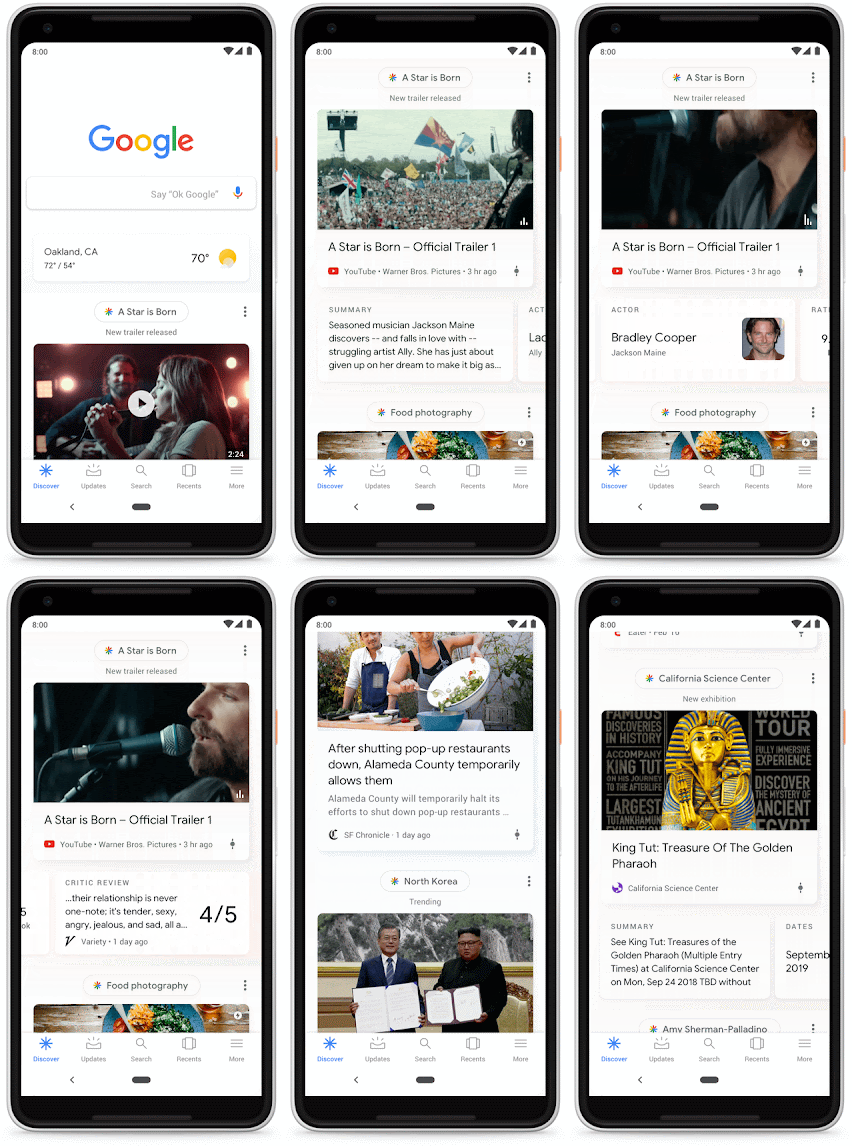
Discover is the brainchild that replaced Google Feed in 2018 and helps around  800M monthly active users with content exploration. Discover aims to push hand-selected news and articles directly to user feeds without the need for searching. Google builds a profile of users and supplies them with content considered relevant to individual interests.

Nothing is anonymous online, and we all leave digital trails of our fundamental interests. Just as your website offers opportunities to glean first-party data, so does Google. With the average person estimated to make at least three to four searches per day, that’s plenty of information to harvest.

Google Discover - a quick look

Source: Google Search Central

Google plays their cards close to their chest about how they build consumer profiles. Experts believe that the following are factored into the creation of these blueprints:

  • Search history unique to Google
  • Browser history of websites visited
  • Activity on any installed apps
  • Location, assuming this information has not been barred in settings

That’s certainly enough material to understand what a user may be interested in. Much like social media targeted advertising, Google knows what your audience wants to see and will do all it can to meet such desires through Discovery. It’s your responsibility to optimize your Discovery presence and ensure that your content is chosen to be pushed.

Why optimize Google Discover?

Discover attracts a loyal, returning audience to your website. It allows users to follow a particular brand or business, ensuring their content will always appear on their smartphone. Naturally, you need to earn this loyalty. The usual caveats apply here. Work to attract your target audience by speaking their language, delivering content that shows your brand can be relied upon.

Deliver content that shows people can rely on your brand - Google Discover optimization guide

Source: Marketing Charts

Perhaps more pertinently, Discover knows what users want to hear about – and delivers this in spades. Imagine that a user’s five most visited websites are for their local NFL team, a health food store in their town, a website specializing in tips for joggers, a website that sells running shoes, and a food blog packed with recipes. This suggests that the user in question enjoys sports and fitness. This individual’s Google Discovery feed will reflect this lifestyle.

Somebody with more sedentary hobbies may receive articles on the latest comings and goings on Netflix or technology and gadget news. If you optimize your content for Discover, it could be your website and articles that are pushed onto a smartphone. As Discover has an enviable CTR, this is not an opportunity to pass up.

How to optimize your website for Google Discover

Now that we’ve established that Discover fast-track site traffic, and by extension, conversions – how do you achieve this optimization? This fifteen-point checklist covers hints and tips to enhance your success rate.

1. Comply with Google’s policies

First thing’s first. Do not forget that Discover is a Google property, which means abiding by the search engine’s usual rules and regulations. In essence, that means continuing to follow organic SEO and page ranking practices.

As much as keeping on top of Google’s regular algorithm updates can sometimes feel like a full-time job, it remains necessary. To optimize the potential of Discover, your website must maintain standard white hat SEO protocols. If your dedication to improving page ranking and quality score slips, your content is less likely to be selected by Discover.

2. Create a Google My Business account

Here’s another quick and simple hack to help produce tangible results. Google always wants to provide users with the finest and most relevant connections. If you’re using Discover for ecommerce, the big G will consider a GMB account as a seal of quality. You’re likelier to be selected by Discover if you have an active profile – especially one that boasts organic, positive reviews.

3. Ensure mobile compatibility

When investigating different web design possibilities, highly prioritize mobile compatibility. This sounds like a no-brainer as Discovery is a mobile-centric tool, but you may be surprised at how many fall at this hurdle. Use Google’s Mobile Usability Report to check how your site is doing.

If you build your website through WordPress, consider taking advantage of the Web Stories plug-in. This is made for use on Google – after all, Web Stories even have their own segment on the search engine’s home page – and will often pique the curiosity of Discovery.

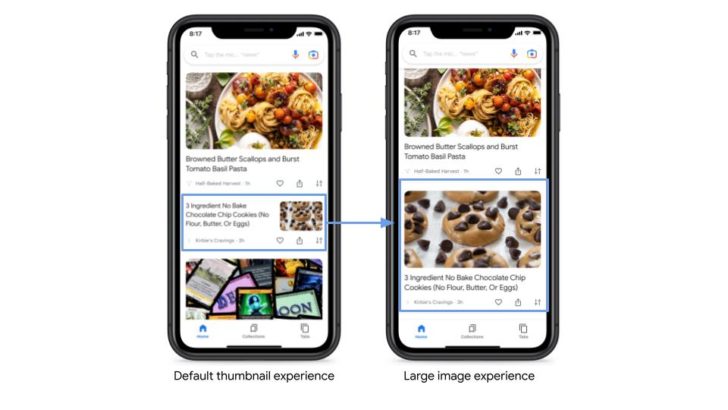
4. Feature larger images to create compelling UX and boost CTRs

You can even feature your card images in a large format by using the robots meta tag max-image-preview setting. This is a great way to gain more screen space and win audience attention that will drive CTR. According to Google, this increased a food blog’s CTR by 79 percent and drove a weekly magazine’s clicks by 332 percent across six months.

Google Discover optimization guide - use large images to drive CTR
Google Discover optimization guide – use large images to drive CTR

Source: Google Search Central

5. Find a unique niche and demonstrate your knowledge

Like when bidding for a plum PPC spot, popular keywords can create an extremely competitive environment in Discovery. Unless you’re among the major players in your industry, you risk being muscled out by more prominent names. For example, if you’re writing about sports, ESPN is always likelier to be selected to discuss the playoffs and significant incidents in a game.

That doesn’t mean that Discover is pointless, you’ll just need to think outside the box. Come up with a topic that could be less commonplace within your niches, such as a particular player, team, or set of stats. Discuss these at length, appealing to the regulations of the E-A-T algorithm, and the results will come.

6. Consider your target audience

Discover is designed to match the ideal content with the perfect audience. That needs to be considered when creating blog posts and similar copy. Take the time to build a picture of your target audience and use analytics to ensure you are appealing to them.

Based on the results, you may need to adjust your approach. For example, emotive language may attract one type of reader but deter users likelier to convert. Equally, you may find that you need to use less prose and more images to draw users you really want.

7. Master your headlines carefully

Over 14 percent of all Google text searches include a question. Embrace this in your headlines. If you pose a question, you’re likelier to be selected by Discovery and attract an audience’s attention.

All the same, never lose sight of Google’s quest for relevance. That means not trying to pull a bait and switch. A blog headlined “how to hire an app developer” needs to discuss the trials and tribulations of this very process. An article that says, “don’t bother – here is a DIY mobile app design guide to save money,” will not be embraced by Discovery.

8. Ensure your content is of the highest quality

We’ve just established that Google Discover has limited patience for clickbait, but you may be able to slip some of this material through the net.

You’ll quickly lose their trust and struggle to attract followers. The same applies to content that has not gone through a quality check process and is littered with typos and errors. Quality matters, so do not try to pull the wool over anybody’s eyes. Another way to create compelling, relevant content for your audience is by checking your Google search traffic and keyword research. This will help you distinguish and craft top-of-the-funnel (TOFU) content for key segments of the search journey and align it with the sales funnel.

9. Keep your finger on the pulse

News and current events are the bread and butter of Google Discover. On paper, Google will always look to deliver the latest and greatest news articles to users. Criticism has been leveled at Discover, claiming that it has been top-of-the-funnel (TOFU), but it still pays to remain relevant when attempting to appeal to algorithms.

Anecdotal evidence claims that Discover ranks some search terms that SEO does not, opening new opportunities. That does not mean that you should throw together a hot take on the latest Twitter controversy and wait for the clicks to roll in. If that flies in the face of your brand values, you’ll suffer in the longer term. Just avoid shying away from existing talking points that would add value to your audiences. Also, don’t hop on this bandwagon unless you have something valuable to say as a brand.

10. Encourage users to ‘heart’ you

If you have a captive audience outside of Discover, encourage them to follow you on this platform. Discover offers a heart icon that matches the purpose of a Facebook like, which is a direct way to show appreciation for the material.

If somebody follows an article from your site in their areas of interest, it will be noted on their Google profile. They are then likely to receive more content on the same subject from your brand – as are other, unrelated users that Google considers to have similar interests.

11. Increase your brand awareness

As an extension of the point above, users are prone to discover – and follow – your Discover profile if they are aware of your brand. Use your marketing campaigns to raise your Google Discover profile, steering people toward following you on here.

12. Regularly create and post new content

Discover is often looking for the newest insights and articles to share with users. As a result, a freshly published blog is much likelier to be selected than something penned weeks, months, or years previously – assuming it meets the quality standards we previously mentioned. Evergreen content occasionally gets picked up, but not as often.

Just be aware that articles selected by Discover tend to have a shorter shelf life than something penned with organic SEO in mind. You can still look to appeal to both markets. Discover can be just as helpful for an inbound marketing strategy. Just do not expect your blog to remain on the platform longer than three or four days.

13. Include images and videos in your content

Regardless of whether a picture is truly worth a thousand words, there is no denying that Discover looks to curate variety in its content. Websites that included images and video in their blog posts saw a much greater uptake in selection by Discover than those that relied on pure prose.

Quality matters just as much as quantity here. A quick video shot on your smartphone and shoehorned into your content will not cut the mustard. Discover looks for crisp, high-definition image quality in moving and static pictures alike, so always opt for the greatest resolution you can that retains mobile friendliness.

14. Interact on social media

Discover loves social engagement. As with organic SEO, Discover is likely to select and push content that attracts comments and shares on social media. This creates a chicken and egg scenario. Will your content go viral on social media because it was picked up by Discover, or did Discover push the content because it was gaining social media traction?

In truth, the order of events matters little. Discover can sit neatly alongside the likes of Facebook, Twitter, Instagram, and YouTube to bolster awareness of your content and amass an army of new followers. As always, this creates a snowball effect – the more followers you gain, the more strangers will have your content pushed to their appliances.

15. Track your analytics – and improve where necessary

Finally, as with your SEO performance, you should always keep an eye on your Google Discover traffic analytics. You’ll find this in your Search Console. Do not be alarmed if your Discover traffic looks low. It takes a couple of days for these visits to hit the report so things may change in time.

Discover may not be essential if you are still attracting attention through other means. But no website should ever turn down an opportunity to boost website traffic! So if your numbers are tracking lower than anticipated, revisit points one through fourteen and implement what you can to improve performance.


Joe Dawson is Director of strategic growth agency Creative.onl, based in the UK. He can be found on Twitter @jdwn.

Subscribe to the Search Engine Watch newsletter for insights on SEO, the search landscape, search marketing, digital marketing, leadership, podcasts, and more.

Join the conversation with us on LinkedIn and Twitter.

The post Is your business optimized for Google Discover? This guide is for you! appeared first on Search Engine Watch.

https://www.searchenginewatch.com/2022/02/17/is-your-business-optimized-for-google-discover-this-guide-is-for-you/


How to win at content creation, Esports, gaming, and web3 markets with SEO

How to win at content creation, Esports, gaming, and web3 markets with SEO

30-second summary:

  • SEO is vastly underutilized in the content creation industry
  • How can internet marketing lead to success in Esports and gaming?
  • Anthony DiMoro discusses the needed innovation during the content, gaming, and web3 boom

Despite a strong track record and success model within the digital marketing world, for multiple decades, SEO still finds itself almost entirely abandoned in the new age markets of content creation, Esports, gaming, and web3 related properties.

But, why is that? Why would businesses, brands, and creators operating in these spaces, reliant on success in a digital marketplace completely ignore SEO?

Let’s explore why, and how things need to change as 2022 continues to show that the boom of these is not slowing down, but is also rapidly evolving.

1. Content creation and streaming

There is no rhyme or reason as to why content creators (which includes streamers) fail to utilize SEO, considering the fact that their entire brand relies on success within the digital marketplace.

Instead, creators seem to often lean into the following troubling trends, and solely rely on these recycled methods:

Automation and inauthenticity

There is no social platform that has not experienced, in some form or fashion, a form of automation. But content creators, particularly in the streaming sector (like Twitch and YouTube) use this to the point of “overkill”.

“Going LIVE” posts flood timelines, and when they are the majority of what a particular creator posts, it flatlines engagement. While it may seem like a “bot”, it actually is more a real strategy for creators. While informing your audience that you are going live is important, it shouldn’t be or appear, inauthentically posted or automated.

Going further down the rabbit hole will see a more aggressive form of automation in DMs and messages. DMing a new follower or connection is a solid tool for networking when done organically, but the second a bot steps into the chat, your chances skyrocket of someone not only disregarding your content completely but also unfollowing you altogether.

Authenticity is key in proper brand building, especially when you’re being looked at by a potential business or collaborative opportunity.

If you’re heavy into automation and inauthenticity, why would a brand or business spend money on your content or brand? They would, rightfully, assume that is how you do business.

Farming and cycling (aka Botting)

Every few years a new app or platform pops up promising to help creators and streamers reach milestones of affiliate or partner, but are, more often than not, simply a recycling of hacky, spammy, models

Follow for Follow systems have plagued the niche, and have fueled an even more robust “sub for sub” system, but not view churning. This is becoming a more prevalent issue.

Cycling content clips and/or highlights can be an engagement factor for a feed and can help keep your audience engaged, but when in a collective of other cycles, coupled with any incentivizing to push engagement is something completely different.

Some of these models try to divert away from appearing to be a clear violation of, for example, Twitch’s Terms of Services, but it’s all a mirage.

Take it right from Twitch’s TOS page:

“Fake engagement is artificial inflation of channel statistics, such as views or follows, through coordination or 3rd party tools. This behavior is characterized by the creation of incidental or duplicitous views or follows. One common form of this activity is often referred to as view-botting. Another, when done in a coordinated manner, is sometimes identified as “Follow 4 Follow” (F4F), “Lurk 4 Lurk” (L4L), or Host 4 Host (H4H), which involve a mutual exchange of interaction intended to increase the visibility of both channels over those with legitimate interaction. Using services that promise higher visibility in exchange for lurking in a large number of channels or viewing streams on pages with several unrelated, active embedded streams, is considered a form of fake engagement and is not permitted on Twitch services.”

Does the app or platform you use have instances where members are motivated to pop into someone’s channel to say “hello, I am here from PLATFORMNAME” and then leave? Are you a part of a system where videos are cycled to generate views and inject this behavior?

Then you may be, in essence, engaging in a form of view botting, albeit a more human version, and also engaging in fake engagement.

Let’s look further into how Twitch defines these things:

“Artificial engagement and botting limit growth opportunities for legitimate broadcasters and are damaging to the community as a whole. False viewer growth is not conducive to establishing a career in broadcasting because the ‘viewers’ do not contribute to a healthy, highly engaged community.

As a reminder, fake engagement and artificial inflation of channel statistics are violations of our policies. Participating in, organizing, and/or running these services will lead to an enforcement issued on your account, including and up to indefinite suspension”

Why run the risk? Furthermore, why try to “game” or “cheat” the system to inorganically generate some form of success?

Sure, it can be a good confidence booster, but you’re looking to monetize this, or even make it a career, rather than protecting your analytics and ensuring they are transparent is key, and could make or break a financially rewarding opportunity or deal with a business who will, assuredly, do their due diligence.

Community toxicity

One big issue in the industry, overall, is toxicity and how many creators and viewers engage in this at varying levels. But to take things further, many communities and platforms fuel this behavior or lead the charge.

Association is key, and if you’re aligned or using a service or platform, ensure how they interact, specifically when criticized, aligns with your brand and is something you would not mind a potential business partner or collaborative partner seeing.

Whether a member of the community leaves or someone reports an unsuccessful experience, a brand’s reaction and the behavior/conduct of their prominent members/admins speak volumes in the world of business.

The solution

Explore more viable outlets, look for services more rooted in things such as SEO and internet marketing, and lean into those service offerings and/or benefits. 

There is a reason why influencer marketing and even things as minute as Twitch SEO are gaining impressive traction.

Because, with effort and a professional, dedicated, and intuitive approach, businesses can work in areas that really matter. They can take you outside of the box that a platform’s discoverability model may keep you contained in. It can make you more appealing to businesses.

Explore and re-invent the way you do business. If you’re investing hard-earned money into your equipment and also pouring hours into creating, you owe it to yourself to be efficient with your branding and marketing.

2. Esports

The Esports boom is not slowing down and you can expect the industry to expand further as there is considerable buzz around the college Esports industry in 2022.

The projected boom shouldn’t come as a shock, in fact, it was projected back in 2019 when a report from Estreme Networks and eCampus News “which surveyed 281 technical and administrative leaders across K-12 and higher education in North America, Latin America, Asia Pacific, Europe, and the Middle East, found that –

  • one in five schools already have an esports program
  • 71 percent were considering or might consider adding an esports program in the future

Fast Forward to 2021, and the State University of New York (SUNY) reported that 2,077 students enrolled in a SUNY esports program in the 2021 fall semester, compared to 636 students that enrolled in the 2020 fall semester, and those numbers are going to grow in 2022.

This creates a more competitive marketplace driven by greater revenue opportunities, meaning that Esports teams, players, casters, and businesses need to gain an edge to keep up and scale.

So, where does that come from? Esports SEO.

Let’s backtrack to my article back in August 2021 and what eUnited’ Matt Pothoff said regarding the importance of SEO:

“eUnited does use elements such as SEO to increase visibility when selling merchandise or showcasing new sponsors. Additionally, we help players revise their stream titles and descriptions for better chances of obtaining new viewership when users are searching for different topics on Twitch”

Now, let’s circle back to the here and now, and an interview I did on Gamactica Portals with  Christian Bishop, Director of Twitch Properties:

“SEO and working through the Google machine is incredibly important,” Bishop said.

“This can very much make or break the success of a website or piece of content. Investing in SEO has been one of the most fruitful and rewarding decisions I have made with my media companies. I would love to see creators do more around SEO to drive traffic to their channels and content.

Discoverability and growth can be hard for a lot of creators, SEO might be one of the angles to break through.”

The fact is, internet marketing and SEO are proving to be differentiators in many layers of the industry, including esports, and making it a huge part of the foundation of your team, career, or your organization is more vital than ever.”

There is no denying this need within the esports landscape yet it remains vastly unutilized by many organizations and teams.

3. Video games (Developers and publishers)

Regardless if you’re a big named studio, an indie team, or a solo developer, video game SEO should be a big part of your strategy, because the industry is seeing a rapid YoY increase in revenue flow.

Take this infographic from Statista, demonstrating the market size (in US dollars, billions) from 2010 to 2021 and it speaks for itself.

Statista graph on the size of gaming industry - 2010 to 2021

The influx of revenue means that it demands a more competitive and fluid marketing approach that reaches an exact target market. Given the number of game genres and considering that markets aren’t always the same, you cannot always approach it broadly. For instance, fans of Animal Crossing may not like your FPS game.

4. The new markets of web3, cryptocurrency, and NFTs

Regardless of where you stand on cryptocurrency or the controversial Non-Fungible Token (NFT), they aren’t going anywhere. If you operate in the gaming and streaming industries they are likely already operating in your space.

So, you can choose to disassociate them completely from your brand or be open to working with businesses that operate with them. Regardless of where you lean, you should understand the niches and network with the brands and names within them – they will, more often than not, overlap in your niche.

Marketing will likely do the same and you have probably already seen it exist, in some fashion, in your favorite game, or on a platform you use (such as Twitter), and with the birth of NFT SEO and Crypto SEO, these sectors are going to be pushing even more efforts into penetrating your market space.

Business owners in these spaces will need to rely more on these methods, as a shiny, new-age-looking website will only take you so far.

The importance of marketing and targeted networking will only continue to scale upwards, and those who either don’t use it or refuse to use it all together will either be making their track to success or a much more difficult path.


Anthony DiMoro is CEO of Gamactica. He can be found on Twitter @AnthonyDiMoro.

Subscribe to the Search Engine Watch newsletter for insights on SEO, the search landscape, search marketing, digital marketing, leadership, podcasts, and more.

Join the conversation with us on LinkedIn and Twitter.

https://www.searchenginewatch.com/2022/02/08/how-to-win-at-content-creation-esports-gaming-and-web3-markets-with-seo/


SEO poisoning: scaricare malware con le applicazioni


Una nuova campagna di SEO poisoning inserisce i malware Batloader e Atera Agent nei sistemi di chi scarica strumenti per la produttività come Zoom, TeamViewer e Visual Studio.

La tecnica del SEO poisoning (letteralmente “avvelenamento dell’ottimizzazione per i motori di ricerca“) consiste nel far posizionare bene nei motori di ricerca siti compromessi per farli visitare dagli utenti.

Come riportato da Bleeping Computer, questi attacchi compromettono siti legittimi per impiantare file malevoli o URL che rimandano a pagine con malware celato dietro le spoglie di popolari applicazioni. Il SEO poisoning fa sì che gli utenti trovino facilmente questi siti quando ne cercano una.

Le parole chiave sono legate a programmi come Zoom, Microsoft Visual Studio 2015, TeamViewer e altri. Quando l’utente clicca sul collegamento nel motore di ricerca, viene portato a un sito compromesso che include un TDS (Traffic Direction System). Si tratta di uno script che esamina diversi attributi del visitatore per decidere se mandarlo alla pagina legittima o a una malevola.

In casi simili in passato, i TDS indirizzavano allo scaricamento del malware solo gli utenti che arrivavano dai motori di ricerca, per rendere più difficili le analisi degli esperti di sicurezza. Se il TDS decide che la vittima è papabile, la manda a un finto forum in cui si parla di una certa applicazione e viene segnalato un link per scaricarla.

Dopo aver scaricato e lanciato gli installer del software desiderato, la vittima si trova infettata con malware e programmi per l’accesso remoto. Dato che i pacchetti con il malware includono anche il software legittimo, molti utenti non si rendono conto di essere stati infettati.

I domini malevoli identificati da Mandiant includono:

  • cmdadminu[.]com
  • zoomvideo-s[.]com
  • cloudfiletehnology[.]com
  • commandaadmin[.]com
  • clouds222[.]com
  • websekir[.]com
  • team-viewer[.]site
  • zoomvideo[.]site
  • sweepcakesoffers[.]com
  • pornofilmspremium[.]com
  • kdsjdsadas[.]online
  • bartmaaz[.]com
  • firsone1[.]online

Condividi l’articolo


Articoli correlati

Altro in questa categoria


https://www.securityinfo.it/2022/02/04/seo-poisoning-scaricare-malware-con-le-applicazioni/?utm_source=rss&utm_medium=rss&utm_campaign=seo-poisoning-scaricare-malware-con-le-applicazioni


How you can embrace paid search automation to maximize outcomes

How you can embrace paid search automation to maximize outcomes

30-second summary:

  • Automation is a hot topic within digital marketing, and Google has more options than ever before for search practitioners to utilize
  • However, there’s still a level of discomfort with handing the keys to the kingdom over
  • As a long-time skeptic myself, I make the argument for automating core components of search campaigns and share the areas where marketers should instead focus their energy and attention for success in 2022

“Automation” it’s a word of constant focus for search marketers these days – and rightfully so. There are more components to search than ever before, and automation is a critical tool that enables us to optimize campaigns at scale and frees us to focus on what can’t be automated.

Google has released automated solutions to nearly every aspect of account management, but how do we know when it makes sense to hand over control and where we should maintain a strong level of influence? I see 2022 as a year for search practitioners to reimagine and rework their approach to search engine marketing (SEM) with Google, striking a new balance between automated solutions and customer-focused, business-driven oversight.

Handing over the keys (or at least some of them) in a reimagined relationship

Google Ads has become a one-stop-shop for marketers looking to engage customers across platforms up and down the funnel. It’s not just about search and shopping anymore – practitioners can also buy Discovery Ads, YouTube, Local Ads, etc.

With a more holistic Google Ads, an interesting dynamic emerges with what I call “a tale of two Googles.” On one side, there’s Google’s highly sophisticated suite of flexible, powerful technology tools that are built for advanced users – people and brands who obsess over the next level and the ability to capture it. But now, there is a second side of Google Ads that’s geared toward the masses, with superb out-of-the-box automated solutions.

As a marketer, it’s time to reimagine your approach and embrace these solutions that have been historically shunned by expert search practitioners. And you should do it with pride and intention – let go and let Google automate your campaigns. Then you can focus on core marketing tactics and engaging your customers more effectively. Let Google maximize keywords, placements, bids, and budget levels toward your goals, and make sure that once a user lands on your site, you’re ready to deliver the best experience for them.

A reworked approach to search management

Making the decision to automate is one thing but actually leaving the machine to do its job is another entirely. How do you trust Google automation and its work? Over-engineering and tinkering may actually be detrimental to some programs and instances. Choose tweaks and changes wisely! For years, we overengineered our campaigns, obsessed over keyword funneling in single-keyword ad groups, and took pains to ensure our campaign structure was dialed into the nines.

In 2022, there needs to be a little less control and a little more letting go. For those in the “old guard,” this translates to a trust fall. Google is quite good at understanding intent and matching that intent with the right answer at the right moment. Too much tinkering and intervention is a recipe for disaster and sets the machine up to fail before it can even get started.

With automation in place, where do we focus our energy?

Fear not – there is an abundance of important work to be done, even with core components of a search program automated. Search automation gets elevated by extreme focus on customer experience. You need to figure out how to use technology and data in a privacy-safe way to become more helpful and meaningful as a brand. You need to know your customers so you can speak to them personally throughout their journey. In travel, for example, there are many known preferences, such as window or aisle seat, meal choice, favorite hotel pillow type, etc. Your customers expect you to know these things, and you don’t want to restart the conversation with them every time they open a new browser.

Get closer to understanding your data

Focusing on data science and analytics is a critical piece of search success in 2022. There’s so much data available to analyze, and it’s critical to cut through the clutter by defining your customer-centric business goals, aligning metrics, and reporting appropriately. There’s also a new responsibility for search traffic to help replace data lost from third-party cookie deprecation. Better models will be essential to enable the use of search traffic as a catalyst for scientific remarketing.

Master your customer engagement and first-party data strategy

Privacy is a key focal area as well. Search practitioners need to have conversations about how to scale known customer engagement and how to use advertising technology in a compliant way that supports the business by driving customer experience and performance. You need to evaluate your first-party data strategy and look for ways to layer that data into the search experience, whether it’s through messaging, bidding, or other avenues. Google knows a lot about users, but there is information unique to the business that you can use to elevate automation.

Refine your site and landing page experience

Ownership of landing page experience and site content optimization also lie entirely with brands as important components of successful search programs. Search has become a visual battleground – just close your eyes and imagine a Google results page. Five years ago, you would have pictured ten blue links on a screen, and now to think of that feels archaic! Today, you probably imagined a mix of images, shopping listings, maps, videos, and more. As a practitioner, that means your content needs to be optimized to deliver the right information to customers, regardless of the landscape for their unique query. Then, when the user lands on your site, you need to be ready to deliver the information they need to take the next step in their journey.

Conclusion

For years, we needed to re-engineer the game inside of Google Ads because we didn’t have another choice. Now, instead of getting ahead that way, marketers that excessively tinker will fall behind and lose ground on the components that need the utmost attention – analytics, first-party strategy, and customer experience. It’s time for all of us to reimagine and rework our focus as practitioners toward those new realities.


Matt Mierzejewski is SVP of Performance Marketing Lab and Search at Merkle Inc.

Subscribe to the Search Engine Watch newsletter for insights on SEO, the search landscape, search marketing, digital marketing, leadership, podcasts, and more.

Join the conversation with us on LinkedIn and Twitter.

https://www.searchenginewatch.com/2022/02/03/how-you-can-embrace-paid-search-automation-to-maximize-outcomes/


Seven Google alerts SEOs need to stay on top of everything!

Seven Google alerts SEOs need to stay on top of everything!

30-second summary:

  • The search landscape is very dynamic and almost impossible to stay abreast of
  • While an SEO and search marketer’s email inbox can be overwhelming, it can also be a powerhouse that helps you stay in the loop of industry developments and keep an eye on the competition
  • These must-have, free Google email alerts will notify you when your site traffic drops or spikes, when your site is hacked, or when there’s a manual penalty applied to your site

SEO and search marketing are challenging because they’re scattered all over the place. Setting up email notifications is the best way to be on top of everything. Some essential email alerts include reputation monitoring alerts, competitors’ social media activity, new backlinks, and more. In fact, Google offers email alerts on both Google Analytics and Search Console which is an absolute need for any website owner. I’ll cover all the essentials you need to set up!

Why are email alerts beneficial?

Speaking of setting up a separate email inbox, it is not a bad idea to keep this archive separate from your business emails. But it is a good idea to add that inbox to your smartphone mail app to be able to keep an eye while on the go.

  • Email alerts are hard to miss: I love dashboards that consolidate multiple sources of data under one roof but life gets too fast too often and I can neglect my dashboard for weeks in a row. An email notification is unavoidable. Even if there’s no time to read an email, I can quickly scan it while scrolling through new emails and immediately see if it needs my attention right away.
  • Emails get archived: This creates an ever-growing database of everything that has ever been happening with my site. I can search my archive any time to see what happened when and attribute any traffic changes to some alert
  • Email operators can be free: You can set up a free inbox at Gmail in seconds and continue using it for free for years until you run out of free space.

Google Analytics alerts

Getting notified of declining traffic is key for your ongoing organic visibility. It is the fundamental step behind a crucial SEO task called SEO maintenance. 

Google Analytics offers a custom alerts feature allowing you to get notified if anything weird is happening with your traffic.

How do you do this?

Login to your Google Analytics dashboard > Customization > Custom Alerts > Click “Manage custom alerts” > Click “NEW ALERT”

1. Traffic drop alerts in Google Analytics

There are various ways you can set up traffic drop alerts in Google Analytics. Here’s the most basic one. Set up your criteria that will trigger an email alert, for example:

  • Set up traffic source to “Google”
  • Set up your trigger: For the sake of simplicity I just set it to notify me anytime my organic traffic drops below an unusual level

Source: Screenshot from the author

Don’t forget to check the box that says “Send me an email when this alert triggers” to receive an email notification once your traffic drops below a certain level.

You can also set up a certain percentage of the loss – this way you won’t have to modify your threshold as your traffic grows.

Source: Screenshot from the author

2. Referral or direct traffic spike alert

If any of your content assets is going viral, you want to know about that to be able to monitor the progress, help it spread even further, or reply to comments.

Likewise, if your product was mentioned by a social media influencer and suddenly everyone starts typing in your name to go buy from you, you should know immediately.

This is why this alert is a good idea to create.

For this alert, you can exclude Google from the sources of traffic to keep organic growth and declines from skewing your numbers:

Source: Screenshot from the author

3. Revenue drop alert

Finally, if you have Google Analytics for ecommerce set up, make sure to create this alert.

For this one, I keep traffic to all sources and choose “Revenue” in the “Ecommerce” section of the drop down. Again, you can set the percentage of the loss. 

Take some time to estimate the threshold you want to be notified of. Keep in mind your slower days (weekends) or months and note those “normal” revenue declines.

Source: Screenshot from the author 

There are also several more web analytics solutions, many of which also offer email notifications, so it doesn’t have to be Google Analytics.

4. Lower load time alert

Google Analytics records how long your page loads and reports on the metric allowing you to identify slower pages. Ever since site speed became a ranking factor, keeping an eye on your page load time has been crucial. 

You can get notified by Google Analytics when your page average load time suddenly drops, so your dev team can quickly diagnose:

Source: Screenshot from the author 

Google Search Console alerts

Google’s Search Console will send you email alerts of important changes or issues by default. You won’t need to set those up. All you need is to verify your site with Google’s Search Console (here’s how).

Search Console will immediately notify you of three important events:

5. Malware alert

When your site is hacked, you want to know immediately because it is a potential reputation crisis or any private data leak.

Google’s malware alerts are invaluable. If you needed a reason to verify your site with Search Console, this is the one. Google’s malware notifications are the fastest and the most accurate on the market. And they are free!

Source: Screenshot from the author 

Monitoring your own website changes is also a good idea since you will be immediately notified if any code or text is injected on your pages so you can fix and avoid getting your site into Google’s “hacked sites” list.

6. Internal errors alert

If Google notices an unusual spike in indexation issues or internal errors, you will get an email from Search Console.

Source: Screenshot from the author 

There are a few more monitoring solutions that will alert you as soon as your site is down or broken. Even though those are not marketing alerts, I recommend looking at those too.

7. Manual penalty alert

If you get a manual penalty, Google will send you an email alert for you to be able to quickly fix an issue. While I hope you’ll never get any of these, it gives you a certain peace of mind knowing that you’ll get notified if anything happens.

Conclusion

Getting notified is the best way to fix issues quickly to avoid lasting damage. Keep alerted of traffic drops, site attacks, competitors’ social media activity, new links, and more.


Ann Smarty is the Founder of Viral Content Bee, Brand and Community manager at Internet Marketing Ninjas. She can be found on Twitter @seosmarty.

Subscribe to the Search Engine Watch newsletter for insights on SEO, the search landscape, search marketing, digital marketing, leadership, podcasts, and more.

Join the conversation with us on LinkedIn and Twitter.

https://www.searchenginewatch.com/2022/01/25/seven-google-alerts-seos-need-to-stay-on-top-of-everything/


Top 25 blogging SEO tips for 2022

Here are the top 25 blogging SEO tips to help all blog posts compete for a first page Google ranking.

1. Cut the time to write a post in half by using an AI SEO tool

Artificial intelligence (AI) tools, like Clearscope and RankIQ, tell you what topics marketer should cover in their post to compete for a first-page ranking on Google. This allows marketers to create a comprehensive outline in a short amount of time.

2. Do not use single-phrase search volume when choosing keywords

One of the biggest mistakes marketers make when blogging, is using single-phrase search volume to identify keywords. This metric is only meant to be used for Google ads, and it is not an accurate measurement of the traffic you will get.

There are only two keyword research tools which provide an accurate traffic estimate, which are Ahrefs’ Traffic Potential and RankIQ’s Estimated Yearly Visitors.

3. Poll create original research posts from poll results

Original research posts get a high number of backlinks. One easy way to generate original data is for marketers and bloggers to identify large Facebook groups within their area of interest, and post polls. The answers gained from the polls can form the basis for building a research post.

4. Get interviewed on podcasts to generate high quality backlinks

Backlinks to a blogs can be generated in several ways, including being interviewed for a podcast. Links then often appear in the show notes page for the relevant episode.

One way to marketers can advertise employees as available for podcast interviews is to send emails to various show hosts. Details of podcast hosts are relatively easy to find through hosting sites; Apple’s Top Charts lists the top 300 podcasts in a number of different areas. If bloggers do not have time to send emails, there is the option to sign up to PodcastGuests.com and have the hosts reach out instead.

5. Write blog posts on the most searched stats for year-round passive backlinks

Journalists citing data or specific statistics will often add a backlink to their source within their articles, but they tend to click on a title which has the highest number of data points available. (E.g., 50 Latest Dog Biting Statistics).

Marketers can boost their blogs’ SEO by researching keywords to glean the most searched for statistics in a specific area of interest. Once a blogger knows which statistics are popular, there is the opportunity for them to write a blog post with additional data points.

6. Use Google ‘friendly’ terms in your title

When marketers run an AI SEO Report through a tool like RankIQ, it lists the words Google ‘likes’ the most within titles. This enables bloggers to create perfectly optimised post titles from words driving the highest click-through rates (CTR) for specific keywords or phrases.

7. Use a targeted front-end modifier on your blog post title

A strategically placed front-end modifier, like “best,” “top” or “good”, can bump a marketers blog  ranking from #3 to #1. Different topics and areas of interest have unique front-end modifiers. Food bloggers get over 90% of their traffic from recipe posts. The top front-end modifiers for recipe posts are “easy,” “best,” “homemade,” and “simple”. (E.g., Easy chicken pot pie recipe).

8. Always go higher than your competition

Before a list post is published, marketers should look at their competition on the first page of Google. If the highest number in a title is 15, then they should consider lengthening their blog list post to 25. This is going to increase the CTR and push their blogs’ posts past titles with lower numbers.

9. Do not go over 60 characters in your blogpost title

Ahrefs SEO tool found titles with more than 60 characters are rewritten by Google 57% more often than those with 60 or less characters.

10. Use brackets with the current year at the end of each post title

Google searchers want content with the latest information. Blog posts which have the current year in their title are going ng to get more clicks than those that do not; using square brackets increased the click-through rate by 38%.

An example would be: ‘25 Email Marketing Tips for Bloggers [2022]’.

11. Internally link to a new post from two other high authority posts

As soon as a market publishes a new post through a company blog, they should link it to at least two of historical blog posts which have plenty of inbound links.

12. Write 40-50 word paragraphs to rank for featured snippets

Multiple studies have confirmed the majority of featured snippets are pulled from paragraphs which are 40-50 words in length. This is also the ideal length of a paragraph for maximum reader engagement.

13. Make sure your ‘content grade’ is an A+ before publishing

Backlinko looked at 11.8 million Google results and found posts with a high content grade ranked significantly higher in Google search. Content optimisation tools, like RankIQ, will grade a blog’s content based on what Google wants to see from a post for a specific keyword phrase.

14. Add FAQs at the end of a post to increase ‘dwell time’

One way to prolong people’s time on page is to add a frequently asked questions section to the bottom of a blog post.

To find out the best questions to include, search engines can be used by any marketer to find out the most common questions searched for on specific topic. Google even has a dedicated “People also ask” option.

Marketers should consider included around 3-5 of these questions, and their 40–50 word answers, within their businesses’ blog posts.

15. Listen to teaching podcasts like ‘The Blogging Millionaire’

The host of The Blogging Millionaire – a podcast devoted to teaching different blogging strategies – gets 5 million monthly visitors from over 100,000 first-page Google rankings.

Brandon Gaille, host of the podcast, has so far taught over 100 blogging and SEO growth hacks in short ten-minute episodes.

16. Keep your intros to three sentences or less to increase engagement

Readers want to get to the body of blog post as quickly as possible. For list posts, marketers should ensure readers can see the first item on the blog’s list above the fold.

17. Create a meta description tease to increase click through rates

In 150 characters, markets should include the best part of a post and end with an ellipsis. This can increase the click-through rate on a post enough to move up several spots in Google’s rankings.

Here’s an example of a meta description tease:

Title: 11 On-page SEO Best Practices for Blog Post

There are eleven On Page SEO tactics that pro bloggers use to get ridiculous results. The one tactic that plays the biggest role in SEO is…

18. Buy an aftermarket domain with existing backlinks to rank higher faster

Using a high domain authority expired domain will allow a blog post to rank high on Google from day one. The best place to find these domains is at GoDaddy Auctions.

  • In the advanced search, select expiring “.com” or “.org” domains which are at least 4 years old.
  • Copy all domains which come up with at least 1 bid into a Google sheet.
  • Run these through a bulk domain authority checker and remove all domains with less than a 30-domain authority.
  • Use the Wayback Machine to find domains with content which are at least loosely related to your subject area.

19. Identify the word count that google prefers for every keyword you write on

The word count needed to hit a keyword is different, depending on the subject area.  For a recipe post, it may only take 900 words. For a marketing tips post, 4000 words may be needed.

AI SEO tools like Frase and RankIQ use algorithms to determine the word count a post needs to compete for the top Google ranking.

20. Keep your URLs short by focusing on the core keyword phrase

A study by Backlinko found URLs in the top Google position are 9.2 characters shorter than the URLs in position number 10.

21. Use your own video thumbnails and links

SEO can also be bolstered by avoiding video embedding from a hosting site. The YouTube embed code significantly slows down the page speed of a post, which is a component of Google’s algorithm.

22. Place your target keyword in the first 100 words of your content

This tactic has been around for a while, and it still makes an impact.

23. Run your post through Grammarly before you hit publish

There is nothing worse than a blog post littered with spelling errors or grammatical errors; it suggests author laziness or a rushed blog post.

Grammarly’s tool is almost as good as having an editor who reviews your work. It will instantly take a rough post and flag any inconsistencies or errors and suggest corrections.

24. Include short stat-based infographics for more backlinks and social shares

There are few things which attract backlinks and social shares like simple stat-based infographics. By using a 16:9 ratio, your stat infographics will work for both desktop and mobile audiences.

25. Get a list of the lowest competition keywords with the highest traffic potential from RankIQ

Most bloggers end up writing more than 50% of their posts on keywords they will never be able to rank for.

RankIQ’s top keyword research experts have identified the lowest competition high traffic keywords in over 300 blogging niches.

Rank IQ provides AI-powered tools to help marketers and bloggers improve their SEO by identifying key words and topics that top Google’s ranking algorithm. 

https://www.searchenginewatch.com/2022/01/14/top-25-blogging-seo-tips-for-2022/


A must-have web accessibility checklist for digital marketers

A must-have web accessibility checklist for digital marketers

30-second summary:

  • Accessibility underpins stellar user experience and positive brand perception, the key factors that appeal to value-driven consumers
  • According to WebAIM, 98 percent of US-based websites aren’t accessible
  • Though not a sparkly aspect of digital marketing strategies, there are multiple layers to “why?” and “how?” brands must be accessible across the internet

Marketers develop and execute numerous strategies to broaden their business reach. But one critical factor that most marketers neglect is web accessibility. And this neglect leads to their business being closed off for a large majority of potential customers.

What is web accessibility?

Web accessibility ensures that the internet is accessible, usable, and beneficial for everyone alike. It considers all possible disabilities to ensure marketing messages are delivered to every kind of audience and get the most value out of the website.

As important as it may seem right now, web accessibility is often the last thing marketers think of when building a website. And then, too, it is often brushed under the rug.

Despite the World Wide Web Consortium, commonly known as W3C developing dedicated web content accessibility guidelines to make the internet more accessible, digital inclusivity remains a rarity.

And this unfortunate reality acts not only as an accessibility barrier, but a growth barrier as well.

The value of web accessibility in modern marketing initiatives

Acknowledging and adopting web accessibility enhances the customer experience, opens new doors for your business, uplifts marketing outcomes, and boosts revenue in more ways than just one.

1. Extends your market reach

15 percent of the world’s population is disabled and belongs to a highly valuable market segment with strong spending powers.

With a digitally inclusive web presence, your business interacts with an increased volume of people who it would’ve missed otherwise. In this way, web accessibility brings a whole new community of prospects you can interact with, win as customers and boost your revenue.

2. SEO benefits

Search engines prefer to rank websites that are secure, accessible, and valuable to all kinds of users. Moreover, they perceive digitally inclusive websites as authentic sources of information and favor them in rankings.

As a result, enhancing web accessibility undeviatingly supplements your online marketing with an SEO boost, helping you get to the coveted top position in SERPs. It opens another channel for web traffic that connects you with your target audience.

3. Enhanced user experience

User experience is at the heart of your digital presence as it relates directly to conversions. The basic principle of UX optimization dictates that you research what your target audience wants and deliver it.

In the case of differently-abled audiences, it’s common sense that they would want you to deliver a website they can interact with and benefit from.

By optimizing your website’s accessibility, you boost its usability which is a core element of user experience.

If all other elements of UX are optimized, enhanced usability wins customer satisfaction and gives the prospect a final push towards conversion, contributing to your revenue.

4. Positive brand perception

Web accessibility enables your brand to appear as a strong advocate of digital inclusivity and works to build positive brand perception. Now isn’t that a critical outcome of modern marketing?

Today where people seek a business’s values before engaging with it, a concrete stance on digital inclusivity reflects your values of empathy, compassion, and equal opportunities for all. This builds your community of like-minded people who then contribute to your revenue.

Five-point checklist to get started with web accessibility

For maximum effect, web accessibility should be considered a priority rather than an afterthought and must be included in your digital and marketing strategy.

Following are a few ways through which you can uplift your digital inclusivity and leave a larger impact:

1. Multilingual SEO

Web accessibility not only aims at eliminating accessibility barriers for people with permanent, temporary, or situational disabilities. It also removes linguistic barriers, so people from all cultural and ethnic backgrounds can have equal access.

Given that English is spoken by a meager 4.83 percent of the world’s population, multilingual SEO eliminates linguistic barriers and helps searchers from all linguistic backgrounds to benefit from the internet.

Here’s a guide I created on multilingual SEO to get you started.

2. Voice search

The introduction of smart assistants such as Alexa has pioneered a new era of voice search ubiquity and the consequent web accessibility.

As an excellent avenue to pursue for businesses looking to be more digitally inclusive, voice search unlocks your website’s chances of interaction with people who cannot search the conventional way.

Here are some best practices to optimize voice search SEO:

  • Use long tail keywords that are specific, descriptive, and natural for users’ language
  • Serve up content that gives direct answers
  • Optimize your ‘Google My Business’ account
  • Create voice search FAQ pages
  • Implement schema which is a code that you can add to your website that improves search visibility

For more depth, check out this voice search SEO guide for trends and best practices.

Example of schema that improves web accessibility

3. Alternate (Alt) text

Alt text helps visually impaired visitors understand what a web image depicts. Hence image optimization allows web visitors to absorb the information your website offers in its totality and ties back to enhanced user experience.

Tips for using alt text:

  • Keep it descriptive and keyword specific, this will show up in case your page loads slow or if there was an audio description needed
  • For ecommerce sites, make good use of structured data to give the search engine more specific details about your products’ color, type, size, and a lot more

If you need more details, here’s an evergreen image optimization guide.

4. Hierarchical organization or content using H tags

Hierarchical layout shapes your web content in an easy-to-read structure. A critical part of web accessibility (and SEO), a hierarchical organization can make your website usable and understandable for users with certain cognitive disabilities and people with short attention spans, boosting their satisfaction and your websites’ overall UX.

Check out this guide on optimizing meta tags.

5. Color contrast

Color contrast involves adjusting the color of foreground web elements (for instance, fonts) against the color of the background elements to ensure that the foreground elements, which bear value, stand out and are easily readable for people with visual impairment.

The Bureau of Internet Accessibility has identified a color contrast ratio that ensures that your website is visible and readable for people with color-related visual impairments.

Conclusion

Web accessibility is a necessity, but unfortunately, it doesn’t get the same limelight as other digital marketing avenues that promise increased reach, better perception, and higher revenue.

This reality can work in your favor if you capitalize on the lack of web accessibility and gain a competitive edge by adopting digital inclusivity.

There are numerous marketing benefits of web accessibility, most significant of which may be the development of positive brand perception in an era of value-driven shoppers.

Inclusive marketing initiatives are commendable. But they are only valuable when backed by conscious efforts of enhancing your business’s digital accessibility. So, endeavoring to actualize web accessibility strategies can help you become the pioneer of an internet era where digital inclusivity is a priority.


Atul Jindal is a web design and marketing specialist, having interests in doing websites/apps optimized for SEO with a core focus on conversion optimization. He creates web experiences that bring conversations and transform web traffic into paying customers or leads.

Subscribe to the Search Engine Watch newsletter for insights on SEO, the search landscape, search marketing, digital marketing, leadership, podcasts, and more.

Join the conversation with us on LinkedIn and Twitter.

The post A must-have web accessibility checklist for digital marketers appeared first on Search Engine Watch.

https://www.searchenginewatch.com/2022/01/13/a-must-have-web-accessibility-checklist-for-digital-marketers/


The not-so-SEO checklist for 2022

30-second summary:

  • With several Google algorithm updates in 2021 its easy to fall into a dangerous trap of misconceptions
  • One factor that still remains constant is the value Google places on great content
  • Core Web Vitals aren’t the end-all of ranking factors but a tiebreaker
  • Read this before you create your SEO strategy for 2022!

The year 2021 was a relatively busy one for Google and SEOs across the world. The search engine behemoth is improving itself all the time, but in this past year, we saw a number of pretty significant updates that gave digital marketers cause for paying attention. From rewarding more detailed product reviews to nullifying link spam, Google keeps thinking of ways to improve the user experience on its platform.

Speaking of user experience: the biggest talking point of the year was June’s Page Experience update, which took place over a few months and notably included the Core Web Vitals.

After that happened, tens of thousands of words were published around the web instructing people on how to modify their websites to meet the new standards.

Mobile-friendliness became even more important than before. Some more inexperienced SEOs out there might have started looking to the Core Web Vitals as the new be-all ranking factor for web pages.

With all this new information on our hands since last year, it’s possible that some misconceptions have sprung up around what is good and bad for SEO in 2022.

In this post, I want to bring up and then dispel some of the myths surrounding Google’s bigger and more mainstream 2021 updates.

So, here it is – the not-so-SEO checklist for your 2022. Here are three of the things you shouldn’t do.

1. Don’t prioritize Core Web Vitals (CWV) above quality content

It’s no secret that Google’s Core Web Vitals are among the elements you’ll want to optimize your website for in 2022 if you haven’t done so already.

As a quick reminder, the Core Web Vitals are at the crossroads between SEO and web dev, and they are the measurements of your website’s largest contentful paint, first input display, and cumulative layout shift.

Those are the parts of your website that load first and allow users to start interacting with the site in the first few milliseconds. Logic tells us that the slower your load times are, the worse your site’s user experience will be.

The not so SEO checklist and Core Web Vitals - debunking myths

First of all, this isn’t exactly new information. We all know about page speed and how it affects SEO. We also know how vital it is that your Core Web Vitals perform well on mobile, which is where around 60 percent of Google searches come from.

Google takes its Core Web Vitals so seriously as ranking factors that you can now find a CWV report in Google Search Console and get CWV metrics in PageSpeed Insights results (mobile-only until February of 2022, when the metrics roll out for desktop).

Given that, why am I calling it a misconception that Core Web Vitals should be at the top of your SEO-optimization checklist for 2022?

It’s because Google itself has explicitly stated that having a top-shelf page experience does not trump publishing killer content. Content is still king in SEO. Being useful and answering user questions is one of the most crucial ranking factors.

So, it’s a misconception that Google will not rank you well unless your Core Web Vitals are all in solid, healthy places.

However, having it all is the ideal situation. If you have great web content and optimized Core Web Vitals, you’ll probably perform better in organic search than would a page without strong Core Web Vitals.

In 2022, therefore, work on your Core Web Vitals for sure, but develop a detailed content marketing plan first.

2. Don’t assume your affiliate product-review site is in trouble

Another misconception that might have followed from a 2021 Google update is that affiliate sites, specifically product-review sites, were in some hot water after the Product Reviews update from April.

Google meant for the update to prioritize in-depth and useful product reviews over reviews that are spammy and light on details. In other words, just as in organic search, higher-quality content is going to win here.

If there was ever a point when someone actually made money by running a shady, low-quality affiliate site that featured nonsense product reviews that were then essentially spammed out to thousands of people, Google’s April 2021 product reviews update started to kill that.

The search engine now prioritizes long-form, detailed reviews, the kind that generates trust from users. Those are the types of affiliate content that stand to benefit from Google’s update, while the spammy sites will continue to vanish from top rankings.

Therefore, we can forget about the misconception that good, honest, hard-working affiliate product reviewers would somehow be hurt by the update.

As long as you are presenting something relevant and legitimately useful to users, you may have even seen your rankings rise since the April of 2021.

3. Don’t assume Google will rewrite all your titles

The last misconception I want to address here is the idea that you don’t need to put effort into your pages’ title tags because Google is going to rewrite them all anyway following its August of 2021 title tag-rewrite initiative.

First, some explanation. Back in August, many of you know that SEOs across the industry started noticing their page titles being rewritten, as in, not as they had originally created them.

Google soon owned up to rewriting page titles, but only those it believed were truly sub-par for user experience. In Google’s view, those junky title tags included ones that were stuffed with keywords, overly long, boilerplate across a given website, or just plain missing.

But SEOs still noticed that seemingly SEO-optimized title tags were still being rewritten, and the new titles didn’t always come directly from the original title. Sometimes, as Google has been doing since 2012, the search engine would use semantics to rewrite a title to be more descriptive or just simply better.

In other cases, Google’s new titles came from H1 text, body text, or backlink anchor text.

Google saw these efforts and still does, as one great way to improve user experience during the search.

Many SEOs, however, did not see it that way, especially given that Google’s rewrites were sometimes responsible for drops in traffic.

To put it mildly, there was uproar in the SEO community over the change, so much so that Google explained itself a second time just a month later, in September 2021.

In that blog post, Google said that it uses marketers’ own title tags 87 percent of the time (up from just 80 percent in August). The other 13 percent would be rewrites done to improve:

  • too-short titles,
  • outdated titles,
  • boilerplate titles,
  • and inaccurate titles.

And now to bring things back to the crux of this: it is a misconception that you’re wasting your time writing title tags after August of 2021.

Google does not actually want to rewrite your title tags. It clearly stated this in its September blog post.

What Google wants is for you to write high-quality page titles on your own, ones that are descriptive, truthful, and useful. Give users what they need, and Google will leave your titles alone.

However, throw a bunch of keywords in there, or use boilerplate titles all over your site, and you can expect Google to do some cleaning up on your behalf. The trouble is, you may not personally like the results.

Title tags matter in SEO, big time. Don’t think that your efforts are futile just because of the 2021 change. Focus on creating title tags that matter for users, and you should be just fine.

Going forward

The three misconceptions I have covered here can be dangerous to fall into in 2022.

Now, are Core Web Vitals, quality affiliate links, and title tags important to Google? You can bet they are. But SEOs also just have to be smart when approaching these matters. Everything Google Search Central does has the user in mind.

Optimize for Core Web Vitals, but still, put quality content creation first.

Run your affiliate marketing site, but ensure the reviews are useful.

And write amazing SEO title tags so that Google won’t want to rewrite them.

Following these guidelines can only help you in the year to come.


Kris Jones is the founder and former CEO of digital marketing and affiliate network Pepperjam, which he sold to eBay Enterprises in 2009. Most recently Kris founded SEO services and software company LSEO.com and has previously invested in numerous successful technology companies. Kris is an experienced public speaker and is the author of one of the best-selling SEO books of all time called, ‘Search-Engine Optimization – Your Visual Blueprint to Effective Internet Marketing’, which has sold nearly 100,000 copies.

Subscribe to the Search Engine Watch newsletter for insights on SEO, the search landscape, search marketing, digital marketing, leadership, podcasts, and more.

Join the conversation with us on LinkedIn and Twitter.

https://www.searchenginewatch.com/2022/01/04/the-not-so-seo-checklist-for-2022/


Wrapping up 2021 with our top 10!

Wrapping up 2021 with our top 10!

30-second summary:

  • 12 months, several curveballs, and some masterstrokes
  • If you missed out, today is a great day to look through the Search Engine Watch lens for the year gone by
  • Key themes that were front of mind in 2021 – Google’s updates, cookie death counter-strategies, mastering customer experience elements, trust-building, and alternatives for search marketing and ranking

As the world, people, and of course businesses motored through a year of uncertainties – these crackers of articles gave your strategies an unfair advantage.

You asked, “What is Page Experience, anyway? Do we really need to have an overflowing to-do list?” – and we answered everything around this enigma. This piece touched upon every aspect, angle, and action point that SEOs needed to know.

The ad tech and search industry continued to remain precarious that Google will use the cookie deprecation as a new way to establish market dominance to feed its own interests. Google expert, Susan Dolan drew from her rich experience and detailed realities of the search scape. She also shared insights and predicted future key themes that rose out of the 3p cookie death.

As the industry bid farewell to BERT, Google’s Multitask Unified Model (MUM) update in June 2021 opened new search experience dimensions. The cranked-up competition for search visibility between businesses and advertisers – left SEO practitioners and agencies with yet another burning question, “How will we win MUM’s good graces?” Joe Dawson’s comprehensive guide left no stone unturned.

“Kill your darlings”, yes, we said it! Though it sounded outlandish, this piece held wise and valuable advice from best-selling author Joe Pulizzi on why this could be one of the best business decisions you could’ve made in 2021.

Everyone is obsessed with Google, but did you know Reddit is the seventh most popular website in the US while Quora has a DR of 91? This guide shone a light on how your search strategy could take advantage of these platforms with diversification, tap into great brand-building opportunities, and enhance your E-A-T standing.

The third-party cookie still stands at a crucial intersection between digital marketing, SEO, paid media, web design, and several business tangents. The industry needed to think hard and think differently for a contingency plan. SEO pioneer, serial entrepreneur, and best-selling author, Kris Jones helped weave a tight SEO and search marketing strategy way ahead of 2022. Why? Because a stitch in time saves nine.

The internet continued zigging in a privacy-focused direction as a response to consumers’ increasing demand for a transparent, responsible, and ethical outlook towards their data. First-party data became indispensable and consumer trust, invaluable. While the playing field inched closer to the great reset, we revealed some hidden first-party gems every business could use to redesign their search marketing strategies.

The story of SEO and UX began almost 20 years ago with both making a foray into the market in the 1990s. Since then, SEO practitioners saw seasons change and the Page Experience, paired with data analysis finally etched UX as a key ranking factor. Atul Jindal condensed years of his experience working with fortune 50 companies into this SEO guide to help you win at SEO and search experience.

The pandemic didn’t let us forget that while every business is unique, budgets too took a hit, making allocation stringent. But why did so many businesses still stick to the “big guns” when allocating spending? Adzooma CEO Rob Wass and Cambridge University’s Akanshaa Khare joined forces to challenge this notion. They produced some truly unique insights that would make stakeholders rethink their media spending habits.

Everyone remembers the chaos surrounding the Core Web Vitals in early 2021. SEO folks were keen to get ahead on optimizing their site and Twitter threads were full of speculation. Armed with information, we shared a 28-point checklist on action items to spot, optimize, and embrace the inevitable rollout of these new ranking factors.

Thank you for being valuable supporters throughout our journey. Team Search Engine Watch wishes everyone a happy year-end and an adventurous 2022!

*Ranked on page views, time on page, and bounce rate.


Subscribe to the Search Engine Watch newsletter for insights on SEO, the search landscape, search marketing, digital marketing, leadership, podcasts, and more.

Join the conversation with us on LinkedIn and Twitter.

https://www.searchenginewatch.com/2021/12/30/wrapping-up-2021-with-our-top-10/