3 Things You Must Know About SEO in 2021 via @AndrewDennis33
[unable to retrieve full-text content]https://feedpress.me/link/13962/14176450/387697
[unable to retrieve full-text content]https://feedpress.me/link/13962/14176450/387697
[unable to retrieve full-text content]https://feedpress.me/link/13962/14175786/390586
From a global pandemic to the continuing economic, environmental, and leadership crises we’ve seen throughout 2020, brands are being challenged now to rise up and rethink ‘business as usual’. Unprecedented shifts in consumer expectations and behavior, placing digital convenience and personalization at the top of the must-have list, present an opportunity unseen to date for those who can master enterprise SEO skills to deliver for increasingly demanding consumers and clients.
As we head into 2021, the importance of SEO as part of a comprehensive marketing strategy cannot be understated. SEO holds the keys to digital success; from the insights and context, it delivers to the content it optimizes and the results it facilitates. SEO is the most viable and cost-effective channel for enterprises today.
One quick note on the term ‘enterprise SEO’ before we dig in. Enterprise SEO pertains to large companies with complex organizational structures and various lines of business and products, and that is the most common definition of it. Yet enterprise SEO may be practiced by smaller companies and agencies, as well—particularly those managing large or multiple sites. It’s a common misconception that size is a prerequisite for enterprise SEO success. At its core, enterprise SEO is the management of digital campaigns (search and content) holistically. A platform of integrated tools and features, including monetary, productivity and customer relationship management, enterprise SEO platforms take digital strategy from the page to the personal – and what business couldn’t benefit from that?
Organizations of all sizes can leverage enterprise SEO to deliver meaningful, personalized experiences to their customers in real-time. Managing SEO across large enterprises or multiple sites requires many skills, and for those new to the world of enterprise SEO deciding which skills to focus on first can seem a daunting task. But an innovative, technologically-savvy SEO knows there’s always room to grow.
As the ongoing evolution of SEO fuels careers (and creativity), this developing industry presents endless learning opportunities. Here are seven essential skills for SEO success in 2021.
Whether your agency-side or in-house, the depth, and breadth of your knowledge about the industry determine how you interpret the data SEO and analytics tools provide. In short, enterprise SEO strategies are only as good as the thinking behind them.
AI-powered technology can help deepen your knowledge and understanding of the company’s place in the market, particularly its place in SERPs. But truly keeping ahead of the curve means understanding what your customers need and want, then translating that industry and market-specific knowledge into action supported by SEO. There really is no one-size-fits-all approach. The more you know about your industry and target market, the better equipped you’ll be to leverage searcher intent as the driving force behind your SEO strategy, delivering the right resources to satisfy consumer curiosities and secure sales.
SEOs must understand the comprehensive digital marketing ecosystem and where SEO fits in. Data-driven digital awareness enables you to collaborate and strategize with the wider marketing and communications teams including paid search, social media and community managers, copywriters, and producers, and provide real value. How you continually support one another from insight sharing to process optimization is the key to holistic digital marketing.
Data-driven digital awareness can support ongoing ideation and optimization, allowing businesses to maximize spend and execute pivots to plans in real-time. Once we understand that set-and-forget strategies simply no longer meet the need, the question becomes simply where to start.
Consider for a moment your content marketing strategy. Designed to engage consumers and answer questions at each stage of the buying process, ultimately earning the consumers business, it’s only as good as the insights behind it. With the right collaboration and reporting support, the types of content your team develops can evolve to meet and exceed your customers’ expectations. What’s more, AI can help drive dynamic content optimizations that meet each customer’s needs in real-time.
Keen awareness combined with the right data and analysis can help you to connect and remain engaged with prospects, saving time, and directing resources more efficiently.
SEOs wear a number of hats. It’s important that you understand what’s going on at other points of the customer journey and have that big picture view of what each person and channel is doing to support content discoverability, engagement, and conversion.
Take a step back and think about cross-departmental collaboration, from sales to service and everything in between—how often are you coming together (virtually or otherwise) to ideate and strategize? As consumers are increasingly demanding more from the companies they choose to do business with, seamless experience is key, and that demands collaboration across teams. Your ability to see the bigger picture and map the customer journey, understanding pain points, and optimizing experience along the way, will set you apart from the pack.
Be curious, ask questions of your colleagues, and think outside the box in terms of the sorts of solutions SEO can help to support. You’re only limited by your imagination.
Knowing how, why, and when to utilize technology and automation is key. Technology isn’t just about automating certain tasks; it has the power to dramatically impact the customer experience.
More than simply moving consumers through a generic funnel approach, for example, once equipped with the right knowledge—from demographics to buyer traits and behaviors—and the right technical expertise, a savvy enterprise SEO can leverage the technology to deliver on market opportunities by triggering meaningful real-time personalized experiences for consumers. Technical proficiency alone isn’t enough but combining your skills with strategic thinking and the right vision can provide incredible value.
How skilled are you at inspiring, motivating, and building up those around you?
As an enterprise SEO, you’re dealing with multiple stakeholders at every level. It is critical that you understand and play well within the organizational hierarchy so you’re able to advocate for SEO, win buy-in for SEO initiatives, defend budgets, and generally communicate the importance of this incredible tool.
Being a leader means cross-functional collaboration. Now more than ever before, SEO has an opportunity to step in and lead by providing insights and analysis to inform the customer, and indeed employee, experience.
Throughout the enterprise, communication skills are key. You need to be just as comfortable in the boardroom as in conversations with engineers and developers. Strong communication skills, and an understanding of your audiences and their priorities, are critical to delivering engaging presentations, market research, and background data.
From brand reputation to pay-per-click monitoring and management, SEOs who keep optimization of results top of mind and provide insightful and easy to understand reporting are communicators to learn from. Keep it simple, harness the data and insights SEO provides, and share your knowledge with the wider organization every chance you get.
You don’t have to be a writer by day and a video editor by night, but a top enterprise SEO needs to know how great content comes together whether that’s in video, graphic, text or another format. You may be responsible for managing teams of creatives or outsourcing content creation, so you need to know what you’re asking of people, how much it should cost, and how to evaluate and improve upon it.
Combining your data and insights with an understanding of each of the components of the digital marketing mix – and the creative that supports them – goes a long way in managing workflows and resource allocation. Once you have a multimedia foundation, your insights can help to ensure that your creative team is driving prospective clients to your website, and engaging those prospects in conversation, in the most efficient way.
As the world continues to adapt and shift consumers will increasingly prioritize convenience while craving seamless and personalized experiences from the companies they choose to have relationships with. Ultimately, it’s about leveraging the right data to serve up the right offers to the right people, in the right places, at the right time.
SEO is time-consuming and gets increasingly harder by the day. SEO’s can use an average of 6 tools cobbled together and 4 hours a day on research, reporting, and analysis.

Smart SEOs look to platforms that can save them time on research, reporting, and analysis. This makes it easier for them to find the time to actually make the most important SEO changes and drive strategy.
Enterprise SEO is the best way to deliver the digital experience consumers now demand, and with these seven essential enterprise SEO skills in your toolbox, you’ll be well-positioned to identify opportunities and deliver business results for your clients.
Jim Yu is the founder and CEO of BrightEdge, the leading enterprise SEO and content performance platform.
https://www.searchenginewatch.com/2020/12/21/seven-essential-enterprise-seo-skills-to-master-in-2021/
[unable to retrieve full-text content]https://feedpress.me/link/13962/14174637/391185
[unable to retrieve full-text content]https://feedpress.me/link/13962/14174463/391254
There was a time when usability — how easy-to-use and functional your website is — was seen as a separate concern from SEO.
Usability was often regarded as something that improves visitor engagement and conversions on your website and was not associated directly with SEO — the process used to improve your search engine rankings and organic traffic.
While the former part of the previous statement is still true, Google’s ranking algorithm has changed significantly in the last few years — with an increasingly stronger focus on determining the level of user experience of websites and delivering the most user-friendly results at the top.
Make no mistake — all the mainstream SEO tactics such as guest blogging, link building, and keyword optimization are very much applicable today — and you need to continue working on these as you’ve been doing since you first started optimizing your website for search engines.
But if you wish to reach the very top of the SERPs and stay there in 2021 and beyond, you must shift your focus toward optimizing the various usability elements on your website, such as the ones discussed below.
Site speed has been a pivotal ranking factor for more than a decade. So, if your pages take too long to load — anything more than three seconds — not only will your visitors bounce away out of frustration but your rankings on Google will also floor.
In other words, ensuring optimal page load speed is critical for both usability and rankings. There’s a lot you can do in this regard, such as:
Use Google’s PageSpeed Insights to evaluate your current site speed. The tool will provide you with a list of recommendations that you can then work on to improve your speed. For instance, you may have bulky images that need to be compressed or too many unnecessary redirects.
Essentially, PageSpeed Insights helps you pinpoint where your site is lacking and tells you exactly what you need to do to satisfy the need for speed.
Knowing that even a one-second delay in mobile load times can impact mobile conversions by up to 20%, site speed is a super important usability element that you must get absolutely right.
Talking about mobile…
Today, mobile devices (excluding tablets) account for more than half of the global website traffic, 50.81% to be precise.
Unsurprisingly, due to Google’s mobile-first indexing, the mobile — not the desktop — version of your website is the benchmark for how Google indexes and ranks your site. Simply put, your mobile usability can effectively make or break your website’s rankings on Google.
Here’s how you can improve your site’s mobile-friendliness:
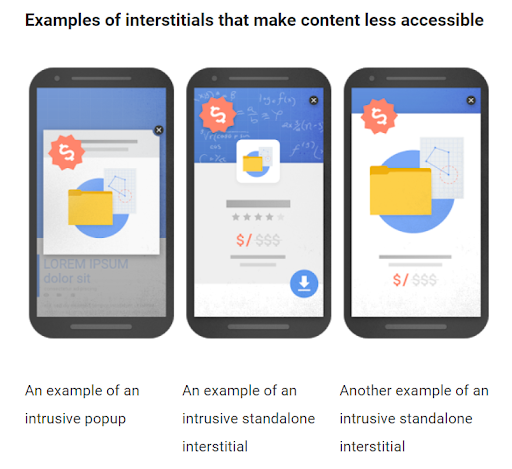
Furthermore, avoid common mobile usability mistakes, such as:
You can check how mobile-friendly your website is with Google’s mobile-friendly test.
As you’d expect, the quality of the content on your website is strongly linked to the usability of your website. Poor quality content doesn’t inspire visitors to take action or engage with your offerings, and consequently, won’t help your website rank well.
To create high-quality content, you first need to understand your target persona — get to know your audience, their desires, questions, and pain points. Analyze the search phrases that bring people to your site and understand what your visitors are looking for in order to create content that’s relevant and aligns with their intent.
Make sure to get the following pointers right.
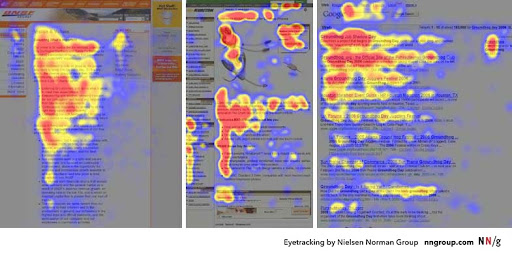
Proper content layout is vital for a better user experience. For that, you can use different font sizes, bullets and numbered lists, and an F-shaped pattern as shown below.
Also, be consistent with your layout throughout your website to avoid user confusion.
Use subheadings — H2, H3,…, H6 — to create a logical content hierarchy on all pages. This aids readability and scannability by breaking up your content, which makes for better usability.
Also, make sure to have a unique H1 title tag for each page that is inviting for search engine users to click on.
All your content should be in-depth, answering all the questions on the topic so the visitor doesn’t feel the need to refer to other sources and is satisfied with their search experience.
That being said, don’t add fluff to increase the word count — visitors will easily recognize if you do and this will lead to a poor user experience.
Link to reputable and authoritative websites to improve your site’s credibility in the eyes of Google and visitors. Back up your claims with recent statistics and facts from reliable sources.
Have a logical internal linking structure to guide visitors to relevant pages from your content.
Also, broken links (“404 not found”) also harm usability and rankings, so find and fix them immediately.
Publishing long-form articles and text-based content is obviously crucial to rank high on Google.
But what if your target audience prefers more visual content, such as vlogs or infographics? For optimal usability, create content in the format that your audience prefers.
Regardless of what your website is about, its navigation structure plays a key role in its usability.
For example, if your website is a blog. How are your blog posts organized? Can visitors search for a specific post? How many clicks does it take to reach from point A to point B? Or, if it’s a web app, does it have easy onboarding for seamless digital adoption by users?
Keep these questions in mind to improve your site’s navigation.
Use menu bars, recognizable icons, and clickable links to aid navigation. For instance, if the text on your homepage is clickable and brings visitors to a particular landing page, it needs to be evident. Make it descriptive, change its color, underline it, or turn that text into a button.
Intuitive navigation means your visitors don’t have to think when browsing your site. They are less likely to get frustrated and easily find what they need — all of which means great usability and thus, rankings.
Better website usability translates to better rankings, plain and simple.
With each update, Google’s ranking algorithm is having an increasing focus on rewarding websites that contribute to “delightful” web experiences for its users — on fast, intuitive, and engaging experiences across all devices.
So, don’t just fixate on incorporating keywords and building backlinks in the hopes of better search rankings. While doing that is important, prioritize the various usability elements outlined above too in order to ensure you stay on top of the SERPs in the long run.
Hazel Raoult is a freelance marketing writer and works with PRmention. She has 6+ years of experience in writing about business, entrepreneurship, marketing, and all things SaaS. Hazel loves to split her time between writing, editing, and hanging out with her family.
The post Four website usability elements that improve your search rankings appeared first on Search Engine Watch.
https://www.searchenginewatch.com/2020/12/21/four-website-usability-elements-that-improve-your-search-rankings/
[unable to retrieve full-text content]https://feedpress.me/link/13962/14170804/390927
Google Analytics is a web analytics product from Google that has helped a lot of digital marketers and website owners ascertain the performance of their website. Approximately 29 million websites use it as an analytics tool. A lot of Google Analytics features are only known to a few digital marketers. Many people rush to it to check how page views they got over a period of time or how many conversations they got. To these people, that’s only what this great tool can for them – the basics. But it’s far beyond that.
There are some features it has which can help improve the performance of your website but are underrated.
Are you hearing this for the first time? Don’t worry that’s why I’m here and this piece will discuss seven of them and how they can be helpful to your site.
This Google Analytics feature can be located when you log into your report and tap on the ‘customization’ drop-down menu. When set up, you will be alerted through emails when there is a change in your traffic or behavior of your website.
This could be on a daily, weekly, or monthly basis. For a beginner who is curious to grow his traffic or conversion, it is simple to keep your eye on it. Another crucial function of a custom alert is to automatically notify you of trends in your data.
This could be tracking and informing you in real-time about the events on your website be it positive or negative. The advantage here is that you can fix any negative development before it becomes obvious. You can follow the screenshot below to set up your custom alert.

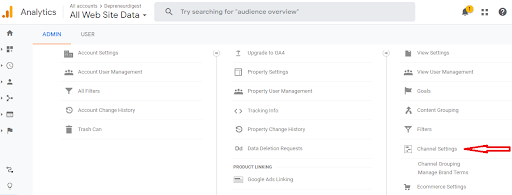
It’s easy to manage the traffic source to your website with channel groupings feature. This feature is on default on your analytics report and it organizes and groups your common source of traffic.
For instance, you launched an ad campaign on Facebook, and Instagram as social media tactics to grow your small business, the channels grouping will allow you to compare and analyze the performance of each of the traffic channels.
For a marketer to want to be more specific with his traffic channel, you can create custom channels grouping and apply it to your report.
Its effect will be seen in how your data display but won’t change the data itself. To make use of channels grouping on your GA, when you sign in to your report and locate admin at the bottom left. Click on it and you will list of features which channel groupings are one of.
When users visit your website, they move from one page or event to another in an attempt to achieve their desire which may be to get help through your content. It is a visual representation that can help you understand how your audience interacts with your site, the content they enjoy, and the ones that turn them off.
The behavior flow of your site simply displays the node, the connections to pages on your website, and exit. After consuming your content, do your audiences click on another link to learn more? Or do they bounce because they aren’t satisfied?
This increases your bounce rate and a clear indication that you need to work on that particular content. Below is a screenshot of the behavior flow from my blog.

For those who want to start an ecommerce business or those already in the field. Tracking the performance of your ecommerce website is possible with ecommerce tracking feature on GA.
As a merchant who sells on Shopify or BigCommerce, you’ll want to know where your high-paying customers come from, how they interact with the products you have in your store, and which product converts more.
With the knowledge of this, you can identify the location of customers that make you smile when you remember the number of sales you have made, the products they like, and things to fix to continue to be ahead of your competitors.
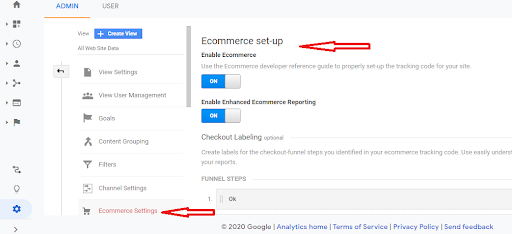
Below is how to set up ecommerce tracking on GA
Once your ecommerce site is being tracked on GA, you will gain insight into the following metrics on your dashboard; unique purchases, revenue, quantity, conversion rate, average order revenue, etc.
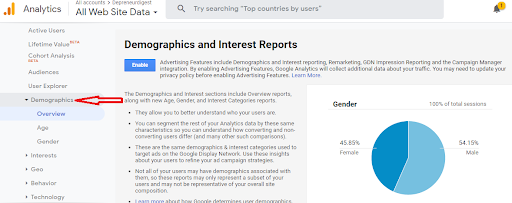
Some digital marketers don’t know the importance of analyzing the demography of users who visit their websites. Age, sex, and interest category of your audience are key metrics that should matter to you.
You can use them to make decisions that can improve the performance of your website. Take, for instance, you run a small business website on women’s clothing, and your demography metrics show that 80% of your visitors in the last month were male within the age range of 18 and 24.
That’s a red flag that you’re targeting the wrong audience. A female clothing line business should have more female visitors. Also, the age range of 18 and 24 are mostly young people who are either schooling or unemployment. Hence won’t have much money to spend on clothes. Below is how you can locate the demographic metrics in your GA.
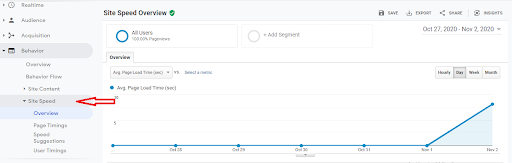
Speed is one of the key factors Google considers when ranking your website. It even became more obvious with the introduction of Accelerated Mobile Page, AMP. Not paying attention to this one of the SEO mistakes you make. Google Analytics tracks the load time of your web pages.
The aim is to give you reasons to learn how to improve the speed of your website. A web page that loads slowly is a turn off for your audiences. Nobody wants to wait for a long time for a page to load when there are many web pages competing for their attention.
It can increase the bounce rate of your website or even cost you sales if you sell online. Site speed is an indicator of a healthy site, hence the need to learn how to make it happen.
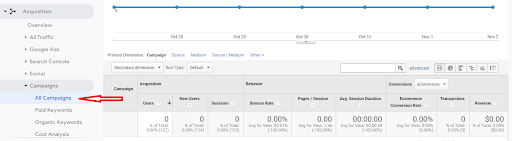
To some digital marketers and small businesses, this might be the first time of hearing this marketing acronym. Don’t be confused, UTM simply stands for Urchin Tracking Modules. They are codes you add at the end of your URL. This is crucial if you run ad campaigns for your business.
For example, if you run an ad campaign on Instagram, Facebook, and LinkedIn and made a lot of sales, you won’t know which of the social media platforms drove more sales to you.
The only way to know that is if you add campaign parameters to your URLs which is tracked on GA. For every user who clicked on the URL, the parameter is sent to Google Analytics. The goal is to identify the platform in which the campaign performed better and intensify your strategy on it to make more sales next time.
The performance of your website should be of utmost importance to you as a digital marketer, small business or someone who earns passive income online. Google Analytics has all it takes to keep your site healthy all the time.
Google Analytics features factored in all aspects of your website be it blog, ecommerce, or any other kind of website.
Yours is to take your time to identify these features, explore them, make use of them and you will be surprised at how they can keep your website at its best all the time.
Chuks Chukwuemeka is a content creator, blogger, digital marketer, and founder of DepreneurDigest.com, an online business blog.
https://www.searchenginewatch.com/2020/12/18/seven-underrated-google-analytics-features-that-improve-website-performance/
[unable to retrieve full-text content]https://feedpress.me/link/13962/14170471/390951
If you are on the digital marketing scene, you’ve probably already heard of heatmaps. They are a great tool for marketers to see how users interact with websites.
For those of you who are newbie marketers, let’s have a brief look at what a heatmap is.
A heatmap can be explained as a tool for data visualization. It represents different values using colors, to show users complex data sets.
Heatmaps shows:
Heatmaps use colors ranging through the spectrum from blue to red, with blue being the coolest (showing low engagement with the webpage) up to red, the warmest (showing high engagement levels).
Take a look at the following example. The bright orange and red show the highest engagement from visitors, and the other areas are not so often viewed.

Source: Crazy Egg Website
You can see visitors have mainly focused on the top of the page and much fewer have scrolled all the way down.
There are different kinds of heatmaps to choose from, depending on what kind of information you want to get.
Here are three of the most popular heatmap types:
So now you know what a heatmap is, and the different types to choose from, let’s find out some ways to supercharge your content strategy using heatmaps.
Once you have added content to your page, you will want to know not only how many people see that content, but how much is read. Do they read two lines then leave, or does your content hold their interest?
A scroll map will show how far down the page your visitors go, so you can tell how much of your content they are reading.
For example, let’s say that Tom writes a fascinating, in-depth webpage about growth hacking.
He explains about documents, cases, and what customers tend to do, and also reveals the reasons a lot of solutions are not useful.
Tom publishes his findings online and shares it. The traffic looks good. People are visiting and reading his page.
Tom is happy with this, but still wonders whether they are really reading it, or whether they are looking at it and leaving. He decides to check his visitor reports.

Source: Crazy Egg Website
As Tom (and you) can see, by looking at the scroll map, only about 1 in 15 or even 20 readers get to the end of his page. That means most are either not reading it or only reading a part of it.
As well as this information, the scroll map offers more insights into website user behavior.
It shows which content people spent time on, which filters and menu options are most used, which sections are scrolled over without being read, and how far into the page they click away.
The data can be used to create more effective website content in the future.
Paid search data allows you to uncover keyword opportunities for creating relevant content, social media posts and ad copy, but add heatmaps into the equation and you have even more knowledge about what content your audience wants.
Combine the use of heatmaps with Google Analytics to see how long users stay on your site before they bounce. You will be able to see how far most of them get to before they leave, and figure out the reason why.
Is there something missing from that page? Is it difficult to read? Is the content irrelevant?
The heatmap will show you exactly which parts they are interested in and where they drop off, and you can use this knowledge to improve the content.
Heatmaps are often used to help understand how website visitors are interacting with CTA buttons and other on-page elements.
Take a look at this image. You can see on the left, the users spent more time looking at the advertising banner than actually at the website checkout buying something.

Source: Convince & Convert Website
You can see on the right that some small changes have been made, in order to encourage users toward the marketer’s preferred action.
Another use of heatmaps is to show you the best places to add images. More visitors than you probably realize try to click on unlinked images.
For example, let’s say a blog post has a high bounce rate. Visitors are coming but they aren’t staying and you want to know why.
This is where a heatmap comes in very handy.
A confetti click track report might reveal that your visitors come, try clicking on several things which are not clickable, then get annoyed and bounce.
So they do want to click through. They just don’t know how.
Let’s take a look at another example. This one is two versions of an ecommerce landing page.

Source: VWO Website
In the first image, the baby is looking right at the viewer, making him the most attention-grabbing thing on the page.
But look at the second image. Here the baby is looking at the text. This helps subconsciously guide users’ attention to the web copy and the message it offers.

Source: VWO Website
Another great use of heatmaps is to test UX and usability.
For example, an online retailer discovers a lot of people are shopping at their online store and adding items to their shopping cart but then abandoning the cart rather than purchasing the items.
Some UX testing can show the retailer why this might be.
Overlays and heatmaps show where people click and where they don’t.
Maybe the checkout button isn’t easy to spot, or it’s too low on the page.
It could be that the shoppers are getting distracted by a colorful nav bar or there are annoying ads or popups driving them away.
Perhaps they are trying to click the non-clickable elements and getting frustrated.
Once these distractions or problems are removed, do an A/B test on the page in question to find out more on which one converts.
Testing how effective your content marketing is, as well as testing UX and usability, will help make it easier to move potential buyers down the conversion funnel.
For example, if a few visitors are reading a whole piece of content and all of them are signing up for your free guide, you are improving your sales team’s leads and your content is successful.
But what about, on the other hand, many visitors are coming to your landing page, but nobody is interested in getting your free guide or joining your email list?
Simply check the heatmap and find out where they are clicking, and if they are clicking at all.
Maybe they are trying to click but they are clicking the wrong element or it isn’t clear where to click. Or perhaps something is broken on the page.
Do you see a high number of drop-offs on a particular page?
Do people seem to hover for a long time on a strange part of the page?
Keep a record of the weak spots you find on the different pages, then improve them and see if you can get fewer bounces and better conversions.
The main thing is to check for issues that might stop your visitors from converting, whether that might be images that look like clickable buttons, poor web copy, or a confusing checkout experience.
The anchor text used to link to different pages on your website gives more context for what that page is about, or at least that is how the search engines view it.
Internal links let you establish a content hierarchy where the most important pages are seen as the most valuable, and allows you to distribute link equity between different pages.
If you rely on content to grow your site, then internal linking is a great strategy used to strengthen the authority you have about key topics. Content may be grouped into ‘pillar’ or ‘cornerstone’ pages and subtopics.
So what does that have to do with heatmaps?
As you know, heatmaps offer detailed information about where visitors click. This helps you measure internal link performance. The insights you get can be used to drive more traffic to pages by optimizing your link placement.
Although offering tempting outbound links might seem like driving users away from your website, it is not as counterintuitive as it sounds.
Including outbound links in your content is good SEO practice.
Linking to reputable sources shows both readers and Google that you want to provide useful information. According to Stanford University research, the links you choose to feature can tell readers and search engines a lot about the quality of your content.
For example, linking to a spammy site will harm your credibility.
So how do you use heatmaps to assist with good outbound links?
A click map can show you which of your outbound links are the most clicked on, as well as the least. This will give you an insight into what your audience is most interested in.
Which of your outbound looks do visitors want to click on? Which do they find most interesting or most credible?
A scroll map is also useful for improving outbound links. Perhaps readers are finding one of your links irrelevant or spammy, and many are dropping off at that point.
If that is happening, it might be time to find a better website to link to, or get rid of the link altogether.
Otherwise, it could just be that the content on the page is not up to par, and needs some rework.
Knowing how users interact with the structure of your site, as well as its content and other elements can really help you develop a content strategy to retain visitors who read more of your content and convert more.
Heatmaps can help you get ahead of the competition by allowing you to identify friction-causing issues and find new ways to attract visitors and increase conversions.
Heatmaps are useful in many ways for marketers, but they are best when combined with other research tools.
Learning how buyers perceive and experience your website is crucial information and can really help with the success of your website.
Lyuthar Jacob is working as an assistant editor at a digital marketing agency – Clickmatix.com.au. He is the type of geek who loves to explore subjects ranging from Marketing to Lifestyle and Money Saving. And share his evolution through his write-ups.
https://www.searchenginewatch.com/2020/12/18/how-to-use-heatmaps-to-level-up-your-content-marketing-game/