How CRO Can Help Tie Your SEO Efforts to the Bottom Line via @PaxtonMGray
[unable to retrieve full-text content]https://feedpress.me/link/13962/14073845/386401
[unable to retrieve full-text content]https://feedpress.me/link/13962/14073845/386401
[unable to retrieve full-text content]https://feedpress.me/link/13962/14072129/387337
[unable to retrieve full-text content]https://feedpress.me/link/13962/14072039/387682
SEO is more important than ever. As online usage is increasing and consumers’ heads are turning to online purchases, it’s vital to have a strong search presence for your business. Your ranking and authority will determine whether you’ll get more visits from prospective customers. Link building can help you build your ranking and authority by earning valuable links.
Quality is crucial that’s why you need to aim for relevant content that will make your earned link more important.
So how do you get started with off-page SEO?
NO-BS have earned more than 50,000 contextual links after working with 5,000 websites for link building so they launched a helpful guide on how to build a strong off-page SEO strategy.
Let’s look at the takeaways.
Content created in partnership with NO-BS.
You can’t work on your off-page strategy without building your on-page SEO strategy first.
Your site should be optimized for the best results so that you make the most of the links that you’ll learn.
Thus, you should prioritize working on quality content, target keywords, page speed, mobile optimization, and metadata among others.
User experience is very important. You can’t rank high on SERPs without providing the best experience to all users.
Here are a few ideas to get started with on-page SEO.
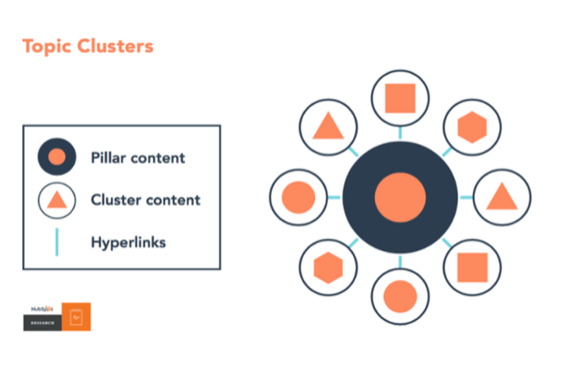
The pillar and cluster model was first introduced by HubSpot several years ago. It’s an extremely helpful way to organize your content based on the main themes and topics to make your SEO strategy more structured.
For example, if you’re working for a branding agency, a pillar page could be about ‘brand building’ and a cluster article could be ‘5 tips to be authentic when building your brand’
Think of the pillar pages that define your business and start organizing your current content based on clusters that fit in the pillar pages.
Working on the pillar and cluster pages can help you both with on-page and off-page SEO as you are building your authority through relevant content.
Once you work on your pillars, it’s time to build your themed link funnels.
Link funnels can help you build topical authority starting from your pillars and moving it up to your conversion pages. It’s the best way to link your on-page and off-page strategy to get the best results out of them.
Now it’s time to build different tiers of your links that you can also use in your future content.
First of all, start by building your pillar pages. Think of the main themes that define your site’s content. Your pillar pages should be the pages that you ultimately want to lead everyone to.
It’s the page that will bring everyone closer to any sort of conversion. You can include testimonials, social proof, details of your services, etc.
The next step is to work on your content clusters.
Your content clusters should be pages that are somehow relevant to your pillar page. They are not as broad as your pillar page but they still have a connection to it.
All your content clusters should link to your pillar page.
Your links should be in two to three tiers to help you organize your content and they should be somehow linked back to your cluster page.
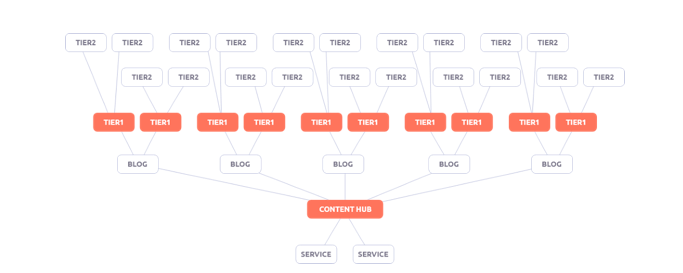
This is a useful strategy to blend on-page and off-page optimization.
Once you have your themed links ready, start exploring new ways to diversify your content and your links.
Work on the anchors, experiment with different types of content and always make sure you create unique content.
Now it’s time to improve your off-page SEO strategy.
The best way to build your off-page strategy is to work on a 12-month plan. You have more chances to be successful once you document your strategy.
NOBS have created a template with some examples of content and ideas on how to use the spreadsheet.
Here are a few of the ideas to consider.
Start by identifying your most important keywords. You should sort them out in clusters as part of your on-page strategy.
Add each keyword to a pillar and explore the keyword difficulty for each one of them.
Come up with blog ideas for your pillar pages
Work on blog title ideas that could match your pillar pages. This way you are creating the URL for each page.
Add more topics to the relevant pillar to make it easier when creating new clusters.
Set up a plan for the content you’ll create for the pillar pages. There’s no need to create all your posts at once! Expand your plan to the tier 1 and tier 2 links for each of your clusters.
Don’t make your strategy too complicated, you can focus on one cluster at a time and less competitive keywords.
Be careful with your anchor text. Make sure that the text you choose is relevant to the link you use on each cluster article.
You don’t need to aim for exact-match keywords, it’s better for the link to be naturally placed in the text.
Keep track of the number of links that you’ve earned. It makes it easier for you and your team to keep track of your progress.
There’s no need to aim for large volume links at once. It’s better to start gradually with 1-2 links per month.
https://www.searchenginewatch.com/2020/11/16/top-strategies-behind-link-building-success/
[unable to retrieve full-text content]https://feedpress.me/link/13962/14066348/387064

On October 20, 2020, the Justice Department sued Google, an Alphabet subsidiary, claiming the company’s internet search platform is an illegal monopoly that is harmful to both competition and consumers. The case aims to prove that Google’s position as a dominant search provider limits consumer choice and partnerships with companies like Apple suppresses competition. Taking on Big Tech has been a mainstay in the national conversation ever since the 2016 Presidential election, but this is the first antitrust action taken against Google. While we might not reach the end of this story for years, the DOJ’s suit signals a larger shift in the search industry, which hasn’t been disrupted in over 20 years. The unintended consequence of Google’s conquest to broaden search is limited depth for some. Businesses tend to be affected more than consumers because of how results are ranked. Therefore, in the wake of Google’s antitrust suit, a new market for specialized information has emerged.
In 1998 Google processed 10,000 search queries per day – roughly 3.65 million annually. The official Google Zeitgeist reported 1.2 trillion searches in 2012, the year it was published. That trend would eventually stabilize to an estimated 2.3 trillion searches per year in 2020.
Despite its size and tremendous growth, web search dynamics have begun to shift. Google has taken a super-aggregator and partnership approach to many growing verticals. Google Maps, for example, aggregate Booking.com, TripAdvisor, and Yelp. Google Shopping and Google Finance are aggregators for ecommerce and financial information, respectively. Vertical search has always been at odds with aggregators, wanting to be found but also wanting direct traffic. Vertical search engines have built their own mobile apps to lure users away from the Google search bar.
A vertical search engine is a search engine that focuses on a specific domain, or vertical. Think of LinkedIn for people search, Zillow for housing search, or Kayak for travel search. The benefits of using a vertical search engine are:
The third point is particularly noteworthy, especially when comparing vertical search engines to Google. It’s unlikely that you’re searching for car prices and inventory for fun. The price tells you if you can afford it; location information tells you where the nearest dealership is. Search is part of a workflow. Google, in most cases, acts as a middle man, guiding users from point A to point B.
Like web search, vertical search also supports various workflows. Where they differ is providing users with both the pathway and tools to complete an intended action. Here’s an example: Zillow users start by searching for homes, weighing data on home prices and taxes against other factors like school districts and proximity to work. The user’s workflow ends with an appointment for an open house with the listing agent. Workflows differ greatly depending on someone’s need, which is why the market for vertical search engines is so vast.
In recent years Google has attempted to compete with certain consumer search workflows. Google Flights, a Kayak competitor, brings users closer to booking travel all within one platform. Interestingly enough, Google’s purchase of ITA Travel in 2011 (which became Google Flights) was reviewed and cleared with the DOJ. If history is any lesson, Google is surely capable of competing with certain vertical search engines and capturing market share for consumer-based search. Business to business search, however, is a different ballgame.
There is a gap in the B2B search market. The gap exists, in part, by the design of Google’s search algorithm, which ranks websites based on five key factors. You’ll find the most popular business websites, but not every business website. More importantly, results might not provide the right business.
B2B search is beginning to transform, however. The amount of digital exhaust has increased drastically over the last few years. The emergence of Shopify, Squarespace, and others have decreased the barrier to entry for businesses on the internet. In 2014 the internet surpassed one billion websites and two billion is within reach. Having a website is one thing, but getting found is another. Companies must invest in website tools and resources and consistently optimize website content. Not to mention, it takes time to accumulate domain authority. If you’re a small business in a constrained economy, this looks like a tall order.
Google’s ranking algorithms, limited workflows, and surface-level information create an opportunity for B2B search engines across multiple functions. For example, ThomasNet (www.thomasnet.com) is an industrial sourcing platform connecting procurement professionals and industrial manufacturers. Drugdu (www.drugdu.com) operates medical device databases citing access to over 1,000,000 products.
With so much focus on small businesses this year due to COVID-19, it should be noted that B2B search products are good for SMBs, thus good for the economy. Tools like ThomasNet and Drugdu even the playing field, allowing small businesses to be found. Information also tends to be more trustworthy because of the general absence of advertising and crowdsourced information reduces reliance on individual company databases.
The last antitrust case presented against a large technology company was in 1998 when Microsoft was, ultimately, found guilty of abusing monopoly power. Over the last two decades, Google has emerged as the clear leader in consumer search, but they’ve failed to extend their reach into vertical search engines. That void has since been filled with dozens of specialized search engines, platforms that mostly benefit small to mid-sized businesses. The advantages for users are clear: focusing on a limited set of data accelerates workflows and supplies better information. As the Google saga unfolds, vertical search engines are well-positioned to grow by facilitating business-to-business commerce.
Andrew Bocskocsky is a software expert, CEO, and Co-Founder of B2B search engine Grata.
https://www.searchenginewatch.com/2020/11/13/the-rise-of-vertical-search-engines/
[unable to retrieve full-text content]https://feedpress.me/link/13962/14066006/387170
[unable to retrieve full-text content]https://feedpress.me/link/13962/14065213/387440
[unable to retrieve full-text content]https://feedpress.me/link/13962/14063363/385817
[unable to retrieve full-text content]https://feedpress.me/link/13962/14060276/387232