Why Google Ranks Singular and Plural Keywords Differently via @martinibuster

Google’s John Mueller was asked about why Google ranks different pages for singular and plural versions of keywords. John gave details on why Google’s algorithm treated plural keywords differently from singular.

A publisher related that a client’s site ranked different sections of a site for singular and plural.

This is the question:

“I have a question about singular and plural form of keyword.

One of our clients the keyword is garden shed Sydney and garden sheds Sydney.

Now, for garden sheds Sydney, the category page, the garden shed category page ranks in Google.

But for the singular form garden shed Sydney, one of the blog posts is ranking on Google instead of the category page.

Why is this different? Both keywords are the same, just singular and plural.”

Why Google Ranks Different Pages for Singular and Plural Keywords

Google’s John Mueller prefaced his answer with a disclaimer that what he was about to say was in general and not specific to the client site.

ADVERTISEMENT

CONTINUE READING BELOW

Then Mueller started sharing details of why Google’s algorithm ranks different sites for some queries that are singular and plural, even though they can be seen as synonyms.

“…we would see those queries as being different… And when we see them as being slightly different, then we might think that one or the other of these pages makes more sense to show.

So usually with singular and plural, we do recognize that they’re synonyms, more or less.

But we also recognize that maybe there’s something kind of unique to one of them or to the other one.

Such as, if you’re looking for a plural maybe you’re looking more for like a list or a comparison page or maybe a category page of different kinds of these items.

So that’s something where our systems try to take that into account and it can result in slightly different results being shown for one or the other.”

ADVERTISEMENT

CONTINUE READING BELOW

That’s an important point he’s making. I’ve noticed this in the search results. For some queries it appears that users expect to see lists of products or services.

When a user searches with a plural, for some searches it means that they expect to see a comparison of sites or a comparison of products.

This is why the client of the SEO who asked the question was ranking with a category page for the plural search phrase.

The category page satisfies the search intent for a listing of multiple products that is inherent in the plural version of the keyword phrase.

Google’s Mueller then addressed the difficultly of trying to update pages in order to rank the desired page for a singular or plural version of a keyword phrase.

“It’s a bit tricky when you’re in that situation. You’re like, oh but I want my other page to rank instead of this one. And you don’t want to remove the page you currently have ranking.

That’s something where you… can’t really force that, other than to tweak things subtly, that you kind of make sure that the right words, the right phrasing is on these pages, that you link them internally properly.

But that’s sometimes kind of tricky.

It’s also worth keeping in mind that just because when you take a step back that these words or these queries sound very similar and they seem very much the same, it might well be that user do treat them as different queries and do expect different kinds of results.

So… before just jumping in and saying oh I need to have the same page rank for both of these, maybe check with some other people to see, does it make sense to change this?

Or is this something where it’s actually not that bad?  …Another thing you can do is the page that’s currently ranking, put some kind of a call to action on it and say hey, if you’re looking for this, also check out this other page.”

In my opinion it’s best to let the search engine results pages tell you what the search intent is and then rank the most appropriate page for that search intent.

The SEO assumed he had a problem in that the category page ranked for the plural version of a search phrase and a blog article ranked for the singular.

But that’s not a problem. It’s a reflection of the search intent difference between the singular and plural.

Trying to “fix” a page that’s not broken could actually backfire by losing rankings for one of the keyword versions, since it’s been optimized for something it’s not really optimal for.

The relation of singular and plural versions of a keyword phrase to different kinds of web pages (general versus specific) is something many have known about but not really discussed all that much.

Google’s John Mueller clarified that plural versions of a keyword may indicate a search intent for multiple products or a comparison of different service providers.

ADVERTISEMENT

CONTINUE READING BELOW

It’s good to see Mueller confirming what some in the search marketing industry had observed in the search results.

Watch Mueller answer the question here:

[embedded content]

http://tracking.feedpress.it/link/13962/13689502


SEO Agency-Client Communication: Unlocking Contracts in the New Normal via @seomonitor

Much of the world is out of lockdown, a new normal is negotiated, but there are many moving parts left to be tackled.

Of different sizes and shapes, these parts continue to reshuffle as demand keeps on evolving in new ways:

  • Online behaviors change.
  • Industry landscapes rearrange.
  • The agency-client relationships transform.
  • SEO campaigns have new challenges to consider.

If, at the start of the pandemic, agency clients may have paused campaigns or stopped the ongoing acquisition process, now the first signs of recovery appear, so we can address what’s next. But some companies are still approaching new campaigns with caution, not being sure what to expect from the following months.

In this context, how can SEO agencies unlock contracts and unpause campaigns still pending from a very different reality?

This part has no one-size-fits-all answer.

However, a series of questions can help you view this situation from a new perspective – helping your clients untangle their uncertainties through the right data for solving their problems. Your clients may have loads of data that keep on piling up, but they need your know-how to get the proper lens of what’s to be done right now.

Let’s dive into each question and see how your SEO agency can connect the dots.

How Is the Client’s Business Looking Right Now?

If we look at their pandemic journey, companies can be categorized by their operational status into what Found, a successful UK SEO agency, used as:

  • Triaging: Shoring up cash and operations, while being focused on short-term actions.
  • Assessing: Shifted from triaging to searching for opportunities, but on a small scale.
  • Pivoting: Seeing opportunities in the new normal, changing some things that they were doing, and focusing on new products or services.
  • Investing: Clients who’ve been thriving and are focused on continuing growth.

Knowing where the companies situate on the scale above helps your SEO team decide when to engage with them, how to open the conversation, or if it’s still better to “Wait and See”.

One way of designing that scale is to evaluate the health of the clients’ business.

You can measure it as the impact on their organic traffic in the last 3 months based on the year over year trend in order to remove seasonality influences.

You can add to this layer the comparison of the first 3 months of the year and what happened during the pandemic, to get an overview as well. So here’s how it can be addressed:

  • Less than 10% drop in traffic: If their traffic is slightly affected, then they’re probably already investing in new opportunities and searching for ways to connect with their consumers. So they can be in a pivoting or investing phase.
  • 10% – 30% drop in traffic: If their traffic is mildly affected, then they may be triaging or, provided they have a current increase, may be starting to assess small scale opportunities.
  • Over 30% drop in traffic: If their traffic is moderately to severely affected, then they’re probably continuing to triage and need more time to get back on track.

You may also consider replacing organic traffic with conversions, based on the same scale above, to get a closer version of your clients’ reality regarding their financial situation.

When Is the Best Moment to (Re)Engage Your Clients?

Once you’ve mapped your clients’ portfolio in terms of health, you can start thinking about timing. Businesses may be waiting before making any decisions regarding their SEO investments because they need the data for now, so as to know where and how to develop their marketing strategy.

If your frozen accounts are still triaging and traffic doesn’t seem to be recovering, you can keep the communications open and share fresh insights (search trends, new consumer behaviors) from their industry, to maintain the relationship close.

But it’s probably not the right moment for negotiation.

Yet, if you have a solution for their specific problem, then you should make that call and offer to help, based on the current data you uncovered.

Also, if your frozen accounts show an improvement in week-over-week health measured in organic traffic and conversions, then you can start thinking about ways to reopen the conversation with a set of solutions in your pocket.

Want to focus on your clients’ particular needs and improve your chances of getting a response from them?

Use search data from the start to review their portfolio and engage in the right level of conversation.

Furthermore, as the best moment to interact is when something has changed in their health and you can intervene fast, you may want a system in place for this portfolio evaluation process, that automatically alerts you.

With this in mind, we adapted our SEOmonitor agency dashboard to present the health of your clients’ business in real-time and alert you via email whenever there’s a change in status, so you can take the necessary steps.

SEO Agency-Client Communication: Unlocking Contracts in the New Normal

SEO Agency-Client Communication: Unlocking Contracts in the New Normal

What Do Companies Need to Make a Decision About (Re)Starting Campaigns?

Now, as you decide to go even further with your research for the clients that can be contacted, you can address their reserve with specific data, and even support them in reprioritizing their products or services.

This review implies various data points you should take into account.

Impact on Non-Brand Organic Traffic

SEO performance is directly related to non-brand organic traffic, so try to evaluate the business based on the percentage of organic traffic coming from brand versus non-brand related keywords.

Is the percentage of brand-related traffic bigger or smaller?

Splitting the traffic like that is a good method of showcasing where your work’s value truly is and how you can help the business grow with the SEO campaign.

Keyword Research

The last three months have completely transformed search volumes and there is still a lot of shaky ground here. Make use of search volumes data from Google Ads, or even Google Trends, and identify the main topics in your client’s industry right now.

Also, look at competitors’ insights and see if they started ranking on keywords they weren’t ranking on before COVID-19. This can be an avenue for spotting opportunities for your clients and a good argument in building your case for unpausing that campaign.

Speaking of opportunities, you can add an evaluation of your keywords’ opportunity score in your process, to understand where the effort is too big and where you need to further focus for better results.

Seasonality vs. COVID-19

This is the moment when year over year search trends become meaningful in highlighting the shifts in demand, so compare them and see where there are critical changes.

Group those keywords into COVID-19-impacted and no-change – this will give you the necessary lens to offer the business strategic support if they’re considering refocusing their efforts. Plus, you’ll make the case for the right keywords to improve visibility for.

Project Business Results

One last step is to estimate business impact based on the existing conversion rates for the selected keywords. By making the connection between rankings and clicks and conversions, you tie the new SEO proposal to the projected business results.

SEO Agency-Client Communication: Unlocking Contracts in the New Normal

SEO Agency-Client Communication: Unlocking Contracts in the New Normalhttp://tracking.feedpress.it/link/13962/13688897


Ranked Entities in Search Results at Google via @bill_slawski

When someone searching enters a query into a search engine, such as “top 10 movies of 2020,” the search engine may return results showing links to several webpages relevant to the search query.

It may also show results that link to several webpages that include lists of the top movies of 2020.

A patent granted to Google relates to lists of ranked entities in search results which are based on the documents that returned in response to queries about specific categories of entities.

This may be the top movies of 2020 or the best novels of 2020.

It could be the best science fiction books of 2020 or the best drama TV Series of 2020.

I searched for different types of entities which resulted in carousels showing off ranked entities for my queries:

ranked entities - top movies 2020

ranked entities - top movies 2020“top movies of 2020”

Ranked entities - Best Novels 2020vels

Ranked entities - Best Novels 2020vels“best novels of 2020”

Ranked Entitie - Best Science Fiction Books 2020

Ranked Entitie - Best Science Fiction Books 2020“best science fiction books 2020”

Ranked Entities - Best Drama TV Series 2020

Ranked Entities - Best Drama TV Series 2020“best drama tv series 2020”

The Process Behind Showing Ranked Lists of Entities

The method from the patent includes:

ADVERTISEMENT

CONTINUE READING BELOW

  • Sending a query.
  • Receiving information regarding documents relevant to the query.
  • Identifying the entities associated with the documents.
  • Determining a category for the query based on the query or a topic of documents returned and the entities within those documents.
  • Determining that an entity list should be presented in response to the query.
  • Presenting SERPs based on determining that the entity list should be presented in response to the query.

How Categories for Entities in Ranked Lists Are Determined

The SERPs may include a list with information identifying the entities.

Determining the category may include generating a score based on:

  • Whether the query includes terms associated with the category, where determining the category may be based on the generated score.
  • At least some of the documents are associated with a topic associated with the category, where determining the category may be based on the generated score.
  • At least some of the entities, associated with the category, where determining the category may be based on the generated score.
  • Whether the query includes blacklisted terms, where determining that the entity list should be presented in response to the query may be based on the generated score.

Ranking the Entities in These Lists

The process behind ranking entities may include:

  • Where the search result document may include information about the entities in an order based on the ranking
  • Generating a score for each of the entities, where the scores are based on the relevance of the particular entity to a particular document.

The process behind this patent involves:

  • Receiving a query.
  • Receiving information regarding documents relevant to the query.
  • Identifying entities associated with the documents.
  • Determining a category for the query based on the query, a topic of the documents, and the entities.
  • Determining, based on the query and the category, that an entity list should be presented in response to the query.
  • Presenting a search result based on determining that the entity list should be presented in response to the query.

The search result document may include a list with information identifying the entities.

The search result document may further include links to the documents that are relevant to the query.

ADVERTISEMENT

CONTINUE READING BELOW

This patent can be found at:

Generating ranked lists of entities
Inventors: Toshiaki Fujiki, Slaven Bilac, Kavi J. Goel, Shuhei Takahashi, Tomohiko Kimura
Assignee: Google LLC
US Patent: 10,691,702
Granted: June 23, 2020
Filed: August 31, 2017

Abstract

“A device may be configured to receive a query; receive information regarding documents that are relevant to the query; identify entities associated with the documents; determine a category for the query based on the query, a topic of the documents, and the entities; determine, based on the query and the category, that an entity list should be presented in response to the query; and present a search result document based on determining that the entity list should be presented in response to the query. The search result document may include a list with information identifying the entities.”

Extracting & Categorizing Entities

The patent provides examples of the extraction and categorization of entities from webpages, and other documents:

  • A document may include text, images, etc., regarding entities.
  • An entity may be extracted and/or identified from a document by comparing the text, images, etc., to a repository that includes information regarding entities.
  • For example, an entity may be associated with the movie “Toy Story 3”.
  • Another entity may be associated with the song “Party Rock Anthem”.
  • Another entity may be associated with the book “Hitchhiker’s Guide to the Galaxy”.
  • Entities may then be categorized. For example, categories of entities may include “movies,” “songs,” or “books”.

The repository mentioned in this patent is likely Google’s Knowledge Graph.

I searched for “Best Planet of the Apes Movies,” and if you hover over one of them, you see more information about each of the movies:

Planet of the Apes Movies

Planet of the Apes Movies

The patent does tell us that they may show additional information about attributes of ranked entities that they are returning:

“For example, user interface 145 may include images and links associated with the entities. Additionally, or alternatively, user interface 145 may also include other information associated with entities, such as attribute information–e.g., release date, music credit, producer credit, production company, or the like. As shown in FIG. 1C, user interface 145 may include, for instance, link 110 and image 115 associated with Toy Story 3, as well as links and images respectively associated with Inception and The Social Network.”

ADVERTISEMENT

CONTINUE READING BELOW

This is so that if you are potentially interested in finding out more about one of the entities shown in a ranked list, that you can find out enough to watch it, or read it, or listen to it.

Entity Extraction for Rankings

The documents that might be returned in response to a query could include documents such as “webpages, news articles, image results, blog documents, or the like.”

The results identification aspect of this process where entities are identified could supply information about the attributes of those entities.

Entities may be ranked based on factors to determine scores for those entities.

One may be if the entity is extracted from a document that has a less relevant topic:

“For example, assume that a first entity associated with the movie Toy Story 3 is extracted from a document with a topic relating to “football,” while a second entity associated with the movie Inception is extracted from a document with a topic relating to “movies.” Entity ranking engine 230 may determine that the first entity has a lower relevance to the result from which the first entity was extracted than the relevance of the second entity to the result from which the second entity was extracted.”

ADVERTISEMENT

CONTINUE READING BELOW

The terms in a document that an entity is extracted from may be reviewed.

An IR (information retrieval) score for the document from which the ranked entity was extracted may be used to determine an entity score used to rank that entity, based on how relevant the page was to the query.

So an entity to be ranked for “best science fiction novels of 2020” from a page that had a high IR score for the query, “best science fiction novels of 2020,” would potentially have a higher entity score than an entity from a page that has a high IR score for “Some OK Science Fiction novels of 2020.”

If a query for ranked entities might include a specific attribute, such as location published, and the query was something such as “Best American Science Fiction novels of 2020”, then ranked entities might be ones that identify the publication location for that entity.

The range of attributes used could be fairly broad, as described in the patent:

ADVERTISEMENT

CONTINUE READING BELOW

“Assume, for example, that the particular entity is associated with a ‘movies’ category. In this example, the attributes may include information, such as release date, lead actor(s) and/or lead actress(es), supporting actor(s) and/or actress(es), box office gross, executive producer credit, music credit, synopsis and/or summary associated with the movie, etc. In other examples, entities associated with different categories may be associated with a different set of attributes. Further assume that the particular entity is associated with Toy Story 3, a movie released in 2010 and that the query includes the term ‘2010.’ Thus, entity ranking engine 230 may identify that the query is associated with a release date attribute associated with the particular entity.”

Another factor may be if the query contains blacklisted terms.

These could be adult terms or offensive terms.

Another factor could be if the query is associated with entity lists. Entity lists include phrases such as:

  • “top”
  • “of 2020”
  • “Best”
  • “Best of”

ADVERTISEMENT

CONTINUE READING BELOW

If the query contains such a term, entities from pages that may also be relevant for those may score higher in a list of ranked entities.

When a query includes a trigger that calls for an entity list, it may show a carousel or a list of entities.

If it does not contain such a trigger, it may not show a list of entities.

Ranked Entities Results

This patent describes a process that you can easily get caught up in once you learn about it.

I found myself going through queries such as “Best Comedies 1975” and for years following that one.

And “Best TV Shows 1980” and for years after that.

Best TV 1980

Best TV 1980“best TV shows 1980”

Best TV 1981

Best TV 1981“best TV shows 1981”

Best TV 1982

Best TV 1982“best TV shows 1982”

If you do those searches, you will see that the documents those entities come from in the rest of the SERPs for them are ones about “Top” or “Best” results, and the queries for them triggered query lists showing those carousels.

ADVERTISEMENT

CONTINUE READING BELOW

There are other ranked entities lists you can find as well, like Pulitzer award winners:

Pulitzer Award Winners 2019

Pulitzer Award Winners 2019

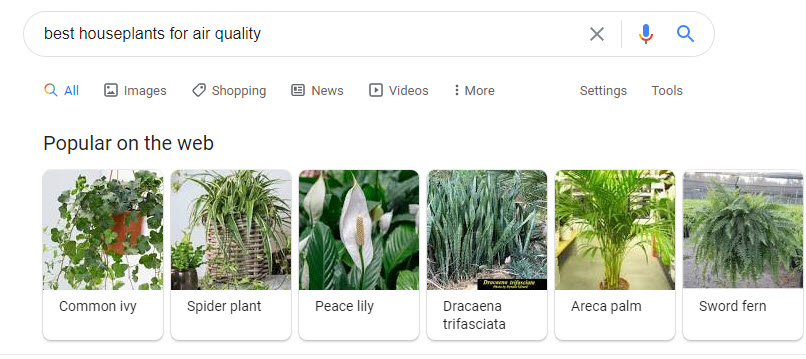
Or Best Houseplants for air quality:

Best Houseplants for Air Quality

Best Houseplants for Air Quality

Exploring these Carousels for ranked entities was almost as much fun as looking at the Semantic Ontology-based categories in image Search at Google, which I looked at in Google Image Search Labels Becoming More Semantic?

More Resources:


Image Credits

All screenshots taken by author, June 2020

http://tracking.feedpress.it/link/13962/13684855


Does Google Use Sentiment Analysis to Rank Web Pages? via @martinibuster

Many SEOs believe that the sentiment of a web page can influence whether Google ranks a page. If all the pages ranked in the search engine results pages (SERPs) have a positive sentiment, they believe that your page will not be able to rank if it contains negative sentiments.

The evidence and facts are out there to show where Google’s research has been focusing in terms of sentiment analysis.

I asked Bill Slawski (@bill_slawski)  , an expert in Google related patents what he thought about the SEO theory that Google uses sentiment analysis to rank web pages.

“Sentiment is like a flavor, like vanilla or chocolate. It does not reflect the potential information gain that an article might bring.

Information gain can be understood by using NLP processing to extract entities and knowledge about them, and that can lead to a determination of information gain.

Sentiment is a value that doesn’t necessarily reflect how much information an article might bring to a topic.

Positive or negative sentiment is not a reflection of how much knowledge is present and added to a topic.”

ADVERTISEMENT

CONTINUE READING BELOW

Bill affirmed that Google tends to show a range of opinions for review related queries.

“I don’t believe that Google would favor one sentiment over another. That smells of showing potential bias on a topic.

I would expect Google to want some amount of diversity when it comes to sentiment, so if they were considering ranking based upon it, they would not show all negative or positive.”

Bill makes an excellent point about the lack of usefulness if Google search results introduced a sentiment bias.

Some SEOs believe that if all the search results have a positive sentiment, then that’s a reflection of what searchers are looking for. That’s a naive correlation.

There are many known ranking factors such as links that can account for those rankings. There are other factors such as users wanting to see specific sites for specific queries.

Simply isolating one factor and saying, “Aha, all the sites have this so this is why it’s ranking” is naive, it’s cherry picking what you want to see.

ADVERTISEMENT

CONTINUE READING BELOW

For example, the same SEO can look at those search results and see that they all use the same brand of SEO plugin. Does that mean the SEO plugin is the reason those sites rank?

The answer is no.

Similarly, the sentiment expressed in the search results does not necessarily reflect what the searcher is looking for.

This is why I say it is naive to look at one factor such as sentiment and say that’s the reason a site is ranking. Just because you see a correlation does not mean it’s the reason a site is ranking.

Does Google Use Sentiment Analysis for Ranking?

Google’s been largely silent on sentiment analysis since 2018.

In July 2018, someone on Twitter asked:

“…it seems like your search algorithm recognizes and takes into account sentiment. Is there a sentiment search operator?”

Danny Sullivan answered:

“It does not recognize sentiment. So, no operator for that.”

Danny made it clear that Google’s search algorithm does not recognize sentiment.

Earlier that year Danny published an official Google announcement about featured snippets where he mentioned sentiment. But the context of sentiment was that for some queries there may be a diversity of opinions and because of that Google might show two featured snippets, one positive and one negative.

“…people who search for “are reptiles good pets” should get the same featured snippet as “are reptiles bad pets” since they are seeking the same information: how do reptiles rate as pets? However, the featured snippets we serve contradict each other.

A page arguing that reptiles are good pets seems the best match for people who search about them being good. Similarly, a page arguing that reptiles are bad pets seems the best match for people who search about them being bad. We’re exploring solutions to this challenge, including showing multiple responses.”

The point of the above section is that they are exploring showing multiple responses.

Since 2018, Google has stopped showing featured snippets for vague queries like “are reptiles good pets?” and encouraging users to drill down and choose a more specific reptile.

ADVERTISEMENT

CONTINUE READING BELOW

Danny wrote:

“There are often legitimate diverse perspectives offered by publishers, and we want to provide users visibility and access into those perspectives from multiple sources,” Matthew Gray, the software engineer who leads the featured snippets team, told me.”

Those statements directly contradicts the SEO idea that if the sentiment in the SERPs leans in one direction, that your site needs to lean in the same direction to rank.

Rather, Google is asserting that they want to show diversity in opinions.

Positives and Negatives in Reviews

A Google research paper titled, Structured Models for Fine-to-Coarse Sentiment Analysis (PDF 2007) states that a “question answering system” would require sentiment analysis at a paragraph level.

A system that summarizes reviews would need to understand the positive or negative opinion at the sentence or phrase level.

This is sometimes referred to as opinion mining. The point of this kind of analysis is to understand the opinion.

Here’s how the research paper explains the importance of sentiment analysis:

ADVERTISEMENT

CONTINUE READING BELOW

“The ability to classify sentiment on multiple levels is important since different applications have different needs. For example, a summarization system for product reviews might require polarity classification at the sentence or phrase level; a question answering system would most likely require the sentiment of paragraphs; and a system that determines which articles from an online news source are editorial in nature would require a document level analysis.”

The paper further describes how sentiment analysis is useful:

“parsing and relation extraction (Miller et al., 2000), entity labeling and relation extraction (Roth and Yih, 2004), and part-of-speech tagging and chunking (Sutton et al.,
2004). One interesting work on sentiment analysis is that of Popescu and Etzioni (2005) which attempts to classify the sentiment of phrases with respect to possible product features.”

What stands out about that research is that it is strictly about understanding the sentiment of text.

  • There is no context for using it to show search results that are biased toward the sentiment in a  user’s search query.
  • The context is not about ranking text according to the sentiment.

ADVERTISEMENT

CONTINUE READING BELOW

Yet even though the context is not about ranking because of the sentiment, some SEOs will quote this kind of research and then tack on that it’s being used for ranking. And that’s wrong because the context of this and other research papers are consistently about understanding text, well outside of the context of ranking that text.

Sentiment Analysis Encompasses More than Positive and Negative

Another research paper, What’s Great and What’s Not: Learning to Classify the Scope of Negation for Improved Sentiment Analysis (PDF 2010) presents a way to understand the sentiment of product reviews.

The scope of the research is finding a better way to deal with ambiguity in the way ideas are expressed.

Examples of these kinds of linguistic negation phrases are:

  • “Given the poor reputation of the manufacturer, I expected to be disappointed with the device. This was not the case.”
  • “Do not neglect to order their delicious garlic bread.”
  • “Why couldn’t they include a decent speaker in this phone?”

ADVERTISEMENT

CONTINUE READING BELOW

The above examples show how this research paper is focused on understanding what humans mean when they structure their speech in a certain way. This is an example of how sentiment analysis is about more than just positive and negative sentiment.

It’s really about the meaning of words, phrases, paragraphs and documents.

The paper begins by stating the usefulness of sentiment analysis in several scenarios, including question answering:

“The automatic detection of the scope of linguistic negation is a problem encountered in wide variety of document understanding tasks, including but not limited to medical data mining, general fact or relation extraction, question answering, and sentiment analysis.”

How would accurately classifying these kinds of sentences help a search engine in question answering?

A search engine cannot accurately answer a question without understanding the web pages it wants to rank.

It’s not about using that data as ranking factors. It’s about using that data to understand the pages so that they then can then be ranked according to ranking criteria.

ADVERTISEMENT

CONTINUE READING BELOW

One way of looking at sentiment analysis is to think of it as obtaining candidate web pages for ranking. A search engine cannot select a candidate if it cannot understand the web page.

Once a search engine can understand a web page, it can then apply the ranking criteria on the pages that are likely to answer the question.

This is especially important for search queries that are ambiguous because of things like linguistic negation, as described in the research paper above.

If sentiment analysis is used by Google, a web page isn’t ranked because of the sentiment analysis. Sentiment analysis helps a web page be understood so that it can be ranked.

Google can’t rank what it can’t understand. Google can’t answer a question that it can’t understand.

More Sentiment Analysis Research

SUIT: A Supervised User-Item Based Topic Model for Sentiment Analysis (PDF 2014)

This research paper studies how to better understand what users mean when they leave online reviews on websites, forums, microblogs and so on.

ADVERTISEMENT

CONTINUE READING BELOW

This is how it describes the problem being solved:

“…most of existing topic methods only model the sentiment text, but do not consider the user, who expresses the sentiment, and the item, which the sentiment is expressed on. Since different users may use different sentiment expressions for different items, we argue that it is better to incorporate the user and item information into the topic model for sentiment analysis.”

Speech Sentiment Analysis via End-To-End ASR Features (PDF 2020)

ASR means Automatic Speech Recognition. This research paper is about understanding speech, and doing things like giving more weight to non-speech inflections like laughter and breathing.

The research shares examples of using breathing and laughter as weighted elements to help them understand the sentiment in the context of speech sentiment analysis, but not for ranking purposes.

These are the examples:

“1. Yeah, so [LAUGHTER] he’s calling now.
2. Yay, well congratulations, that’s so cool. [BREATHING] I can’t wait.
3. Exactly, [LAUGHTER] I think that’ll go over great, don’t you?
4. That would be wonderful, that would be great seriously. “

ADVERTISEMENT

CONTINUE READING BELOW

The paper describes the context of where it is useful:

“Speech sentiment analysis is an important problem for interactive intelligence systems with broad applications in many industries, e.g., customer service, health-care, and education.

The task is to classify a speech utterance into one of a fixed set of categories, such as positive, negative or neutral.”

This research is very new, from 2020 and while not obviously specific to search, it’s indicative of the kind of research Google is doing and how it is far more sophisticated than what the average reductionist SEO sees as a simple ranking factor.

No Sentiment Analysis Bias at Google

Google has consistently stated that they try not to show pages that reflect a searcher’s sentiment intent (are geckos bad pets?)

In fact, Google says the opposite, that it tries to show a diversity of opinions. Google tries not to be led by a sentiment expressed in the search query.

Example of Google Showing Diversity of Opinion

Screenshot of a Google featured snippet

Screenshot of a Google featured snippetScreenshot of a Google search result from a query with a negative sentiment.

As you can see in the above screenshot, Google does not allow the negative sentiment expressed in the search query to influence it into showing a web page with a negative sentiment.

ADVERTISEMENT

CONTINUE READING BELOW

This directly contradicts the idea that Google shows search results with a specific sentiment bias if that bias exists in the search query.

You can dig around for Google research and patents about sentiment analysis and you will see that the context is about understanding search queries and web pages.

You will not see research that says the sentiment will be used to rank a page according to its bias.

If the pages that Google is ranking all have the same sentiment, do not assume that that is why those pages are there.

It is clear from Google research papers, statements from Google and from Google search results that Google does not allow the sentiment of the user search query to influence the kind of sites that Google will rank.

https://tracking.feedpress.com/link/13962/13682512/373171


Stock Photography Impact on SEO via @martinibuster

In a recent tweet someone asked Google’s John Mueller if using stock images affects rankings. The person related that a friend has the opinion that using non-original content such as stock photography can indeed affect rankings.

Mueller answered:

“It doesn’t matter for web-search directly.”

Some might find that answer a little indirect. But I would argue that it accurately communicates that stock images are not a ranking related issue.

The search results are full of top ranked sites that use stock images. Many of Search Engine Journal’s featured images are stock photography and they rank perfectly fine.

There’s a longstanding SEO idea that non-original content is a negative thing that can affect rankings. Obviously there is some truth to non-original content being unable to rank.

But there’s a certain point where that truth can get stretched and used in a different context it’s not meant to apply to.

Stock photography is non-original content. But if Google took off marks for the use of those, half the Internet would never rank.

ADVERTISEMENT

CONTINUE READING BELOW

Mueller’s answer continued:

“For image search, if it’s the same image as used in many places, it’ll be harder. (There’s also the potential impact on users, after search happens, eg: does it affect conversions if your team photo is obvious stock photography?)”

How to Use Stock Photography for SEO

The best use of stock photography is when there’s a strategy behind the use.

Does the Image Accurately Represent the Topic?

Sometimes images are used metaphorically and that’s not always the best choice.

For example, it is arguably a lost opportunity to use images of race cars in an article about the “race to succeed.”

That’s an instance of using an image that takes the word “race” in a context that’s different from the topic.

And really, that image does’t advance your goals for converting a site visitor to use a product, click a link or whatever action you want.

A better choice could be an aspirational image, one that shows the success that can result from using the product. That can be a successful holiday meal, a person graduating from college, whatever the outcome from the use of the product is can be a conversion-oriented image.

ADVERTISEMENT

CONTINUE READING BELOW

That’s a strategic use of an image to help a page convert a visitor into a consumer.

Would the Image Work Well In a Featured Snippet?

This is a good test of how relevant an image is to the topic. Studying the images used in featured snippets is a good way to improve your understanding of what it means for an image to be relevant to the topic of a web page.

Will a strategic use of a stock image help it rank in a featured snippet? That’s debatable.

I find that images with close ties to the topic, that can communicate an answer tend to work well for me. That means using original images or updating and improving on stock images.

Does the Image Help Conversions?

I’m consulting for an organization that was using stock images showing a mix of people who typically use their product.

It turns out that most of the clients are a specific gender. And the people making purchases are largely from a home office type situation.

My suggestion was to increase the use of images featuring that gender and to use images with settings that represent the typical users of their product. That way the potential consumer can see themselves into the picture and understand how much better their lives would be if they made the purchase.

Stock Images and SEO

Using stock photography won’t ruin your SEO. However the strategic use of stock images can help a page be more relevant for the topic that it’s about.

Read the full Twitter discussion here:

https://tracking.feedpress.com/link/13962/13681126/373153


SEO Seasonality: Overcoming the Dips During the Slow Season via @drumming

Every business has some degree of seasonality.

Thankfully, this SEO force is a bit more predictable than others at measuring and counteracting.

Here is a process for diagnosing a seasonal SEO issue, tactics for overcoming the dips in the slow season, and advice for transitioning from slow to peak season.

Diagnosing a Seasonal SEO Issue

Your website traffic is going to fluctuate throughout the year, so it is important to know when the major movements in demand occur in your industry.

By understanding the general seasonal search patterns, you can avoid inaccurately diagnosing a technical, algorithmic, or competitive issue as a seasonal issue.

Google Trends is the global standard in identifying general search patterns.

Identify your industry patterns by throwing in 2-3 short-tail topics that are relevant to your business.

This will pinpoint which of the following four main patterns of SEO seasonality your business fits within.

1. Holiday or Event-Based Seasonality

This type of seasonality is the most obvious and aligns clearly with a significant holiday or sporting or cultural event.

ADVERTISEMENT

CONTINUE READING BELOW

Here is the seasonal search demand for the “Super Bowl”:

SEO Seasonality: Overcoming the Dips During the Slow Season

SEO Seasonality: Overcoming the Dips During the Slow Season

2. Multi-Month Seasonality

This type of seasonality typically runs for 3-9 months, and then search demand drops off.

Multi-month seasonality fluctuates for a broad range of reasons, including meteorological, fiscal, and cultural reasons.

Here is the seasonal search demand for “tax software”:

Tax software seasonality

Tax software seasonality

Here is the seasonal search demand for “skis”:

ski

ski

3. Peak and Taper

This type of seasonality occurs most frequently during the start of a calendar year. With the start of a new year comes increased aspirational and lifestyle searches.

ADVERTISEMENT

CONTINUE READING BELOW

Here is the seasonal search demand for “weight training”:

weight training seasonal SEO

weight training seasonal SEOHere is the seasonal search demand for “healthy recipes”:

healthy recipes keyword seasonality

healthy recipes keyword seasonality

Here is the seasonal search demand for “home building”:

Home building SEO

Home building SEO

4. Constant Fluctuation in Demand

This last level of SEO seasonality is the most challenging for businesses.

Constant fluctuation makes it difficult to predict search volume because there are constant peaks and valleys caused by both macro and micro industry forces.

Here is the seasonal search demand for “hospital information management”:

hospital information management trends

hospital information management trends

After you’ve identified your seasonal SEO patterns, go through this checklist to eliminate the possibility that your website may be seeing drops or increases in traffic due to another SEO force.

Tactics for Overcoming the Dips During the Slow Season

Now that you have a better idea of identifying your organization’s seasonal patterns, here are a few tactics you can employ to keep your marketing engine running.

Expand Your Audience Intelligence

Where does your buyer hang out during the slow months?

Just because your buyer isn’t searching for your product year-round doesn’t mean you can’t continue to add value to their lives throughout the year.

Use tools like SparkToro and Facebook Audience Insights to understand the websites, social channels, YouTube channels, and podcasts your buyer is consuming.

ADVERTISEMENT

CONTINUE READING BELOW

Here is an example (from SparkToro) of the type of data you would benefit from if you are selling to Coloradans interested in skiing:

Colorado ski marketing channels

Colorado ski marketing channels

This tells us the external channels your business should be present on (through earned, owned, or paid media) to get in front of this audience all year long.

Using that same search, here is some additional SparkToro data you can gather to identify other topics your buyer cares about:

SparkToro topics

SparkToro topics

Take notice that there are a lot of non-skiing topics that your brand can align with during the slow season.

ADVERTISEMENT

CONTINUE READING BELOW

Conduct Persona Research

When was the last time you had a live conversation with your customer?

Use the slow season to spend time digging into the passions and activities that keep them busy throughout the year.

The goal of this exercise is to identify the external channels, topics, and trends that your buyer is engaging with year-round.

Launch Co-Marketing & PR Campaigns

Now that you know the channels and topics that your buyer cares about during the slow season, how can you align your brand to be present and relevant in their lives?

For example, let’s return to the example of targeting Colorado skiers.

Knowing that skiers also care about biking, adventures, and beer, your brand can run a co-marketed campaign with another organization involved in one of those areas.

The campaign will expose your audience to theirs and vice-versa.

Use this audience intelligence for public relations efforts, as well.

Skiers care about staying fit for the next ski season.

ADVERTISEMENT

CONTINUE READING BELOW

Can you write a byline contribution or a guest blog article for another publication’s site with a workout plan to stay fit during the summer months?

The goal of all of this isn’t to shove your products down your buyers’ throats during the slow months.

You simply want to be present and relevant in your buyers’ minds year-round.

Create a Seasonally-Aligned Editorial Calendar

Publications in your industry don’t write stories exclusively during the busy season, so why would your business operate any differently?

Align your editorial calendar of topics that peak in specific months with topics and events relevant to your buyers through the rest of the year.

Here is an example of how this could be done for a patio furniture company.

seo seasonality editorial calendar

seo seasonality editorial calendar

During the slow months, there are many topics that your buyer is interested in engaging with outside of your core products.

ADVERTISEMENT

CONTINUE READING BELOW

Fill this content void for your customers and think of your editorial calendar as a 12-month rolling cycle instead of only publishing content during peak buying season.

Transitioning from Slow to Peak Season

With the clock ticking down until things pick up again, here are some SEO strategies to accelerate your upcoming search campaigns.

Align SEO with Other Marketing Areas

SEO is an afterthought in many organizations.

Identify SEO opportunities you can take advantage of based on campaigns other marketing teams are running.

SEO shouldn’t live in a silo, so get out there and see how you can expand your search footprint via content, partnerships, PR, or inbound links.

Run a Competitive Topic Analysis

Does your SEO footprint align with the topics that your buyer is searching for during peak months?

A competitive topic analysis will show you how well-positioned you are for each topic that your business needs to rank for.

Prior to content planning sessions, identify the topical weaknesses in which you need additional investment in order to be best positioned during peak months.

ADVERTISEMENT

CONTINUE READING BELOW

With the summer months ahead of us, many organizations are staring down the SEO doldrums.

Use this as an opportunity to expand your SEO footprint by better leveraging your search trends, audience insights, and a seasonally aligned editorial calendar.

More Resources:


Image Credits

All screenshots taken by author, June 2020

https://tracking.feedpress.com/link/13962/13678561/372742


Guide: How to use podcasting in your content marketing campaign

30-second summary:

  • Podcasting can add a new dimension to your brand and content marketing strategy.
  • There are many ways you can approach this, utilizing different mediums, channels, and distribution methods to accomplish this, but many content marketers stick to the basics, almost exclusively focusing on written content. 
  • Georgi Todorov shares a comprehensive guide on podcast content which encompasses the benefits, SEO perks, types of podcast content, publishing and marketing platforms, and a lot more!

If you have a content marketing strategy already in place, you’re no stranger to the fundamental principles that guide it. Your goal is to naturally attract more readers, fans, and followers by providing them with information and/or entertainment they want to consume. There are many ways you can approach this, utilizing different mediums, channels, and distribution methods to accomplish this, but many content marketers stick to the basics, almost exclusively focusing on written content. 

If you want to stand out from the crowd, reach new audiences, and capitalize on a medium with enormous momentum, you should consider starting your own podcast. But how can you integrate podcasting with the rest of your content marketing campaign? 

Why podcasts?

First, let’s talk about why podcasts are so valuable in the context of content marketing. A podcast is a series of pieces of audio content, usually released regularly in the form of episodes. These episodes vary in length and format, with some primarily unfolding as interviews and others attempting to provide an entire narrative experience.

Five big benefits of podcasting

In any case, there are several benefits to using podcasts: 

1. Current popularity

Podcasts have become incredibly popular in the past several years. There are currently more than a million podcasts, with 30 million episodes between them, and more than half of all households are podcast listeners. Podcasts still seem to be on a fast growth trajectory, as more people discover and become immersed in the medium. 

2. Ease of entry

Podcasts are also valuable because of how easy they are to create. Make no mistake, you’ll still need to put the effort in, just as you would with any kind of content. However, you can get started with a relatively inexpensive assortment of equipment, and you don’t need any special training in audio engineering to make an episode that sounds good. 

3. Cross-medium potential

Podcasts are also a gateway to produce multiple forms of content simultaneously. For example, you could record video of an interview you conducted with an industry leader, then release it as a video, a podcast, and as a blog (with a written transcript), capitalizing on the content in three ways. 

4. Collaborative potential

The interactive audio experience lends itself well to collaboration, you can benefit by going on other podcasts, and other industry experts can benefit from attending yours. This cross-pollination effect allows you to spread your influence more easily, while also getting help creating new content. 

5. New audience segments

Some people who prefer listening to podcasts may never discover your work unless you break them in with audio content. In any case, you’ll be able to reach new segments and existing segments in new ways, broadening your audience. 

Podcasting as a new content marketing channel

With those benefits in mind, the best way to think about podcasting in content marketing is to think of it as a new content marketing channel. Content marketing always has the same overarching goal. You want to give people content they want. This could mean providing them with answers to their questions (which is especially important if you’re optimizing for search engines), or merely entertaining them. 

Take ASAP Science as an example. The popular Youtube channel has racked up over 9.3 million subscribers since launching over seven years ago. About two years ago, they launched a podcast called Sidenote to supplement their popular video content.Podcasting example app science

Each content marketing channel represents some way for consumers to find your content and consume it. For example, there’s blogging, email marketing, social media marketing, and videocasting – in some ways, podcasting is just another lead generation channel to add to your repertoire. 

As with the addition of other channels, the best way to harness the power of podcasting is by treating each channel as a complementary unit in a broader whole. For example, you’ll use your email newsletter to showcase your best blogs, and you’ll call for email newsletter signups in the body of your blog posts. This allows channel-specific consumers to discover your other mediums and helps keep your brand top-of-mind in many areas. 

If you decide to podcast, you’ll need to take advantage of this, leveraging your existing channels to push your podcast and using your podcast to deliver listeners to other channels. 

This is what Neil Patel and Eric Siu did to launch their four-year-old podcast, Marketing School. Both are well-recognized experts in the field of online marketing, and they leveraged their existing content channels, including their blogs and email lists, to launch Marketing School, which now enjoys over 1 million downloads per month. 

Podcasts and SEO

Podcasting also requires attention to search engine optimization (SEO) in two main ways. First, if utilized properly, podcasting can boost the search engine visibility of your main site. 

You can list and distribute your new podcast episodes as individual pages of your site, much like a blog, and if you provide adequate titles, meta information, and episode transcripts, you’ll easily have a new way to optimize for specific keyword phrases. Each new podcast episode will also be a piece of content that can be discovered in search engines. This is the approach Shane Barker takes with his podcast, Marketing Growth Podcast.

Podcasting and SEO

Over time, as your podcast becomes more popular, it will attract more citations and other types of links. This is vital for improving your domain authority, which in turn will make it easier for your site to rank. If you’re interested in building a separate domain, you can do that too, using your podcast as an engine of exclusive support. 

There’s another way to think about SEO, however. Podcasts are an avenue to grow the authority and visibility of your main site—but you also need to think about promoting the podcast’s authority and visibility. Most people discover podcasts by browsing podcast distribution networks and conducting searches for topics that interest them. Accordingly, you’ll need to optimize for these podcast-specific search engines. 

The process for optimizing a podcast for podcast networks is very similar to website-specific SEO, you’ll need to optimize for specific keywords and improve your reputation. Take, for example, the aptly-named podcast The Fantasy Footballers, who rank very well in search results for their niche, “fantasy football.” 

Podcasting example fantasy foot ballers

In addition to your podcast’s name, you’ll need to collect as many ratings and reviews as possible, which means calling listeners to action each episode and ensuring you provide them with high-quality material. 

The saturation dilemma: Finding a unique angle

The 30 million podcast episodes currently in circulation are a sign of podcasts’ popularity, but this is both a good thing and a bad thing. It’s a good sign that you’re onto a hot channel, but it also means you’re facing a ton of competition. The podcast market is, in some ways, saturated, and if you want to succeed, you’ll need some way to stand out. 

Four ways your podcast can be unique in some way

1. A new topic

You could introduce an entirely new topic to the podcast world — something no one has covered before. Given the length of time podcasting has been around and the sheer number of people trying to do this, finding a truly unique topic may be exceedingly difficult. 

2. A different format

You may also try to take an existing topic and cover it in a different format. Instead of short episodes, you could do deep, two or three hour dives. You could also try to produce bite-sized segments, five minutes in length, to capitalize on audiences with minimal free time. If most people in this space are doing interviews, you could create a narrative or vice versa. It all depends on your goals. 

3. Strong opinions

It’s also possible to differentiate your podcast by offering strong opinions on a given subject. It’s okay to be controversial, even if some people disagree with you, they’ll be inclined to voice their contradicting opinions, which will only bring more attention to your work. Just make sure you’re still being respectful in your expression of your opinions. 

4. A different tone

You can also consider introducing your topics with a different tone. For example, if people usually treat this topic overly seriously, you could give it a cheeky, tongue-in-cheek spin. 

However, you choose to be unique, make sure you’re also showcasing your authentic self. People listen to podcasts in part because they feel like they get to know the hosts; if you’re trying too hard to put on airs or if you try to use a personality that isn’t your own, you’re going to turn people away. 

The quality factor

It should go without saying that your podcast needs to be “good,” or people won’t listen to it. But what exactly is a “good” podcast? 

As with written content, there are some easily identifiable hallmarks of “good” work, but also some harder-to-place subjective qualities you’ll need to consider. Listen to a lot of podcasts to get a feel for what you like and don’t like. 

The most important quality to strive for is value; are you providing listeners with something they find valuable? Beyond that, you’ll need to think about the integrity of your recording; are your voices coming through loud and clear, with little to no background noise? 

Distribution and promotion

Much of your podcasting success will depend on your ability to distribute and promote your work. Let’s say your podcast is objectively the best podcast ever recorded, it’s funny, informative, and has something for everyone. That’s still no guarantee of success. If people aren’t able to find and listen to it, they’ll never even know what they’re missing out on. 

Accordingly, you’ll need to make additional efforts to improve its visibility. As we already covered, it’s important to optimize your podcast for search engines. It’s also important to distribute your podcast on as many podcast distribution networks as possible. Spotify is the biggest podcast platform currently, but Apple Podcasts is also a major player, and there are several smaller platforms to consider. It doesn’t take much effort to list your work in these channels, so you might as well do it. 

You’ll also want to publish new work on a consistent basis. Many podcasters strive for a weekly new episode or even a daily new episode, but the frequency isn’t nearly as important as the consistency. Consistency is what allows you to retain your existing audience and snowball new listeners into your fanbase. 

In addition to distributing your podcast on multiple platforms, you’ll want to promote your work so people can find it easily. Again, cross-promotion on your other content channels is ideal here, but if you want a quicker route to early momentum, consider paying for advertising. 

As your podcast begins to mature, you’ll want to spend extra effort nurturing your existing audience to encourage their loyalty (and hopefully get more referrals). Respond to comments on your podcast episodes when you can, thank your listeners regularly, and get involved on social media; you can even consider starting a Facebook Group or similar network for your fans. Here’s a guide with 101 tactics to promote your podcast.

A note on monetization

This guide assumes that you’re using podcasting as a way to market your brand or website overall. Accordingly, it’s a form of advertising on its own. However, it’s worth noting that if your podcast accumulates a significant enough listener base, you may be able to monetize it. 

Ads, sponsorships, and affiliate deals can all help you offset the costs of recording and establish a separate stream of revenue — but they may also turn some audience members away. 

Content marketing touchstones: Measurement and analysis 

As with other elements of your content marketing strategy, the only way to tell if your podcasting strategy is working is to measure and analyze your results. How many new listeners and subscribers are you getting? How many times is each episode downloaded? Is your podcast responsible for generating new traffic to your site? How many site visitors eventually download a podcast episode? 

Set up Google Analytics or your platform of choice to track these metrics, then experiment. Do people respond better to a certain type of episode that you release? Did your numbers drop off when you took a big risk? More importantly, what trends do you see emerging over time? 

Conclusion

Podcasting is a powerful complement to your existing content marketing efforts, and it can stand on its own as a path to revenue generation if you treat it right. But to be successful, you’ll need some way to distinguish yourself from your numerous competitors, a high emphasis on quality, and constant refinement with the help of measurement and analysis. 

It’s a complex and nuanced content marketing channel, but getting started is easier than most people think. Give it a try, and see if it can work for your brand.

Georgi Todorov is a digital marketing specialist at Green Park Content. He can be found on Twitter @GeorgiTodorovBG.  

https://www.searchenginewatch.com/2020/06/25/how-to-use-podcasting-in-your-content-marketing-campaign/


Top 10 Tools for Bulletproof SEO Content Strategies via @kcmelton01

Every SEO needs a fully stocked arsenal of tools to support day-to-day workflows.

Just as technical SEO tools help us to identify critical areas for technical optimizations, content tools help to identify key areas for content optimizations.

Choosing the right tool to add to your workflow largely depends on how you intend to use the data.

With content optimization, we all know that the first step is identifying the opportunity, but there is a second crucial step needed before executing against the opportunity: understanding the context.

In this article you will learn how to answer the question, “What type of data do I need?” and the best tools to source that data.

These tools provide data to evaluate the level of opportunity:

  • BrightEdge Data Cube: SERP features, keyword research, and competitor analysis.
  • Advanced Web Rankings (AWR): Share of voice and SERP visibility.
  • SEMrush: Quick, comprehensive organic overview.
  • Keyword Planner: Keyword research.
  • Ahrefs: Competitive content gap.

And these resources provide supporting evidence to strengthen insights:

ADVERTISEMENT

CONTINUE READING BELOW

  • Google Trends: Search trends and identifying search behavior shifts.
  • BuzzSumo: Trending social topics, questions, and related content.
  • Mintel: Consumer and industry insights.
  • eMarketer: Trends in media that may impact organic search or explain fluctuations in performance caused by non-organic factors.
  • Think with Google: Market research insights and data points.

What Type of Data Do You Need?

You might be thinking this is a rudimentary question but knowing what your data needs are can be tricky at times.

If you don’t evaluate the reason you are looking for data in the first place, you could potentially spend hours in the weeds without even realizing it.

So, think about your needs before spending hours going down a rabbit hole in a tool you didn’t actually need.

Start by asking yourself:

Do I Need Discovery Data?

Discovery data helps to evaluate areas of opportunity in a landscape through keyword research, site performance indicators, and competitive analyses.

If you are trying to find target terms, diagnose site performance, understand specific areas of focus, or evaluate the competitive space, start here.

Do I Need Supporting Data?

Supporting data strengthens insights found in discovery data by providing additional context and evidence in the landscape or target audience.

ADVERTISEMENT

CONTINUE READING BELOW

If you are trying to understand dynamics like the reasons why performance metrics dipped at odd times, the use of unexpected or unusual search terms or topics, evidence of shifts in traffic patterns, or other environmental factors that may have contributed to website performance, start here.

Once you understand the type of data you need, it’s easy to source it if you know where to look.

Let’s jump in and identify the 10 content resources we can’t live without in the new age of content SEO.

Tools for Discovery

Discovery is probably ingrained in everything you do, and you likely have a solid toolset that you use daily.

Before developing a content strategy, you need to use discovery data to help you understand the competitive landscape and available opportunities.

Here are our top five content tools and what we believe is the best use for each during the discovery process.

1. BrightEdge Data Cube

Key tool value: SERP feature analysis, bulk keyword research, and competitor analysis

If you are not sure what aspect of content you want to delve into, BrightEdge Data Cube may be the solution you need.

BrightEdge is one of our favorite comprehensive tools for keyword research, competitor analysis, and search engine results page (SERP) feature evaluation.

All you need to begin your discovery process is a relevant URL (we recommend yours or a close competitor’s).

Once you plug in your selected domain, you can view keyword rankings over time, page-level performance data, content opportunities, and SERP feature prevalence.

Top 10 Tools for Bulletproof SEO Content Strategies

Top 10 Tools for Bulletproof SEO Content Strategies

With an ever-changing SERP, it is important to keep a pulse on your site’s (and your competitors’) rankings in various locations in the SERP.

A useful feature that Data Cube offers is the Content Strategies tab.

The Content Strategies tab reports the historic performance of keywords for different types of organic SERP features, including images, quick answers, and People Also Ask.

ADVERTISEMENT

CONTINUE READING BELOW

You can also explore competitive opportunities by analyzing your competitors’ universal performance.

Top 10 Tools for Bulletproof SEO Content Strategies

Top 10 Tools for Bulletproof SEO Content Strategies

2. Advanced Web Ranking (AWR)

Key tool value: Share of voice and SERP visibility

Advanced Web Ranking (AWR) brings a new meaning to share of voice through its capabilities to schedule crawls of the SERP for different search engines, from different locations, and for different devices!

AWR makes it easy to measure the impacts of content changes over time.

Through AWR, you can set up keyword groups and schedule regular crawls of the SERP to monitor ranking changes for your set list of terms.

This automated monitoring provides you with the convenience to focus on other projects while measuring share of voice changes for your keyword groups.

Top 10 Tools for Bulletproof SEO Content Strategies

Top 10 Tools for Bulletproof SEO Content Strategies

AWR does not limit you to just measuring ranking changes for your website.

ADVERTISEMENT

CONTINUE READING BELOW

You can also set up competitors in the platform and measure SERP visibility for a keyword group across a variety of competing sites to see how you are performing against others in the space.

3. SEMrush

Key tool value: Quick, comprehensive organic overview for competition, keyword research, and performance

SEMrush is a one-stop-shop for analyzing your performance and comparing it against your competitors.

If you’re looking for a quick competitor comparison or high-level view of a site’s competitive positioning, your first stop is putting the domain into SEMrush.

First, the Domain Overview toolkit provides a summary tab with an Organic Search section that is useful in getting a quick, high-level view of your site’s performance in the overarching landscape.

Each one of the sections included in the summary tab has its own dedicated tab in the API. This allows you to dig deeper into those high-level insights quickly and easily.

Top 10 Tools for Bulletproof SEO Content Strategies

Top 10 Tools for Bulletproof SEO Content Strategies

Our second favorite go-to in SEMrush is the Keyword Gap toolkit. This feature is perfect for quickly reviewing opportunity keywords in a competitive landscape.

ADVERTISEMENT

CONTINUE READING BELOW

At a glance you can identify:

  • Weakest keyword areas.
  • Competitor overlap.
  • Device types.
  • Position filters.
  • Terms to include/exclude.
  • Search volume.
  • Competitor comparisons.

Top 10 Tools for Bulletproof SEO Content Strategies

Top 10 Tools for Bulletproof SEO Content Strategies

Finally, there’s the Keyword Magic toolkit.

There aren’t enough good things to say about this tool.

As we’ve mentioned, SEMrush is the place to go when you need insights fast, and the Keyword Magic tool proves our point.

The biggest time saver we find in the SEMrush Keyword Magic tool is the Keyword by Number/Volume table.

ADVERTISEMENT

CONTINUE READING BELOW

This allows you to easily identify the terms used most frequently and with the most variations in a specific, targeted landscape to help you home in on those high-value opportunities.

Another useful feature of the Keyword Magic tool is the Keyword Difficulty metric, which gives an easy, quick gauge on how hard or easy it will be to improve performance for that query.

Top 10 Tools for Bulletproof SEO Content Strategies

Top 10 Tools for Bulletproof SEO Content Strategies

4. Keyword Planner

Key tool value: Keyword research

If you have access to an active Google Ads account, Keyword Planner can be a game-changer when it comes to keyword research.

Using the API can be like drinking from a water hose of opportunity right from the Google fire hydrant, and that’s why we love it.

Top 10 Tools for Bulletproof SEO Content Strategies

Top 10 Tools for Bulletproof SEO Content Strategies

The API is easy to use and takes care of a lot of the cleanup work normally associated with keyword research.

ADVERTISEMENT

CONTINUE READING BELOW

For example, the API takes into consideration similar terms and groups them for a single average monthly volume that encompasses all similar terms (e.g., plurals).

We see other tools keeping keywords verbatim (not grouped), which usually inflates total search volume metrics and is a headache to clean up post-export.

The API allows for broadening or narrowing of topical keyword research and can even account for branded terms.

Another useful feature for supporting content workflows is that the exported data gives a full 12 months of search volume, in addition to average monthly search volume, which is great for understanding seasonality for content planning.

We suggest diving into Keyword Planner if you haven’t already. It’s more than just an ad planning tool for paid teams; it’s an SEO’s dream.

5. Ahrefs

Key tool value: Competitive content gap

Ahrefs is traditionally known for its backlink audit capabilities, but it also holds the secret to a quick competitive content gap analysis. Using Ahrefs’ Content Gap tool, you can analyze keywords for which your competitors are ranking but you are not, which will help you gain a better understand where there may be gaps in content on your site.

ADVERTISEMENT

CONTINUE READING BELOW

Top 10 Tools for Bulletproof SEO Content Strategies

Top 10 Tools for Bulletproof SEO Content Strategies

One of our favorite things about this tool is that you can perform content gaps that are as broad or as specific as you want, based on your competitor selection.

If you want a more specialized content gap, you can choose to analyze a competitor subfolder, rather than an entire domain.

Additionally, you can leverage Ahrefs’ Content Gap filters to find more specialized and longer-tailed keywords that your site could be targeting by adjusting the search volume and word count ranges for competitive keywords.

Top 10 Tools for Bulletproof SEO Content Strategies

Top 10 Tools for Bulletproof SEO Content Strategies

Tools for Supporting Insights

There is a big, ever-changing world out there that influences how our searchers decide to use their search bar, and supporting evidence brings SEO outside of its usual search silo.

ADVERTISEMENT

CONTINUE READING BELOW

To understand what content will resonate most, you must leverage insights that speak to what potentially influences the actions of your searchers outside of the SERP.

6. Google Trends

Key tool insight: Search trends and identifying search behavior shifts

Number 1 on our list of industry resources that support discovery insights is Google Trends.

It’s by far our favorite quick check and deep dive platform for understanding fluctuations in users’ search interests and identifying landscape trends.

And, bonus – it’s completely free.

The Google Trends API can seem surface level at first.

But, if used to the fullest extent, you can really uncover some hidden gems of opportunity.

For example, if you’ve used some of the aforementioned tools to identify opportunities to rank in video search, gathering supporting trend data from YouTube Search is easy, just by modifying the search type in the Google Trends API.

Top 10 Tools for Bulletproof SEO Content Strategies

Top 10 Tools for Bulletproof SEO Content Strategies

Other modifiable elements include region, time frame, and “category” (or industry).

ADVERTISEMENT

CONTINUE READING BELOW

Google Trends gives you flexibility in understanding different periods of high interest and periods of low interest relative to the specific time period.

It’s important to note that interest is trended relative to the highest point on the chart for a given region and time.

Another use case for Google Trends is understanding brand awareness and measuring the effectiveness of marketing campaigns in sparking user interest and raising awareness.

Evaluating the initiative time period by identifying peaks that correlate to the campaign push dates can help gauge how effective or ineffective an initiative may have been.

Two other useful features in the Google Trends API are “related topics” and “related queries.”

Top 10 Tools for Bulletproof SEO Content Strategies

Top 10 Tools for Bulletproof SEO Content Strategies

These modules allow you to get insights into other areas of interest within a given topic, besides the specific source search term.

Top 10 Tools for Bulletproof SEO Content Strategies

Top 10 Tools for Bulletproof SEO Content Strategies

Top 10 Tools for Bulletproof SEO Content Strategies

Top 10 Tools for Bulletproof SEO Content Strategies

ADVERTISEMENT

CONTINUE READING BELOW

We’ve just scratched the surface on the value Google Trends brings to supporting data-driven insights, and we encourage you to explore Trends data and see what creative ways you discover to leverage the tool.

You may be surprised just how far down the rabbit hole it takes you.

Good luck staying out of the weeds on this one!

7. BuzzSumo

Key tool insight: Trending social topics, questions, and related content

ADVERTISEMENT

CONTINUE READING BELOW

We know SEO doesn’t live in a silo, and understanding trending topics or viral events can go a long way in interpreting quantitative search data and shaping content strategies.

That’s why we like to diversify our research by homing in on the most trend-worthy medium: social.

Top 10 Tools for Bulletproof SEO Content Strategies

Top 10 Tools for Bulletproof SEO Content Strategies

BuzzSumo allows you to navigate your selected topic areas of interest from a different perspective.

This enables you to better identify what messaging, content types, and relevant sub-topics might resonate most with your users.

The Discover feature is a quick way to source ideas in a given topic area and even provides questions associated with the search term.

To take your analysis a bit further, the API allows research to be conducted using not only keywords but subreddit threads as well.

8. Mintel

Key tool insight: Consumer and industry insights

ADVERTISEMENT

CONTINUE READING BELOW

Mintel is a market research company that publishes industry reports, trends, and insights that can be leveraged to help you better understand the landscape and your target audience as you develop a content marketing strategy.

We like to use Mintel’s reports to layer additional data into landscape analyses to create a more comprehensive understanding of the industry and search environment.

Top 10 Tools for Bulletproof SEO Content Strategies

Top 10 Tools for Bulletproof SEO Content Strategies

In addition to providing data points and charts about the market, Mintel does a lot of the heavy lifting in its reports by analyzing the data to create tangible consumer and industry insights.

Mintel offers a broad range of report types that break down data to highlight the market, the consumer, and key trends.

Mintel’s platform even lets you filter for reports based on consumer demographics and “trend drivers,” or core influences on consumer behavior.

ADVERTISEMENT

CONTINUE READING BELOW

These report filters make it easy to find consumer insights that are aligned to your target audience to provide additional context for developing integrated content strategies that help you cover your bases and take a more holistic approach to marketing.

Top 10 Tools for Bulletproof SEO Content Strategies

Top 10 Tools for Bulletproof SEO Content Strategies

9. eMarketer

Key tool insight: Trends in media that may impact organic search or explain fluctuations in performance caused by non-organic factors

eMarketer is an industry research publisher that provides insights to help brands do business in the digital world.

Being in the organic search industry, it is critical to understand the digital world and the various factors that can affect performance, even outside of the organic channel, in order to make sense of fluctuations in performance and even predict future trends.

Top 10 Tools for Bulletproof SEO Content Strategies

Top 10 Tools for Bulletproof SEO Content Strategies

One of the most prominent uses of eMarketer is for insights around the holiday season.

ADVERTISEMENT

CONTINUE READING BELOW

Search is crazy during the holidays.

Black Friday and Cyber Monday bring some of the most stressful times for brands – and probably even more stressful for agencies.

During this extended weekend of buying frenzy, eMarketer publishes industry predictions in media and search behaviors and follows these up with a look back at how the landscape performed against those predictions.

This is always an easy reference to help support recommendations or understand performance during these times of increased attention on media channels.

10. Think with Google

Key tool insight: Market research insights and data points

Think with Google is one of our favorite market research tools.

New reports are consistently published, so you always have fresh insights to review.

However, our favorite part about Think with Google is that the reports come from a variety of industries and marketing channels, so its data can make it easier to develop an integrated strategy.

There is no shortage of insights in Think with Google’s repository, so we highly recommend checking it out.

ADVERTISEMENT

CONTINUE READING BELOW

If you are not sure how to get started, we suggest using its search feature to find research that is relevant to your project.

From there, you can filter the results to find the ones that best fit your needs and support your discovery data.

Additionally, its search functionality provides full reports and individual data points, so it easily caters to in-depth research and quick, high-level data needs.

Top 10 Tools for Bulletproof SEO Content Strategies

Top 10 Tools for Bulletproof SEO Content Strategies

In Summary

Just as it would be ineffective to rely on only one tool or approach for crawling, site latency, or mobile usability insights, turning to only one or two content research tools will limit the effectiveness of your content strategy.

The secret to optimizing your SEO content is selecting the right tools to help you identify, access, and use the data required to both evaluate your opportunities and understand the context within which your content strategy will be carried out.

ADVERTISEMENT

CONTINUE READING BELOW

Each of the tools featured in our top picks has its own strengths in driving optimization, and your own circumstances will help you identify the right combination.

This article was co-authored by my fellow Merkleite Angela Petulla. She is a Sr. Specialist at Merkle and has been in the search industry for two years.

More Resources:


Image Credits

All screenshots taken by author, June 2020

http://tracking.feedpress.it/link/13962/13675637



Schema Success Stories: Using Structured Data to Boost Traffic via @marktraphagen

Ever since Google announced the launch of Schema.org, as an open-source, collaborative effort of several of the leading search engines, SEO professionals have pondered how much time and effort implementing structured data on their sites is worth.

There are a lot of “good” things SEO pros can do to try to enhance rankings and traffic, so it comes down to a matter of prioritizing.

SEO professionals typically assign a higher priority to tasks and projects that have the best chance of resulting in measurable improvements.

So is implementing structured data by using schema code on your site something you should prioritize?

The answer ultimately depends on a number of factors, including:

  • Your industry.
  • How your competitors show up in search.
  • What motivates your prospects to click on a result.
  • And more.

These case studies of proven success may help you decide whether you should move schema implementation higher on your SEO priorities list.

ADVERTISEMENT

CONTINUE READING BELOW

Note: Google spokespersons have stated many times that schema code on a page is not a ranking factor.

Therefore, it is likely any traffic increases after schema implementation is due to increased CTR from improved appearance of search results.

1. An Experiment with About Schema

InLinks attempted to conduct a controlled experiment where multiple SEO professionals agreed to add two types of WebPage schema to pages on their sites and then track results.

WebPage is a schema type that tells a search engine bot the topics a web page is primarily about and what other topics are mentions on the page.

About and mentions are definable properties of WebPage schema.

You can read the full methodology at the link above, but in summary, InLinks ended up with about 24 SEO pros implementing the code. They tracked the results over four weeks.

At the end of the month, they found that twice as many of the sites gained in rank as lost, with no other changes to the pages.

ADVERTISEMENT

CONTINUE READING BELOW

While schema is not a direct ranking factor, InLinks attributed the increased rankings to the schema helping Google to better understand the content of the pages, and thus give them more priority for ranking.

As a secondary finding, they noted that pages with rich content benefited the most from adding the schema.

2. A Case Study From the Horse’s Mouth

Google itself published a case study of how Rakuten’s home chef recipe service increased results though using structured data.

Rakuten began using structured data in 2012 but started concentrating on recipe schema in 2014, according to Google’s report.

In 2017, Rakuten collaborated directly with Google Search to maximize the usefulness of their structured data.

Rakuten reported that traffic to recipe pages increased 2.7 times while the average session duration grew to 1.5 times longer.

They attribute the success to schema’s ability to help users “match with more recipes.”

3. Traffic Doubled with ItemList Schema

Alan Bleiweiss shared this before-and-after traffic comparison as an example of dramatic traffic increase from adding schema.

Example of traffic increase due to schema

Example of traffic increase due to schema

Bleiweiss explained that since the page contained a list of items, he added ItemList schema.

That was the only change made to the page during the year in which its unique pageviews more than doubled.

Schema.org defines ItemList schema as being for “list of items of any sort—for example, Top 10 Movies About Weathermen, or Top 100 Party Songs. Not to be confused with HTML lists, which are often used only for formatting.”

Knowing that schema is not in-and-of-itself a ranking factor, Bleiweiss speculated that adding ItemList may have helped the page to qualify for a Featured Snippet, which would explain the steep increase in traffic.

In full disclosure, Bleiweiss admitted that many overall site improvements were accomplished during that same year, and that it is therefore not possible to attribute this increase to the schema addition alone.

ADVERTISEMENT

CONTINUE READING BELOW

In response to that criticism, he provided the results below, which narrow down to the two weeks before and after adding ItemList schema to the page.

Before and after adding schema to a page

Before and after adding schema to a page

Bleiweiss added that this page was the only page from the site that showed significant traffic growth during that period, and that Google Search Console indicated a dramatic rise in CTR for the results for the test page during that same time.

4. FAQ Schema to the Rescue for Two Different Verticals

Casie Gillette of KoMarketing shared these two examples with me.

The first involves a plastics manufacturer. During the June 2019 algorithm update, traffic for an important term for them dropped 50% month-over-month.

The drop seemed to be due to Google adding many new SERP features to the results for that page, including:

  • Maps.
  • Shopping results.
  • People Also Ask (PAA) boxes.
  • And more.

ADVERTISEMENT

CONTINUE READING BELOW

These search features pushed the client ranking result further down the page, reducing CTR.

FAQ schema was added to the page in November, and by February, the pages were up 35% month-over-month and 50% year-over-year.

The SERPs didn’t change, but by gaining more real estate and ranking above the PAA box, the client was able to recapture some of the traffic they had lost.

The second example involves a B2B provider of services to the healthcare industry.

The company had been dropping for the term “healthcare analytics” as Google added People Also Ask boxes and other search features.

After adding FAQ schema to the site it jumped to position 1 above the PAA box with FAQ dropdowns.

Organic traffic to the page has doubled since the implementation.

5-8: Schema Boost Across Four Different Verticals

Martha van Berkel of Schema App shared with me these four case studies.

National Retail Store

  • Schema Markup: Product Markup with AggregateOffer, and StartingFrom Price,
  • Result from Google Search Console: Product Rich Results had a a 2% better average CTR than all product page results, and average position was one ranking position better than all product page results, and an average position of 8.5, better than the sitewide average.

ADVERTISEMENT

CONTINUE READING BELOW

Ecommerce Store

  • Schema Markup: Product Markup with AggregateOffer and price
  • Results from Google Search Console for Review Snippets show approximately 13,000 new impressions per day as a result of the markup.

Healthcare

  • Schema Markup: FAQPage Schema Markup on service line content.
  • Results: Only seven pages with FAQPage markup now contributes hundreds of impressions per day.

Nonprofit

  • Schema Markup: FAQPAge schema markup was added to pages answering questions related to health topics. FAQPage markup was connected back to the main organization using the author property, contributing to the content’s E-A-T.
  • Result: Google search console showed how the number of clicks and impressions rose once the FAQ markup was applied to these pages. This rich result has contributed to over 3,600 clicks and 129,000 impressions in the last 6 months.

Is Structured Data Worth Your Time

As the above case studies show, adding appropriate schema can create significant traffic boosts for your pages.

However, as with any SEO tactic, we should never treat it as a magic pill.

Evaluate the pages on your site that could most benefit from structured data and run your own tests.

More Resources:


Image Credits

Screenshots taken by Alan Bleiweiss, September 2019

http://tracking.feedpress.it/link/13962/13675494


5 Ways to Evaluate Your Authors for SEO via @lilyraynyc

The concept of “authorship” as part of SEO is nothing new.

Over the years, Google has rolled out a variety of features and initiatives aimed at identifying and surfacing information about the authors of online content.

In fact, even dating as far back as 2005, Google filed the “Agent Rank” patent, which aimed to use “digital signatures” to “assign scores” to content based on the reputation of the agent who produced it.

Since that patent, discussions around authorship and its role in SEO have ebbed and flowed, as Google rolled out features like rel=author and Google+, only to later deprecate them.

However, authorship appears to be taking on a renewed importance in SEO, given Google’s emphasis on E-A-T over the past couple of years, particularly as it relates to core algorithm updates.

Since August 2019, whenever Google releases a broad core update, it shares the same article, What webmasters should know about core updates, as the centralized source of information about what it aims to achieve with its algorithms.

ADVERTISEMENT

CONTINUE READING BELOW

Within the article, Google asks the following two questions related to the role that authors play in the quality and trustworthiness of content:

“Does the content present information in a way that makes you want to trust it, such as clear sourcing, evidence of the expertise involved, background about the author or the site that publishes it, such as through links to an author page or a site’s About page?”

“Is this content written by an expert or enthusiast who demonstrably knows the topic well?”

While these are just two of many questions Google suggests site owners consider when analyzing the impacts of core algorithm updates, they echo the same theme that is pervasive in Google’s Search Quality Guidelines:

The fact that the individuals behind the content and their reputations play a role in how content should perform in Google’s search results.

Does This Make Author Biographies an SEO Ranking Factor?

Given its prominence in Google’s communications, the topic of authorship has become a focal point for marketers looking to improve their websites’ E-A-T.

ADVERTISEMENT

CONTINUE READING BELOW

This leads many digital marketers and SEO professionals to speculate about whether the presence of author names or including author biographies are ranking factors in and of themselves.

Google has responded to this by indicating that there is no technical requirement for listing authors as a direct ranking factor.

The presence of an author name is something that should instead be considered as an element of the page that can help improve user experience and trust.

The role of authorship in SEO is therefore one that is more qualitative in nature and not something that can be easily measured in terms of its direct impact on organic search performance.

However, there are a variety of techniques that can be used to evaluate the impact of your authors’ contributions on your overall digital marketing goals.

These tactics can also help identify opportunities to better communicate to both users and search engines alike who your authors are and why they should be trusted as experts.

Here are five methods to analyze author performance, as well as techniques that can be used to solidify the search engines’ understanding of your authors and their credentials.

1. Use HTML Extract to Analyze Author Performance

Given that many websites build author names into their templates for blog or article pages, extracting HTML using XPath can help to organize SEO performance data based on each individual author or expert reviewer.

Here’s how.

Use the Chrome Inspector to Isolate the XPath of the Author or Expert Reviewer’s Name on Your Page

use xpath to extract HTML author name

use xpath to extract HTML author name

Copy the XPath Into Your Crawler of Choice

In this example, we’ll use Screaming Frog.

To stay organized, you can label the extraction “Author Name.”

extract author name using screaming frog

extract author name using screaming frog

This same process can be replicated for expert reviewers or any other page element for which you’d like to measure performance.

ADVERTISEMENT

CONTINUE READING BELOW

Conduct a crawl of the pages on which the author names are listed, and export your custom extraction into a spreadsheet you can then use to pull in performance data from Google Analytics or other measurement tools.

Collect your analytics performance data for the same pages you crawled, and use VLOOKUP to match your author names to the analytics data using the URL as the common identifier.

Then, by creating a pivot table using author names as rows, you can analyze the performance of each individual author in terms of traffic, user engagement, and conversions.

Below is an example of how the final product might look (depending on which columns you choose to pull into your pivot table).

author names pivot table example

author names pivot table example

Sidenote: the authors displayed above were created by a random name generator.

ADVERTISEMENT

CONTINUE READING BELOW

This process can then be expanded in order to analyze your authors’ performance in terms of the perceived quality of the content itself.

This is done using readability metrics.

While these metrics are not a substitute for real editing and evaluation done by a human reviewer, readability tools can be used as a way to illuminate content quality issues or opportunities at scale.

There are a number of readability tools on the market, but Readable is my preferred resource for this process because it offers the ability to analyze the readability of URLs in bulk.

Upload your list of URLs to Readable, or your readability analyzer of choice, and use VLOOKUP plus pivot tables to evaluate the readability metrics of each individual authors.

Here is an example of how this can look in practice:

readability scores

readability scores

Readability tools often use a variety of different metrics to measure readability, so it’s important to fully understand the definitions of these metrics and how they are measured before making any strategic decisions based on the results of these analyses.

ADVERTISEMENT

CONTINUE READING BELOW

Here are some examples of questions you can analyze using the above process:

  • How do the authors compare in terms of their articles’ conversion rates?
  • How much traffic has each author generated, relative to how many articles they have written?
  • Which authors generate the lowest bounce rates or longest average time on site?
  • Are there any correlations between an article’s word count, tone, or sentiment and its performance?

Note: It’s important to remember that the above process should always be used in conjunction with real human evaluation and editing of content. The data can help paint a picture, but there is no better way to analyze content performance than to have it scrutinized by real human editors.

2. Performance in Google’s Knowledge Graph

There is plenty of debate in the SEO community about the extent to which Google is capable of recognizing the authors on your site, particularly if they are not well-known.

Google’s previous attempts at rel=author markup were deprecated several years ago, leaving a mystery as to what exactly took its place.

The below quote from Google’s Gary Illyes at SMX in 2016 was worth noting in terms of Google continuing to use authorship data even without the markup:

ADVERTISEMENT

CONTINUE READING BELOW

So, while we haven’t received a specific update about how Google may or may not be using author data, we do have one clear place to look to see if Google considers an author to be a recognized entity within its database: the Knowledge Graph.

The Knowledge Graph currently stores 500 billion facts about 5 billion entities.

Those entities include recognized experts in their fields, such as doctors, lawyers, scientists, chefs, nutritionists, and more.

Looking up your authors in Google’s Knowledge Graph is a surefire way to know whether your authors or expert contributors are formally recognized entities by Google.

I always recommend the Carl Hendy Knowledge Graph Search tool for this purpose, given how easy it is to use.

But you can also look up entities directly from Google Developers, and if you want to get fancy, you can even create a custom tool using Google Sheets to pull in Knowledge Graph data using the Knowledge Graph API, which can enable you to look up entities at scale without needing to search for each one individually.

ADVERTISEMENT

CONTINUE READING BELOW

Despite knowing about 5 billion entities, Google’s Knowledge Graph is still limited in terms of knowing everything and everyone on the internet.

It’s most likely the case that Google doesn’t know who many of your authors are, and you’re also likely to discover that they are not included in the Knowledge Graph.

Does this mean you’re at a disadvantage for SEO?

No. Your content can still rank just fine without authors being listed in the Knowledge Graph.

But if you would like to go the extra mile to prove to Google that your authors and collaborators are experts in their fields, trying to become a recognized entity within the Knowledge Graph is a great place to start.

Being included in the Knowledge Graph comes with a few additional benefits:

  • Your authors can claim your Knowledge Panel and help control the information that is displayed about them.
  • They can be invited to programs like Google Cameos, which is invite-only for listed experts within the Knowledge Graph.
  • They can appear as a related search suggestion when searchers look for another expert closely related to them.
  • The presence of a Knowledge Panel when a user searches for an author’s name is a great way to instill trust and confidence in that author’s expertise.

ADVERTISEMENT

CONTINUE READING BELOW

3. Research Author Reputation

If you’d like to use a more subjective and “human” approach to evaluating your authors (and you should), consider doing research on their reputation.

There is no better guide to consult during this process than Google’s own Search Quality Rater Guidelines.

Google provides specific instructions for its raters to obtain reputation information about organizations as well as content contributors.

It also provides context about how much author reputation matters, depending on the topics that author covers in their content.

Use the same methods as Google’s quality raters to evaluate content and author reputation when analyzing your own content.

If you are able to surface salient issues with an author’s reputation, particularly if that author is publishing YMYL (Your Money, Your Life) information on your site, in theory, this can work against the search engines’ ability to trust the content on your site.

4. Take Advantage of Structured Data & Keep Tabs on Its Performance

Structured data is a powerful mechanism for transmitting clear information about your authors to search engines.

ADVERTISEMENT

CONTINUE READING BELOW

As I’ve written in a prior article, you can leverage Schema.org markup to improve your E-A-T by marking up information about your authors and your organization.

While many site owners already use Author, Person, or Organization Schema, many only mark up the basic details.

There are significant opportunities to expand upon this strategy by using Schema’s recommended attributes for these properties.

For example, consider adding any of the following information to your author biography pages, and marking it up accordingly with Person structured data:

  • affiliation
  • alumniOf
  • award
  • hasCredential
  • hasOccupation
  • jobTitle
  • knows
  • publishingPrinciples
  • sameAs

Author schema also accepts Organization as one of the expected values, so if you prefer to write content on behalf of the organization instead of an individual author, this can be supported through structured data as well.

The “sameAs” attribute is crucial for linking your authors and experts to the other places they are mentioned online.

ADVERTISEMENT

CONTINUE READING BELOW

Consider linking to their individual websites or social media pages, on author biography pages, and leveraging this Schema attribute to solidify those connections.

5. Leverage Google Scholar

Google Scholar is an academic platform that “helps you find relevant work across the world of scholarly research.”

In terms of demonstrating good E-A-T, it doesn’t get much better than having your author’s articles appear in Google Scholar’s index.

While not every author will be eligible to appear in Google Scholar, if they are, it’s a great idea for them to claim their profiles.

Google Scholar allows users with claimed profiles to monitor how their work is cited, and also gives them the option to allow their profiles to be searchable within Google’s organic results.

Google Scholar profiles contain a field where authors can list their websites, which is a great opportunity for authors to create a connection in the form of a link between Google Scholar and Google’s organic search results.

ADVERTISEMENT

CONTINUE READING BELOW

google scholar

google scholar

I asked Google patent expert, Bill Slawski, to see whether Google has filed any patents or made any public statements regarding the connection between Google Scholar and its organic search results.

He referred me to an article about Google using Google Scholar authors as a source of entity information for its Knowledge Graph.

So, it may not be entirely clear how Google uses information from Google Scholar, but at least we know that it cross-references author information between these search features.

Monitoring the Performance of Your Authors Is Good for Users, Not Just SEO

The five methods listed above can be used to illuminate underperforming content, reputation issues, or a lack of author credibility or expertise in categories where those things are required.

That said, it’s important to remember that none of the listed above have been confirmed by Google as ways to directly impact your organic search rankings.

ADVERTISEMENT

CONTINUE READING BELOW

However, they are all methods that can be used to assess the quality and performance of your authors’ content.

These evaluations are not only important for SEO performance, but they also allow for a better experience for your users, which should be the ultimate goal.

More Resources:


Image Credits

All screenshots taken by author, June 2020

http://tracking.feedpress.it/link/13962/13668681