How to Use Search Trend Data to Drive Cross-Over Content Ideation via @nadyakhoja

This was supposed to be the content marketing year for your business.

Your team had meticulous plans for generating content and improving revenue.

Then COVID-19 happened and all those plans seemed to have come to naught.

But wait.

Don’t give up just yet.

Your strategies and keyword research may no longer be relevant to the current pandemic market, but there is still room for adaptation.

Despite how dire the situation might seem, I can tell you that there is a way to use the changing search trends of the pandemic age to ideate and execute new content.

If you’re wondering how that’s possible, let me guide you through the process below.

Repositioning Marketing Strategies

First and foremost, marketers need to know that following the strategies that worked in 2019 – or even in January-February of 2020 – isn’t going to cut it.

The world has changed too much for that. And it’s going to keep changing.

Businesses have already begun to update their crisis communication plans but this is going to be an ongoing process.

ADVERTISEMENT

CONTINUE READING BELOW

COVID-19 isn’t going away very soon – we will be feeling its lasting impact on the economy and the way we work well into 2021 and beyond.

This is why collating data and using it to propel your content marketing needs to be a priority.

I mean, when was the last time finance and investments saw a 280% increase in search popularity?

Finance and investments search trends

Finance and investments search trends

The data we acquire during this period is going to inform the gaps in the market that your business can enter or expand in.

And by understanding the data we have, we can better place the company as a positive resource for clients and customers.

Audience needs are changing and your marketing strategy needs to change accordingly. You have to pivot your strategies toward empathy.

What does that mean and how can you implement it?

ADVERTISEMENT

CONTINUE READING BELOW

That is what I will be explaining in this guide.

The frameworks I have designed will show you how to use search trend data so you can create the content that your audience needs right now.

You can use a number of digital marketing tools to mine the information I will be talking about.

1. Search for Market Gaps

One of the most all-encompassing fallouts of the pandemic has been the rise in remote work.

And because of the number of people working at home, there has been a resultant increase in how many people are using the internet.

With nowhere else to go to entertain ourselves, we are all spending our time online for work, leisure, and to update ourselves on the latest news.

People are spending more time on streaming sites and on networking apps to stay in touch with their friends and family.

That is a critical piece of data for you – your audience is now wholly and completely online, especially on social media.

You don’t need to look for them because you know where they are.

Now that you know where they are, you need to analyze how and why they are using the online tools available to them.

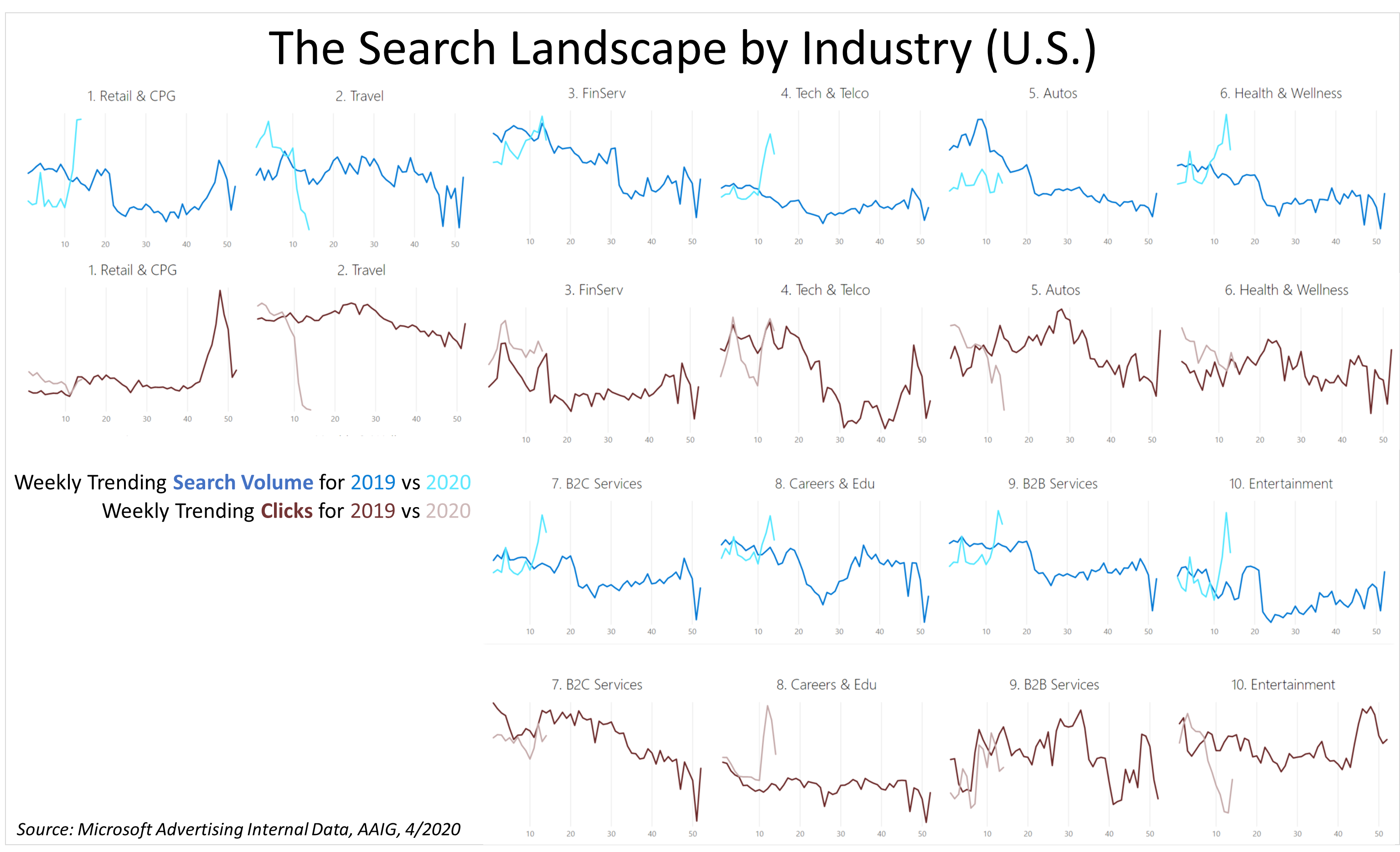
Take a look at this graphic from Microsoft Advertising.

What do you see?
Search industry landscape

Search industry landscape

You can see that searches for certain industries have been impacted dramatically.

Travel and autos have fallen – likely because nobody is going anywhere. On the other hand, tech and entertainment are seeing increases, for obvious reasons.

But while searches for specific travel-related and automotive-related terms will have decreased, by widening your search, you can still find ways to utilize topics in those industries.

For instance, people aren’t looking for auto insurance now – they aren’t using their cars as much, so they don’t want to increase their premiums.

ADVERTISEMENT

CONTINUE READING BELOW

But what they will be searching for are ways to maintain their car when it’s not in use – car covers, seat liners, oils and varnishes for their engines and paint job.

When the shutdowns have impacted your business, it can seem disheartening to look at the popularity of your search terms drop.

However, with a bit of creativity, you can find the areas where related searches are spiking so you can re-enter the market through those terms.

You will find that people aren’t leaving entire industries behind – they’re just looking for new items and services within that industry.

Those are the areas that you now need to focus on when creating your content – look at the new keywords trends in your industry, suss out the patterns, and build your content.

2. Analyze Search Trends

What we have found above is that not only does data exist within industries affected by COVID-19, but that there are ways to infer ideas from that data.

ADVERTISEMENT

CONTINUE READING BELOW

Let’s delve deeper into how that inference can work for you.

Some of the biggest hit industries during lockdown have been restaurant businesses.

People aren’t able to go to restaurants during the lockdown, and that has impacted popular search terms that the industry would have relied on.

Here’s what we found when we looked into search trends in the live entertainment and restaurant industry:

Live entertainment and restaurants search trends

Live entertainment and restaurants search trends

January and February – pre-crisis months – saw an increase in these areas because people were regularly going out.

March saw a significant decrease following the announcement of the lockdowns, and April saw that number drop even further.

If we dive deeper into specific search terms within the industry, the picture becomes clearer.

Take a look at the search trends we examined for the term “best restaurants near me”:

ADVERTISEMENT

CONTINUE READING BELOW

SEO-Trends-SEO-Data-to-Fuel-Your-Content-Marketing-Strategy14

SEO-Trends-SEO-Data-to-Fuel-Your-Content-Marketing-Strategy14

The 45% drop in 2020 is in stark contrast to the term’s popularity in 2019 when the world wasn’t in crisis.

But that doesn’t mean that people aren’t interested in restaurants at all.

It isn’t possible for most people to cook every single meal – they still want restaurant-quality food even at home.

So, what are they searching for to alleviate this concern?

They are looking for food deliveries and pick-ups.

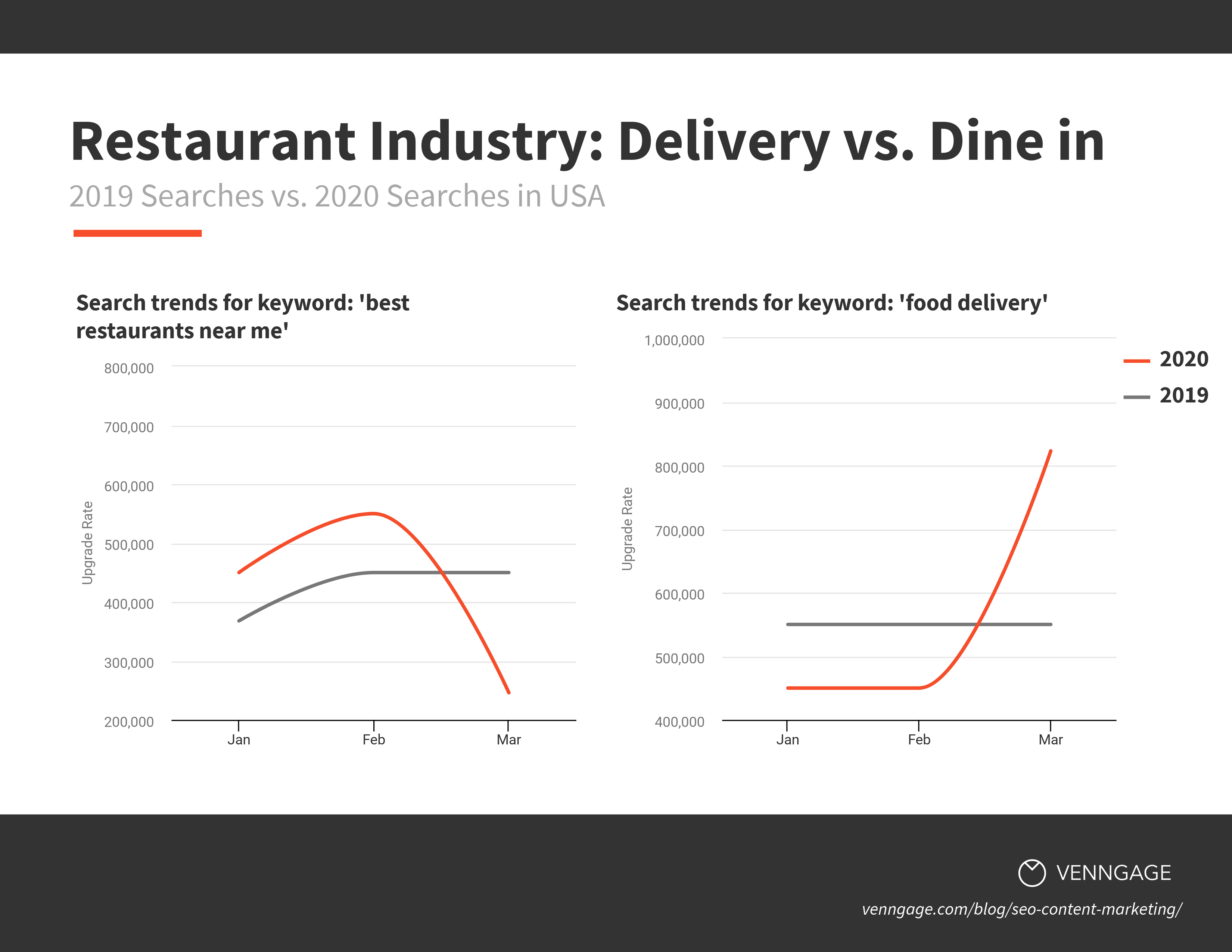
Look at the search trend comparison we made for “best restaurants near me” versus “food delivery” over the last few months:
SEO-Trends-SEO-Data-to-Fuel-Your-Content-Marketing-Strategy15

SEO-Trends-SEO-Data-to-Fuel-Your-Content-Marketing-Strategy15

What can we infer from the above search trend data?

ADVERTISEMENT

CONTINUE READING BELOW

That people are open to looking for alternatives – restaurants are still relevant but the search terms directly related to them have changed.

This means that restaurants now need to create content that moves away from terms related to geographic location and more towards food delivery and pick up.

3. Pivot for Customers

Let’s step away from the service industry and look at a product-based industry such as gaming.

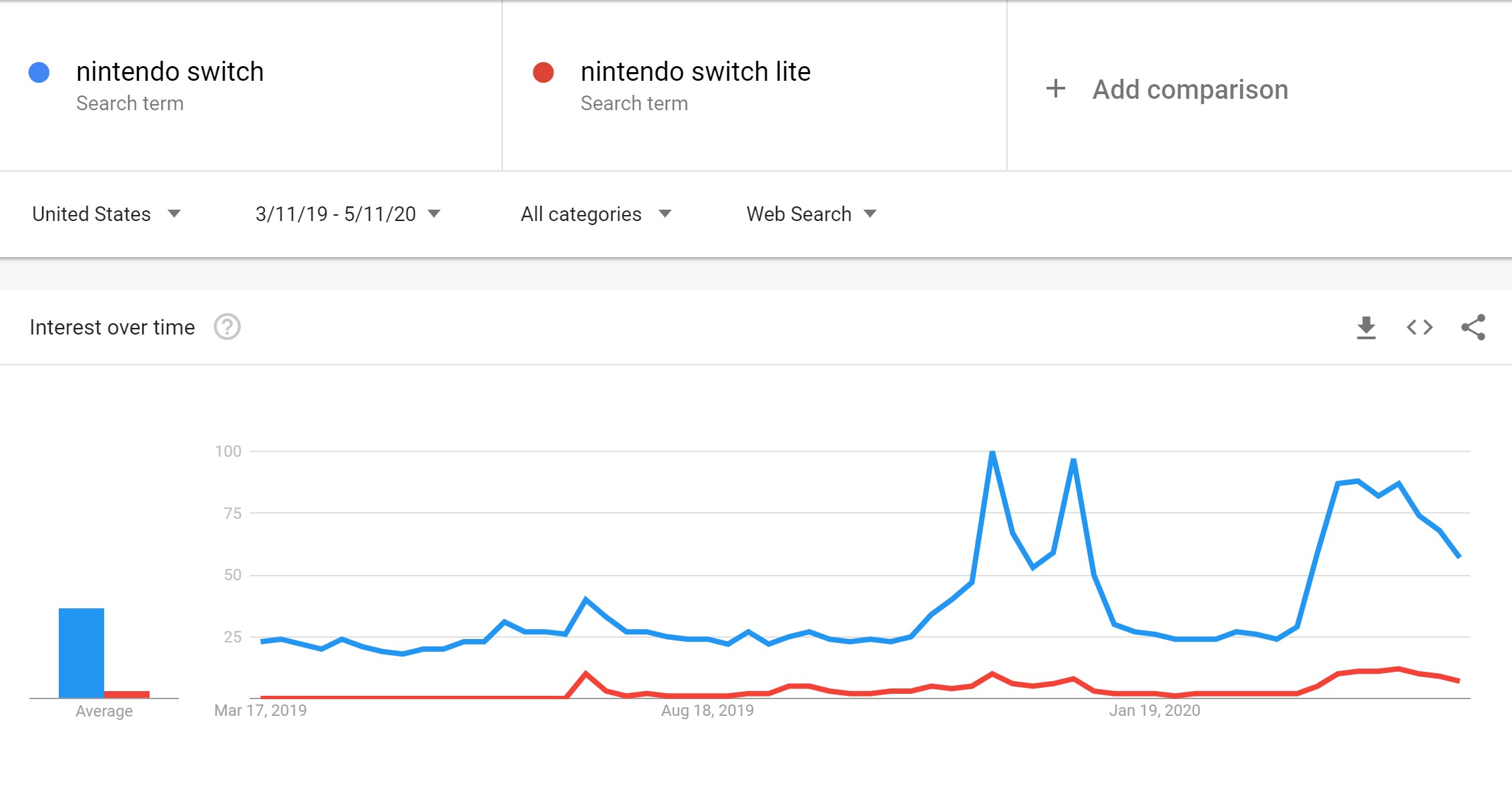
Look at the popularity of the search terms for Nintendo Switch in the March-May 2020 period, as compared to last year.
Search trend nintendo switch v lite

Search trend nintendo switch v lite

The spike is huge, rivaling the trends we would see during December’s holiday rush.

Since people are spending more time indoors, they are looking for products to keep themselves engaged and entertained. Hence the need for a gaming console.

Here’s what we can tell from the increased popularity of this search term:

ADVERTISEMENT

CONTINUE READING BELOW

  • People want more access to in-home entertainment than before.
  • Because they are self-isolating, they have more time to indulge in leisure activities.
  • Gaming consoles are selling out fast, leading to a shortage of supply.

Once you make these inferences, you can adapt your content structure – what can your product do for your customers at this moment?

If you are an entertainment-based business, here are some marketing tips to use the search trend data to your advantage:

  • You can create content about entertainment options for your audience.
  • You can create entertaining pieces for your audience.
  • You can share alternatives for people who can no longer purchase a Nintendo Switch.

But knowing how to adapt to the changing circumstances we face now doesn’t mean that your job is done.

The times will continue to change and you need to be able to grow despite the changes. Let me explain how.

ADVERTISEMENT

CONTINUE READING BELOW

4. Content Ideation Framework

The examples I have shared with you make sense in their own right – but can you apply them to your niche brand?

Brainstorming content ideas is always a challenge but I have been using a content strategy framework that has worked for me for years.

The framework I am talking about is GRAP.

what-is-grap-framework

what-is-grap-framework

Let me break down each point for you.

Goals

The overarching goal of your content strategy will have changed due to the pandemic. This affects the way you create marketing materials.

Is your goal during this period to sell products or services? Or is it to increase brand awareness?

You need to have a definitive destination in mind for your strategy before you start using search trends to create content.

Research

Even when you’re searching for trends in your industry, it’s important to research why and how your audience is using those terms.

ADVERTISEMENT

CONTINUE READING BELOW

Understanding the consumer behavior behind an action will make it easier to create impactful content.

Authority

Here’s a question that your audience asks every time they come across content online:

Who are you and why should I read your content instead of someone else’s?

  • Have you created content in the same area before?
  • Are your SERP results strong?
  • Do Google, Moz, and Ahrefs value your content contributions?

If you can answer these questions in the affirmative, you are probably an authority in your field and will be able to create content that will generate interest and value.

Promotion

Developing great content isn’t the same as it being seen.

If your SEO and SERP are strong, that means you are doing something right in the promotion department.

But let’s go back to the beginning of this exercise – where did we say your audience is spending their time during this pandemic?

ADVERTISEMENT

CONTINUE READING BELOW

Online.

There is a lot of content online already, with more being created on a daily basis during this crisis.

If you want to be seen, you need to improve the way you promote your content. Here are some general guidelines for doing that:

  • Don’t be afraid to promote far and wide and on as many channels as possible.
  • Link build with purpose – this improves your SERP.
  • Engage on social media – don’t just post and leave.

Once you get a handle on the GRAP framework, you will be better positioned to generate more content ideas.

5. Cross-Over Content Ideation

What is cross-over content ideation?

It’s taking a content idea and altering it to suit a situation.

You must have read about the many companies that pivoted their product development strategies for the coronavirus.

Companies that were creating chemicals, trackers, or fashion accessories have pivoted to making hand sanitizers, proximity detectors, and surgical masks.

These businesses realized that their original products would not be useful in the crisis situation so they crossed over to building items that would be necessary for the community.

ADVERTISEMENT

CONTINUE READING BELOW

By pivoting in this way, these businesses managed to save themselves – quite the feat at a time when so many businesses are having to close down.

And you can follow their example.

Start by using Google Keyword Planner and following these steps:

  • Plug in a search term you usually associate with your brand.
  • Don’t be alarmed when you see that it has fallen in the search trends.
  • Look at the related keywords – specifically the ones trending since March 2020.
  • These are the crossover content keywords that you should be aiming for.

For example, in the travel industry, we looked at luggage-related keywords like “carry on bag”. This is what we found:

SEO-Trends-SEO-Data-to-Fuel-Your-Content-Marketing-Strategy6

SEO-Trends-SEO-Data-to-Fuel-Your-Content-Marketing-Strategy6

Unsurprisingly, with so few people traveling anywhere, the need for luggage has dipped dramatically.

ADVERTISEMENT

CONTINUE READING BELOW

At the same time, when we looked into home decor and organization, we found a massive spike in the pandemic period:

SEO-Trends-SEO-Data-to-Fuel-Your-Content-Marketing-Strategy18

SEO-Trends-SEO-Data-to-Fuel-Your-Content-Marketing-Strategy18

Here’s a closer look at the keyword associated with home decor and DIY:

SEO-Trends-SEO-Data-to-Fuel-Your-Content-Marketing-Strategy19

SEO-Trends-SEO-Data-to-Fuel-Your-Content-Marketing-Strategy19

There are a lot of related keywords and they are all trending.

Right there you have your keywords to start building your content.

Start by creating titles that are optimized for the keywords becoming popular within this sphere.

ADVERTISEMENT

CONTINUE READING BELOW

Design pieces that specifically answer questions your audience may have – this makes it easier for them to find you.

Don’t limit your content streams – aim to create blogs, vlogs, social posts, charts, graphs, and infographics – so you can reach people where they are.

Closing Thoughts

Everything around us is changing – being adaptable to those changes is what will separate the innovative businesses from everyone else.

But adaptation without reason won’t make an impact.

You need to analyze the search trends that are impacting your company to drive cross-over content ideation and generate revenue.

To recap, this is how to do it:

  • Search for market gaps.
  • Analyze search trends.
  • Pivot to customer needs.
  • Adapt to the content framework.
  • Generate ideas for crossover content.

Marketers have the tools available to them to influence the audience and drive a new narrative.

By using data and brainstorming new insights from what you find, you can thrive even in this crisis environment.

ADVERTISEMENT

CONTINUE READING BELOW

More Resources:


Image Credits

In-Post Images: Venngage
Screenshots taken by author, May 2020

http://tracking.feedpress.it/link/13962/13629525


How Natural Language Generation Changes the SEO Game via @hamletbatista

The content generation technology and techniques I’m going to demonstrate in this column would seem out of a science fiction novel, but they are real and freely accessible now.

After I completed the coding experiments and started to write this piece, I pondered the positive and negative implications of sharing this information publicly.

As you will see, it is relatively easy now to produce machine-generated content and the quality of the generations is improving fast.

This led me to the sad conclusion that we would see far more spammy results than before.

Fortunately, Google recently released its 2019 spam report that put me at ease.

“Last year, we observed that more than 25 billion of the pages we find each day are spammy. (If each of those pages were a page in a book, that would be more than 20 million copies of “War & Peace” each day!)

ADVERTISEMENT

CONTINUE READING BELOW

Our efforts have helped ensure that more than 99% of visits from our results lead to spam-free experiences.

In the last few years, we’ve observed an increase in spammy sites with auto-generated and scraped content with behaviors that annoy or harm searchers, such as fake buttons, overwhelming ads, suspicious redirects and malware. These websites are often deceptive and offer no real value to people. In 2019, we were able to reduce the impact on Search users from this type of spam by more than 60% compared to 2018.”

While Google reports a staggering number of spam pages per day, they report an impressive 99% success rate in suppressing spam across the board.

More importantly, they’ve been making incredible progress in suppressing machine-generated spam content.

In this column, I’m going to explain with code how a computer is able to generate content using the latest advances in NLG.

I will go over the theory and some guidelines to keep your content useful.

This will help you avoid getting caught with all the web spam Google and Bing are working around the clock to get rid of.

ADVERTISEMENT

CONTINUE READING BELOW

Thin Content Pages

In my article about title and meta description generation, I shared an effective technique that relies on summarizing page content to produce meta tags.

Once you follow the steps, you can see that it works really well and can even produce high quality, novel texts.

But, what if the pages don’t include any content to summarize? The technique fails.

Let me tell you a very clever trick to solve this.

If such pages have quality backlinks, you can use the anchor text and the text surrounding the backlink as the text to summarize.

Wait!

But why?

Let me take back all the way to 1998, to the founding of the Google search engine.

In the paper describing their new search engine, Page and Brin shared a very interesting insight in section 2.2.

“Most search engines associate the text of a link with the page that the link is on. In addition, we associate it with the page the link points to. This has several advantages. First, anchors often provide more accurate descriptions of web pages than the pages themselves. Second, anchors may exist for documents which cannot be indexed by a text-based search engine, such as images, programs, and databases. This makes it possible to return web pages which have not actually been crawled.”

Here is the technical plan:

  1. We will get backlinks and corresponding anchor texts using the new Bing Webmaster Tools.
  2. We will scrape the surrounding text from the highest quality backlinks.
  3. We will create summaries and long-form content using the scraped text.

Bing Webmaster Tools Backlinks Report

How Natural Language Generation Changes the SEO Game

How Natural Language Generation Changes the SEO Game

One feature I like in the new backlinks tool in BWT, is that it can provide links not just pointing to your own site, but some other sites as well.

I expect this to become a popular free alternative to the paid tools.

I exported the CSV file with the big list of links and anchors, but when I tried to load it using Python pandas and found a number of formatting issues.

ADVERTISEMENT

CONTINUE READING BELOW

Random anchor texts can include commas and cause issues with a comma-delimited file.

I solved them by opening the file in Excel and saving it in Excel format.

Scraping Surrounding Text with Python

As you can see in my screenshot above, many of the anchor texts are pretty short.

We can scrape the pages to get the paragraph that contains them.

First, let’s load the report we exported from BWT.

import pandas as pd df = pd.read_excel("www.domain.com_ReferringPages_6_7_2020.xlsx") df.head()

How Natural Language Generation Changes the SEO Game

How Natural Language Generation Changes the SEO Game

I reviewed the Target URL by the number of inbound links using.

df.groupby("Target Url").count().tail()

How Natural Language Generation Changes the SEO Game

How Natural Language Generation Changes the SEO Game

I pulled the backlinks from one of the pages to evaluate the idea using this code.

ADVERTISEMENT

CONTINUE READING BELOW

backlinks = set(df[df["Target Url"] == "https://domain.com/example-page"]["Source Url"])

Now, let’s see how we can use a target URL and a backlink to pull the relevant anchor text that includes the anchor.

Fetching Text from Backlinks

First, let’s install requests-html.

!pip install requests-html from requests_html import HTMLSession
session = HTMLSession()

In order to keep the code simple, I’m going to manually produce a CSS selector to grab the text surrounding the link.

It is not difficult to calculate this given the link and anchor on the page using JavaScript or Python code.

Maybe that is a good idea for you to try as homework.

How Natural Language Generation Changes the SEO Game

How Natural Language Generation Changes the SEO Game

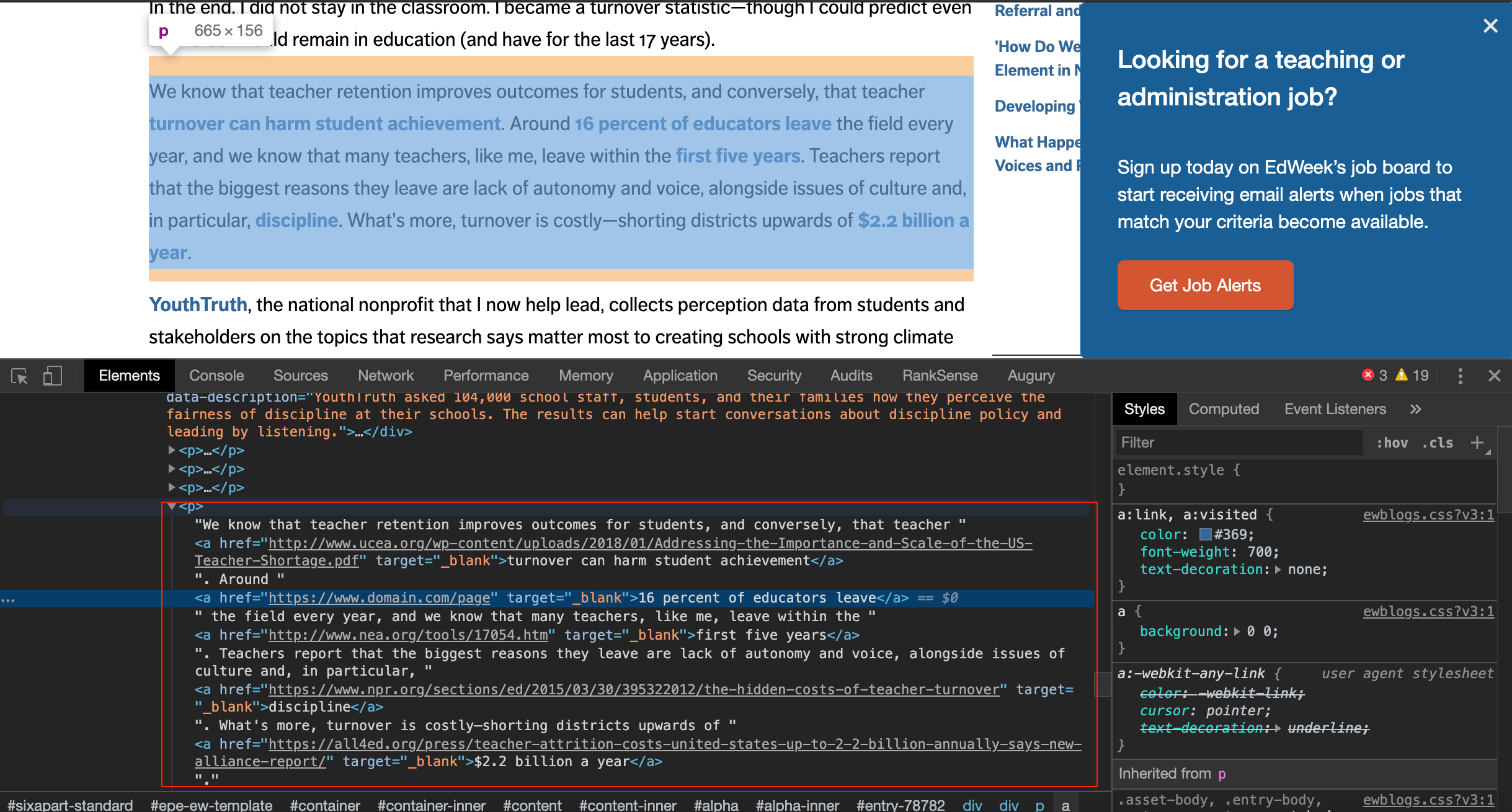
Open an example backlink page and using the Chrome Developer Tools, you can right-click on the paragraph of interest and copy a CSS selector.

This is the selector I used.

with session.get(url) as r: selector="#entry-78782 > div.asset-content.entry-content > div > p:nth-child(5)" paragraph = r.html.find(selector, first=True) text = paragraph.text

This is the text that came back. I bolded the text of our example anchor text.

ADVERTISEMENT

CONTINUE READING BELOW

We know that teacher retention improves outcomes for students, and conversely, that teacher turnover can harm student achievement. Around 16 percent of educators leave the field every year, and we know that many teachers, like me, leave within the first five years. Teachers report that the biggest reasons they leave are lack of autonomy and voice, alongside issues of culture and, in particular, discipline. What’s more, turnover is costly—shorting districts upwards of $2.2 billion a year.

Now, let’s get to the fun part!

Neural Text Generation

We are going to use the same summarization code we used to generate titles and meta descriptions in my previous article, but with a twist.

Instead of specifying a desirable summary length shorter than the original paragraph, we will specify a longer length. Will that work? Let’s see!

!pip install transformers from transformers import pipeline summarizer = pipeline('summarization') generated_text = summarizer(text, min_length=150, max_length=250)
print(generated_text)

I get this interesting warning.

Your max_length is set to 250, but you input_length is only 99. You might consider decreasing max_length manually, e.g. summarizer(‘…’, max_length=50)

ADVERTISEMENT

CONTINUE READING BELOW

Let’s see the generated text.

[{'summary_text': "Around 16 percent of educators leave the field every year. Teachers report that the biggest reasons they leave are lack of autonomy and voice, alongside issues of culture and discipline. Turnover is costly, shorting districts upwards of $2.2 billion a year, according to a report by the National Council of Teachers of English, the nation's largest teacher organization. The report also found that teacher retention improves outcomes for students, and conversely, that teacher turnover can harm student achievement. The study was published in the Journal of Education, published by Simon & Schuster, a division of Penguin Random House, on November 14. For more, visit www.simonandschuster.com. For confidential support, call the National Suicide Prevention Lifeline at 1-800-273-8255 or visit http://www.suicidepreventionlifeline.org/."}]

The original text had 492 characters and the generated text 835.

But, look at the quality and the novel sentences showing up in the generated text. Absolutely, mind-blowing!

Can this technique generate even longer text? Yes!

generated_text = summarizer(text, min_length=300, max_length=600) print(generated_text) [{'summary_text': "Around 16 percent of educators leave the field every year. Teachers report that the biggest reasons they leave are lack of autonomy and voice, alongside issues of culture and discipline. Turnover is costly, shorting districts upwards of $2.2 billion a year, according to a report by the National Council of Teachers of English, the nation's largest teacher organization. The report also found that teacher retention improves outcomes for students, and conversely, that teacher turnover can harm student achievement. The study was published in the Journal of Education, published by Simon & Schuster, a division of Penguin Random House, on November 14. For more, visit www.simonandschuster.com. For confidential support, call the National Suicide Prevention Lifeline at 1-800-273-8255 or visit\xa0http://www.suicidepreventionlifeline.org/. For support in the U.S., call the Samaritans on 08457 90 90 90 or visit a local Samaritans branch, see www.samaritans.org for details. In the UK, contact the National College of Education on 0300 123 90 90, or\xa0 visit\xa0the Samaritans\xa0in the UK. For help in the United States, call\xa0the\xa0National Suicide Prevention Line on 1\xa0800\xa0273\xa08255,\xa0or\xa0in\xa0the UK on 0800\xa0123\xa09255. For support on suicide matters in the\xa0U.S. call the\xa0National\xa0College\xa0of Education,\xa0England\xa0on 08457\xa090 90 90. For information on suicide prevention in the UK and\xa0Europe, visit the National\xa0College of England and Wales."}]

This generated text has 1,420 characters and maintains the logical flow!

The beast powering this technique is a model from Facebook called BART.

The authors of the paper describe it as a generalized form of BERT.

Let’s see how this works.

How Neural Text Generation Works

How Natural Language Generation Changes the SEO Game

How Natural Language Generation Changes the SEO Game

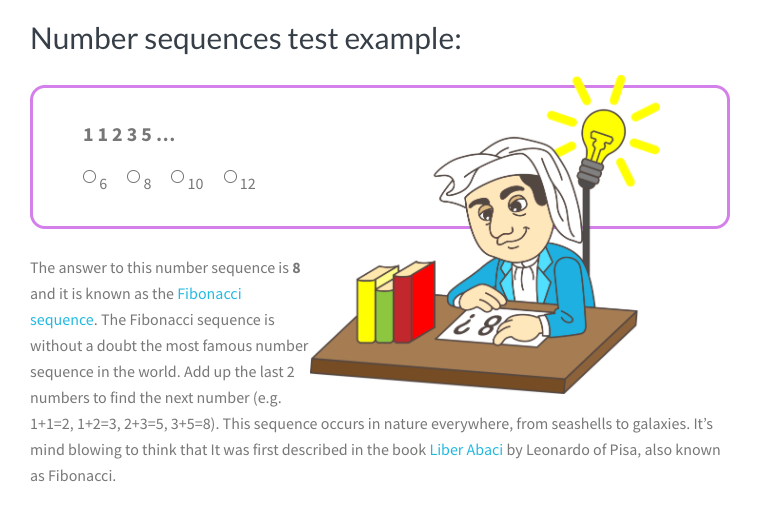
Have you taken aptitude or IQ tests where you are presented with a sequence of numbers and you need to guess the next one?

In essence, that is what our model did above when we provided some initial text and asked our models to predict what goes next.

ADVERTISEMENT

CONTINUE READING BELOW

It turned our initial text into a sequence of numbers, guessed the next number, and took the new sequence that includes the guessed number and repeated the same process again.

This continues until it hits the length limit we specified.

Now, these are not just regular numbers, but vector and more specifically (in the case of BERT and BART) bi-directional word embeddings.

I explained vectors and bi-directional word embedding using a GPS analogy in my deep learning articles part 1 and part 2. Please make sure to check them out.

In summary, embeddings encode rich information about the words they represent which dramatically increases the quality of the predictions.

So, here is one example of how this works.

Given the text: “The best programming language for SEOs doing repetitive tasks is ____ and for SEOs doing front-end audits is ____”, we ask the model to complete the sentence.

The first step is to convert the words into numbers/embeddings, where each embedding identifies the word in context.

ADVERTISEMENT

CONTINUE READING BELOW

Then, turn this into a puzzle the computer can solve to figure out the numbers/embeddings that can fill in the blanks given the context.

The algorithm that can solve these types of puzzles is called a language model.

A language model is similar to the grammatical rules in English or any other language.

For example, if the text is a question, it must end with a question mark.

The difference is that all the words and symbols are represented by numbers/embeddings.

Now, where it gets interesting is that in deep learning (what we are using here), you don’t need to manually create a big list of grammar rules.

The model learns the rules empirically through efficient trial and error.

This is done during what is called a pre-training phase where the models are trained over a massive corpus of data for several days and using very powerful hardware.

The best part for us is that the results of these efforts are made free for anyone to use.

ADVERTISEMENT

CONTINUE READING BELOW

Aren’t we really fortunate?

BERT is an example of a language model and so are GPT-2 and BART.

How to Use This for Good

As I mentioned above, this stuff is really powerful and could be used to churn useless content at scale relatively cheaply.

I personally wouldn’t want to waste time wading through garbage while I search.

Over time, I’ve come to realize that in order for content to perform in search, it needs to:

  • Be useful.
  • Satisfy a real need.

If it doesn’t, no matter if it is computer or human-produced, it won’t get any engagement or validation from end-users.

The chances of ranking and performing are really low.

This is why I prefer techniques like summarization and translation or question/answering where you have greater control over the generation.

ADVERTISEMENT

CONTINUE READING BELOW

They can help you make sure that you are adding new value.

Community Projects & Learning Resources

I tried to keep this article light in code and the explanations as simple as possible to allow more people in the community to join in the fun.

But, if you are more technically inclined, I think you will enjoy this more granular and mathematical explanation of the topic.

Make sure to also follow the links in the “Further reading section” in the linked article above.

Now, to some exciting news.

I asked the community to share the Python projects they are working on. I was expecting maybe a handful, and I was completely blown away by how many I got back. #DONTWAIT 🐍🔥

ADVERTISEMENT

CONTINUE READING BELOW

ADVERTISEMENT

CONTINUE READING BELOW

More Resources:


Image Credits

All screenshots taken by author, June 2020

http://tracking.feedpress.it/link/13962/13622989


Cumulative Layout Shift – Overview of 2021 Google Ranking Factor via @martinibuster

Cumulative Layout Shift (CLS) is a Google metric that measures a user experience event. This metric is said to become a ranking factor in 2021. That means it’s important to understand what CLS is and how to optimize for it.

Definition of Cumulative Layout Shift

CLS is the unexpected shifting of web page elements while the page is still downloading. The kinds of elements that tend to cause shift are fonts, images, videos, contact forms, buttons and other kinds of content.

Minimizing CLS is important because pages that shift around can cause a poor user experience.

A poor CLS score is indicative of coding issues that can be solved.

Why CLS Happens

According to Google there are five reasons why Cumulative Layout Shift happens:

  1. “Images without dimensions
  2. Ads, embeds, and iframes without dimensions
  3. Dynamically injected content
  4. Web Fonts causing FOIT/FOUT
  5. Actions waiting for a network response before updating DOM”

Images and videos need to have the height and width dimensions declared in the HTML. With regard to responsive images, make sure that the different images sizes for the different viewports use the same aspect ratio.

ADVERTISEMENT

CONTINUE READING BELOW

Google recommends using AspectRatioCalculator.com to calculate the aspect ratios. It’s a good resource.

Ads Can Cause CLS

This one is a little tricky to deal with. One way to deal with ads that cause CLS is to style the element where the ad is going to show.

For example, if you style the div to have specific heights and width then the ad will be constrained to those.

There are two solution if there’s a lack of inventory and an ad doesn’t show up.

If an element containing an ad does not show an ad you can set it so that an alternative banner ad or placeholder image is used to fill the space.

Alternatively, for some layouts where an ad fills an entire row on the top of perhaps a column on the right or left gutter of a web page, if the page does not show up there won’t be a shift, it won’t make a difference either on mobile or desktop. But that depends on the theme layout. You’ll have to test that out if ad inventory is an issue.

ADVERTISEMENT

CONTINUE READING BELOW

Dynamically Injected Content

This is content that is injected into the web page. For example in WordPress you can link to a YouTube video or a Tweet and WordPress will display the video or tweet as an embedded object.

Web Based Fonts

Downloaded web fonts can cause what’s known as Flash of invisible text (FOIT) and Flash of Unstyled Text (FOUT).

A way to prevent that is to use rel=”preload” in the link for downloading that web font.

Lighthouse can help you diagnose what is causing CLS.

CLS Can Sneak in During Development

Cumulative layout shift can slip through during the development stage. What can happen is that many of the assets needed to render the page are loaded onto a browser’s cache. The next time a developer or publisher visits the page under development they won’t notice a layout shift because the page elements are already downloaded.

That’s why it’s useful to have a measurement in the lab or in the field.

How Cumulative Layout Shift is Calculated

The calculation involves two metrics/events. The first is called Impact Fraction.

Impact Fraction

Impact fraction is a measurement of how much space an unstable element takes up in the viewport.

A viewport is what you see on the mobile screen.

When an element downloads and then shifts, the total space that the element occupied, from the location that it occupied in the viewport when it’s first rendered to the final location when the page is rendered.

The example that Google uses is an element that occupies 50% of the viewport and then drops down by another 25%.

When added together, the 75% value is called the Impact Fraction and it’s expressed as a score of 0.75.

Distance Fraction

The second measurement is called the Distance Fraction. The distance fraction is the amount of space that the page element has moved from the original position to the final position.

In the above example the page element moved 25%.

ADVERTISEMENT

CONTINUE READING BELOW

So now the Cumulative Layout Score is calculated by multiplying the Impact Fraction by the Distance Fraction:

0.75 x 0.25 = 0.1875

There’s some more math and other considerations that go into the calculation. What’s important to take away from this is that the score is one way to measure an important user experience factor.

How to Measure CLS

There are two ways to measure CLS. Google calls the first way in the Lab. The second way is called in the Field.

In the lab means simulating an actual user downloading a web page. Google uses a simulated Moto G4 for generating the CLS score within the lab environment.

Lab tools are best for understanding how a layout may perform before pushing it live to users. It gives publishers the opportunity to test a layout for issues.

Lab tools consist of Chrome Dev Tools and Lighthouse.

Understand Cumulative Layout Shift

It’s important to understand Cumulative Layout Shift. It’s not necessary to understand how to do the calculations yourself. But just knowing about it and what it is important because this metric is scheduled to become a ranking factor sometime in 2021.

http://tracking.feedpress.it/link/13962/13622250


How to win at SEO with FAQ schema markup

30-second summary:

  • According to Neil Patel, less than one percent of businesses take advantage of FAQ schema markups. 
  • There are several benefits schema markups provide to your overall SEO rankings. 
  • Implemented correctly, the FAQ schema markup can get your site into the featured snippets section of Google’s first page. 
  • Google has outlined which pages are eligible and which are prohibited from showing up as featured snippets in Google. 
  • FAQ schema markup added to quality, in-depth content can help to quickly improve your SEO score. 
  • Co-founder of Ally digital media, Abhishek Shah guides you through the process of setting up and implementing the FAQ schema markup to help improve your SEO. 

By implementing schema markup for your FAQ page, you can improve your website’s visibility as well as increase your website’s authority. 

Very few websites seem to be taking advantage of this easy, yet incredibly, effective SEO hack. According to Neil Patel, less than 1% of businesses online seem to be implementing this. So, now’s the time to get on board and ensure the schema markup is set up on your FAQ page. 

But first, let’s look at exactly what it is, and why it will improve your SEO. 

What is FAQ schema markup?

Schema markup is a powerful yet underused piece of code for SEO to help increase your website’s presence in the SERPs. 

This piece of code is placed on your website to help Google, and other search engines, to return better results for consumers. 

Search engines crawl your site, it gets indexed, and then when someone makes a relevant search your content may show up. What schema markup does is provides context to the content.  

Essentially, it removes some of the guessing search engines do when they crawl your site. A markup is able to provide context by telling the search engines what the content means. 

Schema.org explains it this way

“Most webmasters are familiar with HTML tags on their pages. Usually, HTML tags tell the browser how to display the information included in the tag. For example, <h1>Avatar</h1> tells the browser to display the text string “Avatar” in a heading 1 format. However, the HTML tag doesn’t give any information about what that text string means — “Avatar” could refer to the hugely successful 3D movie, or it could refer to a type of profile picture—and this can make it more difficult for search engines to intelligently display relevant content to a user.”

This is why the context provided by adding schema markup to your FAQ page, can help increase your presence in the search results. 

How an FAQ schema markup can help you win at SEO?

Having your FAQs in the featured snippets on Google can generate a huge lift in organic traffic. By adding the schema markup, you improve your chances of this happening. 

An important metric in SEO is CTR (click-through-rate). This is measured by the number of clicks divided by the number of impressions a result gets. For example, if you had 50 clicks and 800 impressions, your CTR would be 6.25%. 

If you can increase your CTR, it shows search engines that the page is relevant for that search term and it can help your website’s overall search ranking. 

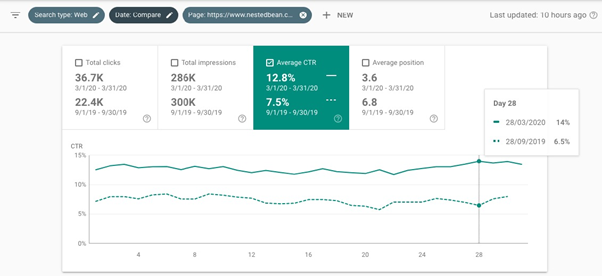
Here’s one such example of Nestedbean’s learn page that talks about sleep regression, implementation of FAQ schema helped them in doubling the CTR from 6.5% to 14%. 

Stats showing success of FAQ schema markup implementationSource: Google Search Console

By using an FAQ schema markup, you are increasing your website’s visibility by showing up for a wider variety of keywords. Which means more traffic to be potentially turned into paying customers. 

How to implement FAQ Schema?

The FAQ schema can be implemented in one of two ways: Microdata or JSON-LD. Whichever one you choose we strongly recommend you stick to that one. It’s not a good idea to mix them on a webpage. 

1. Microdata

This is the more complex of the two options. To implement schema markup with Microdata involves coding elements into your website. If you don’t have a web developer in your team this can be a rather tedious and challenging process where the code is added to the body section of your page. 

Here’s a microdata example for the FAQ page schema

<html itemscope itemtype=”https://schema.org/FAQPage”> 

<head> 

<title>Search Engine Marketing Frequently Asked Questions (FAQ) – Search Engine Watch</title> 

</head> 

<body> 

<div itemscope itemprop=”mainEntity” itemtype=”https://schema.org/Question”> 

<h3 itemprop=”name”>What is search engine marketing?</h3> 

<div itemscope itemprop=”acceptedAnswer” itemtype=”https://schema.org/Answer”> 

<div itemprop=”text”> 

<p>Search Engine Marketing helps put get your website onto page one of search engines when someone searches for something related to your industry.</p> 

</div> 

</div> 

</div> 

</body> 

</html> 

2. JSON-LD

Google recommends JSON-LD as “Google can read JSON-LD data when it’s dynamically injected into the page’s contents, such as by JavaScript code or embedded widgets in your content management system.” JSON-LD is certainly the easier of the two options, as this code is added to the header section of a page. 

Here’s a JSON-LD example for the FAQ page schema

<html>

<head> 

<title>Search Engine Marketing Frequently Asked Questions (FAQ) – Search Engine Watch</title> 

</head> 

<body> 

<script type=”application/ld+json”> 

{ 

“@context”: “https://schema.org”, 

“@type”: “FAQPage”, 

“mainEntity”: [ 

{ 

“@type”: “Question”, 

“name”: “What is Search Engine Marketing”, 

“acceptedAnswer”: { 

“@type”: “Answer”, 

“text”:”Search Engine Marketing helps put get your website onto page one of search engines when someone searches for something related to your industry.”} 

}] 

} 

</script> 

</body> 

</html> 

You can either write the code out from scratch, or you can copy the above code and use it as a template. Just be sure to remember to change out the content for your own. 

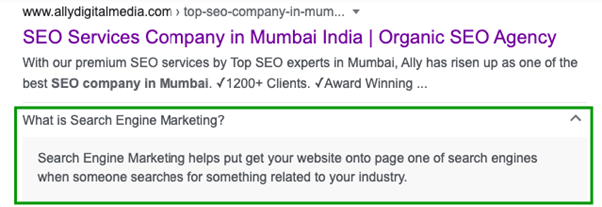
The outcome will look like this: 

Snippet example FAQ schema markupSource: Google 

How to validate FAQ schema implementation?

Validating your FAQ schema implementation is a simple three-step process. 

1. Test

To ensure you have implemented the code correctly on your page, you should use Google’s Structured Data Testing Tool. You can add your code snippet here, or the page URL and the testing tool will let you know if you’ve done it correctly or not. There is the added bonus that it will also provide any necessary feedback. 

2. Preview with Google’s Rich Result Tester

This tester will not only let you know if your page is eligible for rich results, but it will also show how the data will look in the SERPs. 

3. Recrawl the page

Once the code is added, and you have run the tests and the page is good to go there is one final step – requesting Google to re-index the page. 

To do this, you will need to log into Google Search Console and enter the modified URL in the top search bar and hit enter. Then you will want to select the option to request indexing. 

In some cases, you can see the effects kick in pretty quickly. Well, pretty quickly for search engines. If you’ve done this for a page that’s already ranking on page one, you should see the results update on the SERPS inside of 20 minutes. 

Which pages can the schema markup be applied to?

When considering adding the FAQ schema markup, it’s important to understand Google’s content guidelines. The first and most obvious guideline is that the page must have a list of questions with their answers attached. 

If your page has questions that users can submit their answers to, you want to use a different type of markup. Instead of using FAQPage, you would want to use QAPage: which is a different type of schema markup. 

Some valid uses of the FAQ schema markup are:

  • A page of FAQs written on the website. These pages have no way for users to submit alternative answers. 
  • Product support pages which list FAQs, that also have no way for users to submit different answers. 

 Some invalid uses of the FAQ schema markup are: 

  • Product support pages where users are able to submit their own answers to questions. 
  • Product pages that allow users to submit many questions and answers on a single page. 
  • Forum pages where users are able to answer questions themselves. 

You want to use the FAQ Schema markup for pages that are not time-sensitive. Also, Google’s guidelines strictly stipulate that you cannot use the FAQPage schema markup for advertising reasons. 

Other times when question and answer content won’t be displayed include if the following types of content are on the page: 

  • Profane 
  • Graphically violent 
  • Obscene 
  • Sexually explicit 
  • Hateful 
  • Illegal activities 

And finally, it is necessary for the FAQ content to be visible to the user on the FAQ page. All this means is you don’t want the content hidden from the user, or for the page to have a brief summary that links off to another page. 

What to include in the FAQ content on your page?

The FAQ schema markup code is quite easy to implement as we’ve shown above. Keep in mind, your FAQ content needs to meet all the usual SEO factors to work in concert with the schema markup. 

This includes aspects such as:

  • How relevant the content is to the topic
  • The page layout
  • How easy it is to read the content 

When you hear the phrase “readability”, it’s referring to a few things. The first is how easy is it to read? That is, are you varying your sentence lengths and using short paragraphs? 

The second is the font choice, as well as its color and size. When it comes to writing for an audience you want an easy font to read that’s a good size and color that doesn’t cause readers to strain their eyes. 

And finally, are you saying something? The best ranking FAQs are the ones that provide in-depth, useful answers. In-depth doesn’t always mean lots of words. If you can successfully (and meaningfully) answer a question in 50 words, that’s fine. 

It’s not about how many words you can write, it’s about how well you can answer a question and provide value.  

The advantage of good SEO-driven content with the right schema markup

By creating informative, well-written content that provides value to your website’s users, and then adding the correct schema markup, you can get yourself on page one of Google. And the more content you get on page one, the more traffic you drive to your site. 

The benefit of more traffic to your site is an increase in sales and subscriptions. 

Win at SEO with FAQ schema

If you want to give your website “the competitive advantage”, all you have to do is follow these simple steps. We recommend starting off with pages that are already ranking well to help get them either onto page one or to increase their real estate on page one. 

Good SEO has a snowball effect. The more content that drives quality traffic to your site, the better your overall SEO score. That is why it’s so important to boost your content efforts with schema markups. 

If you would like to know more about FAQ schema markup, just hit the comment button. 

Abhishek Shah is the co-founder of Ally Digital Media, a leading voice in digital media and marketing. He advocates for evidence-based marketing strategies to fuel the businesses. He can be found on Twitter @abiishek. 

https://www.searchenginewatch.com/2020/06/12/how-to-win-at-seo-with-faq-schema-markup/


How a digital publisher monetized 8X more in one month with WordPress scaling strategies

30-second summary:

  • The project in a nutshell: A magazine-type website, monetizing programmatic ads.
  • Agency work scope: Build the platform from scratch, utilizing WordPress multisite functionality and RTK.io infrastructure plus numerous ad operation tools, migrate it to new hosting, and secure project scale.
  • Time frame: One month. 
  • Success indicators: Stability to scale to 8+ million user sessions per month with a monetization increased 8.5 times.

The Brand: Digital Publisher in Need of scaling

The project is a digital publishing platform, based on WordPress, utilizing the RTK.io  programmatic infrastructure and ad operations solution (Taboola and Outbrain). The website features authentic content оn popular topics like wellness, technologies, travel, sports, and entertainment. All articles are original and created by the media’s team of writers.  

Since launching in April 2019, the website’s monthly traffic has exceeded 8 Million users per month. Presently the website ranks globally around 23,000 in Alexa. 

How did the project start?

The client has been working with DevriX on a WordPress development retainer plan since July 2018. Initially, the website had an imperfect RTK implementation that dynamically assigned the ad unit slots according to some JavaScript logic. DevriX was hired to support and improve that old custom platform.  

But the owners were not satisfied with the business results – the monetization did not work as expected. While working on the project DevriX got more closely acquainted with the client’s goals and business operations. Both parties became aware of a clear growth opportunity. 

At that time DevriX was endorsed by RTK for building a super-fast and lightweight digital publishing platform for another major media. Soon after that, the client requested to upgrade their site with a similar solution. So at the beginning of March 2019, we started to build the whole platform from scratch, utilizing the Multisite WordPress feature.  

The challenge

Rebuild the whole platform  

When you run a digital publishing platform of this size, literally every second matter to a huge extent. The publishers’ business is very competitive and the margins are small. Every second the site is down thousands of dollars are lost and for every second delay in its performance, the loss is even bigger.  

Here is why when re-building this project, the client needed: 

  • A stable system to allow scaling traffic to several million user sessions per month 
  • Optimal integration of all programmatic platforms 
  • A reliable hosting solution and 24/7 maintenance to never allow downtime 
  • A seamless UX experience to engage and monetize the traffic

The solution

New digital publishing platform 

Just within one month, in April 2019, DevriX launched the new version of the WordPress website, utilizing the RTK.io technology, together with several other third-party native ad integrations. We created a faster and more stable platform, with quality code and technical solutions that enhance performance and monetize higher traffic.   

Here is how DevriX delivered the project to the above requirements: 

1. Build a multisite WordPress platform

We created a multisite network, allowing for the platform – together with all its programmatic implementations – to be multiplied into several digital publishing websites. The network is easily managed by a super admin and its potential growth is practically unlimited.  

Here is our one-month roadmap agreement with the client with a step-by-step description of the work done: 

  • WordPress theme selection
  • Child theme creation and adjusting it to the developed layouts
  • RTK implementation as a basis and ads being available on inserting a shortcode
  • Creation of several page layouts to serve ads
  • Infinite scroll layout
  • Gallery layout
  • Snapchat compatible layout
  • Quizzes pages 
  • Third-party native ads integration (Taboola and Outbrain, to name a few) 

The list of technologies and third-party tools and service integration is long but just to name a few: 

  • Pagely CDN 
  • RTK – for header bidding ads 
  • Amazon A9  
  • Taboola 
  • Outbrain  
  • Ad Lightning – to filter for bad ads 
  • OneSignal – for push notifications 
  • Google Analytics (through Google Tag Manager) – for tracking and statistics 
  • Facebook Pixel – for tracking and statistics 

2. Migrate the website to an upgraded hosting account 

To ensure the success of the project, DevriX partnered with Pagely to migrate the newly developed system to an advanced hosting with an upgraded plan that is a must to ensure scalability. 

We tested several different combinations and recommended the following hosting set-up: dedicated database (M4) on top of VPS-2 plus a larger dedicated database.   

3. Improve the ways the WordPress website was monetized 

DevriX also worked on improving the user experience of the new platform. Monetization was improved by producing optimized layouts for ad serving and an infinite scroll for all archive pages. All development was done with a focus on yield management and ad stack governance on behalf of the business owners. 

Success indicators

A solution that boosts monetization 

The technical solution described above allowed for the scaling of the project in the months to follow, scaling up to 187 million page views monthly and increasing its monetization more than eight times.

Fast and stable performance 

The new build ensured:

  • Increased speed: Currently, the site’s speed, by Google PageSpeed tool, is 91/100 for desktop. 
  • Ultimate stability for high traffic: the site’s traffic back in March 2019 before the rebuild was about 1.4 million user sessions while for the second half of 2019 it was scaled up to eight-plus million monthly. 

User engagement and popularity

  • Improved UX solutions to engage users: The platform has an impressively low bounce rate of 7-8%, with an industry average of 15%.
  • Growing popularity: Currently, the platform ranks about 23,000 at Alexa, on a global scale 

That proves the excellent user engagement and content satisfaction, which eventually leads to higher ROI. 

Monetization

Ad-serving optimization is a big contributor to the project. The main success of this project was achieving the initial goal to increase monetization. Within several months the platform’s monetization grew up 8.5 times. 

Wrapping up

This project is a very simple example of how quality development may dramatically improve website performance and monetization. Before and after the build the client used the same combination of a content management system – WordPress – and the RTK programmatic platform. But the business results differ almost ten times. 

Last but not least, the digital publishing platform was created in only four weeks. That would not have been possible without the prior experience of both parties with the technologies and without working in a close partnership within a long-term WordPress development retainer.  

Mario Peshev is the CEO of DevriX, a global WordPress agency serving industries from publishing to automotive and airline. He is also a core contributor to the WordPress project, an Inbound Certified marketer, and a multi-disciplined business owner with a wide scope of skills. He can be found on Twitter @no_fear_inc.

https://www.searchenginewatch.com/2020/06/11/monetized-8x-more-with-these-wordpress-scaling-strategies/


The Importance of an SEO Audit with Brian Harnish [PODCAST]

For episode 199 of The Search Engine Journal Show, I had the opportunity to interview Brian Harnish, Sr. SEO Analyst at Bruce Clay, Inc.

Harnish talks about the common problem areas he encounters when conducting SEO audits, how to deliver an audit that drives the most business value, and more.

The Importance of an SEO Audit with Brian Harnish [PODCAST]

The Importance of an SEO Audit with Brian Harnish [PODCAST]

How do you approach SEO audits in today’s space?

Brian Harnish (BH): The way we typically approach audit at Bruce Clay, is we are looking at these client sites from the keyword traffic rankings perspective at first.

But we also look at the technical, under-the-hood kind of stuff, which is also very important.

We look at content, schema, and all sorts of specifics that are important to achieving high ranking.

If a site is suffering, looking at those in a deeper level can really uncover significant issues that the client would never have uncovered because they are not as technical.

ADVERTISEMENT

CONTINUE READING BELOW

So with audits, they are aimed at really delivering that specific value.

Brent Csutoras (BC): Do you feel like audits today really need to be focused in on like specific areas (for instance ranking or content)? Do you feel like the audits need to be focused or do you think that audit still should cover all aspects of SEO and marketing when it comes to a project or an analysis?

BH: Let me expand a little bit. When I do an audit, I am looking at really the entire picture.

But really in the end, if no issues are found, I’m not going to include a line that says, “I checked this. I checked this. I checked this.”

If everything’s fine in terms of that standpoint, what I’ll do is remove them from the audit.

But the overall picture of the site health is just as important as some of these other areas.

And if you have one area say like the robots.txt, for example, blocking everything from being crawled, you don’t want to ignore that at one point and then give a hundred of other issues that need to be fixed.

ADVERTISEMENT

CONTINUE READING BELOW

In that example, a hundred other issues are not going to be much of an impact if Google can’t crawl or index a site, right?

Looking at the totality of things and eliminating stuff, if everything looks good is the better approach.

Do you still touch on other areas done correctly in your audit so that they know you looked at them?

BH: What I tend to do is I won’t go through 100 lines and say, “You’re doing great. Doing great. Doing great.”

That’s repetitive, but what I like focusing on are some of the more impactful factors.

And if the client is doing good or bad, if they’re doing the job and we don’t need to do anything, then we tell them that.

So there has been an audit in the past at Bruce Clay where we have done just that.

We’ve been through the client site, and we didn’t find too many issues, but in that case, that really doesn’t make a whole lot of sense to just have 100 lines in an audit to say, “Checked this, checked this, checked this.”

BC: Sure. But you would say that having a summary that speaks to that would be beneficial?

BH: Exactly. Absolutely. As well as communicating the business value of it.

How do you handle clients’ expectations on audits?

BH: Well, audits are approximately 100-120 pages long or more depending on the website itself.

So we do the deep dive, the audits specifically our deep dive audits.

Not necessarily for getting clients onto other services or whatever it’s providing that value within the audit with those 120 points. Because we seldom get a client that actually doesn’t have significant issues with the site.

And one of the biggest issues that I always run into when it comes to a site audit, it’s PageSpeed.

They have some sense of PageSpeed but they have no idea how to optimize it.

They probably haven’t even checked Google PageSpeed Insights or any other tool on their site.

And we come back with 10-15 seconds load time and huge images on their pages, and that’s one of the issues that are generally uncovered by the audit.

ADVERTISEMENT

CONTINUE READING BELOW

The one thing that I’ve run into as well with these types of deep-dive audits is the fact that they help set a baseline of where the client’s at right now and how we can start moving forward with anything else that needs to happen in order to increase those results.

What are some of the key elements that have the most impact in making an audit valuable?

BH: Really, there are several.

Number one, keywords.

There have been situations where clients are not focusing on the correct keyword phrases that are going to bring in traffic and it would generally be fairly simple for them to actually find something like this.

But sometimes, clients are so in the weeds on the website that they haven’t checked out other alternative keyword phrases or have even been able to actually uncover those specific opportunities.

And that’s one of the first things that I’m looking at and what’s going to bring in traffic for them as a result of the efforts when everything’s done and completed.

ADVERTISEMENT

CONTINUE READING BELOW

Something else that I always find some issue on are links.

So one of the things that I do as part of almost every audit is the link is generally a surface level link profile analysis.

And it’s a basic analysis that will reveal how bad or spammy the client link profile looked compared to say a normal link profile should be according to specific best practices.

Another area that I also find issues on a regular basis is content.

You have a lot of the client’s sites that are designed by developers who want the pretty look they don’t like a lot of text.

And they don’t want to see all these words on the page that are going to have a negative impact on their visual creation, right?

Generally, they are very protective of that. And it’s up to us as SEOs, I think to really communicate the value of that content.

One of the things I do want to stress as well is that longer content is not necessarily the be-all-end-all, and can help make a difference in some cases, but a deeper analysis is necessary in those cases to really determine if that’s going to move the needle to not.

ADVERTISEMENT

CONTINUE READING BELOW

And then finally would be the deep technical dive into technical issues…

CEOs and business owners, they don’t have access to the back end of the website. So they can’t exactly do developmental oversight on some of the websites where major issues had actually cropped up that shouldn’t have because the oversight was not in place.

For example, stuff like redirects with .htaccess or like what I refer to as conditional redirect or things in Google Analytics…

Google Analytics, for example. Some common issues that arise from lack of developer oversight are UTM tags, URLs, creating duplicate content and things like no annotation being handled in Google Analytics.

So if you don’t have annotations, how are you going to know what changes occurred? What if somebody else takes over the site later?

They won’t know.

What’s the way to position the information so that somebody who’s not going to read it all finds that valuable information in a way they can read it and digest it?

BH:  One of the things that I do in my audits is that they have an executive summary that’s probably 2-3 pages long.

ADVERTISEMENT

CONTINUE READING BELOW

That gives you a summary of the most critical issues on the site. And usually, that’s what people are going to read from a tactical standpoint.

It’s a bulleted type thing, that’s a story basically… It’s important to communicate the business value of it.

If you don’t have data with no information on the kind of impact that it’s going to have after implementation, then their eyes are going to glaze over basically.

How do you get clients into the right mindset to receive your audit in the most impactful way?

BH: I would say first of all it would be the delivery of the audit deliverables with the actual audit itself, any accompanying spreadsheet and data, and then do a presentation-style meeting that goes through the audit step by step.

It wouldn’t necessarily be going to every single issue since that would take all day for a 450-page audit.

It would probably be an hour-long presentation of slides that are distilled down to the most important parts – the most impactful ones that are going to drive the most business value, including things like keywords, content.

ADVERTISEMENT

CONTINUE READING BELOW

And probably maybe the first half of the technical issues that are the most important that are all going to drive significant value.

It really just depends on the client and how SEO-savvy they are in that regard.

If you’re delivering an audit to somebody who is a CEO, they are either going to glaze over something like that kind of a presentation.

So it’s really important to deliver an audit that speaks to business people, but also that doesn’t get too technically in the weeds.

Otherwise, you’re probably going to lose their attention and not get the thing that you want implemented at the end of the day.

This podcast is brought to you by Ahrefs and Opteo.

More Resources:

To listen to this Search Engine Show Podcast with Brian Harnish:

ADVERTISEMENT

CONTINUE READING BELOW

Visit our podcast archive to listen to other Search Engine Journal Show podcasts!


Image Credits

Featured Image: Paulo Bobita

http://tracking.feedpress.it/link/13962/13619050


Why Do People Visit Websites Today? via @JulieJoyce

[unable to retrieve full-text content]http://tracking.feedpress.it/link/13962/13616817


Google Finds Over 25 Billion Spammy Pages Every Day via @MattGSouthern

[unable to retrieve full-text content]http://tracking.feedpress.it/link/13962/13615035


Correlating online behavior to pandemic events and accelerating future digital

30-second summary:

  • Search is proving to be the pulse of the digital marketing industry. 
  • BrightEdge research highlights the importance of understanding real-time demand volatility and consumers’ online behavior shifts as critical to digital progression.  
  • Consumers are having different, more emotional experiences in their quest for products, solutions and services which represents a fundamental change in the customer journey. 
  • Marketers can prepare for the future by understanding consumers’ online behavior and impact now across four key areas that include: Rebounding – focus on winning categories, accelerating – pour on the gas, stabilizing – double down on strength, recovering – transform and prepare. 
  • Marketers need to rethink the traditional marketing mix and the role of digital in the “new normal” re-evaluating product, price, digital strategy, and place/local.  

Digital transformation is a topic we all know well and has become a buzzword for many. However, the phrase has never been more relevant during this pandemic. COVID-19 has accelerated the digitalization of some of the most established industries such as telehealth, omnichannel retail, banking, and finance. Organizations are now having to change their entire business models in order to understand new types of consumer behavior as lock-down restrictions ease and companies open back up for business. 

On top of that, companies are now challenged to ensure that their organization is agile, responsive, and nimble and in these tumultuous times. Real-time research and data-backed decision-making by digital marketing leaders are going to be more important than ever. Post COVID-19 organizations will continue to look for the most innovative, affordable, and creative ways to connect with consumers and build new business via the most cost-efficient and impactful online channels such as SEO and Search. 

Brands are now being challenged to evaluate the entire customer experience and rethink digital touchpoints and interactions every step of the way. Traditional marketing methods may no longer reach the consumer in their decision-making moments. Brands are now looking into the unknown and trying to brace for what comes next. What it looks like is not clear, but we do know that the key to performance and survival lies in digital and real-time online research to understand, react, and enhance the digital customer experience.  

BrightEdge Research: Search insights, patterns of change, and consumers’ online behavior

Between the critical period from March to Mid-May this year, BrightEdge analyzed consumer behavior. The data presented in their research correlates search behavior to key pandemic events and gives insights into what is happening now and how marketers can prepare for the future. 

Some of the key industries covered include:

  • Ecommerce
  • Retail
  • Digital Transformation
  • Education
  • Entertainment
  • Hospitality
  • Healthcare
  • Beauty
  • B2B
  • Data Centers and the Cloud

Key finding on drivers of behavioral changes

  1. People forming new habits and routines due to WFM measures  
  2. The rise of virtual work, virtual social and community gatherings 
  3. Distance and e-learning for schools and people looking for work and/or home improvement 
  4. People focusing on health, fitness, hygiene and telemedicine and health   

In order to give marketers a clear line of sight into the impact of the Coronavirus pandemic on consumers BrightEdge organized industry insights into four quadrants based on the type of impact. 

consumer online behavior

The four quadrants identified

1. Rebounding: Focus on winning categories 

  • These are areas in which interest declined at the onset of the shutdown but has recovered fairly quickly. 
  • This is where digital marketers need to focus on those categories that are winning. 

Rebounding: video conferencing graph

Categories identified include:

Apparel, Baby and Maternity, Beauty, Restaurant Cuisine Style, Data Centre, and IT networking.

2. Accelerating: Pour on the gas

This is an opportunity for marketers to pour on the gas and continue that growth. 

Accelerating - quadrant

Categories identified include:

Digital Marketing, Pets, Garden and Patio

3. Stabilizing: Double down on the strength

  • These are areas where BrightEdge is seeing some pullback, but search volume remains higher than prior to COVID-19.  
  • These are opportunities to double down on that strength and retain consumer interest. 

Stabilizing - quadrant

Categories identified include:

Collaboration, Consumer Electronics, Gaming, Grocery, IT Security, Stocks, and Telehealth.

4. Recovering : Transform and prepare  

Areas where demand has fallen and companies need to be thinking about digital strategies to aid in their recovery. 

Recovery - quadrant showing hotel industry

Categories identified include:

Concerts, Hotels, Things to do, and Wealth Management.

Summary of findings

  1. Consumers are having different, more emotional experience in their quest for products, solutions, and services.​
  2. Safety, social distancing, and avoiding contact are priorities, making online research more important than ever. 
  3. The consumer journey has completely changed​. Consumers now have an incredibly different emotional experience through their journey of consumer products, solutions, and services.​ 
  4. The marketing mix is changing. Marketers need to rethink their traditional marketing mix and the role of digital in the “new normal” re-evaluating product, price, digital strategy, and place/local. 
  5. Field Marketing goes digital​. As the B2B sector navigates these times, an increased expectation of digital availability is a signal that organizations should listen to. 

Key marketer considerations for new normalities

Making digital work effectively has become the key to success during and post-COVID as banking shifts further online, people avoid stores and choose e-commerce or curbside pickup, and telehealth is suddenly a widely accepted practice.  

CMOs and digital marketers must be prepared to evaluate the entire customer experience and rethink touchpoints and interactions every step of the way.  To do this they need to think about their business and where their products and services sit within the key impact categories that BrightEdge identified:

  • Rebounding: Focus on winning categories 
  • Accelerating: Pour on the gas  
  • Stabilizing: Double down on the strength   
  • Recovering: Transform and prepare 

Revisiting the 4 Ps of marketing will help evaluate how marketers need to adapt and transform with respect to:

  1. Product
  2. Price
  3. Promotion (Digital strategy)
  4. Place/Locale

4 Ps of marketing to better understand online behavior and pivot to the new normalities

Readers can view the full research, findings, and recommendations via a free on-demand webinar recording here.  

Andy Betts is a Chief marketer and digital hybrid with more than 25 years of experience in search, content marketing, digital, martech and operations working across London, Europe, New York, and San Francisco. He works as an adviser and consultant for technology companies, agencies, and leading Fortune 500 companies.

https://www.searchenginewatch.com/2020/06/09/correlating-online-behavior-to-pandemic-events-future-digital-transformation/


Google’s New Head of Search – Prabhakar Raghavan via @martinibuster

[unable to retrieve full-text content]http://tracking.feedpress.it/link/13962/13613238