Google Claims AI Search Delivers ‘Quality Clicks’ Despite Traffic Loss via @sejournal, @MattGSouthern
Google executives are trying to reframe the conversation about AI-powered search features as industry data reveals significant website traffic reductions.
Independent industry data reveals significant website traffic reductions linked to AI-powered search features.
During a recent Google Marketing Live press session, Google executives did not comment on click volume, but indicated that the visits which do happen are of higher quality.
The session featured a panel including Jenny Cheng, Vice President and General Manager of Google’s Merchant Shopping organization; Sean Downey, President of Americas & Global Partners at Google; and Nicky Rettke, YouTube Vice President of Product Management.
Photo: Matt G. Southern / Search Engine Journal
Traffic Quality vs. Quantity Debate
Independent studies have documented that pages with AI overviews in search results receive significantly fewer clicks on organic listings than traditional search results.
When asked about this issue, a Google executive addressed user behavior rather than specific traffic metrics, stating:
“What we’re seeing is people asking more questions. So they’ll ask a first question, they’ll get information and then go and ask a different question. So they’re refining and getting more information and then they’re making a decision of what website to go to.”
Google pointed to a 10% increase in queries from AI-enhanced search.
Google’s narrative suggests these changes benefit everyone:
“When they get to a decision to click out, it’s a more highly qualified click… What we hope to see over time—and we don’t have any data to share on this—is more time spent on site, which is what we see organically in a much more highly qualified visitor for the website.”
The notable admission that Google has “no data to share” on these quality improvements leaves their claims unverified.
While publishers grapple with declining traffic, Google insists that ad performance remains largely unchanged in AI-enhanced search:
“When we run ads on AI overviews versus ads on standard search, we see pretty much the same level of monetization capabilities, which would indicate most factors are the same and they’re producing really the same results for advertisers to date.”
This favorable situation suggests that Google’s ad revenue may stay stable while organic traffic patterns shift, potentially pressuring more publishers to adopt paid strategies to maintain visibility.
New Search Patterns Demand Content Adaptation
Google executives characterized the evolution of search as a response to user preferences for more conversational and multimodal queries, stating:
“What we’re trying to do when we release things like AI overviews or AI mode is we’re trying to give consumers new ways to discover information and get answers to their most important questions… Most humans have unbound curiosity and their context strings or their query strings are much more conversational.”
For SEO professionals, Google recommends accommodating these changes by:
Creating content that directly answers user questions
Adding more video content
Developing detailed FAQs and Q&A sections
AI Mode Creates New Discovery Opportunities?
Google also presented its AI mode as a potential way to increase content discovery through what they termed a “fanning technique.”
They explained:
“When we get into AI mode, it’s a similar functionality because we are also doing the fanning technique where you’re having many more queries go out. If you ask the question, it’s looking at a variety of different versions of that, which is giving more websites a chance to be considered.
We’re researching more sites, pulling in more information from more sites and summarizing. And that’s more linked opportunities for the publishers as well as the sites that are pushing the content to have access to it.”
Whether these theoretical opportunities translate to actual traffic remains to be seen.
Measurement Challenges
For marketers, the situation is complicated because Google’s reporting systems don’t differentiate between clicks from traditional search, AI overviews, and AI mode.
When asked if these different placements are shown separately in ad reporting, the Google representatives confirmed:
“We do not. Within the search term reporting, they’re not specifically broken out by the placement in that way. And that’s because the reporting is tied to what’s actionable for advertisers.”
This lack of transparency makes it impossible for publishers to verify Google’s claims independently.
While Google presents an optimistic view of traffic quality from AI-enhanced search, the lack of specific data places marketers in a precarious position.
Publishers and SEO professionals must now create their own measurement methods to assess whether these allegedly “more qualified clicks” truly offer greater value despite their reduced numbers.
For now, content creators are being asked to adjust their strategies to align with Google’s vision while having little choice but to accept the company’s quality claims on faith alone.
How To Measure Topical Authority [In 2025] via @sejournal, @Kevin_Indig
Today’s Memo is an updated version of my previous guides on topical authority, one that takes the Google leaks, documents revealed in Google lawsuits, my recent UX study of AIOs, and the latest shifts in the search landscape into account.
Image Credit: Lyna ™
I think this is one of these concepts that can fly under the radar in the AI and Search conversation, but it’s actually important.
I’ll cover:
The idea behind topical authority and why you should pay attention to it.
How to measure topical authority.
What internal Google documents and leaks say about topical authority.
How Google and LLMs could understand topical authority.
What concrete levers you should pull to build topical authority.
I would argue that, along with brand authority, topical authority matters more now than ever.
But before we dig in, we have to address the reality of our current search situation:
You and your team have likely poured countless hours into classic SEO plays, content clusters, and link‑building, only to watch your organic clicks plateau (or even dip) as AIOs claim more SERP real estate.
Heck, countless sites have been losing organic traffic since late 2023 due to meager topical authority.
Meanwhile, stakeholders crave confidence that your AI era playbook is working.
Topical authority is a critical concept for both the old and new SEO era.
In fact, a recent Graphite study found that pages with high topical authority gain traffic 57% faster than those with low authority – proof that “covering your bases” can still pay dividends in speedy visibility gains. And the study showed that topical authority can increase the percentage of pages that get visibility in the first three weeks.1
I’m working on a workflow for paid subscribers that makes tracking topic‑level gains easier. The anticipated launch date of the workflow is in June. Upgrade to paid so you don’t miss it.
I used to dismiss topical authority as an SEO ghost concept. You know, one of those buzz‑terms people use to justify link‑building or content‑depth plays.
But back in 2022, I was wrong: It’s far from a ghost.
In fact, internal docs leaks and public signals from Google show that topical relevance, i.e., how completely a site covers related entities and questions, is a real and important factor in ranking.
And in today’s era of AIOs and LLM‑powered snippets, brand authority (a close cousin of topical authority) can be the difference between earning the click or being buried beneath an AI summary.
How Is The SEO Community Defining Topical Authority Post-AIOs?
The idea behind topical authority is that by covering all aspects of a topic (well), sites get a ranking boost because Google sees them as an authority in the topic space.
On the other end of the spectrum would be sites that only touch the surface of a topic.
Here’s how the SEO community has defined topical authority over time:
Topical Authority is a way of balancing the PageRank for finding more authoritative sources with the information on the sources.
Topical authority can be described as “depth of expertise.” It’s achieved by consistently writing original high-quality, comprehensive content that covers the topic.
Topical authority is a perceived authority over a niche or broad idea set, as opposed to authority over a singular idea or term.
Topical authority is one of the ways Google measures “quality” as a ranking factor – along with page authority and domain authority.
Based on that, here’s how I see topical authority (a.k.a. topical relevance) showing up in SERPs today. It includes:
Depth of expertise: Consistently publishing original, high‑quality content that covers all facets of a topic.
Entity coverage: Matching your content’s scope against Google’s own understanding of entity relationships – i.e., how well you hit the concepts Google expects for a given topic.
Backlink and mention signals: Earning links and web mentions from other trusted sources that reinforce your authority within that topic space. Think quality mentions over quantity here.
Final answers: How often your site provides the final answer (think completes the user journey) for searchers with a specific problem in a specific topic.
Semantic proximity matters, too. It’s not just about the volume of topic coverage, but about meaningfully addressing subtopics and related questions across your topics – think token overlap or topic‑model similarity between your pages and “ideal” topic coverage.
And information gain comes into play here also: What new, non-consensus information are you adding to the targeted topic?
Our SEO team brings the concept of topical authority to me as an argument to invest more resources in content, backlinking, and digital PR, but they can’t really back up the concept.
I’ve read a ton of articles about topical authority and have had more conversations about it than I can count. This is how I make sense of the idea:
Google rewards sites that cover a topic in-depth.
It does so by comparing how well the site covers relevant entities with Google’s own understanding of entity relationships.
Google matches its own understanding with other factors like the site’s backlink profile and mentions on the web, user behavior, and brand combination searches (brand + generic keyword).
However, here’s the proof that it’s not a ghost concept and the concept does matter to earn organic visibility:
Leaked Google documents: The Google ranking factors leak verified the use of site‑level quality and “domain authority” signals, suggesting it uses whitelists of trusted sources for sensitive topics such as health or finance.
News topic authority signals: Google’s May 2023 Search Central post on “Understanding News Topic Authority” describes how it gauges a publication’s expertise across specialized verticals like finance, politics, and health.2
To better surface relevant, expert, and knowledgeable content in Google Search and News, Google developed a system called topic authority that helps determine which expert sources are helpful to someone’s newsy query in certain specialized topic areas, such as health, politics, or finance.2
Yandex leaked documents: Similar to Google, leaked Yandex materials indicate they factor in topic‑graph coverage when ranking news and content hubs (i.e., how many semantically related subtopics a site authoritatively addresses).
Google documents revealed in lawsuits: As reported by Danny Goodwin over at Search Engine Land, the trial exhibits released for the Google legal proceedings by the Department of Justice contain additional verification for the existence and importance of “topicality.” Key components include the ABC signals: Anchors (A): Links from a source page to a target page, Body (B): Terms in the document and Clicks (C): How long a user stayed on a linked page before returning to the SERP.
Together, the guidance from Google and leak confirmations make it very clear: Topical authority matters … even if sometimes it goes by a different name.
It isn’t just SEO folklore; it’s a (kind of) measurable signal of how comprehensively and credibly your site covers a topic, which is more important than ever in an AIO-saturated SERP.
Even though 15% of daily Google searches are new, websites cannot get more traffic than there are searches. That means the traffic from keywords within a topic is also limited by the number of searches.
In plain words:
The easiest way to measure topical authority is the share of traffic a site gets from a topic. I call this Topic Share, similar to market share or share of voice.
This is a very practical approach because it factors in the following:
Rank, driven by backlinks, content depth/quality, and user experience.
The easiest way to find an entity is by looking at whether Google shows a Knowledge Panel for it in the search results or not.
Next month, paid subscribers will get my topical authority workflow. Don’t miss out. Upgrade here.
In theory, those 29,000 keywords reflect 100% Topic Share. If a domain ranked No. 1 for all of them, it would have the highest Topic Share.
If it would magically rank No. 1 for all keywords, it would have 100% Topic Share, which is practically impossible.
As a result, we need to use Topic Share comparatively, meaning in comparison with other sites.
For “ecommerce,” I calculated Topic Share based on the top 3,000 keywords by search volume. Shopify is leading with 11% Topic Share, closely followed by Bigcommerce with 10% and Nerdwallet with 3%.
Image Credit: Kevin Indig
Here’s another example with a smaller topic.
“Spend analysis” has 142 keywords in Ahrefs when I first used this example. Following the same process, jaggaer.com has the highest Topic Share with 15%, Sievo 13%, and Tipalti 7%.
Image Credit: Kevin Indig
To track Topic Share continuously, you could set up a rank tracking project in Ahrefs and monitor traffic share for these keywords. However, for large topics, this might not be cost-efficient.
And if you wanted to do this for multiple topics, you would quickly get into the 100,000s of keywords to track.
The best solution I see is running this analysis once a month and tracking changes manually. (It’s not efficient but practical.)
Example: “Contract Lifecycle Management”
Another example is the topic “contract lifecycle management,” which has ~480 keywords.
Icertis and Contractworks are leading the topic, followed by Gartner, Docusign, Salesforce, and Ironclad.
Image Credit: Kevin Indig
If this process is so manual, is it worth the work to measure it every month?
In some cases, yes. If you need to demonstrate to your stakeholders in a practical way whether or not resources and investment into building topical authority are working, then you should measure it.
And what if you need to prove to stakeholders that you need to invest in topic X instead of topic Y for quicker SEO gains?
By scoring how well you currently cover each subtopic, you can identify the core topics Google already finds you an authority in.
Because putting resources in that specific topic will likely move the needle most and could have the quickest SEO ROI.
If you’re in a major growth push into a new topic area (based on a new service, product feature, etc.), it’s valuable to track and measure topical authority to understand how you’re progressing in Topic Share, based on who your competitors are, and what it takes to develop topical authority in your niche.
But if you commit to monitoring it over time, you can also correlate your topic share to your tracking for AIO and LLM visibility.
Find out what topics overlap and why. Discover what topics Google finds you an authority in, while LLMs don’t.
1. Content Breadth & Depth Essentially, how many pages (quantity) or target queries/subtopics does your site have within a topic, and how good are they (quality)?
This is your content library’s comprehensiveness and utility. Thoroughly explore every facet of your target topic: definitions, use cases, common questions, and related subtopics.
Comprehensive, well‑structured content shows both users and search engines that you’re the go‑to resource on your targeted topics and is actually adding to the overall topical conversation, rather than a site that only skims the surface.
Use entity‑based tactics or AI‑powered similarity scores to ensure you’re covering the concepts and questions Google associates with your topic.
2. Smart Internal Linking
Internal links are signals for the relationship between articles about a topic.
Optimizing the anchor text, context, and number of internal links sends stronger signals to Google and helps users find what they’re looking for.
3. Topically Relevant Backlinks And Mentions
Backlinks provide another confidence layer for Google that your content is good and relevant for a specific topic.
Aim for backlinks and mentions from trusted sites in adjacent categories.
Getting mentioned or linked in the Wall Street Journal’s retail section (www.wsj.com/business/retail) is more valuable for Shopify than Salesforce, for example.
4. Prune Content
I did a deep dive on IBM and Progressive, two organizations that are winning the SEO game in competitive topics. Both sites went through massive pruning efforts to improve domain authority.
And in SEOzempic, I showcased where DoorDash actually lost organic traffic by multiplying pages. Topical authority is all about hyperfocusing on the topics that are most relevant to your business, not having the most pages.
All of these businesses saw their organic traffic roar after pruning topically irrelevant content – in some cases, even high-quality content that just wasn’t a good fit for the domain (like Progressive’s agent pages).
Retrieval-augmented generation (RAG) – the grounding mechanism behind OpenAI’s, Google’s, Meta’s and others’ LLMs – explicitly ranks external documents for authority before passing them to the model to ground its answer.
Their technical notes stress pulling “current and authoritative sources” to reduce hallucination.
But it’s not just AIOs. The top 10% of most visible content in ChatGPT and other LLMs also rewards comprehensive content that matches the ideal profile of high authority.
Paid subscribers: I’m releasing a topical authority workflow for you soon (anticipated next month!). Not a paid subscriber yet? Don’t miss this! Upgrade here.
Topical Authority Predictions For The Future Of SEO
As we’ve seen in the example of HubSpot and other sites, straying away too far from your core topics is a serious SEO risk.
More context: https://surferseo.com/blog/hubspot-traffic-drop/
I call this “overclustering.” Essentially, overclustering is when topic clusters unrelated to your core offerings may dilute your brand if you stretch into tangential topics and subtopics. The next core update could cut a significant chunk of your traffic.
However, major authoritative brands will continue to dominate, despite the fact that their brand isn’t an authority on every topic – and possibly even for niche queries – due to entrenched domain-level trust. The most prominent examples are Forbes and LinkedIn.
A hidden opportunity exists in AI Overview citations, which sometimes surface smaller sites with strong topical authority on a very specific subtopic or a piece of content with a unique perspective, making it crucial to maintain deep coverage in your niche to get “picked” by AIO algorithms.
Human signals rebound: As AI content saturates the web, Google may place renewed emphasis on behavioral metrics (CTR, dwell time, return visits) to distinguish genuinely authoritative sources from AI‑built noise.
We know that humans prefer answers from other humans as a way to balance AI answers from the usability study I published last week.
How To Approach Topical Authority As An SEO In A Volatile Search Landscape
I think, at the core, there are two questions you need to ask about your brand:
1. Credibility: Are we “credible” enough to target this topic? Do we already have enough depth, expertise, and context?
2. Growth: What’s our roadmap for expanding that authority over time, especially as AI‑generated content and LLM snippets flood the SERP?
As a new way of searching takes over (and as AI continues to flood the web with consensus content), search engines will lean harder on authentic, useful, and authoritative sources.
True topical authority isn’t about checking boxes. It’s about earning the perception of being an authority in a space from humans and algorithms alike.
Boost your skills with Growth Memo’s weekly expert insights. Subscribe for free!
Stop Focusing On Google, It’s Time to Focus On Being Visible via @sejournal, @wburton27
Remember when “Just Google it” was the solution to all your search needs? Unfortunately, those days are changing fast.
While Google remains the king of search, the ground beneath its feet is shifting as brands, marketers, and end users are noticing that there are some new sheriffs in town.
The search ecosystem that puts all your eggs in the Google basket might not be a wise move anymore.
Today’s search landscape isn’t just about algorithm updates and being visible on Google. It’s about recognizing that your audience exists across multiple touchpoints from traditional search engines, i.e., from Bing and Google to AI chatbots, from social platforms to specialized marketplaces like Amazon, etc.
The businesses that thrive won’t be the ones waiting to see what happens; they will be the pioneers already establishing a strong presence across this expanding universe of search.
Google Still Dominates, But It Is Being Challenged
Google is facing some competition.
StatCounter shows Google’s global search share dropped below 90% and remained there throughout the last quarter of 2024, marking the first such decline in nearly a decade.
This shift coincides with significant legal headwinds.
In 2025, Google faces multiple antitrust challenges, with a judge recently finding that Google has a monopoly in search and has acted to maintain it.
These legal troubles might cause Google to change its business practices and may have an impact on its market dominance, allowing other social and AI platforms to capture more of Google’s market share.
This does not mean that Google is going down; it just signifies that Google is no longer the only game in town, and therefore relying on Google only could be increasingly risky.
For example, if you’re an ecommerce retailer that generates 60-80% of your traffic from Google and your site experiences a temporary drop in visibility during a core update for creating AI content, you would be in big trouble.
If your marketing strategy does not have any alternative traffic sources, your revenue could potentially decrease by 40% or more in a matter of weeks.
Meanwhile, if your competitors have diversified their digital presence across multiple platforms, including AI shopping assistants and social commerce channels, they might experience only minor fluctuations in their traffic and sales.
It’s An Omnichannel World
Your audience does not think in terms of platforms; they think in terms of their needs.
For example, a user might ask ChatGPT for information on sustainable materials, browse Instagram for some home design inspiration, check Amazon for product comparisons, and then Google specific brands before making a purchase.
This changing customer journey means that businesses must be acutely aware of where their traffic originates and how much traffic comes from various sources.
The days of relying on and checking only your Google Analytics for Google traffic are over.
In order to succeed, you must have a holistic view of your visibility across the entire digital landscape.
For example, my friend Claudia has an outdated kitchen and is looking to get a new one after 20 years of living in her home with her family.
Here is what Claudia’s journey looked like in this new ecosystem:
Claudia started out by going to ChatGPT and typing in “best kitchen design brands,” and found some information mentioning several designer brands.
Since the intent behind kitchen design is image-based, Claudia then searches on Pinterest for visual inspiration, and saves some images from the designer brands that she found in ChatGPT.
Claudia then looks to Reddit to gather feedback about specific brands and learn from others’ experiences.
She checks YouTube for installation tutorials but decides she needs a professional.
Claudia then Googles local contractors with high ratings and reviews, contacts one of them, and gets a quote.
Screenshot from ChatGPT, April 2025
Now, if you’re a business that is only focused on Google, guess what? You would not gain Claudia and other clients because you would miss multiple touchpoints in their user journey, as she searched on different channels and platforms. You must have content that enforces your brand at every stage.
Don’t Fall Behind
The time is now to adopt an omnichannel strategy, stay ahead of trends, experiment with different platforms, and maintain a strong performance on established channels like Google so we won’t be left behind.
Imagine if the following scenarios were to occur; what would happen to your business?
A loss of 30% of your traffic overnight.
You’re not finding where your customers are spending time before they make purchase decisions.
You’re not visible on ChatGPT, Bing, YouTube, Reddit, etc.
One of the brands I consulted with in the financial industry noticed that searches about retirement planning were being asked for on AI platforms and in Google.
We created a comprehensive, citation-rich content strategy that got them mentioned in some major financial publications.
When users searched for retirement planning in ChatGPT, their brand was mentioned as a source, which drove leads and conversions.
Screenshot from ChatGPT, April 2025
AI Works Differently Than Traditional Search
AI chatbots like ChatGPT don’t work like Google’s algorithm. They don’t rank websites; instead, they gather information and identify authoritative sources.
If you want to be visible in ChatGPT, then you need to change your approach.
Being a recognized name in your industry increases your chances of being mentioned.
Being featured across multiple platforms strengthens your authority and increases your visibility in AI chatbots.
Getting referenced by other respected sources helps build trust.
Have clear, conversational, and structured content that AI chatbots can reference and find.
Build trust and credibility through positive reviews and ratings.
ChatGPT and other AI chatbots and platforms look more broadly at the digital ecosystem and get information from Quora, Reddit, social media, forum conversations, and reviews.
AI chatbots also understand long-tail queries in a more nuanced way than traditional search.
It’s All About Balance
People are not running for the hills and abandoning Google.
Google remains the king and is likely to retain its market share leadership for the foreseeable future, but things are changing.
To succeed today, you must implement an omnichannel SEO strategy, maintain a strong Google presence, and be where your audience is.
Continue to:
Wrapping Up
Search engines like Google will continue to evolve, alongside ChatGPT, social platforms, and other search technologies that are expected to emerge in the coming years.
But, the days of relying only on Google as your primary digital marketing channel are behind us.
Brands that are discoverable, credible, and helpful will be successful, wherever your audience seeks information.
Brands that win in 2025 won’t be asking “How do we rank better on Google?” but rather “How do we ensure we are visible on every channel and have content that resonates and answers all our customers’ questions?”
This shift in perspective, from platform-centric to audience-centric, is the true key to sustainable digital success.
30-Year SEO Pro Shows How To Adapt To Google’s Zero-Click Search via @sejournal, @martinibuster
Search marketer Michael Bonfils recently discussed how AI is disrupting search marketing and shared insights into what he feels is an appropriate response to one of the most difficult search environments he’s seen in his thirty years of experience.
Michael Bonfils (LinkedIn profile) has worked in digital marketing since virtually the dawn of it all, well before Google even existed. He’s a leading international digital marketer with experience across every aspect of digital marketing, from on-page SEO to digital advertising. Michael joined Gianluca Fiorelli (LinkedIn profile) on the Advanced Web Ranking podcast and shared his insights on the challenges AI is bringing to digital marketing and novel ideas for how to navigate them.
Brutal Environment For Digital Marketing
Gianluca mentioned there’s a perception gap with AI where on one side are marketers who are heralding the end of SEO and PPC and on the other side are the “AI bros” who cheerlead that everything is going to become even better, with better leads from ChatGPT, etc.
He shook his head and said:
“It’s neither going to be a disaster and it’s neither going to be an AI paradise.”
Gianluca asked him what trends he’s seeing. Michael responded that the trends he’s seeing is that click volume has gone down since the introduction of AI. He said during other times when volume is down the click through rates go up, like during the pandemic. But that’s not happening now. Click through rates are down, volume is down but Cost Per Clicks are at historic highs.
Michael observed,
“But now, …the level we’re at now is the worst time since 2019 during the pandemic and prior to that it was never that bad. …If you want throw the CPC factor in, the CPC’s are historically higher than they have been for years. So now we’ve got this perfect problem, click through rates down, volume down, CPC’s up. What does that mean? ROI is getting hit and clients are leaning on organic to try to make up for whatever shortfall there is and they can’t find it, they can’t find the traffic. So to answer your question, …now that we’re going into Europe with AI overviews, are they impacting things? One hundred percent. And they’ll continue to change. “
Later on they discussed how a lot of what Google is doing is reactionary, a response to external pressures from companies like Perplexity AI and OpenAI, and the search industry is caught in the middle of it.
AI Overviews Leads To Loss Of Strategic Data
Michael Bonfils discusses how AI overviews leads to zero-click behavior and while most SEOs stop right there, Michael points out that this situation affects the data that’s available to marketers and as a consequence impacts content strategy.
Michael explained:
“But the organic side, there is an area ….that is zero click. So zero click is for those audience members who don’t know what that means, zero click means when you are having a conversation with AI, for example, I’m trying to compare two different running shoes and I’m having this, “what’s going to be better for me?” …I’m having a conversation with AI and AI is pooling and referencing …whatever winning schema formats and content that are out there …and have this conversation with me, but it’s zero click. It’s not going to your site. It’s not going there. So without this data that really affects …organic content strategy.”
He then connects zero click to the loss of mid-funnel data which limits strategic insights. He said we have the purchase stage data but the middle part of that, where a person is researching the product on AI Overviews, that data is gone.
He continued:
“This is, you know, we have a funnel, we all know which is the awareness consideration phase and the whole center and then finally the purchase stage. The consideration stage is the critical side of our funnel. We’re not getting the data. How are we going to get the data?
So who who is going to provide that? Is Google going to eventually provide that? Do they? Would they provide that? How would they provide that?
But that’s very important information that I need because I need to know what that conversation is about. I need to know what two people are talking about that I’m talking about …because my entire content strategy in the center of my funnel depends on that greatly.”
Gianluca said that he discussed this lack of organic feedback that’s lost in the AI Overviews black hole and if Google was considering some way to provide that data to publishers and related that Mueller said that it’s all still changing.
Visibility May Emerge As An Important Metric
Bonfils and Gianluca discussed that it’s possible that, in the absence of click data in a zero-click search environment, visibility (impressions) will emerge as the important data point for marketers to track organic performance.
“I think that maybe visibility, which was was a metric that was somehow used as generically maybe is going to be our main metric in the sense OK, we can set up representative queries that can represent the more than one query so.
And say OK for this query or set of queries we have these average visibility and comparing especially against our direct competitor maybe this is going to be because maybe we cannot even attribute anything in terms of traffic, if not just the direct traffic that is by the click but maybe?”
Strategy Shifts Conversational Engagement
The conversation turned to how it’s become obvious that the keyword model of optimization doesn’t fit the reality of LLMs, AI-powered search, and long-form question answering. It’s simply outdated because users are now researching with AI and that’s not something to do with keywords, it’s more about questions and answers, then follow-up questions and the corresponding answers.
Michael observed:
“Our model, our SEO business model, has been based on keywords data, around keywords, and strategy around keywords. Now keywords are gone.
So what is replacing keywords and how are we going to do this from this point forward, especially on a global level?”
Michael used the example of a product page and how rather than optimizing for related keywords it might be more appropriate to consider optimizing for the kinds of questions that a user might ask about that kind of product. That’s a shift away from keywords to a more topical model of optimization where the topic is the product itself.
He said:
“So let’s take the whole question, and as many questions as possible, that come up to whatever your product is, that whole FAQ and the answers, the question, and the answers become the keyword that we all optimize on moving forward.
Because that’s going to be part of the conversation.”
AI Overviews Disrupt Traditional Marketing Metrics
Click-through rates and search volume are both down, while cost-per-click is at historic highs.
ROI is shrinking, and brands are unsuccessfully trying to make up the gap through organic traffic.
Keyword Data Loss From Zero-Click Behavior
AI Overviews remove visibility into the mid-funnel stage (user research and comparison).
This makes it difficult to optimize content strategy since marketers can’t access the conversations users are having with AI.
Visibility Replacing Clicks as a Key Metric
In the absence of traffic data, visibility (impressions) may become the new benchmark for SEO success.
This shift requires marketers to focus on query coverage and presence rather than just traffic attribution.
Outdated Keyword-Centric SEO Model
Traditional keyword strategies don’t align with how users interact with AI, which is based on natural language questions and follow-ups.
Optimizing for topical coverage and FAQ-style formats may better match how AI surfaces content.
Google’s AIO is rapidly changing digital marketing. Foundational touchstones of SEO like clicks are disappearing, mid-funnel user behavior is hidden. The question and answer format of AI Search and LLMs make traditional keyword-based SEO ineffective, if not obsolete. Bonfils suggests that marketers must adapt by shifting toward conversational, FAQ-style content and consider tracking visibility instead of clicks that no longer exist in order to stay competitive.
How Referral Traffic Undermines Long-Term Brand Growth via @sejournal, @martinibuster
Mordy Oberstein, a search marketing professional whom I hold in high esteem, recently shared the provocative idea that referral traffic is not a brand’s friend and that every brand, as it matures, should wean itself from it. Referrals from other websites are generally considered a sign of a high-performing business, but it’s not a long-term strategy because it depends on sources that cannot be controlled.
Referral Traffic Is Necessary But…
Mordy Oberstein (LinkedIn profile), formerly of Wix, asserted in a Facebook post that relying on a traffic source, whether that’s another website or a search engine, offers a degree of vulnerability to maintaining steady traffic and performance.
He broke it down as a two-fold weakness:
Relying on the other site to keep featuring your brand.
Relying on Google to keep ranking that other site which in turn sends visitors to your brand.
The flow of traffic can stop at either of those two points, which is a hidden weakness that can affect the long-term sustainability of healthy traffic and sales.
Mordy explained:
“It’s a double vulnerability…
1) Relying on being featured by the website (the traffic source) 2) Relying on Google to give that website …traffic (the channel)
There are two levels of exposure & vulnerability.
As your brand matures, you want to own your own narrative.
More referral traffic is not your friend. It’s why, as a brand matures, it should wean off of it.
Full disclosure, this is my opinion. I am sure a lot of people will disagree.”
Becoming A Destination
I’ve always favored promoting a site in a way that helps it become synonymous with a given topic because that’s how to make it a default destination and encourage the kinds of signals that Google interprets as authoritative. I’ve done things like created hats with logos to give away, annual product giveaways and other promotional activities, both online and offline. While my competition was doing SEO busy work I created fans. Promoting a site is basically just getting it in front of people, both online and offline.
Brand Authority Is An Excuse, Not A Goal
Some SEOs believe in a concept called Brand Authority, which is a misleading explanation for why a website rank. The term Brand Authority is not about Branding and it’s not about Authoritativeness, either. It’s just an excuse for why a site is top-ranked.
The phrase Brand Authority has its roots in PageRank. Big brand websites used to have a PageRank of 9 out of 10 and even a 10/10, which enabled them to rank for virtually any keywords they wanted. A link from one of those sites practically guarantee a top ten ranking. But Google ended the outsized influence of PageRank because it resulted in less relevant results, which was around 2004-ish, about the time that Google started using Navboost, a ranking signal that essentially measures how people feel about a site, which is what PageRank does, too.
“Instead of creating the brand first, the company creates customers (through products and social media), the customers build the brand (through purchases and advocacy), and the customer-built brand sustains the company (through “tribal” loyalty). This model takes into account a profound and counterintuitive truth: a brand is not owned by the company, but by the customers who draw meaning from it. Your brand isn’t what you say it is. It’s what they say it is.”
“The best brands are vivid. They create clear mental pictures and powerful feelings in the minds and hearts of customers. They’re brought to life through their touchpoints, the places where customers experience them, from the first exposure to a brand’s name, to buying the product, to eventually making it part of who they are.”
That “tribal loyalty” is the kind of thing Google tries to measure. So when Danny Sullivan talks about differentiating your site to make it like a brand, he is not referring to so-called “brand authority.” He is talking about doing the kinds of things that influence people to feel positive about a site.
Getting Back To Mordy Oberstein
It seems to me that what he’s saying is that referral traffic is a stepping stone towards becoming a destination, it’s a means to an end. It’s not the goal, it’s a step toward the goal of becoming a destination.
On the other side of that process, I think it’s important to maintain relevance with potential site visitors and customers, especially today with the rapid pace of innovation, generational change, new inventions, and new product models. Relevance to people has been a Google ranking signal for a long time, beginning with PageRank, then with additional signals like Navboost.
The SEO factor that the SEO industry has largely missed is the part about about getting people to think positive thoughts about your site and your business, enough to share with other people.
Mordy’s insight about traffic is beautiful and elegant.
Google Clarifies: AI Overview Links Share Single Position In Search Console via @sejournal, @MattGSouthern
Google’s John Mueller has clarified that all links within AI Overviews (AIOs) share a single position in Google Search Console.
SEO consultant Gianluca Fiorelli asked Mueller how Search Console tracks position data for URLs in Google’s AI-generated answer boxes.
Mueller referenced Google’s official help docs, explaining:
“Basically an AIO counts as a block, so it’s all one position. It can be first position, if the block is shown first, but I don’t know if AIO is always shown first.”
This indicates that every website linked in an AI Overview receives the same position value in Search Console reports.
This occurs regardless of where the link appears in the overview panel, whether immediately visible or hidden until a user expands the box.
What Google’s Documentation Says
Google’s Search Console Help docs explain how AI Overview metrics work:
Position: “An AI Overview occupies a single position in search results, and all links in the AI Overview are assigned that same position.”
Clicks: “Clicking a link to an external page in the AI Overview counts as a click.”
Impressions: “Standard impression rules apply. To be counted as an impression, the link must be scrolled or expanded into view.”
The docs also note:
“Search Console doesn’t include data from experiments in Search Labs, as these experiments are still in active development.”
The Missing Data Behind Google’s Click Claims
This discussion highlights an ongoing debate in the SEO community regarding the performance of links in AI Overviews.
Lily Ray, Vice President of SEO Strategy & Research at Amsive, recently pointed out Google’s year-old claim that websites receive more clicks when featured in AI Overviews, stating:
“I would love to see a single GSC report that confirms this statement, because every study so far has shown the opposite.”
“We see that the links included in AIO get more clicks than if the page had appeared as a traditional web listing for that query.”
I would love to see a single GSC report that confirms this statement, because every study so far has shown the opposite.https://t.co/I1MVzr0vVi
Ray’s statement reflects the concerns of many SEO professionals, as Google has not provided data to support its claims.
Looking Ahead
While we now understand how position metrics are recorded, the question remains: Do AI Overview placements drive more or less traffic than traditional search listings?
Google claims one thing, but many people report different experiences.
Since all AIO links share the same position, it’s difficult to determine which specific placements perform better.
This debate highlights the need for more precise data about how AIOs affect website traffic compared to regular search results.
The Rise Of Privacy-First Search Engines via @sejournal, @TaylorDanRW
Google has long held a firm grip on the search engine landscape, but that dominant veneer is starting to show cracks.
In recent months, regulatory scrutiny, public mistrust, and rising anxiety around AI have pushed digital privacy into the spotlight.
Millions of users are now evaluating their relationship with “big tech” and actively seeking alternatives, prioritizing trust and anonymity.
What was once relegated to being a niche concern is now a broader user shift, with privacy-first search engines gaining momentum across various demographics.
The Privacy Shift
Recent stats clearly show that people are becoming more privacy-aware and want greater control.
Norton reports that 85% of users globally want tighter reins on their data.
In the U.S., over 87% of voters back restrictions on the sale of personal data without consent, while 86% support limits on what companies can collect in the first place.
That awareness is turning into action.
A 2024 study found that 51% of users between 18 and 24 actively take steps to protect their digital footprint. This shows how people search, with apparent platform choices and behavior shifts.
DuckDuckGo, Brave, And The “Privacy Engine” Movement
DuckDuckGo is at the forefront of this change. Since its launch in 2008, it’s grown into a major player with over 100 million daily searches.
Brave Search, integrated into the privacy-focused Brave browser, is also gaining ground. Built on an index from its own crawler and a number of “crowd-sourced” sources, DDG is committed to ad-free, unbiased results.
Brave reflects the demand for tools that serve users rather than advertisers.
These platforms highlight a growing appetite for search options among a growing user base that rejects surveillance and upholds user agency.
The Rise Of New Privacy Engines
Awareness around data tracking has driven more users to seek out search engines that don’t rely on surveillance-based business models.
Traditional engines like Google and Bing have come under fire for harvesting user data to fuel targeted advertising.
In contrast, privacy-first search engines are gaining traction by rejecting tracking, behavioral profiling, and data retention, offering users more control and transparency over how their search activity is handled.
While DuckDuckGo is the front-runner when it comes to privacy-focused search engines, there are a number of players in this category. To better understand them, I reached out to their teams to dig deeper than the information just found online.
Swisscows
Image from author, May 2025
One rising contender is Swisscows, a Switzerland-based engine that recently marked its 10-year milestone.
It’s more than a search engine; it’s a whole ecosystem with encrypted messaging, secure cloud storage, VPN services, and an AI-powered summary tool focused on keeping user data private.
With roughly 25 million searches per month and a user base spanning Switzerland, the U.S., and Germany, Swisscows stands out for filtering out adult and violent content, making it popular among educators and families.
Its results come from its own index and Brave, chosen for their privacy-first approach.
“We don’t personalize or profile users,” the team told me. “That means more neutral, manipulation-free search results.”
Swisscows is also investing in semantic search and AI, aiming not to build chatbots but to improve information discovery and trend insights, hinting at a more ethical path for AI in search.
Startpage
Another major player is Startpage, which operates out of the Netherlands. The company has also rolled out a private browsing app, handling billions of searches yearly.
Startpage also doesn’t engage in user profiling. That means no tracking, no cookies by default, and no storing of IP addresses.
Users get results sourced from Google and Bing, but do not have the data collection that typically comes with them.
“People are simply done with being watched,” said the Startpage team. “As AI becomes more embedded in search, the demand for privacy is only increasing. Trust depends on clear policies and a commitment to not compromise user rights.”
Mojeek
Then there’s Mojeek, an independent engine with indexing and server infrastructure.
Unlike privacy-conscious tools that piggyback off bigger indexes, Mojeek runs its stack out of one of the UK’s most sustainable data centers.
By 2022, its index had hit 6 billion pages, a sizable feat for a standalone engine.
Mojeek doesn’t store search histories, use cookies, or track users. It delivers the same results to everyone, providing a transparent alternative to mainstream engines’ personalization-heavy approaches.
It’s also the default choice on several privacy-oriented browsers, like Privacy Browser, and is integrated into Pale Moon, SerenityOS, and Kagi Search.
What’s Fuelling The Shift?
This movement isn’t just about escaping ads or dodging trackers but reclaiming control.
AI-driven tools like ChatGPT, Google’s AI Overviews, and Bing AI are reshaping search by relying more on user data than ever.
As AI becomes more integrated into search engines, privacy becomes a central point of differentiation.
At the same time, regulatory pressure is intensifying. Governments are pushing back on unchecked data use, from the GDPR and the Digital Services Act in Europe to the proposed American Privacy Rights Act.
By the end of 2024, modern data protection laws were expected to cover three-quarters of the global population, reflecting a worldwide demand for stricter safeguards.
Optimizing For Privacy Search Engines
To optimize for privacy-first search engines like Swisscows and Startpage, marketers need to rethink their strategies.
Standard SEO tactics that depend heavily on tracking user behavior don’t hold up well when personalization is limited.
Instead, the focus shifts to a deeper understanding of the audience, what questions they’re asking, how they phrase them, and the intent behind their searches.
Creating content that directly answers real user needs, keeping the site structure intuitive, and using language that clearly reflects search intent has become a central focus.
Without behavioral tracking, insight must come from sources like on-site search data, user reviews, forum conversations, and direct feedback.
In this space, winning in SEO means less about gaming the system and more about delivering practical, trustworthy information in a straightforward way.
The Future Of Search Is Changing
Traditional search engines are increasingly wrapped up in advertising and AI. Still, privacy-first options are emerging as both safer and more ethical alternatives.
Whether it’s Swisscows with its commitment to content integrity or Startpage delivering Google-quality results without the tracking, these platforms represent a new direction shaped by more informed, privacy-conscious users.
Based on consumer research from over 2,000 individuals across the UK, US, France, and Germany, this session will give you a clear picture of what makes people take action.
In this session, you’ll learn:
✅ What gets consumers to choose one business over another. ✅ Actionable tips to optimize local SEO strategies across Google, Apple, voice search, AI tools & more. ✅ How to improve visibility, clarity, and trust across every location you manage. ✅ Digital signals that matter most to consumers.
Presented by Krystal Taing (VP) and Paul Modaley (Content Marketing Manager) at Uberall, this event is built for businesses that want to capture more high-intent traffic and convert it into real-world outcomes across any industry.
How To Increase Google Discover Visibility Naturally Using These Ranking Signals via @sejournal, @rollerads
This post was sponsored by RollerAds. The opinions expressed in this article are the sponsor’s own.
Want more visibility in Google Discover?
Not sure how to get into Google’s personalized news feeds?
Discover isn’t like search. You don’t rank for keywords.
You get selected.
And that means the best way to get featured isn’t to optimize for keywords; it’s to optimize for specific algorithmic signals.
In this guide, we’ll cover the core ranking signals that help Google determine which content belongs in Discover feeds, and how you can naturally boost those signals using tools like push notifications.
Google Discover Optimization Tips: Which Signals Tell Google Your Content Belongs in Discover?
Google Discover uses a different algorithm from traditional search results.
While it still considers many of the same quality indicators, Discover visibility depends less on keywords and more on how your content performs in the real world.
Here are the most important content quality signals for Discover.
Experience: Firsthand, real-world familiarity with the subject.
Expertise: Deep knowledge and skill in your content niche.
Authoritativeness: Recognition from other trusted sources.
Trustworthiness: Accurate, unbiased, and reliable information.
2. Engagement Metrics
These tell Google your content resonates with users and may be worth promoting more widely.
3. Strong Visuals & Headlines
Discover is highly visual, so if you don’t stand out immediately, the users are likely to scroll past your content.
Take your time to polish headlines to get attention, but make sure they accurately reflect the content of your article, post, or whatever you’re writing right now.
Engaging headlines, images, and videos perform better, especially when those assets are optimized for mobile.
4. Technical SEO & Mobile Optimization
While you don’t need to “rank” per se, you do need a well-optimized site, which includes:
Fast load times: Consider page speed and overall efficiency. Use PageSpeed Insights to ensure your web pages are optimized for user performance.
Mobile-friendly layouts: Google Discover is only available on mobile devices, as there is currently no desktop version.
Structured data: Google relies on structured data to categorize content and provide relevant suggestions for users. To attract more engaged and relevant users, you need to add tags and structure data so that Google can better recognize and categorize your content.
Internal linking & link building: It will help you create your own network of content. This concerns old articles, too, as they might serve as a gateway to newer pieces of content.
RSS or Atom Feed: Allow users to follow you to receive updates quickly. Google generates a feed for you automatically, but you can connect your own.
Google Web Stories: Similar to Instagram, these stories appear under the Visual Stories banner on mobiles and serve to expand your reach. Stories are easy to create, engaging, interactive, and fun.
Track, test, improve. Use Google Search Console (GSC) to monitor your performance and statistics. Unlike Google Analytics, it has a dedicated tab for monitoring Google Discover traffic.
5. Freshness & Topical Relevance
Valuable content addresses and solves pain points.
For content to have a better chance of showing up in Discover feeds, it should be:
Accurate.
Timely.
Trending.
Helpful.
Continuously updated.
This is especially powerful if your content is tied to current events or spikes in interest, as shown in Google Trends.
To discover what users search for, try:
Google Search: Enter a query and scroll down to view related and popular requests.
Google Search’s Autocomplete: Start typing a search and observe the suggested autocomplete queries; these are the queries that many others regularly search for.
Google Trends: Identify how popular a content direction is in any part of the world. This is also great for identifying seasonality.
How Google Discover Works
Google Discover suggests your content, which should include all the positive signals mentioned above.
The Google app user engages with your content within Google Discover, adding to Google’s knowledge of how users interact with your website.
These engagements (visitor volume, time on page, user experience, etc.) indicate to Google that your content is well-suited for similar readers.
Google increases your reach and visibility on Google Discover.
Those new viewers engage with your content in a similar pattern.
The cycle repeats, spreading your optimized content to more Google Discover timelines.
This is known as a positive loop because your content consistently passes positive ranking signals back to Google’s Discover algorithm, thereby continuing to increase in engagement.
How Do I Create A Positive Loop & Show Up In Google Discover?
We know that Google Discover places your content based on:
High-clickthrough rates.
Long time-on-page.
Repeat visitors.
So, how can you increase those metrics?
By getting a dedicated reader base that is always ready to consume your new content.
Push notifications are a great way to alert your dedicated readers that new content is out.
And they will feed your Google Discover algorithm data.
How To Use Push Notifications To Boost These Google Signals
Many publishers avoid push notifications, believing they’re too promotional or might harm user experience (UX).
However, modern push notification platforms allow you to take a more hybrid approach, combining editorial updates with monetization to boost visibility.
Why Hybrid Push Notifications Help Boost Discover Visibility
Done right, push notifications help your content get discovered organically by:
Increasing CTR with a second wave of distribution.
Driving fast engagement shortly after publication.
Bringing back repeat readers to increase session depth.
Boosting behavioral signals that Google uses to judge quality.
In other words, push notifications support the very engagement metrics that can lead to more Discover visibility.
When users receive a mix of informative and promotional pushes, each message feels fresh, encouraging clicks and boosting your CTR.
Higher engagement signals to Google that your content is valuable, increasing the chances of it being featured on Discover.
And since Discover traffic is largely made up of new visitors, each one becomes a fresh opportunity to grow your subscriber base.
Once users opt in, you can keep re-engaging them, creating a cycle of rising visibility, CTR, and traffic.
Image created by RollerAds April, 2025
How to Implement Hybrid Push Format to Get on Discover Faster
In a recent case study, one RollerAds publisher increased their revenue from $0 to $60,000 per month by pairing great content with hybrid push notifications and Discover-optimized distribution. The key was creating content that signals quality and leveraging distribution to show it.
With a tool like RollerAds, you can gain a streamlined way to:
Send personalized push notifications for your latest content.
Mix promotional and editorial messaging without spamming your readers.
Increase engagement, retention, and revenue simultaneously.
Simply register your site, get a custom strategy from your account manager, and start boosting content visibility, without compromising user experience.
Even better? You can monetize this traffic directly with ad formats designed for Discover audiences, no intrusive pop-ups or poor user experience. Just clear, engaging content with a side of revenue.
For SEJ readers, use the code SEJ30 to add +30% to your funds before July 1st, 2025.
Just show the code to your account manager on RollerAds before your first payment.
Getting featured on Google Discover isn’t just about luck; it’s about strategy.
From creating high-quality, relevant content to optimizing visuals, headlines, and mobile performance, every step counts. However, to truly stand out and amplify your chances, pairing content strategy with smart tools, such as hybrid push notifications from RollerAds, can make all the difference.
Engaging your audience through push updates not only drives more clicks but also signals content quality to Google, boosting your Discover reach. With the right monetization tools, you can convert that traffic into substantial revenue.
Cracking the SEO Code: Regain Control of Search Visibility in the Age of AI [Webinar] via @sejournal, @hethr_campbell
Trying to regain lost visibility in AI-powered search results?
As AI Overviews and answer engines continue to reshape how search works, organic visibility can disappear overnight. If your traffic has taken a hit, you may need a more complete strategy to recover and grow.
Search is no longer limited to paid or organic results. Success now comes from owning the full search engine results pages (SERPs), including local listings and AI-driven experiences.
On May 27, 2025, at 12pm ET, you will learn: ✅ How to gain total SERP visibility across paid, organic and local search ✅ How to use Gen AI to improve content and capture intent ✅ How to turn an integrated search strategy into measurable business results
This session is led by Bhavin Prashad, Associate Vice President of Digital Media, and Dan Lauer, SEO Strategist at DAC. They will walk you through the TotalSERP strategy and show how it can help you rebuild what Google’s algorithm and AI may have taken away.
What makes this session different
The TotalSERP strategy aligns your paid, organic, and local efforts into one consistent plan. It is designed to help you capture customers at every stage of their search journey.
Let’s help you take back control of your visibility and drive results across every part of the search experience.
If you cannot attend live, go ahead and register. We will send you the full recording after the event.
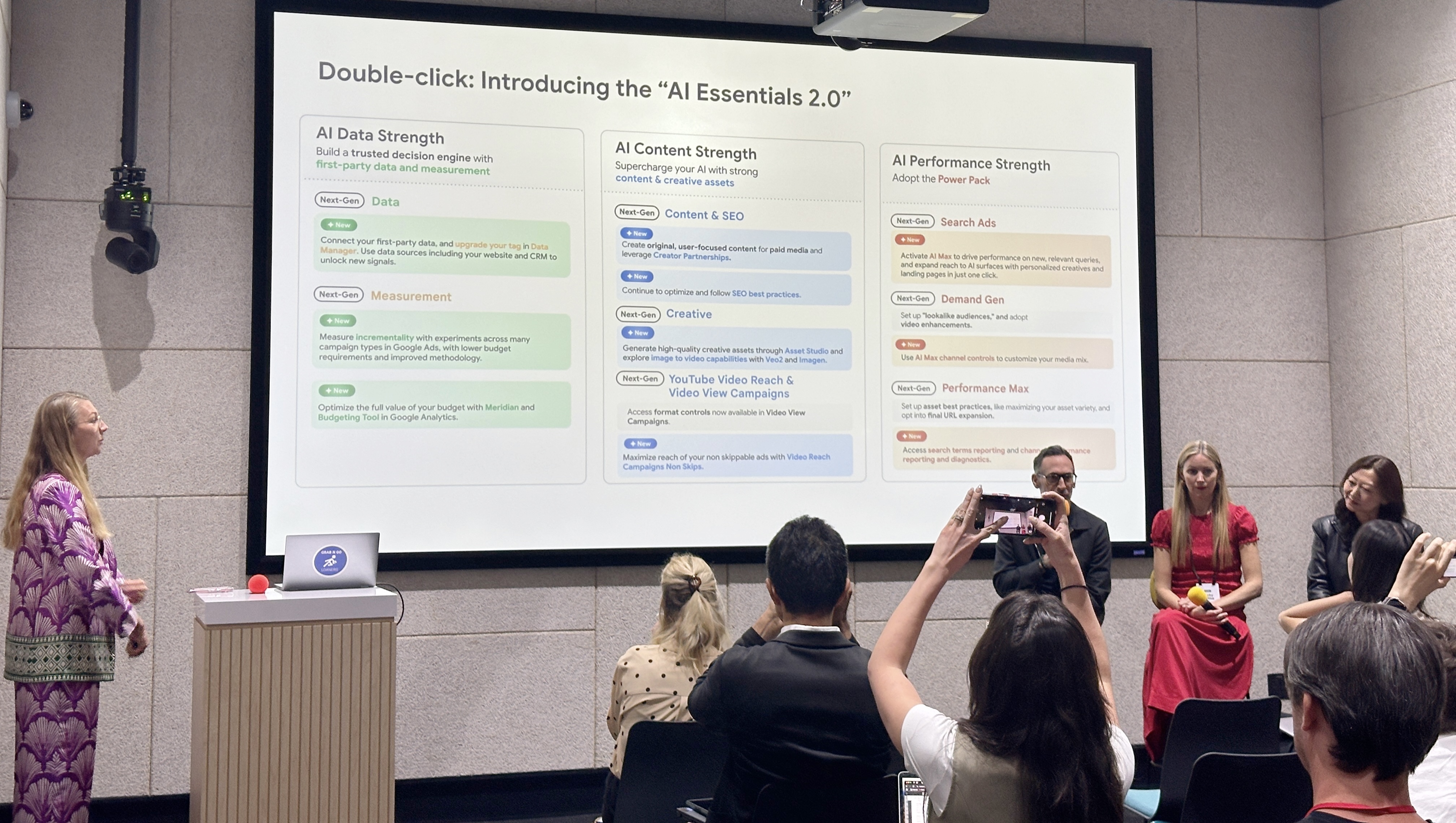 Photo: Matt G. Southern / Search Engine Journal