Google’s SEO Tips For Better Rankings – Search Central Live NYC via @sejournal, @martinibuster

Google’s Search Liaison answered a question at Google Search Central Live NYC about whether Google prefers brands. Sullivan took that as an opportunity to affirm that Google is working to show more independent sites and also offered insights into how independent sites can improve their search performance.

Google Wants Good Independent Sites To Rank

Someone at the Search Central Live NYC event submitted a question asking whether Google was focusing on just showing a smaller set of sites from the Internet that’s limited to big brand sites. Danny Sullivan, aka Google Search Liaison, immediately responded, no. He responded that he understands that there’s a sense that big brands always rank well on Google and that many people say that Google only wants to show big brands.

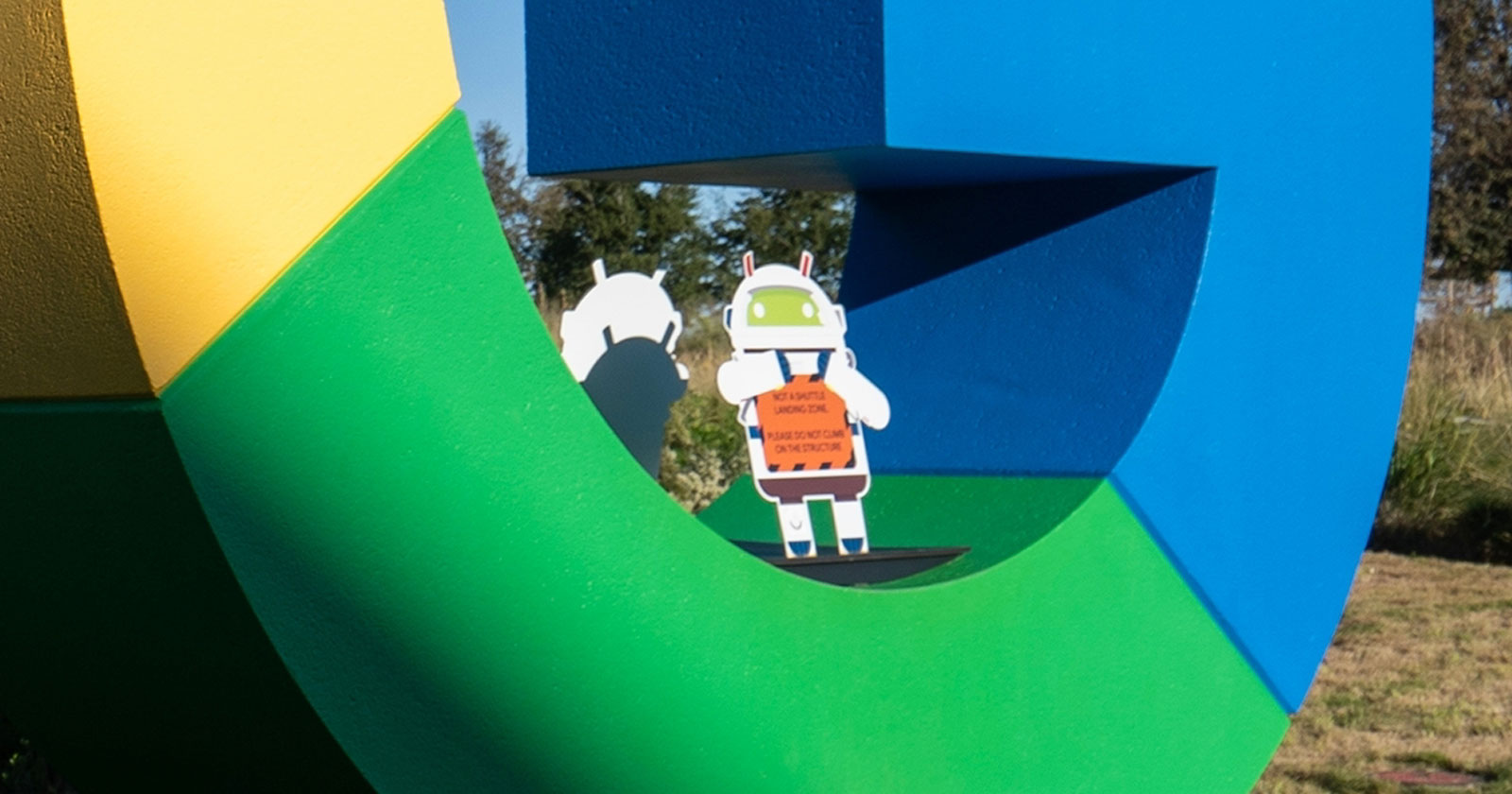
Google Search Central Live New York City

Photo of Google Search Liaison Danny Sullivan taken at Search Central Live NYC Event

Sullivan acknowledged that this is a valid concern from small independent sites because there are many who are doing good work who aren’t ranking as well as they should be and explained that they were working on it.

The following is a paraphrase based on my notes:

“And we’ve been spending a lot of time (and we’re going to continue to spend a lot of time) to understand how can we do a better job on better understanding and perhaps guiding some of the smaller creators and small independent sites so they can be successful. It has been like a huge chunk of my time over the past year. And I’m not alone in it.

We were just in Zurich last week. We were just out there and we were looking at a bunch of real queries from small creators, independent sites and sitting with the ranking team and going through them and what’s happening here and …we made a note that you know, we have done some changes that we think help and we have done some changes that have helped. We also anticipate working through the whole rest of the year.”

Why Changes Are Incremental

Danny explained that independent sites and their topic areas vary widely which complicates applying a single algorithmic solution to help them all. That explains why Google keeps saying they’re making incremental changes.

According to my notes, he said:

“One of the things I would say is I don’t expect you’re going to suddenly see one day we do a big huge, ‘And here is the independent small site update’ type of thing. I think it’s going be these incremental things that we do, in part because these kinds of sites are not monolithic.”

That Thing You Need To Know About Brands

Danny discussed how serious they are about finding solutions for independent publishers and eventually began speaking of more tangible things that publishers can do to help themselves, specifically about becoming memorable to site visitors.

This is something that I’ve been doing for over twenty years. I never rolled out an affiliate or AdSense site that didn’t have a carefully planned domain name, logo and mascot in place. That mascot is super important because it helps make the site memorable to site users. They’ll forget the domain name but they’ll remember that mascot and the site.

Danny said that Google’s systems are not tuned to identify big brands and rank them well. He acknowledged that sites with a lot of branded searches might rank well and this is the point where it felt like okay, am I really hearing this? It’s the kind of information you come to these events for.

This is a paraphrase from my notes of what Danny said:

“And I’ve seen where people do research and say, ‘I’ve figured out that if you have a lot of branded searches…’ That’s kind of valid in some sense.

But it’s not like you have a lot of big branded searchers or small branded searchers or whatever and you’re finding that correlates to your traffic. What it’s saying is that people have recognized you as a brand, which is a good thing. We like brands. Some brands we don’t like, but at least we recognize them, right?

So if you’re trying to be found in the sea of content and you have the 150,000th fried chicken recipe, it’s very difficult to understand which ones of those are necessarily better than anybody else’s out there.

But if you are recognized as a brand in your field, big, small, whatever, just a brand, then that’s important.

That correlates with a lot of signals of perhaps success with search. Not that you’re a brand but that people are recognizing you. People may be coming to you directly, people, may be referring to you in lots of different ways… You’re not just sort of this anonymous type of thing.

So, one thing I would encourage anybody, but especially to smaller and independent ones that are kind of feeling like the big brands are kind of getting it all is, are you making sure that people understand who you are?”

Differentiate Yourself. A Lot.

Danny Sullivan discussed that users submitted over 13,000 sites with feedback about Google’s algorithm and claimed that he’s confident that he’s looked at more sites than any SEO in the audience has. He acknowledged that many of the submissions had valid concerns but he also said he noticed that some sites that were high quality also lacked that extra bit that made them different and better.

What he was referring to, in my words, not Danny’s, was a clear narrative on the page that lets site visitors know who is behind the site. He wasn’t talking about the sidebar with the bio and a photo that travel and recipe sites all have. He was talking about something that goes beyond the generic narrative that many bloggers use.

This is a paraphrase from my notes about what Danny said:

“I can land on a site and have no idea who runs the site, what the site is about. Who’s behind it? That’s not to say that if you put an ‘about us’ link on your site that now you’ll rank better. But people come to websites from Search and they don’t know what they’re getting into.”

He then contrasted social media to search to show how a forum or a social media site offers a carefully curated experience where you know where everything is at, where expectations are managed. He then said that Search is completely different. While Danny didn’t explicitly say this, I believe what he meant to communicate was that the randomness of sites that Google sends people to can be jarring to users who consequently aren’t sure whether to trust a site. It’s a different experience than the carefully curated experience of a forum or social media site and for that reason it’s important to be able to give a sense of who is behind the site.

This is a paraphrase of what Danny said:

“Search is nothing like that. Search is a grab bag. It’s weird. You don’t know what you’re going to get. It’s like I’m feeling lucky. You don’t know what you’re going to end up with.”

And please, I beg you, especially those of you that said that Google wants everything to be the same. That’s not what we want. We don’t want every website to be a cookie cutter site.

We want you to build websites that you think makes sense for your readers.

Anytime you ever have a question about what you should be doing to be successful in Google search and your answer is to ask if it’s a good thing for your readers, if you do that, you are aligning with the things we’re trying to do because we’re trying to send people to satisfying content so that they go, ‘This was great! This is wonderful, I loved it!’

So when they wind up on your website, probably for the first time and they don’t know you from anything and they’re coming from this crazy world where they don’t even know where the profiling for the author is, make it easy for them. Make it easy for them to come into the site and know exactly what you’re about.

I know the travel bloggers, you all have the thing on the side that says, ‘we love travelling the world…’ It’s like, OK, that’s fine and at least people know to expect that from travel bloggers and you’ve got it there.

But help them understand what’s unique or different about you, that makes you a brand. And that is a really good thing.”

Insights From Search Central Live NYC

Google Actively Supports Independent Sites

Danny Sullivan said multiple times that Google is spending a significant amount of time into improving the algorithm so that more independent publishers will attain visibility in search. However these improvements are incremental because of the wide variety of sites and topics makes it so that one change won’t affect all sites equally.

Brand Recognition Drives Search Success

Being recognized as a brand to site visitors is a quality that highly successful sites tend to have. It’s not that cultivating a brand is a ranking factor, but rather that cultivating site users leads to stronger search signals.

Differentiation Is Important

Some high-quality sites fail to stand out because they do what they think they do what everyone else is doing. Site visitors may appreciate more effort to make it clearer who is behind the site. An example of something to consider avoiding are things like rote generic bios in favor of providing a real sense of why the site is important or matters.

Clarity Builds Trust

Recognize that the web has an element of randomness that make some site visitors wary about visiting a site for the first time. Design with this understanding in mind.

Design for the Reader, Not the Algorithm

One of the most common mistakes I see by publishers is that they can list all of the things they did for SEO but very little if anything that they did for their site visitors. Danny Sullivan recommends basing decisions on whether a change is good for the site visitors because that will align it with the kinds of sites Google wants to rank.

https://www.searchenginejournal.com/googles-seo-tips-for-better-rankings-search-central-live-nyc/543091/




Google Completes March 2025 Core Update Rollout via @sejournal, @MattGSouthern

Google officially completed the rollout of its March 2025 Core Update today at 5:34 AM PDT, ending two weeks of significant volatility in search rankings.

This update began on March 13 and has created notable shifts in search visibility across various sectors and website types.

Widespread Impact Observed

Data collected during the update’s rollout period revealed some of the most volatile search engine results pages (SERPs) in the past 12 months, according to tracking from Local SEO Guide.

Their system, which monitors 100,000 home services keywords, showed unprecedented movement beginning the week of March 10th.

SISTRIX’s Google Update Radar confirmed these findings, detecting substantial changes across UK and US markets starting March 16th.

Forum Content Recalibration

One of the most significant trends emerging from this update is a recalibration of how Google values forum content.

After approximately 18 months of heightened visibility for forum websites following Google’s mid-2023 “hidden gems” update, many forum sites are now experiencing substantial drops in visibility.

SEO strategist Lily Ray highlighted this trend, noting steep visibility declines for platforms like proboards.com, which hosts numerous forum websites.

Ray pointed out that while Reddit continues gaining visibility, many other forum sites that benefited from the 2023 algorithm changes are now diminishing their rankings.

“The SEO glory days of ‘just be a forum and you’ll rank’ might be coming to an end,” Ray observed.

Additional Patterns Identified

Andrew Shotland, CEO of Local SEO Guide, identified several other potential patterns in this update:

  1. Forum Content Devaluation: While Reddit remains strong, other forums are seeing their previously gained visibility disappear.
  2. Programmatic Content Penalties: Sites creating large volumes of programmatic pages, particularly those designed specifically for SEO rather than user value, are experiencing significant declines.
  3. Cross-Sector Impact: Unlike some updates that target specific industries, this core update has affected sites across retail, government, forums, and content publishers.

Industry professionals commenting on the update have noted the potential connection to Google’s broader efforts to improve search result diversity and combat low-value content.

This recalibration may also relate to the ongoing integration of AI-generated content in search results.

What This Means for SEO

With the update now complete, SEO professionals can begin to assess the full impact on their sites and implement appropriate strategies.

For those managing forum content, this update signals the importance of quality over quantity and suggests that simply having forum content is no longer sufficient for strong rankings.

Sites negatively impacted by the update should focus on improving content quality, removing programmatic or low-value pages, and ensuring their content genuinely addresses user needs rather than being created primarily for search engines.

Search Engine Journal will continue to monitor the aftermath of this core update and provide additional analysis as more data becomes available.

https://www.searchenginejournal.com/google-completes-march-2025-core-update-rollout/543063/


Top SEO Shares How To Win In The Era Of Google AI via @sejournal, @martinibuster

Jono Alderson, former head of SEO at Yoast and now at Meta, spoke on the Majestic Podcast about the state of SEO, offering insights on the decline of traditional content strategies and the rise of AI-driven search. He shared what SEOs should be doing now to succeed in 2025.

Decline Of Generic SEO Content

Generic keyword-focused SEO content, as well as every SEO tactic, has always been on a slow decline, arguably beginning with statistical analysis, machine learning and then into the age of AI-powered search. Citations from Google are now more precise and multimodal.

Alderson makes the following points:

  • Writing content for the sake of ranking is becoming obsolete because AI-driven search results provide those answer.
  • Many industries and topics like dentists and recipes sites have an oversaturation of nearly identical content that doesn’t add value.

According to Alderson:

“…every single dentist site I looked at had a tedious blog that was quite clearly outsourced to a local agency that had an article about Top 8 tips for cosmetic dentistry, etc.

Maybe you zoom out how many dentists are there in every city in the world, across how many countries, right? Every single one of those websites has the same mediocre article that somebody has done some keyword research. Spotted a gap they think they can write one that’s slightly better than their competitors. And yet in aggregate, we’ve created 10 million pages that none of which show the purpose, all of which are fundamentally the same, none of which are very good, none of which add new value to the corpse of the Internet.

All of that stops working because Google can just answer those kinds of queries in situ.”

Google Is Deprioritizing Redundant Content

Another good point he makes is that the days where redundant pages have a chance are going away. For example, Danny Sullivan explained at Search Central Live New York that many of the links shown in some of the AI Overviews aren’t related to the keyword phrase but are related to the topic, providing access to the next kind of information that a user would be interested in after they’d ingested the answer to their question. So, rather than show five or eight links to pages that essentially say the same thing Google is now showing links to a variety of topics. This is an important thing publishers and SEOs need to wrap their minds around, which you can read more about here: Google Search Central Live NYC: Insights On SEO For AI Overviews.

Alderson explained:

“I think we need to stop assuming that producing content is a kind of fundamental or even necessary part of modern SEO. I think we all need to take a look at what our content marketing strategies and playbooks look like and really ask the questions of what is the role of content and articles in a world of ChatGPT and AI results and where Google can synthesize answers without needing our inputs.

…And in fact, one of the things that Google is definitely looking for, and one of the things which will be safe to a degree from this AI revolution, is if you can publish, if you can move quickly, if you can produce stuff at a better depth than Google can just synthesize, if you can identify, discover, create new information and new value.

There is always space for that kind of content, but there’s definitely no value if what you’re doing is saying, ‘every month we will produce four articles focusing on a given keyword’ when all 10,000 of our competitors employ somebody who looks like us to produce the same article.”

How To Use AI For Content

Alderson discouraged the use of AI for producing content, saying that it tends to produce a “word soup” in which original ideas get lost in the noise. He’s right, we all know what AI-generated content looks like when we see it. But I think that what many people don’t notice is the extra garbage-y words and phrases AI uses that have lost their impact from overuse. Impactful writing is what supports engagement, and original ideas are what make content stand apart. These are the two things AI is absolutely rubbish at.

Alderson notes that Google may have anticipated the onslaught of AI-generated content by emphasizing EEAT (Experience, Expertise, Authoritativeness and Trustworthiness and argues that AI can be helpful.

He observed:

“And a lot of the changes we’re seeing in Google might well be anticipating that future. All of the EEAT stuff, all of the product review stuff, is designed to combat a world where there’s an infinite amount of recursive nonsense.

So definitely avoid the temptation to be using the tools just to produce. Use them as assistance and muses to bounce ideas around with and then do the heavy thinking yourself.”

The Shift from Content Production to Content Publishing

Jono encouraged content publishers to focus on creating original research, expert insights, to show things that have gone unnoticed. He suggested that succesful publishers are the ones who get out in the world and experience what they’re writing about through original research. He also encouraged focusing on authoritative voices rather than settling for generic content.

He explained:

“I think there’s definitely room to publish good content and publish. 2015-ish everyone started saying become a publisher and the whole industry misinterpreted that to mean write lots of articles. When actually you look at successful publishers, what they do is original research, by experts, they break news, they visit the places, they interact with things. A lot of what Google’s looking for in those kind of EEAT criteria, it describes the act of publishing. Yet very little of SEO actually publishes. They just produce And I think if you …close that gap there is definitely value.

And in fact, one of the things that Google is definitely looking for, and one of the things which will be safe to a degree from this AI revolution, is if you can publish, if
you can move quickly, if you can produce stuff at a better depth than Google can just synthesize.”

What does that mean in terms of a content strategy? One of the things that bothers me is the lack of originality in content. Things like concluding paragraphs with headings like “Why We Care” drive me crazy because to me it indicates a rote approach to content.

I was researching how to flavor shrimp for sautéing and every recipe site says to sprinkle seasonings on the shrimp prior to a quick sauté at a medium high heat, which burns the seasonings. Out of the thousands of recipe sites out there, not one can figure out that you can sauté the shrimp, add some garlic, then when it’s done add the seasoning just after turning off the flame? And if you ask AI how to do it the AI will tell you to burn your seasonings because that’s what everyone else says.

What that all means is that publishers and SEOs should focus on hands-on original research and unique insights instead of regurgitating what everyone else is saying. If you follow directions and it comes out poorly maybe the directions are wrong and that’s an opportunity to do something original.

SEO’s Role in Brand-Building & Audience Engagement

When asked what the role of content is in a world where AI is producing summaries, Alderson suggested that publishers and SEOs need to get ahead of the point where consumers are asking questions, go back to before they ask those questions.

He answered:

“Yeah, it’s really tricky because the kind of content that we’re producing there is going to change. It’s not not going to be the “8 Tips For X” in the hope the 2% of that audience convert. It’s not going to work anymore.

You’re going to need to go much higher up the funnel and much earlier into the research cycle. And the role of content will need to change to not try and convert people who are at the point of purchase or ready to make a decision, but to influence what happens next for the people who are at the very start of those journeys.

So what you can do is, for example, I know this is radical, but audience research, find out what kind of questions people in your sector had six months before they purchased or the kind of frustrations and challenges- what do they wish they’d known when they’d started to engage upon those processes?”

Turning that into a strategy, it may mean that SEOs and publishers may want to shift away from focusing solely on transactional keywords and toward developing content that builds brand trust early. As Jono recommends, conduct audience research to identify what potential customers are thinking about months before they are ready to buy and then create content that builds long-term familiarity.

The Changing Nature of SEO Metrics & Attribution

Alderson goes on to offer a critique about the overreliance on conversion-based metrics like last-click attribution. He suggests that the focus on proving success by showing that a user didn’t return to the search results page is outdated because SEO should be influencing earlier stages of the customer journey

“You look at the the kind of there’s increasing belief that attribution as a whole is a bit of a pseudoscience and that as the technology gets harder to track all the pieces together, it becomes increasingly impossible to produce an overarching picture of what are the influences of all these pieces.

You’ve got to go back to conventional marketing …You’ve got to look at actually, does this influence what people think and feel about our brand and our logo and our recall rather than going, ‘how many clicks did we get out of, how many impressions and how many sales?’ Because if you’re competing there, you’re probably too late.

You need to be influencing people much higher the funnel. So, yeah… All, everything we’ve ever learned in the nineteen fifties and sixties about marketing, that is how we measure what good SEO looks like. Yeah, it looks like maybe we need to step back from some of the more conventional measures.”

Turning that into a strategy means that maybe it’s a good exercise to rethink traditional success metrics and start looking at customer sentiment rather than just search rankings.

Radical Ideas For A Turning Point In History

Jono Alderson prefaced his recommendation for doing audience research with the phrase, “I know this is radical…” and what he proposes is indeed radical but not in the sense that he’s proposing something extreme. His suggestions are radical in the sense that he’s pointing out that what used to be common sense in SEO (like keyword research, volume-driven content production, last-click attribution) is increasingly losing relevance to how people seek out information today. The takeaway is that adapting means rethinking SEO to the point that it goes back to its roots in marketing.

Watch Jono Alderson speak on the Majestic SEO podcast:

Stop assuming that ‘producing content’ is a necessary component of modern SEO – Jono Alderson

[embedded content]

Featured Image/Screenshot of Majestic Podcast

https://www.searchenginejournal.com/top-seo-shares-how-to-win-in-the-era-of-google-ai/543027/


Google Provides Timeline To Improve Publishers’ Search Visibility via @sejournal, @MattGSouthern

Google has publicly committed to December 31 as a deadline for improving how independent publishers appear in search results.

This timeline emerged during an exchange on X between Danny Sullivan, Google’s Search Liaison, and several concerned publishers.

A Turning Point for Independent Publishers?

The exchange began with Jonathan Jones sharing notes from a discussion where Google addressed concerns about independent content creators.

According to Jones’ post, Sullivan acknowledged Google’s need to “reward sites better” and expressed interest in helping “smaller independent sites to succeed.”

What made this conversation notable was publisher Nate Hake’s push for accountability, which resulted in Google providing a deadline. Something Google typically avoids when discussing ranking improvements.

“Can we take that to mean ‘December 31, 2025’ (if not before)?” Hake asked directly.

“Yes,” responded Google’s Search Liaison, adding the caveat that “this doesn’t mean all sites will go back up to wherever they were if they are down from a previous peak.”

Long-Standing Frustrations Come to a Head

The exchange highlighted the tension between Google and independent publishers, which have seen their search visibility decline in recent years.

“Honestly, everything you are saying sounds exactly like what you said when we visited Google HQ in October,” Hake wrote. “Same words, same inaction.”

Hake then detailed what he claims Google has done since October: “reduced independent publisher visibility even more” while continuing “to preference Reddit, Quora, and the 16 VC-backed media companies.”

Others joined the conversation, expressing similar frustrations with Google’s communication style. Mordy Oberstein characterized Google’s guidance as “ethereal” and “anything but concrete and consistent,” noting that publishers need more precise models of “what good sites look like.”

Google’s Response: Gradual Improvements, Not a Single Update

In response to these criticisms, Sullivan explained that improvements would be incremental rather than delivered in one major update:

“There’s no specific date because there’s no one specific thing that the teams are working on to improve. There are multiple things, because search has multiple things that are involved in ranking.”

He added:

“There have been some changes already launched with that goal. Some sites may have benefited from them; others might not, but that’s also because the sites themselves are all different.”

Sullivan acknowledged the need for better guidance, stating:

“I’d like to see us do a better job with guidance and documentation focused on content issues to add to our existing stuff that’s primarily about technical issues.”

Why This Matters

Many publishers have reported traffic declines following recent Google updates, with some claiming visibility has dropped despite maintaining high-quality content.

As Google’s March Core Update continues to roll out, publishers are anxious to see if it will resolve their ranking issues.

Some websites might notice changes with this update. However, we can expect improvements for more publishers by December.

Sullivan’s commitment is a small but notable victory for those who have pushed for greater transparency and accountability from Google.

https://www.searchenginejournal.com/google-provides-timeline-to-improve-publishers-search-visibility/542692/


Google Search Central Live NYC: Insights On SEO For AI Overviews via @sejournal, @martinibuster

Danny Sullivan, Google’s Search Liaison, shared insights about AI Overviews, explaining how predictive summaries, grounding links, and the query fan-out technique work together to shape AI-generated search results.

Optimizing For AIO

Danny Sullivan shared insights into how AI Overviews are generated, helping explain why Google may link to websites that don’t match the typical search results. While the links can differ, he emphasized that the fundamentals of search optimization remain unchanged.

This is what Danny Sullivan said, based on my notes:

“The core fundamental things haven’t really changed. If you’re doing things that are making you successful on search, those sorts of things should transfer into some of the things that you see in the generative AI kind of summaries.”

Google Explains Why AIO Results Are Different

One of the main takeaways from this part of Danny’s presentation was his explanation of why Google AIO search results are different. This is the clearest explanation of why the AIO search results are different, every SEO and publisher needs to know this.

He introduced two concepts to familiarize yourself with in order to better understand AIO search results.

  1. Predictive Summaries
  2. Grounding Links

Predictive Summaries

Danny solved the mystery behind AIO search results that show content and links that are different from what organic search results show, which makes it harder to understand how to optimize for that kind of AI search results.

He shared that the reason for that kind of AIO is something called predictive summaries. Predictive summaries show answers to a search query but also try to predict related variations of what a user will also want to see. This sounds a lot like Google’s patent about Information Gain. Information Gain is about predicting the next question that a searcher may ask after reading the answer to their present question. Information gain is a patent that is strictly to the context of AI Search and AI Assistants.

Here is what he said, according to my notes:

“One thing I think that people find really confusing sometimes is that they’ll do a query and especially you’ll see …these are the top 10 results, but I don’t see them in the AIO, what’s going on?

And it’s like, yeah, the query in the search box is the same query, but the model that’s going out there to try to understand what to show is kind of an overview, going beyond just the top 10 results. It’s understanding a lot of results and it’s understanding a lot of variations that you might kind of get and so that it’s coming back and it’s trying to provide its predictive summary of what the query is related to.”

Grounding Links

Sullivan also revealed that “grounding links” are another reason why AIO search results are different from the regular organic search results. An AIO search result is a summary of a topic that includes facts about multiple subtopics. The purpose of grounding is to anchor the entire summary to verifiable information from the web ecosystem.

In the context of AIO, grounding is the process of confirming the factual authenticity of the AI summaries so that a searcher can click to read about any subtopic discussed in the answer summary provided by AIO. This is the second reason why the links in AIO show a variety not normally seen in the organic search results.

One way to look at this is that the links are more contextual than the regular ten blue links of the organic search results. These contextual links are also referred to as qualified clicks or qualified links, links that are hyper-specific and more relevant in general than organic search results.

Danny appears to say that the grounding links are created from searches that are related to the initial search query, but are not the same. Like, if you want to explain how a conventional automobile runs, you need information about the powertrain which is made up of a gas combustion engine, a transmission, the axles and so on. Answering a complex question requires grounding from a wide array of information sources.

According to my notes, this is how Danny Sullivan explained it:

“And then on top of that, it’s then also trying to bring in the grounding links. And those grounding links, because it kind of comes from a broader set aren’t just going to match. The queries are going to be different and the overall set is going to be different.

Which is why it’s a great opportunity for diversity and whatever our query thing is that we say, but that’s why you can see different things that are showing there.”

Don’t Mess Up Your Rankings

Sullivan cautioned about trying to rank for both the organic and the different parts of the AIO summaries, saying that it’s likely to “mess things up” because “it doesn’t really work like that.”

Query Fan-Out Technique

Danny Sullivan also touched on the topic of AI Mode, saying that right now it’s not really something to optimize for because it’s still in Google Labs and it’s very likely to change and be something different if it ever gets out of Google Labs.

But he did say that AI Mode uses something called a query fan-out technique.

He said:

“…one of the things they talk about is like ‘we use an advanced query fan out technique with multiple related queries in it…’ And it’s basically that what I said before.

You issued a query. You try to understand the variations and things that are related. which by the way is not that much different to how search works at the moment even when you didn’t have the AI elements to it. Because when you would issue a query now we try to understand synonyms, we try to understand the meaning of the entire query. If it’s a sentence, we try to match it in all sorts of different ways …because sometimes it just brings you better results.”

Takeaways:

Google Search Liaison, aka Danny Sullivan, encouraged the use of the core SEO fundamentals, saying that they are still relevant for ranking. Danny explained why the links in AI Overviews can sometimes differ significantly from those in the organic search results, introducing three concepts that help understand AIO search results better.

Three concepts related to AIO search results to understand:

  1. Predictive Summaries
  2. Grounding Links
  3. Query Fan-Out Technique

https://www.searchenginejournal.com/google-search-central-live-nyc-insights-on-seo-for-ai-overviews/542684/


High-Quality Conversions: How To Optimize Your Website & Boost Growth via @sejournal, @lorenbaker

Ready to turn your site into a powerful growth engine in 2025? 

Watch on-demand as we unpack the strategies top brands use to optimize their sites for better search performance and more conversions in our exclusive webinar.

You’ll learn:

  • A comprehensive look at the five core focus areas of website optimization, and why they matter.
  • Practical tactics for improving keyword targeting, site structure, page speed, CTAs, and more.
  • The best tools and resources to track performance, identify opportunities, and refine your optimization strategy.

With Zack Kadish, Sr. SEO Strategy Director at Conductor, we’ll provide actionable optimization strategies you can start implementing on your website immediately.

Whether you’re new to website optimization or looking to fine-tune your approach, this webinar will equip you with the knowledge and tools to maximize your website’s potential.

View the slides below, or check out the full webinar for all the details.

Join Us For Our Next Webinar!

Unlock Local SEO: Online Review Trends Broken Down by Industry

Join us as we explore data-backed insights into the impact of reputation management, revealing key trends in customer feedback and review behaviors.

https://www.searchenginejournal.com/optimize-your-website-and-boost-growth/540742/


Google Researchers Improve RAG With “Sufficient Context” Signal via @sejournal, @martinibuster

Google researchers introduced a method to improve AI search and assistants by enhancing Retrieval-Augmented Generation (RAG) models’ ability to recognize when retrieved information lacks sufficient context to answer a query. If implemented, these findings could help AI-generated responses avoid relying on incomplete information and improve answer reliability. This shift may also encourage publishers to create content with sufficient context, making their pages more useful for AI-generated answers.

Their research finds that models like Gemini and GPT often attempt to answer questions when retrieved data contains insufficient context, leading to hallucinations instead of abstaining. To address this, they developed a system to reduce hallucinations by helping LLMs determine when retrieved content contains enough information to support an answer.

Retrieval-Augmented Generation (RAG) systems augment LLMs with external context to improve question-answering accuracy, but hallucinations still occur. It wasn’t clearly understood whether these hallucinations stemmed from LLM misinterpretation or from insufficient retrieved context. The research paper introduces the concept of sufficient context and describes a method for determining when enough information is available to answer a question.

Their analysis found that proprietary models like Gemini, GPT, and Claude tend to provide correct answers when given sufficient context. However, when context is insufficient, they sometimes hallucinate instead of abstaining, but they also answer correctly 35–65% of the time. That last discovery adds another challenge: knowing when to intervene to force abstention (to not answer) and when to trust the model to get it right.

Defining Sufficient Context

The researchers define sufficient context as meaning that the retrieved information (from RAG) contains all the necessary details to derive a correct answer​. The classification that something contains sufficient context doesn’t require it to be a verified answer. It’s only assessing whether an answer can be plausibly derived from the provided content.

This means that the classification is not verifying correctness. It’s evaluating whether the retrieved information provides a reasonable foundation for answering the query.

Insufficient context means the retrieved information is incomplete, misleading, or missing critical details needed to construct an answer​.

Sufficient Context Autorater

The Sufficient Context Autorater is an LLM-based system that classifies query-context pairs as having sufficient or insufficient context. The best performing autorater model was Gemini 1.5 Pro (1-shot), achieving a 93% accuracy rate, outperforming other models and methods​.

Reducing Hallucinations With Selective Generation

The researchers discovered that RAG-based LLM responses were able to correctly answer questions 35–62% of the time when the retrieved data had insufficient context. That meant that sufficient context wasn’t always necessary for improving accuracy because the models were able to return the right answer without it 35-62% of the time.

They used their discovery about this behavior to create a Selective Generation method that uses confidence scores (self-rated probabilities that the answer might be correct) and sufficient context signals to decide when to generate an answer and when to abstain (to avoid making incorrect statements and hallucinating). This achieves a balance between allowing the LLM to answer a question when there’s a strong certainty it is correct while also allowing for abstention when there’s sufficient or insufficient context for answering a question.

The researchers describe how it works:

“…we use these signals to train a simple linear model to predict hallucinations, and then use it to set coverage-accuracy trade-off thresholds.
This mechanism differs from other strategies for improving abstention in two key ways. First, because it operates independently from generation, it mitigates unintended downstream effects…Second, it offers a controllable mechanism for tuning abstention, which allows for different operating settings in differing applications, such as strict accuracy compliance in medical domains or maximal coverage on creative generation tasks.”

Takeaways

Before anyone starts claiming that context sufficiency is a ranking factor, it’s important to note that the research paper does not state that AI will always prioritize well-structured pages. Context sufficiency is one factor, but with this specific method, confidence scores also influence AI-generated responses by intervening with abstention decisions. The abstention thresholds dynamically adjust based on these signals, which means the model may choose to not answer if confidence and sufficiency are both low.

While pages with complete and well-structured information are more likely to contain sufficient context, other factors such as how well the AI selects and ranks relevant information, the system that determines which sources are retrieved, and how the LLM is trained also play a role. You can’t isolate one factor without considering the broader system that determines how AI retrieves and generates answers.

If these methods are implemented into an AI assistant or chatbot, it could lead to AI-generated answers that increasingly rely on web pages that provide complete, well-structured information, as these are more likely to contain sufficient context to answer a query. The key is providing enough information in a single source so that the answer makes sense without requiring additional research.

What are pages with insufficient context?

  • Lacking enough details to answer a query
  • Misleading
  • Incomplete
  • Contradictory​
  • Incomplete information
  • The content requires prior knowledge

The necessary information to make the answer complete is scattered across different sections instead of presented in a unified response.

Google’s third party Quality Raters Guidelines (QRG) has concepts that are similar to context sufficiency. For example, the QRG defines low quality pages as those that don’t achieve their purpose well because they fail to provide necessary background, details, or relevant information for the topic.

Passages from the Quality Raters Guidelines:

“Low quality pages do not achieve their purpose well because they are lacking in an important dimension or have a problematic aspect”

“A page titled ‘How many centimeters are in a meter?’ with a large amount of off-topic and unhelpful content such that the very small amount of helpful information is hard to find.”

“A crafting tutorial page with instructions on how to make a basic craft and lots of unhelpful ‘filler’ at the top, such as commonly known facts about the supplies needed or other non-crafting information.”

“…a large amount of ‘filler’ or meaningless content…”

Even if Google’s Gemini or AI Overviews does not implement the inventions in this research paper, many of the concepts described in it have analogues in Google’s Quality Rater’s guidelines which themselves describe concepts about high quality web pages that SEOs and publishers that want to rank should be internalizing.

Read the research paper:

Sufficient Context: A New Lens on Retrieval Augmented Generation Systems

Featured Image by Shutterstock/Chris WM Willemsen

https://www.searchenginejournal.com/google-researchers-improve-rag-with-sufficient-context-signal/542320/


Google Search History Can Now Power Gemini AI Answers via @sejournal, @martinibuster

Google announced an update to their Gemini personal AI assistant that increases personalization of responses so that it anticipates user’s needs and feels more like a natural personal assistant instead of a tool. Examples of how the new Gemini will help users is for brainstorming travel ideas and making personalized recommendations.

The new feature rolls out first to desktop and then to mobile apps.

Gemini With Personalization

Google announced a new version of Gemini that adapts responses to a user’s unique interests. It does this based on their search history which enables Gemini to deliver responses with a higher level of contextual relevance and personalization. Google intends to expand personalization by integrating other Google apps and services, naming Photos and Images as examples.

Google explained:

“In the coming months, Gemini will expand its ability to understand you by connecting with other Google apps and services, including Photos and YouTube. This will enable Gemini to provide more personalized insights, drawing from a broader understanding of your activities and preferences to deliver responses that truly resonate with you.”

How Personalization Works

Users can share their personal preferences and details like dietary requirements or their partner’s names in order to obtain a greater degree of personalization in responses that feel specific to the individual. Advanced users can allow Gemini to access past chats to further improve the relevance of responses.

Google’s access to search history and data from other apps may give it an advantage that competing apps like ChatGPT may not be able to match.

Personalization Is Opt-In

There are four key points to understand about personalization in Gemini:

  1. Personalization is currently an opt-in feature that’s labeled “experimental.”
  2. Users need to choose to use Personalization from the model drop-down menu in order to activate it.
  3. Gemini asks for permission to connect to search history and other Google services and apps before it uses them for personalization.
  4. Users can also disconnect from the feature.

That means that millions of Gemini users won’t suddenly begin accessing an increasing amount of information from a contextual AI assistant instead of search. But it does mean the door to that happening exists and the next step is for Google users to open it.

What Publishers Need To Know

This update increasingly blurs the distance between traditional Search and Google’s Assistant while simultaneously making information increasingly accessible in a way that publishers and SEOs should be concerned enough to research to identify how to respond.

Considerations about privacy issues may keep Google from turning personalization into an opt-out feature. And while personalization is currently an opt-in from a drop-down menu because it’s still an experimental feature. But once it’s mature it’s not unreasonable to assume that Google may begin nudging users to adopt it.

Even though this is an experimental feature, publishers and SEOs may want to understand how this impacts them, such as if it’s possible to track personalized Gemini referral traffic or will it be masked because of privacy considerations? Will answers from Gemini reduce the need for clicks to publisher sites?

Read Google’s announcement:

Gemini gets personal, with tailored help from your Google app

Featured Image by Shutterstock/Tada Images

https://www.searchenginejournal.com/google-search-history-can-now-power-gemini-ai-answers/542007/


Google Begins Rolling Out March Core Algorithm Update via @sejournal, @MattGSouthern

Google has officially begun rolling out its March 2025 core algorithm update, according to an announcement posted to the Google Search Status Dashboard today.

The update commenced at 9:23 AM PDT and is expected to fully deploy across all of Google’s search systems in up to two weeks.

The company provided minimal details beyond the timing and expected duration of the rollout.

The official announcement reads:

“Released the March 2025 core update. The rollout may take up to 2 weeks to complete.”

What This Means For SEO Professionals

Core updates are comprehensive changes to Google’s main search algorithms and systems.

Unlike more minor updates that might focus on specific issues, core updates typically produce noticeable changes to search rankings across the web.

Website owners and SEO professionals should expect fluctuations in search visibility and rankings over the coming weeks as the update gradually rolls out.

These changes often stabilize once the update is fully implemented, though permanent shifts in positioning can occur based on how the new algorithm evaluates content quality and relevance.

Preparing For Algorithm Changes

As with previous core updates, Google hasn’t provided specific details about changes made to its ranking systems. The company typically advises creating high-quality content rather than trying to fix particular issues when rankings drop after an update.

Monitor your analytics during this period to identify any significant changes in traffic or rankings. Documenting these changes can help determine whether adjustments are needed once the update has been fully implemented.

Search Engine Journal will continue to monitor the impact of this update and provide additional information as it becomes available.

Watch also: Optimizing For Google’s New Landscape And The Future Of Search

https://www.searchenginejournal.com/google-begins-rolling-out-march-core-algorithm-update/541981/


Google Publishes New Robots.txt Explainer via @sejournal, @martinibuster

Google published a new Robots.txt refresher explaining how Robots.txt enables publishers and SEOs to control search engine crawlers and other bots (that obey Robots.txt). The documentation includes examples of blocking specific pages (like shopping carts), restricting certain bots, and managing crawling behavior with simple rules.

From Basics To Advanced

The new documentation offers a quick introduction to what Robots.txt is and gradually progresses to increasingly advanced coverage of what publishers and SEOs can do with Robots.txt and how it benefits them.

The main point of the first part of the document is to introduce robots.txt as a stable web protocol with a 30 year history that’s widely supported by search engines and other crawlers.

Google Search Console will report a 404 error message if the Robots.txt is missing. It’s okay for that to happen but if it bugs you to see that in the GSC you can wait 30 days and the warning will drop off. An alterative is to create a blank Robots.txt file which is also acceptable by Google.

Google’s new documentation explains:

“You can leave your robots.txt file empty (or not have one at all) if your whole site may be crawled, or you can add rules to manage crawling.”

From there it covers the basics like custom rules for restricting specific pages or sections.

The advanced uses of Robots.txt covers these capabilities:

  • Can target specific crawlers with different rules.
  • Enables blocking URL patterns like PDFs or search pages.
  • Enables granular control over specific bots.
  • Supports comments for internal documentation.

The new documentation finishes by describing how simple it is to edit the Robots.txt file (it’s a text file with simple rules), so all you need is a simple text editor. Many content management systems have a way to edit it and there are tools available for testing if the Robots.txt file is using the correct syntax.

Read the new documentation here:

Robots Refresher: robots.txt — a flexible way to control how machines explore your website

Featured Image by Shutterstock/bluestork

https://www.searchenginejournal.com/google-publishes-new-robots-txt-explainer/541921/