Yahoo Search to start rolling out in the first weeks of 2024

Yahoo Search is expected to start rolling out aspects of its new search engine in the first weeks of 2024. Brian Provost, the Senior VP and General Manager of Yahoo Search, said Yahoo Search will be launching in the very early days of 2024.

Brian Provost said this at Search Marketing Expo Next event during the question and answer portion of his talk today.

We are expecting more basic features to come out from Yahoo’s search team in the early weeks of 2024, maybe as soon as a couple months from now. But then more of the AI and advanced features to continue to roll out in the future.

Watch what Brian Provost said. You can watch the replay of Brian Provost’s talk and Q&A session by registering for free at our SMX Next website and going to the SMX agenda at the 2:10pm session. Note, he spoke more about the release dates during the Q&A session.

Why we care. We have been expecting Yahoo to make its comeback to search since earlier this year and it seems we may be seeing that return in the near future.

I for one am looking forward to a new Yahoo Search experience.


Related stories

New on Search Engine Land

@media screen and (min-width: 800px) { #div-gpt-ad-3191538-7 { display: flex !important; justify-content: center !important; align-items: center !important; min-width:770px; min-height:260px; } } @media screen and (min-width: 1279px) { #div-gpt-ad-3191538-7 { display: flex !important; justify-content: center !important; align-items: center !important; min-width:800px!important; min-height:440px!important; } }

About the author

Barry Schwartz

Barry Schwartz is a Contributing Editor to Search Engine Land and a member of the programming team for SMX events. He owns RustyBrick, a NY based web consulting firm. He also runs Search Engine Roundtable, a popular search blog on very advanced SEM topics. Barry can be followed on Twitter here.

https://searchengineland.com/yahoo-search-to-start-rolling-out-in-the-first-weeks-of-2024-434729


Microsoft rebrands Bing Chat as Copilot

Bing Chat has a new name as of today – Copilot. It now shares the same brand name as multiple other Microsoft AI products.

R.I.P. Bing Chat. Bing Chat, part of the new Bing that was powered by ChatGPT for search, launched Feb. 7. Bing Chat has handled more than 1 billion prompts and queries since it launched, Microsoft Bing said in a blog post.

Copilot + Search. Bing is no longer “your AI-powered copilot for the web.” However, Microsoft Bing will still provide a combined Search and chat experience. It will just be called CoPilot heading forward.

For people who may not want that combined experience, CoPilot will have its own standalone ChatGPT-style experience at https://copilot.microsoft.com/

Why we care. Bing Chat launched with much hype but failed to steal any market share from Google. This is unfortunate because this allows Google to dictate the rules, direction and costs of search for the entire web.

What Microsoft is saying. Microsoft said the rebrand is to unify the Copilot experience:

  • “Our efforts to simplify the user experience and make Copilot more accessible to everyone starts with Bing, our leading experience for the web. Beginning today, Bing Chat and Bing Chat Enterprise are becoming Copilot, with commercial data protection enforced when any eligible user is signed in with Microsoft Entra ID.”

While it’s definitely a more unified experience, it also seems a bit confusing because Microsoft’s chatbot “companion” is used across multiple apps, including Microsoft 365, Edge, Windows and more – some free, some not.

Bing Chat Enterprise also rebranded. In addition to Bing Chat, Bing Chat Enterprise is also rebranded as Copilot Pro. It offers the same chat functionality with greater commercial data protection for Microsoft 365 subscribers.


Related stories

New on Search Engine Land

@media screen and (min-width: 800px) { #div-gpt-ad-3191538-7 { display: flex !important; justify-content: center !important; align-items: center !important; min-width:770px; min-height:260px; } } @media screen and (min-width: 1279px) { #div-gpt-ad-3191538-7 { display: flex !important; justify-content: center !important; align-items: center !important; min-width:800px!important; min-height:440px!important; } }

About the author

Danny Goodwin

Danny Goodwin has been Managing Editor of Search Engine Land & Search Marketing Expo – SMX since 2022. He joined Search Engine Land in 2022 as Senior Editor. In addition to reporting on the latest search marketing news, he manages Search Engine Land’s SME (Subject Matter Expert) program. He also helps program U.S. SMX events. Goodwin has been editing and writing about the latest developments and trends in search and digital marketing since 2007. He previously was Executive Editor of Search Engine Journal (from 2017 to 2022), managing editor of Momentology (from 2014-2016) and editor of Search Engine Watch (from 2007 to 2014). He has spoken at many major search conferences and virtual events, and has been sourced for his expertise by a wide range of publications and podcasts.

https://searchengineland.com/microsoft-rebrands-bing-chat-as-copilot-434709


Google Search Console adds robots.txt report

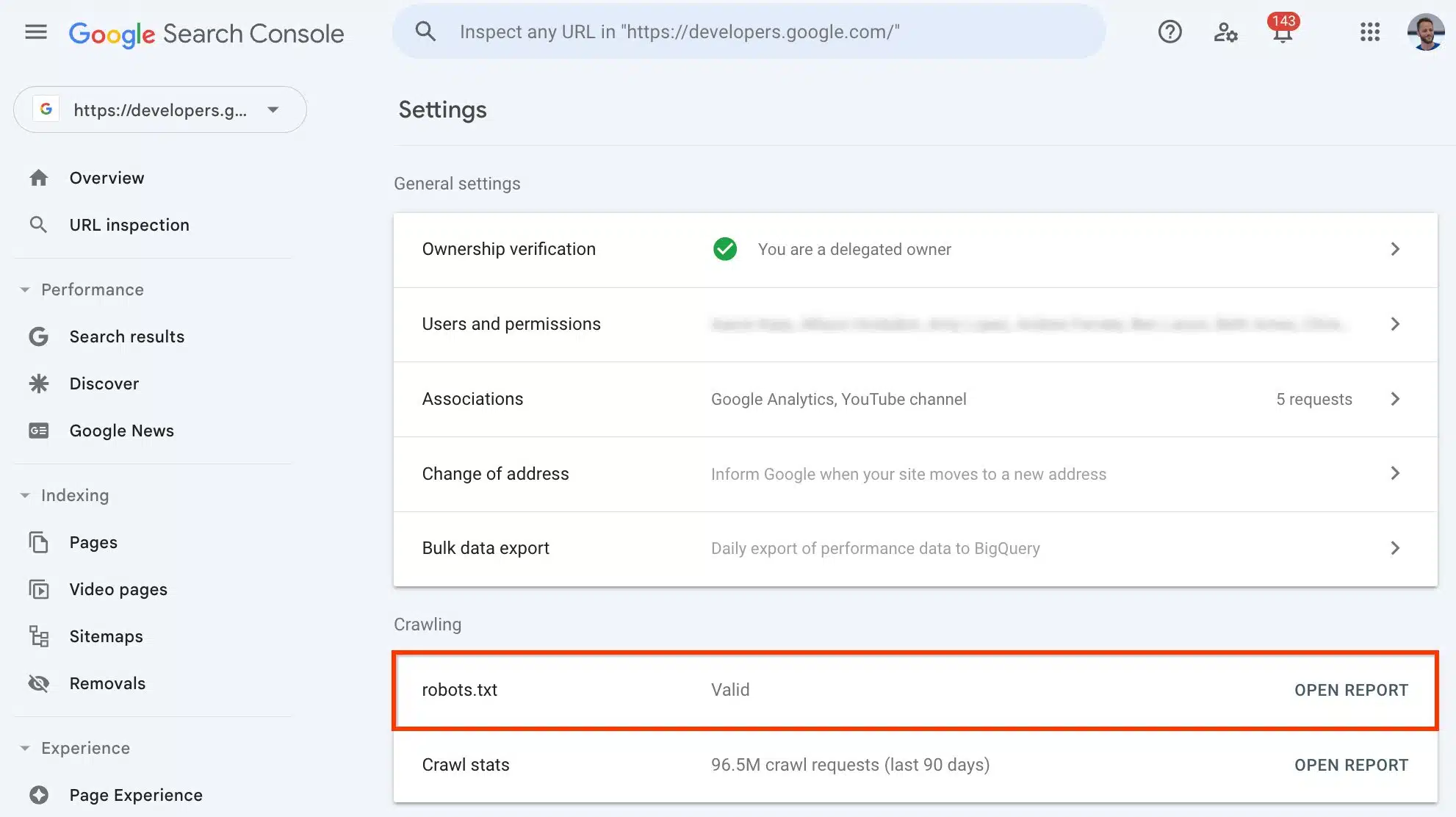
Google has released a new robots.txt report within Google Search Console. Google also made relevant information around robots.txt available from within the Page indexing report in Search Console. Finally, Google has decided to sunset the robots.txt tester.

The new robots.txt report. Google’s new robots.txt report shows gives you some information Google has on your robots.txt file including:

  • Which robots.txt files Google found for the top 20 hosts on your site
  • The last time Google crawled those files,
  • Plus any warnings or errors encountered.

Google also added to this report the ability request a recrawl of a robots.txt file for emergency situations, Google said.

What it looks like. You can access this report within Google Search Console under settings, here is what it looks like:

Google Search Console Robots Txt Report

More. Google also made relevant information around robots.txt available from within the Page indexing report in Search Console.

With this new robots.txt report, Google has decided to sunset the robots.txt tester.

More help. Google has a more detailed help document on this robots.txt report over here.

Why we care. If you are having indexing and crawling issues, this report may give you more insight into if the issue is related to your robots.txt file.

You should probably review this report for the sites you manage within Google Search Console, just to ensure there are no issues with Google being able to access your site due to robots.txt directives.


Related stories

New on Search Engine Land

@media screen and (min-width: 800px) { #div-gpt-ad-3191538-7 { display: flex !important; justify-content: center !important; align-items: center !important; min-width:770px; min-height:260px; } } @media screen and (min-width: 1279px) { #div-gpt-ad-3191538-7 { display: flex !important; justify-content: center !important; align-items: center !important; min-width:800px!important; min-height:440px!important; } }

About the author

Barry Schwartz

Barry Schwartz is a Contributing Editor to Search Engine Land and a member of the programming team for SMX events. He owns RustyBrick, a NY based web consulting firm. He also runs Search Engine Roundtable, a popular search blog on very advanced SEM topics. Barry can be followed on Twitter here.

https://searchengineland.com/google-search-console-adds-robots-txt-report-434708


Google launches new personal search experience with follow button and personalized ranking

Google is rolling out a more personalized search experience that aims to show searchers more information about what they care about directly in the search results. This is being done with several new search features, including a new Follow button, search results tailored to you, perspectives results updates, creator snippets and more.

Google is rolling out a new “Follow” button in Google search that aims at keeping you up to date on topics that you want to keep coming back to search for. The follow button allows searchers to essentially subscribe to topics where Google can show searchers content on that topic, Brad Kelle, Senior Director of Engineering, at Google Search explained to us.

How to subscribe. When you do a search and see the “Follow” button, you can click on that button to subscribe. Google will then tell you are you’re following that topic and you can “look for updates in your home feed and when you revisit this search.”

Here is what the follow button looks like:

Google Follow Button Search 304x600

Google will also enable notifications, if you are using the Google App, to push you new content on that topic.

You can always unfollow and unsubscribe from topics.

Note, this feature does not work for “sensitive” topics and is first launching in the US English search results within the Google App and mobile search results in the coming weeks.

What changes. Google may add a section named “News for you” that shows you news topics and new content around the topic you followed. This includes an update to how the perspectives feature works in that section.

Here is what this looks like:

Google News For You 284x600

Google may also adapt the search snippets to show you specific content in the search results based on what you follow.

Google Discover may also send you notifications when new content around that topic may be useful to you.

Also within Google Discover, you may see search buttons to click on for topics you subscribed to, so you can dig deeper into Google Search on that topic. We have seen Google test this with the “get the latest on” and other search buttons. Here is what it looks like:

Search Icon Discover 279x600

Search results from your favorite sites

Google will also roll out a new ranking feature that looks at which sites you visit often and show those sites more often in the search results. This is similar to previous query, where Google may show you different search results based on your immediate previous query, but in this case, Google is looking at which sites you often visit over a longer period of time and showing you that site more often than other sites.

So if you visit this site frequently, Google may decide to rank content from this site over other sites writing about the same topic, specifically for you. While your friend may see different results ranked in a different order.

You do not need to “follow” a topic or query for this feature to work, this is an independent feature from that mentioned above.

Search history. Google said it would let me know how long you search history is retained for this level of personalization. There is no way to turn off this feature without turning off all personalization or signing out of Google Search when you conduct your search.

Here is the screen to unfollow topics:

Google Interest Follow Settings 498x600

What it looks like. Google may add a “you visit often” label to the search results that were personalized for you.

About this result. Google will also show you in the “about this result” feature if that result is ranked higher because you visit the site more often.

Later this year. Google said this is rolling out in Google Search later this year for English users within the US.

Google is also updating the Perspectives feature to help you learn from others in the search results, the company said. When you tap on the perspectives filter within Google Search you can now see content from social media platforms, discussion forums, blog posts and other communities.

Coming to desktop. Perspectives launched on mobile and we saw Google testing perspectives on desktop. Google will now officially launch perspectives on desktop in the US in the coming weeks.

Creators details. Google will also be highlighting more information about the people who created that content, the content creators, directly in the search results. That includes showcasing their social media account, follower count and more.

What it looks like. We saw Google testing this a while ago and this will be rolling out officially today in the US and India, within the Google App and mobile search results:

Google Social Creators

Related stories

New on Search Engine Land

@media screen and (min-width: 800px) { #div-gpt-ad-3191538-7 { display: flex !important; justify-content: center !important; align-items: center !important; min-width:770px; min-height:260px; } } @media screen and (min-width: 1279px) { #div-gpt-ad-3191538-7 { display: flex !important; justify-content: center !important; align-items: center !important; min-width:800px!important; min-height:440px!important; } }

About the author

Barry Schwartz

Barry Schwartz is a Contributing Editor to Search Engine Land and a member of the programming team for SMX events. He owns RustyBrick, a NY based web consulting firm. He also runs Search Engine Roundtable, a popular search blog on very advanced SEM topics. Barry can be followed on Twitter here.

https://searchengineland.com/google-launches-new-personal-search-experience-with-follow-button-and-personalized-ranking-434627


Google Search ranking improvement aims to surface hidden gems

Google has rolled out ranking improvements aimed at showcasing more content from social media, blog posts, forums and more that share personal insights and experiences. This is the hidden gems announcement Google made back in May, but this update is not part of the helpful content system. It is part of the Google core ranking system, Brad Kellett, Senior Director on Google Search product and engineering told us.

Hidden gems. Google said these “hidden gems” are when people share their first-hand knowledge and their own personal insights and experiences with others on the public web. Google wants to highlight such content in its search results and search interfaces.

Not a core or helpful content update. When Google initially announced the hidden gems ranking topic, it mentioned that it would be part of a future helpful content update. Instead, it ended up as part of Google’s core ranking system designed to promote more “authentic” content. This content can come from forum posts, social media posts, blog posts, or other web pages. As long as the content is authentic and shares personal insights and experiences, and if the content is found to be helpful, it might appear. It is not explicitly classifying something as a “gem,” but instead the idea is that this type of content can be perceived as especially helpful and in the past, might have been harder to appear in the results.

Google told us back then that the hidden gems feature was not live yet but it seems like it was. Google today told us it actually went live as part of the core ranking system a few months ago but Google told us it wasn’t live less than a month ago. Although, what Danny Sullivan wrote back then was “This work is still continuing and is not part of this particular update. We’ll share more about our work in this area in the future.” So while we all interpreted that it was not live yet, it didn’t necessarily mean that.

How does it work. I asked how does Google know if the person posting is really authentic. People make up personas, make up names, on the web, on social media, on forums and post anything. Google didn’t want to give me any of its secret sauce but implied it is less about the person posting and more about what content that person posts.

It sounds like if the content triggers some sort of authenticity signals, not that Google has an authenticity ranking signal, but if the signals Google uses for this ranking system show that the content is helpful, insightful and through personal experiences, then maybe Google will highlight that content more in search.

Why we care. Google began introducing this improvement to core ranking a few months ago and now has fully introduced it as part of its core ranking and you may start to see more search results from forum posts, social media posts, blog posts and more showing up in search.

This may impact where your sites or clients site rank for a given query, so keep an eye on the search results and see if your keywords and content is impacted by this new hidden gems Google ranking algorithm.


Related stories

New on Search Engine Land

@media screen and (min-width: 800px) { #div-gpt-ad-3191538-7 { display: flex !important; justify-content: center !important; align-items: center !important; min-width:770px; min-height:260px; } } @media screen and (min-width: 1279px) { #div-gpt-ad-3191538-7 { display: flex !important; justify-content: center !important; align-items: center !important; min-width:800px!important; min-height:440px!important; } }

About the author

Barry Schwartz

Barry Schwartz is a Contributing Editor to Search Engine Land and a member of the programming team for SMX events. He owns RustyBrick, a NY based web consulting firm. He also runs Search Engine Roundtable, a popular search blog on very advanced SEM topics. Barry can be followed on Twitter here.

https://searchengineland.com/google-search-ranking-improvement-aims-to-surface-hidden-gems-434623


Google Search tests Notes on search results

Google launched a new search labs experiment named “Notes.” Notes gives searchers a way write their own notes on a specific search result listing and within Google Discover while also allowing others to read people’s notes on that search result listing.

“Our goal with this new Labs experiment is to provide access to helpful tips about an article or topic from both experts and everyday people. This not only helps you narrow in on the most relevant information, but also may help you see what worked for others who have been there before,” Brad Kellett, Senior Director of Engineering, Search at Google told us.

We knew Google was working on notes for search and here it is.

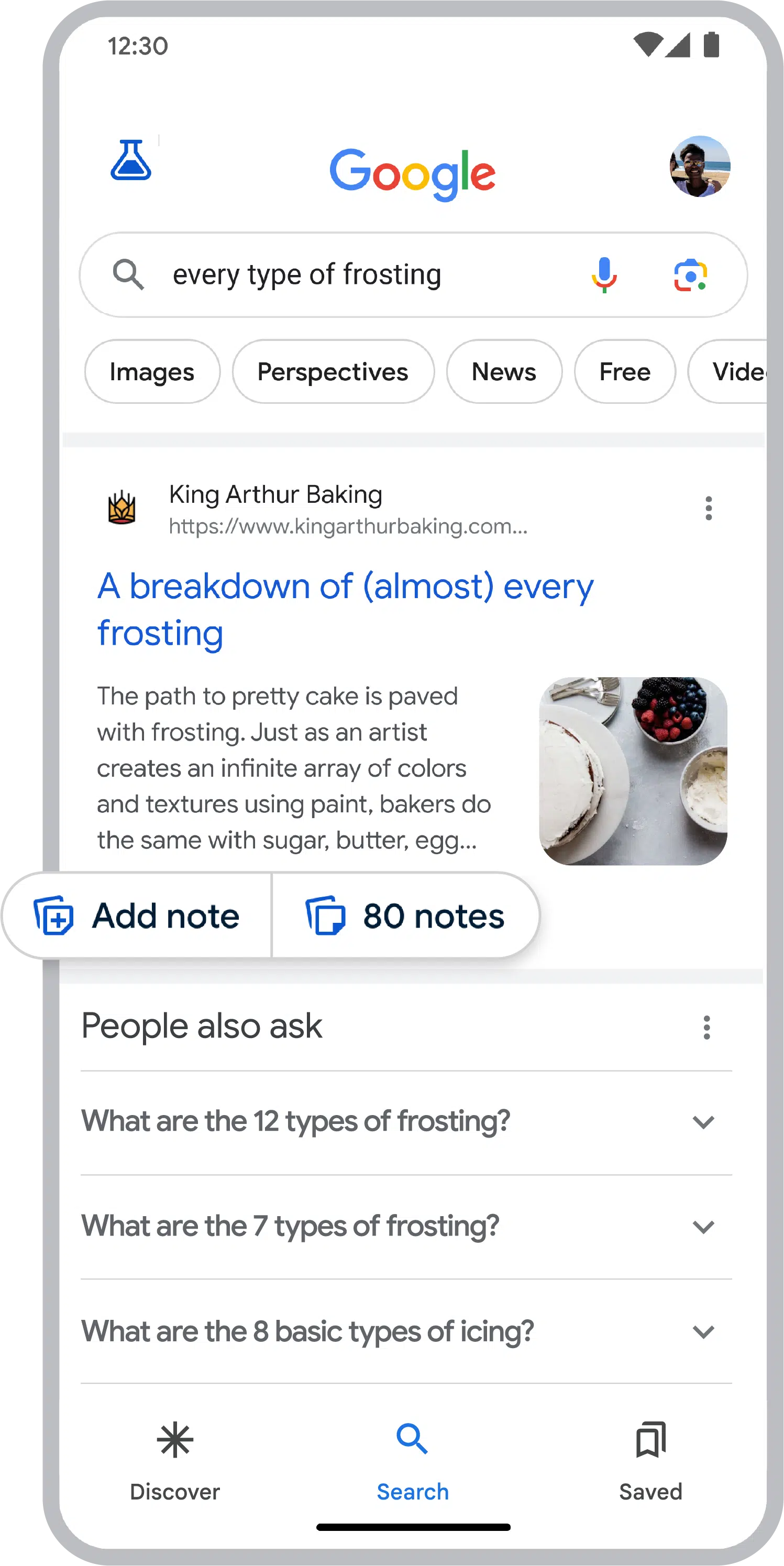
How it works. After you turn on the Search labs experiment you can view, create, and share notes on content in Google Search results and Google Discover. When go to the search results, you may see two icons below the search result snippet.

(1) Add Note: This button lets you add your own note to that search result listing.

(2) # notes: This shows you the number of notes on a specific search result listing and lets you view some of those notes on a separate page.

What it looks like. Here is what the snippet looks like, with those two icons:

Google Notes Button 300x600

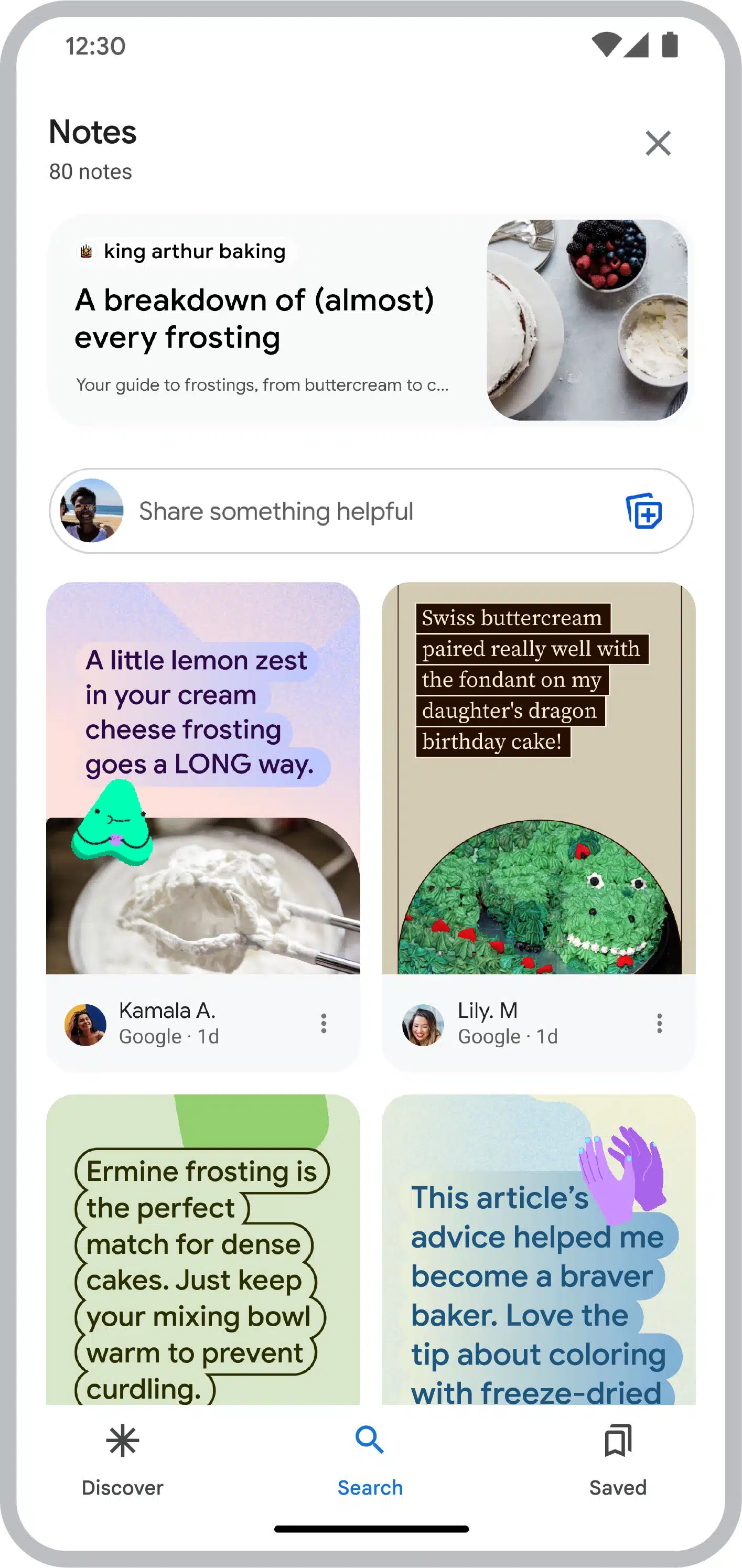
When you click to view notes, you are taken to a page that shows you a list of the available notes ranked in order of some Google ranking algorithm, to show you the most useful notes first. Here is what that list view looks like:

Google Notes Feed 284x600

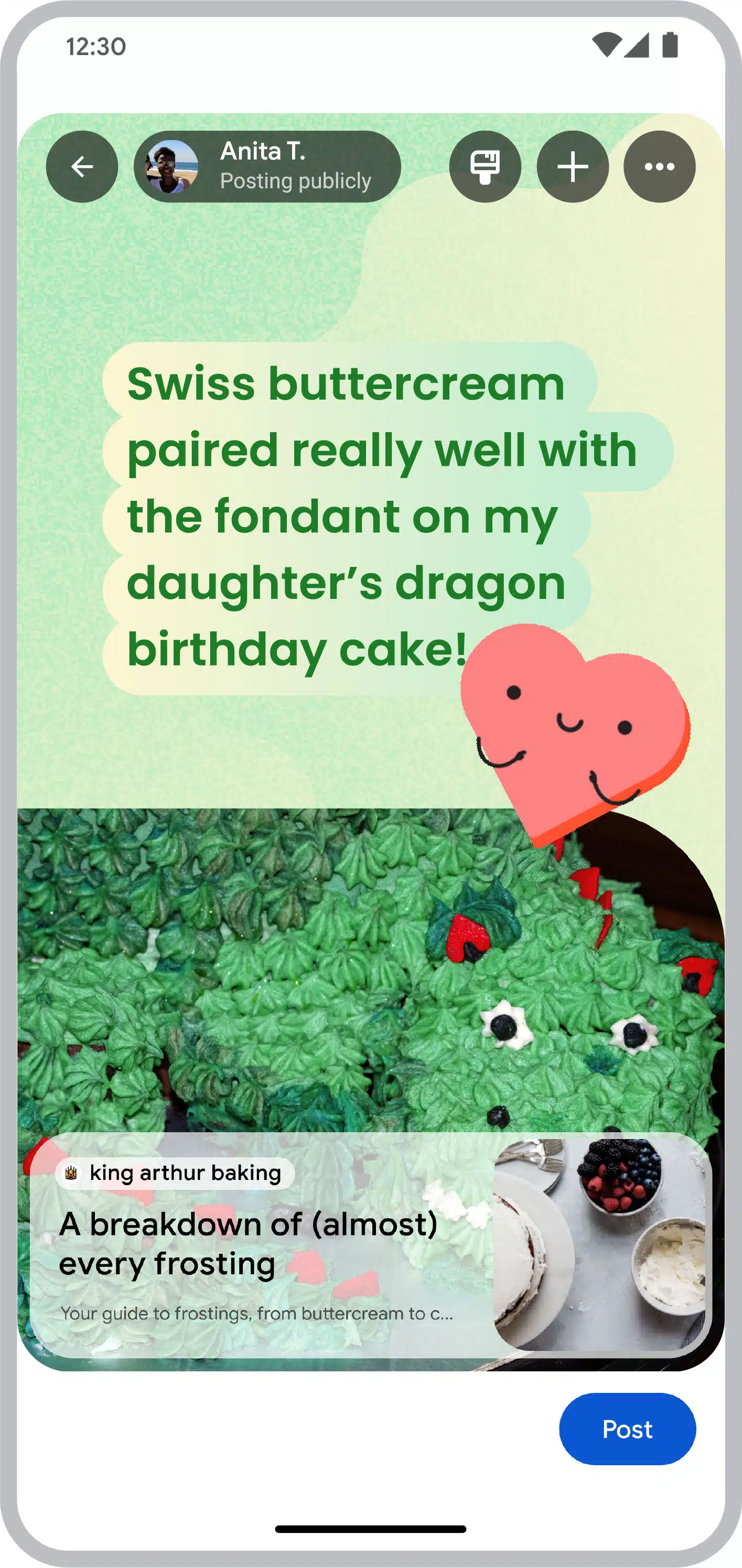
You will see that notes can have visual backgrounds, with text and images. All notes also contain a link in the footer directly to the web page the notes are related to:

Google Notes Single View 284x600

You can customize your Google note with elements like text, stickers and photos, and you can pick from different visual styles. Here is a GIF showing how to create a note using this feature:

Google Create Notes

Ranking. Google said it uses both algorithmic protections and human reviews to ensure the notes are useful and relevant, and not spammy and abusive. Plus searchers can report notes that may be problematic.

Google said each note is ranked for a given web page based on its relevance to the search query and the content on the page.

The notes are crawlable by Google for ranking purposes. but the ranking is just for the notes feature. Google does not have plans to use the notes for ranking purposes in the normal search results. This ranking feature is isolated to just ranking the notes on this notes page.

Notes have zero impact on rankings of that site, so adding more or less notes or types of notes will have no impact on how well or how high that search result listing ranks.

Site owners. Google said that notes were designed to work hand in hand with content on the web and as a result, Google is working on ways to give publishers insights into the notes left about their web pages and content. Google would not tell us if this will be a future feature in Search Console but said right now this is just a labs experiment and will announce more details in the future as this graduates labs.

Launches today. This is launching today as a Search Labs feature in the English in the U.S. and Hindi and English in India on the Google App and mobile search results.


Related stories

New on Search Engine Land

@media screen and (min-width: 800px) { #div-gpt-ad-3191538-7 { display: flex !important; justify-content: center !important; align-items: center !important; min-width:770px; min-height:260px; } } @media screen and (min-width: 1279px) { #div-gpt-ad-3191538-7 { display: flex !important; justify-content: center !important; align-items: center !important; min-width:800px!important; min-height:440px!important; } }

About the author

Barry Schwartz

Barry Schwartz is a Contributing Editor to Search Engine Land and a member of the programming team for SMX events. He owns RustyBrick, a NY based web consulting firm. He also runs Search Engine Roundtable, a popular search blog on very advanced SEM topics. Barry can be followed on Twitter here.

https://searchengineland.com/google-search-tests-notes-on-search-results-434634


Report: Yandex search engine for sale

Yandex N.V., which is now a Dutch holding company, is looking to sell off its search engine and all of its other Russian assets as part of a deal estimated to be between $5 billion and $6 billion, Reuters reported.

Likely sale? A sale could come as early as December. Yandex N.V. might sell 100% of all its Russian assets or hold share options.

  • “Dutch holding company Yandex NV’s planned restructuring is aimed at recouping some shareholder funds with the sale of its main revenue-generating Russian businesses, such as its search and ride-hailing operations. It then plans to develop four other business lines internationally,” Reuters reported.

Yandex also dominates online advertising in Russia.

Why we care. Yandex has been in turmoil since Russia invaded Ukraine in February 2022, though it still has a commanding 65.95% search market share in Russia (only 1.83 globally), in October, per StatCounter, while Yandex announced it had 62.6% market share in its Q3 2023 earnings report. It remains an area international search marketers will want to watch.


Related stories

New on Search Engine Land

@media screen and (min-width: 800px) { #div-gpt-ad-3191538-7 { display: flex !important; justify-content: center !important; align-items: center !important; min-width:770px; min-height:260px; } } @media screen and (min-width: 1279px) { #div-gpt-ad-3191538-7 { display: flex !important; justify-content: center !important; align-items: center !important; min-width:800px!important; min-height:440px!important; } }

About the author

Danny Goodwin

Danny Goodwin has been Managing Editor of Search Engine Land & Search Marketing Expo – SMX since 2022. He joined Search Engine Land in 2022 as Senior Editor. In addition to reporting on the latest search marketing news, he manages Search Engine Land’s SME (Subject Matter Expert) program. He also helps program U.S. SMX events. Goodwin has been editing and writing about the latest developments and trends in search and digital marketing since 2007. He previously was Executive Editor of Search Engine Journal (from 2017 to 2022), managing editor of Momentology (from 2014-2016) and editor of Search Engine Watch (from 2007 to 2014). He has spoken at many major search conferences and virtual events, and has been sourced for his expertise by a wide range of publications and podcasts.

https://searchengineland.com/yandex-search-engine-sale-report-434654


Google’s Florida update: 20 years since the SEO ‘volcanic eruption’ 

I remember well how, seemingly, one flick of a Google switch impacted the entire SEO community.

Google’s Florida Update of 2003 affected Google search results for the industry and end users. 

I was at a huge gathering of SEOs who all had the same thing on their minds. I saw many almost grief-stricken faces of website owners who “bet the farm” on free traffic from Google for their online businesses, only to wake up one morning and discover their once top-ranking webpages had dropped – to somewhere close to the center of the earth. 

It began in December 2003 at the now-defunct Search Engine Strategies (SES) conference in Chicago. A couple of weeks earlier, the SEO community had witnessed the most major shake-up in Google’s ranking algorithm, and they were still reeling from it. 

Thousands of attendees, which included many first-timers, were hoping that they would get some sort of explanation or at least some answers from the SEO expert speakers. Or, more to the point, from the few Google representatives also speaking at the event.

The impact of this particular update was so massive that it’s still lore in SEO circles. Exactly 20 years ago to this day, the so-called “Florida” update “upended” the ranked results for so many queries. 

This article will explain what caused this huge shake-up in Google Search rankings.

Why was it called the Google Florida Update?

Where did that Florida moniker come from?

“I was busy planning my next conference which was due to happen in Orlando, Florida,” said Pubcon founder Brett Tabke.

Yes, he gave the Google update a name, and subsequently, many of the following updates, in the same manner as hurricanes get names. 

Describing the update as a “slaughterhouse,” Tabke still believes that Google targeted a certain kind of website.

And though many believed at the time it was specifically affiliate sites, he says that many of his own sites that were not affiliate linked also “got creamed.”

A brief history of search ranking algorithms

To get to the “why” of the story here, we need to have a basic understanding of the ranking mechanisms used in search. I wrote a more in-depth piece identifying and comparing ranking algorithms. 

But for the reminisce that this is, I’ll keep it pretty high level. When Google launched in 1998 there was a huge amount of PR given to the “magical” new algorithm named after its inventor (and Google co-founder) Larry Page. 

Heralded as the secret sauce that separated Google out from the rest, PageRank is a hyperlink-based algorithm.

However, in the same year, another algorithm based on link analysis called Hypertext Induced Topic Search (thankfully shortened simply to HITS) was invented by a young scientist at IBM called Jon Kleinberg.

Now a professor of computer science at Cornell University, his algorithm was strikingly similar in its approach to that of PageRank. The difference between them was also striking. 

  • PageRank is keyword-independent, meaning your webpages get a score regardless of the subject matter. 
  • HITS is keyword-dependent, meaning your webpage score is based on keywords on the page and in the user query. 

But perhaps the most striking thing about both is – neither of them worked in real time.

Meanwhile, another young scientist by the name of Krishna Bharat was also working on a hyperlink-based algorithm called Hilltop. 

Being aware of both PageRank and HITS, his approach was more similar to HITS, meaning it was keyword-dependent and considered the user query. Kleinberg’s HITS algorithm is based on a score between “hubs” and “authorities.” 

Bharat’s Hilltop algorithm is based on “expert documents.” You’ll notice the early inferences to E-E-A-T.

So, we have three algorithms, all hyperlink-based and developed in 1999. What’s the importance of knowing this? 

Well, 1999 was also the year that Bharat joined Google as a research scientist. And let me just drop the final clue here to where we’re going with this: in 2003 Google acquired Bharat’s Hilltop algorithm. 

And certainly, implementing a new ranking mechanism into the mix is bound to shake things up – and it surely did!


Get the daily newsletter search marketers rely on.


Users generally only look at the top 10 results, so there’s not much room for repetition

Quite a lot has been written about the Hilltop algorithm in the SEO community. Some of which, it must be said, are written by authors who, seemingly, may not have read the original paper. 

Described as a search engine based on expert documents, quite a lot of what it does is right there in the title. But the term repeated most in the paper is “non-affiliated.” 

It’s because of that there is so much speculation that Google was simply doing something to target affiliate marketers. While that’s partly true, it wasn’t fundamentally why this methodology was introduced. 

Back in 2003, Google (and other search engines) were very much a list of “10 blue links,” and there was often a lot of repetition. Frequently, two or three links could be from the same site and absolutely, for commercial searches, there could be multiple links from online affiliate marketers all pointing to the same product sales pages. 

The purpose of the Hilltop algorithm was to have the top results from unique resources. So, as an example, even the presence of the same three octets of the IP address (suggesting the same host) is treated as an “affiliation.” 

During a conversation with a Google engineer back then, I remember him using this analogy when talking about the number of affiliate marketing links that would often feature in the top results. 

He said Google does not target affiliate sites, but rather than “directing users to the store” (effectively what affiliate pages do) we’d much prefer to “pop them right through the front door” of the store. 

He went on to say that if there are several affiliate pages in the top results, basically it’s just one result as they all point to the same place.

Information retrieval (IR) science is based on satisfying an information need by providing information “about” a subject. 

So, the more unique the top-ranking results are, the more likely they are to satisfy the information need.

As far as so many attendees of the previously mentioned conference were concerned, they just felt that Google was putting them out of business.

Here’s a true story from one of my sessions. Regardless of the session’s subject matter, the Q&A at the end would pivot directly to the Florida update. 

One guy became very animated, shouting at me that I should rally everyone in the industry to unite. “And do what?” I asked him. 

“Go to Mountain View and effing burn Google down,” he replied. 

He then explained loudly to the packed room that he had been the number one result at Google in his niche for two years, and his business was booming. Then, after the update, there was no sign of him in the SERP. 

I suggested that he, perhaps, should not have “bet the farm” on this one source of revenue to sustain his business. I also suggested that, yes, we should go to Mountain View and visit Google. And when we see either Page or Sergey Brin come through the reception, he should walk right up to whichever one it was, kneel down and kiss his ass “because he’s been sending you free customers for two years!”

Why Google launched the Florida Update

It wasn’t uncommon for me to find myself on stage with various representatives from Google back then. Marissa Mayer and I were frequently on the same panel when she was director of consumer products at Google, and we were at this conference. 

So she took a lot of incoming from the audience. That said, earlier in the year in London, I had been on a panel with Google’s senior research scientist, Craig Nevill-Manning. Fortunately (for me), he was attending the Chicago conference, and I had secured an interview with him.

As you can imagine, with the senior research scientist, I felt I’d be the first in the industry to get the inside scoop on the volcanic Florida update. 

Nevill-Manning invented something called Froogle, which went through a few transformations and is now known as Google Shopping. But the original Froogle was basically a kind of eBay with no fees. 

I put it to him that the industry was rife with conspiracy theories about Google making these changes to the algorithm and hitting affiliates hard to keep them out of the SERP and force them to open AdWords accounts. To which he replied:

  • “There’s no conspiracy. This was simply an effort to make our results better on Google. We determined, for certain kinds of queries, the search results had… Well, many irrelevant results. So, we’ve tried to weed those out by changing our algorithm. And whenever we change our algorithm, it’s going to hurt some people and help some others. This may be a larger change than many changes that have happened in the past. 
  • “But the bottom line is the engineers that have worked on that, and I know them very well, so I know their motivation, and they’re totally focused on making the top 10 results as relevant as possible for users. So, if you were inside Google, you’d know that these conspiracy theories just hold no water.”

He had to add that now Froogle was rolling out of Beta, those “free” shopping results would appear at the top of the page, above the regular results. I guess that was “what Google takes away with one hand, it gives back with the other.”

But that certainly didn’t prevent the “black hat” element of the industry from going to ground. As Tabke remembered, those that had whole networks disappear did the same themselves. 

The paranoia level had them even putting fake names on their conference badges at the actual Florida conference so that Google reps wouldn’t know who they really were. 

Could future Google updates have the same impact as Florida? 

With AI, machine learning, neural information retrieval, and neural ranking mechanisms now replacing some of the old techniques, my guess is yes.


Opinions expressed in this article are those of the guest author and not necessarily Search Engine Land. Staff authors are listed here.


Related stories

New on Search Engine Land

@media screen and (min-width: 800px) { #div-gpt-ad-3191538-7 { display: flex !important; justify-content: center !important; align-items: center !important; min-width:770px; min-height:260px; } } @media screen and (min-width: 1279px) { #div-gpt-ad-3191538-7 { display: flex !important; justify-content: center !important; align-items: center !important; min-width:800px!important; min-height:440px!important; } }

About the author

Mike Grehan

Mike Grehan is an SEO pioneer (online since 1995), author, world-traveler and keynote speaker, Champagne connoisseur and consummate drinking partner to the global digital marketing community. He is former publisher of Search Engine Watch and ClickZ, and producer of the industry’s largest search and social marketing event, SES Conference & Expo. Proud to have been chairman of SEMPO the largest global trade association for search marketers. He is Chief Executive Officer of Chelsea Digital, a New York-based boutique search and performance marketing agency.

https://searchengineland.com/google-florida-update-434540


SearchBot upgraded with 12 new personas, AI image generation

SearchBot – the first generative AI chatbot for search marketers – is now a suite of marketing generative AI tools.

You can now:

  • Access 13 new chatbot personas (each designed to meet a unique marketing use case).
  • Create images using generative AI.
  • Get prompt suggestions and tips.
SearchBot icon

New persona-driven AI chatbots. You can try 13 pre-prompted “personas” that were created to provide help and generate marketing (or complete other generalized tasks – sales, revenue generation, MOps, HR, talent development, etc.):

  • PPC/SEM expert (campaigns, keyword buyer, copywriter, ad optimizer, remarketing)
  • On-page SEO (keyword researcher, link builder, local, content)
  • Technical SEO
  • Marketing manager (content, email, social, digital, events/tradeshows, app)
  • Marketing operations manager (MAP expert)
  • Social media manager
  • Business analyst / analytics expert
  • Productivity expert / motivational coach
  • Senior exec (CEO/CFO/COO, etc.)
  • Email marketing expert
  • Content marketing expert
  • AI expert
  • A snarky marketer who must might make you laugh

SearchBot image generator. You can also use SearchBot to generate AI images. This is powered with DALL-E 3.

It’s free. SearchBot is free but now will require registration. It remains in beta.

What is SearchBot. The arrival of SearchBot was announced in We turned Search Engine Land into a chatbot, May 31. Since then, SearchBot has had more than 15,000 sessions and nearly 4,000 chats with search marketers.

We also publish an editorial series called “Best of the bot,” featuring some interesting prompts and answers, along with an easy framework to understand how to get superior results from chatbots.

What we’re saying. If you’ve been struggling to find value in generative AI tools, this upgraded version of SearchBot is a game-changer for marketers.

  • “SearchBot was built as an experiment, but as it turns out, being able to ‘talk’ to Search Engine Land’s archive of thousands of articles is incredibly valuable,” said Marc Sirkin, EVP of Product and Technology at Third Door Media, parent company of Search Engine Land.

Help SearchBot improve. We’re looking at ways to improve the bot and welcome your feedback. Give SearchBot a shot. We look forward to hearing from you!


Related stories

New on Search Engine Land

@media screen and (min-width: 800px) { #div-gpt-ad-3191538-7 { display: flex !important; justify-content: center !important; align-items: center !important; min-width:770px; min-height:260px; } } @media screen and (min-width: 1279px) { #div-gpt-ad-3191538-7 { display: flex !important; justify-content: center !important; align-items: center !important; min-width:800px!important; min-height:440px!important; } }

About the author

Danny Goodwin

Danny Goodwin has been Managing Editor of Search Engine Land & Search Marketing Expo – SMX since 2022. He joined Search Engine Land in 2022 as Senior Editor. In addition to reporting on the latest search marketing news, he manages Search Engine Land’s SME (Subject Matter Expert) program. He also helps program U.S. SMX events. Goodwin has been editing and writing about the latest developments and trends in search and digital marketing since 2007. He previously was Executive Editor of Search Engine Journal (from 2017 to 2022), managing editor of Momentology (from 2014-2016) and editor of Search Engine Watch (from 2007 to 2014). He has spoken at many major search conferences and virtual events, and has been sourced for his expertise by a wide range of publications and podcasts.

https://searchengineland.com/searchbot-upgraded-personas-ai-image-generation-434593


Boosting search conversions: 5 behavioral strategies to test

SEO and PPC professionals are all in the business of driving more traffic to websites.

But are you getting the most out of the visitors you already have?

This is a critical question. And, often, the answer is “no.” 

A solid search marketing strategy requires a customer experience plan as its core. Even if customer experience isn’t your direct responsibility, it should be on your radar. 

Traffic alone is a vanity metric. What truly matters is how that traffic navigates the marketing funnel and converts into valuable customers.

So, where do you begin with enhancing customer experience? 

The starting point is ensuring that your users land on the right page for their intent. Correctly mapping user intent to the most fitting page is critical. 

This article introduces a variety of behavioral nudges and ideas to help you extract more value from the traffic your website is already attracting.

Understanding conversion rate optimization

Before delving into these behavioral nudges, let’s quickly set the stage for those less familiar with conversion rate optimization (CRO). 

In essence, CRO is a process where hypotheses are crafted to make website changes to boost conversions. These actions are vital to your business, such as sales or engagement with content.

Once a hypothesis is formed, you can use tools like VWO or Zoho’s PageSense to create and test new versions of landing pages. No coding skills are needed.

The tool then serves the current and test versions of the page to a set percentage of the traffic and monitors the results. The test duration depends on your site traffic and how fast the tool can get reliable results.

When the test ends, if your idea works, implement it live. If not, tweak and retest.

Testing this way eliminates gut feelings and biases, letting you confidently report what works for your audience.

The challenge? Figuring out what to test.

5 behavioral nudges to elevate your traffic conversions

Below are five behavioral nudges for testing and driving more conversions from your traffic.

1. Social proof and herding

Social proof is the concept that the actions and beliefs of others influence people. Herding is the tendency of humans to follow what others are doing. 

Think about your website and the customer journey toward a conversion – how could you ensure these nudges are included to entice your user to complete the action?

When it comes to social proof, users are looking for signals of trust from others. 

Brand logos and testimonials are nice, but how can you ensure this feels as robust as possible? 

Well-known third-party integration review tools are great because they are independent and recognized, helping users feel they can trust the review’s authenticity. 

Herding might come to life on your website in the form of live messaging such as: 

  • “20 other people bought this item today” (for ecommerce).
  • “Join the thousands of leaders, who were just like you, that have increased their business profit from our training” (for B2B).

You may already have some of these features on your website, but do they stand out enough? Are they in the right position to influence the user in deciding whether to convert? 

Some of these changes are as simple as wording changes. A CRO test is often simple and limited to one change. If you change too much, it is impossible to know what worked. 

Dig deeper: Unleashing the potential of Google reviews for local SEO

2. Cognitive load

Cognitive load relates to our working memory and the amount of information we can hold at one moment. 

Which areas in the conversion path require the most cognitive load for your user? 

  • On an ecommerce website, this is often the checkout.
  • For other business types, this could be a lengthy form or application that needs to be completed.

Is there an opportunity to chunk the process steps up instead of having one long form, making it multiple simpler steps? 

Can the user save and come back? Saving your progress is especially important in processes where the user needs to find information they might not know off the top of their head. 

On the flip side, does your website process have too many steps? 

We recently tested simplifying a three-step personalization process on a client’s website to a two-step process, and the results were phenomenal, with 100% certainty and a material spike in revenue. 

You may have heard of “cognitive strain,” which differs from cognitive load.

Cognitive strain relates to the person having to decode what they are looking at, like trying to decipher a picture or content, or doing mental arithmetic to assess something. 

Used at the right point in a journey, this type of cognitive action can be extremely powerful. 

When we make people think or, ideally, make them feel something, they are more likely to remember it.

This is true of positive and negative feelings, so for any poor user experience, cognitive strain can create a memory you wish the user to forget.

Dig deeper: How to avoid decision fatigue in SEO

3. Scarcity and FOMO

Scarcity is when something is rare and exclusive, such as only a certain amount of tickets, spaces or products available. 

Fear of missing out (FOMO) is the urgency factor, which is time-sensitive or about to expire. 

These nudges can be used on their own or together. 

Most of us have probably been there, in a queue online, trying to buy tickets for a concert or an event that you know only has limited numbers. 

You’ve probably also experienced FOMO in a moment like this when a friend messages telling you they’ve been successful and you know it is only a matter of time before the event is sold out. 

Now, this is not something we can all replicate in the same way a famous artist or show can. But we can take learnings and think about how we frame our products and or services. 

I recently spotted a well-respected business trainer offering a one-time-only masterclass course with only 10 spaces available – an exclusive opportunity. The scarcity was real, and she sold out within hours. 

The FOMO of a time-limited sale is true, although this is easily eroded when some websites are always on sale!

Testing where your messaging sits to highlight the urgency, showing a live countdown or percentage complete bar.

There are many ways to grab attention; don’t assume you’ve already nailed it. Test it to see what has the best effect. 


Get the daily newsletter search marketers rely on.


4. Loss aversion

Psychologically, the pain of losing something can be twice as impactful as the pleasure of gaining something. 

If your website offers a free trial, a sample product or some way of getting your product or service into the customer’s hands, they will be less likely to want to let go. 

As humans, our natural instinct is to avoid losing things. This instinct comes from our evolutionary history, where early humans focused on minimizing the risk of extinction. 

This mindset is deeply ingrained in us. So, when we’re concerned that something might go wrong or we might lose money, we tend to avoid or delay dealing with it.

Most businesses have options to avoid losses and the resultant unhappy customers, such as free returns or money-back guarantees. 

Messaging like this can be extremely important to help a user feel confident to decide, so it needs to be prominent. 

Testing different phrasing and positioning on the page to display this information and even additional links to more detailed explanations can be really helpful in building trust.  

5. Anchoring

Anchoring involves presenting a reference point before sharing your brand’s price, timescale or unique information. 

Examples include: 

  • Quoting a competitor’s price and then showing their cheaper price. 
  • Saying “most businesses take 12 weeks to deliver, we deliver in four weeks.” 
  • Highlighting that “other manufacturers use X, we use Y because…” 

When you present an anchor, you control the reference point. Otherwise, customers rely on their own knowledge for comparisons. Their reference point may be assumed or well-researched, making feedback uncertain.

Playing with anchoring is a great tool to drive conversions and can work for B2C and B2B. As a concept, this needs to be true to the brand.

Uncovering your anchors may take time if you are not using them already. But once you have them, this is a copy and design play from a testing perspective. 

Some anchors have transcended brands, such as your mattress should be changed every eight years or engagement rings should cost three months of your salary. 

Could your brand or product have an anchor like this that may help increase pricing? 

Other brands offer 100-day trials or even 365-day returns. Making these numbers stand out will help the customer see the value your brand brings. 

For a charity, the anchor could work in two ways.

  • Firstly, the Starbucks effect of having three suggested donation amounts, the most expensive being the anchor, will likely result in the selected middle amount. 
  • But also testing text to explain what that donation can do for the charity, “$10 will buy…” 

This framing may not always resonate with your audience, so test it.

Turning clicks into conversions with behavioral strategies

We’ve discussed five strategies you can use on your website to see if they boost conversions. 

Making the most of your current website traffic is a great way to get support for your search strategy. 

If you can show that your efforts are working and there’s potential for even better results with SEO or paid search, it’s tough for a budget decision-maker in a growing business to reject the idea. 

Begin testing today, and remember, even small changes can have a big impact.


Opinions expressed in this article are those of the guest author and not necessarily Search Engine Land. Staff authors are listed here.


Related stories

New on Search Engine Land

@media screen and (min-width: 800px) { #div-gpt-ad-3191538-7 { display: flex !important; justify-content: center !important; align-items: center !important; min-width:770px; min-height:260px; } } @media screen and (min-width: 1279px) { #div-gpt-ad-3191538-7 { display: flex !important; justify-content: center !important; align-items: center !important; min-width:800px!important; min-height:440px!important; } }

About the author

Becky Simms

Becky has spent the last 15 years working in digital marketing, starting Reflect Digital in 2011, which is now a team of over 35 digital specialists. Becky secured a three-year hat-trick in 2023 of being listed in the BIMA 100, a list of the top 100 people shaping the future of the digital industry. Becky’s passion for digital lies within understanding human behaviourand applying behavioural science to digital channels. It is her belief that when you truly understand your audience you unleash a performance potential previously not possible to attain.

https://searchengineland.com/boosting-search-conversions-behavioral-strategies-test-434537