Visual optimization must-haves for AI-powered search

Most language language models (LLMs) can now proficiently interpret and translate text into images. As these models evolve to acquire knowledge directly from images, optimizing your assets becomes imperative. 

The surge in visual search tools – such as Google’s “Search by image” feature, Google Lens, and more – has shifted visual optimization from a mere recommendation into an essential requirement.

It now plays a pivotal role in influencing search engine results and ensuring a smooth and engaging user experience.

Amid this visual shift, future-proofing your digital assets becomes crucial for improving user engagement and influencing diverse SERPs.

This article explores the critical need for a well-prepared strategy to maximize the benefits of visual search. It also outlines an action plan for safeguarding your digital assets in the future.
Visual Search Hero

How brands can optimize digital assets

Search engines are becoming increasingly better at understanding context and intent.

As a result, your visibility on the SERPs ties directly into how well-optimized your digital assets are for your target audience. 

Google uses various tools and benchmarks to determine what makes a great digital asset, many of which are driven by sophisticated AI models. 

Here’s what your business needs to pay attention to when optimizing visual assets.

Relevance

Google extracts information about the subject matter of the image from the page’s content, including captions and image titles. 

Wherever possible, make sure images are placed near relevant text and on pages that are relevant to the image subject matter. 

Adding relevant alt-text to describe the image can also improve optimization.

SafeSearch

Ensuring that your images are not flagged as unsafe for certain audiences allows them to appear across search and improves the overall visibility of your assets. 

Determine if your images are safe for public consumption before adding them to your website.

Image quality

Even though Google favors high-quality images, the latter can impact the performance of your webpages, specifically page speed. 

Strike a balance between quality (resolution and size) and page performance to deliver a fast, high-quality on-page experience.

Entity identification

The suite of AI models that Google uses to determine the relevance of an asset looks for unique entities that provide context to images. 

Following entity identification, Google can match an image to a relevant query/search. Structured data/schema is the key ingredient to drive entity optimization of your images.


Get the daily newsletter search marketers rely on.


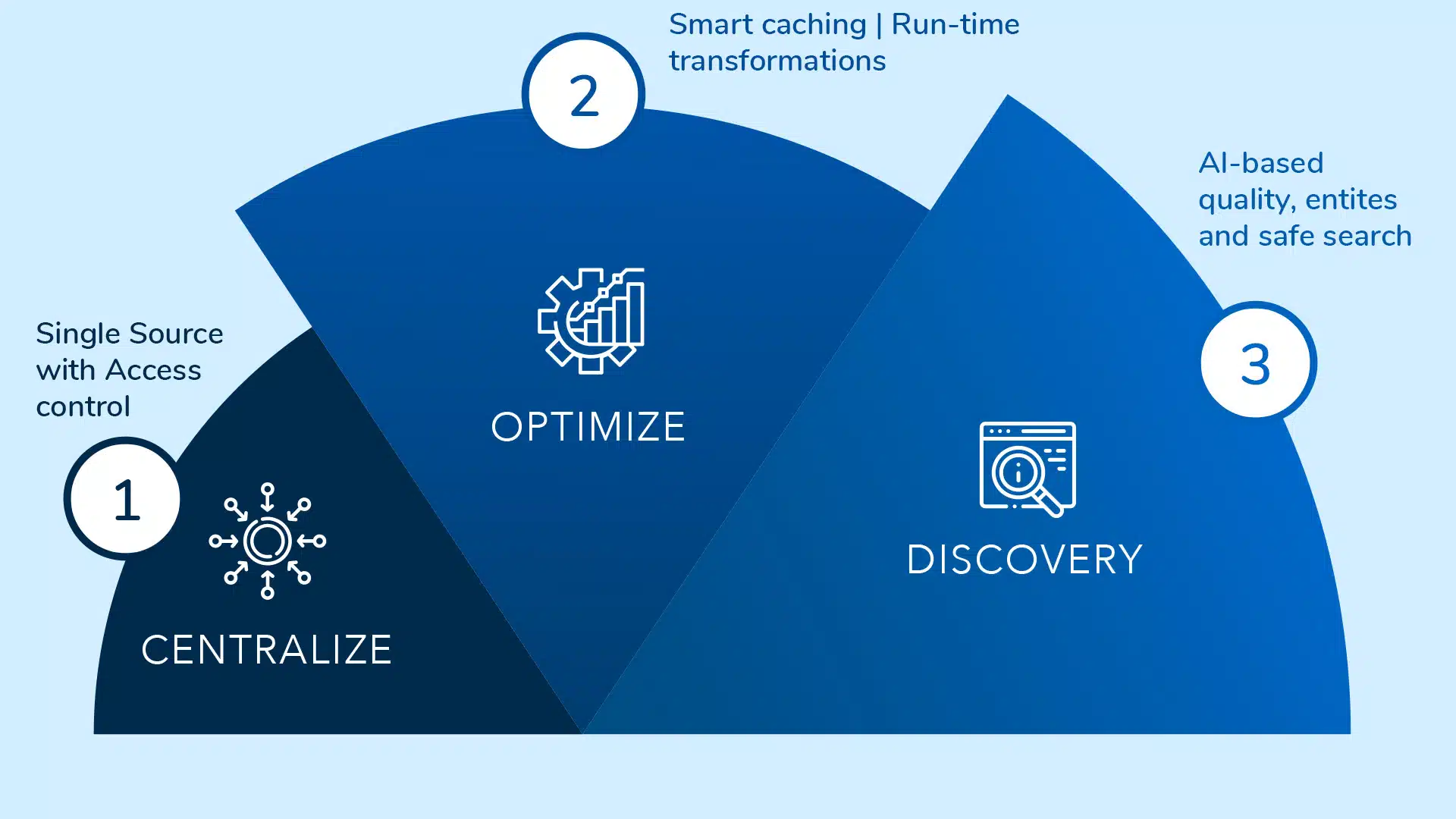
A 3-step visual optimization strategy for enterprises and multi-location businesses 

Step 1: Centralize your assets
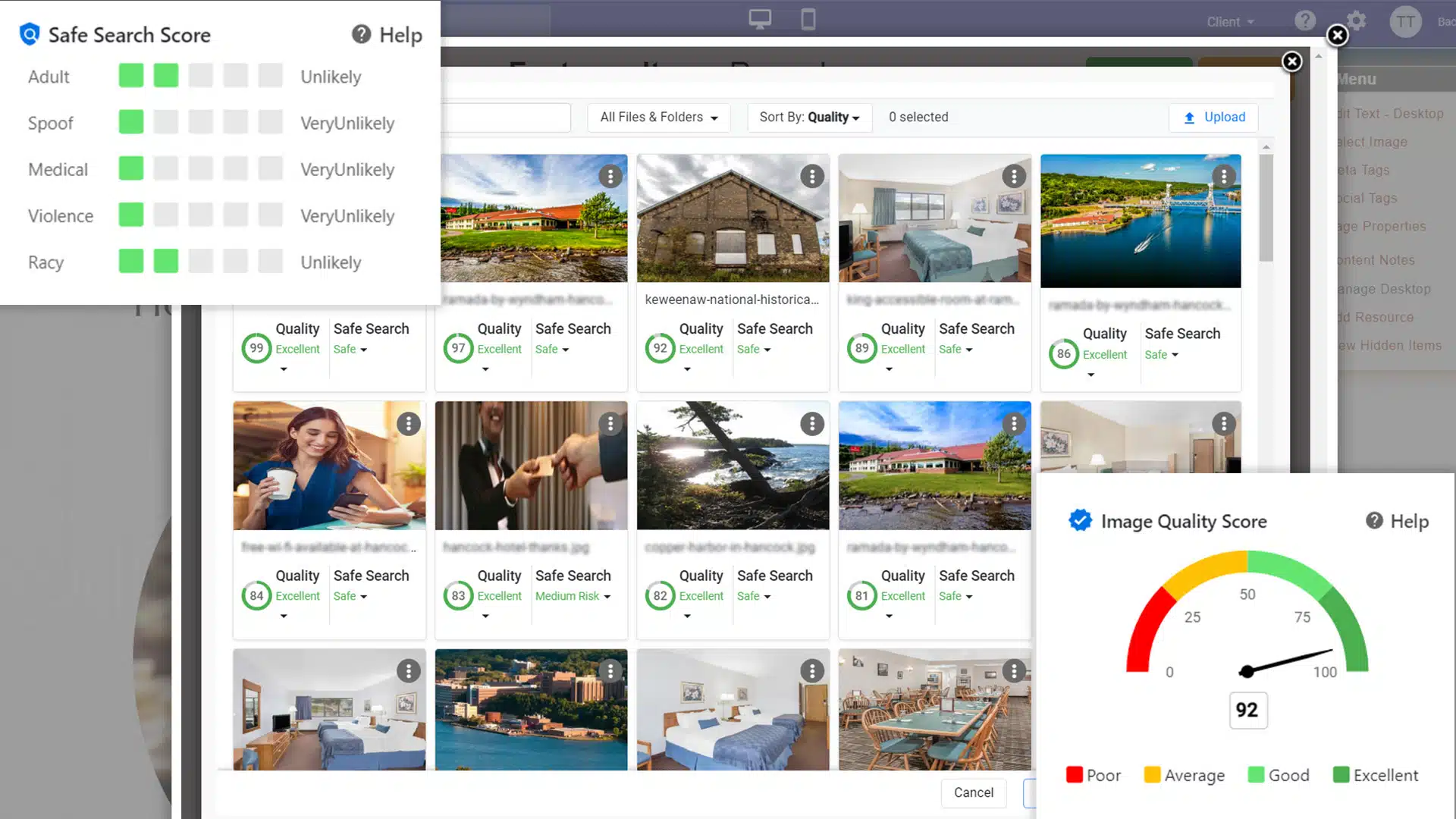
Visual search - Centralize Your Assets

Asset consistency across various channels and devices (e.g., mobile, desktop, tablet) is fundamental to quality user experience. 

By organizing your assets in a centrally accessible manner, such as a digital asset manager (DAM) platform, you can bring about ease of maintenance for assets used across your locations and channels. 

This allows you to:

  • Make global changes.
  • Reduce redundancies by eliminating duplication of assets.
  • Standardize design and aesthetics across channels.

Step 2: Optimize assets for all channels

Visual search - Optimize assets for all channels

Once your assets have been centralized, it’s time to ensure they are optimized for your website as well as search. 

To optimize assets effectively, start with clear, concise filenames under 50 characters, avoiding special characters. 

Specifically for images:

  • Choose WebP or AVIF formats for faster loading times without sacrificing quality while improving page speed.
  • Prioritize using high-resolution, original images to enhance user experience and reinforce your brand identity. 
  • Ensure images comply with Google’s safe search guidelines for a professional, user-friendly experience.

Step 3: Convert assets into entities
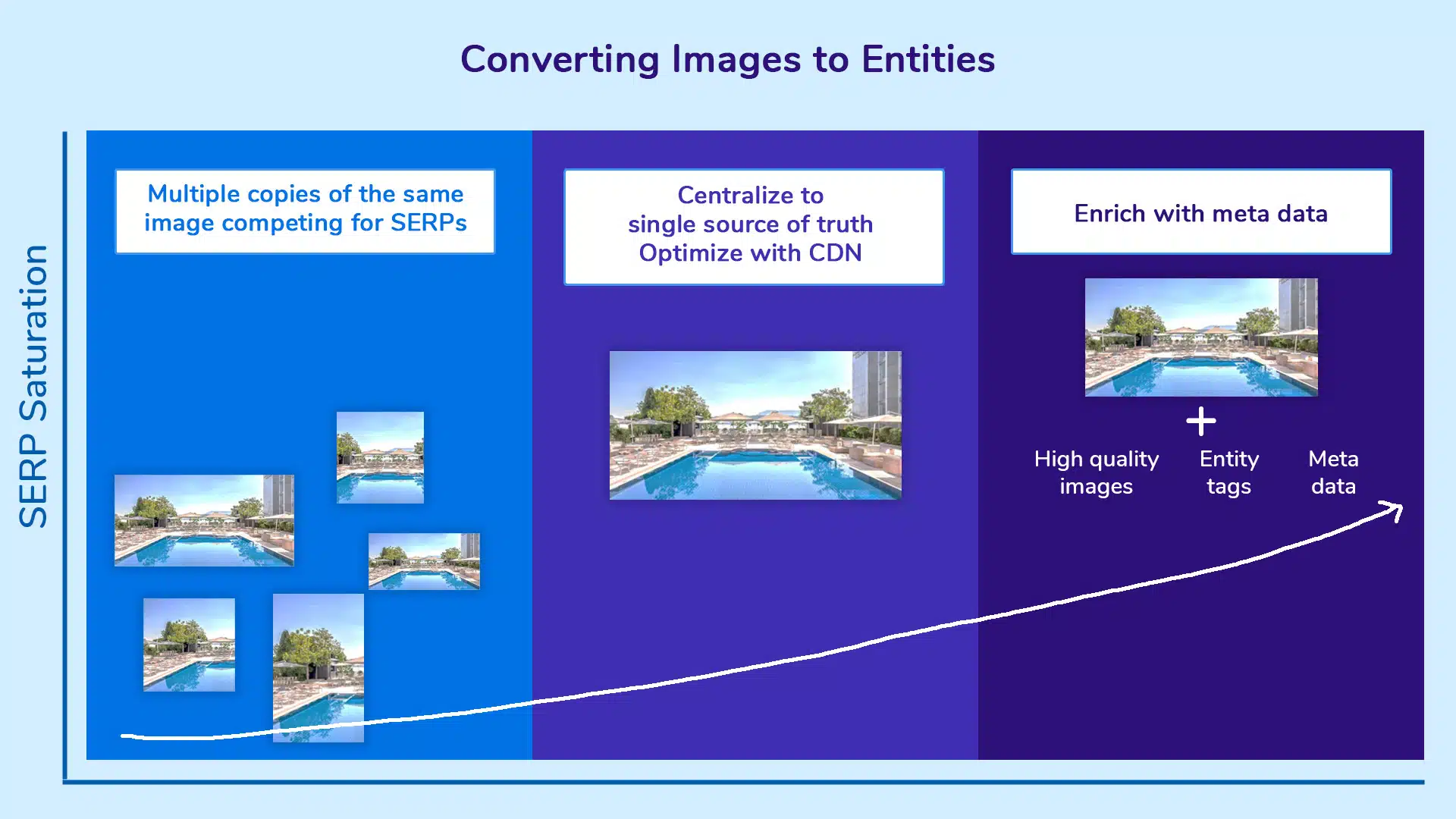
Visual search - Convert assets into entities

Assets have transformed from static website files to dynamic entities with their own authority and ranking signals. 

This shift is evident in tools like Google Lens, where Google analyzes images to offer search results aligned with the user’s intent. 

Google also tailors image results based on specific queries, providing different sets of images from the same business to match user intent, as seen when searching for terms like “holiday getaways,” “beach vacation,” or “kids resort.”

Looking at the trajectory of search and the data required to perform these tasks, entity optimization is poised to take center stage, which means you must treat every asset on your website as an entity.

Start by performing an entity audit across your website, allowing you to identify entity gaps and improve your knowledge graph. 

For an image to be understood as a unique entity, it cannot have duplicates. Centralization of assets allows you to use a single optimized image across your locations and channels. 

Add structured data to your assets to help define each entity and provide deeper context. Complete optimization by adding alt tags and metadata, then ensure each file name is relevant to that asset and that the asset is relevant to the content on the page. 

Dig deeper: Advanced image SEO: A secret manual

Optimizing for visual search: A case study

Whenever you deploy strategies that improve the user experience, the impact on performance is overwhelmingly positive. 

A great experience will almost always translate to better visibility, more users and better engagement.

Nantasket Beach Resort, a resort on the South Shore of Boston, ​was seeking to enhance the discoverability and visibility of its digital assets. 

The challenges we had to overcome were that the business had multiple duplicate images, images weren’t optimized for search across devices, and their image management and governance had to improve overall. 

We employed a three-step strategy to drive the visibility of their images on search. 

  • Step 1: Centralization
    • We took the images they had across their locations and channels and centralized them on the DAM. With central governance, assets were de-duplicated and treated as entities to be used everywhere the brand needed them. This helped with an improved user experience and better image management. 
  • Step 2: Optimization
    • We ensured the images met Google’s image SEO guidelines (quality and safe search) and page experience for fast loading across devices.  
  • Step 3: Defining entities
    • By removing duplicates and optimizing the assets with schema, meta details and entity tags, we converted the asset to an entity on search. 

The impact of the visual search optimization of assets was significant, and the business saw:

  • 72% increase in image-rich results.
  • 5% increase in overall impressions.
  • 70% of images on SERPs were from the domain deployed.
  • Local pages and their images ranked on top for Search ​Generative ​Experience ​results.

A 3-step strategy for visual asset optimization and improved search visibility

The journey toward a more visual and interactive digital experience is just beginning. 

With continuous advancements in AI and machine learning, the capabilities of visual search tools are bound to expand. 

By optimizing images in conjunction with textual content, employing advanced SEO techniques, and adapting to evolving visual search trends, you can significantly improve your brand’s online visibility, user engagement, and overall digital footprint.

The foreseeable future holds promise for those ready to adapt, optimize, and evolve in stride with the advancements shaping the digital search landscape.


Opinions expressed in this article are those of the guest author and not necessarily Search Engine Land. Staff authors are listed here.


Related stories

New on Search Engine Land

@media screen and (min-width: 800px) { #div-gpt-ad-3191538-7 { display: flex !important; justify-content: center !important; align-items: center !important; min-width:770px; min-height:260px; } } @media screen and (min-width: 1279px) { #div-gpt-ad-3191538-7 { display: flex !important; justify-content: center !important; align-items: center !important; min-width:800px!important; min-height:440px!important; } }

About the author

Benu Aggarwal

Benu Aggarwal, founder and president of Milestone Inc., is a highly recognized expert in digital marketing solutions, voice search, SEO and local. Benu oversees product development, client services, technology and strategic vision for the company. Under her leadership, the company has prospered as it launched a suite of SEO-first software products and thousands of websites of which dozens won design and technology awards. With her technical marketing experience, entrepreneurial spirit, and motivating attitude, Benu has the ability to translate technical ideas into tangible practice that drive results for customers.

https://searchengineland.com/visual-optimization-must-haves-ai-powered-search-433908



9 ways to stay on top of the latest SEO trends

In the fast-paced age of readily available information, staying on top of your game is crucial. And, if your game is SEO, there are many ways to stay on top of news, trends, tips and tricks to keep you sharp and informed.

From free, visual-driven guides and videos on YouTube and other training-specific platforms like Google Skillshop, all the way down to tried-and-true case studies, trial-and-errors, and walk-throughs of what works in the real world (and what doesn’t), abundant free knowledge shapes our industry. It also keeps top brands at the forefront of the digital ecosystem.

Here are my nine top ways to stay on top of news, changes, and transformative ideas that will keep your SEO sharp and your knowledge at its best throughout your career.

1. Read SEO publications and blogs

It seems obvious and is probably the most common (you’re clearly reading one right now), but its value may be unparalleled.

Using the same platforms we research and troubleshoot every day – search engines – we can quickly find articles on diverse topics, aiding our understanding of complex concepts and new ideas. And we can do this anytime from anywhere with an internet connection. 

We can also subscribe to newsletters by many of these publications, so the news literally comes to us.

In addition to Search Engine Land, other publications worth your time include Search Engine Roundtable and brand-backed blogs, such as Semrush, Ahrefs and Moz.

One of the highest-regarded online sources for details pertaining to Google Search is the Google Search Central Blog (formerly the Google Webmaster Central Blog).

Subscribing to blogs and using Feedly or similar curation feeds can help you easily access and organize your reading resources for daily updates.

2. Webinars and YouTube

You can pretty much learn anything on YouTube. The most popular video search engine in the world is a trove of potentially life-changing knowledge and guidance. 

This includes SEO and digital marketing knowledge and guidance.

Whether it’s to learn about a specific, complex aspect of SEO or to delve into industry news or fresh tactics, YouTube offers a myriad of user-generated content that proves priceless to millions every day.

Some of the most valuable videos on YouTube (at least concerning digital marketing and other specific areas of expertise) are pre-recorded webinars. 

These webinars are typically administered by brands and/or thought leaders in their respective niches and recorded when first broadcast, then published on YouTube for consumption by people on-demand. Use them to your advantage.

3. Podcasts

The growth of podcasts over the last decade has been incredible. 

What once seemed limited to obscure interviews on eclectic or controversial topics have evolved into educational content, spanning topics from peanut allergies to murder mysteries and everything in between, including SEO.

Some solid SEO- and digital marketing-focused podcasts include: 

Do some research and find one or two that you get the most value (and entertainment) from, and stay in tune with news and trends when it’s convenient for you.

4. Follow thought leaders

One of the most powerful entries on this list, SEO thought leaders help shape the digital marketing industry and what we learn and strategize around constantly. Most of these folks are sharing their thoughts and reflections daily, too.

You can see evidence of it anywhere on social media – X and LinkedIn are some of the most potent platforms for real-time SEO tips and tricks.

There are so many high-octane players in the SEO community. Anyone not following at least a handful of these thought leaders is simply doing themselves a disservice. 

Some of my favorite people who focus on SEO daily are:

Official Googlers tend to be helpful follows as well:

These thought leaders can keep you updated and inspire you to do revolutionary things. You can usually follow them in more places than just X.

Many will become industry friends if you engage with them online and whenever you see them at conferences, too.


Get the daily newsletter search marketers rely on.


5. Online groups and communities

Online forums and communities were once the lifeblood of SEO communication and troubleshooting – and they still have big impacts today. 

Classic spaces like WebmasterWorld still drive discussion and engagement, as well as sites like Webmasters Stack Exchange, the SEO Forum, and the longstanding Moz community. 

The emergence of social media and other industry communication platforms has crowded the slate of troubleshooting forums, but you can still find nearly any answer you need either way. 

6. Conferences

Conferences offer a unique chance to listen, learn, and, if you’re interested, speak or present.

Typically a multiple-day affair with many of SEO’s (and other marketing channels’) most popular and insightful subject matter experts, these opportunities aren’t free, but their value is priceless.

You can most definitely find a reputable one relatively close to where you live and work or attend a conference remotely (and usually at a reduced rate) depending on each conference’s options for attending and price point.

Some of the best conferences are:

  • SMX
  • PubCon
  • Mozcon

Conferences are investments your company should always get behind. They’re great for networking with top professionals, and they provide an authentic way to meet your online SEO connections in person.

Tools help us learn to be faster and more efficient, but they also shape the SEO industry.

Most digital marketing SaaS tools are valuable for:

  • Figuring out unique issues for clients’ digital presence.
  • Simplifying tasks.
  • Discovering new ways to identify and remedy things in our day-to-day.

Their content teams also consistently produce rock-solid content for us to use to our advantage.

8. Use search and its features

We can use all the tools available and read hundreds of articles a week, but if we aren’t working in search in real-time, our knowledge will always remain limited.

We need to use all the tools and tricks to make our job easy, but using, testing, and exploring Google Search and all other relevant search engines will forever remain critical.

Google is always testing new things (so don’t fall in love with any changes you notice), but there’s only one way to know what you think is the best search experience.

Test, experiment, hypothesize – then test some more.

9. Do work!

There’s really only one way to become a good SEO. And that’s being an SEO.

Part of being an SEO is keeping up with news, trends, and innovations. 

Learning and growing in the trenches is the most effective and only true way to earn your stripes.

The changes I have seen up to this point over 13 years have been incredible and, at times, even daunting.

And it’s all just beginning.

Do the work. Stay in the know.

And enjoy the ride.


Opinions expressed in this article are those of the guest author and not necessarily Search Engine Land. Staff authors are listed here.


Related stories

New on Search Engine Land

@media screen and (min-width: 800px) { #div-gpt-ad-3191538-7 { display: flex !important; justify-content: center !important; align-items: center !important; min-width:770px; min-height:260px; } } @media screen and (min-width: 1279px) { #div-gpt-ad-3191538-7 { display: flex !important; justify-content: center !important; align-items: center !important; min-width:800px!important; min-height:440px!important; } }

About the author

Sam Hollingsworth

Sam Hollingsworth is a native (Upstate) New Yorker currently residing in Saratoga Springs, New York, and helping lead SEO efforts for Moving Traffic Media as its Director of SEO. With a background in general SEO — specializing in local SEO, e-commerce SEO, and international SEO — as well as content strategy, social media, and client services, when Sam is not putting in time at the digital agency, he is likely enjoying one of America’s many historical thoroughbred race tracks, taking in the great outdoors (Adirondack Mountains, Great Sacandaga Lake, and more), and hanging with his family on whatever adventures they can find.

https://searchengineland.com/stay-on-top-latest-seo-trends-433900


Google Bard can now respond in real time

Google Bard, the conversational AI tool by Google, can now respond to your questions in real-time. You can turn it off and tell Bard to only respond once the answer is complete, but now, by default, Bard writes out the response in real time.

Default on. By default, Google has turned on real-time responses, so you can see Bard typing the answer as it figures out the response. Google said this way, “you don’t have to wait for the full response to appear.”

Google added, “Bard is here to accelerate your creative process. Now you can start reading responses while they’re still generating, so you can stay in the creative flow and iterate on your ideas faster.”

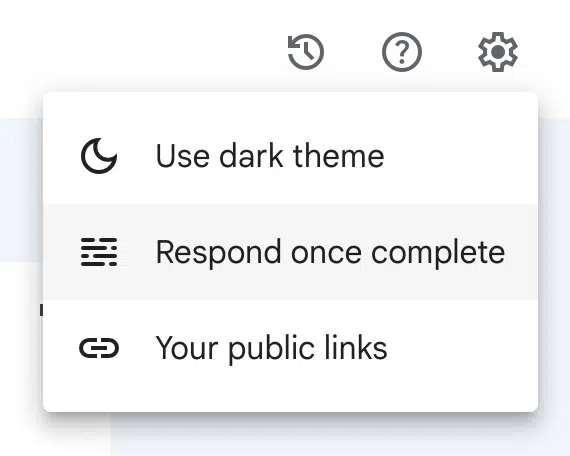
The setting. You can access the setting for real-time or non-real-time responses in the setting section at the top right, under the gear icon.

Here is a screenshot of this feature:

Google Bard Respond Setting

Why we care. Now Bard will appear faster in how it replies to your tasks and questions. Plus if you see Bard is not answering the question in the direction you want it to go, you can stop and start a new session faster than you previously would.

Note, this is how Bing Chat and other chat-based AI tools generally work, so now Bard does the same.


Related stories

New on Search Engine Land

@media screen and (min-width: 800px) { #div-gpt-ad-3191538-7 { display: flex !important; justify-content: center !important; align-items: center !important; min-width:770px; min-height:260px; } } @media screen and (min-width: 1279px) { #div-gpt-ad-3191538-7 { display: flex !important; justify-content: center !important; align-items: center !important; min-width:800px!important; min-height:440px!important; } }

About the author

Barry Schwartz

Barry Schwartz is a Contributing Editor to Search Engine Land and a member of the programming team for SMX events. He owns RustyBrick, a NY based web consulting firm. He also runs Search Engine Roundtable, a popular search blog on very advanced SEM topics. Barry can be followed on Twitter here.

https://searchengineland.com/google-bard-can-now-respond-in-real-time-433954


Become a data champion by mastering marketing analytics automation by Cynthia Ramsaran

Fortune 500 Analytics Drives Every Decision 800x450

Today, actionable data is key. Yet, drowning in a sea of information from various sources can be overwhelming. How do you prove your campaigns are hitting the mark and contributing to the bottom line?

Automation can elevate your marketing game by freeing time so you can focus on innovative strategies rather than wrestling with data. Join marketing analytics automation experts to learn how to impact the bottom line and prove your campaigns succeed

Register and attend “Become a Data Champion By Mastering Marketing Analytics Automation,” presented by Altyrex.


Click here to view more Search Engine Land webinars.


Related stories

New on Search Engine Land

@media screen and (min-width: 800px) { #div-gpt-ad-3191538-7 { display: flex !important; justify-content: center !important; align-items: center !important; min-width:770px; min-height:260px; } } @media screen and (min-width: 1279px) { #div-gpt-ad-3191538-7 { display: flex !important; justify-content: center !important; align-items: center !important; min-width:800px!important; min-height:440px!important; } }

About the author

Cynthia Ramsaran

Cynthia Ramsaran is director of custom content at Third Door Media, publishers of Search Engine Land and MarTech. A multi-channel storyteller with over two decades of editorial/content marketing experience, Cynthia’s expertise spans the marketing, technology, finance, manufacturing and gaming industries. She was a writer/producer for CNBC.com and produced thought leadership for KPMG. Cynthia hails from Queens, NY and earned her Bachelor’s and MBA from St. John’s University.

https://searchengineland.com/become-a-data-champion-by-mastering-marketing-analytics-automation-433951


Google CEO details how Chrome helped grow Google Search

Google knew as far back as 2010 that Google Chrome would help drive more Google searches. We learned some exact figures today during testimony from Alphabet and Google CEO Sundar Pichai at the ongoing U.S. vs. Google antitrust trial.

  • Users who switched to Chrome from Microsoft’s Internet Explorer performed 48% more Google searches. 
  • Users who switched to Chrome from Mozilla’s Firefox performed 27% more Google searches.

“The correlation was pretty clear to see,” Pichai said, CNN reported. Pichai also said, via WSJ:

  • “We realized early on that browsers are critical to how people are able to navigate and use the web.”
  • “It became very clear early on that if you make the user’s experience better, they would use the web more, they would enjoy using the web more, and they would search more in Google as well.”

$26.3 billion. Meanwhile, we also learned Google paid $26.3 billion to be the default search engine on various browsers, platforms and devices, with the biggest share going to Apple. That was according to testimony from Prabhakar Raghavan, a Google senior VP and head of Search, on Friday.

  • Google Search made $146 billion in 2021 – so that means Google spent around 18% of its search revenue on these deals.

The Apple deal. It made “it very, very seamless and easy for users to use our services,” Pichai said, per WSJ. “We know that making it the default will lead to increased usage of our products and services, particularly Google search in this case. So there is clear value in that and that’s what we were looking for.”

Google vs. Microsoft. The never-ending rivalry came up during Pichai’s testimony at a couple of different points:

  • In a flashback to 2005, when Google’s David Drummond sent a letter to Microsoft, complaining about Internet Explorer 7’s search defaults. Drummond wanted a choice screen because Google was worried about the anti-competitive nature of Microsoft prioritizing its own engine, MSN Search. From the letter:
    • “We are deeply concerned about the potential for harm to the competitive process from Microsoft’s actions, particularly given Microsoft’s monopoly position with its Windows OS and its IE browser.”
      “By pushing out an update of IE with a new search box that will default to Microsoft’s own search product in the vast majority of cases, Microsoft would gain a large number of search users for reasons having nothing to do with the merits of Microsoft’s search offering.”
    • “Finally, although Google hopes that legal action will not be necessary, we recognize that it is a foreseeable possibility. Accordingly, Google requests that Microsoft take care to retain all past and future records relating to any plans to tie search to any Microsoft product or otherwise deprive consumers of a competitive choice in search…”
  • In a flashback to 2007, when Pichai talked about how the browser market had “kind of stagnated” because Microsoft wasn’t “incented to improve the browser,” according to Reuters. (Chrome launched in 2008. Pichai led its development.)

Europe has a choice. Speaking of choice screens, since the 2020 arrival of a search choice screen Microsoft Bing has seen no positive gains in market share in Europe. Here’s Google vs. Microsoft Bing search market share, as of September in Europe, according to Statcounter:

  • Google: 90.87% (in the U.S., Google’s market share is lower – 88.48%)
  • Microsoft Bing: 3.4% (in the U.S., Microsoft Bing’s market share is higher – 6.35%)

So, yes, Google has spent $26.3 billion to be the search default everywhere it wants. But Europe shows that on all platforms, where explicitly given a choice, people still overwhelmingly choose Google.

Why we care. It has been interesting to learn just how important Chrome has been to fueling Google Search through the years. Clearly, the Apple deal (and all the other default deals) are valuable to Google. But we’re still weeks away from knowing what this all means when we’ll finally get a verdict from Judge Amit Mehta.


Related stories

New on Search Engine Land

@media screen and (min-width: 800px) { #div-gpt-ad-3191538-7 { display: flex !important; justify-content: center !important; align-items: center !important; min-width:770px; min-height:260px; } } @media screen and (min-width: 1279px) { #div-gpt-ad-3191538-7 { display: flex !important; justify-content: center !important; align-items: center !important; min-width:800px!important; min-height:440px!important; } }

About the author

Danny Goodwin

Danny Goodwin has been Managing Editor of Search Engine Land & Search Marketing Expo – SMX since 2022. He joined Search Engine Land in 2022 as Senior Editor. In addition to reporting on the latest search marketing news, he manages Search Engine Land’s SME (Subject Matter Expert) program. He also helps program U.S. SMX events. Goodwin has been editing and writing about the latest developments and trends in search and digital marketing since 2007. He previously was Executive Editor of Search Engine Journal (from 2017 to 2022), managing editor of Momentology (from 2014-2016) and editor of Search Engine Watch (from 2007 to 2014). He has spoken at many major search conferences and virtual events, and has been sourced for his expertise by a wide range of publications and podcasts.

https://searchengineland.com/google-ceo-details-how-chrome-helped-grow-google-search-433932


How to integrate generative AI in your SEO

As the initial buzz around AI dies down, the practical use of generative AI is now well-established in the content creation world. 

In theory, this creates a huge content marketing opportunity. However, as we are seeing, there are many pitfalls from an SEO perspective. 

This article outlines how we are primed to make such mistakes, ways Google has tackled this historically and how to safely integrate generative AI in your SEO and content marketing. 

Pitfalls and problems

Human beings are hardwired to seek the path of least resistance. 

Generative AI tools seemingly make it easy to write an expert-level article about any topic. This allows websites or authors to assume unwarranted expert status and pump out legions of articles on almost anything. 

This is the path of least resistance for content production, and on the surface, it seems an attractive proposition with some huge SEO opportunities.  

I have sat in marketing meetings with AI consultants advising this very strategy. One consultant called the approach “automate and dominate.” I was there to temper such blind enthusiasm and ensure no SEO mistakes were made. 

This creates a problem for consumers looking for the best information and for search engines who need to ensure that the best information is promoted accordingly. 

SEO history lesson

To look into the SEO future, we have to look at the well-documented SEO past. 

In the early days, around 1999-2000, it was easy to manipulate Google with links and content.

However, Google soon caught up and plugged the main problems of low-quality links and mass-produced, low-quality content with the Panda and Penguin algorithm updates. 

Today, it is easy to look at generative AI and believe these tools provide an opportunity to create lots of content quickly and grab a greater slice of organic search traffic. 

However, the battle-hardened Google of 2023 differs from the Google of old. 

High-quality and human-first content is already baked into the search algorithm, and recent updates have only served to confirm that. 

Google is ahead of the curve here, and we have already reviewed several sites that have seen recent dips in performance after helpful content updates, some with up to a 70% drop in organic traffic. 

70% traffic drop – Pop culture site targeting students

There was nothing wrong with this site. It was not spammy, but it also did nothing unique. It was just the same content you could pick up from several sources. 

Reviewing the losses, it seems that rankings were lost to sites that were more expert or relevant for the topics. 

This is an existential threat to sites of this manner that rely on organic traffic but only pump out relatively generic content that could be found on many other sites. 

If SEO is central to your marketing strategy, then sensible integration of generative AI, rather than full automation, is the only sustainable strategy. 

What does Google want?

To understand what your content strategy should look like, we must consider what Google is trying to achieve and aim at that. 

Fortunately, Google communicates fairly clearly what they want within their documentation on creating helpful, reliable, people-first content. 

If you want to do a really deep dive, then take a look at the Search Quality Rater Guidelines (but at 176 pages is a somewhat time-consuming read). 

Fortunately, E-E-A-T summarizes the philosophy for the rest of us more concisely.

I don’t want to reinvent the wheel here, but the key points are as follows: 

  • Experience: Personal experience should be clearly demonstrated in content.
  • Expertise: Content should be based on an individual’s proven expertise.
  • Authority: The author and website should be an authority on the topic.
  • Trust: The author and website should be trustworthy. 

The key here is to factor this into your SEO goals. 

  • Have content that is based on your real human expertise and experience.
  • Ensure you have the technical aspects of your UX, website design and SEO in a good place. 

An AI analogy

The problem with SEO and generative AI reminds me of a scene in one of my favorite movies: Good Will Hunting. 

The protagonist, Will, is a genius who can consume, remember and regurgitate raw knowledge and data unlike anyone else alive – much like ChatGPT. 

Will knows everything to know, but it is all book smarts. He has no real-world experience. He has never lived, he has never loved, he has never lost someone close to him. He has never truly experienced any of what he knows. 

The AI content tools are a lot like this. They know everything about everything, they have crazy book smarts but no real experience, and they never will have. 

That is the opportunity where you can come in and create something unique by integrating these two components – your experience and expertise with the rapid output and breadth of knowledge provided by AI. 

Dig deeper: AI can’t write this: 10 ways to AI-proof your content for years to come

A strategy to safely use AI in your content production

The key here is to think of AI as an intelligent assistant rather than a complete means to an end. 

If you take the path-of-least resistance approach, as most will, your content will never satisfy Google’s criteria. Worse still, you will create nothing that Google can’t answer directly with their own Search Generative Experience (lose-lose). 

By combining your expertise and experience with generative AI, you can create content that is greater than the sum of its parts and almost certainly more significant than anything a generative AI can automate and produce alone. 

A simple SEO SWOT analysis that looks at your competitors will allow you to identify SEO opportunities, as most sites are just not doing this as well as they could yet. 

The benefits here extend beyond content creation. Whether you rely on SEO or PPC, or some other traffic generation, your engagement and conversion rates will rocket. 


Get the daily newsletter search marketers rely on.


Tasks where generative AI can be helpful

This is not to say that generative AI is not truly helpful. 

There are several tasks in the content ideation and creation process where generative AI tools like ChatGPT can radically help you speed up and improve your output. 

1. Ideation 

ChatGPT simplifies generating ideas and a simple prompt asking for topic ideas will generate several results. 

For example: “Can you suggest some article topics around generative AI and SEO?” 

This produced around 20 articles in 10 categories in around 30 seconds. Each of these could then be further explored (using your own expertise and experience). 

2. Research and information gathering

AI can be used to quickly sift through vast amounts of data or provide summaries of detailed articles or scientific studies. This can help you develop deep, well-researched articles in a short amount of time. 

You can also use ChatGPT to cross-check facts and provide sources to ensure the information shared is trustworthy. 

It is always worth double-checking before you publish, but even with this step, you will speed up your workflow and cover more ground. 

3. Content drafting

With a topic and a rough outline, generative AI can quickly create drafts for you to polish and refine. You can also create variants in different tones, styles or from different perspectives to pick the very best approach. 

4. Editing and proofing

AI can check your grammar, review content readability and suggest improvements in flow and structure. 

5. SEO

AI can help simplify the optimization of an article by suggesting keywords and optimizing the article and metadata. 

6. E-E-A-T 

AI tools like ChatGPT can also review your content from the perspective of E-E-A-T criteria and suggest improvements to ensure you hit all of these important points for modern SEO content. 

Tip: I would generally recommend tackling each element of the E-E-A-T criteria separately here, as you can get some whacky results trying to get feedback here. 

7. A/B testing

AI makes it easy to create multiple versions of content headlines, calls-to-action or even an entire content piece and then use these to split tests for engagement. 

How to review your content 

Google has outlined what they are looking for with E-E-A-T and also provides a series of questions you can use to review your content at Google Search Central.

Google certainly provides a comprehensive set of questions to review content. Still, for your average content writer or marketing team, this is almost an insane level of overkill that will tie you up in knots. 

To make this more actionable, I have created a simple set of 10 questions that covers the author, content, website and E-E-A-T and helps you ensure your content is something that Google will want to surface in the search results. 

Author

  • Is it clear who authored the content?
  • Is there detailed author information available?

Content 

  • Is the content original, useful and substantive? 
  • Is the content different or substantially better than other pieces out there?
  • Does the content provide a new viewpoint or way to view the topic?

Website

  • Is the publishing website credible with a good reputation?

Experience

  • Does the author have first-hand experience on this topic?

Expertise

  • Does the author have demonstrable expertise on the subject?

Authority

  • Is the author (and or website) a known expert and source for this subject?

Trust

  • Is the page accurate and the facts reliable?

You can also use tools like ChatGPT to help you answer these questions and find out more about the author, review the content, review competing content and much more. 

You just have to get creative in your approach, ask these tools questions and review the responses. 

AI in SEO: Intelligent assistance 

The obvious pitfall with generative AI and SEO is falling into the path-of-least-resistance trap. 

SEO history has shown us that these low-value approaches, while you may generate some small, transient wins, won’t win the more significant, long-term battles. 

Instead of looking to automate and dominate, use AI tools as an intelligent assistant rather than a complete means to an end. 

Automated content will never satisfy Google’s ever more robust criteria. Worse still, you will create nothing that Google can’t answer directly with their own Search Generative Experience, making your content irrelevant.  

By combining your expertise and experience with generative AI, you can create content greater than the sum of its parts and almost certainly greater than anything a generative AI can produce alone. 

The benefits here extend beyond content creation, and whether you rely on SEO or PPC or something other traffic generation, your engagement and conversion rates will skyrocket. 


Opinions expressed in this article are those of the guest author and not necessarily Search Engine Land. Staff authors are listed here.


Related stories

New on Search Engine Land

@media screen and (min-width: 800px) { #div-gpt-ad-3191538-7 { display: flex !important; justify-content: center !important; align-items: center !important; min-width:770px; min-height:260px; } } @media screen and (min-width: 1279px) { #div-gpt-ad-3191538-7 { display: flex !important; justify-content: center !important; align-items: center !important; min-width:800px!important; min-height:440px!important; } }

About the author

Marcus Miller

Marcus Miller is an experienced SEO & PPC consultant based in Birmingham, UK. Marcus focuses on search marketing strategy and helping businesses cut through the smoke and mirrors of SEO, PPC and search marketing. Marcus is managing director of the UK SEO and digital marketing company Bowler Hat that focuses on helping businesses with their SEO & PPC, but also on training internal staff to help empower businesses to manage their own search destiny.

https://searchengineland.com/generative-ai-seo-integation-433887


4 ways to find unique content ideas from real-life insights

Marketers often work at a distance from frontline operations.

We may not directly build the product, deal with angry customer phone calls, or be out in the field selling.

We might even be at an agency, an additional level removed from the shop floor or direct interactions with the target customer. 

How, then, can you:

  • Know what to write about?
  • Insert meaningful insights into your landing pages or ad creative?
  • Effectively persuade your target audience that you are the clear choice over your competitors? 

Digging new wells to find new content

One of the best writing tips I’ve ever received is to “dig new wells.” That is, to get content no one else is writing, you need to establish different sources. 

Too often, content writing for the web starts with the search results. While it makes sense to look at what’s ranking for your target keywords, it should not be your only source of information. 

The rise of 10x content and the Skyscraper Technique led some content writers to rely on rewording and combining top pages into a long, SEO-focused page. But it’s not getting outside sources of information. 

For me, the best type of content for the web comes from outside the web. Pulling content ideas, inspiration, and even language from real-life sources can help your content stand out, resonate with your target audience, and even alleviate any concerns they have. 

Plus, combining outside-sourced content with an SEO’s skills in finding keywords, structuring content, and generating links can form a powerful piece of content that performs nicely. 

Here are a few ways to dig new wells to find new content. 

1. Source content from employees

The single greatest source of content is from front-line employees. Depending on your business, you might have: 

Salespeople

  • Salespeople earn their living by earning trust, highlighting benefits, and alleviating fears of potential customers or clients.
  • Any successful salesperson has already worked out a script based on common pain points and exactly what message can help convince people to buy.

Customer service representatives (CSRs)

  • As frontline workers who come in contact the most with existing customers, they know the most common questions and objections people have.
  • If a CSR gets asked the same question regularly (say once per week or greater), the answer to that question should become content on your site. 

Those doing the work

  • Another great source of content is from those doing the actual work. Visit the factory floor, buy coffee for the production team, or go for a ride along with the installation team.
  • By spending time with those who actually make your products or carry out your services, you will get a newfound understanding and appreciation for what they do.
  • Plus, they should be able to provide great insights into how you are different than your competitors – whether it is better materials, unique processes, or attention to detail. 

Example of sourcing content from employees

I had a client in the agriculture industry who wanted to grow by getting their brand in front of more farmers. My main contact was a salesperson working in the field six days a week, traveling from farm to farm.

In some ways, he functioned more as a consultant, helping generate ideas and sharing best practices from others to help each farmer expand their operation. 

He would be the first to tell you he was not a great choice for writing new content for their website. Here’s what worked for us: I would get him on the phone while driving between farms, and he would rant.

For half an hour, he would brain-dump his thoughts on a certain product or service his company was offering. I was simply there to transcribe and ask follow-up questions. 

When it was time to write the website content, I found that the salesperson’s rants would form 80% of the page. I was merely there to edit and shape it into a logical flow and ensure it was optimized for search and conversions. 

Dig deeper: How to create local content that builds trust and drives sales

2. Source content from current customers

Another well of great content ideas is from your current customers or clients. They are your best source for entering the buyer’s mind and decision-making process. 

If possible, make it a habit to regularly interview some of your current customers. Ask them questions about: 

  • Their pain points. 
  • How they researched options.
  • What mattered and didn’t matter to them as they made a decision.

You can sometimes use these stories as the basis for case studies or featured project pages for your site. At the very least, you will uncover phrases, words and concepts that can become integral parts of your website content and marketing efforts. 

Example of sourcing content from current customers

A few years back, I was working on a branding campaign for a furniture company. Their core business was selling through furniture stores; they saw an opportunity to increase sales by working with high-end interior designers. 

As we worked on drafting content for their website and marketing material, our team booked calls with a handful of interior designers with whom they currently worked. 

These phone calls were a wealth of information and insights into these interior designers’ pain points, goals and dreams. 

Some insights they provided were completely unknown to the furniture company. What we learned from these calls proved invaluable in shaping the website content.  


Get the daily newsletter search marketers rely on.


3. Source content from past customers

Past customer reviews are among the easiest yet impactful wells to pull content ideas and language.

Whether past customers have left reviews on your Google Business Profile, Amazon, a third-party review site, or your own internal system, these are great sources of info about how the market views your product or service. 

Customer reviews are great because they provide a glimpse into your customer’s thinking at scale – no need to interview them. Online reviews also collect the right language, pain points, and angles you may not have noticed. 

Whenever I take on a new local SEO client, I make it a point to read every review on their Google Business Profile. I like looking for trends and themes across the reviews and see anecdotally what really matters to customers. 

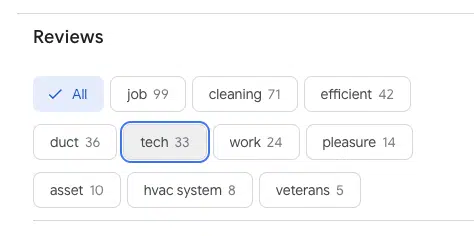
Google does pull out themes by seeing the top 10 topics or phrases mentioned in reviews.

You can take your reviews and put them in a sentiment analysis tool to see topics, trends, and talk points that you can share with your CSR or use in your marketing, advertising and website efforts. 

Review topics

Example of sourcing content from past customers

One time, I was reading reviews for a new client in the home service industry.

A few reviews told a similar story: each mentioned the same salesperson by name and how professional and informational the salesperson was – especially compared to other companies. And each said a surprising detail: the salesperson gave a gift of local jam. 

One specific salesperson was doing this to make connections with his prospects, but it was leaving such an impact on customers that they mentioned it in their reviews.

When our client found out about this, they made it a standard across all sales staff, and we mentioned it as part of the online appointment scheduler. 

4. Source content from competitors 

A surprising source of content ideas can come from your competitors.

As we saw above, if online reviews for your own products or services can provide helpful insights for your marketing efforts,  what can you learn from reading the reviews of your competitors? A lot!

Find a few of your competitors and read every review of theirs that is three stars or lower. Bad or mixed reviews can provide a gold mine of information about what people don’t like about your competitors.

These points can be used in your marketing efforts, as they are pain points your target audience has, and your competitors are not meeting. 

Example of sourcing content from competitors

While conducting competitive research for an outdoor structure company, I noticed their main competitors had a fair amount of indifferent reviews. As I read these reviews, I noticed themes. Most reviews mentioned:

  • A lack of communication. 
  • Misunderstandings about the delivery and installation process. 

I took this to the client, and we discussed how we could make their service better. The client worked on strengthening their already solid customer communication system. 

On the website, we invested in content to fully explain how they deliver and install their structures, answering every single question their CSR is regularly asked. 

Finally, we created a comprehensive guide on the entire sales process, from initial order through installation. We used this as a target for a remarketing campaign to help reengage with potential customers. 

Dig deeper: Competitor content analysis: Here’s what you can learn

Start creating new content today

To create content that no one is creating, you need to get different sources no one else can get.

Interview your employees and current customers. Summarize feedback from past customers and those disappointed with your competitors.

Gain valuable insights to tell your unique story and stand out.

Dig deeper: Tangential SEO: Using Google Bard to identify content ideas fast


Opinions expressed in this article are those of the guest author and not necessarily Search Engine Land. Staff authors are listed here.


Related stories

New on Search Engine Land

@media screen and (min-width: 800px) { #div-gpt-ad-3191538-7 { display: flex !important; justify-content: center !important; align-items: center !important; min-width:770px; min-height:260px; } } @media screen and (min-width: 1279px) { #div-gpt-ad-3191538-7 { display: flex !important; justify-content: center !important; align-items: center !important; min-width:800px!important; min-height:440px!important; } }

About the author

Brandon Schmidt

Ever since he first got connected to the internet (AOL dial up in 1997), Brandon has been building things online, including personal blogs and websites for non-profit organizations. After serving as an ordained minister for 5 years, Brandon made the switch to digital marketing in 2015, first as a content writer and then as marketing strategist for a local SEO agency. He is currently a Local SEO Analyst at Sterling Sky, a local SEO agency in the United States and Canada. Brandon is a frequent contributor to industry publications and speaker at trade shows & conferences, including the NAHB International Builders’ Show, Pubcon, and LocalU. When not working, Brandon likes playing pickleball and disc golf. Brandon lives with his wife and two children in the heart of Amish Country in Lancaster County, Pennsylvania.

https://searchengineland.com/unique-content-ideas-real-life-insights-433865


Digging deeper into the E-E-A-T Knowledge Graph 2023 update

In July, Google released a massive update to the Knowledge Graph. We named it the E-E-A-T Knowledge Graph update and gave it the codename “Killer Whale” because it made a splash in the SERPs twice:

  • In real time between July 14 and 18.
  • As part of the September helpful content update.

A Knowledge Graph (Vault) update rarely occurs simultaneously with a ranking update, core or otherwise. SERP volatility has seldom coincided with Knowledge Graph volatility. Kalicube Pro has been measuring volatility since 2015 with our Knowledge Graph Sensor. 

The graph below shows a significant uptick in the depth of the Knowledge Graph between July 14 and 18.

Knowledge Graph updates - July 14 and July 18

As you’ll see, Google’s SERPs were hugely volatile on those days, too – for the first time ever. 

Checking the tools that provide historical data for SERP volatility, there is a huge peak between July 14 and 18. Accuranker and Advanced Web Ranking show that the volatility was significantly higher than during the subsequent core updates.

Accuranker and Advanced Web Ranking data

Algoroo indicates that July to August 2023 was the most intense and longest volatility since they started tracking in 2018.

Algoroo data

So. Huge.

Some people reported changes to their Knowledge Panel in July. Still, Kalicube data shows changes to Knowledge Panels were not widespread in July (we analyzed over 100,000 rand SERPs containing Knowledge Panels). 

Please exercise caution when making assumptions and performing manual checks. The degree I earned in economics and statistical analysis taught me that generalizing from a particular, or several particulars, is a huge mistake.

The changes to Knowledge Panels happened during the September core update, as we will see.


Get the daily newsletter search marketers rely on.


Knowledge Panels represent Google’s explicit understanding of named entities

Google cannot fully apply E-E-A-T signals to an article’s author (writer) if it doesn’t explicitly understand the writer’s identity. 

The Knowledge Panel is the visual representation of Google’s explicit understanding of the writer. Without a stable, information-rich, and non-duplicated Knowledge Panel, your work building and demonstrating the writer’s E-E-A-T credentials is significantly under-leveraged. 

The same approach applies to the company that owns and runs the website. 

Sidenote: Google changed some significant terms in its Search Quality Rater Guidelines (SQRG) in December 2022, including changing “website” to “website owner.”

“The website owner is the person, company, or organization responsible for a website,” according to Google’s SQRG. This definition clearly indicates they are looking for the named entity responsible for the website and its content.

2023 core updates, E-E-A-T, Knowledge Panels and the Knowledge Vault update

The September 2023 helpful content update introduced the changes made in the Knowledge Vault on the SERPs in the form of Knowledge Panels. 

The percentage of Personal Brand SERPs with a Knowledge Panel increased from 38% to more than 50% (a rise of more than a third). 

Percentage of brand SERPs for a person with a Knowledge Panel

This is truly a Person update. For Corporations (and Organizations), the figure stayed steady at 40%. 

Percentage of brand SERPs for a Corporation with a Knowledge Panel

We know that helpful content updates focus on improving Google’s ability to deliver the best solution from the most credible source (a.k.a., E-E-A-T). 

Google’s July 2023 Knowledge Graph update added a layer to the September helpful content update. Google talks about “improved classification,” which is exactly what the Killer Whale update did to Person entities in the Knowledge Vault.

A quick aside: we now talk about N-E-E-A-T-T, adding “notability” and “transparency” to the mix. Without niche-level notability, you don’t stand out in your market. And without transparency, neither humans nor bots can understand who you are and why they should trust you. 

Importantly, notability does not mean what Wikipedia says it means. Consider notability as having enough impact in a particular field for a specific audience to warrant recognition. Well-targeted digital PR and placement of your content on relevant platforms that are authoritative in your niche are two ways to approach niche notability. 

Transparency simply means being open and honest. For example, having an easy-to-find and clear returns policy, privacy policy, cookie policy, About us page, etc.

Reliance on Wikipedia in Knowledge Panels dropped significantly

The percentage of Knowledge Panels on personal brand SERPs using descriptions from Wikipedia dropped from 77.7% in June 2023 to 50.4% in September.

Knowledge panels on personal brand SERPs using descriptions from Wikipedia

For Corporations, the ratio remained steady: the percentages were 69.8% and 66.8% respectively.

Additionally, Google is expanding its horizons: the number of unique domains providing descriptions in Knowledge Panels or trusted sources has more than doubled.

Importantly, the relative importance of each non-Wikipedia platform has changed significantly.

Percentage of knowledge panel descriptions from each source (exc Wikipedia)

Crunchbase has become much more important, and Google Books and IMDB are no longer dominant, which makes sense given the Knowledge Vault update I have described. 

But before you leap on Crunchbase, remember that Google will prioritize hyper-niche trusted sources for Knowledge Panels.

For example, Google has identified jasonbarnard.com as the trusted source for Boowa and Kwala. So, your strategy needs to be to go “hyper niche.” 

The Kalicube Pro database contains over 63,000 unique trusted sources and the 400 trusted sources we provide free on the site.

Avoid handing control of your brand narrative to a third party, like Wikipedia. A source the entity owns and controls, like a website, is ideal.

For example, kalicube.com is the trusted source for Kalicube, and Kalicube controls the information about the business instead of a third-party source.

What you need to do right now

Knowledge Panels are already the next big thing. The July 2023 E-E-A-T Knowledge Graph update is based on expanding, classifying, and identifying E-E-A-T-applicable entities. It is limited to people. 

The September 2023 helpful content update also prioritized Person entities and significantly reduced its dependency on Wikipedia for information it shows in Knowledge Panels for people.

For writer/author entities

If you are in any of these three situations:

  • You missed the boat this time, and a Knowledge Panel still doesn’t trigger on your personal brand SERP. 
  • You see incorrect information in the Knowledge Panel for your Person entity. 
  • You lost a personal Knowledge Panel.

…then it’s time to work on the Knowledge Panels of your key Person entities to leverage as much E-E-A-T goodness as possible. 

It’s time to build your personal brand and get your “Google stamp of approval” in the form of a Knowledge Panel. 

Take action and actively educate Google about who you are and earn its trust. (Or get lost in the abyss of Internet darkness. 

For website owner entities

The next Knowledge Vault update will likely be the expansion, classification, and identification of E-E-A-T-applicable entities for Corporations and Organizations. 

For companies, businesses, corporations and people who double up as authors and website owners, it’s time to build a brand around your entities, build understanding for Google and get a Knowledge Panel. 

Unless Google knows, likes and trusts you (through E-E-A-T), the next update spells disaster. 

When will the next update be?

From our historical data, the pattern for Entity updates is clear for the last eight years: December, February (or March), and July have consistently been the critical months. 

In each of the last five years, July has seen by far the most impactful updates.

Get ready. Our experience with thousands of Knowledge Panels is that you need to have all your corroboration straight six to eight weeks before the update. That update will be either February 2024 or July 2024. 


Opinions expressed in this article are those of the guest author and not necessarily Search Engine Land. Staff authors are listed here.


Related stories

New on Search Engine Land

@media screen and (min-width: 800px) { #div-gpt-ad-3191538-7 { display: flex !important; justify-content: center !important; align-items: center !important; min-width:770px; min-height:260px; } } @media screen and (min-width: 1279px) { #div-gpt-ad-3191538-7 { display: flex !important; justify-content: center !important; align-items: center !important; min-width:800px!important; min-height:440px!important; } }

About the author

Jason Barnard

Jason Barnard is the founder and CEO of Kalicube. He is an author and digital marketer who specializes in brand SERP optimization and knowledge panel management. Barnard also hosts a marketing podcast, with more than 250 episodes and counting, where the smartest people in marketing talk to him about subjects they know inside out. With more than two decades of experience in digital marketing, he started promoting his first website in the year Google was incorporated and built it up to become one of the top 10,000 most visited sites in the world (60 million visits in 2007).

https://searchengineland.com/eeat-knowledge-graph-2023-update-digging-deeper-433867


8 surprising social video trends

Halloween is traditionally the perfect season to anticipate unexpected shocks.

But eight surprising social video trends should astound even the most unflappable digital marketers. 

Firefly Seven surprising social video trends with a Halloween theme

1. The number of creators on YouTube is exploding

YouTube.com is the second most visited website in the U.S. and worldwide, behind only Google.com, per Similarweb and Semrush’s data.

So, if you were a content creator planning to go trick-or-treating, you’d tell all your friends, “They give out more candy on YouTube than any other social video platform.”

This favorable word-of-mouth tells a surprisingly scary story, too.

  • Last year, 15.4 million accounts uploaded 696 million videos to YouTube from Oct. 16, 2021, to Oct. 15, 2022. These videos got a total of 23.2 trillion views and 742 billion engagements.
  • This year, 25.4 million accounts uploaded 774 million videos to YouTube from Oct. 16, 2022, to Oct. 15, 2023. These videos got a total of 23.9 trillion views and 747 billion engagements.

So, the number of creators on YouTube has exploded and the number of videos is up, too! But the total number of views and engagements has remained relatively flat year over year.

This means 64.9% more creators are now competing for roughly the same number of views and engagements. Or as savvy trick-or-treaters going door-to-door on Halloween might yell at their friends, “We gotta move faster before they run out of candy.”

Hey, this is a real problem. That’s why YouTube provides tips for dealing with creator burnout.

But this has an impact on digital marketers, too. It means we must work harder – or smarter – to capture our audience’s attention. 

For example, you might want to check out YouTube’s new Spotlight Moments, an AI-driven packaging technology that automatically identifies the most popular, relevant videos, making it even easier for us to own the moment around key events when viewers are most engaged.

Dig deeper: 5 new YouTube features coming soon to help creators

2. How long should a social video be?

“Short-form content empowers creators to win views and reach new audiences, but new data shows that many audiences prefer a slightly longer format,” according to Tubular’s report, H2 2023 Social Video Trends.

In 2022, TikTok increased its video length capabilities to compete with longer-form video platforms. Tubular data found that 61-180-second videos earn the highest growth rates per the number of uploads on TikTok, making it the optimal video length to drive growth.

Although videos 1-60 seconds long still win the most views, the report said, “growth rates for this time frame are in decline.” Meanwhile, videos 61-180 seconds long and 181-600 seconds long “show a positive growth in views.”

Dig deeper: Video content guide: Why you should start creating videos now (plus examples)

3. Facebook no longer needs to whistle past the graveyard

Facebook use among teens had dropped from 71% in 2014-15 to 32% in 2022, according to a Pew Research Center survey.

Meanwhile:

  • 95% of American teenagers ages 13 to 17 used YouTube.
  • 67% used TikTok.
  • 62% used Instagram.
  • 59% used Snapchat. 

And in July 2022, Facebook’s parent, Meta, reported its first-ever year-over-year decline in ad revenue.

But Facebook restructured its main feed into a “discovery engine” for video content, and today, it appears that the social video platform no longer needs to whistle past the graveyard.

Facebook.com is currently the third most visited website in the U.S. and worldwide, per Similarweb and Semrush.

Tubular Labs data also found that 5.3 million accounts uploaded 400 million videos to Facebook from Oct. 16, 2022, to Oct. 15, 2023. These videos got a total of 11.8 trillion views and 551 billion engagements.

By comparison, 4.5 million accounts uploaded 311 million videos to Facebook from Oct. 16, 2021, to Oct. 15, 2022. These videos got a total of 12.4 trillion views and 473 billion engagements.

So, 17.8% more accounts are now publishing 28.6% videos on Facebook. Although views are down 4.8%, engagements are up 16.5% year over year.

Digital marketers can expect more developments from Facebook:

“This is just the beginning. We’ll continue developing more tools for creators so they can express themselves, build an audience and earn money, along with the discovery and personalization features that give you more control over your experience.”

– “Video on Facebook Keeps Getting Better,” July 17, 2023  

4. What music are you using in your latest social video?

Many moons ago, music on social videos was limited to “music videos.” 

Then, in 2014, “trackvertising” became a trend. That’s when a brand and musical artist co-release a video, both a musical track and an ad. 

For example, Activia, a brand of yogurt owned by Groupe Danone, collaborated with Shakira, a Colombian singer and songwriter, to create “Shakira – La La La (Brazil 2014) ft. Carlinhos Brown.”

[embedded content]

Today, music is as closely associated with social videos as spooky sounds are with Halloween. 

Tubular makes the eerie claim, “That’s right – music and social video are synonymous.”

So, creators and brands should begin with music when brainstorming their content strategy. To help with that process, Tubular examined the top 50 TikTok sound trends in the first half of 2023.

At the top of their list were Hip-Hop, Rap, and R&B, the most popular music genres both by number of sounds 13 of 50) and total views (7.8 billion). 

And part of this trend was older songs, which were resurfacing. As Tubular noted, “The sweet spot of songs making a resurgence are songs released in 2010-2014.”


Get the daily newsletter search marketers rely on.


As you know, bobbing for apples involves catching an apple in a tub filled with water – with your teeth. Why? Because using your hands would be cheating.

Well, Instagram stopped providing Tubular with access to its data for views in November 2020. However, it continued to provide access to the number of accounts using the social video platform, videos they published, and engagements they got. 

Why? I don’t know, it’s a mystery.

Nevertheless, that’s what makes catching social video trends on Instagram like bobbing for apples.

Still, 4.3 million accounts uploaded 278 million videos to Instagram from Oct. 16, 2021, to Oct. 15, 2022. These videos got a total of 907 billion engagements.

And 4.1 million accounts uploaded 297 million videos to Instagram from Oct. 16, 2022, to Oct. 15, 2023. These videos got 1.2 trillion engagements (with a “t”).

So, the social video platform has lost 4.7% of its creators in the past year, but the remaining ones have created 6.8% more videos, which have received 32.3% more engagements.

Now, that’s a trend you can sink your teeth into.

6. On TikTok, ChatGPT isn’t considered a scary Halloween costume  

ChatGPT was launched on Nov. 30, 2022 by OpenAI. So, this is the first year that the chatbot could be considered by anyone interested in wearing a scary Halloween costume.

But Tubular data for the first half of 2023 indicates that TikTok viewers are more interested in finding hacks and tips about using ChatGPT and integrating generative AI technology into their daily lives. 

If you look at the percentage of views on this topic on TikTok, then you’ll be stunned to see:

  • 30% come from the Business category.
  • 24% come from School.
  • 19% come from Memes & Comedy.
  • 17% come from Software Engineering.
  • 7% come from Marketing.
  • 4% come from Art.

This lack of fear about chatbots is reflected in the views of education hashtags about ChatGPT on TikTok:

  • #school 140.5 million.
  • #college 130.3 million.
  • #university 92.7 million.
  • #essay 84.1 million.
  • #student 73.0 million.
  • #highschool 62.3 million.

So, it appears that TikTok viewers have taken the advice of Nvidia founder and CEO Jensen Huang, who said in a commencement address back in May: 

“While some worry that AI may take their jobs, someone who’s expert with AI will.”

7. Accounts and videos on X, formerly Twitter, are imploding

Meanwhile, in another part of the social video landscape, everyone’s watching a horror movie.

Elon Musk completed his acquisition of Twitter on Oct. 27, 2022. So, theoretically, we could now use Tubular Labs data to compare the performance of social videos on X, formerly Twitter, over the last 365 days to the same period before he purchased the platform.

But X appears to have stopped providing Tubular Labs with access to its data on July 1, 2023. 

Nevertheless, 5.6 million accounts uploaded 145 million videos to Twitter from Oct. 27, 2021, to June 30, 2022 – before Musk bought the platform. These videos got a total of 602 billion views and 27.5 billion engagements.

In contrast, 4 million accounts uploaded 122 million videos to Twitter from Oct. 27, 2021, to June 30, 2022 – after Musk bought the platform. These videos got a total of 751 billion views and 35.6 billion engagements.

So, the number of accounts and videos was imploding on X while the number of views and engagements was growing on the platform.

Nevertheless, you might want to use Follower Audit, Twitter Audit, or Circleboom to identify bot and fake followers of any public account. 

Mashable and Travis Brown took a close look at Musk’s more than 150 million followers on X, formerly Twitter, on Aug. 18, 2023.

They found that around 42% of Musk’s followers – over 65.3 million users – had zero followers. Moreover, over 72% of Musk’s followers had less than 10 followers on their accounts.

So, the social platform increasingly looks like a haunted house that’s perceived to be inhabited by disembodied spirits of the deceased. This means digital marketers should start looking for an exit – if they haven’t left already.

Now, many industry observers saw this coming from a mile away. So, maybe the implosion of X, formerly Twitter, isn’t a surprising trend.

And I don’t want you to feel like I’m handing out the equivalent of Candy Corn, a polarizing Halloween candy, or Circus Peanuts, ranked as the worst Halloween candy in 2022 and 2023.

So, let me share one more surprising social video trend.

8. Reach more eyeballs by posting news videos late at night

Most creators in the U.S. news media post their videos during the day. But Tubular data for the first half of 2023 was shocked to find that news-related videos posted from 10 p.m. to midnight Eastern won the most views within the first 24 hours.

So, if the U.S. news media wants to reach more eyeballs, they need to start posting stories when their viewers have the time and interest to watch them – after they’ve gotten home from work, had dinner, and put the kids to bed.

The U.S. news media should also re-evaluate their assignment editors. 

Among all the U.S. news media on TikTok in the first half of 2023, videos about the missing Titanic submersible received more views than all the presidential content combined. 

On the other hand, news cycles are fleeting. However, evergreen content can live forever on social video platforms.

For example, Inside Edition demonstrated stronger staying power than top news competitors by posting content that could outlive the 24-hour news cycle.

And the publisher received nearly three times more views on YouTube videos originally posted 1 to 2 years prior than all the other creators combined.

Dig deeper: Top video marketing trends for 2023 and beyond

Attracting audience attention with social videos

As the social video landscape continues to transform, digital marketers and creators must remain vigilant, seizing opportunities and staying ahead of the curve to reach and engage their target audiences effectively.


Opinions expressed in this article are those of the guest author and not necessarily Search Engine Land. Staff authors are listed here.


Related stories

New on Search Engine Land

@media screen and (min-width: 800px) { #div-gpt-ad-3191538-7 { display: flex !important; justify-content: center !important; align-items: center !important; min-width:770px; min-height:260px; } } @media screen and (min-width: 1279px) { #div-gpt-ad-3191538-7 { display: flex !important; justify-content: center !important; align-items: center !important; min-width:800px!important; min-height:440px!important; } }

About the author

Greg Jarboe

Greg Jarboe is the president and co-founder of SEO-PR, which has generated award-winning results for Southwest Airlines, the Search Engine Strategies (SES) Conference & Expo series, and Rutgers University. He is the author of YouTube and Video Marketing and a co-author of Digital Marketing Fundamentals. In addition, he is one of the 25 successful gurus profiled in Michael Miller’s book, Online Marketing Heroes. Since 2003, Jarboe has written more than 1,600 articles for Search Engine Watch, Tubular Insights, Search Engine Journal, and other online publications. Over that time, he has also spoken at more than 80 industry conferences. In addition, Jarboe is an instructor at the New Media Academy in the UAE and for Rutgers, the State University of New Jersey, on Coursera.

https://searchengineland.com/surprising-social-video-trends-433837


Ahrefs again calls out Semrush for ‘unethical practices’

Ahrefs leadership is once again calling out Semrush for making “7 shameless edits” to an Ahrefs vs. Semrush comparison article written by Brian Dean before his site, Backlinko, was acquired by Semrush.

The saga continues. That would actually be seven additional edits. Because previously, in Ahrefs mentions vanishing from Semrush-owned Backlinko, Ahrefs called out Semrush for, among other edits, changing Dean’s recommendation from Ahrefs to Semrush in a sentence preceded by “if you had to make me pick ONE tool to use for SEO, I’d have to go with…”

The 7 ‘shameless edits’. So what’s changed now? In his own words, Ahrefs CMO Tim Soulo said these changes were made:

  1. Erased the fact that Brian used to be our customer for many years (since 2013)
  2. Changed Brian’s preference from Ahrefs to Semrush
  3. Tried to upend the narrative that backlink analysis is Ahrefs’ “bread and butter feature”
  4. Link Intersect is no longer “awesome:”
  5. No more praise for “Best by links” report
  6. Erased the statement about the accuracy of our traffic estimations
  7. Relegated our Site Audit tool from “web-based version of ScreamingFrog” to a “toned-down version of ScreamingFrog:”

The one edit Ahrefs wants. What Soulo and Dmytro Gerasymenko, founder and CEO, want is a disclosure that the article was edited by Semrush. The only mention of a connection between Backlinko and Semrush is in the footer of the page:

  • © 2023 Backlinko is a Trademark of Semrush Inc

Deceptive endorsement? Ahrefs seemed to indicate they believe the article (which now has the title of Ahrefs vs Semrush: Which SEO Tool Should You Use in 2023?) could be violating Federal Trade Commision’s Endorsement Guides, which, in part say:

  • “If there’s a connection between an endorser and the marketer that a significant minority of consumers wouldn’t expect and it would affect how they evaluate the endorsement, that connection should be disclosed clearly and conspicuously.”

You can dig deeper into the FTC rules here.

Semrush response. “Overreach” was the word used by Nick Eubanks, Semrush’s head of digital asset acquisition:

  • “’Intentionally deceptive’ is overreaching here. ‘Doing business’ as in strategically owning media.. Semrush is far from the first company to do this,” Eubanks posted.

Little sympathy for Ahrefs. Reaction within the industry has been mixed. While both companies have their die-hard supporters/customers, various X posts accused Ahrefs of whining. Here are a couple of the negative reactions.

But Ahrefs also had supporters:

Why we care. Nobody really “wins” here from a reputation perspective. Ahrefs is viewed negatively for complaining about a competitor. Semrush looks like it’s being deceptive (and perhaps a tad arrogant). But for Gerasymenko, this battle won’t be won in X posts. As Terry Van Horne put it on X, “report them to the FTC and move on”:


Related stories

New on Search Engine Land

@media screen and (min-width: 800px) { #div-gpt-ad-3191538-7 { display: flex !important; justify-content: center !important; align-items: center !important; min-width:770px; min-height:260px; } } @media screen and (min-width: 1279px) { #div-gpt-ad-3191538-7 { display: flex !important; justify-content: center !important; align-items: center !important; min-width:800px!important; min-height:440px!important; } }

About the author

Danny Goodwin

Danny Goodwin has been Managing Editor of Search Engine Land & Search Marketing Expo – SMX since 2022. He joined Search Engine Land in 2022 as Senior Editor. In addition to reporting on the latest search marketing news, he manages Search Engine Land’s SME (Subject Matter Expert) program. He also helps program U.S. SMX events. Goodwin has been editing and writing about the latest developments and trends in search and digital marketing since 2007. He previously was Executive Editor of Search Engine Journal (from 2017 to 2022), managing editor of Momentology (from 2014-2016) and editor of Search Engine Watch (from 2007 to 2014). He has spoken at many major search conferences and virtual events, and has been sourced for his expertise by a wide range of publications and podcasts.

https://searchengineland.com/ahrefs-vs-semrush-unethical-practices-433839