Exploring programmatic SEO: Real-world examples and insights

With the rise of AI content to help make programmatically generated content more SEO-friendly, many publishers and businesses are considering investing in programmatic SEO.

In this article, I’ll explore specific programmatic SEO examples and how they rank in search.

Types of programmatic SEO

If you’ve researched the topic, you’ve likely come across some of the most popular examples of programmatic SEO: Zapier, Nomad List, or travel review sites. 

To drive traffic with programmatic SEO (PSEO), you’ll want to find content that maps to the right search queries, fits your specific site and that your ideal visitors and prospects will find valuable. 

You may already have data you can convert to various types of PSEO pages or quickly compile data that maps to a specific content type here.

In either case, being aware of some of these examples and general categories of programmatic SEO may spark some ideas that fit your company’s site.

1. Travel and geography-based pages

The best-known, highly valuable programmatic SEO page type is travel or geography-based sites like Yelp, Tripadvisor and Booking.com.

The premise is simple: the site will have a database with information about things like:

  • Restaurants.
  • Small businesses.
  • Hotels.
  • Entertainment options.

Here’s an example of a search result for “things to do in Boothbay Harbor:”

Things to do in Boothbay Harbor

Not surprisingly, Tripadvisor (which purchased Viator, a site dedicated to experience packages) ranks first.

This page has a mix of links to collections of specific categories of things to do and specific things to do with brief descriptions (and links to the activity page):

Tripadvisor - things to do in Boothbay Harbor

Again, Tripadvisor ranks for several competitive variations of this type of query:

Tripadvisor - "Things to do in" queries

Worth noting, though, is that Tripadvisor is an authoritative domain. Most sites ranking for the same query have unique lists with content written about the topic, not programmatically generated pages. 

If you have collections of review content on your site, these pages could be useful, but you need to do proper keyword research to ensure that the pages you’d generate will be well-positioned to rank on your site for the targeted query.

These don’t always need to be “best” searches either. If you have a specific feature for a store or location that people find valuable (i.e., stores with free wifi in X area, hotels that allow dogs in Y area, etc.), that can also trigger these types of pages.

2. Template collection pages

Another common type of programmatic SEO content are collections of different types of templates. This is often a good fit for a B2B site that’s looking for PSEO ideas or a site aimed at creators, as you can build collections of things like:

  • Video templates.
  • Social media templates or filters.
  • Templates for slide decks, Excel or Google Docs, etc.

Canva is often referenced as a great example of this. If we look at the search query “Google slides timeline template,” we can see another:

"Google slides timeline template"

The first result is from SlidesGo.com, which offers a bunch of templates for download:

SlidesGo.com - Templates

This page also offers some custom content “below the fold” specific to the topic:

Image 8
Tips specific to presenting timeline graphics may be more useful here.

And the domain generally ranks for a variety of different template-related keywords:

Template-related keywords

Templates related to your core topic area (or a template-focused site) with the right level of competition for your site could be an interesting approach, particularly if you can generate some copy that’s helpful and unique to the page.


Get the daily newsletter search marketers rely on.


3. X vs. Y

Even if you’re not an affiliate or product review site, “X vs. Y” content comparing products or software where you have a database of information is a good candidate for generating a page type programmatically. 

Here is a search for a comparison of two dog brushes Hertzko vs. Furminator:

“X vs. Y” content

And Slant.co, which generates a lot of these product comparison pages, ranks first.

It also ranks for a variety of “vs.” queries around things like apps, products, and other solutions:

Slant.co "vs. queries"

What you would need to replicate these would be:

  • A spreadsheet with many data points surrounding a set of products or apps.
  • A unique blurb of “analysis” summarizing the differences and similarities between the two products or apps. (This would be very easy to set up with prompts to generate AI content.)
  • A template for the comparison pages.

Of note here also is that, according to Ahrefs, the slant.co domain has seen a steady decline in traffic since late 2020 (the site had been ranking for a very wide mix of topics).

4. Best X for Y

Similarly, if you have ratings around a specific product or type of software or app, generating pages based on the category of product / game is another approach, as we see here with the Metacritic result  for “best games for PS5”:

Metacritic

While this isn’t the top ranking, you can see they have rankings secured for a variety of similar queries just by returning an index page of games for a specific function:

Best X for Y queries

If your rating system is hard-won and valuable for searchers, these types of pages can be relatively “thin” but still valuable to searchers.

5. Database-driven pages

If you have a database or spreadsheet with information on various stores, products, etc., using that to programmatically generate pages can be highly effective, particularly in an authoritative domain.

This is another example of a highly trusted domain, the official American Kennel Club website, which has several dog breed pages with a specific template and a lot of information about those breeds populated.

In this instance, they rank first for the breed Affenpinscher:

Database-driven pages

Below, you can see the formatting they use across breed pages (with the date for weight, height, life expectancy, etc., populated on the main page and tabbed content):

Dog breed pages - additional content

Within this /dog-breeds/ section, they rank extremely high for a variety of terms:

Dog breeds - keywords

Suppose you have an authoritative domain and are looking to scale content creation.

In that case, you can pair specific data points (e.g., height or weight) with some custom content around breed characteristics to generate pages (rather than creating long-form breed guides from scratch one by one).

Getting started with programmatic SEO

We’ve delved into various real-world examples and categories of programmatic SEO, showcasing its potential for publishers and businesses in the age of AI-driven content.

As you explore the possibilities of programmatic SEO, remember the importance of diligent research and effective content creation. 

With the right approach, programmatic SEO can be a valuable addition to your digital marketing toolkit.


Opinions expressed in this article are those of the guest author and not necessarily Search Engine Land. Staff authors are listed here.


Related stories

New on Search Engine Land

@media screen and (min-width: 800px) { #div-gpt-ad-3191538-7 { display: flex !important; justify-content: center !important; align-items: center !important; min-width:770px; min-height:260px; } } @media screen and (min-width: 1279px) { #div-gpt-ad-3191538-7 { display: flex !important; justify-content: center !important; align-items: center !important; min-width:800px!important; min-height:440px!important; } }

About the author

Tom Demers

Tom Demers is the co-founder and managing partner of Measured SEM and Cornerstone Content. His companies offer paid search management, search engine optimization (SEO), and content marketing services to businesses of varying sizes in various industries.

https://searchengineland.com/programmatic-seo-real-world-examples-insights-433490


Google October 2023 spam update done rolling out

Google has confirmed that the October 2023 link spam update is now finished rolling out. The update took 15 days and 12 hours to roll out, starting on October 4, 2023, and ending on October 10, 2023. Google has posted it was completed today, October 10.

What was this spam update. Google said the October 2023 spam update “aims to clean up several types of spam that our community members reported in Turkish, Vietnamese, Indonesian, Hindi, Chinese, and other languages.”

Google added that update should “reduce the visible spam in search results, particularly when it comes to cloaking, hacked, auto-generated, and scraped spam.”

Google later added on X, “We’ve done work to especially improve coverage in some languages, as our blog post explained. So yes, those language likely will see bigger and more helpful change. But the improvements are not limited to those languages.”

Impact. It will be hard to figure out the exact impact of this update, since Google decided to release the October 2023 core update at the same time and complete it just several hours ago. But I do believe we saw a nice number of spam sites get targeted in a big way around October 9, 2023.

Previous updates. Before this, the most recent confirmed Google spam update was the October 2022 spam update and the  December 2022 link spam update. Before that was the  November 2021 spam update. Google also released a two-part Spam Update – on June 23 and June 28 in 2021, as well as the July 2021 link spam update.

Why we care. If you notice changes to your rankings over the next few weeks and your site is not primarily English, although, it may target English results, it may be related to this. This update specifically targets cloaking, hacked, auto-generated, and scraped spam.


Related stories

New on Search Engine Land

@media screen and (min-width: 800px) { #div-gpt-ad-3191538-7 { display: flex !important; justify-content: center !important; align-items: center !important; min-width:770px; min-height:260px; } } @media screen and (min-width: 1279px) { #div-gpt-ad-3191538-7 { display: flex !important; justify-content: center !important; align-items: center !important; min-width:800px!important; min-height:440px!important; } }

About the author

Barry Schwartz

Barry Schwartz is a Contributing Editor to Search Engine Land and a member of the programming team for SMX events. He owns RustyBrick, a NY based web consulting firm. He also runs Search Engine Roundtable, a popular search blog on very advanced SEM topics. Barry can be followed on Twitter here.

https://searchengineland.com/google-october-2023-spam-update-done-rolling-out-433189


LinkedIn to give Collaborative Articles more reach in search

Linkedin Collaborative Articles Home Search Notifications

LinkedIn is giving users more incentives to contribute to Collaborative Articles, promising greater visibility in search, feeds and notifications, the company announced today.

More visibility. LinkedIn plans to include more Collaborative Articles when people search for specific problems or topics. So if you’ve contributed to a Collaborative Article, this increases the odds your answer could be featured in LinkedIn’s search results.

Other ways LinkedIn is increasing visibility for Collaborative Article contributors:

  • People outside your network may be exposed to your contribution, not just people you are already connected to.
  • LinkedIn may also notify members “who would benefit” from your expertise.

Why we care. Contributing to Collaborative Articles provides a way to increase your visibility and your LinkedIn network and possibly even get leads. However, the format still is imperfect and needs more human editorial oversight.

Smart SEO play. LinkedIn Collaborative articles have been a smart and effective SEO play for LinkedIn so far. Just look at this growth (as shared on LinkedIn by Olga Andrienko, VP of brand marketing at Semrush):

Linkedin Collaborative Articles Semrush

But. It’s also resulting in a lot of SEO misinformation.

  • “It’s churning out content about SEO talking about bounce rate, toxic links, and how you need to spend hours agnosing over meta descriptions. Just drowning in half-truths and misinformation. SEO is going to be particularly interesting in the next few years!” Mark Williams-Cook, Director at Candour, wrote on LinkedIn.

What else is changing. LinkedIn announced multiple additional updates to Collaborative Articles:

  • Top Community Voice badges: Badges for a skill will appear next to your contributions to an article, no longer just on your profile.
  • New layout: LinkedIn is putting a greater focus on member contributions instead of AI-generated text.
  • All reactions available: Plus, you can see who has reacted to your contributions.
  • Follow: People can now follow you directly from your contributions.
  • Top Contributor section: Noteworthy contributors will be featured at the top of an article (most likely based on reactions).
  • Cross-article linking: Internal links are being added to articles to make it easier to discover and read more articles.
  • And more: LinkedIn is promising better quality and depth for articles; better algorithmic recommendations based on your posts/articles/comments; that filling in your Top Skills section will “explicitly pick the skills you want to contribute to”; and a refresh of linkedin.com/advice that makes it easier to find and contribute to articles.

Related stories

New on Search Engine Land

@media screen and (min-width: 800px) { #div-gpt-ad-3191538-7 { display: flex !important; justify-content: center !important; align-items: center !important; min-width:770px; min-height:260px; } } @media screen and (min-width: 1279px) { #div-gpt-ad-3191538-7 { display: flex !important; justify-content: center !important; align-items: center !important; min-width:800px!important; min-height:440px!important; } }

About the author

Danny Goodwin

Danny Goodwin has been Managing Editor of Search Engine Land & Search Marketing Expo – SMX since 2022. He joined Search Engine Land in 2022 as Senior Editor. In addition to reporting on the latest search marketing news, he manages Search Engine Land’s SME (Subject Matter Expert) program. He also helps program U.S. SMX events. Goodwin has been editing and writing about the latest developments and trends in search and digital marketing since 2007. He previously was Executive Editor of Search Engine Journal (from 2017 to 2022), managing editor of Momentology (from 2014-2016) and editor of Search Engine Watch (from 2007 to 2014). He has spoken at many major search conferences and virtual events, and has been sourced for his expertise by a wide range of publications and podcasts.

https://searchengineland.com/linkedin-collaborative-articles-more-reach-updates-433465


Google October 2023 Core Update rollout is now complete

Google has confirmed that the October 2023 Core Update – the third core update this year – has completed rolling out. The update started on October 5, 2023, a day after the October 2023 spam update was released, and completed 14 days later on October 19, 2023.

Lots of volatility. This update, like most previous core updates, felt big in terms of the number of sites that saw ranking volatility and the complaints from SEOs I spotted over the rollout. We will try our best to do the data provider analysis, but with two big confirmed updates rolling out at the same time, it might be hard.

The update seemed to have caused significant movement in the search rankings from October 10 through October 12 and then again over this past weekend. But again, that is just based on what I am watching, not based on data from any data source.

Why we care. Google algorithm updates are critical for all brands, businesses, and organizations to be aware of because they can impact how your site performs in search results. Any change in rankings from a core update – positive or negative – can impact your organic traffic, conversions and revenue.

Knowing when Google makes these updates gives you something to point to in order to understand if it was something you changed on your website or something Google changed with its ranking algorithm.

What to do if you are hit. Google has given advice on what to consider if you are negatively impacted by a core update in the past:

  • There aren’t specific actions to take to recover. A negative rankings impact may not signal anything is wrong with your pages.
  • Google has offered a list of questions to consider if your site is hit by a core update.
  • Google said you can see a bit of a recovery between core updates but the biggest change would be after another core update.

Previous core updates. Here’s a timeline and our coverage of recent core updates:

Other recent Google algorithm updates. Google is finished rolling out the October 2023 spam update, which took two weeks to complete. So this October 2023 core update and the October 2023 spam update will overlap. In September, Google rolled out the September 2023 helpful content update over a 14 day period.

You can read more about past Google updates here.


Related stories

New on Search Engine Land

@media screen and (min-width: 800px) { #div-gpt-ad-3191538-7 { display: flex !important; justify-content: center !important; align-items: center !important; min-width:770px; min-height:260px; } } @media screen and (min-width: 1279px) { #div-gpt-ad-3191538-7 { display: flex !important; justify-content: center !important; align-items: center !important; min-width:800px!important; min-height:440px!important; } }

About the author

Barry Schwartz

Barry Schwartz is a Contributing Editor to Search Engine Land and a member of the programming team for SMX events. He owns RustyBrick, a NY based web consulting firm. He also runs Search Engine Roundtable, a popular search blog on very advanced SEM topics. Barry can be followed on Twitter here.

https://searchengineland.com/google-october-2023-core-update-rollout-is-now-complete-433191


Survey: 70% of marketers feel overwhelmed by AI changes

Marketing professionals say they are overwhelmed by the pace of AI developments, according to a new survey.

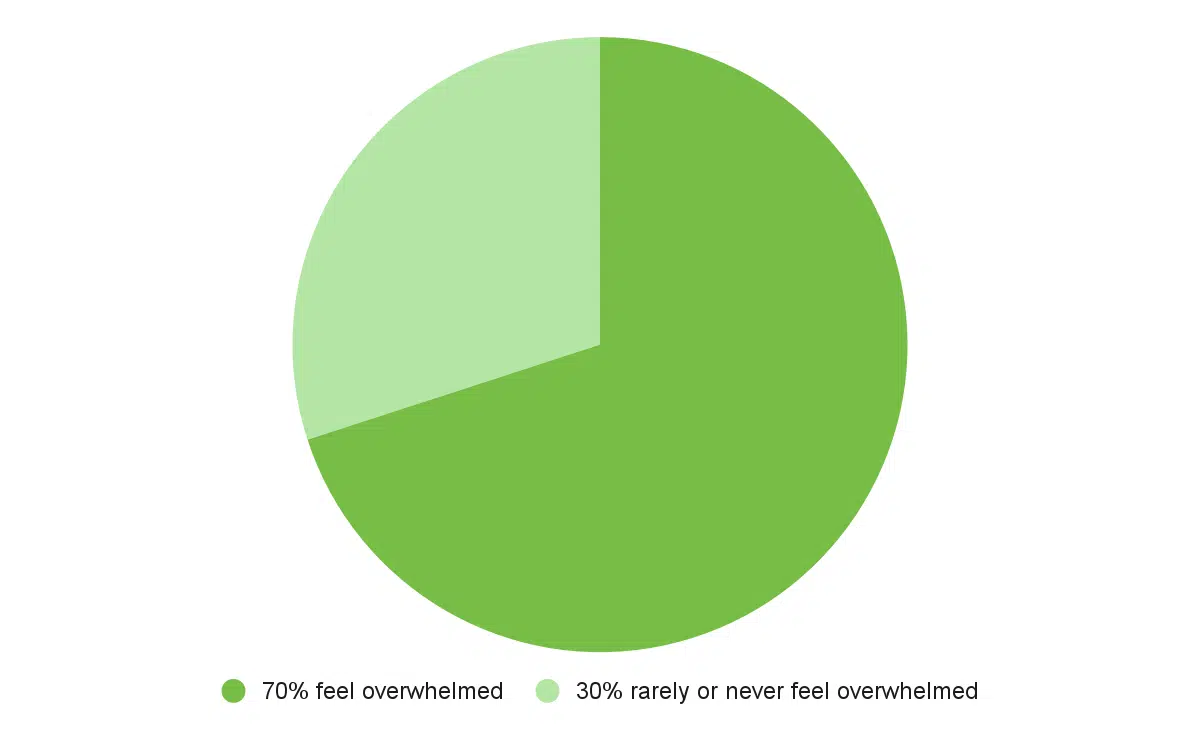
While 70% of marketers often or always feel overwhelmed, just 30% rarely or never feel overwhelmed, according to a survey released by SOCi, a marketing platform for multi-location brands.

Marketers Feeli Overwhelmed By AI Development SOCi
  • “It’s a call to action for organizations to prioritize continuous learning and offer support to their teams. Otherwise, millions and billions invested in AI will be wasted,” said Monica Ho, CMO of SOCi.

No training or education. Perhaps contributing to some of that overwhelmed feeling is this survey finding:

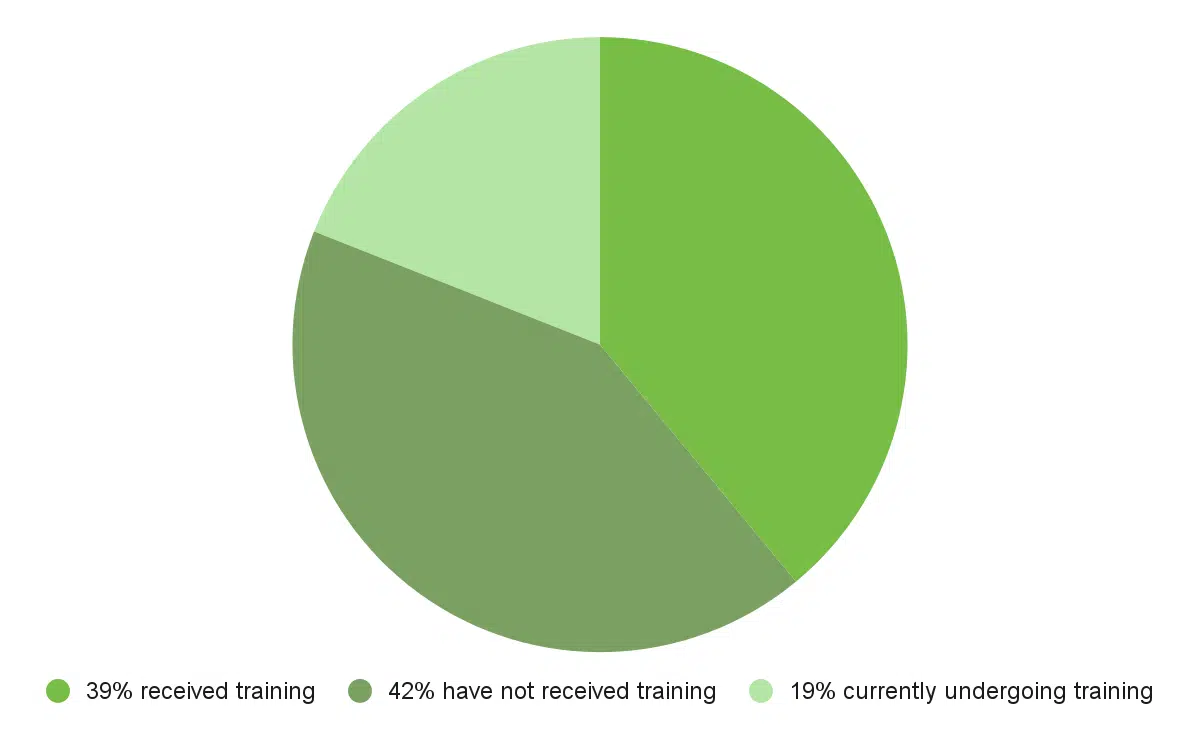
  • 42% of marketers haven’t received any formal training on AI and its applications in marketing.
Formal Education On AI In Marketing SOCi

As for the rest, 39% have received training while 19% are currently undergoing training.

  • “We need to better equip our marketing teams with the right AI training and resources. A better understanding of AI and its applications is pivotal to harnessing its capabilities for our marketing strategies and unlocking its full potential,” Ho said.

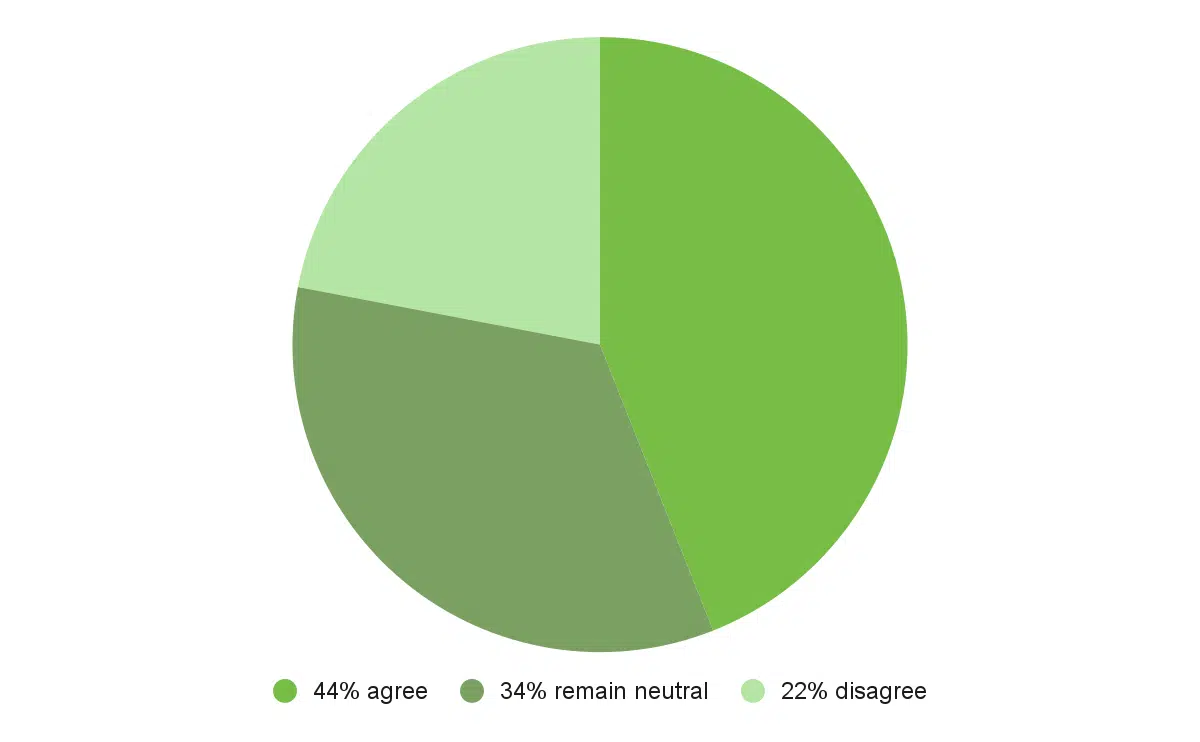
More tools, more confusion. Rather than help marketers do their jobs better, the frequent introduction of new AI tools has caused confusion, according to 44% of respondents.

AI Tools Confusion Vs Assistance SOCi

Why we care. If you’re feeling overwhelmed like the marketers in this survey, know you’re not alone. The speed of change we’ve seen this year in search marketing has been incredible and unlike any other year that I’ve seen covering this industry for 16 years.

The search marketer’s generative AI survival guide. Make sure to join me at SMX Next for my keynote presentation that will address this topic. (Register for free here.)

About the survey. Soci surveyed 317 digital marketing professionals, 55% of whom were decision-makers (including marketing managers, marketing analysts, marketing directors, CMOs and VPs), working at U.S. B2C companies.


Related stories

New on Search Engine Land

@media screen and (min-width: 800px) { #div-gpt-ad-3191538-7 { display: flex !important; justify-content: center !important; align-items: center !important; min-width:770px; min-height:260px; } } @media screen and (min-width: 1279px) { #div-gpt-ad-3191538-7 { display: flex !important; justify-content: center !important; align-items: center !important; min-width:800px!important; min-height:440px!important; } }

About the author

Danny Goodwin

Danny Goodwin has been Managing Editor of Search Engine Land & Search Marketing Expo – SMX since 2022. He joined Search Engine Land in 2022 as Senior Editor. In addition to reporting on the latest search marketing news, he manages Search Engine Land’s SME (Subject Matter Expert) program. He also helps program U.S. SMX events. Goodwin has been editing and writing about the latest developments and trends in search and digital marketing since 2007. He previously was Executive Editor of Search Engine Journal (from 2017 to 2022), managing editor of Momentology (from 2014-2016) and editor of Search Engine Watch (from 2007 to 2014). He has spoken at many major search conferences and virtual events, and has been sourced for his expertise by a wide range of publications and podcasts.

https://searchengineland.com/survey-70-of-marketers-feel-overwhelmed-by-ai-changes-433440


Google Rich Results Test now supports paywalled content

Google’s Rich Results Test has been upgraded to show you validation of structured data for paywalled content. So now the tool will show you if that site is using the proper structured data for paywalled content or not.

What it looks like. So the Financial Times is a popular financial news site that using a paywall. I plugged in a URL from the Financial Times into the Google Rich Results Test and it showed the site or URL was using

Rich Results Test Google Search Console

Rich results tool. The rich results tool will be on Google’s own site, designed and maintained with the purpose of showing you Google Search rich result types. Google said, “to test your markup for Google Search rich result types, you can continue to use the Rich Results Test.” You can also preview how rich results can look in Google Search.

Google’s announcement. Google wrote:

Why we care. Those of you who work on sites that use a paywall will find this new addition helpful in debugging and validating whether what they have implemented works with Google Search or not.

So give it a try on any paywalled URLs to validate that Google Search knows they use the proper markup.


Related stories

New on Search Engine Land

@media screen and (min-width: 800px) { #div-gpt-ad-3191538-7 { display: flex !important; justify-content: center !important; align-items: center !important; min-width:770px; min-height:260px; } } @media screen and (min-width: 1279px) { #div-gpt-ad-3191538-7 { display: flex !important; justify-content: center !important; align-items: center !important; min-width:800px!important; min-height:440px!important; } }

About the author

Barry Schwartz

Barry Schwartz is a Contributing Editor to Search Engine Land and a member of the programming team for SMX events. He owns RustyBrick, a NY based web consulting firm. He also runs Search Engine Roundtable, a popular search blog on very advanced SEM topics. Barry can be followed on Twitter here.

https://searchengineland.com/google-rich-results-test-now-supports-paywalled-content-433386


5 SEO mistakes sacrificing quantity and quality (and how to fix them)

Quantity and quality are often diametrically opposed.

Increase the former, the latter drops like a rock. 

Try to bring it back up, and pretty soon, you’re back where you started; lowering quantity back down to bring them into balance.

But here’s the thing.

It doesn’t have to be this way. In a world of endless competition, incredibly savvy competitors, AI, and zero-click SERPs, you simply can’t afford not to scale both quality and quantity at the same exact time. 

Don’t just take my word for it. Go look at the SERPs. Look at what is actually working vs. what anyone “tells” you should work. 

I’ve had the fortune of working with countless billion-dollar brands. And what separates them from everyone else isn’t just a budget number on a spreadsheet. 

But a deeper understanding of how to avoid these five self-imposed mistakes below. 

Mistake 1: Poor operational systems create self-imposed ‘glass ceilings’

It’s true to a degree.

SEO is complex. Getting more so by the day. 

It is technical. Canonicalization and Time to First Byte (TTFB) are living proof.

But there is a giant misconception about why SEO campaigns fail. 

That’s because, contrary to popular belief, SEO is not just a technical problem. It’s also a people problem. 

Obviously, a site that doesn’t get indexed properly is a problem. That’s a technical issue.

But the bigger, more fundamental, and common underlying issue is that you’re not publishing enough good stuff around highly relevant keywords or getting attention and clicks back to those pages. 

Simple as that. 

Go look up the biggest sites across any category. The biggest brands in your industry. And what do you notice?

An overwhelming number of websites whose pages number into the thousands (or more), and referring domains into the tens of thousands (or more). 

That’s what you’re up against. Welcome to the future of SEO. Where the big get bigger, the rich get richer. 

And the faster you come to realize this, the faster you’ll be able to set up your workflows, processes, roles, and responsibilities accordingly to unlock insane growth. 

The trouble is, most SEOs continue to think too small. Too tactical. Too minute. 

They’re busy scrappin’ around, looking for those one or two or three “NiNjA rOcKsTaR uNiCoRnS” – except they don’t exist!

Or, at least, your over-reliance on them continues to undermine future potential because you rely more on raw talent than proven systems. 

And therefore, your workflows are garbage. Processes full of holes like a stinky, sweaty block of Swiss cheese. 

Quality and quantity in SEO

So the first lesson is to stop. Look at yourself in the mirror. And admit that what got you here won’t get you there. 

You need better internal operating systems – not just better, more talented people – to scale million-dollar brands into billion-dollar ones.

Mistake 2: You don’t have processes to simplify complex activities

I <3 Andy Crestodina. 

One, because he’s incredibly nice. Two, incredibly smart. But three, ‘cause he drops truth bombs on the regular. 

He’s been publishing a study on blogging statistics for years – possibly even a decade by now. 

And there are always two overwhelming conclusions staring marketers in the face:

  • The stuff most people do consistently don’t correlate highly with success.
  • The things that most likely correlate to success are often practiced the least.

Let that sink in a moment. 

Here’s my favorite excerpt. Let’s take a look at the top seven activities that correlate most with “chance of success,” as reported in the increased likelihood from those with “strong results:”

  • Publish daily – 128%
  • Write 3,000+ word articles – 116%
  • Write 10+ draft headlines before choosing one – 84%
  • Research keywords for every post – 80%
  • Include 10+ images per post – 56%
  • Include contributor quotes for every post – 56%
  • Use a team of editors – 52%

Now. Ask yourself. How many of those are you practicing on a regular basis?

One? Maybe two? Imagine you pushed that to six or all seven.

How on Earth is that possible? To publish loooooong, in-depth, action-packed articles that include expert insight backed by a team of editors – all on a daily basis?

The short answer? You can’t.

At least, not without excellent processes that break down complex, multi-faceted challenges into simple steps and checklists. 

Take even one of those, like publishing daily. Only the greatest workhorses of writers could publish one 3,000-word article on a daily basis.

Why? 

Because they’re also often getting pulled into too many other directions and distractions. 

Because you’re also falling victim to the third common mistake below. 

Mistake 3: You have the wrong people in the wrong roles

Great writers make bad editors and even terrible content managers because their skill sets are often contradictory. For instance:

  • Great writers thrive on ingenuity, on saying the same thing multiple different ways at different times.
  • Great editors, meanwhile, thrive on consistency, making sure that all content under their purview has consistent standards and a unifying voice.
  • Great content managers thrive on orderly logistics, keeping their teams on task to guarantee milestones and due dates are met, and output continues to increase. 
Writers, editors and managers

OK, thanks for the lecture. What does all this mean?

It means to publish a 3,000+ word article on a daily basis, you’re not just looking for one killer writer. You’re looking for a team of them. 

That team of subject-matter experts needs to be supported by a team of editors. Who’re all backed up by a team of content managers working in sync like a professional kitchen on a busy night.

The only way you get teams of people to work together, day after day, is through having the right people in the right roles. 

So everyone’s playing to their strengths. And nobody is pulled into their areas of weakness. 

This is easy in theory but difficult in practice. And it’s why most can’t – or won’t – do it. 

Mistake 4: You’re ‘guessing’ instead of ‘knowing’ what works

The Internet’s rich keep getting richer. 

I don’t need to tell you that. 

All you need to do is look up the SERPs in your space and notice how giant “business” publishers are now dominating categories like “best mattress for your home.”

They often don’t need to play by the same rules as the rest of us, sweating over concepts like “topical authority” that their mere presence makes a mockery of. 

Except…

When the big brands drop the ball on the basics. 

Their SEO complacency and entitlement ultimately do them in. And that’s how you beat them at their own game.

Take a super competitive, saturated space like “make money online.” 

Big brands often fall short when they “guess” instead of measuring twice and cutting once – knowing exactly what they should be doing before even writing a single word.

Exhibit A:

Make money online - Landing page

No way this should be happening. Except, it’s obvious to experts: search intent is simply misaligned.

They’re just publishing whatever they feel like, a product landing page, expecting it to work instantly. 

Instead of rolling up their sleeves, understanding what the SERPs are telling them, and then executing accordingly. 

Mistake 5: You haven’t transformed ‘subjective’ elements into ‘objective’ ones

Understand that nearly everything in life is subjective – varying shades of gray.

There are few truly “black” or “white” issues where one side is always wrong and the other is always right. (No matter what loud people on X.com lead you to believe.)

The real world isn’t binary. But that doesn’t mean you can’t (or shouldn’t) do everything possible to transform subjective elements in your process into objective ones.

Take a look at the following edits and tell me which ones are “right” vs. “wrong”: 

Different style and tone in writing

One person reading this might like the first example. While others, the second. 

So what’s the right answer? 

Trick question, because there is none.

The point is to take something subjective, like the phrasing of a sentence, and turn it into objective truths for your brand or style. 

And then consistently re-train your team to align around that tone going forward. 

Unlocking SEO success: People and processes, not just tech, matter

It’s true. You can’t guarantee SEO success. 

But that’s OK in the long run.

‘Cause it means that most of your competitors will continue to take shortcuts and miss the obvious facts staring them in the face.

You, putting your head down and trusting the process, can lap them over the next few years before they even know what hit them.

You can’t guarantee SEO results. But you can predict SEO success before publishing a single thing.

You just need to look at what actually works, what is actually driving results in real time. 

And then align your workflows, processes and people accordingly. 


Opinions expressed in this article are those of the guest author and not necessarily Search Engine Land. Staff authors are listed here.


Related stories

New on Search Engine Land

@media screen and (min-width: 800px) { #div-gpt-ad-3191538-7 { display: flex !important; justify-content: center !important; align-items: center !important; min-width:770px; min-height:260px; } } @media screen and (min-width: 1279px) { #div-gpt-ad-3191538-7 { display: flex !important; justify-content: center !important; align-items: center !important; min-width:800px!important; min-height:440px!important; } }

About the author

Brad Smith

Brad Smith owns three content marketing companies, and has been featured in publications like The New York Times, Forbes, Business Insider, and The Next Web. Each week, he shares first-hand experience and growth strategies behind some of the web’s fastest growing brands.

https://searchengineland.com/5-seo-mistakes-sacrificing-quantity-and-quality-and-how-to-fix-them-433319


Google updates Favicon search documentation

Google has updated its favicon search developer documentation to remove the Favicon user agent section and also to clarify that you need to allow Googlebot and Googlebot-Image user agents for Google to index your favicons and display them in Google Search.

What Google said. “Clarified in the favicon documentation that both the favicon file and the home page of the site must be allowed for crawling by Googlebot-Image and Googlebot respectively. Also removed information about the Google Favicon HTTP user-agent string throughout our documentation, as this is no longer used. The removal of the HTTP user-agent string means no changes for site owners. Google Favicon depended on the Googlebot-Image and Googlebot robots.txt user agent tokens, which remain supported. ,” Google wrote.

Favicon user agent. Google removed the section in that document for the Favicon user agent, here is a screenshot of that section before Google removed it:

Favicon User Agent Doc 1697625596

Allow Googlebot. Google said if you want to ensure Google is able to discover your site’s favicon, you need to allow both Googlebot and Googlebot-Image user agents from crawling your website. Google updated the document to read, “The favicon file must be crawlable by Googlebot-Image and the home page by Googlebot; they cannot be blocked for crawling.” Previously the document only wrote, “Both the favicon file and the home page must be crawlable by Google (that is, they cannot be blocked to Google).”

Why we care. If you are having issues with Google showing your site’s favicon in the search results, then make sure to review the new developer documents on this topic. Also make sure you are not disallowing Googlebot and Googlebot-Image in your robots.txt directive.


Related stories

New on Search Engine Land

@media screen and (min-width: 800px) { #div-gpt-ad-3191538-7 { display: flex !important; justify-content: center !important; align-items: center !important; min-width:770px; min-height:260px; } } @media screen and (min-width: 1279px) { #div-gpt-ad-3191538-7 { display: flex !important; justify-content: center !important; align-items: center !important; min-width:800px!important; min-height:440px!important; } }

About the author

Barry Schwartz

Barry Schwartz is a Contributing Editor to Search Engine Land and a member of the programming team for SMX events. He owns RustyBrick, a NY based web consulting firm. He also runs Search Engine Roundtable, a popular search blog on very advanced SEM topics. Barry can be followed on Twitter here.

https://searchengineland.com/google-updates-favicon-search-documentation-433378


Use AI to turn your calls into a competitive advantage by CallRail

CallRail 1920x1080 Unlock Your Marketing Potential 800x450

It might be surprising to learn that artificial intelligence (AI) has existed for over 70 years, but it’s only recently that the technology has become so advanced—and so widely available, in nearly everyone’s pocket.

AI is especially promising for marketers as it allows them to do many tasks faster and more strategically than ever before. There are dozens of use cases for how marketers use AI—everything from competitive research and content generation to campaign optimization and marketing automation.

Critically, this new generation of AI includes explosive advancements in the realm of speech recognition and conversation intelligence (CI). CI can expose valuable insights hidden in phone calls, highlight keywords spoken during conversations, identify positive and negative sentiment, create glance-able call summaries—and even automate the process of qualifying and scoring leads.

This goldmine of data was previously only available to marketers who had the time and energy to manually listen to calls themselves (or the funds to invest in a transcription service) but now it’s available to the rest of us who constantly find ourselves strapped for time.

Read on to learn how marketers can use AI to turn calls into their competitive advantage.

1. Tap into calls for qualitative research

AI has revolutionized the way marketers conduct research. With AI-powered research tools, they can process vast amounts of data and identify patterns and insights that would be impossible to uncover manually.

AI monitoring and listening tools, for instance, can process massive amounts of web and voice data to help businesses stay on top of industry trends, monitor their competitors, and identify opportunities for engagement with customers. Reputation monitoring tools can also help businesses track customer sentiment and respond quickly to negative feedback, improving their overall reputation.

Conversation intelligence also provides several research opportunities. It allows marketers to discover what customers really want by automatically analyzing the language customers and prospects use during calls. For instance, a real estate agent might see a spike in mentions of a particular neighborhood. CI also allows marketers to mine customer calls for sentiment and flag calls for quick escalation and routing, such as when a customer requests to speak with a manager.

2. Use AI-identified keywords to optimize search and SEO

While marketers have been using AI generators for SEO tasks like content outlines and keyword research for years, the challenge is making sure their assumptions about what audiences want match what readers are looking for.

This is where conversation intelligence comes into play—it can automatically identify key terms spoken in calls and map their frequency to spot emerging trends. One of the many benefits of quickly surfacing emerging trends in calls is that when marketers compare customer language to business offerings, they might discover a mismatch.

For example, a personal injury law firm might receive multiple calls about “scooter accidents,” but they may not have been aware that this was even an area of opportunity. Based on the strong upward trend in this CI-spotted keyword, however, the firm could open an entirely new line of business for scooter accidents—and add more SEO content to its website to further drive up traffic.

3. Get better generative content with call insights

AI writing has been on the market for quite some time, but before the generative AI revolution, it was surrounded by a negative stigma. With the proliferation of more advanced (and less plagiaristic) content creation tools, however, AI-powered content creation has gained significant popularity and credibility.

Insights from calls, such as frequently asked questions, are perfect fodder for generating content outlines or even rough drafts. AI can be a powerful tool for bypassing “blank page syndrome” and getting projects started with copy that marketers can further refine.

Aside from articles, AI writing tools can also speed up the production of almost any type of content that marketing teams need—email, blog posts, landing pages, social media copy, headlines, email subject lines, summarizing content for promotional blurbs and even sales pitches. Just remember, AI-generated content still requires a human touch to turn it into high-quality, engaging content that resonates with readers.

4. Optimize campaigns with validation from call data

Optimized marketing campaigns lead to a lower cost per acquisition and a higher return on investment—and AI can short-circuit the path to optimization by quickly sifting through data to determine what’s working and what isn’t.

Conversation intelligence, in addition to accurately transcribing and analyzing calls, can also be used to automate critical marketing processes like qualifying leads and tagging conversations as conversions. CallRail’s Conversation Intelligence software  takes this one step further through direct integrations with Google Ads and Bing Ads. By integrating with ad providers, CallRail returns conversion data to the ad platforms which then allows their algorithms to automatically update bidding limits and optimize cost-per-click.

Marketers can also use AI to fine-tune marketing and keyword bidding strategies for further campaign optimization, such as identifying the most frequently used keywords and phrases in calls and then adjusting desired keywords accordingly.

5. Automate away the busywork with AI

Marketing automation is a powerful tool for businesses and marketing agencies that want to increase conversion rates and improve the efficiency of their marketing and sales teams. By combining user data and predictive analytics, AI can help predict what customers want. For example, AI can automatically deliver personalized offers to customers at the right time based on insights from past online behaviors. This helps increase conversion rates and deal sizes significantly.

AI-powered chatbots are a popular marketing automation tool because they can answer common questions, provide product recommendations, and even process orders. By acting as a first line of customer service or sales, these chatbots allow businesses to strike while the iron is hot and never miss a chance to nurture a lead.

Conversation intelligence is another powerful tool for marketing automation. As mentioned earlier, marketers can use CI to automatically qualify leads based on certain keywords or phrases mentioned during a call. When a lead is marked as “qualified,” marketing and sales teams can ensure timely follow-up by notifying sales staff as well as use the data to more accurately track the performance of different ad channels.

Hone your competitive edge with AI-powered call insights

Try CallRail’s Conversation Intelligence  free today. Tap into a previously unexplored goldmine of marketing insights to help fine-tune marketing strategies and drive better outcomes.

Get started now


Related stories

New on Search Engine Land

About the author

CallRail

CallRail makes it easy for businesses of all sizes to turn more leads into better customers. Serving more than 200,000 businesses and integrating with leading marketing and sales software, our marketing analytics and business communications solutions deliver real-time insights that help our customers market with confidence.

https://searchengineland.com/use-ai-to-turn-your-calls-into-a-competitive-advantage-433251


Baidu to integrate ERNIE 4.0, which ‘rivals’ GPT-4, into Search

Baidu has unveiled the latest edition of its generative AI model, ERNIE 4.0.

The Chinese technology company has said that the chatbot’s capabilities rival those of OpenAI’s GPT-4. ERNIE is an acronym for “Enhanced Representation from kNowledge IntEgration”.

Search engine plans. Baidu is planning to integrate ERNIE 4.0 into its search engine, maps, business tools and cloud services. This will change how the search engine responds to queries, by providing customized answers instead of lists of results and links, according to Baidu CEO Robin Li.

The exact timeline for these changes is yet to be confirmed.

Capabilities. Baidu CEO, Li, claimed that the ERNIE model has been “significantly improved” in terms of understanding queries, generating more advanced responses and memory functionality. Speaking at an event in Beijing, he said that the 4.0 version can:

  • Generate a car commercial within minutes.
  • Solve complicated math problems.
  • Create plots for novels from scratch.

Why we care. The potential ramifications of integrating ERNIE across its suite of products, including its search engine. are substantial, potentially reshaping rankings, traffic and advertising. The exact magnitude of these effects is uncertain at this point, so international search marketers should stay on top of the latest developments.

Language issues. ERNIE 4.0’s primary language is Mandarin Chinese. It isn’t yet able to process English queries to the same advanced level.

Availability. The ERNIE Bot was first unveiled in March and was made available to the public in August. The 4.0 model has not yet been rolled out to the general public, however, Baidu has invited some people to test it.


Get the daily newsletter search marketers rely on.


What Baidu is saying. Li said in a statement:

  • “ERNIE 4.0 has achieved a full upgrade with drastically improved performance in understanding, generation, reasoning, and memory.”
  • “These four core capabilities form the foundation of AI-native applications and have now unleashed unlimited opportunities for new innovations.”

But. Despite Li’s big claims, analysts seem unimpressed, according to Reuters.


Related stories

New on Search Engine Land

@media screen and (min-width: 800px) { #div-gpt-ad-3191538-7 { display: flex !important; justify-content: center !important; align-items: center !important; min-width:770px; min-height:260px; } } @media screen and (min-width: 1279px) { #div-gpt-ad-3191538-7 { display: flex !important; justify-content: center !important; align-items: center !important; min-width:800px!important; min-height:440px!important; } }

About the author

Nicola Agius

Nicola Agius is Paid Media Editor of Search Engine Land after joining in 2023. She covers paid search, paid social, retail media and more. Prior to this, she was SEO Director at Jungle Creations (2020-2023), overseeing the company’s editorial strategy for multiple websites. She has over 15 years of experience in journalism and has previously worked at OK! Magazine (2010-2014), Mail Online (2014-2015), Mirror (2015-2017), Digital Spy (2017-2018) and The Sun (2018-2020). She also previously teamed up with SEO agency Blue Array to co-author Amazon bestselling book ‘Mastering In-House SEO’.

https://searchengineland.com/baidu-ernie-4-search-433338