The 5 degrees of link relevance

SEO is easy enough, in theory. The strategies are obvious if you’ve been around the block.

What’s hard about SEO is the actual execution and implementation. The consistency. On a daily basis. 

Nowhere is this more obvious than link building.

This article will explain why.

You’ll also learn how to use the “5 degrees of link relevance” framework to craft the best theoretical strategy and the best path to consistently build high-quality, relevant links over the long run.

Quickly jot down a list of the “best” and “most relevant” links in your space.

Go ahead. I’ll wait.

  • What are their characteristics? 
  • How are they similar?

Here’s the thing most people misunderstand about link building:

You need both quality and quantity to compete in the most lucrative spaces against online behemoths. 

Just one or the other isn’t good enough.

And that poses a problem. 

Because it forces you to redefine commonly held preconceptions, like “link relevance,” into a more practical definition.

You see, “relevance” isn’t binary. It’s not black and white. 

Yes, it can be completely “not relevant.” A link from a Viagra site is definitely not relevant to an insurance broker. 

But beyond that, there are often different “degrees” of relevant links. It’s more of a fluid spectrum, where links can be both “highly” or “slightly” relevant.

And when shooting for scale, you need both!

So let’s break this down even further, using my framework, to show you how to prioritize link relevance based on the strategies and tactics that best suit each.

You’ll see that the bulk of link building strategies and tactics you use should fall into the middle zone vs. getting stuck at either extreme end.
Five degrees of link relevance

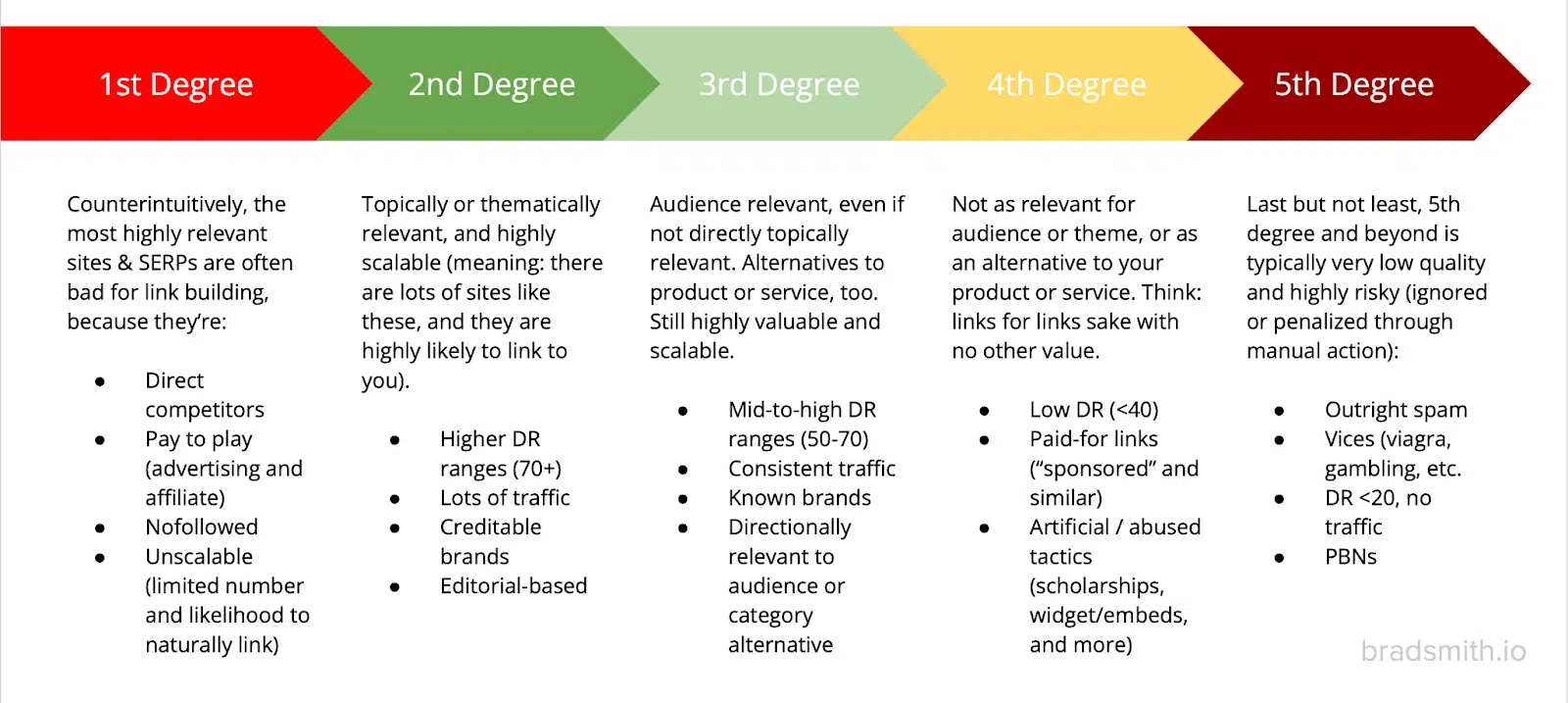
First degree: The ‘most’ relevant, yet often least scalable

When you ask people what the “most relevant” links are in your space, they often give you First Degree answers.

But here’s the problem with those.

Counterintuitively, first-degree links usually aren’t highly scalable.

The most highly relevant sites and SERPs in your space are often bad for link building because they’re: 

  • Direct or indirect competitors.
  • “Pay to play” (advertising and affiliate).
  • Nofollowed.
  • Unscalable (limited number and likelihood to naturally link).

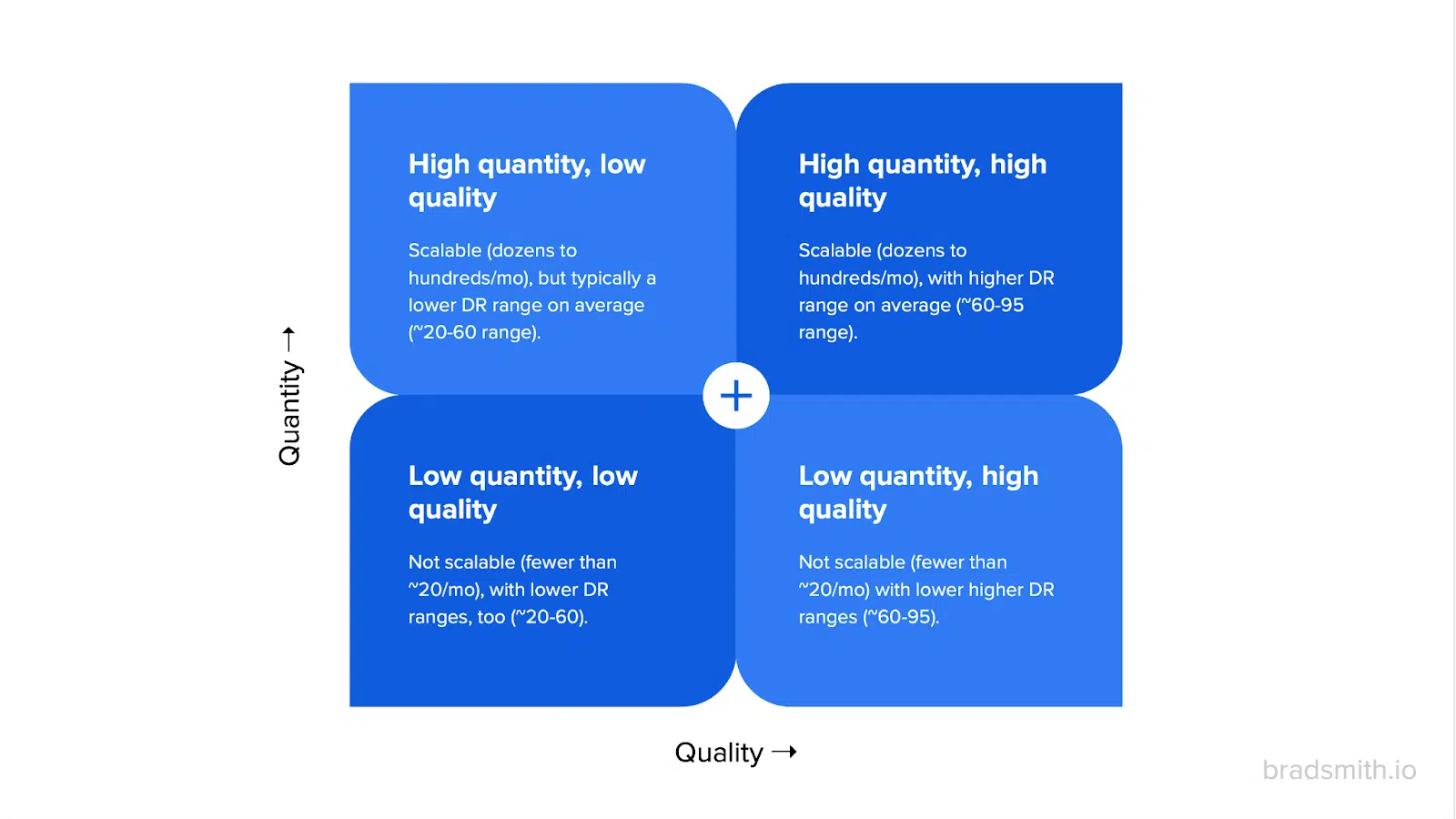
Another way to think of this problem is through the lens of a simple matrix. Each axis balances “quantity” and “quality.”
Link quantity vs. quality

And first-degree links, while certainly high quality, are very low quantity by definition.

That’s because the sites often ranking at the top of the most competitive SERPs in your space already fall into one of the following categories:

  • Competitors won’t link to you. 
  • Pay-to-play sites are expensive to scale.
  • Nofollowed sites have some benefit, but not ideal.
  • And they’re “unscalable” by definition.

Unpacking this last point, consider a major media brand like The New York Times. 

There’s both a tiny finite number of sites like this, and also, the likelihood of them linking to you (without an eight-figure sponsorship deal) is very, very, very, very, very, very, very, very low.

So, yes. You should look for and get as many of these as possible. For instance, sponsoring a nonprofit in your space is an easy win-win. 

Nonprofit - Sponsor page

But…

There’s only so many of these to go around!

And on a comparison basis, the effective “cost per link” (even if it’s a traditional or flat-fee sponsorship) becomes prohibitively expensive to scale into the thousands (if not tens of thousands of referring domains) needed to compete in the Major Leagues.

For instance, how much do you think this content syndication costs between NerdWallet + CNBC?

Nerdwallet syndicated content

No clue. But I also bet it’s significantly more than your company’s entire marketing budget.

So instead of fruitlessly floundering around with major media sites or direct and indirect competitors already ranking, you need to readjust your definition of relevance to become something more easily attainable. 

Second degree: Highly relevant and scalable

Second-degree links are high quality, relevant and scalable.

This is your sweet spot!

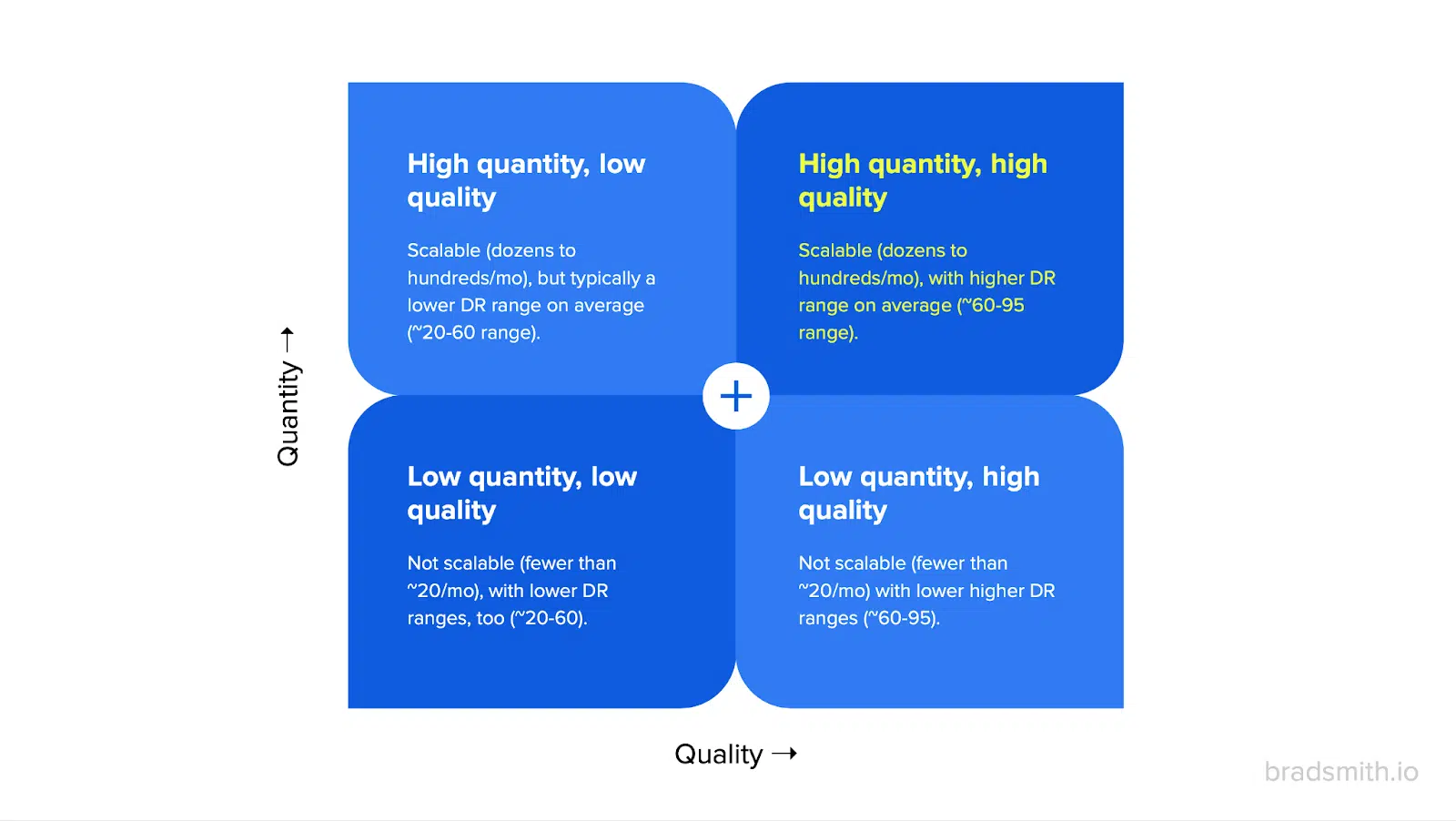
Second-degree links are topically or thematically relevant and highly scalable (meaning: many sites like these are highly likely to link to you). 

Here are a few of the characteristics you’re often looking for:

  • Higher DR ranges (70+)
  • Lots of traffic
  • Credible brands
  • Editorial-based

In other words, this is your high-quality and high-quantity focus!
Links - high quantity, high quality

Why is this seemingly semantic difference important?

Because thinking in this fashion helps you uncover the optimal tactics you should be using to get as many of these links as possible!

For instance, generally speaking, certain tactics are better (or worse) to use to reach sites of a certain size (and prestige). 

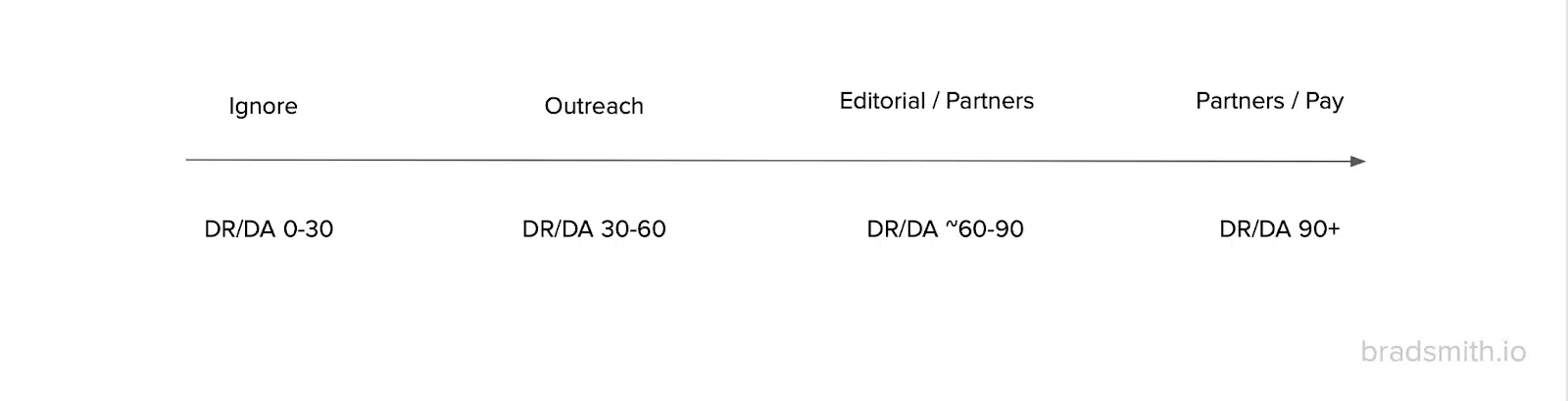
If you broke it down by Domain Rating (DR) or Domain Authority (DA) ranges, it would look something like this:
DR or DA ranges

In other words:

  • DR/DA 0-30 sites? Don’t bother actively chasing links.
  • DR/DA 30-60: Outreach-based methods tend to scale better in this low-to-medium-tier of sites.
  • DR/DA ~60-90: Whereas you’ll often need an editorial-based strategy and partnerships to reach this sweet spot of sites that move the needle.
  • DR/DA 90+: And these are your first-degree links above that might be simply unattainable or too expensive (you need good personal relationships or LOTS of $$$).

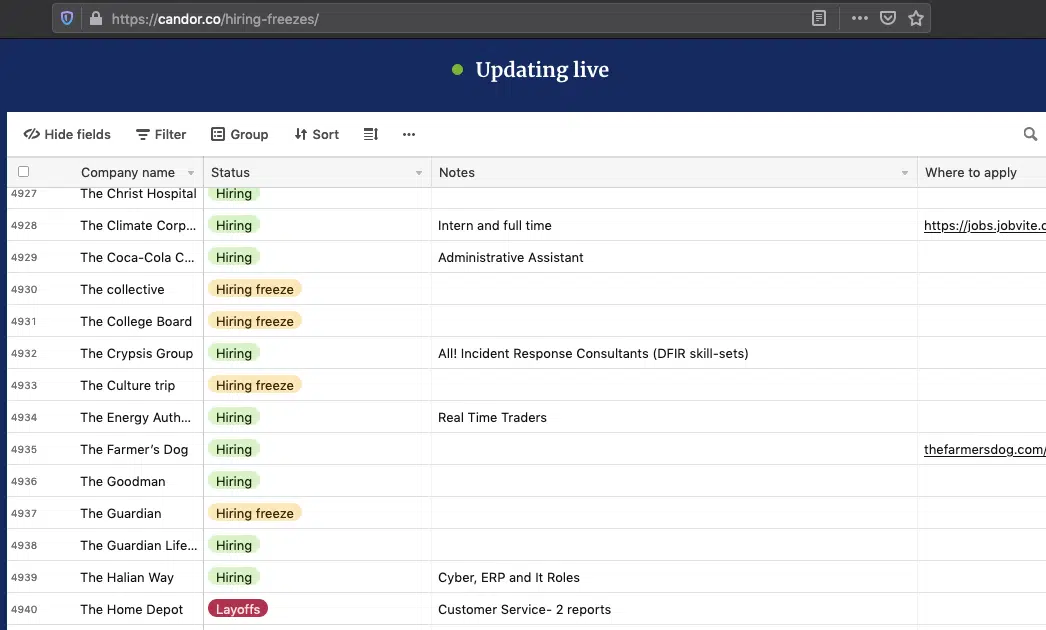
A perfect example of second-degree link building would be Candor’s “Hiring Freezes” link magnet play at the height of COVID-19. 

They created a valuable resource, rounding up real-time employment status during an uncertain time:
Candor - hiring freezes

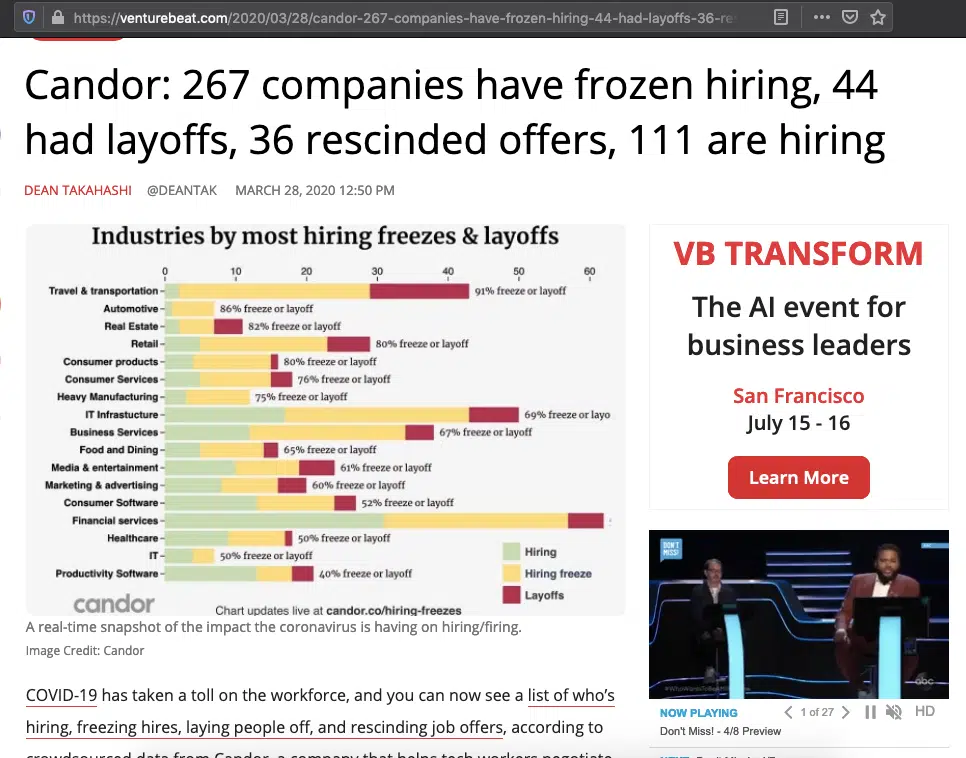
Then, they leveraged that resource to get attention and visibility and some high-quality links from editorial-based sources like VentureBeat (an industry publication vs. mainstream media).
Candor - VentureBeat feature

This strategy has the added bonus of leveraging long-term. 

Here’s how:

  • Instead of spending more on the expense (or distribution, like cost per link building, CPC of an ad or CPL for affiliates, etc.), you
  • Spend more on the asset (the content!), bringing down the effective cost per link or click or lead on the expense side of the balance sheet.

This last point is super important. Write it down.

Because the good news is that most of your competitors will ignore and invert it.

You shouldn’t. 


Get the daily newsletter search marketers rely on.


Third degree: Audience relevant and still highly scalable

OK, now for the fun section.

Third-degree links are critical in driving quantity during a link building campaign.

The trick is to find enough of them that are still relevant, even though they purposely won’t be the “most” relevant (like the first or second degree examples above).

So here’s how you think about these.

Third-degree links are audience-relevant, even if not directly topically relevant. These can be alternatives to a product or service, too (i.e., an alternative solution to your primary product or service). And they’re still highly valuable and scalable!

Examples here include:

  • Mid-to-high DR ranges (50-70)
  • Sites with consistent traffic
  • Known brands in that niche or vertical, despite not mass market appeal
  • They’re directionally relevant to audience or category alternative

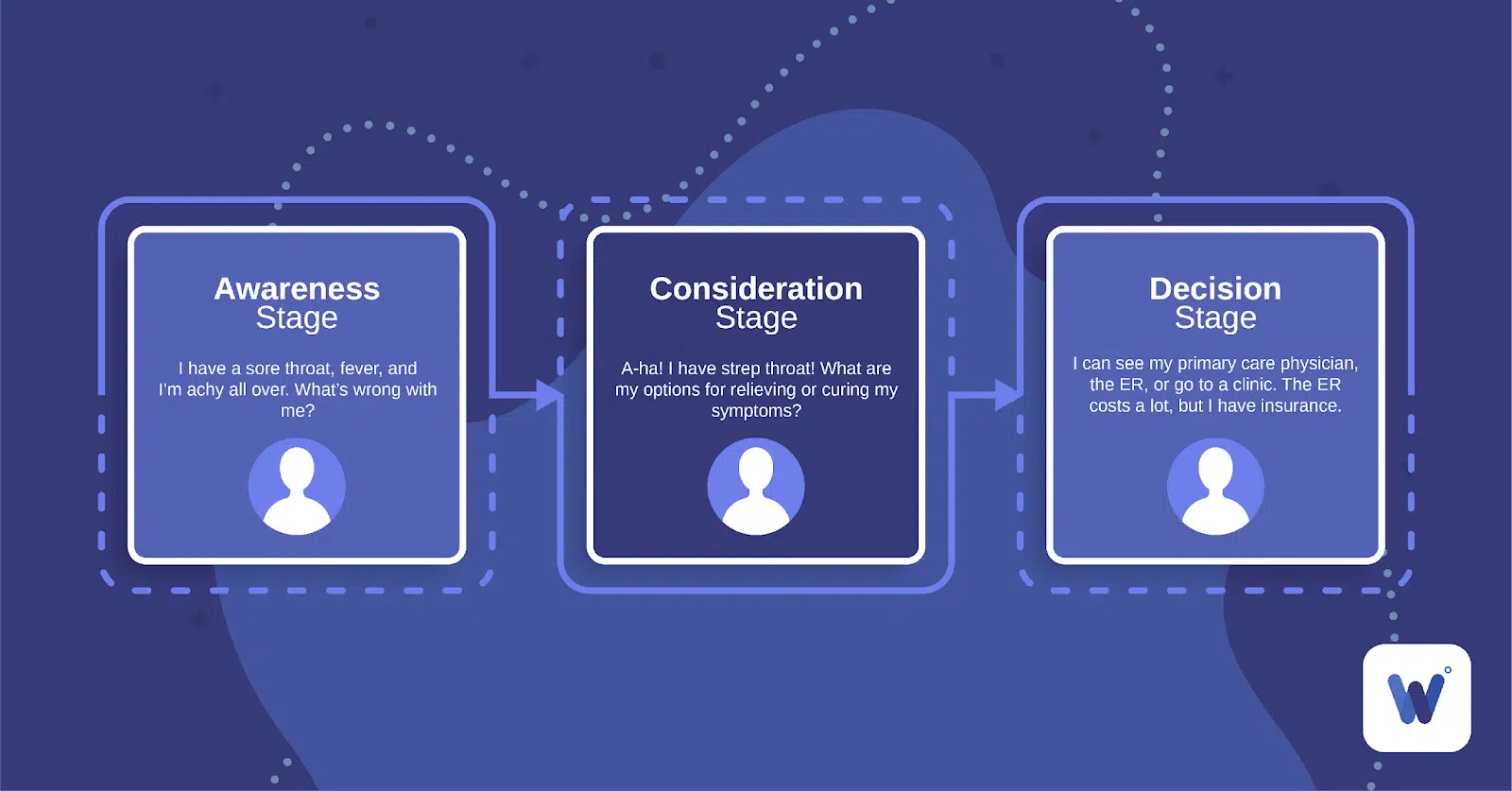
Let’s take a step back and think of your buyer’s journey for a second.
Buyer's journey

Most first and second-degree links are closer to the bottom of the funnel, focused primarily around who you are or what you do for people (i.e., the product or service you have, the primary audience that needs you right now, etc).

As an example, let’s say you sell Pet Insurance. So most people think “relevant” is something around “insurance” or “people looking for pet insurance.”

Yes. And no.

Again: you have no scale there! 

Do you think anyone else talking about “pet insurance” on the internet is likely to link to you? The answer is no, because they’re probably already a direct or indirect competitor.

Plus, it’s super niche.

So instead, you need to move up-funnel.

Ask yourself: What kind of big, active online audiences would buy pet insurance?

Mom blogs!

Are mom blogs “highly relevant” to pet insurance?

  • From a classic, old-school, traditional SEO standpoint, maybe not. 
  • But from a broader marketing and actually revenue-driving position? Yes, of course! 

Who do you think spends money on new pets, takes care of existing pets, and spends the bulk of their time taking care of them? 

Moms and their kids!

(Stereotypical, I know. But this is still directionally accurate across the world. Moms usually still do most of the hard work with kids and pets.)

So instead of trying to get other insurance companies to review your product – ‘cause, they won’t – you get (or incentivize) mom blogs to talk about your pet insurance.

This gives you a relevant link and can potentially drive more revenue.

The link is audience-relevant, even if it’s not directly relevant to your space or product (insurance).

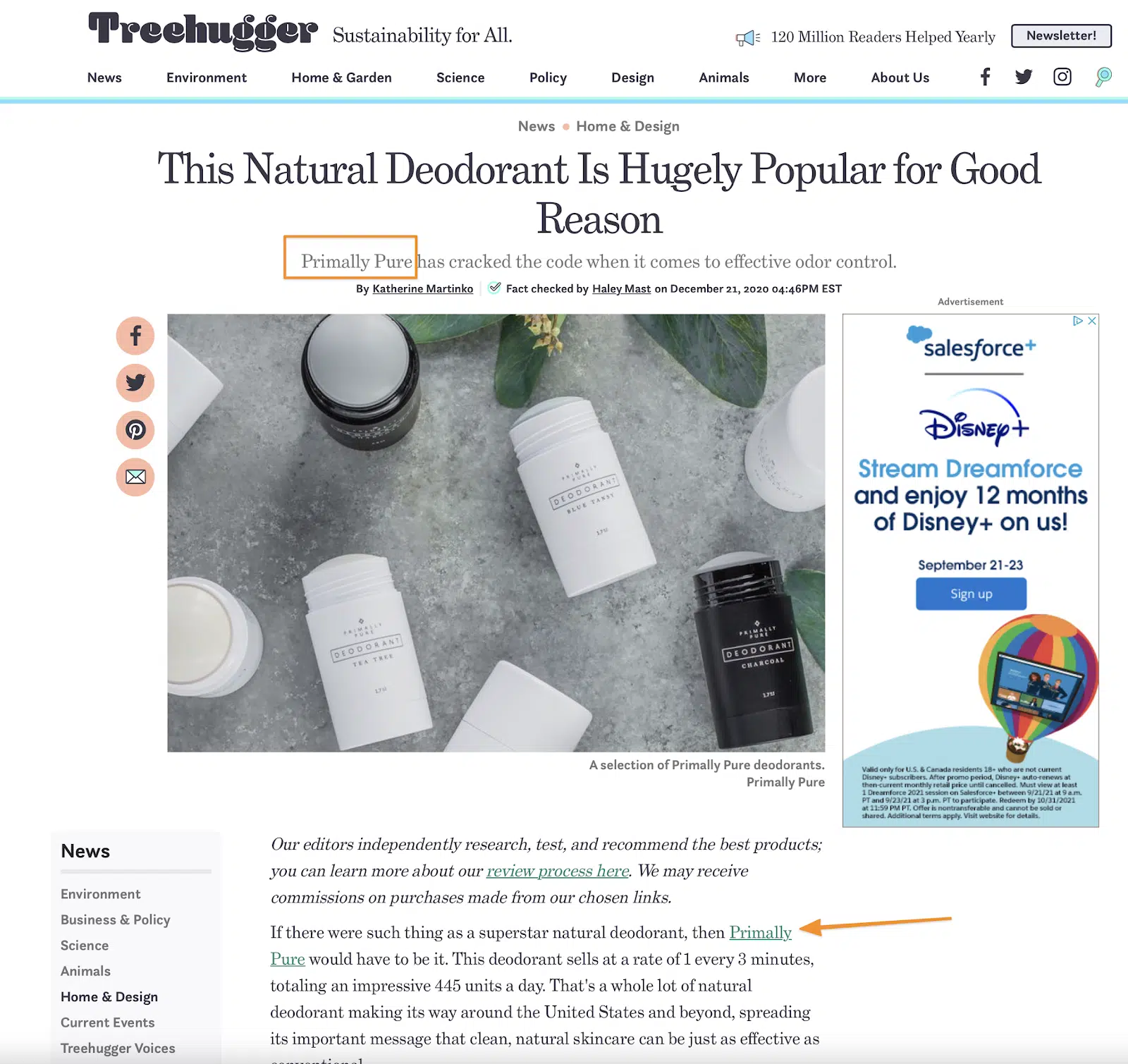
Most product reviews of all shapes and flavors honestly fall into this category. 

An organic skincare brand, then, would target every single “natural,” “sustainable” and “eco-friendly” blog in the world.
Product review on Treehugger

The key with second and third-degree links is to realize:

  • These sites don’t need to link to you, so…
  • You need to help them first by solving a need they already have.
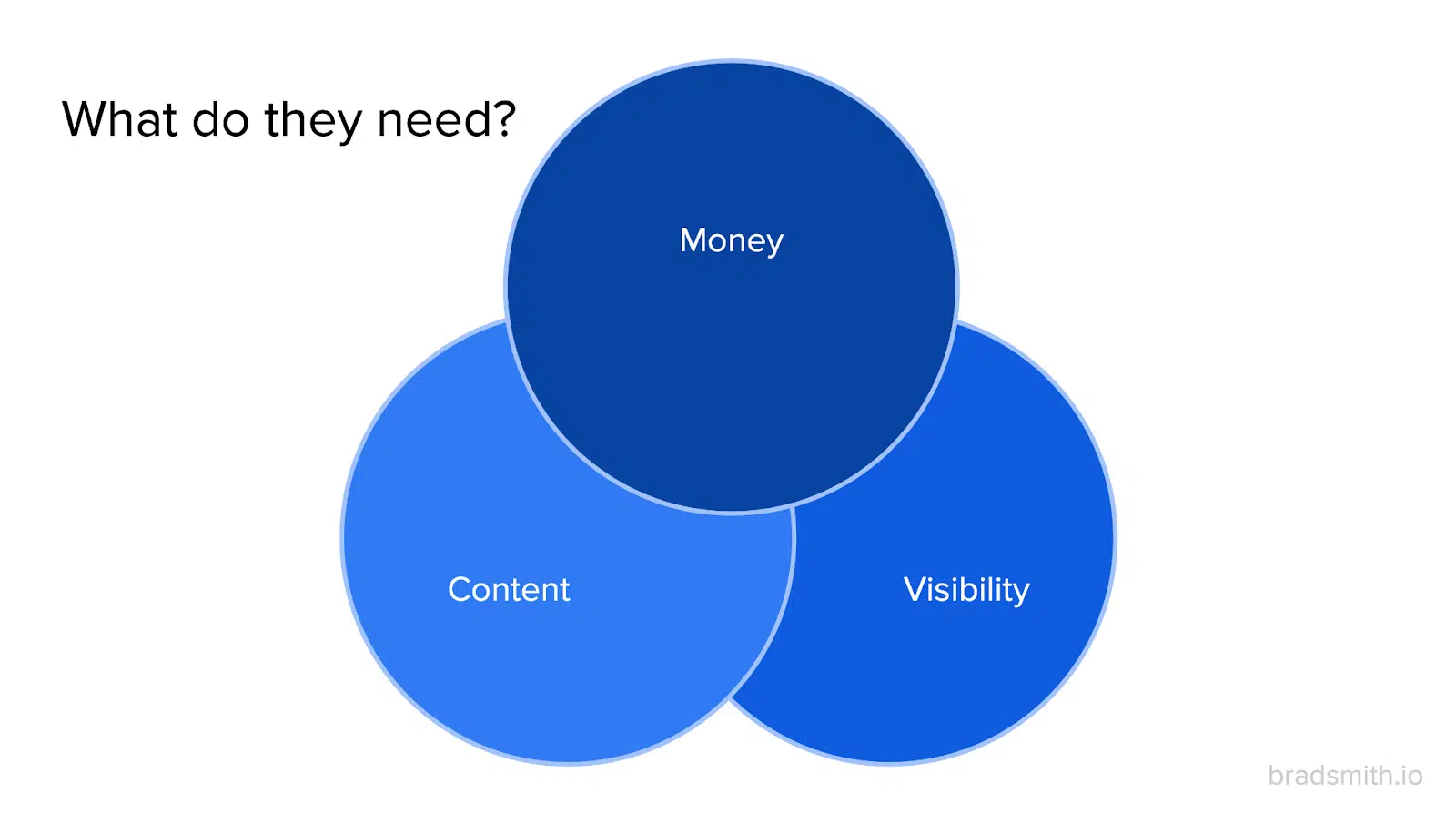
What do they need

Uncovering what they need first and then supplying that paves the way to reciprocation.

Fourth degree: Extremely scalable but less relevant

Now we’re moving into the gray area.

On the one hand, fourth-degree links are often extremely scalable. But on the other, they’re usually a lot less relevant, too.

Fourth-degree links are less relevant for audience or theme, or as an alternative to your product or service. Think: links for links sake with no other value.

You can spot these by the following warning signs:

  • Sites tend to be lower DR ranges (think: <40)
  • Paid-for links (“sponsored” and similar)
  • Artificial / abused tactics (scholarships, widget/embeds, and more)
  • Other “gray” tactics (second-tier link building, expired domains, etc.)

These are your old-school, SEO 1.0-style tactics. You already know the kind. 

Basically, anything that looks like this:
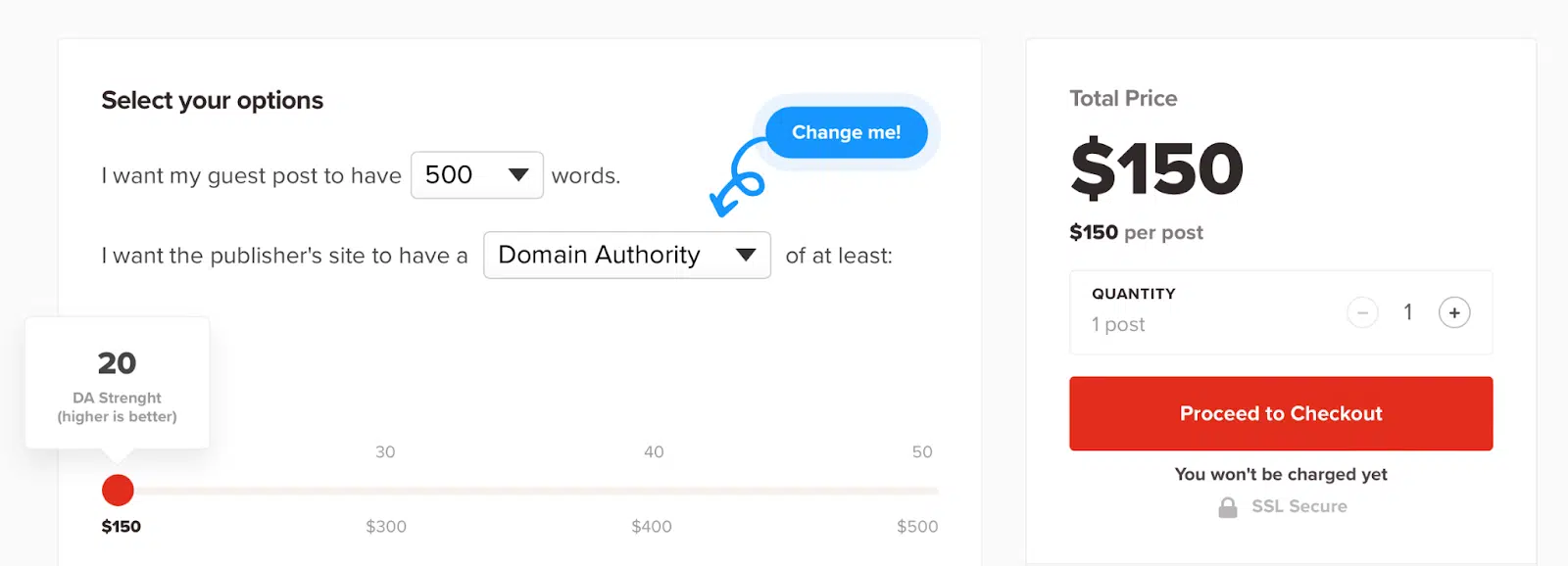
Paid guest posts

As a general rule, the more scalable a link building tactic, the less desirable (low quality and less relevant) it is.

So. 

Should you still use these?

Possibly, yes! 

You need both quantity and quality in the long run to succeed. 

This real-world acceptance separates the link building pros (who see what actually works) from all the empty, hollow, fauxfluencers out there who never descend their privileged-ivory-tower positions.

So should these 80% of your links? 

No! Unless you want to be penalized one day or don’t care about the site long term.

But. 

Should these be <10-20% of your links? Sure, why not. 

If you reverse-engineered your biggest competitors today, I guarantee you’ll often find a worse ratio.

So keep reality in perspective.

Fifth degree: Not relevant and low quality (yet still extremely scalable)

Last but not least, fifth-degree links (and beyond) are typically very low quality and highly risky (i.e., they are ignored completely or risk penalization through manual action):

These include:

  • Outright spam sites
  • Vices (Viagra, gambling, etc.)
  • DR <20, no traffic sites
  • PBNs

These are the ones you avoid like the plague! 

Not only because they’re truly “not relevant,” but more importantly because they aren’t likely going to drive you buyers, either.

We don’t really need to beat this dead horse anymore, do we?

Link relevance is fluid. It’s a sliding scale or spectrum.

So while it’s true that some links are “not relevant,” more common is that links can be “highly” or “mostly” or “slightly” relevant.

And you commonly need all of those to achieve scale!

‘Cause often, the “most” relevant links are also the hardest to get, build, land, or pay for. 

If the biggest competitors in your space have tens of thousands of referring domains at minimum (which most lucrative spaces all do), then you can’t be overly picky.

You’ll still need tons and tons of “mostly” relevant and “slightly” relevant links.

These audience-focused ones might seem “less relevant” at first glance.

But they’re also what helps you eventually balance both quantity and quality in the long run.


Opinions expressed in this article are those of the guest author and not necessarily Search Engine Land. Staff authors are listed here.


Related stories

New on Search Engine Land

@media screen and (min-width: 800px) { #div-gpt-ad-3191538-7 { display: flex !important; justify-content: center !important; align-items: center !important; min-width:770px; min-height:260px; } } @media screen and (min-width: 1279px) { #div-gpt-ad-3191538-7 { display: flex !important; justify-content: center !important; align-items: center !important; min-width:800px!important; min-height:440px!important; } }

About the author

Brad Smith

Brad Smith owns three content marketing companies, and has been featured in publications like The New York Times, Forbes, Business Insider, and The Next Web. Each week, he shares first-hand experience and growth strategies behind some of the web’s fastest growing brands.

https://searchengineland.com/link-relevance-degrees-430966


Why you should prep your holiday SEO campaigns now and how

Black Friday, Cyber Monday, Christmas, Boxing Day, and all the other holiday shopping days are not too far away. Really. Black Friday is just over 90 days away as of this writing. 

If you have a client or business dependent on the seasonal end-of-year holidays for revenue, there are a few reasons why you should already be actively preparing your SEO campaigns for the holiday season: 

  • It can take eight weeks (or more) to index a page, if it gets indexed at all. 
  • Creating or updating related content can take time to write and approve.
  • Consumers are being more intentional about purchases and researching more.

Preparing for the seasonal sale period, particularly if you have technical optimizations you want or need to implement to remain competitive, should ideally start in the first quarter of the year.

Starting in the third quarter will already be a bit of a sprint to the finish line, but it is doable.  

Indexing

New pages can take time to show up in Google’s index, and we know this. 

Logically, that also extends to pages that have been bounced between live and 404’d or 302’d for long periods of time.

This often happens with seasonal pages, if there’s nobody to advise otherwise. 

In those instances, the state of the page has changed, and it takes Google time to reconcile that. (Remember, Google has said they’ll go back and check 404 pages regularly before delisting the page).

While many pages get indexed in a week or less, we want to be conservative and assume the worst – eight weeks or longer.  

Indexing is also not ranking. Ranking in the top 10 can take much longer. 

Indexing is also a new battleground for many websites with the helpful content update and Google’s push for truly unique and useful content. 

All the more reason, then, to regularly maintain seasonal pages and allow them to build their authority over the years.

If you’re a business that creates new pages annually for your Black Friday or Christmas sales (I’m looking at you /christmas-2022/), please stop. 

Create evergreen pages, and redirect the historical pages with links and authority to the new, evergreen page. 

In an ideal world, you’d keep those pages up year-round, but sometimes that isn’t possible, often for legal or regulatory reasons. 

To speed up the indexing process, you may get some internal links up to the seasonal pages before the season officially begins, which should help indicate to Google what pages are important.

This is usually easier if you work with the merchandising or sales teams.

To help maintain indexing for seasonal pages (rather than being triggered as a soft 404), here are a few suggestions: 

  • Immediately after the seasonal sales are over, update the metadata to reflect this and include the upcoming year if relevant.
  • Include a placeholder message that allows customers to find sales or deals through copy like “Our seasonal holiday sales may be over, so browse through our current deals,” with a link to the generic sales page.
  • Maintain all the internal links to the page you can.

Get the daily newsletter search marketers rely on.


Content

Seasonal sales content is not a one-and-done product list page with all the products you have on sale this year. 

While it may sound obvious, sometimes the product or go-to-market team can miss the integration required with the content teams to create seasonal buying guides, price comparison tools, integrate social campaigns, new seasonal visuals and more. 

That said, you should also be auditing your product pages to make sure they’re as tight and consumer-focused as they can be. This could include: 

  • Making sure images are compressed. (With Shopify, the auto-compression only works so far. If the original image is 5 MB, you could still end up with an image around 1 MB “compressed” on the website.)
  • Review on-page entities and topics covered using TF-IDF and similar tools, cover any gaps.
  • Include rich supplemental media for all stages of the consumer journey: videos, images, links to education-based content.
  • Schema markup for product pages, including reviews.

We also see trends like “in-store” searches tripling since the beginning of 2022, so we can’t ignore cross-channel impacts and their importance. 

In this instance, content is not purely content but the technical optimization behind it. For example: 

  • Integration of in-store availability or “Click and Collect” on the website.
  • A solution to track and attribute online to in-store purchases in your CRM or analytics platform.

These items take time to justify and move through the queue with developers and other stakeholders.

If these are technical optimizations you’d like to have and you’re only starting now, it’s best to work on them as part of next year’s holiday season rather than this one. 

The way we shop is continuing to change and evolve, with research becoming increasingly important:

Some folks know in May what they will buy for holiday gifts at the end of the year. 

If you’re a business relying on Black Friday sales, it’s safe to assume Black Friday shopping starts before, if not well before, the day after Thanksgiving in the U.S. 

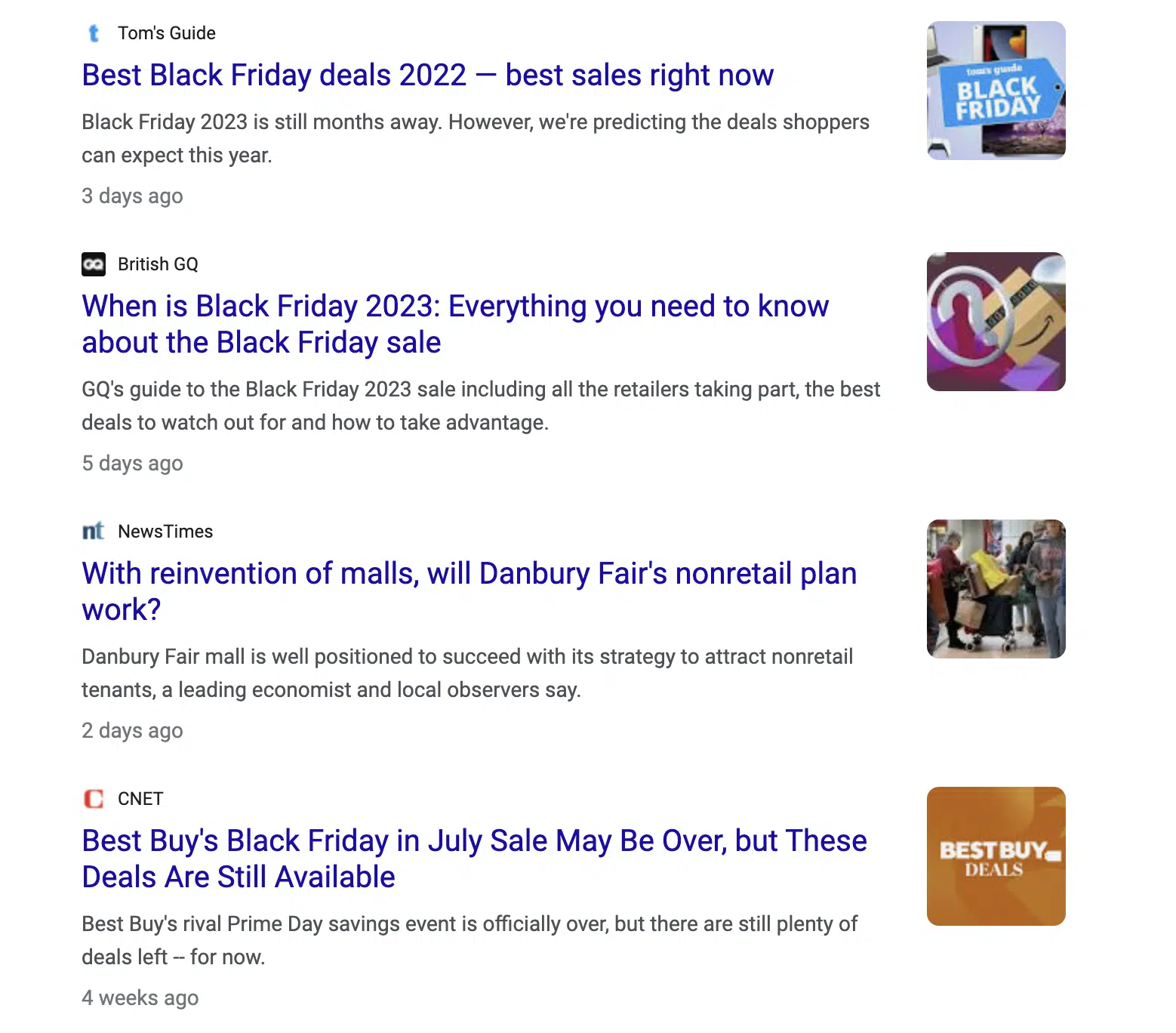
And it’s not just consumers that are starting early – looking at the related news for Black Friday in August 2023, we can see some interesting trends: 

  • Third-party comparison/review sites like Tom’s Guide just put their Black Friday predictions up.
  • Media publications like GQ have likewise published their “best of” Black Friday article.
  • Several retailers (Best Buy, Macy’s, Samsung) had “Black Friday in July” sales.
Google news results for “black friday” search in August 2023 in the US

There’s much more to winning at seasonal sales than having a page published when the merchandising starts going live on the website a week or two before the sale. 

Justifying that pre-work, learning how to manage stakeholders, and understanding how much time you need to give for some of these projects to be completed can be critical to having a successful Black Friday, Cyber Monday or Christmas sale period. 

You want to:

  • Give Google time to see your money page and your business’ supporting research content.
  • Give your developers time to implement technical enhancements that’ve been established as best practices in the last 12-18 months.
  • Work with go-to-market or other teams to align your promotion with your target market’s current and expected consumer behaviors.

And whether we want to admit it or not, all those things take time and may be pushed back for other more time-sensitive work. 

So give yourself a bit of grace, track all the work you do and how long things take, and report back on your successes and what it took. 

This way, when you do it again the next year, you and your stakeholders will have a clearer understanding of the effort required and the impact gained when building authority for seasonal peaks in an ecommerce business. 


Opinions expressed in this article are those of the guest author and not necessarily Search Engine Land. Staff authors are listed here.


Related stories

New on Search Engine Land

@media screen and (min-width: 800px) { #div-gpt-ad-3191538-7 { display: flex !important; justify-content: center !important; align-items: center !important; min-width:770px; min-height:260px; } } @media screen and (min-width: 1279px) { #div-gpt-ad-3191538-7 { display: flex !important; justify-content: center !important; align-items: center !important; min-width:800px!important; min-height:440px!important; } }

About the author

Amanda King

Amanda King has been in the SEO industry over a decade, has worked across countries and industries, and is currently consulting through her business, FLOQ. She’s always been focused on the product, the user and the business. Along with a passion for solving puzzles, she’s incorporated data & analytics, user experience and CRO alongside SEO. Always happy to trade war stories, find her on Twitter or LinkedIn for intermittently shared advice and thoughts on the industry.

https://searchengineland.com/prep-holiday-seo-campaigns-now-how-430986


SEO KPIs to track and measure SEO success

If something can be measured, it can be improved. 

By carefully measuring your SEO with metrics that matter to your business, you can understand where you are currently and what value SEO brings to your marketing. 

SEO KPIs bridge the gap between your business and marketing objectives and the data available in SEO tools and web analytics. 

This article outlines the many SEO metrics and KPIs and how to tailor a set of SEO KPIs to your business. 

What are KPIs?

A KPI is a key performance indicator. This is a quantifiable measurement of performance in relation to a specific objective. KPIs help you define targets and milestones and measure progress toward those goals.

What are SEO KPIs?

SEO KPIs are metrics used to measure SEO performance. 

Typically, SEO KPIs track visibility or traffic and how it fares in relation to your goals. 

Such metrics will quantify traffic from major search engines like Google and Bing and the real-world results of SEO strategies and tactics (leads and sales).

Using SEO KPIs

Careful measurement and tracking provide a control system to ensure your tactics deliver results and your time and effort are spent on productive tasks.  

Diligent measurement also provides feedback if your tactics are not working and inform you of how changes in the search landscape or algorithm impact performance. 

KPIs can be tiered to provide understandable metrics for all stakeholders. The marketing team will need more detail to ensure time is spent wisely on SEO vs. PPC, but the board may only need to see top-level performance figures. 

Tailoring the KPIs to your situation is the key to creating truly useful SEO KPIs. 

Objectives and KPIs

Your SEO KPIs should act as an extension of your overall business and marketing goals. 

You ensure you aim at relevant goals by considering your SEO goals as an extension of your overall marketing goals. Your SEO KPIs then track performance toward that goal. 

The key is in the name (literally and figuratively): KPIs are key performance indicators.

They force you to ask whether your SEO approach drives performance. If not, what can you do about it?

This is really important but all too often overlooked.

SEO can be so complex that you need clear objectives and ways to measure progress toward those goals to ensure your time and effort are spent wisely pursuing the right goals. 

SEO KPI Process 

The following is a simple process that you can use to determine your SEO goals and KPIs. 

Step 1: Determine your SEO goals

The first job is to identify your SEO objectives. What are the important tasks you need to achieve now, in a month, three months, six months and a year?

The SEO goals should connect to established organizational goals, and you should clearly articulate how the SEO goals drive the overall business goals. 

I suggest three to five goals initially to keep focus. 

You should then define your SEO goals using the SMART goals system. 

Alternatively, you can use the OKR approach to objectives and key results detailed in “Measure What Matters” by John Doerr. This simple system was used by Google, Microsoft and many other huge companies to simplify goal-setting to drive massive growth. 

The right approach will depend upon your business, but whatever you choose, your goals should be relevant, measurable, achievable and time-bound.  

Step 2: Define what you will measure 

The next step is to define what you will measure. 

Your measurement metrics can be thought of as steps, and each should take you closer to the overall goal. As with the goals, you want, at most, three to five measurement metrics for each goal. 

When your goals are achieved, you should be able to measure performance to determine if your strategy here is valid. 

Step 3: Decide on the length of your cycle

As a general rule of thumb, SEO metrics are tracked monthly. 

There are exceptions to this rule. Keyword rankings may be tracked daily (but reviewed monthly), and you may also want quarterly, bi-yearly and annual reports. 

Remember, with SEO, you may only see tangible results like leads and sales when your keywords rank highly and drive traffic. Factor progress toward the goal into your overall cycle length.  

Step 4: Review and reflect

The goal is to review each KPI and, ideally, score performance. 

  • What is working? 
  • What can you do differently next month? 

The purpose of KPIs is to help you review your approach and think critically about what is or is not working. 

A highly ranked organic keyword in modern search may not drive the expected traffic numbers. 

Think of this as an experiment. Your KPIs are there to test the validity of your hypothesis. 

Be flexible, and be ready to adapt and adjust your tactics based on the results.  

Example

  • Objective: To sell more kitchens. 
    • KPI 1: Increase rank for kitchen keywords. 
    • KPI 2: Increase organic traffic on kitchen pages.
    • KPI 3: Improve engagement rates.
    • KPI 4: Increase organic conversions.

Here we have a simple objective measured with four simple SEO KPIs. This does not have to be complicated!  

Following this approach, you will create three to five relevant SEO goals that you can easily measure with three to five SEO KPIs each. 


Get the daily newsletter search marketers rely on.


Example SEO KPIs

There is no shortage of SEO metrics for tracking your campaigns.

You can find data points from free SEO tools like Google Search Console and Google Analytics to the many commercial SEO tools. 

Unfortunately, while we have lots of data in its native format, commercial SEO tools and even Google Analytics often do more to confuse than deliver insight.

The purpose of SEO KPIs is to make those metrics useful.

We do that with the four-step model, where we connect SEO metrics to SEO goals connected to the broader business and marketing goals. 

The following is a categorized list of SEO metrics to build your SEO KPIs. 

Remember, don’t just blindly use the metrics below. Connect them to your SEO goals in groups of three to five to drive insight and understanding.  

1. SEO keywords

First up is the old SEO stalwart of keywords. 

Tracking keywords for SEO is complicated nowadays as search results have so many elements. 

But it is still important to show progress toward your goals and get a sanity check on how much traffic a given keyword will deliver. 

Track keywords for progress and verify your strategy. 

Modern search results will include:

  • Local pack
  • Organic listings
  • Featured snippets
  • Sitelinks
  • Knowledge cards and panels
  • Videos
  • People also ask
  • Video previews

You may also want to consider:

  • By location 
  • By country
  • Search Console CTR
  • Search Console Average Rank
  • Search Console Clicks
  • Search Console Impressions

When tracking keywords, combine multiple factors to give the complete picture. 

At the very least, track rankings, organic impressions and clicks (from Google Search Console or Bing Webmaster Tool). Depending on the SERP layout, a top 5 keyword can still do very little in actual clicks.

As time progresses, with this level of detail in your keyword KPIs, you will learn what works and what does not, which will feed into your strategy and goal setting. 

Tip: Remember rankings are just one factor, and ensure when working on your web design and SEO that the content that ranks is a good fit for the intent behind the keyword!

2. SEO metrics 

These are the traditional SEO metrics provided by various SEO tools. 

Most of these metrics grew out of the hysteria around Google PageRank and aim to provide a general authority score at a site and page level. 

These metrics can be helpful, but they mean very little alone, and they need to be compared to competitor values to provide accurate context. 

You should measure that your site’s perceived trust and authority will correlate with an increase in the rank for your main search terms and the amount of organic traffic received.

These metrics are important but do not talk in the language of the business, so their prioritization in your reports will depend upon the stakeholder’s understanding of SEO. 

  • Majestic Citation Flow
  • Majestic Trust Flow
  • Majestic Trust and Citation Balance
  • Moz Domain Authority
  • Moz Page Authority
  • Moz Spam Score

Tip: Remember that these specific SEO metrics should be tied to the overarching goals and strategy. 

For example, suppose you want to build traffic to your upper-funnel marketing content. In that case, you may want to improve site authority but remember to sanity check improvements against real-world metrics (rankings, traffic, etc). 

3. Real-world SEO KPIs

While many SEO KPIs relate to perceived authority and keyword rankings, what really matters is whether this is making a difference. 

  • Are we getting more traffic? Is that generating more leads? 
  • Is the cost per lead coming down vs. other channels? 
  • Are we seeing more branded searches due to raised awareness? 

This is where the SEO rubber hits the SERP road, folks, so these metrics are essential.

  • Increase in organic traffic
  • Increase in the number of pages on the site that generate traffic
  • Increase in non-branded search traffic
  • Percentage increase in traffic from specific geographic regions
  • Organic Impressions (Search Console)
  • Organic Click-Through Rate (CTR) (Search Console)

Tip: We would also like to see real-world SEO metrics increase as SEO metrics improve. 

This ensures the work you do is helping move the dial rather than just satisfying the whim of an SEO tool. 

4. Conversion KPIs

The most important SEO KPI, in most cases, is conversion. Tracking conversions from organic search should be at the top of your list.

These KPIs need to be customized around your specific goals. Some examples here include:

  • Conversions from organic search
  • Percentage increase in conversion rate
  • Organic search conversion rate
  • Sales conversions 
  • Lead conversions
  • Downloads 
  • Email clicks
  • Phone number clicks
  • Form fills
  • Cost per acquisition (CPA)* 

Note: Calculating and tracking CPA for organic search allows you to compare the return from organic with other channels. This helps determine if you are spending your precious marketing budget wisely. 

Tip: The specifics here really depend on the specifics of your business and your marketing objectives, so ensure you track these in GA4. 

5. Engagement KPIs

Google Analytics 4 has three key engagement metrics:

  • Average engagement time (over the date range)
  • Engaged sessions per user
  • Average engagement time per session

Tip: Tracking engagement as a general KPI but also for all channels allows you to evaluate the quality of traffic from SEO vs. PPC, social etc. Again, this helps determine if you are spending your time and efforts on the right tactics! 

6. Referral traffic 

A solid SEO campaign can impact your business beyond driving more organic traffic. 

If content and links are a vital part of your strategy, then this exposure can drive more high-quality referral traffic, so it is prudent to demonstrate the extra value here. 

This helps to illustrate how your SEO strategies have multiple marketing benefits. 

Often, solid referral traffic can convert at a better rate than organic search traffic, so ignore this at your peril.

  • Percentage increase in referral traffic
  • Percentage increase in referral conversions
  • Percentage increase in engagement metrics (bounce, pages, time)

Tip: The links that will build authority will also drive referral traffic, so factor this into your qualitative measurement. 

7. Brand impact

Improved search visibility equates to improved overall visibility – advertising by another name. So we should also look at the increase in branded search traffic and brand mentions and how this correlates to your work.

  • Percentage increase in branded search traffic
  • Percentage increase in brand mentions
  • Visibility on third-party sites *

The visibility on third-party sites is another way for your audience to discover you. 

For example, more people will discover me and my business by writing and publishing this article here on Search Engine Land. 

If you do this kind of marketing, then ensure you measure the impact.  

Tracking how many people search for you by name helps you understand and measure overall recognition. Comparing these values to your main competitors helps you measure relative market awareness. 

Links are still one of the primary drivers of search engine visibility, and links (plus content) are often the main tangible element of a long-term SEO campaign. 

Therefore, we must still report on the total number of links from authority sites and those from highly relevant sites. These will generally be pulled from our link wishlist and should be customized around your client’s industry.

  • Total links
  • Total links gained this time period
  • Number of links from authority sites
  • Number of links from relevant sites
  • Links lost 

Tip: To determine the relative value of your link building, compare your link profile with your competitors’ using one of the many SEO tools on the market. 

9. Soft conversion KPIs

Leads are vital to your overall digital marketing, yet the classification of leads and the sales funnel gets ever more complex. 

As such, we should measure our SEO efforts’ impact on lead generation, whether social signups, newsletter signups or some other download or lead gen specific to your business.

  • Percentage increase in newsletter signups
  • Percentage increase in social followers/likes and so on
  • Business-specific lead generation goals (data sheets, white papers and so on)

Tip: Try to understand the customer journey and the steps required, from awareness and a visit to a paying customer and lifetime value. 

SEO may drive most of your email signups, and the email campaigns drive sales. Customize this to your situation and measure what matters. 

10. Business objective-specific KPIs

This category is a little more challenging to create a generic example for. However, it’s important from a reporting perspective. 

We must do all we can to connect the business strategy with our SEO strategy via KPIs. 

Often, the KPIs detailed above will give you what you want here, so this is more of a case of structuring them to align with your goals and reporting them meaningfully. 

Remember, the higher-ups may only want a very low-resolution overview, but the marketing team may need more detail. 

To provide some direction, if your goal is to build awareness of a new product, then you want to focus on awareness metrics: impressions, average position, keywords, clicks and so forth. 

If you want to drive more signups, we want to track the number of people looking at the signup and pricing pages. 

If we look at more traditional conversions, we must look at the total number of sales/leads/inquiries.

The point here is that you already have the SEO KPIs, but remember to:

  • Frame them around your business objectives.
  • Clearly highlight that you are helping move the business forward and not just providing a set of esoteric SEO tracking metrics. 

Your SEO work has much more value than simply moving a keyword ranking. It adds real value to the business, reduces marketing costs, builds the brand and more. 

Just remember to let the right people know in a way they can understand. 

Tip: If you are struggling with how to categorize your SEO KPIs, there are two approaches that we have found helpful over the years. 

The first is to group your KPIs along the marketing funnel: 

  • Awareness.
  • Engagement.
  • Conversion.

 An alternative approach is to use the VQVC model, which stands for: 

  • Volume.
  • Quality.
  • Value.
  • Cost. 

If you are struggling, investigate these options to ensure you build truly insightful SEO KPI reports. 

Understanding builds trust and confidence

It is tempting to think of SEO tracking as just another job, but that is underselling things. 

You know that your work delivers real value to the business beyond just moving up the search results for a few keywords. 

SEO KPIs provide a way to track and demonstrate SEO results and then communicate those improvements so everyone in the business can understand. 

Key to this is to structure your goals hierarchically:

  • Business Goals > Marketing Goals > SEO Goals 

You can then clearly articulate how improvements in SEO metrics lead to improvements in marketing performance which drives business growth. 

If you can create hierarchical goals and SEO reporting that feed into tha, then the reporting has real strategic value. 

SEO KPIs help you:

  • Understand what is working.
  • Understand what tactical elements drive results. 
  • Build a strategic understanding of marketing throughout the business.

SEO reporting then becomes an actual strategic process. This helps develop critical thinking, a problem-solving mentality and a creative approach to your SEO.


Opinions expressed in this article are those of the guest author and not necessarily Search Engine Land. Staff authors are listed here.


Related stories

New on Search Engine Land

@media screen and (min-width: 800px) { #div-gpt-ad-3191538-7 { display: flex !important; justify-content: center !important; align-items: center !important; min-width:770px; min-height:260px; } } @media screen and (min-width: 1279px) { #div-gpt-ad-3191538-7 { display: flex !important; justify-content: center !important; align-items: center !important; min-width:800px!important; min-height:440px!important; } }

About the author

Marcus Miller

Marcus Miller is an experienced SEO & PPC consultant based in Birmingham, UK. Marcus focuses on search marketing strategy and helping businesses cut through the smoke and mirrors of SEO, PPC and search marketing. Marcus is managing director of the UK SEO and digital marketing company Bowler Hat that focuses on helping businesses with their SEO & PPC, but also on training internal staff to help empower businesses to manage their own search destiny.

https://searchengineland.com/seo-kpis-track-measure-success-430950


Setting up event parameters in GA4: Everything you need to know

GA4 proves to be an incredibly valuable tool, offering extensive insights into your website’s performance. 

While certain metrics and dimensions come pre-configured by the tool, others require partial or custom setup by users.

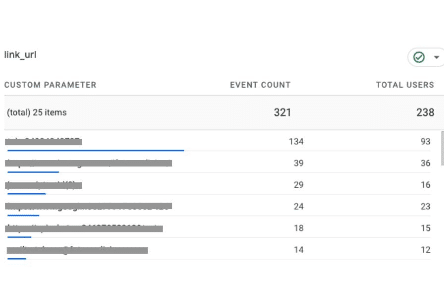
This is the case with event parameters, which enable us to obtain relevant information about actions taking place on our website. 

Although a few of these parameters come pre-defined by GA4, most require proper configuration to ensure accurate data collection. 

What are event parameters in GA4?

In GA4: 

  • Events allow you to measure specific user interactions on a website, such as loading a page, clicking on a link or submitting a form. 
  • Parameters provide additional information about those events.

For instance, a user views a product or adds an item to the cart. 

With event parameters, you can create settings that describe the product they are viewing or the product they are adding to the cart, such as the name, the page, the link, the method or the price.

You can use parameters to create custom dimensions and metrics that will improve how you analyze your website performance.

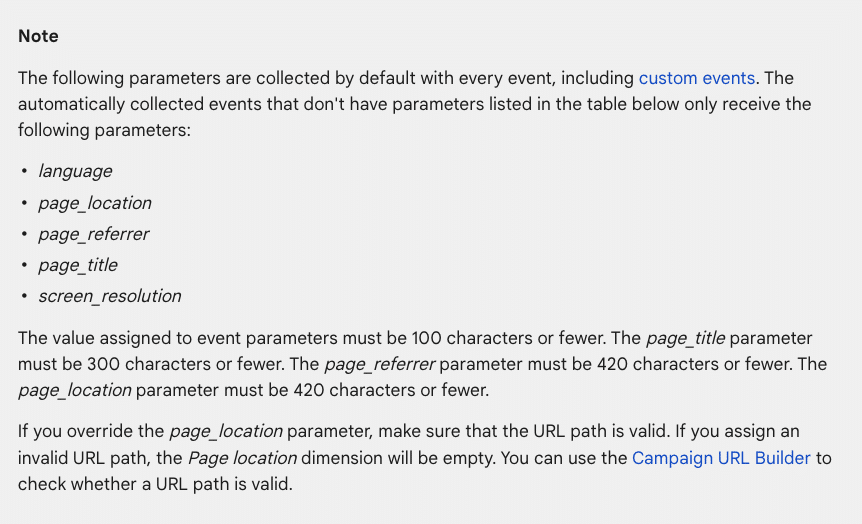
You can add up to 25 parameters for each event. Event parameter names can have up to 40 characters, and the value assigned to each must be 100 characters or fewer.

Event parameter types in GA4

There are two types of event parameters in GA4, depending on how they are captured by the tool:

  • Automatically collected parameters: GA4 automatically captures a set of parameters. Both automatically collected events and enhanced measurement events come with default parameters. However, the latter often requires custom configuration in many cases.
  • Custom parameters: These parameters allow you to collect information that is not captured by default. This is applied to recommended events and custom events, where custom configuration is required.

Automatically collected parameters

When you create a GA4 property, the following parameters, which provide supplementary information about the events, are automatically collected by GA4:

  • language
  • page_location
  • page_referrer
  • page_title
  • screen_resolution
Automatically collected parameters

Check the list of automatic parameters provided by GA4 for automatically collected events.

How to view the parameters automatically collected in GA4 reports

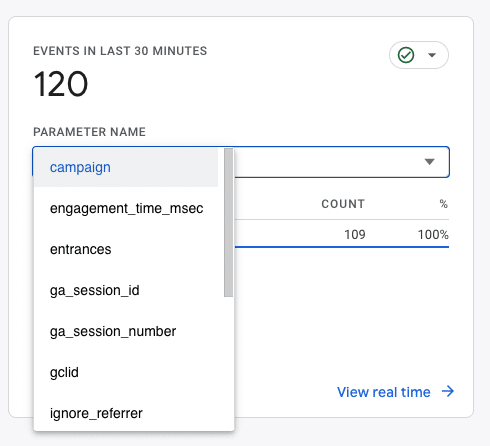
To view the automatically collected parameters, you need to go to Reports > Engagement > Events, then click on one of them (e.g., page_view) 

Those displayed here are correctly set up and triggered. Otherwise, you will have to do a custom setup.

How to view the parameters automatically collected in GA4 reports

Custom parameters

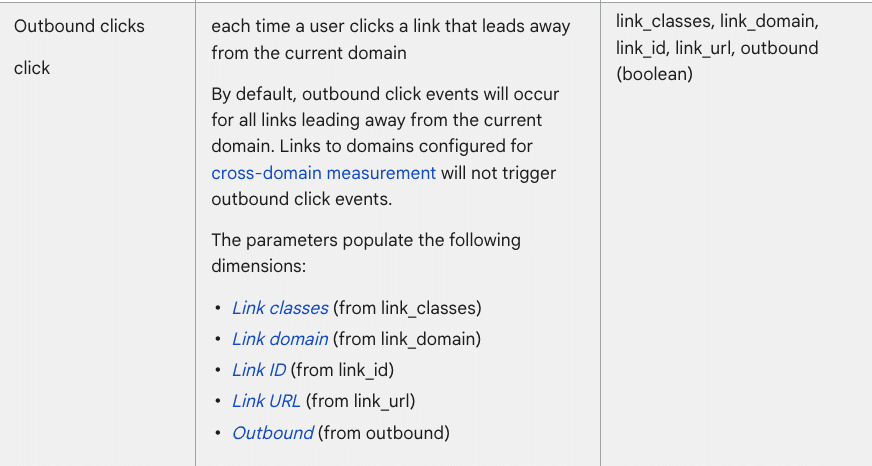
Custom parameters allow capturing information that is not collected by default. Depending on the type of event, Google recommends a set of parameters:

As you can see, most of the parameters require personalized configuration.

Customized event parameters can be configured via:

  • Google Tag Manager
  • GA4

How to configure event parameters via Google Tag Manager

The most recommended option for creating event parameters – whether enhanced, recommended, or customized – is through Google Tag Manager.

To do this, you must follow the next steps to create custom parameters via Google Tag Manager:

First, ensure the GA4 and Google Tag Manager accounts are properly configured and linked.

When creating or configuring event parameters, check the recommended parameters provided by Google for this event:

How to configure event parameters via Google Tag Manager

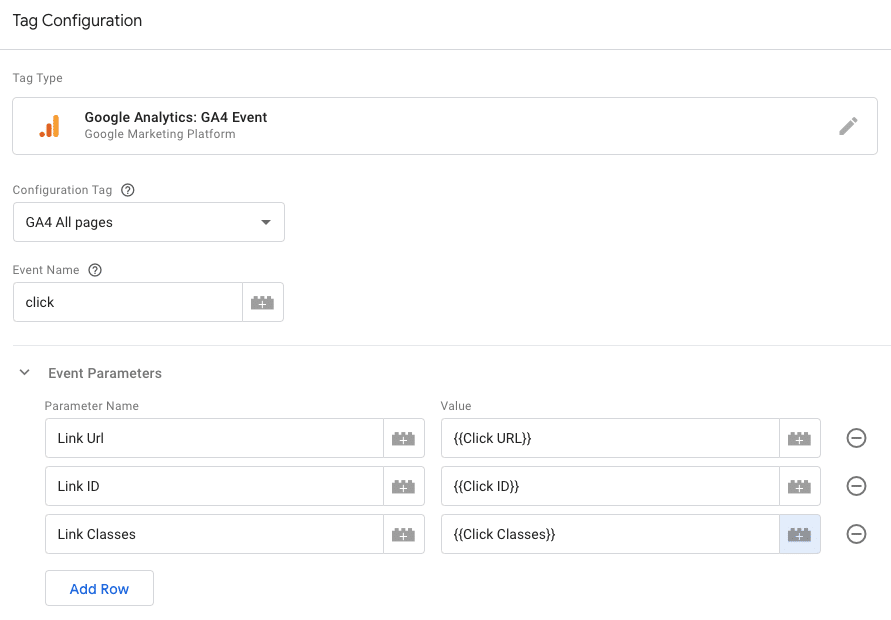
Take into account the parameters you need when configuring the event in Google Tag Manager. For example:

Event parameters - Tag configuration

Check out more information about the different dimensions and metrics of GA4 and the different parameters recommended depending on the event.  

After creating the tag, verify that it is activated successfully through Admin > Debugview:

Event parameters - debugview

And also through Google Tag Manager:

Event parameters - GTM 1
Event parameters - GTM 2

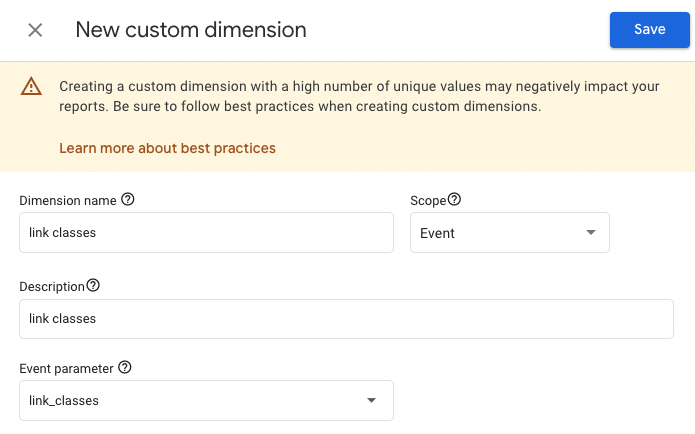
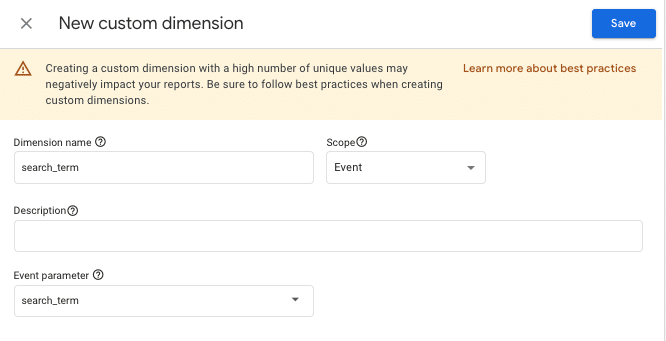
If everything is in order, you need to send these parameters as custom dimensions to link them with each event in GA4, enabling you to analyze the events with the new parameter information.

To achieve this, navigate to Admin > Custom Dimensions > Create custom dimension and create one for each new parameter. 

If you skip this step after creating them for the first time, they will not appear in the tool with each event. 

New custom dimension

Now you can view the new information for each of your events (Engagement > Events):

Engagement - event parameters

In most cases, it may take hours or even days for data to be gathered and displayed.


Get the daily newsletter search marketers rely on.


Where to extract the parameter information for each event

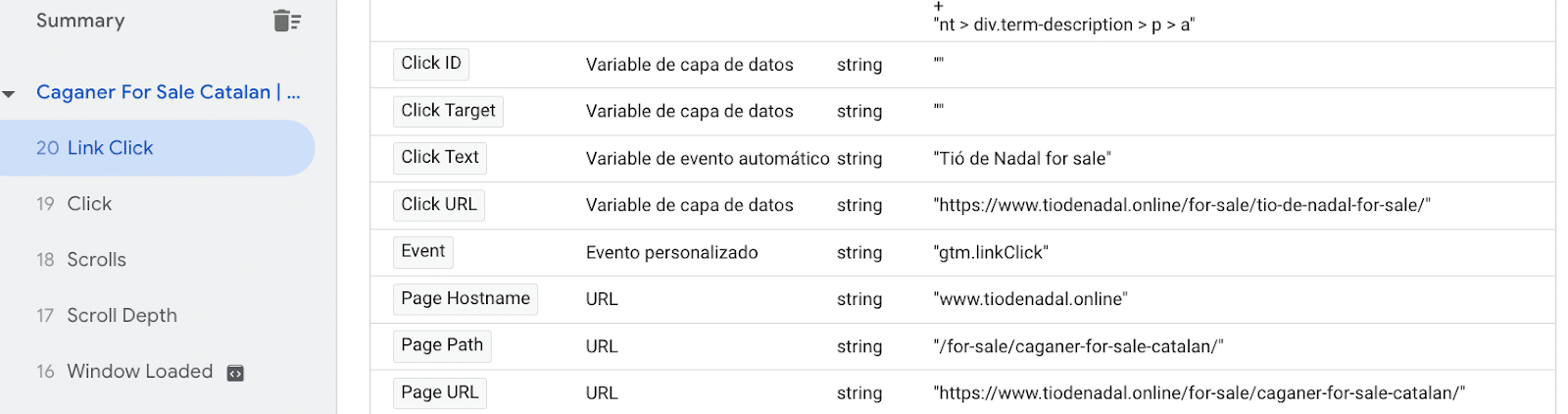
Aside from the recommended parameters for each event, you can discover all the parameters included in each website event through Google Tag Manager. 

To know all the parameters an event can have, go to Google Tag Manager > Preview. Then, click on the event you want to measure. For example, on a link within your own website. 

The variables of the data layer will provide you with all those that are triggered. This will help you identify the different parameters that includes that action within the website. 

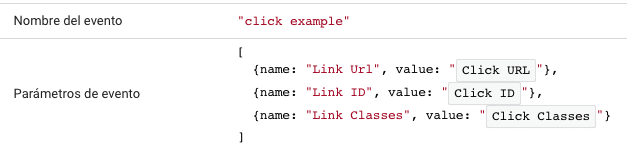
For example, you can see the following triggered variables for this Link Click. All of them could be set up as parameters:

Triggered variables

How to configure event parameters via GA4

Although creating new parameters via Google Tag Manager is strongly recommended, GA4 also allows creating or editing existing event parameters directly within the tool itself.

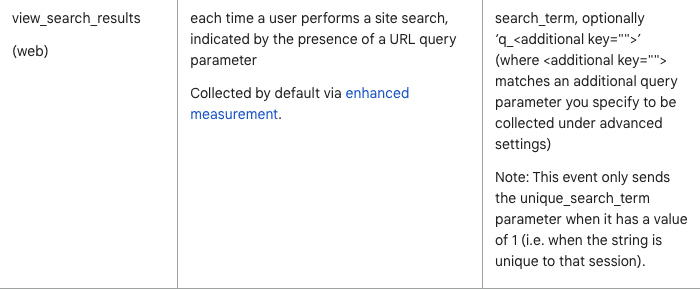
In cases where the event is automatic or enhanced measurement, you can often do it directly from Custom Dimensions via GA4:

New custom dimension - GA4
GA4 - search term parameter

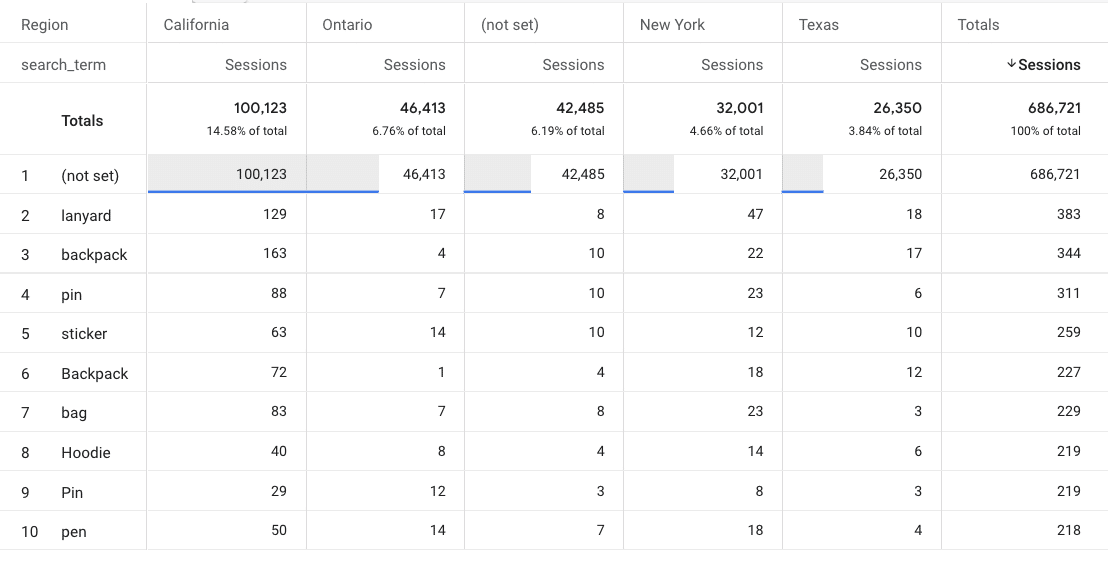
The search_term parameter, for example, will let you find out what users search for in the search box of your own website. 

In this case, you can also include the dimension Region to see each region’s most popular searched terms.

GA4 - search term parameter and region

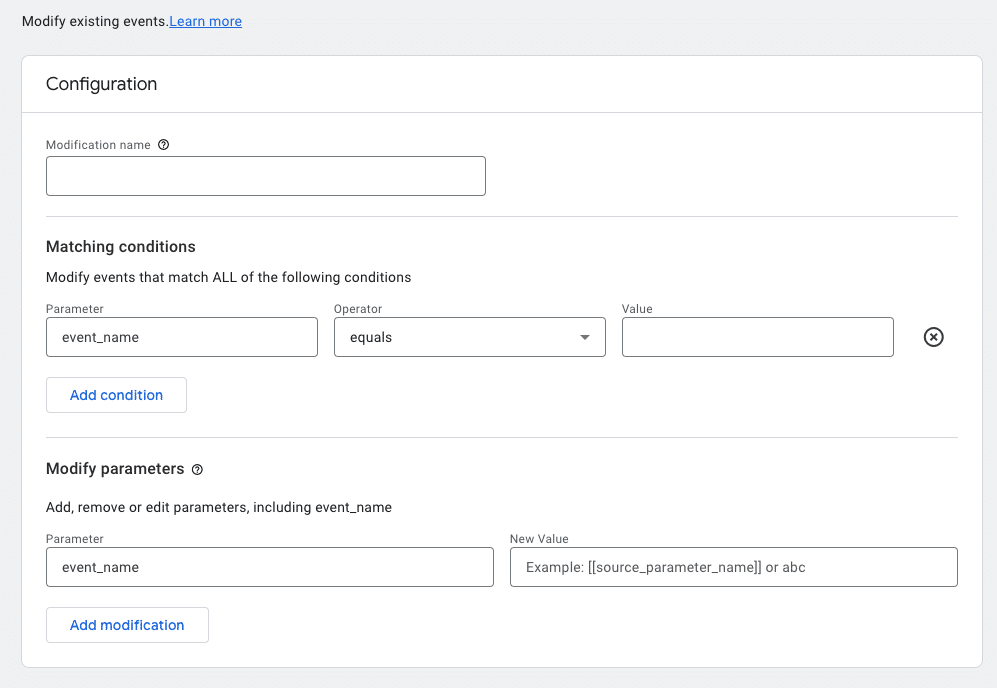
GA4 also provides a series of predefined parameters, which can be modified if the user is interested. This is done in the same area where GA4 allows modifying events.

To do so, go to Admin > Events > Modify Event.

GA4 - modifying existing events

How to create reports to visualize event parameters

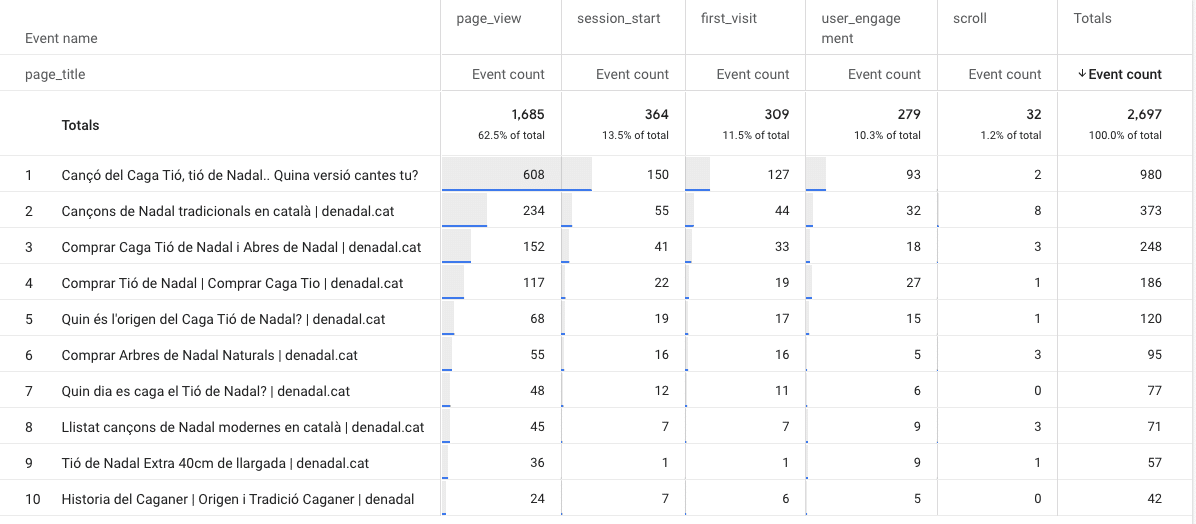
If you want to analyze this new information, navigate to Explore > Reports, with the parameters as the dimensions:

Visualize event parameters ion GA4

Furthermore, you can incorporate these parameters in Looker Studio reports, enabling you to analyze and examine the information according to specific business objectives and requirements.

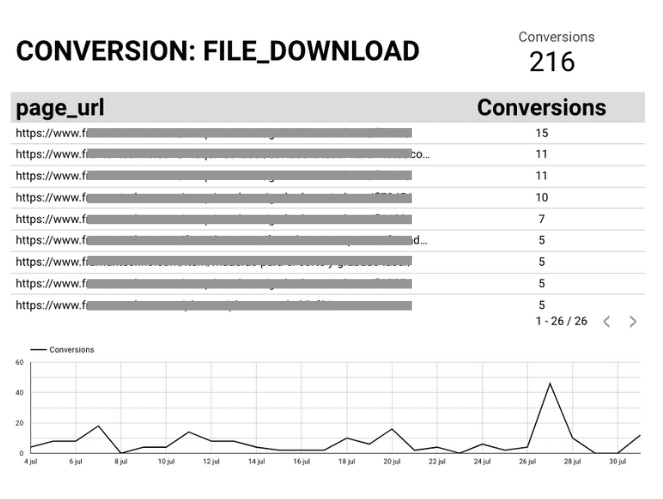
For example, the following image shows you through the page_url parameter, in which page the file_download event is happening:

Looker Studio event parameter visualization

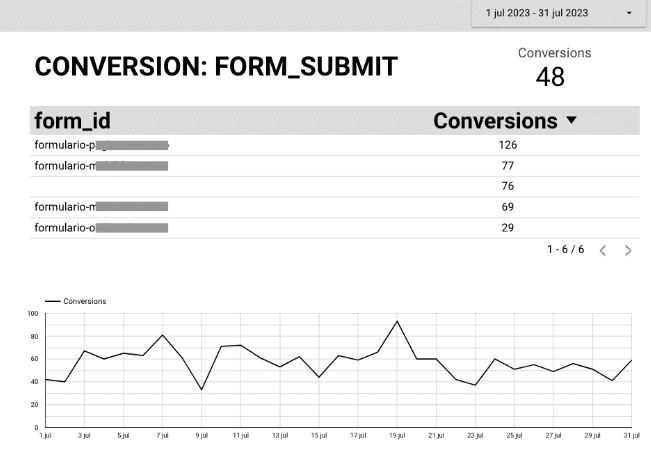
Another example would be the following slide, which shows you specifically, by the form_id event parameter, which form has been submitted specifically on a webpage:

Looker Studio event parameter visualization 2

To add the parameters to Looker Studio, it is necessary to include them as dimensions and the events or conversions as metrics.

Setting up event parameters is crucial for a holistic analysis of your website. Parameters let you view website events completely, allowing for a more detailed interpretation.


Opinions expressed in this article are those of the guest author and not necessarily Search Engine Land. Staff authors are listed here.


Related stories

New on Search Engine Land

@media screen and (min-width: 800px) { #div-gpt-ad-3191538-7 { display: flex !important; justify-content: center !important; align-items: center !important; min-width:770px; min-height:260px; } } @media screen and (min-width: 1279px) { #div-gpt-ad-3191538-7 { display: flex !important; justify-content: center !important; align-items: center !important; min-width:800px!important; min-height:440px!important; } }

About the author

Gemma Fontané

Gemma Fontané is an SEO consultant, co-founder of Orvit Digital consultancy and founder of the international ecommerces denadal.cat & tiodenadal.online. With her company, she leads strategies for B2B and Ecommerce companies to help them generate business. Gemma has knowledge and experience in international SEO as well as content and technical SEO. In the last year, as a public speaker, Gemma has spoken at conferences in different countries such as Friends of Search in Amsterdam, Search Y Paris 2022 in Paris or the International Search Summit in Barcelona and has collaborated with different industry blogs and seminars.

https://searchengineland.com/google-analytics-4-setting-up-event-parameters-430908


AI-generated content: To label or not to label?

Do you know that a whopping 85.1% of marketers now use AI in their content production workflow?

With the proliferation of AI-generated content, are you obliged to disclose to search engines and readers that a bot created your content?

This is a question many have been asking as the latest AI platforms help people create near-perfect content.

So, is it necessary to label content that’s been produced using AI?

Is this beneficial to publishers and readers?

Those are the questions we’ll be tackling in this article.

What is AI labeling?

AI labeling simply means letting people know if a piece of content was generated using artificial intelligence.

It’s all about marking your content as “AI-generated” so your users know that artificial intelligence played a role in producing it.

The label can be anything like a byline, tag, watermark, etc. that indicates AI produced the content.

Why is this important?

More and more content online is AI-generated. And even if AI didn’t generate it, it may have played a role in research and development.

This is where we cross the muddy waters of whether AI-generated content should be labeled as such so readers know exactly what they’re reading. 

From an SEO point of view, what does Google say about AI labeling?

Is AI labeling necessary? Here’s what Google says

Many policymakers, like the European Union, are advocating for AI labeling.

However, Google takes a different stance when it comes to labeling content as AI-generated.

Coming from the biggest search engine, that’s pretty surprising.

More so considering that the search engine giant takes its E-E-A-T standards seriously.

So, how does this fit in with AI-generated content?

  • Quality trumps origin: Google values quality content more than it does the originator of the content. 
  • User experience matters, a lot: Google evangelizes user experience. Labels detract from this.
  • Authority plays a huge role: The authority of the website a piece of content is published on and that of its author pull a lot of weight.

What does all this mean for AI-generated content?

From Google’s standpoint, AI labeling isn’t a necessity.

It does not contribute to any of the ranking factors used to determine content quality.

The important thing is to create content that’s useful and optimize it for ranking.

How does Google treat AI-generated content?

One of the questions most asked about AI-generated content is whether Google can detect it.

The simple answer is – yes.

But does it matter?

As we’ve already seen, Google doesn’t mind if content is AI-generated or human-written. All that matters is that your content is written for people first and meets E-E-A-T standards and is in line with the search quality rater guidelines.

This means if your AI-generated content is helpful, then it can rank. The other side of the coin is that human-written content written solely to reach the top of the SERPs won’t rank.

In a nutshell, Google doesn’t really look at the source of the content but rather the quality of the content and the intent behind its creation.


Get the daily newsletter search marketers rely on.


AI labeling isn’t necessary, but the human touch is

Since AI labeling isn’t necessary, does that mean you should copy AI-generated text and paste it into your CMS?

Absolutely not!

While AI content writing tools are improving, you still need to add a human touch to every piece of content before publishing.

One reason is that human editors are needed to verify facts, ensuring every piece of content is high-quality and trustworthy. Especially if you’re in a fast-paced industry, these can change pretty quickly, necessitating human fact-checkers. 

Another reason you need to add a human touch is that Google’s algorithms and ranking signals are primarily based on human-generated content.

They prioritize natural language in search rankings, and achieving this in AI-generated content takes a human touch.

As AI becomes mainstream, policies may evolve

AI is no longer the future.

It’s here to stay.

And with AI adoption becoming widespread in various industries, including digital marketing, policies and frameworks guiding its use are bound to be revised, especially around ethics, accountability, and transparency in AI applications.

However, transparency will be focused on social media platforms and other platforms that publish a lot of images.

This is to combat misinformation spread through deepfake images and videos. These can be deceptive and harder than written content to verify.

Does this mean you should consider AI labeling?

We’ve looked at AI labeling and what major brands and policymakers think of it.

And we’ve come full circle to the question that brought us down this path – is AI labeling necessary?

This is how I see it:

If you’re publishing AI content with quality in mind and include your human touch in the production process – AI labeling isn’t necessary.

However, there may be some instances in which you may want to consider it depending on the context, topic, and content you’re sharing. It all comes down to good judgment. 


Opinions expressed in this article are those of the guest author and not necessarily Search Engine Land. Staff authors are listed here.


Related stories

New on Search Engine Land

@media screen and (min-width: 800px) { #div-gpt-ad-3191538-7 { display: flex !important; justify-content: center !important; align-items: center !important; min-width:770px; min-height:260px; } } @media screen and (min-width: 1279px) { #div-gpt-ad-3191538-7 { display: flex !important; justify-content: center !important; align-items: center !important; min-width:800px!important; min-height:440px!important; } }

About the author

Julia McCoy

Julia McCoy is an 8x author and a leading strategist around creating exceptional content and presence that lasts online. As the President at Content at Scale, she leads big initiatives for one of the fastest-growing AI content writing tools for SEO marketers on the planet. She’s been named in the top 30 of all content marketers worldwide, is the founder of Content Hacker, and exited a 100-person writing agency she spent 10 years building with a desire to help marketers, teams, and entrepreneurs find the keys of online success and revenue growth without breaking. Read her eight books on Amazon, including a non-fiction memoir of her life growing up in and escaping a radical cult: Woman Rising, A True Story. Connect with her on LinkedIn.

https://searchengineland.com/label-ai-generated-content-430898


Improving or removing content for SEO: How to do it the right way

Is low-quality content dragging down your website’s “reputation of knowledge“?

It could be.

Could older or outdated content be to blame?

Maybe.

But low-quality content isn’t defined as “the date it was published.” Nothing is that simple – there are many other factors at play. Google repeatedly emphasized this after CNET deleted thousands of old pages.

Pruning content for SEO in bulk isn’t a magic fix that guarantees a rankings boost for all the remaining pages.

Older content on your website shouldn’t harm your SEO performance as long as it’s of good quality. Look no further than The New York Times.

Read on to find out how to assess the quality of your content from an SEO perspective and how to decide whether you should improve or remove that content.

What is quality content?

Quality content comprehensively answers questions, solves problems or otherwise satisfies the group of people Avinash Kaushik would call your “largest addressable qualified audience,” in his See/Think/Do/Care model.

Other attributes of quality content:

  • Accurate (i.e., trustworthy)
  • Easy to consume
  • Educational
  • Entertaining
  • Helpful
  • Informative
  • Inspiring
  • Optimized
  • Original
  • Shareable
  • Useful

Not every piece of content will have all of these attributes. But great content should incorporate as many of these attributes as possible.

Google has also provided insights into what it considers quality content in Creating helpful, reliable, people-first content. It provides specific questions you should ask yourself when self-assessing the quality of your content:

  • Does the content provide original information, reporting, research, or analysis?
  • Does the content provide a substantial, complete, or comprehensive description of the topic?
  • Does the content provide insightful analysis or interesting information that is beyond the obvious?
  • If the content draws on other sources, does it avoid simply copying or rewriting those sources, and instead provide substantial additional value and originality?
  • Does the main heading or page title provide a descriptive, helpful summary of the content?
  • Does the main heading or page title avoid exaggerating or being shocking in nature?
  • Is this the sort of page you’d want to bookmark, share with a friend, or recommend?
  • Would you expect to see this content in or referenced by a printed magazine, encyclopedia, or book?
  • Does the content provide substantial value when compared to other pages in search results?
  • Does the content have any spelling or stylistic issues?
  • Is the content produced well, or does it appear sloppy or hastily produced?
  • Is the content mass-produced by or outsourced to a large number of creators, or spread across a large network of sites, so that individual pages or sites don’t get as much attention or care?

Also, you should be familiar with E-E-A-T and have read Google’s Search Quality Rater Guidelines PDF.

Dig deeper: What is quality content

Define your key content metrics

All of these attributes are nice in theory. But how do you turn the concept of “quality content” into something you can measure?

Here are five possible ways to measure “quality”:

  • Pageviews: Traffic can be a great indicator of success – the more reads, the better.
  • Organic traffic: Rankings have never been as important to me as actual organic traffic (people on my website). I don’t care if I rank in Position 1 for a term that drives little or no relevant/valuable traffic to my site.
  • Links: Look at internal links and links to your content from external sites. Quality matters more than quantity (e.g., one link from a relevant, quality site may be better than 100 links from 100 bad/mediocre domains). Evaluate the value of all your links.
  • Conversions: What matters for you? Newsletter signups? Subscriptions? Sales? Revenue? Your content should be a part of the buyer’s journey, contributing to business goals and the SEO strategy.
  • Engagement: If you value longer time-on-site, that could be one form of engagement to factor in your assessment. Or maybe it’s scroll depth. The point here is you’re looking for something beyond just “traffic” – as traffic alone is meaningless without some other form of engagement.

Tailor your metrics to your unique situation.

Getting started: Content elements to examine

What content do you have? Do a content audit to find out.

This process will help you evaluate whether your content needs to be updated or removed.

Create a spreadsheet with information about your content for some directional guidance. This is what I’ve found to be most useful to me (you may want to include more or other elements):

  • Title: Is it accurate? Could it be better optimized? Does it have a clear reader benefit?
  • URL: Is it SEO friendly? Does it need to change (e.g., does the URL of an evergreen article contain a year)?
  • Author: Did a subject matter expert or authority write it? Does the person who wrote it still work with/for your company (or do you still have a relationship)? Are you able to contact the writer to update it?
  • Publication date: This is more important to know for content types that can/should be updated (i.e., not news).
  • Pageviews (historic vs. recent): What I’m looking for here is the worst-performing content or any content that used to get lots of traffic but no longer does.
  • Word count: Lower word counts could be an indicator of quality issues.
  • Links: Has your content earned links from other sites? How many internal links have you built to the content?
  • Trust Flow and Citation Flow: These Majestic metrics can indicate link quality and equity. Higher scores are better.

A couple of quick points about word count: Google has said word count doesn’t matter for SEO and I believe there is no best/perfect word count for SEO. At this stage, I’m looking for symptoms of low quality – word count could indicate issues, though it won’t always be the cause. As with everything, you need to investigate further.

Next comes the hard part: reviewing your content and determining what action to take. This part will require human judgment calls from the people who are experts in the subject matter and those who understand SEO. And remember: many variables influence the success of your content.

Circling back to the key metrics, I typically evaluate whether to improve or remove content based on whether it is:

  • SEO positive: These are your unicorns/rock stars – they are helping you achieve goals.
  • SEO neutral: Some content just exists – neither helping nor hurting. This type of content is basically useless.
  • SEO negative: Thin, outdated and unhelpful content – anything that can negatively impact your performance.

Content to leave alone

Before we discuss improving or removing content, we have to talk about a special type of content that needs no changes.

There is a rare form of content that needs no changes (for now) because it:

  • Is thoroughly helpful – all the information is accurate and up to date, or it has historical value.
  • Consistently gets good traffic and engagement.
  • Is attracting, and has attracted, many quality links.
  • Ranks in Position 1-3.
  • Generates conversions.

Leave it alone. (For now.)

Once you’ve earned Position 1 in the organic search results, where will you go? Not up.

No major changes are needed. Just make sure to do routine maintenance on it. Focus your efforts on all the other content that isn’t in this position.


Get the daily newsletter search marketers rely on.


Why you should improve content

In more recent years, Google has advised against removing content and suggested making “thin” content “thick” (i.e., better) while also adding more high-quality content. “…don’t remove content someone might find useful,” according to Google’s Gary Illyes.

Likewise, Google’s John Mueller said “improving it is probably the best thing to do in general”

  • “…if you can improve your content that’s probably the best approach possible because then you have something really useful on your website you’re providing something useful for the web in general.”

How to improve content

Improving content is more than making a few minor changes and updating your publication date.

You need to assess every detail of your content – and compare it against the content ranking from your competitors. That includes:

  • Alignment with audience/search/user intent.
  • Call to action.
  • Clarity.
  • Data.
  • Depth.
  • Facts.
  • Formatting.
  • Grammar and spelling.
  • Links/citations.
  • Missing information.
  • Multimedia (videos, images, audio).
  • Readability.
  • Structure.
  • Title.
  • Tone of voice / writing style.
  • URL
  • Usefulness.
  • Value.

Update

An update typically requires the least amount of time investment. At most, about 20-25% of the content needs to be changed.

Your content needs to be rewritten if the following apply:

  • Traffic (or rankings) declines, especially near a Google core update.
  • Attracting fewer/no links.
  • Engagement is decreasing.
  • It ranks in the top 5-10 and going higher is realistic by putting in the needed work.
  • Conversions are declining.

Rewrite

This is the more extreme form of content update – where up to 100% of the content needs to be written.

Your content needs to be rewritten if:

  • It is getting little or no traffic.
  • It no longer attracts new links.
  • Engagement is bad or non-existent.
  • It doesn’t rank in top 10.
  • It’s no longer indexed.
  • It’s not driving any conversions.

Sometimes, you have content about a useful, relevant or helpful topic, but it was just written poorly. To address that, make sure to:

  • Reimagine the content – start from scratch.
  • Modernize and optimize – all the information should be accurate, relevant and up-to-date.
  • 301 redirect the old page to the new (optimized) URL to maintain any link equity.

Google can forward full PageRank through 301 redirects. However, you get the most value when the new page is as close to a 1:1 match with the topic of the old page.

Consolidate and redirect

Here are the reasons why you might want to consider consolidating your content:

  • You have multiple articles on one topic.
  • One page gets an insignificant amount of traffic; others get even less or none.
  • None of the articles attract any new links or get any engagement.
  • The article is not ranking in the top 10 positions, or…
    • The wrong page ranks.
    • Two pages are competing on the same SERP.

Combining content when needed gets Mueller’s approval. He said of the topic:

  • “Probably. I think that’s something that generally… we see if you take two or three or four kind of weaker pages and merge them into one, even within the same site or externally, then that’s something where we can say that this is a stronger page.
  • We can see that… more parts of the site are referring to this one single piece of content so it’s probably more relevant than those individual small pieces that you had before.“

Here’s how to do it:

  • Create one awesome and helpful piece of content.
  • Start from scratch, writing on the topic from today’s perspective, but reuse/repurpose any existing relevant content.
  • Make it better than your competitors.
  • 301 redirect to a new (optimized) URL.

Why you should remove content

Low-quality content is bad for users. And what’s bad for users is bad for SEO.

After Google launched Panda, we learned from Google that content pruning could help rankings for higher-quality content emphasis mine):

“In addition, it’s important for webmasters to know that low quality content on part of a site can impact a site’s ranking as a whole. For this reason, if you believe you’ve been impacted by this change you should evaluate all the content on your site and do your best to improve the overall quality of the pages on your domain. Removing low quality pages or moving them to a different domain could help your rankings for the higher quality content.”

Note the emphasis here is on low-quality content, not old content. That said, old content typically tends to be lower quality. Things break (links, images) and information changes.

While Panda has long been incorporated into Google’s core algorithm, Google’s newer helpful content system is a sitewide algorithm, meaning that “if Google determines your site is producing a relatively high amount of unhelpful content, primarily written for ranking in search, then your whole site will be impacted.”

Google told us that “removing unhelpful content could help the rankings of your other content.”

Same advice, different algorithms. Just replace “low-quality” with “unhelpful”.

Let’s make it simple. Just ask yourself a question:

  • Am I embarrassed by the content on this page?

Here are four ways you can go about answering that question for your content:

  • Is your content relevant to your target audience? In the chase for revenue and growth, be careful not to lose sight of your core audience in favor of publishing content about anything and everything. Stay true to your identity and your audience.
  • Is your content helping achieve a goal? This will tie back to your key metrics (e.g., is the content helping you rank, attracting links, driving conversions).
  • Is your content optimized (for keywords and user intent)? Analyzing Google’s SERPs will give you critical insights into specific keywords you’re targeting, such as what content is ranking and what searchers want or need from your content.
  • Is your content unsuccessful? Review how Google and this article have defined quality (plus your unbiased judgment). Does it meet your quality standards? Let data guide you – look at your key metrics (e.g., traffic, engagement, links, conversions, shares).

What else could negatively impact you? Google has told us via the Search Quality Rater Guidelines:

  • E-E-A-T is inadequate.
  • Main content quality is low.
  • Amount of main content is unsatisfying.
  • Title is exaggerated or shocking (a.k.a., clickbait).
  • Ads or supporting content distracts from the main content.
  • Information about the website or content creator is unsatisfying.
  • The website or content creator has a mildly negative reputation.

Types of content to consider culling:

  • Thin content. This is often a vague term. I’ve historically defined “thin” content as content that is:
    • Poorly written. Anything riddled with spelling and grammatical issues. Or it may just feel generally incomplete or thoroughly unsatisfying because it doesn’t deliver on its promise or answer your question.
    • Off-topic. You can publish content about any topic you want, but you should focus your resources on the most relevant topics and subtopics and any adjacent topics that make sense for your brand or business.
    • Syndicated.
    • Stolen/plagiarized.
  • No historical significance. If you published content about an event, person, idea, or some other thing that is no longer important – especially if it failed to gain any long-term traction. This is very much a judgment call. You know your audience best.
  • Very low number of pageviews in the past year. Anything with zero pageviews should be looked at first. From there, it’s a judgment call – you have to determine what level of traffic makes a page worthy of retaining.

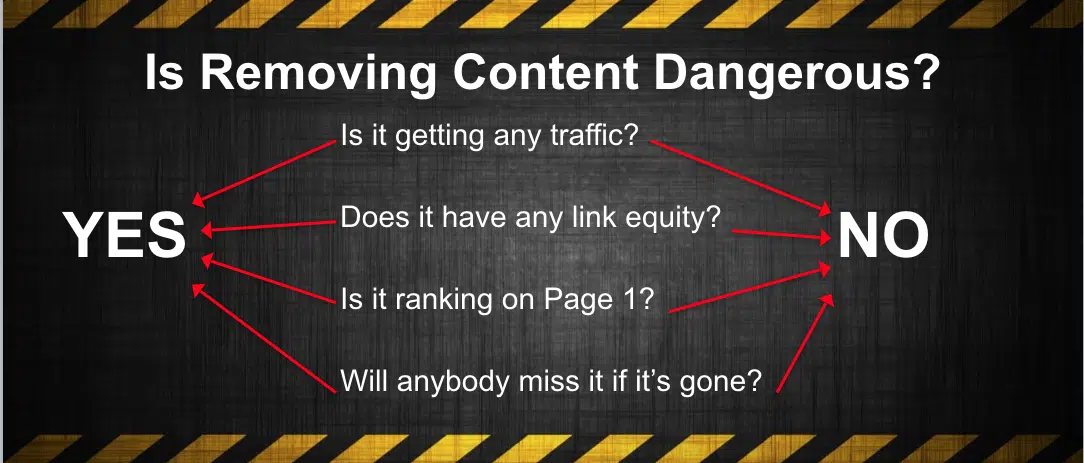
Bottom line: Will anybody miss the content if it’s gone? If your answer is no, it’s time to remove it. This flowchart may be helpful:

Removing Content Flowchart

How to remove content

If the content can’t be updated in any of the above ways, it’s time to decide whether to remove it – either blocking it from search engines or deleting it from your site.

Block it

In cases where you want to keep the content on your site, but not have it appear in search results, blocking the URL is probably your best bet. You can do that by adding the noindex meta tag.

One other alternative is to require a password to view the content.

Delete it

Remove it from your site.

It doesn’t matter to Google whether that page has a 410 or 404 status, Mueller said in a 2018 Webmaster Hangout:

“From our point of view, in the mid term/long term, a 404 is the same as a 410 for us. So in both of these cases, we drop those URLs from our index.

We generally reduce crawling a little bit of those URLs so that we don’t spend too much time crawling things that we know don’t exist.

The subtle difference here is that a 410 will sometimes fall out a little bit faster than a 404. But usually, we’re talking on the order of a couple days or so.

So if you’re just removing content naturally, then that’s perfectly fine to use either one. If you’ve already removed this content long ago, then it’s already not indexed so it doesn’t matter for us if you use a 404 or 410.”

Keep ‘building out your reputation of knowledge’

Improving, removing and consolidating content is good SEO.

It’s hard work – and it’s not quick. Done right, it’s absolutely worth it in the long term.


Related stories

New on Search Engine Land

@media screen and (min-width: 800px) { #div-gpt-ad-3191538-7 { display: flex !important; justify-content: center !important; align-items: center !important; min-width:770px; min-height:260px; } } @media screen and (min-width: 1279px) { #div-gpt-ad-3191538-7 { display: flex !important; justify-content: center !important; align-items: center !important; min-width:800px!important; min-height:440px!important; } }

About the author

Danny Goodwin

Danny Goodwin has been Managing Editor of Search Engine Land & Search Marketing Expo – SMX since 2022. He joined Search Engine Land in 2022 as Senior Editor. In addition to reporting on the latest search marketing news, he manages Search Engine Land’s SME (Subject Matter Expert) program. He also helps program U.S. SMX events. Goodwin has been editing and writing about the latest developments and trends in search and digital marketing since 2007. He previously was Executive Editor of Search Engine Journal (from 2017 to 2022), managing editor of Momentology (from 2014-2016) and editor of Search Engine Watch (from 2007 to 2014). He has spoken at many major search conferences and virtual events, and has been sourced for his expertise by a wide range of publications and podcasts.

https://searchengineland.com/improving-removing-content-seo-guide-430571


How to optimize for search intent: 19 practical tips

If you want to be relevant in the search engine results pages, creating content the aligns with search intent is important.

A user’s intent is the reason behind their query. Search engines aim to provide results that best satisfy the intent for a particular query. 

Here are my tips on optimizing for search intent and improving your content to match what searchers are looking for. 

1. Identify search intent

It’s simple but important to start by identifying the intent before you jump into optimization. 

Broadly speaking you’ll classify search queries into one of the top 3 types of search intent:

  • Navigational intent: The primary aim is to find a specific website.
  • Transactional intent (a.k.a. commercial intent): The main goal is to buy something.
  • Informational intent: The objective is to learn something.

If you’re working at scale, you can do this quickly using tools like Semrush, Ahrefs and Sistrix. 

Their keyword research automatically includes intent classification to get things off the ground. 

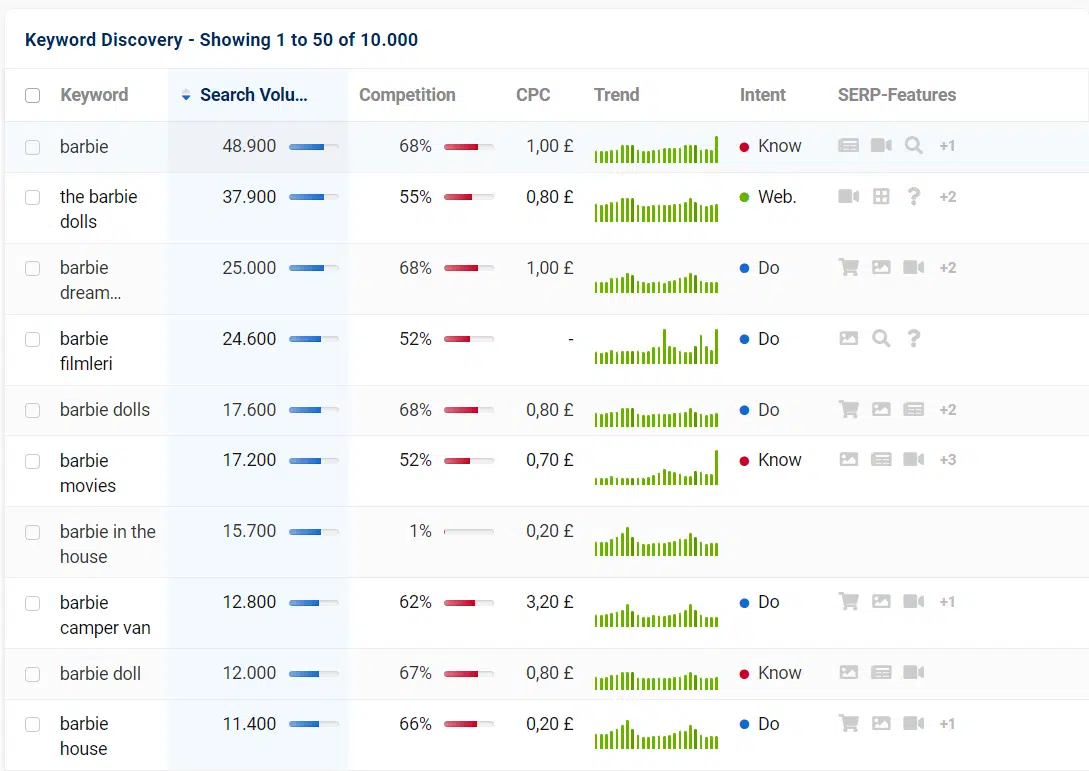
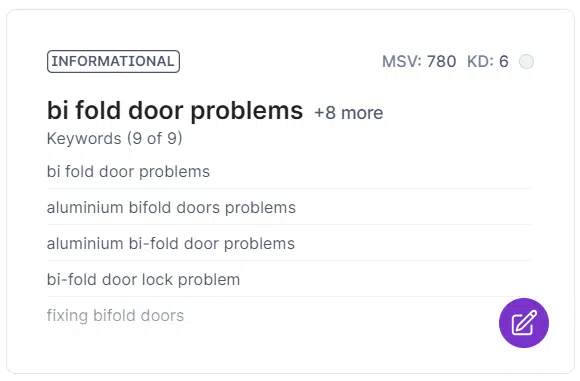
Keyword Discovery

In the example above, you can clearly see the difference in intent between people looking for Barbie products to buy (with the commercial or ‘do’ intent) and queries relating to the movie with an informational (or ‘know’) intent. 

Using these types of search intent to get a basic classification will set you off on the right track.

For example, you could find that you have a transactional page for a certain query when you could be creating or updating a rich informational resource to better match user intent. 

It’s better to start with this information than discover it when you’ve already put a lot of work into optimizing a page, so this is an important step. It’s not always as obvious as you might think.  

2. Put yourself in their shoes

Now you have a general intent classification, try to think like your intended audience. 

We’ve all searched for different types of answers and know what good results look like.

Consider what you want to see and be honest about whether your current page or content provides that. If not, can you see where it’s lacking?

Getting a clear picture of the search intent optimization approach you’re aiming for makes it much easier to plan your content. Think like the user you’re trying to attract. 

3. Review the SERPs

Take a break from research tools and use a search engine to look at what’s ranking for the topic you’re trying to optimize for. This is so important.

I’ve been surprised countless times by what I think people want and what is actually ranking. Sometimes we can be too close to our own products or industries we work in to see the bigger picture. 

Look at the search results and assess what already ranks. 

  • What type of page is it?
  • What is the content like? 
  • How does yours compare? 

You might see that most of the content that satisfies search intent talks about something you’ve missed or formats things differently. 

It won’t always be that obvious, but it’s well worth reviewing the SERPs and looking for similarities in the top-performing pages. 

4. Analyze your current results

Look at your current ranking and click-through rate for your chosen query. If your content isn’t ranking well, this could indicate a search intent problem. 

Examine your engagement metrics, such as bounce rate and time on page. 

If people aren’t engaging with what’s on your page, you probably haven’t satisfied their search request as well as you could have. 

To help with optimizing content, see if you can find a similar page with better engagement metrics and compare the differences. This can help you to spot opportunities for improvement. 

5. Consider mixed intent

Broad keywords with a high search volume may often have various intents, so think about your different audiences. 

Let’s take the phrase “comfortable shoes.” It’s most likely to be a person looking to buy some comfortable shoes. But they probably have more questions. 

We can see this mixed intent coming through in the SERPs, with most of the top pages showing products to satisfy a transactional search intent but some providing information to fulfill informational search intent:

Comfortable shoes - SERPs
Click to enlarge image

In this case, you’ll need to choose which user intent will most benefit you. For example, if you are running an ecommerce site, you’ll choose to optimize for commercial intent as it’s more likely to align with your goals. 

6. Examine ambiguous intent

Sometimes, the user’s intent is ambiguous. 

There could be different meanings behind the words they’ve used in their query, and they haven’t given enough detail to qualify this. 

For example, if we type “sliding doors”’” into the search bar, you can see the following results:

Sliding doors - SERPs
Click to enlarge image.

The SERPs show:

  • Shopping results for people who want to buy doors.
  • Information about the 1998 film.
  • PAAs about both the product and the film. 

This is quite confusing, but the likelihood is that there will be a collection of people searching with the same phrase, but behind that are two completely different intents. 

Search engines cannot tell exactly what the person intended, so they serve both results. If you want to rank, what do you do?

The best option is to satisfy the intent you’re interested in as best you can, as you can’t change these mixed results. 

Someone looking for a product isn’t going to click on the film results, even if they rank higher. 

So focus on making your page relevant to the traffic you want to gain, optimizing for this specific search intent.  

7. Use AI to complete the picture

If you’re an in-house SEO working in a small team or simply want to kick start or verify your ideas, why not ask your favorite AI to give you a list of likely search intents for your main topic?

I’ve found this simple prompt suggested in how to optimize for entities a really useful starter:

“Ask GPT-4 to “provide a list of likely search intents for someone searching Google for [running shoes],” and you’ll get a list of ideas.” 

This helps ensure you’re not working in a silo or overlooking some possible search intents that don’t resonate as much with you personally but are important to others. 

It can help you to optimize your outline to cover many likely micro intents, creating a more well-rounded overall page or piece of content. 

Using the right language in title tags and meta descriptions can clearly indicate that your content satisfies the user’s search intent. 

This could help improve click-through rates as searchers can see immediately that your page will provide what they need.

Including words like “buy” or “get” for transactional queries and “learn” or ‘discover’ for informational queries can help your result to stand out.

If we look at the query “how to make pancakes,” the top-ranking recipe sites use their title tags to guide users by including words like “easy,” “simple,” “best,” or “perfect” to capture the right audience for their page. 

How to make pancakes - SERPs

These words help to clarify the search intent, as less experienced bakers might be looking for a simple recipe, but others could be after a recipe to impress. 

9. Use keyword clusters

While you’re researching your search query, take note of keyword clustering.

A single page rarely ranks for just one query, so keyword clustering tools can help create a bigger picture regarding search intent. 

For example, if you’re trying to create content to satisfy the specific phrase “bifold door problems,” the keyword cluster below can help to identify which problem areas to cover:

Bifold door problems - SERPs

So if your content is missing the mark, you can consider adding more detail about aluminum options and problems with the locks to fulfill that keyword intent better. 


Get the daily newsletter search marketers rely on.


10. Check the SERP features

When you carry out a Google search, pay attention to the SERP features you see. Is there a People also ask box, knowledge panel, an image pack or a local pack? 

These features give an indication of the search intent. They’re there to help users find what they want so pay attention to what’s available. 

11. Use the SERP features

Now you’ve seen the search features, can you use these? For example, what are the PAAs shown in the search engine results? Could your informational content better satisfy search intent if you include the answers to some of these? 

Perhaps an image pack indicates that your content might benefit from more visuals. Plenty of video results could suggest that including your own unique video might enrich your page.   

12. Use the right format

Formatting is important in helping people process information and discover answers for themselves. And that makes it vital when it comes to search intent too. 

For example, if the user’s primary aim is to browse products, their intent will be best satisfied with a product listing page. 

Let’s say we’re searching “dresses for weddings.” Our aim is probably to look at the styles available and decide what we like and what will suit us.

So it’s not surprising that all the top results are product listing pages:

Dresses for weddings - SERPs

No other page format comes in the top results. This only deviates when more informational articles appear much lower down the results page. 

A category page that directed users to subcategories like midi, maxi, mini or different colored dresses rather than listing products would be less likely to satisfy the intent of this type of shopper.

This is because they are unlikely to have reached that stage in their decision-making process yet. They don’t know what type of dress they need and are searching for inspiration, so while the overall intent is to buy a product, the micro-intent is to browse.  

13. Include supporting entities

The concept of matching search intent is straightforward, but creating relevant content that satisfies a user’s needs is much more complex. 

Intent and entities are inextricably linked. Entities help search engines determine the meaning of content, and what content means confirms whether it satisfies a certain intent. 

The best way to demonstrate that you satisfy intent is to really understand the topic and the pain points of your target audience. Then, create high-quality content that provides solutions. 

To do this, you’ll need to research related entities and include them in your content, showing a depth and breadth of knowledge about the topic in question. 

14. E-E-A-T

If you really want to satisfy search intent you’re going to need some experience, expertise, authoritativeness and trust. 

After all, if someone is looking for information on a complex or niche subject, they’re more likely to trust an expert’s advice over a generalist’s. 

You can optimize for search intent by improving on these factors. If you have a more experienced person available within your organization, ask them to contribute, review or fact-check your content.

You can also expand on E-E-A-T factors by asking subject matter experts from outside your company for quotes, contributions or analysis. 

15. Check your language

Just as using the right language in title tags and meta descriptions can be beneficial, so can carrying it through the rest of your copy. 

If you write in a way that demonstrates you’re answering a question or fulfilling a need to a reader, they are more likely to engage with your content and feel that you have satisfied their query.

In some cases, this might be as simple as adding language that reflects the intent such as ‘buy now’ or ‘for sale’ within transactional pages.

However, you might need to review the readability to make sure your content communicates clearly and effectively. Consider the words you use and whether they align with the intent. Address pain points directly and make it clear you are doing so. 

16. Get human feedback

Once you’re clear about the intent and what you’re trying to achieve, ask others to read and review your content for this intent. 

Do they feel it satisfies the intent? Can they suggest any improvements?

After all, your content is for real people, so it’s important to get another perspective. This is ideal if you can get your page reviewed by your target audience. 

But if it isn’t possible, simply asking one or two colleagues to review your content might be enough to identify areas for improvement. 

17. Get AI feedback

If you’re short on time, or in a small team, you could ask AI to review for intent. It’s always a good sense check anyway and might give you some useful optimization ideas. 

For example, I’ve added some of my own content and asked ChatGPT to:

“Create a list of search intent that it fulfills. List the intents in bullet points along with the sentiment”. 

This is a good sense check to see if it identifies the intent you’d aimed for. You can even ask a simple question like: 

“Does this copy satisfy a transactional intent?”

And ask follow-up questions based on the response. This can help you to generate ideas for improving your content based on intent. 

18. Check your calls to action

Have you included CTAs in your content and do these match the intent? 

While “buy now” might be your go-to for transactional intent, you might use phrases like “learn more” or “sign up” on more informative pages. 

Review any calls to action to see if they support the intent. Adjust these if necessary. 

19. Continuously improve

Search intent and search engine’s understanding of it can often change. 

Like any optimization work, it’s best to keep reviewing and improving your top pages to ensure they still fulfill the intent. 

Remember, you’re trying to help users accomplish their purpose

When you’re optimizing for search intent, you won’t go too far wrong if you put your users at the heart of everything you do.

That being said, not every user is the same and the intent behind queries, especially broader ones, can be nuanced. 

Search engines are already working with this type of information at scale and serving the results they determine to best satisfy the intent of a query for most users.

A combination of thorough research in and outside the SERPs, planning, execution and feedback are all essential to ensure you fulfill user intent and create helpful and useful content.   


Opinions expressed in this article are those of the guest author and not necessarily Search Engine Land. Staff authors are listed here.


Related stories

New on Search Engine Land

@media screen and (min-width: 800px) { #div-gpt-ad-3191538-7 { display: flex !important; justify-content: center !important; align-items: center !important; min-width:770px; min-height:260px; } } @media screen and (min-width: 1279px) { #div-gpt-ad-3191538-7 { display: flex !important; justify-content: center !important; align-items: center !important; min-width:800px!important; min-height:440px!important; } }

About the author

Claire Brain

Claire has 17 years of experience in the digital marketing industry, specializing in SEO for 8 years. After managing both B2B and B2C SEO client accounts and leading the SEO copywriting team for a creative digital marketing team, she has moved into an in-house role. Currently, Claire combines her passion for SEO and content across 5 e-commerce sites.

https://searchengineland.com/optimize-search-intent-tips-430857


Beyond search volume: Future-proofing keyword research for SEO

The practice of relying solely on search volume as the defining metric for keyword research is becoming a relic of the past. 

While it can provide a glimpse into the popularity of a keyword, search volume doesn’t necessarily equate to relevance, nor does it ensure a successful content strategy.

Future-proofing keyword research requires a more holistic approach that considers not just the quantity of searches but the quality, context, and evolving expectations of users.

In this article, we’ll look at why modern SEOs must look beyond mere search volume.

We’ll also unpack the new signals that should inform strategic planning, the importance of understanding user intent, and how to build a robust, resilient keyword strategy fit for the future of search.

Why search volume doesn’t cut it anymore

The evolution of the digital search landscape means we need a more comprehensive and discerning approach.

Let’s dive into why search volume is no longer the definitive metric for contemporary SEO.

A shift in user intent understanding and complex search queries

As search engines have evolved, so have users. Today’s online searchers are more adept at framing detailed and specific queries, expecting precise answers.

For example, rather than searching “best shoes,” a user might query “best running shoes for marathons under $100.” 

While these long-tail queries might have lower search volumes, they offer high intent, making them invaluable for content strategies. 

Therefore, SEO strategists must consider their content approach and how their brand is positioned to meet the needs of the keywords they identify during keyword research.

Understanding user intent and the search journey is vital when creating a content strategy.

Brands that truly understand their audience are better positioned to create engaging content.

They are able to move a user through the journey toward conversion in a way that a simple “monthly search volume” metric wouldn’t provide insight upon. 

By understanding user intent, you can map your content strategies more effectively against the needs of your audience, as opposed to a method of “this has the highest volume; therefore, it is most important.”

Rise of voice search and conversational queries

With the increasing adoption of voice-activated devices, users often pose questions in a conversational manner. 

This has led to increased natural language queries that don’t always align with traditional keyword research based solely on search volume.

Voice search can be a beneficial SEO strategy consideration for brands. However, if a brand were to rely solely on search volume as the driving force behind strategy consideration, such opportunities would be missed.

And then there is AI search, probably the fastest evolving consideration within this conversation and something that content strategists are exploring as we prepare for SGE integration at a large scale on Google SERPs.

Search Generative Experience has the potential to dramatically alter how SEOs approach content creation. 

The more conversational style of search we have seen emerge on voice search platforms is likely to be replicated as Google places its conversational chat functionality at the top of Google’s SERPs. 

We are yet to fully understand the impact this developing technology will have on our content approaches.

But if voice search is anything to go off, expect searches to become more conversational, visual, and personable  – ultimately human!

The rise of alternative search platforms

As the go-to search engine, Google is being challenged, particularly by Gen-Z audiences, seeking specific types of content to meet their needs, pains, wants, and desires. 

Platforms like Pinterest, TikTok, Instagram, and YouTube have emerged as powerful search engines in their own right. 

A keyword might not boast a high search volume on Google, but it could be trending on TikTok or extensively searched for on YouTube. 

It’s essential to recognize these platform-specific nuances and adapt keyword strategies accordingly.

The search landscape is dynamic, and the metrics that mattered yesterday may not hold the same weight today.

Proactive reactivity is the name of the game here. An annual look at the search volume of queries in designing a content strategy will no longer set strategies up for success. 

Instead, strategists should look to Google Trends, GLIMPSE, other search platforms and even forum sites like Reddit and Discord to understand what topics matter most to users.

Historically, it was assumed high search volume signified high importance.

Now we can combine a multitude of data points as content signals, ensuring that trends are actively optimized and catered for within our content strategies as a result of being proactively reactive. 

Future-proof keyword research signals and why they matter

As we transition into a more intricate search ecosystem, it’s clear that keyword research requires a more multifaceted approach. While search volume remains a valuable metric, several other important signals have risen.

Understanding and leveraging these signals is essential for any SEO strategist wishing to stay ahead of the curve.

Here’s a closer look at these future-proof metrics and their significance.

Keyword relevance

Today’s search engines are honed to prioritize user intent. 

A keyword with high search volume but low relevance can increase bounce rates and diminish user satisfaction. 

Ensuring your content aligns directly with user intent provides value and enhances the likelihood of higher rankings.

Keyword difficulty

This metric gives insights into how challenging it would be to rank for a particular keyword. 

Assessing factors like backlink profiles, domain authority, and content quality of top-ranking page helps you gauge the feasibility of achieving top rankings and strategize accordingly.

Click-through rate (CTR) potential

A keyword might have a high search volume, but the organic CTR might be low if the SERP is cluttered with ads, featured snippets, and other SERP features.

By assessing the potential organic click opportunities, you can make informed decisions about which keywords are likely to drive actual traffic to your site.

User engagement metrics

Metrics such as bounce rate, dwell time, and pages per session offer a glimpse into how users interact with your content. 

High engagement indicates that your content is resonating with users, which search engines regard as a sign of quality and relevance.

What’s trending today might be obsolete tomorrow. 

By keeping an eye on seasonal fluctuations and emerging trends, you can position your content to ride the wave of popularity while also avoiding dated or fading topics.

Search features, SGE and Perspectives opportunities

Modern SERPs are more than just a list of blue links. 

There are potential opportunities for SGE strategy planning and the emerging “Perspectives” rollouts which could also impact how users conduct searches, engage with content and therefore inform the strategies we create. 

Targeting these features can amplify visibility and drive more organic traffic.

‘Search everywhere’ potential

A SERP is not a Google-only phenomenon. SEOs must consider other search platform opportunities.

If users conduct searches away from Google, strategies can adapt and pivot toward content creation on those platforms delivering audiences content where they want and expect to see it. 

In this emerging change in search, SEO professionals need to broaden their horizons and adopt a more holistic approach to keyword research. 

By integrating these signals into strategies, we can ensure more robust, relevant, and future-proof strategic outcomes.

Dig deeper: The modern search landscape: How and where to reach your target audience


Get the daily newsletter search marketers rely on.


The role of topic clusters and pillar content

To stand out in the vast sea of online content, you must first have a well-structured approach to content creation. 

Enter topic clusters and pillar content. 

These two methods have significantly redefined how content is organized and delivered.

How broader topics drive a cohesive content strategy

Topic clusters revolve around a central theme or “pillar.” 

This pillar content covers the primary topic in depth, while supplementary articles or “cluster content” delve into sub-topics or related facets. 

Together, they form a cohesive interlinked structure or web of knowledge on a topic.

This method ensures that users have a comprehensive resource to refer to. 

If someone lands on a sub-topic, they can easily navigate to the main pillar content to gain broader insights or explore related areas.

They will also likely move forward or back through the journey via internal linking.

For search engines, this interlinked approach enhances the crawlability and context of your content, potentially boosting your domain’s topical authority.

The advantage of owning a topic area and becoming an authority

By consistently creating valuable content around a specific topic and interlinking pillar and cluster content, you establish your domain as a go-to resource for that subject.

Search engines prioritize websites that offer in-depth and authoritative content. Owning a topic area isn’t just about quantity but quality and structure. 

When your site becomes a recognized authority on a subject, you’re more likely to earn backlinks, get cited, and, most importantly, gain the trust of your audience.

Over time, this trust can translate into higher organic rankings, SERP feature appearances, and potential SGE appearances as the “single source of truth,” ultimately leading to increased traffic.

By embracing topic clusters and pillar content, brands can provide a richer user experience, simplify site navigation, and position themselves as industry leaders in their niche.

Semantic search and the importance of context

The introduction of semantic search has shifted the focus from simple words to the deeper meaning and context behind them, essentially the “why” behind the “what.”

Even if a user’s query isn’t an exact match, search engines can discern and deliver results that fit the context and intent of the query. This leap has ushered in a significant shift in SEO strategies.

Gone are the days of “keyword stuffing,” where repetition was the norm. Today, the emphasis is on topic depth, relevance, and the semantic relationships between terms. 

As search engines strive to provide the most pertinent content in response to user queries, content creators must produce materials that are comprehensive, rich in context, and true to user intent.

Evolve your keyword strategy for modern SEO

The days of linear keyword targeting and isolated tactics have given way to a more comprehensive and user-centric approach. 

Successful SEO today is an amalgamation of content relevance, technical prowess, and a deep understanding of user intent and behavior.

The challenge and opportunity lie in embracing these multifaceted changes. Ensuring your strategies resonate with search algorithms and, most importantly, with the audiences you aim to serve.

As we look ahead, the fusion of quality content, robust technology, and an unwavering focus on the user promises to be the beacon that guides the future of SEO.


Opinions expressed in this article are those of the guest author and not necessarily Search Engine Land. Staff authors are listed here.


Related stories

New on Search Engine Land

@media screen and (min-width: 800px) { #div-gpt-ad-3191538-7 { display: flex !important; justify-content: center !important; align-items: center !important; min-width:770px; min-height:260px; } } @media screen and (min-width: 1279px) { #div-gpt-ad-3191538-7 { display: flex !important; justify-content: center !important; align-items: center !important; min-width:800px!important; min-height:440px!important; } }

About the author

Ashley Liddell

Ashley is an aspiring content and brand marketer with a focus on putting ‘search’ at the heart of marketing efforts by brands across varying industries. Working as an SEO Content Strategist, Ashley is responsible for assisting global brands in developing and better leveraging strategic efforts around on-site content as part of wider marketing strategies – all designed to deliver the best marketing approach possible.

https://searchengineland.com/beyond-search-volume-future-proofing-keyword-research-seo-430853


Google stops testing links in Search Generative Experience snapshot answers

Google began testing links within the Search Generative Experience AI-generated snapshot answers earlier this month. Well, it seems that test is over. Google is no longer showing links or citations in its AI-generated answers.

Link test. Here is a screenshot of the links/citations in these answers. Please note our original coverage showcased three different formats for links in the SGE answers. (You can click on the screenshots below to enlarge them.)

Google Sge Links2 1690897572

Here is what I see now, SGE answers without any links:

Google Sge No Links Supermom 1692295006

Test is gone. Some of you were unable to see the SGE links test while it was live. But those people who were in the test noticed the links were gone from Google’s AI-generated responses starting yesterday afternoon.

I was in the test, but Google is now no longer showing me links. And so were several others, including Danny Goodwin, Managing Editor of Search Engine Land.

Here are posts from others who no longer see the links:

Why we care. One of the biggest complaints about the Search Generative Experience is that you cannot click from the text of the AI-generated answer to the source of the information. Having links in these generative answers makes this experience more useful. Hopefully, Google will bring back links within these generative AI answers in the future. But right now, Google has stopped this test.

Postscript. Google’s Search Liaison replied on Twitter saying, “We’ve always had corroborating links. That hasn’t changed. The carousel that we launched with is still there; you can use the menu icon to open for links to appear inline. That said, the experimenting we’ve done with different formats is not over so changes will continue.”


Related stories

New on Search Engine Land

@media screen and (min-width: 800px) { #div-gpt-ad-3191538-7 { display: flex !important; justify-content: center !important; align-items: center !important; min-width:770px; min-height:260px; } } @media screen and (min-width: 1279px) { #div-gpt-ad-3191538-7 { display: flex !important; justify-content: center !important; align-items: center !important; min-width:800px!important; min-height:440px!important; } }

About the author

Barry Schwartz

Barry Schwartz is a Contributing Editor to Search Engine Land and a member of the programming team for SMX events. He owns RustyBrick, a NY based web consulting firm. He also runs Search Engine Roundtable, a popular search blog on very advanced SEM topics. Barry can be followed on Twitter here.

https://searchengineland.com/google-stops-testing-links-in-search-generative-experience-snapshot-answers-430892


How your approach to content needs to change: People, process and technology

The search and content landscape has significantly changed since the start of 2023. 

As the usage of generative AI applications soars and search engines integrate AI into the SERP results, a fresh content battleground has emerged. 

Consequently, content optimization is evolving, shaped by the dynamic interplay between people, processes, and technology. This process is becoming less linear and more fluid.

Before we dive into that, let’s examine the driving forces behind these changes. 

People’s preferences drive key changes in search and content environments

Online consumers have evolved, demanding instant, relevant, and accurate answers to their questions and needs. 

In addition, as they search for information across multiple platforms, such as social and video platforms, we are seeing an increase in preference for not just text but a variety of visual content. 

For instance, short-form videos are popular with consumers. Leading social media platforms like TikTok, Instagram Reels, and YouTube Shorts are now favorites among brands.

Consumer preferences drive search and content shifts

These key consumer preferences drive innovations in search and content marketing, especially as they aim to provide consumers with new experiences and ways to find and digest information. 

This changes how content is represented online and how the focus on optimization becomes more vital and diverse.

Key content and optimization shifts 

Ensuring optimized content has always been crucial, as it guarantees that search engines and users can easily comprehend it. 

In the past, some marketers would optimize content regardless of its quality. 

They would also optimize it solely for search engines, focusing on keywords and intent with low search volume. 

The content was siloed, and lots of generic topical content, no accurate or authentic detail and no structure, but it still got results on search engines.

The critical shift we see is that generative AI is now being used to provide content production and optimization recommendations to improve visibility and reach on search engines and social media. 


Get the daily newsletter search marketers rely on.


As search experiences change, new areas for optimization open up, and certain areas become more important than others.

Generative AI and search engine innovations: Creating a new content battleground

A fresh battleground for content marketers is emerging – one where not just every individual and brand but even machines have taken up the pen to become authors and publishers. 

A combination of humans and machines is now churning millions of new content daily. 

Consequently, content marketing professionals confront a level of change and competition that has never been seen before. 

This change has been driven by consumer preferences and the growth of AI into the mainstream in two key areas. 

1. Rise of ChatGPT and generative AI applications 

Tools such as ChatGPT, Google Bard, and Microsoft Bing AI are revolutionizing how content marketers generate new ideas, identify patterns and trends, and automate tedious tasks. 

Among these tasks are:

  • Market and keyword research and keyword list segmentation for content campaigns.
  • Content clustering via grouping similar content based on language and context to identify content gaps, areas of overlap, and opportunities for cross-linking.
  • Monitoring and analyzing social media conversations to identify trends and topics relevant to content creation.
  • Automated A/B testing of content in ads, landing pages, and other campaigns.
  • Creating detailed buyer personas.
  • Personalization via analysis of customer behaviors and other analytics data.
  • Creating and optimizing images and videos customized to fit the content. campaign’s objectives – I will share more on that later.

Beyond text-based content, the standalone tool market is exploding with thousands of new entrants using a combination of APIs and their own technology to provide diverse output for multiple content use cases. 

These are not limited to generating content but extend to personal and recreational use, voice, music, coding, audio production, image and visual creation, video making, and podcasting. 

2. Integration of AI into search engines 

The focus on producing quality, relevant, and trustworthy content has never been so important, especially as the fine lines between content and SEO diminish. 

This is why Google has placed much focus on improving user experiences by rolling out and refining its Helpful Content Update (HCU) and re-emphasizing its E-A-T guidelines with E-E-A-T.

As Google rolls out access to its Search Generative Experiences (SGE) and AI-led innovations via Search Labs (currently only available in the U.S.), we get a glimpse of how it integrates AI into results and how content in the SERP results are changing.

Before I go further, it’s important to note that this is experimental and changing daily. 

However, I think there are enough signals (including updates from Google’s blog) to make informed decisions on what content marketers need to prepare for, optimize, and execute in the future.

SERP evolution - new content and optimization opportunities

In its generative AI snapshot, Google’s LLM (Large Language Model), PaLM 2, and MUM (Multitask Unified Model) help it identify multiple types of content and media formats.

In addition, as Google continues to focus on human experiences and content, it is starting to prioritize experience-driven, authoritative content and recommendations. 

Results in the SERPs aim to highlight content that showcases real experiences of topics, products, and services according to Google’s E-E-A-T.

Perspectives, in particular, focuses on user-generated content (UGC) and showcases varied perspectives via multimedia content from boards, QandA channels, and social media. 

Dan Taylor wrote a great piece on optimizing content specifically for Perspectives.


Get the daily newsletter search marketers rely on.


Change equates to enhancing content optimization focus and conversion rates 

Conversational intent is the trigger for Generative AI results.

While both Generative AI and search engine results pages (SERPs) continue to evolve – and they haven’t quite reached a stable state yet – gaining a grasp on conversational intent remains critical. 

If your content fails to provide valuable insights or accurately address a conversational query, its visibility will likely dwindle.

Ensure you are keeping up to date with all algorithm updates and quality sources of information.

  • Understand conversational intent as the key trigger to generative AI results.
  • Focus on value for the reader – the need to understand your audience needs to deepen.
  • Balance this with informational and transactional content.
  • Prioritize natural language – anticipate “how” questions and answer with “to.”
  • Build and optimize fresh content. Balance long, short and snackable content formats, as evergreen content won’t cut it anymore.

For content to truly thrive in the future, it necessitates an explicit purpose. 

Standing out from the crowd with your content is crucial for discoverability and engagement. If consumers don’t engage, they are less likely to convert.  

This means it is time to:

  • Review and reassess evergreen content and build fresh content. Focus on conversational intent and create a variety of helpful content formats.
  • Fine-tune your website to cater to conversational search queries and comply with Core Web Vitals, including aspects like page speed and structural design. 
  • Implement schema as a necessity (not optional) to ensure that search engines can understand the context associated with your content. Align with SEO teams tightly. 
  • Enhance your focus on optimizing for images (thumbnails), reviews, and social media.
  • Shift more attention to conversion rate optimization (CRO) strategies.
New search experiences - Five content focus areas to act now

As Google strives to showcase a diverse array of content from various sources and users, refining its content system to provide more valuable and pertinent information, it is essential to adhere to its Helpful Content Updates (HCU) and enhanced E-E-A-T guidelines.

Therefore, pay increased attention to the following:

  • Diversifying your content strategy by creating various types of content in an array of formats – emphasizing particularly video and image-based content.
  • Allocating resources to developing authoritative profiles (E-E-A-T: Experience, Expertise, Authority, Trustworthiness) for your content creators.
  • Exploring the possibility of incorporating more user-generated content from platforms like YouTube and TikTok for trust signals.

Going forward, optimizing for engagement and conversion will become indispensable.

While traffic remains crucial, Google’s new Search Engine Results Pages (SERPs) could decrease top-level site traffic. 

However, the traffic reaching a site will likely be more targeted, potentially increasing the conversion rate.

The future and the vital interplay of people, process and technology 

This framework represents the best way to approach content strategies as the emerging alliance between humans and AI accelerates. 

After all, people perform specific tasks focusing on organizations using processes often streamlined and improved by technology. 

People: Humans should always take the lead at the front and the end of processes 

Let’s, get something out of the way here.

AI will not replace your role, provided you learn how to utilize it. Simple, right?

  • The emotional understanding inherent in us as human beings empowers us to perceive and react to the sentiments and emotional states of others. Empathy and common sense are crucial aspects of human interaction, especially in content marketing. 
  • Though AI has the capacity to discern emotion in written words and construct responses that suit the context, it is incapable of authentically experiencing feelings or forging genuine, empathetic bonds.
Content and the interplay of people, process and generative AI technology

Process: Generative AI injection means that content processes need to be refined 

For me, this is a big area that connects people and technology. 

Content strategists (people) can leverage AI-powered resources for everything I have mentioned in the article. 

  • Ensure you and your teams build into your processes how AI can augment your content workflows. 
  • Focus on aligning around practical use cases and experiments. 
  • As new search and content landscapes and avenues open up, consider the interplay of content, SEO, Social, and PR. Think about trust signals as the output.

In terms of utilizing AI for content creation and optimization, ensure you have humans’ lead inputs, choose the correct application, and edit with a human perspective. 

Technology (AI): Can inform and assist front, middle, and end of processes 

AI is a potent ally in many areas of your workflows and processes. 

It does this by enhancing productivity, scrutinizing massive data sets, and boosting the quality of your content. 

  • SEO AI-led insights, in particular, can inform and guide you toward the types of content that effectively engage audiences and the most successful formats – not just for your business but for your competitors.

As Eli Schwartz shares on LinkedIn, the AI evolution will be great for SEO. I also think it will be great for content and omnichannel marketers. 

Eli Schwartz on generative AI
  • In addition, automation frees up your time by taking over the mundane and repetitive tasks so you and devote time to being creative and working closely with other teams I mentioned above.
  • Always remember, AI’s role in content should be to inform and assist, to inspire and help action.
  • Do not forget conversion rate technology 

AI and SERP evolutions open up a whole new realm of opportunities for content and SEO marketers to shine.


Opinions expressed in this article are those of the guest author and not necessarily Search Engine Land. Staff authors are listed here.


Related stories

New on Search Engine Land

@media screen and (min-width: 800px) { #div-gpt-ad-3191538-7 { display: flex !important; justify-content: center !important; align-items: center !important; min-width:770px; min-height:260px; } } @media screen and (min-width: 1279px) { #div-gpt-ad-3191538-7 { display: flex !important; justify-content: center !important; align-items: center !important; min-width:800px!important; min-height:440px!important; } }

About the author

Andy Betts

Andy Betts has a 25 year tenure in the search, content, and digital marketing industry. His extensive experience spans international borders, with him donning various hats as a writer, ghost-writer, and author of over a thousand published articles. His written pieces traverse a range of topics, including digital technology, AI, search, content and marketing technology, Apart from his successful writing career, Andy offers his expertise as a global advisor and consultant, providing strategic guidance to start-ups, late stage technology companies, and an impressive roster of independent Fortune 500 companies. His work mainly involves delving into the realms of strategic marketing, search, content creation, and public relations within the digital community. He has also spoken at many digital and search events including the Adobe Summit. Over the years, Andy has collaborated with a variety of leading search, digital, and Martech publications and leaders such as Google, Facebook, Salesforce and top 10 global agencies. He has played an instrumental role in programming numerous digital events and crafting compelling content. His influential work has been featured in renowned outlets such as Forbes, along with a number of prestigious digital marketing and analytics journals.

https://searchengineland.com/content-approach-change-people-process-technology-430860