New York Times: Don’t use our content to train AI systems

Although Google wants all online content available for AI training, the New York Times clearly wants to opt out.

The Times has changed its terms of service, aiming to prevent AI companies from using the media organization’s content to train their systems.

Why we care. Many large language models are trained using website content (see: Search the 15.7 million websites in Google’s C4 dataset). While Google is exploring alternatives or supplemental ways of controlling crawling and indexing beyond robots.txt, many brands (e.g., Reddit) are making it clear right now they don’t want their content used to improve the products and increase the profits for Google, Microsoft and OpenAI – at least not without compensation. You may want to consider adding some similar AI-related messaging to your website’s terms page.

What has changed. The New York Times updated its terms of service page Aug. 3. It includes AI-specific additions that apply to its content (which it defines as “including, but not limited to text, photographs, images, illustrations, designs, audio clips, video clips, ‘look and feel,’ metadata, data, or compilations”).

In the “Prohibited use of the services” section:

  • (3) use the Content for the development of any software program, including, but not limited to, training a machine learning or artificial intelligence (AI) system.

Will AI companies compensate publishers? OpenAI and the Associated Press signed a deal last month. OpenAI licensed the AP’s news article archive dating back to 1985 for training.

Google and the New York Times Co. already have a lucrative “commercial agreement” in place, but that deal is about working together on “tools for content distribution and subscriptions.”

Microsoft is also promising publishers some sort of revenue sharing. However, most of the benefits will apparently go to members of its Start program.


Related stories

New on Search Engine Land

@media screen and (min-width: 800px) { #div-gpt-ad-3191538-7 { display: flex !important; justify-content: center !important; align-items: center !important; min-width:770px; min-height:260px; } } @media screen and (min-width: 1279px) { #div-gpt-ad-3191538-7 { display: flex !important; justify-content: center !important; align-items: center !important; min-width:800px!important; min-height:440px!important; } }

About the author

Danny Goodwin

Danny Goodwin has been Managing Editor of Search Engine Land & Search Marketing Expo – SMX since 2022. He joined Search Engine Land in 2022 as Senior Editor. In addition to reporting on the latest search marketing news, he manages Search Engine Land’s SME (Subject Matter Expert) program. He also helps program U.S. SMX events. Goodwin has been editing and writing about the latest developments and trends in search and digital marketing since 2007. He previously was Executive Editor of Search Engine Journal (from 2017 to 2022), managing editor of Momentology (from 2014-2016) and editor of Search Engine Watch (from 2007 to 2014). He has spoken at many major search conferences and virtual events, and has been sourced for his expertise by a wide range of publications and podcasts.

https://searchengineland.com/new-york-times-content-train-ai-systems-430556


YouTube launching New and Returning Viewers by Format report

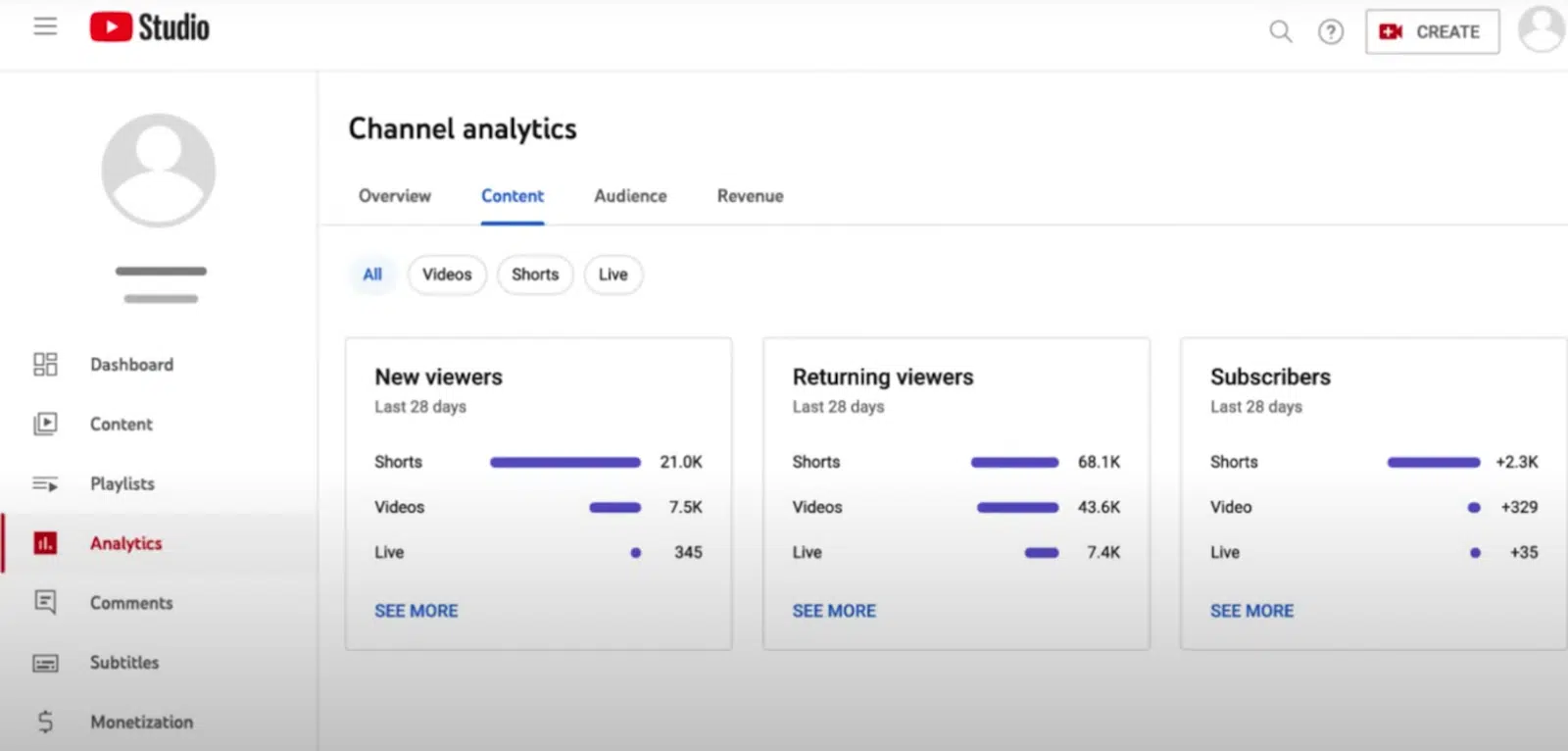
YouTube is launching a new analytics report to show your new and returning viewers by format type.

What it looks like. You will find it on the Content > All tab in YouTube analytics. You’ll initially see data based on the past 28 days by Shorts, Videos and Live. You can click on See More to dig deeper in to your channel’s viewer data.

Youtube New Returning Viewers Report 800x383

Why we care. Having more data about your audience could help you understand whether you’re creating the right types of videos to attract new viewers, as well as a loyal audience – and could potentially uncover opportunities where you can further grow your YouTube channel.

The video announcement. You can watch it on YouTube:

[embedded content]

Dig deeper. YouTube SEO: How to find the best traffic-generating keywords


Related stories

New on Search Engine Land

@media screen and (min-width: 800px) { #div-gpt-ad-3191538-7 { display: flex !important; justify-content: center !important; align-items: center !important; min-width:770px; min-height:260px; } } @media screen and (min-width: 1279px) { #div-gpt-ad-3191538-7 { display: flex !important; justify-content: center !important; align-items: center !important; min-width:800px!important; min-height:440px!important; } }

About the author

Danny Goodwin

Danny Goodwin has been Managing Editor of Search Engine Land & Search Marketing Expo – SMX since 2022. He joined Search Engine Land in 2022 as Senior Editor. In addition to reporting on the latest search marketing news, he manages Search Engine Land’s SME (Subject Matter Expert) program. He also helps program U.S. SMX events. Goodwin has been editing and writing about the latest developments and trends in search and digital marketing since 2007. He previously was Executive Editor of Search Engine Journal (from 2017 to 2022), managing editor of Momentology (from 2014-2016) and editor of Search Engine Watch (from 2007 to 2014). He has spoken at many major search conferences and virtual events, and has been sourced for his expertise by a wide range of publications and podcasts.

https://searchengineland.com/youtube-new-returning-viewers-format-report-430547


Digital PR vs. manual link building: Adapting to the modern search landscape

“Links are the currency of the web.”

We’ve been told this for years, and to be fair, it was true.

But not any longer.

In this article, I’ll explain why manual link building is now less powerful and practical than digital PR.

Link Building Vs Digital PR Link Earning 800x450

Relationships: The new currency of the web

In recent years, Google has moved toward being a semantic search engine.

And while backlinks always will play a part, we know they play a lesser role thanks to the sheer power of Google’s knowledge graph and machine learning.

I find the best way to think about this is to view Google as a knowledge-hungry child.

In its infancy, it fed on links. And the more links, the better.

Today, it’s older and curious about the world around it. And it asks questions.

When it encounters a website, it tries to discover what the site is, who’s behind it and why it exists. And to do this, it looks at many ranking factors.

Links are one, but not in volume, but in context.

Today, people still do much of the awful link building as we did 10 years ago. 

  • Many agencies still build links via guest posts.
  • People still spam with mass outreach emails.
  • And, tactics such as blog commenting are some people’s go-to.

The problem. These tactics don’t work well.

SEOs have recently been abandoning links in favor of content.

I’m sure you’ve seen the same case studies I have.

Huge fat graphs of traffic caused by the creation of hundreds or thousands of pages… without link building.

So, what’s going on?

When we see colossal traffic websites with little authority, they rank their sites using topical authority.

Or, in short. They’ve sold Google because they are experts in a single area. The proof of that expertise is displayed in knowledge.

But that, too, comes at a cost. Content doesn’t come cheap. Even with AI, you still have to have humans check and edit the content.

And reading a thousand pages of content takes time.

Unless you’re in the publishing or affiliate game, this traffic is essentially pointless. It’s too top-of-the-funnel to be of much use for brands or businesses.

So, we’re back in the links game. 


Get the daily newsletter search marketers rely on.


Remember the concept of Google as a knowledge-hungry child?

Imagine a link as a way to find something. Our Google isn’t a toddler any longer. She’s at junior school and doesn’t want to find things; she wants to be told what things are and why they matter.

This is how I see the difference between digital PR link building and manual link building. 

When we create links manually, we’re trying to game the system. Even deceive Google.

Through link building, we trick Google into thinking one page is better than others. Because at its heart, all link building attempts to manipulate the web rankings.

Google doesn’t like to be tricked. It wants honesty, and in a semantic search engine, that honesty comes as help.

We need to help Google better understand what a person, business or brand is.

Modern link building is all about educating Google. Every link should be a lesson that helps it form a mental relationship between entities.

This is a spoon. A spoon is used to eat. It is cutlery. So is a fork… you get the idea.

When we link out naturally, we help our audience understand a subject better or give credit.

We’re expanding topics. This is education for search engines. It’s saying, “Hey, Google. This is a good site. Take a look.”

In this sense, natural links are like votes of confidence. They work much like links always have done.

And they occur naturally, in context, and it’s obvious to all in SEO when a link happens naturally. 

Manual link building is supposed to replicate this because businesses can’t wait forever to be gifted with links.

And so, link building and buying became a multi-billion pound global industry.

In keeping with our Google child theory, link building or buying is like feeding Google with incorrect information. 

There has to be another way.

There is.

I’ve written about link earning vs. link building before. But I want to go deeper and present a more nuanced way of looking at this.

Digital PR backlinks are earned through data, expert commentary and or stories.

Be that journalists who need expert support with a story they are writing. Or something is happening worldwide, and we need experts to advise us.

And, when it comes to data, we collate information about the world and tell others a story about why this data matters. 

Data is a record of what’s happening, and digital PR brings that data into our lives, so we can better understand the world around us.

In the hungry child world of Google, these links gained help to educate our search engine. They come from sites they trust. Websites that have authority in their eyes.

And these links get traffic virtually immediately, hitting the news and discovery feeds.

Google sees your link, but more importantly, it considers the relationship between the quote, comment or data and your business.

It understands that you’re an expert, and the media are confirming this.

The media are making the life of the search engine easier. They are helping it to make sense of the world and to understand what sites are, what they do and why they exist.

But, but, but…

People will read this and say, “But you don’t know this.”

And sure, that’s true. I could be talking rubbish.

I’m conceptualizing a complicated topic based on my experience, knowledge and what I see working out there.

And I could be wrong… dead wrong.

However, Google’s John Mueller also supports digital PR.

John Mueller tweet on Digital PR

But is it better than manual link building?

I’ve been building links for a long time, and I’ve only given about three links out due to a manual outreach email.

That’s only about three links – out of thousands of emails I’ve received.

We’ve all received those replies that read like you’ve killed someone’s cat and not tried to get a link. Which leaves me scratching my head…why are we still doing it this way?

Why are we taking the long way around to links?

This is why link buying is so appealing, as are guest posts.

It’s easier, faster and more controlled.

Digital PR is equally tough. Links aren’t usually “dofollowed.” And often, all you get is a media mention.

But remember, we’re not in the links game. We’re in the relationships one, and Google can now read and understand context. 

At our agency, we see that brand mentions alone can cause a lift in a website’s page rankings. 

And the power of stories is that they travel. This is why, when a good story hits the press, it travels from news outlet to news outlet. Link explosions happen.

Some websites can’t use digital PR due to budget limitations or the nature of the site.

Some sites, the media won’t even touch with a 10-foot pole.

And so, link building will have its place.

But in modern search engines, the default for SEOs should be digital PR. 


Opinions expressed in this article are those of the guest author and not necessarily Search Engine Land. Staff authors are listed here.


Related stories

New on Search Engine Land

@media screen and (min-width: 800px) { #div-gpt-ad-3191538-7 { display: flex !important; justify-content: center !important; align-items: center !important; min-width:770px; min-height:260px; } } @media screen and (min-width: 1279px) { #div-gpt-ad-3191538-7 { display: flex !important; justify-content: center !important; align-items: center !important; min-width:800px!important; min-height:440px!important; } }

About the author

Andrew Holland

Andrew Holland is the Director of SEO at JBH, an award-winning Digital PR and SEO agency. His SEO background stems from a 17-year career in the police, where a number of years were spent within intelligence, utilizing SEO within internal systems to catch criminals. After developing chronic asthma, Andrew left the police and launched a freelance SEO and digital marketing career, and has worked with a wide range of clients, from SMEs to 8-figure businesses. Today, he directs the SEO delivery for one of the UK’s fastest-growing Digital PR and SEO agencies. Building organic visibility, trust and fame for consumer brands.

https://searchengineland.com/digital-pr-manual-link-building-modern-search-landscape-430467



Google warns against content pruning as CNET deletes thousands of pages

Gizmodo published an article “exposing” CNET for deleting thousands of pages, as they put it to “game Google Search.”

What CNET did. “Thousands of articles” were deleted in recent weeks (CNET declined to provide an exact number), according to Gizmodo. CNET confirmed the content culling. CNET decided which pages to “redirect, repurpose or remove (deprecate)” by looking at metrics such as:

  • Pageviews.
  • Backlink profiles
  • Amount of time passed since the last update.

What CNET said. Content deprecation “sends a signal to Google that says CNET is fresh, relevant and worthy of being placed higher than our competitors in search results,” according to an internal memo. Eh, CNET needs a bit better advice on how SEO works, but let’s move on.

Removing content from CNET is not a decision they take lightly, Taylor Canada, CNET’s senior director of marketing and communications, told Gizmodo:

  • “Our teams analyze many data points to determine whether there are pages on CNET that are not currently serving a meaningful audience.”
  • “This is an industry-wide best practice for large sites like ours that are primarily driven by SEO traffic. In an ideal world, we would leave all of our content on our site in perpetuity.
  • “Unfortunately, we are penalized by the modern internet for leaving all previously published content live on our site.”

‘Not a thing’. Before the article published, Google’s Danny Sullivan, via his @SearchLiaison account on X, posted:

  • “Are you deleting content from your site because you somehow believe Google doesn’t like ‘old’ content? That’s not a thing! Our guidance doesn’t encourage this. Older content can still be helpful, too.”

Sullivan was then asked what to in case where old content has broken links, is no longer relevant or can’t be made more helpful. Sullivan’s response:

  • “The page itself isn’t likely to rank well. Removing it might mean if you have a massive site that we’re better able to crawl other content on the site. But it doesn’t mean we go ‘oh, now the whole site is so much better’ because of what happens with an individual page.”

Except, it is a thing. Google once advised removing content. After Google launched Panda, a Googler shared this exact advice (emphasis mine):

“In addition, it’s important for webmasters to know that low quality content on part of a site can impact a site’s ranking as a whole. For this reason, if you believe you’ve been impacted by this change you should evaluate all the content on your site and do your best to improve the overall quality of the pages on your domain. Removing low quality pages or moving them to a different domain could help your rankings for the higher quality content.”

Yes, that quote is from 2011. But logically, it makes sense because we know some of Google’s algorithms, including helpful content, evaluate sitewide signals.

But other Googlers, including John Mueller and Gary Illyes, have since said the opposite – essentially advising improving content, as opposed to removing it, where possible. Barry Schwartz has covered many of these points on Search Engine Roundtable:

Why we care. I’ve found that deleting content can be good for SEO. I’ve done it, written about it and spoken about it at conferences and on webinars. To be clear, deleting content alone probably won’t help you much. However, deleting, improving and consolidating content should be part of your SEO strategy because it helps improve your overall content quality.

Dig deeper in Why and how to delete content in bulk for SEO, a great case study by Search Engine Land contributor Jared Bauman.

Don’t trust Google’s advice blindly. Gizmodo’s article also featured a great quote Lily Ray, head of organic research at Amsive Digital:

  • “Just because Google says that deleting content in isolation doesn’t provide any SEO benefit, this isn’t always true.”

Related stories

New on Search Engine Land

@media screen and (min-width: 800px) { #div-gpt-ad-3191538-7 { display: flex !important; justify-content: center !important; align-items: center !important; min-width:770px; min-height:260px; } } @media screen and (min-width: 1279px) { #div-gpt-ad-3191538-7 { display: flex !important; justify-content: center !important; align-items: center !important; min-width:800px!important; min-height:440px!important; } }

About the author

Danny Goodwin

Danny Goodwin has been Managing Editor of Search Engine Land & Search Marketing Expo – SMX since 2022. He joined Search Engine Land in 2022 as Senior Editor. In addition to reporting on the latest search marketing news, he manages Search Engine Land’s SME (Subject Matter Expert) program. He also helps program U.S. SMX events. Goodwin has been editing and writing about the latest developments and trends in search and digital marketing since 2007. He previously was Executive Editor of Search Engine Journal (from 2017 to 2022), managing editor of Momentology (from 2014-2016) and editor of Search Engine Watch (from 2007 to 2014). He has spoken at many major search conferences and virtual events, and has been sourced for his expertise by a wide range of publications and podcasts.

https://searchengineland.com/google-warns-against-content-pruning-as-cnet-deletes-thousands-of-pages-430509


Ecommerce brand debuts AI-generated product review summaries

Newegg, an American online retailer, now summarizes customer reviews using ChatGPT, the company announced.

The AI-generated summaries of customer reviews – called Review Bytes – appear on product pages, highlighting pros and cons.

Why we care. This is innovative and smart use of AI in ecommerce that could potentially drive more sales for the company. The highlighting of pros and cons is also a smart play in the era of Google reviews update. I expect more ecommerce brands to provide similar experiences soon because doing good and helpful things for shoppers also tends to be good for SEO.

Review Bytes. The Review Bytes are designed to help shoppers “understand key aspects without having to read reviews” of products. Clicking on a Review Byte generates a Search Keyword that highlights any full reviews mentioning that particular pro or con.

SummaryAI. Below the Review Bytes Pros and Cons is a section called SummaryAI. Newegg calls this AI-generated summary “a comprehensive paragraph summary” that “provides further insights into multiple customers’ opinions with sentences to elaborate on key points.”

What it looks like. Here’s a screenshot showing the Review Bytes for a pair of Sony headphones:

Newegg Review Bytes Sony

Among the Review Bytes are “Exceptional sound”, “Good Battery Life” and “Amazing Active Noise Canceling”.

And here’s a screenshot showing the Pros and Cons and SummaryAI section for that same product:

Newegg Pros Cons Aisummary Sony

The AI summary is:

  • “The Sony WH-1000XM4 wireless headphones have exceptional sound quality and good battery life. The active noise canceling is amazing, although it can be disorienting for some users. The headphones are comfortable to wear for long periods of time and have convenient touch controls. They can connect to 2 devices simultaneously, making them perfect for work. However, there are some disadvantages, including noise cancellation and mic support issues, charging problems, and high price. Overall, these headphones are highly recommended for their sound quality and features, but users should be aware of the potential drawbacks.”

When Review Bytes will appear. Shoppers will only see these features on Newegg’s desktop website when products hit a minimum number of reviews. Newegg declined to reveal what that minimum is, adding that number may change based on customer use and feedback.

Ahead of Amazon. Amazon was testing AI-generated summaries or product reviews, as we reported in June. However, Amazon’s AI feature hasn’t launched.


Related stories

New on Search Engine Land

@media screen and (min-width: 800px) { #div-gpt-ad-3191538-7 { display: flex !important; justify-content: center !important; align-items: center !important; min-width:770px; min-height:260px; } } @media screen and (min-width: 1279px) { #div-gpt-ad-3191538-7 { display: flex !important; justify-content: center !important; align-items: center !important; min-width:800px!important; min-height:440px!important; } }

About the author

Danny Goodwin

Danny Goodwin has been Managing Editor of Search Engine Land & Search Marketing Expo – SMX since 2022. He joined Search Engine Land in 2022 as Senior Editor. In addition to reporting on the latest search marketing news, he manages Search Engine Land’s SME (Subject Matter Expert) program. He also helps program U.S. SMX events. Goodwin has been editing and writing about the latest developments and trends in search and digital marketing since 2007. He previously was Executive Editor of Search Engine Journal (from 2017 to 2022), managing editor of Momentology (from 2014-2016) and editor of Search Engine Watch (from 2007 to 2014). He has spoken at many major search conferences and virtual events, and has been sourced for his expertise by a wide range of publications and podcasts.

https://searchengineland.com/newegg-chatgpt-review-bytes-430501


Webinar: The art of winning audiences through content by Cynthia Ramsaran

How to write long-form content- 7 smart steps and examples

A well-crafted content strategy is a fundamental element for businesses to engage and expand their audiences. With so much being published, how can you decode the art of winning audiences through content?

Learn how to define your audience using personas and conversion data and create a tailored content strategy for new audience groups. This isn’t just about content creation; it’s about delivering experiences that convert.

Don’t miss out on this opportunity to transform your content strategy and truly connect with your audience.

Register and attend, “The Art of Winning Audiences Through Content,” presented by iQuanti.


Click here to view more Search Engine Land webinars.


Related stories

New on Search Engine Land

@media screen and (min-width: 800px) { #div-gpt-ad-3191538-7 { display: flex !important; justify-content: center !important; align-items: center !important; min-width:770px; min-height:260px; } } @media screen and (min-width: 1279px) { #div-gpt-ad-3191538-7 { display: flex !important; justify-content: center !important; align-items: center !important; min-width:800px!important; min-height:440px!important; } }

About the author

Cynthia Ramsaran

Cynthia Ramsaran is director of custom content at Third Door Media, publishers of Search Engine Land and MarTech. A multi-channel storyteller with over two decades of editorial/content marketing experience, Cynthia’s expertise spans the marketing, technology, finance, manufacturing and gaming industries. She was a writer/producer for CNBC.com and produced thought leadership for KPMG. Cynthia hails from Queens, NY and earned her Bachelor’s and MBA from St. John’s University.

https://searchengineland.com/webinar-the-art-of-winning-audiences-through-content-430500


Google says all online content should be available for AI training unless publishers opt out

Google wants AI to be able to mine all digital content unless publishers opt out.

The search engine has put forward this proposal in a submission to the Australian government, calling on policymakers to change current copyright laws.

Why we care. If copyright laws do change, the onus will be on brands and publishers to stop AI from mining their content. If they fail to do so, they run the risk of rivals potentially generating very similar content and not being able to do anything about it, which could cause substantial damage to a campaign in terms of brand and identity.

What is happening? Google wrote to the Australian government, stating:

  • “Copyright systems that enable appropriate and fair use of copyrighted content to enable the training of AI models in Australia on a broad and diverse range of data, while supporting workable opt-outs for entities that prefer their data not to be trained in using AI systems.”

The search engine has of course put forward similar cases to the Australian government before, arguing that AI should have fair use over online content for training purposes. However, this is the first time that Google has suggested an opt-out clause as a solution to address past concerns.

How would it work? Google does not have a specific plan in place as of yet, however, the search engine has suggested it wants to hold discussions about setting up a community-developed web standard that works in a similar way to the robots.txt system, which enables publishers to opt out of search engines crawling their content.


Get the daily newsletter search marketers rely on.


What has Google said? Danielle Romain, ,vice president of trust at Google search, touched on this topic in a press release last month. She said:

  • “We believe everyone benefits from a vibrant content ecosystem. Key to that is web publishers having choice and control over their content, and opportunities to derive value from participating in the web ecosystem. However, we recognize that existing web publisher controls were developed before new AI and research use cases.
  • “As new technologies emerge, they present opportunities for the web community to evolve standards and protocols that support the web’s future development. One such community-developed web standard, robots.txt, was created nearly 30 years ago and has proven to be a simple and transparent way for web publishers to control how search engines crawl their content. We believe it’s time for the web and AI communities to explore additional machine-readable means for web publisher choice and control for emerging AI and research use cases.”

Deep dive. Read Google’s ‘Evolving Choice and Control for Web Content‘ announcement in full for more information.


Related stories

New on Search Engine Land

@media screen and (min-width: 800px) { #div-gpt-ad-3191538-7 { display: flex !important; justify-content: center !important; align-items: center !important; min-width:770px; min-height:260px; } } @media screen and (min-width: 1279px) { #div-gpt-ad-3191538-7 { display: flex !important; justify-content: center !important; align-items: center !important; min-width:800px!important; min-height:440px!important; } }

About the author

Nicola Agius

Nicola Agius is Paid Media Editor of Search Engine Land after joining in 2023. She covers paid search, paid social, retail media and more. Prior to this, she was SEO Director at Jungle Creations (2020-2023), overseeing the company’s editorial strategy for multiple websites. She has over 15 years of experience in journalism and has previously worked at OK! Magazine (2010-2014), Mail Online (2014-2015), Mirror (2015-2017), Digital Spy (2017-2018) and The Sun (2018-2020). She also previously teamed up with SEO agency Blue Array to co-author Amazon bestselling book ‘Mastering In-House SEO’.

https://searchengineland.com/google-content-available-ai-training-publishers-opt-out-430475


5 SEO use cases for the ChatGPT code interpreter plugin

As the leading innovator in modern AI technology, OpenAI has done it again with its latest product, Code Interpreter. 

What is Code Interpreter in ChatGPT?

Code Interpreter is an official OpenAI plugin that uses Python to allow for file uploads and downloads. As of writing, it’s available to ChatGPT Plus users as a beta feature.

This is a big deal for SEO professionals. As someone who has been using Python for years to help with data analysis and automation, this essentially rules a lot of my code defunct – but in a good way.

This enables us to tap into the latest and greatest AI technology to help us analyze large files much faster.

How to access Code Interpreter on ChatGPT

ChatGPT Code Interpreter is currently only available to paying customers using ChatGPT Plus. (If have not yet subscribed, trust me, it’s worth it!)

To get started with it, here are the steps to access the Code Interpreter plug-in:

Step 1: Log in to ChatGPT and select Settings & Beta.

ChatGPT Code Interpreter - Step 1

Step 2: Select Beta features in the submenu and activate Code Interpreter. (This is also a good opportunity to activate Plugins and explore those.)

ChatGPT Code Interpreter - Step 2

Step 3: Start a new chat and hover over the option for GPT-4, and you’ll see a menu appear with the option to select Code Interpreter.

ChatGPT Code Interpreter - Step 3

Step 4: Once you’ve selected Code Interpreter, you should see a plus button on the left of the input box, allowing you to upload files. From here, you’re all set to get started.

ChatGPT Code Interpreter - Step 4

Get the daily newsletter search marketers rely on.


5 ways to use Code Interpreter for SEO

The possibilities for this new feature are still being explored, so I encourage you to explore and share with the world what you find. 

Below are some ways I’ve gotten immediate value from this new feature.

  • Visualize internal linking
  • Perform server log analysis
  • Identify themes in keywords
  • Optimize titles and meta descriptions
  • Automate redirect mapping

1. Visualize internal linking on a website

With the plugin, you can take your tracked internal link data and let AI do its thing. 

You can have it create visuals or even point out opportunities that you’re missing.

The prompt to use

Your file can be formatted however you want. ChatGPT is pretty good at interpreting your column headers, but you can provide additional clarification.

Below is my recommended starting prompt.

“Uploaded is an internal linking report that tracks the internal links across my website. Please do the following:

1. Analyze the different columns and understand their purpose.

2. Create a chart that shows additional internal linking opportunities

3. Using the link position column, create a relationship chart that shows where most of the internal links are coming from

4. Create a table that shows which destination links are getting the most and least internal links

5. Create a relationship chart that shows the relationship between anchor text and number of times it appears as anchor text for an internal link. Please only use this for link positions that equal Content.

6. Create a relationship chart that shows the relationship between anchor text and link position

The output should be an HTML file that has all of this information with the ability to hover over the charts and see the tooltip information.”

Make sure you’ve uploaded your internal link file, and let it run!

The results

When asking for multiple charts, I like to have ChatGPT’s Code Interpreter export the results in an HTML file with the ability to hover. This makes it easy to really customize for reporting screenshots.

Here are some examples of visualizations you can get from this prompt. Internal linking heatmap

This chart lets us quickly identify pages that could link to other pages. The chart is set up as follows:

  • The x-axis represents the destination pages.
  • The y-axis represents the source pages.
  • The color intensity represents the number of links between pages.
ChatGPT code interpreter - Internal linking heatmap

That light yellow color on the right shows several spots for internal link opportunities.

Link placement distribution

This chart is relatively easy to break down. It simply shows where the majority of your internal links are. 

ChatGPT code interpreter - Link placement distribution

I tested this on my personal site, so it’s really small, which is why the navigation is the majority. 

On larger sites, you may want to flip that to have the content section be the most link dense.

Most common anchor text

This can easily be done by downloading your Screaming Frog report and running a pivot table. But it’s cool to see ChatGPT able to generate similar charts like this.

Most common anchor text

Relationship between anchor text and link placement

We want to see our more valuable keywords as anchor text within the content section. This can help point that out. 

ChatGPT code interpreter - Relationship between anchor text and link placement

2. Perform server log analysis

There are several tools on the market to help monitor server log analysis, many of them freemium. 

Using ChatGPT’s Code Interpreter enables you to bypass many of the limits of the freemium tools and generate charts.

This technique can help investigate how Google is crawling your site and what their experience may be like.

The prompt to use

“Attached are access log files from my website’s host. Please do the following:

1. Analyze them for hits from any useragent that contains “google”.

2. Create a chart that shows how Google crawls my site over time. Include a metric for status 200 hits and non-200 hits.

3. Create a diagram to visualize the pages that get hit the most.

4. Tell me the pages that get the least hits from Google.”

The results

Hits over time

This chart helps illustrate how many times Google crawls your website over time. 

Additionally, I added a separation to show status 200 hits versus non-200 hits. (You can request ChatGPT to change the colors if they’re too similar.) 

ChatGPT code interpreter - Hits over time

Top hit pages

This chart shows the top 20 pages crawled by Google on the site during the time period. 

ChatGPT code interpreter - Top hit pages

Get the daily newsletter search marketers rely on.


3. Identify themes in keyword research

I’ve written about this before using Python to identify keyword themes. 

However, using Code Interpreter takes a lot of the complex elements out of it and makes it more user-friendly. 

This process helps quickly analyze large sets of keywords, highlight recurring themes, and even group keywords into similar topic clusters.

The prompt to use

“Attached is a large list of keywords and their search volume. Please do the following:

1. Analyze all of the keywords.

2. Group them into topic clusters and create a visualization to display the results.

3. List common themes that occur throughout.”

Please note that the if you have several thousand keywords in your list, you may need to warn ChatGPT and ask it to implement error-handling procedures to prevent memory limit errors.

The results

I took a sample list of 6,257 keywords and ran it through ChatGPT several times. ChatGPT did struggle to process the larger list due to memory limits. 

But because I gave it a heads-up, it was able to set up the necessary data batching required to get through the list. It even named the clusters for me. 

ChatGPT code interpreter - Distribution of keywords across clusters

Dig deeper: How to use ChatGPT for keyword research (with actual prompts)

AI can be your friend if you run a large site and need to optimize title tags and meta descriptions in bulk. 

Yes, doing them manually will ensure better quality, but if you need a quick fix, this may be your solution.

This can help specifically when you have titles and meta descriptions that may be too long or too short.

The prompt to use

“Attached is a list of titles and meta descriptions that need to be optimized.

– Please keep the titles between 50-65 characters.

– Please keep the meta descriptions between 150-165.

– Please create a CSV export of the results.”

The results

ChatGPT was able to work quickly and create an optimized CSV export for me.

ChatGPT code interpreter - Optimized title tags and meta descriptions

5. Automate redirect mapping

How annoying are redirect maps? Important, yes, but very tedious. 

What if we could automate the process to get 60% of the way there?

By tapping into ChatGPT, we can help automate the redirect map process.

Now a huge downside here is that as of August 2023, ChatGPT can’t crawl webpages without using a plugin. Right now, we’re unable to combine plugins and the Code Interpreter. 

We’ll have ChatGPT look at the URL slugs to map the pages to get around this. 

The prompt to use

“Attached are two lists of URLs. I need help creating a redirect map of the old URLs to the new URLs. Rely on the slug of the URL to find the closest match. The lists may not be the same length. The goal is to find a matching URL for every URL on the old URLs list. Please export the results into a CSV file. Column A should be the old URLs and column B should have the corresponding URL from the new URL list. Column C should have the similarity percentage.”

The results

ChatGPT code interpreter - Redirect mapping

Making SEO analysis more straightforward with ChatGPT

The future’s looking pretty bright for SEOs leveraging AI. 

We’re on the brink of a new era where AI isn’t just some fancy tool but a game-changer making our jobs much easier. 

Sure, we’re just getting started, but from where I’m standing, the view’s pretty amazing.


Opinions expressed in this article are those of the guest author and not necessarily Search Engine Land. Staff authors are listed here.


Related stories

New on Search Engine Land

@media screen and (min-width: 800px) { #div-gpt-ad-3191538-7 { display: flex !important; justify-content: center !important; align-items: center !important; min-width:770px; min-height:260px; } } @media screen and (min-width: 1279px) { #div-gpt-ad-3191538-7 { display: flex !important; justify-content: center !important; align-items: center !important; min-width:800px!important; min-height:440px!important; } }

About the author

John McAlpin

John McAlpin has nearly a decade providing advanced SEO consultations to health organizations across the United States. John is deeply engaged in both the local and national SEO community and has a strong background in technical SEO, web development, and digital marketing strategy. McAlpin also provides freelance web development services for WordPress hosted sites.

https://searchengineland.com/chatgpt-code-interpreter-plugin-seo-use-cases-430394


Why search marketing education is a MUST within companies

There’s an overlooked problem in many of today’s companies and their marketing departments: a lack of education and leadership in search marketing. 

It’s something that could be improved and has caused me a bit of angst when working at a new company for the first time. 

Addressing this issue can improve search marketers’ job satisfaction and career growth for search marketers and drive growth in marketing teams, ultimately benefiting the company’s or clients’ success.

In this article, I’ll explain why there needs to be more education about search marketing within companies today and how to make it happen.

Why we need more executive education and leadership in today’s companies

I’ve worked as an SEO professional in-house and at several agencies. I also ran my own digital marketing consultancy for several years, where I did SEO, analytics and reporting, web development, Google Ads, and email marketing. 

In the last 13 years, I’ve experienced various work environments and had my fair share of bosses. 

Some companies are better than others at training, teaching and mentoring – that’s to be expected. 

However, one issue has been consistently apparent throughout my career: the urgent need for enhanced education and leadership in search marketing.

Here are a couple of reasons why enhancing education and leadership across your organization can profoundly impact search marketing in today’s corporate world:

You’re killing your search marketing team’s morale (and retention)

No search marketer wants to work in a place where their efforts are constantly undermined and their presence is a source of annoyance. Your search marketing team’s morale can get lost quickly if you don’t have the leadership to move things along. 

In agency life, account managers can easily become bottlenecks if they don’t align with the search marketing team’s goals. 

I once worked at an advertising agency that ran each account through an account manager who managed the client relationship. If the account director didn’t want to do something, they didn’t – especially when sharing the relationship with the client. And with that goes the growth of that account for PPC or SEO.

When working in-house, it can be difficult to get other teams on your side or to help you achieve your goals unless you have a higher-up who can help bridge that gap. 

Due to more bureaucracy, unless it’s coming from the top, a lot of what you might want to accomplish is going to fall on deaf ears or is going to be met with heavy pushback leading to a standstill or going back to business as usual.

You’re slowing down company growth by making SEO an afterthought

You know what can lead to suboptimal results?

  • Inefficient processes.
  • Lack of communication.
  • Low buy-in. 

The company growth you’re trying hard to achieve might not be a lack of competence and skill but rather a lack of communication, process development and cross-departmental training.

Search marketing isn’t going away anytime soon. 

It’s time to stop thinking of SEO as an afterthought and give it the attention it deserves, which is just as much as paid search or any other marketing channel, for that matter.

We still find ourselves arguing with web development teams and other marketing/web teams to secure a seat at the table and fight for the budget, especially for SEO given its volatile and slow-moving nature.

While some degree of conflict between teams or team members within organizations is inevitable, I’ve observed recurring issues. Typically, one or more of the following problems emerge:

  • The SEO team is left out of key web dev-related meetings.
  • The web team usually finds the SEO team annoying.
  • The SEO team usually finds the web team annoying.
  • PPC usually always gets more budget.
  • The SEO team needs more budget.

Many organizations also do not meet this unique specialization’s hiring and management needs.

In my experience, while there have been very well-meaning and capable people managing search marketing, the question remains whether they should be the ones doing so. 

Search marketing shouldn’t just be put under public relations or a web developer/operation director’s job. It’s an established enough profession.

Would you want a general practitioner doing your brain surgery? I don’t think so.

While not as life-threatening as brain surgery, it’s essentially what you’re gambling, but with your company’s money.


Get the daily newsletter search marketers rely on.


How to champion SEO education and leadership within your organization 

The following solutions can help:

Invest in executive education programs and ongoing training in search marketing 

Companies need to set aside budget and time to train their employees when it comes to search marketing and where it fits into the bigger picture. 

Doing so will pay dividends and help with your retention. 

This should also include executives, account managers, and anyone that leads teams so they don’t become the bottleneck for lack of progress and hitting company goals.

Improve recruiting and hiring choices

Let’s stop making other departments run the search marketing department. 

There are plenty of SEO and PPC professionals with a ton of experience to run your search marketing team. 

Invest in them like you would any other department.

Give search marketers a real seat at the table

Ensure your search marketing team has a voice in decision-making processes, strategy development, and resource allocation.

Though we have work ahead of us, addressing the problems and implementing the solutions in this article can pioneer a brighter future for this exciting profession.

Dig deeper: How to use SEO education for stakeholder management


Opinions expressed in this article are those of the guest author and not necessarily Search Engine Land. Staff authors are listed here.


Related stories

New on Search Engine Land

@media screen and (min-width: 800px) { #div-gpt-ad-3191538-7 { display: flex !important; justify-content: center !important; align-items: center !important; min-width:770px; min-height:260px; } } @media screen and (min-width: 1279px) { #div-gpt-ad-3191538-7 { display: flex !important; justify-content: center !important; align-items: center !important; min-width:800px!important; min-height:440px!important; } }

About the author

Rachel Fredrickson (Howe)

Rachel Fredrickson (Howe) is a Search Engine Land contributing writer and is based out of Milwaukee, Wisconsin. She has been in the digital marketing space for over ten years working with Fortune 500 brands to mom and pop shops helping them with all things digital with a focus on SEO. In 2017, she was a runner-up and finalist for the Brightedge SEO & Content Award for her work on OfficeChairs.com. She currently works as an SEO Contractor at Milwaukee Tool and is looking for a full-time gig (shameless plug). When not working, she enjoys spending time with her husband and their four fur babies and working on home DIY projects.

https://searchengineland.com/search-marketing-education-within-companies-430427


Local SEO for Good – LIVE: The virtual conference that gives back by BrightLocal

Brightlocal Sponsored Post Featured Image 1920 X 1080 800x450

Whether you’re new to local search or a veteran who remembers the 7-pack, Local SEO for Good contains a wealth of expert insight to help you level up your local search game and get results for local businesses.

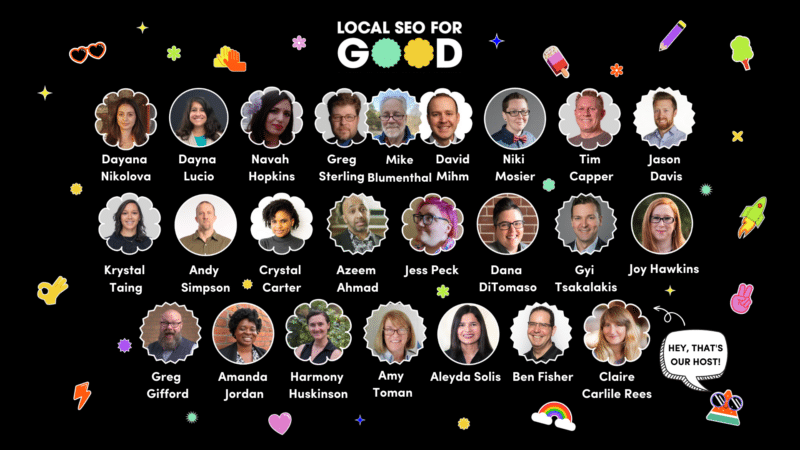
Join 23 expert speakers and presenters like Greg Gifford, Aleyda Solis, Joy Hawkins, Mike Blumenthal, Crystal Carter and Ben Fisher for two days of virtual talks, panels and interactive Q&As on August 30-31.

Not going to be around? Grab a ticket and you’ll also have access to the full stream via YouTube! That’s 12 hours of up-to-the-minute local search advice, tips, and tactics from the folks who made their name – all for as little as $50.

That’s the ‘local SEO’ bit sorted. What about the ‘good’?

We’re donating all proceeds from tickets to a variety of 20+ charities nominated by our speakers, so the more generous you’re able to be when buying a ticket, the more we can spread across them and the more good we can do!

Interested? Here’s a taste of the talks and panels we’ve got in store:

  • Surviving the AI Apocalypse: Separating Fact from Fiction in Machine Learning
  • Google Analytics 4 and Local Search
  • The Fast and Furious Guide to Real-World Link Building
  • Overlooked and Underrated Tactics for Google Business Profile
  • Dominating Your Neighborhood with Smarter Competitor Analysis
  • TikTok SEO for Local Business
  • The Local SERP: What New User Testing Reveals about Searcher Behavior
  • How SGE Could Impact Local Search

Don’t miss this unique opportunity to hear from and engage with over 20 renowned local SEO experts—and all for an amazing cause.

GET YOUR TICKET TODAY!


Related stories

New on Search Engine Land

About the author

BrightLocal

Following the huge success of 2022’s Local SEO for Ukraine, local marketing platform BrightLocal brings you Local SEO for Good, helping to raise $200k for 20+ charities nominated by our speakers. BrightLocal gives you the tools to rank higher, improve your reputation, and generate more traffic and leads from local search. Our all-in-one SEO tool is used worldwide by agencies, SMBs, and multi-location businesses to make local marketing simple. With BrightLocal, customers experience better local search results, a huge portion of time saved, and a cleaner way to showcase local search success to key stakeholders.

https://searchengineland.com/local-seo-for-good-live-the-virtual-conference-that-gives-back-430383