How to improve enterprise-level crawling and indexing efficiency

Enterprise SEO plays by different rules.

Strategies that may work for small or niche websites won’t always work at scale.

So what exactly can happen when enterprise SEO gets too big?

In this article, I’ll share three real-life examples. Then, you’ll learn a potential antidote for more efficient management of SEO at scale.

Facing the indexing dilemma

Small sites tend to grow one page at a time, using keywords as the building blocks of an SEO strategy.

Large sites often adopt more sophisticated approaches, leaning heavily on systems, rules and automation.

It’s critical to align SEO with business goals. Measuring SEO success based on keyword rankings or traffic leads to negative consequences due to over-indexing.

There isn’t a magic formula to determine the optimal number of indexed URLs. Google does not set an upper limit.

A good starting point, however, is to consider the overall health of the SEO funnel. If a site…

  • Pushes tens or hundreds of millions, or even billions of URLs to Google
  • Ranks only for a few million keywords
  • Receives visits to a few thousand pages
  • Converts a fraction of these (if any at all)

…then it’s a good indication that you need to address some serious SEO health needs.

Fixing any site hygiene issues now should prevent even bigger SEO problems later.

Let’s look at three real-life enterprise SEO examples that illustrate why this is so important.

Case 1: Consequences of over-indexing low-quality content

Google has limited resources for web crawling and processing. They prioritize content that is valuable to users.

Google might crawl, but not index, pages it considers thin, duplicate or low quality.

If it’s only a few pages, it’s not a problem. But if it’s widespread, Google might ignore entire page types or most of the site’s content.

In one instance, an ecommerce marketplace found that tens of millions of its listing pages were impacted by selective crawling and indexing.

After crawling millions of thin, near-duplicate listings pages and not indexing them, Google eventually scaled back on crawling the website altogether, leaving many in “Discovered – currently not indexed” limbo.

Discovered – currently not indexed

This marketplace relied heavily on search engines to promote new listings to users. New content was no longer being discovered, which posed a significant business challenge.

Some immediate measures were taken, such as improving internal linking and deploying dynamic XML sitemaps. Ultimately, these attempts were futile.

The real solution required controlling the volume and quality of indexable content.

Case 2: Unforeseen consequences of crawling cease

When crawling stops, unwanted content will remain in Google’s index – even if it’s changed, redirected or deleted.

Many websites use redirects instead of 404 errors for removed content to maintain authority. This tactic can squeeze additional traffic from ghost pages for months, if not years.

However, this can sometimes go horribly wrong.

For example, a well-known global marketplace that sells hand-crafted goods accidentally revealed sellers’ private information (e.g., name, address, email, phone number) on localized versions of their listings pages. Some of these pages were indexed and cached by Google, displaying personally Identifiable Information (PII) in search results, compromising user safety and privacy.

Because Google didn’t re-crawl these pages, removing or updating them wouldn’t eliminate them from the index. Even months after deletion, cached content and user PII data continued to exist in Google’s index.

In a situation like this, it was the responsibility of the marketplace to fix the bugs and work directly with Google to remove sensitive content from Search.

Case 3: The risks of over-indexing search results pages

Uncontrolled indexing of large volumes of thin, low-quality pages can backfire – but what about indexing search result pages?

Google doesn’t endorse indexing of internal search results, and many seasoned SEOs would strongly advise against this tactic. However, many large sites have leaned heavily on internal search as their principal SEO driver, often yielding substantial returns.

If user engagement metrics, page experience, and content quality are high enough, Google can turn a blind eye. In fact, there is enough evidence to suggest that Google might even prefer a high-quality internal search result page to a thin listing page.

However, this strategy can go wrong as well.

I once saw a local auction site lose a significant portion of its search page rankings – and more than a third of its SEO traffic – overnight.

The 20/80 rule applies in that a small portion of head terms accounts for most SEO visits to indexed search results. However, it’s often the long tail that makes up the lion’s share of the URL volume and boasts some of the highest conversion rates.

As a result, of the sites that utilize this tactic, few impose hard limits or rules on indexing of search pages.

This poses two major problems:

  • Any search query can generate a valid page, which means an infinite number of pages could be autogenerated.
  • All of them are indexable in Google.

In a case of a classifieds marketplace that monetized its search pages with third-party ads, this vulnerability was well exploited through a form of ad arbitrage:

  • An enormous number of search URLs were generated for shady, adult and entirely illicit terms.
  • While these autogenerated pages returned no actual inventory results, they served third-party ads, and were optimized to rank for requested search queries through page template and metadata.
  • Backlinks were built to these pages from low-quality forums to get them discovered and crawled by bots.
  • Users who landed on these pages from Google would click on the third-party ads and proceed to the low-quality sites that were the intended destination.

By the time the scheme was discovered, the site’s overall reputation had been damaged. It was also hit by several penalties and sustained massive declines in SEO performance.

Embracing managed indexing

How could these issues have been avoided?

One of the best ways for large enterprise sites to thrive in SEO is by scaling down through managed indexing.

For a site of tens or hundreds of millions of pages, it’s crucial to move beyond a keyword-focused approach to one driven by data, rules and automation.

Data-driven indexing

One significant advantage of large sites is the wealth of internal search data at their disposal.

Instead of relying on external tools, they can utilize this data to understand regional and seasonal search demand and trends at a granular level.

This data, when mapped to existing content inventory, can provide a robust guide for what content to index, as well as when and where to do it.

Deduplicate and consolidate

A small number of authoritative, high-ranking URLs is far more valuable than a large volume of pages scattered throughout the top 100.

It is worthwhile to consolidate similar pages using canonicals, leveraging rules and automation to do so. Some pages might be consolidated based on similarity scores, others – clustered together if they collectively rank for similar queries.

The key here is experimentation. Tweak the logic and revise thresholds over time.

Clean up thin and empty content pages

When present in massive volumes, thin and empty pages can cause significant damage to site hygiene and performance.

If it’s too challenging to improve them with valuable content or to consolidate, then they should be noindexed or even disallowed.

Reduce infinite spaces with robots.txt

Fifteen years after Google first wrote about “infinite spaces,” the issue of overindexing of filters, sorting and other combinations of parameters continues to plague many ecommerce sites.

In extreme cases, crawlers can crash servers as they try to make their way through these links. Thankfully, this can be easily addressed through robots.txt.

Client-side rendering

Using client-side rendering for certain on-page components that you don’t want indexed by search engines, might be an option. Consider this carefully.

Better yet, these components should be inaccessible for logged-out users.

Stakes rise dramatically as scale increases

While SEO is often perceived as a “free” source of traffic, this is somewhat misleading. It costs money to host and serve content.

Costs might be negligible per URL, but once the scale reaches hundreds of millions or billions of pages, pennies start to add up to real numbers.

Although ROI of SEO is tricky to measure, a penny saved is a penny made, and cost savings through managed crawling and indexing should be one factor when considering indexing strategies for large sites.

A pragmatic approach to SEO – with well-managed crawling and indexing, guided by data, rules and automation – can protect large websites from costly mistakes.


Opinions expressed in this article are those of the guest author and not necessarily Search Engine Land. Staff authors are listed here.


Related stories

New on Search Engine Land

@media screen and (min-width: 800px) { #div-gpt-ad-3191538-7 { display: flex !important; justify-content: center !important; align-items: center !important; min-width:770px; min-height:260px; } } @media screen and (min-width: 1279px) { #div-gpt-ad-3191538-7 { display: flex !important; justify-content: center !important; align-items: center !important; min-width:800px!important; min-height:440px!important; } }

About the author

Olya Ianovskaia

Olya Ianovskaia has worked in SEO, growth and product management for over 15 years. Her primary area of expertise is in technical SEO and designing data-based search products for global marketplaces and ecommerce sites. Olya has a background in anthropology, dabbles in wildlife photography, and runs a small family homestead in Central Ontario.

https://searchengineland.com/enterprise-seo-improve-crawling-indexing-efficiency-429357


So, you started a company TikTok – now what?

The short visuals paired with instant verification via comments have positioned TikTok as a challenger in the search industry in a way no other social platform has been able to achieve. 

Today’s headlines may focus on how Gen Z uses TikTok as a search engine, but it’s not limited to Gen Z. Millennials are TikToking. Even my mom – a boomer – is on board, and your mom probably is, too.

As a brand, you have an audience on TikTok regardless of how you define them. This might be why you created a TikTok account for your company or brand. 

Now what? 

What we know about the TikTok algorithm

Just like Google, TikTok has an algorithm that determines when and where your content appears or “ranks” organically. In the app, there are three main video feeds: 

  • The For You page (FYP) shows trending videos on TikTok based on your interests, likes, watch time, and engagement.
  • The Following feed shows videos from the people you follow.
  • The search feature, where you can search users, videos, sounds, LIVEs, and hashtags.

Dig deeper: How the TikTok algorithm works: Everything you need to know

The For You page

The For You page is the homepage when users open the app – it’s the first thing they see.

This personalized feed is the main source for content discovery in the app, meaning this is the priority for “ranking” on TikTok.

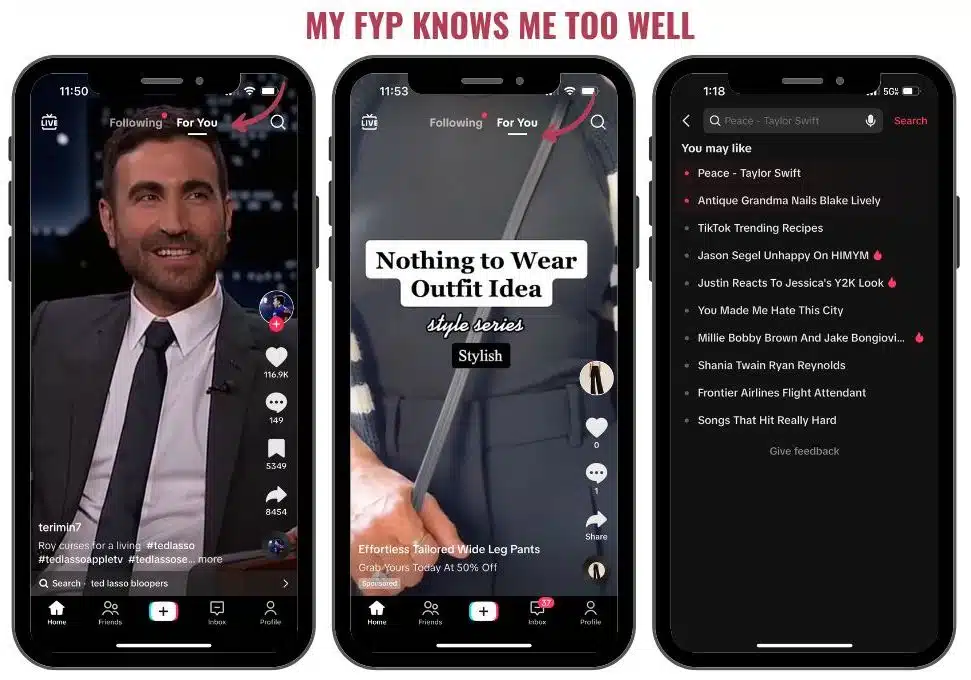
No two FYPs are the same; in my experience, TikTok’s FYP knows you better than you know yourself.

For You Page on TikTok

The Following feed

While ranking factors are essentially the same across each feed, the emphasis is largely on optimizing for the FYP, as TikTok has shared that 97% of video views are known to come from For You pages.  

That said, the Following feed can offer valuable audience insights on what is arguably a more captive audience.

By using TikTok Analytics within Creator Tools, you can evaluate which videos bring in followers and how your existing audience interacts and engages with your content.

TikTok search capabilities

TikTok’s indexing and ranking capabilities are insanely advanced. They are picking up on everything, even things unsaid. So be sure to take full advantage of every feature they offer. 

As one Twitter user demonstrated, the app can produce relevant and accurate search results even if the keywords a user is searching for are not actually in the caption. Or the hashtags. Or even verbally stated in the video.


Get the daily newsletter search marketers rely on.


How to make your TikTok videos discoverable

With the right approach, you can grow your brand awareness and increase reach on TikTok with a lower investment than traditional search engines. Here are some tips to get there.

Create content people are looking for 

Much like you would approach keyword research to inform your website’s title tags, content, and next blog post, you should do keyword research to help determine what TikTok content to create. 

Start by using the search function in the app. The first screen will show you a combination of what’s trending and content they deem relevant for you based on your history and engagement. 

From there, search for a keyword from your niche – not too broad, but not too specific either. 

Put yourself in your audience’s shoes and consider what they may be searching for on TikTok related to your business. 

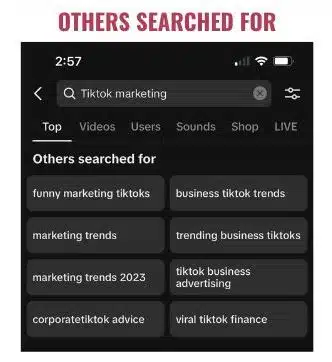
Then scroll down the page and check out the “Others searched for” section. This is a treasure trove of relevant queries users are already searching for. 

These are the topics to use as your theme or “hook” when creating content. Then, rinse and repeat until you have a library of discoverable and shareable content ideas.

Others searched for

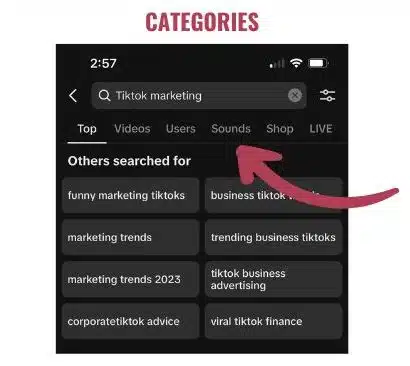
Don’t forget to explore the other search tabs along the top of your app as well for even more related content and ideas – Videos, Users, Sounds, LIVE, Places, and Hashtags. 

Categories

Users will give you a solid list of other accounts that create content related to what you are looking for. This is a great resource to see what people are already doing and how it’s performing. 

Sounds and Hashtags will also help when it comes to the next step, optimizing your video content.

Create content that ranks

What you need to ensure your audience has the ability to discover your brand on TikTok isn’t a video for each new trend, though that doesn’t exactly hurt! 

You need to optimize every piece of content you create for the way people search on TikTok.  

Of the three main ranking factors listed above (user interaction, video information, and account settings), there is only one that brands and creators can directly control: video information. 

The video information category of TikTok includes the following:

Descriptions

As of late 2022, TikTok video descriptions have a character limit of 2,200 (compared to the previous 300-character limit). 

This expansion was a big win for creators, allowing more space for describing your video and, ultimately, providing more opportunities for discovery.

This was also a big step for TikTok to further its goal of becoming a search engine. So use this real estate wisely. 

Clearly and succinctly describe your video content, use the key phrases people are searching for based on your keyword research, use hashtags, and don’t forget to mention your brand name. 

Hashtags

Much like other social platforms, hashtags on TikTok help describe and categorize videos. Users also often search for and discover new content based on hashtags. 

Adding the right hashtags to your video can help you surface on more FYPs and gain more followers. 

Be sure to use a mix of popular, niche, and branded hashtags. Three to five hashtags is considered ideal. 

Captions

Make your video accessible and improve engagement with captions on TikTok. Auto captions are available to translate speech in your video automatically. 

Your cover image is important, too. Be sure to use text overlay to showcase what the video is all about. 

Effects

TikTok Effects and Filters are used to customize videos and add details, very similarly to Instagram or Snapchat filters. 

These are great for added customization and include everything from a Green Screen background to Time Warp effects. 

As with all things TikTok, you can utilize trending effects for greater discoverability. 

Sounds

TikTok has an expansive library of sounds and songs; this is another way people search. Using trending sounds is a great avenue for getting your content in front of new viewers. 

There are a ton of accounts dedicated to sharing trending audio every week. Using these will give each post the potential to extend your reach beyond those who already follow you. 

Playlists

Analogous to the YouTube feature, playlists on TikTok allow you to create a collection of your videos. This makes it easy for viewers to watch videos similar to those they’ve already enjoyed. And, of course, it is another opportunity to provide additional contextual relevance for search. 

Advanced tips

Beyond the basics of video information, there are a few more important elements to consider for creating content that ranks on TikTok:

Trends

TikTok’s Trend Discovery Tool is also a great resource for identifying trends, although it is not available in the app itself.

When searching for trending sounds, sometimes a sound has already been trending for a while and has a ton of videos related to it. 

Check the top videos under that audio and see how dated they are and how recent the comments are. 

Try to utilize audios that have videos with comments from the past week. 

Any audio with under 10-20,000 videos plus recent comments is going to be more of a breakout trend than sounds with over 50,000 videos. 

Branded hashtags

Make the most of your hashtags by developing a branded hashtag. A branded hashtag is a great way to improve awareness and recognition, as well as promote user-generated content. 

Not every branded hashtag has to be centered around a hashtag challenge, either. 

Just make sure your hashtag is easy for your audience to remember and spell, making it easier for them to engage with you. 

Frequency

One of the most common questions is, “How often should brands post on TikTok?” 

Keep in mind quality is more important than quantity. However, TikTok does reward consistency. TikTok for Business recommends an “always-on” strategy, posting 1-4 times per day. 

When it comes to brand accounts, very few are actually posting that often. Still, there is no hard rule when it comes to how often your brand should be posting. 

That’s dependent on everything from your industry and audience, to your team’s bandwidth. So plan ahead as much as possible, but also remember to be agile and reactive. 

TikTok videos across traditional search engines

Search engines crawl and index TikTok, much like Twitter and Instagram.

So by following tried and true SEO best practices regarding TikTok content, your videos are more likely to rank in traditional SERPs on Google, Bing and beyond. 

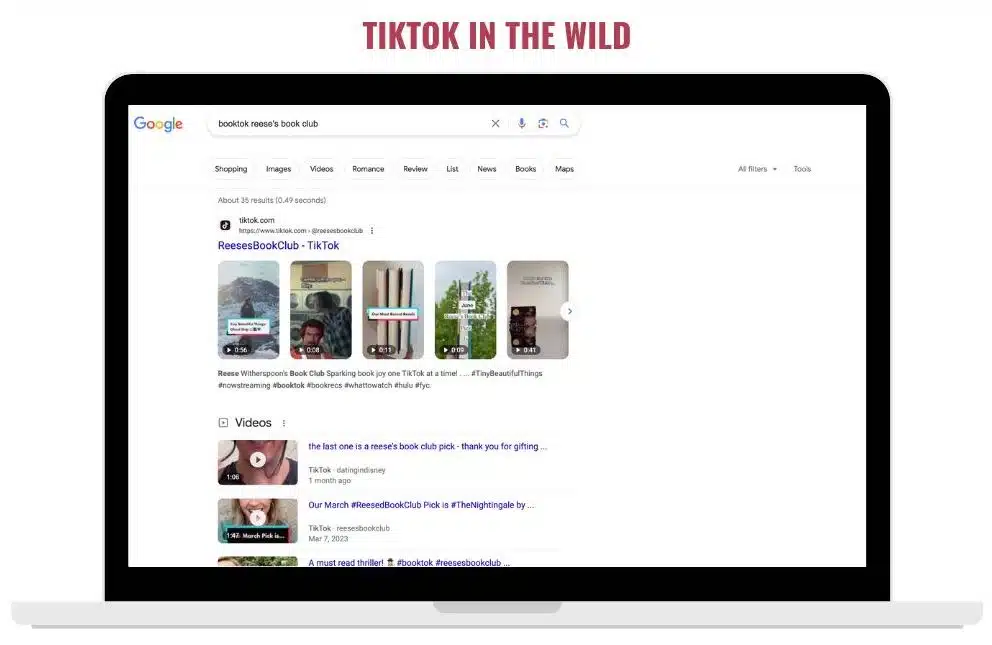
For the right queries, Google will display a short video carousel pulling in TikTok videos. Google uses context clues from your descriptions, captions, hashtags, sounds, etc. (Bing has a similar feature.) 

For some queries, Google will pull individual videos from TikTok, using the descriptions and hashtags you painstakingly researched and wrote based on search trends directly in the SERPs, much like metadata. 

TikTok in the wild

The prevalence of TikTok videos appearing in Google search results is only going to grow. 

As recently as last month, Google announced updates coming to the search results pages that include AI-generated follow-up questions based on queries and integrated TikTok videos. 

Create content that builds a connection

Whether it’s BookTok, SwiftTok, PlantTok, or something completely different, there is a community out there that will appreciate what you have to offer. 

But it’s not enough to just create videos people are searching for and add a trending sound. 

People come to TikTok looking for candor and authenticity, so you need to embody that with your content strategy. You have to create amazing content around your niche. 

And then you have to actually offer something valuable, solve a problem, or answer a question. 

Much as Google considers E-E-A-T, TikTok is looking for consistency from creators showcasing expertise. 

The more often you post on your themes and the more engagement that content gets, the more the algorithm will be able to serve your content to the right audience. 

Find your call to emotion

TikTok is about more than just jumping on trends and producing video content. It’s your brand story brought to life visually. Not every piece of content needs to bring together what your customers want and need.

You must think beyond a call to action to drive engagement off the app. We all know social media is not a direct response medium. 

So if you’re doing it right, you’re not worried about a call to action. You should be focused on a call to emotion. You have to make your audience feel. 

Feel a connection with your brand. Feel joy and excitement. 

Find your call to emotion

Remember, we’re all learning together

The most important thing you can do when it comes to TikTok is be agile.

Set goals, test new things, use the latest sounds, participate in trends, and track your progress.

Keep these things in mind to create an experience that drives discovery and connection:

  • The algorithm prioritizes regular posters, so the more active you are, the more activity you see.
  • Create content that people are already looking for, and be sure to optimize it to get eyes on it in the app and beyond.
  • TikTok Trends may have short lifespans, but they’re worth it.
  • A Call to Emotion is the best way to show authenticity and make your audience feel a connection.

And it’s worth saying, TikTok isn’t for everyone or every brand, so don’t force it. The audience can tell. 

But with over a billion active users, the potential reach is limitless… if you do it right. 


Opinions expressed in this article are those of the guest author and not necessarily Search Engine Land. Staff authors are listed here.


Related stories

New on Search Engine Land

@media screen and (min-width: 800px) { #div-gpt-ad-3191538-7 { display: flex !important; justify-content: center !important; align-items: center !important; min-width:770px; min-height:260px; } } @media screen and (min-width: 1279px) { #div-gpt-ad-3191538-7 { display: flex !important; justify-content: center !important; align-items: center !important; min-width:800px!important; min-height:440px!important; } }

About the author

Stephanie Wallace

As Vice President of Marketing at Nebo Agency , Stephanie oversees SEO, Email Marketing, Social Media & Influencer Marketing, and Public Relations. She is a multi-channel storyteller who loves to talk about the future of search and whole-funnel digital strategy. Stephanie was honored as Search Engine Land’s Female Search Marketer of the Year in 2018 and is a featured speaker at marketing conferences including Inbound, MozCon, PubCon, SMX, and more.

https://searchengineland.com/started-company-tiktok-now-what-429353


Beyond SEO: Embracing the future of organic search optimization

Every week someone tells me that SEO is dead.

This week, I was being lectured online by a young man with a start-up.

First came the humble brag about how their business turned over $20 million in a year with PPC ads.

And this combo was finished with a vicious knockout statement about how AI will kill SEO.

In today’s article, I will tell you why he’s right. But what’s coming is much bigger.

OSO: Organic search optimization (it’s bigger and badder than SEO)

As I reeled back from the savage online salvo of critique, I did what any SEO on the receiving end does. Place the guy’s domain name into Ahrefs.

The result of $20 million in turnover? 

A mere 2,000 brand searches a month. That’s not a brand; that’s a few people checking you’re legit after seeing your ads on TikTok.

To be fair, he is right. And he’s not the only one to think that. 

Since Google told everyone that Search Generative Experience (SGE) was coming, even SEO consultants have been crying in their tea, fearing that traffic will be destroyed.

And for good reason, there are likely to be fewer people clicking through to websites thanks to AI.

But there is no need to cry into the tea mug you snagged at your recent SEO seminar.

SGE is going to birth a new and far larger beast. 

Organic search optimization (OSO).

It’s time we revisit some marketing 101. 

Brands grow through acquiring more customers. That’s not a great shock, but they don’t grow through traffic and rankings.

And so, as SEOs, we need to think tactically about how people become customers.

In a nutshell, we need to make businesses easy to mind and find.

Translating this into SEO language, we must rank clients for their high purchase intent keywords. Rank them for category research search terms (think questions and comparison style search).

And remember, we can use informational search to reach people not in the market and try to get their email addresses.

And that’s pretty much SEO.

How you do all that can be debated, but that’s the results that brands want.

So, how does that change with SGE/AI?

Your job is to build nets… giant nets

The role of SEO is to capture and nurture demand. Minimal demand generation can be done via SEO.

But search is evolving. We now have Google about to add perspectives that will rank TikTok videos and YouTube shorts.

We have the ever-improving discovery and news feeds, and of course, we’ll have SGE.

Search isn’t dying, it’s evolving.

We’re now having to think about multi-channel SEO.

We’re now having to think beyond Google’s first SERP.

We must now build big nets to capture the demand marketing teams create.

And even better, capture the demand that other marketing teams create, which is a surprising benefit of SEO.

Reach, great big reach (and why you’ll get paid more)

It’s OK to spit your dummy out as an SEO and tell the world you won’t go to YouTube and do SEO there. 

Or avoid TikTok and say, “No…that’s not for me.”

But if that’s your mentality, you won’t help build brands online because you’ll be unable to give general tactical advice.

No one says you must be behind the camera or doing the videos themselves. 

Nor do you need to tell people what to write to try and be featured in the discovery feed.

But you must expand your skill set to exist in the ever-evolving world of organic search.

“Perspectives” SEO is going to be a huge growth opportunity.

In practical terms, your work is now a lot sexier.

Finally, you get invites to the social team’s events, where you’ll ask them to create videos for you.

It’s going from ordering written content to short videos, long videos, PR and even thought leadership/ news content.

Yes, SEO is going to get a lot bigger.

Yes, SEO will help businesses to capture more demand.

And yes, this will help SEO become a bigger industry (which usually means you’ll get more pay).

The problem is SEO will need new leaders.


Get the daily newsletter search marketers rely on.


The social team won’t do keyword research

It’s tempting to think the social team will pick up the Perspectives tab. After all, Google will source the content from social platforms.

But they have enough work, creating demand-generating content and ads that get brands in the minds of their audience.

Asking them to start using search tools to figure out keywords that rank in Google, that’s got to be the SEOs job.

And learning how to optimize those videos for discovery on search engines…yep, that’s for you too.

You’ve spent years learning and mastering keyword research. You know how Google’s algorithms work.

As you’ve asked for written content for years, asking for shorts will be part of your role.

And for this reason, you’ll have to become an omnichannel SEO.

Omnichannel SEO is why organic search optimization seems a far more accurate job title.

But don’t change your job title… just yet

My last role was called “head of organic.” Today, I’m a director of SEO.

Essentially, both were SEO.

SEO is a name that has been around for a long time, and it’s our category.

While the focus will shift to use thinking about organic search across platforms, the name will be hard to alter from SEO.

After all, we are still talking about search engine optimization.

So, OSO is more of a mindset.

It’s a growth mindset. 

The thing is, no one is going to give us this extra market share.

SEOs need to ask for this responsibility. 

We must become excited about the vast potential to rank across search, not just in the first SERP.

SGE, Discovery, Perspectives, News, YouTube, TikTok, Reels, Watch.

The list will grow, and the list will expand.

Organic search is growing. 

And organic search specialists will thrive…but only if you choose to.

How to start your organic search optimization career

This has been a preachy article. I don’t apologize for that. We need to grow as a sector.

But I want people to leave with practical knowledge.

If you’re interested in meeting this demand head on, you must boost your skills.

To start, head to search and explore the tabs.

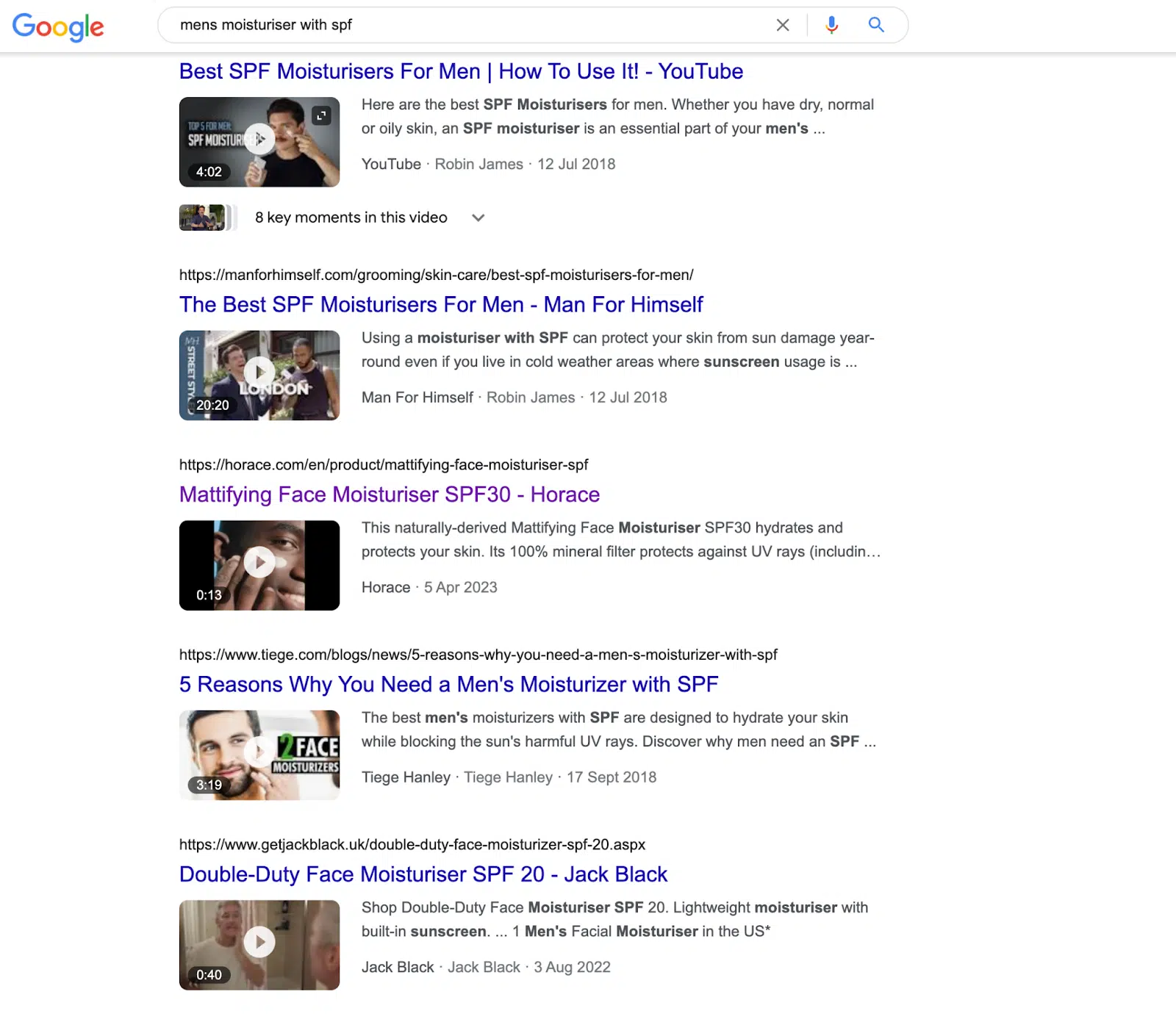
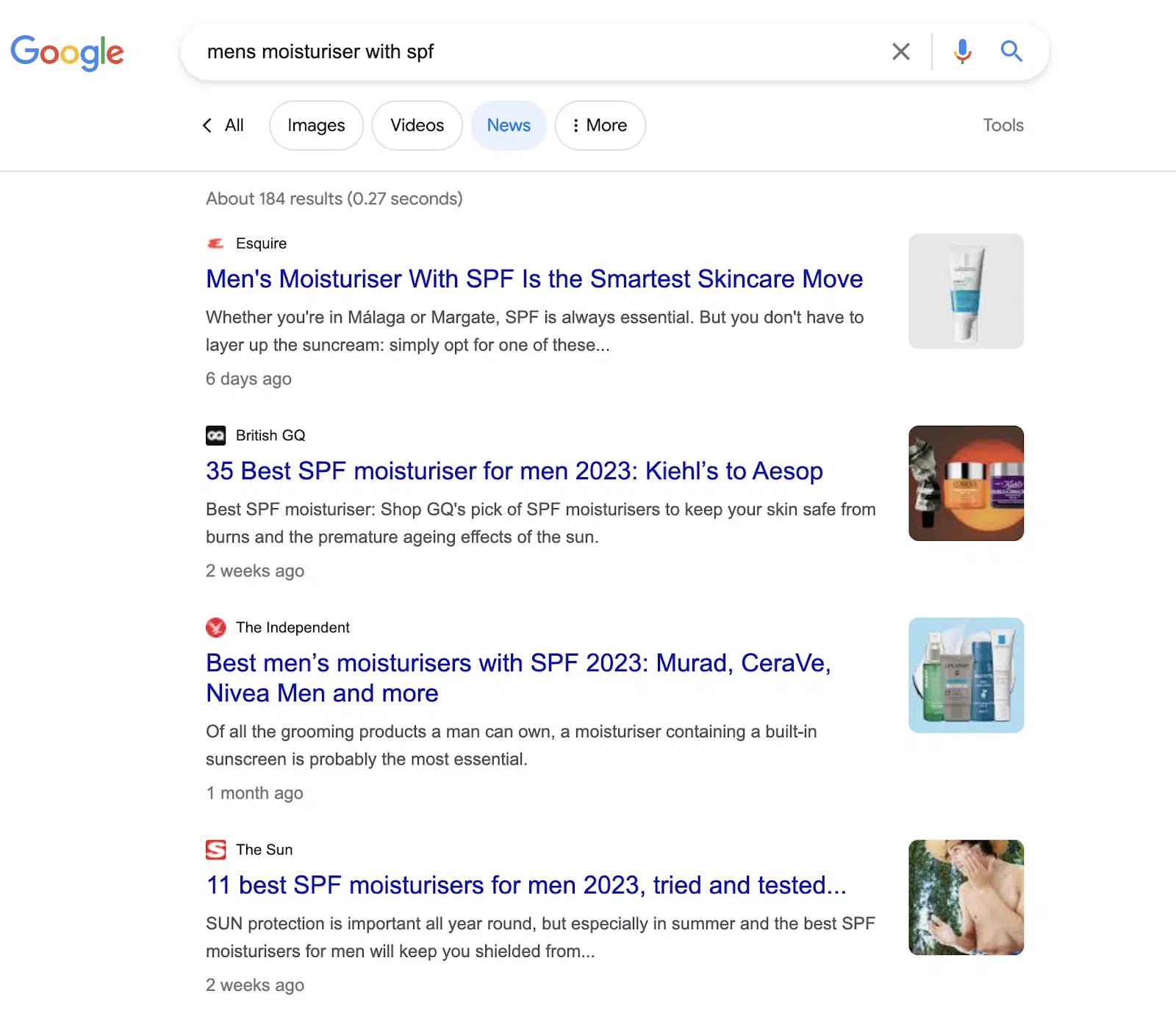
Mens moisturiser with SPF

Press the tabs, and you’ll see what comes up.

Mens moisturiser with SPF - SERP results

Explore the broad results and learn how this content is ranking and why it’s ranking.

Mens moisturiser with SPF - More SERP results

Now, you’ll find some crossover. Some of the content that ranks in the news feed ranks on the “All” SERP.

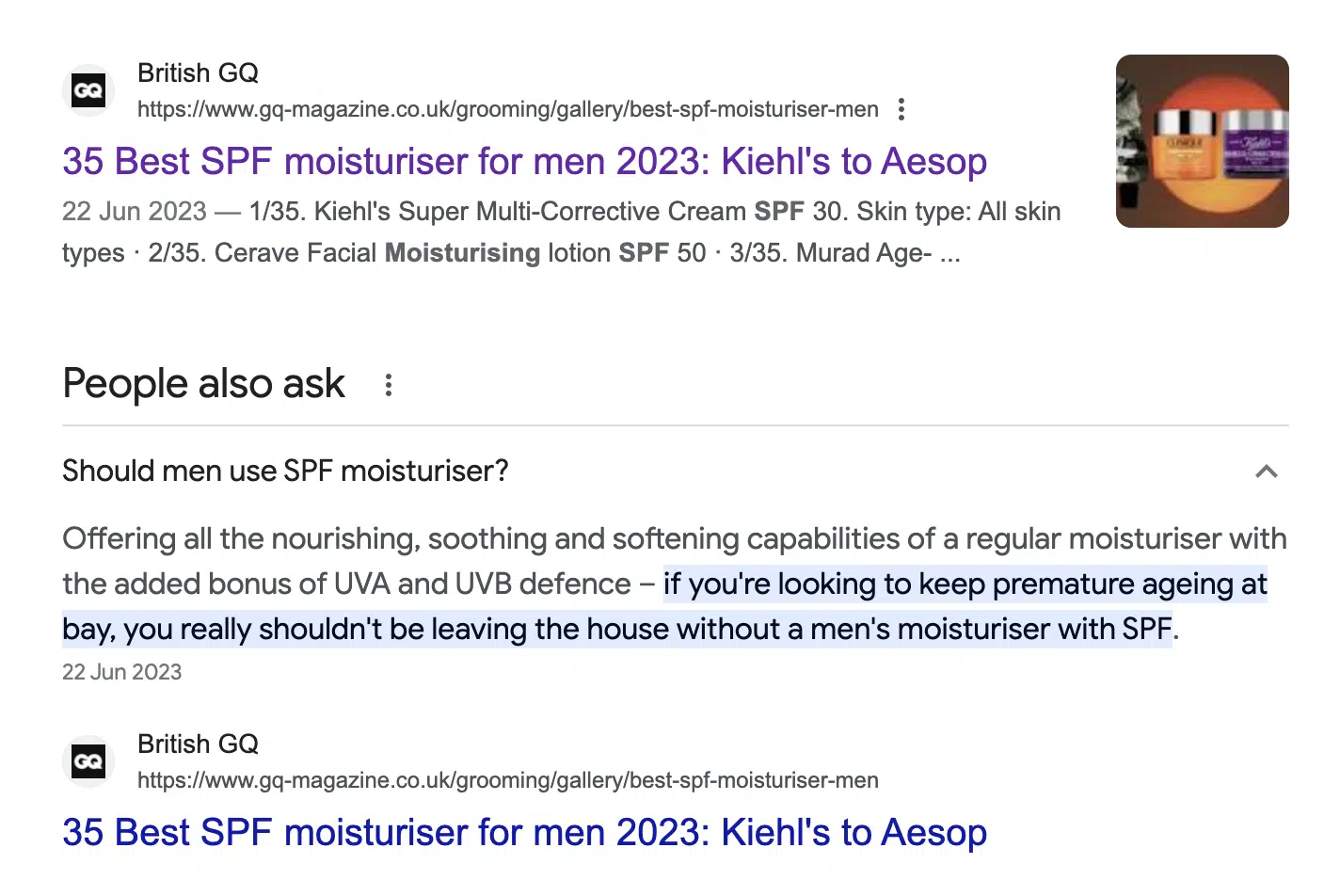
Mens moisturiser with SPF - Multiple rankings

Some content that ranks organically in the SERP also grabs the first People also ask segment.

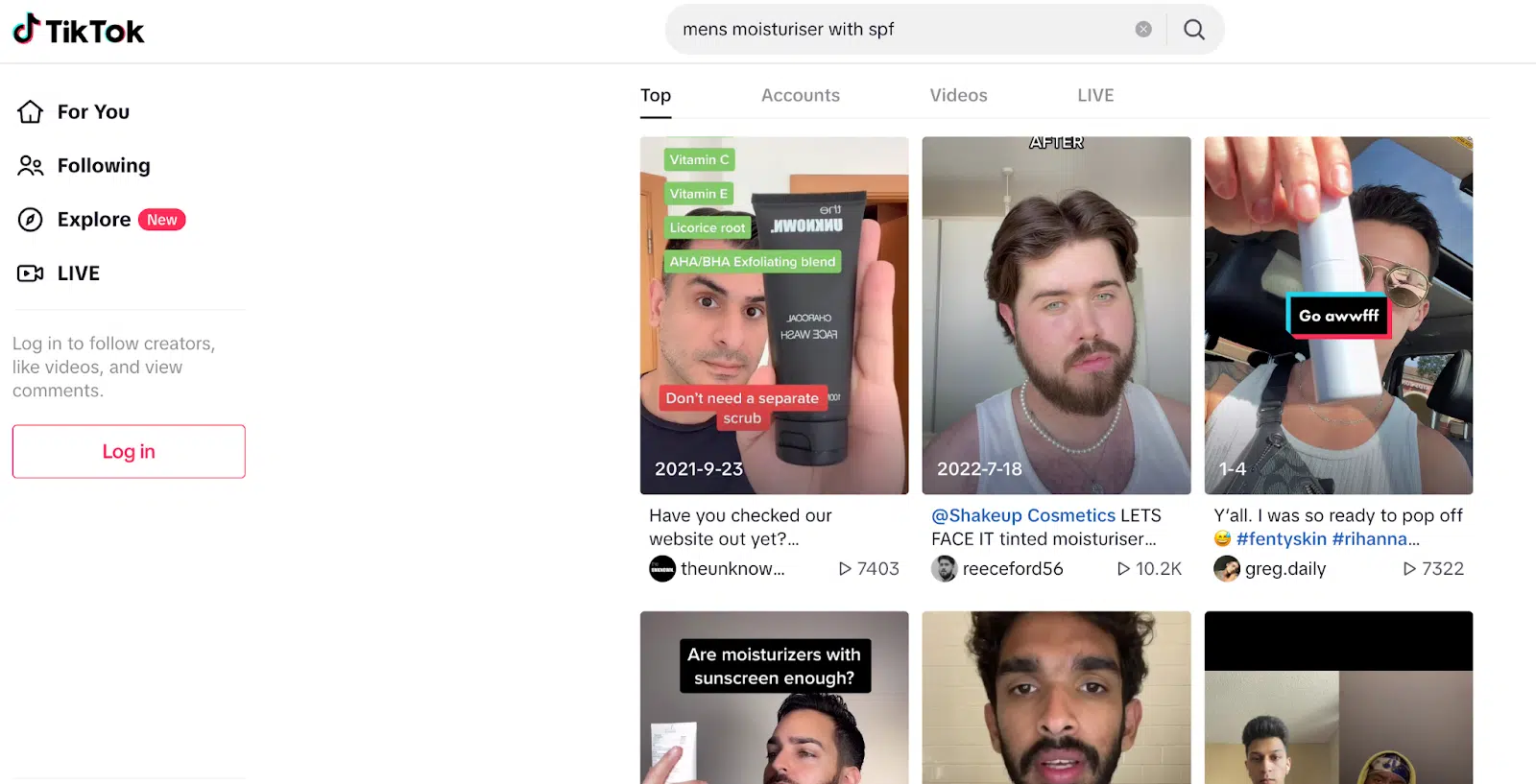
Now, head to TikTok and do the same searches.

Tiktok search - mens moisturiser with SPF

What comes up for the searches?

Do they have a large following? A good video? Are they using text in their videos?

And repeat this with YouTube.

Not only are you going to see opportunity.

You’ll start to expand your SEO skillset.

And now, I hope you’re getting a little more excited about the power of organic search optimization.

The potential is amazing.

AI isn’t killing SEO; it’s making it more powerful.

Think width of search, not depth. 


Opinions expressed in this article are those of the guest author and not necessarily Search Engine Land. Staff authors are listed here.


Related stories

New on Search Engine Land

@media screen and (min-width: 800px) { #div-gpt-ad-3191538-7 { display: flex !important; justify-content: center !important; align-items: center !important; min-width:770px; min-height:260px; } } @media screen and (min-width: 1279px) { #div-gpt-ad-3191538-7 { display: flex !important; justify-content: center !important; align-items: center !important; min-width:800px!important; min-height:440px!important; } }

About the author

Andrew Holland

Andrew Holland is the Director of SEO at JBH, an award-winning Digital PR and SEO agency. His SEO background stems from a 17-year career in the police, where a number of years were spent within intelligence, utilizing SEO within internal systems to catch criminals. After developing chronic asthma, Andrew left the police and launched a freelance SEO and digital marketing career, and has worked with a wide range of clients, from SMEs to 8-figure businesses. Today, he directs the SEO delivery for one of the UK’s fastest-growing Digital PR and SEO agencies. Building organic visibility, trust and fame for consumer brands.

https://searchengineland.com/beyond-seo-embracing-the-future-of-organic-search-optimization-429341


Google expands Bard to more countries, more languages and adds new features

Google is rolling out Bard to more countries, in more languages, and adding a bunch of new features. Google is “announcing Bard’s biggest expansion to date,” Google wrote. In fact, Google said Bard is “now available in most of the world,” and in “most widely spoken languages.”

Wider availability

Google Bard is now available in over 40 languages, including Arabic, Chinese, German, Hindi and Spanish. Bard is also now available in more places, including Brazil and across Europe – Europe has been a rough spot for generative AI launches. Google cited that it was able to go to Europe based on its recent announcement of engaging with the community around AI principles and responsibilities.

New features

Google also added four new features to Google Bard including pin and rename conversations, export code to more places, share answers and using images for prompts.

  • Pin and rename conversations. In order to help users see their passed prompts and questions, Google added the ability to pin and rename those conversations. After you behin a conversation, you should see an option to pin, rename and pick up recent conversations in the sidebar of Bard.
  • Export code more places. Google now lets you export the code that Bard generates to more places including export Python code to Replit, in addition to Google Colab, which Google added some time ago.
  • Share answers. In Bard you can now also share your responses and answers with others through new shareable links.
  • Images for prompts. As promised at Google I/O, you can now also use images in your prompts with the power of integrating Google Lens into Bard. Users can upload images with prompts and Bard will analyze the photo to help. This feature is now live in English, and Google said it will expand to new languages soon.
  • Listen to responses. Google Bard can now also can listen to Bard’s responses. Google said this would help people trying to learn the correct pronunciation of a word or listen to a poem or script. There is a new sound icon on the responses that will allow you to listen to those responses.
  • Adjust responses. Also, you can change the tone and style of Bard’s responses to five different options: simple, long, short, professional or casual. A new drop-down is available for this tone feature and is live in English today.

Here are GIFs of some of these new features in action:

Bard Tone
Bard Pin
Bard Lens

Why we care

Bard has proven to be a super useful generative AI tool amongst others, like ChatGPT and Bing Chat. These new features will add to those capabilities and the wider availability will allow more users to use these features.


Related stories

New on Search Engine Land

@media screen and (min-width: 800px) { #div-gpt-ad-3191538-7 { display: flex !important; justify-content: center !important; align-items: center !important; min-width:770px; min-height:260px; } } @media screen and (min-width: 1279px) { #div-gpt-ad-3191538-7 { display: flex !important; justify-content: center !important; align-items: center !important; min-width:800px!important; min-height:440px!important; } }

About the author

Barry Schwartz

Barry Schwartz a Contributing Editor to Search Engine Land and a member of the programming team for SMX events. He owns RustyBrick, a NY based web consulting firm. He also runs Search Engine Roundtable, a popular search blog on very advanced SEM topics. Barry can be followed on Twitter here.

https://searchengineland.com/google-expands-bard-to-more-countries-more-languages-and-adds-new-features-429339


Google sued for allegedly stealing content, data to train AI products

Google is accused of illegally using copyrighted content and stealing the personal information of millions of Americans to train its AI products.

The allegations were made in a proposed class action lawsuit in San Francisco on Tuesday by eight individuals, who say they are seeking to represent the millions of internet users affected.

If Google is found guilty of violating federal privacy and consumer protection laws, it could owe at least $5 billion in damages.

Why we care. Marketers are widely being encouraged to embrace AI and implement technologies such as ChatGPT and Bard into their strategies. However, if AI products are being developed using content and data that has been taken illegally, this could prove to be problematic, as it runs the risk of potential copyright issues.

What has Google allegedly done? The claimants allege Google has:

  • Been illegally taking digital content created and shared by millions of Americans.
  • Been using this private property to train its AI technology, including its chatbot, Bard.
  • Stolen “virtually the entirety of our digital footprint”, including “creative and copywritten works” to develop its catalog of AI products.

The eight plaintiffs have accused Google of taking a variety of content they shared on social media without permission, ranging from photos on dating websites to playlists saved on Spotify to videos uploaded onto TikTok.

One of the claimants, who is described as a best-selling author from Texas, more specifically accused Google of copying a book they wrote in its entirety to train Bard.

Who is suing Google? There are eight plaintiffs who remain anonymous and are known only by their initials.

The lawsuit was filed by Clarkson Law Firm against Google, its parent company Alphabet as well as Google’s AI subsidiary DeepMind. If Clarkson Law Firm sounds familiar, that’s because it’s the same company that filed a similar lawsuit against OpenAI last month.

What do the claimants want? The plaintiffs want Google to give its users the option to opt out of its “illicit data collection”. They are also asking the search engine to delete its existing catalog of data – otherwise, they say Google should pay the owners of that content “fair compensation.”


Get the daily newsletter search marketers rely on.


What have the claimants said? Ryan Clarkson, managing partner of the Clarkson Law Firm, issued a statement:

  • “Google harvested this data in secret for years, without providing notice to anyone, much less with anyone’s consent.
  • “Google does not own the internet, it does not own our creative works, it does not own our expressions of our personhood, pictures of our families and children, or anything else simply because we share it online.”

Tim Giordano, an attorney working on behalf of the plaintiffs at Clarkson Law Firm, told CNN:

  • “Google needs to understand that ‘publicly available’ has never meant free to use for any purpose.
  • “Our personal information and our data is our property, and it’s valuable, and nobody has the right to just take it and use it for any purpose.”

What has Google said? Google has denied the claims and described the lawsuit as “baseless.” In a statement, Halimah DeLaine Prado, Google’s general counsel, said:

  • “We’ve been clear for years that we use data from public sources — like information published to the open web and public datasets — to train the AI models behind services like Google Translate, responsibly and in line with our AI Principles.”
  • “American law supports using public information to create new beneficial uses, and we look forward to refuting these baseless claims.”

Related stories

New on Search Engine Land

@media screen and (min-width: 800px) { #div-gpt-ad-3191538-7 { display: flex !important; justify-content: center !important; align-items: center !important; min-width:770px; min-height:260px; } } @media screen and (min-width: 1279px) { #div-gpt-ad-3191538-7 { display: flex !important; justify-content: center !important; align-items: center !important; min-width:800px!important; min-height:440px!important; } }

About the author

Nicola Agius

Nicola Agius is Paid Media Editor of Search Engine Land after joining in 2023. She covers paid search, paid social, retail media and more. Prior to this, she was SEO Director at Jungle Creations (2020-2023), overseeing the company’s editorial strategy for multiple websites. She has over 15 years of experience in journalism and has previously worked at OK! Magazine (2010-2014), Mail Online (2014-2015), Mirror (2015-2017), Digital Spy (2017-2018) and The Sun (2018-2020). She also previously teamed up with SEO agency Blue Array to co-author Amazon bestselling book ‘Mastering In-House SEO’.

https://searchengineland.com/google-sued-content-data-ai-429334


Twitter blocks links to Meta rival Threads

Twitter is reportedly blocking links to its new rival, Meta’s Threads.

Reports started surfacing on Monday that Twitter was selectively blocking links to Mark Zuckerberg’s latest social networking app. Users noted that while some links worked, others noticeably did not.

The move means it will be more difficult for people to track down conversations on Threads and locate users’ profiles.

Why we care. Since Threads launched on July 5, the app has become the fastest-growing social media platform in history and trending regularly on Twitter. Experts believe the decision to block selected links to Threads in Twitter search results is an attempt to keep users engaged on the platform rather than move away to its rival.

What have people said? American technologist and blogger, Andy Baio, was one of the many people on Twitter to notice that selected links to Threads weren’t working. He confirmed the problem after conducting a search query using the operator “url:threads.net”. After this search failed to serve any results, he shared his findings on Threads:

  • “Twitter is selectively blocking searches for tweets that link to Threads, even though they allow posting Threads URLs (for now).”

However, Baio shared a technique that users can implement to prevent the block:

  • “Clever workaround via @kepner, you can quote the domain name and remove the period to bypass the block.”
  • “Adding “filter:follows” and clicking Latest will show you everyone you follow who has posted links to Threads.”

In an exchange with The Messenger, Baio described the move by Twitter as “anti-competitive”. He said:

  • “Hiding tweets about Threads seems fully in line with Twitter’s new anti-competitive stance, creating a fully walled garden that blocks open expression while hypocritically claiming to promote free speech.”
Screenshot 2023 07 12 At 15.38.26 436x600

Why now?

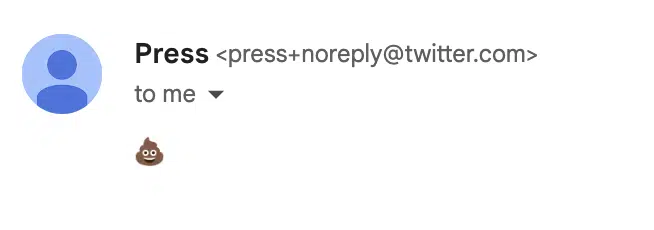
What has Twitter said? Twitter is evidently taking people’s concerns extremely seriously. So much so, the platform responded to our request for comment with a poop emoji, perhaps indicating that it is now in fight or flight mode in response to Thread’s soaring popularity.

Screenshot 2023 07 12 At 15.04.47

Twitter owner Elon Musk has also addressed the increasingly tense rivalry between himself and Meta CEO Zuckerberg. Earlier this week, when Threads sign-ups surpassed the 100 million mark, the billionaire tweeted “Zuck is a cuck.”

He then reassured his loyal army of followers that he is not remotely threatened by Zuckerberg by proposing “a literal d*ck measuring contest”. In case anyone was confused by the word “measuring,” he added an emoji of a ruler for clarification.


Get the daily newsletter search marketers rely on.


Twitter blocks unregistered users and Google Search. It seems Musk isn’t trolling his good friend Zuckerbeg, he may have his finger hovering over the block button as in addition to restricting links to Threads, he also blocked unregistered users and Google Search last week. As a result, there was a 62% drop in index saturation by Google of Twitter.com.

This was another move by Twitter that may be of huge concern to marketers as it could impact reach for brands that may rely heavily on visibility in Google Search. It also means that some older tweets which may have historically always ranked well in Google Search, may see a dive in rankings and therefore reach and CTR.

Deep dive. During Threads’ first two days of operation, Twitter traffic was down 5% in comparison to the same period a week earlier. It was also 11% down compared to the same period a year earlier. Read the full SimilarWeb analytics report to find out how Twitter and Threads are competing against each other.


Related stories

New on Search Engine Land

@media screen and (min-width: 800px) { #div-gpt-ad-3191538-7 { display: flex !important; justify-content: center !important; align-items: center !important; min-width:770px; min-height:260px; } } @media screen and (min-width: 1279px) { #div-gpt-ad-3191538-7 { display: flex !important; justify-content: center !important; align-items: center !important; min-width:800px!important; min-height:440px!important; } }

About the author

Nicola Agius

Nicola Agius is Paid Media Editor of Search Engine Land after joining in 2023. She covers paid search, paid social, retail media and more. Prior to this, she was SEO Director at Jungle Creations (2020-2023), overseeing the company’s editorial strategy for multiple websites. She has over 15 years of experience in journalism and has previously worked at OK! Magazine (2010-2014), Mail Online (2014-2015), Mirror (2015-2017), Digital Spy (2017-2018) and The Sun (2018-2020). She also previously teamed up with SEO agency Blue Array to co-author Amazon bestselling book ‘Mastering In-House SEO’.

https://searchengineland.com/twitter-blocks-links-meta-threads-429328


Google’s Core Web Vitals INP issues email causing concern

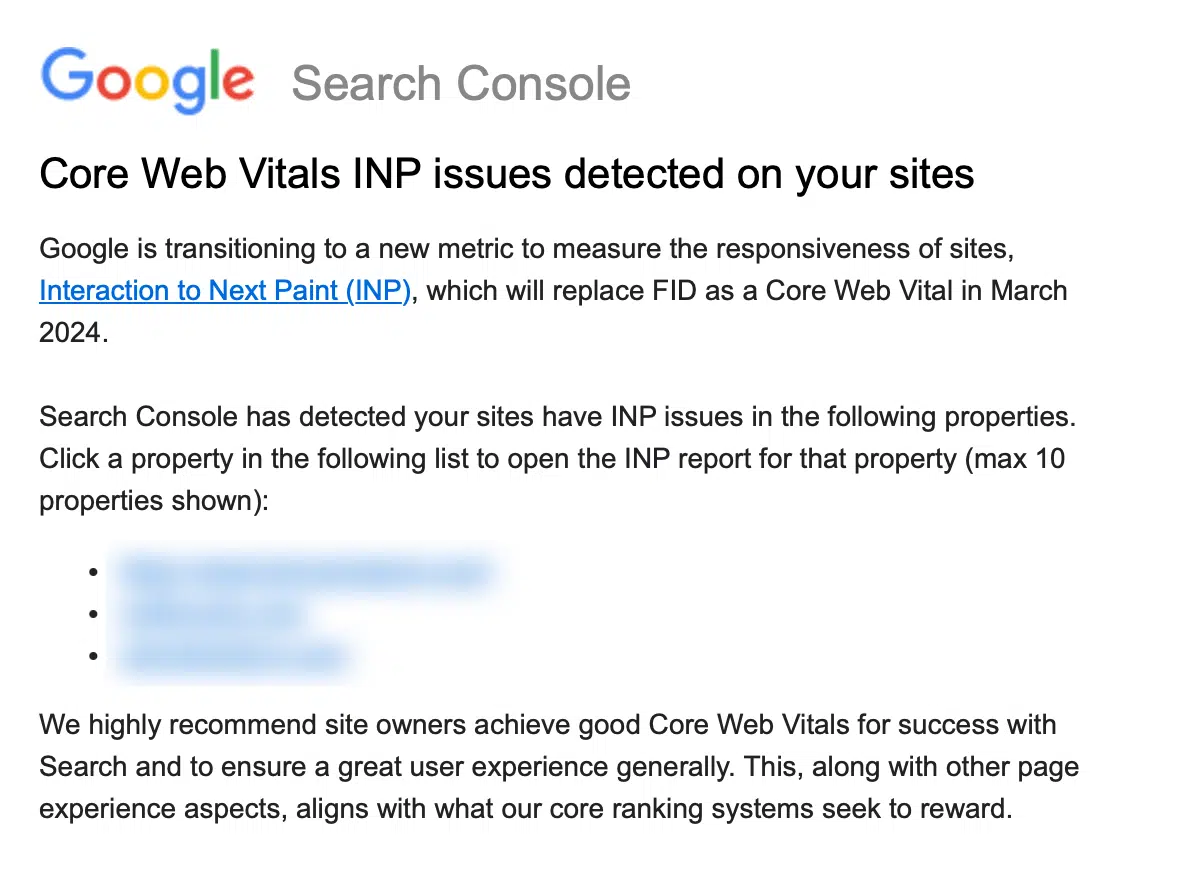
Earlier this week, Google began sending out email notices through Google Search Console to those site owners where their site’s INP scores were not up to snuff. These notices had the subject line, “Core Web Vitals INP issues detected on your site.”

INP replacing FID. As a reminder, Google told us a couple of months ago that INP will replace FID in March 2024. Then a few weeks ago, Google released a new report in Search Console to communicate INP scores to site owners, so they can prepare before the March 2024 deadline.

INP (Interaction to Next Paint) is a new metric that will replace FID (First Input Delay) as a Core Web Vital in March 2024. “Until then, INP is not a part of Core Web Vitals. Search Console reports INP data to help you prepare,” Google explained.

Email notices. Now, Google is sending out email notices to site owners that have scores below the threshold of a good INP score. The emails list out the site domain that has the issue, so if you have multiple verified sites in Search Console that have poor INP scores, it may list multiple site URLs in the email.

Here is a sample email:

Inp Google Search Console Email 1689078577

Concern and confusion. These emails, as you’d expect, is causing concern, panic and confusion. If you have been on social the past couple of days, you will see countless posts from site owners freaked out about what to do to “fix” their Google issues. It almost all goes back to this email about the INP scores.

Mordy Oberstein and Nati Elimelech put it well in these set of tweets.

Don’t be concerned. First off, nothing is changing today, in fact, you have several months to improve your INP score, if you wish. Plus, this is one score in all of the core web vitals scores, which is one piece of the page experience aspect of Google Search. And page experience is also one small piece of the overall search ranking algorithm. Keep in mind, relevance is the most important factor, not how great your INP score is.

As I said before in my previous coverage of this INP change, Google reiterated that Core Web Vitals do not guarantee good rankings in Google Search, wrote Martin Splitt, Developer Relations Engineer at Google.

  • “Great page experience involves more than Core Web Vitals. Good stats within the Core Web Vitals report in Search Console or third-party Core Web Vitals reports don’t guarantee good rankings,” according to Splitt.

A good page experience is part of Google’s overall core ranking system. Core Web Vitals – while maybe not a direct ranking signal – is one way you can try to understand whether you’re achieving a good page experience.

However, Google uses other signals as part of its core ranking system to determine what makes a good page experience outside of Core Web Vitals.

“There are many aspects to page experience, including some listed on this page,” Danny Sullivan, Google’s Search Liaison, told Search Engine Land. “While not all aspects may be directly used to inform ranking, they do generally align with success in search ranking and are worth attention.”

Why we care. Sure, if you have time and resources between now and March, you can ask your dev team to work on improving your INP score. There are small technical changes a solid developer can tackle in a short period of time to improve INP and your other core web vitals. But I would not panic and stress over this change, get to it when you can and more importantly, keep focusing on providing great and helpful content to your users.


Related stories

New on Search Engine Land

@media screen and (min-width: 800px) { #div-gpt-ad-3191538-7 { display: flex !important; justify-content: center !important; align-items: center !important; min-width:770px; min-height:260px; } } @media screen and (min-width: 1279px) { #div-gpt-ad-3191538-7 { display: flex !important; justify-content: center !important; align-items: center !important; min-width:800px!important; min-height:440px!important; } }

About the author

Barry Schwartz

Barry Schwartz a Contributing Editor to Search Engine Land and a member of the programming team for SMX events. He owns RustyBrick, a NY based web consulting firm. He also runs Search Engine Roundtable, a popular search blog on very advanced SEM topics. Barry can be followed on Twitter here.

https://searchengineland.com/googles-core-web-vitals-inp-issues-email-causing-concern-429318


Threads FAQ: Everything marketers need to know

Threads has become the fastest-growing social media platform in history since it launched on July 5.

Within the first hour alone, it received a whopping five million sign ups – just three months after Meta confirmed it was working on an alternative to Twitter.

The buzz around Threads is huge news for marketers as many have been taking a step back from Twitter following Elon Musk’s takeover last year, resulting in a 59% drop in ad spend in the US. Marketers are now understandably exploring new platforms to host their campaigns without compromising reach or quality.

Is Threads the best alternative for advertisers? Here’s everything you need to know…

What is Threads?

Threads is a new social networking app, operated by Mark Zuckerberg’s Meta Platforms, which is closely integrated with instagram and currently only available on iOS or Android devices. Meta has described Threads as “Instagram’s text-based conversation app”.

It gives its users the opportunity to post updates, share text, images, videos, and interact with other users’ posts via likes, reposts and replies. On the app store, Threads is described as:

  • “[A place] where communities come together to discuss everything from the topics you care about today to what’ll be trending tomorrow.”
  • “Whatever it is you’re interested in, you can follow and connect directly with your favorite creators and others who love the same things – or build a loyal following of your own to share your ideas, opinions and creativity with the world.”

Although the app is very similar to Twitter in several ways, Zuckerberg has stressed that one of the key differences is the focus on “kindness” and being “friendly”. He wrote on his Threads account:

  • “The goal is to keep it friendly as it expands. I think it’s possible and will ultimately be the key to its success.”
  • “That’s one reason why Twitter never succeeded as much as I think it should have, and we want to do it differently.”
  • “We are definitely focusing on kindness and making this a friendly place.”

It’s worth noting that Threads is very closely integrated with instagram. So much so, users can’t sign up to Threads without an Instagram account.

How many people have joined Threads?

More than 100 million people have signed up for Threads since its launch.

Taking to his own Threads account, Zuckerbeg commented on the success of his app so far, writing:

  • “Threads reached 100 million sign ups over the weekend.”
    “That’s mostly organic demand and we haven’t even turned on many promotions yet.”
  • “Can’t believe it’s only been five days!”

To give some context into how significant this number is, when Instagram launched back in 2010 as an independent platform, it took a week to just reach 100,000.

What brands have signed up to Threads so far?

Nine of the top ten retailers, including Walmart and Kroger, have now activated their accounts on Threads, according to the National Retail Federation. The only chain not to so far is Costco

When it comes to the top five biggest consumer brands, only Reese’s has activated their account. And of the top ten most popular fashion brands, only Nike has signed up. It’s believed this is because advertisers are being cautious and want to see how Threads develops before making any commitments.

However, other huge names have been quicker with signing up and already have active accounts, such as Calvin Klein, Kith, Allbirds, Shein and Uniqlo.

Which celebrities have signed up to Threads?

A number of famous faces have signed up to Threads including Oprah, Jennifer Lopez, Kim Kardashian, Shakira and Sarah Jessica Parker.

Sex And The City star Parker announced she had joined Threads on her Instagram account. She wrote:

  • “I am giddy with the hope that @threadsapp will be a new opportunity to continue to share book titles, images of my day in NYC and elsewhere, support for our libraries, a divinely cooked thin cut pork chop on the bone or anything else I think deserving of your time.
  • “I hope that @threadsapp might prove to be a platform where folks are kind, thoughtful, don’t feel encouraged to be mean, aggressive or hostile… this could be a new day.”

Will Threads have ads?

Marketers don’t currently have the option to purchase ad space on Threads. However, a source told Axios that the Instagram team are working on making their branded content tools available in the not too distant future, with ads expected to be introduced when Threads reaches a critical mass. Until then, marketers are advised to clearly disclose paid partnerships by using hashtags or text.

It’s worth noting that Meta’s other brands, such as Instagram, launched without ads. Now, advertising is one of Instagram’s biggest sources of revenue.


Get the daily newsletter search marketers rely on.


Why isn’t Threads available in the EU?

Threads is available in more than 100 countries – however, it’s not currently available in the European Union. This is due to concerns its data privacy operations don’t comply with the EU’s Digital Markets Act.

Carissa Veliz, an associate professor at the Institute for Ethics in AI at the University of Oxford, told the Guardian:

  • “Meta has not only not changed its business model, it continues to want to do targeted ads, essentially surveillance advertising.”
  • “To that end, the company is trying to collect as much data as possible and trying to continue in the same direction as it has from the very start despite all the scandals, despite the public backlash, despite warnings from regulators, despite fines. It’s not reimagining its business model to make it a more respectful business model towards users.”
  • “It can include sexual orientation, race and and ethnicity, biometric data, trade union membership, pregnancy status, politics, religious beliefs. And all these data can potentially be sent to third parties.”

Currently, there are no plans to roll out Threads in EU countries. However, a person familiar with the matter told Bloomberg that Meta is awaiting further guidance regarding the Digital Marketing Act to see if an EU launch will be possible at a later stage.

The European Commission is expected to provide more details but not until September. So a Threads launch date in EU countries is yet to be confirmed.

How will Threads track its users?

Threads will collect a vast amount of information about its users, in the same way Meta’s other platforms Facebook and Instagrams do. Meta’s apps gather and store all the details users enter, including sensitive information such as:

  • Health and fitness information
  • Financial information
  • Location
  • Browsing history
  • Search history
  • Home address
  • Email address
  • Phone number
  • Cameras
  • Photos
  • IP information
  • Type of device being used
  • Device signals (such as Bluetooth signals, nearby Wi-Fi access points and cell towers)

In addition to the above, Threads also stores data on how its users interact with posts and who they are following.

This in-depth level of detail Threads stores about its user is why EU officials are concerned about data privacy.

Is Threads safe?

Threads is enforcing Instagram’s Community Guidelines on content and interactions. Under these terms, users must be at least 13 years or older, and users under 16 years (or 18 in some countries) will automatically get a private account by default. However, parents are still advised to monitor their children’s activities online.

Users will have the option to filter their settings, meaning they have control over who can reply to them in texts. In addition, users will be able to block unwanted accounts and any accounts that they may have blocked on Instagram will automatically be blocked on Threads too.

Meta has invested more than $16 billion into protecting people that use its platforms since 2016, and has stated that safety remains a top priority on Threads.

What can you search for on Threads?

Threads is different to Twitter in the sense you currently cannot search for hashtags or topics. At the moment, users can only use the search tool to look up other users – both those they already follow and those they don’t follow.

When profiles are presented in the Threads search results that a user doesn’t already follow, they will have the option to instantly follow them or to view their full profile.

Why do you need an Instagram account to join Threads?

Meta announced on its Instagram blog that Threads would be linked to people’s Instagram accounts. Explaining the reasoning behind this decision, it said:

  • “Our vision with Threads is to take what Instagram does best and expand that to text, creating a positive and creative space to express your ideas.”
  • “Just like on Instagram, with Threads you can follow and connect with friends and creators who share your interests – including the people you follow on Instagram and beyond.”
  • ‘The benefits of open social networking protocols go well beyond the ways people can follow each other. Developers can build new types of features and user experiences that can easily plug into other open social networks, accelerating the pace of innovation and experimentation. Each compatible app can set its own community standards and content moderation policies, meaning people have the freedom to choose spaces that align with their values.
  • “We believe this decentralized approach, similar to the protocols governing email and the web itself, will play an important role in the future of online platforms.”
  • “Threads is Meta’s first app envisioned to be compatible with an open social networking protocol – we hope that by joining this fast-growing ecosystem of interoperable services, Threads will help people find their community, no matter what app they use.”

How can you change your username on Threads?

As your Threads profile is connected to your Instagram account, certain details are transferred between the two including your name and username. So in order to change your username on Threads, you need to change your Instagram user name. To do this, you need to take the following steps:

  • Tap the profile icon in the bottom righthand corner to load your profile.
  • Select the ‘Editor Profile’ button which is located underneath your bio.
  • Users can then enter a new Instagram username in the Username field.
  • Once the new username has been entered, select the checkmark in the top righthand corner to save your new settings.

Are there any posting limitations on Threads?

There are limitations on posts and videos:

  • Posts – Users are restricted to sharing posts with a maximum of 500 characters. However, they can include links, photos and videos.
  • Videos – Videos can be no longer than five minutes.

How does Threads work?

Threads is a pretty straight-forward app to use that operates in a similar way to Twitter. Here’s how you get started:

  • Make sure you have an Instagram account. If you don’t have one, you’ll need to sign up.
  • Download the Threads app and sign in using your Instagram log in details.
  • Once you’re logged in, the app will ask if you’d like to follow the same accounts that you follow on Instagram.
  • The app will then suggest other profiles to follow that it thinks may be of interest to you.
  • You can then start using the app. Your feed will serve a combination of posts from people you follow as well as recommended content. You can engage with these posts by either liking them, replying, reposting, or quoting the posts.
  • As with Twitter, you also have the option to share posts, videos and pictures on your own profile too.

How do you delete your Threads account?

To deactivate an account, users will need to go to their profile tab, access the settings menu in the top right-hand corner, and then press the ‘Account’ button. Users will then be asked if they would like to deactivate their profile.

After deactivating a profile, a user’s previous posts and interactions will no longer be visible on Threads. Deactivating a profile will not impact the data the platform has collected or affect the linked Instagram account.

If a user deactivates their Instagram account, their Threads account will also be deactivated. If a user would like to reactivate their profile, they can do so by simply logging back into the app.

If a user wishes to delete their account rather than temporarily deactivate it, they will need to delete their Instagram account.

Is Threads replacing Twitter?

Meta CEO Zuckerberg said he believes Threads will be bigger than Twitter but it will take time.

  • “I think there should be a public conversations app with 1 billion+ people on it,” he said. “Twitter has had the opportunity to do this but hasn’t nailed it. Hopefully we will.”

Since its launch, Threads has certainly been a success so far. During its first two days of operation, Twitter traffic was down 5% in comparison to the same period a week earlier. It was also 11% down compared to the same period a year earlier, according to the web analytics company SimilarWeb.

Deep dive. Read the Threads Supplemental Privacy Policy for more information on how Meta shares your data and how to deleting a Threads account.


Related stories

New on Search Engine Land

@media screen and (min-width: 800px) { #div-gpt-ad-3191538-7 { display: flex !important; justify-content: center !important; align-items: center !important; min-width:770px; min-height:260px; } } @media screen and (min-width: 1279px) { #div-gpt-ad-3191538-7 { display: flex !important; justify-content: center !important; align-items: center !important; min-width:800px!important; min-height:440px!important; } }

About the author

Nicola Agius

Nicola Agius is Paid Media Editor of Search Engine Land after joining in 2023. She covers paid search, paid social, retail media and more. Prior to this, she was SEO Director at Jungle Creations (2020-2023), overseeing the company’s editorial strategy for multiple websites. She has over 15 years of experience in journalism and has previously worked at OK! Magazine (2010-2014), Mail Online (2014-2015), Mirror (2015-2017), Digital Spy (2017-2018) and The Sun (2018-2020). She also previously teamed up with SEO agency Blue Array to co-author Amazon bestselling book ‘Mastering In-House SEO’.

https://searchengineland.com/threads-meta-faq-marketers-429274


10 ways to revolutionize your PPC game with GPT

Writing compelling, must-click ads was, until recently, one of the last aspects of PPC that couldn’t be automated. But with the introduction of ChatGPT and the rise of other large language models (LLMs), automation in PPC is now on a whole new level. 

Automation has had a game-changing impact on PPC marketing over the last six months, according to Frederick Vallaeys, co-founder & CEO of digital marketing agency Optmyzr, who spoke at SMX Advanced. So how can you use GPT to your advantage in PPC?

Here’s a recap of Vallaeys’ top tips and tricks that he believes can help you get the best PPC results, from having played with GPT.

1. Building a campaign using just GPT

Advertisers can create campaigns on platforms such as Google’s Performance Max with a generative build experience. Marketers simply need to have a conversation with the Google system to build it out using prompts.

This can be used not just for PMax, but also traditional search and shopping campaigns.

To give instructions via prompts, make sure you are as clear as possible. Try following a similar setup to what we’ve listed below:

  • Create prompts: Enter the specified URL, ad text, keyword that you would like to be the focus of the prompt.
  • Give simple instructions: Ask Google a clear question such as “Find some keywords to advertise the landing page.”
  • Results: AI should instantaneously provide you with an answer to help you on your way to building your campaign.

Vallaeys said he has tested GPT 3.5 and 4.0. There are differences between the two – both work – but he advised running the OpenAI in chat mode rather than completion as it “maintains context.”

2. Using GPT for keyword classification

GPT is an excellent tool when it comes to keyword classification because “it figures everything out for you” at a much faster pace, Vallaeys said:

  • “For keywords to be classified, they have to be turned into a mathematical model – which is basically vectors. The AI system is really good at that.”
  • “So if you say here’s a list of keywords, put it into categories, you don’t even have to specify what categorization means – like what kind of high level categories you need. GPT does it for you.”
  • “You can then go one further and say ‘Well, actually, GPT, can you give me that output in a table format and the second column should be the classification and the first column should be the keyword suggestion – then it become much more usable.”
  • “Then you have everything in a sheet that you can copy and paste into either Excel or Google Sheets.”

3. Finding keywords for existing ad groups

GPT is a great tool for finding keyword for existing ad groups. Simply, create a prompt with a simple direction, such as “Find me keywords similar to existing keywords in that ad group.”

During his presentation, Vallaeys shared that he used this exact technique himself and that the results GPT served were “quite good.”

4. Creating ad text using GPT

Using GPT to create ad content has recently been a huge talking point amongst marketers. One aspect of the tool that seems to have really impressed the industry is that the bot remembers your previous instructions and the results it served.

This means that if you have just asked GPT to find keywords, you won’t need to remind the bot of these results before going on to create your ad as it still has this context.

  • “It’ll just say ‘here’s a couple of ad texts related to the thing you were asking’ – it still knows what you’re talking about,” Vallaeys said.

Although Vallaeys was impressed with GPT’s ability to create ad content, he did note that it still needs more development (e.g., the bot isn’t great with character counts and the results aren’t always usable).

5. Optimizing landing pages

GPT can help ensure landing pages are as effective as possible.

For example, if you come across a website that you like and think the style of writing is of particularly high quality, GPT can help emulate that same writing style for your campaigns. Vallaeys explained:

  • “I found a website I liked, so I then went to GPT and asked what the style was of the text on that page. GPT told me the writing style was business-oriented, customer-focused – along with a number of other bullet points.
  • “So I then asked GPT to take a certain piece of text from my landing page and rewrite it in a style more similar to the other website. It took those stylist points and rewrote the text for me – which made my landing page better.

6. Enhancing product pages

If you’re a shopping advertiser and want to create great headlines and product descriptions, GPT can help you.

“This is what it’s good at,” Vallaeys said. “It’s really good at writing.” He added:

  • “You can literally say, here’s a URL – what is the product category for this page? Then you can put the product category down in the Google Merchant Center feed.
  • “[If you’re not happy with your content] you can say give me a better title description and it’ll give you new title. These are great quick ways to try to do optimization if you’re a shopping advertiser.”

Get the daily newsletter search marketers rely on.


7. Translating using GPT

Vallaeys and his team have tried and tested GPT’s translating capabilities and were very happy with the results. “GPT is really good at translations,” he added. If you’re in regions such as Europe, you will find this tool particularly helpful because of the huge variety of languages spoken there.

Sharing the results from his own experiments, Vallaeys said:

  • “We took a sentence from one of our headlines – and I don’t speak Finnish, so I couldn’t even pronounce the words!”
  • “But the Finnish colleagues on my team said [GPT provided a] very, very good translation.”
  • “So it’s a nice way to do translations. And again, you can do them at scale through a spreadsheet with GPT.”

8. Creating unique Imagery

You can also use AI to create unique pictures – whether that be creating completely new images or overlaying existing graphics.

  • Simply, upload a product image you would like to use.
  • Tell the AI to remove the background in the photo.
  • Then you can layer the remaining image on top of another picture.

“AI generated images don’t always look fantastic,” warned Vallaeys. However, it can still prove to be a very handy and time-saving tool.

9. Developing audiences

Audiences are becoming increasingly important in PPC. This is another area where AI can help.

“You can have a conversation with AI and ask what characteristics or attributes would a budget-conscious traveler have, for example. And it’ll give you a list,” Vallaeys said. He added:

  • “Now, I can copy those keywords and I can make custom audience segments in Google.”
  • “You can put in keywords – and this is a really cool way to use GPT to build audiences from scratch.”
  • “It is basically like your intern who gives you new suggestions, new ideas about who might be looking for the types of things that you sell.”
  • “GPT can give you that insight. They can open up your perspective and give you some insights that you may have otherwise completely missed.”

10. Reviewing performance

Once a campaign is up and running, marketers can use GPT to check that it’s not running alongside poor search terms.

  • “You want to make sure you’re not wasting your money,” Vallaeys said.

You can do this by feeding GPT a list of keywords and asking AI to rank them from most to least relevant. GPT then decides by itself how it’s going to group and score keywords.

Vallaeys added:

  • “For me, the key point is that there’s always the bottom of the list – the least relevant stuff.”
  • “I can look at that and I can quickly get some pretty good ideas for negative keywords, and I don’t have to look through a list of hundreds of potential search terms to figure out what is least relevant to the thing that my website is about.”
  • “So this is another way that GPT is quite helpful.”

As the capabilities of AI continue to grow, some marketers have grown increasingly concerned about job security. However, the truth of the matter is that AI is not coming for your job.

  • “You’re competing against other advertisers for your job – not AI. And it’s the advertisers who have figured out how to use AI to their advantage that will win,” Vallaeys said.

Related stories

New on Search Engine Land

@media screen and (min-width: 800px) { #div-gpt-ad-3191538-7 { display: flex !important; justify-content: center !important; align-items: center !important; min-width:770px; min-height:260px; } } @media screen and (min-width: 1279px) { #div-gpt-ad-3191538-7 { display: flex !important; justify-content: center !important; align-items: center !important; min-width:800px!important; min-height:440px!important; } }

About the author

Nicola Agius

Nicola Agius is Paid Media Editor of Search Engine Land after joining in 2023. She covers paid search, paid social, retail media and more. Prior to this, she was SEO Director at Jungle Creations (2020-2023), overseeing the company’s editorial strategy for multiple websites. She has over 15 years of experience in journalism and has previously worked at OK! Magazine (2010-2014), Mail Online (2014-2015), Mirror (2015-2017), Digital Spy (2017-2018) and The Sun (2018-2020). She also previously teamed up with SEO agency Blue Array to co-author Amazon bestselling book ‘Mastering In-House SEO’.

https://searchengineland.com/revolutionize-ppc-gpt-429202


How to win SEO allies and influence the brand guardians

Do you go to work every day hoping to make an impact? I know I do 🙋🏼‍♀️. 

Sometimes, our ability to make the impact we want can be hindered. Our drive to do well can sometimes cause conflict and can stop us in our tracks. 

This article explores tools and perspectives backed by behavioral psychology to get buy-in for your SEO strategy. 

We’ll look at how we can be more human, remove friction and add more empathy to how we work with our colleagues. 

Navigating the path to alignment

I’ll start by telling you a story, so make sure you are comfy and ready to be taken away. 

We’re going on a journey to a digital agency. It can be any agency. You know the type – brightly colored offices, bean bags, table football. 

Alongside all of the fun, a lot of hard work happens in the agency. One day, they are about to go and present their SEO strategy to five key contacts at a large client they have just won. 

The team is on a high. They finished the deck about midnight the night before and are so proud of it. 

It is quite a big transformation for the client, but they said they wanted to be challenged so everyone feels ready. Plus, the data speaks for itself. The opportunity and projections are amazing. 

Off they go to the meeting with a bounce in their steps. A few hours later, they return looking rather glum, not what the rest of the team expected. 

The strategy director launches into telling everyone what happened…

“They just didn’t get it.”

“Their brand director said it was too far off brand.”

“They liked the numbers we shared but said it couldn’t happen as it was too much of a push.”

“They said we definitely couldn’t focus on xx keywords… but they really want to rank for them!”

The list went on… the team spent the next few days dissecting everything that had happened and all the feedback and quite quickly realized it wasn’t as bad as they thought at first. 

They just had to put themselves more in the brand’s shoes, thinking a bit more commercially, giving them a different perspective. 

So after a few more late nights, some education and negotiating, there was a fairytale ending and the strategy was signed off.

But haven’t we all been there? 

Agency side or in-house, when your boss doesn’t get it or can’t sign it off, and yet you wholly believe it is the right thing to do. 

Psychology-backed techniques to getting buy-in

My 15 years of experience in digital marketing have given me more than just the lines on my face. I have a catalog of examples, scenarios and moments of hindsight, coupled with an understanding of behavioral science

Now, I can share some lessons I wish I had known when I was just starting out. We will use behavioral psychology and, in particular, a toolset known as nudges. 

Based on the earlier works of Daniel Kahneman and Amos Tversky, the “nudge theory” was popularized by Thaler and Sunstein in their book, “Nudge: Improving Decisions About Health, Wealth, and Happiness.” 

Nudges are psychological techniques that make a particular option more appealing.

They are not mandates but shortcuts to frame a pathway while still allowing people to make a different choice. 

Education: Bridging the knowledge gap

If we don’t speak the same language or have a common understanding, it will always be hard to agree on concepts, strategies and ideas. 

Ensuring all parties are well-educated on fundamental concepts is essential. 

A key point is that education is done early, ahead of any key decision points that might lead to opposing views. Otherwise, it could be taken as condescending. It is also imperative that this education is on both sides. 

From the SEO perspective, you want to ensure the person you need to get buy-in from understands the basics, keywords, search volume, search behavior and how this plays into your personas. 

In many cases, the person you will be needing to get buy-in from will be a marketing or brand leader, so therefore you want to bring the language back to the terminology they are used to. 

Using personas to outline our case shows we truly understand the audience and moves away from this being your idea to being what “Frankie” needs. 

A nudge known as the “identifiable victim effect” states that an identifiable individual described in great detail evokes deeper emotions than a large group of anonymous individuals. 

In SEO, we often use big numbers such as “10k searches a month.” 

But this isn’t always as easy to grasp as putting you and the audience in the shoes of “Frankie” and how his search journey plays out.

If you get too wrapped up in trying to impress with specialist language, you can lose people and then they won’t have the facts they need to say “yes.” 

Using the customer journey to bring your strategy to life will make it so much more accessible for anyone at any level to understand. 

It also makes it much easier to loop in other channels and show how they can play together to convert the user. 

When it comes to education, do not just think about the what and the detail of the activity that needs to happen, but go wider – think about the how and the impact.

On the flip side, you must understand the brand to put together the best SEO strategy you can.

What does the brand stand for, what does it care about, and who are the perfect customers? 

Why not ask the brand guardian to take you through the brand guidelines actively? 

Be inquisitive, ask questions and aim to understand the thinking that has gone into developing the brand.

Mind reading: Spotting potential issues before they happen

Now you might think I’ve lost it… but stick with me. Mind reading is possible.

We want to be able to spot potential issues before they become an issue. 

This is where we need to have two more hats in our armory, aside from our SEO hat:

  • A brand hat that may not be a good fit but gives us a different lens to see everything through. 
  • The business hat which is even further removed from the brand considerations but exists to think about the bigger, more commercial picture.

So how, how do we become mind readers?

The more you know about how the brand owner thinks and what gets them excited or what annoys them the most, the more chance you have of being able to think like them and push their good buttons, not their bad ones. 

This is a great starting point, but we can all be affected by “availability bias.” We put undue weight on things that easily come to mind. 

So picture this, you do this awesome training on both sides – SEO and brand – and then never revisit it. 

It’s then 12 months later, you are about to present your new strategy. You have forgotten everything they really care about and they have forgotten everything you taught them. 

We must ensure we keep training regularly like you would to stay fit. 

You could make it a part of monthly meetings, even a 10-minute share on each side to talk about what’s new, etc. Keep abreast of what is critical to the brand team. 

Another psychological nudge that would work well is the “endowment effect.” This is the idea that we overvalue what we own. 

Thinking back to things the brand owner cares about, one being the brand guidelines.

Is there a world in which you could merge some of the SEO thinking into the brand guidelines? 

Could you plant this as their idea and almost give them ownership over it? 

This starts to formalize how SEO and brand work together and creates a tighter partnership, allowing that person to feel more connected to SEO. 

From a mind-reading perspective, you know that SEO is always part of the brand agenda, and you have mutually agreed on what that looks like, be it set keywords, themes etc. 


Get the daily newsletter search marketers rely on.


Presenting your case

The meeting and strategy presentation is a small part of the overall process of getting buy-in. 

But this part is what people will remember and where a yes or no can happen.

Regarding the presentation’s format, think about who you are presenting to and what they would like to see. 

You can have your own, more detailed strategy document with all the intricate details you need, but that is rarely the document to share with others.

Preparation is everything when it comes to presenting your case. Hopefully, you have been prepping for this for months.

I would always recommend sharing nuggets along the way. Don’t leave it all to the day. Talk to the key stakeholders beforehand; do not wait until the meeting. 

If you are in a meeting sharing your strategy and it isn’t going as you hoped, just keep your cool as. When the dust settles, you will be able to see their point of view. 

When building your presentation, remember to think like an SEO, a brand owner and the business owner. 

Take a research-driven approach and do not make the strategy in any way about you. 

Here are a few things to look out for and to be prepared for:

Confirmation bias

People analyze and search for information in ways that support their current ideas.

Anyone in the room that arrives not on board will be looking for reasons that support their preconceived ideas.

Put those hats on and use your mind-reading skills to think about what you are proposing from all angles so that you can be ready for them.

Stress test the validity of your strategy. You don’t want that done by your peers or the stakeholders in the room.

Herding

People tend to do what other people do. We see this all the time, so there are a couple of angles to come at this from: 

  • Can you have an ally or allies in the room? Through your training and work to build relationships, can you ensure someone is already on board and there to help herd the others? 
  • Use your competitors. If your competitors are ahead of the game, demonstrate this. But proceed with caution and be sure to use the right competitors for who you have in the room. 

Opportunity cost neglect

People tend to ignore what they give up when they make decisions. 

Your job is to make it unignorable what they will miss out on by not saying yes. 

Make this snappy and to the point. Use the data.

Focus on:

  • Why: Why are we covering this, why is it important to your audience, to the business goals, etc.?
  • What: What is it we are talking about doing? 
  • How: How do we do it? Do we have the resources? Is it in the budget?
  • What if: What will be the impact if we do this and if we don’t?

The art of compromise

A straight yes can be rare, we often hear a “yes… but…”

To prepare for this, think creatively and have ideas ready to go. It is all about balance.

We had a client many years ago that sold apartments, not flats. Never could they be called flats. 

We saw this coming a mile off and addressed it as part of the strategy. 

We went headstrong to begin with, as ultimately, that was our favorite outcome and they would say yes to us using “flats” across key pages on the website. 

Sadly, despite all the education and storytelling from personas and data, we still couldn’t get a yes, but we had a plan B. 

We planned to launch content on deeper areas of the website, using it as parts of blogs, etc.

And luckily for us, not long after this, Google had made improvements to their algorithm that meant the words were pretty interchangeable anyway. 

You must be prepared to find the balance and, when you do, document the decision-making process so there is absolute clarity for everyone involved in the process. 

Getting buy-in by being human

Behavioral science must be used as a superpower for good. The advice above is not about conning people into doing something they don’t want to do. 

This is about empowering you to get the “yes” quicker and more efficiently to accomplish more impactful work. 

Often, we all want the same thing, we just see different pathways.

When we understand humans, we can format our actions and communications better to make them easier to digest and remove barriers to getting buy-in. 


Opinions expressed in this article are those of the guest author and not necessarily Search Engine Land. Staff authors are listed here.


Related stories

New on Search Engine Land

@media screen and (min-width: 800px) { #div-gpt-ad-3191538-7 { display: flex !important; justify-content: center !important; align-items: center !important; min-width:770px; min-height:260px; } } @media screen and (min-width: 1279px) { #div-gpt-ad-3191538-7 { display: flex !important; justify-content: center !important; align-items: center !important; min-width:800px!important; min-height:440px!important; } }

About the author

Becky Simms

Becky has spent the last 15 years working in digital marketing, starting Reflect Digital in 2011, which is now a team of over 35 digital specialists. Becky secured a three-year hat-trick in 2023 of being listed in the BIMA 100, a list of the top 100 people shaping the future of the digital industry. Becky’s passion for digital lies within understanding human behaviourand applying behavioural science to digital channels. It is her belief that when you truly understand your audience you unleash a performance potential previously not possible to attain.

https://searchengineland.com/win-seo-allies-influence-brand-guardians-429220