Google launches perspectives filter in mobile search results

Google has begun the rollout of the new perspectives filter in the mobile search results this weekend. This feature was announced at Google I/O and we have seen previews and tests from Google over the past months related to this feature and now it is live.

What it looks like. Here is a screenshot of the feature, you can see it by searching on mobile and sliding the search bar filters until you see a “perspectives” option. Click on the “perspectives” option to load those results:

Google Perspectives Filter Mobile Live 371x600

More about perspectives. Searchers can filter their search results to show results to see videos, blogs and forums. These results aim to show people a more “lived experience” to their search queries, Liz Reid, VP of Search at Google, told Search Engine Land at Google I/O. These searchers are able to see answers from people who are sharing their own personal perspectives and these answers are provided in a user interface that is more friendly and consumable to the younger searcher.

When you tap on the perspectives filter, you will see more long and short-form videos, images, and written posts that people have shared on discussion boards, Q&A sites, and social media platforms, Google explained.

We saw Google testing perspectives early on, but those two examples are different from what we covered here. I spotted this in early May.

Hat tip to Kumarpal Shah for spotting this on Saturday.

Why we care. Here is a new way to see content within forums, videos, blogs and other formats where people are giving their view and perspectives on a specific topic.

The filter is deep inside the search filter bar, so it is not clear how many people will use it but it is rolling out now and some of you may be able to play with it to see if your content shows up for some queries.


Related stories

New on Search Engine Land

@media screen and (min-width: 800px) { #div-gpt-ad-3191538-7 { display: flex !important; justify-content: center !important; align-items: center !important; min-width:770px; min-height:260px; } } @media screen and (min-width: 1279px) { #div-gpt-ad-3191538-7 { display: flex !important; justify-content: center !important; align-items: center !important; min-width:800px!important; min-height:440px!important; } }

About the author

Barry Schwartz

Barry Schwartz a Contributing Editor to Search Engine Land and a member of the programming team for SMX events. He owns RustyBrick, a NY based web consulting firm. He also runs Search Engine Roundtable, a popular search blog on very advanced SEM topics. Barry can be followed on Twitter here.

https://searchengineland.com/google-launches-perspectives-filter-in-mobile-search-results-428109


Bing Chat gains voice search on desktop interface

Bing Chat now supports voice chat from the desktop version of the interface. That means you can click on the microphone icon in the input box and speak your question to Bing Chat.

What it looks like. Here is a GIF of this in action, as provided by the Bing Blog.

Bing Chat Desktop Voice

Supported languages. This feature works in the following languages:

  • English
  • Japanese
  • French
  • German
  • Mandarin

Microsoft said more languages will be supported in the future.

Speak back. Microsoft said it also supports speaking back the answers to you using text-to-speech answers. Bing chat “will respond to your questions in its own voice,” Microsoft said.

Why we care. Chat assistants and search engines are probably smarter at giving answers when the questions asked are more human-like and verbose. Speaking your query or questions will likely drive a more human-like and verbose type of question, which should help the AI provide a better response.


Related stories

New on Search Engine Land

@media screen and (min-width: 800px) { #div-gpt-ad-3191538-7 { display: flex !important; justify-content: center !important; align-items: center !important; min-width:770px; min-height:260px; } } @media screen and (min-width: 1279px) { #div-gpt-ad-3191538-7 { display: flex !important; justify-content: center !important; align-items: center !important; min-width:800px!important; min-height:440px!important; } }

About the author

Barry Schwartz

Barry Schwartz a Contributing Editor to Search Engine Land and a member of the programming team for SMX events. He owns RustyBrick, a NY based web consulting firm. He also runs Search Engine Roundtable, a popular search blog on very advanced SEM topics. Barry can be followed on Twitter here.

https://searchengineland.com/bing-chat-gains-voice-search-on-desktop-interface-428076


The best word count for SEO… doesn’t exist!

One of the most common newbie questions about SEO content has to do with word count.

“What’s the best word count for SEO?”

Fair question. Search engines care about a whole host of factors when determining which content to rank. Why wouldn’t word count be one of them?

As such, content creators worry about the length of their content. “Is 1,000 words enough to rank?” they wonder. “Should I always shoot for the same amount of words in every piece?”

But, the thing is…

Word count is not a ranking factor.

It doesn’t matter how many words your content piece has. Google said so.

Why is this the case? And what matters more than word count? Let’s talk about it.

Why the best word count for SEO doesn’t exist

There is no “one size fits all” in terms of word count that will automatically make your pages more likely to rank.

That also means longer isn’t always better.

It’s just not that simple.

For example, let’s say you create a blog post targeted to a keyword… but it’s not ranking.

Would lengthening that page with more relevant content help nudge it up toward the top positions on Google?

No, because adding more words doesn’t necessarily make it better. Adding more words just makes it longer.

Length ≠ quality.

So, what would make your blog better besides a bigger word count?

  • Ensuring the content targets the user intent of the keyword. What type of information is the searcher looking for when they type the keyword in the search bar? Provide it.
  • Ensuring the content is high-quality. It is well-written? Helpful? Original? Valuable? Does it educate, inform, or entertain?
  • Ensuring the content is readable. Is it formatted well? Is it scannable? Are descriptive headings included that organize the content into sections?
  • Ensuring the content is thorough. Is your content missing key pieces of information, or does it provide the right amount that will satisfy a searcher?

All of these factors matter more than word count.

And, if you edit your content in light of these factors, you may notice your content getting longer. But that’s just a byproduct of producing useful content for a particular search query.

The number of words doesn’t matter. What does matter is the relevancy of those words to the searcher’s needs.

Sometimes you need more words to be relevant.

Sometimes you need fewer words.

That’s why there’s no perfect word count for SEO.


Get the daily newsletter search marketers rely on.


How to determine the best word count for a blog or article

Now that we’ve established that the best word count for SEO doesn’t exist, we can move on to determining the right word count on a case-by-case basis.

Each content piece you produce for SEO will have different needs depending on the topic you’re writing about.

Figuring out a general word count to shoot for each time will help you produce content that’s satisfying and covers all the important points.

Here are a few strategies for determining the word count for each blog you create:

1. Look at the competition

First, look at what’s already ranking in Google for your keyword (your top competitors) and study the length and word count of these articles.

The logic goes, since the search engine is ranking these content pieces highly, that means they’re hitting its criteria. Their amount of depth and usefulness makes sense for the search intent.

That also means their general word counts are a good benchmark for what your word count should be.

But don’t just look at the word count. Look at other things like:

  • The number of major sections (H2s) in each blog and what they cover.
  • How deeply each facet of the topic is explained.
  • What parts are left out or skimmed over.

All of these things will inform the length of your content piece. Remember, you’re not just trying to match the top results but create something better.

2. Study the search intent of the topic/keyword

Along with checking out the competition, you should also study the search intent of your keyword: find out what searchers want to know or discover when they type that keyword into a search engine.

What are they looking for, and how much information will they need to be satisfied?

To do this, study the results themselves. Google’s first page will give you tons of hints about what searchers need and want from a specific keyword search.

For example, for a keyword like “how far away is the moon”, the first page shows you a featured snippet with the exact answer. You have to scroll halfway down the page before you even see a regular result.

And, if you click the featured snippet result, you’ll discover the content is only 156 words long. 

Searchers aren’t looking to read an entire article when they search this term. They just want a simple answer (informational intent). The SERP (search engine results page) reflects that.

3. Plumb your expert knowledge of the topic

Sometimes Google doesn’t know everything. 

Let’s say you’re the expert on the topic/keyword you’re researching. You see gaping holes in the knowledge presented in the top content (stuff searchers will need/want to know). That’s your cue to fill those holes with your article.

This is an instance where your word count will deviate from what’s already out there, especially if a lot of crucial information is missing from the top of Google on the topic.

But this is also your opportunity to differentiate. If the topic calls for more comprehensiveness than the SERP shows, don’t hesitate to dive in and give it – even if your blog will be much longer than the average.

Why long-form content tends to rank better than short-form content

We know word count isn’t everything. So why does long-form content (anything over 1,000 words) tend to rank better than short-form content?

  • Long-form content tends to be comprehensive vs. thin. Longer content is usually more in-depth than shorter content. It covers more facets of a topic, provides more explanation, and generally delves deeper. Since longer content usually isn’t thin, that means it has a better potential to rank – but only if the keyword calls for long content.
  • It naturally includes more keywords and keyword opportunities. More words = more natural keyword placements (especially related terms and synonyms). It’s that simple. Of course, if long content is keyword-stuffed, it’s an exception to ranking well.
  • Long-form content is better at proving your expertise and authority. Long-form content gives you more time and space to really prove yourself, so to speak. You have a greater chance of giving a reader the value they seek through your expert knowledge with more paragraphs to do it. Of course, if your long-form content is full of fluff, you’ll do the opposite: You’ll drive readers away.

Better ways to improve your on-page SEO other than word count

Since longer doesn’t always mean better, what other ways to improve your content besides adding a bunch of extra words?

Page structure

The structure of your page – the headings, sections, and their order/formatting – gives Google important clues about the content and whether it’s relevant to the search query. The structure also helps readers engage with your content and find the information they need.

Ignoring page structure, not adding headings, and not organizing your content will impede readability – and readers and search engines don’t like that.

For that reason, always organize your page into sections with useful, descriptive headings, and format them for readability. A well-structured page with great content has the potential to outrank a poorly-structured page – even if good content is hidden within it.

Relevancy

Even if your content is great, if it’s not relevant to the search query and the intent behind that query, it won’t rank well.

That means you shouldn’t add extra content to an irrelevant page in the hopes that longer content will increase results (it won’t). Instead, figure out how to make that page more relevant to searchers with smart edits.

For example, maybe you included sub-topics in your blog, but you didn’t focus on the right ones (e.g., in a blog about building a dog house, you strayed into discussing all the different types of dog houses out there, when readers just want to know how to build a simple, classic structure).

Or, maybe your blog is generally good when you stick to the topic, but you also inserted long sections about your company’s services that have nothing to do with that topic. In this case, deleting those sales pitches will make your content much better.

One more example: You created a relevant blog, but your headings aren’t descriptive and don’t accurately label each section. Editing your headings would immediately make your blog easier to read and more relevant to both searchers and Google.

This last point ties into the next strategy for improving your content.

Content quality and readability

You can create the longest blog on earth, but if it’s poorly written or unreadable, it won’t matter.

If a blog isn’t ranking, look long and hard at the quality of the piece.

  • Is the writing clear and engaging? Is it easy to follow?
  • Is the blog organized? Does it follow a logical order?
  • Is the content original? Does it present the topic without copying or rehashing what’s already been said?
  • Is it created for users? Does it speak to a particular audience? Is it helpful for them?
  • Are claims and statistics backed up with credible sources? 
  • Are links high-quality and relevant to the text?

Next, consider readability. Is your content formatted and organized well so users can easily read it, scan it, or search within it to find a particular piece of information?

(This is tied to page structure, by the way, but it also has to do with the clarity of the writing and the organization of all the ideas and thoughts.)

Last of all, ask yourself and answer honestly: Does the content provide value – does it successfully teach the reader, inform them, or entertain them?

All of these things are more important than word count, and tweaking or improving them will also do more to improve your content’s potential for real results.

Forget about word count for SEO and focus on relevance, quality, and optimization

Getting hung up on word count when you’re creating SEO content is a recipe for failure.

Adding 200 more words won’t help you rank. Neither will adding 500 or 1,000.

It’s not the number of words that matter but the relevancy, quality, and optimization of your content.

So make your content more relevant for the person searching for answers. Make it higher quality so they get more value out of it. Optimize it well so it has the best chance of ranking in search engines.

Do all of that, and your content will be just the right length.


Opinions expressed in this article are those of the guest author and not necessarily Search Engine Land. Staff authors are listed here.


Related stories

New on Search Engine Land

@media screen and (min-width: 800px) { #div-gpt-ad-3191538-7 { display: flex !important; justify-content: center !important; align-items: center !important; min-width:770px; min-height:260px; } } @media screen and (min-width: 1279px) { #div-gpt-ad-3191538-7 { display: flex !important; justify-content: center !important; align-items: center !important; min-width:800px!important; min-height:440px!important; } }

About the author

Julia McCoy

Julia McCoy is the founder of Content Hacker, 7x author, and a leading strategist around creating exceptional content and brand presence that lasts online. At 19 years old, she used her last $75 to build a 7-figure writing agency which she sold ten years later. In the 2020s, she’s devoted to teaching founders and marketers the strategy, skills, and systems they need to build a business through inbound content, so they can create more lasting impact in the world.

https://searchengineland.com/best-word-count-seo-428016


Google’s Search Generative Experience can now generate answers in half the time

Google has cut down the time it takes for the new Search Generative Experience, which was opened to some users a few weeks ago by half the time. Google said it released a “major improvement that reduces the time it takes to generate AI snapshots by half,” Danny Sullivan, Google’s Search Liaison wrote on Twitter.

Half the time. One of the early complaints about Google’s Search Generative Experience was how long it took for Google to respond with an AI-generated answer or snapshot. This is a common complaint with most AI search engines, including Open AI’s ChatGPT and Microsoft’s Bing Chat.

Other quality improvements. Google also said it made a “number of quality updates” to the Search Generative Experience today but did not specify what those quality updates were, outside of the speed metric.

The announcement. Here is the tweet with that announcement:

Why we care. This is an experimental version of the new Google Search. Playing with this can be fun, educational and exciting. Now that it is faster, you can now use the labs experiment more often and get speedier responses.


Related stories

New on Search Engine Land

@media screen and (min-width: 800px) { #div-gpt-ad-3191538-7 { display: flex !important; justify-content: center !important; align-items: center !important; min-width:770px; min-height:260px; } } @media screen and (min-width: 1279px) { #div-gpt-ad-3191538-7 { display: flex !important; justify-content: center !important; align-items: center !important; min-width:800px!important; min-height:440px!important; } }

About the author

Barry Schwartz

Barry Schwartz a Contributing Editor to Search Engine Land and a member of the programming team for SMX events. He owns RustyBrick, a NY based web consulting firm. He also runs Search Engine Roundtable, a popular search blog on very advanced SEM topics. Barry can be followed on Twitter here.

https://searchengineland.com/googles-search-generative-experience-can-now-generate-answers-in-half-the-time-428028


Google News Showcase coming to the US and updates to follow tab on Google News

Google News Showcase is coming to the US this summer; this is after launching News Showcase in October 2020. Google also made updates to the follow tab on Google News and has re-announced the launch of Google Reader Revenue Manager which we covered back in April.

Google News Showcase in US. Google said the Google News Showcase is coming to the US this summer. This includes partnerships with more than 150 US-based news publications, 90% of them local or regional, Google said. Google News Showcase has now expanded to 22 countries globally with more than 2,300 participating publications.

Follow tab on Google News. Google is also updating the follow tab on Google News, to help “local publications surface more frequently on Google News and give readers an easier way to nd the news that maers to them,” Google wrote.

The new and updated Follow feature will be available globally on Android soon and then expand to iOS later this year, Google said.

Here is what it looks like, you can see the follow button in the footer of the Google News app:

Google News Updated Follow Tab 301x600

Reader Revenue Manager. Google also re-announced the Google Reader Revenue Manager which we covered back in April. This helps publishers increase engagement by highlighting their content to readers. This is part of the Google Publisher Center, where you can control how readers can subscribe to your content and pay for your content.

A new survey feature is coming to Reader Revenue Manager that helps publishers ask their readers questions to help then better understand their demographic profile and interests, so publishers can serve more relevant content and advertisements.

Google said U.S., Argentina, Brazil, Canada, Chile, Colombia, Costa Rica, Mexico and Peru, with the Asia-Pacic markets and other additional regional launches to follow later this summer.

Why we care. In addition to the new investments in news publications, these new features can help publishers gain more visibility, increase revenues and understand their audiences. The News Showcase never been in the US, so it will be new for many of us here in the states.


Related stories

New on Search Engine Land

@media screen and (min-width: 800px) { #div-gpt-ad-3191538-7 { display: flex !important; justify-content: center !important; align-items: center !important; min-width:770px; min-height:260px; } } @media screen and (min-width: 1279px) { #div-gpt-ad-3191538-7 { display: flex !important; justify-content: center !important; align-items: center !important; min-width:800px!important; min-height:440px!important; } }

About the author

Barry Schwartz

Barry Schwartz a Contributing Editor to Search Engine Land and a member of the programming team for SMX events. He owns RustyBrick, a NY based web consulting firm. He also runs Search Engine Roundtable, a popular search blog on very advanced SEM topics. Barry can be followed on Twitter here.

https://searchengineland.com/google-news-showcase-coming-to-the-us-and-updates-to-follow-tab-on-google-news-427983


How to build a strategic SEO process

I’ve worked in SEO for a long time, and it still shocks me when I ask new clients to see their old agency’s SEO strategy.

99% of the time, nothing is documented. 

In this article, I’ll teach you exactly how to create a strategic SEO process that leads to results.

You’ll learn my four-stage process, and I’ll even advise you on what to charge.

Let’s dive in.

How to build a strategic SEO process

An SEO strategy is not a list of deliverables

The spreadsheet is an invention that has made lives a lot easier. But when it comes to SEO strategy, it’s become a lazy tool used to try and deceive people into thinking a list of deliverables is a strategy.

No, strategy is the brain work of SEO.

It’s a combination of ideas, thoughts, insights and experience, all focused on the client to build a data and expertise-backed process for success.

It’s supposed to be hard and challenging.

It’s supposed to put you, the SEO, on the line.

It’s you saying, “Do this, and you’ll succeed.”

An SEO strategy should be documented

On the rare occasion I’ve seen an SEO strategy, it reads more like a mission statement written by a Dalek.

“We will exterminate the competition.”

ChatGPT is more human-like than most SEO strategies. And they tend to be heavy on rhetoric and light on actual research evidence.

This is why you should demand your agency provides evidence of the thought that’s gone into your strategy.

And that’s part of what SEO strategy is. It’s an expert writing down their thoughts.

The goals of SEO – A reminder

It’s often the case that:

  • SEO gets very little investment. 
  • SEOs don’t align their strategies with actual business goals.

For SEO to deliver, it must meet the customers on their journey. In practical terms, successful SEO must result in:

  • Capturing as many of today’s category buyers as possible.
  • Placing the brand in front of those researching the category.
  • Placing the brand in front of as many people as possible who aren’t brand, product or solution aware.

There are some vast delusions out there about how search works and, indeed, how people convert online.

The central myth peddled by SEO gurus is that people convert through blogs. 

No, they don’t. They might click on a blog before they purchase.

But your ultimate guide to garden sheds did not make anyone buy one.

People buy when they’re ready to buy. 

People buy from brands they believe will supply them with services or goods that meet their expectations.

And people will pay a premium if they believe this reduces the likelihood of failure.

This means there is more than just conversion going on because you write a guide.

No, it’s better to think of conversion as a glass that fills with a liquid certainty, and once that certainty reaches the top, they’re ready to buy.

But here’s the challenge.

Just as their certainty reaches the top of the glass with you, it’s doing the same with some of your competitors. 

Eventually, they’ll pick up the glass and drink. And you do all your SEO and marketing in the hope that you can nudge them to pick up your glass.

That’s what’s happening.

So you need to be present on the SERPs as much as possible. 

You need a plan to rank for those buyer terms and research terms.

And you need a plan to rank for other content to reach your audience when they’re not in the market.

Do this, and you’ll generate clients’ success.


Get the daily newsletter search marketers rely on.


The 4-step process of strategic SEO

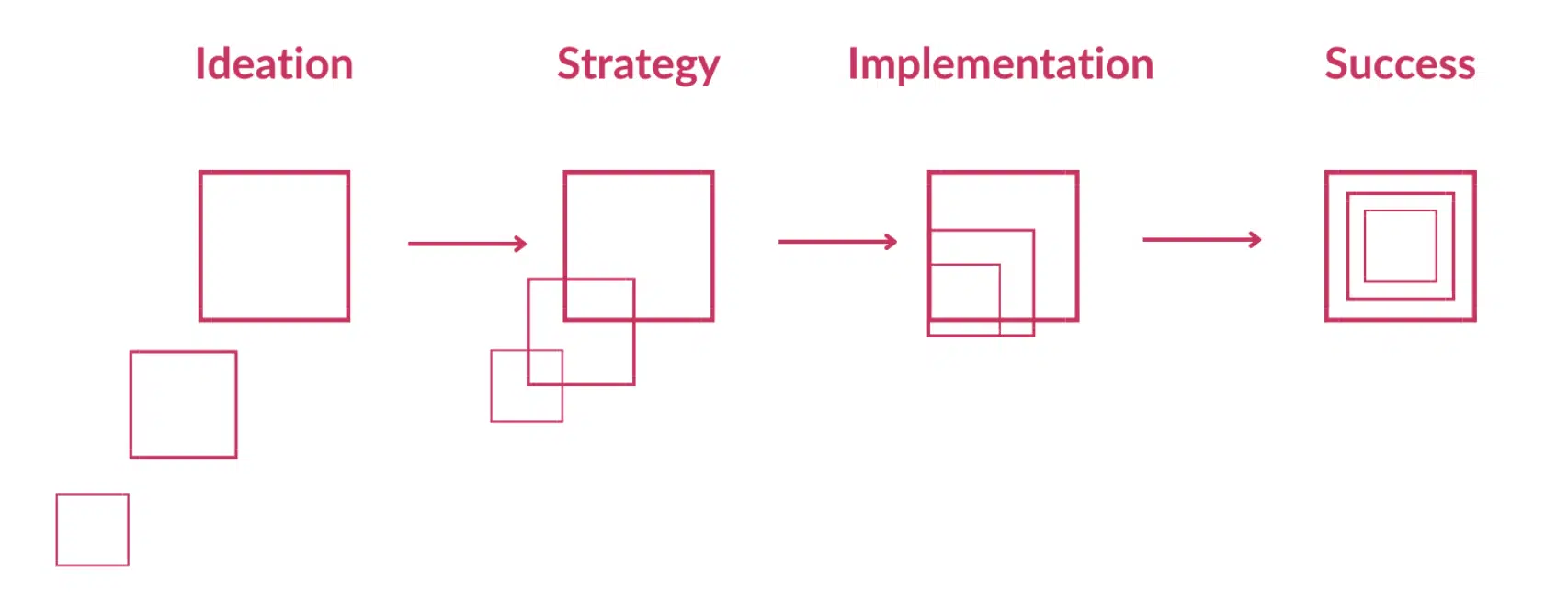
4-step process of strategic SEO

All good SEO stems from using a process. Here’s one you can steal:

  • Ideation
  • Strategy
  • Implementation 
  • Success

Let’s break this down.

Step 1: Ideation

Ideation is the fun part of any SEO strategy because it’s ideas without friction.

There is no such thing as a bad idea in ideation, and it’s now that you play around with the site, its competitors and their niche and wander. You can do this as a team or on your own.

But consider this time as drifting time. Just wander through the site, write down things you notice, and chat with your team.

And then walk away. 

Let the information and ideas sit in your brain, and you’ll be surprised at what happens next. 

You’ll find that your existing experience starts to go to work in the background with your new-found discoveries.

And the seeds of strategy are born.

Step 2: Strategy

It’s here that you come to the document with your strategy seed.

You have a loose plan to rank the site. You have a budget. You have the skills.

It’s now that you commit.

The aim is simple. Write down your seed of an idea…then try and find data to support it.

Analyze the site, the keywords, the links and so on.

If you can’t find data to support your approach, bin it. Move on and find another approach to generate results.

Record your progress in your document, write down what you find and take screenshots.

My documented strategies range between 3,000 to 8,000 words long, not including the 100-plus point technical SEO audit I do that doesn’t use a tool.

But by the end, you have the strategy, and it’s this that goes to clients.

Step 3: Implementation 

So, you came up with the strategy; now it’s time to make this happen.

As an SEO, you become an SEO and a project manager.

It doesn’t matter what you do or outsource; it’s your job to ensure the results occur.

You are accountable for the success or failure of the campaign, and that’s why your expertise is in demand.

Step 4: Success

Finally, we reached the end of your successful campaign.

If you did a good job, you’d have met the client’s goals, and if not, it’s entirely right you explain why.

I’m not forgiving of SEOs that don’t meet the campaign’s goals. Except when the budget doesn’t match the goals.

If you’re spending $15,000 a month on PPC but only want to spend $1,500 a month on SEO, even though the agency pitched more.

Well, that’s the client who takes responsibility. They won’t. But it’s them that’s responsible. 

Remember, you can only do what you can with what you have.

A $1,500 budget might take three years to achieve results. Still, you must let the client know.

It’s perfectly OK to tell them their budget isn’t enough to generate results in six or 12 months.

The right strategy often doesn’t have the right implementation fuel.

Clients want results, and sometimes they are stuck with poor budgets. As long as they know this, they might use SEO to show how it works and then ask for more budget later.

The problem comes when you have a strategy that will work and tell the clients they will gain results.

OK, how long does creating a good SEO strategy take, and what should you charge?

The price of SEO strategy

I’ve charged $500 for strategy, and I’ve charged $10,000.

Ultimately the size of the site and the value of the business will dictate what you charge and how long it will take.

But here are some tips from the trenches. A good SEO strategy takes hard work.

It’s mentally challenging and arguably the hardest part of SEO.

There are three ways to price strategy.

  • An upfront stand-alone cost.
  • As part of the retainer.
  • As part of the set-up fee.

Each model works well and is a choice.

But you only get Month 1… once.

For years, I ran my own consulting business/agency selling SEO strategies in all the above three models.

It really doesn’t matter which you choose. What does matter is that you ensure the client respects your expertise and pays to access it.

This is what strategy is all about.

However, a top tip is when you sell a stand-alone strategy. Offer three price options.

I used to do this with clients with in-house SEO ability but who wanted a second pair of eyes on their SEO.

Option 1 can be a low-level strategy, option 2 a deeper dive and option 3 can go into UX and more.

How you split the options up is totally up to you.

But what I want every reader to take away from this article is that strategy in SEO matters.

Clients deserve it, and you deserve the time to be strategic.

If it’s not happening, then perhaps you need to change agencies.

And that’s for both the client and the SEOs reading this.


Opinions expressed in this article are those of the guest author and not necessarily Search Engine Land. Staff authors are listed here.


Related stories

New on Search Engine Land

@media screen and (min-width: 800px) { #div-gpt-ad-3191538-7 { display: flex !important; justify-content: center !important; align-items: center !important; min-width:770px; min-height:260px; } } @media screen and (min-width: 1279px) { #div-gpt-ad-3191538-7 { display: flex !important; justify-content: center !important; align-items: center !important; min-width:800px!important; min-height:440px!important; } }

About the author

Andrew Holland

Andrew Holland is the Director of SEO at JBH, an award-winning Digital PR and SEO agency. His SEO background stems from a 17-year career in the police, where a number of years were spent within intelligence, utilizing SEO within internal systems to catch criminals. After developing chronic asthma, Andrew left the police and launched a freelance SEO and digital marketing career, and has worked with a wide range of clients, from SMEs to 8-figure businesses. Today, he directs the SEO delivery for one of the UK’s fastest-growing Digital PR and SEO agencies. Building organic visibility, trust and fame for consumer brands.

https://searchengineland.com/build-strategic-seo-process-427972


Affiliate managers: It’s time to shift your focus beyond media

If you manage affiliate programs, you know the positive impact of being featured in Good Housekeeping, CNN Underscored, Wirecutter and Rolling Stone’s listicles. 

  • They optimize incredibly well for high-intent shopping phrases. 
  • You see substantially higher conversion rates from the trust they add to the referral.
  • Major media adds credibility to your brand. 
  • Adding the media company’s logos to your brand’s PR bar helps increase shopper trust and conversions. 

The benefits do not stop there. As an affiliate manager, you can show top and mid-funnel traffic to your boss or clients.

You can be the hero to the PR team because their lives are easier with you keeping an affiliate program alive. 

You have the visibility and the keys to revenue in your company, giving you a good name. 

But Google’s introduction of AI-powered search could mean a shift away from media listicles. Here’s what affiliate managers can do about it.

If Google’s search generative experience (SGE) takes off, there may no longer be as much traffic going to media listicles

Based on the screenshots from SGE’s announcement and what industry advocates have shared, you’ll see that Google’s AI-powered search results feature stores in the top results with the affiliate listicles below them. 

This cuts the affiliate list out of the picture from the traffic it used to enjoy. But that does not mean mass media affiliate lists are not valuable. 

The companies mentioned above, along with Forbes Advisor, USA Today, Healthline, US News, BuzzFeed and other publications, drive traffic to the listicles from ads within their own sites. 

And their own sites are “destination sites,” meaning there is a regular readership as people use them as starting points for advice. 

The niche mass media sites can likely get the three featured boxes. Most important is that there are a loyal audience and traffic sources that can continue to bring in revenue. 

So don’t cut them out if SEO traffic dries up. Change your strategy.

You’ll still get some revenue from them, but not like you did when they dominated the top of “Best XYZ products” and “Top products for ABC” queries. So what can you do to replace this? 

I’d say go back to what made the affiliate channel high value in the first place, partnering with authentic voices and high-funnel touchpoints. 

These are partners that introduce customers at the top of the funnel and drive traffic to your website without having to use your brand in SEO, PPC, or other methods. 

Some of the new places your high-value partners may become top 10 include:

  • Shorts producers
  • Non-review video creators
  • Non-review content publishers
  • Destination sites

Shorts producers

The new SGE has a feature called Perspectives. 

If the person searching does not trust the results from the AI answer, they can flip to find real opinions. It could be about a product, about your company, or to create a solution. 

Micro-influencers with niche authority (plumbers, school teachers, moms that talk about local resources for kids, etc.) may be the big winners here.

Google is looking for and displaying “hidden gems” with the helpful content update. And it looks like perspectives may give these niche content producers an advantage. 

If they regularly share real experiences, are authoritative on the topic, and stick with their niche, they may likely be the hidden gems and get the features from the big queries that were dominated by mass media who rely on authority and editorial trust. 


Get the daily newsletter search marketers rely on.


Non-review video and content producers

Non-review means the content creator is not reviewing your brand and does not include your brand in the title as keywords (specifically on YouTube). Instead, they focus on the solution. 

As affiliate managers, we often encourage reviews, but this may work against us. 

Adding your brand to the title tag and throughout the solution changes the meaning of the content. Here’s an example:

  • The best flower subscription
  • The best flower subscription from Amazon

Both of these will help an end user find a flower subscription. But one signals to a search engine or YouTube that they should only show the content when the brand is present in the query – in this case, Amazon. 

By removing the brand and instead using affiliate links that point to Amazon, the content now has a better chance to show up for the big phrase “best flower subscription.” 

Amazon still gets the sales and traffic and it is a pure value add since it’s traffic that the affiliate sent, and the consumer may not have been considering Amazon as an option. 

This is why you should encourage affiliates not to focus on your brand, especially with coupons and deals. Solve problems instead:

  • Find the best product.
  • Fix something that is broken.
  • Enhance a recipe.
  • Etc.

Doing the content without requiring your brand in the title and throughout the description signals to the search engine that the content applies to everyone. 

When your brand is included, it should only be shown to someone searching for the solution and your brand on the same query. 

It limits the amount of traffic your company can acquire and the amount the affiliate can make. 

The video may help the conversion because it shows the product does solve the problem. 

But it is not as high in value because the customer already knows about your brand and is already in the sales funnel. But it does add value, so again, don’t just remove them.

You can apply this to:

  • How to change the oil in an (insert car model)
  • Ways to bake an almond cake without sugar
  • 7 alternatives to the flat head screw
  • 9 home decor ideas for studio apartments

Don’t add the brand to the title. Your affiliates can increase their chances for traffic and revenue substantially while your company or client can gain new customers they wouldn’t have had without the partner.

Destination sites

Find and recruit destination websites into your programs. Since we’re referencing “destination sites,” I’ll use travel affiliate sites to illustrate. 

Expedia, TripAdvisor, The Points Guy, and others are destinations for consumers to research with a community or editors they trust. 

They have an active audience and community and when they want, they can pound your sales funnel with high-intent customers you may not have had without them. 

Because these sites are trusted communities, they will likely have an easier time getting into the three boxes the SGE interface recommends for more reading. 

They are the E-E-A-T “authorities” on specific queries. It could be big (like saving money on Disney) or small (like finding the best hiking excursions in Virginia wine country).

These websites have had years’ worth of user-generated content (UGC) and self-regulation by the community. These same people comment about the answers and fact-check them. 

The up-and-down voting, moderators, new comments from people that used the information, and verified customer reviews further build trust and should give the sites the ability to rank in these spaces easier. 

If your affiliate program can be featured on these pages with a resource, then you are the one who will benefit from the new search results if they get to be one of the linked resources. 

Your company also gets access to the community members looking for ideas and solutions on these pages. It is a huge win for traffic and sales, and there are communities for almost every niche. Parenting, beauty, marketing, developers, photography and artists, etc.

Partnering with authentic voices

There are other types of partners we should expect to see rising up based on the new SGE. It could be:

  • Forums with active moderation.
  • Wikis that are fact-checked and sourced.
  • Niche guides written by licensed and certified experts in the field. 

By investing in these and continuing to work with mass media, you can make up for the lower positions of the shopping listicles and potentially increase total volume for your company. 

So don’t panic if you notice the mass media listicles are a bit lower in the search results. 

Mass media adds a ton of value. The important thing is to keep those relationships strong and look at who is now getting the traffic. 

It’s a bit more work, but it is also more protection to your channel because you’re diversifying your traffic and revenue streams.


Opinions expressed in this article are those of the guest author and not necessarily Search Engine Land. Staff authors are listed here.


Related stories

New on Search Engine Land

@media screen and (min-width: 800px) { #div-gpt-ad-3191538-7 { display: flex !important; justify-content: center !important; align-items: center !important; min-width:770px; min-height:260px; } } @media screen and (min-width: 1279px) { #div-gpt-ad-3191538-7 { display: flex !important; justify-content: center !important; align-items: center !important; min-width:800px!important; min-height:440px!important; } }

About the author

Adam Riemer

Adam Riemer is an award winning digital marketing strategist, keynote speaker, and growth consultant with more than 20+ years of experience. His agency creates and executes integrated and growth marketing strategies based on data points and ROI. From top funnel affiliate marketing to SEO, email, and conversion optimization, he helps brands of all sizes grow and scale.

https://searchengineland.com/affiliate-managers-shift-focus-beyond-media-427988


The incredible ways to get SEO traffic without ever ranking

Let’s face it, when it comes to generating traffic online, the quality of SEO traffic is unbeatable.

When you compare it to other online traffic sources including PPC, affiliates, emails and SMS, you typically find that when it comes to average time on site, low bounce rates and conversion rates,  SEO reigns supreme. Those navigating through SEO organic search are typically taking their time and making informed and more careful decisions – this is what leads to higher converting and more qualified customers.

The barrier though with SEO is that it can take several months, or even years, and incredible expertise to gain positions in the top search results on Google. However, just because you do not rank at the top of Google, doesn’t mean that you cannot have access to the best quality SEO traffic and even take up multiple positions – without even ranking your own website.

In this piece, we speak to some industry experts and startups to understand how you can access SEO traffic whether your site ranks or not.

Check who is on page 1 already

You might think that doing SEO for your company means optimizing your own website and getting it to rank, but why not consider who is already on page 1 and if you can partner with them in some way. From price comparison sites, news sites or just individual brands, there may be a way to help them monetize their traffic or collaborate in some way.

“As a broker, we are a lot freer to do SEO than other big brands and institutions,” explains Justine Gray, founder of online mortgage broker, Deedle.

“Big companies and banks are very nervous and bound by compliance to throw lots of content on their site and make regular updates. But for a small team like us, this is very easy.”

“In some ways, we have a better shot at getting to page 1 than a big corporate company – and as a result, we get companies of all sizes trying to partner with us. They may find that there are too many internal barriers to do good SEO for themselves, but we are open to collaboration.”

Using top 10 lists

“Top 10 lists have a very powerful ranking edge on Google,” explains Sithara Ranasinghe, co-founder of health insurance site, MediCompare.

“There are certain industries where Google really favours top 10 lists over a traditional site. If you were to search for anything related to casinos or something techie like email marketing or best softwares, you won’t typically find individual sites on page 1, but rather review sites or accumulator sites that list 10 different options.”

“I think Google likes this more impartial offering to a customer and the ability to see and compare different products. So, if you are a new entry to the market or looking to get SEO traffic, you should simply approach someone who already ranks on page 1 with a top 10 list or try to create one through a high domain authority site.”

“There are sites that are very good at this like CNet and Forbes who leverage their authority and strong domain – and there is no reason why you cannot have multiple listings on page 1 and clean up on the SEO traffic, regardless of where you rank.”

Using price comparison sites

Price comparison sites for products like mortgages, credit cards, hotel bookings, travel insurance and even tech have become huge in the last decade.

“Being a price comparison site can be an advantage with Google,” explains Mark Gomer of Proper Finance. “You target so many products and can gain backlinks across multiple industries and also benefit from people shopping around which increases your overall user time on the site.”

“When implemented well, you may rank really well for some products, but not others, but ultimately you can focus your energy on where you do.”

“If we have a strong position on Google for something like mortgages or secured loans, we could potentially work with 50 or 100 companies to help customers to compare the best rates – who all get access to SEO traffic, even if they don’t rank anywhere.”

Leveraging news sites with high domains

There are so many SEO factors to contend with, such as good technical optimization, site speed and quality content. But sometimes having a good backlog of backlinks and high domain authority is the fastest and simplest way to rank on Google and get to page 1 for key terms.

“When you look at major news sites, these are typically link magnets because of their authority – and they often scoop up lots of links from other authorities such as schools, universities, councils and governments,” explains Richard Allan, founder of funding platform, Capital Bean.

“So, when you create a landing page on your own site, you may have to wait months or years to build up authority – or you may never rank at all. But if you took this landing page, with all the right keywords and intent-driven content and placed this article on a major news site like SF Gate or Forbes, you can sometimes rank for this very quickly by leveraging their domain authority.”

“If you take some less competitive industries or more bespoke long tail keywords, they may not be used to having a site with a domain authority of 60 or 70 on page 1 and when you come in with a fresh article, you get the quick indexability of being a news site and can often get to page 1 within one day simply because it is on Google News.”

Concluding thoughts

SEO traffic is incredibly good quality and sought after, but as any SEO professional will tell you: it takes a long time to achieve and does not always last forever.

But as discussed by our experts, ranking on Google does not necessarily just have to be your own website. By seeing who is on page 1 and using sites with high domain authorities to include your company, you can take up multiple positions. And given the fluctuations of Google, you can use these techniques to always have some kind of presence on page 1 at any given time.

We leave you with one final question: Why take one position on page 1 when you can have several?

https://www.searchenginewatch.com/2023/06/08/the-incredible-ways-to-get-seo-traffic-without-ever-ranking/


10 ways B2B SaaS companies can use link building for better rankings

The significant value of B2B content marketing is paving the way to the new wave of content-first link building.

A targeted Google search will return lists of articles around topics like “lists of,” “alternative,” or just “how to.” With the right search queries, you can find an endless list of prospective domains to pitch.

SaaS companies can target these prospects by producing a wide range of content types and topics, which provides a unique opportunity to find link prospects across a wide range of niche topics.

This list provides methods to identify link opportunities based on the type of content typical for SaaS brands.

Although using Google search operators will yield the largest list of opportunities, the following link building tools will reduce the time to organize and outreach to each prospect.

  • BuzzStream: Low-cost list building and outreach CRM. This is a fast way to get started.
  • Pitchbox: Robust list-building and outreach campaign management. Use this tool for custom prospecting, outreach, and reporting features. The default campaigns can reduce the time for new link builders to build a list and start outreach.

Whether you use Google or a tool, the type of content created on the software’s site will determine the success of a link building campaign.

Note that some pages yield more links than others. Most of your focus will be on high-authority homepage links and deep links to blogs and informational articles.

A “statistical roundup” article that collects and presents statistical data from various sources relevant to a particular topic or field.

These articles provide an informative, insightful and potentially compelling overview of a topic from a data-centric perspective.

Statistical roundup articles are often used in fields including business and economics, sports, health and medicine, science and education.

They often present data in a visually compelling format, including charts, graphs, tables and infographics that enhance reader comprehension.

This Top 50 Cybersecurity Statistics article might be a target to secure links to your company’s unique research in cybersecurity.

Image 61

Finding these links is a simple Google search away for “{keyword} statistics.” Or get more specific with a search operator:

  • intitle:”statistics” intext:{keyword}

Or narrow the list down to focus on company blogs with: 

  • inurl:blog intitle:”statistics” intext:{keyword} 

2. Blogger outreach to hybrid commercial + informational pages

Bloggers and many publishers will likely link to content that clarifies or enhances the concepts they are writing about.

These pages are optimized to convert traffic to leads or demo requests with informational content that can be used to acquire links.

I see this used heavily in cyber security, with NordVPN having a great example of a hybrid page.

Image 58 721x600

Use these pages to find bloggers that have written about the topic and request that they link to your hybrid page.

  • Identify the bloggers by searching Google with the blogger search operator:
    • inurl:blog intitle: {keyword}
  • Copy the top 100 URLs over to Ahrefs’ batch analysis.
  • Export list.
  • Filter down by metrics.
  • Repeat this process for each target keyword.

Find blog articles that list alternatives to a competitor. These articles list all the alternative direct competitors or processes that can yield the same results.

  • Intitle:{competitor name} alternatives -{your company name}

Although this method isn’t scalable, it can yield high-quality traffic-driving links.

This example from AuthorityHacker shows a list of Ahrefs alternatives that may be an outreach target for a new SEO SaaS product.

Image 59 713x600

AuthorityHacker’s founders are known to produce actionable and relevant content on affiliate and SEO topics. If you have a truly useful tool, they may even add your site to the list. 

Integration pages are fodder for articles about the integration partner. Articles that mention features, how to use them, or even negative reviews.

In this example with Zapier, articles about Slack or Google Drive might make sense to approach for backlinks.

Image 56 704x600

To find link opportunities for an integration page, use the search operator:

  • Intitle:{keyword} -{your domain} -{integration partner domain}

Example: intitle:automate slack -zapier.com -slack.com


Get the daily newsletter search marketers rely on.


Product or feature comparison pages is either blog article or webpage that compares various features of your software to a direct or indirect competitor.

Monday.com, a project management software, has a single comparison page where users can select a dropdown of some direct competitors.

Image 54 800x498

Creating a single page for each competitor is also common.

The project management niche is highly competitive, with plenty of helpful content being produced. This includes bloggers writing about ways to optimize time management to breakdowns down agile methodologies.

Use these article topics to build an outreach list. Create a variation of the following example of a search operator that a project management website could use.

  • intext:asana intitle:project management -Monday.com -asana.com

6. Case study blog articles with social ads

Case studies are a coveted asset because they tend to have actionable takeaways from real-world learnings.

SaaS companies have access to unique data and case studies using their software to gather data. Because of their unique value, these assets can be used in social ads to attract readers and links.

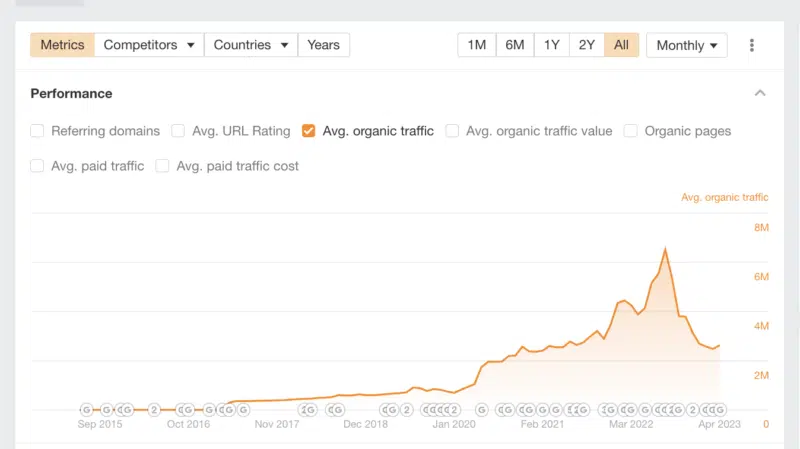
This Ahrefs case study analyzes Linktree’s traffic drop using several reports in Ahrefs, including the Top Pages and Avg. organic traffic reports. The screenshot below shows the steep increase in traffic along with a rapid decline. 

Image 52 800x449

This sort of trendline entices an SEO to look deeper. 

They took the case study and ran ads on Facebook – and potentially other platforms.

Image 53 294x600

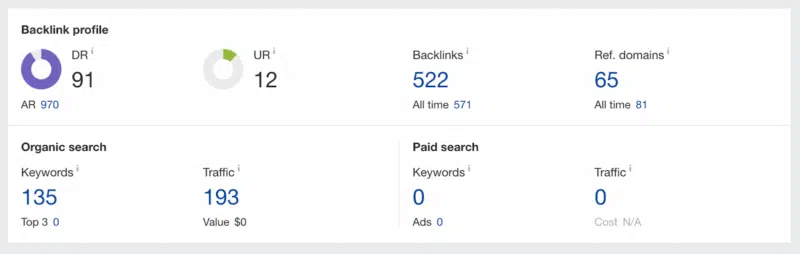
Plugging the case study URL into Ahrefs Site Explorer, I find that the article received links from 65 unique referring domains. 

Although it doesn’t appear to generate much organic traffic, it will increase the overall site’s topical relevancy for SEO topics. Thus, other optimized pages will rank more easily.

Image 55 800x254

7. Listicle outreach for product and homepages

Content listing out companies or expert roundups in niche markets has become very popular. 

Listicles are a popular form of content because they’re easy to read and digest. They’re often used in content marketing and journalism as a way to present information in a concise, organized, and engaging way.

A cybersecurity digital marketer can build a campaign to find listicles around general or vertical-specific article searches.

Build a list of these opportunities with the “intitle:” search operator. However, the more niche the niche or keyword used to search, the fewer articles will be available. Repeat this article search for all relevant product keywords.

  • intitle:”supply chain cybersecurity” intitle:top
  • intitle:”cybersecurity” intitle:top

To expand opportunities, replace “top” with “best,” “tools” or other generally descriptive terms for your niche.

Image 60 790x600

8. Executive and team guest posting byline for high-authority sites

Securing a guest post on high-authority publications often means a valuable byline, complete with a branded link to your homepage. 

However, it’s important to note that earning a spot in these high-traffic platforms necessitates real expertise and considerable time commitment to develop quality content.

While these links hold significant value in terms of SEO, their principal objective goes beyond that. Primarily, these articles serve as a strategic tool for enhancing brand visibility and establishing thought leadership.

For instance, as you can see at the bottom of this article, my byline in Search Engine Land includes a link that directs readers to my company’s homepage.

Image 57 800x408

In public relations (PR), a “passive journalist PR request” typically refers to a situation where a journalist seeks information, quotes, or a story from PR professionals, companies, or individuals, usually via social media or other public platforms.

These requests are “passive” because the journalist is not actively reaching out to specific individuals or companies with a pitch or query but rather posting a broad request to which any relevant party could respond. 

This approach can benefit journalists by enabling them to access a wider variety of sources and stories than they might be able to through direct outreach. 

For PR professionals, these requests present opportunities for their clients or organizations to gain exposure.

Although passive PR isn’t specific to SaaS, creating content around various topics will allow for many more placement opportunities.

Two methods to find these requests are with Help a Report Out (HARO) or searching the hashtag #journorequest on Twitter.

This method entails building links to informational content, then placing internal links to the target ranking pages.

The reasoning is that bloggers and publishers are more likely to link to informational articles than commercial pages, thus increasing the total volume of link opportunities in less time. More so, this method also uses internal linking to pass PageRank and topical relevancy to the commercial pages from the linking site.

The outreach will focus on related but non-competitive articles. An article that is not competing for the same target keywords is more likely to link to content than content that is competing for the same keywords.

For example, an article about “Top 10 HR Management Software” will not easily link to another listicle about HR management software, but it might link to an article detailing the software’s features.

To find these types of articles, use this search operator template with your own keywords: 

inurl:blog intitle:HR software -top

SaaS websites have the unique ability to target a wide range of topics and content, which is aligned well with the new wave of content-first link building.

Tools like Buzzstream, Pitchbox, and Respona can streamline the prospecting and outreach process, but having the right content is important to a high response rate.

Use search operators to find these opportunities, but test multiple quires to find as many sites to pitch as possible.

Link building is critical in B2B SaaS traffic generation, and those companies that get it right will drive real growth.


Opinions expressed in this article are those of the guest author and not necessarily Search Engine Land. Staff authors are listed here.


Related stories

New on Search Engine Land

@media screen and (min-width: 800px) { #div-gpt-ad-3191538-7 { display: flex !important; justify-content: center !important; align-items: center !important; min-width:770px; min-height:260px; } } @media screen and (min-width: 1279px) { #div-gpt-ad-3191538-7 { display: flex !important; justify-content: center !important; align-items: center !important; min-width:800px!important; min-height:440px!important; } }

About the author

Kevin Rowe

Kevin Rowe is the Founder of PureLinq, an enterprise link building solution, and an SEO Product Marketer. He has designed and implemented almost every type of link building technique over his 14 year stint in SEO. Since 2009, Kevin has worked on SEO, link building, and advanced analytics programs for enterprise clients like Hyatt Hotels, Kaplan University, Bullet Proof Coffee, VMware, Novartis, Coca Cola, and so much more. After studying at the Park School of Communications @ Ithaca College, he found a passion for content development and messaging which led him to publication in Forbes, Fast Company, Huffington Post, and Search Engine Land.

https://searchengineland.com/b2b-saas-companies-link-building-427939


Top 10 insights for SEO and PPC success in China

Over the last 20 years, I have implemented campaigns with hundreds of global businesses and learned about Baidu and other Chinese platforms. 

Here are key insights to help set your search campaigns for success in this market.

1. Understand the Chinese market and audience

Gaining insight into the Chinese market and its audience should be your goal to succeed in China.

Remember that this country has a distinct customer base with its own language, culture, customs and habits which need careful consideration for effective campaigns that will strike home with them.

Getting off on the right foot means you’ll need to research what’s happening locally thoroughly. Discern between different kinds of buyers, from tech-savvy people active on social platforms such as WeChat, Taobao or Weibo to those who aren’t. 

The country and its population are massive, and the behavior and dialects can change from one region to the next, to one city to the next. 

Shanghai vs. Beijing, for example, is about as different as London is vs. San Francisco. Take note of seasonal trends and special occasions like Chinese New Year and Singles Day.

Knowing when these happen can really give you an edge over competitors so your efforts are at maximum potential during key parts throughout the year.

Finally, cultural awareness must also apply when making up marketing materials. Navigating sensitive subjects like politics, religion, etc., remains a central factor here lest any negative reception could arise.

Keeping an appropriate tone free from contentious topics helps ensure we get our message heard. The Chinese mostly have a very “collective” behavior. That means they often work together, socialize more to help and learn from their broader community.

2. Know the importance of Baidu and the other platforms in China’s digital landscape

Gaining success in the Chinese market requires recognizing the significance of Baidu.

The search engine remains the most popular in China and is many steps ahead compared to its rivals such as 360 Search or Sogou. 

Baidu has about a 75% share of desktop search engines’ market. Similar to Google’s guidelines, researching Baidu’s own algorithm guidelines, such as:

  • Avoiding keyword stuffing.
  • Forming captivating titles and descriptions along with internal links.
  • Applying tags and meta-data features correctly so bots can effortlessly crawl pages.
  • Optimizing images for faster load speed on mobile devices.

Additionally, those living in this country opt more for social media websites and apps like WeChat, Weibo, Xiaohongshu, Zhihu and Douyin (TikTok).

Thus, you will want to ensure these channels are integrated seamlessly while planning your SEO and PPC initiatives.

3. Compliance and licensing are critical

Compliance

China has stringent policies regarding what they may consider unhealthy to their culture and laws. This includes nothing politically sensitive (i.e., gambling and pornography) and the types of advertisers, what they sell, and how they sell it. 

You may not think it’s fair, but voicing or appealing your own idea of fairness based on Western culture will get you nowhere in China, at worst, banned forever.  

You might not try to get into the Chinese search space if you are not compliant.

ICP licensing

Your advertising agency or partner should be able to apply for you to get hosting in China. Depending on meeting all of the requirements, the license should take anywhere from two weeks to three months. 

There are two different types of licenses: 

  • ICP filing: For non-commercial websites.
  • ICP commercial license: For commercial websites. 

Without hosting your site in China, you lose credibility with your users and risk devaluation with search. This devaluation comes from slower levels of access (stuck behind the Chinese Firewall) and not being local. 

If the advertiser doesn’t have a registered office in China, they can’t get a .cn domain. And without a .cn domain, they are not qualified to get an ICP.

However, there are ways around this, for example, getting a sub-ICP license from a CDN provider. The rules here change a lot. Your Chinese partner should help navigate your case, especially if it’s unique.

Additional regulations, such as the 2017 Cybersecurity Law and the Personal Information Protection Law, are similar to GDPR and require all sites to protect user data and obtain user consent before collecting and using any personal data.

Some ecommerce laws cover aspects such as ecommerce platform responsibilities, contracts, dispute resolution, and more. Baidu’s policies will mirror the government policies, so remember that it is not as easy as it is to get on Google as it is with Baidu—the same with other platforms in China.

4. Analytics and your data 

Set up Baidu Analytics. If you depend on Google Analytics and other Western analytic software, you may risk inaccuracy as the signals fired may never be recorded. 

Baidu Analytics will allow you to evaluate discrepancies between analytic tech stacks. However, they may not have the deeper level’s of attribution and data that Google and others may have.

5. Design toward the market 

When designing your website and display ads, remember that the images used should also follow cultural appropriateness standards.

Ensure they do not contain offensive symbols from different countries and that they are mirroring established customs (where possible). This gives an added level of confidence and trust by showing Chinese cultural understanding and respect.


Get the daily newsletter search marketers rely on.


6. Payment gateways are different here 

Payment gateways must also be carefully considered when building sites here. 

Even though PayPal works fine overseas due to its global acceptance, inside the Chinese Mainland, web payment systems such as Alipay and WeChat Pay remain more popular.

Implementing them into the design will help establish trust outside of just the obvious, sales. 

7. Social in China is a must for building credibility and trust

Social in China should also be in your strategy to help both paid and organic’s credibility and elevate your brand. 

Social is crucial because Chinese users often use social media to discuss offers with others. This enables Chinese users to further their research and provides you with the trust and credibility points you need to establish yourself in the market. The two most critical social sites are WeChat and Weibo.

WeChat, developed by Tencent, is an all-in-one app widely used for various purposes. It’s aa social media app that also serves as a platform for instant messaging, voice and video calls, moments sharing (similar to Facebook’s news feed), mobile payments (WeChat Pay), shopping, ride-hailing, and much more. 

Its comprehensive features make it integral to daily life in China. WeChat is also very easy to advertise on and highly recommended as soon as you launch your search campaigns.

Weibo, often called China’s Twitter, is a microblogging platform where users can post, share, and comment on short messages or “weibos.” 

It’s popular for news dissemination, public discussions, and celebrity updates. It allows users to follow individuals, companies, and topics of interest.

8. Translating and localizing 

Be very attentive with your translation. “Simplified Chinese” is what is used.

Do not use automatic translation without a true local optimizing it appropriately. 

Colors, fonts and other nuances may limit your success in the market if it’s not designed with the Chinese user in mind. Also, do not use it unless you have someone who is Chinese who can review, adjust and correct it. 

This is the simplest thing to get right, yet many companies try to take shortcuts and fail miserably in China.

Before jumping into SEO, paid search provides some important starting points critical to learning your market. Most importantly, you will be able to identify what works and what doesn’t regarding your keyword research, conversions, issues with your website (site structure, speed, analytics), etc.

The keyword research process holds immense importance here. Before jumping onto creating campaigns, you will need to conduct comprehensive analyses to identify those words most likely leading towards conversions. 

Moreover, having a good understanding of the different types of keywords available via Baidu (brand-specific ones alongside generic terms and long-tail phrases) will ensure you maximize reachability while getting the highest defined ROI possible from your ad campaign. 

When launching Intel into the Chinese market in the early days, we identified 15 different dialect characters per keyword. This was while employing a strategy around targeting and treating every region of China and major metropolitan area as its own country. (When you add the behaviors, context, keywords and monstrous populations, you’d see why that was a smart strategy.) 

It is also not uncommon for you to find or even get to use English keywords. A form of “Chenglish” in major sophisticated metro areas such as Shanghai and Beijing, where the population has more Western influences integrated into the culture, may mix English and Chinese search terms while searching.

Another key aspect lies with creative optimization too. Unlike Google Ads or Bing Ads, where certain standards apply across all ad copies alike regardless of which region is targeted. 

Things are not really cut and dry when dealing with Chinese audiences through paid search with Baidu. Thus, extra precaution must be taken into account during crafting such display/textual titles or descriptions accurately encapsulating what each respective service offers customers-wise.

Simultaneously, making sure images used comply by set standards within given regions helps maintain high clickthrough rates (CTRs).

Let me be clear here, brand strength, trustability and CTR are more critical than conversions.

It’s not uncommon for your Chinese user to use your website as an infomercial, buying from other trusted portals after they are convinced your site is not a scam.

Budget allocations

Due consideration must be made based on factors like seasonal competition levels, industry demand trends, competitive demand trends etc., to determine your budget.

Like any platform worldwide, it does take time, money and a lot of patience to see things work.

Allocate your beginning campaigns high with the expectation that the trial period is not to make sales but rather to find what is failing to succeed. Starting with simple PPC campaigns makes sense before diving into other Baidu ad products or off Baidu.

Long-tail and sentences

Chinese users often use Baidu as step one in their research for a product or service. Especially if they are not very familiar with the brand. Therefore, do not just translate your English keywords into Chinese; expect those to work. 

Instead, pay attention to the questions asked about your product and services, making them your priority keywords and also employing the same factors as you would with Google (i.e., quality, relevance, intent, local signals, ad extensions, negatives).

Ensure the landing page content is also relevant to the question and response you are addressing.

10. Getting started on Baidu SEO

As you can see from reading the paid search tips, gaining visibility in the Chinese market is obviously not easy.

However, they are necessary for you to build the data from your keywords to know what you will be optimizing organic for.

The good news is that Baidu’s organic works in many ways, like Google. Here are some useful pointers and similarities when optimizing for the Baidu search engine:

Localizing your content

Customize your content by translating it into Mandarin. Tailoring it according to different regions of China that speak various dialects will help make sure that users who use Baidu as their main search engine get what they’re looking for quickly. 

Having dialect versions is nice to have, not a must-have. So unless it’s not Cantonese, you will be fine running in China with Mandarin. 

I know I am being repetitive here, but if there is anything you get out of this article, it’s critical that it’s written so well that a Chinese person would feel you are a Chinese company.

Structure your URLs

Structuring your URL properly can benefit crawling and indexing. 

All links should lead back to valid pages with canonical tags so there won’t be any broken ones or redirect loops, which could negatively affect rankings in SERPs. 

Internal linking is very crucial to the search engine for it to understand what your website is about and to be able to crawl and index appropriately.

Optimize page titles and meta descriptions

Similar to other SEO strategies, page titles and meta descriptions need optimization too. 

The title needs relevant keywords but we recommend not more than 50 characters, including spaces.

The meta description shouldn’t exceed 160 characters with important words related to its topic. Getting truncated within SERPs would bring down click-through rates drastically. 

Click-through rate is critical to ranking well. Baidu wants to see users clicking through to your website as it signals to them that it’s relevant and has the speed levels to give Chinese users the experience they want and expect. 

’d recommend also following Baidu’s editorial guidelines. For example, they don’t use pipes (|) as separators but recommend using a dash(-). 

Building quality backlinks from authoritative websites alongside having attention to both do-follow/no-follow links matters when executing a link building campaign here.

Furthermore, working together with local influencers or bloggers would be great since opinion leaders have a massive influence over audiences all across China.

Other important factors

Make sure your site is optimized for mobile. With the high rate of mobile internet usage in China (by the end of 2022, the mobile penetration is 99.8%), ensure your website is mobile-friendly. Baidu values quick loading speeds. Optimize your website’s load speed by reducing image sizes, using caching, and minimizing JavaScript and CSS. 

Finally, fresh and “helpful” content is crucial. Regularly update your site with fresh, original content relevant to what you provide. Baidu values content that is unique and provides value to its users. 

The key to running successful search campaigns in China

Running SEO and PPC campaigns in China is no easy task.

That said, with some knowledge on your side, you can substantially enhance your chances of success. 


Opinions expressed in this article are those of the guest author and not necessarily Search Engine Land. Staff authors are listed here.


Related stories

New on Search Engine Land

@media screen and (min-width: 800px) { #div-gpt-ad-3191538-7 { display: flex !important; justify-content: center !important; align-items: center !important; min-width:770px; min-height:260px; } } @media screen and (min-width: 1279px) { #div-gpt-ad-3191538-7 { display: flex !important; justify-content: center !important; align-items: center !important; min-width:800px!important; min-height:440px!important; } }

About the author

Michael Bonfils

Michael Bonfils specializes in providing multinational search marketing services for agencies and in-house search marketing professionals. Since 1996, Michael has helped pioneer best practices in global search engine marketing and innovations in technology advertising.

https://searchengineland.com/seo-ppc-insights-success-china-427954