SEO and ChatGPT: What’s DAM got to do with it? by Cynthia Ramsaran

Shutterstock 2139814897 800x450

In the world of content creation and customer experience, AI’s ability to alleviate tedious tasks has been hyped. However, for a successful digital asset management strategy, librarians still know best how to generate and manage complex information libraries using metadata.

In this webinar, content experts will explain what content creators, managers and users need to know to ensure you can find, use and control your content in order to deliver maximum value.

Register and attend “Metadata, SEO, and ChatGPT: What’s DAM Got To Do With It?” presented by Acquia.


Click here to view more Search Engine Land webinars.


Related stories

New on Search Engine Land

@media screen and (min-width: 800px) { #div-gpt-ad-3191538-7 { display: flex !important; justify-content: center !important; align-items: center !important; min-width:770px; min-height:260px; } } @media screen and (min-width: 1279px) { #div-gpt-ad-3191538-7 { display: flex !important; justify-content: center !important; align-items: center !important; min-width:800px!important; min-height:440px!important; } }

About the author

Cynthia Ramsaran

Cynthia Ramsaran is director of custom content at Third Door Media, publishers of Search Engine Land and MarTech. A multi-channel storyteller with over two decades of editorial/content marketing experience, Cynthia’s expertise spans the marketing, technology, finance, manufacturing and gaming industries. She was a writer/producer for CNBC.com and produced thought leadership for KPMG. Cynthia hails from Queens, NY and earned her Bachelor’s and MBA from St. John’s University.

https://searchengineland.com/seo-and-chatgpt-whats-dam-got-to-do-with-it-427587


TikTok tests AI chatbot for search and discovery

TikTok is testing an AI chatbot in select markets. Called Tako, the AI-powered tool is meant to help TikTok users with search and discovery.

Why we care. Google has acknowledged that TikTok is a threat. So we’re watching closely as TikTok makes moves to improve search on its platform, as well as testing search ads.

What it looks like. Here’s how TechCrunch described it:

“It will appear on the right-hand side of the TikTok interface, above the user’s profile and other buttons for likes, comments and bookmarks. When tapped, users can ask Tako various questions about the video using natural language queries or discover new content by asking for recommendations.”

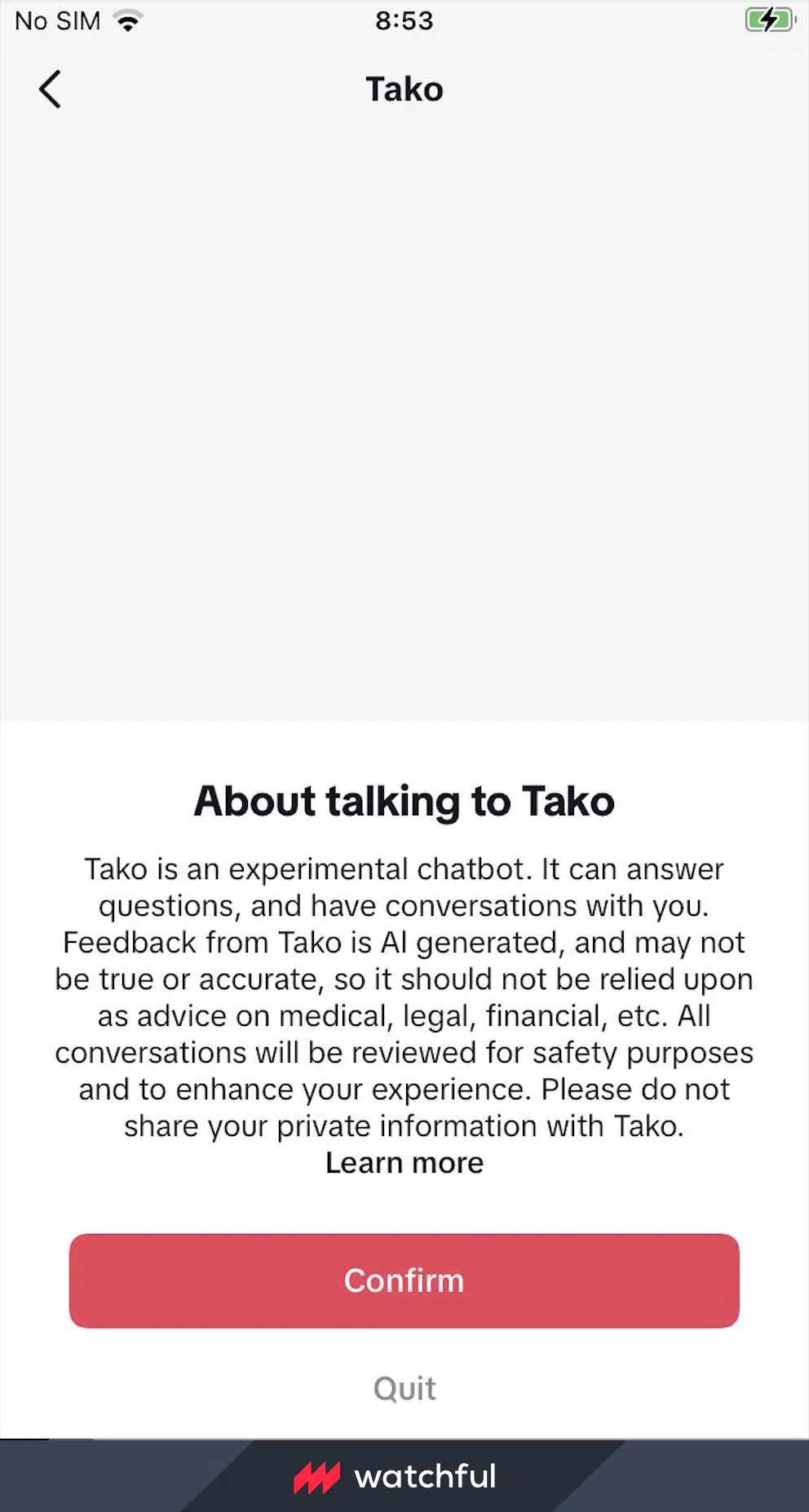
Here’s a screenshot:

Tako TikTok
Image source: TechCrunch

What TikTok is saying. TikTok confirmed the AI chatbot is being tested with select users in the Philippines, via Twitter:

  • “We’re in the early stages of exploring chatbot tools with a limited test of Tako with select users in the Philippines. Tako is an AI-powered tool to help with search and discovery on TikTok. Tako is powered by a third-party chat assistant and is designed to help make it easier to discover entertaining and inspiring content on TikTok. No current plans for this beyond these early tests, but we’re excited to hear your feedback!”

Google’s TikTok threat. Google revealed a surprising stat last year: that 40% of young people go to TikTok or Instagram (not Google Maps of Search) when searching for a place to eat lunch. That was according to Google Senior Vice President Prabhakar Raghavan, citing internal research of U.S. users between the ages of 18 and 24. He also noted these newer Internet users search differently.

TikTok is not a search engine like Google, which crawls the entire web. TikTok is basically an internal search engine – like YouTube, which is often called the second biggest search engine. And this new AI chatbot, if rolled out globally, could let TikTok users discover content via chat rather than typing in a search box.


Related stories

New on Search Engine Land

@media screen and (min-width: 800px) { #div-gpt-ad-3191538-7 { display: flex !important; justify-content: center !important; align-items: center !important; min-width:770px; min-height:260px; } } @media screen and (min-width: 1279px) { #div-gpt-ad-3191538-7 { display: flex !important; justify-content: center !important; align-items: center !important; min-width:800px!important; min-height:440px!important; } }

About the author

Danny Goodwin

Danny Goodwin has been Managing Editor of Search Engine Land & Search Marketing Expo – SMX since 2022. He joined Search Engine Land in 2022 as Senior Editor. In addition to reporting on the latest search marketing news, he manages Search Engine Land’s SME (Subject Matter Expert) program. He also helps program U.S. SMX events. Goodwin has been editing and writing about the latest developments and trends in search and digital marketing since 2007. He previously was Executive Editor of Search Engine Journal (from 2017 to 2022), managing editor of Momentology (from 2014-2016) and editor of Search Engine Watch (from 2007 to 2014). He has spoken at many major search conferences and virtual events, and has been sourced for his expertise by a wide range of publications and podcasts.

https://searchengineland.com/tiktok-tako-ai-chatbot-search-427584


Google opens access to Search Generative Experience today

Google has started to invite the first set of users to the new Search Generative Experience today. Some of you who have signed up for the waitlist should receive an email notifying you that you have access.

What Google said. “Today, we’re starting to open up access to Search Labs, a new program to access early experiments from Google,” Google wrote. “If you’ve already signed up for the waitlist at labs.google.com/search, you’ll be notified by email when you can start testing Labs experiments,” Google added.

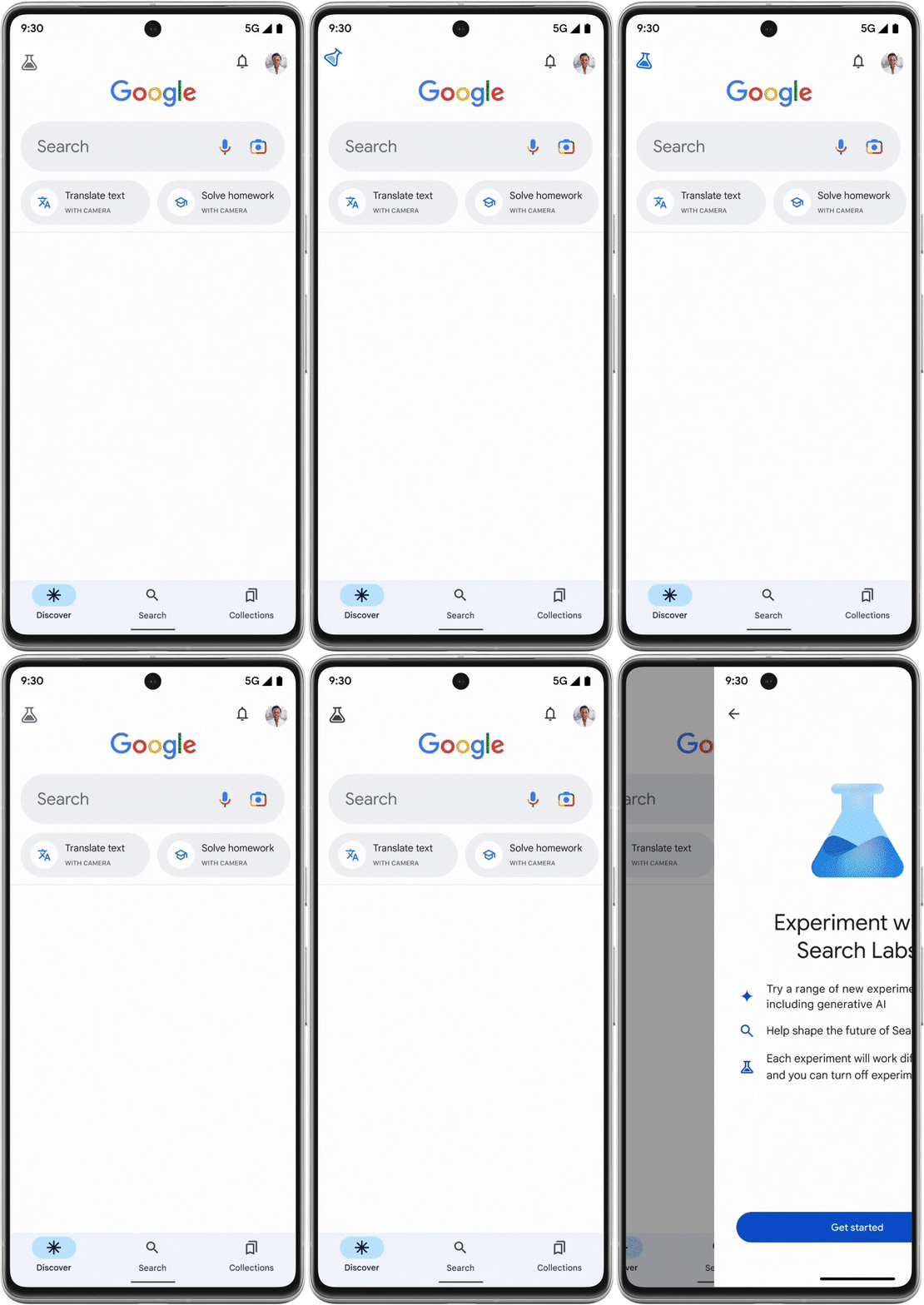
How to try it. If you were accepted, you can opt-in to these experiments by tapping the Labs icon in the latest version of the Google app (Android and iOS) or on Chrome desktop to sign up.

Google Labs Gif

You can also visit the Labs site to check your waitlist status, here is more on how to sign up.

Check your email. So go, check your email to see if you have access. Emails notifications are being sent out today. You can learn more over here from Google.

Once you’re in, the new generative AI powered Search experience will help you take some of the work out of searching, so you can understand a topic faster, uncover new viewpoints and insights and get things done more easily. So instead of asking a series of questions and piecing together that information yourself, Search now can do some of that heavy lifting for you, Google wrote.

Why we care. This is an experimental version of the new Google Search. Playing with this can be fun, educational and exciting. We don’t know what Google will eventually launch in the future, but this is the direction Google is thinking about now.


Related stories

New on Search Engine Land

@media screen and (min-width: 800px) { #div-gpt-ad-3191538-7 { display: flex !important; justify-content: center !important; align-items: center !important; min-width:770px; min-height:260px; } } @media screen and (min-width: 1279px) { #div-gpt-ad-3191538-7 { display: flex !important; justify-content: center !important; align-items: center !important; min-width:800px!important; min-height:440px!important; } }

About the author

Barry Schwartz

Barry Schwartz a Contributing Editor to Search Engine Land and a member of the programming team for SMX events. He owns RustyBrick, a NY based web consulting firm. He also runs Search Engine Roundtable, a popular search blog on very advanced SEM topics. Barry can be followed on Twitter here.

https://searchengineland.com/google-opens-access-to-search-generative-experience-today-427572


Google Top Quality Store badge replaced Trusted Store badge

Google has updated the badges some merchants display for their product listings in Google Search to say “Top Quality Store” instead of the original “Trusted Store” badge.

Google posted “We’re updating the “Trusted Store” badge, so now when you score an excellent rating on your Shopping experience scorecard, the badge will say “Top Quality Store” instead.”

No impact. Google said this is just a name and title change and this won’t have any impact on anything else. “There’s no action you need to take, and the update will not affect your performance metrics at all,” Google added.

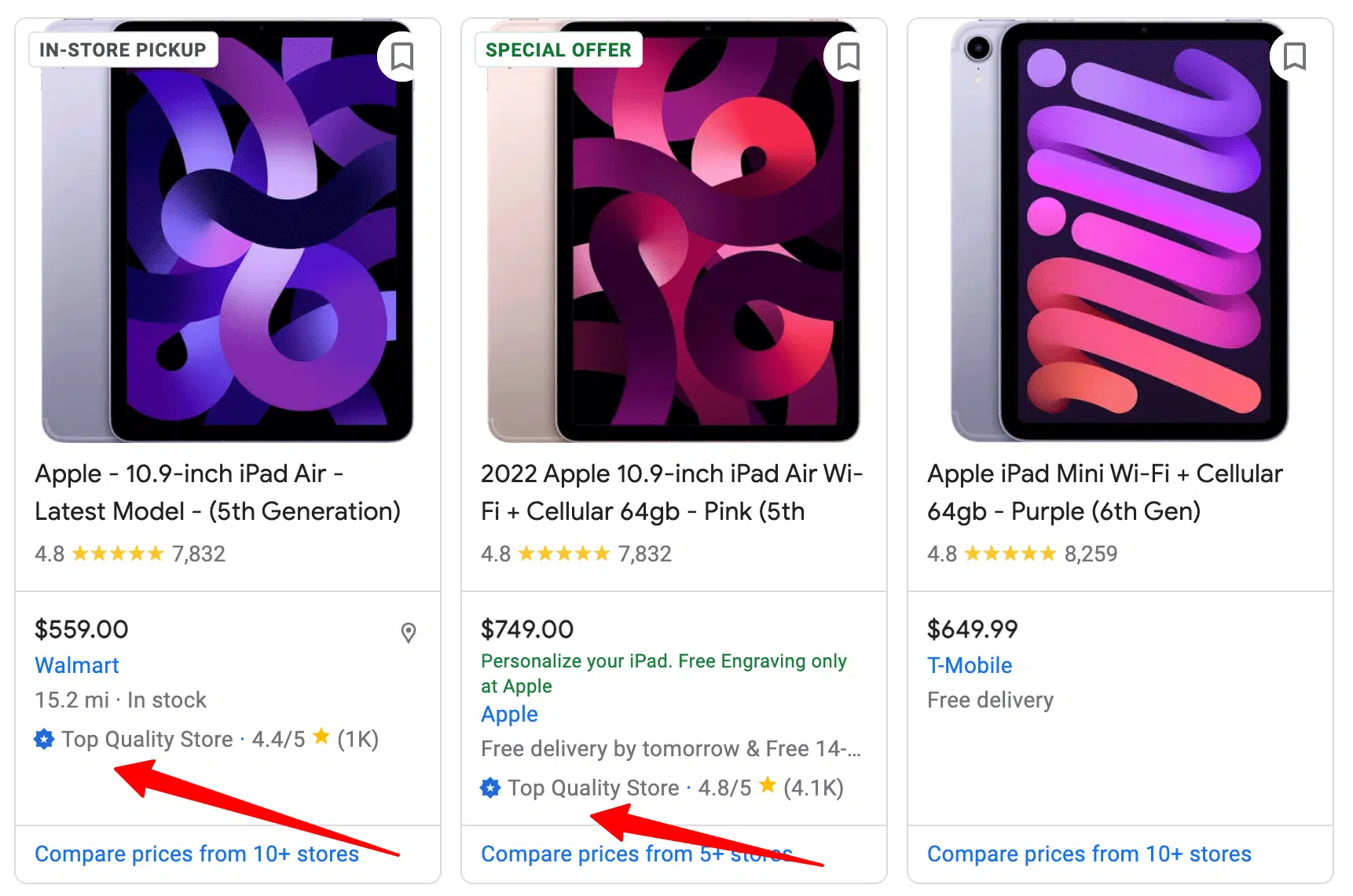
What it looks like. Here is a screenshot showing this badge:

Google Top Quality Store Badge 1685010023

More history. Google had the trusted store badge for years now, and now has decided to rename it slightly. We don’t know why Google renamed it, you or I can speculate if we want. Earlier we reported about the Google Shopping experience scorecard where Google said it would reward merchants that provide an “excellent customer experience” with “a boost in rankings,” “a badge” and “other benefits that will help consumers find your business,” within the Google Shopping tab in Google Search.

The badge increases engagement. Google said the trusted store badge, “based on our early testing,” drive more clicks to the merchants listings, Google said they are “more likely to receive clicks.” Google also said the search company is “seeing stronger traffic to lesser-known merchants.”

How to earn the badge. Merchants receive a Trusted Store badge based on their performance across metrics relative to other merchants, including but not limited to shipping speeds, shipping and return costs, and return windows. We documented a lot of these metrics over here in our earlier coverage, but here is Google’s help document as well.

Rings a bell. Does this trusted store badge ring a bell to you? Well, yes, a decade or so ago, Google had a free trusted store badge for merchants as well. This was more on the search ad side of the coin, whereas this new badge is for free product listings.

Why we care. Badges can help you generate more clicks on your listings, so it is worth looking into and gaining a badge if possible. Will the slight change in the name of this badge impact click-through rates? I doubt it but you should be aware of this change.


Related stories

New on Search Engine Land

@media screen and (min-width: 800px) { #div-gpt-ad-3191538-7 { display: flex !important; justify-content: center !important; align-items: center !important; min-width:770px; min-height:260px; } } @media screen and (min-width: 1279px) { #div-gpt-ad-3191538-7 { display: flex !important; justify-content: center !important; align-items: center !important; min-width:800px!important; min-height:440px!important; } }
About the author

Barry Schwartz

Barry Schwartz a Contributing Editor to Search Engine Land and a member of the programming team for SMX events. He owns RustyBrick, a NY based web consulting firm. He also runs Search Engine Roundtable, a popular search blog on very advanced SEM topics. Barry can be followed on Twitter here.

https://searchengineland.com/google-top-quality-store-badge-replaced-trusted-store-badge-427557


How Google Business Profile pre-defined services can impact local SEO

Google Business Profile (GBP) services might have more to do with local rankings than previously thought, according to recent tests from Sterling Sky (Disclosure: I work at Sterling Sky) and Whitespark. 

Specifically, adding pre-defined services in GBP seemingly impacts local search rankings. 

Before this finding, you could do little with GBP to influence local search results beyond location, categories, reviews and keywords in the business name.

Now, you can add GBP services to the list of key local SEO factors to prioritize.

Since when did GBP services matter?

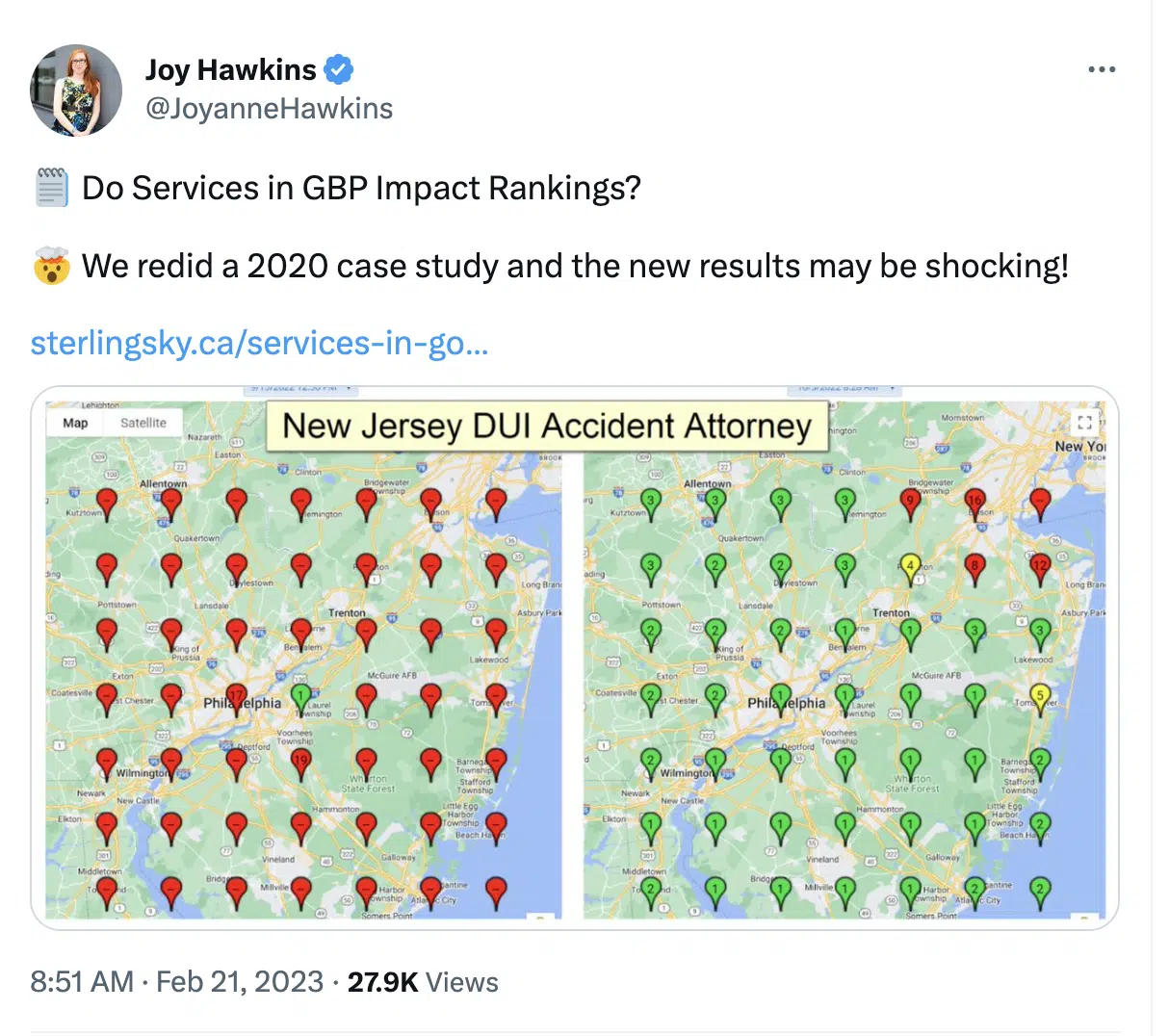
GBP services didn’t majorly impact local rankings back in 2019 when we conducted the initial test.

At the time, Google was slowly and silently adding pre-defined services to plenty of GBP categories. But when we retested this in 2022, the results were substantially different.

GBP services

Whitespark’s Darren Shaw conducted a similar test with positive results.

Both tests showed that adding pre-defined services to your GBP listing significantly improves local search rankings.

But excitement over this discovery is only felt within the local SEO community. Many small business owners don’t know how to add services to their listings or where to start.

That’s because Google doesn’t announce new features as much, keeping them hidden in a new and confusing search edit interface nobody likes. 

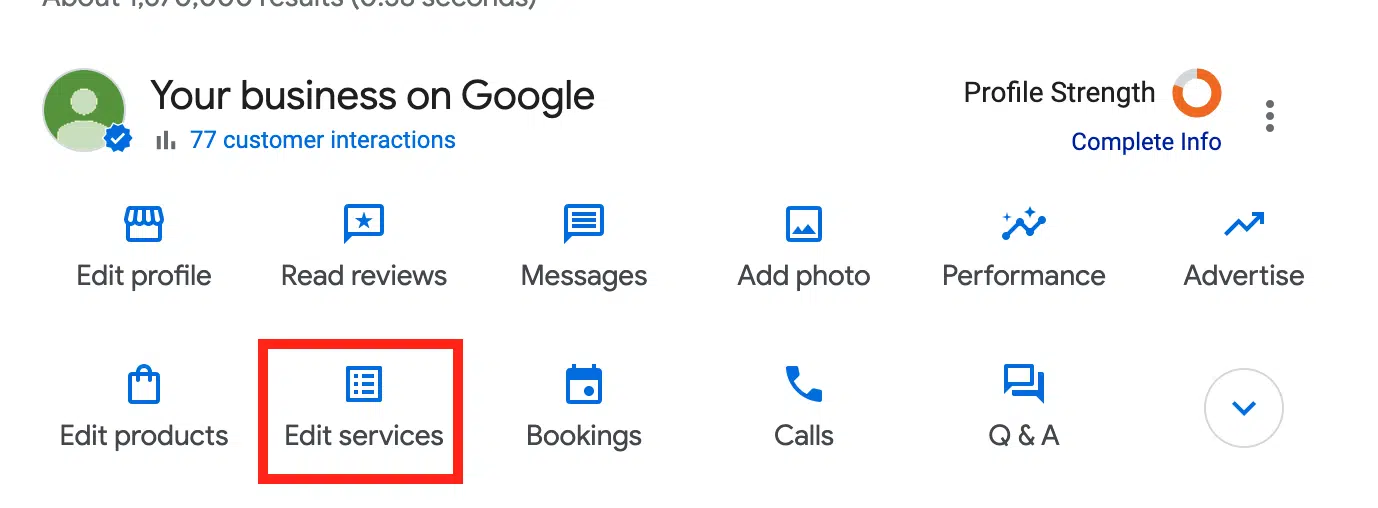
Where to find services in the GBP dashboard (NMX)

To find services in the GBP new merchant experience (NMX), you must go to the services section of the menu.

GBP - Edit services

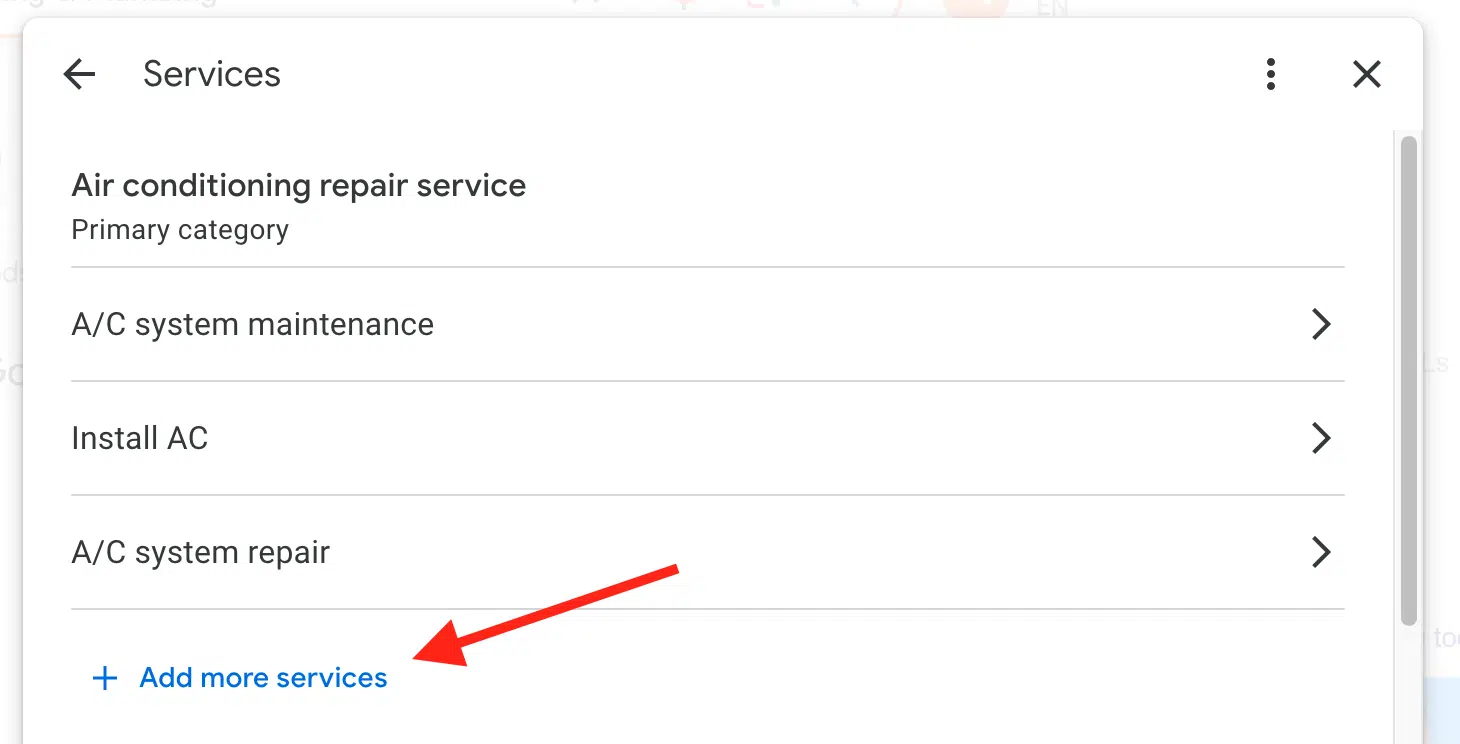
From there, you’ll see a list of your categories and corresponding services under each category.

GBP - Add more services

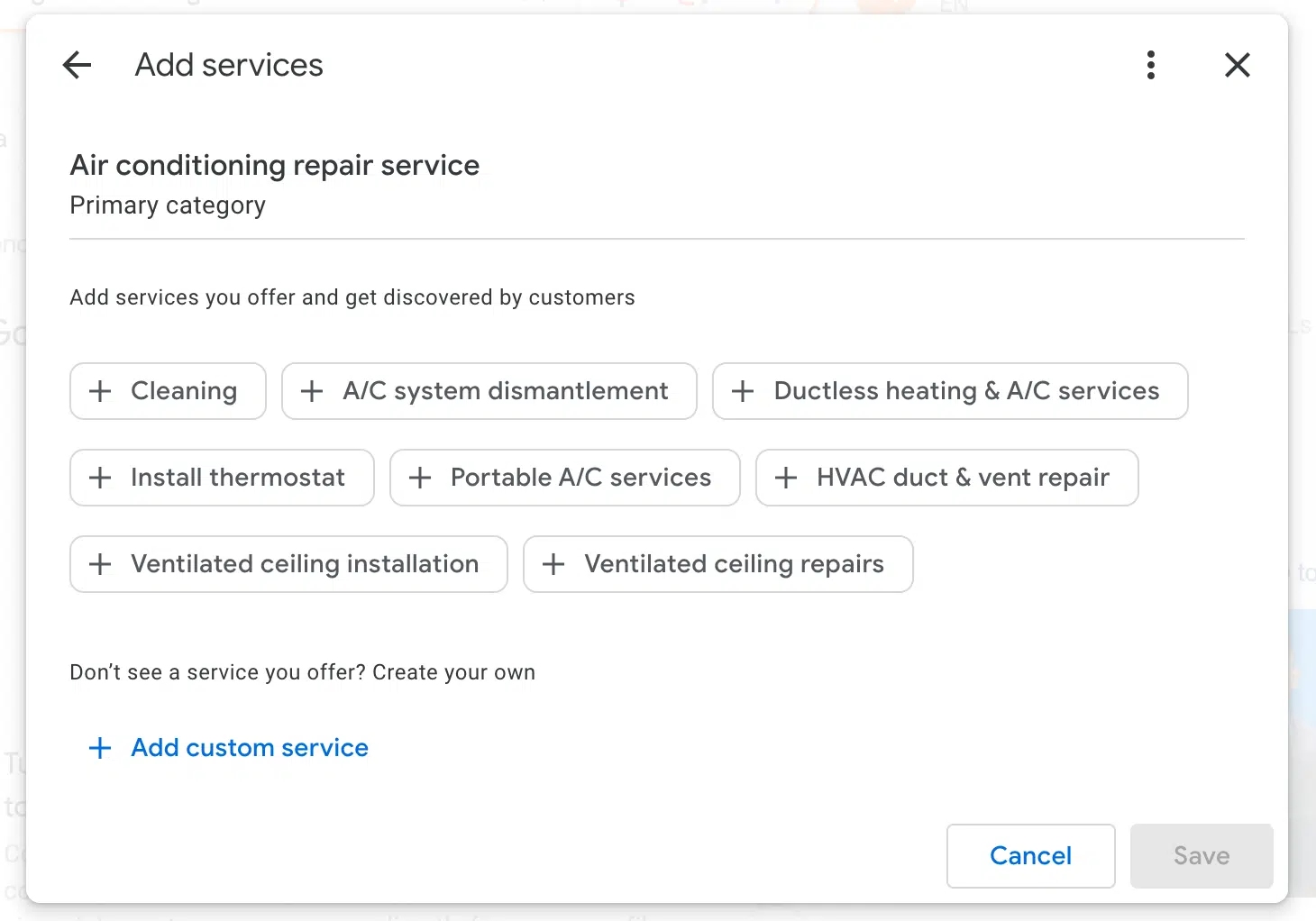
Click Add more services, and a new screen will pop up with the current services available to select under that category. Some categories have more services, while others have none. 

GBP - Add services

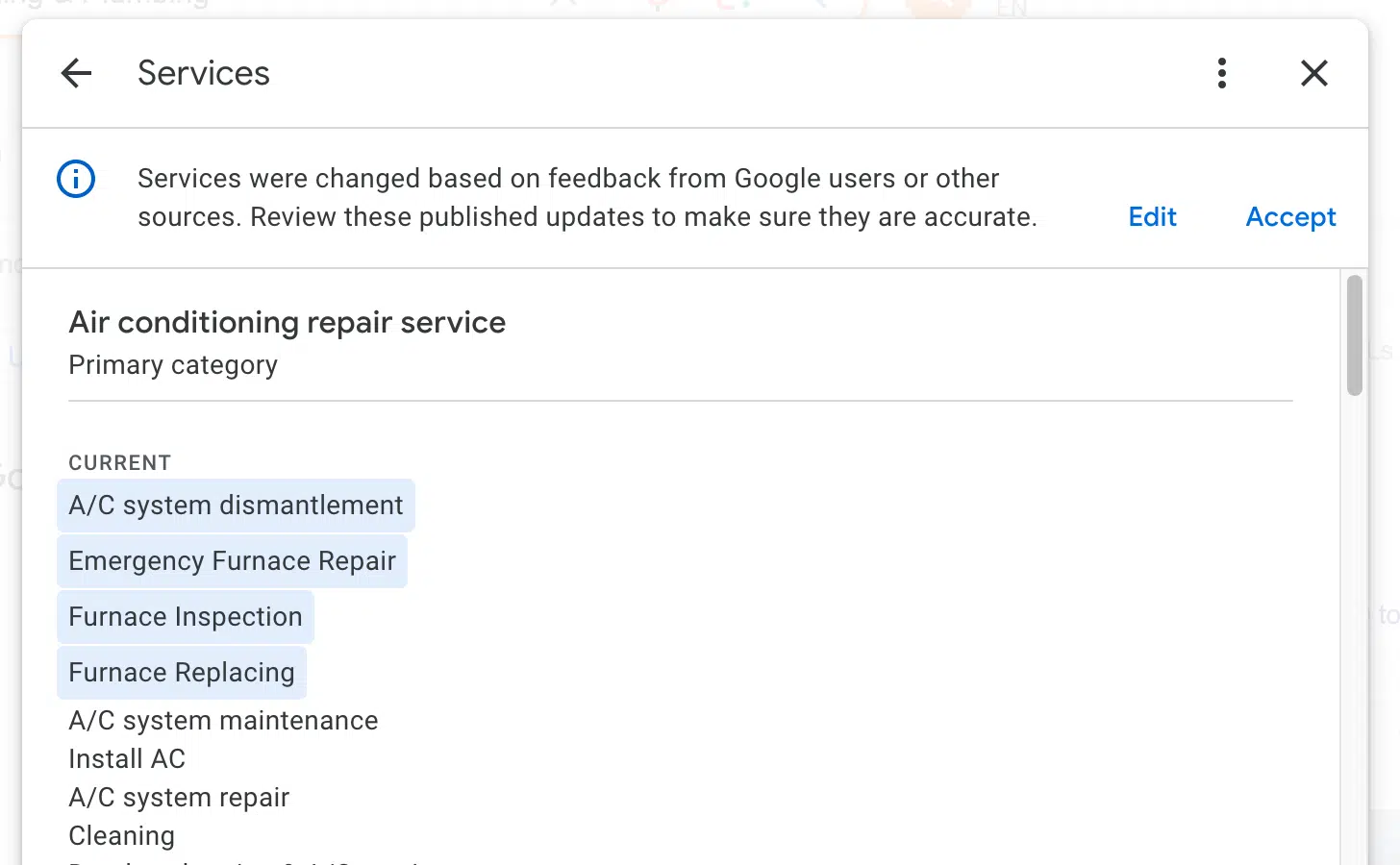
If you have any pending service suggestions to accept or remove, you need to do that first before you can click for more services.

GBP service suggestions

Do all categories have services to add?

No. Not all categories have pre-defined services you can add. However, we have noticed that Google is constantly adding new ones.

Check your GBP regularly to see whether there are any new services that are relevant to your business.

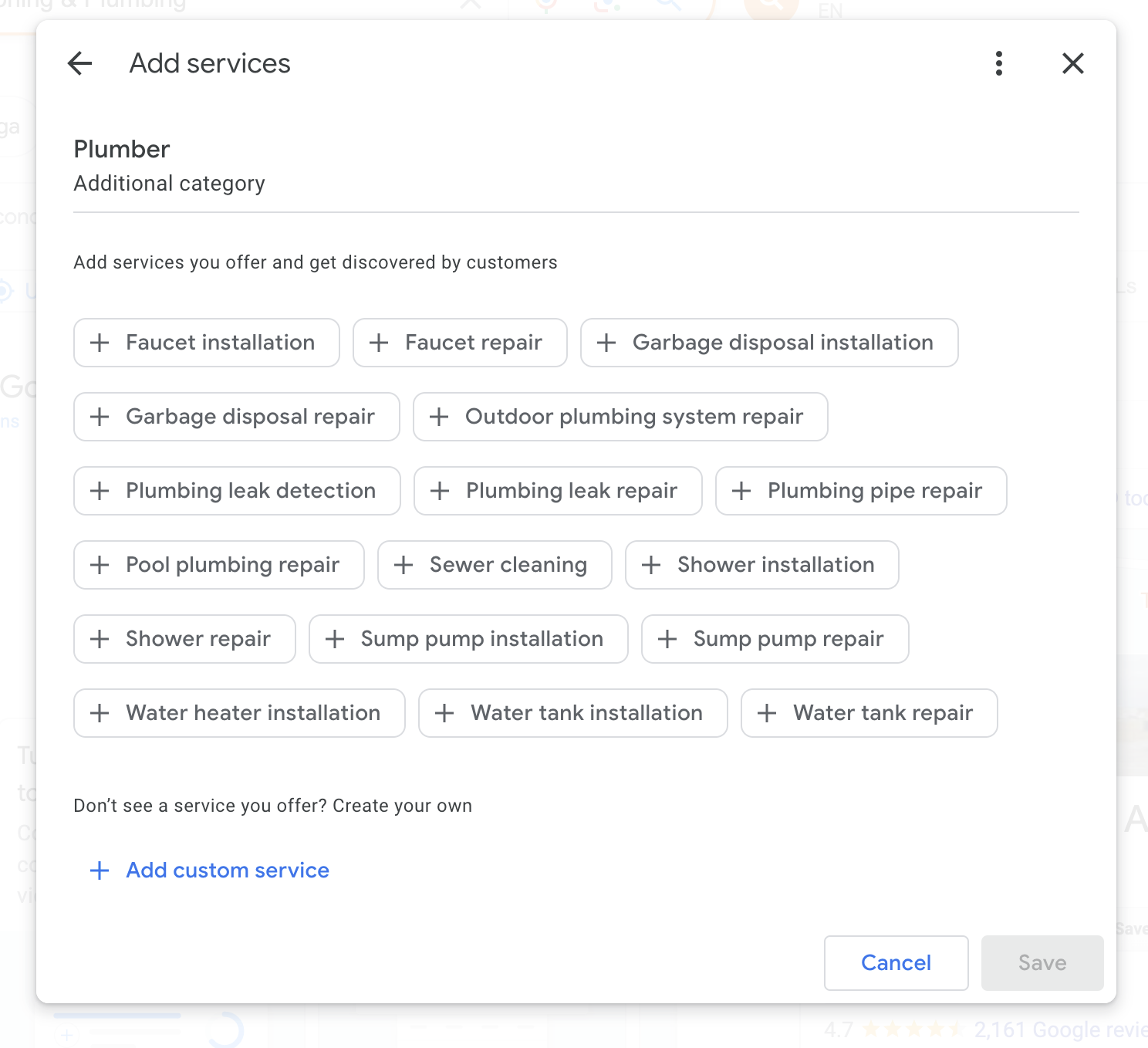
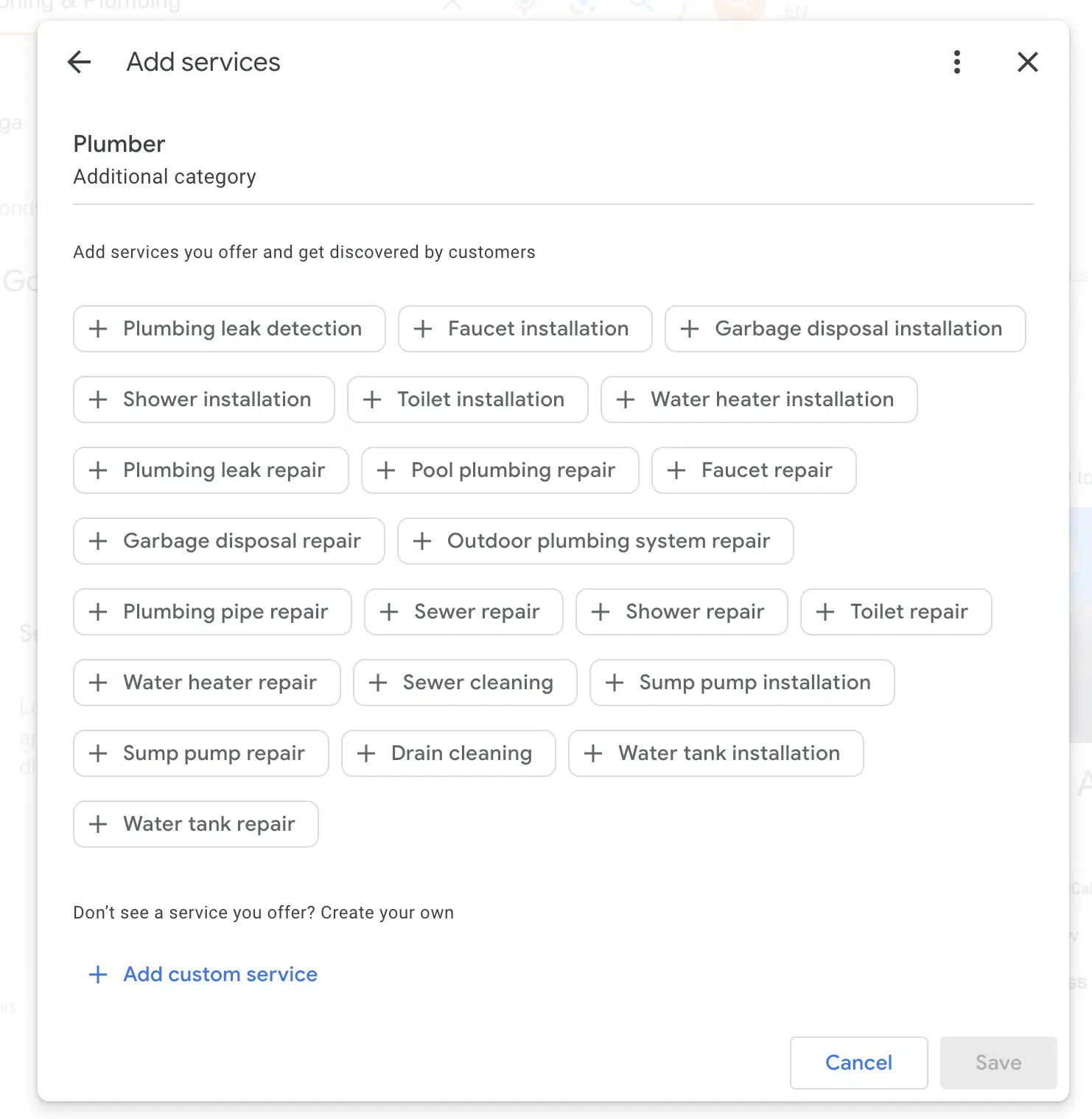
Interestingly, I have seen examples of businesses with multiple listings with different pre-defined services under their primary category. 

Plumbing business - Location 1
Plumbing business – Location 1
Plumbing business - Location 2
Plumbing business – Location 2

So if you manage multi-location businesses, ensure you’re checking services for all your locations to avoid missing out on new services.


Get the daily newsletter search marketers rely on.


How do GBP services impact local rankings?

From tons of testing, it seems that adding services in GBP helps improve both implicit and explicit keyword rankings.

This is extremely exciting, considering how hard the Vicinity update made it to rank for implicit keywords far away from your physical location. 

These services also help improve rankings for niche service-based keywords.

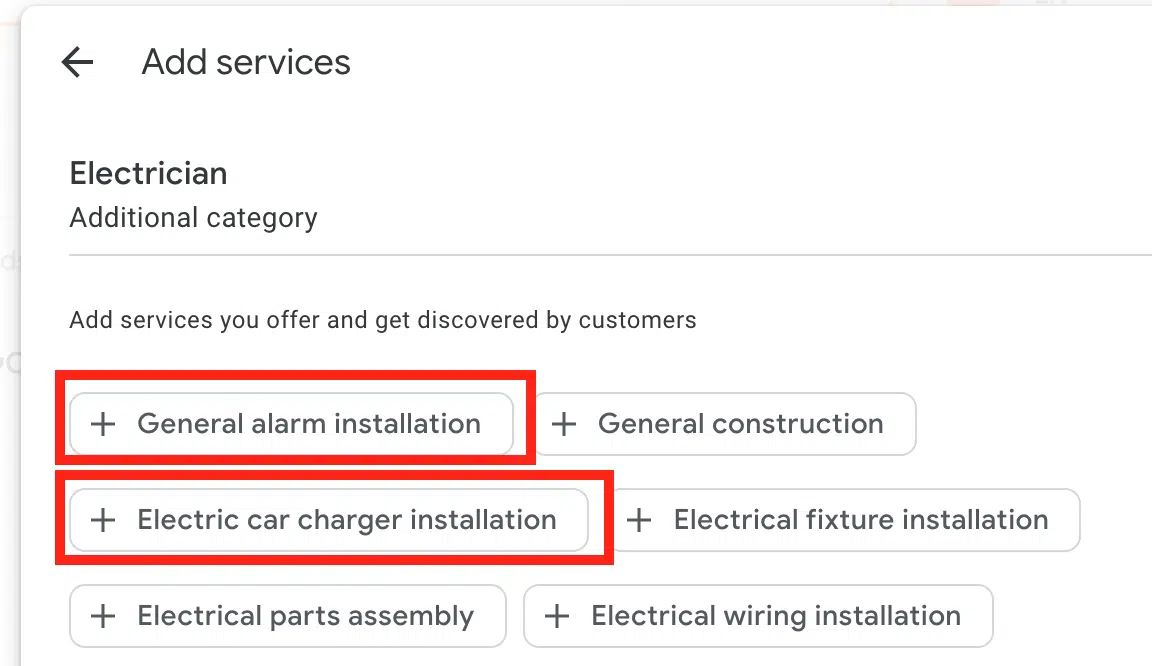
For example, under the electrician category, Google shows two services related to “alarm installation” and “electric car charging.”

Electrician services

If those are services you want more leads for, then checking those off will help improve your local visibility for searches. 

Sourcing unique content ideas from GBP

This is also great for getting content ideas, especially if you manage multiple businesses and accounts.

These predefined services can give you unique topics and keywords for your service pages that you probably wouldn’t have thought of alone.

To my understanding, Google suggests these services based on searches users have done related to the category or the industry the business is in.

In a way, Google is telling you what people are searching for. Thus, it’s worth mentioning these on your website as long as you provide that service.

Track your local search results

As with everything in local search, you should take many screenshots to track results. 

Take before and after screenshots of the SERP and local finder when adding new services to your GBP listings. 

Grab screenshots of top and related keywords and jot down a few notes of what you see. 

Then, a few days later, after you’ve added these services, retake the same screenshots and compare the differences.

The ranking impact seems to take 24 to 72 hours to take effect. I highly recommend tools like Mobile Moxie’s automatic SERP tracker to do this automatically, or you can do it manually using a location-changing extension like GS Location Changer. (Tip: use incognito and the tool at the same time.) 

I recommend tracking local rankings using a geogrid tracking tool like Places Scout or Local Falcon.

Both tools let you see how your listing ranks across a service area using pins to show rankings at specific markers within your city. 

By tracking local rankings before and after adding services to your GBP, you will likely see a nice increase in local rankings for keywords related to the services you added.

Keep your GBP strategy updated

Local SEO is constantly evolving, largely thanks to Google’s many changes to GBP. Monitor your GBP listing regularly and keep up with the latest product updates.

Google will often silently release features like pre-defined services, so stay updated with your local SEO news. 


Opinions expressed in this article are those of the guest author and not necessarily Search Engine Land. Staff authors are listed here.


Related stories

New on Search Engine Land

@media screen and (min-width: 800px) { #div-gpt-ad-3191538-7 { display: flex !important; justify-content: center !important; align-items: center !important; min-width:770px; min-height:260px; } } @media screen and (min-width: 1279px) { #div-gpt-ad-3191538-7 { display: flex !important; justify-content: center !important; align-items: center !important; min-width:800px!important; min-height:440px!important; } }

About the author

Elizabeth Rule

Elizabeth Rule is an expert local SEO analyst who has been working in the industry since 2015. She has a passion for content creation and loves working with local businesses to develop their website’s authority and expertise through well written, helpful content As a Google Business Profile Product Expert she is also in the unique position to help businesses crack the code to gain valuable visibility in local search maps and help solve complex GBP issues. Recently, she was nominated as one of BrightLocal’s Rising Stars of Local SEO 2023. She currently works as a Local SEO Analyst at Sterling Sky, a Local SEO Agency in Canada and the USA. She is also a faculty member and speaker at Local U SEO Conference.

https://searchengineland.com/google-business-profile-pre-defined-services-local-seo-427538


Boost your visibility in search with online reviews by Digital Marketing Depot

Customer reviews

The “New Business Guide to Google Reviews” by GatherUp is an essential resource for growing businesses looking to attract more customers through the power of Google search.

This comprehensive guide provides step-by-step instructions on how to claim and optimize your Google My Business profile, how to solicit and respond to customer reviews, and how to deal with Google and their overall review process.

With real-world examples and expert advice, this eGuide is a must-read for any business looking to build a better review strategy and improve their online reputation. Visit Digital Marketing Depot to download your copy.


Related stories

New on Search Engine Land

@media screen and (min-width: 800px) { #div-gpt-ad-3191538-7 { display: flex !important; justify-content: center !important; align-items: center !important; min-width:770px; min-height:260px; } } @media screen and (min-width: 1279px) { #div-gpt-ad-3191538-7 { display: flex !important; justify-content: center !important; align-items: center !important; min-width:800px!important; min-height:440px!important; } }

About the author

Digital Marketing Depot

Digital Marketing Depot is the resource center for digital marketing strategies and tactics. Created by Third Door Media, Digital Marketing Depot features a robust library of hosted white papers, eBooks, original research, and webinars on a wide range of digital marketing topics- from advertising, analytics, data and content management, to email marketing, SEO and PPC campaign management, and much more. Visit us at http://digitalmarketingdepot.com.

https://searchengineland.com/boost-your-visibility-in-search-with-online-reviews-427442


Google Search bug caused a drop in video traffic

Google has confirmed a bug in Google Search that resulted in a drop in traffic to video content between the dates of May 4 through May 17, 2023. This was not just a Google Search Console reporting bug, but a bug with Google Search.

What Google wrote. Google posted, “A bug caused a drop in video traffic from May 4 to May 17, and has since been resolved.”

I asked John Mueller of Google if this was just a reporting glitch, and he said no, it was beyond reporting. “It was not just reporting,” he told me on Mastodon.

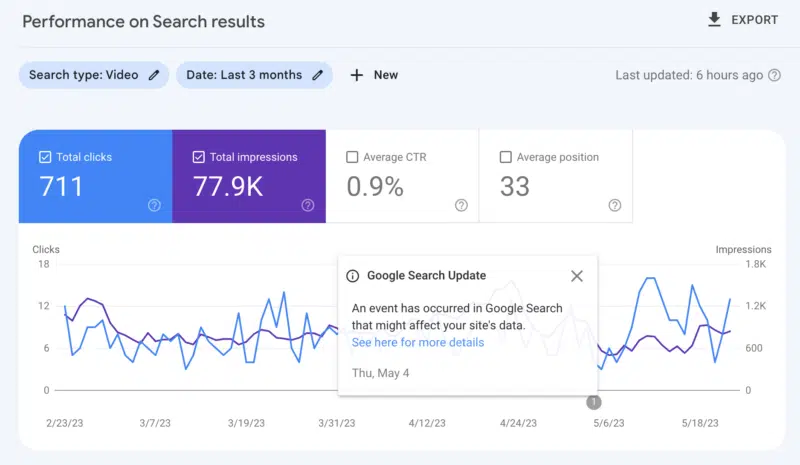
Search Console reports. If you go to Google Search Console, click on the search performance report, and filter it by “video” content, you will see an annotation added to the chart on May 4:

Google Search Console Performance Report Video Bug 1684923063 800x465

Why we care. If you noticed a drop in traffic between May 4 through May 17 and you publish a lot of video content, it may be related to this bug.

In this case, the reporting was not the issue and the reports should be accurate. There was a bug with Google Search that resulted in less videos showing up in the search results.


Related stories

New on Search Engine Land

@media screen and (min-width: 800px) { #div-gpt-ad-3191538-7 { display: flex !important; justify-content: center !important; align-items: center !important; min-width:770px; min-height:260px; } } @media screen and (min-width: 1279px) { #div-gpt-ad-3191538-7 { display: flex !important; justify-content: center !important; align-items: center !important; min-width:800px!important; min-height:440px!important; } }
About the author

Barry Schwartz

Barry Schwartz a Contributing Editor to Search Engine Land and a member of the programming team for SMX events. He owns RustyBrick, a NY based web consulting firm. He also runs Search Engine Roundtable, a popular search blog on very advanced SEM topics. Barry can be followed on Twitter here.

https://searchengineland.com/google-search-bug-caused-a-drop-in-video-traffic-427527


3 key trends impacting search marketing today

Marketers have relied on paid and organic search to deliver steady results time and again over the past decade. Changes occurred gradually, giving marketers ample time to adapt their strategies. 

But today, the pace of change in search marketing is accelerating, with more shifts expected in the next two years than in the past eight combined. 

Evolution in search has been a slow march toward automation and consolidation. To get ahead of the curve, we must stay current on what’s changing and learn the reason behind it.

Here’s a rundown of events that have a significant ripple effect on the search marketing industry. 

1. Privacy legislation and signal loss 

In May 2018, the General Data Protection Regulation (GDPR) was enforced across Europe. GDPR gave EU citizens many rights over personal data, including access to correct, delete, and port data.

Organizations that violate the GDPR can be fined up to €20 million or 4% of their global annual turnover, whichever is greater. 

Another important date for internet privacy is September 2020, when iOS14 launched on Apple devices. The update included a new feature called App Tracking Transparency (ATT), allowing users to opt out of being tracked by apps.

This change has made it more difficult for advertisers to track users across apps and websites, reducing the effectiveness of targeted advertising. This iOS update changed the landscape of digital advertising.

Another watershed event – albeit forthcoming – is on July 1, 2023, when CPRA (California Privacy Rights Act) becomes fully enacted. CPRA applies to businesses that collect personal information about California consumers, regardless of the company’s location.

The CPRA has the authority to investigate and prosecute violations of the law, and it can impose fines of up to $7,500 per violation. CPRA has some legislative teeth with heavy penalties for non-compliance.

Google has announced that it will phase out third-party cookies in Chrome by the second half of 2024. This change will significantly impact online advertising since third-party cookies are crucial for targeting ads. They enable advertisers to target specific audiences and track online advertising performance.

Google aims to improve privacy by phasing out third-party cookies, often used for tracking and advertising. By phasing third-party cookies, Google makes it harder for websites to track users across different sites. 

The browser market share in the United States looks is as follows: 

  • Chrome: 49%
  • Safari: 35%
  • Edge: 8.5%
  • Firefox: 3.5%

By the end of 2024, third-party cookies will be effectively retired, as Chrome, Safari and Firefox represent almost 90% market share of web traffic in the United States.  

Google Privacy Sandbox is developing alternative methods to target audiences and track ad performance without third-party cookies. These initiatives from Privacy Sandbox include:

  • FLoC (Federated Learning of Cohorts): FLoC proposes replacing third-party cookies with a more privacy-friendly way to group users based on their interests. FLoC would allow advertisers to target ads to groups of users with similar  53gb interests without being able to track individual users across different websites.
  • Topics API: The Topics API is a proposal to allow websites to request a list of topics a user is interested in. Advertisers can use this information to show the user more relevant ads.
  • Trust Token API: The Trust Token API is a proposal to allow websites to verify the identity of users without the need for third-party cookies. Trust Tokens can be used to prevent fraud and improve the security of online transactions.

Performance measurement and audience targeting have been the cornerstone of digital marketing.

The evolution of digital privacy has forced ad-serving platforms such as Google, Microsoft, Facebook, and others to develop new modes of targeting and measurement.

As the ad serving platforms change, marketers must also modernize their strategies to stay competitive.


Get the daily newsletter search marketers rely on.


2. Machine learning and automation 

Machine learning algorithms have advanced significantly in recent years in parallel with signal loss caused by advancing privacy legislation.

As a result of these two changes, advertising platforms such as Google, Facebook, and Microsoft are overhauling their ad platforms to rely on automation and artificial intelligence. 

Google is always playing the long game. Historically, they have known that marketers needed support with cross-campaign attribution.

In addition, Google has known for a long time that data is going to become restricted due to privacy advancement. Finally, this foreknowledge is coming to fruition with automation and consolidation. 

Google Ads introduced data-driven attribution (DDA) in September 2021.

DDA is a machine learning model that uses your account’s historical data to determine how people interact with your various ads and decide to become your customers.

DDA can help you improve your Google Ads campaigns’ performance by providing a more accurate view of how your ads contribute to conversions.

Bid algorithms aren’t exactly new in paid search advertising. Google introduced Smart Bidding in 2013 with the launch of target CPA (tCPA) bidding. The ability to bid to dynamic values such as revenue and ROAS was introduced in 2017. 

As with most changes, the adoption of these features was slow. Many advertisers did not want to relinquish control of bidding to the platforms.

Loss of control and expanded reliance on machine learning will be a continued theme for digital advertising. 

Over time, Smart Bidding algorithms have improved significantly, and they are now the preferred method of bid management. Manual bidding still occurs for some aspects of campaigns, but the usage continues to dwindle.  

As data and automation evolve, the core functionality of keywords is changing too. Google Ads changed the functionality of exact match in 2021. Previously, exact match keywords would only trigger ads for searches that matched the keyword exactly.

However, now exact match keywords can also trigger ads for searches that are close variants of the keyword. This change means ads may show for searches that include misspellings, synonyms, and other close variants of keywords.

It is no secret that Google and Microsoft have aggressively encouraged advertisers to expand into the broad match. However, many advertisers, including myself, had a negative perception of broad matches. The query matching was too general, and traffic quality was often subpar.

Over the past two years, we have expanded our broad match usage. Broad match can provide additional search coverage and revenue growth when paired with well-crafted bid algorithms. Consider testing it again if you have shied away from broad match. 

In July 2021, Google Ads retired broad match modified (BMM). Microsoft Ads followed suit by retiring their BMM offering in March 2023. This is the beginning of keyword match type consolidation.

(This is pure speculation, but Google/Microsoft will retire another match type within 12-18 months.) If I had to make a prediction, phrase match would be phased out in favor of exact (for control) and broad (for reach). 

These changes directly result from machine learning advancement within ad-serving platforms like Google Ads and Microsoft Ads. 

3. Campaign consolidation 

Data-driven attribution was an essential element for campaign consolidation within Google Ads. Google’s ad serving algorithm mastered user intent on their core search product.

The algorithms needed to understand how ads performed across channels within the Google ad ecosystem. 

Once the algorithm understood how to optimize across Google properties, that opened the door for further consolidation. Campaign consolidation first came as Smart Shopping on Google and Microsoft.

Google Smart Shopping was a campaign that allowed businesses to automatically show their product ads across Google’s search network, YouTube, Display Network, and Gmail. Smart Shopping campaigns used machine learning to optimize bids and placements. 

Throughout 2022, advertisers had to migrate Smart Shopping campaigns to Performance Max. As a result, performance Max (PMax) is the current peak of campaign consolidation.

PMax allows advertisers to access new inventory, ad formats, and audiences across all Google channels, including YouTube, Search, Gmail, Shopping, and Discovery.

Another consolidation point will include Dynamic Search Ads (DSA) into PMax. Google has not provided a specific date for this migration, but the company has said it is working on integrating the two features and expects to make the change soon.

Staying ahead of the curve

The last five years have felt like the slow incline of a roller coaster. And it feels like the next two years will be a screaming rush of the drop.

The drop will be driven by privacy legislation, machine learning, automation, and artificial intelligence. Buckle in, folks! 


Opinions expressed in this article are those of the guest author and not necessarily Search Engine Land. Staff authors are listed here.


Related stories

New on Search Engine Land

@media screen and (min-width: 800px) { #div-gpt-ad-3191538-7 { display: flex !important; justify-content: center !important; align-items: center !important; min-width:770px; min-height:260px; } } @media screen and (min-width: 1279px) { #div-gpt-ad-3191538-7 { display: flex !important; justify-content: center !important; align-items: center !important; min-width:800px!important; min-height:440px!important; } }

About the author

Joseph Kerschbaum

Joseph Kerschbaum is Senior Vice President of Search & Growth Labs for 3Q/DEPT. During his 20 years of experience in digital marketing, Joseph has worked with businesses of every size from SMBs to enterprise-scale. Joseph has been a regular speaker at digital marketing conferences for over a decade. Joseph is a regular contributor to Search Engine Land. He is co-author of the Wiley/Sybex book, “Pay-Per-Click SEM: One Hour a Day,” which was published long enough ago to be outdated but that is a good thing because SEM is such a dynamic industry.

https://searchengineland.com/key-trends-impacting-search-marketing-427505


How to convince leadership why they can’t ignore SEO

Well, it’s 2023, and we’re still trying to convince businesses that SEO isn’t just a fancy acronym for “some extra options.” 

It’s like trying to teach an old dog new tricks, except the dog is a business and the trick is “not being invisible in the search engine results.” 

Some things never change.

It’s not the company leadership’s fault. In most cases, they are aware of SEO. Still, some don’t understand the value it can bring. 

This is an issue when there’s competing budgets and the allure of other, more familiar marketing strategies.

You’ve probably heard it before, but educating leadership on SEO is one of the most important things you can do to convince them of SEO’s value. 

And that means you must show how SEO is a strategic initiative for any business – and deserves a seat at the table.

Here are steps you can take to help leadership understand why they can’t ignore SEO and why they should get excited about it. 

1. Define SEO

Depending on what type of company you’re dealing with, you may have to start with the very basics.

That means explaining what SEO actually does and how it can support basic marketing objectives.

An explanation can be something as simple as: 

  • What SEO is: SEO improves a website so that it performs better in the search engine results. 
  • The benefit of SEO: The benefit of SEO is generating more targeted traffic to the website. 
  • The goal of SEO: The goal of SEO is ultimately to make more revenue for the company by the website’s and business’s ability to convert leads coming from the search results.

2. Explain SEO’s worth

With basic concepts out of the way, you can delve deeper into why a business cannot ignore search engines as a marketing channel.

The following concepts can help:

Your target audience uses a search engine

Google processes 5.9 million searches per minute. It’s not a question of if people are on search engines. 

It’s a matter of connecting the dots between the searches that people do and the benefits to the company.

Show leadership how people search for the things the company provides (a bit of keyword data here can help). 

Then, explain how SEO supports the customer journey. For instance:

  • 71% of people turned to search engines for discovery, and 74% used them for consideration/purchase, according to Forrester research.
  • 43% of consumer goods shoppers have used search in their shopping journey to become inspired, browse or research, per Google data.

Your competition is benefitting from the search engines – and you aren’t

Have them look at the websites that appear when people search for what the company provides.

Explain to them the amount of traffic they are potentially getting from being visible in the search results.

Cite studies that demonstrate how much organic search traffic is possible from securing top spots, like this one, this one and this one.

Then explain how this traffic can amount to revenue. 

For example, across five sectors, the organic search channel contributed the most revenue at an average of 44.6%, BrightEdge research found. 

And B2B companies, in particular, generated twice as much revenue from organic search as from any other channel.

So the next question to leadership is: Would you like a piece of the pie or not?

Your digital ads are important, but what happens if you turn them off?

Digital ads are the darling of many marketing programs. More than 60% of digital spend is allocated to paid channels, a 2022 Gartner research. 

In search engine marketing, paid ads – if done well – can secure a top spot in the search results – and offer near-instant gratification.

And while pay-per-click (PPC) ads have their place, you’ll need to show leadership how putting all your eggs in one basket is not a smart strategy.

Explain what would happen if they had to turn off their ads (i.e., they’d disappear from the search results entirely).

Now contrast that with the results they may see from SEO. 

Yes, there is usually a bigger upfront investment to get things going, and yes, it can take months (six months on average) to see the results.

But once you start to realize those results, you own that traffic, meaning no one can take it away from you for nonpayment. 

Some webpages that have built value over time from SEO continue to bring in growing amounts of traffic to a website for years to come.

3. Dispel common SEO myths

Even if leadership initially sees the value, they may be skeptical. There are plenty of commonly held SEO beliefs that are false.

Now is your chance to address all the perceived pain points they have noodling around in their heads.

Here are a few:

Myth: ‘SEO is unreliable’

Maybe members of the leadership team are jaded by headlines of website traffic vanishing overnight because of an algorithm update.

They may be wary of investing time and resources into something perceived as unstable. That’s why reframing how leadership thinks about algorithm updates is important. 

So here are some talking points:

  • SEO’s job is not to beat the algorithm. We will never know exactly how the algorithm works, and we don’t have to. We just have to create a great website using SEO best practices and be “least imperfect” compared to our competitors. This will help us better weather any algorithmic storm. See my article on how to survive a Google core update and come out on top for more. 
  • Google typically gives a heads-up for major updates. If something really big is on the horizon, Google will usually give ample time to prepare. A good SEO strategy stays on top of all potential changes and responds accordingly.

A final note to drive home: Like investing in the stock market, SEO is a long-term strategy with inevitable ups and downs. But staying in it for the long haul allows websites to reap the rewards.

Myth: ‘SEO is a one-time thing’

Decision-makers may sometimes mistakenly believe that SEO is simply a matter of checking off a few items on a checklist and calling it a day. 

Nothing is further from the truth.

Make sure leadership knows that they are investing in a long-term strategy… as in for the entire lifecycle of a website.

As a business strategy in a complex and ever-changing environment (search results change, competition changes, economics change and so on), SEO is always on – proactively handling the things we can anticipate and expertly reacting to the things out of our control.

As ex-Googler Kaspar Szymanski says:

“At industry conferences, attendees hear people say that it is important to “get it right” to rank. This is true, yet not entirely accurate. Like any other company investment in assets, over time that very same investment will inevitably wear off.

Best practices of the past become outdated or downright obsolete. To keep up with the competition, especially in the more lucrative niches, SEO needs to be considered an ongoing effort with planned, periodic spurts of increased activity scheduled ahead of time.

Some factors such as snippet representation, directly impacting user experience and signals must be continuously monitored and improved. The same applies to page performance, which again is directly responsible for how users experience the website.

Other factors, such as managing backlink liabilities, may only require spot checks and be part of an annual on- and off-page SEO audit.”

In other words, a casual approach to SEO will not produce results.

Check out my article on how to implement SEO – even in the face of common challenges – for more.

Myth: ‘You can’t measure SEO’

Digital ads have ruined SEO in terms of where executives want to spend their budgets. 

The instant gratification of paying for an ad and seeing a direct result is intoxicating.

Earlier, I talked about explaining how traffic can turn into revenue. This is an important concept.

However, you also want to make sure that leadership understands the job of SEO and how it relates to other important concepts like turning traffic into revenue.

The best way to measure SEO’s success is by traffic to a website.

Let me repeat that: The best way to measure SEO’s success is by traffic to a website.

To measure, the company will need to track the website’s total number of visitors from organic search traffic and ensure it has seen positive growth over time.

But what about conversions? This is where it gets tricky. 

Here’s the thing: SEO’s job is to drive traffic. It’s a website’s/business’s job to convert those visitors. 

A good SEO program will:

  • Drive targeted traffic.
  • Create a good user experience so that visitors are more likely to convert.
  • Track conversion coming from organic traffic.

But leadership needs to know going into an SEO program that in order to reap the most rewards, they will need to invest in making it easy for a lead to convert. 

Consider all the factors that go into converting a lead – a conversion-optimized website, the company’s sales process, the price point of products or services, the product or service features, etc. 

All of these things are out of the hands of an SEO team. And so leadership needs to clearly understand that qualified traffic is the most important metric to show SEO success. 

Yes, tey will always want to know what results they can ultimately see. 

You can come armed with case studies of similar websites or businesses to show what they might expect. 

And you can explain how to use platforms like Google Analytics to see how the organic search channel contributes to leads and sales for the business. 

There are always calculations you can use to estimate SEO results. 

4. Pilot a project

Sometimes, the proof is in the pudding.

Suggest piloting an SEO project if you’ve gotten far enough with the leadership team to pique their interest.

Consider starting with an in-depth, technical SEO audit. This will show them all the website’s issues hindering search engine success.

Then, have them commit to implementing the highest priority items. 

While the results of those efforts are coming to fruition, you can think about an SEO initiative that might support a key group or business goal for the company.

Maybe it’s a website redesign, a new product or service or something else. Map out an SEO strategy to help that team or initiative be more successful. 

Sometimes small wins lead to a bigger commitment to SEO in the long run.

Guide decision-makers to the right decision

In a world where marketing channels always compete for budget, you must help make the decision easier for the leadership team to invest in SEO.


Opinions expressed in this article are those of the guest author and not necessarily Search Engine Land. Staff authors are listed here.


Related stories

New on Search Engine Land

@media screen and (min-width: 800px) { #div-gpt-ad-3191538-7 { display: flex !important; justify-content: center !important; align-items: center !important; min-width:770px; min-height:260px; } } @media screen and (min-width: 1279px) { #div-gpt-ad-3191538-7 { display: flex !important; justify-content: center !important; align-items: center !important; min-width:800px!important; min-height:440px!important; } }

About the author

Bruce Clay

Bruce Clay is the founder and president of Bruce Clay Inc., a global digital marketing optimization firm providing search engine optimization, PPC management, paid social media marketing, SEO-friendly site architecture, content development, and SEO tools and education.
Clay authored the book “Search Engine Optimization All-In-One For Dummies,” now in its fourth edition, and “Content Marketing Strategies for Professionals.” He wrote the first webpage-analysis tool, created the Search Engine Relationship Chart® and is credited with being the first to use the term search engine optimization. Bruce Clay’s renowned SEO training course is available online at SEOtraining.com.

https://searchengineland.com/convince-leadership-not-ignore-seo-427473


Google Bard adds images in responses

Bard is now showing images in responses – and Bard will show the source of each image, Google announced today.

What’s new. This update continues Google’s push to try to make Bard more visual and useful – now by showing images from Google Search in responses.

Bard now includes Google Search images for visual responses, when relevant. You can also specifically ask Bard for images. Clicking on an image will show its source. This update is limited to English responses.

What it looks like. In this Twitter thread from @JackK (Jack Krawczyk, senior director of product, Google), you can see examples of it in action:

Why. In a new entry on the Bard updates page, Google explained:

Images can help you communicate your ideas more effectively. They can bring concepts to life, make recommendations more persuasive, and enhance responses when you ask for visual information.

Why we care. Google has been integrating more of Search into Bard. This new addition of imagery may offer some more benefits of image optimization, now that Bard may surface your images in Bard.

More coming soon. Google Bard plans to add:

  • Support for more languages.
  • The ability to generate images.
  • The ability to prompt Bard with images using Google Lens.

Related stories

New on Search Engine Land

@media screen and (min-width: 800px) { #div-gpt-ad-3191538-7 { display: flex !important; justify-content: center !important; align-items: center !important; min-width:770px; min-height:260px; } } @media screen and (min-width: 1279px) { #div-gpt-ad-3191538-7 { display: flex !important; justify-content: center !important; align-items: center !important; min-width:800px!important; min-height:440px!important; } }
About the author

Danny Goodwin

Danny Goodwin has been Managing Editor of Search Engine Land & Search Marketing Expo – SMX since 2022. He joined Search Engine Land in 2022 as Senior Editor. In addition to reporting on the latest search marketing news, he manages Search Engine Land’s SME (Subject Matter Expert) program. He also helps program U.S. SMX events. Goodwin has been editing and writing about the latest developments and trends in search and digital marketing since 2007. He previously was Executive Editor of Search Engine Journal (from 2017 to 2022), managing editor of Momentology (from 2014-2016) and editor of Search Engine Watch (from 2007 to 2014). He has spoken at many major search conferences and virtual events, and has been sourced for his expertise by a wide range of publications and podcasts.

https://searchengineland.com/google-bard-image-responses-427511