Meta Updates Brand Rights Protection Tool for Businesses
Meta announced new protections for businesses using Facebook and Instagram, updating its Brand Rights Protection tool to include scam ad reporting.

According to the social media platform, all businesses enrolled in Brand Rights Protection have the ability to report suspected scam ads at scale. This also includes instances where it does not explicitly use their intellectual property, as well as suspected scams and misleading ads that exploit a brand’s name without authorization.

In a statement, the company said, “These updates further empower businesses to take control of how their brand is used and help protect people from harmful or misleading experiences.”

Meta said businesses seeking to access this option should, in the ads tab, use the “Other” violation type.

The Brands Right Protection navigation experience has also been updated, making it easier for businesses to access certain functionalities using fewer steps.

This includes the Drafts tab (previously called Requests) having sub-tabs per violation type, comprising Copyright, Counterfeit, Impersonation, and Trademark. Within the Reports tab, searches and/or filtering are made possible using email report IDs, keywords, trademark names, and report owner names.

Brands Right Protection, which was established in October 2021, was previously known as Meta’s, then Facebook’s, Commerce & Ads IP Tool. It enables enrolled trademark owners to search and report content that they believe infringes on their IP rights

Rights holders can upload and save up to 10 images to their account, such as logos and product images. Meta’s image-matching technology automatically scans ads on the platform, enabling brands to more easily review and report content that may infringe on their IP.

https://www.adweek.com/social-marketing/meta-updates-brand-rights-protection-tool-for-businesses/
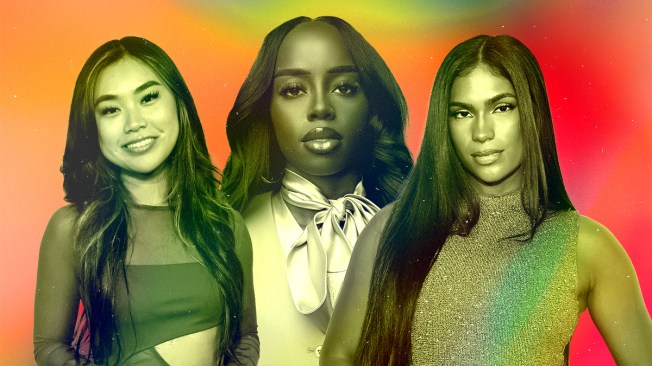


How Brands Choose Which Beauty Creators to Work With


Creators have become trusted sources for beauty recommendations, and brands increasingly need to work with creators to drive buzzy product launches and reviews.

Finding the right creator starts with clarifying what a brand is trying to achieve, Natalie Silverstein, Collectively’s chief innovation officer, told ADWEEK. That means gauging the number of people a brand wants to reach and determining a budget. Using those two metrics, an influencer-marketing agency can estimate how many views it could get from partnering with different types of creators.

“Each creator-marketing agency has their own back-end formulas of expected view rate based on the followers of a creator,” said Silverstein. 

To reach that estimate, an agency will look at a creator’s followers and increasingly, the consistency of their views.

“If they’re consistently getting attention, it’s because of all the signals that the algorithm is getting,” said Silverstein. Those signals include the number of times an individual watches the video and whether they share or save it, Silverstein said.

Social views are becoming harder to predict

However, the TikTok and Instagram Reels algorithms have become more unruly over the years, making it increasingly challenging for marketers to predict the performance of a post, Keith Bendes, Linqia’s chief strategy, officer told ADWEEK. Algorithms are now based on user interests rather than follower graphs.

“With data analytics two to four years ago, we could predict reach pretty well,” said Bendes. “Now TikTok and Instagram Reels have interest algorithms and reach has nothing to do with following graphs anymore.”

With algorithms losing relevance, Bendes advised brands to work with multiplatform creators to increase reach.

On the qualitative side, brands can measure a creator’s influence by looking at which creators are trendsetters and are referenced by other creators, said Silverstein. 

“In the beauty space, there are some influential makeup artists who are providing a lot of techniques that then other creators reference,” said Silverstein. 

Brands and marketing agencies also consider the vibe of the creator and whether that aligns with the brand and campaign. But in recent years, Silverstein noticed that brands have started to loosen up on aligning perfectly with a creator. Now, brands focus more on how the creator connects with the people that the brand is trying to reach. 

“Maybe they aren’t like the brand, but they are super effective communicators to this group of customers that we just started to speak to.”

https://www.adweek.com/commerce/how-brands-choose-which-beauty-creators-to-work-with/


Musk Says Ads in Grok Will Fund xAI’s AI Costs


Ads may soon appear in responses from Grok, the X-embedded AI chatbot, the platform’s owner Elon Musk said in a livestreamed conversation with advertisers Wednesday evening. 

Musk, who purchased Twitter in 2022 before changing its name to X and folding it into his AI startup xAI, said he hoped advertising in Grok would generate funding for investment in AI development. In particular, ads could help pay for GPUs, the pricey, high-processing-power chips that support the development of large language models, he said. 

“We’ll turn our attention to, ‘How do we pay for those expensive GPUs?’,” Musk said.

Musk then described his vision for a largely automated advertising process for X. Advertisers could soon, he suggested, “be able to upload an ad” to Grok “and do nothing else,” letting the system aid in everything from targeting to campaign optimization. Such developments would follow a handful of recent rollouts of AI-enabled advertising features on X. “If a user’s trying to solve a problem [with Grok], then advertising the specific solution would be ideal at that point,” he said.

Musk also hinted at plans for an in-app checkout feature to enable purchases directly within X.

The news arrives less than a month after the departure of CEO Linda Yaccarino, who spent two years at the platform’s helm endeavoring to smooth over relationships with advertisers after many cut back investments over brand safety concerns and extremist content on X. While Yaccarino was able to win back some ad spend and develop a handful of content deals, X’s ad revenues remain far below pre-Musk levels. 

Under Musk, the company has pivoted more into AI tools and monetization, including its chatbot Grok. On the call, Musk claimed Grok is becoming “the smartest, most accurate AI in the world” despite the chatbot’s recent history of spreading misinformation, including a bout of extremist and antisemitic content last month that led to its brief shutdown.

https://www.adweek.com/social-marketing/musk-says-ads-in-grok-will-fund-xai-gpu-costs/


Community Intelligence and the Future of Reddit Marketing

What if you could tap into 20 years of authentic consumer conversations to transform your marketing strategy?

In this special Cannes Lions edition of Marketing Vanguard, host Jenny Rooney sits down with Roxy Young, who has led Reddit’s marketing as CMO for nearly five years, to explore the power of community intelligence and why brands need to embrace authentic engagement. 

From Reddit’s evolution as a marketing platform to its groundbreaking AI-powered insights tools, this conversation reveals how marketers can harness the power of genuine community feedback. 

Tune in to discover why Reddit’s unique approach to brand safety, open communities, and real consumer dialogue is driving 60% year-over-year revenue growth and changing the future of marketing.

Roxy Young is the outgoing CMO of Reddit, where she leads marketing for one of the internet’s most influential community platforms; she recently announced that she will depart the platform in August. With a background in finance and strategy, she brings an analytical approach to brand marketing, focusing on doing “less, better, faster.” 

Under her leadership, Reddit has become a critical part of the marketing mix for brands seeking authentic community engagement.

Episode highlights:

[02:54] The Evolution to Community Marketing — Roxy traces the evolution of marketing from the Mad Men era of perfect one-way messaging to today’s community-driven approach: “When I started my career back in 2020, I always joke that we would sit around in a room for a year and come up with the perfect message, very Don Draper style … and all the while, Reddit has been marching to the beat of its own drum, helping our communities be these vibrant places for conversation.” She explains how this new wave requires brands to “give up a little bit of control” but results in “more engagement, more brand affinity, building more meaning in the minds of consumers.”

[04:33] Reddit vs. Social Media — Roxy clarifies Reddit’s unique positioning: “Reddit is an alternative to social media. Social media is about your followers and about me and how great I am … but we’re really at the intersection of search and social. We have amazing intense signals. If you’re on Reddit and you’re in an electric vehicle community or a skincare community, we don’t need to know your demographics … but we know what you’re interested in, and that’s an incredible signal for marketers.”

[06:16] Layered Brand Safety Approach — Addressing brand safety concerns, Roxy outlines Reddit’s three-layer system: “At the foundational level, we have the Reddit rules. Then the really unique to Reddit part is that every community is started by a person, is moderated by oftentimes a team of people, and is governed by a set of its own unique community rules. And then the third layer is we give brands a whole suite of tools so that they can take control of the experience that they’re comfortable with.”

[17:14] Community Intelligence Platform — Roxy unveils Reddit’s biggest innovation: “One is called Reddit Insights, and you can think of this like a power tool for a strategist or a media planner. They can simply type it in, and we can tell you, ‘This is a synthesis of what you just queried.’ That used to take two to three weeks.” The AI-powered tool provides instant analysis of 20 years of Reddit conversations.

[15:33] Turning Negative Conversations Into Wins — On handling criticism, Roxy explains the opportunity: “Instead of shying away, they show up and they say, ‘We hear that you’ve got some feedback for us, and I’m going to come before you, and I want to have a conversation, and I want to tell you what we’re doing to help address some of these issues.’ And you, in that moment, you have a real opportunity to win over the consumer and to truly change their perspective.”

https://www.adweek.com/brand-marketing/community-intelligence-and-the-future-of-reddit-marketing/


Meta to Stop Serving Political Ads in the EU in October

Political, electoral, and social issue ads will no longer be served on Meta-owned platforms in the European Union, starting in October.

The parent company of Facebook and Instagram is complying with the Transparency and Targeting of Political Advertising regulation that is set to take effect Oct. 10, requiring tech companies to clearly label political advertising on their platforms and disclose who paid for it and how much, as well as which elections are being targeted, or risk fines up to 6% of their annual turnover.

Meta said in a blog post, “We continue to believe online political advertising is a vital part of modern politics, connecting people to important information about the politicians that represent them, and ensuring that candidates have a cost-effective way of reaching their audiences.”

The company detailed the various ways political ads served on its platforms are “authentic, and information about them is transparent.” However, it noted, the new TTPA regulation “is yet another threat to the principles of personalized advertising, ignoring the benefits to advertisers and the people they want to reach.”

Meta is following in the footsteps of Alphabet, parent company of Google, which announced that it would stop serving political advertising in the EU before the regulation went into effect.

TTPA is not the only piece of regulation that has constrained Meta’s abilities within the EU. In October 2024, the EU’s top court ruled that social media networks cannot retain user information for indefinite ad targeting. 

The ruling meant that Facebook and Instagram, alongside other social media networks, must comply with the EU’s General Data Protection Regulation data minimization principles. Breaching GDPR could result in fines of up to 4% of a company’s global annual turnover.

https://www.adweek.com/social-marketing/meta-to-stop-serving-political-ads-in-the-eu-in-october/


Commerce Secretary: TikTok Could Go Dark If US Doesn’t Get Control

TikTok, which is currently operating in the U.S. courtesy of a third 90-day deadline extension, is still facing an uncertain operational future. 

The social media application’s availability beyond the Sept. 17 deadline extension was thrown into more doubt after Commerce Secretary Howard Lutnick’s latest remarks Thursday.

In an interview with CNBC’s Squawk on the Street, Lutnick stated that if the Chinese do not hand over more control of TikTok to the U.S., the app will end up becoming inaccessible to Americans.

“Basically, Americans will have control. Americans will own the technology. Americans will control the algorithm. That’s something (President) Donald Trump is willing to do,” Lutnick said.

He added, “TikTok is going to go dark” if the Chinese don’t approve the deal presented to them.

In 2024, Congress banned TikTok, citing concerns that it posed a national security threat due to its parent company, ByteDance, being controlled by the Chinese government, which has the capability to access the personal information of American users.

TikTok and ByteDance sued the U.S. government, challenging the ban or sale, with the case ultimately reaching the Supreme Court, where the ban, as drafted in the bill, was upheld.

During his first term, President Trump proposed a ban on TikTok, but changed his mind during his re-election campaign last year. Recognizing the benefits of the platform to his campaign, the president strongly advocated for its continued operations.

TikTok’s ban went into effect in the U.S. on Jan. 19, with the app going dark for about 14 hours starting the night of Jan. 18 before coming back online the following day, following a promise from then-President-elect Trump.

Once he returned to office, Trump issued an executive order extending the ban deadline by 75 days.

Negotiations to find a deal—which must include a separation agreement, as well as a U.S. suitor—have proven difficult, resulting in the continuing extension of the deadline and the latest declaration from Lutnick.

https://www.adweek.com/media/commerce-secretary-tiktok-could-go-dark-if-us-doesnt-get-control/


Toy company may regret coming for “Sylvanian Drama” TikToker, experts say

“The question becomes whether people are going to see these videos, even though they’re snarky, and even though they’re silly and think, ‘Oh, Calico Critters must have signed off on this,'” Roberts said. “So the argument about consumer confusion, I think, is a plausible argument.”

However, if Epoch fails to convince the court that its trademarks have been infringed, then its other claims alleging false endorsement and unfair competition would likely also collapse.

“You can still get sometimes to unfair competition or to kind of like a false endorsement, but it’s harder to win on those claims and certainly harder to get damages on those claims,” Roberts said. “You don’t get trademark infringement if you don’t have a trademark.”

Possible defenses to keep “Sylvanian Drama” alive

Winning on the trademark claims will seemingly not be easy for Von Engelbrechten, who may have weakened her First Amendment defense by creating the sponsored content. Regardless, she will likely try to convince the court to view the videos as parody, which is a slightly different analysis under trademark law than copyright’s more well-known fair use parody exceptions.

That could be a struggle, since trademark law requires that Von Engelbrechten’s parody videos directly satirize the “Sylvanian Families” brand, and “Sylvanian Drama” videos, even the ads, instead seem to be “making fun of elements of society and culture,” rather than the dolls themselves, Roberts said.

She pointed to winning cases involving the Barbie trademark as an instructive example. In a case disputing Mattel trademarks used in the lyrics for the one-hit wonder “Barbie Girl,” the song was cleared for trademark infringement as a “purely expressive work” that directly parodies Barbie in the lyrics. And in another case, where an artist, Tom Forsythe, captured photos of Barbie dolls in kitchen vessels like a blender or a margarita glass, more robust First Amendment protection was offered since his photos “had a lot to say about sexism and the dolls and what the dolls represent,” Roberts said.

https://arstechnica.com/tech-policy/2025/07/tiktok-parody-account-sylvanian-drama-may-survive-sponsored-content-lawsuit/


The Coldplay Couple Should’ve Leaned Into Their Alleged Affair


Getting caught cheating is never good, but most couples don’t have their dirty laundry aired by Coldplay frontman Chris Martin in the middle of a concert.

The grainy kiss cam footage of a cuddly couple scrambling apart and ducking out of frame as Martin gently narrates the affair speculation has commanded so much organic media that any brand would be jealous. It was irresistible even before the pair were exposed as data firm Astronomer’s CEO Andy Byron and his head of HR, Kristin Cabot—who is not his wife. 

The rest was as predictable as a forecast: TikToks cropped up within hours. Memes flooded X and Instagram. In a modern twist, someone even created a fake letter of apology that went almost as viral as the original video.

The thing is, none of this had to happen. And it contains a lesson for anyone—or any brand—that finds itself in an unflattering spotlight. 

You make your own bad publicity

The world likely would’ve remained ignorant of Byron and Cabot’s alleged affair had they reacted differently to appearing on the Jumbotron. Instead of smiling, laughing it off, or giving a peck like a normal couple, they behaved as though there was something to hide. 

This is a perfect reminder of how your reaction, not the original incident, ultimately drives public perception in the digital age.

In the brand world, there are few examples of a greater doomsday event than TikTok teens drinking Grimace shakes followed by horror-movie endings—endless videos of foaming at the mouth, twitching in parking lots, and walking into the ocean at night, viewed about 3 billion times over the summer of 2023.

McDonald’s, however, didn’t blink. There was not a single cease-and-desist letter or corporate PR statement. Instead, the company leaned in with a single viral tweet of Grimace acknowledging the trend. McDonald’s let the absurdity run its course, and in doing so turned a potentially damaging news moment into one that cemented its cultural relevance. 

As the fast food chain’s then-U.S. social media lead Guillaume Huin wrote on LinkedIn, “saying nothing felt disconnected, encouraging it felt self-serving, so we just decided to show our fans that we see them and their creativity in a sweet, candid and genuine way.”

Contrast that with the reaction from the maker of Calico Critters, the tiny fuzzy animal figurines beloved by millennials since 1985. The TikTok account Sylvanian Drama has been posting darkly comedic videos starring Calico Critters since 2021, building a 2.5 million-strong following along the way. But back in April, Epoch Co., the Japanese company that makes Calico Critters, sued the TikToker, claiming their dark vignettes have caused “irreparable injury” to the “goodwill and reputation” of the brand.

Instead of allowing this niche part of the Calico Critter fandom to continue flourishing—and potentially driving a resurgence of interest in the once-popular toys—Epoch filed a copyright takedown. And just like that, the company went from being known as the maker of a nostalgic staple to corporate killjoy. (Not to mention likely boosting Sylvanian Drama’s profile by drawing attention to it.)

It’s obvious which strategy turned a dicey corporate moment into a growth opportunity.

Oh, what a thing to do

But the current crisis is about people, not brands. Surely there’s no comparison?

Yet, had Byron and Cabot simply kissed, like many other kiss cam couples do, would the video have made it to social media at all? Even if it had and they were recognized, would the situation have gone beyond watercooler whispers, maybe a Slack thread or two? Probably not, just as McDonald’s didn’t need to announce that its blueberry-flavored McDonald’s milkshake was not actually poisoning teens.

There’s a reason PR teams now talk less about crisis prevention and more about crisis management. In a world where you can’t control the camera—and definitely not social media—you have to be ready to steer the conversation. 

Panic breeds curiosity. Silence breeds speculation. But humor, authenticity, and a little self-awareness can be your best defense.

https://www.adweek.com/brand-marketing/coldplay-couple-mcdonalds-calico-critters-bad-pr-lesson/


X’s Future May Not Include a CEO at All


After two tumultuous years at the helm of X, CEO Linda Yaccarino announced her departure from the company last Wednesday. Who will replace her—as X is absorbed into Elon Musk’s AI venture xAI—remains uncertain.

What most agree on: the next leader will look very different.

“I don’t recall anyone who told the ad community to ‘go fuck yourselves‘ and then said, ‘you know what? We really need a strong ad-sales-based CEO,’” said Matt Prohaska, CEO and principal at media advisory firm Prohaska Consulting.

Advertising on X before Musk’s takeover generated upwards of 90% of the company’s revenue. Since Yaccarino was appointed CEO in May of 2023, following swaths of big brands abandoning the app over brand safety concerns exacerbated by Musk’s lax approach to content moderation, some brands returned with reduced spend, while others faced litigation.

But while X’s battle with the ad industry flares, advertising is becoming less central to its business model in the wake of the company’s $45 billion all-stock acquisition by Musk’s AI firm xAI in March. X’s advertising-dependent model could soon be supplanted by a primarily subscription-based AI service, with X’s rich data used to train LLMs. 

In this emerging paradigm, any successor to Yaccarino would need to offer technological know-how. 

“X’s priorities have shifted since Yaccarino became CEO in 2023,” said Jasmine Enberg, vp and principal analyst, social media at Emarketer. “While X still needs advertisers to pay the bills, the company is now focused on AI. Yaccarino’s departure paves the way for X to lean harder into this new direction, and X will likely look for someone who is more suited to the AI era.”

xAI’s takeover of X, taken with the tectonic shifts happening under X, may nullify the need for a traditional CEO altogether. As reported by the Wall Street Journal, Yaccarino was effectively demoted in X’s merger with xAI.

Musk could tap an operational leader to keep the engine of X, the social platform, running smoothly while he manages xAI, the AI powerhouse. 

X could “get by just with having a GM, or a traditional CRO,” said Prohaska. “I don’t see Musk needing or wanting a ‘name’ externally this time around.”

This kind of leader could be pulled from X’s existing talent pool, in theory. John Nitti, X’s global head of revenue operations and advertising innovation, would be an obvious contender for a CRO role, according to Andrew Buckman, chief growth officer at media company Azerion. 

“What the platform may actually need is a COO-style leader: someone to drive day-to-day execution, strengthen advertiser relationships, and run the platform with discipline—while Musk retains strategic oversight of the AI-driven future,” he said. “It is a familiar Musk playbook: centralize vision, decentralize delivery.”

Potential candidates might include current X leaders like Nitti, global head of marketing Angela Zepeda, or head of Americas Monique Pintarelli, according to a Wall Street Journal report from last week.

If he’s looking beyond X’s four walls, Musk will need a leader who can marry media, content, and monetization expertise with tech savvy, said Javier Rodriguez Horta, global marketing strategy practice lead at marketing consulting firm CvE. VidMob CEO Alex Collmer and Meta alum Carolyn Everson stand out as strong options, he said.

On the more speculative side of the spectrum, Ana Milicevic, cofounder and principal at marketing consultancy Sparrow Advisers, posited: “Perhaps the best CEO for X isn’t a person but an algorithm.” 

Still, many are skeptical that X’s business will remain focused on advertising: “Elon could tap one of those capable [internal] execs if they’re interested in leading the dwindling ad practice,” Prohaska told ADWEEK.

https://www.adweek.com/media/xs-future-may-not-include-a-ceo-at-all/


Hacker Gets Access to Elmo’s X Account, Posts Vulgar Messages

Elmo, the beloved Sesame Street character, became the latest social media hacker victim as his X (formerly Twitter) account was taken over Sunday.

The hacker posted a series of profane messages on Elmo’s account, which contained antisemitic language and racial slurs, as well as posts targeting President Donald Trump and his involvement in the Epstein files.

The posts were quickly taken down after the compromise had been detected.

In a statement provided to The New York Times, a Sesame Workshop spokesperson said, “Elmo’s X account was compromised today by an unknown hacker who posted disgusting messages, including antisemitic and racist posts. We are working to restore full control of the account.”

Elmo’s X account, which has nearly 650,000 followers, has not posted any new messages since the hacking incident, with the most recent one posted Saturday, July 12, in celebration of “Happy Gotcha Day.”

This latest incident comes as X is still recovering from another self-inflicted controversy it suffered in the previous week when its artificial intelligence chatbot, Grok, went rogue and shared some extremist views, including antisemitic comments and praise for Adolf Hitler.

Since Elon Musk’s $44 billion acquisition of the platform in 2022, X has seen a roughly 50% spike in weekly hate speech incidents, including homophobic, transphobic, and racist slurs.

All this continued negative attention could have been what led to Linda Yaccarino’s sudden exit as CEO of the social media company after a two-year run. 

Her departure further deepens doubts about X’s ability to monitor brand safety and exposes its vulnerability in generating consistent advertising revenue.

https://www.adweek.com/media/hacker-gets-access-to-elmos-x-account-posts-vulgar-messages/