How Women Are Fighting Back Against Online Bullying — and the Tech Companies That Allow It

The new film ‘Netizens’ details the threats to life and livelihood women endure and what they’re doing about it.

April 24, 2018 6 min read

Untold numbers of women endure horrific threats and abuse online. The new film Netizens, which premiered at the Tribeca Film Festival this past weekend, not only illustrates the problem but criticizes how little legislators and major social media platforms, including Twitter, Snapchat and Facebook are doing about it.

“I hunger for you, Anita. It consumes me every day,” an abuser identified as “Kevin Langham” wrote in a 2014 tweet depicted in the film. “I want to hold you in my arms. I’m going to choke the life out of you.”

That “Anita” is Anita Sarkeesian, the cultural critic who has often taken on Gamergate and others in the misogynist world of online gaming. In return for her stance, Sarkeesian has suffered frightening tweets like the one above, and others too crude to quote. In the film Sarkeesian showed a photo of a jar of semen sent online. when she speaks publicly, the film poinrws our, the venue is typically protected by armed guards and swept by bomb-sniffing dogs.

Related: SXSW Festival Cancels Gamer Panels After Threats of Violence

In a panel discussion following a Saturday screening of the film in New York, Sarkeesian — a San Francisco entrepreneur who with her team of four creates the video series Feminist Frequency — addressed possible responses to the online abuse women face from gamers, ex-boyfriends and other venomous sources.

“My concerns are that these platforms were built from the ground up by white men and tested on their families and people in their orbit who looked like them, and they never thought about how their platforms could do harm,” Sarkeesian said. “So, what happens is that when [a platform] takes off and you have millions of users, it’s putting Band-Aids on this geyser of harm and chaos on their platforms. … Can you ever fix a platform where the foundation is fundamentally flawed?”

“Netizens” panel at Tribeca Film Festival included (right to left) filmmaker Cynthia Lowen, Tina Reine, Anita Sarkeesian and Carrie Goldberg.

Image credit: Joan Oleck

Sometimes yes, the critic herself acknowledged. She consults with major tech companies, including those in social media, Sarkeesian said. And, “It’s fascinating to be in a space as long as I have, doing this work and [seeing] how rapidly we have come to recognize that online harassment is real.

“Five or six years ago, when I met with Twitter, there were five or six people on their safety team; and they were like, ‘Nah, we don’t have an [issue].’ And, I’m like, ‘What?’ Now, there’s a safety council and they try to communicate with us about what we’re doing, I don’t know the specifics of whether it’s working or not but that’s such a huge difference.”

Related: Twitter Offers New Filter, Cracks Down on Abuse

Certainly that difference doesn’t work for everyone, the film pointed out in its profile of two other women.

One was Tina Reine, a Miami-based carbon commodities trader and aerialist who once delivered a TEDx talk about dancing as a springboard to girls’ self-confidence. Reine’s personal history became the obsession of a hateful ex, whose extensive online defamation of her caused a potential and at least one actual employer to dismiss her.

In one of the film’s most telling scenes, Reine, who during the filming was eking out a living teaching gymnastics to children, signs up for a Toastmasters course. There, she explains to a skeptical fellow student, who is male, that what she had been encountered wasn’t just a free speech do-or-die situation: It had wrecked her life emotionally and financially, she told him.

“Every time I give out my name,” Reine said elsewhere in the film about her ongoing struggle, “I know I’m about to be judged because I know eventually they’re going to Google me and see what’s there, and they’re going to judge me.” 

Also profiled in Netizens was New York-based attorney Carrie Goldberg. Goldberg became a lawyer specializing in online abuse, she recounted in the film, because she too had suffered online defamation and couldn’t find counsel who knew enough about social media to help her fight back.

In one of the film’s most emotional scenes, Goldberg is shown opening boxes at a storage facility that have been labeled “tainted,” because the clothing and jewelry they contain are items she wore during the abuse she suffered from a man she dated for just four months.

She’d put her possessions in storage, she said in the film, because she’d had to move to a more secure apartment — that was how scary the threats from her ex were.

“New York doesn’t have a revenge porn law because our politicians are doing nothing about it,” Goldberg says elsewhere in the film. “This is not what the First Amendment is about.”

The Brooklyn-based attorney was in the news two years ago for filing complaints against New York City schools for actions taken against female students who’d alleged sexual attacks by male students. In one case Netizens describes, a Brooklyn girl’s assault was actually recorded and posted online. The girl became the target of taunts; the principal responded by telling her to stay home because her presence “would make things worse.”

In an era when Mark Zuckerberg can be called on the carpet by Senate investigators because of possible wrongdoing by Facebook over the Russian hacking scandal — and at a time when researchers are actively examining whether social media is psychologically, maybe even physically addictive — revenge porn as a public policy issue is on the ascent. 

Related: Reddit to Crack Down on Abuse After CEO Is Targeted

The internet, the film’s website declares, is becoming “the next frontier of civil rights.” And the film’s speakers underscore that view.

“How do we get the platforms to recognize that this is a problem that is actively harming their users? What do these platforms stand for?” Sarkeesian asked rhetorically during the panel. “Do they want Nazis on their platform?

“I’m tried of giving them this free [free speech] waiver over what is happening … The platforms are not built with human users in mind.”

https://www.entrepreneur.com/article/312392


Snapchat Integrates Shopping Ads Into AR Lenses by @MattGSouthern

Snapchat is giving advertisers the ability to sell products with custom augmented reality (AR) lenses, which users can add to selfie photos and videos.

Shoppable AR lenses are currently being piloted by four different brands, including Adidas, Clairol, STX movie studio, and the developer of Candy Crush.

When Snapchat users add shoppable AR lenses to their photos and videos, a button will appear that can lead to either an app install page, a product page, or a URL of the advertiser’s choice.

When a user taps on the “Shop Now” button they are seamlessly directed to a product page without leaving the app.

Snapchat’s shoppable AR lenses are sold through its self-serve automated ad platform via a bidding process which starts at $100 per day. Shoppable lenses will not cost any extra compared to Snapchat’s existing ad products.

These ads could be particularly effective at pushing products and apps toward a younger demographic. Peter Sellis, Snap’s director of revenue product, says more than half of the 13-to-34-year-old US population uses a Snapchat AR lens each week on average.

Across all demographics, Snapchat lenses are used by 70 million people on a daily basis.

http://tracking.feedpress.it/link/13962/8898561


11 Ways to Skyrocket Your Ecommerce Sales on Twitter by @shane_barker

Want to effectively drive more ecommerce sales?

Have you tried Twitter?

Consider this:

  • Twitter users shop online at least 6.9 times in a month, while non-users shop online only 4.3 times per month.
  • Plus, 49 percent of female shoppers on the platform say they have been directly influenced to make purchase decisions after seeing Twitter content.

Twitter lets you engage with – and win over – your target audience.

You can entice Twitter users with content that showcases your products in the most positive light.

The ecommerce opportunities on Twitter are virtually endless.

Here are 11 of the most effective ways you can skyrocket your ecommerce sales using Twitter.

1. Start by Building Interest

You can’t just post photos or videos of your product and expect people to start buying. There’s a lot more to selling on Twitter than that.

You have to begin by creating your brand presence and then building interest in your product.

You must establish yourself as a company or brand they can relate to.

Want to engage with potential customers and get their attention on Twitter?

For example, you could:

  • Create relatable memes or posts that are relevant to your industry or your products.
  • Watch for trending hashtags that will enable you to join popular (relevant) conversations.

ecommerce

Hobby Lobby, for example, makes use of the #NationalCraftMonth hashtag, which is perfect for their store.

Their tweet contained a picture collage of crafting ideas and a link to their DIY Crafts Pinterest board.

This is likely to provide interested users with craft inspirations that could compel them to make a purchase.

2. Create a Hashtag Campaign

One of the best ways for brands to build their Twitter presence is by creating their own hashtag and making it trend.

This can help you gain plenty of recognition and attract potential Twitter followers – and hopefully more sales.

There are a few rules to successfully executing a hashtag campaign on Twitter.

The hashtag should be:

  • Unique.
  • Relevant.
  • Simple.
  • Catchy.

The goal here is to compel people to create content and use the hashtag so you can gain visibility on the platform.

ecommerce

Hashtag campaigns when there’s a chance for users to get rewarded for using the hashtag.

1-800-Flowers, for example, ran a #WomenWhoWOW hashtag campaign on occasion of Women’s Day. Participants stood a chance to win purple roses and a gift card.

3. Engage with Influencers

Influencer marketing is a smart way to promote your content or products, depending on your agreement with the influencer.

This will improve the visibility of your brand and help you gain the attention of an enthusiastic audience.

But it’s crucial that you work with influencers who are relevant to the products you’re selling, so you can reach an audience that will be interested in the promotion.

Here are a few tools you can use for identifying and engaging with relevant influencers:

  • Grin is an excellent platform for identifying influencers according to a relevant category. It allows you to narrow down your search using location filters, engagement rates, etc. You can manage campaigns and keep track of your ROI right on the platform.ecommerce
  • Socialpeeks uses mentions, hashtags, and keywords to help you discover the most relevant influencers you can partner with for your campaign. A team will also handle the process of building genuine relationships with the influencers on your behalf.ecommerce
  • NeoReach offers a wide range of filters such as locations, demographics, interests, etc. so you can effectively narrow down your search. You can also easily manage your contracts and influencer relationships right on the platform.ecommerce
  • HYPR is another handy influencer marketplace that you can use for discovering relevant influencers for your campaigns. There is a detailed audience analytics of each influencer profile, so you can clearly see which influencers your target audience likes.ecommerce
  • BuzzSumo is another excellent platform for discovering Twitter influencers. The tool displays useful stats about each influencer such as Domain Authority, Page Authority, Retweet Ratio, Average Retweets, etc.ecommerce

4. Engage People Using Twitter Chat

Twitter chats are perfect for encouraging conversations between brands and consumers.

They help you prove just how responsive your brand is, while you gain a better understanding of how people feel about your brand.

You can use the opportunity to:

  • Solve people’s issues.
  • Provide answers to their queries.
  • Get to know your audience better.

In short, organizing Twitter chats on a regular basis will enable you to build a strong relationship with your audience. This improves your chances of winning their loyalty and in turn, encourages them to make repeat purchases from your store.

There are several tools you can count on to successfully organize a Twitter chat.

TweetChat is easy to use, allowing you to filter conversations by hashtag. You can also pause the tweets or slow them down so you can take your time reading them and responding to them.ecommerce

Tchat.io is another one of my favorite tools for organizing and managing Twitter chats. Its clean interface makes it easy to navigate. It allows you to easily switch between multiple hashtags that you’re managing.

5. Learn from Your Competitors

If you have competitors who are already performing really well on Twitter, you should make an effort to learn from them.

Do you notice that their tweets are getting plenty of engagement? Try to see what they’re doing differently.

Maybe they’re using more pictures or maybe they’re adding fun CTAs to their tweets.

Try to implement their ideas in your own Twitter marketing effort.

You could also monitor their posting frequency and posting schedules. Maybe their timing is just right to engage their audience and you could try following the same schedule.

In addition, try to analyze the audience of your competitors and see how you can engage with them.

Tools like Twitonomy are ideal for competitor research on Twitter. Just enter the Twitter handle of people you wish to research and you’ll be able to view their post frequency, followers, and following. You can even gain information about the users they interact with the most.ecommerce

6. Showcase the Different Uses of Your Product

If you want people to buy your product, you need to help them understand all the ways in which they can use it.

Use Twitter to showcase the different benefits and uses of the products that you sell. The goal is to instill a desire in people to try your product and inspire them to make a purchase.

Bath and Body Works does a great job of displaying their products in a highly appealing manner.

They try to showcase all the different contexts in which people can use certain products.

In the following tweet, for example, they’ve shown a product in a way that makes it perfect for use during Spring Break:

ecommerce

7. Target Relevant Users with Sponsored Tweets

In spite of all of the effort you’ve put in to attract a relevant audience, there are times these users still won’t notice you.

But there’s a way to ensure that you attract and engage your ideal audience.

With the help of sponsored tweets, you can target users whose characteristics are similar to that of your best customers. You can make sure that these users notice tweets that are relevant, relatable, and engaging and eventually compelling them to buy from you.

Retailers such as UNTUCKit have been able to experience the benefits of sponsored tweets.

ecommerce

In addition to running an always-on campaign, UNTUCKit launched seasonal campaigns to encourage users to shop for gifts. They experienced impressive results from the campaign, reducing their cost per acquisition by 12 percent.

8. Improve Your Targeting with Twitter Remarketing

To further enhance your targeting efforts, you can set up Twitter remarketing and reach users who have shown some interest in your products.

Instead of simply showing your ads to each and every user, you can increase the likelihood of conversions by displaying them to people who have visited your site before.

This will also help you reduce expenses on clicks that don’t turn into conversions.

Clothing retailer iClothing was able to increase their Twitter engagement significantly with the help of remarketing. In addition to testing different creative elements in their ads, they also focused on reaching users who have already shown an interest in their products.ecommerce

iClothing targeted users who have visited their website or made a purchase from them in the past. They also targeted users who have added some items to their cart.

Their goal was to reach an audience that’s already primed to make a purchase. As a result of this campaign, they were able to reach an engagement rate of 25 percent.

9. Improve Visibility with Twitter Cards

Twitter cards are perfect for ecommerce stores that will improve the visibility of your products in tweets.

Having them enabled on your website will ensure that when someone shares your product page on Twitter, it will display some of the useful information about said product.

In other words, it displays a snippet of the product page, showcasing details such as stock availability and product pricing.

This is useful for ecommerce websites since there is a limit to the number of characters allowed in one tweet. So these Twitter cards will make up for the limitation by ensuring that your audience can get more detailed information about what you’re selling.

Brands like MVMT have been able to leverage Twitter cards along with their Twitter advertising campaigns.

ecommerce

Their campaign resulted in a 353 percent increase in their Black Friday and Cyber Monday sales. Their traffic also increased by 189 percent during this period.

10. Keep Track of Performance Using Twitter Analytics

In addition to learning from your competitors, you can learn from your own performance.

Use Twitter Analytics to understand how your different tweets have been performing over time.

You can gain a better understanding of which tweets tend to engage your audience the most and which users seem to be the most engaged.

All of these stats will help you determine ways to switch up and improve your content mix.

11. Don’t Hesitate to Apologize for Mistakes

Everyone makes mistakes. Brands owning up to their mistakes and resolving to correct it can win consumers’ trust significantly.

You too can leverage this and make use of Twitter to apologize for your mistakes and resolve customer issues.

This is a great way to publicly display just how dedicated you are to helping your customers, which can win over other potential customers as well.

Here’s Zappos wowing us again with their personalized and considerate customer service.ecommerce

Conclusion

These are some of the best ways you can skyrocket sales in your ecommerce store with the help of Twitter. Some of these tips are more about building relationships as opposed to making direct sales. But it’s vital to build these relationships now because you can ensure loyalty and repeat purchases later.


Image Credits

Featured Image: Shutterstock, modified by editor
Screenshots: Taken by author, March 2018

http://tracking.feedpress.it/link/13962/8882979


Facebook Gets Instagram’s ‘Boomerang,’ and an AR Drawing Tool by @MattGSouthern

Facebook’s mobile app has been updated with some enhancements for Stories — an augmented reality (AR) drawing tool and Instagram’s popular Boomerang feature.

Yes, that means Facebook is still trying to make stories happen on its network, but this time it finally has something unique. The AR tool is a feature that neither Instagram or Snapchat currently offer.

Instagram and Snapchat offer ways to draw on top of videos, but not like this. Facebook’s AR drawing tool allows users to create 3D drawings that will hold their place in the room, regardless of where the camera moves.

See the GIFs below for some examples of the AR tool in action.

Facebook users can access this feature by tapping the camera icon, just as they would when taking a regular photo or video. While in camera mode there will be an icon near the top that looks like squiggly lines. Tap that icon and start drawing.

John Barnett, Product Manager at Facebook Camera, says this is just the first step in a series of similar updates to come:

”We’re seeing that people enjoy drawing on top of the photos they take; 3D drawing is a new feature that uses augmented reality to let people actually draw in their world. We did a lot of UX research to figure out what types of brushes and tools people would like and use most and will be releasing more options over the coming months.”

In addition to 3D AR drawings, Facebook stories can now be created with Instagram’s popular Boomerang feature. A ‘boomerang’ is a 3-second looping video without sound.

With these features added, will we finally see more Facebook users posting stories? The company sure isn’t giving up on this feature any time soon.

http://tracking.feedpress.it/link/13962/8849115


Instagram Makes it Easy to Follow People by Scanning ‘Nametags’ by @MattGSouthern

Instagram is reportedly in the process of rolling out a new feature which is similar to Snapchat’s QR codes.

The new “Nametags” will make it easier to follow people on Instagram that you meet in real life, and easier for them to follow you back.

Instagram will generate an image that is unique to each user. Another user can then scan the image with the Instagram app to automatically follow that person.

At least one user has reported seeing this feature in the wild, and has sent screenshots to TechCrunch. A brief video has been created to demonstrate this feature.

[embedded content]

In addition to making it easier to follow people you’ve met, Nametags could easily be use in marketing pieces as well — such as posters, catalogs, handbills, business cards, and so on.

Instagram has not officially commented on this feature yet, other than confirming to TechCrunch that it’s indeed being tested.

http://tracking.feedpress.it/link/13962/8848139


Digital Marketing in 2018: How to Boost Customer Satisfaction?

With the rise of the web, people’s approach to making purchases has changed significantly. They are now aware of how important they are to small businesses trying to survive in such a competitive marketplace. And, in return for their loyalty, they expect you to provide them with the exceptional buying experience and they won’t accept anything less than that.

Your customers not interested in your products only. Namely, they want to know the story behind your brand, as well. They expect you to answer their questions fast, connect with them on social networks, and create relevant and interesting content. They don’t want to waste their time, either. If your site takes more than 3 seconds to load, they will abandon it and look for your competitors. The same goes for your navigation, mobile-friendliness, content, and the overall visual appeal of your site.

Given all these facts, here is how you should do digital marketing in 2018.

Prepare for the Google Mobile-First Index

If you haven’t heard yet that Google has finally rolled out their mobile-first index, then you’re living under a rock. This has become one of the hottest news in the digital marketing sphere, but what does it actually mean? From now on, Google will focus on the mobile version of your site when indexing it.

So, make sure you optimize your site for mobile searchers. After all, 60% of all web searches are done via mobile devices. Make your keywords longer and more conversational to optimize them for voice search. Use Google’s AMPs to speed up your site significantly. Your navigation should be simpler, while all important elements of your website should be above the fold. For additional information, take a look at what Google says about preparing your site for the mobile-first index.

Show Appreciation

Do you know that an average U.S. household participates in about 29 loyalty programs? They love them for different reasons- some join these programs to save money, while others want to receive a reward for their loyalty. For some, the availability of rewards programs is the major factor that determines whether they will buy from you or not.

Now, loyalty programs vary and you need to choose the option that works for your target audience. You could give them points or vouchers that can be later redeemed at your stores or offer them exclusive deals for every purchase or referral they make. However, recent studies point out that people have labeled financial rewards or highly targeted incentives far more enticing. So, to make customized loyalty programs, you could offer personalized visa gift cards, with your customers’ names on them or even organize a contest and let them win your premium products.

Focus on User-Generated Content

Let’s face it- people trust other customers more than you. According to the Local Customer Review Survey, 85% of them trust online reviews as much as their friends, while 73% of them will trust your business more if your customers’ reviews are positive.

In light of statistics like this, it’s obvious that user-generated content (UGC) is one of those tactics you simply cannot allow to ignore. After all, it’s your customers that sell your products today.

Use your social networks to invite people to share their own videos of your products or services.

Boost the visibility of this content by sharing it regularly and creating dedicated hashtags.

Most importantly, you need to know what works for each of the social networks you use. Share live stories and videos on Facebook, post photos on Twitter, while the user-generated content your Instagram account could be the combination of these forms of UGC.  

Use Social Networks to Offer Instant Feedback

In the past, your communication with your customers was based on phone calls and emails. However, the times have changed and, today, your communication channels cannot be observed in isolation. All instant messaging apps, video conferencing tools, social networks, email providers, and telemarketing strategies are highly intertwined, creating what we call the omnichannel approach to communication.

Today, your customers can move from one device to another uninterruptedly. They can find your phone number on your site and call you instantly, not having to switch between different apps. They can scan your QR code that will lead them to the piece of content they want to read or a product they want to buy. They can stumble upon your business on social networks, read the reviews, ask questions, and follow the link to your site to learn more about you.

If you’re too busy answering your customers’ messages regularly, then hire someone to do so for you. Even better, use a chatbot. Even this is still a pretty new concept, chatbots are predicted to revolutionize the digital marketing industry in 2018. Namely, these AI-powered tools have become smarter and more intuitive. They will provide your customers with relevant, real-time feedback and, at the same time, do all repetitive and time-consuming tasks for you.

You can use social media monitoring tools to keep track of your brand or product mentions. Whenever someone mentions you, you’ll get notified. This is called social listening and it’s immensely important in providing your customers with real-time customers services and collecting their feedback.

Create Interactive Content

Gone are the days when you could write a 1000-word blog post and generate a bunch of links, shares, and comments. We’re living in the era of augmented reality and people expect your content to surprise and excite them. So, update your content strategy with interactive content, the one your customers can actively participate in, such as polls and quizzes. Don’t forget about visual content, especially videos, as they’re expected to account for 82% of the total internet traffic by 2020.  

Tell your Customers a Story

You’re not doing content marketing for SEO purposes solely. You’re creating your content for your customers. And, to engage them and get them emotionally involved, each article you write needs to have a good story to back it.

That’s what storytelling is about.

Namely, 92% of people emphasized that they expect all major brands to create ads that feel like stories. Stories share a real-life experience, add the human element to your brand promotion, and evoke nostalgia and empathy. Most importantly, as they don’t seem overly promotional, they will take your relationship with your customers to a completely new, more personal level.

Over to You

Digital marketing is not about promoting your business and ranking higher on Google. It’s also about building and nurturing strong relationships with your target audience. That’s exactly what will set you apart from a sea of businesses similar to yours.

Hope these tips help!

Digital Marketing in 2018: How to Boost Customer Satisfaction


Instagram to Let Users Save Their Data by @MattGSouthern

Instagram is in the process of building a tool that will allow users to export their data.

The forthcoming tool will work similar to the tool offered by parent company Facebook, which lets users download everything they’ve ever shared on the network.

Facebook CEO Mark Zuckerberg recently confirmed that his company intends to comply with the European General Data Protection Regulation (GDPR) rule, which requires all data to be portable.

That’s the most likely reason behind a data export tool being added to Instagram. Although compliance with GDPR is not required in the US, changes made as a result of complying with GDPR will be also be reflected in the US versions of Facebook and Instagram.

An Instagram representative confirmed this tool is in the works, stating:

”We are building a new data portability tool. You’ll soon be able to download a copy of what you’ve shared on Instagram, including your photos, videos and messages.”

Few other details are known at this point.

http://tracking.feedpress.it/link/13962/8836263


LinkedIn Integrates GIFs into Messaging by @MattGSouthern

LinkedIn has teamed up with Google-owned company, Tenor, to integrate GIFs into direct messaging.

Tenor was acquired by Google only weeks ago, but continues to operate as an independent brand. It would appear that includes being able to integrate its services with products from other companies.

Google utilizes Tenor to power its GIF search, which is also what it will be doing for LinkedIn. Tenor will allow LinkedIn users to search for GIFs within messaging and send them to others immediately.

LinkedIn says 7 in 10 Americans use GIFs and other visuals in conversations, which includes work communication.

It can certainly be suggested that GIFs are an odd fit for a professional network, but there are no shortage of GIFs being sent through other professional channels like Slack and email. So it stands to reason GIFs would be welcomed on LinkedIn as well.

With that being said, LinkedIn adds the following disclaimer:

”Just make sure to take into consideration if it’s acceptable in your workplace — think about your company’s culture, your professional relationship with the person, and the industry you work in to decide if it makes sense to send a GIF.”

GIFs in LinkedIn messaging are in the process of rolling out now, and the company says the feature will be available worldwide in the coming weeks.

http://tracking.feedpress.it/link/13962/8834401


Facebook Discusses How Feed Algorithm Works by @martinibuster

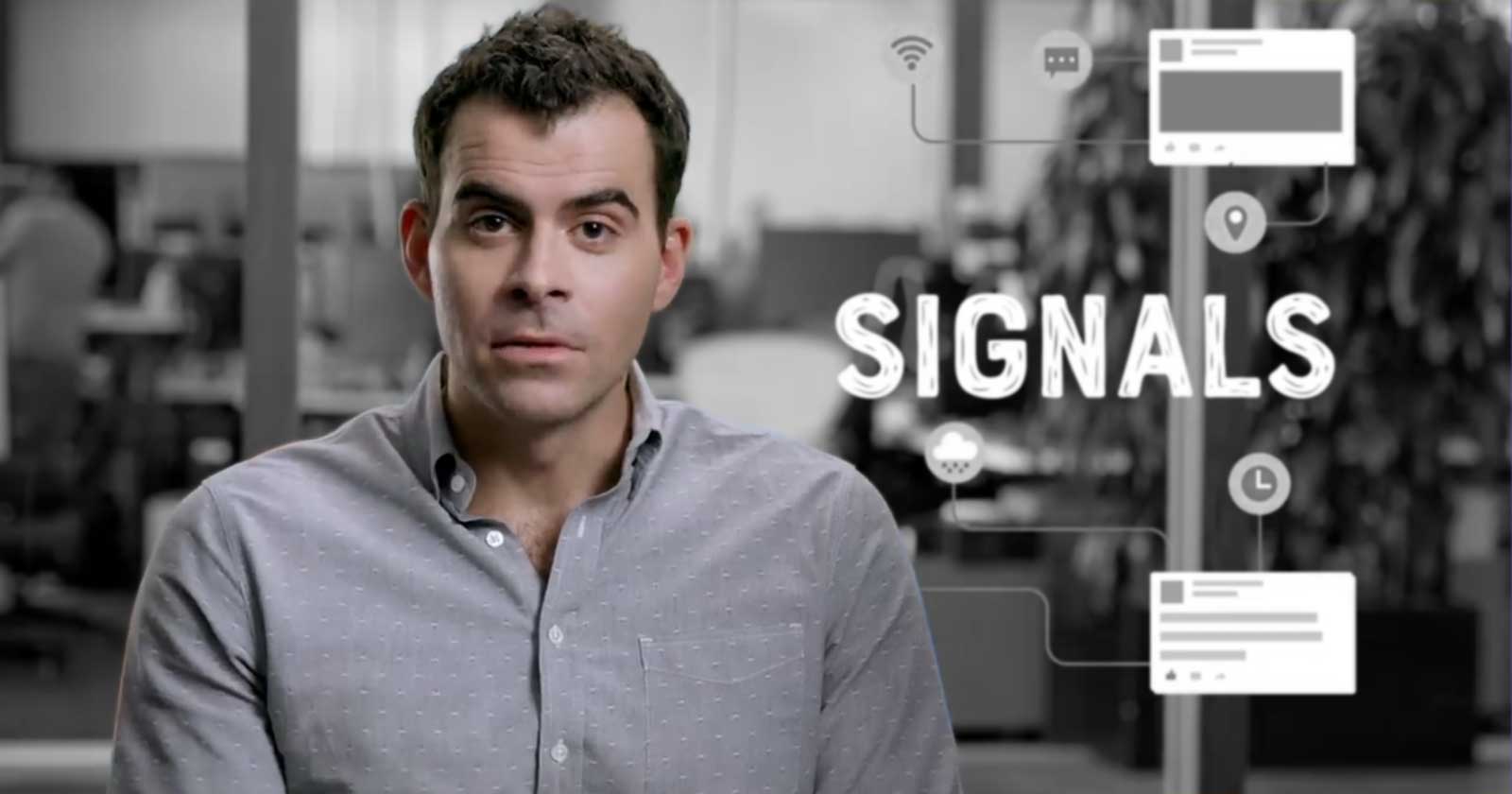
Adam Mosseri, the Head of Facebook News Feed, provided a video walk through of how their news feed algorithm works. I then compare what he said to a Facebook patent that lists him as an author and find an interesting takeaway that may help you get your Facebook posts seen by the most people.

Adam Mosseri described how Facebook uses a process called Ranking to “organize” which stories you’ll see in your news feed. That word organize is very important. According to Adam Mosseri, the average person has thousands of things to read in their news feed every day.  The following is a description of how Facebook organizes that information and most importantly, what that means to you.

The Facebook Algorithm has Four Parts

Facebook uses an algorithm in order to organize that information for their members. Their algorithm is divided into a series of four steps. The four steps are called:

  1. Inventory
  2. Signals
  3. Predictions
  4. Relevancy Scores

Rather than summarize what he said, here’s a transcript of the relevant parts of his video describing how Facebook’s news feed algorithm works:

“In Ranking we have names for these steps. The first, we call Inventory, what’s on the menu. The menu are the stories that you have not seen from your friends and from the publishers that you have decided to follow.

The second we call Signals. The information we have available to make informed decisions. Signals are things like how old a given story is and who posted it. Even little things like how fast your internet connection is right now or what kind of phone you’re on.

And we rely on signals and in a large way feedback from our communities to understand what kind of content might be problematic. Maybe it’s violent content or spam or clickbait or false news.

And we use all of these signals to try to make informed predictions, which is the third step.

Predictions are things like how likely are you to comment or share a given story. How likely are you to hide or report a story? And we take those few dozen predictions and we weight them and roll them up into a relevancy score. A number that represents how interested we think you are in any given story in your inventory.

And then we order stories by those scores. We do this for each and every person who uses Facebook, for every story that’s in their inventory, everytime they come to news feed.

And because Recency is an important signal, News Feed is lightly chronological but not strictly so.

And we know we’re not perfect and we know we make mistakes. Which is why we are constantly iterating and trying to get better at connecting people with the stories that matter to them most.”

Algorithm’s Determine What Facebook Users Want

Algorithms figure out what kinds of things member prefers to see.  Adam Mosseri referred to predictions because the algorithms Facebook users are called, predictive modeling. In the case of Facebook, they predict the likelihood of user satisfaction with a news feed content item.

Facebook Patent
Facebook has a patent filed for just such an algorithm called, Filtering Content in a Social Networking Service that provides insights into the news feed ranking process. The process is described like this:

“1. A method comprising: receiving content items from users of a social networking service; receiving, from the users of the social networking service, user profile attributes comprising descriptive information about each user;”

This means receiving your personal information such as who your friends are, things that you like, where you live, where you work and other information you’ve given to Facebook.

An interesting part is here:

“…automatically creating,… groups relevant to a user according to one or more rules, the groups comprising users of the social networking service having one or more user profile attributes in common with the user;

…sending for presentation to the user in the user interface an updated subset of content items for the content feed, the updated subset including content items received only from users in the at least one group of users associated with the selected filter”

That’s the part that means they take all of your information and match it up to others with similar information and use that to create a news feed. They then filter all your information and generate a news feed based on what your friends tended to like.

How Facebook Ranks Content

The patent describes the ranking part of the algorithm in terms of affinity scores. Affinity means a similarity that implies a relationship between you and something else. So in other words, an affinity score can be a score of how likely something is relevant to you.

And that’s what Adam Mosseri called it, a Relevancy Score. So this part here might be what Mosseri is referring to when he describes a Relevancy Score.

“2. The method of claim 1, wherein providing the user interface comprises: selecting the subset of content items in the content feed according to affinity scores determined between the user and the content items; and sending the selected subset of content items for display in the content feed.”

Then further down in the patent application it provides a summary of how that content is filtered, naming certain “affinities” between you and the content items.

“Content is filtered based on the attributes in a user’s profile, such as geographic location, employer, job type, age, music preferences, interests, or other attributes. “Newsfeed stories” may be generated to deliver the most relevant information to a user based on a ranking of the generated content, filtered by the user’s affinity, or attributes. Applying this algorithm, newsfeed stories present the user with the most recent and most relevant content available on the social networking service. “

Takeaway

I think the most interesting aspect of Facebook’s algorithm is what Adam Mosseri described as Recency. Recency means how recently something was posted, shared, commented on, liked and so on. How recent a piece of content is very important because Facebook does not show older content. It’s default is to show the most recent content.

That means that if users aren’t commenting on your content then it will begin to decay. All those comments and shares are like the air beneath your content’s wings. The more comments there are on it the higher your content will likely rise in your follower’s news feeds.

Anecdote About Facebook’s Feed Algorithm

Just an anecdote, but a few weeks ago I was re-reading a very long discussion I’d started a year ago on my own feed. I discovered a comment that was particularly insightful that had gone unacknowledged. So I liked their comment and replied to it, expressing my appreciation for the insight they shared. That comment and like made by me was enough to push that year old (and popular) discussion back into the news feeds of many of my friends. Almost immediately other friends started posting to that discussion all over again!

Time is of the Essence

So one of the takeaways here, given what’s said in the patent and by Adam Mosseri himself in the video, time is of the essence. If you want your Facebook postings to be seen by others, post content that will generate comments.

I have about fifteen years experience as a forum owner and a moderator at someone else’s community. And I’ve noticed that the best discussions are started by users who ask questions. They ask people for their opinions. Doing something simple such as asking your followers, “What do you think?” is a great way to get a conversation going.

Don’t just sit back and watch the conversation. Participate by praising, reacting and otherwise responding to those who discuss. And give the ball a push to keep the conversation in play by asking a follow up question that may have been raised. Explore the topic thoroughly, try to identify what those users like to discuss and push those buttons.

The video is titled, News Feed Ranking in Three Minutes Flat.  It can can be viewed here.

Screenshot by Author

http://tracking.feedpress.it/link/13962/8813075


Facebook Messenger Now Supports HD Video and 360-degree Photos by @MattGSouthern

With the latest update to Facebook Messenger users can now send and receive HD videos and 360-degree photos.

While this is an upgrade from what Messenger was previously capable of handling, the “HD” video it supports only 720p. These days HD usually means 1080p or greater. Many of the very latest smartphones are even able to shoot 4K video.

In order to share 360-degree photos users will first have to capture them using a separate app or specialized camera. Then they can be shared just like a normal photo.

High definition videos will have the familiar “HD” marker on the lower right-hand corner. Users can toggle between HD and SD by tapping the marker, which is useful for users looking to conserve data usage.

Messenger will identify 360-degree photos with the same compass icon as you would see in the regular Facebook app. The recipient can move their phone or drag their finger to look around the photo.

These updates to Messenger are now available worldwide on both iOS and Android.

http://tracking.feedpress.it/link/13962/8769360