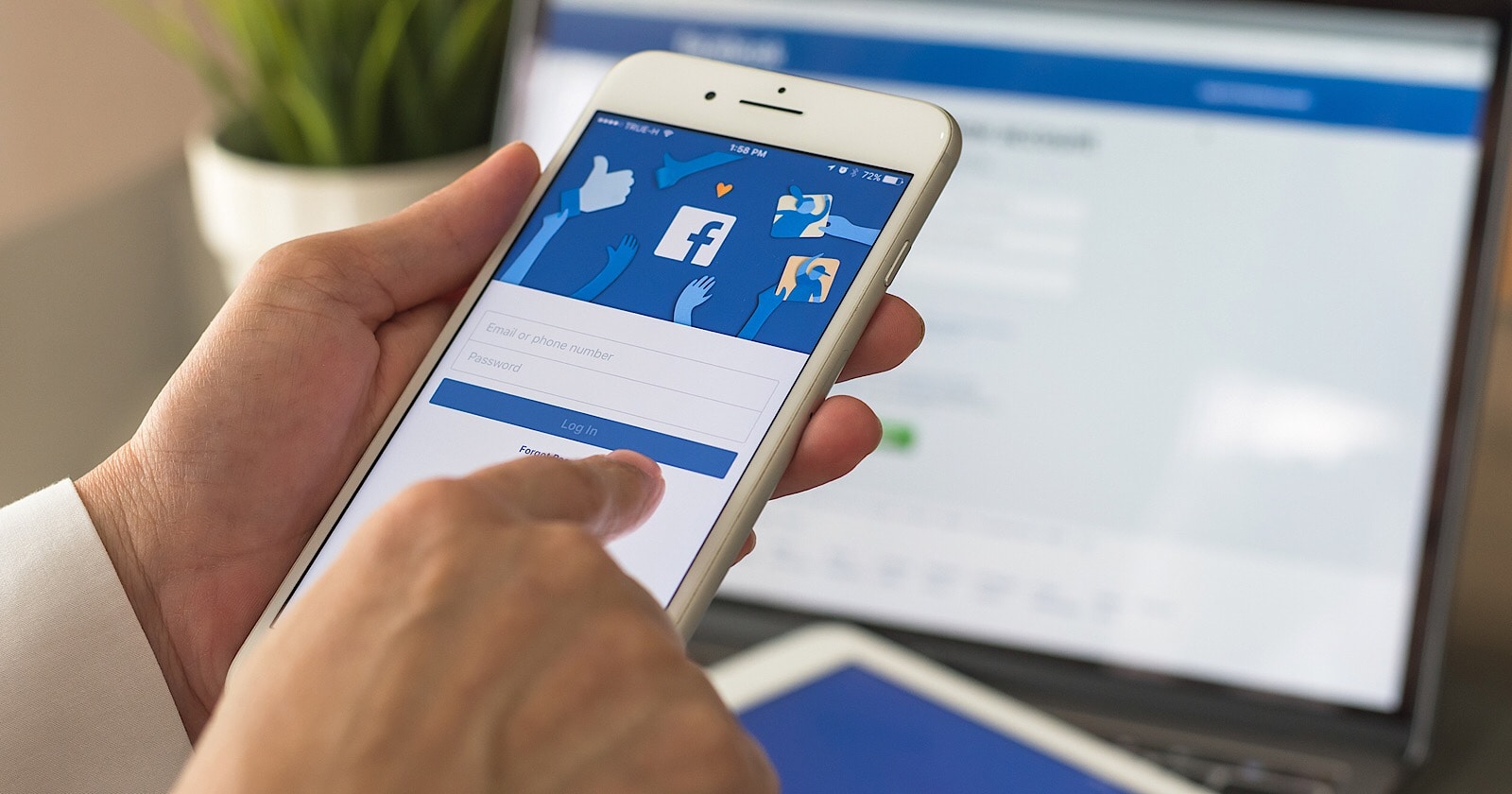
Facebook Makes it Easier to Split Test Ads by @MattGSouthern
Facebook now offers an easy solution for split testing ads — also referred to as A/B testing.
The ability to split test Facebook ads has been available since last October, when the company began letting advertisers compare ad formats, creative options, calls to action, and other advertising elements.
Now it’s easier to conduct these tests and learn more about what resonates with your audience. Split tests can be created in the Quick Creations flow, when before they could only be created in Ads Manager’s Guided Creation workflow.
In addition, Facebook has added the option to split test ads that are optimized for post engagement, page likes, and event responses.
These join the options that were previously available, such as split testing ads optimized for catalog sales, conversions, app installs, reach, video views, traffic and lead generation.
Facebook’s split testing identifies the best version of the ads being tested based on the lowest cost per result, according to what the ads are optimized for.
Marketers that wish to run multiple split tests can now duplicate existing tests while maintaining the settings that were already in place. So instead of creating new split tests from scratch, marketers can use prior tests as templates.
Lastly, Facebook has created a new dashboard where marketers can view reports for standard KPIs in each split test — such as CPM, CPC, CTR and more.
http://tracking.feedpress.it/link/13962/8759396
Snapchat Now Offers Group Video Chats by @MattGSouthern
Snapchat is rolling out an update that will allow up to 16 people to join a group video chat.
To start a group video chat, first start a regular group chat. Then, while in the group chat, tap the video camera icon to initiate a video call.
Members of the group chat will all receive invitations to join. So if you receive an invitation you need not worry about sharing video without intending to.
Users can join group video chats in a variety of ways. They can join with a Snapchat lens active, join with just their voice, or continue to send text-based messages while others are chatting on video.
A video chat can support up to 32 people if users opt to share only their voice.
This update will be rolled out to everyone worldwide this week.
http://tracking.feedpress.it/link/13962/8750667
Third-party Instagram Apps Are Broken as Company Reportedly Limits API Access by @MattGSouthern
Third-party Instagram apps are breaking as multiple outlets report the company is limiting access to API data.
Apps developed by third-parties may perform functions such as analyzing followers, finding relevant hashtags, or identifying which users are following back.
Third-party apps rely on being able to access data from Instagram’s API (application programming interface). If Instagram cuts off access to that data, then those apps can no longer do what they’ve been designed to.
Well, according to outlets like TechCrunch and Re/code, that’s exactly what has happened. TechCrunch reports that Instagram has shrunk the API limit from 5,000 to 200 calls per user per hour.
Instagram has refused to comment on these reports, other than to confirm it has stopped accepting submissions of new apps. Developers were given no notice of these changes, leaving them understandably upset.
This change may have been made as a privacy measure, given the trouble parent company Facebook has found itself in recently with the Cambridge Analytica scandal.
Instagram previously gave notice that it was planning to scale back access to its API within the next 2 years. No one expected it to happen so soon.
http://tracking.feedpress.it/link/13962/8749877
Republican governor forced to stop blocking Facebook users who criticize him
Getty Images | alashi
Maryland Governor Larry Hogan allegedly had a habit of blocking Facebook users and deleting comments when people criticized him, but a lawsuit has forced him to adopt a more open social media policy.
Four Maryland residents sued the Republican governor in a US District Court in August 2017, with help from the American Civil Liberties Union (ACLU) of Maryland. The ACLU announced yesterday that a settlement has been finalized, requiring Hogan to implement a new social media policy within two weeks. The state is also required to pay $65,000 to the plaintiffs.
“The ACLU lawsuit is one in a wave of high-profile cases across the country against elected officials charged with trying to silence constituents on social media—including one case brought against President Donald Trump for blocking constituents on Twitter,” the ACLU of Maryland said.
The ACLU alleged that Hogan was violating constituents’ First Amendment rights to free speech. “Plaintiffs found that they could be, and were, arbitrarily censored by the Governor just for posting comments on the Facebook Page with which the Governor or his staff apparently disagreed,” the court complaint said. The governor and his staff “regularly delete comments and block users because of political disagreement with the messages posted,” the complaint also said.
For example, plaintiff Meredith Phillips posted a comment on Hogan’s Facebook page in January 2017 that “asked whether Governor Hogan planned to ‘speak out on the Muslim ban,'” referring to immigration restrictions imposed by President Trump, the lawsuit said.
Phillips’ comment was allegedly deleted; she posted the same comment again, adding that she “crossed party lines to vote for [Hogan],” and that she hoped the governor would “stand up for all Marylanders and not just those that agree with you.” That comment was deleted, and “she was blocked from posting further comments,” the lawsuit said.
Although there were just four plaintiffs, the ACLU said that “hundreds [of people] reported being wrongfully banned or blocked.”
How the new policy works
The new social media policy will apply to Hogan’s accounts on Facebook, Twitter, Snapchat, and YouTube. The settlement “mandates that the Governor will not discriminate based on viewpoint, and will permit all commentary on his Facebook page on any past topic he has covered,” the ACLU said. The lawsuit alleged that Hogan and his staff deleted comments and blocked users if their comments were “‘similar’ to a poster’s prior comments, or if they parallel those made by other posters.”
The settlement also “mandates the creation of a second Facebook page dedicated to providing a public forum where constituents can raise a host of issues for the governor’s attention, and creates an appeals process for constituents who feel their comments have been improperly deleted, or that they have been wrongfully blocked,” the ACLU said.
The governor’s office can still block comments that link to or contain malware, ads, profanity, nudity, threats of violence, copyrighted materials, and confidential or private information, among other things. But any content removed must be retained for one year, giving users time to challenge the removal.
Hogan did not admit to any wrongdoing in the settlement. “We are pleased that the ACLU has decided to drop this frivolous and politically motivated lawsuit and reach a settlement with the state,” a Hogan spokesperson told the Baltimore Sun. “Ultimately, it was much better for Maryland taxpayers to resolve this than to continue wasting everyone’s time and resources in court.”
The similar lawsuit against President Trump, filed by the Knight First Amendment Institute at Columbia University and seven people blocked by Trump after criticizing the president, is still unresolved. The Trump administration has argued that the First Amendment doesn’t prevent Trump from blocking people on Twitter.
In oral arguments last month, a federal judge reportedly suggested that the sides could settle if Trump agrees to mute instead of block Twitter accounts he dislikes. But there has been no settlement, and a ruling has not yet been issued.
https://arstechnica.com/?p=1287425
Facebook No Longer Allows Ad Targeting With Third-Party Data by @MattGSouthern
Facebook is shutting down Partner Categories, which was a product that allowed third-party data providers to offer their targeting capabilities to Facebook advertisers.
This includes data aggregators like Experian and Acxiom that are able to provide clients with offline data to improve ad targeting, such as purchasing activity outside of Facebook.
This is a common industry practice, as Facebook itself has noted, but the company believes disabling Partner Categories will improve users’ privacy on Facebook.
To be sure, this change should certainly lead to less so-called “creepy” advertising on Facebook. You know, the ads that seem to be almost too perfectly targeted based on purchasing habits on other sites.
It’s also important to mention that this change comes amid the fallout from the Cambridge Analytica data privacy scandal. While Partner Categories were not directly related to the scandal, this is a move that may help restore users’ confidence that Facebook will protect their privacy going forward.
http://tracking.feedpress.it/link/13962/8723505
Instagram Brings Back GIFs in Stories by @MattGSouthern
After being removed earlier this month, Instagram has brought back the ability to use GIF stickers in stories.
Both Instagram and Snapchat removed GIF stickers once it was discovered that an offensive GIF made its way into the library. So far only Instagram has restored this feature.
GIPHY, the company that hosts the library of Instagram’s GIF stickers, tells TechCrunch it has reviewed its library 4 times and will now review any new GIFs being added. GIPHY has also apologized that the offensive GIF was ever allowed into the library and takes full responsibility.
”We take full responsibility for this recent event and under no circumstances does GIPHY condone or support this kind of content. The content was immediately removed and after investigation a bug was found in our content moderation filters affecting stickers. This bug was immediately fixed and all stickers were re-moderated. We have also finished a full investigation into our content moderation systems and processes and have made specific changes to our process to ensure something like this does not happen again.”
Despite the problem being fixed and Instagram restoring the use of GIF stickers, Snapchat says it has nothing new to share in regards restoring the feature on its app.
http://tracking.feedpress.it/link/13962/8723167
Instagram Introduces Full Screen Support for Ads in Stories by @MattGSouthern
Instagram is making it easier for businesses to create full ads that can be used in Stories.
Now, when uploading content in Ads Manager it will be automatically converted into the full screen Stories format.
Advertisers will first have to upload a single photo or 15-second video within Instagram Feed aspect ratios in Ads Manager. The content can then be used as a regular in-feed ad, or be automatically converted to a Stories ad.
Instagram will not convert the ad to full screen format by zooming in on the content, which is good because that would result in content on the sides getting cut off. Rather, Instagram uses pixel matching technology to automatically select a background gradient to fill the unused space with.
If the advertiser is using square or landscape content, then text that would otherwise be included in the Instagram feed will be added in stories text font below the photo or video.
In the example below you can see what it looks like when a square photo in the Instagram feed is converted into the full screen stories format.
This feature is now available to all Instagram advertisers.
http://tracking.feedpress.it/link/13962/8722963
LinkedIn Introduces Video Ads and Video for Company Pages by @MattGSouthern
LinkedIn has finally jumped on the video ad bandwagon with video for sponsored content. LinkedIn is also giving businesses the opportunity to add video to company pages.
Video for sponsored content are ads that can be placed in the LinkedIn news feed as a standalone post. These video ads have a persistent call to action button, giving businesses the opportunity to capture leads at any point throughout the video.
Video for sponsored content can be targeted by traits like job title, seniority, company name, industry, skills, and more.
Performance can be measured through insights and breakdowns of the types who’s watching the ads, who’s engaging with the ads, and who’s converting. Businesses can also see breakdowns of the number of leads, sign-ups, website visits, and other actions generated by video for sponsored content.
In addition to video for sponsored content, LinkedIn is also giving all companies and publishers the ability to showcase video on their company page. LinkedIn notes that company page video is 5x more likely to generate conversation, compared to other types of content.
Video for Sponsored Content and Company Pages will be available to all businesses in the next few weeks.
http://tracking.feedpress.it/link/13962/8722656
Trump admin wants to track 14 million US visitors’ social media history
Enlarge/ Roughly 14 million people per year may have to hand over their social-media “identifiers” before entering the United States, should the Trump administration get its way.
TIMOTHY A. CLARY/AFP/Getty Images
Want to visit the United States in a non-immigrant capacity? Should the State Department get its way, your application to enter the country may soon hinge on coughing up five years of your online history.
The Trump administration’s proposal, published at the Federal Register on Friday, would expand this request, which is currently required to apply for an immigrant visa. Friday’s proposal could be enacted after a 60-day public-comment period pending passage by the Office of Management and Budget. Alternatively, the State Department could modify the proposal and start another comment period. But should this current iteration go into effect, an estimated 14 million non-immigrant visa applicants per year would be asked to list any “identifiers” used on a variety of popular social media sites. Those applicants will additionally be required to disclose identifiers they have used during that timespan on sites that aren’t on the State Department’s default list.
The proposal also expands the State Department’s requests from applicants. These individuals would also be asked to supply past phone numbers, email addresses, passport numbers, and records of international travel.
A New York Times report claims to have the State Department’s list of tracked sites, which are not listed in its proposal. American sites include Facebook, Flickr, Google+, Instagram, LinkedIn, Myspace, Pinterest, Reddit, Tumblr, Twitter, Vine and YouTube. Foreign entries include China’s Douban, QQ, Sina Weibo, Tencent Weibo, and Youku; Russia’s social network VK; Belgium’s Twoo; and Latvia’s Ask.fm.
The non-immigrant visa category is sweeping, including everything from students to tourists to “business visitors.” As such, the State Department estimates this change will touch upon roughly 14 million applicants. Visitors from 38 nations are generally exempt from requiring such a visa to enter the United States.
The change would broaden an initiative proposed by the Obama administration in 2016, which requests that visa applicants supply any social-media identifiers. This request remains optional in the visa-application process in spite of rights groups decrying the request as “highly invasive” and “ineffective.”
Roughly one year ago, current Trump chief of staff John Kelly informed Congress that he wanted the Department of Homeland Security (which he was Secretary of at the time) to demand social-media logins and passwords from potential immigrants coming from seven Muslim-majority nations. The administration has not since spoken out about that specific demand.
https://arstechnica.com/?p=1286363
Google+ Update: Notifications for ‘Highlights’ in Communities by @MattGSouthern
An update to Google+ will now allow users to adjust the notification settings for communities they belong to.
Users can choose to receive all notifications, no notifications, or just the “highlights”.
Highlights aim to strike a balance between receiving a minimum amount of notifications while still informing users about important posts.
When users choose to receive just highlights they will only receive one digest notification with the top posts from all Google+ communities they belong to.
This new feature will be rolled out to all users, Google says it will be available within 1-3 days if you don’t see it already.