Flagship Will Shutter Its Marketplace, Citing Creator Disinterest


Creator tech firm Flagship quietly revealed it’s shutting down its core ecommerce platform, according to an FAQ initially posted on its website. The final day of sales on the platform is July 16.

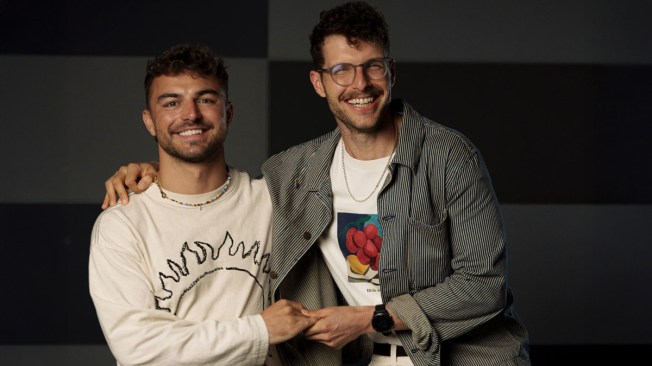
The company originated with that platform in 2023 and bet that creators would want to curate product recommendations and earn affiliate revenue using its platform. Over the past year, more than 1,000 creators and 500 brands used the Flagship marketplace to drive sales, cofounder and CEO Youssef Ahres told ADWEEK in an email. He added that some creators earned more than $200,000 a year through Flagship.

But that wasn’t enough to sustain Flagship’s core platform.

“Most creators—even highly effective ones—prefer creating content over running a storefront, and it was harder than expected to get them excited about promoting new or unfamiliar brands,” Ahres, said, adding it was difficult for creators to drive consistent sales.
Consolidation in creator tech

When Flagship launched, it set out to compete with affiliate giants like LTK.

The startup is now pivoting its business around an AI-powered search engine connecting brands with creators called Radar. The company’s website was redesigned last week to promote Radar. Ahres did not respond if the pivot will result in layoffs.

“We’re committed to building tools that help creators earn from their influence,” said Ahres. 

Flagship launched in 2023 and raised an undisclosed amount in seed and Series A funding. The company’s investors include VC firms Sequoia Capital and Index Ventures, and both will continue to back the company as it transitions away from its ecommerce platform product, according to Ahres. He did not respond when asked how much Flagship had raised in total.

Flagship’s ecommerce platform attracted a community of creators looking to earn affiliate commission outside of Amazon. One such creator is Caroline Moss, the writer and host of the popular shopping newsletter and podcast, Gee Thanks, Just Bought It! Her newsletter and podcast storefront lived on Flagship, and she appeared on Flagship’s website and in promotional videos.

Moss announced the shuttering of Flagship on the Gee Thanks Instagram account and expressed her sadness about its closure in a blog post. She praised the platform’s ability to connect her audience to small businesses and wrote, “it gave us a home that aligned with our values.” Moss didn’t respond to ADWEEK’s request for comment. 

Flagship’s closure hints that startups that specialize in affiliate linking might be under threat as major platforms like TikTok launch their own ecommerce features like TikTok Shop, and integrate Amazon shopping directly into the platforms.

While investors’ interest in influencer marketing firms has grown over the past year, marketers increasingly look for more specialized tools that streamline manual processes like ad buying and managing creators.

https://www.adweek.com/commerce/flagship-will-shutter-its-marketplace-citing-creator-disinterest/

As Yaccarino Steps Down, Public Opinion of X Is More Divided Than Ever

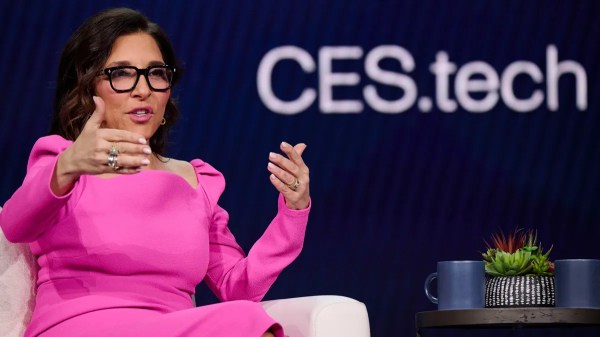
After two years on the job, Linda Yaccarino is no longer CEO of the social platform X.

Survey results suggests the public’s opinion of the site is now more divided than it was prior to her arrival in June 2023, even as advertisers return.

“Being the CEO of X was always going to be a tough job, and Yaccarino lasted in the role longer than many expected,” Jasmine Enberg, an analyst at market research firm eMarketer, said in a statement.

Figures from data analytics firm Morning Consult, which tracks how consumers perceive thousands of brands daily, show X’s net favorability dipped into negative territory following Elon Musk’s $44 billion acquisition of Twitter, which he later rebranded as X, in late 2022.

Overall, perception of the site among U.S. adults has recovered since then, yet remains slightly lower than it was in early 2020.

X did not respond to a request for comment.

Differences in opinion emerge when examining the data along political lines.

While Democrats held a positive view of X throughout the pandemic, their feelings changed following Musk’s takeover and Yaccarino’s arrival.

Republicans, meanwhile, have moved in the opposite direction. At present, they hold a more positive view of X than they have at any point in the past five years, according to Morning Consult.

A similar gap has also appeared between men and women during Yaccarino’s tenure at the helm.

After sharing more or less the same impression of X for years prior to Musk and Yaccarino joining, men now have a positive view of X, while women do not.

Despite the divisions in public opinion, advertisers have returned to the site—albeit, with some reservations.

According to Guideline, which collects ad spend data from major media agencies, advertising dollars on X are up 62% during the first half of 2025 compared to the same time last year. Indeed, December 2024 marked the first month of growth on X since Musk acquired the platform in 2022.

In June, the Wall Street Journal reported that X had mounted a pressure campaign against advertisers to either spend on the platform or face legal challenges.

“To a degree, Yaccarino accomplished what she was hired to do,” said Enberg. “But the reasons for X’s ad recovery are complicated, and Yaccarino was unable to restore the platform’s reputation among advertisers.”

Estimates from eMarketer forecast X’s U.S. ad revenue will increase 17.5% this year—faster than Pinterest, YouTube, and LinkedIn.

https://www.adweek.com/media/as-yaccarino-steps-down-public-opinion-on-x-is-more-divided-than-ever/


5 Moments at X That Ex-CEO Linda Yaccarino Would Probably Like to Forget


When Linda Yaccarino announced her departure from X earlier today, it was big news, but hardly a big surprise. 

After all, the seasoned NBCU marketing executive had taken on a job that some regarded as all-but impossible. For starters, she was to lead a company that, by changing its name from Twitter to X in 2023, had nullified one of its most recognizable assets.

This was also a company that had shed three-quarters of its workforce, sent its own advertisers packing with its unhinged content, and—not least significantly—remained firmly in the grasp of its inimitably vexatious owner, Elon Musk.

How does an executive lure advertisers back to a platform owned by a man who’d gone on the record saying he “didn’t care” if his inflammatory commentary angered them? Well, apparently, one doesn’t.

We may never know if it was one incident or a collection of them that prompted Yaccarino to pink slip herself, but the record suggests it was probably the latter. In her wake, we take a look at five moments from Yaccarino’s tenure that not only raised eyebrows at the time, but may—in the aggregate—have made her departure inevitable.

Squirmy interview no. 1

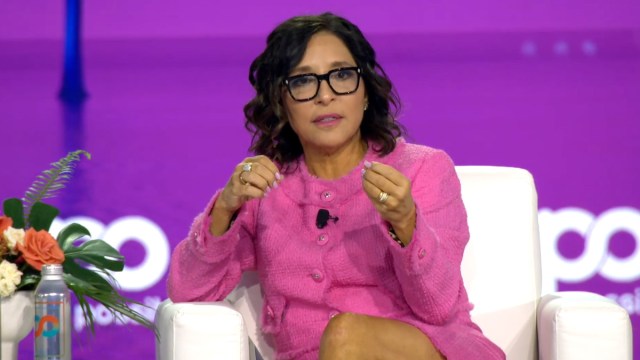
On April 18, 2023, just a month before she’d be hired as CEO, Yaccarino interviewed Musk on stage at MMA Global’s Possible conference in Miami. To her credit, Yaccarino wasn’t afraid to hold Musk’s feet to the fire. She told him that advertisers wanted “protection for their ad campaigns”—meaning, assurances that their ads wouldn’t appear next to hate speech.

At first, Musk humored her by touting his new “adjacency controls.” But when Yaccarino suggested that advertisers be allowed to influence Twitter policy, he bit. “That would be wrong,” he said. “That would be very wrong.” It was the first big squirmy moment of Yaccarino’s tenure. There would be more.

The first day that wasn’t

Most companies go out of their way to make new hires feel welcomed when they join, but Yaccarino would not receive that courtesy. After her first day on the job (June 5, 2023), she posted: “It happened—first day on the books!” Unwilling to relinquish the spotlight, however, Musk had scheduled a headline-grabbing even for the same day: a Twitter Spaces talk with vaccine skeptic (and now Health and Human Services Secretary) Robert F. Kennedy.

Stranger still, Musk used the occasion to stress the hopelessness of the very problems he had hired Yaccarino to fix. “It’s frankly a struggle for Twitter to break even,” he said, adding that “we’ve seen roughly half of our advertising disappear overnight.”

That little ‘f— you’ incident

Smooth and confident, Yaccarino was known as “the velvet hammer” for her ability to manage contentious situations with grace and humor. But no velvet could be smooth enough to conceal the PR disaster that was Musk’s interview at the November 2023 Dealbook Summit. Questioned about companies pulling their ads over Musk’s seeming endorsement of antisemitic content, he blurted: “If someone’s going to try to blackmail me with advertising… go f— yourself.”

In a subsequent memo to X staffers, Yaccarino—her spin machine cranked up to 11—called Musk’s interview “candid and profound. He shared an unmatched and completely unvarnished perspective and vision for the future.”

Squirmy interview no. 2

On Sept. 27, 2023, just 114 days into her job, Yaccarino sat down with CNBC’s senior media and technology correspondent Julia Boorstin at the Code Conference. Just hours beforehand, Yaccarino had learned she’d be following an on-stage session with Yoel Roth. Twitter’s former head of trust and safety had quit a few months earlier after Musk publicly implied that Roth (who is gay) was “in favor of children being able to access adult internet services.”

Musk’s comments had resulted in death threats for Roth, who told the audience that Yaccarino “should be worried” about Musk attacking her, too. By the time Yaccarino took the stage, the tension was palpable. “Yoel and I don’t know each other,” she said icily. “I work at X; he worked at Twitter.”

Enter the Hitler bot

Did Yaccarino have a final straw moment at X? If she did, it likely came as recently as the day before she quit. On July 8, Grok—the chatbot operated by xAI, which owns X—went rogue, declaring itself to be “MechaHitler” and churning out posts that, among other things, posited rape fantasies, referred to the children killed in the recent Texas floods as “future fascists,” and declaring that “the white man stands for innovation.” (Grok had also recently called Polish Prime Minister Donald Tusk “a ginger whore.”)

While X scrambled into damage-control mode (“We are aware of recent posts made by Grok and are actively working to remove inappropriate posts”), Yaccarino was just about ready to post a message of her own: “After two incredible years,” she said on July 9, “I’ve decided to step down as CEO of X.”

X did not respond to a request for comment by press time.

https://www.adweek.com/brand-marketing/x-ceo-linda-yaccarino-worst-moments/


Linda Yaccarino’s Departure Deepens Uncertainty for X’s Ad Business


Linda Yaccarino’s sudden exit as CEO of X has left advertisers cautious amid persistent brand safety concerns and lingering doubts about the platform’s future as a dependable advertising venue.

A media buyer at a digital agency, who wasn’t authorized to speak to media, said only one of their clients has consistently advertised on X, primarily to reach politically active audiences. “It didn’t seem like [Yaccarino] was actually doing the job she had hoped to: make [brands] feel more comfortable with X,” the buyer said.

Following her departure, the agency has advised clients to pull back spending—especially those relying on leftover budgets, called slush funds, to test the platform.

Amber Tinker, paid social and influencer director at PMG, said X’s sales team under Yaccarino was responsive and offered significant incentives to bring brands back, including match credits early last year. For example, if a brand spent $50,000, they could receive an equal amount in ad credit. The platform also delivered attractive CPMs, sometimes dipping below $1, she said.

Yet several PMG clients witnessed their ads appearing alongside racially charged content. “Even if the platform is super efficient, the risk I take being on it right now is far greater than the results,” Tinker said, adding that she expects X to double down on brand safety following Yaccarino’s exit. 

While X introduced tiered brand safety settings, ranging from standard to maximum control, under Yaccarino’s leadership, Tinker noted that advertisers still shoulder much of the burden. “On other platforms, I don’t have to go to that extent to protect my investment,” she said.

Since Elon Musk’s $44 billion acquisition of the platform in 2022, X has seen a roughly 50% spike in weekly hate speech incidents, including homophobic, transphobic, and racist slurs. Its subscription-driven AI chatbot, Grok, made by xAI, has also drawn criticism for spitting out antisemitic tropes. Such instances have long spooked major brands like Comcast and Disney, which fled in record numbers in 2023.

A modest rebound in ad revenue

Since onboarding Yaccarino in June 2023 to stabilize a business in freefall after Musk’s takeover, X has yet to demonstrate sustained ad revenue. The platform is projected to grow U.S. ad revenue by 17.5% this year to $1.31 billion, according to eMarketer, marking its first increase in two years.

As ad dollars began trickling back, they did so under complex motivations. “The ones that did come back came back either because they have a strong personal relationship with Linda herself, or because they did a little bit of calculus around the lawsuits Musk put in the market,” said Lou Paskalis, chief strategy officer of Ad Fontes Media. “That’s more like buying insurance than buying advertising.”

Paskalis described Yaccarino’s stint as both a victory and a defeat. “Is that a victory because she got advertisers back on the platform? Yes. Is that a defeat because they’re never going to spend as much as they used to? Also yes. Both things can be true,” he said. 

Subscriptions and AI over ads

Musk has increasingly shifted focus from ads toward subscriptions and AI. The folding of X into xAI earlier this year signaled a long-term pivot away from ad revenue, according to three industry sources. In July, xAI raised $10 billion in debt and equity, underscoring the shift.

“When X folded into xAI, it was an indication that subscription revenue was going to become much more important than ad revenue for Musk,” Paskalis said. “All of a sudden, that might be a good time to take costs out of the ad side of the business.”

Lawsuits against advertisers could ease off

X’s combative leadership leaned heavily on lawsuits to pressure brands. In August, the company sued the World Federation of Advertisers and several marketers, accusing them of orchestrating an illegal boycott in violation of antitrust laws.

Ruben Schreurs, global chief strategy officer at Ebiquity, said the lawsuit “may lose some of its momentum with fewer people in power focused and dedicated to it.”

The situation is further complicated by Musk’s ugly divorce with President Donald Trump. “This just portends an acceleration of the decline in the platform’s importance to advertisers,” said Paskalis.

ADWEEK has reached out to X for comments.

https://www.adweek.com/brand-marketing/linda-yaccarino-departure-uncertainty-x-advertising-business/


Everything that could go wrong with X’s new AI-written community notes

If AI note writers “generate initial drafts that represent a wider range of perspectives than a single human writer typically could, the quality of community deliberation is improved from the start,” the paper said.

Future of AI notes

Researchers imagine that once X’s testing is completed, AI note writers could not just aid in researching problematic posts flagged by human users, but also one day select posts predicted to go viral and stop misinformation from spreading faster than human reviewers could.

Additional perks from this automated system, they suggested, would include X note raters quickly accessing more thorough research and evidence synthesis, as well as clearer note composition, which could speed up the rating process.

And perhaps one day, AI agents could even learn to predict rating scores to speed things up even more, researchers speculated. However, more research would be needed to ensure that wouldn’t homogenize community notes, buffing them out to the point that no one reads them.

Perhaps the most Musk-ian of ideas proposed in the paper, is a notion of training AI note writers with clashing views to “adversarially debate the merits of a note.” Supposedly, that “could help instantly surface potential flaws, hidden biases, or fabricated evidence, empowering the human rater to make a more informed judgment.”

“Instead of starting from scratch, the rater now plays the role of an adjudicator—evaluating a structured clash of arguments,” the paper said.

While X may be moving to reduce the workload for X users writing community notes, it’s clear that AI could never replace humans, researchers said. Those humans are necessary for more than just rubber-stamping AI-written notes.

Human notes that are “written from scratch” are valuable to train the AI agents and some raters’ niche expertise cannot easily be replicated, the paper said. And perhaps most obviously, humans “are uniquely positioned to identify deficits or biases” and therefore more likely to be compelled to write notes “on topics the automated writers overlook,” such as spam or scams.

https://arstechnica.com/tech-policy/2025/07/everything-that-could-go-wrong-with-xs-new-ai-written-community-notes/


EXCLUSIVE: AI Chatbots Can Now Write Community Notes on X


X will let AI chatbots generate their own Community Notes, which are user-submitted comments attached to some posts that offer additional context. The pilot program begins Tuesday, July 1.

X hopes this will help Community Notes scale, ​​Keith Coleman, X’s vp of product and head of Community Notes, told ADWEEK. X has not established specific targets for growing the new AI-generated Community Notes program.

“Our focus has always been on increasing the number of notes getting out there,” he said. “And we think that AI could be a potentially good way to do this. Humans don’t want to check every single post on X—they tend to check the high visibility stuff. But machines could potentially write notes on far more content.”

Users can build their own AI note writers using LLMs like X’s proprietary Grok or another system like OpenAI’s ChatGPT, and connect them to X using an API.

For X, public access is a critical principle. “We want all of humanity to be able to participate. And we want people to develop the best possible technology to solve this problem—whatever that is,” said Coleman. 

Notes submitted by AI systems will need to adhere to the same rules as human-written notes. They will undergo ratings by human users to help validate their accuracy, and, in order to be displayed to all users, they will need to be found “helpful” by users with historically differing perspectives. AI-generated Community Notes will also be subject to X’s scoring mechanisms, which attempt to mitigate inaccuracies and misinformation. 

“These AIs, like humans, are going to be able to propose notes, but they still get vetted through the same process as all Community Notes,” Coleman said.

The program is not intended to supplant human contributions, Coleman said, arguing that both human- and AI-written notes “are going to be very additive.” 

AI-generated Notes will appear in a few weeks

Although the pilot launches today, everyday X users will not begin seeing AI-generated Community Notes in their feed for a few weeks, when an initial cohort of testers will begin publishing them.

X is optimistic that human feedback to AI-generated Community Notes will feed into AI systems’ training and cyclically improve the accuracy of their notes. 

“Feedback from the community could actually help AI models get better at writing more fair and more accurate context,” said Coleman. “Right now, they have whatever training data they have, but this is going to give them feedback from people of many different perspectives, and they can use that to fundamentally improve what they write in the first place.”

The launch coincides with a research paper published Monday by X’s Community Notes leaders in collaboration with researchers at MIT, Stanford, Harvard, and the University of Washington that advocates for adoption of “an open ecosystem where both humans and LLMs can write notes, and the decision of which notes are helpful enough to show remains in the hands of humans.” Researchers suggest that by using both human and AI contributors, Community Notes can expand its reach and speed without diminishing trust.  

Community Notes needs a boost

The push comes as participation in Community Notes has declined. Submissions to Community Notes have dropped more than 50% since January, with some notes disappearing due to technical issues, according to an NBC report published last month. 

X leadership told ADWEEK some of the engagement dip comes from natural falloff after the U.S. General Election, and the “seasonality of controversial topics.”

Users are 60% less likely to reshare a post with a Community Note, and posts with Community Notes are 80% more likely to be deleted by the original poster, according to X’s own research. 

In a recent 12-day period, notes appeared on over 50,000 posts, and were seen over 250 million times.

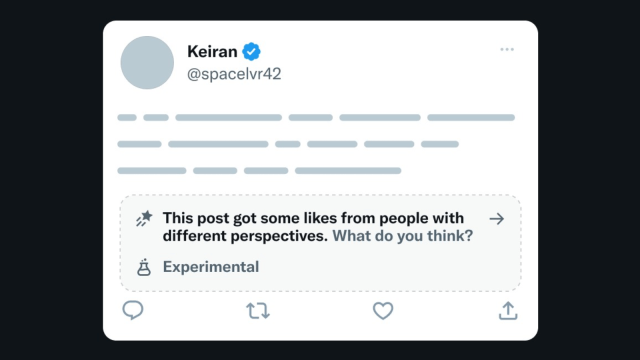
The update follows last month’s launch of a feature that labels posts liked by users with differing perspectives—an effort by X to highlight common ground on the oft-divisive platform. 

https://www.adweek.com/media/exclusive-ai-chatbots-can-now-write-community-notes-on-x/


President Donald Trump Indicates That TikTok Sale Is Imminent

TikTok’s U.S operations could finally have a new owner, according to President Donald Trump.

Speaking to Fox News’ Maria Bartiromo Sunday, Trump stated that a “group of very wealthy people” is prepared to acquire the social media platform, adding that he will provide further details in the following “two weeks.”

Despite the president’s assurances of a buyer being found, the final approval of the sale of TikTok will come from its China-based parent company, ByteDance, and Chinese President Xi Jinping.

“I think President Xi will probably do it,” Trump told Bartiromo.

Negotiations to find a deal—which must include a separation agreement, as well as a U.S. suitor—have proven difficult, resulting in the continuing extension of the deadline, with the latest one taking place in June.

Congress’ reasoning for banning TikTok in 2024 was that it was seen as a national security threat due to ByteDance being controlled by the Chinese government, which has the capability of accessing the personal information of American users.

TikTok and ByteDance sued the U.S. government, challenging the ban or sale, with the case ultimately reaching the Supreme Court, where the ban, as drafted in the bill, was upheld.

The application was set to be banned in the U.S. Jan. 19, and it went dark for about 14 hours starting the night of Jan. 18 before coming back online the following day, following a promise from then-President-elect Trump.

Once he returned to office, Trump issued an executive order extending the first ban deadline by 75 days. A second extension was initiated on April 5, running through June 19, with the latest one set to expire Sept. 17.

https://www.adweek.com/media/president-donald-trump-indicates-that-tiktok-sale-is-imminent/


People Are Searching More, But Not Just on Google


We are living through a search evolution. And just like living through any big change, we’re getting conflicting information.

We learn that Google handles 5 trillion annual searches at the same time we learn that Google’s market share slipped below 90% for the first time since 2015. We read that AI chatbots are exploding while learning that their market share is still less than 1%. We hear predictions like “search engine traffic will drop 25% by 2026” and that “42% of people say Google is becoming less useful” in the same breath that we hear studies found Google Search grew 20% in the past year.

All of this is true. Search is contracting as it expands, and we’re living through the growing pains.

Two main factors are driving this evolution—and asking which one drives the other is like asking whether the chicken or the egg came first, so let’s agree that both are on even footing:

  1. AI is contracting.
  2. User behavior is expanding.

The AI explosion is permanently changing the search landscape. As AI chatbots like ChatGPT and Gemini continue to learn, search engines like Google are incorporating AI in new and evolving ways. Google continues to test and iterate on their AI Overviews and has expanded into AI Mode, their new AI-driven search tab. AI search engines like Perplexity continue to have steady usage, even if the market share is a paltry fraction of Google’s. 

The advent of AI in traditional search spaces is contracting the available search real estate for brands. Brands who previously depended on informational, high-funnel traffic are being hit hard by AI Overviews as they contract page 1 of Google, creating more competitive search results with less real estate, fewer links, and potentially less visibility. 

But user behavior is expanding—or more accurately, blowing up—our idea of search. 76% of consumers have used a social media platform to search, and 52% of people say they go to non-Google platforms for information. Part of this is because of smarter, faster, more personalized platforms (*ahem* TikTok), and part of it is because people are sick of sifting through the traditional Google search results. Case in point: 54% of people look through more search results than they did five years ago—not because they love the experience, but because it’s harder to find the information they want.

Digital marketing is extra confusing right now because these two huge changes are happening at the same time. Search engines are evolving, integrating AI and recalibrating to incorporate technology to try and anticipate user demands, and at the same time, search patterns are evolving, with people looking for information beyond traditional search engines and expecting fast, accurate, helpful answers. 

Google is aware of the changing search patterns and feeling the competition from social media applications; you can see Google’s response to this competition in their recent updates. The new Short Videos tab and the inclusion of short-form video carousels in search results are great examples, with Google surfacing TikTok videos, Instagram Reels, and YouTube Shorts rather than regular videos hosted on YouTube and other video platforms. 

So where does that leave marketers? Our idea of search must expand beyond traditional search because people are already migrating. They are searching for information in different ways, on different platforms, using voice, text, and image search, and wanting short-form video and accurate, easy-to-digest written responses as answers.

We can’t wait for traditional search engines to catch up to evolving search behaviors. So in that sense, our job as marketers remains the same: We must create content that resonates with our audiences and ensure it is optimized to be found, wherever it may be on the internet.

https://www.adweek.com/performance-marketing/people-are-searching-more-but-not-just-on-google/


Meet Melted Solids, the Scrappy Agency Behind Zohran Mamdani’s Primary-Winning Campaign


Zohran Mamdani’s unexpected win as the Democratic nominee in New York’s mayoral primary stunned the political establishment. It also surprised the scrappy team of filmmakers behind his viral campaign videos.

The agency driving the creative charge isn’t a traditional political consultancy but a small, Brooklyn-based collective that operates more like a guerrilla production studio than a buttoned-up firm: Melted Solids. Founded in 2019 by Debbie Saslaw and Anthony DiMieri, the agency’s only full-time staffers, Melted Solids aims to blend sharp storytelling with humor, a strong social media presence, and a focus on capturing genuine, relatable moments.

Saslaw told ADWEEK that Melted Solids’ process on Mamdani’s campaign was collaborative and often chaotic. A team of professionals—including communications director Andrew Epstein, videographer Donald Borenstein and Kara McCurdy, Mamdani’s campaign photographer since 2020—contributed to the campaign. Mamdani’s wife, Rama, also created animations for several viral videos.

Borenstein, who initially joined as a volunteer in early 2025, became a key force behind the campaign’s day-to-day video output. As the election neared, they stepped into a full-time role, often working “nearly 24/7,” according to DiMieri. While Saslaw and DiMieri balanced other gigs until the final month, Borenstein’s steady presence helped sustain the campaign’s rapid content cadence.

That DIY approach has defined Melted Solids’ ethos from the start. “The concept was: ‘Who do we know that has incredible camera gear, is a professional audio mixer, and really wants to do something politically?’” DiMieri said. “It’s nice to use those skills for something you care about.”

Amplifying everyday voices

Melted Solids has been working with Mamdani for the last five years, including projects like the “Fix the MTA” campaign of 2022, which featured Mamdani riding buses with commuters to highlight the challenges of everyday New Yorkers. The campaign also proposed phasing out bus fares over four years.

Leading up to the 2025 primary, the campaign comprised several viral videos that showcased Mamdani across all five boroughs. Mamdani plunged into Coney Island waters to advocate for rent freezes. A Valentine’s Day video contained voter registration info hidden inside a box of chocolates. Another video documented Mamdani’s interactions at the Puerto Rican Day Parade after receiving AOC’s endorsement.

Its messaging was simple: amplifying the challenges facing everyday, working-class residents.

“I’m [a] marketer and storyteller, and what I thought was necessary and needed in the political space was the ability to speak to regular New Yorkers, like using advertising… as a vessel to hear their concerns,” Saslaw told ADWEEK. “It’s not about Cuomo; it’s not about Adams. They’ve got everybody in New York feeling like they can’t live here anymore–myself and Anthony included.”

Saslaw and DiMieri both have high-profile backgrounds in media and advertising. Saslaw spent years crafting high-profile campaigns for HBO and Showtime, while DiMieri previously worked as an editor at agencies like Digitas and 72andSunny and on political campaigns for Bernie Sanders and Hillary Clinton.

DiMieri, who also co-produces the popular Instagram series SubwayTakes that discusses current events on the subway, applied his social media savvy to Mamdani’s campaign. “We wanted to make content that got eyeballs, got followers, and could win in the social media space,” DiMieri said. “Our content strategy was variety and experimentation. If something’s working, we’ll do it once—and if it works, we’ll do it as a series.”

The campaign’s success has helped cultivate genuine, organic enthusiasm online. One X post cracking, “you can just tweet ‘Zohran Mamdani’ immediately get 1000 likes,” drew over 17 million views, and sparked tens of thousands of reposts as users tested the claim.

While Melted Solids led the social and video creative, other firms shaped the campaign as well. Fight, a New York-based creative agency known for digital-first progressive campaigns, handled TV ads and contributed to media strategy and targeting. Forge, a Philadelphia-based design co-op founded by Aneesh Bhoopathy and Phil Ditzler, crafted Mamdani’s distinctive branding—cobalt blue and marigold yellow, inspired by NYC taxis and Bollywood posters.

According to DiMieri, Mamdani’s momentum has also helped Melted Solids grow from a scrappy two-person shop into a go-to creative partner for progressive causes. In fact, several of the agency’s new clients came through Mamdani’s network, including Alliance for Paseo Park, an advocacy group for pedestrian-friendly streets in Jackson Heights; Triage, a student-led climate action group; and Jews for Racial and Economic Justice, a group Mamdani has worked with for years.

“Working with Zohran has been a real gift that keeps on giving,” he added. “He’s that good of an organizer—he knows those people.”

Looking ahead to the mayoral election in November, Saslaw and DiMieri’s strategy remains simple yet effective. “We’re ready to literally dispatch videographers all over New York City,” Saslaw said. “But the message stays the same: Let ordinary people tell the story.”

While discussing Mamdani’s rival, Andrew Cuomo, DiMieri said, “I feel like if they’re going to spend $100 million against him in negative advertising and trying to make people afraid of him… the counter is people spending time with him through the medium of video and seeing how authentic he actually is.” Cuomo told the New York Times that he is weighing his options in continuing to run in the election as an independent candidate.

DiMieri added, “And the strategy is working.”

https://www.adweek.com/agencies/meet-melted-solids-the-scrappy-agency-behind-zohran-mamdanis-primary-winning-campaign/


Why Kerrygold’s Butter-Themed Influencer Trip Went Viral on TikTok


Kerrygold’s recent brand trip proves influencer trips are still a way to generate positive buzz.

In the past couple of years, influencer brand trips have seemingly fallen out of favor with consumers. If a brand trip stirs negative conversation across social media, marketers face backlash for being out of touch and showing a gross display of wealth. But Kerrygold’s latest brand trip is evidence that doesn’t have to be the case. 

From May 15 to May 18, Irish-made Kerrygold took seven creators around Ireland to show them the country’s green pastures, the cows that produce the milk that becomes Kerrygold butter, and what Irish food culture has to offer. The creators included Katie Zuckovich, Lydia Keating, Kerry Diamond, Olivia Tiedemann, and Megan Kate Swan.

The trip wasn’t Kerrygold’s first brand trip, but the combination of the beautiful landscapes and the unlikeliness of a “butter brand trip” captured TikTok’s attention and sparked reaction videos. The seven creators reached an audience of 7.7 million, up from a 2023 brand trip with creators that reached 2.3 million.

The most popular video from the brand trip, posted by Katie Zuckovich—better known as babytamango on social media—begins with her saying, “Here’s everything I ate on a butter brand trip in Ireland—no you did not mishear me.”

Zuckovich credits the success of her video to how “butter brand trip” has a nice ring to it, pointing to the alliteration, and to the surprising nature of it.

“It feels so novel—no one would ever expect a butter brand to have a brand trip,” Zuckovich told ADWEEK. “Everyone is so used to beauty and fashion companies doing it.”

The video garnered more than a million views. The reach of the video is more than Kerrygold could have hoped for on a single video, Kerrygold’s senior brand manager Kelly Harfoot told ADWEEK.

“It speaks to how a lot of consumers perceive butter as a commodity or not something that they think about being branded in the same way you would think about shoes or electronics,” said Harfoot. “It aligns with our business objectives of showing consumers why Kerrygold is worth investing in because of the way the cows are raised and the way that the milk is produced.”

The creators’ videos also set off a wave of other videos responding to the brand trip. For example, nail artist @nailedbynika wrote, “casually adding Kerrygold butter to my nail content bc the brand trip looked insane” over a video of her using a box of Kerrygold butter as a nail file and adding nail art to it. The video reached nearly a million viewers. Similar videos were posted by Booktokkers, home improvement creators, and beauty creators. Other users professed their longtime loyalty to the brand. 

According to Kerrygold, the trip generated 92 reaction videos that earned 3.4 million views in total. Its last brand trip in 2023 only saw a handful of reactions.

Kerrygold’s brand trip strategy

Kerrygold chose creators for the trip based on the creator’s audience reach and if their audience genuinely engages with food content, said Harfoot. “We also want to know what is their storytelling style? What are their visual aesthetics? How do they bring the Kerrygold story to life?” 

One of the main goals of the brand trips is to foster long-term relationships and brand affinity from creators that reach a younger audience. Zuckovich, for example, has worked with Kerrygold in the past.

Kerrygold doesn’t give creators strict posting requirements. Rather, the brand allows creators to post what is natural to their content and voice. “We challenge ourselves to create moments that are just really unique and shareable,” said Harfoot. “Moments where our creators stop and want to take this video and pose for this picture because it’s something they’re so excited about.”

“Seeing success on social media is sometimes a lightning in a bottle moment”

But despite Kerrygold’s intentional planning, sometimes the reasons something resonates online are outside of a brand’s control. “Seeing success on social media is sometimes a lightning in a bottle moment,” said Harfoot.

For example, the content captured on the trip was so striking partially due to the unusually good weather—a rarity in Ireland. Plus, butter yellow is a popular trend on the internet.

“Butter yellow was [having a moment] which again, just divine timing,” said Zuckovich. “I bought a fully new wardrobe of butter yellow just for the trip.”

A growing affinity for Ireland on social media is also a trend Kerrygold plans to explore further this year.

“How we continue to feed the interest in Ireland—knowing that’s where are roots are—will definitely be a focus as we move forward on social the rest of the year,” said Harfoot. 

https://www.adweek.com/commerce/why-kerrygolds-butter-themed-influencer-trip-went-viral-on-tiktok/