29 Experts on the Most Important 2018 Social Media Trends by @MrDannyGoodwin

The biggest social media trends of 2017 included video, influencer marketing, and bots.

Now it’s time to get ready for 2018, and clearly, those trends aren’t going away soon.

The next year you can be sure video and influencer marketing will continue to be top social media trends. Ephemeral marketing also seems poised to have a huge year.

ADVERTISEMENT

But (hopefully) one of the most important trends we’ll see in 2018 is businesses and brands finally recognizing the need to make authentic and emotional connections with their customers or audience, on whatever technology or social platform that makes the most sense.

While a few brands and businesses understand this now, there are still too many that still don’t get it.

But this only scratches the surface of this year’s installment. Read on for social media marketing tips and insights galore!

Here are the most important 2018 social media trends you need to know to succeed, according to 29 of the top marketing experts.


Shane Barker, Digital Strategist, Shane Barker Consulting

Social media continues to amaze and impress me every day. Especially with the continual changes to their algorithms, it’s not quite as easy to crack the code to success.

However, since I’ve been closely following its evolution, I can clearly see certain trends that are here to stay. So, here’s my two cents on what you should focus on in 2018 to nail your social media strategy.

1. Instagram Stories

Well, honestly when Instagram launched “Stories,” I wasn’t quite convinced about their effectiveness. Why would you emulate something which is already available on another popular platform? But like I said at the beginning, social media amazes me at times. The success of Instagram Stories was one such impressive revelation.

In just a year, Instagram Stories are being used by 200 million people every month! Given the rate at which its popularity is growing, I certainly expect it to reach most Instagram users in 2018.

The beauty of Instagram Stories is that it requires minimal effort to create and the possibilities are endless. Hence, smart businesses must leverage this opportunity for greater social media success next year.

2. Influencer Marketing

Influencer Marketing Hub predicts that the total spend on sponsored posts by influencers will reach $24 million by 2018. With 67 percent of marketers planning to increase their influencer marketing budgets next year, it is certainly something worth spending on.

Social influencers can be extremely beneficial in expanding your reach and getting your message across to your target audiences. Because influencer marketing isn’t pushy like traditional ads, your brand’s messaging appears more credible, too.

By connecting with relevant influencers and creating a long-term relationship with them, you can reap incredible returns. So if you’re looking to up your social media strategy, leverage influencers in 2018.

3. Live Videos

Another social media trend that you must definitely leverage in 2018: live videos. According to some astonishing insights revealed by Facebook, people spend 3x more time watching live videos than pre-recorded ones. Not just that. The engagement on live videos is 10x more than that on normal pre-recorded videos.

Live videos have helped many companies dramatically increase their social followers and engagement. GORUCK, a manufacturer of backpacks, has had thousands of viewers watching its live coverage of a 48-hour endurance event. This clearly indicates that live videos need to be an integral part of your social media strategy in 2018.


Kendall Bird, Associate Social Media Manager, Collegis Education

Kendall BirdIn 2017, we saw the rise of video and it becoming the biggest player in the social media world. In 2018, we will continue to see a focus on social video, however, brands will need to take a different approach to be seen and heard.

The trend I see becoming a focus in 2018 is within social media and online reviews, and brands showing authentic and transparent feedback with their communities. We are continuing to see more focus on people leaving honest feedback online about products and experiences through places such as YouTube, Facebook, Google My Business and Yelp. But how are brands combating the negative and turning it into positive?

I would encourage anyone who is looking for ways to improve their social media strategy to look into online reviews and start measuring them immediately. This is where you are going to find out what your communities are looking for from your brand.

There are a few things you may also want to consider implementing when you are focused in on online reviews including protocols for all situations that may arise. Think about FAQs, common complaints, weather-related issues and brand stance (we saw a lot of this with hurricane season this year), advertising trolls, crisis management and general support.

Education to your leadership team, staff, or client about the importance behind social media customer service is also critical. Be sure they understand why you are focusing on social customer service, and why it is important for brand reputation and advocacy.

Moral of the story: there is a lot of noise in social media today. Focus on your consumer and communities to earn success in social media.


Lisa Buyer, CEO & Social PR Consultant, The Buyer Group

The two biggest trends will be AR/VR and live video.

That’s not to say they will be the most used or best applied.

When it comes to AR/VR, most brands are not aware of the marketing possibilities and still see it as a bright shiny object that’s expensive and years away from adaptation. Storytelling, media relations, content marketing, customer experience will drastically be enhanced with AR/VR.

True, the technology is not 100 percent accessible and affordable; it is very close. So close brands can’t afford to ignore it.

As a start, I recommend reading “Marketing New Realities” to fully embrace the possibilities of preparing for the AR/VR/MR movement. AR/VR is expected to give social, SEO, and public relations a whole new dimension and experience to audiences.

When it comes to live video, yes brands realize this is the best performing content with the most opportunity in 2018. The problem is that they are still intimidated and insecure about actually going live.

Brands are scared of not being perfect or they are going live without a real strategy or plan.

The hardest part for brands and live video is getting started. If this is the case, brands doing live video right will have a huge opportunity since the competition will be low.

Other trending thoughts for 2018

  • Creativity is the new productivity.
  • AR/VR is the new social media.
  • Instagram is the new Facebook.
  • Facebook is the new TV.
  • Snapchat is the new MySpace.
  • LinkedIn blue is the new black.
  • Medium is the new blog.
  • Twitter is the new social movement.
  • Emojis are the new universal language.
  • AI is the new customer service.
  • Talkwalker is the new Google Alert.
  • Podcasts are the new radio.
  • And we can’t forget…Meditation is the new Starbucks run.

Mel Carson, Founder & Principal Strategist, Delightful Communications

Mel CarsonI’m still going to be banging the drum about “people not just pixels” with our clients over the next year.

As I predicted for 2017, we’ve seen a doubling of enquiries for personal branding and event amplification services as businesses realize that people truly are their best asset and, in order to build up trust with a target audience, putting people at the heart of your marketing and PR across social media channels, really does increase engagement.

Video will continue to be huge, especially with technology and production costs coming down – think about inexpensive 360-degree cameras and Steadicams – as companies embrace brand journalism and live streaming like our client Bing Ads has done so well with the launch of Bing TV and Janes of Digital this year.

And then there will be advances in AI and machine learning to help further personalize a lot of the messages companies are trying to get across. This will hopefully improve targeting capabilities down the funnel and we should all see less wasted and better ROI!


Geoffrey Colon, Senior Marketing Communications Designer, Microsoft

Geoffrey ColonThree trends to watch in 2018:

1. Phigital

Almost every social media marketer should become familiar with this term. I didn’t make it up. It has existed for the past year.

What does it mean? It means those marketers that can make their customer experience in the digital world meet their customer experience in the physical world so they feel like one seamless experience will shine. Why?

Most younger consumers have trained everyone to use the conjoint effect to blur the lines between the online and offline worlds in which we inhabit. This will cause major attribution issues. But those have always existed.

If a person comes into a store and buys something but their whole experience started on social media, who gets the credit? How is this tabulated into a success metric? This leads to trend #2.

2. Emotional Analytics

Likes, Shares, Views, Clicks are great but in 2018 the social media marketers on the edge will start to measure emotion and feeling.

  • What is the sentiment of customers toward us?
  • How does social media change that sentiment?
  • Is our Brand Health Index strong?
  • Do we have high Net Promoter Score?
  • Do people remember us?

The other metrics still matter, but they aren’t as important in terms of click and buy as much as evoke long tail feelings. For once, some companies are finally finding their groove in how social media is to be used in business. Not as a sales generator, but an emotions engine.

3. LinkedIn

No, I’m not saying this because I work at Microsoft but have you been on the platform lately? It’s a weird mix of business, culture, life insights and more.

It also isn’t bound by the limiting algorithms of other platforms. Anyone can publish content that can be seen by anyone else, which makes the platform more open source than any other which still requires following someone to see their content. As a result of this more open environment, there is more navigation for success.


Brent Csutoras, Managing Partner, Search Engine Journal

Brent CsutorasFor almost a decade we have approached social media as a new medium that required more testing than standardized strategies, but I think the biggest thing companies need to realize and focus on in 2018 is that we have a lot of examples, information, and experience, to create and implement real social media strategies.

Take the time to audit your current efforts, research what has been working for others, evaluate your competition, and start really considering how your target audience is going to engage with you on social media.

Another thing companies are really not focusing enough on is utilizing all the options available to them through social media ads. Whether your target audience is super specific and you need to target behaviors like whether an individual has recently marked themselves as single, or if you have a local event you want to advertise only to people in certain demographics and within a range of one mile from your event, there are a ton of options and strategies to review, in order to really get in front of your audience on social media.

Lastly… stop ignoring Reddit. It is continuing to grow, in the process of redesigning and improving, and has something for every company.

It’s 2018 – it’s time to stop making excuses for not having a solid social media strategy.


Leah DeKrey, Social Media Strategist, CoSchedule

Leah DeKreyI think the two biggest things in 2018 will be ephemeral content and messaging.

Ephemeral Content

I think we’ll see Instagram and Snapchat ramp up their arms race in 2018. As new functionality is released, we’ll likely see returns in the form of better engagement, and brands will want to be a part of that.

Brands Leveraging Messaging Apps to Reach Customers

We already see this happening with Facebook starting to build ad links between the Facebook ad platform and WhatsApp. So this is a great avenue for customer success agents to build 1-on-1 interactions with users.

Genuine Influencer Marketing

Everyone is all about influencer marketing right now, and a lot of people think it will continue to develop in 2018. I agree with this.

But I’m also growing tired of the constant feed of reality stars hawking detox teas and teeth whitening products on social media. I can’t be the only one growing sick of this and also feeling it’s far too disingenuous.

Let’s move toward more genuine influencer marketing in 2018, please.


Victoria Edwards, Senior Marketing Manager, GuideWell Connect

Here’s what I expect to change in the future, either in 2018 or further down the line:

Greater Facebook Ad Transparency

I saw the below screenshots in a Facebook group that shows a very interesting test running in Canada.

You can see every ad that a brand (Walmart, in this example) is promoting within Facebook, regardless of whether you’re the target of the ads:

View Walmart Canada Facebook ads

Walmart Canada Facebook ads

I thought this was fascinating. Think of the competitive intelligence you can gain from this.

I reached out to my Facebook rep, who stated that:

“Starting November 14, in Canada, we are testing a new feature that will allow people to see the active ads a Page is running across Facebook, Instagram, and Audience Network. Upon visiting a Page, people will see a ‘View Ads’ link, which will allow them to view active ads the Page is running even if they are not in the target audience.

With this initial test, people will be able to click on the ads to simulate functionality, but we will not be providing impressions or clicks from this feature so this will not affect your reporting or billing. In addition, we will not release targeting information or display what platform ads are running on.

We hope that more transparency will mean more people can help report inappropriate ads. We try to catch content that shouldn’t be on Facebook before it’s even posted – but because this is not always possible, we also take action when people report ads that violate our policies. This is important progress as we continue to execute our larger plans to help bolster and support election integrity.

We know it is important that we get this feature right — and that means testing and gathering feedback before rolling it out broadly. Testing in Canada aligns well with our election integrity work that is already underway there.

Our plan is to roll this feature out in the United States and more broadly next summer, ahead of the U.S. 2018 midterm elections. This new ability to view ads will apply to all Pages and advertisers — not just political ones — but we recognize it is an integral part of our civic engagement efforts.”

Paying for Audience Insights

In the same conversation, I spoke to my rep about campaigns under one client competing with one another, as they are all targeting the same demographics within reason. These campaigns were focused on open enrollment with regards to healthcare.

Our rep mentioned that, due to Facebook’s layout and our targeting, our campaigns were, in fact, competing with one another. However, due to our client’s needs, we could not really back down, but only turn off underperforming ads and focus on the best-performing ones.

This led me to think about what’s next for Facebook. This time of year is crazy for Facebook with regards to not only open enrollment but the holiday season. The newsfeed is only so vast. So what happens when Facebook has reached capacity?

Then I found this AdWeek article, which states:

“During recent earnings calls, Facebook CEO Mark Zuckerberg has communicated to investors that Facebook is close to hitting a tipping point with ad load, and that it soon won’t be able to pack more ads into newsfeeds. As a result, it’s eyeing new forms of revenue through its messaging app Messenger and could turn Insight Audiences into a paid product that scrubs Facebook’s users for deep troves of data.”

So, in the future, I expect Facebook – and other social platforms – to turn audience targeting data and insights into a pay-to-play feature (or a paid plugin or add-on to other tools).


Melissa Fach, Social & Community Manager, Pubcon

Melissa FachHere are three areas to focus your efforts in 2018 for greater social media success:

Start With Research

With all the competition out there today, all businesses need to be smarter with their social media shares. This means that people need to really focus on competitive research, audience research, and keyword research.

You are wasting time, money and effort when you create social shares with no focus. There has to be a plan and a targeted audience(s) for each share.

Learning Styles

One of the biggest things businesses miss when creating personas and categories for targeted audiences is learning styles. How people learn and take in information is different. How you appeal to different learning styles on social must be different.

There is one specifically I want to touch on, tactile learners.

Tactile learners are hands-on learners; they learn by touching and doing. And, for them to decide to invest in a company means they need to learn more about you or your product in a tactile way.

Video is a great way to reach them. How does your product work? SHOW THEM! Show them the entire product and everything they would need to know.

Make videos where they can see and understand all aspects of a product. Think video reviews on YouTube or in Amazon reviews. A deeper visual understanding of a product or service is key in converting tactile learners.

Learning – Go Beyond Reading on the Internet

There are a lot of good ideas on the Internet; there is no doubt about it. However, there are also a lot of rehashed ideas and a constant flood of “similar” information out there.

Often, the best way to get inspired with new and totally out of the box ideas is to attend conferences. Sessions at conferences are different than online content because there is often a conversation with the audience that spurs off ideas.

When you put a lot of minds together discussing a topic, you gain a ton of new insights. And, there are networking opportunities where people can get questions answered or just get opinions on strategies.

With conferences, you can take the ideas you have learned online through reading and find more advanced ways to use them.


Kat Haselkorn, Founder, KH Creative

Kat HaselkornThere will be two big trends in the social realm for 2018.

First, I believe companies will work harder than ever to match their online and offline personas.

As businesses increasingly realize the value of social for generating brand awareness and attracting new customers, it isn’t uncommon to see a wide gap between the company’s digital personality and their real-life brand image. I predict in 2018 we’ll see an increasing number of businesses working to close the gap and align their online and offline selves.

One other trend that seems to be on the rise is transparency of ads. Particularly on Instagram, there are a growing number of brand ambassadors who are very upfront about the products and experiences they’re being paid to promote. They’ll very clearly denote a post with #ad or #sp, but it doesn’t have a negative effect on the number of likes or decrease respect among followers. Be transparent!

When it comes to brands I love, I personally don’t care if they are paying someone to highlight the product in a social post. It’s definitely become the norm and most millennials are discerning enough consumers that we simply appreciate not being lied to.

If it’s a sponsored post, no big deal. Just don’t pretend otherwise.


Sam Hollingsworth, Director of Search, Elevation Ten Thousand

Sam HollingsworthExpect more video content to perform better, increased ad revenue to be spent across the major channels, and for reporting to continue to improve even more than it has over the last five years.

Notifications will continue to work their way into social network algorithms by way of supplementation, and the smartest brands with the best content will get users – current and potential customers – to care so deeply about their content that they subscribe to their channels with a real interest in, not just their content, but also hopefully their products and/or services.

We also expect to see more of the same in terms of the video content that is published, the general popularity of video, and the ways marketers are able to use video on specific channels to truly reach users and form a real connection with them and your brand.

Video was expected to be the big content form on social media headed into 2017 — and it lived up to the hype for the obvious reasons: it became much more supported, even encouraged, to create and publish quality video content for social media brand channels.

Video is a much more intimate form of content, nearly recreating the true-life experience humans find when they are out in public, and most of all, video is the easiest-to-consume form of content (as well as the most challenging and, oftentimes, time-consuming content type to make). Expect the growth of video and its success to continue.

I also expect enhanced video-overlay notifications to be employed on Facebook sooner rather than later, where channels creating good, strong content could have some real success, similar to the call-to-action video overlays of YouTube that allowed users to more seamlessly make connections with common content, common users, and common themes.

These enhanced video call-to-action buttons are going to continue to improve the performance of, not just channel conversions and leads, but also general user engagement, time spent watching, and other social media metrics that will help build better, more impactful campaigns.


Jordan Kasteler, SEO Director, Hennessey Consulting

Jordan KastelerThe biggest trend is ephemeral social media, or in other words, posts that disappear after a given time.

We saw Snapchat start it and Facebook hop right on board.

Personally, I’m not a fan of it – but adds a new element of sharing content you might not have otherwise shared before.


Katy Katz, Director of Account Strategy, Marketing Refresh

Katy KatzThe main social media priority for smart brands should be how to enhance the experience of connection through their social platforms. If you pull together all of the biggest trends that will be shaping social media next year, they all have the theme of enhanced user experience in common.

Visual Content

Visuals are a major opportunity for brands in 2018. As social media becomes increasingly cluttered, people are scrolling blindly past content more and more.

Video (live stream or recorded) consistently proves to be an opportunity to stand out. And now that phone companies like Apple are prioritizing augmented reality (AR) technology, AR has become a real opportunity for brands in social, too.

Use the tools that are available in 2018 to push yourself past the old stock photography limits. Now is the time to get good at these new visual capabilities.

Personal Experiences

But the experience has to be more than just visual next year. The most memorable brands make the experience personal, too.

Wendy’s social media team was on fire toward the end of 2017 as they jabbed other brands and took time to answer individual questions in a snarky, personalized way. When their social team held an ‘Ask Me Anything’ on Reddit, it went viral with additional praise and questions from the public.

Millennials and Gen Z live for memes, clapbacks, and inside social jokes and Wendy’s understands this about their target market. They found a way to speak in the voice of their audience and prioritized personalization to actually drive business results.

And you should set your customers up for success on social media. too. Over 90 percent of people trust user-generated content more than traditional advertising. Brands can take advantage of this trust by setting their customers and influencers up for successful social sharing.

For example, if you have a retail location, make it easy and interesting for your customers to post to Instagram. Inviting spaces, lighting, and even a gimmicky goody should all factor into a complete 2018 social strategy.

Be Like Your Customers

One final thing for businesses to consider is to use social media the way that your customers use it. Many brands have not mastered the “stories” feature on Instagram. However, its daily user totals have surpassed 200 million, blowing Snapchat out of the water.

Instagram users scroll through stories sequentially, meaning they are going to see your brand story in between their friends’ selfies. This is a big opportunity in 2018 as more Instagram users jump onboard.


Kevan Lee, Director of Marketing, Buffer

Kevan LeeI see social media shifting from a one-to-many platform to a 1:1 or one-to-few platform. This is evident in the decline of organic reach, the rise of messaging apps, and the expectations of consumers.

Social media is a place to engage, less so a place to promote.

The companies that will win in this new environment are those that stay true to their brand. Being:

  • Consistent with posting.
  • Authentic with their voice.
  • Responsive to their audience.

The icing on the cake is if you can combine this brand emphasis with a bit of data, particularly with segmentation, so that your voice is reaching the right people.


Julia McCoy, CEO, Express Writers

Julia McCoyThe two most important aspects of social media marketing for brands in 2018 will be in creative consistency and community building.

Creative Consistency

Mari Smith confirmed that Facebook will appreciate and serve live stream videos that people consistently return to watch, and are published from the same creator/publisher week after week.

It’s all about consistency with our social media actions in 2018. Find your sweet spot, both in the platform (where your audience lives) and your creative niche (your topics of authority where you have a standout, unique perspective to stand on and build from), and then commit to an ongoing appearance.

Be creative with whatever you do, and commit to consistently showing up. It’ll make all the difference.

Community Building

On top of that, it’s important to build our own community.

As content shock hits us more and more with millions of pieces of content being created daily, it is no longer enough to just post, create, and schedule. Marketers must consistently work to build a strong tribe, not just pump out content and create, create, create.

By knowing whom we serve, and consistently creating and not only creating but engaging, we can work toward building a tribe. Communities are powerful and worth their weight in gold for any brand.

Anyone with any budget can develop a community, over time. No excuse is good enough to not focus on planning on building your own community in the coming year.


Debbie Miller, President, Social Hospitality

Debbie MillerHere are my three trends to watch in 2018:

1. The Continued Rise of Instagram Stories

Daily views of Instagram Stories already surpass daily Snapchat views after only a year, and this number will likely continue to rise. As this feature evolves, elements like the ability to add links and advertise through stories will make it a key component of advertising.

2. The Power of Influencer Marketing

Many large brands rely on celebrity and social influencers to connect with a socially-savvy audience. Millennial and Gen Z consumers trust these influencers and heavily rely on their perspectives when making buying decisions.

3. The Significance of Gen Z

As Gen Zers enter the workforce, their buying power will increase. As such, their habits will affect social media trends since they’re grown up with social media are critically influenced by it. Brands will have to monitor and strategize accordingly based on Gen Z’s consumption of media and behaviors as a result.


Rebecca Murtagh, Founder, Karner Blue Marketing

Rebecca MurtaghIn 2018, social media will be more about relationships than ever before.

Two major goals for every smart brand:

  • Make your brand more human.
  • Create an emotional connection with customers.

Here are my top recommendations for using social media to build an influential brand in 2018:

1. Aspire to be Good

Offer quality product, services, support and be respectful in how you use social media. Social media is powerful when leveraged for customer education and engagement. Not just a broadcasting platform for brand announcements and promotions.

Added bonus: well-planned and executed social media campaigns can elevate your brand’s visibility in search.

2. Engage

Like any good relationship, social media should be viewed as a reciprocal relationship. Give to your customers as much as you are hoping to get out of the connection.

Don’t approach social media as an aggregation of followers and fans, but rather a representation of relationships. Reciprocating follows, likes, and comments with real customers will go a long way in recognizing that each of your customers is a real person that you (the brand) values.

3. Think Long-Term

There is nothing more frustrating than to lose someone you have invested yourself in. Be genuine about building a mutually-beneficial long-term relationship with each customer to maximize the ROI of resources invested in building audiences for your brand.

4. Be Real

Audiences are savvy and can sense a phony a mile away. Authenticity and sincerity rules in content, promotion and one-to-one interaction.


Maddy Osman, SEO Content Strategist, The Blogsmith

Maddy OsmanThere are two social media trends that continue to grow – and not enough brands are taking full advantage just yet: video content, and on a related note, ephemeral content (like Stories on Instagram or Snapchat).

Brands need to realize that video content doesn’t need to be a full/expensive production. In fact, it may be more effective to shoot live without even having the opportunity to edit.

Studies are showing that people engage with this content disproportionately higher than regular text or image-focused content. If you’re not using it, you’re missing out on an easy opportunity to connect with your audience.

Use ephemeral content to share a behind the scenes look at your company, showing customers and fans the human side of your brand. Millennials crave authentic connections to brands and this is an easy way to make it happen.

When it comes to videos and ephemeral content, get out of your head and experiment. If you’re nervous about being on camera, find a point person at your company to be the face of your brand with regards to this type of content.


Erik Qualman, Motivational Speaker & Author

Erik QualmanKeep an eye on WhatsApp. It’s already huge in other parts of the world, especially South America, and it will be big in the United States in 2018.

It was smart of Facebook to purchase WhatsApp when they did.

As brands, the quicker you figure out how to leverage this growing platform, the further you will be ahead of your competition.


Ted Rubin, Co-Founder, Prevailing Path

Ted RubinSocial is moving to a prove it or lose it stage… so start thinking how content is the ad. The importance of content in your SEO and middle funnel strategy will be critical.

Social media platforms are essentially huge AI systems designed to keep users “tuned in” by showing them things they want to see and using data to improve the success of that goal each time a user engages. But AI isn’t really that smart yet.

Most AI is big data pattern recognition that gets better at predicting what they will do as more people use the systems. It’s not actually ‘thinking’.

As the Trump media machine proved, real thinking beings can manipulate these systems with relative ease using anchor content such as a blog post, or video, bot based syndication (half of Trump’s Twitter followers are fakes) and then the power of real people sharing and training the algorithms to “think.”

Add in some well-placed adds on automatic networks like Facebook and bam, media that motivates. Brand marketers can easily do this in a less nefarious way and tune the process to eliminate endless digital spam and create awesome content that the AI algorithms connect with people along the path to purchase that might actually care.

All of this is so important because shopping behavior is changing from a world where consumers go to stores to get products (walking around and finding what they need, to one where products come to consumers.

Stores aren’t going away tomorrow, but the fundamental role of a retailer is going to change over time from a physical location to a service that fits the product needs of a consumer whenever and wherever she chooses, including product discovery.

What’s more, much of a future consumer’s product needs will be anticipated and automated, moving toward a friction-free experience. The challenge for retailers and brands alike will be remaining relevant in a consumer’s mind. The combination of the decline of the store shelf coupled with the end of push advertising effectiveness will eliminate some brands and retailers while others will thrive like never before.

Retail relevancy will become all about simplicity. Frictionless buying is the future of retail.

Simplicity is the new EDLP. Make it easy and… she will buy from you again, and again, and again.


Jasmine Sandler, CEO, Agent-cy Online Marketing

Three social media trends for 2018:

1. Chatbots & AI Affecting Social Customer Care

Brands must think through the process of social customer care with specific business goals behind them and then seek to use the many live chat and AI tools out there being integrated with social networks like Facebook by pairing flow questions and answers to profile visits. In this, brands need to have chatbot monitoring in effect so that they can continue to improve social customer care and win more social market share.

2. Influencer Marketing of All Sizes & Shapes

Understand influencers by product and audience set. Understand large and micro influencers and how to best incentivize them, leverage them, reward them, and gain marketing insights from their hosted influencer marketing campaigns.

3. Story Social Selling & Video Content

It will be critical to do this in a professional way, and in a way that engages and grows an audience. Stories are rampant in Instagram and Facebook, and LinkedIn is now becoming more of a video run network.


Mark Schaefer, Executive Director, Schaefer Marketing Solutions

Mark SchaeferBy far the biggest impact on social media marketing of any type is the exploding levels of content that challenge our abilities to be heard and stand out. The entry barrier for creating content is near zero, meaning that anybody with a connected device is a potential competitor these days.

Creating social media content that transcends this information density will require new skills, new strategies, and even the emergence of new content forms (which we are now seeing). A staggering challenge, but also a great opportunity for the creative and bold.


Jes Scholz, CMO Emerging Markets, Ringier

Jes ScholzHere are two trends in social media to watch in 2018:

Focus on Gen Z

Millennials are so 2017. Gen Z are coming into their early 20s and have begun to flex their purchasing power.

Of cause, for many of us, SnapChat springs to mind. But effectively targeting Gen Z is more involved than simply adding another social media channel to your mix.

This generation, even more than their millennial predecessors, isn’t going to be engaged by the traditional public broadcasting approach to social media taken by platforms such as Twitter.

Gen Z requires relevant and relatable conversations. This is causing a shift toward ephemeral content, such as Instagram stories, where not only the authenticity but also FOMO keeps users engaged.

We are also witnessing a phase into group or 1-1 based social mediums, such as messaging apps. With WhatsApp finally allowing businesses to communicate via their platform, be sure to get into the beta and grow your lists for a short-term competitive edge.

To tailor and distribute content at scale, invest in conversational UIs and build a chatbot with personalization options. Moving your focus on chat apps will also address the issue of declining organic reach on traditional social platform, if you have no money to pay to play.

Listen With Your Eyes

Social listening has traditionally been driven by text keyword mentions, in 2018, thanks to advances in image recognition, this will expand to include visual brand mentions as well. Effectively increasing the scale of the conversation by over 80 percent; the number of branded social media posts that don’t contain text mentions. Not only will this help you better understand your brand positioning and use cases, you can also find influencers.

What’s more, image recognition opens the door to turn selfies into sales. Take the photos of your products uploaded on social media discovered through image recognition, then with the poster’s permission, integrate these UGC images onto your website, app or email newsletter.

This authentic social proof is more powerful than traditional testimonials and has been proven to significantly drive up conversion rates. To take it a step further, create interfaces where if you click on a UGC image, you can shop the look. Such as what ASOS is doing with their As Seen On Me integration.


Mari Smith, Social Media Consultant & Trainer, MariSmith.com

Mari SmithLive video broadcasting continues to grow at a steady pace and those users and businesses with professional, television-quality broadcasts will rise to the top. As Facebook focuses on building out its array of shows on the Watch platform and expands into more countries, the demand for quality video programming will increase. Influencers and content creators will embrace Facebook’s Creator app and new stars will be born. Advertisers will focus more on compelling, short-form video content for use in ad breaks throughout all this new video content.

Stories on both Facebook and Instagram garner more business users and buzz. Instagram is already leading the pack with 300 million daily active users. At the current rate of growth, by the end of 2018, nearly half of all Instagram users will be using Stories. Brands will need to adopt creative uses of Stories to reach their audience on Instagram. And, as Facebook continues to aggressively push Stories for personal and business — and now collaboratively in groups and events — savvy businesses will put this format at the forefront of their marketing strategy.

Messenger for business will keep iterating at a fairly fast pace, adding more new features to enable businesses of all sizes to create closer connections with their audience members. More businesses will embrace “conversational commerce” through the right mix of automated messaging and human interaction. Businesses will more closely integrate Messenger with their website and entire shopping experience to allow their customers more streamlined and personalized interactions.


Michelle Stinson-Ross, Director of Marketing Operations, Apogee Results

Michelle Stinson RossFinding ways to cut through the noise and clutter across a wider and wider spreading social ecosystem will continue to be the determining factor for social media success.

Create Video Experiences

Technologically, the video options in social media provide a way to stand out in a way that’s easy to consume on mobile and more likely to provide a longer, more memorable positive brand experience. No matter whether you choose to produce and upload videos formatted for mobile consumption, take advantage of live viewer engagement, or invest in immersive 360 videos brands will have to keep authenticity, storytelling, and audience-centric principals in sharp focus.

There has never been a good reason to use a technological option just because it’s there. Consider first how you can best serve the needs, wants, and desires of the community gathered around the brand and craft video experiences around that.

Support Major Influencers

The other important way to cut through noise and clutter is to support powerful influencers related to your industry. Providing ideation, data, products and support to people who can connect large groups of passionate followers to your brand continues to be important in 2018.

But influencer outreach goes beyond marketing to them the way you market to your end consumer. Yes, there is much they can do for your service, product, brand but at the end of the engagement, they have to receive value from the relationship.

What do you and your marketing team have to offer an Instagram influencer, for example, that is different, remarkable, and valuable beyond cash or free product? What can you do to help them serve their audience in ways that they would not be able to do alone?

The one factor in all of digital marketing that remains constant is the human factor. The more communication and technology improve, the more we as marketing communicators have to take our gaze off of our collective navels and focus on the needs, wants, and desires of our fellow human beings. It is the humanity of the brand that will cause it to rise above the rest of the crowd.


Mark Traphagen, Senior Director of Brand Evangelism, Stone Temple Consulting

Mark TraphagenIt certainly wouldn’t be anything new to say that business social media needs to be more personal and relational, but I want to take that in a specific direction that I see growing but still underutilized: using social media to gain and grow strategic partnerships.

In marketing our agency, friendships and partnerships with data suppliers, tool and software vendors, industry publications, and more have played a significant role in expanding our reach and providing us with data and insights we can turn into valuable, brand-building content.

Here’s the social connection: it occurred to me recently that most of those relationships either started or were nurtured through social media. I believe social media is ideal for developing strategic partnerships because, if done correctly, it is a more human and less intimidating way to connect than other means, such as an email or cold call.

Much of this works the same way as social media does (or should) for building organic relationships with influencers. You start with normal human engagement with the potential partner, contributing meaningful responses to their posts, helping them find resources, and contributing to their projects. Over time you earn the right to propose partnership projects of your own, and you’re more likely to get buy-in.

Or you might even get offered wonderful opportunities that might not have happened without the social media relationships you’ve built.

In one case, we had been nurturing our relationship via social media with the principle of a major social media metrics provider. Over the course of a year or so we gradually built enough rapport and trust to where his company began regularly sharing our content with their audience.

Then, recently, he contacted us to offer us first shot at some amazing data they had collected. We jumped on the opportunity and will be producing a co-branded study that will be heavily promoted by both us and the tool creator.

So in 2018, think relational on social, but think beyond just customers and influencers to the potential value of strategic partnerships with related but non-competing businesses. Social may be the best place to win those!


Ashley Ward, Corporate Speaker & Evangelist, SEMrush

Ashley WardVideo ads.

Last year, I predicted that video was going to be the biggest social media trend for 2017, and it was one of the biggest. As we approach the new year, people still want video and they want even more of it.

In fact, 43 percent of people want to see more video content from us marketers. In 2018, let’s give the people what they want, but let’s do it from a business perspective.

Where brands can really capitalize on social media in 2018 is going to be with social media video ads. These video ads are already starting to trend and will continue to trend as we hit the first quarter.

As they should, since viewers retain 95 percent of a message in a video compared to only 10 percent when reading it in text. Plus, there’s a huge amount of exposure gained when video ads can be played in the middle of Instagram stories, before YouTube videos, and while scrolling through Facebook, Twitter, and Instagram feeds.

Even better, any business can create video ads. You don’t need an entire production team or a big budget when it comes to creating video. It can be as simple as a great storyboard and an iPhone. #noexcuses

As we wrap up 2017, make sure video ads make it to your 2018 social media strategy.


Tessa Wegert, Branded Content Developer, Contently

Tessa WegertLast year we saw live streaming video take off, and in 2018 more brands will be experimenting with this medium.

Consumers increasingly crave and expect real-time content, and live streaming provides backstage access to their favorite brands. It has become both a critical component of influencer marketing and a reliable means to attract and retain followers.

With networks like Twitter, Instagram, and Facebook ramping up their live-streaming capabilities, it’s a great time to get involved.

Something else to focus on in the months to come is Snapchat, Instagram, and Facebook Stories. The story format taps into the relevance and sense of urgency that’s inherent to live content, and whether your brand is B2C or B2B there’s tons of value in creating an encapsulated narrative that social media users can quickly engage with and enjoy.

With the recent launch of Reels, a similar feature on YouTube, we’re going to see content creators of all kinds hone their story skills in 2018.


Dennis Yu, Chief Technology Officer, BlitzMetrics

Dennis YuReorganize your entire business and marketing efforts around ONE-MINUTE VIDEOS if you want to succeed in 2018 – not bots, tools, AI, or tricks. Facebook is the Google of social, and their algorithm heavily favors engagement. A three-second video view counts as engagement and is the easiest type of interaction to drive.

Here are some ways you should be creating ONE-MINUTE VIDEOS:

  • Interview your best customers with your iPhone, each answering a question in a ONE-MINUTE VIDEO. You’re not looking for a blatant testimonial, but to engender trust among your prospects who see these videos. Facebook calls this “word of mouth at scale” when you use the “dollar a day” method to boost your posts.
  • Create a one minute WHY video – who you are, a life event that affected you, or anything that personalizes you. If you want to drive a sale, you must get people to know, like, and trust you.
  • Interview your employees and partners in ONE-MINUTE VIDEOS. Be like a journalist, not a used car salesperson – to elevate them and help them tell their story. This creates “implied endorsement”, as the authority from these people rubs off onto you, whether or not they say something about you. Who are these authority people you can get ONE-MINUTE of time with to ask them just one question?

Here’s how you should be using your ONE-MINUTE VIDEOS:

  • Create a public figure page (not your profile) to post these one-minute videos. You can’t boost or get analytics from a profile, so create a page with your name and profile picture, just like your user profile.
  • Post your one-minute videos natively (uploaded to Facebook) and enable captions. Trim these videos to get right to the point – no bumpers, since people bail immediately if they see them.
  • Boost these posts for $1 a day for 7 days each. That’s $7 total to test what’s working, according to Logan Young’s “Standards of Excellence.” If you can get more than 50 percent of people who watch for 3 seconds to stay around to 10 seconds or get an average watch time above 15 seconds, add more money to that boost.
  • Set up remarketing audiences against anyone who has engaged with your one-minute videos. Send them to your website, collect their emails, or do whatever is next in your customer sequence. Consider how you can break your AEC (awareness, engagement, conversion) funnel into many steps. Use your one-minute videos in sequence – pretend you’re Netflix and you have seasons and episodes with your videos.
  • Get pro at understanding what videos are working against which audiences. Copy these sequences over to YouTube, Twitter, your website, LinkedIn, and wherever.

Instagram is part of Facebook – and they let you boost videos that are under one minute.

Have I convinced you that Facebook success in 2018 is now all about one-minute videos in the mobile newsfeed, as opposed to whatever is on your website or timeline?


Image Credits

Featured Image Credit: Paulo Bobita
Facebook Walmart Canada screenshots: Susan Wenograd

http://tracking.feedpress.it/link/13962/7800525


How to Create a Social Media Calendar: A Template for Marketers

social media how toDo you want a better way to plan, organize, and publish your social media content?

Looking for a solution that doesn’t cost a lot of money?

In this article, you’ll discover how to set up a social media content calendar.

How to Create a Social Media Calendar: A Template for Marketers by Sandra Clayton on Social Media Examiner.

How to Create a Social Media Calendar: A Template for Marketers by Sandra Clayton on Social Media Examiner.

#1: Set Monthly Social Media Goals

It’s important to set an end goal for every piece of content you share on social media so you can track what’s working, which types of content drive your bottom line, and what to change based on campaign performance.

For most social media marketers, goals fall into the categories of generating more leads and sales. If you work backward from your long-term goals, you can create short-term goals that will help you achieve them.

The key to short-term goals is to start small, be specific, and set a realistic time frame to achieve each goal. At the end of each month, you want to be able to track your growth, see what worked, and set new goals for the future. Smaller goals generally fall into one of these categories:

  • Content
  • Followers
  • Traffic
  • Subscribers
  • Sales

Decide what you want to achieve for each category on social media and add it to a goal-setting spreadsheet.

track social media goals spreadsheet

#2: Decide on a Content Mix for Your Social Channels

The purpose of a social media calendar is to provide a framework for sharing content that resonates with your audience and also sells your business. Before creating your calendar, plan content around specific campaigns and goals.

First, determine the types of content that make sense for your business and audience. Some common categories include:

  • Blog posts
  • Quotes and motivation
  • Product promotions
  • Holidays
  • User-generated content
  • Events and announcements

Depending on your business, your categories may look different and can be as broad or specific as you need. For instance, a health club might have categories like free trials, challenges, workout videos, workshops and clinics, recipes and nutrition, and others.

Once you’ve chosen your categories, create a separate spreadsheet to use as a working library so you can plan and gather the original content, products, events, and promotions you plan to share. It’s helpful to color-code each content type so you can easily differentiate them on the calendar.

social media content planning spreadsheet

Include publishing dates, post descriptions, URLs, images, action items, campaigns, and any other details needed for your workflow. If you have weekly or monthly content themes, add a column to the left of the spreadsheet and include your theme.

I recommend you manage user-generated content, RSS feeds, and Feedly subscriptions with a tool such as SmarterQueue (shown below), and use the social media calendar to plan original content, images, and timely promotions that require extensive preparation and coordination. Use the same color codes for each category in your scheduling tool.

SmarterQueue app categories colors

Plan your content on or before the first of each month. Throughout the week, you can fill in by creating content, designing images, manually sharing posts, and adding them to your scheduling tools.

#3: Create the Calendar

You can either create your calendar manually or download this social media calendar template to start using it right away (navigate using the tabs at the bottom of the sheet).

To create your calendar manually, log into Google Drive and click New to create a new spreadsheet. Then click the title to rename it.

social media calendar create new Google spreadsheet

Now you’re ready to customize the spreadsheet and create your calendar template. Because you’ll be working with seven columns (for the seven days of the week), delete columns H-Z. Then select columns A-G and drag the right edge of the selection until the columns fill the screen.

Next, highlight the cells in the first row and select Format > Merge Cells > Merge All. Enter “Month” as a placeholder on your template.  Customize the font style and center the text.

social media calendar merge cells

In the second row, enter the days of the week, beginning with Sunday. If you want, you can freeze these two rows so they remain in view at all times. To do so, highlight the two rows and select View > Freeze > 2 Rows.

content calendar freeze view

In the next row, enter calendar dates. Then select the top three rows and use the border tool (from the top toolbar) to add a bottom border.

Next, add your social media profiles to each date; leave one or two rows between each profile to accommodate your posting frequency. Then select each column and add a right border.

social media calendar add right border to columns

Leave a few extra rows, and add a bottom border to the last row in week one. Then copy week one, change the dates, and complete the calendar template.

social media calendar template

#4: Add Content to Your Calendar

Now that you’ve created your calendar framework, choose the specific days to share each piece of content. Using your same color-coding scheme, add the content from your working library.

social media calendar add content

Customize the calendar to suit your posting frequency. For instance, you may want to include specific times you plan to share each post, or add email and other distribution channels. You might use the additional rows for each day to highlight important events and promotion dates.

If you regularly share the same content on each profile, you may find it helpful to use a simple color-blocked version of your calendar so you can quickly see what pieces of content you plan to share each day.

social media calendar color coding

If you publish a large volume of content each month, it may be helpful to create separate calendars for each social media profile.

#5: Create, Schedule, and Publish Your Social Media Posts

Now that you’ve planned out your content on your calendar, it’s time to research and gather your content, create blog posts, and design images. If you struggle to find the time to execute your social media plan and create the content you need, the tools below will help.

Build Content With PromoRepublic

PromoRepublic is a social media content builder with more than 6,000 templates created by designers, writers, and other industry professionals. This tool lets you create stunning visual content to post to Facebook, Instagram, Twitter, and LinkedIn with the click of a button.

Choose content from PromoRepublic’s extensive library of visuals. In a matter of seconds, you can publish posts that would normally take hours to brainstorm and create.

PromoRepublic pricing starts at $9 per month for up to five social profiles.

PromoRepublic gallery of visuals

Design Graphics With RelayThat

RelayThat is a graphic design platform that makes it easy for non-designers to create beautiful images.

Use the one-click resize function to quickly choose a tall, wide, or square template. Then select a background and add your logo and text. The remix feature lets you rapidly change the position of your text until you find a layout you like.

RelayThat choose graphic template

Check out this tutorial on how to use RelayThat.

Manage Content Creation With Trello

While your Google Docs calendar provides a framework for planning your content, Trello is a great visual tool for managing the content-creation process; it’s like a whiteboard for content.

In Trello, lists are categories and cards are individual pieces of content. You can move cards from list to list, color-code your cards to match your calendar, and add images and descriptions to your cards. Setting due dates for cards will automatically place them on the Trello calendar.

Even the free option is useful for businesses and organizations, and you can easily share boards among team members.

Trello manage social media content creation

Schedule Content With SmarterQueue

SmarterQueue is a go-to scheduling tool, both for sharing evergreen content and user-generated content. It lets you share content from any feed, whether it’s a favorite source, RSS feed, Pinterest feed, Facebook feed, or competitor feed.

If you use Feedly, you can import your Feedly OPML file into SmarterQueue and arrange bookmarks in the left sidebar.

SmarterQueue import Feedly bookmarks

To schedule Feedly content, add a user-generated content category to your social media schedules. Then click the Add Content tab in the top menu and select the piece of content you want to share.

SmarterQueue is an evergreen scheduler and will automatically set your post to recycle. Be sure to select One-Time Post instead.

#6: Track the Dates You Share Content to Your Social Profiles

Now that you’ve planned the content you want to share each day, it’s important to follow through and ensure that you share it.

Use a spreadsheet to track when and where you’ve shared content on each social media channel. The tracking sheet will also help coordinate content promotion with your team. Use notes to add tweet text and descriptions for each post.

social media promotions track on spreadsheet

The promotion spreadsheet is also helpful to keep track of older posts that you’d like to share with any new social accounts.

Conclusion

Using a social media calendar will help you plan your content around smart social media goals and coordinate with campaigns and blog content to achieve them. If you use the tools mentioned above to create and share high-quality posts at the right time on each channel, you’ll likely see better results from social media.

Remember to monitor each channel for engagement and reply to fans and followers daily. Check the analytics of each platform to see what pieces of content resonate with your audience and use that to inform future marketing campaigns.

What about you? Do you use a social media calendar? What methods do you use for creating and scheduling social media posts in advance? Please share your thoughts in the comments below.

Discover how to set up a content calendar to plan, organize, and publish your social media content. https://www.socialmediaexaminer.com/how-to-create-social-media-calendar-template-marketers/


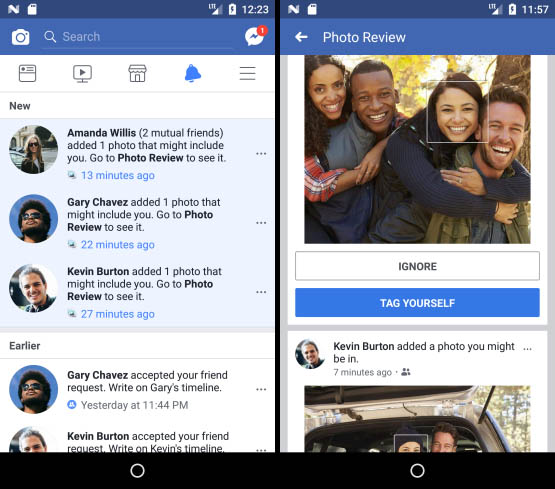
Facebook’s new facial recognition feature finds you in untagged photos

Today, Facebook announced that it will start using its facial recognition technology to find photos of you across its site, even if you aren’t tagged in those photos. The idea is to give you more control over your identity online by informing you when your face appears in a photo, even those you don’t know about. According to a Facebook blog post, the new feature is powered by the same AI technology used to suggest friends you may want to tag in your own uploaded images.

The feature, dubbed Photo Review, has one caveat: you’ll only be notified of an untagged photo of yourself if you’re in the intended “audience” of that photo. “We always respect the privacy setting people select when posting a photo on Facebook (whether that’s friends, public, or a custom audience), so you won’t receive a notification if you’re not in the audience,” the blog post says.

You don’t necessarily have to be friends with the photo’s poster to see the image; you only need to have some friends in common. The photo’s audience also needs to be set to “everyone,” which means the poster didn’t restrict access to friends only or another, select group of people.

The only images that don’t follow those rules are profile photos: those are considered public images, so you’ll be notified if someone uses an image of you as their profile photo. This should help you identify fake accounts, like those of strangers trying to pose as you or steal your social media identity.

How Facebook's Photo Review feature alerts you to untagged photos in the mobile app.
How Facebook’s Photo Review feature alerts you to untagged photos in the mobile app.

Visually impaired Facebook users will have their own version of Photo Review: screen readers will soon be able to read off people who appear in photos. This builds on Facebook’s automatic alt-text tool that reads off a photo’s details, including who posted it and when, and describes what’s in the photo to those with vision limitations.

Facebook will soon roll out an easier way to opt out of facial recognition all together as well. The company will have an on-off switch to opt out of all facial recognition features, rather than customizable settings for individual features. Once the switch becomes available, you won’t have to wade through a bunch of facial recognition settings and decide which you feel comfortable with—instead, you can turn all facial recognition uses off with one click.

In addition to controlling your online image, Facebook’s Photo Review presents another way users could get lost down a rabbit hole on the social media website. While that might not be ideal for those who don’t want to use Facebook as frequently as they currently do, it’s good for Facebook, as it could boost engagement. Users could spend more time going through untagged images of themselves while also connecting with the friends of friends who post those images.

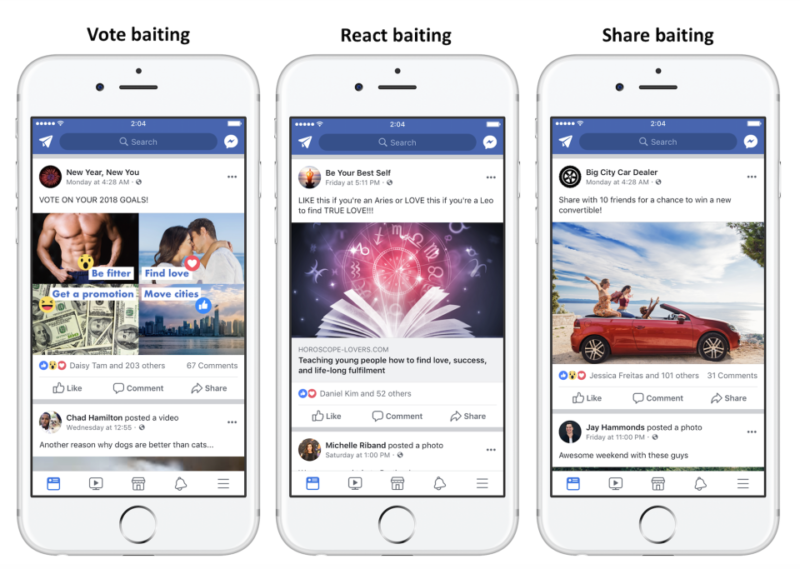
But that’s the kind of engagement that Facebook prefers and encourages. Recently, the company announced a plan to crack down on “engagement bait” posts, or those that beg for likes, comments, and shares in order to artificially inflate engagement totals. Facebook will demote those posts now, and pages that consistently resort to engagement bait posts will glean less reach and face stricter policies.

https://arstechnica.com/?p=1234571


These Are the Secrets to a Successful Twitter Campaign

So much of developing a social media presence is all about forming a connection with your customers. But how can you be sure that as your brand grows that you are really making an impact?

A great way to generate ideas as you head into 2018 is to look at the campaigns that gained the most traction this year. According to Twitter, these were the brands that truly had their finger on the pulse:

  1. Best discovery moment: KFC’s 11 herbs n spices
  2. Best brand voice: #NuggsForCarter (Wendy’s)
  3. Best digital to physical activation: Beauty and the Beast (Disney)
  4. Best C-suite strategy: Elon Musk (Tesla) and John Legere (T-Mobile)
  5. Best banter: Verizon / T-Mobile (“Safe Word”)
  6. Best use of livestreaming: #Breaking2 (Nike)
  7. Best use of social creators: #FriendsAgain (Bank of America)
  8. Best purpose driven campaign: I’m with the Banned (Spotify) and #WeAccept (airbnb)
  9. Best use of DM: #TwitterHaloWars (Microsoft Xbox)
  10. Best way to fuel fans: #WinterIsHere (HBO Game of Thrones)

Related: How Brands Use Twitter Banter to Gain Clout

Stacy Minero, Twitter’s Director of Brand Strategy, says that even though the approaches and types of companies represented in this list differed, there were several common throughlines that brands can look to if they want to have social media success.

Start with these three questions.
The animating force behind every strong campaign are these questions:

If you haven’t been able to clearly answer those, you need to to return to the drawing board.

Remember that it’s a two-way street.
Minero says you must make sure that you are delivering something to your customers that is of tangible value. “Consumers are giving you their time and attention. What are you giving them in return?” Minero says. “You’re surprising them, delighting them, giving them information.”

Create a call to action.
“People skip ads, but they don’t skip experiences,” Minero explains. “There’s [a] participation piece to a lot of these activations where the consumer is being invited in. They’re doing something vs. just feeling something.”

Minero cited Microsoft’s Halo campaign, which used direct messages to get users excited about the game by giving them a sneak preview. Some 56,000 games were played with 94 percent completion rate. In February, ahead of the release of Disney’s Beauty and the Beast, people who tweeted #BeOurGuest were prompted to DM an address to receive a free bouquet of themed roses. The campaign netted 938 deliveries and 32.4 million impressions.

https://www.entrepreneur.com/article/306345


8 Social Media Influencers Under 10 Who Put Grownups to Shame

We’re not sure what you were doing when you were a kid, but if you did have an after school job, it probably wasn’t one that netted you millions of dollars and thousands and thousands of fans.

Say what you will about social media, but when it comes to getting the word out about your brand, it can be a great equalizer, lowering the barrier to entry for all sorts of up and coming entrepreneurs, even ones that can count their ages on one hand.

So if you’re ready to feel inferior, here are some of the biggest little influencers on YouTube and Instagram. Be ready to be amazed and slightly ashamed that you weren’t hustling nearly this hard when you were in elementary school. And shout out to the parents who make it all possible, because we’re guessing they are the ones doing the filming, art directing and uploading.

Related: Why Young Entrepreneurs Are Better Positioned to Succeed

https://www.entrepreneur.com/slideshow/306323


New Facebook algorithm update attempts to quell “engagement bait” posts

Facebook news feeds can get pretty cluttered, especially with clickbait posts fishing for as many likes, shares, and comments as possible. But it appears that enough users have complained to Facebook about these posts that the social media platform will start cracking down on what it is calling “engagement bait.” In a Facebook blog post, the company explains it will demote engagement bait posts and pages starting this week.

The company defines engagement bait posts as any that encourage interaction to “artificially boost engagement” and glean more reach on the site—posts that say, “Like this post if you’re an Aries or Love this if you’re a Leo,” and other spam-like messages. Facebook has reviewed and categorized thousands of posts like this so it could update its news feed algorithm to identify engagement bait posts and demote them on your news feed.

The hope is that with the new demotion policies, spam posts won’t be shown as often on your news feed, and those that post engagement bait will stop doing so. Facebook is also implementing stricter policies for pages that “systematically and repeatedly use engagement bait to artificially gain reach.” These rules will roll out over the next few weeks, so publishers should keep them in mind as they create new posts. Pages that consistently use engagement bait tactics will see the reach on those posts decline as these new rules are put into effect.

Facebook explains that it doesn’t view all posts that ask for interaction as engagement bait: for example, posts that show a missing child report or ask for donations to a cause won’t be targeted by the new demotion policy. Facebook considers those interactions as “authentic engagement” and claims its machine-learning model is smart enough to skip them while targeting spam posts that may use similar engagement tactics.

This will likely be a welcome change for most users who loathe scrolling through news feeds littered with engagement bait posts. Facebook has come down on other types of content before, including links to sites with terrible Web experiences, in efforts to clean up news feeds. However, Facebook doesn’t share any metrics surrounding spam content, so it will be difficult to assess how effective this new program is in the long run.

https://arstechnica.com/?p=1234025


Wendy’s Amazing Social Media Team Shares The Secrets to its Success

Fast food chain Wendy’s this year became just as known for its grade A social media sass on Twitter as they are for slinging hamburgers and chicken nuggets.

After a year of attention-grabbing tweets, the company’s social media team held a Reddit AMA where they shared a lesson that every company wanting to make a viral impact can take to heart.

Even though the Twitter account’s voice is all about breezy spontaneity, a lot of thought does go into what is shared. And the team gave some insight into the process. Case in point: “We don’t get approval for everything, but definitely for some stuff,” they wrote. “The McDonald’s tweets generally need approval.”

Related: Wendy’s Trolls McDonald’s Over Its Fresh Beef Announcement

When asked about what the higher-ups think about the risks the social media team takes, they shared that they do sometimes pull back and stop themselves from posting things that they think might go over the line — and sometimes executives do let them know if they weren’t fans of a particular post.

A user asked, “Being savage on the internet is scary for brand teams. How did/do you soothe their concerns?” In response, the Wendy’s team gave a piece of advice not just useful for social media staffers, but any entrepreneur who finds that their business is capturing attention.

“Success happened before anyone had a chance to be scared,” they wrote. “And then we just kept going through mistakes.”

https://www.entrepreneur.com/article/306259


7 Times Brands Went Viral for the Wrong Reasons This Year by @searchmastergen

In the modern era of mobiles devices and social media, any brand can instantly become a viral sensation — or a viral nightmare — and it oftentimes doesn’t take much for either one to become a reality.

Some campaigns can be (thought to be) well-thought out and planned, aiming to strike that “just right” emotional cord with a large audience and hopefully going down into commercial lore as one of the funniest, wittiest, or creative.

But all too often, brands miss. Completely.

ADVERTISEMENT

Here are seven brands that went viral for all the wrong reasons in 2017.

1. Uber

Uber started 2017 off in the same fashion it ended 2016: with its head down.

After finishing 2016 with just under $3 billion in losses, Uber faced even more problems as the year turned and the new President of the United States took office.

Not long after being inaugurated, Donald Trump announced his controversial immigration ban that targeted predominately Muslim countries’ citizens from entering the United States including Iran, Iraq, Libya, Somalia, Sudan, Syria, and Yemen. The U.S. government also revoked more than 100,00 visas from foreigners throughout the world. Many taxi and ride-sharing drivers are immigrants, including immigrants from the restricted countries.

In response, the New York Taxi Workers Alliance called for a temporary strike for rides to and from John F. Kennedy Airport in New York City for an hour. Then, Uber announced via Twitter that it had turned off surge pricing at JFK during the protest.

The move, which was made to illustrate that Uber was not trying to profit from the strike, was soon considered a strikebreaking move that favored Trump’s travel ban, and the #DeleteUber ridesharing boycott was on.

The next day, Lyft had more iOS downloads in the United States than Uber for the first time ever. Lyft became more popular and visible too; it improved to a Top 5 spot on the free apps list ahead of the most popular social networks like Facebook, Instagram, Snapchat, and YouTube.

And that was far from the end of Uber’s bad year.

Less than a month later, a former Uber engineer published a scathing blog post on her personal website describing the big problems Uber had internally, specifically with sexism and lack of leadership and accountability. She detailed how her supervisor had been very forthcoming with sexual conversation and “trying to get me to have sex with him.” She detailed how the existence of sexism at Uber went far beyond just her story; it was rooted deep in the culture at Uber, and the stories were far more common than she ever imagined.

There were also legal issues that hit the company, including a lawsuit dealing with the use of intellectual property, a federal inquiry into a software tool that allowed Uber sidestep law enforcement, and claims that Uber operated illegally in Oregon, among a number of other accusations.

Oh yeah, and the CEO also got into an argument with an Uber driver about earnings in a video that soon became public and definitely further soiled Uber’s image.

It wasn’t long before CEO Travis Kalanick was ousted from the company he helped build, and a full makeover of a rotten company culture was underway.

Then, most recently, in November, it was made public that Uber did not report a data breach by hackers in 2016 who stole data of more than 57 million people, both drivers and passengers of the ride-sharing service. The hackers stole names, driver’s license numbers, email addresses, and phone numbers.

Luckily the worst parts of the data hack, including the coverup, fall on embattled former CEO Kalanick, and not new CEO Dara Khosrowshahi who said none of it should have happened but that he “will not make excuses for it.”

Uber is one of the most popular, highly valued private companies in the world, but it would certainly like to put 2017 in the rearview.

2. U.S. Department of Education

Based on the background of Betsy DeVos — the Donald Trump-appointed Secretary of Education who never attended a public school, nor enrolled her own children in public school —  and the way many Americans vocally opposed her throughout her appointment-approval process, it seemed like it was only a matter of time before this one happened.

Less than a week after being confirmed to the U.S. Senate, the U.S. Department of Education tweeted a picture of American author and civil rights activist W. E. B. Du Bois, accompanied by a quote by him about the importance of education.

Problem was, the quote in the tweet was attributed to a “W.E.B. DeBois” — and the Twitter World was quick to notice.

Among the many ironies in the misspelling (i.e., the Department of Education published the tweet, the tweet was about the importance of education, the quote was that of a scholar and author, etc.) was the apology tweet that was published following several hours of criticism.

The now-deleted apology said: “Post updated – our deepest apologizes for the earlier typo.”

The Department of Education followed up that tweet with another, correctly spelled the word apology: “Post updated – our deepest apologies for the earlier typo.”

Sheesh.

3. United Airlines

One of the worst public relations nightmares of the year comes at the hands of United Airlines by way of cell phone video and images of a bloody passenger being physically removed from a plane.

Turns out, United asked all loaded passengers if any four of them that wanted to volunteer to get off the current flight (and receive $800 credit for their troubles) and make new arrangements so that they could make room for four United employees on the now-overbooked flight. When no one volunteered, United forcibly removed at least one passenger, Dr. David Dao of Kentucky.

Cell phone footage shows security officers donning “POLICE” jackets (which were later considered mislabeled by Chicago’s Aviation Department) dragging Dao out of his chair and down the aisle with blood streaming from his mouth and looking dazed as onlooking passengers screamed in horror.

The aftermath? A broken nose, two knocked-out teeth, and a concussion for Dr. Dao.

For the airline, who admitted responsibility for the mishap: four Chicago Department of Aviation officers were immediately placed on leave in April — two of whom were eventually fired — for mishandling “a non-threatening situation that resulted in a physically violent and forceful removal of a passenger,” and a P.R. debacle of epic proportions that included United’s stock dropping 4 percent in the first week and its market value being reduced by $1 billion.

This was the third P.R. issue for United in 2017 — and all within a two-month span — following its barring of two girls from a flight for violation of the dress code because of their leggings, and a separate situation involving a scorpion that got on a flight headed into the United States and stung a passenger before being disposed of.

As bad as the situation seemed, it didn’t take long for United to bounce back. Stock prices rose higher than they were before the incidents, and United seemed to make right with Dr. Dao, who said he would likely sue the airline before being paid out an undisclosed amount in the wake of the incident.

4. Adidas

Adidas’ P.R. nightmare could have totally been avoided with the simple help of a proofreader, most likely.

With hope to evoke the proud emotions of accomplishment, satisfaction, and dedication, Adidas sent a congratulatory email to its customer base, including participants of the Boston Marathon, after the race.

Unfortunately for Adidas, it backfired in the worst way.

The email message read: “Congrats, you survived the Boston Marathon!”

This is obviously not optimal messaging for a race that was hit by a terrorist attack in 2013 that killed three people and injured more than 260.

As a result, many customers fired back at Adidas, typically offering screenshots of the email in their mailbox, reminding them that their message was clearly off-mark.

It didn’t result in the crashing of its stock, and it’s likely the majority of customers forgave Adidas for the painful blunder, but it could have all been avoided with the right preparation.

Adidas soon after apologized:

“We deeply apologize for our mistake. The Boston Marathon is one of the most inspirational sporting events in the world. Every year we’re reminded of the hope and resiliency of the running community at this event.”

5. Kendall Jenner & Pepsi

Probably the most popular viral fail of 2017 came at the expense of two of the biggest brands out there today, Pepsi and Kendall Jenner.

In an attempt to convey “unity, peace, and understanding,” Pepsi published a video ad on YouTube that imitates something America has seen a lot of lately: protests.

Many critics of the video made the comparison of the Pepsi-created protest in the video to the Black Lives Matter protests that have been taking place throughout the nation over the last few years, specifically in response to the killings of a number of minorities at the hands of law enforcement.

The ad consists of a bunch of young, attractive “protesters” who are a variety of ethnicities and races holding signs about peace and “joining the conversation.” Many of the facial expressions of the protesters are not that of pain, defeat, or frustration, but rather smiles accompanied by upbeat attitudes, leading many to believe the ad was insensitive and completely off-mark in terms of the real protests going on.

Those critics are likely correct.

As the New York Times put it, the ad was, as many activists say, “precisely the opposite of their real-world experience of protesting police brutality,” and not even Jenner could fix that.

At the climax of the more-than-two-and-a-half-minute ad, Jenner offers a police officer a can of Pepsi, which he accepts and drinks, and the protesters cheer in approval. It also cannot be ignored that, despite the protests comparison to the Black Lives Matter protests, Jenner is a white woman. This only enhances the fact that this Pepsi ad massively missed its mark.

[embedded content]

Pepsi didn’t wait long to apologize. After enduring intense backlash for the ad that was labeled “tone deaf,” especially on Twitter and other social media networks, Pepsi pulled the commercial despite spending millions on it.

One industry executive told People Magazine that the commercial likely cost between $2 million to $5 million to make, and it was likely that the overall campaign was budgeted for about $100 million.

That’s quite the oversight in planning, but Pepsi, too, would (mostly) bounce back from this bad press before 2017 even ended.

It doesn’t mean the brand has been in the clear, though. It was the punchline of many jokes in late-night TV when it first launched in April, and it still gets brought up in jokes to this day.

Pepsi and Jenner would both love to take this one back.

6. Dove

In an attempt to further solidify its association with positive body image, Dove launched an advertising campaign called “Real Beauty Bottles” that rolled out six different Dove body-wash bottles and claimed “beauty comes in all shapes and sizes.” Each bottle was intended to translate into a woman’s body type.

There was a tall, skinny bottle, a wide, hourglass-shaped bottle, a short, plump bottle, and so on. While it was trying to further advance the message that body type doesn’t truly matter, and everyone has the potential to feel and be beautiful, it was another sure miss in messaging, and many current and potential customers let Dove know.

People claimed they didn’t need to be reminded of body shapes while in the shower, just like they always are constantly reminded of throughout everyday trials and tribulations.

It wasn’t long before it became a long-running Twitter joke/meme.

And that wasn’t even the end of the marketing mishaps for Dove in 2017.

Later in October, Dove ran what many people considered to be a racist ad on Facebook. It was a three-second video with a black woman removing her top and turning into a happy-faced white woman.

For a company that has put so much emphasis on universal beauty and embracing ourselves for who we truly are, regardless of differences, this ad was another one it would like to forget. They deleted it from their Facebook account the next day.

7. Papa John’s

In response to low sales numbers, Papa John’s CEO John Schnatter blamed the NFL and the protests of its players who kneel during the National Anthem — and how NFL leadership handled the protests — for the bad performance of the pizza chain that is a major sponsor and advertiser of the league.

“The NFL has hurt us,” Schnatter said on an earnings call. “We are disappointed the NFL and its leadership did not resolve this.”

Two weeks later, the Papa John’s brand backpedaled on the statements from its earnings call with a series of tweets claiming it believes “in the right to protest inequality and support the players’ movement to create a new platform for change.”

The third and final tweet in the series said the brand is open to ideas from all to think of a way to work with the NFL and come up with a way to protest inequality and also honor the National Anthem. Then it condemned neo-Nazis in a blatant and much-needed way.

Still, for many Americans, it may likely be too late for Papa John’s to recover from this blow as quickly as United Airlines was able to from its passenger-removal nightmare.

Schnatter reportedly lost $70 million in one day following the mishap, according to Forbes. This was after achieving an all-time high for stock shares in December 2016 and Schnatter being listed on the Forbes’ list of the World’s Billionaires in March 2017.

It wasn’t long before he fell off that list and Papa John’s lost a quarter of its market share in the pizza-restaurant industry.

Conclusion

There can be a fine line between good, catchy marketing and other marketing themes people may find offensive for their general context or unintended message. It’s obviously best not to walk that line as marketers, especially when we’re talking about issues as sensitive as race or sexuality, and much of the challenges that come with controversial issues like them

More Marketing Mistakes to Avoid Here:

http://tracking.feedpress.it/link/13962/7723740


How to Boost Usability of a WordPress Website

Tips on How to Boost Usability of a WordPress Website

It is a small world, but the digital world is even smaller. Therefore, it is important to safeguard your brand’s reputation as a single miss from your end can affect your brand’s identity. One of the places where you have to keep your brand’s identity in mind is your website and blog. It is your brand on the virtual world. It is your window of getting more opportunities. Therefore, it is essential to ensure that your website is easily accessible and attracts your target audience.

While there are many several web development options that you can use to create your website, one of the easiest and efficient ones is WordPress.

WordPress allows you to develop user-friendly websites and helps in making it usable with its easy-to-use plugins, navigational tools, etc. We are going to give some easy tips on how you can boost the usability of your WordPress website.

Below are few tips that will help you:

Tip # 1 – Website should be visually appealing

First impression, as we always say, is the last impression. Now, imagine for a minute – would you explore a website with confusing navigation, garish colors, and designs that take ages to download, Or would you prefer to explore a website that is easy to navigate and has eye-appealing color combination and good design. Most likely, you will choose to explore the latter website.

You might find us repeating us ourselves, but we cannot stress enough on the importance of creating a website that has an easy workflow with good visual impact. Also, ensure that you update your website with the latest principles of website designing as what worked ten years ago might not appeal the visitors anymore. So, it is important to update your website regularly to keep your visitors engaged in your website.

Tip # 2 – Go mobile!

Let us face it – people access information on mobile more than on laptops and desktops. So, it is critical for your website to be mobile-friendly. Your target audience should be able to access your website on the go! And this is possible only if your website has a responsive design. Now, you might ask if you have to upgrade your website. The answer to it is a loud YES! Earlier, websites were typically designed keeping the PC in mind.

The mobile screens are small and viewing your website on mobile can be an arduous task. Your visitor may have to scroll sideways and downwards to read even a small paragraph of text, and that can be a great disadvantage considering that people no longer have the patience to scroll so much to read a small chunk of text.

A responsive design makes your website mobile-friendly, so the visitor can read the content easily without having to scroll/zoom much. If you are wondering if it is a tough task, then let us assure you – it is not! With free WordPress plugins such as Jetpack, you can optimize your website for smaller screens and make your content accessible on all devices.

Tip # 3 – Don’t break the link with your website visitors

Imagine this scenario – a reader comes across your blog post that has a link to another website, they click on it and come across an error saying the page is not found. Disappointing isn’t it? You almost lost a potential visitor there.

It is important to ensure that there are no broken links on your website. Be wary of adding broken links that direct visitors to empty pages. There are chances that the link you added today might not work few months down the line.

Now, monitoring every link might not be possible. But, WordPress has a solution to it. There is a plugin called Broken Link Checker checks for posts and pictures that have a broken link or missing images and notifies you about it. That will help you rectify the issue and keep your website updated.

Tip # 4 – Make website navigation seamless

Yes, we know we are repeating ourselves. However, this is crucial, and no matter how many times we repeat, website developers miss this simple but very important aspect of your website. It is a fast-paced world, and no matter how beautiful your content is, people are not going to read it if your website navigation leaves them with a bad experience.

From logical navigation (you don’t want the website visitor to navigate from About Us to directly Contact Us without going through the other parts of your website), to adding a sitemap to make it easier for the visitor to explore the website, and linking your logo to your website’s homepage; every small aspect adds to the customer experience.

Tip # 5 – Interaction with website visitors = potential customers

We live in a time where we require immediate solutions to our queries. Earlier, visitors had to either post their queries on the ‘contact us’ form of the website or call the helpline and wait for their turn to get their queries resolved.

Now, times have changed. Customers prefer to use different Omni-channels to resolve their queries. Therefore, while you can provide offline options such as a helpline to enable visitors to reach out to you, there are also options such as live chat window that can help you chat with your visitors real-time and resolve their queries at a less turnaround time. With quick solutions and proactive suggestions, you will be able to convert the leads into customers. WordPress offers plugins such as WP Live Chat Support that can help your website visitors to connect with you easily without third-party interference.

Tip # 6 – Attract your users with your content

When we talk about the usability of the website, we often focus on the design and user interface of the website. However, one thing that distinguishes your website from your competitor’s is the quality of content. Ensure that your content is useful and is regularly updated. Remember that while a picture talks a thousand words, it is your content that will convert your visitors into leads. So, always keep your content as the focal point even as you update your website.

In conclusion

Website is not just another marketing exercise to be done for the sake of creating online presence. It is an important means of generating leads for your business. So, always ensure that your website is user-friendly and dedicate time to maintaining it regularly. A good content with great design, navigation, and real-time customer service is the key to success of your website and your brand identity on digital space.

How to Boost Usability of a WordPress Website


How Livestreaming Helped This Entrepreneur Earn $11,000 in Her First 3 Weeks

Most of the amazing entrepreneurs — with million-dollar businesses and giant personal brands — I feature here on The Pursuit and Entrepreneur.com have been building for at least a decade. Nicole Walters, however, has been in business for less than three years. By age 28, she was a highly paid executive at a Fortune 500 company, managing multibillion-dollar accounts, but felt her career was “feeding my family, but not my soul.” In 2015, Walters began livestreaming, and as her audience numbers went up so did her income. When she made $11,000 in the first three weeks of working with small-business clients full time, she knew she was onto something.

Related: 5 Social Media Rules Every Entrepreneur Should Know

That same year she quit her corporate job — via a phone conversation she livestreamed on Periscope in front of thousands of viewers. She founded The Monetized Life, her speaking, consulting and online education business. Since then, she’s taught thousands of entrepreneurs through her regular livestreams and her wildly popular online course on monetization called 1K1Day. In recent months, two of her livestreams went viral, garnering over 20 million views and features with sites like Babble and Yahoo.

I was able to record an episode of The Pursuit with her before her keynote at FinCon, the conference for bloggers, publishers and influencers in the personal financial industry. I asked what I’m sure you’re wondering — how did she grow her brand so big, so fast? Here are her answers from our conversation, in 10 key lessons.

1. Put in the work.

Remember, you just read that Walters built an impressive career in the corporate world before starting to build her brand. She helped brands and companies increase their revenue, which built the foundation of expertise used to launch The Monetized Life.

“No one can ever outwork you,” she explained. “I looked for new opportunities, I made sure I was valuable, I spoke up, I was constantly trying to triage problems and find solutions, and making myself visible.”

Be willing to put in the hours, effort and commitment to build your knowledge before you try to build your platform.

Related: 20 Ways to Grow Your YouTube Live Audience

2. Test your idea.

Walters had a side hustle blog she’d grown over the years about natural hair called Naptural Nicole. Her blog was bringing in money, and she had her corporate finance experience, which gave her plenty of wisdom to share with other bloggers. She saw the opportunity livestreaming offered even though she wasn’t sure it could actually pay the bills. Before quitting, she started livestreaming multiple times a day.

“I just went on there and I started answering questions, mostly from bloggers just like me who were saying, How have you been monetized? How do you get these gigs? I was known as the [blogging] Rookie of the Year just because it was like, who’s this blogger girl who came out of nowhere and is working with all these brands?” she recalled. “It was because I knew how sales and product development worked in corporate, so I just translated that over to my personal brand. I started giving tips and helping people out.”

Soon, she was getting thousands of viewers on her broadcasts. Followers said they wanted to sign up for her emails, so she quickly created an opt-in. From there, she was able to offer paid services and made her first $11,000 in three weeks.

Related: 10 Laws of Social Media Marketing

Make sure you test the waters on any new platform or technology. What works for one influencer or brand might not work for you, and as was the case with Periscope, not all platforms stay relevant. If you test early and see success, jump in so you can dominate the new space early on as Walters did.

3. Stay ready for the “big break.”

Walters’ quick success on Periscope caught the eye of Chalene Johnson, who offered to show Walters the inner workings of her online business. Johnson showed Walters what was possible, and Walters made sure she rose to the occasion, but again, she’d already put in years of hard work. Later, when her livestreams went viral overnight, she explained she didn’t have to do much to capitalize on that opportunity.

“One of the biggest [mistakes I see when people have content go viral] is that they’ll immediately try to crank out a bunch of additional content that seems to be aligned with [whatever went viral]. Just because I had one thing that went hot doesn’t mean I need to change my whole business strategy up and do something else. Obviously, I was doing the right thing, which is why [I went viral in the first place] so I don’t need to revamp my entire strategy.”

Once the initial frenzy of media calls slowed down, she decided to upload her speakers reel to her Facebook page along with a link to sign up for her email list.

“People got a good, quick primer that was less than a minute long of who I really was and what business offerings I had … and that allowed me to convert, very quickly, a lot of people over to my list because I was ready. I think that that’s something everyone could do today, right now, for their next viral moment, is stay ready so you don’t have to get ready.”

Related: 12 Social Media Mistakes That Entrepreneurs Make

4. Serve well when given the opportunity.

Walters explained that once she started landing bigger speaking engagements and high profile relationships, she made sure to prepare and go above and beyond in those roles.

“I think sometimes [we influencers] forget that we’re all very regular people, and we are so blessed and fortunate to have a platform. If you have a platform, you’ve got to show up. That means when you get there, give even more …. I think that oftentimes we worry about how do I get it, how do I get it, when a huge part of getting your next gig is how well you do with the one in hand.”

Make sure that you’re serving your readers, viewers, customers and clients as best you can right now, and then when you get additional exposure and bigger partnerships, make sure your level of excellence and services rises to the occasion.

Related: How to Ride the Livestreaming Wave to Marketing Success

5. Give yourself grace.

I asked Walters what it was like the first couple weeks after quitting her job. “Crying into mugs. It was just so many tears …. I was freaking out.” She advises that new entrepreneurs and business owners experiencing explosive growth leave room for grace. Walters says you won’t have the same schedule, routine or stability as you had before.

“Don’t feel like you have to instantly have it all together. It’s an evolution, it’s a process …. I started [my business piece by piece] building the way that I built in corporate.”

6. Think big picture and long term.

Walters thinks one of the reasons she has been able to quickly stand out and then maintain momentum is her mentality around her followers and customers. She believes that many online entrepreneurs are in a hurry for numbers and forget about the lifetime value of their readers, listeners, customers, etc.

Related: 10 Proven Ways to Make Millions on Social Media

“Lifetime value in your client means you’re not just here for the quick hit money, you’re here for the long-run relationship. You want to automate your systems, you want to automate your emails list, you want to automate your leads, but what you don’t want to automate is that relationship.” She recommends that small-business owners think like corporate sales teams, actually picking up the phone to call clients and learning about their lives, especially if they are paying for high-ticket courses or products.

“Everyone’s like, I just need more leads. I need a bigger list. If you have a thousand people giving you $100 a year, that’s $100,000, so focus on finding your core 1,000. Feed them, love them, give them everything they need. Provide value and services, and you know what? They’ll stick with you for the long run, and you’ll make a whole lot more than that initial $100,000.”

7. Start livestreaming. Yesterday.

Growing a brand means getting the word out, and Walters’s best advice for this is still to livestream. She explained that it is a worthwhile strategy if only for the algorithms. “Facebook wants people on Live, so they’re pushing your broadcast into people’s news feeds. More people are seeing you than ever before.” she said. “I’ve had two viral videos that doubled my email list in just three weeks. Going live has transformed my business, and it’s because I get to connect directly in a real, authentic way, with people who are looking for what I have to offer.”

You can use livestreaming in many different ways, so find a way that works for you. I use livestreaming as a way to interact with viewers of The Pursuit who have follow-up questions and want more real-life examples of success tactics. Some use it to show behind the scenes activity without straight-to-camera Q&A. Even going live quickly to make an announcement can boost the views of all of your other content. Practice in the mirror, make an outline, find a quiet, well-lit room and press that red button.

Related: How to Get a Six-Figure Audience for Your Live Video

8. Be consistent.

Walters explained that in these feed-obsessed times, entrepreneurs get caught up in the content, thinking, I need a beautiful Instagram page. I want to have a podcast and I need to be really good at Instagram, Twitter or Tumblr.

Instead, she says, “Pick something and be consistent. I don’t care what you’re doing, make sure you love it so that you’ll be consistent, and then do it frequently …. I don’t go less than once or twice a week without going live, because that helps feed my business, so whatever it is you want to do to get [eyeballs on your content] understand that, in the beginning, you’re not going to have them. You need to do it because you love it, so make sure it’s a platform you love, and then do it often and regularly.”

Related: 10 Social-Media Trends to Prepare for in 2018

9. Be proactive.

Now Walters is getting approached for keynotes, book deals and development deals — but she is also actively pitching and submitting for opportunities as well. “I didn’t sit around and wait for opportunities; [for example, the speaking opportunity with Dave Ramsey and Christy Wright’s Business Boutique] took a pitch … them saying no … then eight months of negotiations before they brought me onboard. When I came on board, I slayed and I delivered. I did not show up half stepping.”

Want those big opportunities? The key, she says, is not in the email or the pitch itself, it’s in the research beforehand.

“The best pitch starts from your desktop, on your computer doing research. Know their business, know their mission statement, know what their upcoming products are and what their trajectory of their business is.”

You also need to make sure you show up with confidence, explaining quickly how you’ll work with them and what you’ll do together, Walters shared.

“When you start pitching that way, what happens is in people’s mind, they’re instantly thinking, ‘Is there room on my calendar? Can I do this? Is it in the budget?’ They’re not thinking of the no, they’re thinking how are we going to do this …. It worked all through corporate, and it’s still working now.”

Related: Here’s How You Can Actually Make Money With YouTube

10. Be prepared to grow.

All successful business owners will tell you nothing pushes you to grow like entrepreneurship. Walters experienced that growth quickly. “At the beginning of 2017, I realized that if I wanted to get to the next level, if 2018 was going to work, I needed to grow. But, the part that I was struggling with was I realized the growth was my own.” She shared she had to get therapy for anxiety, figure out how to build in more family time and overhaul her health so she could keep up her hectic travel schedule.

“If I’m not my best, then I’m not giving people my best, and they deserve that. The buck stops here; own it. That is tough. Those are the hard moments.”

But, she says, it’s worth it, for the “moments where you get this validation that it was worth it, and people see you. Not only do they see you, but they support you and they want you to win, and then you realize that, if you’re having that moment, you have the ability to give it to someone else. It’s overwhelming.”

Related: How This Mom Hits 7 Figures a Month Using Social Media

Entrepreneur Network is premium video network providing entertainment, education and inspiration from successful entrepreneurs and thought leaders. We provide expertise and opportunities to accelerate brand growth and effectively monetize video and audio content distributed across all digital platforms for the business genre.

EN is partnered with hundreds of top YouTube channels in the business vertical and provides partners with distribution on Entrepreneur.com as well as our apps on Amazon Fire, Roku and Apple TV.

Click here to become a part of this growing video network

https://www.entrepreneur.com/video/305875