Interview: Why marketers shouldn’t waste their time with Google Posts

The search engine results page recently saw the return of Google Posts, the part-social, part-publishing feature that was launched by Google a little over a year ago during the US Presidential Election.

Billed as “an experimental new podium on Google”, Google Posts has attracted a lot of attention from marketers, search specialists and Google enthusiasts thanks to its prominent place on the SERP – appearing in the form of an eye-catching carousel of cards – and its mysterious deployment.

Over the year since it was first released, it has appeared in and disappeared from search results a number of times with no apparent pattern or explanation. Brands who wanted a shot at being part of Google’s new podium were forced to “Join the waitlist” and cross their fingers.

But last month Google suddenly announced that it would be opening up Posts to “museums, sports teams, sports leagues, and movies” in the United States, and all of the above groups along with musicians in Brazil – prompting a renewed flurry of interest from marketers. At the same time, the relaunched Posts became more visually eye-catching with the addition of embedded GIFs and videos.

One person, however, doesn’t believe that Google Posts is worth the hype. Michael Bertini, Online Marketing Consultant and Search Strategist at iQuanti, told Search Engine Watch why he thinks that Google has gone off half-cocked with Posts, and why marketers would be better off expending their energies elsewhere.

Google Posts: where is the value?

“I don’t think Google will admit that they made a mistake with this whole Posts thing,” says Bertini.

“Google already has a lot of great products and search results features on the page; to add Google Posts to that clutters up the results page unnecessarily. And I don’t think it offers much value to the end user.”

It’s true that while there has been a lot of excitement from brands and marketers around the prospect of publishing directly to the SERP, few of us have considered its usefulness to users. Google is still first and foremost a search engine; when users enter a search query, they are presumably looking for information.

While people Googling candidates in the run-up to the US Presidential Election would undoubtedly have been interested in what those candidates had to say about certain issues, subsequent versions of Google Posts have moved further and further away from a feature that is useful to the end user.

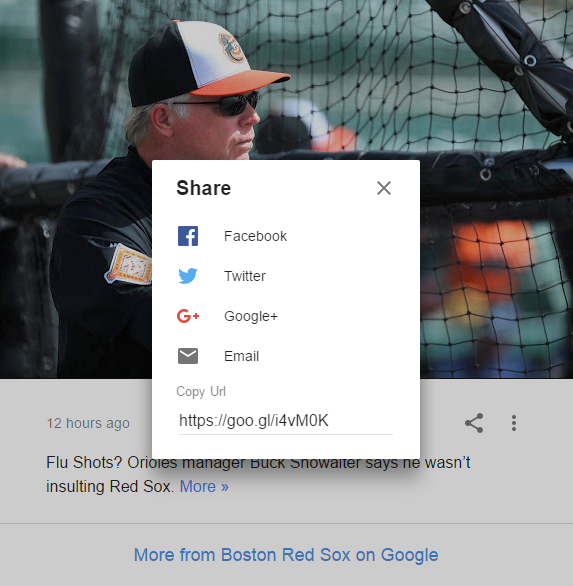
Few people searching for “Boston Red Sox” are looking for pseudo-social updates from their favorite sports team; they’re more likely to be looking for match scores, game tickets, or perhaps a link to the team’s website.

A lot of the interest around Google Posts thus far has been driven by sheer novelty, with people Googling ‘Andrews Jewelers’ or ‘Escape Pod Comics’ simply to see how the businesses had been using Posts – rather than because they featured useful information. In and of itself, how much value does Posts provide to the searcher?

“I don’t think anybody should put a strict focus on getting into Posts – or any one Google feature,” says Bertini. “What I’ve noticed throughout my career is that people who make it a specific focus to get into an area of Google – let’s use Google’s Answer Box as an example – ultimately, they’re left with content that doesn’t fit the end user’s needs. And then it dies.”

“If someone did want to get involved with Google Posts, they should write content that really answers the search query, and then of course request access on posts.withgoogle.com. But that’s all.”

Everything is a test

Based on the fact that Posts has already come and gone from the SERP several times before this most recent, wider launch, does Bertini think that Posts is finally here to stay?

“Everything Google is about testing,” Bertini replies. “Even after they launch it to market, what they would consider ‘permanent’ is not really what we would consider permanent. Personally, I think it’ll last up until the third quarter of 2017, and then they’ll mix it up with something else.

“If Posts get a really high CTR, then Google might invest more in it and add more features. But at the moment, it’s still very much in testing. It still lacks features – there’s no real social interaction, for example.”

Google Posts currently allows for limited social sharing, but doesn’t provide a way for users to truly interact with or respond to Posts.

If Posts, ultimately, is still in testing, it explains why it has disappeared and reappeared with so little fanfare – Google doesn’t want to attract a lot of attention to a feature that may not even be launched on a wider scale.

Bertini agrees that the lack of promotion speaks volumes about Google’s intentions – or lack thereof – for the feature. “If Google had complete confidence in this feature, they would be promoting it more.”

He goes on: “If I ran my own business, and I wanted to get more searchers to my site, there are better ways to do that than to focus on GIFs and videos to get into Google Posts.

“For example, if I were making videos already, I would create pages for my videos, transcribe that content, and optimize it for search – that would be a better use of resources than focusing on getting into Posts.

“Ultimately, people are going to invest time and effort into Posts, when Google itself has not yet perfected this feature.”

Google Plus revisited?

Given the pseudo-social nature of Google Posts, a lot of comparisons have understandably been drawn between Google Posts and Google Plus, Google’s last ill-fated venture into social networking. And it could be that Google Plus provides a blueprint for what to expect from the future of Google Posts.

“If we look back at Google Plus – when it first launched, Google’s idea of what Plus would be is not what it is today. And like everything Google, Google will never admit that they made a mistake, or that the product didn’t turn out the way they wanted it to be.

“But I think the search marketers who used Google Plus as a social platform are very disappointed today – if they invested a lot of time and money into building up their profiles and optimizing their Google Plus. It’s not used the way it used to be used, any more. I think it’s going to be the same with Google Posts.”

Remember when Google Plus was a big deal?

Bertini believes the aim of introducing Google Posts to the SERP is to encourage more user interaction with the search engine results page. This would tie in with the recent addition of rich results for podcasts to the SERP, allowing searchers on smartphones and Google Home to play podcasts directly from the search page.

“Google is trying to make a different version of social [with Posts], which is social interaction with the search engine results page, where a user can interact with the search page itself. It’s just very early on at the moment.”

If Google can succeed in expanding the function of the search results page in this way, it would definitely be a means of keeping users inside its own walled garden for longer.

But without value to the end user, Google Posts could be a Plus-style flop, and Bertini thinks that Google would be better off focusing its attention on perfecting existing features of the SERP that have more value to searchers.

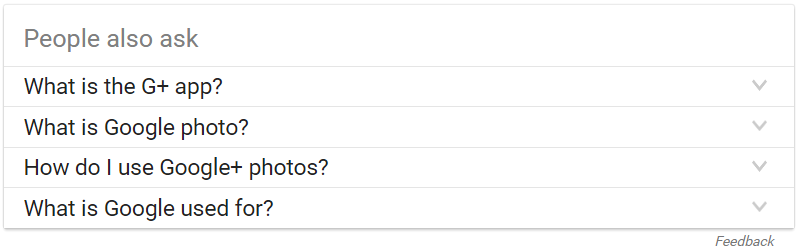
“Google is constantly trying to mix things up, when – once again, personal belief – I think that they should focus on good products that they’ve launched like Answer Box, which is already effective. Or ‘People Also Ask’ – they launched this section, and it’s still not perfect, but it’s good.

“I think this is what Google should devote its energy to, rather than – I don’t want to say get rid of Facebook or Twitter, because I don’t think that will happen – but rather than trying to make the search results page a social platform.”

The future of Google Posts

Google Posts, as it stands, still lacks a lot of functionality. So an ideal world, what would a fully-featured Google Posts look like?

“One, people search for something; two, a Post feature comes up; three, there would be a rating system for whether or not the Post matches the search query.

“Then there would be a sharing function where the user can share the Post via social media. You could also have a Hangouts-style feature integrating chat into Posts, allowing people to chat about what they’ve just read.”

It remains to be seen whether Google will try to keep integrating more functionality into Posts or whether it will once again disappear quietly from the SERP.

But one way or the other, marketers should keep sight of the importance of catering to the end user – not just to the newest Google feature.

Related reading

The home page for Kiddle search engine

Google Shopping


For Dan Hogman, Blurred Lines Separate His Love of Architecture, Illustration, and Photography

Dan Hogman is an artist of many talents. While he’s primarily an architect, he is also a skilled illustrator and photographer who shares an interest in graphic design and typography.

“I’ve had a deep interest in architecture ever since my early years,” he explains while discussing how his photographs, illustrations, and architectural style influence each other. “I create architecture, photograph architecture, and sketch architecture, without necessarily setting a firm frame on when one stops and the other starts…It’s a mutually beneficial relationship.”

2015-07-19 15.18.29-1

When it comes to illustration, Hogman frequently sketches on the street. Many of his Instagram photos show him outdoors, with a notebook and drawing utensil in hand while he recreates a nearby building on paper. “I look at heritage architecture in most cases, they are a more dynamic subject to look at. While I am a minimalist when designing contemporary architecture in my daily office work, I find the complexity of classical architectural styles more appealing.”

Hogman maintains an essential balance in all areas of his artistic life. He focuses on tangible structures, yet keeps his architectural sketching practice alive. On a day-to-day basis, he takes a straightforward approach, but still finds himself attracted to more elaborate designs. In other words, he does not hold himself back when it comes to his creative explorations.

DH Image

In addition, Hogman consistently nourishes his social media presence with daily posts. “Social media has been very helpful to me. It’s a great, second incentive to do what I do, and to continue to search and explore new ideas. The instant feedback I receive from my followers (sometimes the comments, sometimes the silence) is essential.” With that being said, his social media accounts act as the perfect portfolio, especially since he includes a healthy mix of structural sketches and snapshots.

2015-08-23 11.21.22-1

For his photography, his inspiration is ever-changing. “It varies based on the subject. I sometimes look at contemporary architecture, where my focus is the novelty in form or materials,” Hogman admits. “Other times, I look at heritage architecture, where I am curious about how the structure is performing after 100 or more years in use, how it relates to its continuously evolving surroundings, or how its current purpose is connected to the initial intent.”

DH Image

Since Hogman does pursue different artistic paths, he’s constantly learning and improving upon his creative process. Specifically, he finds motivation in the architectural muses he pursues and in the tools that assist him in doing so. “In many cases, the everyday buildings or objects that we look at deserve a better/second look and this is the initial spark,” he divulges. “The tools I use are inspiring and results vary widely depending on the lens or the pen/paper I go with. The subject size/complexity is directly related to the size of the drawing, paper, or pen selection. It’s a formula I am still working on.”

2015-02-04 00.04.57

Regarding inspiration, Hogman has suggestions for those who are interested in what he does. “I think everyone should do what inspires them. Inspiration comes from so many different sources, and it’s all different for different people,” he says. “You simply cannot do anything great until you find what truly inspires you. Once you find it, the rest will follow naturally.”

DH Image

To see more of Hogman’s work, visit his website or follow him on Instagram. Images used with permission.


Eat Your Heart Out: Chef Creates Series Of Beautiful Stop-Motion Animations For New Cookbook

[embedded content]

When chef Dean Sheremet set out to create Eat Your Heart Out – a cookbook he describes as “modern and clean, but accessible” – he reached out to photographer Aaron Cameron Muntz. This was back in May 2014, when Sheremet wanted photographs to enhance his pitching presentation. “Dean and I work well together, most importantly on the creative side of things,” Muntz tells us. “We are always pushing each other, trying to one up each other with ideas. We push and push till it breaks, then bring it back to a cool, do-able idea that we can execute. I think a big factor in working together on this project was our mutual desire to do something visually out of the ordinary for a cookbook.”

Unknown-23

When it comes to their demographic, Sheremet explains that he aimed to create an approachable cookbook. “Too many books and magazines these days have really cool photography, but the recipes and ingredients read like a foreign language and are impossible to track down,” states the chef. “When Aaron and I started this project, we had a similar vision in mind. A clean and modern look that would push the boundaries of the everyday cookbook, but also wouldn’t scare the consumer by being far out of reach.”

With accessibility in mind, Sheremet and Muntz worked together with designer Melanie Ryan to capture 5-6 recipes (which were made from scratch every day during the entire shooting process) for the cookbook pitch. In the end, this presentation was greatly successful and the book’s publisher wanted to keep both Muntz and Ryan on the project. Then, in January 2015, food stylist Maria del Mar Sacasa joined the team as they worked to pick the recipes for the book. “Dean and Maria spent a lot of time working on the book itself, while Maria and I developed ideas for how each of the recipes would be photographed,” Muntz reveals. “I also brought on prop stylist Maya Rossi to handle all of the surfaces, plates, linens, etc. It was a huge undertaking.”

Unknown-5

After several months of preparation, the Eat Your Heart Out team began shooting the books’ images during the last week of May 2015. They spent a total of seven days shooting, which includes the day they spent working on Sheremet’s pitch (since the book’s cover was actually pulled from that shoot). In the end, they had produced around 150-175 images. “We had an incredibly aggressive schedule. We were shooting anywhere from 10-12 setups a day,” reveals Sheremet. “We ran two sets simultaneously so we could capture it all and also have some cool, behind-the-scenes shots.”

Muntz adds, “With so many photographs to accomplish, I tried to keep things as simple as possible. Each set was primarily a two light setup, key and fill. We shot with Profoto strobes. And I use a lot of different types of shine cards to redirect light around my sets. The look of the lighting in the book is pretty hard for a cookbook. Specifically, I went with a hard key light and a soft box to fill on each set. I shot the primary images with a P45+ digital back on a Hasselblad 503CW camera body. I like working with the older Zeiss glass and these cameras are just incredible workhorses. The secondary set I shot with a Canon 5D. It worked well if I needed to take it off the tripod to follow what Dean was doing. And the smaller camera also made it more manageable to shoot straight down on a countertop height set.” In the end, the photographer worked with freelance retoucher Ashlee Gray on the final edit.

Unknown-11

In addition to the visuals for the book itself, the creatives also decided to produce stop-motion videos to promote the cookbook on social media. “I just called Aaron up and said, ‘Wouldn’t some stop motion for the book be badass?’” says Sheremet. “The attention span of people these days rarely goes past 15 seconds, so we wanted to create a story that was comprehensive within that time frame. I’m really proud of how cool they turned out. I’d never styled a shoot like that so I was constantly learning and evolving on the fly, which I love.”

For these 15-second videos, the team went in a different direction. “A hard light source is very specific. These stop-motion videos required a lot of different setups to show the steps of each recipe, so I wanted a much softer light to keep things simple and clean as we shuffled things around on the set. So I used a 4×4 scrim with a hard dish behind it as key and a soft box for fill,” Muntz tells us, mentioning that he used his Canon 5D for this part of the project. “I believe that more than any other outlet, stop-motion lends itself to social media. It’s fun, different, and relatively inexpensive to produce. Instagram limits videos to 15 seconds long, so you don’t have to generate a ton of content to fill that time.”

[embedded content]
[embedded content]
[embedded content]
[embedded content]
[embedded content]

Yet, while the stop-motion clips and cookbook visuals may be different, there is one theme that unites them: the reality that food preparation can be messy. “Life is irregular and messy at times, and that is beautiful,” says Sheremet. “I hate when food shows or books project this faux perfection as if the herbs just fell onto a plate from heaven or a sauce wasn’t meticulously spread before the shot was taken. I wanted the audience to feel as if they could achieve the final result at home and not be intimidated. I prefer inclusive to exclusive.”

“One of my favorite images (I insisted on capturing it) is the empty plate. Maria decided to pick the tacos as the empty plate shot. We all sat around eating the food from the plate in the main shot. Just dove right in. Then plopped the plate back down on set and… perfection!!” Muntz adds, attesting to the realistic and playful nature of the shoot. “The shoot was like another test kitchen and I can assure you these recipes are amazing!”

In conclusion, Sheremet states, “We approached everything with what we like first. If you set out on a project with the goal of pleasing a certain group, you end up chasing your tail and it doesn’t really have a concrete message. This book was so personal that it had to have my fingerprint and point of view on everything.”

Unknown-17

More Work from Eat Your Heart Out:

Unknown-3Unknown-6Unknown-7UnknownUnknown-8Unknown-9Unknown-13Unknown-24Unknown-14Unknown-20

Eat Your Heart Out can be purchased on Amazon. Images used with permission.

https://layersmagazine.com/eat-your-heart-out-chef-creates-series-of-beautiful-stop-motion-animations-for-new-cookbook.html