Deepfake celebrities begin shilling products on social media, causing alarm
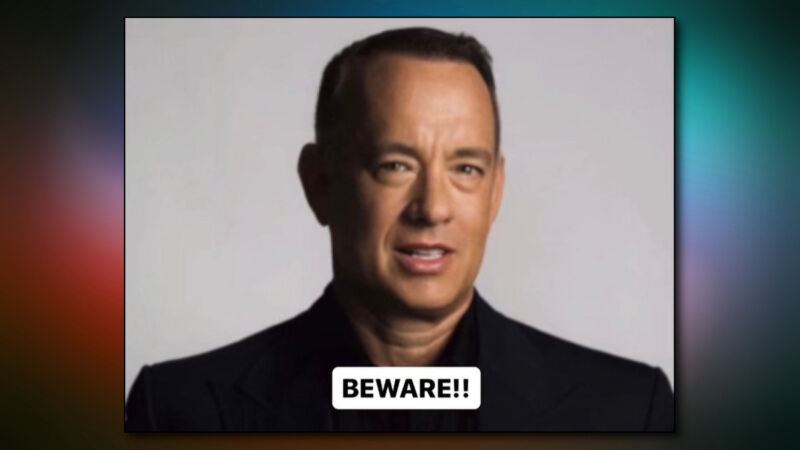
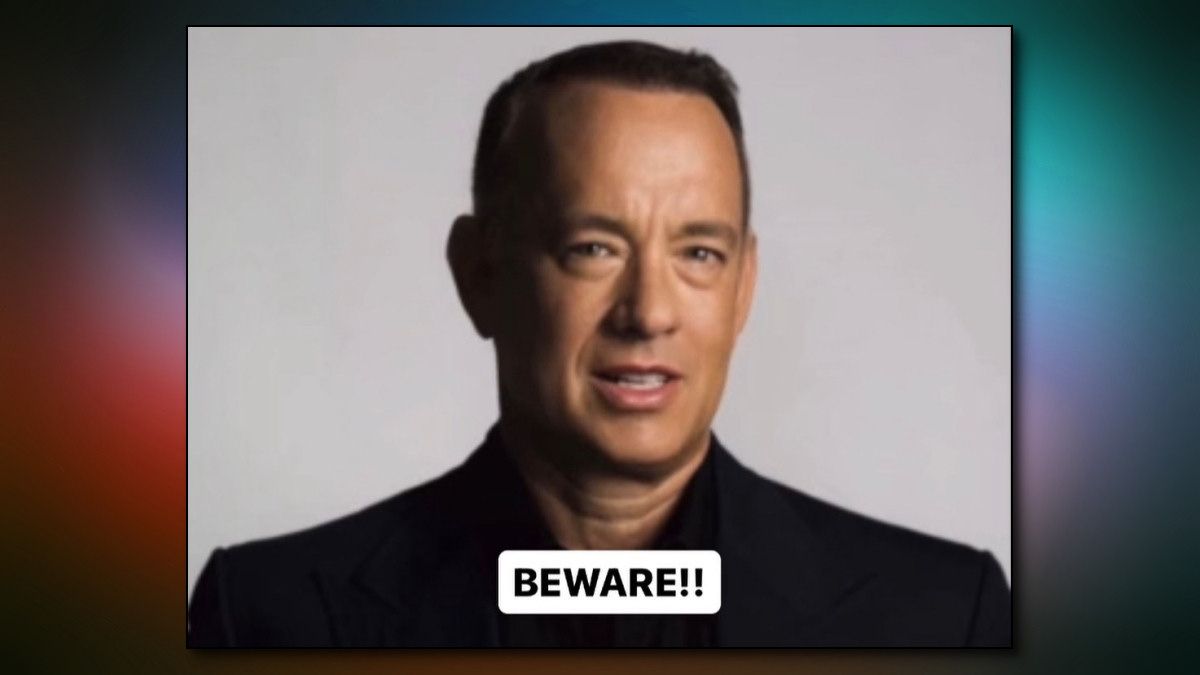
A cropped portion of the AI-generated version of Hanks that the actor shared on his Instagram feed.
Enlarge / A cropped portion of the unauthorized AI-generated version of Hanks that the actor warned about on his Instagram feed.

News of AI deepfakes spread quickly when you’re Tom Hanks. On Sunday, the actor posted a warning on Instagram about an unauthorized AI-generated version of himself being used to sell a dental plan. Hanks’ warning spread in the media, including The New York Times. The next day, CBS anchor Gayle King warned of a similar scheme using her likeness to sell a weight-loss product. The now widely reported incidents have raised new concerns about the use of AI in digital media.

“BEWARE!! There’s a video out there promoting some dental plan with an AI version of me. I have nothing to do with it,” wrote Hanks on his Instagram feed. Similarly, King shared an AI-augmented video with the words “Fake Video” stamped across it, stating, “I’ve never heard of this product or used it! Please don’t be fooled by these AI videos.”

Also on Monday, YouTube celebrity MrBeast posted on social media network X about a similar scam that features a modified video of him with manipulated speech and lip movements promoting a fraudulent iPhone 15 giveaway. “Lots of people are getting this deepfake scam ad of me,” he wrote. “Are social media platforms ready to handle the rise of AI deepfakes? This is a serious problem.”

A screenshot of Tom Hanks' Instagram post warning of an unauthorized AI-generated version of him selling a dental plan.
Enlarge / A screenshot of Tom Hanks’ Instagram post warning of an unauthorized AI-generated version of him selling a dental plan.
Tom Hanks / Instagram

We have not seen the original Hanks video, but from examples provided by King and MrBeast, it appears the scammers likely took existing videos of the celebrities and used software to change lip movements to match AI-generated voice clones of them that had been trained on vocal samples pulled from publicly available work.

The news comes amid a larger debate on the ethical and legal implications of AI in the media and entertainment industry. The recent Writers Guild of America strike featured concerns about AI as a significant point of contention. SAG-AFTRA, the union representing Hollywood actors, has expressed worries that AI could be used to create digital replicas of actors without proper compensation or approval. And recently, Robin Williams’ daughter, Zelda Williams, made the news when she complained about people cloning her late father’s voice without permission.

As we’ve warned, convincing AI deepfakes are an increasingly pressing issue that may undermine shared trust and threaten the reliability of communications technologies by casting doubt on someone’s identity. Dealing with it is a tricky problem. Currently, companies like Google and OpenAI have plans to watermark AI-generated content and add metadata to track provenance. But historically, those watermarks have been easily defeated, and open source AI tools that do not add watermarks are available.

A screenshot of Gayle King's Instagram post warning of an AI-modified video of the CBS anchor.
A screenshot of Gayle King’s Instagram post warning of an AI-modified video of the CBS anchor.
Gayle King / Instagram

Similarly, attempts at restricting AI software through regulation may remove generative AI tools from legitimate researchers while keeping them in the hands of those who may use them for fraud. Meanwhile, social media networks will likely need to step up moderation efforts, reacting quickly when suspicious content is flagged by users.

As we wrote last December in a feature on the spread of easy-to-make deepfakes, “The provenance of each photo we see will become that much more important; much like today, we will need to completely trust who is sharing the photos to believe any of them. But during a transition period before everyone is aware of this technology, synthesized fakes might cause a measure of chaos.”

Almost a year later, with technology advancing rapidly, a small taste of that chaos is arguably descending upon us, and our advice could just as easily be applied to video and photos. Whether attempts at regulation currently underway in many countries will have any effect is an open question.

https://arstechnica.com/?p=1972869


SCOTUS to decide if Florida and Texas social media laws violate 1st Amendment

SCOTUS to decide if Florida and Texas social media laws violate 1st Amendment

On Friday, the Supreme Court agreed to decide if two laws crafted by Republicans in Florida and Texas run afoul of the First Amendment because the laws force platforms to explain all their content moderation decisions to users.

Both laws, passed in 2021 after several major platforms banned Donald Trump, seemingly were a way for Republicans to fight back and prevent supposedly liberal-leaning platforms from allegedly censoring conservative viewpoints.

The laws are designed to stop the most popular platforms from inconsistently censoring content by requiring platforms to provide detailed explanations to users whenever their posts are removed or their accounts are banned or “shadowbanned” (deprioritized or restricted from feeds by platforms’ algorithms). The Texas law also requires platforms to provide clear paths to timely appeal censored content, and both laws require platforms to publicly disclose standards for when and why they censor users.

NetChoice—a trade group representing companies operating major platforms, including X and Facebook—sued to block the laws, citing First Amendment concerns. According to NetChoice, states are attempting to censor platforms by passing these laws, potentially preventing platforms from making editorial decisions on content that they’re entitled to make.

In a statement provided to Ars, NetChoice litigation director Chris Marchese said that the trade group’s lawsuits were “landmark cases” giving SCOTUS the opportunity to clarify platforms’ “well-established First Amendment right to host, curate, and share content as they see fit.” NetChoice has argued that rather than restricting censorship, Florida and Texas have passed “unconstitutional laws empowering the government to choose what speech appears online.”

“The Internet is a vital platform for free expression, and it must remain free from government censorship,” Marchese said. “We are confident the Court will agree.”

One of NetChoice’s lawsuits resulted in a preliminary injunction blocking parts of Florida’s law—with one court agreeing that the Florida law likely violated the First Amendment. But a divided court in Texas reversed a preliminary injunction that NetChoice initially won blocking Texas’ law—departing from the court’s logic in the Florida case and finding that NetChoice would not likely succeed in constitutional challenges to the very similar Texas law.

The Supreme Court’s ruling is expected to settle the matter and will likely come next year, NBC News projected.

Trump urged SCOTUS review of “unfair” platforms

Much has changed on social media since 2021. Donald Trump’s account was reinstated on major platforms, including X (formerly Twitter) and Facebook, before next year’s presidential election. And Facebook and X relaxed policies preventing political ads, potentially enabling more divisive political content on the platforms to target more users than ever.

But that doesn’t mean that conservatives, including Trump, have stopped claiming that platforms are censoring right-leaning viewpoints. In a brief urging SCOTUS to review the social media laws in Texas and Florida, Trump claimed that the laws were necessary because “platforms often shroud decisions to exclude certain users and viewpoints in secrecy, giving no meaningful explanation as to why certain users are excluded while others posting equivalent content are tolerated.”

https://arstechnica.com/?p=1972299


Supreme Court considers limits on White House contacts with social media

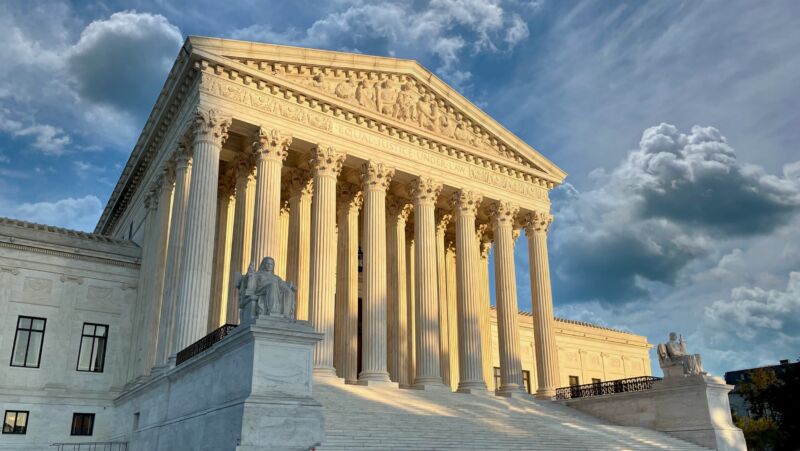
The United States Supreme Court building seen during daytime.
Enlarge / The Supreme Court.
Getty Images | Douglas Rissing

The Supreme Court on Friday extended a stay of a lower-court order that would limit the Biden administration’s contacts with social media firms, giving justices a few more days to consider whether to block the ruling entirely. The court could rule by the middle of this week on the Biden administration motion in a case in which the states of Missouri and Louisiana allege that speech related to COVID-19 and other topics was illegally suppressed at the behest of government officials.

A stay issued September 14 was scheduled to expire on Friday, but Justice Samuel Alito ordered that it be extended until Wednesday, September 27, at 11:59 pm ET. Alito is the justice assigned to the 5th Circuit, the circuit in which an appeals court ruled that the White House and FBI likely violated the First Amendment by coercing social media platforms into moderating content and changing their moderation policies.

The 5th Circuit appeals court ruling wasn’t a total loss for the Biden administration. Appeals court judges threw out the majority of a district judge’s preliminary injunction that ordered the Biden administration to halt a wide range of communications with social media companies.

While most of the original injunction’s restrictions were eliminated, the Biden administration asked the Supreme Court to block the one surviving prohibition. Under the recently revised injunction, Biden administration officials would be barred from taking any action to directly or indirectly “coerce or significantly encourage social-media companies to remove, delete, suppress, or reduce, including through altering their algorithms, posted social-media content containing protected free speech.”

“That includes, but is not limited to, compelling the platforms to act, such as by intimating that some form of punishment will follow a failure to comply with any request, or supervising, directing, or otherwise meaningfully controlling the social-media companies’ decision-making processes,” the injunction says.

US: We were persuading, not coercing

The US motion for a stay pending resolution of the lawsuit contends that the Supreme Court is likely to grant certiorari and then reverse the injunction after hearing the case. The 5th Circuit appeals court “held that federal officials’ interactions with private social-media platforms transformed a broad swath of the platforms’ content-moderation decisions into state action subject to the First Amendment,” the US motion said. “That holding has significant implications for officials at all levels of government, many of whom routinely engage with or speak about social-media platforms. It also has grave implications for the platforms themselves, which on the Fifth Circuit’s logic are state actors subject to suits for violating the First Amendment.”

The US argues that it was merely “urging platforms to remove COVID-19 misinformation, highlighting the risk of disinformation from foreign actors, and responding to the platforms’ inquiries about matters of public health.” Administration officials’ attempts to influence content moderation were persuasion, not coercion, the US told the Supreme Court.

The 5th Circuit appeals court saw things differently, finding that Biden administration “officials made express threats and, at the very least, leaned into the inherent authority of the President’s office. The officials made inflammatory accusations, such as saying that the platforms were ‘poison[ing]’ the public, and ‘killing people.’ The platforms were told they needed to take greater responsibility and action. Then, they followed their statements with threats of ‘fundamental reforms’ like regulatory changes and increased enforcement actions that would ensure the platforms were ‘held accountable.’… Given all of the above, we are left only with the conclusion that the officials’ statements were coercive.”

The appeals court decided that the White House and FBI likely violated the First Amendment by coercing social media platforms into moderating content and changing their moderation policies, and that the Centers for Disease Control and Prevention also acted improperly but did not “coerce” social networks.

While the underlying lawsuit was filed by Missouri and Louisiana along with several private plaintiffs, the state of Ohio has joined the fight against the Biden administration. In a Supreme Court filing, Ohio Attorney General Dave Yost argued that the preliminary injunction should take effect. Blocking the injunction “would empower the government to resume censoring—or, at minimum, encouraging the censoring—of speech on matters of immense public import,” the Ohio filing said.

https://arstechnica.com/?p=1970846


Social media restrictions “profoundly damaging,” Biden admin tells SCOTUS

Social media restrictions “profoundly damaging,” Biden admin tells SCOTUS

In July, a federal judge issued an order limiting the Biden administration’s social media contacts over Republicans’ concerns that officials illegally suppressed speech. That order was mostly overturned last week, and now, US Solicitor General Elizabeth B. Prelogar has rushed to ask the Supreme Court to reevaluate one of the order’s remaining restrictions.

In a court filing yesterday, Prelogar requested that the Supreme Court extend the stay of a preliminary injunction banning officials from “coercing” or “significantly encouraging” social media content removals. The injunction would’ve taken effect Monday, but the Biden administration wants the stay extended while the Supreme Court reviews the lower court’s decision. If the stay isn’t extended, Prelogar argued that the allegedly overly broad injunction “would impose grave and irreparable harms on the government and the public” by preventing officials from quickly responding during emergencies and generally advocating and defending policies that advance the public interest.

The “sweeping preliminary injunction” governs “thousands of federal officials’ and employees’ speech concerning any content posted on any social-media platform by anyone,” Prelogar said. “The implications of the Fifth Circuit’s holdings are startling. The court imposed unprecedented limits on the ability of the President’s closest aides to use the bully pulpit to address matters of public concern, on the FBI’s ability to address threats to the Nation’s security, and on the CDC’s ability to relay public health information at platforms’ request.”

Prelogar alleged that the “unprecedented injunction” improperly installed the Fifth Circuit “as the superintendent of the Executive Branch’s communications with and about social-media platforms.” She also argued the lower court adopted “a novel and disruptive conception of the state-action doctrine” that allegedly runs afoul of the First Amendment, “trenches on the separation of powers, and conflicts with the decisions of other courts of appeals.”

The Solicitor General emphasized the urgency of the request, confirming that the federal government would officially petition the Supreme Court to review the case by October 12, ensuring that the Supreme Court has a chance to possibly reverse the lower court’s decision this term. Urging even faster action, Prelogar requested that yesterday’s court filing be taken as the government’s official request for the Supreme Court review, requiring no further briefings or filings to expedite the process.

Prelogar said that the injunction should be fully blocked until the Supreme Court decides whether it would review the case. “At minimum,” Prelogar argued that the injunction should at least be restricted to preventing the Biden administration from discussing with platforms “any content posted by the individual respondents themselves,” rather than restricting officials from contacting platforms about any content hosted on any platform.

“The injunction sweeps far beyond what is necessary to address any cognizable harm to respondents: Although the district court declined to certify a class, the injunction covers the government’s communications with all social-media platforms (not just those used by respondents) regarding all posts by any person (not just respondents) on all topics,” Prelogar wrote.

That’s far from the standard that an injunction “be no more burdensome to the defendant than necessary to provide complete relief to the plaintiffs,” Prelogar argued.

“Any injunctive relief must be limited to government actions targeting respondents’ social-media accounts and posts,” Prelogar said. That “would largely or entirely eliminate any harm that respondents might face without burdening a vast universe of government actions lacking any connection to respondents,” Prelogar said.

https://arstechnica.com/?p=1968691


TikTok hit with €345 million fine over privacy settings for children

TikTok hit with €345 million fine over privacy settings for children

TikTok has been hit with a €345 million EU fine over the way it processes the personal data of children and teenage users, the first handed out by the bloc to the Chinese-owned social media platform.

Ireland’s Data Protection Commission, the regulator responsible for holding TikTok Technology to EU data protection law, announced the fine on Friday after an investigation that began in September 2021.

The DPC’s probe found TikTok had infringed EU data protection rules by setting the profiles of children aged 13-17 to default to a public setting, meaning anyone on or off TikTok could view their content and contact them.

TikTok, which set up an office in Ireland in 2020 and this month opened a long-planned site in Dublin to store EU citizens’ data, was investigated by the DPC over its compliance during the period July 31, 2020, to December 31, 2020.

The fine is the latest against social media platforms for lax privacy protections and comes as the DPC is finalizing an investigation into TikTok over data transfers to China.

Meta, the owner of Facebook, this year was handed a record €1.2 billion fine and ordered to suspend transfers of user data to the US. Meta’s Instagram app was fined €405 million by the DPC in September 2022 for failing to safeguard children’s data.

TikTok, which has 134 million monthly EU users, failed to provide child users with enough transparency over what was happening to their data and nudged them toward more privacy-intrusive options, the DPC said. TikTok does not say how many of its users are children.

In addition, under a family pairing setting, it could not be verified that the adult paired with a child’s account was the parent or guardian, and that adult was able to allow over-16s to access direct messaging features, the DPC said.

The social media app, which is owned by Beijing-based ByteDance, said it had changed its policy on most of the issues covered well before the investigation began and had not yet decided whether to appeal.

“We respectfully disagree with the decision, particularly the level of the fine imposed,” a TikTok spokesperson said.

“The DPC’s criticisms are focused on features and settings that were in place three years ago, and that we made changes to well before the investigation even began, such as setting all under-16 accounts to private by default,” the spokesperson added.

In a statement, Elaine Fox, TikTok’s head of privacy for Europe, said the platform would “continue to strengthen protections for teenagers.”

The DPC was ordered by the European Data Protection Board, the independent umbrella authority for the sector, to toughen the initial decision it had reached last year, following objections raised by the Italian and German data protection bodies. But the level of fine remained unchanged.

TikTok has three months to comply with the ruling.

The DPC expects to share its draft findings on its investigation into TikTok data transfers to China with other European data protection agencies by the end of this year.

© 2023 The Financial Times Ltd. All rights reserved. Not to be redistributed, copied, or modified in any way.

https://arstechnica.com/?p=1968631


Taco Bell’s Incoming CEO Sean Tresvant Talks Disruption and Leadership


.article-native-ad { border-bottom: 1px solid #ddd; margin: 0 45px; padding-bottom: 20px; margin-bottom: 20px; } .article-native-ad svg { color: #ddd; font-size: 34px; margin-top: 10px; } .article-native-ad p { line-height:1.5; padding:0!important; padding-left: 10px!important; } .article-native-ad strong { font-weight:500; color:rgb(46,179,178); }

Join Social Media Week Europe for insights on how marketers and ad agencies can effectively collaborate with creators to drive next-level engagement. Sign up now to save 35% on your pass.

Taco Bell’s incoming chief executive Sean Tresvant has a vision for the role once he steps up next year. He sat down at Brandweek to outline his focus on leadership while recognizing that it’ll be “a very different job” to the one he currently holds within the fast food restaurant chain.

Speaking to Brittaney Kiefer, Europe creativity editor for Adweek, Tresvant also discussed some of the attention-catching marketing initiatives he has overseen in the role of global chief brand and strategy officer at Taco Bell, which he joined after almost 17 years at Nike at the end of 2021.

A history of disruption

Tresvant recounted Taco Bell’s history of disruption in the quick service restaurant sector by being “different,” something he says continues to be true 61 years after opening its first restaurant. It has now grown to more than 7,000 locations across the U.S. and to over 1,000 internationally as Tresvant has taken its “brand magic” around the world.

“It always starts with the consumer, and we are going to sell to everybody—but we want to speak to someone, and that someone is what we call the cultural rebel,” he outlined. “So for us, it’s really being sharp on our voice, both in the U.S. and internationally. But it really starts with the consumer and helping them understand what the brand is all about.”

To achieve this aim wherever the brand operates comes down to being consistent in its approach but honing the message for local markets, he continued. Taco Bell has always used humor in its ads and partnerships with celebrities from MC Hammer and Shaquille O’Neal in the ’90s through to more recent collabs with the likes of Doja Cat, LeBron James and Devante Adams.

“What we want to do is not the status quo. Not to do what the other brands are doing, but how do we really stay authentic to our consumers and be different than what other people aren’t doing?” Tresvant added.

That is a brand ethos that crosses into Taco Bell’s use of social media, working with major stars as well as micro influencers to share its marketing messages and deals. A campaign with TikTok micro influencers from June about zero delivery charges led to the brand’s highest engagement yet on the platform, he revealed, highlighting the power of collaborating with the right creators, no matter what their audience reach may be.

@iamkendraluster 💰 THIS WEEKEND @tacobell 🌮 is offering a $0 DELIVERY FEE for anyone who has the FREE Taco Bell mobile app!!! Enjoy!!! You’re welcome lol!!! 😁 ➡️ LINK IN BIO!!! ⬅️ #TacoBell #0DeliveryFee 🤑 #ThisWeekendONLY #TacoBellPartner #greenscreen #fyp #KendraLuster ♬ original sound – Kendra Luster

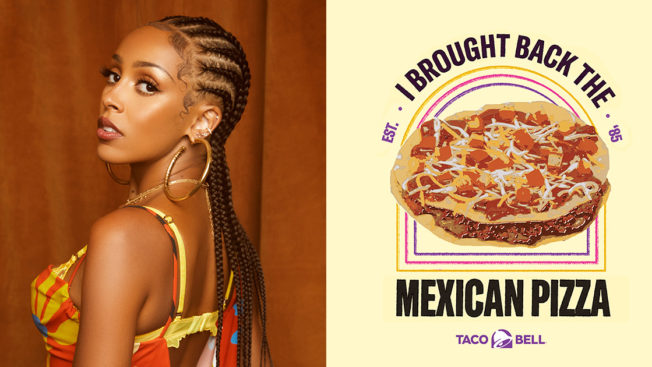
He also highlighted how successful those messages can be by not trying to control those creators, citing Doja Cat’s criticism on Twitter of the brand for dropping Mexican Pizza from its menu, which blew up and led to it being brought back.

“That’s why I think that campaign was so successful, because we didn’t put her in a box. We let Doja be Doja, which is very authentic. And then obviously, consumers responded and reacted to authentic content versus us writing lines for Doja about what to say.”

In turn, the brand aims to respond and have conversations with its fans through social media, which led to the “Brought Back” campaign, allowing fans to suggest other old menu items they wanted to return.

Stepping up to CEO

Speaking about preparing to take on the role of CEO on Jan. 1, following the planned retirement of Mark King at the end of this year, Tresvant spoke about his view on leadership and how he aims to take the Yum! Brands-owned restaurant chain forward.

“Leadership and being able to lead people, coach people, mentor people, separates companies from good to great, from great to extraordinary. And so, my platform, and Taco Bell, even when I came in as chief brand officer, the idea is to let’s be able to create great leadership within a certain company because I do think it changes the trajectory of companies,” he explained.

He also spoke about the people within the brand and leading it holistically, while also aiming to grow Taco Bell internationally, something he had already begun to focus on in his current position. Also on his agenda is enhancing the brand’s relationship with franchisees.

.font-primary { } .font-secondary { } #meter-count { position: fixed; z-index: 9999999; bottom: 0; width:96%; margin: 2%; -webkit-border-radius: 4px; -moz-border-radius: 4px; border-radius: 4px; -webkit-box-shadow: 0 0px 15px 4px rgba(0,0,0,.2); box-shadow:0 0px 15px 4px rgba(0,0,0,.2); padding: 15px 0; color:#fff; background-color:#343a40; } #meter-count .icon { width: auto; opacity:.8; } #meter-count .icon svg { height: 36px; width: auto; } #meter-count .btn-subscribe { font-size:14px; font-weight:bold; padding:7px 18px; color: #fff; background-color: #2eb3b2; border:none; text-transform: capitalize; margin-right:10px; } #meter-count .btn-subscribe:hover { color: #fff; opacity:.8; } #meter-count .btn-signin { font-size:14px; font-weight:bold; padding:7px 14px; color: #fff; background-color: #121212; border:none; text-transform: capitalize; } #meter-count .btn-signin:hover { color: #fff; opacity:.8; } #meter-count h3 { color:#fff!important; letter-spacing:0px!important; margin:0; padding:0; font-size:16px; line-height:1.5; font-weight:700; margin: 0!important; padding: 0!important; } #meter-count h3 span { color:#E50000!important; font-weight:900; } #meter-count p { font-size:14px; font-weight:500; line-height:1.4; color:#eee!important; margin: 0!important; padding: 0!important; } #meter-count .close { color:#fff; display:block; position:absolute; top: 4px; right:4px; z-index: 999999; } #meter-count .close svg { display:block; color:#fff; height:16px; width:auto; cursor:pointer; } #meter-count .close:hover svg { color:#E50000; } #meter-count .fw-600 { font-weight:600; } @media (max-width: 1079px) { #meter-count .icon { margin:0; padding:0; display:none; } } @media (max-width: 768px) { #meter-count { margin: 0; -webkit-border-radius: 0px; -moz-border-radius: 0px; border-radius: 0px; width:100%; -webkit-box-shadow: 0 -8px 10px -4px rgba(0,0,0,0.3); box-shadow: 0 -8px 10px -4px rgba(0,0,0,0.3); } #meter-count .icon { margin:0; padding:0; display:none; } #meter-count h3 { color:#fff!important; font-size:14px; } #meter-count p { color:#fff!important; font-size: 12px; font-weight: 500; } #meter-count .btn-subscribe, #meter-count .btn-signin { font-size:12px; padding:7px 12px; } #meter-count .btn-signin { display:none; } #meter-count .close svg { height:14px; } }

Enjoying Adweek’s Content? Register for More Access!

https://www.adweek.com/brand-marketing/taco-bell-incoming-ceo-sean-tresvant/


Genius Sports Brings Real-Time NFL Data to Snapchat Users Through AR Lenses


.article-native-ad { border-bottom: 1px solid #ddd; margin: 0 45px; padding-bottom: 20px; margin-bottom: 20px; } .article-native-ad svg { color: #ddd; font-size: 34px; margin-top: 10px; } .article-native-ad p { line-height:1.5; padding:0!important; padding-left: 10px!important; } .article-native-ad strong { font-weight:500; color:rgb(46,179,178); }

Join Social Media Week Europe for insights on how marketers and ad agencies can effectively collaborate with creators to drive next-level engagement. Sign up now to save 35% on your pass.

Data and technology company Genius Sports is bringing real-time NFL data to augmented reality Lenses in Snapchat.

Verizon will run the first sponsored Lens incorporating Genius Sports technology. The integration will be available to select Lens partners.

Genius Sports is the exclusive distributor of the NFL’s data and Next Gen Stats feeds to global media and betting markets.

“Snapchat’s Lens technology is leading the AR revolution across U.S. sports, giving fans new and exciting platforms to put themselves at the center of the live experience,” said Matt Ryter, vp of sales, media and fan engagement at Genius Sports.

Verizon’s NFL Lens will debut Sept. 17 during the Los Angeles Rams-San Francisco 49ers game at SoFi Stadium. The Lens is part of Verizon and Snap’s ongoing 5G innovation partnership.

“The new Snapchat Lens at SoFi is yet another illustration of the amazing experiences offered by the combination of augmented reality and 5G,” said Kris Soumas, director of platforms and partnerships for Verizon Consumer Group. “With this cutting-edge technology, we’re able to offer fans experiences they’ve never had before.”

Available exclusively to Verizon 5G customers, the AR Lens will allow fans to try on merchandise in augmented reality, view a 3D interactive map of SoFi Stadium and view real-time game stats.

“Snapchat is the best place to showcase your fandom and keep up with all the action on game day,” said Anmol Malhotra, head of sports partnerships at Snap. “With over 250 million Snapchatters engaging with AR on our platform every day, we’re thrilled for Genius Sports to bring real-time data to our Lenses to make them even more immersive.”

Genius Sports’ technology is used in more than 150 countries around the world. It has partnered with more than 400 sports organizations, including the NFL, NCAA and NASCAR.

.font-primary { } .font-secondary { } #meter-count { position: fixed; z-index: 9999999; bottom: 0; width:96%; margin: 2%; -webkit-border-radius: 4px; -moz-border-radius: 4px; border-radius: 4px; -webkit-box-shadow: 0 0px 15px 4px rgba(0,0,0,.2); box-shadow:0 0px 15px 4px rgba(0,0,0,.2); padding: 15px 0; color:#fff; background-color:#343a40; } #meter-count .icon { width: auto; opacity:.8; } #meter-count .icon svg { height: 36px; width: auto; } #meter-count .btn-subscribe { font-size:14px; font-weight:bold; padding:7px 18px; color: #fff; background-color: #2eb3b2; border:none; text-transform: capitalize; margin-right:10px; } #meter-count .btn-subscribe:hover { color: #fff; opacity:.8; } #meter-count .btn-signin { font-size:14px; font-weight:bold; padding:7px 14px; color: #fff; background-color: #121212; border:none; text-transform: capitalize; } #meter-count .btn-signin:hover { color: #fff; opacity:.8; } #meter-count h3 { color:#fff!important; letter-spacing:0px!important; margin:0; padding:0; font-size:16px; line-height:1.5; font-weight:700; margin: 0!important; padding: 0!important; } #meter-count h3 span { color:#E50000!important; font-weight:900; } #meter-count p { font-size:14px; font-weight:500; line-height:1.4; color:#eee!important; margin: 0!important; padding: 0!important; } #meter-count .close { color:#fff; display:block; position:absolute; top: 4px; right:4px; z-index: 999999; } #meter-count .close svg { display:block; color:#fff; height:16px; width:auto; cursor:pointer; } #meter-count .close:hover svg { color:#E50000; } #meter-count .fw-600 { font-weight:600; } @media (max-width: 1079px) { #meter-count .icon { margin:0; padding:0; display:none; } } @media (max-width: 768px) { #meter-count { margin: 0; -webkit-border-radius: 0px; -moz-border-radius: 0px; border-radius: 0px; width:100%; -webkit-box-shadow: 0 -8px 10px -4px rgba(0,0,0,0.3); box-shadow: 0 -8px 10px -4px rgba(0,0,0,0.3); } #meter-count .icon { margin:0; padding:0; display:none; } #meter-count h3 { color:#fff!important; font-size:14px; } #meter-count p { color:#fff!important; font-size: 12px; font-weight: 500; } #meter-count .btn-subscribe, #meter-count .btn-signin { font-size:12px; padding:7px 12px; } #meter-count .btn-signin { display:none; } #meter-count .close svg { height:14px; } }

Enjoying Adweek’s Content? Register for More Access!

https://www.adweek.com/brand-marketing/genius-sports-nfl-data-snapchat-lenses-augmented-reality/


WhatsApp and Verizon Are Listening Closely to Underserved Consumers


.article-native-ad { border-bottom: 1px solid #ddd; margin: 0 45px; padding-bottom: 20px; margin-bottom: 20px; } .article-native-ad svg { color: #ddd; font-size: 34px; margin-top: 10px; } .article-native-ad p { line-height:1.5; padding:0!important; padding-left: 10px!important; } .article-native-ad strong { font-weight:500; color:rgb(46,179,178); }

Join Social Media Week Europe for insights on how marketers and ad agencies can effectively collaborate with creators to drive next-level engagement. Sign up now to save 35% on your pass.

Amid a tough global economic outlook, 62% of people believe the best companies succeed in making their lives easier, according to Wunderman Thomson.

With connectivity at their core, Verizon and WhatsApp are trying to do just that, developing products and campaigns to serve global communities and cultivating their brands in the process.

Speaking at Brandweek in Miami, Cheryl Gresham, chief marketing officer at Verizon Value, and WhatsApp global head of marketing Vivian Odior sat down with Adweek community editor Luz Corona to discuss how they’re cultivating meaningful connections with consumers and democratizing access to their services.

Going ‘all in’ for consumers

Since joining Verizon from TikTok in 2021, Gresham’s role has evolved to spearhead the telco’s newly formed Verizon Value organization, which debuted in 2022 to better serve the 23 million U.S. subscribers in the value market.

This new division encompasses prepaid wireless brand Total By Verizon (formerly Total Wireless, before Verizon acquired TracFone) and affordable phone arm Visible.

To relaunch Total, Gresham and her team debuted a timely activation last month in response to New York’s 15-cent subway and bus fare hike. When the increase was implemented, Verizon handed out 15,000 prepaid transit cards to commuters at random spots across the city.

Gresham said the campaign was carefully researched and designed to help reduce the financial burden of inflation and show how the provider is “all in” for consumers.

“It allowed us to launch the brand with the right intention about who our customer was and the impact we wanted to make for them, as well as the value they could get from us,” she explained.

She continued: “Results-wise it’s been positive from a PR perspective. We also saw a ton of traffic coming to our digital channels, and we noticed more foot traffic flowing into our stores.”

Verizon plans to open several hundred Total By Verizon stores by the end of the year, with several hundred more planned for 2024. As it ventures deeper into the prepaid market, Verizon wants to continue finding unique moments where it can show up for customers.

WhatsApp on connecting at scale

With 2.5 billion customers and counting, WhatsApp’s user base spans demographics and continents. That drives the marketing team to seek out ways to showcase its merit within different communities and lift its brand to new cultural heights.

One project Odior recently drove that aimed to do both was the expansion of WhatsApp Payments, which allows money to be transferred directly between bank accounts in-app, to Brazil and India. The new functionality opened more economic opportunities for around 200 million people, she said.

She said parent company Meta looked beyond the U.S. and other Western markets, listening to users in emerging economies and responding to their requests.

“We think about every kind of user as we build, but we need to make sure that the users who have the least opportunity can function [easily] within WhatsApp,” she said, crediting tech like voice messages and its newly launched one-to-many broadcast service, Channels, with helping engage people across the world.

Connecting at scale with a global audience is high on Odior’s agenda, and she has built a diverse team with what she called a “multi-identity” understanding of themselves.

“We can’t just run multimillion-pound campaigns in every country that we’re in,” she said. “We wanted to find clusters of people around the world who looked different, sounded different or have a different outlook, and we found it within our marketing ward.”

This cultural crossover approach has led to creative output that better reflects WhatsApp’s role in people’s lives, ultimately resulting in “Horse With Hasan” from New York agency Translation.

The short film featured NBA player and WhatsApp brand partner Giannis Antetokounmpo along with comedian Hasan Minhaj, exploring the complexities of linguistic and cultural diversity.

“[Our team] don’t just bring diversity to the presence of room, but to the work itself,” Odior concluded.

.font-primary { } .font-secondary { } #meter-count { position: fixed; z-index: 9999999; bottom: 0; width:96%; margin: 2%; -webkit-border-radius: 4px; -moz-border-radius: 4px; border-radius: 4px; -webkit-box-shadow: 0 0px 15px 4px rgba(0,0,0,.2); box-shadow:0 0px 15px 4px rgba(0,0,0,.2); padding: 15px 0; color:#fff; background-color:#343a40; } #meter-count .icon { width: auto; opacity:.8; } #meter-count .icon svg { height: 36px; width: auto; } #meter-count .btn-subscribe { font-size:14px; font-weight:bold; padding:7px 18px; color: #fff; background-color: #2eb3b2; border:none; text-transform: capitalize; margin-right:10px; } #meter-count .btn-subscribe:hover { color: #fff; opacity:.8; } #meter-count .btn-signin { font-size:14px; font-weight:bold; padding:7px 14px; color: #fff; background-color: #121212; border:none; text-transform: capitalize; } #meter-count .btn-signin:hover { color: #fff; opacity:.8; } #meter-count h3 { color:#fff!important; letter-spacing:0px!important; margin:0; padding:0; font-size:16px; line-height:1.5; font-weight:700; margin: 0!important; padding: 0!important; } #meter-count h3 span { color:#E50000!important; font-weight:900; } #meter-count p { font-size:14px; font-weight:500; line-height:1.4; color:#eee!important; margin: 0!important; padding: 0!important; } #meter-count .close { color:#fff; display:block; position:absolute; top: 4px; right:4px; z-index: 999999; } #meter-count .close svg { display:block; color:#fff; height:16px; width:auto; cursor:pointer; } #meter-count .close:hover svg { color:#E50000; } #meter-count .fw-600 { font-weight:600; } @media (max-width: 1079px) { #meter-count .icon { margin:0; padding:0; display:none; } } @media (max-width: 768px) { #meter-count { margin: 0; -webkit-border-radius: 0px; -moz-border-radius: 0px; border-radius: 0px; width:100%; -webkit-box-shadow: 0 -8px 10px -4px rgba(0,0,0,0.3); box-shadow: 0 -8px 10px -4px rgba(0,0,0,0.3); } #meter-count .icon { margin:0; padding:0; display:none; } #meter-count h3 { color:#fff!important; font-size:14px; } #meter-count p { color:#fff!important; font-size: 12px; font-weight: 500; } #meter-count .btn-subscribe, #meter-count .btn-signin { font-size:12px; padding:7px 12px; } #meter-count .btn-signin { display:none; } #meter-count .close svg { height:14px; } }

Enjoying Adweek’s Content? Register for More Access!

https://www.adweek.com/brand-marketing/brandweek-whatsapp-verizon-underserved-consumers-value-marketing/


Reddit faces content quality concerns after its Great Mod Purge

Reddit Snoo mascots, with one having Xs for eyes
Aurich Lawson

Did you know that improper food canning can lead to death? Botulism—the result of bacteria growing inside improperly treated canned goods—is rare, but people can die from it. In any case, they’ll certainly get very ill.

The dangers of food canning were explained to me clearly, succinctly, and with cited sources by Brad Barclay and someone going by Dromio05 on Reddit (who asked to withhold their real name for privacy reasons). Both were recently moderators on the r/canning subreddit and hold science-related master’s degrees.

Yet Reddit removed both moderators from their positions this summer because Reddit said they violated its Moderator Code of Conduct. Mods had refused to end r/canning’s protest against Reddit and its new API fees; the protest had made the entire subreddit “read only.” Now, the ousted mods fear that r/canning could become subject to unsafe advice that goes unnoticed by new moderators. “My biggest fear with all this is that someone will follow an unsafe recipe posted on the sub and get badly sick or killed by it,” Dromio05 told me.

Reddit’s infamous API changes have ushered in a new era for the site, and there are still questions about what this next chapter will look like. Ars Technica spoke with several former mods that Reddit booted—and one who was recently appointed by Reddit—about concerns that relying on replacement mods with limited subject matter expertise could result in the spread of dangerous misinformation.

Questions about replacement mods’ expertise

When Reddit announced it would abruptly start charging significant fees for access to its API, many third-party Reddit apps announced they would close (and many have). Some Reddit users, including mods, also quit Reddit. In addition, Reddit revoked the mod badges from long-time moderators and subsequently sought replacements, though some expelled mods worry that the replacements weren’t carefully selected or trained.

Barclay told me he moderated r/canning for three years before Reddit nuked his badge. He noted various canning misconceptions, from thinking the contents of a concave lid are safe to eat to believing you don’t need to apply heat to food in jars.

He claimed that some new r/canning moderators appointed by Reddit had previously shown a lack of canning expertise before getting the new volunteer gig. For example, Barclay pointed to one mod recommending “citizen science,” saying they would use a temperature data logger to “begin conducting experiments to determine what new canning products are safe.” Reddit later made that user an r/canning mod.

Dromio05 showed me several posts he deemed questionable since Reddit took away his own mod badge. For example, this post shares a link to an article about “rebel canners,” which Dromio05 argues “gives a public platform to people who openly encourage methods and recipes that are known to be unsafe, like canning milk and open kettle canning.” The post is labeled unsafe, but Dromio05 would have removed the link to the article.

Another cited example is this recipe for canned sauce. It includes already-canned tomatoes, which experts like the National Center for Home Food Preservation (NCHFP) recommend against, as there’s no safe tested process for this. The recipe also includes nuts, though the USDA doesn’t have any recommendations for canning nuts, and NCHFP and other experts advise against canning any nuts besides green peanuts.

The new mod team for r/canning declined to comment on this story.

There are many schools of thought around any broad topic such as canning, of course, and the former canning mods I spoke with had slightly different standards for whether or not a post could be considered safe enough for the subreddit. What’s critical for Reddit’s content quality is not that moderators adopt identical philosophies but that they are equipped to facilitate healthy and safe discussions and debates that benefit the community.

Newly implemented replacement mods represent a fraction of the over 50,000 moderators Reddit says it has. But the hastiness with which these specific replacement mods were ushered in, and the disposal of respected, long-time moderators, raises questions about whether Reddit prioritized reopening subreddits to get things back to normal instead of finding the best people for the volunteer jobs.

https://arstechnica.com/?p=1961446


TikTok’s EU Changes Set to Impact Advertiser Experience


.article-native-ad { border-bottom: 1px solid #ddd; margin: 0 45px; padding-bottom: 20px; margin-bottom: 20px; } .article-native-ad svg { color: #ddd; font-size: 34px; margin-top: 10px; } .article-native-ad p { line-height:1.5; padding:0!important; padding-left: 10px!important; } .article-native-ad strong { font-weight:500; color:rgb(46,179,178); }

To fall in line with Europe’s new online regulations, TikTok has introduced new compliance measures that could change the whole user experience and restrict advertisers’ reach on the platform while offering them a safer media landscape in which to invest.

Following the introduction of the Digital Services Act (DSA) by the European Union earlier this year, TikTok, which claims to have 134 million users across Europe, has now fallen in line with newly introduced transparency measures.

Those updates include the ability for EU users to turn off personalization, the introduction of commercial content labeling and a restriction on under-18s viewing personalized ads.

“Those who choose to disable personalized content are likely to experience a more homogenized feed, with the biggest global and regional creators dominating timelines, leaving less space to discover content from smaller creators representing more niche communities and interests,” explained Edward East, co-founder of influencer marketing agency Billion Dollar Boy.

He added that this might benefit major celebrities or creators in expanding their reach on the platform, growing their earnings through brand collaborations as a result. However, it might also make it more difficult for niche communities to grow and develop.

TikTokers will be reluctant to part ways with their algorithmically curated For You pages, resulting in few opt-outs overall.

Costas Tsiappourdhi, social product partner, Brainlabs

“Not only is this a concern for some micro and nano influencers to build their following, but it could also impact brands who often find more value in these niche communities—particularly for campaigns with cost-effective engagement and conversion-led objectives. Brands like to exist where culture is. By tapping into small and loyal communities, brands are able to drive better engagement rates and create strong affinities with relevant and targeted audiences,” East continued.

Further measures being taken

A commercial content library will also be introduced, taking the form of a database offering information about the paid ads TikTok hosts as well as metadata such as dates the ad ran and the main parameters used for targeting.

Commercial content labeling will include options such as ad/sponsored, paid partnership or promotional content to ensure users are able to clearly see the difference across the content they are served.

There will also be the ability to report content (including ads) that users believe is illegal, which will then be reviewed against TikTok’s community guidelines and ad policies before being removed should they be found to be in violation. Access will also be given to applying European academics to research the platform.

“With consumer trust of big platforms having been eroded over the past few years, steps like this are essential to empower and inform consumers,” outlined Aengus Boyle, senior director for media at VaynerMedia London.

“The new commercial content library is also an exciting prospect for those interested in seeing how other advertisers are activating on the platform, giving a view into creatives being run, flight dates and details around targeting parameters leveraged,” added Boyle.

These changes are also seen as being a positive step for advertisers by Costas Tsiappourdhi, social product partner at media agency Brainlabs, especially the content reporting and age limitations being introduced, which he believes are likely to see a broader investment in the platform from more risk-averse businesses.

“The ability to opt out of content personalization is particularly interesting for a platform that has built its business and brand on delivering highly personalized content to its users,” he added. “While this could see a change in how those users engage, I expect, in practice, that TikTokers will be reluctant to part ways with their algorithmically curated For You pages, resulting in few opt-outs overall.”

According to Paul Kasamias, chief performance officer for Performics, the moves will create a more level playing field for all of the major tech platforms from an advertiser perspective while offering users more control.

“By embracing DSA compliance, TikTok is actively working to create a more transparent and trustworthy advertising environment. Advertisers can have confidence in the platform’s commitment to responsible advertising practices, which is crucial for building long-term partnerships and maintaining the integrity of the advertising ecosystem. Increased trust could well act as a catalyst for further advertising investment into these platforms,” added Kasamias.

The introductory changes were announced by Madeline Moncrieff, director of legal EMEA for TikTok, on Aug. 28.

.font-primary { } .font-secondary { } #meter-count { position: fixed; z-index: 9999999; bottom: 0; width:96%; margin: 2%; -webkit-border-radius: 4px; -moz-border-radius: 4px; border-radius: 4px; -webkit-box-shadow: 0 0px 15px 4px rgba(0,0,0,.2); box-shadow:0 0px 15px 4px rgba(0,0,0,.2); padding: 15px 0; color:#fff; background-color:#343a40; } #meter-count .icon { width: auto; opacity:.8; } #meter-count .icon svg { height: 36px; width: auto; } #meter-count .btn-subscribe { font-size:14px; font-weight:bold; padding:7px 18px; color: #fff; background-color: #2eb3b2; border:none; text-transform: capitalize; margin-right:10px; } #meter-count .btn-subscribe:hover { color: #fff; opacity:.8; } #meter-count .btn-signin { font-size:14px; font-weight:bold; padding:7px 14px; color: #fff; background-color: #121212; border:none; text-transform: capitalize; } #meter-count .btn-signin:hover { color: #fff; opacity:.8; } #meter-count h3 { color:#fff!important; letter-spacing:0px!important; margin:0; padding:0; font-size:16px; line-height:1.5; font-weight:700; margin: 0!important; padding: 0!important; } #meter-count h3 span { color:#E50000!important; font-weight:900; } #meter-count p { font-size:14px; font-weight:500; line-height:1.4; color:#eee!important; margin: 0!important; padding: 0!important; } #meter-count .close { color:#fff; display:block; position:absolute; top: 4px; right:4px; z-index: 999999; } #meter-count .close svg { display:block; color:#fff; height:16px; width:auto; cursor:pointer; } #meter-count .close:hover svg { color:#E50000; } #meter-count .fw-600 { font-weight:600; } @media (max-width: 1079px) { #meter-count .icon { margin:0; padding:0; display:none; } } @media (max-width: 768px) { #meter-count { margin: 0; -webkit-border-radius: 0px; -moz-border-radius: 0px; border-radius: 0px; width:100%; -webkit-box-shadow: 0 -8px 10px -4px rgba(0,0,0,0.3); box-shadow: 0 -8px 10px -4px rgba(0,0,0,0.3); } #meter-count .icon { margin:0; padding:0; display:none; } #meter-count h3 { color:#fff!important; font-size:14px; } #meter-count p { color:#fff!important; font-size: 12px; font-weight: 500; } #meter-count .btn-subscribe, #meter-count .btn-signin { font-size:12px; padding:7px 12px; } #meter-count .btn-signin { display:none; } #meter-count .close svg { height:14px; } }

Enjoying Adweek’s Content? Register for More Access!

https://www.adweek.com/social-marketing/tiktok-eu-changes-impact-advertiser-experience/