Il furto di identità e come non facilitarlo – il luogo comune “non ho nulla da nascondere”

In questo articolo analizzeremo cosa significhi proteggere la nostra privacy, prendendo in considerazione alcuni possibili comportamenti perpetrati da soggetti definiti, qui, semplicemente “attaccanti.” Cercheremo di capire quali dati possano costituire un rischio e come fare per non divulgarli. Inoltre guarderemo la questione “lato attaccante”, per capire cosa farà dei nostri dati e perché potrebbe essere nocivo. Le basi tecniche cui faremo riferimento sono il world wide web – ipertesto consultabile attraverso un browser – e il fatto che certe pagine web non siano accessibili a chiunque ma richiedano un’autenticazione (spesso: username e password).

QUALI DATI PRIVATI È POSSIBILE REPERIRE IN RETE?

Di ogni tipo: per rendercene conto, basta inserire in un moderno motore di ricerca (Google, Bing, ecc.) alcune semplici parole chiave come “carta d’identità”, “documento”, “passaporto” o “denuncia”, selezionando i risultati di tipo “immagine”. Oltre a immagini di volti, possiamo facilmente reperire nomi, indirizzi, numeri di telefono, codici fiscali… il che, in un mondo onesto, non costituirebbe un problema. Ma il mondo pullula di disonesti.

Si potrà dire: i proprietari li hanno messi in rete e nella maggioranza dei casi sapevano quello che facevano. Non sono del tutto d’accordo, soprattutto relativamente alle conseguenze indirette, di cui discuteremo.

Inoltre, la pubblicazione sul web non è l’unica sorgente di dati personali; questi possono essere condivisi in molti modi, per esempio usando una rete sociale (Instagram, Facebook, TikTok ecc.) che a sua volta si poggia sul web, con una differenza che deriva da quella esistente fra surface web e deep web.

Appartengono al surface web tutti i siti che possono essere consultati da un motore di ricerca; appartengono al deep web (da non confondere con il dark web) i siti che non possono essere raggiunti da un motore di ricerca per vari motivi, uno dei quali è la necessità di sapersi autenticare. Per completezza, aggiungiamo che appartengono al dark web tutti i siti che offrono pagine web attraverso una “overlay network” (rete sovrapposta) come la rete Tor e che possono essere consultati esclusivamente tramite il Tor browser; non essendo questi raggiungibili da un normale motore di ricerca, tecnicamente appartengono al deep web (che naturalmente non si esaurisce nel dark web).

Precisata la differenza, c’è da dire che un enorme quantitativo di dati personali è affidato al deep web e, almeno in linea di principio, non disponibile alla visione di chiunque. Si tratta spesso di foto e video che appartengono alla sfera più privata, incluso il fatto che spesso includono volti di minori (cosa che in teoria dovrebbe essere soggetta ad autorizzazione). Dati protetti, dunque? La risposta, purtroppo, è no. Anche assumendo che i server che realizzano la rete sociale – chiamiamola S – non siano e non saranno compromessi, rimane il fatto che gli “amici” ottenuti attraverso la rete sociale possono spesso visualizzare tali informazioni.

Facciamo chiarezza. Assumiamo che S, attenta alla privacy e moderna, divida il pubblico, rispetto a un utente X, in più fasce:
A. quella con cui si condividono contenuti soggetti a selezione;
B. quella degli amici stretti con cui si condivide tutto, con qualche possibile eccezione;
C. quella degli utenti di S (inclusi i non amici di X), con si può scegliere di condividere qualcosa;
D. il resto del mondo (che include i non iscritti a S), con cui si condivide ciò che si reputa pubblico.

Anche supponendo che un utente possa configurare e caratterizzare completamente le fasce A, B, C e D, quanti saranno disposti a farlo? In molti casi prevarranno le impostazioni di default scelte dall’applicazione. Anche se i comportamenti di default saranno privacy preserving (non sempre è così!) è comunque compito di X definire le eccezioni, sia in positivo che in negativo, e non è scontato che X lo faccia. Ci sono poi reti sociali in cui la privacy è, a causa dello scopo della rete, poco attuata dagli utenti (es. LinkedIn, app di dating).

Inoltre, poche reti sociali consentono a X di definire i permessi di visione agli “amici degli amici”. Il che si traduce nel fatto che, per quanto attenti possiamo essere nel concedere gli accessi, dipenderemo spesso dai comportamenti dei nostri contatti. Ad esempio, supponiamo di voler tenere privato il numero di cellulare, per cui lo diamo solo a pochi contatti stretti: cosa ci garantisce rispetto alla richiesta automatica di WhatsApp, Signal o Line di accedere alla rubrica? Può darsi che gli amici stretti consegneranno a queste app la loro rubrica, per non parlare del fatto che potrebbero decidere di dare il nostro numero a qualcuno senza consultarci in proposito.

Dal lato dell’attaccante, è possibile reperire dati sia attraverso un motore di ricerca, sia diventando utente di una rete sociale e ottenendone dati che diventano così accessibili: questo può essere fatto sia di persona, sia usando una specifica applicazione. Una delle tecniche più antiche, ma ancora attuali, è prendere contatto con un uomo attraverso un profilo social che mostra la foto di una donna avvenente: pochi sapranno resistere alla tentazione di accogliere una nuova amica attraente.

COME SONO CEDUTI I DATI?

In realtà ciò è stato discusso nella Sez. 1. Tuttavia, non abbiamo ancora menzionato un fatto centrale e ricorrente. Siamo tutti utenti del web, a prescindere dalle reti sociali: e i siti web vorrebbero sapere alcune informazioni di base sugli utenti, per migliorare gli avvisi pubblicitari da mostrare (ad esempio, appare un po’ goffo mostrare a un uomo avvisi destinati a un pubblico femminile). Ecco che nascono alcune domande di base, quali sesso, fascia di età, malattie croniche, vizi, bisogno di credito/mutui, composizione del nucleo familiare ecc. Tutto – o quasi – è considerato lecito al fine di acquisire queste informazioni, che nella maggior parte dei casi saranno trattate in maniera automatica.

Un meccanismo di base che spicca fra gli altri è quello dei cookies. Come noto, il protocollo per l’acquisizione dei file che caratterizzano il contenuto di un sito è http, un protocollo stateless (senza memoria). Per ovviare a tale limite (talvolta tecnicamente rilevante) è stato introdotto il meccanismo dei cookies:

  • un server web, nel trasmettere informazioni a un browser, può decidere autonomamente di inviare dei frammenti di informazione (spesso dei numeri) chiamati appunto cookies. Ovviamente il server conterrà una tabella che associa a ciascun numero varie informazioni;
  • il browser riceve i cookies e, se non espressamente istruito a fare diversamente, li conserva fino a una data di scadenza (spesso più lontana della data media di dismissione del dispositivo). Il cookie spesso descrive la pagina di attuale visualizzazione;
  • il browser, nel mandare una richiesta qualunque a un server web, controlla se conservi cookies non scaduti provenienti da quel server e, se sì, li invia al server assieme alla richiesta;
  • lo scambio di cookies fra server e browser avviene di norma silenziosamente, senza che l’utente ne abbia percezione. Il numero di cookies ricevuto da un browser in un giorno di navigazione può facilmente raggiungere diverse migliaia;
  • ogni browser possiede un “contenitore” in cui depositare e da cui attingere cookies;
  • tale contenitore è diverso da browser a browser e da utente ad utente (anche se condividono lo stesso dispositivo).

Inoltre occorre tenere presente che, se si visita il sito W, questo offrirà presumibilmente contenuti provenienti da altri siti, diciamo Y e Z. Per tale ragione W si chiama “first party” (prima parte) e Y e Z si chiamano “third parties” (terze parti). Non è difficile comprendere che i cookies ricevuti da siti di terze parti servono principalmente a queste ultime per ricostruire informazioni sull’attività di navigazione di un utente e, in particolare, sui contenuti consultati. Invece i cookies di prima parte hanno spesso una valenza tecnica, conservando informazioni su un’avvenuta autenticazione e su una preferenza di navigazione. In definitiva, è consigliabile l’approccio basato sul configurare il browser in modo che rifiuti automaticamente i cookies di terze parti (è possibile, anche se talvolta va cercato). Il meccanismo che contempla pagine composte da contenuti provenienti da diversi siti fa sì che nascano relazioni fra siti, che possono portare alla condivisione di informazioni. La Figura 1 mostra le relazioni fra siti visitati in quasi un anno da parte dell’autore; in Figura 2 ne è mostrato un frammento.
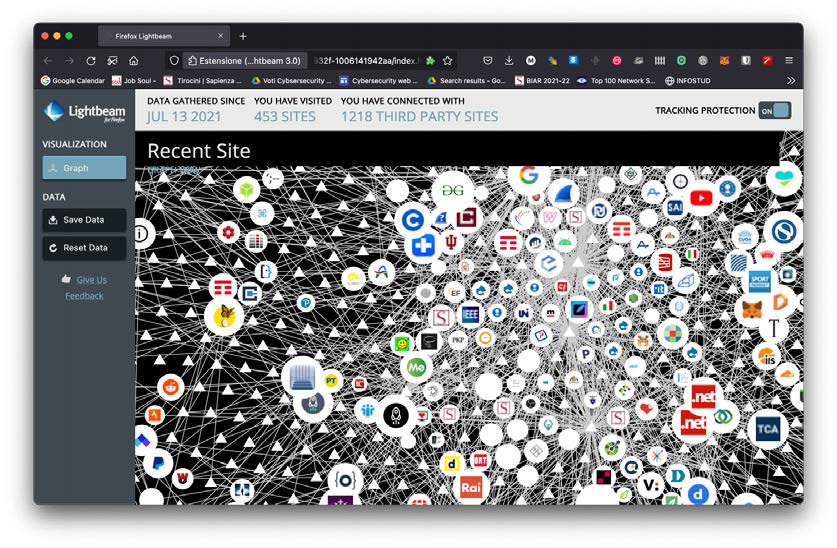
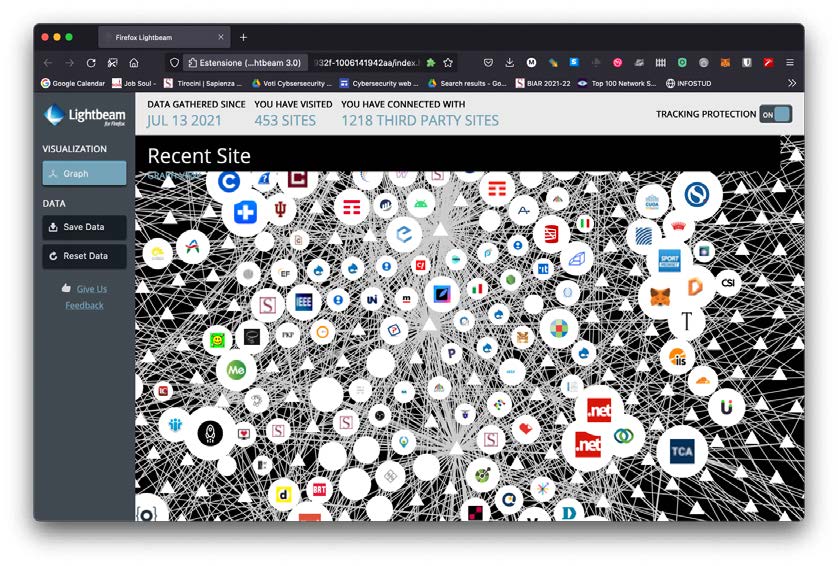
Figura 1. Illustrazione fornita dall’add-on LightBeam per la visualizzazione delle relazioni fra siti web visitati.
Figura 2. Dettaglio frammento di LightBeam.

Oggi sono molti gli add-on (componenti aggiuntivi) disponibili per dotare un browser di una migliore capacità di controllo dei cookies; non approfondiremo questo dettaglio, privilegiando i concetti di base. Inoltre ci sono molti browser, ciascuno con una sensibilità diversa rispetto alla tutela della riservatezza dei dati degli utenti. Fra questi prevale, ai fini del controllo della privacy, quello prodotto da Mozilla e noto con il nome di Firefox. I web server usano anche altri meccanismi di tracciamento, talvolta molto più tecnici, che giustificano il ricorso alla modalità di navigazione chiamata privata o anonima.

Si tratta di una modalità nata nel passato per obiettivi differenti, che oggi offre ancora alcuni aspetti interessanti. La modalità privata non lo è davvero (il server web riceve ugualmente il nostro IP), tuttavia in questa modalità i browser allestiscono un nuovo contenitore per i cookies (e per altre informazioni) che nasce vuoto e durante la navigazione riceve tutti i cookies somministrati, anche fornendoli, ma che viene distrutto alla chiusura del browser, perdendo automaticamente tutti i dati collezionati. In questo modo renderà vana la somministrazione di cookies di qualunque tipo, inclusi quelli “buoni” (es., autenticazione avvenuta).

QUALE CESSIONE DATI È DA CONSIDERARSI RISCHIOSA E PERCHÉ?

Dalle riflessioni precedenti capiamo facilmente la molteplicità dei meccanismi che consentono all’attaccante di collezionare i nostri dati. A questi vanno aggiunti quelli di esfiltrazione, che attaccano un server per estrarne i dati contenuti: in particolare, le password. In effetti il riuso delle password, pratica prediletta da molti utenti, favorisce fortemente il furto d’identità, in cui l’attaccante può impersonare la vittima e agire passivamente o attivamente in sua vece. Esistono varie tipologie di furto di identità; ed è abbastanza pacifico che sebbene i meccanismi lesivi della privacy discussi in Sez. 2 possano essere fastidiosi, condizionando la pubblicità ricevuta, di norma non conducono a furti di identità. Tuttavia, ci sono stati casi emblematici in cui giganti del web sono incorsi in famosi scandali unendo tecniche disparate: ad esempio il caso Facebook-Cambridge Analytica, ove i dati di 87 milioni di utenti FB furono usati con scopi di propaganda politica.

In effetti sembrerebbe naturale domandarsi se i meccanismi illustrati in Sez. 2 non potrebbero essere sfruttati dalle forze dell’ordine a fini investigativi, o trovare addirittura applicazioni forensi. Se da un lato appare scontato che la disponibilità dei dati presso i siti che effettuano tracciamento costituisca un patrimonio di indubbio interesse che potrebbe facilitare analisi, profilazione psicologica, valutazioni ecc., dall’altro dobbiamo prendere atto che il concetto di confine nazionale, per quanto riguarda la rete, ha perso ogni significato. Così assistiamo ad aziende od organizzazioni che si trovano in uno Stato, ma che conservano i dati su qualche server localizzato in altro Stato. Ne deriva la difficoltà, per le forze dell’ordine, di ottenere tali dati, rendendosi in genere necessarie rogatorie internazionali dai tempi lunghi (poco compatibili con quelli dell’investigazione) e dagli esiti incerti. Questo perché manca una legislazione comune di valenza internazionale, anche se la UE ha recentemente fatto significativi passi avanti in tal senso. Eppure, la magistratura dello Stato ove risiedano i dati potrebbe ordinarne sequestro ed esportazione, chiarendo che in caso di cifratura c’è l’obbligo di fornirne le chiavi.

Più significativa per i nostri scopi è invece la valenza degli atti descritti in Sez. 1, nonché dell’esfiltrazione della password.

Va premesso che in generale esistono due tipi di attacco informatico: “a pioggia” e “mirato”. Nei primi si è attaccati per il semplice fatto di essere utenti di Internet; nei secondi invece l’attacco è legato al nostro ruolo, status o funzione e integra un’azione espressamente studiata per noi. Va detto che il rapporto fra questi è dell’ordine di 100 a 1: ne consegue che la somma dei danni provocati dagli attacchi a pioggia diventa considerevole sul piano quantitativo mentre, nel caso degli attacchi mirati, questi possono produrre danni ingenti in ragione della loro maggiore “qualità”.

In aggiunta, gli attacchi mirati sono molto onerosi – non molti possono permettersi i costi necessari alla progettazione – e pertanto sono solitamente imputabili a gruppi motivati e ben organizzati, talvolta anche a governi nazionali. Qui ci concentreremo solamente sugli attacchi a pioggia poiché, nella situazione evocata dal titolo, le vittime sono persone “qualsiasi” che ritengono di non aver nulla da nascondere.
Mettiamoci nei panni di un attaccante che dedica tempo e sforzi per realizzare attacchi a pioggia (usando i meccanismi descritti in Sez. 1), eventualmente resi più efficaci da password o dati esfiltrati in seguito a qualche attacco a server. L’attaccante colleziona dunque dati ottenuti con questi meccanismi, correlando le varie informazioni relative allo stesso soggetto: in Figura 3, l’esito di una semplice ricerca su un celebre social. Nel tempo, i dati correlati attribuiti a uno stesso soggetto diventano corposi: quello è il momento maturo per venderli e, a tale scopo, cosa c’è di meglio di un mercato nero raggiungibile nel dark web?
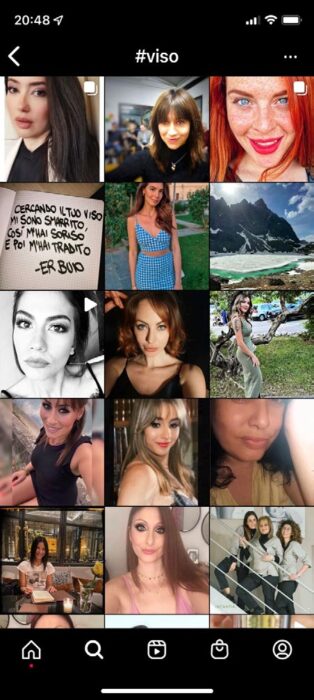
Figura 3. Ricerca dell’hashtag #viso
su Instagram.

Dunque assistiamo alla messa in vendita di nomi, indirizzi, foto, e-mail ecc. relativi a uno stesso soggetto; e questo viene fatto per moltissimi soggetti.

Esaminiamo, a seguire, i due principali tipi di abusi che i legittimi proprietari dei dati possono subire: il furto d’identità e la presenza in raccolte estranee di dati.

Nel primo caso, l’acquirente è spesso una persona che vuole intentare una truffa ai danni di altri individui o di istituti finanziari (bancari, assicurativi ecc.). Per organizzare tale frode, il truffatore ha bisogno di usare identità “normali” – molto meglio avere dati reali che creare identità fittizie con il pericolo di qualche dimenticanza – così rendendo la sua opera più robusta e a prova di numerose verifiche. Il risultato è che risulterà molto più credibile ed efficace nel portare la truffa a compimento. Naturalmente le forze dell’ordine conoscono bene il fenomeno; tuttavia le vittime di furti d’identità potranno rimanere all’interno di liste di potenziali sospetti, consultate ogni volta che si verifichi una frode in rete.

Il secondo caso fa riferimento al ben noto fenomeno della pedopornografia in rete. È piuttosto frequente il caso in cui il criminale si sia procurato una collezione di materiali pornografici relativi a minori, concentrati su dettagli anatomici e mancanti di volti specifici o figura del corpo. È pratica comune ricorrere a fotomontaggi o, semplicemente, all’arricchimento della collezione mediante immagini prese da chi “non ha nulla da nascondere”, per suggerire il volto o la figura del minore o di un suo parente stretto. Basta una qualche compatibilità nel colore della pelle. Anche in questo caso, ammesso il successo nel dimostrare l’estraneità, si rischia l’inclusione in liste di possibili sospetti.

ALTRE MINACCE

Finora ci siamo focalizzati sugli attacchi a pioggia. Nel caso di attacchi mirati, diversamente, non c’è limite alle conseguenze ottenibili; basti citare i deepfake, consistenti nell’uso di tecniche di machine learning (considerata parte dell’intelligenza artificiale) che mediante l’uso di autoencoders o reti generative avversarie (GAN) riescono, a partire da alcune immagini date, ad “addestrare” reti generative neurali all’alterazione delle immagini stesse. Il fenomeno ha acquisito notorietà nel 2017, quando queste tecniche furono usate per associare volti di attrici famose ai corpi nudi di modelle compiacenti. Tra i più celebri s’includono anche un video di Putin che annuncia la resa dell’Ucraina e uno di Obama, dove l’ex Presidente USA afferma che “stiamo entrando in un’era in cui i nostri nemici possono far dire a chiunque qualunque cosa in ogni momento”.

I deepfake accrescono fortemente la difficoltà di distinguere immagini genuine da quelle alterate: esistono anche numerose app che mettono a disposizione questa possibilità, alimentando però diversi dubbi sull’opportunità di depositare dati (come immagini di volti reali) all’interno di database il cui uso è per lo meno opaco.

Articolo a cura di Fabrizio D’Amore

Profilo Autore

Docente presso l’Università degli Studi di Roma “La Sapienza”, membro del Cyber Intelligence and Information Security Center

Condividi sui Social Network:

https://www.ictsecuritymagazine.com/articoli/il-furto-di-identita-e-come-non-facilitarlo-il-luogo-comune-non-ho-nulla-da-nascondere/



TikTok ban stalls as Montana governor suggests covering all foreign foes

TikTok ban stalls as Montana governor suggests covering all foreign foes

Earlier this month, Montana passed the first bill to ban TikTok statewide, upsetting critics who claimed the law was unenforceable, both technically and legally. Now The Wall Street Journal reports that before the controversial bill could even officially reach Governor Greg Gianforte’s desk, he was already taking a pen to the bill and crossing out every mention of TikTok. Gianforte’s press secretary, Kaitlin Price, told Ars that his intent was to amend the bill to address critics’ technical and legal concerns with the original language.

“The amendment for consideration seeks to improve the bill by broadening Montanans’ privacy protections beyond just TikTok and against all foreign adversaries, while also addressing the bill’s technical and legal concerns,” Price told Ars.

Ars has since reviewed a draft of the governor’s proposed amendments, confirming that—rather than target TikTok specifically—the amended bill would instead take aim at all social media apps that “provide certain data to foreign adversaries.”

The governor also proposed eliminating penalties for app stores for making TikTok available in the state, striking out those sections, too. His amendatory language tightens the bill in that regard by only penalizing the companies found guilty of sharing Montanans’ data with foreign adversaries. But, otherwise, the governor’s language broadens the bill, and, according to the Electronic Frontier Foundation’s civil liberties director, David Greene, his proposed amendments haven’t clarified every legal and technical concern that critics raised.

“There’s just a million questions about what the bill does and how it would be enforceable,” Greene told Ars.

Enforcing the bill is still technically a challenge, since “Montana doesn’t control all Internet access in its state,” Greene said. And it’s still legally problematic, in part because a state can’t regulate interstate commerce. There’s also an issue where, if the state decides that a social media company like TikTok should be illegal in the state, any action that the state takes is “still gonna have to survive First Amendment scrutiny,” Greene said. Civil rights experts have argued that Montanans have a right to express themselves and access information on TikTok.

As amended, the Montana law prohibits any social media applications that collect user data from providing that personal information or data to foreign adversaries “or a person or entity located within a country designated as a foreign adversary.” If a social media company violates the law, the state’s Department of Justice can impose fines of “$10,000 for each discrete violation,” and the app is then “liable for an additional $10,000 each day thereafter that each discrete violation continues.”

The law defines a social media application as “a person or entity that owns or operates an Internet-based electronic application through which content can be shared by users, including but not limited to commentary, videos, still photographs, blogs, video blogs, podcasts, and music.” The bill specifies that Internet service providers are not considered social media applications.

TikTok spokesperson Brooke Oberwetter told Ars that the company had not yet reviewed the governor’s amended language and could not provide Ars with additional comments on Montana’s bill at this time. Oberwetter shared TikTok’s original statement when Montana’s bill passed, which said that “the bill’s constitutionality will be decided by the courts” and noted that “the bill’s champions have admitted that they have no feasible plan for operationalizing this attempt to censor American voices.”

“We will continue to fight for TikTok users and creators in Montana whose livelihoods and First Amendment rights are threatened by this egregious government overreach,” Oberwetter said.

Currently, the Montana bill is being transmitted to the governor’s office, the WSJ reported. From there, Gianforte can either sign the bill into law or choose to veto the bill. If he does not act within 10 days, the bill would automatically become law and would be scheduled to come into effect on January 1, 2024.

https://arstechnica.com/?p=1934753


Reddit Hires Former Meta Exec as It Continues to Woo Marketers


.article-native-ad { border-bottom: 1px solid #ddd; margin: 0 45px; padding-bottom: 20px; margin-bottom: 20px; } .article-native-ad svg { color: #ddd; font-size: 34px; margin-top: 10px; } .article-native-ad p { line-height:1.5; padding:0!important; padding-left: 10px!important; } .article-native-ad strong { font-weight:500; color:rgb(46,179,178); }

Introducing the Adweek Podcast Network. Access infinite inspiration in your pocket on everything from career advice and creativity to metaverse marketing and more. Browse all podcasts.

Reddit has hired former Meta exec Jim Squires in a newly created role of evp of business marketing and growth, the latest move in the platform’s charm offensive toward the marketing community, Adweek can exclusively report.

With the appointment of Squires, Reddit will be uniting the product marketing team, responsible for listening to marketer needs and working with the engineers to create new ad products, and the business marketing team, which handles outbound efforts, previously two separate departments.

Squires, who worked at Meta for 13 years and helped bring advertising to Facebook’s newsfeed and Instagram, will be charged with expanding Reddit’s work with small businesses and with growing Reddit’s international footprint.

The hire is Reddit’s latest move to woo advertisers as it prepares for a long-awaited IPO.

In the past year, Reddit has released a bevy of new ad products, including updates to its self-serve ad manager tool, a simple creative tool to help make ad campaigns, over 1,000 new communities for advertisers to target and a tool that makes these communities easier to search.

The platform has also offered increased support for marketers hoping to design campaigns bespoke to the platform, sources tell Adweek, and has offered discounts to agencies. Reddit told Canvas Worldwide that it would waive the 15% media fee typically associated with using third-party data, said Raul Tafur, vp of paid social. Reddit did not comment on offering agency discounts.

Some of the efforts appear to be paying off. Since the beginning of the year, Reddit has signed up thousands of new advertisers to the platform and doubled the number of advertisers activating campaigns, the company said. Reddit’s U.S. advertiser revenues are anticipated to increase by 15% to $443.9 million this year, according to Insider Intelligence.

Yet, Reddit is still an underdog among social platforms. By comparison, Insider Intelligence pegs TikTok’s 2023 revenue at $8.75 billion. Ad buyers told Adweek that they are finding more success with Reddit campaigns than previously, but it still has work to do to become a serious performance player or mainstay of the media budget.

Marketers, meet Reddit

Reddit has not always been known as a place for advertising, with brands fearing previous brand safety scandals and tight-knit communities that are wary of intrusion.

“Some [clients] are a little bit more cautious about going into Reddit for the reason of the Reddit backlash,” said Tom Olivieri, group director of creative services at performance agency Within. “They feel they can do more harm than good to their brand.”

Olivieri said that recently, Reddit has climbed to take up around 5% of budgets, driven by the platform’s agency outreach and new tools, marketers wanting to diversify away from Twitter, TikTok and brands wanting to connect with Reddit’s niche communities.

Reddit is this community of communities focused around interest and having anonymity.

Jim Squires, evp of business marketing and growth, Reddit

Within’s clients have found success testing messaging within Reddit’s communities before rolling out the messages wider.

“The Redditters … let you know if this feels wrong,” said Olivieri.

Breanne Morrison, vp of paid social and search engine marketing at Publicis Canada, expects clients’ investment to increase between 70% and 80% year over year, which she attributed to the platform’s growth in Canada and improved performance.

Riches in niches

Marketers have struggled to find a place for Reddit on the media plan, given its text-based, anonymous nature is different than most other social platforms. Squires is positioning this difference as an asset.

“Reddit is this community of communities focused around interest and having anonymity,” Squires told Adweek. “It’s not focused around the individual. It’s not focused around the me; it’s focused around the we.”  

This resonates with some marketers.

“With paid social and influencer marketing being such a cluttered space, Reddit stands out for being the anti-influencer platform,” said Phil Lewicki, associate media director at agency Dagger.

Reddit is a place where people go because they’re genuinely interested in learning about a topic rather than becoming famous. That helps brands who want to drive discoverability and clicks to their site, said Natasha Blumenkron, senior director of paid social at Tinuiti.

Indeed, a viral blog post last year noting the flaws in Google started with the claim that Reddit is the most popular search engine.

“If I’m looking for a new pair of shoes or boots, I can talk to people on the subreddit,” Blumenkron said. “If I see a brand with very unique messaging, they’re right where I am in my journey.”  

Still, several marketers said Reddit does not serve as a true performance platform that can drive sales. Tafur’s clients still have been reluctant to test Reddit, even with discounts and new tools.

“There needs to be a re-education for the clients,” Tafur said. “Reditters can go really dark and can go really wholesome, and the fear of being in that mix can stop clients from activating.”

.font-primary { } .font-secondary { } #meter-count { position: fixed; z-index: 9999999; bottom: 0; width:96%; margin: 2%; -webkit-border-radius: 4px; -moz-border-radius: 4px; border-radius: 4px; -webkit-box-shadow: 0 0px 15px 4px rgba(0,0,0,.2); box-shadow:0 0px 15px 4px rgba(0,0,0,.2); padding: 15px 0; color:#fff; background-color:#343a40; } #meter-count .icon { width: auto; opacity:.8; } #meter-count .icon svg { height: 36px; width: auto; } #meter-count .btn-subscribe { font-size:14px; font-weight:bold; padding:7px 18px; color: #fff; background-color: #2eb3b2; border:none; text-transform: capitalize; margin-right:10px; } #meter-count .btn-subscribe:hover { color: #fff; opacity:.8; } #meter-count .btn-signin { font-size:14px; font-weight:bold; padding:7px 14px; color: #fff; background-color: #121212; border:none; text-transform: capitalize; } #meter-count .btn-signin:hover { color: #fff; opacity:.8; } #meter-count h3 { color:#fff!important; letter-spacing:0px!important; margin:0; padding:0; font-size:16px; line-height:1.5; font-weight:700; margin: 0!important; padding: 0!important; } #meter-count h3 span { color:#E50000!important; font-weight:900; } #meter-count p { font-size:14px; font-weight:500; line-height:1.4; color:#eee!important; margin: 0!important; padding: 0!important; } #meter-count .close { color:#fff; display:block; position:absolute; top: 4px; right:4px; z-index: 999999; } #meter-count .close svg { display:block; color:#fff; height:16px; width:auto; cursor:pointer; } #meter-count .close:hover svg { color:#E50000; } #meter-count .fw-600 { font-weight:600; } @media (max-width: 1079px) { #meter-count .icon { margin:0; padding:0; display:none; } } @media (max-width: 768px) { #meter-count { margin: 0; -webkit-border-radius: 0px; -moz-border-radius: 0px; border-radius: 0px; width:100%; -webkit-box-shadow: 0 -8px 10px -4px rgba(0,0,0,0.3); box-shadow: 0 -8px 10px -4px rgba(0,0,0,0.3); } #meter-count .icon { margin:0; padding:0; display:none; } #meter-count h3 { color:#fff!important; font-size:14px; } #meter-count p { color:#fff!important; font-size: 12px; font-weight: 500; } #meter-count .btn-subscribe, #meter-count .btn-signin { font-size:12px; padding:7px 12px; } #meter-count .btn-signin { display:none; } #meter-count .close svg { height:14px; } }

Enjoying Adweek’s Content? Register for More Access!

https://www.adweek.com/media/reddit-brings-on-former-meta-exec-as-it-continues-to-woo-marketers/


3 Simple Steps to Start Making Money on TikTok

Opinions expressed by Entrepreneur contributors are their own.

At any given moment on TikTok, any user can go viral for posting about seemingly anything. Case in point: The most-viewed TikTok videos of 2022 included a giant chocolate giraffe, a toddler reminding her mom “I’m just a baby,” Squishy the chipmunk’s return from hibernation and — of course — that corn kid remix.

But creating a viral post and generating revenue are two different things — and TikTok is notoriously difficult to monetize. So, as I prepared to launch on the platform, I knew I needed a strategy to help turn all the content I was told I needed into tangible income. Instead of wasting my time and money, I began searching for someone who was already getting the results I wanted. If there’s one thing I’ve learned over decades as an entrepreneur, it’s that success leaves clues.

My target was someone in the top 1% of creators, with a proven history of monetization on the platform. That person turned out to be London Lazerson. Known as @Londonlaz, the 29-year-old viral content creator has more than 9 million followers and 1 billion views; that makes him the world’s 1,100th largest TikTok account.

Keep reading for the lessons I learned, all of which you can apply to your business today to start earning income from your TikTok following (hint — monetization is about brand deals, not the TikTok Creator Fund).

Related: 7 Easy Ways to Use TikTok to Make Money

The case for monetizing TikTok

In the world of social media monetization, it’s tempting to begin with YouTube. The platform is known for its robust ad platform, and the top YouTubers make significantly more than the top TikTokers, at least by Forbes’ estimates. This begs the question: Why TikTok?

Whether you follow the social media landscape for business opportunities or its role in your personal branding, it’s clear that a massive shift has been underway. By 2020, Facebook was already losing U.S. users. YouTube had a full suite of monetization tools, but it had also become oversaturated. And then there was TikTok. While Facebook was shedding users, the short-form video platform was fast approaching 1 billion — a “hockey stick” growth rate that compelled both Meta and YouTube to launch similar short video features.

In the few years since 2020, Tiktok has left an undeniable imprint on popular culture. About 30% of American adults are on TikTok. More than 50% of U.S. users are 30 years or older, and they spend an average of 80 minutes daily on the platform. Even outlets like The New Yorker and NPR have jumped on the TikTok bandwagon, covering viral trends and the creators who launch them into our social consciousness.

Although TikTok is the new “it” platform, there’s room for more than one in your monetization strategy. It helps to think of influencing as a giant funnel, not unlike the one you’ve likely used for your venture’s inbound marketing campaigns. TikTok is the top; that’s where you should post the most content. Instagram, Twitter, Facebook and Snapchat form the middle of the funnel, and YouTube is the bottom. In other words, Tiktok is the big net. Catch all the fish on TikTok, then send them to YouTube.

Creators can earn money via the TikTok Creator Fund and TikTok Pulse, but they’ve largely reported disappointing earnings so far. The key to making money on TikTok is landing brand deals. And that’s all about learning to sell smarter — a skill that’s foundational for any entrepreneur, social or otherwise.

The most creative people on the planet are no more creative than you. They’re just better salespeople.

Related: How to Integrate TikTok Into Your Video Marketing Strategy

How to start making money on TikTok

To monetize TikTok, you need the social status to show that your strategy works and case studies that show you can do this for someone else’s brand. The rationale is simple: Why would you hire Joe Schmoe’s agency when you could hire Gary V’s?

Here are the three steps you should follow to not only land your first brand deal but monetize TikTok in 2023. To give yourself a head start, leave the “follower” mentality at the door. Your value to clients is in your ROI, not your follower count.

1. Create free ads until one goes viral:

No one wants to work for free. But to charge brands for your content, you need a case study. And for that, you need a proven track record. How can you get started? Try some old-fashioned cold-calling. Reach out to as many brands as possible and offer to create an ad in exchange for a free product.

If you have 20K followers, focus on case studies. Your pitch should be, “Let me create free videos for your brand and post them to my page.”

Keep doing free ads until one of them goes viral. When one of your videos eclipses 1 million views, you can start charging — but never before.

2. Develop your case study:

Once one of your ads goes viral, create your case study. But remember, your case study is not your follower count. It doesn’t matter if you have 1 million followers if no one wants to buy what you’re trying to sell.

Your case study should tell a clear, concise story about a successful brand campaign. Outline the brand’s KPIs, the campaign structure, the concrete results you delivered and the “so what” of why those stats matter. Make sure to illustrate your performance against the campaign’s KPIs using analytics.

3. Sell your case study:

Say you had a video go viral for a makeup brand. Your next step should be to go to a competitor with your case study. Tell them you did a brand deal for another brand in their space and got 1 million views. Then, ask your price.

While some brands value email signups, others want a campaign to generate purchases, boost awareness or even achieve a certain click-thru rate. Keep KPIs in mind when pitching brands, and present case studies that reflect their goals whenever possible.

Most brands have never talked to an influencer that cares enough to understand their brand’s goals. Be the influencer who cares enough to ask for their KPI.

Once you’ve sold the brand on your case study, it’s time to dictate the creative. Proactively offer concept approval, as most brands will require it anyway. Once you’ve posted the content and measured your results, create the next case study in your marketing toolkit. By doing so, you could be on your way to achieving what few have on TikTok: not just monetizing your following, but earning enough to never work a full-time job again.

Related: Here’s Why Not Being on TikTok Is a Huge Mistake

https://www.entrepreneur.com/starting-a-business/3-easy-steps-to-start-making-money-on-tiktok/449778


Has Meta Verified Ruined the Value of the Coveted Blue Check Mark?

Opinions expressed by Entrepreneur contributors are their own.

In recent years, Instagram has become one of the most popular social media platforms, with over 1 billion active users. For many individuals and businesses, being verified on Instagram has become a coveted status symbol, as it signifies credibility and authenticity. In the past, verification was only available to high-profile accounts, but now anyone can pay to be verified on Instagram.

Meta (formerly known as Facebook) recently introduced Meta Verified, a new paid subscription that offers a streamlined and expedited process for users looking to gain the blue checkmark on their Instagram and Facebook accounts. The move has left many users wondering whether the blue checkmark, once seen as a symbol of notability, has lost its standing due to the availability of paid verification.

While verification is a step in the right direction, it is not enough to build a strong presence on the platform. Optimizing your account by developing a clear brand identity, utilizing Instagram’s features and creating a high-quality content plan is crucial.

In this article, we will dive deeper into these strategies and provide actionable tips to help you optimize your Instagram account after paying for verification.

Related: What Is Meta Verified? Here’s Everything You Need to Know

Meta Verified vs. traditional verification

Meta Verified was first introduced to the public on February 19, 2023 but has just become available to users in the U.S. as of March 17, 2023. According to Meta’s latest announcement, this feature is currently only available to users with personal accounts. Therefore, businesses and other creators whose account names and profile pictures do not match that on their government-issued ID are not eligible for paid verification at this time.

Aside from the blue check mark, Meta Verified offers protection against impersonators, additional account support and increased reach and visibility. Traditional verification on Instagram requires a significant presence and influence in your industry or field. One can demonstrate this through various factors, including:

  1. Media presence: Being featured in multiple news sources or media outlets for your work or achievements.

  2. Brand presence: You have a strong and established brand presence online, with a large following and engagement on your social media platforms.

  3. Industry recognition: You have received awards, accolades or credit for your work or contributions to your industry.

  4. Public figure: You are a well-known public figure, such as a celebrity, politician or athlete.

  5. Business presence: You have a successful business with a robust online presence and influence in your industry.

Develop a clear brand identity

Developing a clear brand identity is crucial for optimizing your Instagram account. Your brand identity is your unique personality and what sets you apart from your competitors. Therefore, all aspects of your profile should reflect your brand identity, from your profile picture to your content, clearly communicating who you are, what you do and what sets you apart from the competition.

When it comes to your content, consistency is key. Consider the aesthetic you want to convey, and use consistent colors, fonts and filters in your posts. This will help your brand stand out and make it easy for your followers to recognize your content.

In addition to the visual aspects, it is also essential to have consistency in the type of content you post. Your content should align with your brand identity and communicate what sets you apart. Also, include any relevant keywords so people can easily find your account when searching for specific topics.

Related: 15 Ways to Optimize Your Instagram Profile

Create a content strategy

Simply being verified is not enough to build a strong presence across your social media platforms. In today’s digital landscape, creating high-quality content is crucial for businesses to attract, engage and retain customers. However, with so much online content and access to verification, standing out from the crowd can be challenging. That’s where a well-crafted content strategy comes in.

The first step in creating a content strategy is identifying your target audience. Who are they, what are their interests, what are their pain points, and what kind of content do they consume? Then, conduct market research to identify your ideal customer and create buyer personas to help you understand their needs and preferences.

Next, you need to establish your goals and determine what you want to achieve with your content. For example, do you want to increase brand awareness, generate leads, drive traffic to your website or establish thought leadership in your industry? Setting clear goals will help you create content that aligns with your business objectives and measures the success of your content strategy.

Identify gaps in your existing content based on your target audience and goals. Look for topics others aren’t covering or new angles to approach a subject. Use keyword research to identify topics your target audience is searching for, and create content that addresses their needs.

Utilize Instagram’s features

According to Meta’s latest blog post, its verified users will have increased visibility and reach with prominence in some platform areas — like search, comments and recommendations. With this enhanced discoverability, it’s important to utilize all of Instagram’s features to get the best possible results for your account.

Instagram offers a range of features that can help you connect with your audience and showcase your brand. These include Instagram Stories, Reels and live videos. Each of these features offers a unique way to engage with your audience and showcase your brand in different ways.

Instagram Stories are a great way to share behind-the-scenes content, highlight special promotions or events or simply connect with your followers more personally. Reels, on the other hand, are short-form videos perfect for showcasing your brand’s personality and creativity. And live video is a great way to engage with your audience in real-time and build a sense of community around your brand.

Experiment with different formats to see what works best for your audience. Pay attention to which types of content get the most engagement, and adjust your strategy accordingly.

Related: 3 Simple Things Businesses Need for Instagram Growth

In conclusion, being verified on Instagram has become a symbol of credibility and authenticity, with many individuals and businesses seeking this coveted status. While the availability of paid verification through Meta Verified may have raised concerns about the value of the blue check mark, it is essential to remember that verification is a starting point for building a solid presence on the platform.

To optimize your account, you must develop a clear brand identity, create a high-quality content plan and utilize Instagram’s features. By following these strategies and staying true to your brand identity, you can build a strong presence on Instagram, achieve your business goals and stand out amongst the flooded crowd of blue check marks.

https://www.entrepreneur.com/science-technology/has-meta-verified-ruined-the-value-of-the-coveted-blue/448654


Unbothered and Thriving With Remi Cruz


.article-native-ad { border-bottom: 1px solid #ddd; margin: 0 45px; padding-bottom: 20px; margin-bottom: 20px; } .article-native-ad svg { color: #ddd; font-size: 34px; margin-top: 10px; } .article-native-ad p { line-height:1.5; padding:0!important; padding-left: 10px!important; } .article-native-ad strong { font-weight:500; color:rgb(46,179,178); }

Driving relevance means driving growth. Join global brands and industry thought leaders at Brandweek, Sept. 11–14 in Miami, for actionable takeaways to better your marketing. 50% off passes ends April 10.

It may seem like content creators become overnight sensations easily. What many don’t know is all the hard work that goes into creating, planning and being strategic when it comes to content.

For cooking and culture influencer Remi Cruz, her journey from YouTube stardom to appearing on The Drew Barrymore Show was neither fast nor easy, but the result of a lot of hard work.

Cruz has more than 5 million followers across her channels on YouTube, TikTok and Instagram. She is best known for her personal YouTube channel, where viewers can find content centered on DIYs, cooking tutorials, makeup and fashion videos.

She has also been fortunate enough to work with some of the biggest brands around, including SoulCycle, Tarte Cosmetics, HP and M&M’s, to name a few.

In this episode of Young Influentials, Adweek digital editor and host Colin Daniels sits down with Cruz to discuss her social media career, burnout and how to align with the right brands for partnerships.

Stream the new episode below, or listen and subscribe on Apple Podcasts, Spotify, Stitcher or iHeartRadio.

https://www.adweek.com/creativity/unbothered-and-thriving-with-remi-cruz/


How Nutter Butter Won Over Gen Z With an Absurdist Instagram Strategy


.article-native-ad { border-bottom: 1px solid #ddd; margin: 0 45px; padding-bottom: 20px; margin-bottom: 20px; } .article-native-ad svg { color: #ddd; font-size: 34px; margin-top: 10px; } .article-native-ad p { line-height:1.5; padding:0!important; padding-left: 10px!important; } .article-native-ad strong { font-weight:500; color:rgb(46,179,178); }

Driving relevance means driving growth. Join global brands and industry thought leaders at Brandweek, Sept. 11–14 in Miami, for actionable takeaways to better your marketing. 50% off passes ends April 10.

As one of Mondelēz International’s smaller brands, Nutter Butter is given more freedom to experiment with its social media activity than its larger siblings like Oreo and Sour Patch Kids. That has allowed Dentsu Creative to craft an Instagram strategy for the brand so offbeat that some followers have expressed surprise that it isn’t a parody account.

On Jan. 31, the brand posted a picture of a family-size pack of the cookies with the word “family” overlaid with the name Aidan, and the comment: “Moving forward, I will only respond to you if your name is Aidan.” The post was a tribute to a long-term superfan of the brand named Aidan, but its absurdist humor took off with Gen Z users.

Earning more than 11,000 likes, the post outperformed in reach and engagement compared to activity from the year before and helped Nutter Butter double its number of Instagram followers in two weeks, attracting Gen Z users with a taste for the absurd.

“This generation is in a position where they are tired of being directly sold to, and they’re tired of people pretending that their product is more important than other aspects of the world,” Dentsu Creative social strategy manager Ryan Benson told Adweek. “We’re able to relate in a way that we’re like, this is all kind of silly. Let’s just laugh together.”

Since then, the brand has continued to pepper its social media content with “Aidan eggs.” Its Instagram bio reads: “Do not read if your name isn’t Aidan.” A Feb. 22 post presents “AID4N” as a new movie, riffing on the popularity of recent horror film M3GAN.

A Feb. 15 post tied to New York Fashion Week shows sharply dressed dolls with cookies for heads, including one with an Aidan name tag. A March 17 post shows a giraffe wearing a locket resembling the cookie sandwich with a heart that says Aidan inside. Some of the comments ask if users can buy Aidan merch, noting that “whoever hired this guy for PR did a good job,” and even requesting to meet the person who runs the account.

Even if the posts don’t specifically call out Aidan, Dentsu is trying to carry the same offbeat energy, sometimes using blown-out audio or low-quality images.

Fully organic

“If we overdo it, it’s gonna get to the point where it’s just oversaturated,” Dentsu social media strategist Aubrey Burrough said. “That’s where you lose that absurdist, weird, Gen Z audience. It’s really toeing that line.”

Nutter Butter doesn’t do any paid social media activity, and the Dentsu social teams work as an extension of the brand team, with Mondelēz giving them a long leash rather than seeking approval for every post, Burrough explained.

“Instead of being the 90th brand to hop on the bandwagon of some kind of massive trend, we found our niche here with these really small Gen Z trends,” she continued. “Even if our fans haven’t necessarily seen it, we’ve found that they can still be engaged by it.”

Nutter Butter had actually considered de-prioritizing Instagram in favor of Twitter and TikTok before the success of its Aidan activity. Now the brand is rethinking its strategy—and trying to make it weirder.

“Everything on Instagram has been put through the lens of ‘will the Aidans like this?’” Benson said.

Mondelēz International senior manager of digital and social media Kelly Amatangelo has encouraged Dentsu’s Nutter Butter team to include genuine moments in their posts. Benson tweeted about when his dog tried to eat a Nutter Butter he was using as a prop and pointed out in the Fashion Week post that one of the dolls was missing a hand because his pet ate it.

“We’ll be discussing and chatting about something and genuinely have a lot of laughter in the moment. And then we’re able to take that laughter immediately and put it on a platform without second-guessing or reviewing copy or mulling it over for a couple of hours,” Amatangelo said. “It is very instantaneous to how we’re feeling, but also what’s happening on the platform right now and matching that same kind of tempo and vibe is so important. I think that’s why it’s been so impactful.”

.font-primary { } .font-secondary { } #meter-count { position: fixed; z-index: 9999999; bottom: 0; width:96%; margin: 2%; -webkit-border-radius: 4px; -moz-border-radius: 4px; border-radius: 4px; -webkit-box-shadow: 0 0px 15px 4px rgba(0,0,0,.2); box-shadow:0 0px 15px 4px rgba(0,0,0,.2); padding: 15px 0; color:#fff; background-color:#343a40; } #meter-count .icon { width: auto; opacity:.8; } #meter-count .icon svg { height: 36px; width: auto; } #meter-count .btn-subscribe { font-size:14px; font-weight:bold; padding:7px 18px; color: #fff; background-color: #2eb3b2; border:none; text-transform: capitalize; margin-right:10px; } #meter-count .btn-subscribe:hover { color: #fff; opacity:.8; } #meter-count .btn-signin { font-size:14px; font-weight:bold; padding:7px 14px; color: #fff; background-color: #121212; border:none; text-transform: capitalize; } #meter-count .btn-signin:hover { color: #fff; opacity:.8; } #meter-count h3 { color:#fff!important; letter-spacing:0px!important; margin:0; padding:0; font-size:16px; line-height:1.5; font-weight:700; margin: 0!important; padding: 0!important; } #meter-count h3 span { color:#E50000!important; font-weight:900; } #meter-count p { font-size:14px; font-weight:500; line-height:1.4; color:#eee!important; margin: 0!important; padding: 0!important; } #meter-count .close { color:#fff; display:block; position:absolute; top: 4px; right:4px; z-index: 999999; } #meter-count .close svg { display:block; color:#fff; height:16px; width:auto; cursor:pointer; } #meter-count .close:hover svg { color:#E50000; } #meter-count .fw-600 { font-weight:600; } @media (max-width: 1079px) { #meter-count .icon { margin:0; padding:0; display:none; } } @media (max-width: 768px) { #meter-count { margin: 0; -webkit-border-radius: 0px; -moz-border-radius: 0px; border-radius: 0px; width:100%; -webkit-box-shadow: 0 -8px 10px -4px rgba(0,0,0,0.3); box-shadow: 0 -8px 10px -4px rgba(0,0,0,0.3); } #meter-count .icon { margin:0; padding:0; display:none; } #meter-count h3 { color:#fff!important; font-size:14px; } #meter-count p { color:#fff!important; font-size: 12px; font-weight: 500; } #meter-count .btn-subscribe, #meter-count .btn-signin { font-size:12px; padding:7px 12px; } #meter-count .btn-signin { display:none; } #meter-count .close svg { height:14px; } }

Enjoying Adweek’s Content? Register for More Access!

https://www.adweek.com/brand-marketing/how-nutter-butter-won-over-gen-z-with-an-absurdist-instagram-strategy/


On TikTok, USA Today Finds Traction Without News


.article-native-ad { border-bottom: 1px solid #ddd; margin: 0 45px; padding-bottom: 20px; margin-bottom: 20px; } .article-native-ad svg { color: #ddd; font-size: 34px; margin-top: 10px; } .article-native-ad p { line-height:1.5; padding:0!important; padding-left: 10px!important; } .article-native-ad strong { font-weight:500; color:rgb(46,179,178); }

Meet the next generation of consumers where they are now. Join us virtually for The New Consumer, on March 30, for tips from Clutch, Mars Wrigley and more. Sign up for free.

For USA Today parent company Gannett, social media success has little to do with the news.

Two of its editorial franchises, Humankind and Problem Solved, have seen growth in their social reach across TikTok, YouTube and Instagram, where the brands have prioritized vertical video formats. There, the media company has used the viewership to generate advertising revenue and build awareness of the USA Today brand.

Humankind, which amplifies feel-good stories, has 4.2 million followers on TikTok—more than CNN, The Washington Post, Disney and Nike—and added 600,000 followers in 2022. Problem Solved, which offers life hacks aimed at younger audiences, has 1.2 million followers on the platform after gaining 440,000 last year. 

An internal Gannett team of roughly 55 staff, called Content Ventures, runs the accounts, as well as a portfolio of other brands, such as the affiliate marketing business Reviewed. Gannett created Content Ventures in 2018, and the division brought Humankind and Problem Solved to TikTok in 2020.

“We realized this content did well on Facebook, but it was challenging to get it out consistently on the core USA Today social platforms,” said Russell Torres, the vice president of video content. “So we broke it out into its own brand, into a space where there is no news, and we have seen tremendous growth since.”

The media company monetizes the reach of these franchises through video ads on Gannett sites (45%), on-platform revenue shares (25%), roughly eight to 12 annual video sponsorships (20%) and its connected television channels (5%), among other sources of revenue (5%), according to Kate Gutman, the senior vice president of Content Ventures.

The company wouldn’t share the total revenue generated by the franchises, although sponsorship packages can net multimillion-dollar payouts. 

Publishers have scrambled to reorient their editorial strategies to foreground vertical video, whose highly engaging nature has inspired its adoption across the digital ecosystem. But monetization has lagged behind adoption, and Gannett is already facing acute financial pressure. 

Its operating revenue fell 8% in 2022, to $2.9 billion, and debt the company accrued following its 2019 merger with GateHouse has forced the news organization to cut its workforce dramatically from 21,255 in 2019 to 11,200 last year.

Avoid news to focus on positivity

The two franchises—along with a third launched last fall called Sports Seriously—rarely, if ever, feature news content.

Humankind, along with permutations including Animalkind, Womankind and Militarykind, follows a classic formula: aggregating feel-good videos, which can become viral sensations on TikTok and attract tens of millions of views. 

Humankind also thrives on YouTube, which has incentivized creators to use its Shorts product by amplifying its visibility, as well as Instagram.

Likewise, Problem Solved brings a proven formula to a new platform, meeting the needs of younger users navigating the challenges of everyday life.

“News and information are core to USA Today,” said executive director of video content Cathy Kononetz. “Kind speaks to good news, and Problem Solved offers service journalism.”

Expanding deal size and improving brand awareness

The franchises offer a blend of entertainment and service journalism, and their explosive growth has helped introduce young audiences to the USA Today brand, at least obliquely.

They also drive traffic to the USA Today website, which hosts dedicated verticals for the franchises and their various spin-offs, although the publisher wouldn’t share specifics.

Primarily, though, the franchises let the Gannett direct sales team offer vastly more eyeballs to advertisers, combining the views driven by Humankind and Problem Solved on social media, the USA Today website and CTV channels. 

“These multi-video assets have been appealing because they allow for quick, robust storytelling like never before across the social space,” said Jessica Dooley, the U.S. social practice lead at Mindshare.

Recent sponsorship clients include Amtrak, which ran a branded campaign against Problem Solved, and Ultimate Kronos Group, which sponsored the editorial franchise Women of the Year, including a series of Womankind videos.

And thanks to cross-promotion, the Content Ventures team now has a total of 15 brands across the major social platforms. 

The feel-good content makes the franchises an attractive, brand-safe proposition for advertisers, and the reach gives Gannett a valuable asset when pitching to clients. 

“We have some advertisers that return to us year in and year out just for these franchises, and that is terrific,” Gutman said. “They have become yet another tool for our sales team.”

.font-primary { } .font-secondary { } #meter-count { position: fixed; z-index: 9999999; bottom: 0; width:96%; margin: 2%; -webkit-border-radius: 4px; -moz-border-radius: 4px; border-radius: 4px; -webkit-box-shadow: 0 0px 15px 4px rgba(0,0,0,.2); box-shadow:0 0px 15px 4px rgba(0,0,0,.2); padding: 15px 0; color:#fff; background-color:#343a40; } #meter-count .icon { width: auto; opacity:.8; } #meter-count .icon svg { height: 36px; width: auto; } #meter-count .btn-subscribe { font-size:14px; font-weight:bold; padding:7px 18px; color: #fff; background-color: #2eb3b2; border:none; text-transform: capitalize; margin-right:10px; } #meter-count .btn-subscribe:hover { color: #fff; opacity:.8; } #meter-count .btn-signin { font-size:14px; font-weight:bold; padding:7px 14px; color: #fff; background-color: #121212; border:none; text-transform: capitalize; } #meter-count .btn-signin:hover { color: #fff; opacity:.8; } #meter-count h3 { color:#fff!important; letter-spacing:0px!important; margin:0; padding:0; font-size:16px; line-height:1.5; font-weight:700; margin: 0!important; padding: 0!important; } #meter-count h3 span { color:#E50000!important; font-weight:900; } #meter-count p { font-size:14px; font-weight:500; line-height:1.4; color:#eee!important; margin: 0!important; padding: 0!important; } #meter-count .close { color:#fff; display:block; position:absolute; top: 4px; right:4px; z-index: 999999; } #meter-count .close svg { display:block; color:#fff; height:16px; width:auto; cursor:pointer; } #meter-count .close:hover svg { color:#E50000; } #meter-count .fw-600 { font-weight:600; } @media (max-width: 1079px) { #meter-count .icon { margin:0; padding:0; display:none; } } @media (max-width: 768px) { #meter-count { margin: 0; -webkit-border-radius: 0px; -moz-border-radius: 0px; border-radius: 0px; width:100%; -webkit-box-shadow: 0 -8px 10px -4px rgba(0,0,0,0.3); box-shadow: 0 -8px 10px -4px rgba(0,0,0,0.3); } #meter-count .icon { margin:0; padding:0; display:none; } #meter-count h3 { color:#fff!important; font-size:14px; } #meter-count p { color:#fff!important; font-size: 12px; font-weight: 500; } #meter-count .btn-subscribe, #meter-count .btn-signin { font-size:12px; padding:7px 12px; } #meter-count .btn-signin { display:none; } #meter-count .close svg { height:14px; } }

Enjoying Adweek’s Content? Register for More Access!

https://www.adweek.com/media/usa-today-tiktok-humankind-problem-solved/


Pricing for the Creator Economy Is All Over the Map


.article-native-ad { border-bottom: 1px solid #ddd; margin: 0 45px; padding-bottom: 20px; margin-bottom: 20px; } .article-native-ad svg { color: #ddd; font-size: 34px; margin-top: 10px; } .article-native-ad p { line-height:1.5; padding:0!important; padding-left: 10px!important; } .article-native-ad strong { font-weight:500; color:rgb(46,179,178); }

Get the scoop from strategic media pros at Disney, YouTube and more just in time for upfront season at Convergent TV, March 21–22. Learn more.

In the rapidly growing creator economy space, even the creators themselves struggle to price their wares.

U.S. advertisers are anticipated to spend more than $6 billion on influencer marketing this year, per Insider Intelligence. But creators still aren’t sure how big a piece to claim from this pie, a new report from social media management platform Later and influencer marketing platform Mavrck finds.

The report found that 37% of creators initially set their rates by guessing, adjusting it over time, according to a survey of more than 500 creators collected in December 2022. The majority of the creators were microinfluencers, with 10,000 followers or less, and skewed toward Instagram.

The findings were not shocking to some in the social and creator industries, who said there is still a lack of standardization in what brands pay creators.

“There are a lot of brands doing predatory pricing and taking advantage of new creators,” said Daniel Goldstein, founder of agency Next Rep Marketing, who also is a TikTok creator with more than 30,000 followers.

“There is no standardization,” Goldstein added. “There are a huge amount of creators just making content just for free products. There is the same amount of audience just doing it for affiliate.”

This lack of consistency is also found in the upper echelons of influencer marketing, said Lindsay Nead, CEO of talent management firm Parker Management, where creators make no less than $250,000 a year from brand partnerships. Most creators, when they first come to the agency, are grossly undercharging, she said.

“There is no consistency,” Nead said. “It would take management companies like us to get together with every other management company. I don’t know when that will come.”

While billions may be spent on influencer marketing, it is still a relatively young industry: 72% of the respondents to Later’s survey only started monetizing in the past two years. Monique Thomas, editorial content marketing manager at Later, said this indicates that the industry is still in growth mode.

Creator economy sources shared with Adweek what trends are emerging as guideposts for paying creators.

Instagram remains more lucrative than TikTok

Despite TikTok’s growing popularity, creators can still generally make more money on Instagram, especially on Reels rather than in-feed posts, according to data from the report.

In fact, 44% of creators earned more than $200 per Reel compared to only 28% making a similar amount for a TikTok video. The report also draws on data from 29,000 Instagram posts and more than 2,200 TikToks from Mavrck’s platform.

A creator’s followers are worth more on Instagram because high follower counts are generally seen as harder to achieve on Instagram than on TikTok and therefore, could translate to a more attentive audience, Goldstein said.

“TikTok creators went through the boom of Covid where their audience grew quickly and significantly,” Goldstein said. “For a long time, it was harder to grow a loyal following on Instagram.”

Also, TikTok’s “For You” main feed is less likely to show users content from the people they follow than Instagram’s feed, meaning an Instagram creator’s post is more likely to actually be seen, said Lily Salley, director of account management at microinfluencer firm Social Studies.

As a result, Instagram is a more reliable place to drive conversions for brands, Nead said.

“We still see the most dollars going toward Instagram. It’s safer,” Nead said. “It converts the best for brands for whatever reason. TikTok is incredible for brand awareness.”

Complex criteria

Besides pricing based on platform, brands also look at criteria such as content consistency, cadence, brand safety, plus what percentage of a creator’s followers are interacting with their content and the particular niche or demographics of that creator, sources told Adweek.

Other important factors are how long a brand can use the content, whether the creator posts it on their own page, if the post can be used as paid media, how many sales the creator is driving, whether the brand can give feedback and exclusivity to prevent the creator from doing a deal with a competitor.

The complexities of setting a creator’s rate can help explain the lack of strict pay standards.

“It’s a negotiation and hopefully, we meet in the middle,” said Salley, who negotiates creator deals on behalf of brands and noted that typically what the firm has budgeted is typically close to what the creator is charging.

“We’re gathering all of that nuance in advance of winning business,” Salley added.

But while the status quo allows for flexibility, without any baseline standards, creators can miss out on significant earnings.

“The standardization won’t be one size fits all [but] it has to be a baseline,” said Thomas. “Where people don’t know how to start, that’s where people lowball themselves.”

.font-primary { } .font-secondary { } #meter-count { position: fixed; z-index: 9999999; bottom: 0; width:96%; margin: 2%; -webkit-border-radius: 4px; -moz-border-radius: 4px; border-radius: 4px; -webkit-box-shadow: 0 0px 15px 4px rgba(0,0,0,.2); box-shadow:0 0px 15px 4px rgba(0,0,0,.2); padding: 15px 0; color:#fff; background-color:#343a40; } #meter-count .icon { width: auto; opacity:.8; } #meter-count .icon svg { height: 36px; width: auto; } #meter-count .btn-subscribe { font-size:14px; font-weight:bold; padding:7px 18px; color: #fff; background-color: #2eb3b2; border:none; text-transform: capitalize; margin-right:10px; } #meter-count .btn-subscribe:hover { color: #fff; opacity:.8; } #meter-count .btn-signin { font-size:14px; font-weight:bold; padding:7px 14px; color: #fff; background-color: #121212; border:none; text-transform: capitalize; } #meter-count .btn-signin:hover { color: #fff; opacity:.8; } #meter-count h3 { color:#fff!important; letter-spacing:0px!important; margin:0; padding:0; font-size:16px; line-height:1.5; font-weight:700; margin: 0!important; padding: 0!important; } #meter-count h3 span { color:#E50000!important; font-weight:900; } #meter-count p { font-size:14px; font-weight:500; line-height:1.4; color:#eee!important; margin: 0!important; padding: 0!important; } #meter-count .close { color:#fff; display:block; position:absolute; top: 4px; right:4px; z-index: 999999; } #meter-count .close svg { display:block; color:#fff; height:16px; width:auto; cursor:pointer; } #meter-count .close:hover svg { color:#E50000; } #meter-count .fw-600 { font-weight:600; } @media (max-width: 1079px) { #meter-count .icon { margin:0; padding:0; display:none; } } @media (max-width: 768px) { #meter-count { margin: 0; -webkit-border-radius: 0px; -moz-border-radius: 0px; border-radius: 0px; width:100%; -webkit-box-shadow: 0 -8px 10px -4px rgba(0,0,0,0.3); box-shadow: 0 -8px 10px -4px rgba(0,0,0,0.3); } #meter-count .icon { margin:0; padding:0; display:none; } #meter-count h3 { color:#fff!important; font-size:14px; } #meter-count p { color:#fff!important; font-size: 12px; font-weight: 500; } #meter-count .btn-subscribe, #meter-count .btn-signin { font-size:12px; padding:7px 12px; } #meter-count .btn-signin { display:none; } #meter-count .close svg { height:14px; } }

Enjoying Adweek’s Content? Register for More Access!

https://www.adweek.com/media/pricing-for-the-creator-economy-is-all-over-the-map/


Redefining ‘Link in Bio’ With Linktree


.article-native-ad { border-bottom: 1px solid #ddd; margin: 0 45px; padding-bottom: 20px; margin-bottom: 20px; } .article-native-ad svg { color: #ddd; font-size: 34px; margin-top: 10px; } .article-native-ad p { line-height:1.5; padding:0!important; padding-left: 10px!important; } .article-native-ad strong { font-weight:500; color:rgb(46,179,178); }

Get the scoop from strategic media pros at Disney, YouTube and more just in time for upfront season at Convergent TV, March 21–22. Learn more.

From content creators to musicians, social media plays a major role in sharing announcements, current projects and upcoming gigs.

In the early days of social platforms, users could only share one link in their bio, having to constantly swap them whenever something new happened like announcing a tour or new merchandise. In 2016, Linktree changed that.

Alex and Anthony Zaccaria, along with their business partner Nick Humphreys, found a common pain point when running their digital agency, Bolster. Constantly updating their bio links wasted a lot of time, and the effort often went unnoticed. This led to the birth of Linktree, which now serves more than 30 million users globally including brands, publishers and creators.

Linktree collects everything in one place, from your new podcast to upcoming book tour dates, all accessible with one link in your social profile.

In this episode of Young Influentials, Adweek digital editor and host Colin Daniels sits down with Linktree CEO and founder Alex Zaccaria as he explains how the platform came about and how it’s enabling users to share more about themselves in one link.

Stream the new episode below, or listen and subscribe on Apple Podcasts, Spotify, Stitcher or iHeartRadio.

https://www.adweek.com/media/young-influentials-redefining-link-in-bio-linktree/