Proposed law in Minnesota would ban algorithms to protect the children

Illustration of binary code showing many ones and zeroes.
Getty Images | fotograzia

Minnesota state lawmakers are trying to prohibit social media platforms from using algorithms to recommend content to anyone under age 18. The bill was approved Tuesday by the House Commerce Finance and Policy Committee in a 15-1 vote. The potential state law goes next to the House Judiciary Finance and Civil Law Committee, which has put it on the docket for a hearing on March 22.

The algorithm ban applies to platforms with at least 1 million account holders and says those companies would be “prohibited from using a social media algorithm to target user-created content at an account holder under the age of 18.” There are exemptions for content created by federal, state, or local governments and by public or private schools.

“This bill prohibits a social media platform like Facebook, Instagram, YouTube, WhatsApp, TikTok, and others, from using algorithms to target children with specific types of content,” the bill summary says. “The bill would require anyone operating a social media platform with more than one million users to require that algorithm functions be turned off for accounts owned by anyone under the age of 18.” Social media companies would be “liable for damages and a civil penalty of $1,000 for each violation.”

Tech-industry lobbyists say the bill would violate the First Amendment, prevent companies from recommending useful content, and require them to collect more data on the ages and locations of users.

“Too many kids are struggling”

Rep. Kristin Robbins (R-Maple Grove) sponsored the bill, saying that “too many kids are struggling, or worse, dying,” according to an article about the committee vote on the Minnesota House website. Robbins said she was moved to act by Wall Street Journal articles about TikTok pointing minors to sex and drug videos and eating-disorder videos. Robbins “believes [the bill] could be a model for the rest of the country,” the article said. Online platforms’ use of algorithms has also come under fire in Congress.

Tech industry lobbying group NetChoice told Minnesota lawmakers that the bill is “well-intentioned” but “undermines parental choice, removes the access to beneficial technologies from young people, and is a clear violation of the First Amendment.” NetChoice members include Facebook, Google, TikTok, Twitter, and other tech companies.

“Clear violation of the First Amendment”

Florida and Texas laws that regulate social media in other ways have been blocked by federal judges who found that the laws violate the companies’ First Amendment rights to moderate user-submitted content. Florida’s law would have made it illegal for large social media sites like Facebook and Twitter to ban politicians, while the Texas law tries to ban “censorship.” Tech-industry groups won preliminary injunctions blocking both of them.

Democrats have a majority in the Minnesota House while Republicans have a majority in the state Senate. Commerce Finance and Policy Committee Chair Rep. Zack Stephenson (D-Coon Rapids) “was unimpressed by the argument that algorithms shouldn’t be barred because they are a vehicle companies use to send healthy, age-appropriate content. He compared it to saying you can’t ban cigarettes because it would prevent young people from the benefits of cigarette filters,” the article on the House website said.

“These companies are doing immense damage to our communities, to our children,” he said. “I am very determined to take some action before it is too late.”

NetChoice argued that the First Amendment case against the bill is strong, writing:

In Sorrell v. IMS, the Supreme Court ruled that information is speech and that a Vermont law could not prohibit the creation and dissemination of information including the selling of data to a database. Even more relevant here, multiple court cases have held that the distribution of speech, including by algorithms such as those used by search engines, are protected by the First Amendment. This proposal would result in the government restraining the distribution of speech by platforms and Minnesotans access to information. Thus, HF 3724 will be deemed by courts as a violation of the First Amendment.

https://arstechnica.com/?p=1842161



Posting “death to the Russian invaders” on Facebook now OK in some countries

Smoke rises from a Russian tank destroyed by Ukrainian forces in the Luhansk region on February 26, 2022. (Photo by Anatolii Stepanov / AFP via Getty Images)
Enlarge / Smoke rises from a Russian tank destroyed by Ukrainian forces in the Luhansk region on February 26, 2022. (Photo by Anatolii Stepanov / AFP via Getty Images)
Anatolii Stepanov / AFP

As Russia’s invasion of Ukraine grinds on, Meta is temporarily changing its policies to allow users on Facebook and Instagram to post calls for violence against—and even the deaths of—Russian soldiers and political figures, including Russian President Vladimir Putin and Belarusian President Alexander Lukashenko.

“As a result of the Russian invasion of Ukraine, we have temporarily made allowances for forms of political expression that would normally violate our rules like violent speech such as ‘death to Russian invaders,’” Meta spokesperson Andy Stone said on Twitter. “We still won’t allow credible calls for violence against Russian civilians.”

The temporary policy exception was recently sent to Facebook and Instagram moderators, and emails detailing the change were revealed by Reuters. The exceptions mark the social media company’s latest attempt to adapt to the shifting geopolitical situation.

“We are issuing a spirit-of-the-policy allowance to allow T1 violent speech that would otherwise be removed under the Hate Speech policy when: (a) targeting Russian soldiers, EXCEPT prisoners of war, or (b) targeting Russians where it’s clear that the context is the Russian invasion of Ukraine (e.g., content mentions the invasion, self-defense, etc.),” the email said. “We are doing this because we have observed that in this specific context, ‘Russian soldiers’ is being used as a proxy for the Russian military. The Hate Speech policy continues to prohibit attacks on Russians.”

The change apparently only applies to users in Armenia, Azerbaijan, Estonia, Georgia, Hungary, Latvia, Lithuania, Poland, Romania, Russia, Slovakia, and Ukraine.

Meta also is allowing for some praise of the Azov Battalion, a right-wing extremist militia that is fighting Russian soldiers in the eastern Donbas region, The Intercept reported. The exception is “strictly in the context of defending Ukraine or in their role as part of the Ukraine National Guard,” a Meta spokesperson told Reuters.

In response, the Russian government has opened an investigation into Meta and is looking to designate the company as an “extremist organization.”

“Meta’s aggressive and criminal policy leading to incitement of hatred and hostility toward Russians is outrageous,” the Russian Embassy in Washington, DC, said. “We demand that the US authorities stop the extremist activities of Meta and take measures to bring the perpetrators to justice.”

Ars has contacted Meta for further comment and clarification. We will update this article if we receive a reply.

https://arstechnica.com/?p=1840384


Putin blocks Russians’ access to Facebook, Twitter, app stores [Updated]

Putin blocks Russians’ access to Facebook, Twitter, app stores [Updated]
Aurich Lawson | Getty Images

Update 2:40pm EST: Russia’s Internet censorship agency, Roskomnadzor, confirmed that it would be blocking access to Facebook, accusing the company of violating the law by blocking state media outlets from the platform.

When reached for comment by Ars, a Facebook spokesperson cited a statement from Nick Clegg, president of global affairs, who said, “We will continue to do everything we can to restore our services so they remain available to people to safely and securely express themselves and organize for action.”

Original article: Russia is reportedly blocking Twitter, Facebook, various news sites, and major app stores, according to a German journalist.

The move comes after the Russian government announced last week that it was partially restricting access to Facebook in retaliation for the company applying fact-checking labels to posts from state-controlled media outlets. Earlier this week, Meta, Facebook’s parent company, and YouTube blocked access to Russian state media outlets RT and Sputnik in the European Union.

The news of Russia’s blockade came from Mathieu von Rohr, head of the foreign desk at German newsmagazine Der Spiegel. He tweeted that “Twitter, Facebook, BBC, Deutsche Welle, App Stores” were all being blocked. (Deutsche Welle is the German public broadcaster.)

Putin has long sought to control the Internet inside Russia’s borders in much the same way that the Communist Party does within China. Yet, Russia’s attempts to censor the Internet aren’t as sophisticated and haven’t been as sweeping or effective as China’s Great Firewall, instead relying on regulatory harassment, occasional throttling, and government takeovers. For example, VK, the parent company of Russian social media network VKontakte, was recently taken over by Gazprom, the state-owned natural gas company.

Whether Russia’s attempts to censor the Internet will succeed remains to be seen. Compared with China, the country is late to the game, and it doesn’t have the market size to recreate the range of products and services offered by companies like Meta, Apple, or Google. Any efforts to start beefing up capabilities now will face stiff headwinds as Western sanctions begin to bite, with Russian companies unable to obtain advanced chips for computers, telecommunications, and more.

Ars has contacted Meta, Twitter, Apple, and Google to confirm whether their services are still available inside Russia. We will update this article if we hear back.

Update 12:43 EST: After publication, Ars commenter Artem S. Tashkinov said that connections to Facebook and Twitter were timing out in Russia, even when using a VPN, but that Instagram and Google Play remained accessible via the same route.

Previously, Ukraine had asked Apple to remove the App Store from the Russian market. Apple didn’t accede, but it did remove RT News and Sputnik News from the App Store outside Russia. The company also stopped selling products within the country. An Apple spokesperson said the move was in response to the invasion, though Western companies face myriad hurdles to selling in Russia, including problems processing credit card payments, uncertainties around importing products, and rising inflation in the country. Previously, Apple has temporarily suspended product sales in countries like Turkey where inflation has significantly devalued the currency.

Since President Vladimir Putin ordered the invasion of Ukraine, the Russian government has been pushing an avalanche of pro-Kremlin propaganda, spreading disinformation about the course of the invasion, casualty figures, and more. Not that this is any different from before—RT and Sputnik have long offered audiences a skewed, if not outright false, view of world events, one that hews to Putin’s party line.

Social media companies have been slow to respond to the war in Ukraine, appearing to fall back on their default “neutral” status and leaving their platforms open to state media companies. Even today, Sputnik and RT and its affiliated channels remain on YouTube outside of the EU, though Google has removed their ability to make money so as to comply with sanctions. Perhaps as a result, RT America ceased production yesterday, though its videos are still available on YouTube.

But, as the war drags on, civilian casualties mount, and Russia places even greater pressure on Western companies, social media platforms will likely be forced to decide whether their markets-first ideology will serve them in the long run. Since their advent, platforms like Facebook and Twitter have been able to thread the needle, doing just enough to stay in hostile markets without risking government probes or catastrophic consumer backlashes in Western markets. 

That era may be swiftly coming to a close, though, as a Cyber Curtain begins to take shape amid Putin’s efforts to relitigate the end of the Cold War.

https://arstechnica.com/?p=1838252


Reddit’s iOS and Android app gets its biggest update in years

The Reddit app icon on a smartphone screen.
Enlarge / The Reddit iOS app icon.
Getty Images | Yuriko Nakao

The Reddit mobile app doesn’t often get big updates, but this week was an exception, with the company adding a new “Discover Tab” and menus for managing subscriptions.

In a blog post announcing the feature, Reddit says that one in five users joined at least one new community after using the Discover Tab. Jason Costa, Reddit’s director of product for content and communities, offered the following statement in the blog post:

We’re ushering in a new era of discovery on Reddit, with images and video top of mind. We’re making discovering relevant content and communities more intuitive with the Discover Tab. It’s a great new way for people to explore and engage with hundreds of thousands of communities around the world.

The Discover Tab is now in the top-level app navigation, replacing the communities and subscriptions tab. Tapping it brings you to a scrollable grid list of Reddit content from a variety of subreddits you may not already be following.

Reddit says the Discover Tab populates content based on both the subreddits you already follow and how much time you spend in them. So if you spend a lot of time in r/OLED, the tab will likely show content from other home theater or display tech subreddits. On the other hand, if you are subscribed to r/Xbox but don’t visit it much, you might occasionally see content from, say, a Halo subreddit, but not as much as you’d see from a topic you engage with frequently.

Reddit says it won’t use demographic data like age, gender, or location to make decisions about what content to show you in the Discover Tab—it’s purely based on your past Reddit browsing and engagement.

You can also drill down on categories like “technology” or “sports.” And you can give feedback on individual pieces of content with options like “show me more of this content,” “show me less of that content,” or “hide that content,” which will affect what appears in the tab in the future.

There are a number of other changes, too. For example, many of the features from the communities and subscriptions tab can now be found by swiping from the left. From there, you’ll have the option to access functionality on subreddits you moderate, sort and customize your communities, assess the list of Redditors you follow, and of course, go to the r/all entry point.

This is all in the official Reddit app for iOS and Android, of course. There are several third-party Reddit clients, but Costa told The Verge that there are “no plans to expose an API at this time.” The Discover Tab also won’t be available on the web version of Reddit in the immediate future.

The new tab is in the process of rolling out to Reddit’s Android and iOS users now, though not everyone will see the update pop up at the same time.

https://arstechnica.com/?p=1836695


2021 was the year the world finally turned on Facebook

2021 was the year the world finally turned on Facebook
Jens Buettner/picture alliance

Wish 2021 had been a better year? Facebook probably does, too. The company has long been maligned by politicians, media observers, and consumer advocates, but it wasn’t until 2021 that it felt like the tide truly began to turn.

Though Facebook had faced scandals in the past, from Cambridge Analytica to the Myanmar genocide, this year’s string of missteps and revelations may have tipped the company and its reputation past the point of no return.

For Facebook, trouble started shortly after the new year. On January 6, the company found itself enmeshed in the insurrection at the US Capitol. Both Facebook and Instagram played a key role in radicalizing users who later attended the deadly rally. While the company had acted swiftly in November 2020 to shutter the “Stop the Steal” group formed to undermine the results of the presidential election, it let splinter groups and individuals spawn a “harmful movement” that spread across its platforms. For two months, those groups operated more or less unfettered.

Then, during the insurrection, Facebook and Instagram served as a loudspeaker for the rioters, with violent content posted that afternoon up “more than 10-fold from the morning,” according to internal documents obtained by The Wall Street Journal.

Whatever corporate introspection the insurrection had inspired didn’t have a lasting impact. By March, Facebook was caught autogenerating pages for white supremacist groups, creating pages for groups like “Universal Aryan Brotherhood Movement” when someone would add the group’s name as an employer. Its moderation AI were being easily fooled by simple misspellings, like swapping S for $, which allowed many groups to operate unnoticed.

By the summer, the company began to feel the effects of Apple’s App Tracking Transparency feature that was introduced in iOS 14.5. While the company weathered the initial storm, it has likely lost billions of dollars as a result of users asking the company not to track them.

In September, Facebook was hit with a shareholder lawsuit that alleged the company had intentionally overpaid a $5 billion Federal Trade Commission fine. The agency had been considering holding CEO Mark Zuckerberg responsible for the Cambridge Analytica scandal, but the record fine put an end to that. Shareholders claimed that Facebook should have only paid about $105 million and that the additional $4.9 billion payment was a breach of fiduciary duty.

Whistleblower leaks

That lawsuit was just a blip compared with what was to come. The Wall Street Journal had been publishing a string of exposés based on particularly damning and detailed internal documentation it had obtained. Those documents revealed that the company used a different set of moderation rules for 5.8 million VIPs, that it was aware of how Instagram harmed teens’ mental health, especially that of girls. They detailed how Facebook failed to stop human traffickers and ethnic violence. The leaks kept coming.

Then, on October 3, Frances Haugen revealed herself as the whistleblower who had sent the WSJ the documents. She had also sent them to Congress and the Securities and Exchange Commission, where she sought whistleblower protection. After Haugen’s debut on 60 Minutes, she began a speaking tour of sorts, with stops at Congress, the European Parliament, and more. With each appearance, politicians’ calls for regulations grew louder. Two days after Haugen went public, Facebook and many of its services suffered an embarrassing outage.

Facebook had lost control of the narrative and was clearly in need of a distraction. CEO Mark Zuckerberg had spent the previous few months talking at length about the metaverse. To him, the metaverse would be a virtual environment in which people could chat, play games, hold meetings, and buy things (of course)—the sort of shiny new thing that leaders trot out when things are going bad. Here was something new the company could sell to consumers who had grown tired of the company’s old platforms. It was also something dispirited employees could work toward that wasn’t tainted with scandal.

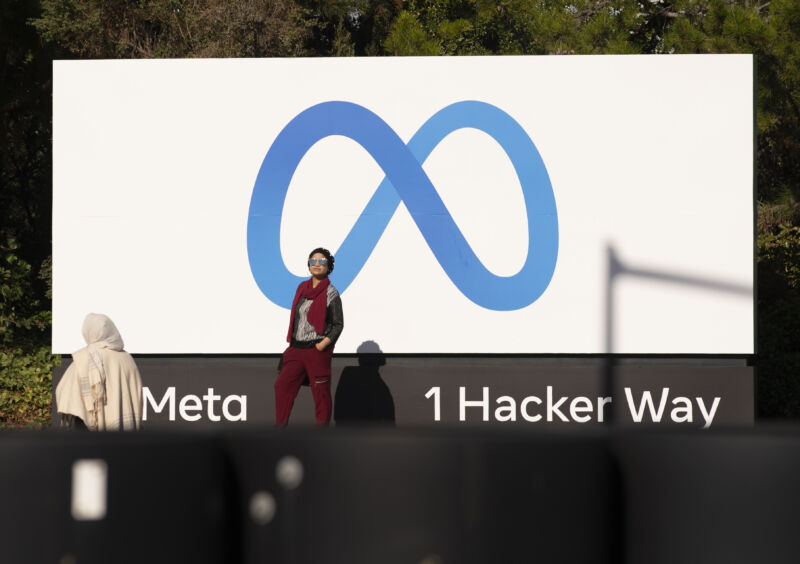
But the metaverse would take years to realize, and Facebook’s problems were pressing. After enduring a month of unflattering revelations, Zuckerberg announced that Facebook was renaming itself as Meta.

While the decision wasn’t a surprise, its timing was. The company seemed ill prepared for the change, and investors have speculated that the company rushed the name change because of Haugen’s testimony. Indeed, to this day, Facebook press requests receive replies from “@fb.com” accounts. Perhaps the Meta rebranding is another distraction for an already distracted company.

Will “Meta” be enough to save the company’s reputation? That remains to be seen. Once companies reach the size that Meta has, they tend to have very long lives. What shape that life takes, well, that’ll be up to Zuckerberg to decide.

https://arstechnica.com/?p=1822143


Is the Network Effect Impacting Your Efficiency as an Entrepreneur?

Opinions expressed by Entrepreneur contributors are their own.

Social media has helped us build relationships with more ease. Platforms such as LinkedIn, Facebook and Instagram can add value to our lives if used correctly, while webinars, online workshops and online talk shows have connected the speaker and the participants. However, all these online exchanges have presented our generation with a problem.

Everyone on these social media platforms talks about mental health, fake news and the isolation effects due to the pandemic. According to the Australian Bureau of Statistics, 27% of Australians have very high levels of mental health distress than the rest of Australia (18%) in June 2021. ABS recorded that one in three young adults in Australia faced higher psychological distress than older Australians (aged over 35 years) in the same survey.

Undoubtedly, social media is not all it promised to be. In fact, there is a phenomenon that occurs when you scroll through your social media feed, and you don’t even know it: the Network Effect.

What is the “Network Effect” in marketing?

The Network Effect is a phenomenon whereby an increased number of users or people affect the increased value proposition of the service or good. For example, Instagram Reels is the latest marketing trend on social media. In the beginning, everyone was skeptical of Reels as it was inspired by TikTok’s idea of short-form entertainment content. However, as the popularity of Reels grew among people and they started to share value to their followers on Instagram, the value proposition of Instagram as a content-sharing platform grew.

People understood the distinction between Instagram Reels and TikTok’s concept and started using each service in a distinguished manner. This chain of user engagement and popularity of Reels created an effect on each user to understand the value of Instagram to share content and communicate new ideas. The new concepts in exchange gain more value for the platform and its users’ eyes through compounding thousands of new content every day by millions of existing and new users.

The multiplication of these new ideas and unique experiences causes a network effect. Users and creators understand the value of the platform through their algorithmic interaction of such content. But how does the Network Effect impact the daily business operations?  

How the Network Effect impacts your everyday business operations

According to media reports, 80% of B2B buying decisions were based on direct and indirect communication as customers. Additionally, only 20% of their decisions were based on the pricing and other logistics of a purchased product or service. In business, it is all about building relationships even outside of social media.

However, when entrepreneurs get immensely involved in social media marketing, they forget to retain their genuine business relationships in the real world efficiently. The virtual connections and networks form a delusional perception of developing networks in great numbers. As an entrepreneur, you should be aware of the consequences of losing your existing clientele.

Do your due diligence and know that you need to adapt to new technologies to operate your business. However, it is crucial to understand that millennials still prefer and enjoy communication outside of your Instagram or LinkedIn story updates. Add value to your social media customers and share and build relationships with your existing customer database.

So, how can you utilize and increase your efficiency as a master entrepreneur with a builder mindset and win-win communication strategies?

Here are five practical strategies for retaining your customers and not falling into the wagon of the bad side of the network effect.

1. Reach out to your existing customers

Call, message or set up an in-person meeting with your existing clientele. If the restrictions do not permit, set up a Zoom meeting but have a regular catch-up or casual conversation with your current customers. Ask them if they need any assistance — if not, then have at least a five-minute conversation.

Show interest in them as an individual. A simple old-fashioned chat can have an effect that is even deeper than saying hello through your social media stories. Many of your customers consider such outreach and problem assistance endeavors valuable.

Related: 5 Smart Ways to Use Social Media to Grow Your Business in 2019

2. Show up to various networking events

Webinars have been increasingly popular since the beginning of the pandemic, as the world shifts to the new normal of intense security and governance over the spread of the virus. Go to various meet and greet events in your city to network with new people or your potential customers. Reshape and restructure your existing clientele with these new connections formed at these networking events.

Related: 8 Simple Ways to Make Social Media Work for Your Business

3. Follow up with new connections

If you have had an interesting conversation with people at a networking event you attended, send a follow-up message. Most people, including busy entrepreneurs, appreciate simply sharing an interesting conversation. Show them that you are genuinely interested in having another discussion with them and make sure you can add value. A strong and connected network replaces hard selling in businesses.

4. Make your social media more personal and reflect your unique brand

Social media is a great tool to exercise your voice through your personal brand. Reflect your values, beliefs and mission to your community by communicating on your LinkedIn, Facebook or Instagram profile. Add your personal touch to most of your content.

As humans, we have an incredible power to hear the other person’s voice while reading a message from them. But this effect is only possible if you are close enough to the reader. Therefore, connect with your customers outside of your social media profile.

5. Listen to your customers and have a genuine interest in your conversation with them

Lastly, have a genuine interest in what the other person is saying. Today, everyone wants to talk and talk, but few want to listen. Everyone has found a platform to share their thoughts but lost their ability to listen and have genuine engagement with the other person. Listening can help you build a closer relationship with your existing and new networks. It will help you to achieve the voice effect mentioned earlier in the fourth point.

Social media has several perks, and the network effect is beneficial to businesses, entrepreneurs and customers. However, the negative side of the same coin is that it can create a false reality or a distorted perception of effective customer relationship management.

Use the power of social media for good, grow your relationships and create new opportunities for you and your business now and into the future.

Related: 10 Laws of Social Media Marketing

https://www.entrepreneur.com/article/398908


Woman lost @metaverse Instagram handle days after Facebook name change

Woman lost @metaverse Instagram handle days after Facebook name change
Liu Guanguan/China News Service

Thea-Mai Baumann had posted to Instagram using the @metaverse handle for nearly a decade when her account was disabled on November 2.

“Your account has been blocked for pretending to be someone else,” the app told her. 

Baumann wasn’t exactly sure what had happened, but the timing was curious. The account block came just days after Facebook had announced its new name, Meta. CEO Mark Zuckerberg said the name reflected the company’s new focus on its vision of the metaverse, a virtual world meant to facilitate commerce, communication, and more. Baumann’s @metaverse handle was suddenly a hot commodity.

This account is a decade of my life and work. I didn’t want my contribution to the metaverse to be wiped from the internet,” Baumann told The New York Times. “That happens to women in tech, to women of color in tech, all the time.”

In 2012, when Baumann started Metaverse Makeovers, she grabbed the Instagram handle @metaverse to showcase her art and technology. The Australian had created an app that would display virtual holograms over her company’s fingernail designs. She envisioned making an entire line of clothing and accessories that would be virtually augmented. After five years, funding ran dry and she began to use her Instagram account to promote her other work.

Baumann’s @metaverse account went relatively unnoticed over the years, attracting fewer than 1,000 followers. Then Facebook changed its name. 

On October 28, Zuckerberg announced the change in his Connect 2021 keynote, saying that the Facebook name “just doesn’t encompass everything we do.” Zuckerberg had been selling his idea of the metaverse for months, telling The Verge in an interview last summer that “the metaverse is a vision that spans many companies—the whole industry,” he said. “It’s certainly not something that any one company is going to build.” 

Baumann, with her years of experience running a company based around and named after the concept, would seemingly be an ideal partner in that venture.

After Zuckerberg’s keynote, Baumann started receiving unsolicited messages on Instagram, including some that offered to buy @metaverse from her. One person delivered a warning, though: “fb isn’t gonna buy it, they’re gonna take it.”

It’s unclear whether Meta/Facebook had anything to do with Baumann losing access to her account. Baumann attempted to verify her identity with Instagram, but she didn’t receive a reply for weeks. She tried working with an intellectual property attorney to see what rights she had to get her account back, but she couldn’t afford their services.

Once a journalist got wind of the story, though, things changed. On December 4, two days after a New York Times reporter contacted Meta about the account, Baumann suddenly regained access to @metaverse.

“This account was incorrectly removed for impersonation, and we’ve now restored it,” Stephanie Otway, a Meta company spokesperson, told Ars. “We’re sorry that this happened.”

Baumann’s experience could have a chilling effect on companies’ and individuals’ willingness to participate on social media for fear of having their online identity arbitrarily seized. “Facebook has essentially unfettered discretion to appropriate people’s Instagram user names,” Rebecca Giblin, director of the Intellectual Property Research Institute of Australia at the University of Melbourne, told The New York Times. “There can be good reasons for that—for example, if they’re offensive or impersonating someone in a way that causes confusion.”

“But the @metaverse example highlights the breadth of this power,” Giblin said. Users “essentially have no rights.”

https://arstechnica.com/?p=1820222


5 Ways Entrepreneurs Can Harness Social Audio

Opinions expressed by Entrepreneur contributors are their own.

You’re reading Entrepreneur United States, an international franchise of Entrepreneur Media.

Social audio suddenly seems everywhere. According to Sensor Tower, which tracks the global app economy, social audio app installs rocketed to 20 million in the first four months of 2021. As a result, venture capitalists are flocking to the space; in April of this year, Andreessen Horowitz led a Series C funding round valuing Clubhouse (a voice-based social network) at $4 billion, though many are wary of the investment. Smaller startups with trendy names — including Wavve, Riffr, Spoon and Beams — are scrambling to grab market share before it’s gobbled up.

These social audio apps have obvious appeal; much of the world has been in and out of quarantine for nearly two years now and we long for spontaneous connection… unscripted and unpredictable interactions, and an app like Clubhouse was well-positioned to answer these needs. Audio formats generally have been increasingly popular and lucrative in recent years: witness Spotify’s pivot to podcasts, acquiring Gimlet for a cool $230 million.

Investors and entrepreneurs who are wary of flashes in the pan, however, will (and likely should) be cautious in approaching just any form of social audio. Some warn that it is a pandemic trend and will lose steam as Covid-19 is crested, leaving investors holding the bag. It’s vital to ask, of course, what aspects of this current revolution are truly valuable, and which companies will likely endure, but in the meantime, there are immediate ways entrepreneurs can capitalize on it.

Related: The Social Audio Boom and How You Can Take Advantage of It

1. Connect directly to customers

Businesses need to form the bonds that create brand loyalty over time, yet too often, the current infrastructure for doing so is burdensome for them and irritating for customers. The latter group certainly, for example, doesn’t enjoy navigating a complex phone tree to speak to a human being, and owners may not thrill to the hiring and training a work force to serve customers, but social audio provides an opportunity to connect directly with them. So, instead of a call center, consider having clients send your team voice memos paired with visuals to easily communicate concerns and suggestions, as well as what they love about your service.

2. Amplify customer voices

Everyone at least pretends to cling to the adage, “We listen to your voice; our customers are our partners”, but smart companies do more than that. They foster collaborations, built through the responses of real consumers articulating concerns and desires. With the rise of social audio, it’s easier than ever to listen to these people: within minutes, you can collect hundreds of thousands of responses to products, ideas and vision. Of course, if you have thousands of hours of voice memos to sift through, you’ll need to dedicate precious time and staff to cataloguing and interpreting them, and audio introduces an additional challenge — having to figure out what a tone of voice might mean without meeting the person. 

Related: Is Audio the Future of Social Media? Twitter’s Jack Dorsey Thinks So.

3. Connect with a suite of services

It’s clear that social audio creates unprecedented opportunities for entrepreneurs and customers, but the barriers to using it effectively can be high, not least having to digest a cloud drive full of voice memos before their applicability clock runs out.

On its own, social audio isn’t enough: it needs to be paired with other services. For instance, B2B companies like Rev.com provide transcripts for audio files, but aren’t designed for consumers or social collaboration. We designed Biograph to democratize voice-to-text technology; the associated app provides free, searchable transcripts of any audio file you record, which is helpful for gathering real-time feedback from your customers and staying organized 

4. Make the future accessible

Silicon Valley is not famous for its empathy. Cutting-edge AI technologies have been trained on biased data sets, according to whistleblower Frances Haugen; as she testified on Capitol Hill, Facebook doesn’t even employ people who can read all the languages used on its platform, so it’s no surprise that moments of insensitivity have marred the rise of social audio. Witness Twitter’s recent foray into voice tweets. The company bet that audio would be inherently more accessible for users, but of course, it excludes deaf and hearing-impaired users, who swiftly criticized the company. The result was that an ambitious move into an expanding market backfired, costing public goodwill. The takeaway is that to build a truly inclusive space on the Internet, social audio apps must bundle with captioning and transcription services. Twitter learned that the hard way.

Related: 5 Ways Entrepreneurs Can Shape the Future of Social Media

5. Think beyond the MP3

As the pandemic (hopefully) continues to wane, people might find themselves less willing to spend hours hanging out on Clubhouse. Investors and entrepreneurs are wise to consider the future, then build services that combine the best aspects of social audio apps with other realities about how human beings communicate and connect. Yes, voice might be the oldest and most immediate form, but writing can be at least as powerful, and a combination of the two can be electric, and dynamic.

The history of social media suggests that such combinations are coming. Social media apps grow and change by folding in the services of their competitors. When Snapchat cut into Instagram’s market share, Instagram Stories gave users the thrill of Snapchat without having to leave the app. More recently, Instagram’s Reels copied TikTok. When the dust settles, suite-of-services apps will be the more likely to survive — ones that unite the features of audio-based and text-based platforms, from journals to podcasts, text messages to voicemails.

https://www.entrepreneur.com/article/398635


7 Instagram Reels Ideas to Better Connect With Your Audience

Opinions expressed by Entrepreneur contributors are their own.

You’re reading Entrepreneur United States, an international franchise of Entrepreneur Media.

Launched in August 2020, Instagram Reels has been getting a lot of attention from creators. As a competitor to TikTok, it provides the opportunity to create short and sweet videos that are packed with entertainment and value. As a result, many of those who use this feature have seen more reach and engagement. Those aren’t the only reasons to use Reels though. It’s also amazing for building strong connections.

The key to getting those coveted results is knowing how to use Reels as part of your brand’s overall content strategy. However, it can sometimes be challenging trying to generate ideas for yet another form of content. To help you get started, here are a few Instagram Reels ideas you can try that will help you connect with your audience.

1. Introduce your brand

Because Instagram Reels is a powerful way to get in front of an entirely new audience, it’s smart to create videos that introduce your brand to those people. Let them know who you are and what your brand is all about. Mention your offers and what they can expect from you content-wise so they’ll want to follow your account. Consider this the perfect opportunity to tell your brand story. Since Reels can only be one minute long at this time, you’ll have to keep it short and sweet, but feel free to add extra information in your caption.

Every so often, you may want to create an updated introduction Reel. Not only will it generate more exposure for your brand, but it’s great for re-introducing yourself to existing followers so your brand can be top-of-mind. To make this effective, infuse your Reels with a personality to draw people in and make them fall in love with what you do.

2. Allow team members to introduce themselves too

While you’re introducing the brand as a whole, get your team members in on the action as well. Everyone wants to know the faces behind the logo, and Instagram Reels is perfect for doing quick introductions. Have your team members record a video where they share who they are, what their role is within the brand, and even a few fun facts. It’s the best way to strengthen connections as people get to know your brand and everyone involved.

Related: Shorter Videos Are In Demand. Here’s How Different Social Media Platforms Are Reacting.

3. Give a behind-the-scenes look into your day

Everyone’s a little curious, right? That’s why we love consuming content that gives us a behind-the-scenes look into the lives of other people. While YouTube vlogs and Instagram Stories are usually the go-to for this type of content, Reels can fit the bill too.

Offer a look into what an average day in your life is like by filming short clips and compiling them into one video. You can focus on daily routines, as well as the types of tasks that are usually on your work to-do list. This is great for building the all-important Know, Like, and Trust Factor because it allows viewers to get to know and like you on a deeper level.

4. Generate interest with a sneak peek

If you’re working on something new, like a product or service, it’s smart to get people excited about it beforehand. Doing so can help drive more sales once it finally launches. While you’re still in the early phases of bringing your project to life, build interest by sharing snippets. If it’s a course, walk them through the curriculum. For services, let them know which pain points it’ll be addressing and the transformation they can expect to receive. They’ll be eager to purchase when the cart opens.

5. Share a quick tip or tutorial

Educational content that speaks to the needs of your target audience is always a win. And the great thing about Instagram Reels is that it allows you to deliver value quickly and easily in under one minute. Consider the biggest pain points your audience struggles with and how you can help them. Share simple tips they can implement that will drive big results.

Alternatively, you can share a tutorial that provides a few steps on how to do something or how to use a product you offer. Just make sure the Reel itself provides all the information the viewer needs. You can share more details on the caption though if needed.

Related: 4 Reasons Why You Need to Be Making Instagram Reels in 2021

6. Address burning questions

Are you always getting asked the same questions by your followers? Create a Reels series where you answer the questions you’re asked most frequently. It can be something about your brand, tools you rely on in business, or anything else that comes up often. Then, whenever the question comes up again, you can direct them to watch your Reel that addresses it. It’s super easy, plus it can generate more engagement for that particular Reel, which is definitely a win.

7. Highlight client testimonials

And finally, if you want to establish trust, it would be wise to share testimonials from past clients. This is a fantastic way to showcase what you have to offer people who are considering purchasing one of your products or booking a service. When they see the results that others have gotten, they’ll feel more confident in purchasing since they’ll believe those same results are possible for them as well.

For Instagram Reels, choose one particular client that you want to highlight and tell the story of the transformation this client has made after working with you. Be sure to tag their Instagram account as well so viewers can go check them out. Plus, they’ll be more inclined to share it with their audience. This kind of social proof is ideal for driving sales.

These Instagram Reels ideas can work for you no matter what type of business you’re running. Just be sure to have fun and let your personality shine through in the Reels you create.

Related: 6 Tips on How to Use Instagram Reels to Grow Your Brand

https://www.entrepreneur.com/article/395539


Judge tears apart Texas social media law for violating First Amendment

US and Texas flags seen in daytime outside the Texas State Capitol Building.
Enlarge / US and Texas flags flying outside the Texas State Capitol building in Austin.
Getty Images | PA Thompson

A federal judge yesterday blocked a Texas state law that bans “censorship” on social media platforms, ruling that the law violates the social networks’ First Amendment right to moderate user-submitted content.

“Social media platforms have a First Amendment right to moderate content disseminated on their platforms,” Judge Robert Pitman wrote. He found that the Texas law “compels social media platforms to disseminate objectionable content and impermissibly restricts their editorial discretion” and that the law’s “prohibitions on ‘censorship’ and constraints on how social media platforms disseminate content violate the First Amendment.”

Pitman’s ruling granted a preliminary injunction requested by tech industry groups NetChoice and the Computer & Communications & Industry Association (CCIA), which sued Texas in US District Court for the Western District of Texas. Facebook, Google, Twitter, and various other tech companies belong to the groups.

The injunction prohibits the Texas attorney general from enforcing the law. The judge found that the plaintiffs are likely to succeed on the merits of their case, a prerequisite for granting a preliminary injunction.

“Replete with constitutional defects”

Pitman rejected a severability clause that aimed to save parts of the law if the rest was invalidated. He found that nothing can be severed from the law and survive because the unconstitutional portions are “replete with constitutional defects, including unconstitutional content and speaker-based infringement on editorial discretion and onerously burdensome disclosure and operational requirements.”

“This ruling upholds the First Amendment and protects Internet users,” CCIA President Matt Schruers said yesterday. “Without this temporary injunction, Texas’s social media law would make the Internet a more dangerous place by tying the hands of companies protecting users from abuse, scams, or extremist propaganda… The First Amendment ensures that the government can’t force a citizen or company to be associated with a viewpoint they disapprove of, and that applies with particular force when a state law would prevent companies from enforcing policies against Nazi propaganda, hate speech, and disinformation from foreign agents.”

When Texas Gov. Greg Abbott signed the bill in September, he claimed the law is needed to protect Texans’ First Amendment rights against “a dangerous movement by social media companies to silence conservative viewpoints and ideas.” Florida tried to impose a similar social media law but it was also blocked by a federal judge for violating the First Amendment.

Parler and Gab excluded from law

Under the Texas law, a platform that labels a post as misinformation “may be discriminating against that user’s viewpoint by adding its own disclaimer,” Pitman wrote. The law thus “restricts social media platforms’ First Amendment right to engage in expression when they disagree with or object to content.”

The threat of lawsuits for violating the state law “chills the social media platforms’ speech rights.” Pitman also found that the law’s disclosure and operational requirements impose burdens on social media platforms’ editorial discretion, and that the law “discriminates based on content and speaker.”

Pitman noted that Texas lawmakers excluded conservative social networks Parler and Gab by applying the law only to platforms with 50 million or more monthly active users in the US. One state senator “unsuccessfully proposed lowering the threshold to 25 million monthly users in an effort to include” sites like Parler and Gab, Pitman wrote.

https://arstechnica.com/?p=1817628