Your Digital Team Is Sitting On Some Game-Changing Insights. Here’s How to Take Advantage of Them.

Opinions expressed by Entrepreneur contributors are their own.

You’re reading Entrepreneur United States, an international franchise of Entrepreneur Media.

The importance of digital to your organization’s success can’t be overstated. And yet I repeatedly encounter large brands — who should really know better — making mistakes with their digital teams. 

Why does this keep happening? From a distance, it seems like digital teams aren’t always the best advocates for digital operations. Because if they were better at self-promotion, they would know they’re sitting on all kinds of valuable consumer and brand presence insights that any company would want to leverage. 

Conversely, it may also be that digital is constantly sharing relevant data, but these reports are not going to the right people. Either way, your organization is at a significant disadvantage when your digital operations aren’t aligned with your broader business strategy. 

Here are five immediate ways you can start to narrow the gap between digital and your other teams.

1. Integrate digital throughout your operation. 

When leaders talk about silos developing in organizations, they often point to marketing and sales teams — which in bad scenarios can operate independently of one another, and in really bad scenarios will actually compete against one another. In my experience though, the single most misaligned department is often digital, which can fall under the purview of marketing, communications, or even brand divisions.

It should go without saying that keeping digital in silos — or worse yet, simply forgotten — is a huge mistake. The digital team should have direct lines of communication with all operational functions: fulfillment, talent acquisition, customer success, as well as sales and marketing. This is because the feedback the digital team collects from customers could be relevant to any of these divisions.

Here’s an example: Let’s imagine you’re part of the digital team for a beach resort and you see guests repeatedly complaining about the availability of umbrellas at your beach café. These comments are showing up everywhere, from comments on your Instagram photos to Yelp and TripAdvisor reviews.

In a broken, siloed organization, these social media insights are shared only within the marketing team. This team will brainstorm public-facing comments and discuss whether to delete the comments. But that’s the extent of it.

In an optimized organization, marketing would share this insight with operations, and the conversation would be focused on how to get more umbrellas.

Related: How I Transitioned From a Solo Entrepreneur to a Team Leader

2. Audit your digital presence to see what information people see when they search for your brand online.

We tend to think of digital as capturing an organization’s website and social channels, but digital can and should reflect your entire web presence. This is especially true for top pages on Google search, as the information customers, reporters, and investors are seeing is far more important than any copy you’ve put on your “About Us” page.

Some questions to consider: 

  • What “related searches” does Google generate for your brand name?

  • Do searches for your brand generate a Google Knowledge Panel? 

  • Does the knowledge panel feature a Wikipedia article? 

  • Are your social channels showing up on the first page of results? 

  • Do you have a Glassdoor page? 

Now read those questions again and ask yourself who in your organization is currently responsible for monitoring that information. All of those answers are extremely relevant to your operation, which is why you need to ask your digital team to supply a quarterly report to leadership, including specific comments and feedback they see on digital channels.

3. Take action on feedback.

You can choose to look at negative feedback as a thorn in your side or as an opportunity to optimize your operation and delight customers and employees alike.

Glassdoor is maybe the best example of this. I can’t tell you how many organizations I’ve spoken with that have brushed aside negative reviews on their Glassdoor pages. You can’t expect to please every single employee, but in the same way that social media offers a direct line to customers, Glassdoor can be extremely useful for collecting unmitigated employee feedback.

Let’s say, for instance, you notice a sudden uptick of negative Glassdoor reviews — and can see that several of them are coming from the same location. Maybe the problem isn’t that employees there are complaining, it’s that you’ve got a clear HR problem in your Louisiana office that needs to be addressed. By ensuring that employees at this location are happy, you’re likely going to improve or maintain a high level of service as well.

Related: Digital Culture Strategies That Strengthen Winning Teams

4. Don’t be afraid to trim back your presence.

Do you still have a profile on Slideshare? On Vimeo? On FourSquare?

You might have forgotten about these accounts, but Google hasn’t. They could still be showing up on the second or third pages of search results for your brand. That’s why it’s important to actually deactivate these accounts, not just abandon them.

You may even want to trim back accounts like Facebook if they’re no longer an important part of your digital operation. Too many organizations keep these pages going even after engagement drops down to the single digits. If your customers aren’t finding you on Facebook and your profile there serves no purpose, consider just removing it and putting all of your attention on platforms that do move the needle.

5. Create one set of guidelines to rule all of digital.

Your organization probably has social media policies and guidelines for Facebook, Twitter, and Instagram.

But do you have a policy for posts on Reddit? On Glassdoor and other job review sites? How about Wikipedia? Having an employee “go rogue” on these platforms can cause all kinds of headache.

How do you address this? By explicitly covering other parts of your digital footprint with the same internal policies you have in place for social platforms. These rules don’t need to all be negative. You can (and should!) encourage employees to engage with your corporate content, share updates on their own LinkedIn profiles, or even post pictures of the office on the Google Business listing.

But these guidelines should also include responsibilities. You need to know who is in charge of monitoring, say, Glassdoor and Indeed and pass along summaries of recent posts.

With these five tips, you can start to see how “digital” is an invaluable channel — a two-way form of communication where you can learn from your most important stakeholders and improve your business in a meaningful way.

Related: These Digital Tactics will Improve your Team Culture

https://www.entrepreneur.com/article/380217



Texas law could force social media to host misinformation and hate speech

US and Texas flags seen in daytime outside the Texas State Capitol Building.
Enlarge / US and Texas flags flying outside the Texas State Capitol building in Austin.
Getty Images | PA Thompson

Texas Governor Greg Abbott yesterday signed a ban on social media “censorship” into law, imposing new restrictions on tech companies that are certain to spark a court battle similar to one happening in Florida.

Industry groups slammed the newly enacted legislation as “unconstitutional.” The law “seeks to punish social media companies for following policies that protect Internet users from dangerous content online,” according to the Computer & Communications Industry Association (CCIA).

The CCIA previously sued Florida to block a state law that would have made it illegal for social media companies to ban politicians. US District Judge Robert Hinkle sided with the tech industry in June, granting a preliminary injunction that blocks the law because it violates the First Amendment rights of companies that moderate user content on their online platforms.

“Unconstitutional and dangerous”

NetChoice, which sued Florida along with the CCIA, called the Texas law “unconstitutional and dangerous.”

“This bill abandons conservative values, violates the First Amendment, and forces websites to host obscene, antisemitic, racist, hateful, and otherwise awful content… By empowering the government to control online speech, HB 20 clearly violates the First Amendment,” NetChoice President Steve DelBianco said. “This law essentially creates a new Fairness Doctrine for the Internet which will only make it harder for conservatives to share their news and views online.”

The law only lets social networks ban hate speech if it involves “specific threats of violence.”

DelBianco said the Texas law “has the same First Amendment flaws as the Florida law that a federal court blocked this summer” and predicted that the “same outcome will almost certainly occur in Texas.” If it isn’t blocked by a court, the Texas law is slated to take effect on December 2.

The Chamber of Progress, a recently formed industry lobby group, said the Texas law “prohibits social media companies from removing content based on the ‘viewpoint’ of the user—even if that content violates the platform’s community standards. During debate last week, Texas Democrats offered amendments that would explicitly allow social media platforms to take down posts related to Holocaust denial, domestic and international terrorism, and vaccine disinformation. Republicans succeeded in defeating all three.”

The law will “put more hate speech, scams, terrorist content, and misinformation online, when most people want a safer, healthier Internet,” the group said. The lobby group’s members include Facebook, Twitter, Google, Amazon, Apple, and other companies that operate online platforms.

Gov. claims Big Tech censors “conservative viewpoints”

Abbott claimed that the law protects freedom of speech.

“We will always defend the freedom of speech in Texas, which is why I am proud to sign House Bill 20 into law to protect first amendment rights in the Lone Star State,” Abbott said in an announcement. “Social media websites have become our modern-day public square. They are a place for healthy public debate where information should be able to flow freely—but there is a dangerous movement by social media companies to silence conservative viewpoints and ideas. That is wrong, and we will not allow it in Texas.”

The Texas law labels social media platforms as “common carriers” and applies its restrictions to social media platforms with over 50 million active users in the US.

“A social media platform may not censor a user, a user’s expression, or a user’s ability to receive the expression of another person based on: (1) the viewpoint of the user or another person; (2) the viewpoint represented in the user’s expression or another person’s expression; or (3) a user’s geographic location in this state or any part of this state,” the law says.

The bill’s definition of “censor” is “block, ban, remove, deplatform, demonetize, de-boost, restrict, deny equal access or visibility to, or otherwise discriminate against expression.” The Texas attorney general or users can sue social media platforms that violate this ban and win injunctive relief and reimbursement of court costs, the law says.

Law applies to “maximum extent” allowed by Constitution

The law has exceptions allowing companies to censor any post that a “social media platform is specifically authorized to censor by federal law; is the subject of a referral or request from an organization with the purpose of preventing the sexual exploitation of children and protecting survivors of sexual abuse from ongoing harassment; directly incites criminal activity or consists of specific threats of violence targeted against a person or group because of their race, color, disability, religion, national origin or ancestry, age, sex, or status as a peace officer or judge; or is unlawful expression.”

The bill authors seemed to be aware that the Constitution limits how far they can go in regulating online platforms and that courts are likely to strike down parts of the law. “This chapter applies to the maximum extent permitted by the United States Constitution and the laws of the United States but no further than the maximum extent permitted by the United States Constitution and the laws of the United States,” the law says. The law also says that if any part “is found by a court to be invalid or unconstitutional,” the rest of the law shall still apply.

Besides the ban on censorship, the new law says that social media “sites must disclose their content management and moderation policies and implement a complaint and appeals process for content they remove, providing a reason for the removal and a review of their decision,” the governor’s announcement said. “They also must review and remove illegal content within 48 hours. House Bill 20 also prohibits email service providers from impeding the transmission of email messages based on content.”

https://arstechnica.com/?p=1793689


Danny Devito, Discord and the Future of Social Media

How Discord is making a push to go mainstream and become the future of social media.

September 4, 2021 4 min read

Opinions expressed by Entrepreneur contributors are their own.

What does Danny Devito have to do with the future of social media?

The actor appears alongside rapper/actress Awkwafina in an ad campaign for Discord. For the uninitiated, Discord is a messaging app designed for creating communities. Dubbed the “anti-facebook,” Discord has aspirations to be the future of online communities. Traditionally associated with gamers, their first major ad campaign is part of an effort to expand far beyond those roots. In short, Discord is looking to go mainstream. 

The six-year-old company has grown quickly. Discord has over 150 million monthly active users. Popular creators and influencers have rabid Discord communities. Digital events are using Discord as a way to host Q&As and discussions. Some companies are even eschewing Slack in favor of Discord. However, the app is most commonly used amongst close groups of friends. According to a recent interview, 90 percent of Discord servers “have less than 15 people, and that makes it more intimate.”

Related: Discord Bans Reddit’s WallStreetBets for Hate Speech as Scrutiny intensifies

Discord’s campaign is perfectly timed

More people are congregating and communicating around smaller, private online communities. Particularly younger consumers. According to Harvard Business Review, “even before Covid-19, Gen Z was eschewing traditional social media for ‘digital campfires,’ more intimate online destinations where they private message or connect either in micro-communities or larger shared experiences.”

So what’s prompting this shift? 

There’s the psychological appeal of private communities. Discord offers all of this. It allows for a stronger sense of community than open social platforms. Users can create ‘servers,’ i.e., private groups, where they don’t need to worry about the intrusion of outsiders in conversations. After all, not everything we want to discuss is meant for the entire world to see.

Related: 4 Ways to Build a Stronger Brand-Consumer Relationship Using Social Media

Avoiding the social media rat race

Joining a Discord server around your passion means it isn’t going to be corrupted by the typical social media rat race. There are no distractions in the form of chasing likes or followers. This preserves a sense of community. If you just want to chat with friends while playing Among Us or host a book club, why bother going to Facebook? Why open up these conversations to a larger audience? It only creates distraction.

An apt analogy would be comparing Discord to a house party. It’s a private and intimate affair. Whereas Facebook, Instagram, or Twitter are like a Vegas nightclub – filled with people showing off, clout chasing, and jostling for notoriety. 

Sure, they’re both parties, but they’re drastically different experiences. Beyond the psychological desire for more intimate communities, Discord users hope to free themselves from social media algorithms. If you grow an audience on a typical social platform, you’re building on rented land. You don’t own a direct line of communication with your community.

For example, on Instagram or Facebook, the platform controls the algorithm and who you can reach. With a tweak of the algorithm, your ability to reach that audience can be pulled out from under you.  In 2012 organic reach on Facebook was about 16 percent. Today, organic reach is down to less than 1.5 percent. That’s less than a tenth of what it was in 2012. 

Join Gen-Z around the “digital campfire”

To sidestep these algorithm influences, many popular creators and influencers invest in growing their own Discord servers. They want to be able to reach their audiences directly and have an open conversation with them. As a result, many of the most popular Discord servers are hosted by popular creators. For example, the YouTuber Mr. Beast has a server with over 700,000 members.

Marketers, creators, and community builders looking to future-proof themselves should take a moment to reflect – and join Gen Z around the “digital campfire.”

Related: The Ultimate Guide to Hiring a Social Media Manager


https://www.entrepreneur.com/article/379290


Jake Paul Was Living in a ‘Fantasy World’ as an Influencer in LA Until Boxing Changed His Life: ‘You’ve Got to Grow Up at Some Point’

August 27, 2021 9 min read

Opinions expressed by Entrepreneur contributors are their own.

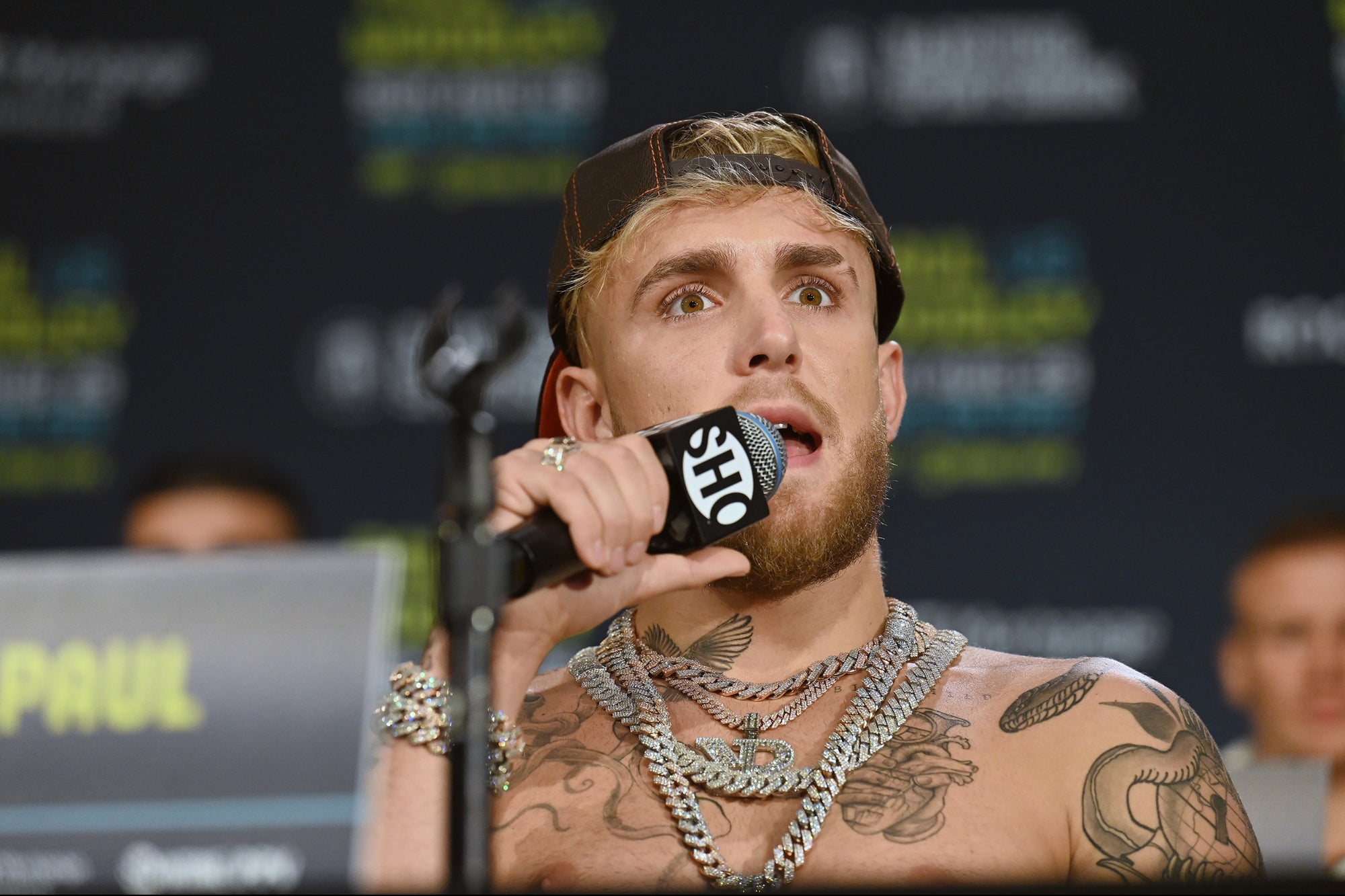
The first thing I said to Jake Paul when we sat down together at his home in Dorado, Puerto Rico was “thank you,” because he’s part of the reason I started boxing a few weeks ago. 

As someone who has dealt with ADHD since I was a child, the intense training has worked wonders on counteracting my symptoms such as depression and fatigue. Turns out research supports my anecdotal experience. 

New literature shows that, for people with ADHD, intense bouts of exercise that emphasize coordinated, repetitive movements — like jabs, crosses and hooks, sticking with our boxing example — lead to more coordinated, focused behaviors outside of the gym. 

A blessing for those of us with this disorder.

Although I didn’t ask Paul if he has ADHD, he did share with me that he’s dealt with anxiety and other mental health struggles, a fact that might have some of you scratching your head asking Why?

If you didn’t know, Paul is on the Mount Rushmore of influencers. At one time, his home was a 15,000-square-foot mansion in Calabasas, one of the richest zip codes in America. 

His net worth was estimated to be over $10 million in 2017, making him the seventh-highest-paid YouTube star in the world at the time, according to Forbes.

He amassed millions of subscribers and billions of views on his YouTube channel and was living a life most young people dream of (54% of Gen Z and millennials would become an influencer if given the chance, according to a report by Morning Consult).

Yet Paul still felt lost. Empty, even. 

Until he found boxing. And what’s it’s done for me, it’s done for him tenfold. It didn’t just alleviate his anxiety and resentment. It gave him purpose, meaning, structure and stability. Things we could all use more of.

“When you’re young, living in LA, filming videos all the time.. you’re friends with everyone… there’s a new party every single night… It’s chaotic. [But] it’s a dead end. It’s not a realistic lifestyle. LA is a fantasy world you can get caught up in,” Paul told me. “And I did. [But] when you’re getting hit in the face or hitting someone in the face, nothing else matters. All that matters is that present moment.”

Now, it’s not the millions of subscribers or billions of views that matter most to him. It’s the man standing across from him inside the ring. And this Sunday, August 29, he’s facing off against Tyron Woodley, a four-time defending UFC Welterweight champion. 

Yet Paul feels better than ever, primed and ready for the biggest fight of his life. 

Here’s what you can learn from Jake Paul’s transition from YouTube star to professional boxer, so you too can find more meaning and fulfillment in your life, all while eschewing your demons and bettering yourself.

Who knows? After reading this, you might be inspired to put on boxing gloves for the first time too.

(Paul’s responses have been edited and condensed for clarity and readability.)

[embedded content]

1. “Fall in love with the process.”

In Paul’s old life, chaos was commonplace. Every day was different. This made life exciting for him, but the joy was fleeting and eventually, the inconsistency got to him. 

Given Paul’s successes, hearing he felt this way hit me like a shot, as my life too has been defined by the highest of highs and the lowest of lows. What entrepreneur hasn’t experienced this phenomenon? 

And my peaks and valleys — your peaks and valleys — are nowhere near the size and scope of his.

Before long, Paul began to crave what all of us do as we mature: structure and stability. 

“You can’t live in a mansion with all of your homies, just partying every single day,” he says. “What are you going do when you’re 30? You’re going wake up and be like, ‘All right guys, let’s go to the club?’ No, you’ve got to grow up at some point.” 

Boxing forced him to grow up, take a hard look at himself and confront his flaws head on. But that grueling process gave him the structure and stability he longed for. 

And the bedrock of his structure and stability has been his day-to-day routine — his process.

“Learn to fall in love with those little improvements that you’re making [every day]; learn to fall in love with the art and the process. That’s one of our sayings as a team, because it can get repetitive when you’re doing the same thing week after week after week. So we find fun in the little moments. That helps everything. It doesn’t feel like a job, and it’s a healthier lifestyle [I live now].” 

Don’t try to cheat the process, because you’re only cheating yourself. Instead, acknowledge you will have to fight to get to where you want to be. Embrace the repetition, as therein lies the improvement.

Be courageous enough to look at yourself in the mirror, acknowledge your shortcomings and embrace the day-to-day challenges as you work to overcome them.

Look your problems in the eye for long enough, and solutions might look back at you.

2. “Enjoy the game of life.”

When I asked Paul about his future and how most people have a vision of working to retired and sit on a beach someplace, he acknowledged he felt that way once, too. 

Boxing changed all that for him. He realized life itself is what should be enjoyed, not the so-called retirement phase that comes at the end of it. “As a human, you’ve got to work for things. You’ve got to have a goal and you’ve got to have progress,” Paul says.

“I always had the thought that [one day] ‘Oh, I’m just gonna retire and go chill.’ But then I [was] like, ‘No, I enjoy the game of life, and I enjoy the chess match that we play every single day’. Getting and accomplishing our goals.. that’s really what’s fun. That progress keeps everything exciting. Now I think it would be boring to retire.”

As entrepreneurs, it’s easy for us to immerse ourselves in the metrics. That has its purposes, but it’s wise to take a step back and look at the bigger picture, too.

Life is a series of games, so why not make them games you enjoy? Don’t create a life you want to escape, run or retire from. Instead, create a life rich with challenges that amplify your actions with purpose.

3. “Bring excitement to the fight.”

Paul is polarizing. 

Just visit any social media post with his name on it, and you’re guaranteed to find ire and outrage. Paul acknowledges this. Hell, I’m prepared for it simply because I wrote this.

And although many boxing greats like Mike Tyson have said Paul’s transition to boxing has been good for the sport, many combat sports fans feel differently. 

But Paul continues to succeed. Why? Because he’s bold and brings excitement to his fights.

To paraphrase the great Robert Greene, who wrote in his classic The 48 Laws of Power, “The timid are frowned upon. You shouldn’t choose a course of action half-heartedly. Your doubts will become apparent and will tarnish your reputation. It’s always better to act boldly.” Despite the critics and naysayers, Paul remains bold in his actions. 

Be bold too, in your own way. 

“A lot of boxers are like, ‘He doesn’t deserve to be where he’s at or doing these big fights [because] he didn’t work like us,’” Paul says. “What people don’t understand is that I’ve been working since I was 10 years old… polishing my content skills, polishing my marketing skills, polishing my business skills. And that has set me up to where I am today. I was working just as hard, just in a different way.” 

“It’s been beneficial, because all of that just grows what I’m doing, and I’m able to get my message out there and market myself. And I think a lot of fighters see that, hopefully I can inspire them to maybe take a note from my book and be like, ‘All right, we need a YouTube channel, we need TikTok. We need to be [on Twitter], we need to bring excitement to the fight,’ versus just showing up and being a fighter.”

The takeaway here is to bring excitement to everything you do. As an entrepreneur, never underestimate your life experience because it doesn’t fit the mold or society’s expectations.

Paul has been written off by many because he was a content creator and marketer first. Unbeknownst to them, this is his greatest advantage, as it allows him to drum up excitement long before the fight starts. 

So, ask yourself: How can you leverage your unique life experiences to stand out, shake up your industry and keep things exciting, for yourself, for your customers — and for the spectators.

And if they write you off, so be it. 

They aren’t the ones writing the checks.

https://www.entrepreneur.com/article/382222


7 Facebook-Group Etiquette Tips for Business Owners

August 23, 2021 6 min read

Opinions expressed by Entrepreneur contributors are their own.

Facebook groups can be a beautiful thing, but too many people take advantage of Facebook business groups for their own personal promo. The work someone else put into creating, building and moderating a Facebook group can all be threatened by people who won’t follow the rules or even basic etiquette there. 

Here are six ways to use business Facebook groups the right way.

Read the rules and follow them

This seems basic, but group rules are there for a reason. If you don’t agree with the rules, don’t join the group or choose to leave the group later if they feel oppressive. If someone calls your attention to the rules in a nice way, don’t argue about the alleged infraction. Simply own up to it or ask for further clarification and move on. If a group owner or set of moderators has made a call that your post violates the rules, a back-and-forth argument isn’t worth your time or theirs.

Most entrepreneur Facebook groups have rules about promoting yourself. This can include your podcast episodes, your books, coaching calls, “free” offers, your website and more. If you’re not sure if something flies, ask the moderator. It shows respect and is a good chance to get approval for something that might otherwise get deleted out of context. When I do this as a group member, I liked to add, “This post was approved by Admin X” so it’s clear I’m not breaking any rules. 

Related: 4 Tips for Running Your Freelance Business as a Digital Nomad

Search first, then post 

If you’re new to a group, always use the search function before asking a question. Some groups get flooded with dozens of repeat questions, pushing engagement down. If it’s been a year since someone asked your question and the answers might be different, go ahead and ask again. But if you’re the 15th person this month to ask, “What’s the best book on retirement for business owners?” you’re not going to get great responses, either.

If you can’t find your topic in the search, it’s fair game! 

No shady promos

There are always a few people trying to skirt the “no promotions” rules. They think that by offering a shielded promotion they’ll get away with it. 

I kick a few people out of my group every single week for posting total spam offers or fraud, but the shady promos are often the most irritating (and, in my experience, more likely to get reported to me as a group admin when another member doesn’t want to call out the offending poster but recognizes it as spam or a promo). 

Your, “I just added 6,000 people to my Facebook group overnight; comment below and I’ll DM you my secrets” post isn’t fooling anyone. Neither is posting a question that you’re clearly asking to answer yourself. 

The golden rule applies: Don’t want Facebook groups ruined for you as a member? Do unto others. 

And finally, if you’re joining a group with someone who offers a similar service or product to you, this is not your chance to mine and poach their followers. There’s a big difference between giving value to that audience in something like a podcast episode or webinar and trying to add every group member as a personal friend on Facebook so you can pitch them. 

Don’t invite people to groups with rules 

Just about every Facebook group I belong to has multiple posts from a moderator about this topic. When you “invite” someone to a group from within the group, the questions/rules do not pop up for them. That means they’ll sit in group request purgatory or get outright declined. Instead, send your friend a link to the group itself so they can click “join,” read the rules and sign up to acknowledge them. 

Report posts that break rules 

No sense in piling on to a post and giving it more attention than it deserves when it breaks the rules. Report it to the moderators, who will get a notification and review the request. Only the moderator sees who marked the post as a problem, so this is an anonymous way of reaching out if you don’t want to call attention to the person or if you’re not really sure they broke a rule in the first place. 

Related: 6 Ways to Find Clients Online and Offline

Be respectful with ‘coffee chats’

Coffee chats are a nice way to connect and meet with other people, but they can also be a huge waste of time if not used properly. I joined a group once built entirely on the concept of the 15-minute coffee chat. The purpose was to meet other service providers we could refer business to. Half the people didn’t show up for their appointed time and spent their 15 minutes trying to sell me on their service or online course. Needless to say, I never referred any business to anyone from that group. 

If you’re going to do a coffee chat, truly connect with someone. This is not the place to word vomit all the paid offers you have and where they can buy them. If you sign up for a coffee chat with someone, show up on time and go in with the right intentions. 

If you join a lot of groups, make a spreadsheet 

Many groups do allow promotions on certain days. When these days pop up, there’s usually a post made by a moderator noting it where you can comment and share your offer like a blog post, podcast episode or lead magnet. It gets tough to keep track of, so use a spreadsheet to track which days of the week you can post things so it’s easy to follow those rules. You can even include a link to the group directly in the spreadsheet for quick access on promotional days. 

Now, go forth, be considerate and network!

https://www.entrepreneur.com/article/379090


The Ultimate Guide to Hiring a Social Media Manager

August 21, 2021 7 min read

Opinions expressed by Entrepreneur contributors are their own.

It’s no secret that social media marketing can help your business build brand awareness, connect directly with your target audience, drive more traffic to your products and services and increase revenue. 

The downside is that managing it all can be incredibly time-consuming.

If you want to be successful on social media, you’ll have to show up consistently. That means dedicating time to researching and developing strategies, creating and publishing content, having meaningful conversations with potential customers and analyzing your efforts. 

The social media landscape is constantly evolving in response to platform updates, new features and changes in user behaviors. Keeping up with it all can feel like a full-time job — and it is, for a social media manager.

Related: 5 Smart Ways to Use Social Media to Grow Your Business in 2019

A social media manager is responsible for ensuring your business stays top of mind with your target audience. They create and publish content, communicate with potential customers on your behalf and use their skills to help you reach your goals.

Outsourcing your social media workload to someone with knowledge and experience will allow you to spend your time on other things, like developing new products or services or hiring and training team members.

But where do you find a qualified candidate? And what exactly should you be looking for?

Identify your business needs

There’s no one-size-fits-all solution when it comes to hiring a social media manager. Your business’s specific needs will ultimately determine who you choose for the position and what tasks they’ll be responsible for. 

To get started, answer the following questions:

  • Do you need a full-time employee, part-time employee or a freelancer?

  • Do you want to work with an individual or an agency?

  • Should they be local, or can the position be handled remotely?

Then get specific about what you want your social media manager to do:

  • What are your objectives and goals for using social media?

  • Which platforms will they be responsible for?

  • Are you interested in organic strategies, paid advertising or both?

  • Will this role require knowledge of tasks that fall outside of general social media management (ex. email marketing, influencer marketing, SEO, etc.)?

Keep in mind, a jack of all trades is typically a master of none. Each social media platform requires a different set of skills. It’s not easy to find someone who’s an expert in them all. 

In fact, it’s not unusual to find social media managers who’ve decided to focus on specific platforms or services, like Facebook and Google ads, influencer marketing or Pinterest. 

Social media managers typically have to wear multiple hats, but you shouldn’t expect to hire a single individual who can achieve your desired results while simultaneously juggling your Facebook, Instagram, TikTok, Twitter, Pinterest, YouTube, LinkedIn and Snapchat accounts. That’s a pretty tall order, even for the most experienced social media marketers.

If you need someone to manage multiple channels or handle tasks that fall outside of traditional social media management — like content marketing, email marketing or SEO — consider working with an agency instead. Boutique social media agencies can offer more support and a wider range of services than an individual can by delegating the heavier workload to their team of social media managers, content creators and platform specialists.  

Of course, your budget will be a deciding factor in who you ultimately hire. When determining your budget for social media management, remember to plan not only for the cost of your social media manager’s salary or retainer fee, but also for any additional costs related to your social media marketing efforts — like ad spend, influencer fees, contests and giveaways.

Related: 10 Tools for Social Media Managers in 2020

What to look for in a social media manager

Since the industry is always changing, many social media managers will make an effort to invest in ongoing education by completing courses and acquiring certifications. Ask your candidates what sort of training they’ve had that makes them qualified for the position and request to see real world examples of their experience in the form of portfolios and case studies.

Case studies are one of the best indicators of a social media service provider’s strategic abilities because they showcase a specific, measured result that the service provider achieved over a period of time. This highlights their ability to plan and execute social media marketing objectives effectively. Of course, you can also request to see references, client testimonials and other types of social proof that illustrate the service provider’s experience.

Additionally, consider the candidate’s knowledge or interest in your business’s industry. There are many social media managers who’ve chosen to work within specific niches in order to streamline their offers and support clients in a more impactful way, and this can help narrow your search. 

For example, there are social media managers who only work with businesses in the wedding industry, pet industry or with beauty brands. Niching down to only support specific kinds of businesses gives these service providers an edge over more general social media managers. They come with a deeper knowledge and hands-on experience around what works within that particular industry. 

How to find the right social media manager

Once you’ve determined what skills and experience level you’re looking for in a social media manager, it’s time to start your search. There are two ways to go about finding the right candidate. 

The first option is to share the role directly and let interested candidates come to you. To do this, you’ll first want to create a detailed job description which outlines all of the job’s requirements and responsibilities. Post the job description directly on your company’s website, as well as on its LinkedIn page and social media channels. Make sure to include clear instructions around how you want candidates to apply, which makes it simple for them to contact you.

You can also list your job description on third-party career websites where social media managers are frequently looking for new opportunities. These sites provide a convenient secondary option for finding a social media manager by providing you with a simple way to search through listings and contact social media managers.

You can actively search for social media managers and list your opening on sites like Upwork, Freelancer and The Social Media Manager Market. Instead of passively waiting for the right candidate to discover your opportunity, you can also reach out to the freelancers and business owners listed on these directories and career websites to get the ball rolling. 

Going into your search with realistic expectations and a clear understanding of the skills and experience level you’re looking for should make hiring a social media manager for your business a much more enjoyable task.

Related: Social Media Managers Are the Next Generation of CMOs

https://www.entrepreneur.com/article/378459


Facebook reveals top posts but still won’t share key data about disinformation

Facebook reveals top posts but still won’t share key data about disinformation

Facebook released its first report today detailing which content it says is widely viewed on the site and Instagram. The report comes as research and news stories have highlighted how misleading posts and outright disinformation can draw intense engagement on the company’s platforms.

Much of the scrutiny has focused on far-right accounts, which according to Facebook’s own tool, CrowdTangle, receive the most engagement—likes, shares, and comments. For example, Kevin Roose, a reporter at The New York Times, uses CrowdTangle to tweet out a list of the “10 top-performing link posts by US Facebook pages every day, ranked by total interactions.” His experiment has revealed that, day after day, far-right accounts and pages from the likes of Ben Shapiro, Dan Bongino, and Newsmax appeared on the list, sometimes occupying multiple spots. Facebook’s critics have pointed to the list as evidence that the platform has become a right-wing media machine.

The Twitter account, Roose said, “drove executives crazy” at Facebook. They felt it was making Facebook look like it favored right-wing accounts. All of that brings us to today.

Facebook released the first of what will be a quarterly “Widely Viewed Content Report.” The report will appear alongside the company’s Community Standards Enforcement Report, an existing release that includes data on hate speech and child endangerment. The newest report is Facebook’s attempt to provide more “transparency and context,” said Anna Stepanov, the company’s director of product management.

The new report shows a slew of information, including which domains, links, pages, and public posts cracked the top 20, along with how many people saw that content. In a blog post, Stepanov pointed out that just under 13 percent of content views were posts with links—post types that may send users to other sites with disinformation—and that 57 percent of posts users viewed were from family and friends. Notably, the report does not include data on ads.

Scattered among the top posts are the expected meme questions (e.g., “What is something you will never eat no matter how hungry you get?”), a Joe Biden post, and how to DIY a swimming pool from old pallets.

Domains that received the most views are another significant part of the report, and here, Facebook could use more transparency and context. Among the top 10 domains are sites that have struggled to tame disinformation themselves, including YouTube and Twitter. The report doesn’t include any additional information like which channels or accounts the posts pointed to.

Partial picture

In focusing on views over engagement, Facebook is only providing part of the picture. As anyone who has used Facebook knows, there’s a significant difference between content appearing on a user’s news feed and their engaging with it. Many posts are displayed but quickly scrolled past. Those that draw engagement, though, are literally worth more. Advertisers will pay 10 times more for one engagement than they will a single view. By withholding information about engagement, the “Widely Viewed Content Report” obfuscates the impact of the disinformation.

The fact that family and friends are a primary generator of content doesn’t help counter the idea that Facebook might be reinforcing partisan echo chambers. One study showed that when a headline agreed with a person’s political views, the person was 20 percent more likely to share the link with friends, whether or not the person felt the information was true.

The way that Facebook calculates “widely viewed” is complicated, too. Only posts that are created or shared publicly are considered and shown in the report. All links, though, whether shared publicly or privately, are included, creating a misalignment in reporting the two different post types.

The report also omits what might be the most important number—the denominator that underlies these percentages, or the total amount of content that is viewed on Facebook every day. Saying that the 20 most widely viewed posts represent less than 0.1 percent of all US views is like saying only 0.03 percent of Americans got COVID yesterday. That may not seem like a lot, but when you multiply that number by how many people live in this country and when you consider the number of available hospital beds, the scope of the problem comes into sharper focus. Ars asked Facebook how much content was seen by users in the US, but the company refused to provide that information. Until Facebook discloses more data, no one will know the true extent of the company’s disinformation problem.

Still, it’s easy to make a quick-and-dirty estimate. Facebook has 1.88 billion daily active users, and many post several times per day. So there are likely tens of billions of content views per day. To pressure test that theory, I tallied the report’s top 20 posts, which the report said represent about 0.1 percent of all content viewed in the US, and then spread it out over the 91 days in the second quarter. The math suggests that, at a minimum, at least 10 billion posts are viewed every day in the US. Even that estimate is probably extremely conservative since it includes only links and public posts. If just a tiny fraction of that number is disinformation, the problem could be small as a percentage, like the report suggests, and simultaneously enormous in absolute terms.

https://arstechnica.com/?p=1788178


Rand Paul, Marjorie Taylor Greene suspended from social media for COVID disinfo

Rand Paul, Marjorie Taylor Greene suspended from social media for COVID disinfo
Getty Images (Tom Williams / Drew Angerer)

Two lawmakers have received temporary account suspensions from YouTube and Twitter over their repeated posting of COVID-19 disinformation, yet videos from both espousing similar disinformation remain on Facebook.

On Tuesday, YouTube removed a video posted by Sen. Rand Paul (R-Ky.) in which he falsely claimed that masks were not effective in preventing the spread of COVID-19. Also yesterday, Twitter suspended Rep. Marjorie Taylor Greene (R-Ga.) for one week after she falsely claimed that neither vaccines nor masks reduce the transmission of COVID. Both masks and vaccines do work, in fact, and there’s ample evidence that wearing masks slows the spread of the disease.

Paul and Greene are suspended from YouTube and Twitter, respectively, for one week. Paul’s suspension was handed down because YouTube had to remove another one of his videos last week. As this is his second offense, his account will be unable to publish for seven days. Greene is now on her fourth strike on Twitter, meaning that another violation could result in her being banned from the platform permanently.

Vaccines for COVID-19 have been very effective in reducing infections, even in the face of the delta variant. In a new preprint study, both Pfizer and Moderna vaccines helped prevent hospitalizations in people exposed to delta. And while they weren’t quite as effective at preventing infections by the new variant, they are still a good tool in reducing the spread of the disease. 

Furthermore, masks, even cloth ones, have been shown to be effective at slowing the transmission of COVID-19. With delta on the rise, masks remain an option for people—vaccinated or not—to reduce exposure and halt the spread of the virus. The CDC is recommending that everyone in areas of substantial or high transmission wear one indoors.

One down…

While YouTube took down one of Paul’s videos, it has yet to remove another in which the senator questions the efficacy of masks despite the evidence that they work. That video, from August 5, is a reposted segment from Fox News in which he said, “The more [mask] mandates we got, the more of the disease we got. Now, I don’t think the mask caused the disease, but I don’t think the mask helped any.” We’ve asked YouTube for comment on why that video remains up while the other was taken down, and we’ll update this story if we receive a response.

Sen. Rand Paul, in a Fox News segment he reposted on YouTube and Facebook, falsely claimed that masks are ineffective at slowing the spread of COVID-19.
Enlarge / Sen. Rand Paul, in a Fox News segment he reposted on YouTube and Facebook, falsely claimed that masks are ineffective at slowing the spread of COVID-19.

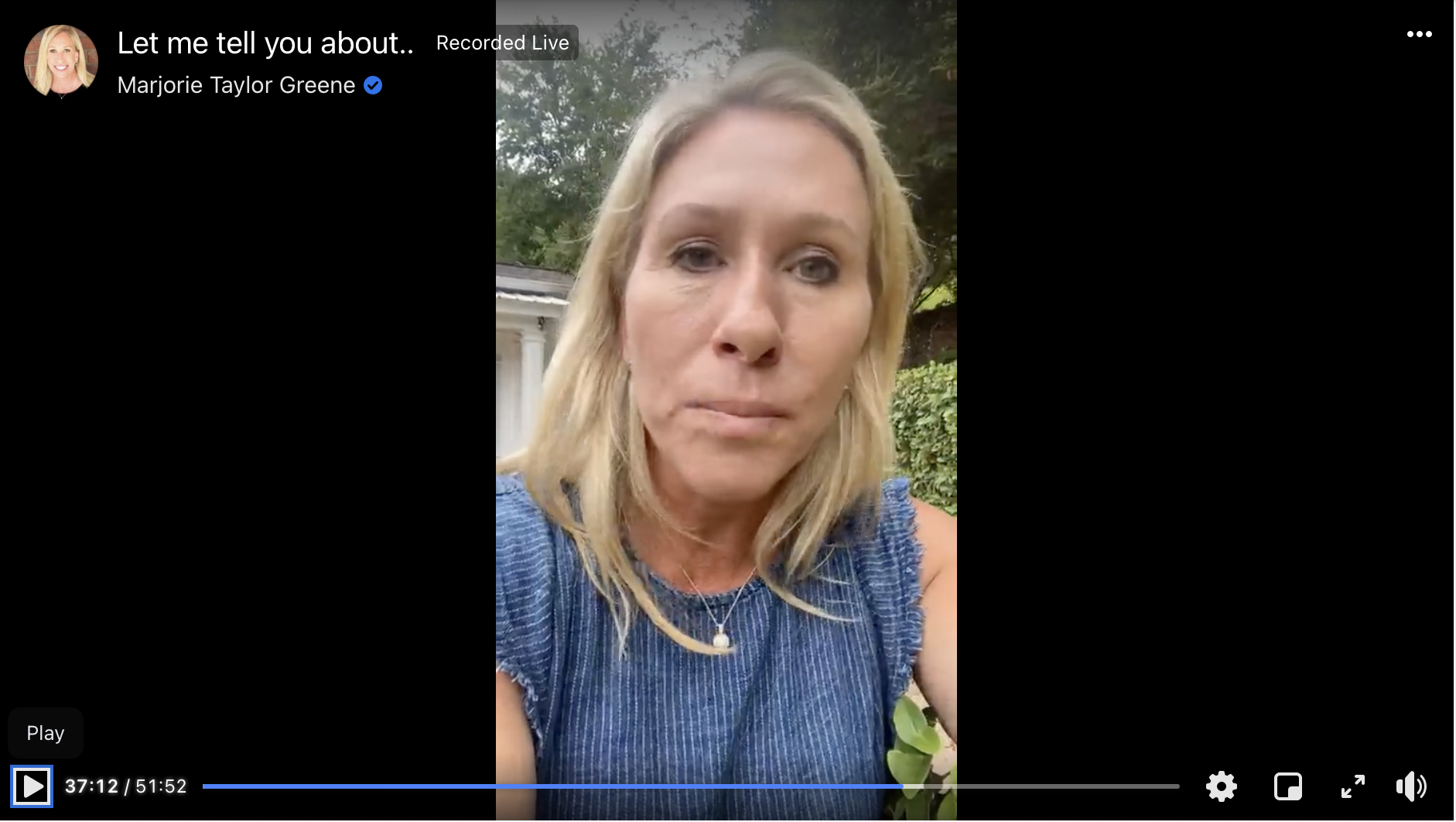
Both Paul’s and Greene’s Facebook accounts remain active, though both include videos that rehash similar disinformation about masks. On his Facebook page, Paul reposted the same Fox News segment that remains on his YouTube page. Greene recorded a live video on August 2, which is archived on her Facebook page, in which she said, “You’re going to be arrested if you don’t wear a mask that, guess what, doesn’t work. It’s likely a little piece of cloth covering your face, or a napkin, like a paper mask—those don’t stop COVID from spreading, either.” Both videos remain on Facebook despite ample scientific evidence that masks prevent the spread of COVID-19.

Rep. Marjorie Taylor Greene falsely claimed that masks were not effective at halting the spread of COVID-19 in an August 2 live video on Facebook.
Enlarge / Rep. Marjorie Taylor Greene falsely claimed that masks were not effective at halting the spread of COVID-19 in an August 2 live video on Facebook.

We asked Facebook whether the two videos violate the company’s COVID-related misinformation policies, and we’ll update this story if we hear back.

Other bans

Yesterday, Twitter also permanently banned former San Francisco Giant’s player Aubrey Huff, also for repeated violations of the company’s COVID policy. Huff has become a minor player in far-right circles, frequently posting inflammatory content, downplaying the severity of COVID, and posting outright falsehoods about COVID vaccines. 

Earlier this month, SkyNews Australia, the country’s Fox News equivalent that is also owned by News Corp, was given a “strike” by YouTube, which meant the channel couldn’t post videos for a week. YouTube wouldn’t say which videos violated the platform’s policies, but a spokesperson told CNN that “we don’t allow content that denies the existence of COVID-19 or that encourages people to use hydroxychloroquine or ivermectin to treat or prevent the virus.” 

There’s no evidence to suggest that either drug does anything to help COVID-19 patients. Ivermectin is most commonly used to treat parasitic worm infections—not viral infections—and certain doses can be dangerous. The WHO halted its trials of hydroxychloroquine last year after results showed that COVID-19 patients received no benefit from the drug.

https://arstechnica.com/?p=1786420


Instagram’s Verification Self-Submission Form Update Allows for a More Complete Verification Request

Instagram quietly updated the self-submission form to allow users to attach more information to their verification request.

August 8, 2021 3 min read

Opinions expressed by Entrepreneur contributors are their own.

It has been nearly three years since Instagram, the video and photo sharing social networking service, introduced the in-app form for users to request a verified badge for their account. Recently the video and photo sharing social networking service quietly updated the self-submission form to request a verified badge. Now it’s allowing users to attach more information to their verification request substantiating their notability. 

What is a verified badge on Instagram?

Instagram explains that a verified badge is a blue check that appears next to an Instagram account’s name when searching for an account, or when viewing the account profile. This blue check next to an Instagram account’s name indicates that Instagram has confirmed that the account is the authentic presence of the public figure, celebrity or global brand it represents. The verified badge is a feature offered by Instagram that helps users find the real accounts of public figures and global brands that they enjoy, rather than an imposter or fan account.

In my opinion, a verified badge on Instagram or any other social media platform can be the instant credibility an individual or business needs that can increase viewership, conversions or conversation. Becoming verified on Instagram increases brand authenticity and creates social proof, a process which normally culminates over time for most individuals and brands. With an average of 1.16 billion monthly active users on Instagram, becoming notable enough to earn the blue check on the video and photo sharing social networking service should serve as a top priority for individuals and global brands offering a product or service.

Related: 15 Ways to Optimize Your Instagram Profile

What are the requirements to get a verification badge?

Instagram explains that the company reviews a number of factors when evaluating verification requests, determining if the account requesting the verified badge is authentic, unique and notable. Ensuring that your Instagram account does not violate ​​Instagram’s terms of use and community guidelines is important. Do not post content that may be flagged or taken down, as these policy violations will impact your chances of your account becoming eligible for a verified badge.

Related: 6 Instagram Marketing Strategies for Small Businesses

Old form and the updated form

Instagram launched its global verification form for notable public figures and brands in 2018, allowing users to submit the in-app form to request their account be verified. When initially introduced, the in-app verification form requested users to enter their full name and upload a photo of their valid government issued identification. Instagram further improved the form, allowing users to select a category that their account aligns with and an option to include their pseudonym. The updated verification request form now allows users to include who their general audience is. This added feature can be leveraged by creators within niche and micro-communities, which often consists of notable figures with dedicated audiences.

The second update to the Instagram verification request form allows users to attach up to 5 URLs to their request. This added feature allows users to include news article mentions, URLs to additional social media profiles or other URLs like a user’s Wikipedia page. Combined, these added enhancements to the Instagram verification request form are welcome features that allow users to submit a more complete verification request. Users of the video and photo sharing social networking service will be able to access the updated verification request form within the Instagram mobile application as it becomes available.

Related: How to Use Instagram’s ‘Hide Likes’ Feature

https://www.entrepreneur.com/article/377689


3 Simple Things Businesses Need for Instagram Growth

August 8, 2021 7 min read

Opinions expressed by Entrepreneur contributors are their own.

Most entrepreneurs would agree that real, engaging followers on Instagram are some of the most powerful audiences that you can build on social media. I’ve been helping business owners convert their dead Instagram accounts into multi-million dollar businesses for a few years now, and I’m starting to get tired of seeing snake-oil salesmen promote their “Instagram growth secrets.” I think it’s time to set the record straight when it comes to Instagram growth for businesses.

I’ll tell you this right now: There are no secrets. Growing on Instagram simply requires time, patience and hard-work. Whether you’re promoting your yoga classes or selling t-shirts, these tips will help launch your business forward on Instagram.

1. Post engaging content

One would think that this is the most obvious step that businesses are taking to get ahead, but this is where 90% of businesses fail. In order to properly grow on Instagram, a business must be able to post high-engaging content consistently.

Even if you don’t have a large audience at the moment, you should strive to get as many likes and comments per post as possible. Post engagement is what leads to growth on Instagram. Some people think they can simply post promotional material and earn their followers some other way — that’s not the case.

Here’s the hard reality business owners will face on Instagram: Nobody wants to see unnecessary promotional material on their feed.

Instagram users want to follow personalities. They want to follow identities. They want to follow content that delivers value. Most businesses will struggle to produce a personality worth following. If you’re struggling on Instagram, you should rethink your entire content strategy and ask yourself this question: Does my business have a likable identity or is it just a promotional face for my company?

Let’s say you run a coffee shop. It’s not enough to post your daily specials. It’s not enough to post pictures of your customers. It’s not enough to post pictures of your shop. That’s what every coffee shop in the world does, and that content likely won’t drive your engagement up.

You should experiment with every type of content and see what draws the most engagement. Create funny Instagram Reels with your baristas. Do a live stream of a latte foam art tutorial. Run a giveaway where people have to like and comment on your post to win a year of free coffee. If you truly want to stand out on Instagram, you’ll need to create a unique identity by producing high-engaging content. If you notice a piece of content that received unusually high engagement, try to replicate that success.

The Instagram algorithm only works in your favor when your engagement is spiking. When Instagram realizes that your content is starting to get more attention from your followers, your account will get the exposure it deserves. Your account will then get pushed forward in hashtags, in locations, in similar accounts and in the explore page.

Related: 15 Ways to Optimize Your Instagram Profile

2. Follow high-quality accounts

Strategically following Instagram accounts is another key to success that is often seen as controversial. Many people have rejected the idea that the “follow/unfollow” strategy (when you routinely follow and unfollow Instagram accounts in an attempt to gain followers) is a valid growth method, but I believe it’s incredibly effective when done correctly.

Most people simply don’t use follow/unfollow strategically. At its core, this method should be used to instantly place your account in front of people who will support you. The follow/unfollow method should be used to build a base of engaging followers that will help you catapult your account into the eyes of more people. Instagram’s algorithms don’t favor smaller accounts as much as other social media platforms (such as Tik Tok), so using this strategy to build a core audience can help you grow your account exponentially later on with your engaging content.

Most people don’t do follow/unfollow correctly, and I think that’s why it typically gets discredited. I’ve personally coached someone who used follow/unfollow to gain a base following of 10,000 people, and then they turned that number into over a million by simply posting engaging content.

Finding the right people to follow is the biggest issue people run into when doing this strategy. It’s important to find people who are likely to be interested in your specific type of content. This can be done in various creative ways.

For example, I often work with personal fitness trainers who are desperately looking for clientele. They post good, educational content on Instagram, but they can’t seem to gain any new clients in their local area. We’ll then employ a follow/unfollow strategy where we strategically follow members who engage with particular gym locations in their city. This is essentially like handing out your business card to local gym-goers, and then them instantly checking out your Instagram “landing page.” This leads to hundreds of new followers, and dozens of new clientele for personal trainers.

Follow/unfollow simply succeeds in the area of gaining qualified followers. Sure, you can’t gain 5,000 followers per month on follow/unfollow alone, but you can gain 500 followers per month, and that will help you carve out your space on Instagram.

Related: 3 Organic Instagram Marketing Strategies That Will Help You Thrive During the Pandemic

3. Be ultra social

Simply put, Instagram is a social media platform. It rewards people who are social. If you are running a business, you have something to offer people – whether that’s a product, your services or simply your expertise – there are plenty of ways to share your value on Instagram. If you are leaving high-quality comments, sending helpful DMs and engaging with others in your niche (niche-specific engagement is important), then you will likely begin to gain followers from your contributions.

If you engage with others, people will likely begin to engage with you. And like I said earlier: Engagement leads to growth. The Instagram algorithm won’t discredit you for genuinely leaving helpful comments on 30 posts every day. If 10 of those post authors return the favor to you on your most recent post, then you will likely receive an increase of exposure. It’s a win-win. You get to help other people, and you get to grow on Instagram.

Related: 5 Ways You Can Turn Your Instagram Account Into a Revenue-Generating Machine

In conclusion

Whenever I tell people these steps to growth, I often get met with disappointed faces. People often search for the “easy-way out” because they’re typically convinced that other people clearly must’ve used some kind of “secret” that explains their meteoric growth. And while it’s true that there have been black hat growth secrets that have worked in the past, most accounts that have used these methods have ended up facing consequences one way or another.  

In the seven years that I’ve been doing Instagram marketing, I’ve always seen the accounts that abstain from shady methods succeed in the long run. If you truly focus on engaging with others and creating great content, you too will find Instagram success for your business.

https://www.entrepreneur.com/article/377619